
I Went to Japan Twice (Part 2 – 2026) – Saturday/Sunday
This post is the last part of a series about my 2026 trip to Japan. If you haven’t read the other posts I suggest you start there:
- Sunday/Monday
- Tuesday/Wednesday
- Fuji Motorsports Museum
- Thursday/Friday
- Sunday Morning Cars in Tokyo – Shake Shack Gaien Meet
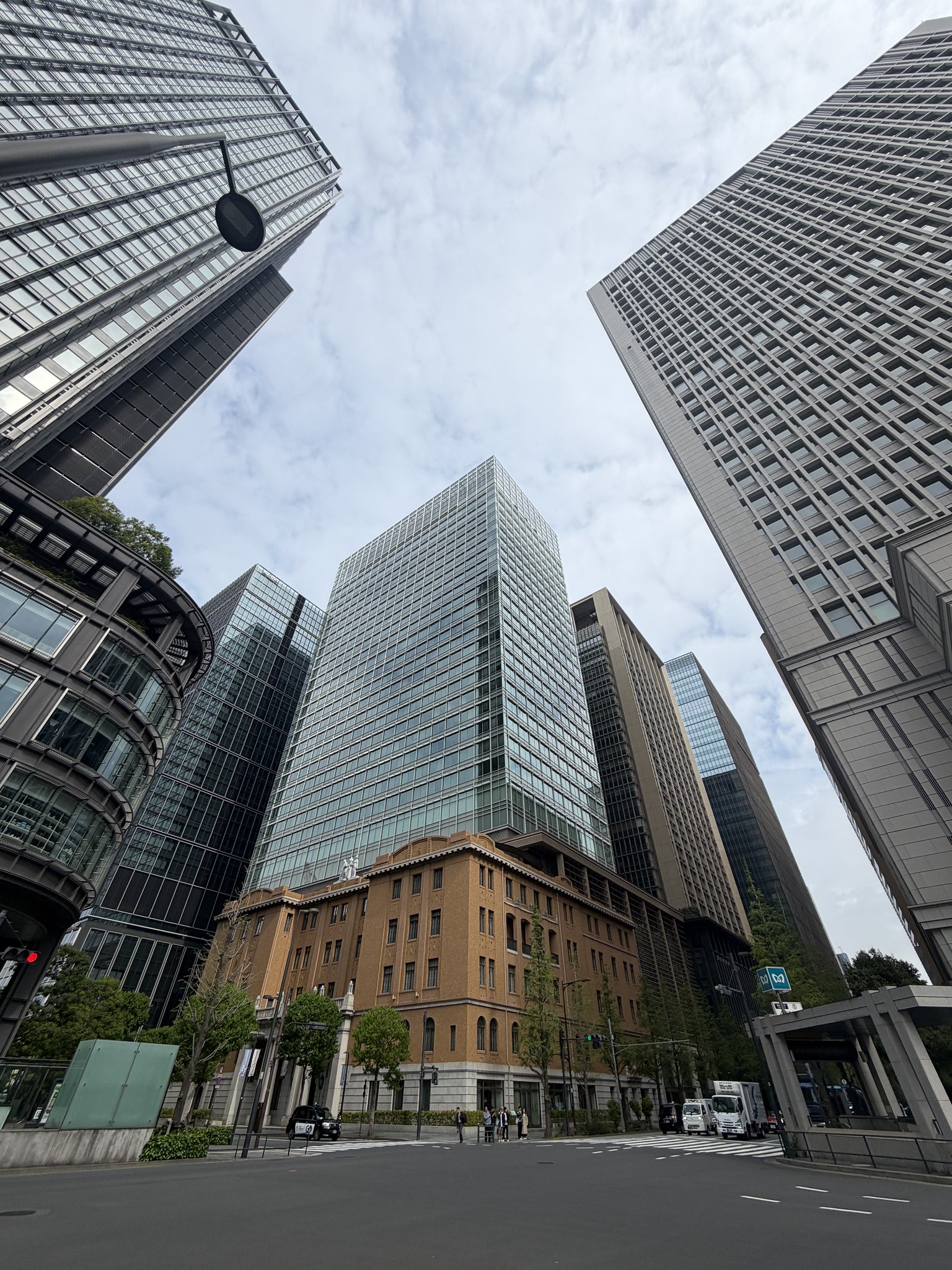
On Saturday morning, we took the Yamanote Line to Tokyo Station and walked west.
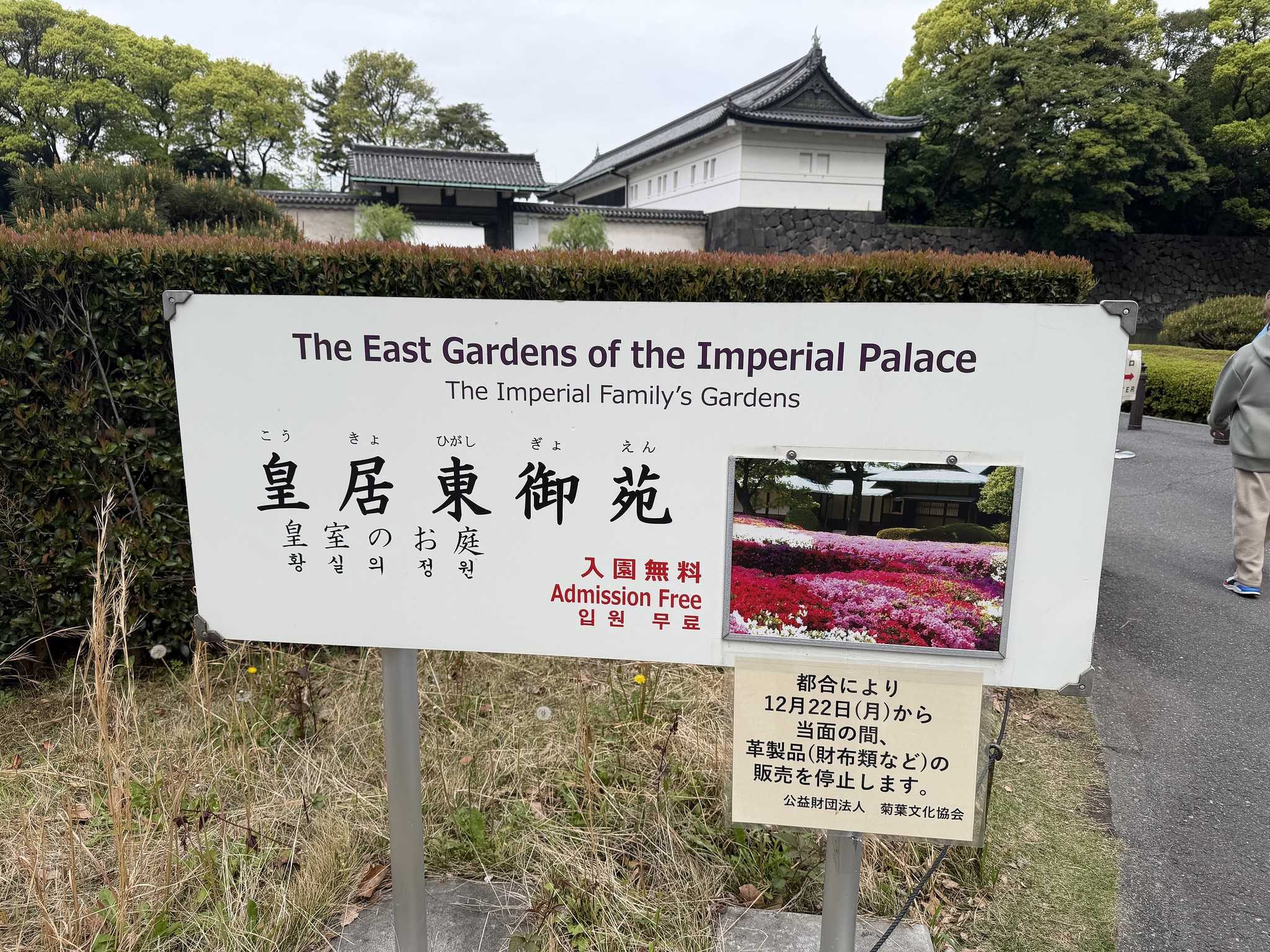
Our destination was the Imperial Palace. On my last trip to Korea I visited their Imperial Palace in Seoul and it was mind-blowing, so I really wanted to see the one in Japan.
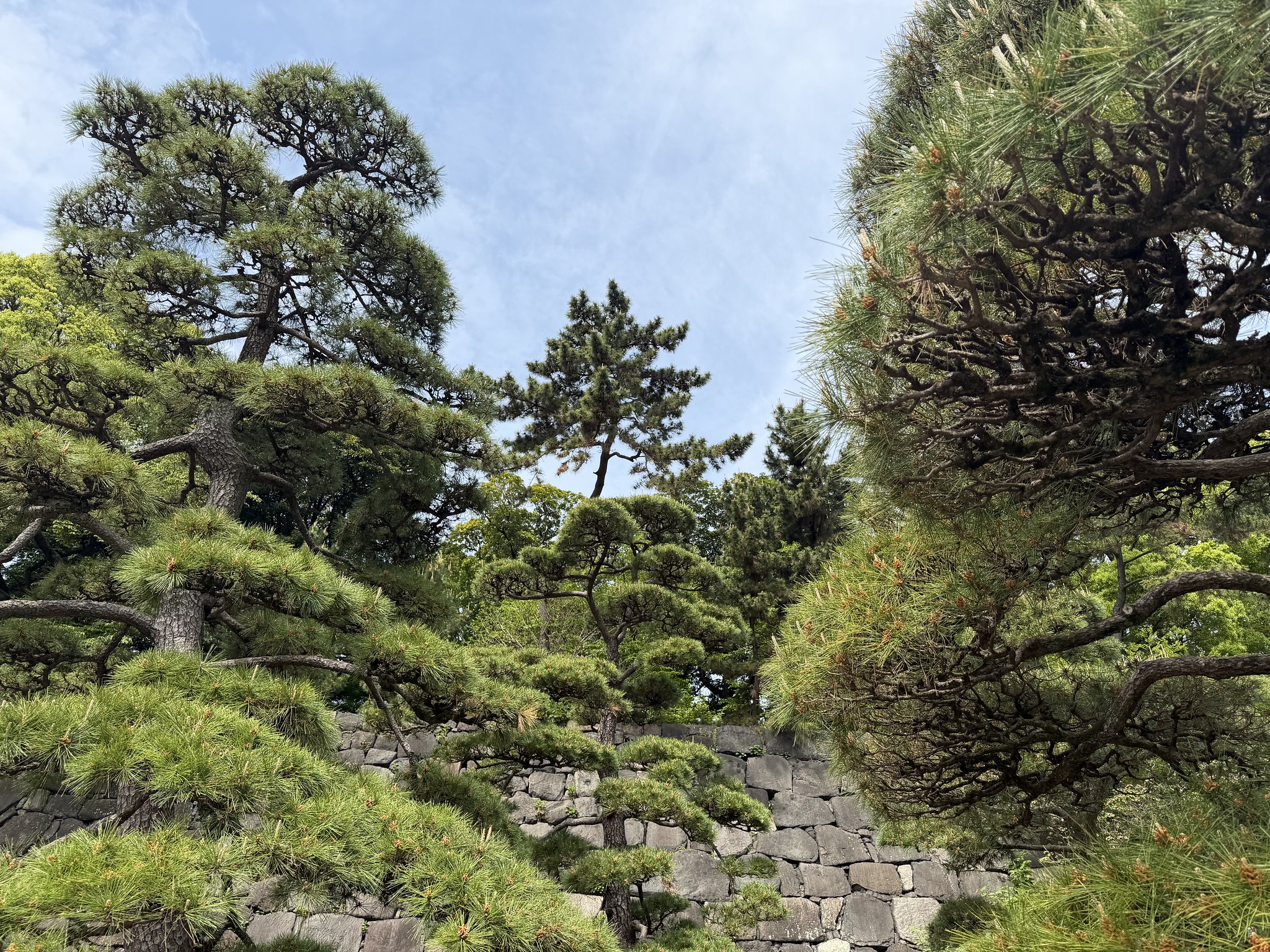
As expected, there was quite a variety of interesting trees.
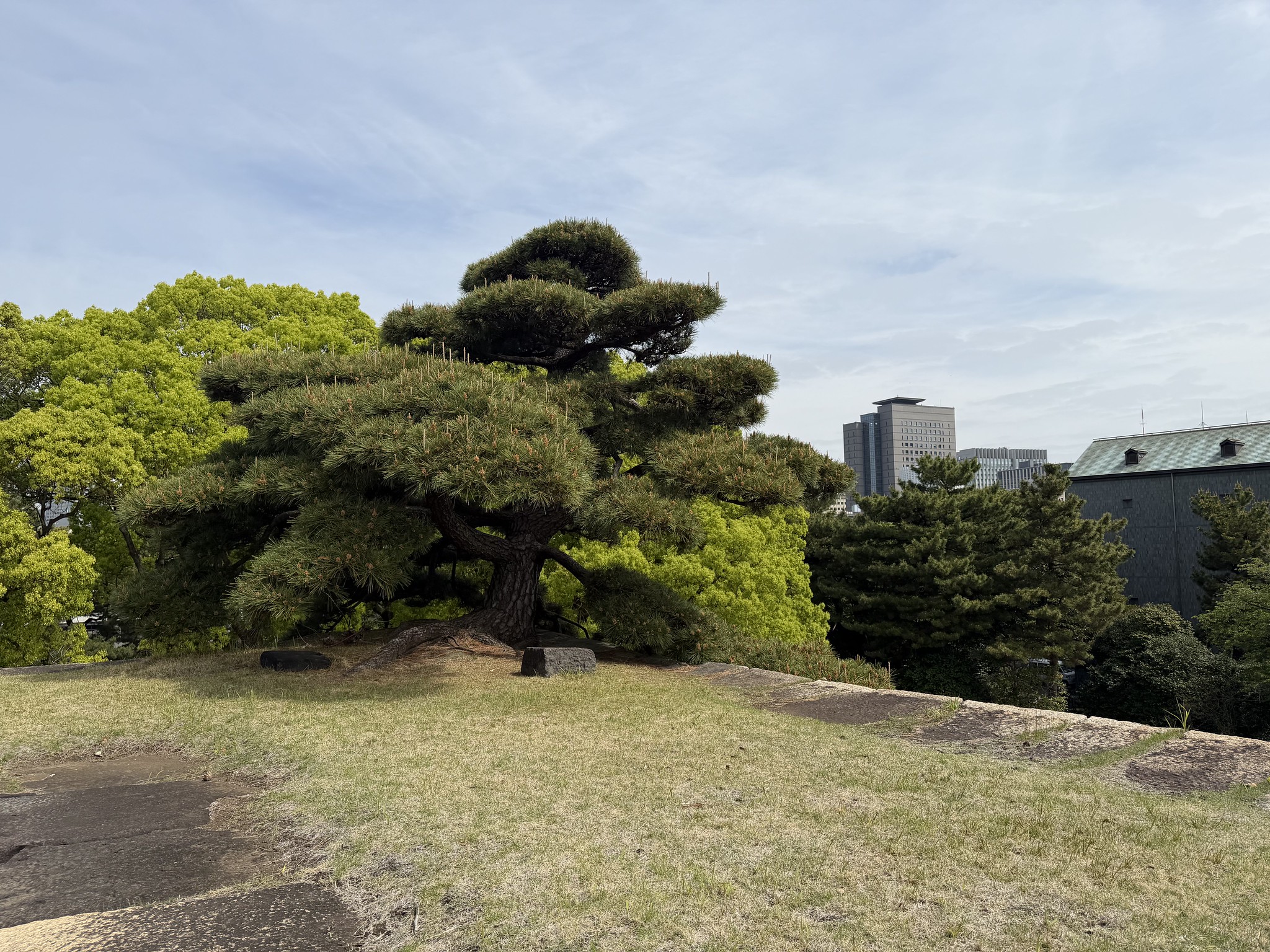
Looking out from the old castle, past the greenery, you see the ultra-modern buildings of contemporary Tokyo. For me these were actually the most intriguing views.
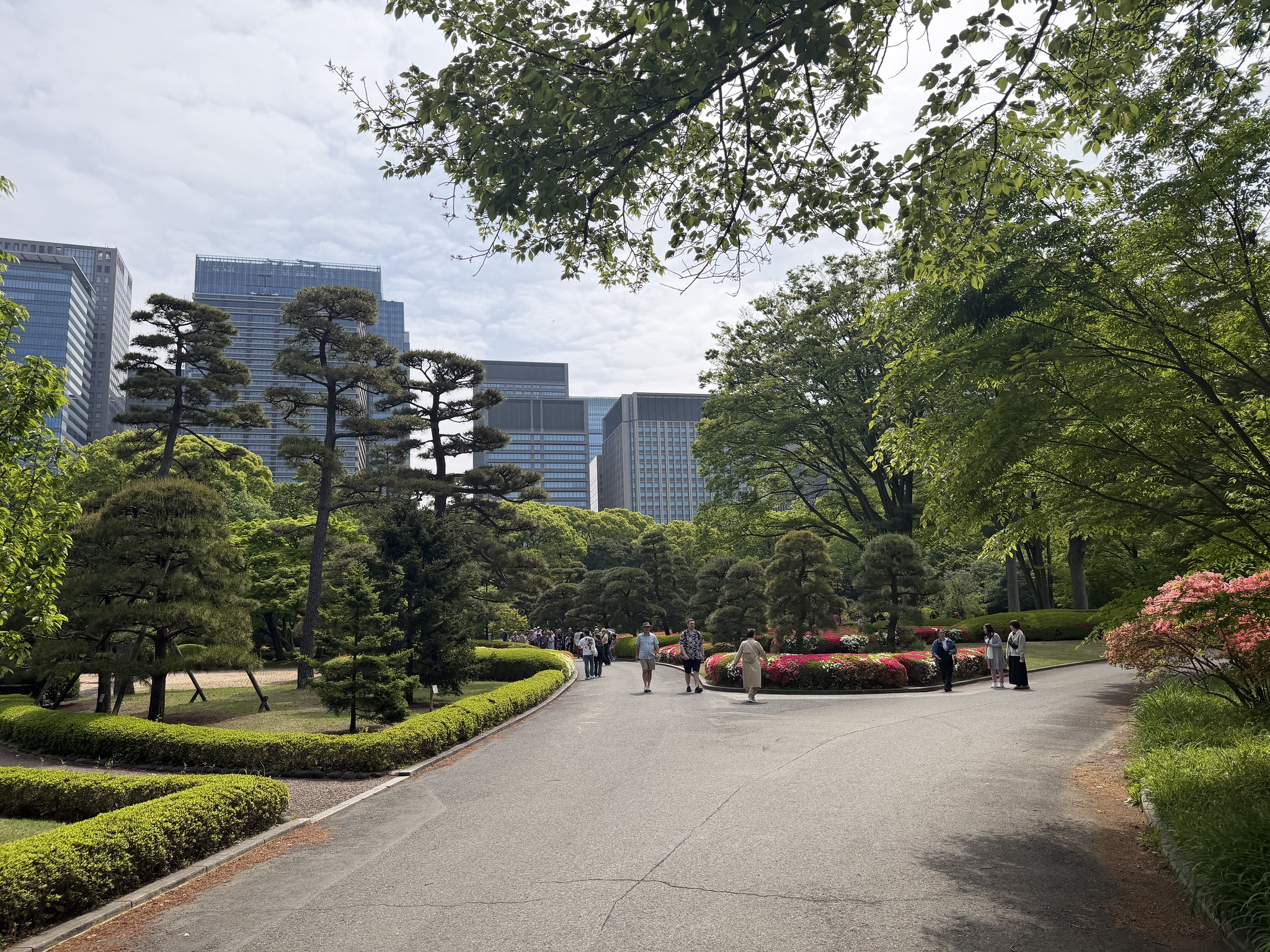
The vast majority of Tokyo is densely-packed urban sprawl, so these huge parks are a striking juxtaposition.
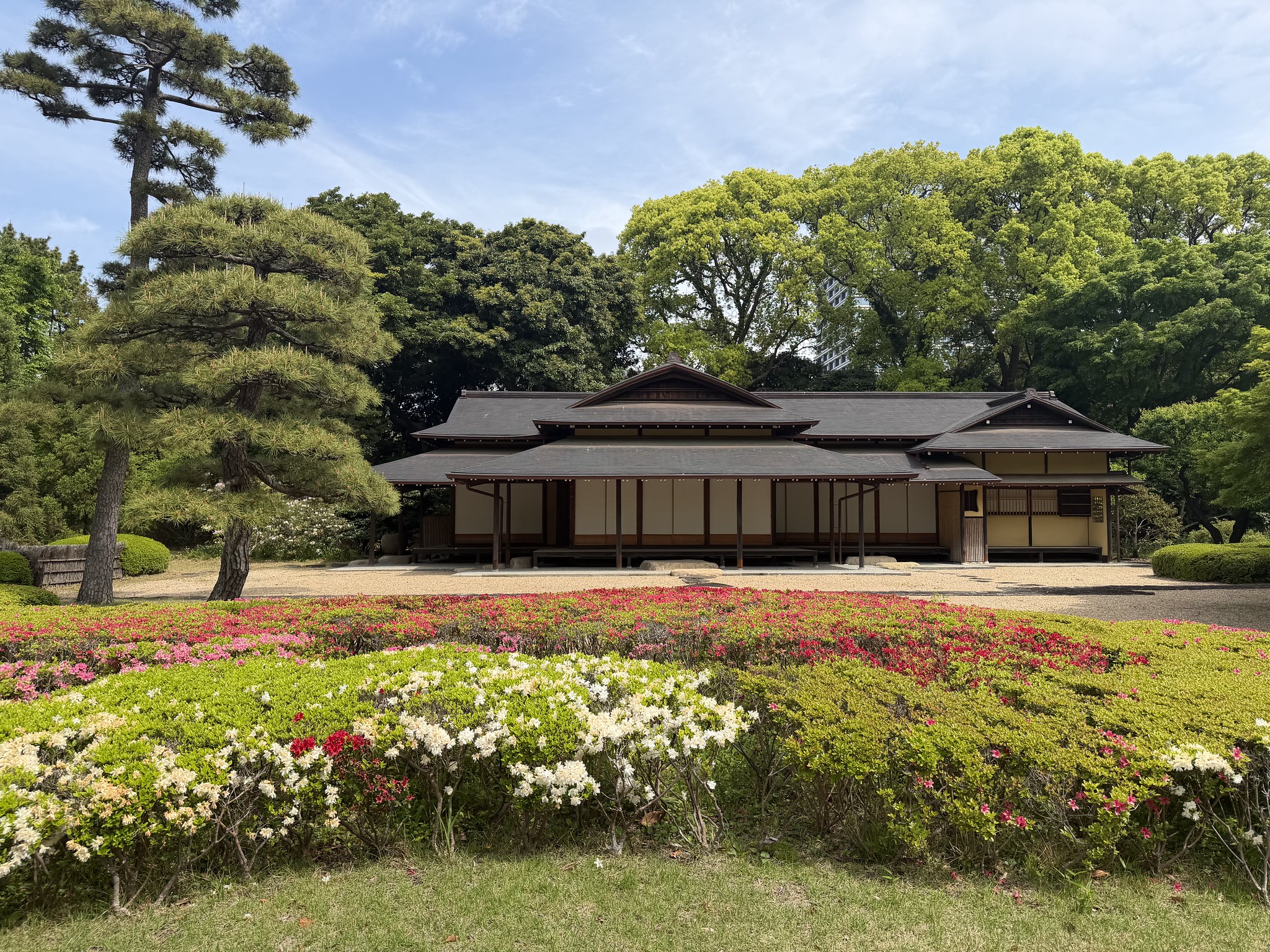
We saw a lot of tea houses, but sadly one thing we did not get a chance to do was a proper tea ceremony. I’ve done it once, way back in college, and it was a very interesting cultural experience.

There was also a koi pond there. Check out this big boy!
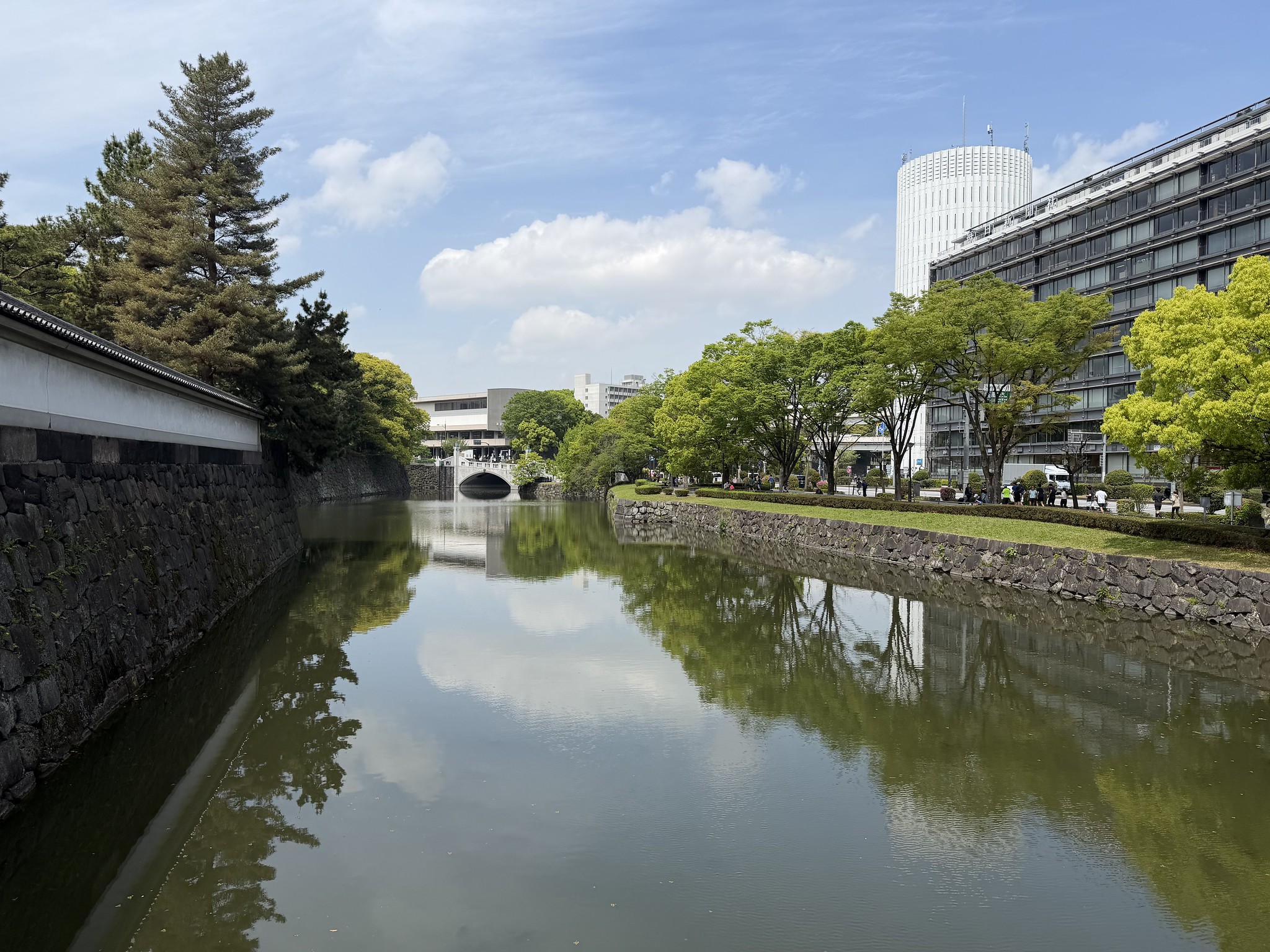
Call me crazy, but it would be kinda funny to have a house with a moat around it. If it was this big, you could even hold boat races.
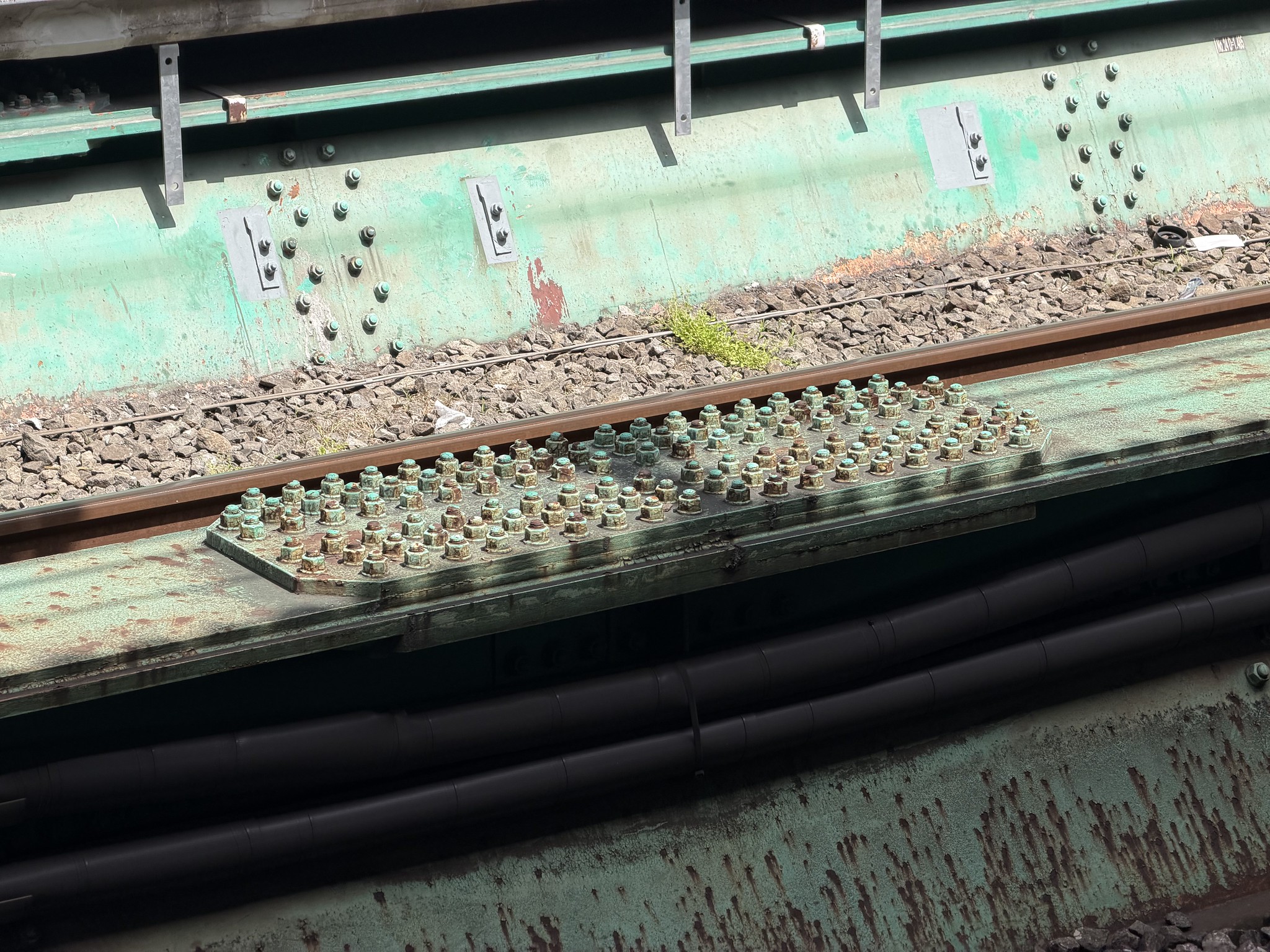
I want to meet the civil engineer who looked at an early drawing of this and said, “You know what? It needs more bolts.”
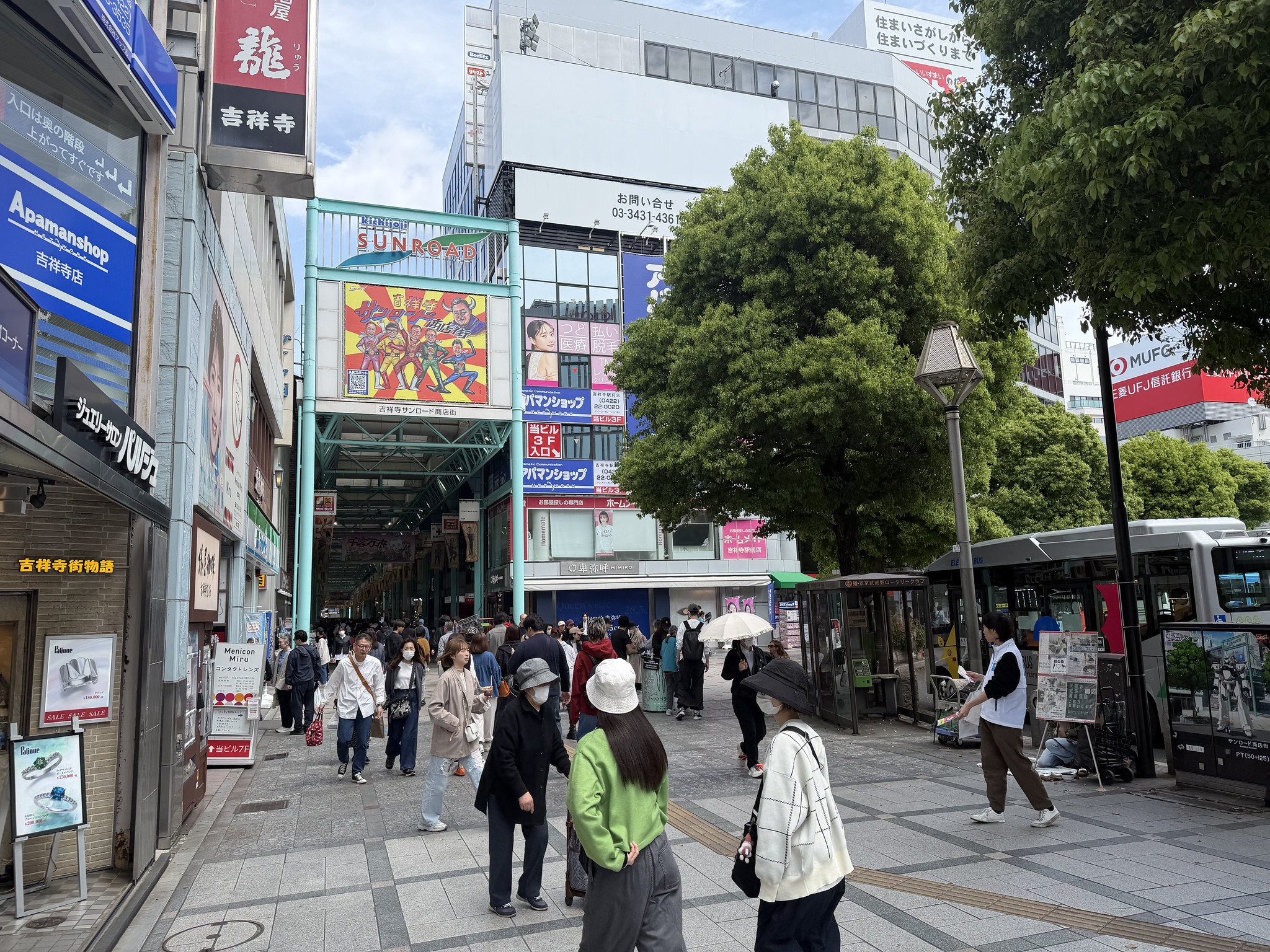
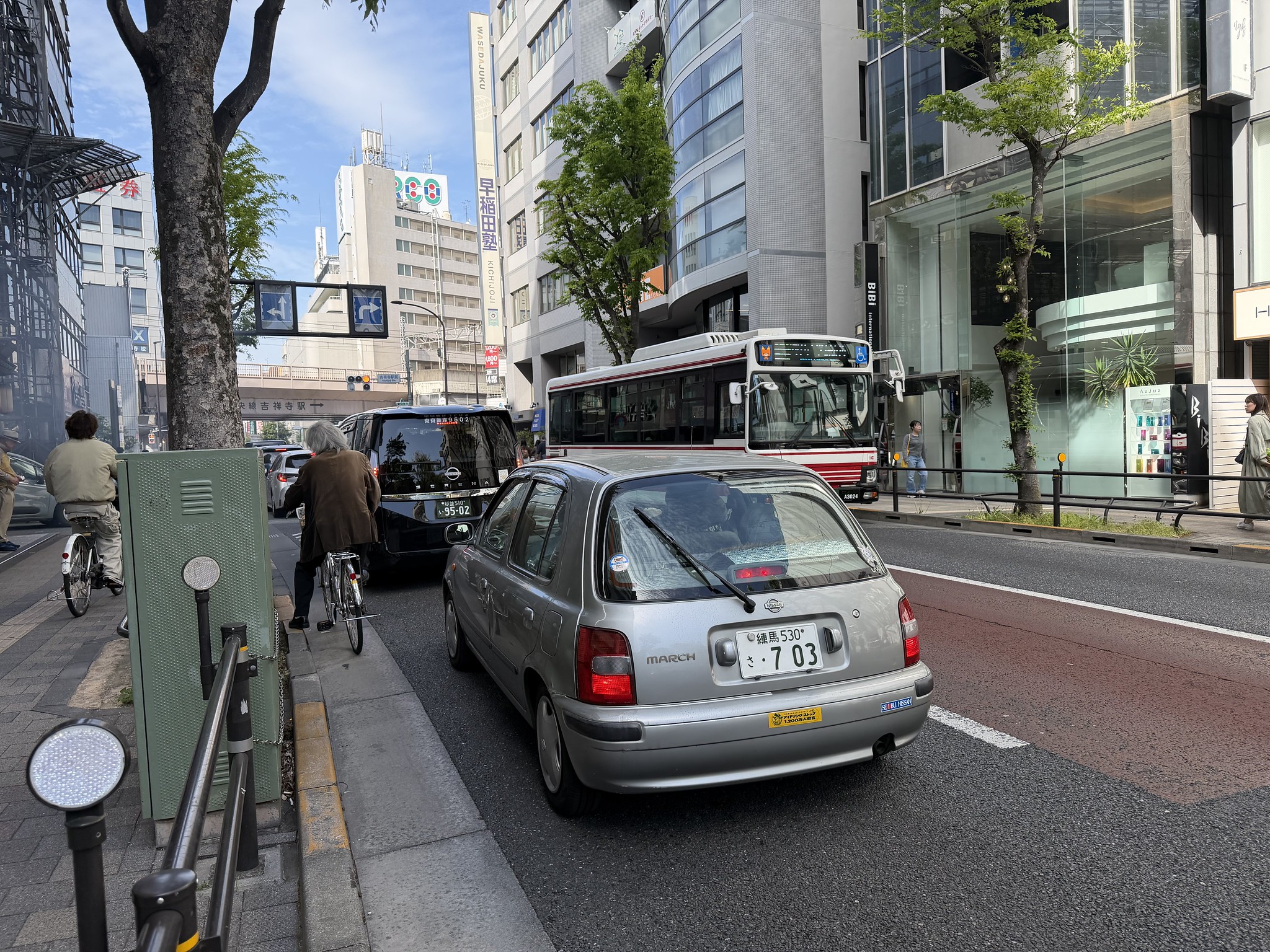
Then we went to a very specific spot: Sun Road. This is in Kichijoji, which has been featured several times in the Shin Megami Tensei series. Persona is a spinoff of Shin Megami Tensei, and this exact location was featured in Persona 5. This one also gets a pun name in the game: Sanpo Road. In Japanese, the English word “sun” is pronounced san, so Sanpo Road sounds almost exactly like Sun Road. “Sanpo” means “a walk” in Japanese, so it’s an apt name too.
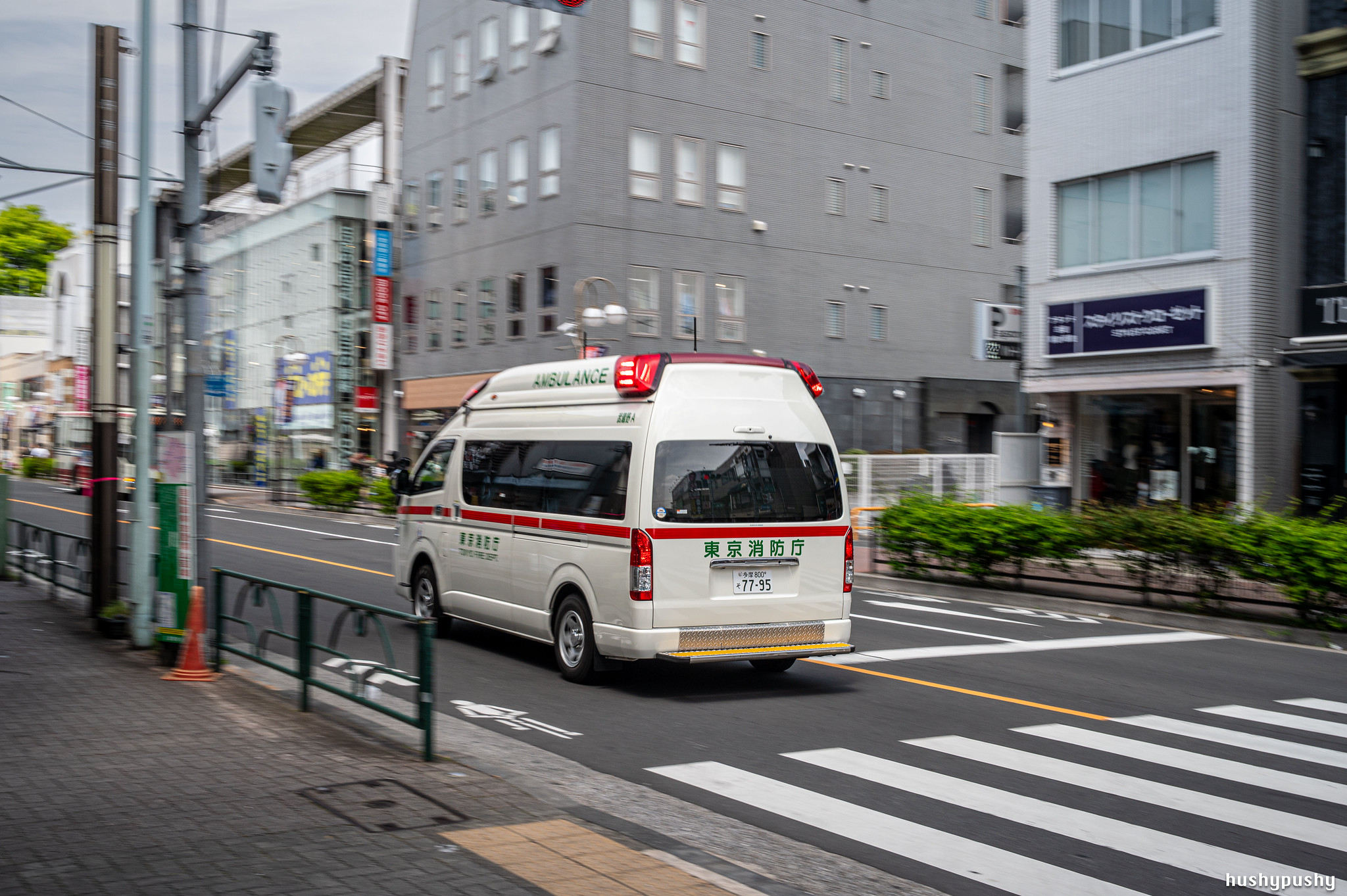
Just like I enjoy seeing people at work, I also enjoy seeing vehicles at work, like this Toyota HiAce ambulance.
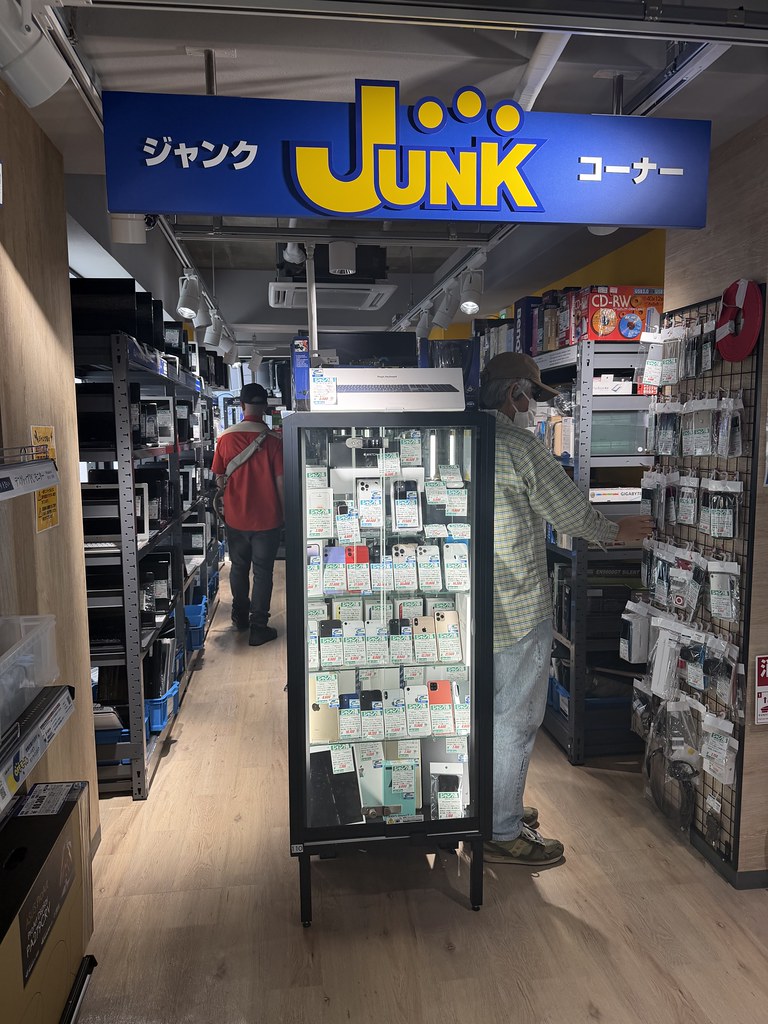
We had to visit HARD-OFF, a bizarrely named but very common store in Japan (they also have a bookstore version called BOOK-OFF). This was a pretty tiny one, but they had a couple sections that were just fascinating. This section, aptly called “Junk Corner”, was filled with the type of crap that any of us nerds have languishing in a box full of random stuff at home. Old phones, cables, controllers, and other stuff filled the shelves, all with bargain price tags.
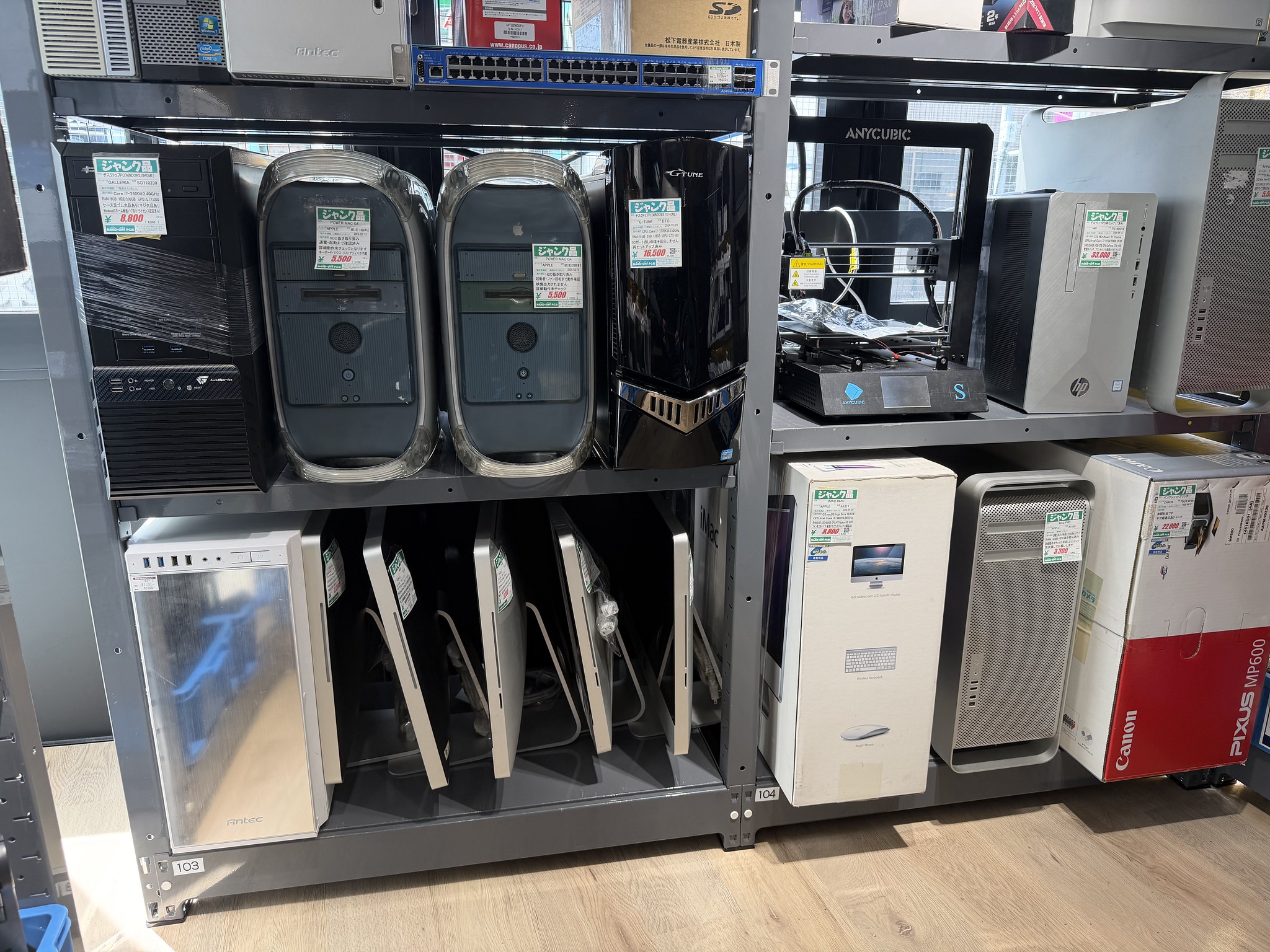
In the back of the Junk section was a variety of old PC’s. Check out that Power Mac G4! I haven’t seen one of those in forever! And a first generation Mac Pro, the one that came in the same case as the Power Mac G5. I remember thinking those were pretty badass when they came out. While the G4 looks ultra-dated, a symbol of the Y2K-era obsession with colored translucent plastic, the G5/Mac Pro still looks modern today with its simple and clean aluminum chassis. And by the way, that Mac Pro was only 3300 yen, or $21.
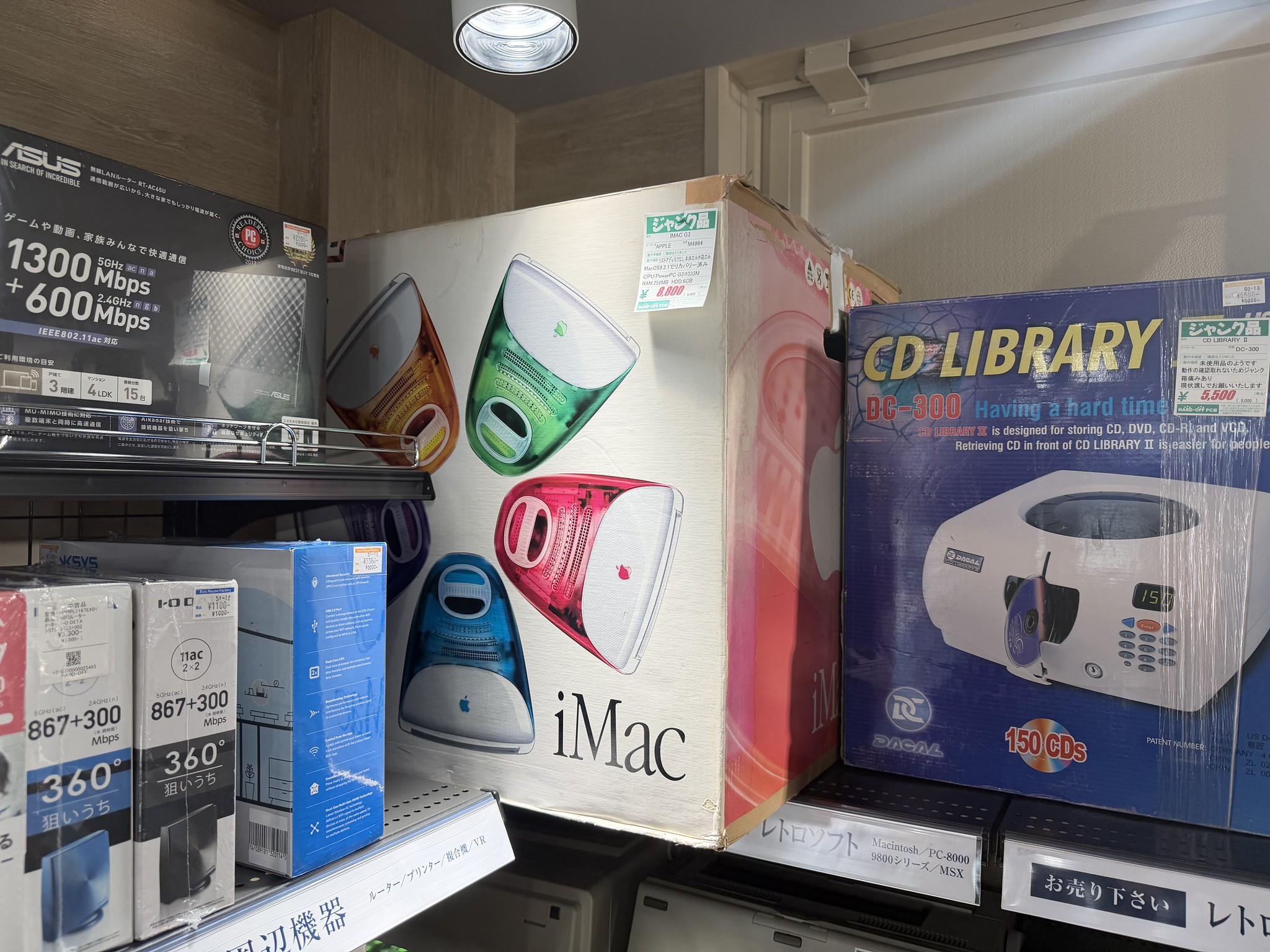
It’s funny how supply, demand, and CRT monitors affect values. This iMac G3 was another generation older, and yet cost as much as the G4 and Mac Pro combined.
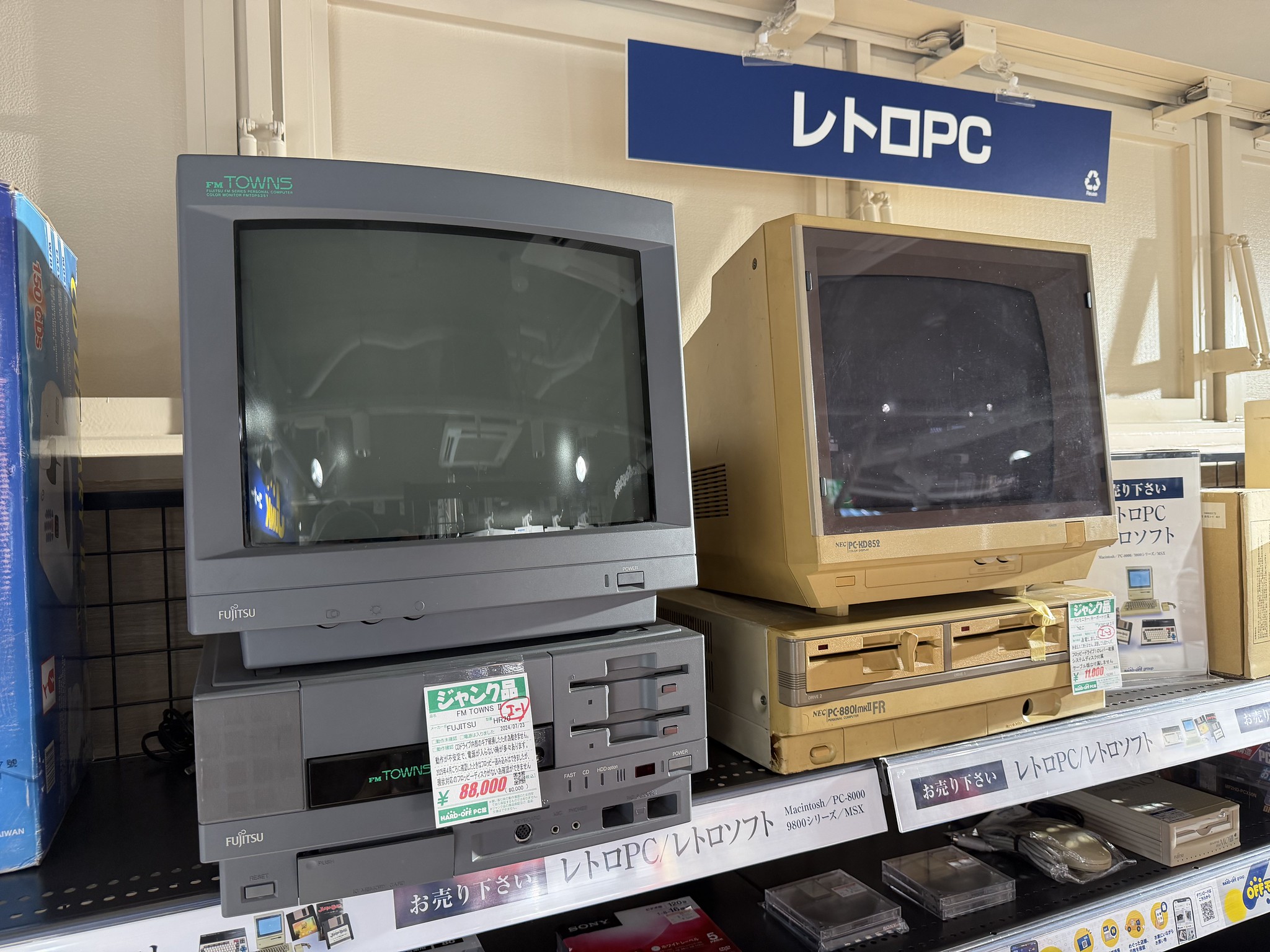
Who decides what’s “Retro” and what’s “Junk”? The tags on the Fujitsu FM-Towns and NEC PC-88 also say “Junk” but are underneath a “Retro PC” sign, and their prices are definitely more towards the latter.
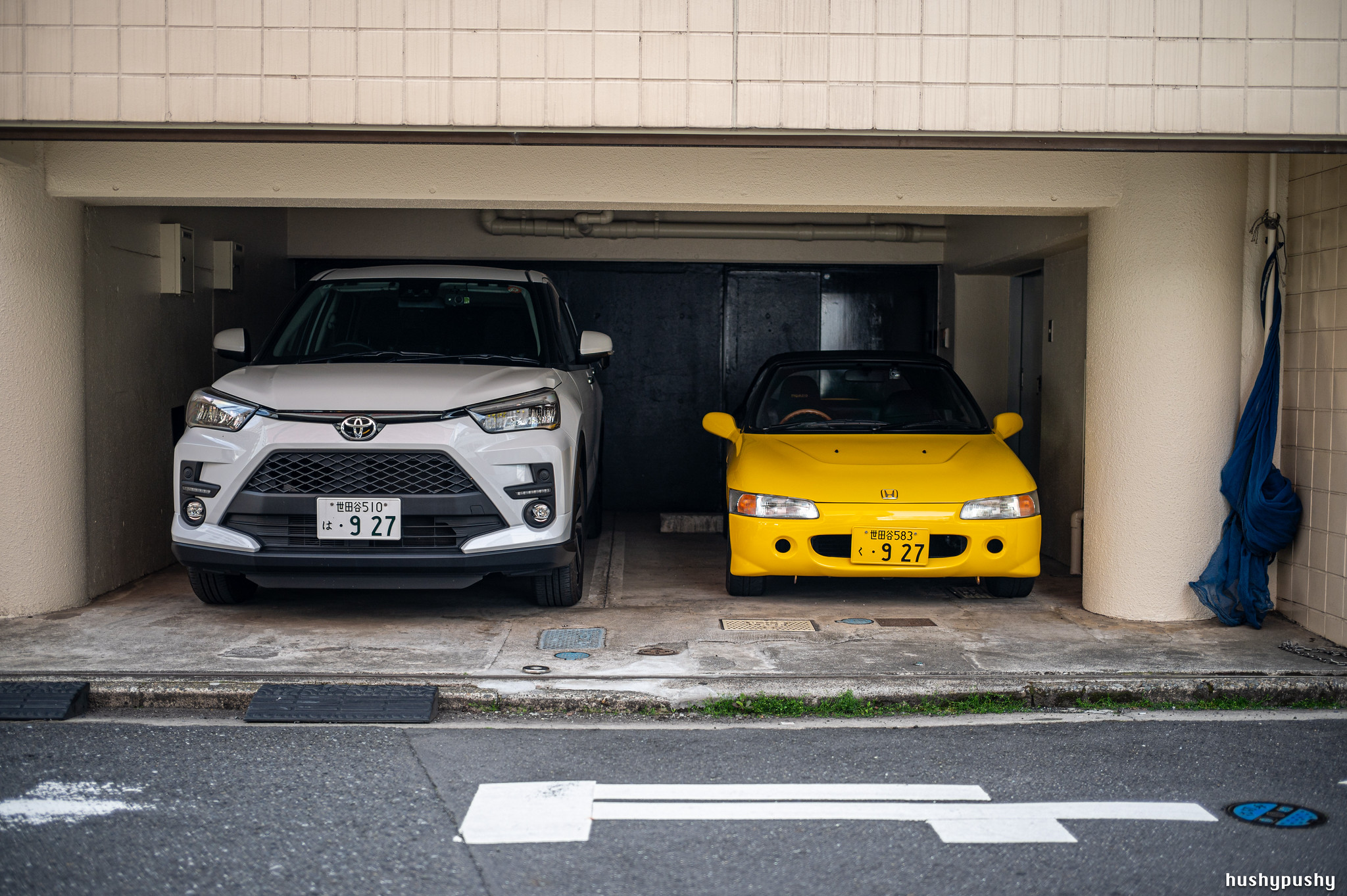
While walking to our next destination I spotted this interesting carport scene. The little yellow cutie is a Honda Beat, a mid-engined kei convertible sold from 1991 to 1996. The car on the left is a new one to me though. It’s a Toyota Raize, which is a rebranded Daihatsu Rocky. Lengthwise, the shortest car that Toyota currently sells in the USA is the GR86 at 168 inches; the shortest Toyota CUV in the USA is the CH-R at 172 inches. The Raize towers above the Beat and yet, the Japan-spec Raize is only 157 inches long! That’s only two inches longer than the tiny Yaris we rented.
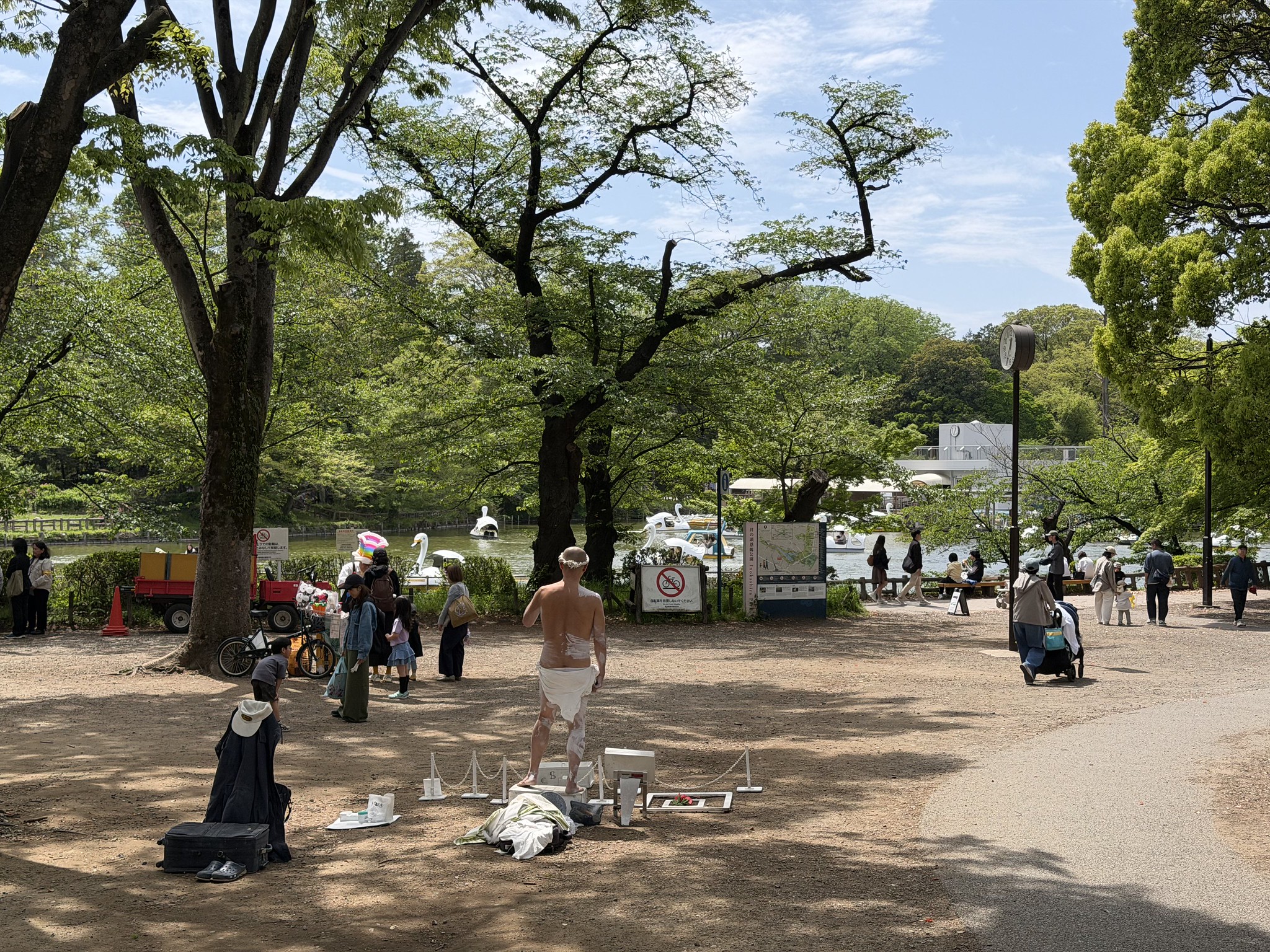
This is Inokashira Park, another location featured in SMT and Persona. The dude in the front of frame there was apparently supposed to be David by Michelangelo. I’ve always found the “still life” street performers to be kind of disturbing, and this mostly-naked dude covered in a bit of plaster (?) did nothing to change that opinion.
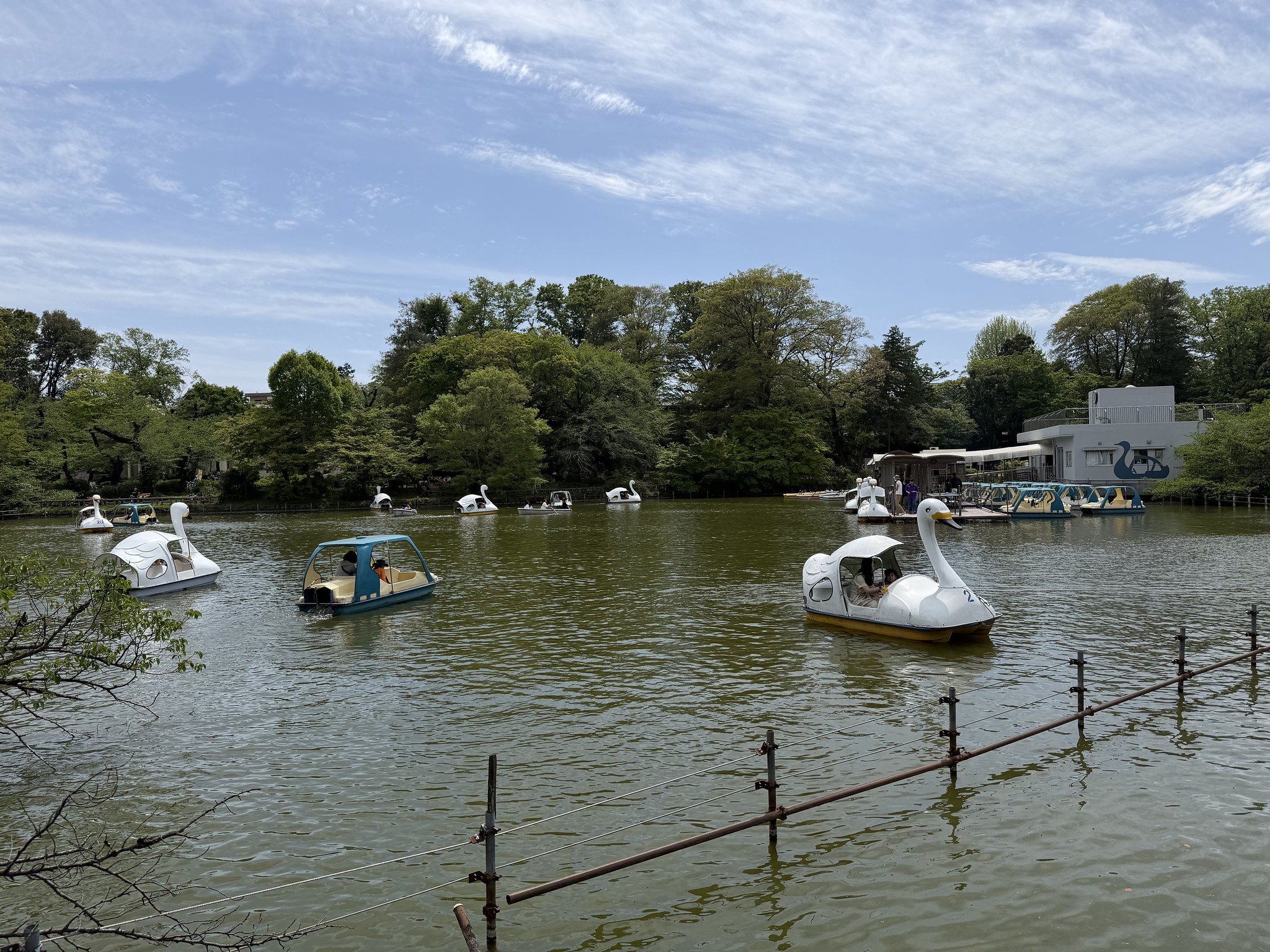
They had the funny little pedal-powered swan boats! I kinda wanted to rent one and cruise around, but alas we moved on.
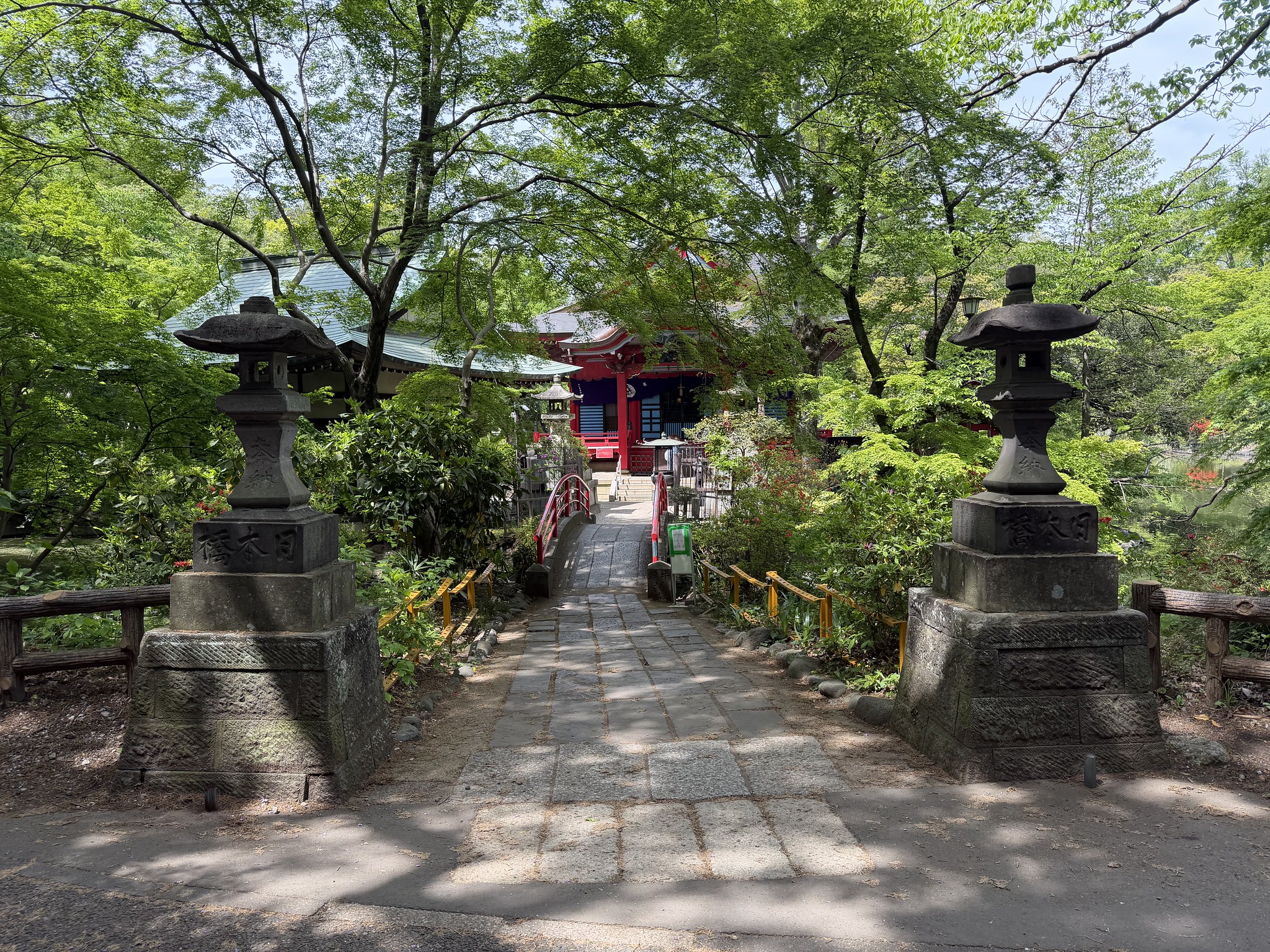
Right in the middle of the park, surrounded by water on three sides, they had this neat little shrine.
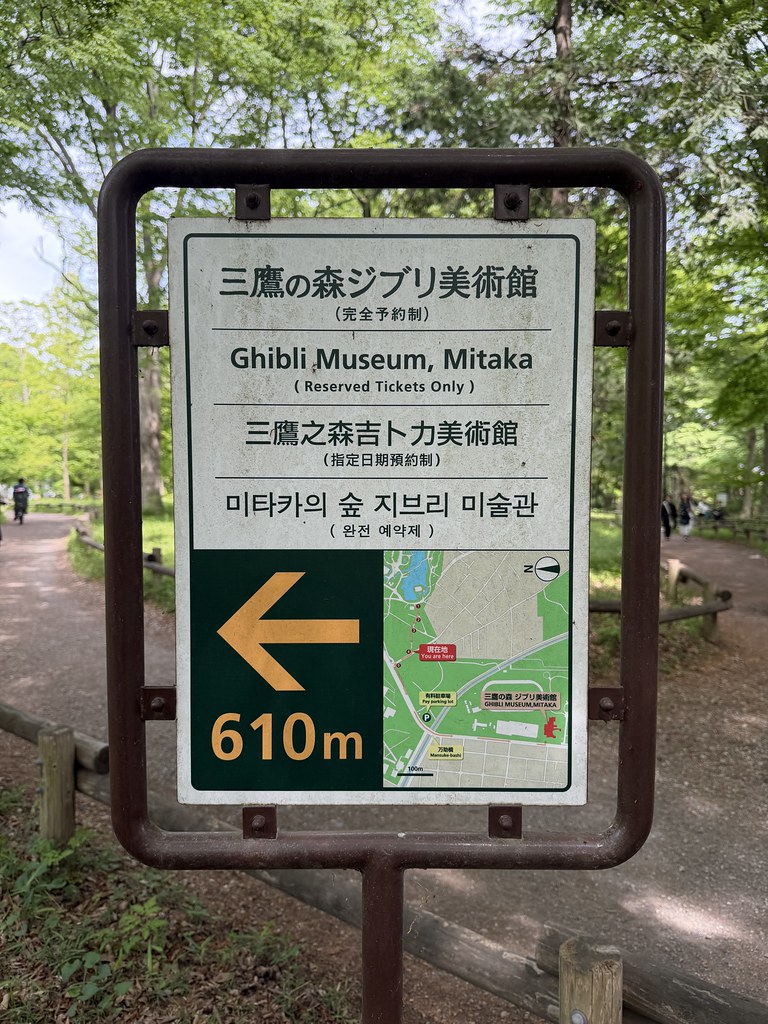
Our walk through the park was taking us here, to the Ghibli Museum. Reserved tickets only? Hm, that’s not good.
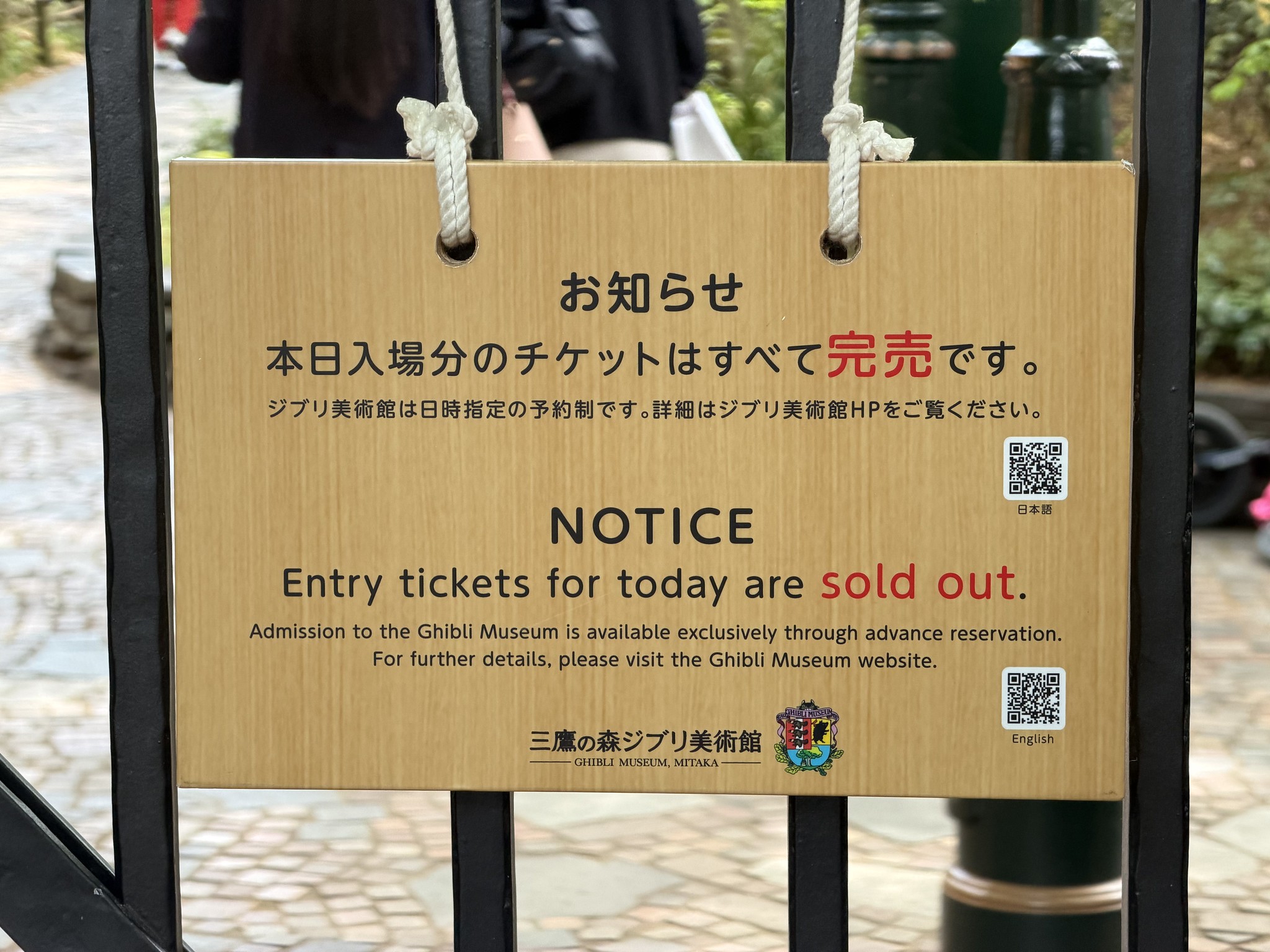
I’m trying to tell myself that I didn’t really care about going here, it’s a tiny museum, and no photos are allowed inside anyway. But I have to say, I was a bit bummed to not be able to go in there, and also a bit embarrassed that I didn’t research this ahead of time. Some people like to plan out every step of their trip. I know people who like to read the menu of a restaurant before they go there. I also know people who will visit a foreign country on a whim with no itinerary at all. I definitely did a fair amount of research before this trip, but I also try to avoid “spoilers”. If there is a movie I know I’m going to see, I won’t watch the trailer or learn anything about it, because I want to be surprised. Similarly, if there is a place I know I want to visit, I don’t want to know too much about it because I want the surprise. However, that tactic backfired on me in this case because I didn’t do enough research to find out that the Ghibli Museum is so tiny and popular that admission is only available by reservation.
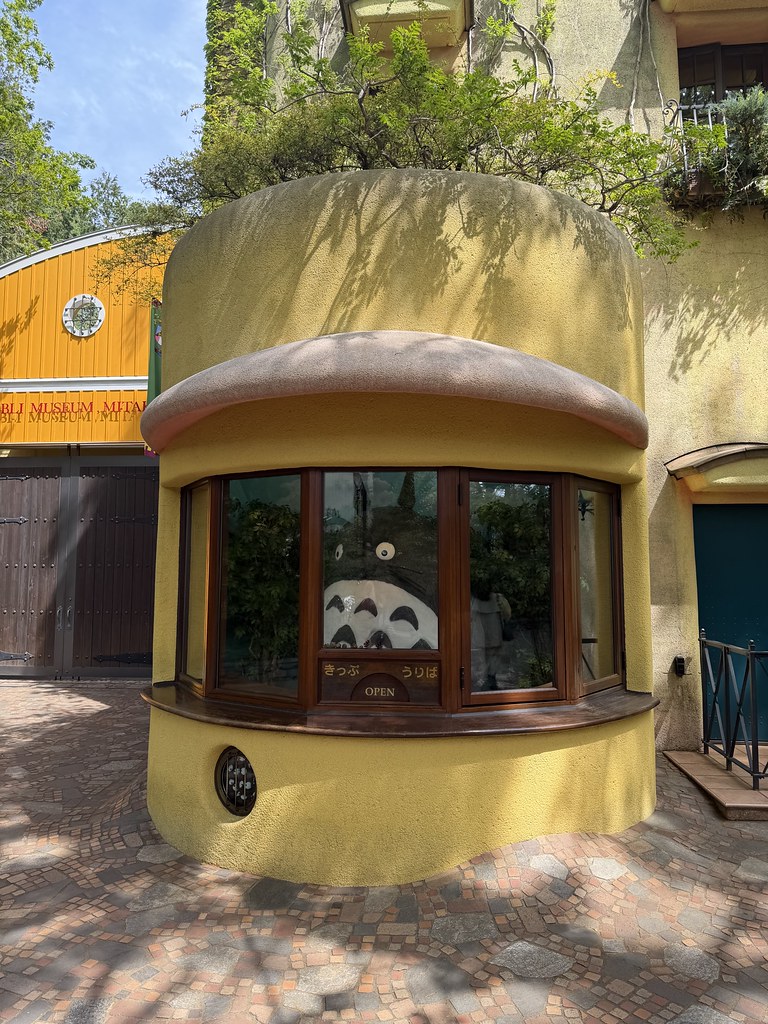
There was a really cute fake ticket office here, staffed by Totoro. That’s about as much Ghibli as we could get though, so it was time to move on. Since we were right there, we decided to check out Inokashira Zoo.
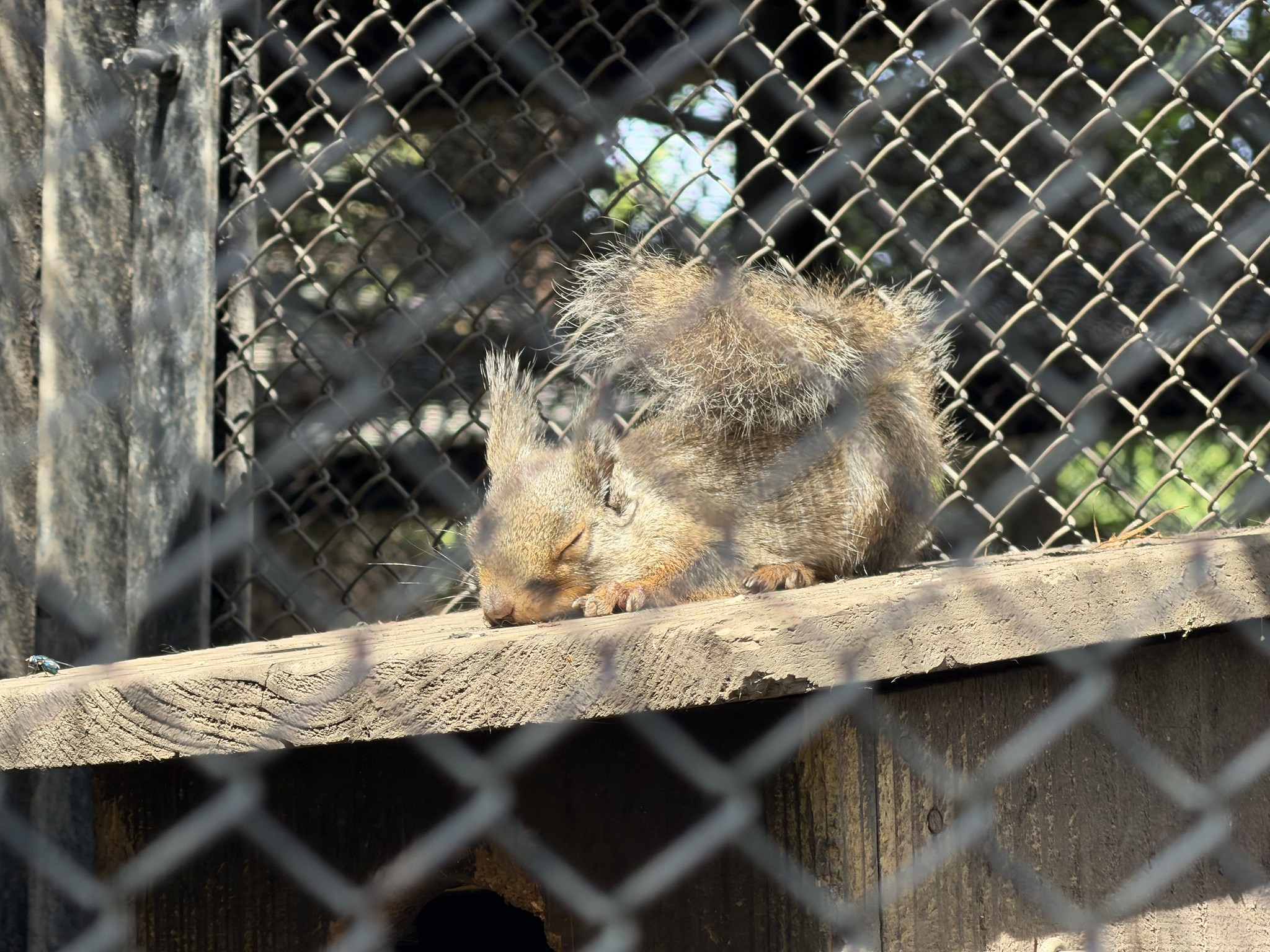
I was a bit weirded out by the multiple enclosures for squirrels. Is this what city folk want to look at? Back in California, these rats-with-cute-tails are way too prevalent and not looked upon fondly. Regardless, this little napster was super cute.
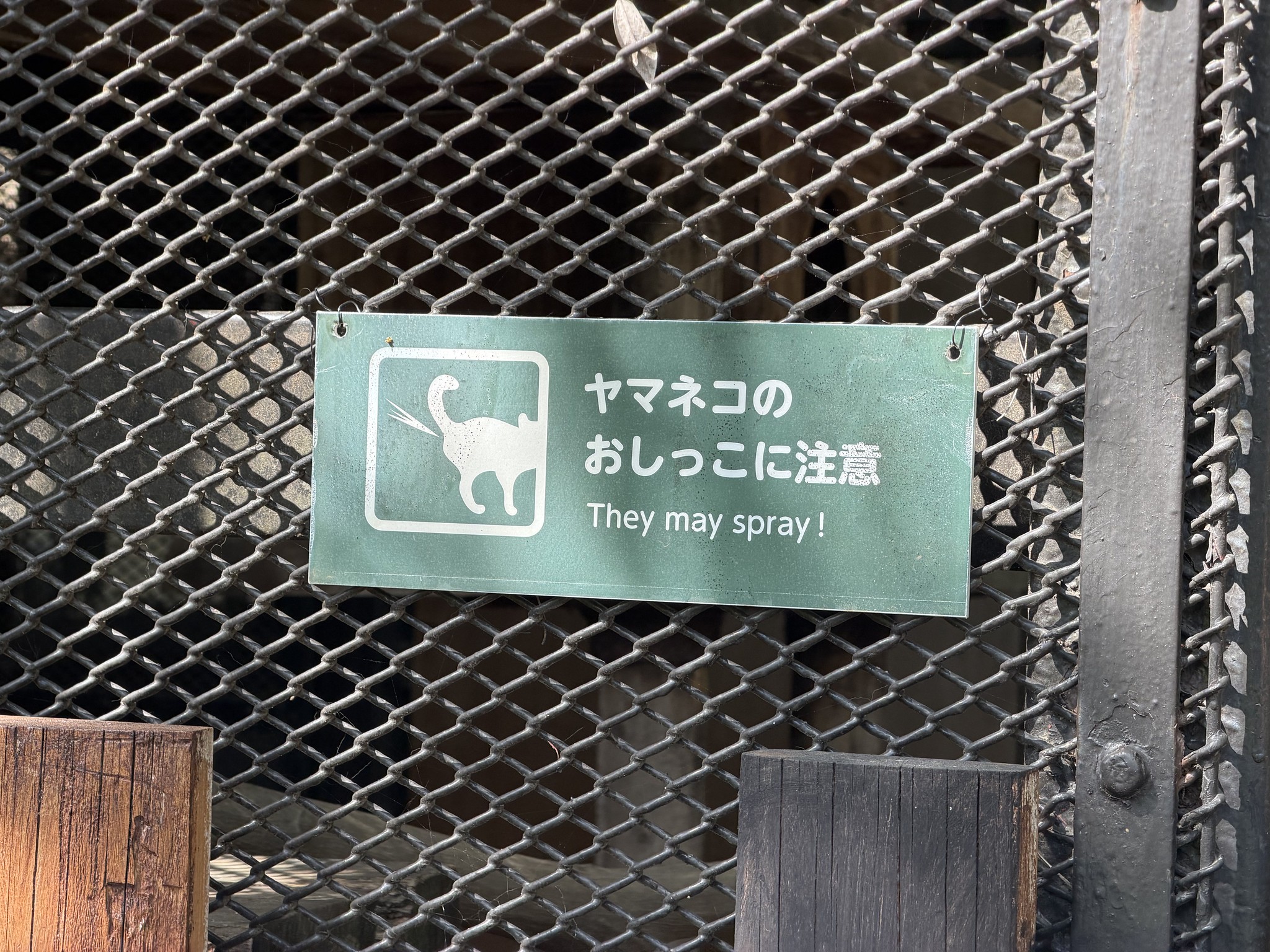
This is actually a pretty good translation. The literal translation, “Beware of wildcat pee”, just doesn’t sound right.
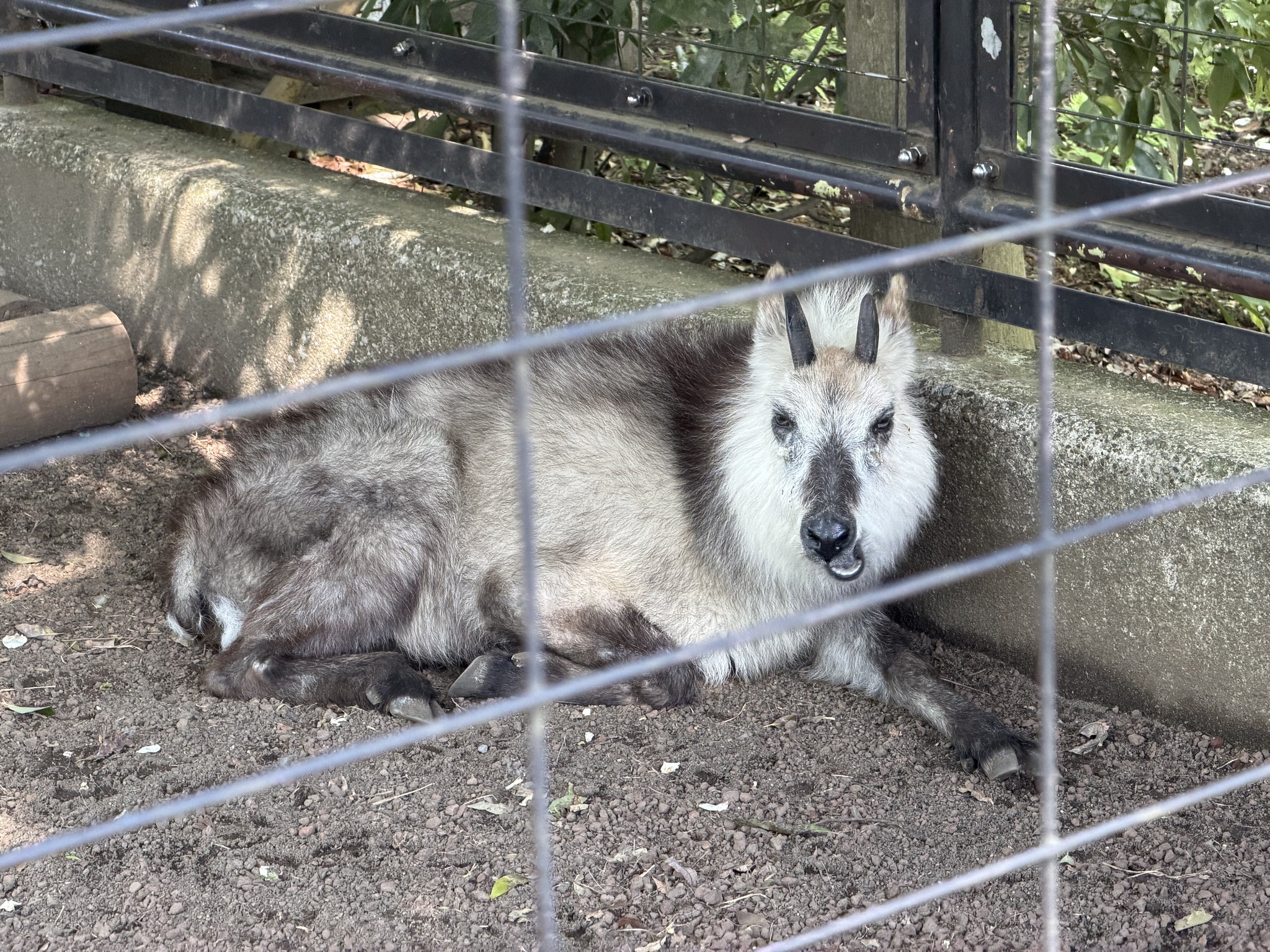
This funny little chewer is a Japanese Serow, which is an even-toed ungulate that’s closely related to goats and antelopes.
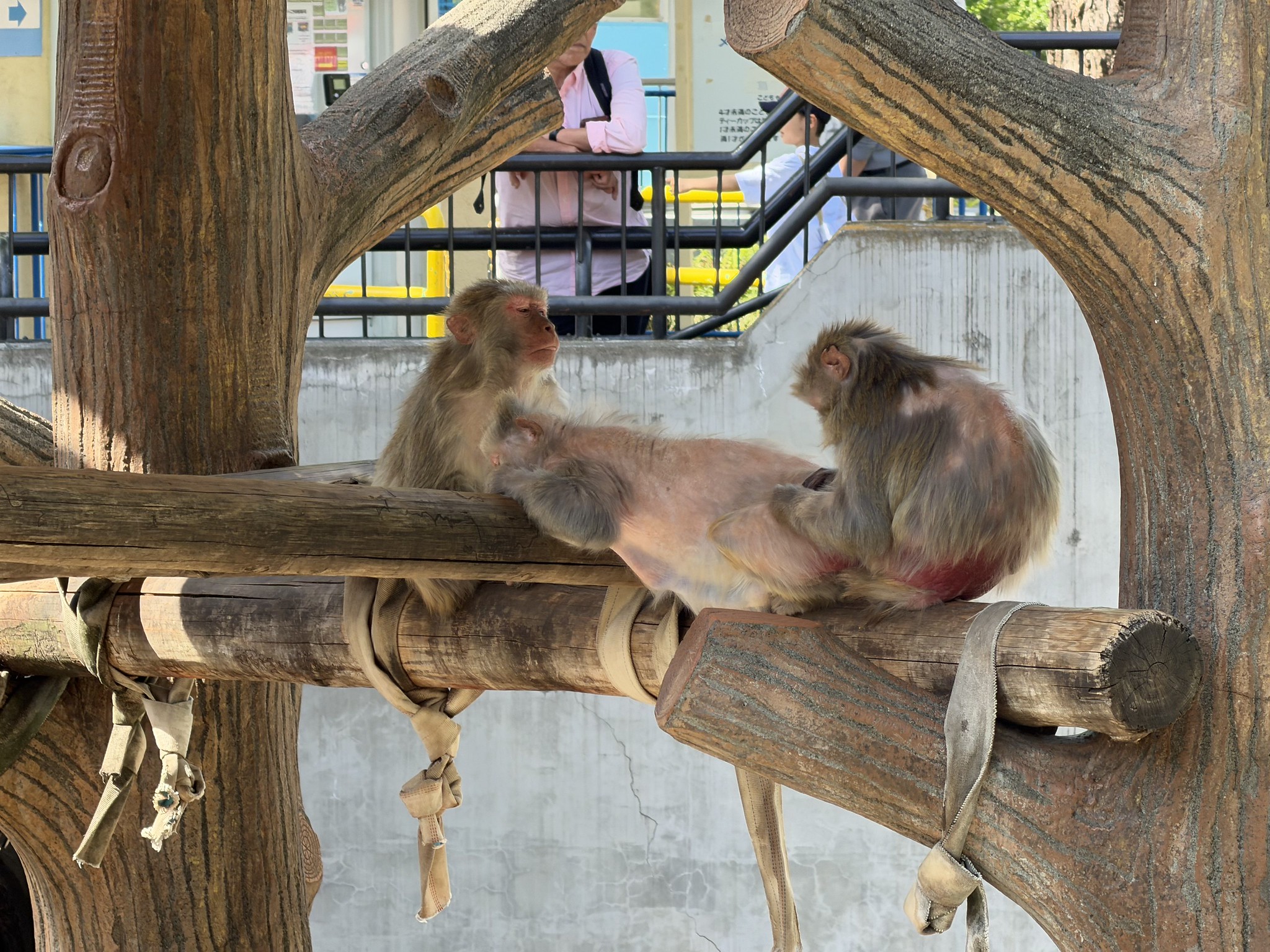
We spent some time watching the macaques. I find primates to be simultaneously funny and bizarre to watch because of their similarity to humans.
I got lucky on this one. I was already filming the one dude chilling on a branch, when all of the sudden a big kerfuffle broke out! I wonder what was happening. I wonder if the monkeys even knew what was happening; all of the sudden there was screaming and everyone went crazy.
We did a few things that I didn’t get photos of, like going to a rad used music store where I bought a mint copy of the Japanese release of Exodus by Utada, complete with obi. That’s Hikaru Utada’s USA debut album, and one of my favorite albums of all time. I still remember getting out of high school on that lovely Tuesday in October 2004 and buying the album on the day of release at the old Tower Records on Blossom Hill Road in San Jose.
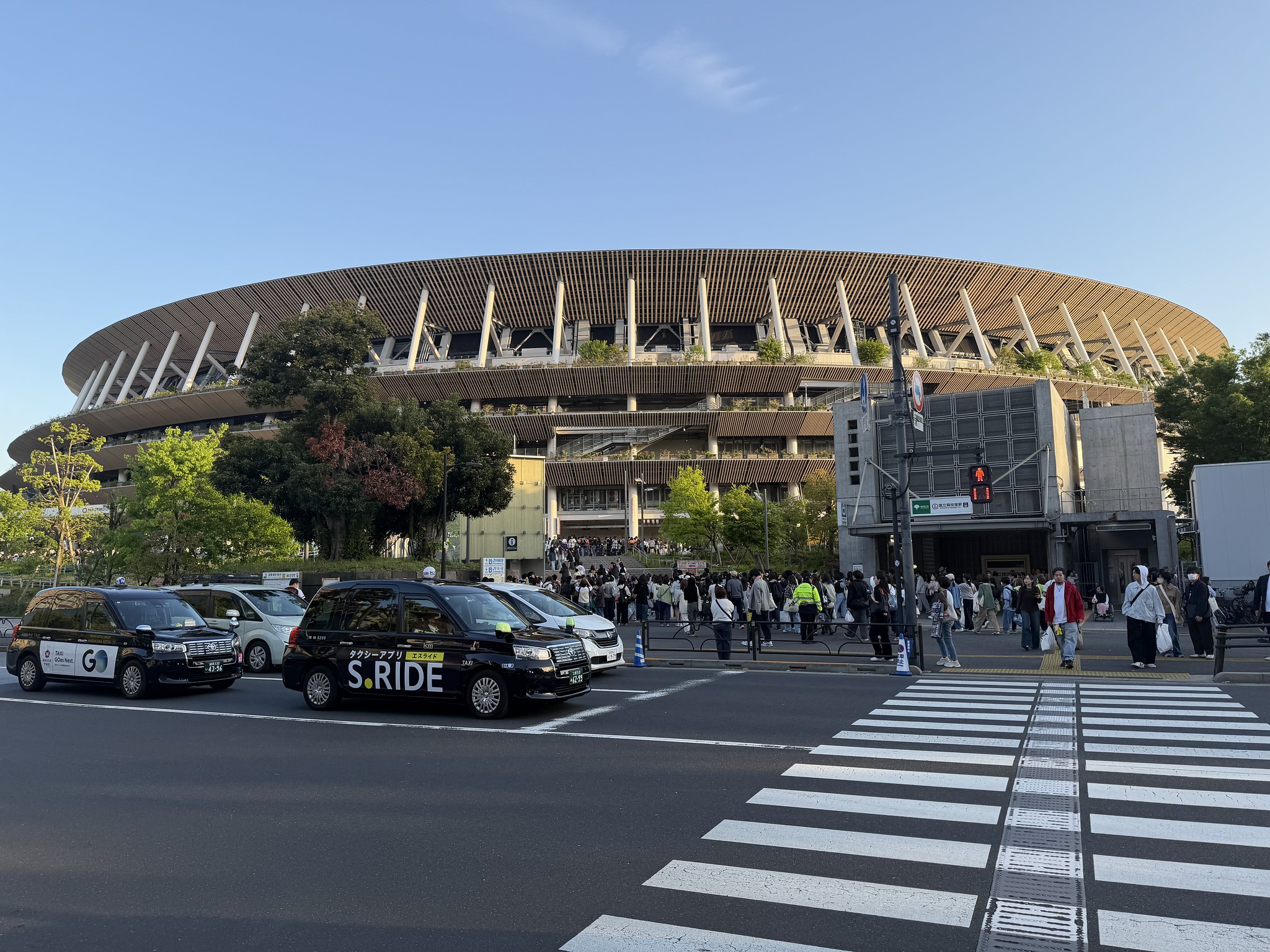
By this point of the week I was definitely feeling the fatigue of our long, active days with early starts and late bedtimes. On Saturday night we had tickets to see the Giants play the Swallows at Meiji Jingu Stadium, but I was so fatigued that we missed our train stop! Thankfully, the Japan National Stadium (seen here) is at the next stop; when I saw this I snapped out of it and we jumped off the train. The train stations are so close together in Tokyo that it’s usually not a big deal if you miss your stop; you might just have to walk a few hundred extra meters.
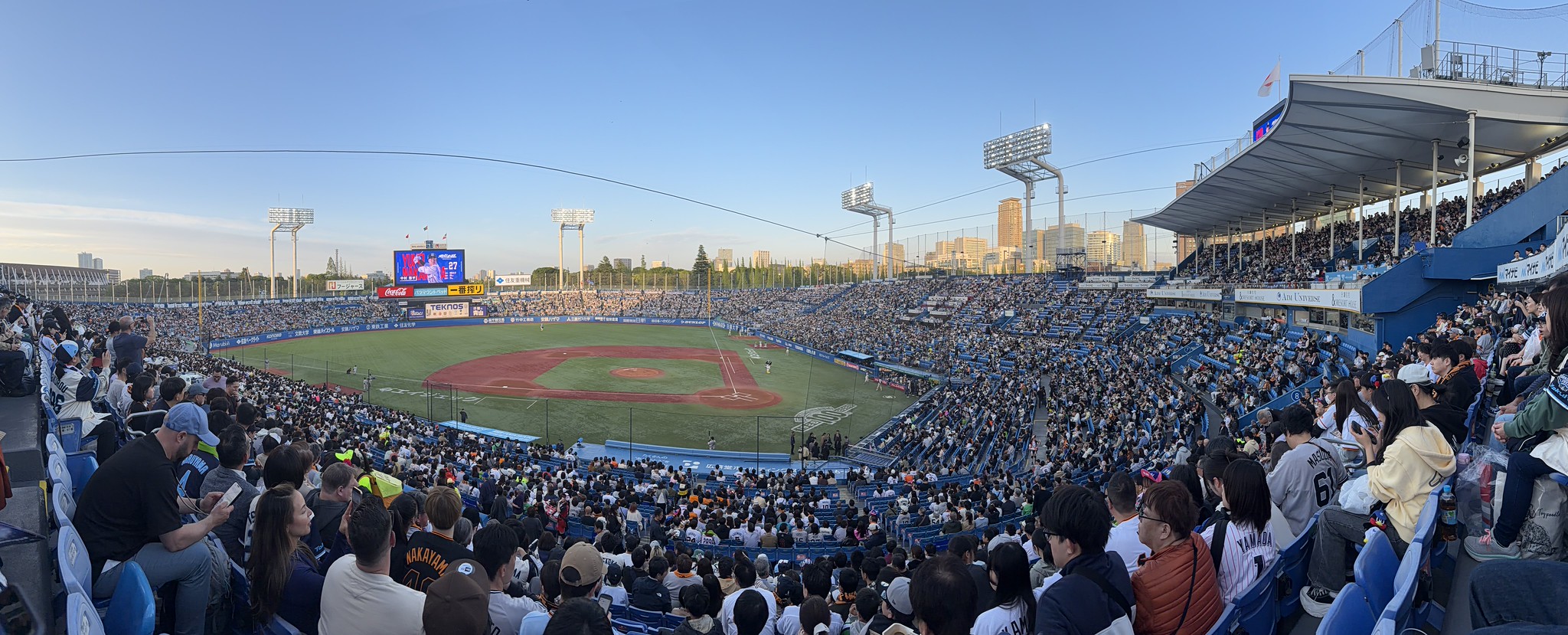
We arrived at the stadium and took our seats. Wow! We had really good seats in this awesome ballpark. It looks so modern, but believe it or not this is the second oldest baseball stadium in Japan, having opened in 1926! Sadly, this stadium and the adjacent rugby stadium are set to be demolished to make way for three residential towers.
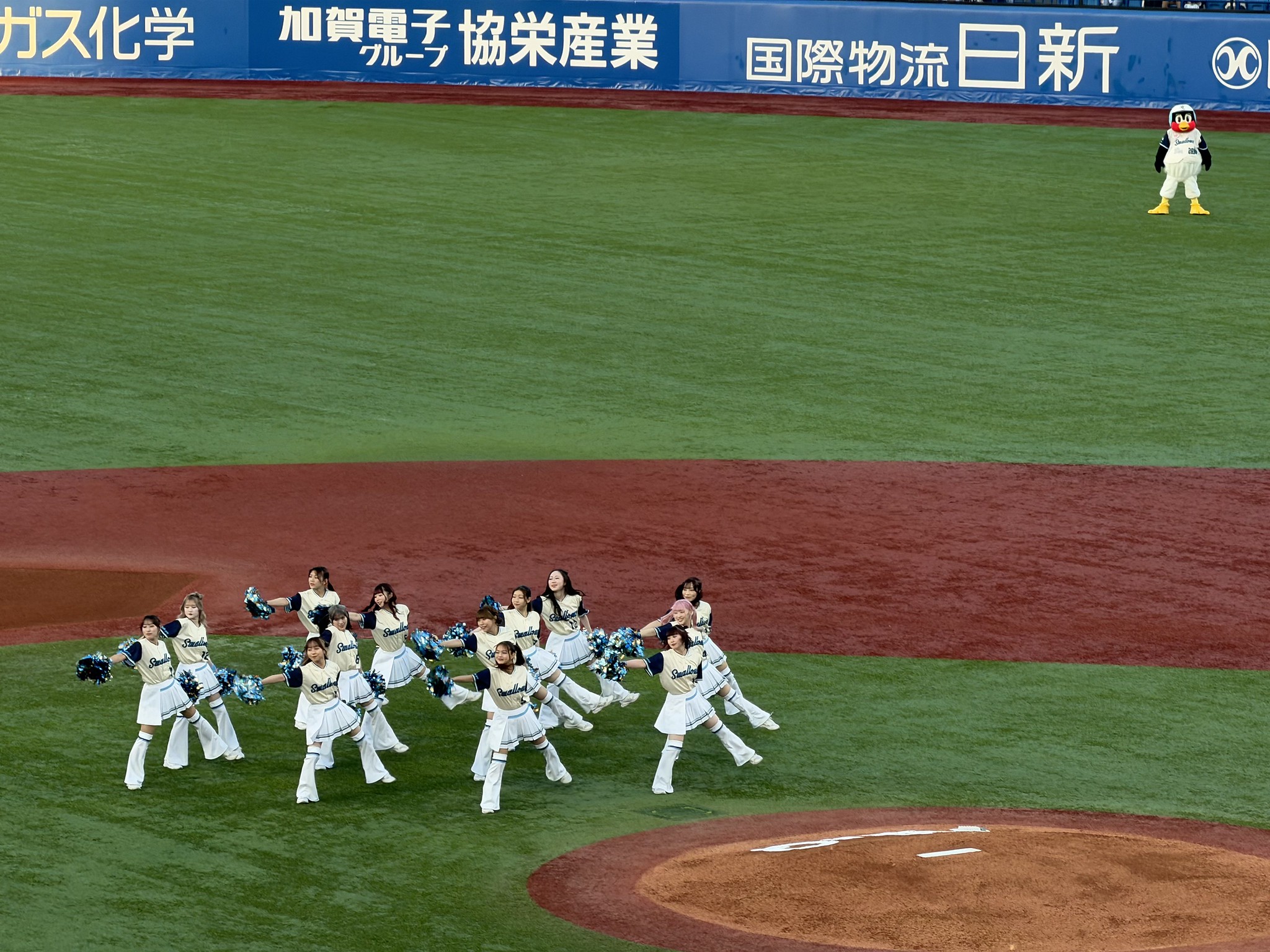
I’ve been to a few Major and Minor League Baseball stadiums in the US and Canada and have been watching baseball for over 30 years, and it all tends to be very similar. However, the Japanese game had a ton of other fun stuff going on, starting with multiple cheer squads on the field.
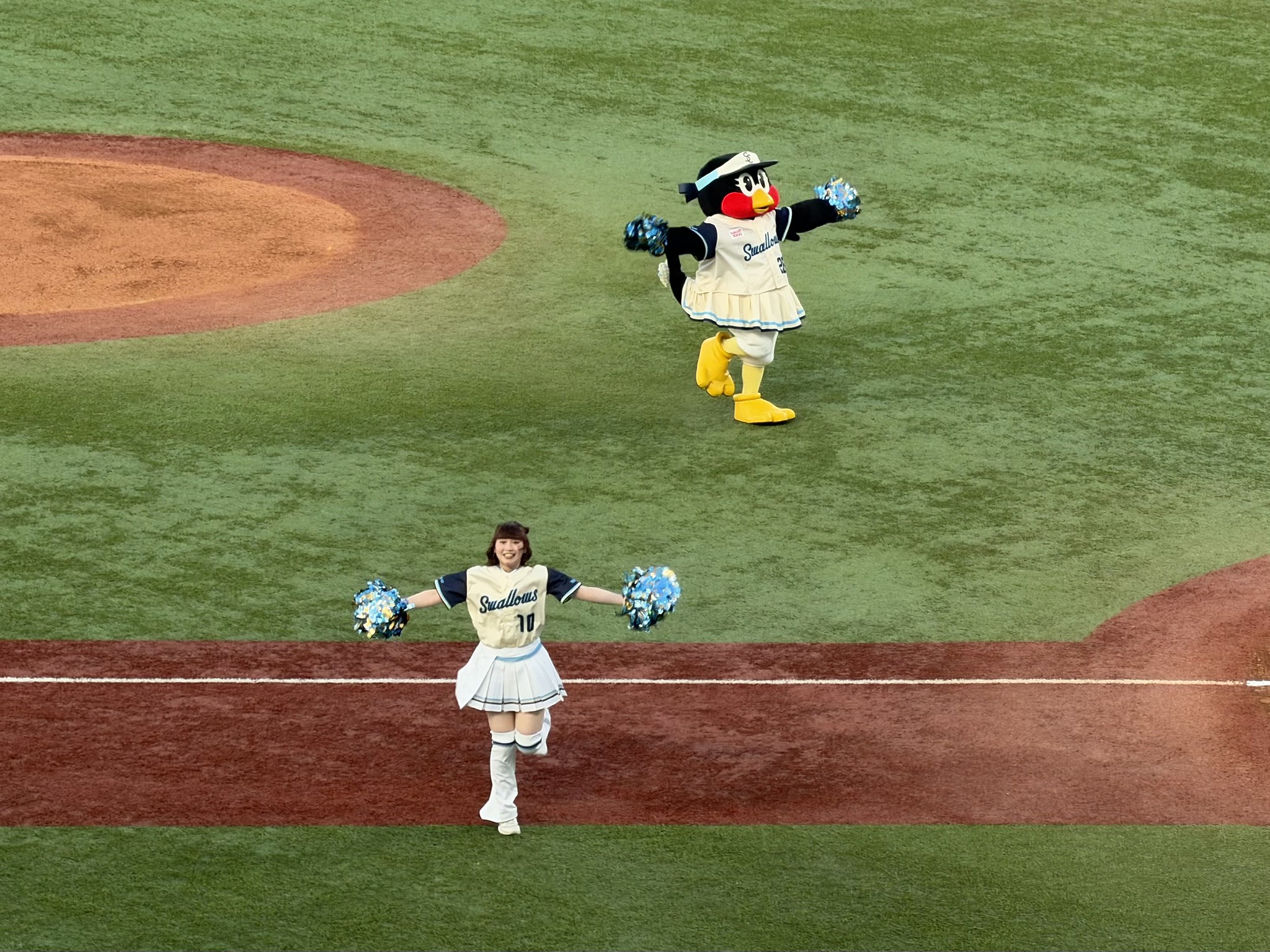
The mascots even get in on the action! The mascot for the Swallows is, of course, a swallow, and they have three of them: I recall seeing the black swallow Tsubakuro (previous photo) and his younger sister Tsubami (above), but apparently there is a “luchador-style” bird named Torukuya as well.
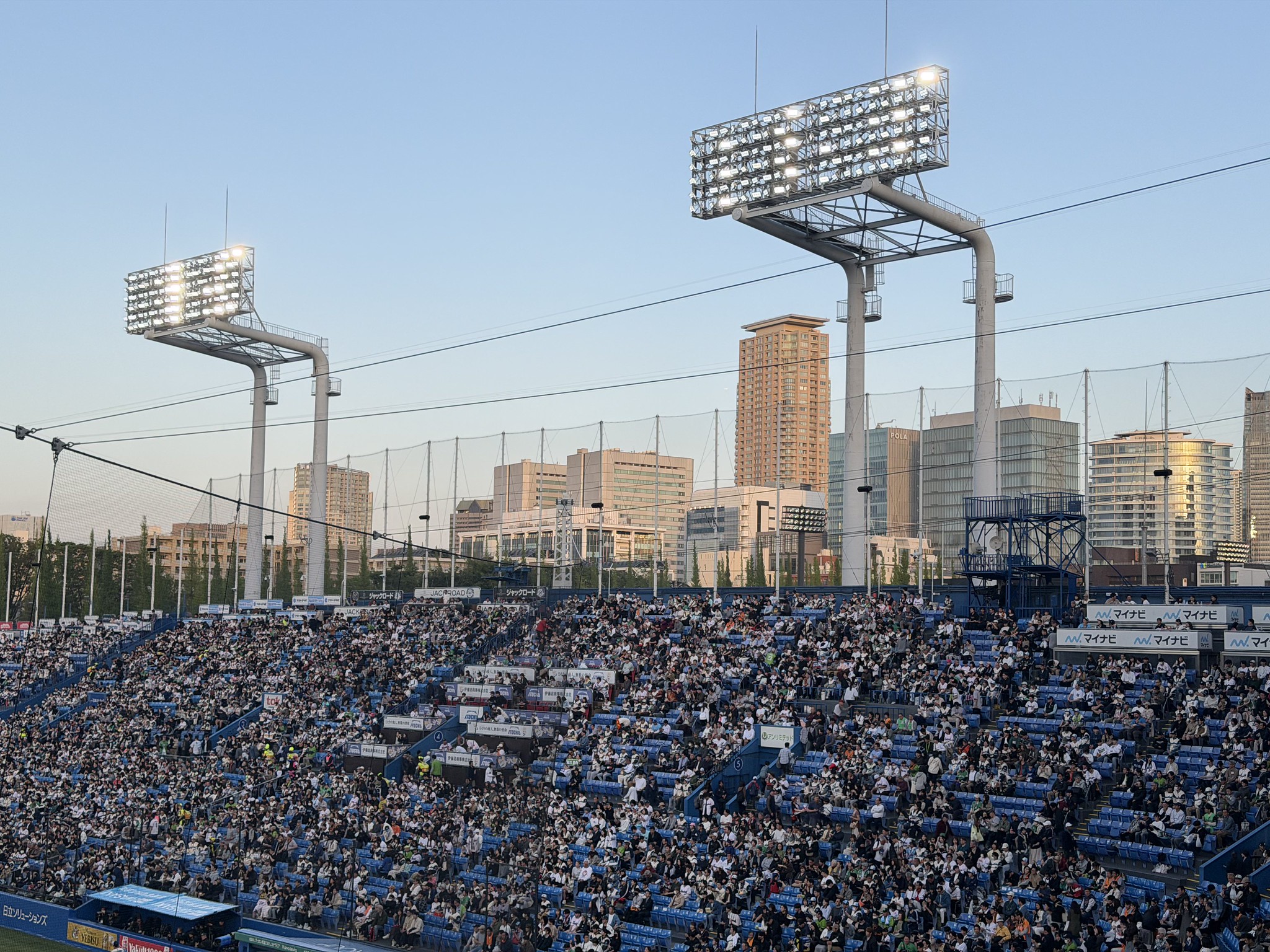
I love urban ballparks like this, where you can see the city skyline.
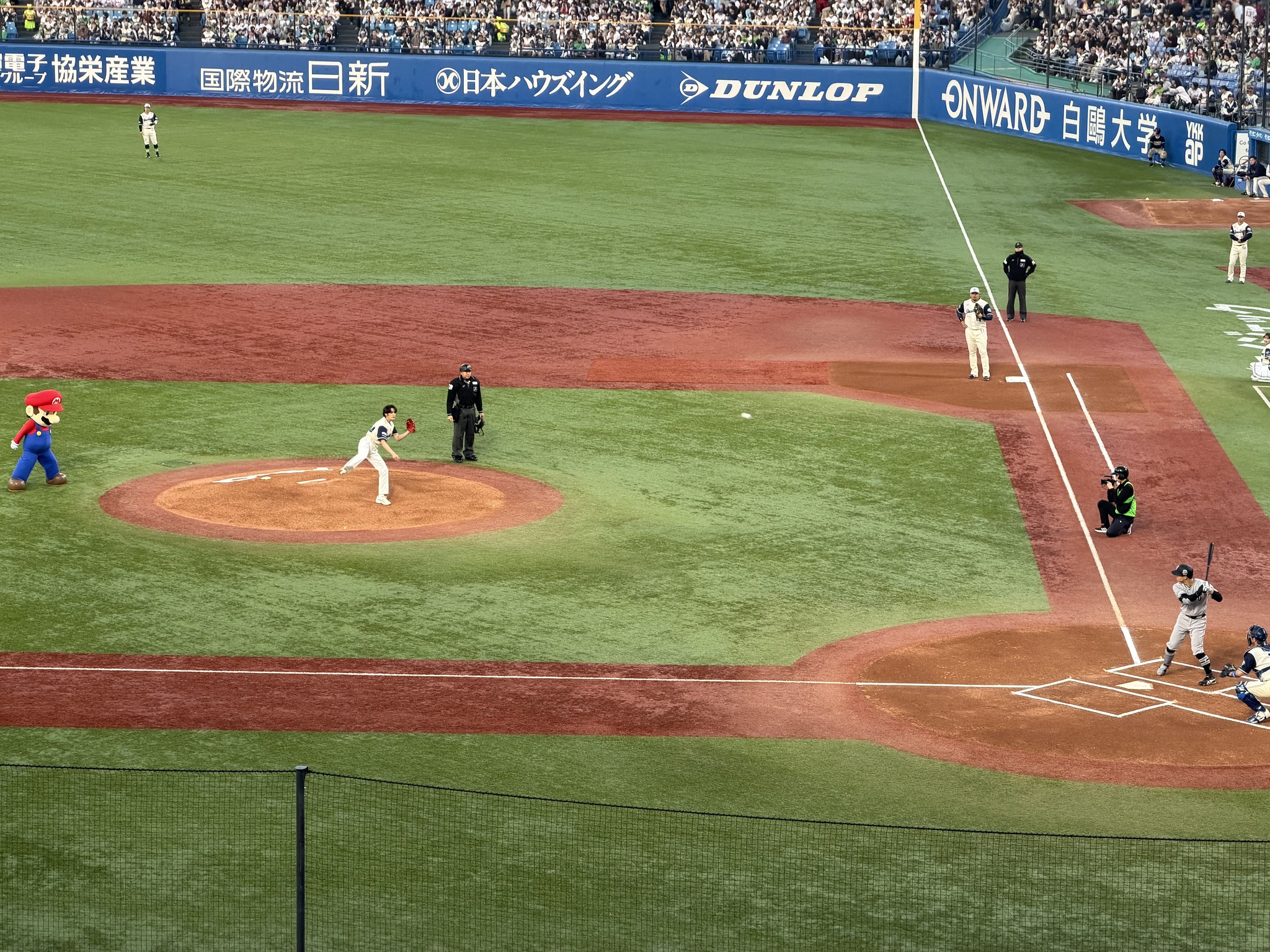
Mario Galaxy (the movie) is absolutely huge right now in Japan, or at least Nintendo’s marketing blitz would make you think so. Mario and Luigi came out for the first pitch, which has an interesting twist in Japan: they also have a batter in the box making an exaggerated swing-and-miss, as opposed to MLB where someone just throws the ball to the catcher.
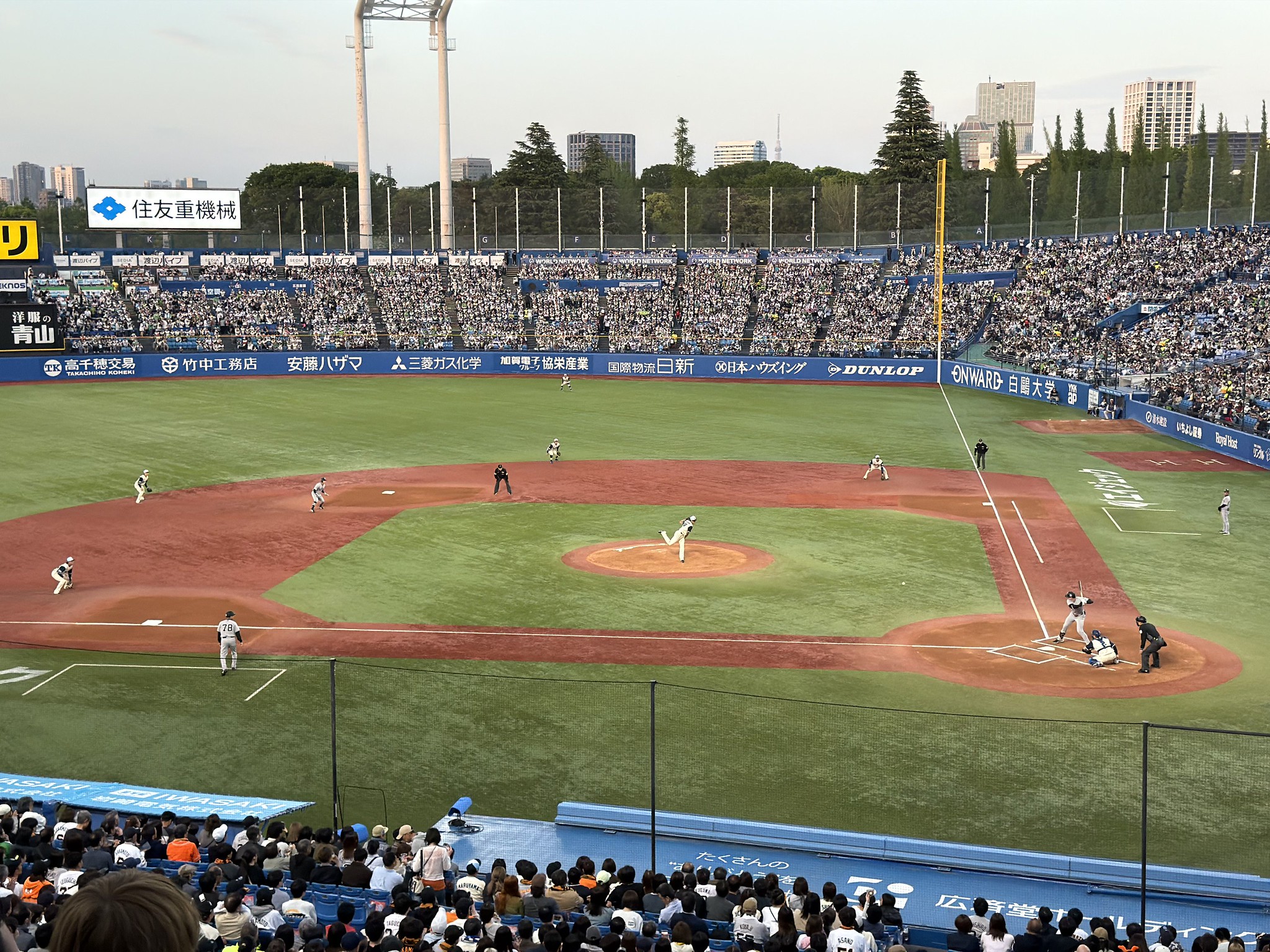
I’ve been to many major and minor league baseball games over the past 35 years, and while it’s overall a very similar experience to what we get stateside, there are a lot of different things about Japanese baseball.
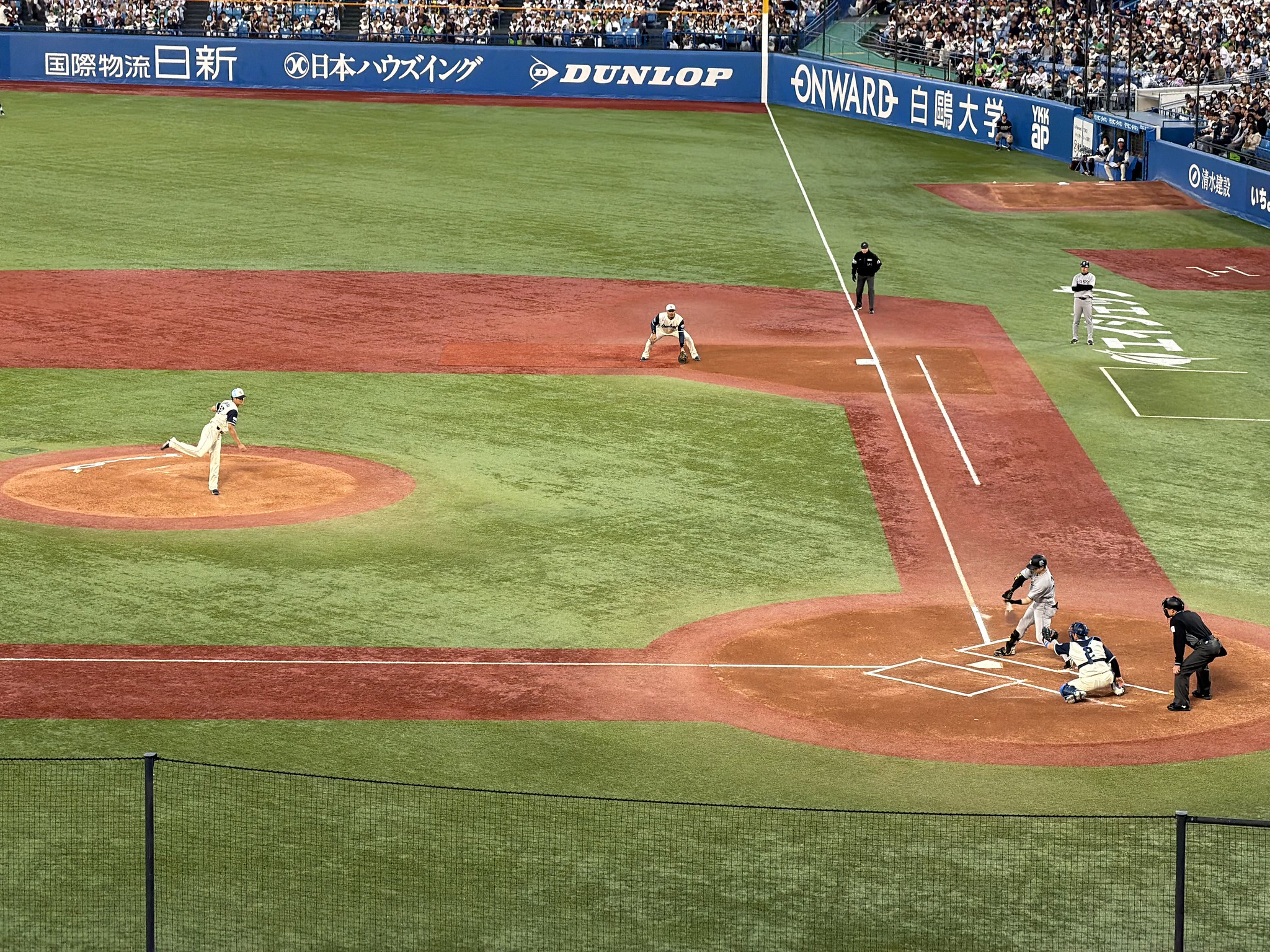
Although they do have replay review, it was rarely used, which I appreciated. The game moved at a faster pace overall. On a photo note, I am very impressed by the “4x” or “100mm” mode which is the telephoto lens of the phone’s trio.
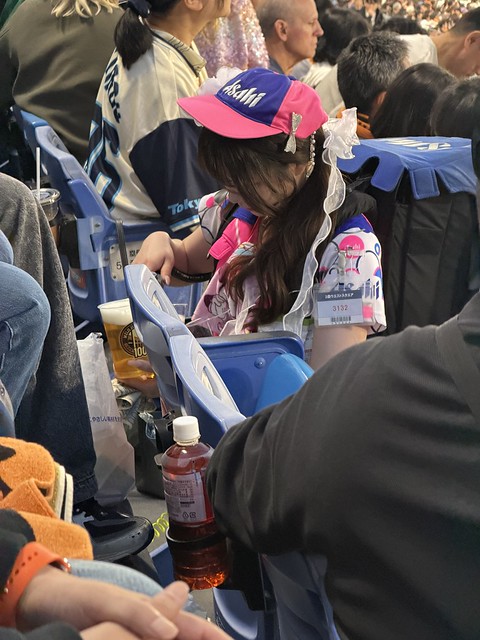
In most places in the USA, they have “beer guys” who crack open a can and pour it into a cup for you. In Japan, girls wearing keg backpacks pour them out!
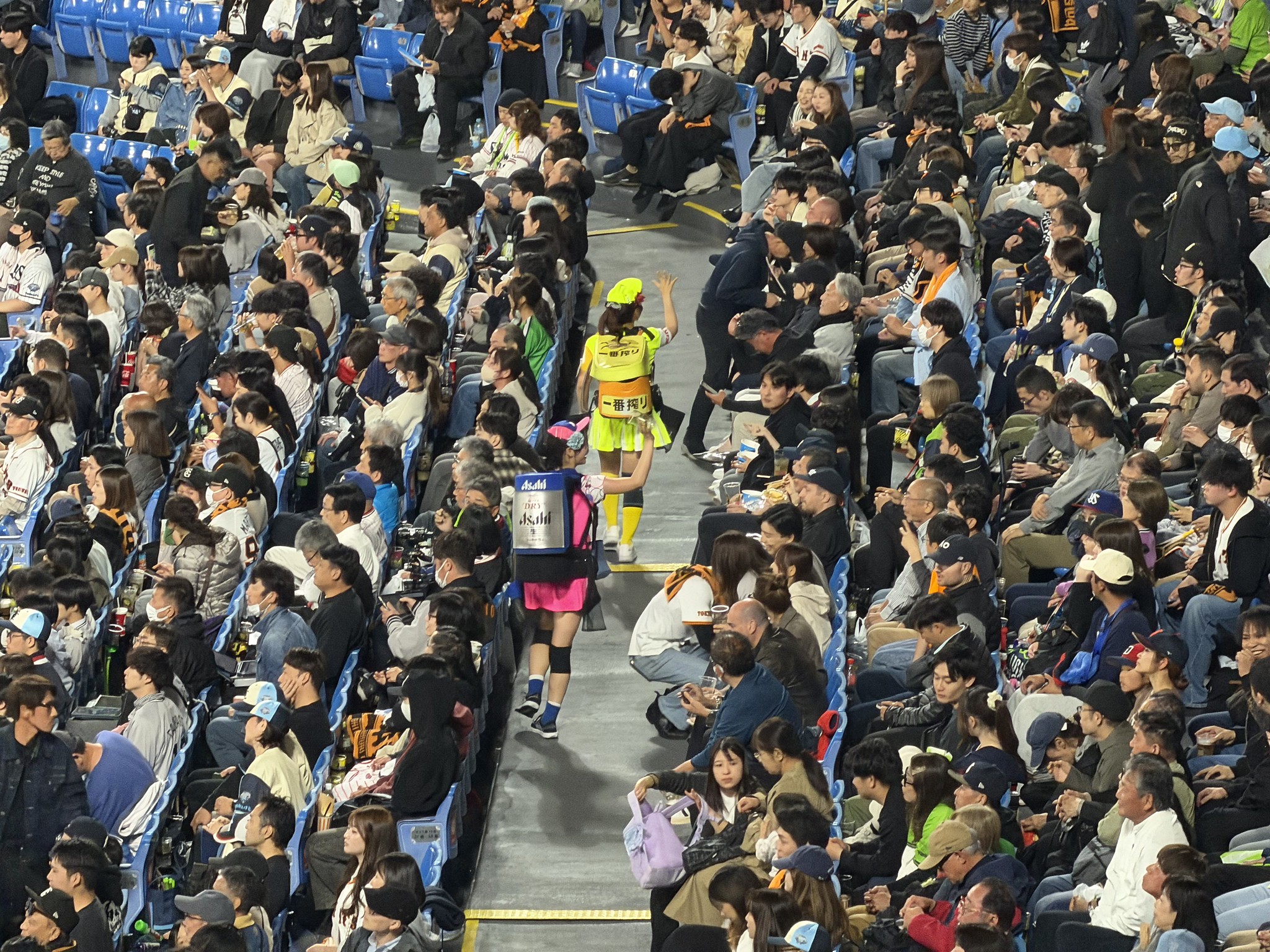
So if you want an Asahi you look for pink, or yellow if you want a Kirin. This entire concept was particularly interesting to me, because although I’ve been to ballgames in stadiums from Seattle to Toronto, most of the live baseball I’ve seen has been in California–where it’s illegal to sell beer in the stands!
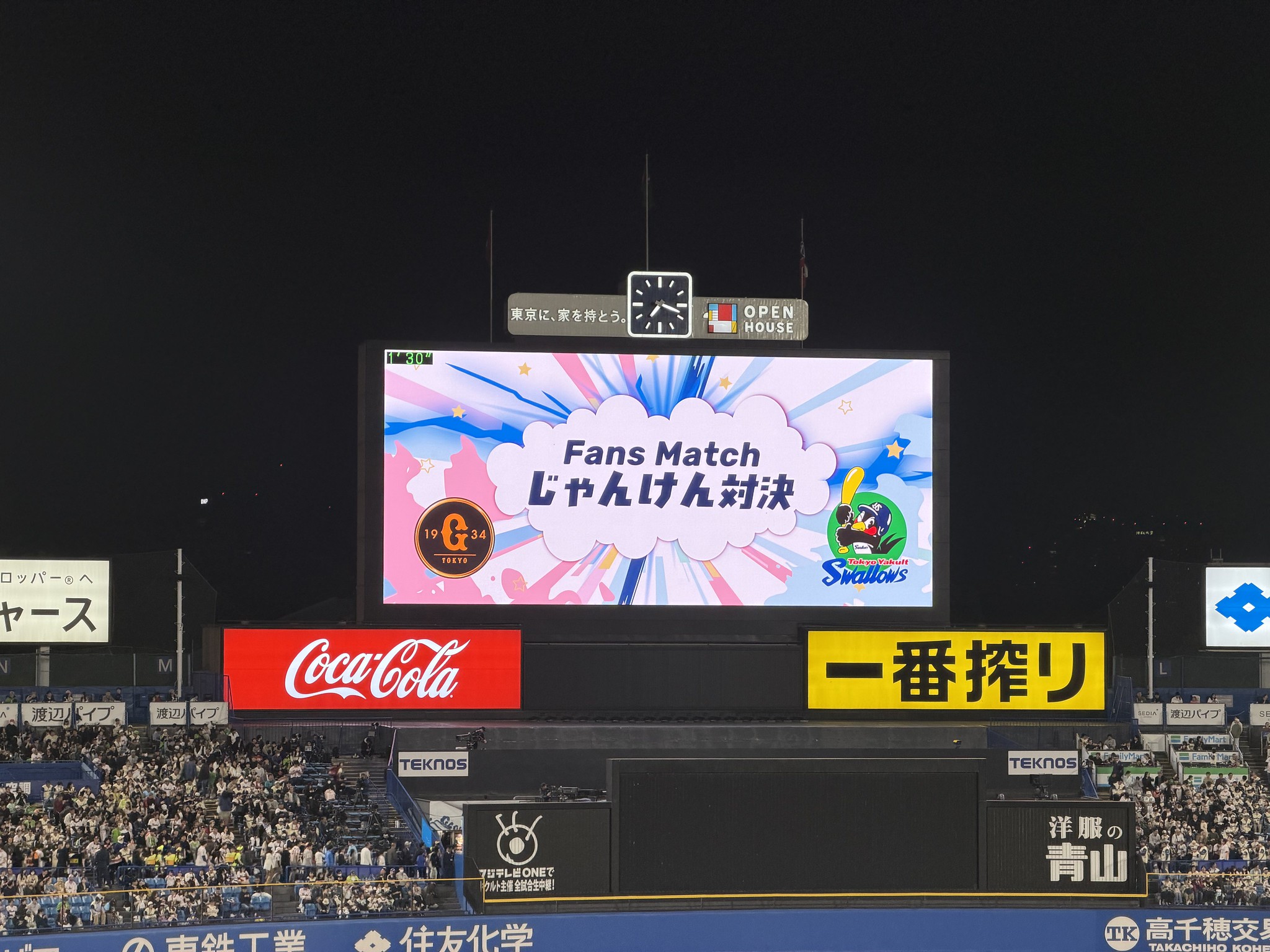
In the middle innings, there were similar activities to American ballparks. This was the じゃんけん対決 (janken taiketsu) or “Rock Paper Scissors Showdown”, where a Giants fan played a Swallows fan in a two-out-of-three match of jan-ken-pon.
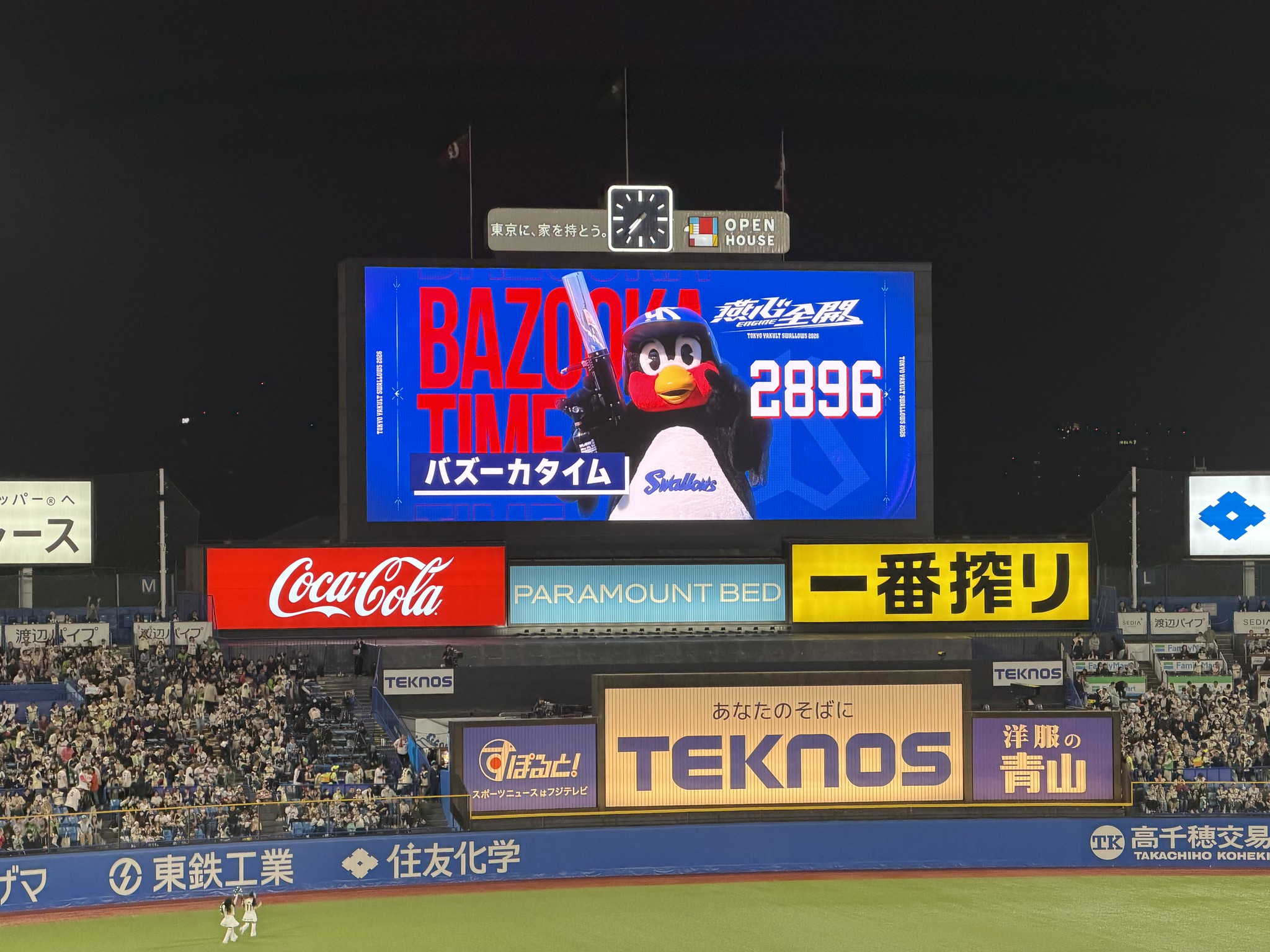
Good to see that the T-shirt bazooka is a phenomenon known around the world. This is one of the Swallows’ mascots, Tsubakuro. The 2896 next to him is a fun bit of goroawase (“wordplay”): you can also read those four numbers as his name, Tsu-ba-ku-ro.
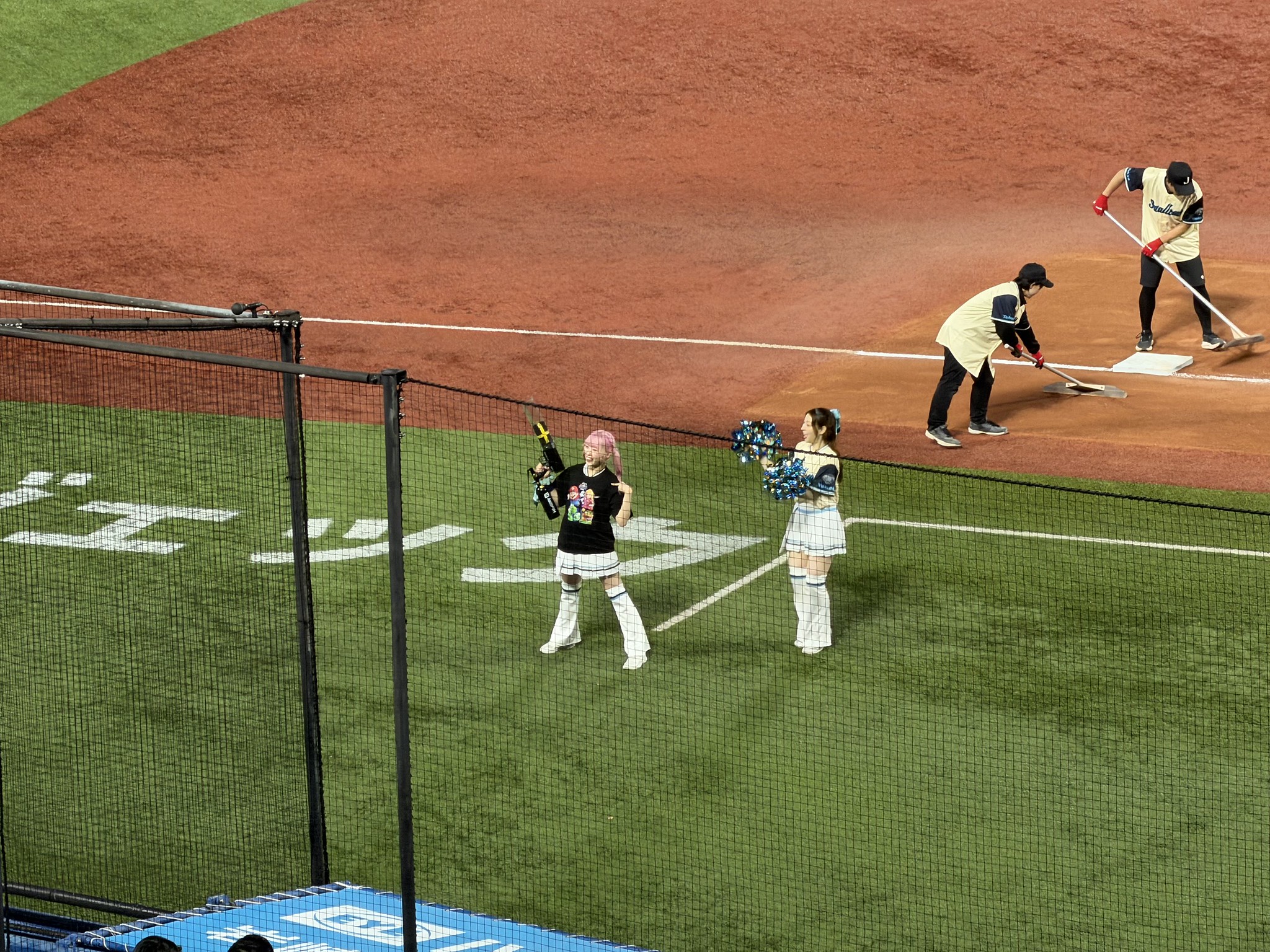
The bazooka was yet another Mario promotion. I was only bummed that we were a little too far away to be in contention!
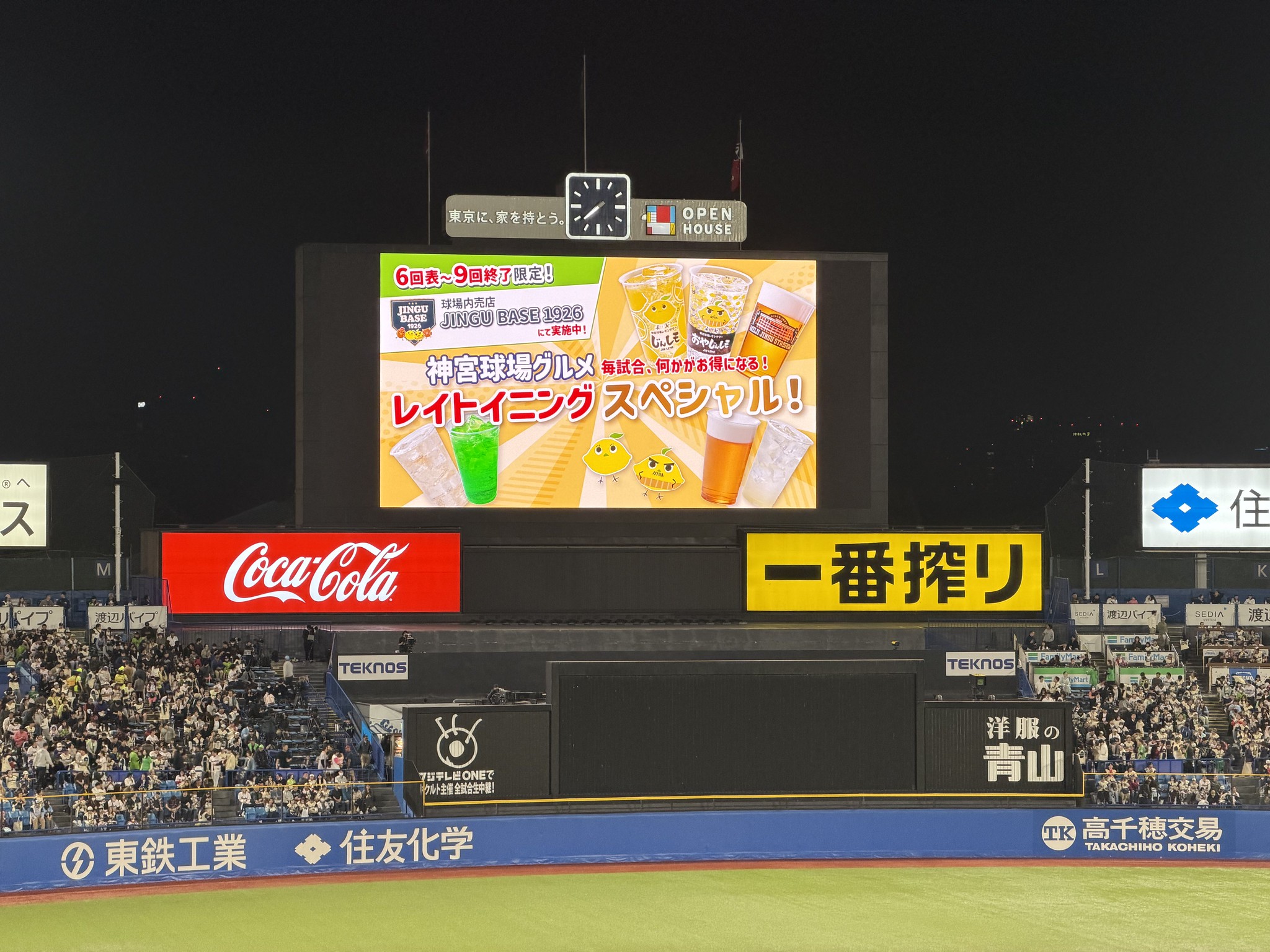
I try to completely abstain from alcohol when traveling, but I couldn’t help but trying the “Jinremo”, which is a special alcoholic gin and lemon drink they make only at the ballpark. The name is a simple Japanese style pun based on the ingredients; jin is gin and also 神, from 神宮球場 (jingū kyūjō), or Jingu Ballpark, while remo is short for “lemon”. This ad itself is very interesting to me though: it advertises a “Late Inning Special” of these alcoholic drinks between the 6th and 9th innings! The limit in the MLB has always been to stop selling alcohol at the end of the 7th inning, with some teams extending that into the 8th inning in recent years. Transportation is the first thing that comes to mind: this ballpark in Tokyo is served by three different train lines across four stations, with no official or recommended car parking to speak of.
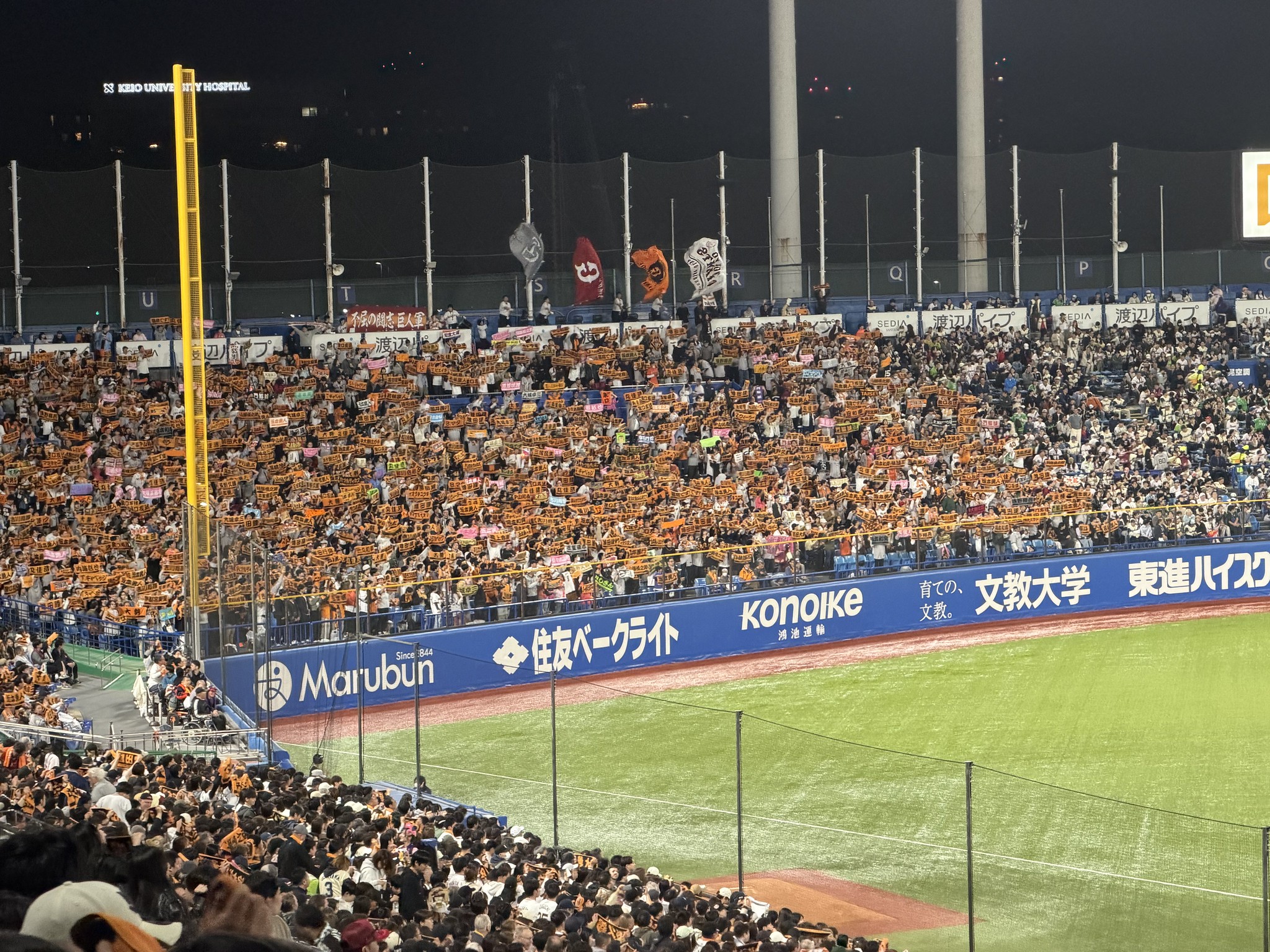
Another cool difference is the presence of cheer squads—for both teams! Even though we were at the Swallows’ home stadium, the entire left field section was dedicated to Giants fans. In right field, there was an equivalent section for Swallows fans. While American baseball tends to follow a rise-and-fall pattern of cheering and silence, there is constant noise at the Japanese game. Amazingly, every single player has their own unique cheer.
The middle of the seventh inning, which we call the “Seventh Inning Stretch” and sing “Take Me Out to the Ballgame”, is also different in Japan, although there is still a song to sing.
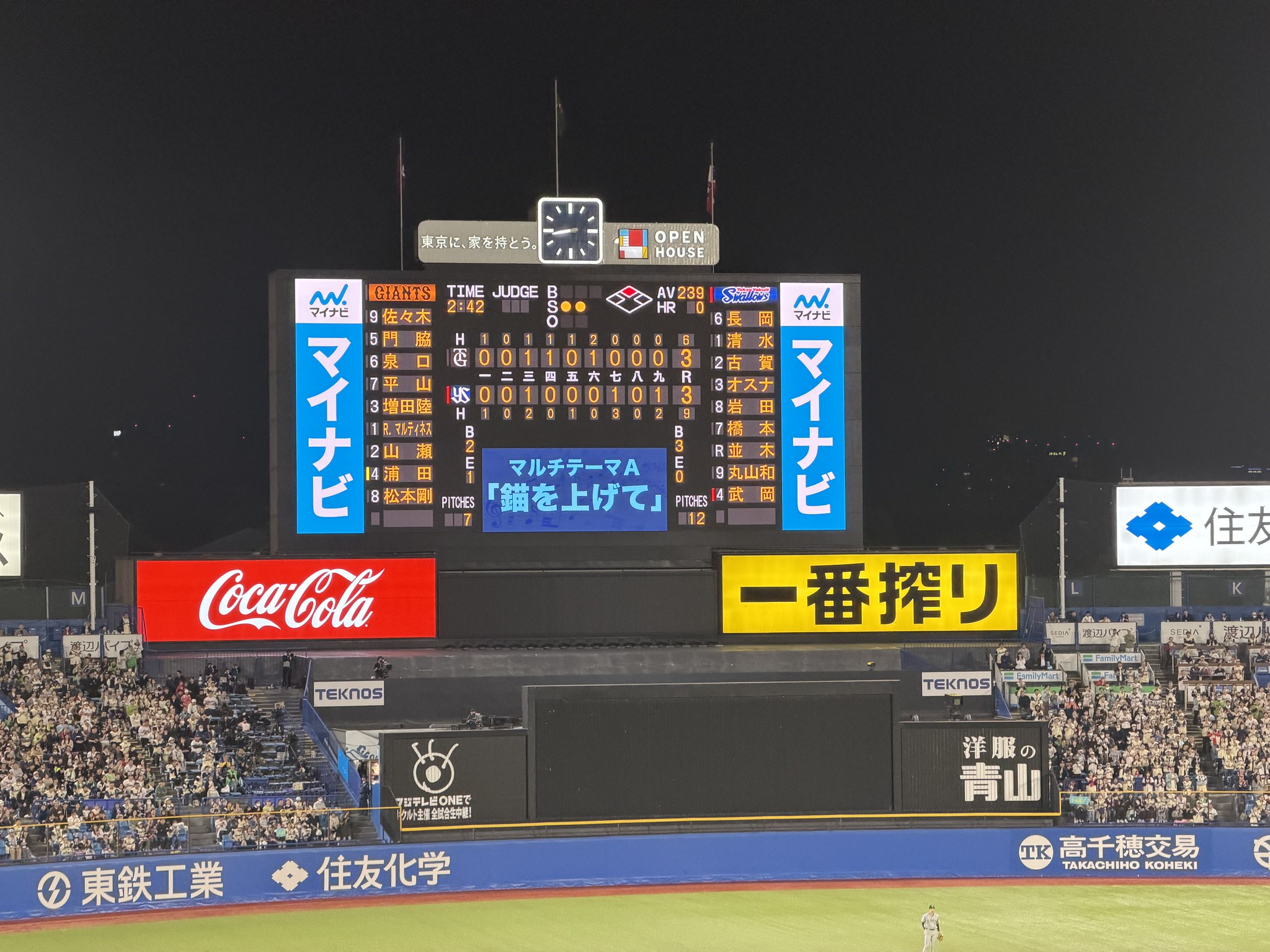
Although I’ve stopped watching baseball on TV, I still really enjoy seeing live games. The atmosphere was great and the weather was perfect, so I would have had fun anyway, but this was a genuinely exciting game. The score got to 3-1 in favor of the Giants, but the Swallows came back and ended up winning the game on a walk-off hit in the bottom of the ninth inning!
Regrettably, I have no photos of what we did next, which was to meander with thousands of other fans to the train station. It was even busier than our rush hour experience earlier in the week, and it was quite a testament to the orderly and respectful behavior of Japanese folks that this went perfectly smoothly. The massive throng of fans somehow easily filtered through the turnstiles, onto the platform, and into the train. I didn’t see a single instance of drunken or disorderly conduct. There were no loud assholes, no music blaring, and no fist fights. Part of why they can’t sell alcohol in America all the way until the end of the game is that people can’t behave themselves. Once again, Japan seems like a country full of adults, compared to my home country of America which seems to be mostly populated by disrespectful smoothbrains.
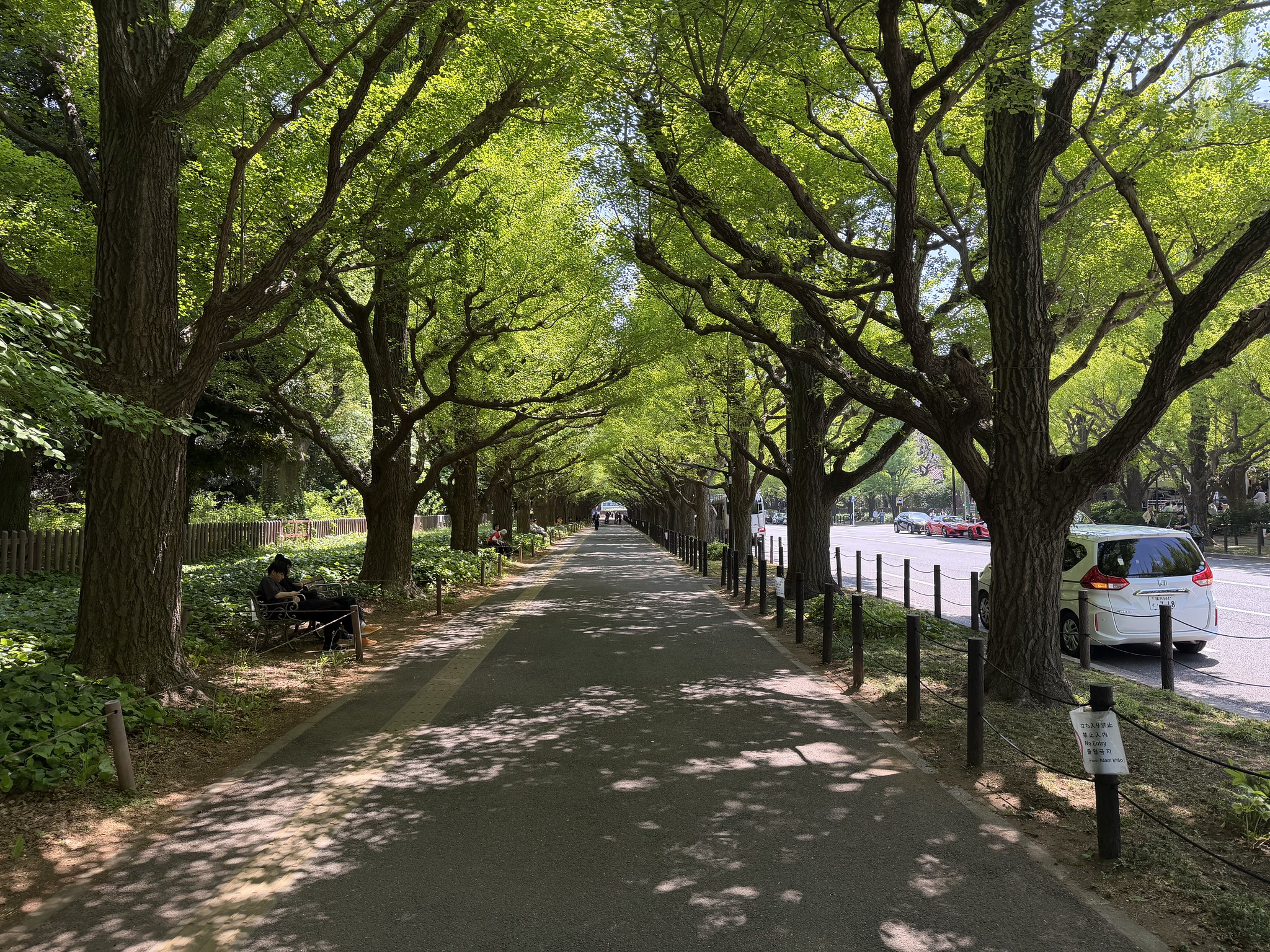
The next morning we were right back in the same place for the Shake Shack Gaien meet. I already covered this in its own article, so I won’t go over it again.
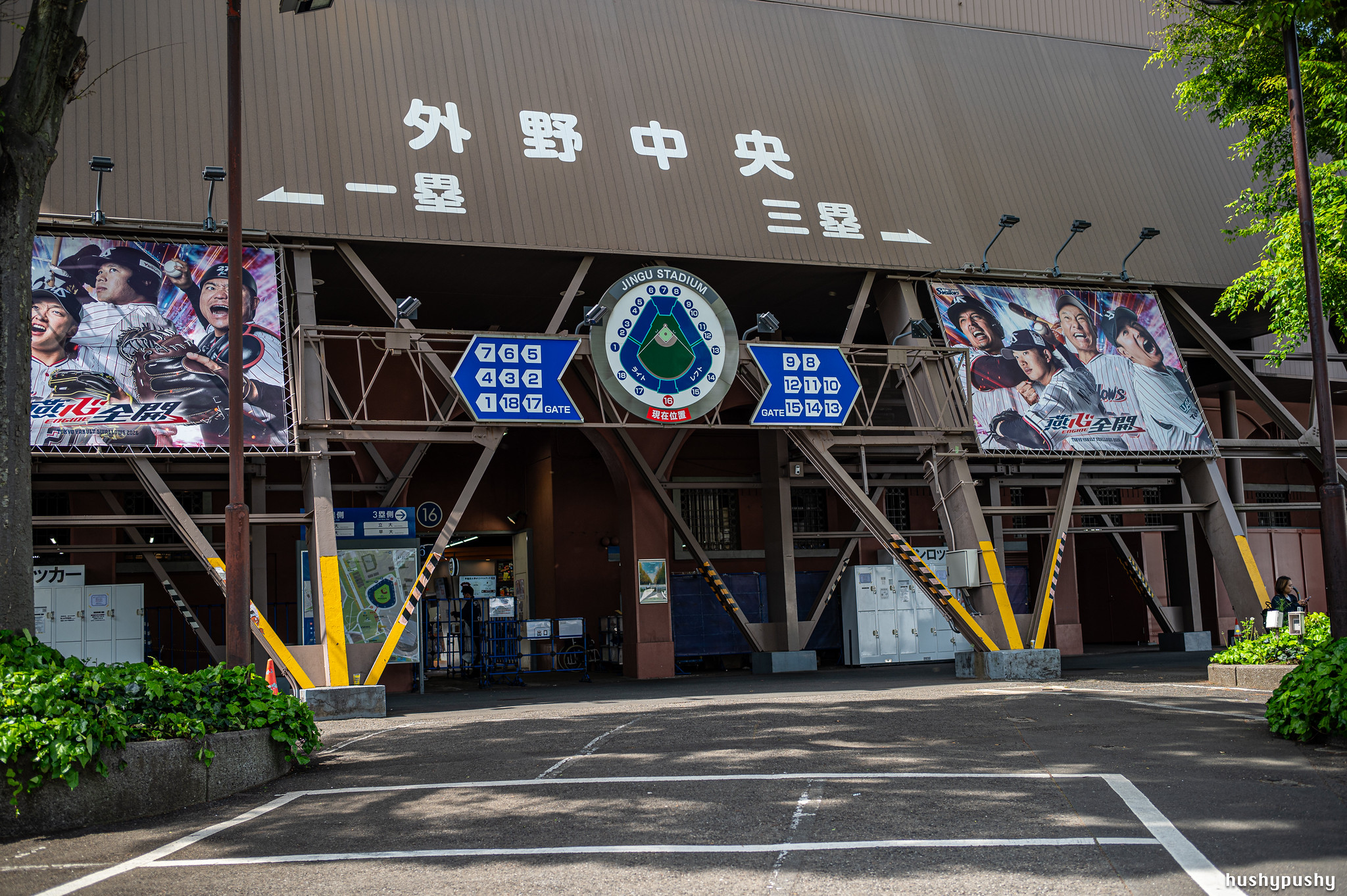
And I mean “the same place” quite literally: we walked right by the entrance to the ballpark. It was pretty interesting to see it so calm after the big crowds of the previous evening. The car meet is actually how I decided which baseball game to see in Japan. Initially I wanted to visit the Tokyo Dome (the Giants home field), but they didn’t play any home games that week. I thought about going to east Tokyo to the Chiba Marines; I even considered going all the way to Kobe to see a game at the stadium where Ichiro used to play (when he was with the Orix BlueWave). But ultimately, when I realized there was a beautiful ballpark in Shinjuku and I could still see the Giants, I was sold. And now, after learning this historic ballpark is set to be demolished, I know I made the right choice.
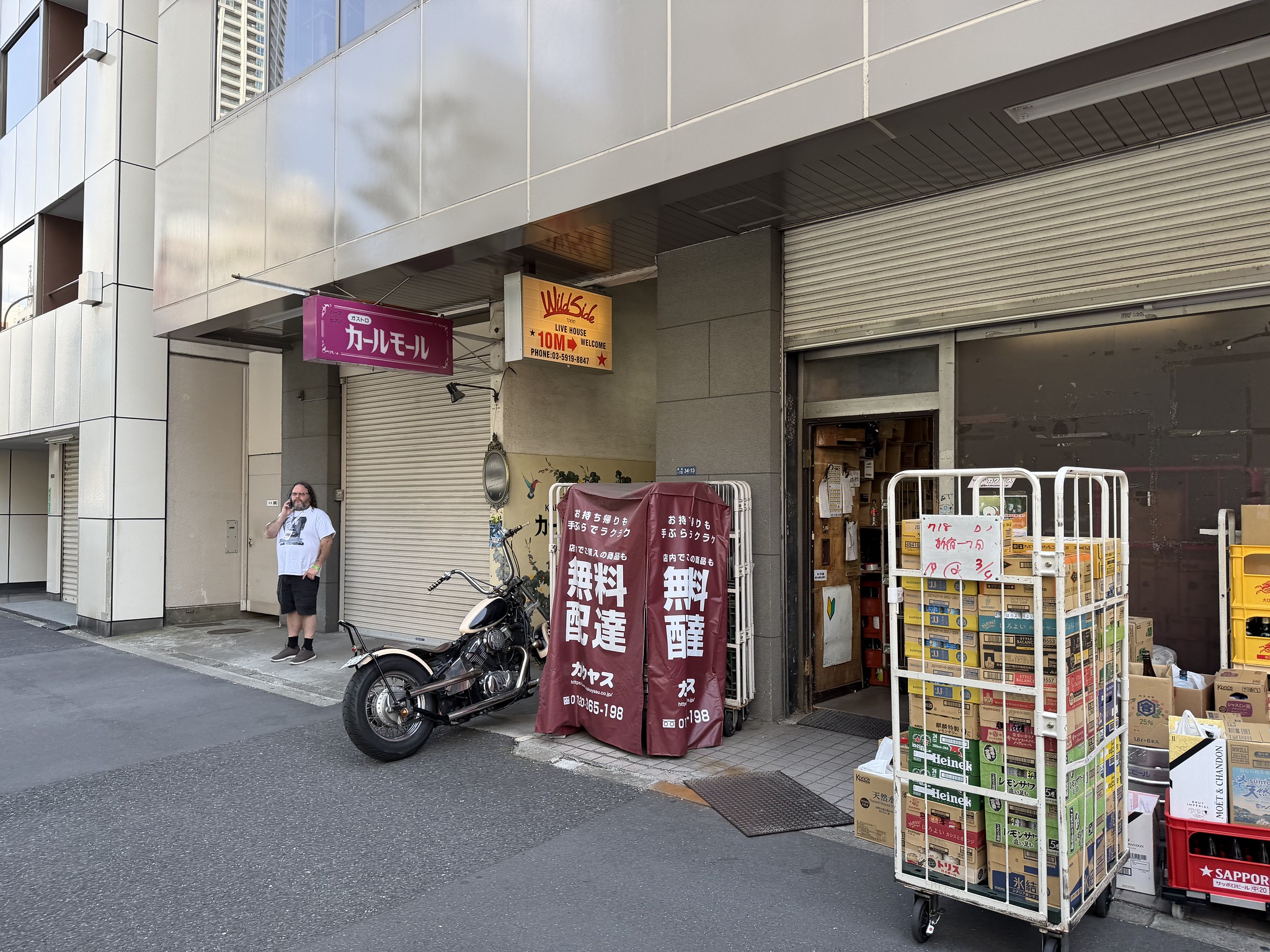
Finally, here we were: the entire catalyst for this trip, the Gekiko Festival. The word “festival” likely conjures up images of grand outdoor venues, but since this is Tokyo, this three day festival took place in a very small club.
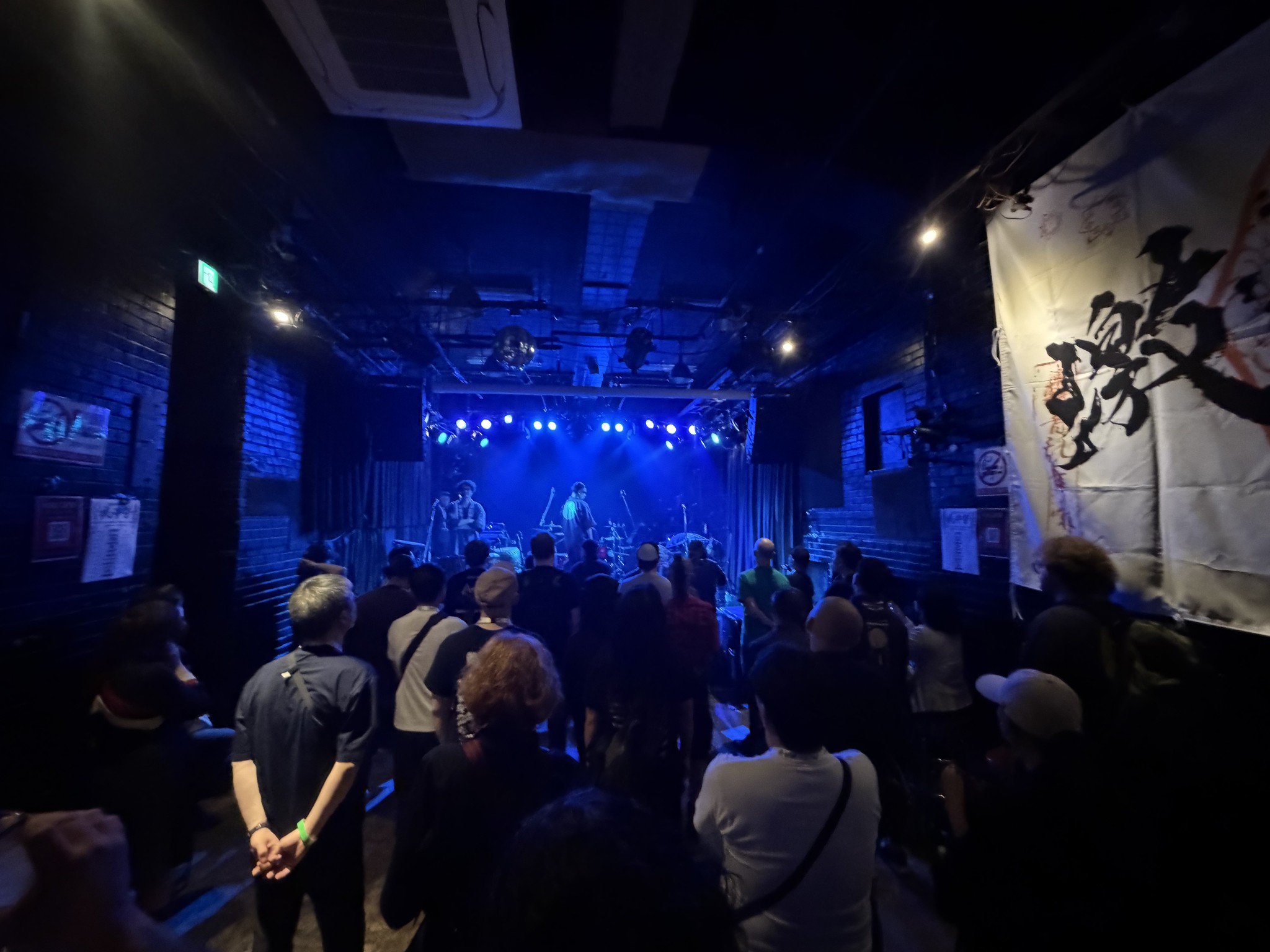
I used the wide lens on the phone for this shot which exaggerates distance, but it’s still clear to see how tiny the venue was. This is all there was: I took this photo while sitting at the bar all the way on the other side of the building from the stage.

The opening band was actually the organizer of the event, Kandarivas. It was a shame that, being the first band, not many people were there to see them. Not only did they have a pretty groovy feel that I really enjoyed, they also had taiko drumming, which I’ve never seen in metal music before. This actually ended up being my favorite band of the entire festival.
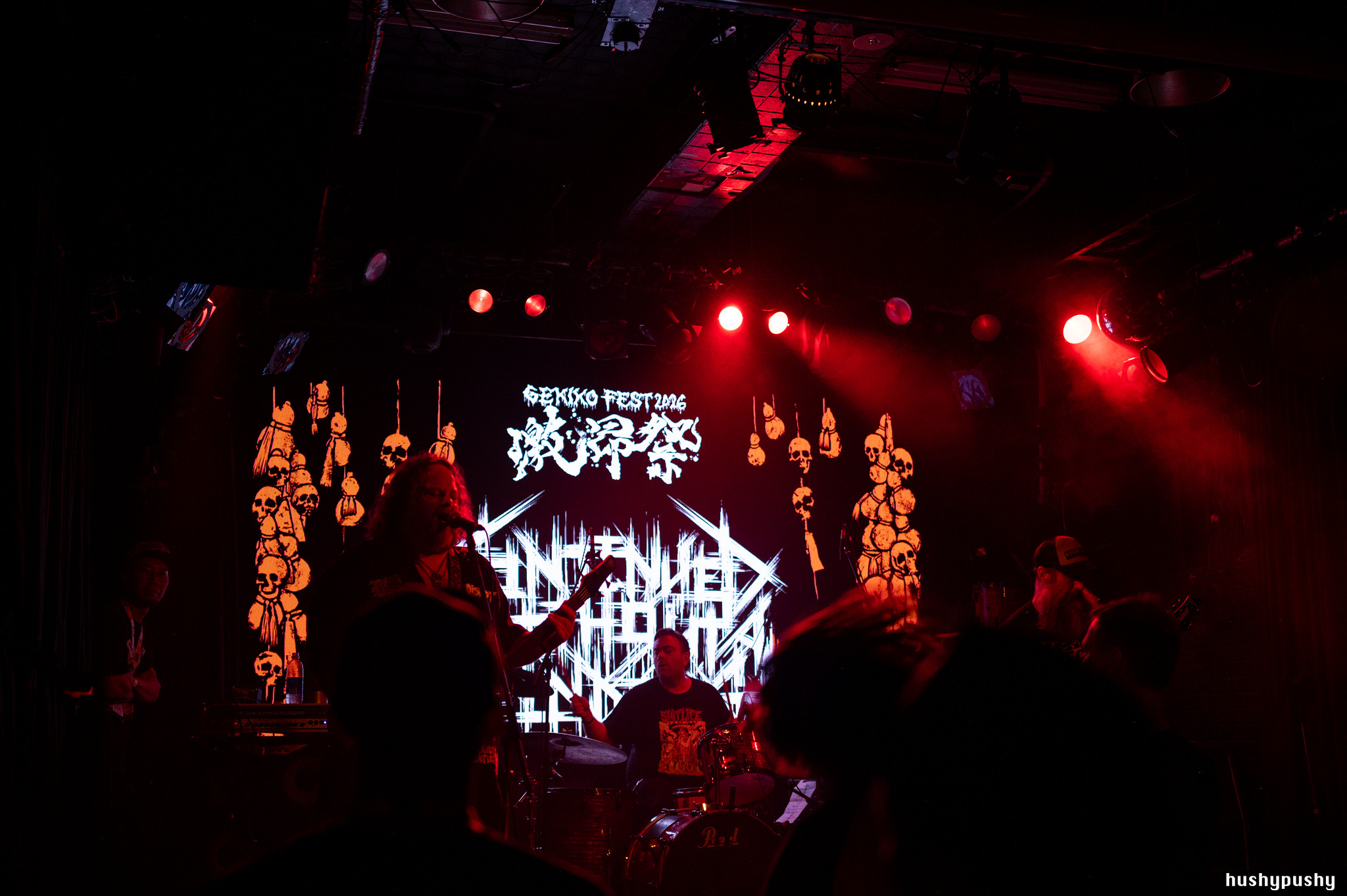
Next up was Continued Without a Finding, who are from Massachusetts. Stefan is friends with these guys so we chatted a bit before the show started. It was pretty funny to meet up with some Americans in Tokyo. In fact, most of the show’s attendees seemed to be non-Japanese.
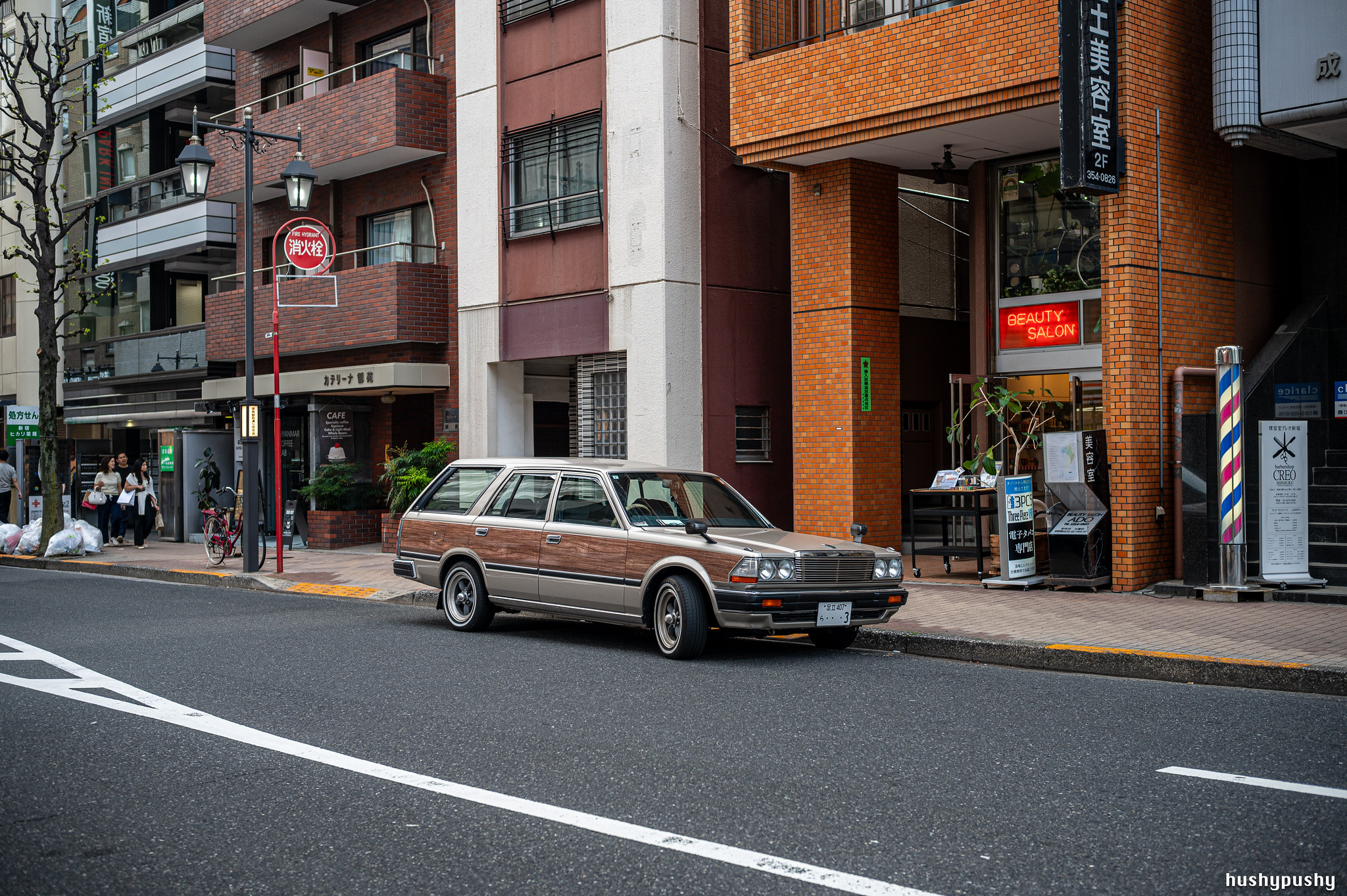
After them, we decided to go explore a bit and then grab some food. I spotted this super cool Gloria woody wagon and had to run over for some snaps.
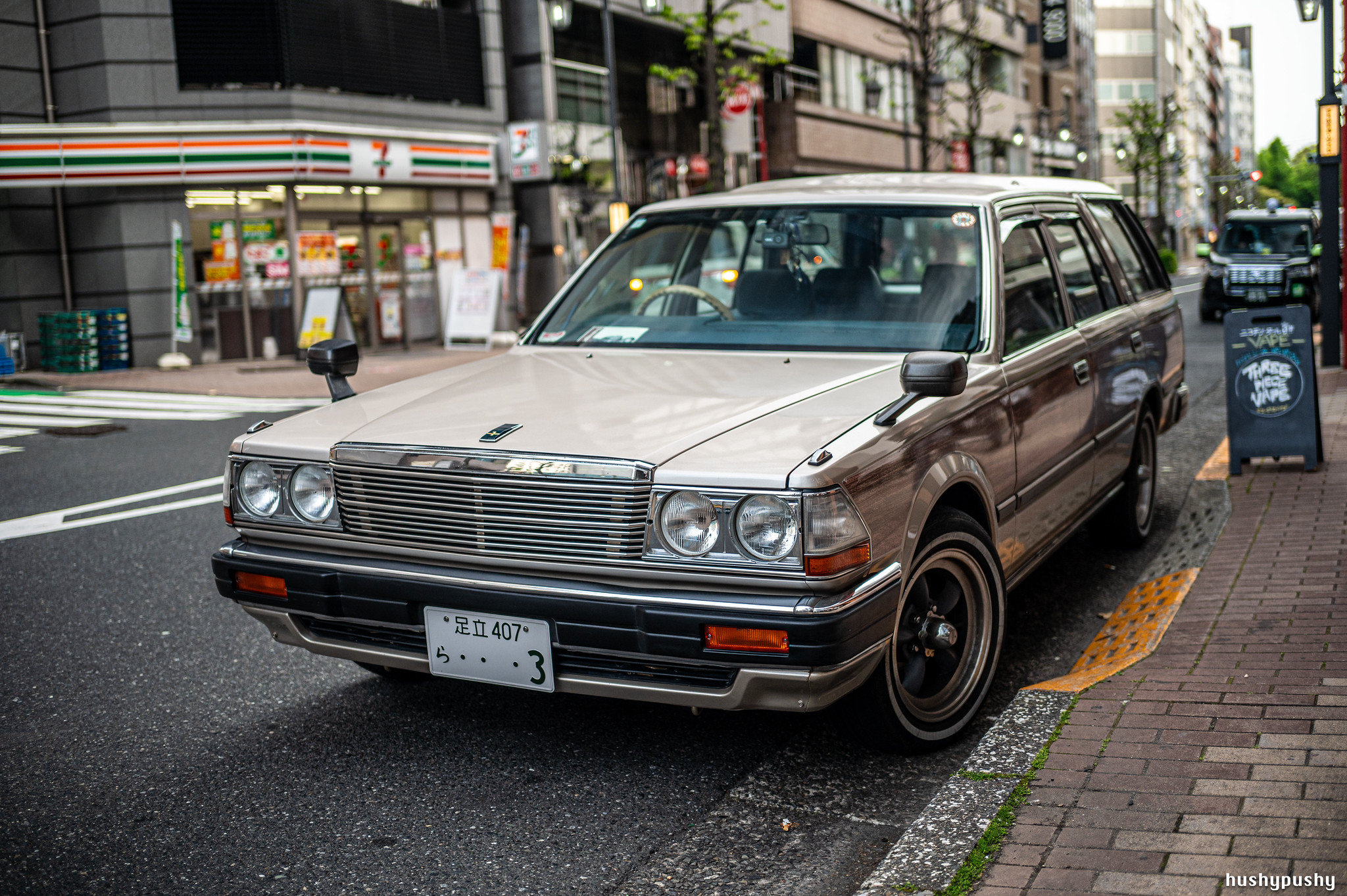
Nissan produced so many cars over the decades that we didn’t get in the USA. There were eleven generations of the Gloria from 1959 to 2004, and the only one we got was a version of the eleventh generation that got turned into the Infiniti M45.
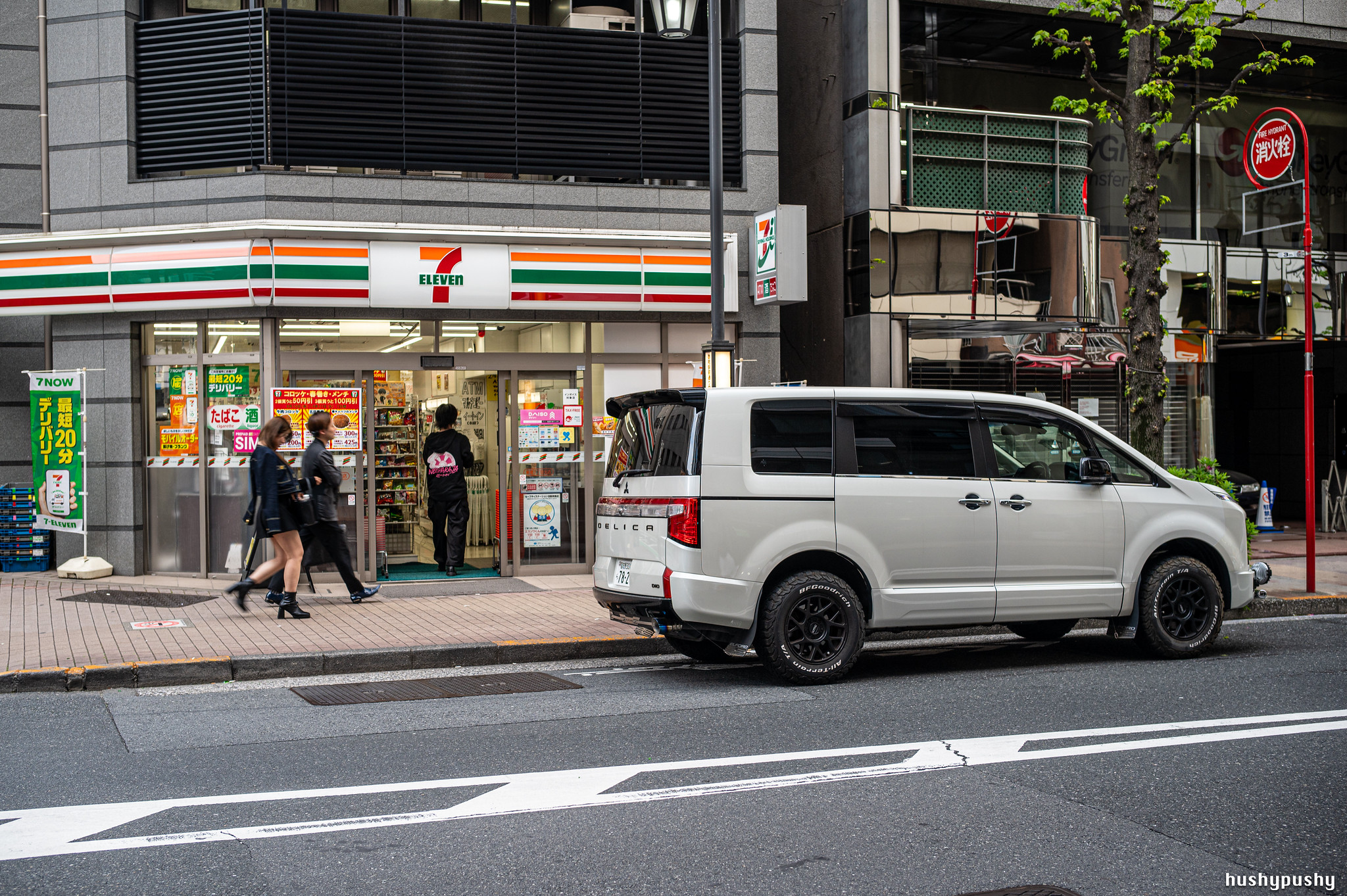
Another cool modded Delica, another snazzy 7-Eleven. I find it simultaneously funny and sad that in Japan, Mitsubishi cars and 7-Eleven stores are well-regarded, while in the USA, both Mitsubishi cars are 7-Eleven stores are considered low class. Through Larry Chen, I see that 7-Eleven is trying to make themselves a car hangout spot, but no car guys I know want to bring their pride and joy to a dingy store with filthy bums sleeping in front of it. If you aren’t aware, the “Asian-style” 7-Elevens (which are also found in Korea) have a great variety of tasty snacks and drinks at bargain prices, which might be quite a shock if you’re used to the high-priced poor selection of crappy sustenance offered in American stores.
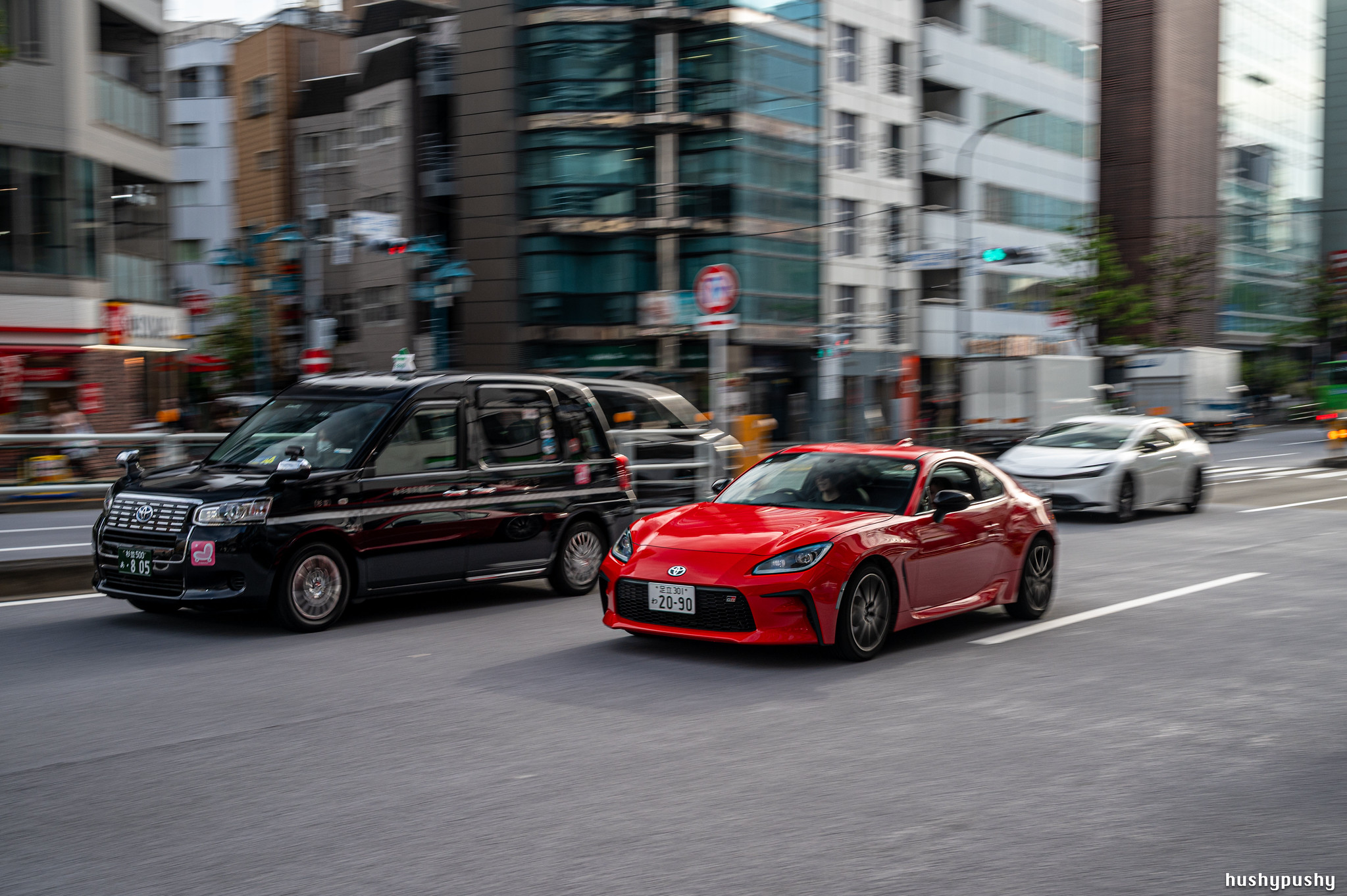
I love what Toyota is doing these days; I get the impression that Akio Toyoda really knows what he’s doing. Not only do they make the best sports car (GR86) and the best economy car (Prius), they also make the national taxi of Japan (JPN Taxi) and plenty of other great cars, trucks, and vans.
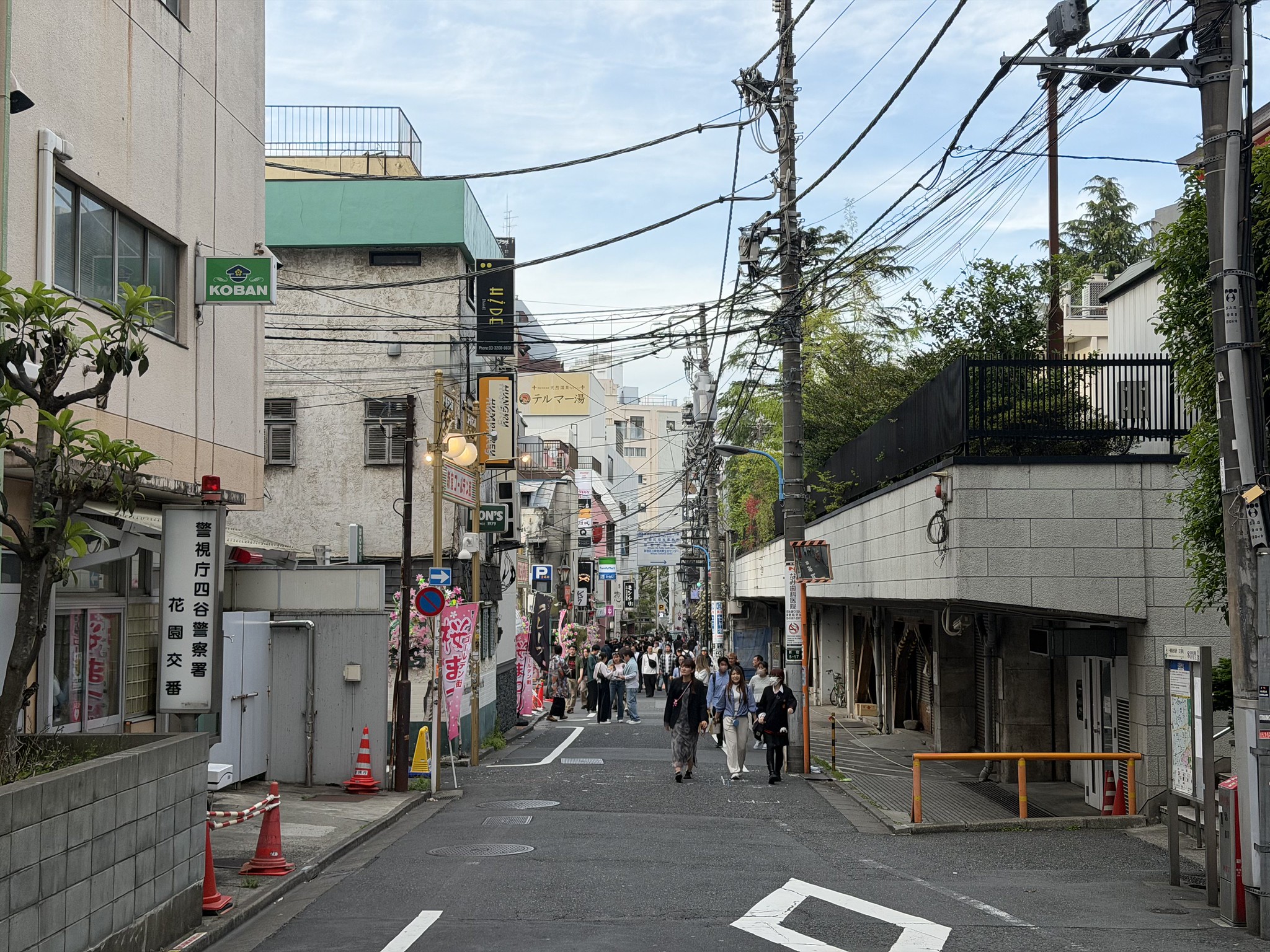
Our first stop was Golden Gai, a neighborhood that’s very famous for its bar scene, or more specifically, the density of it: there are over 200 different bars in this one tiny neighborhood!
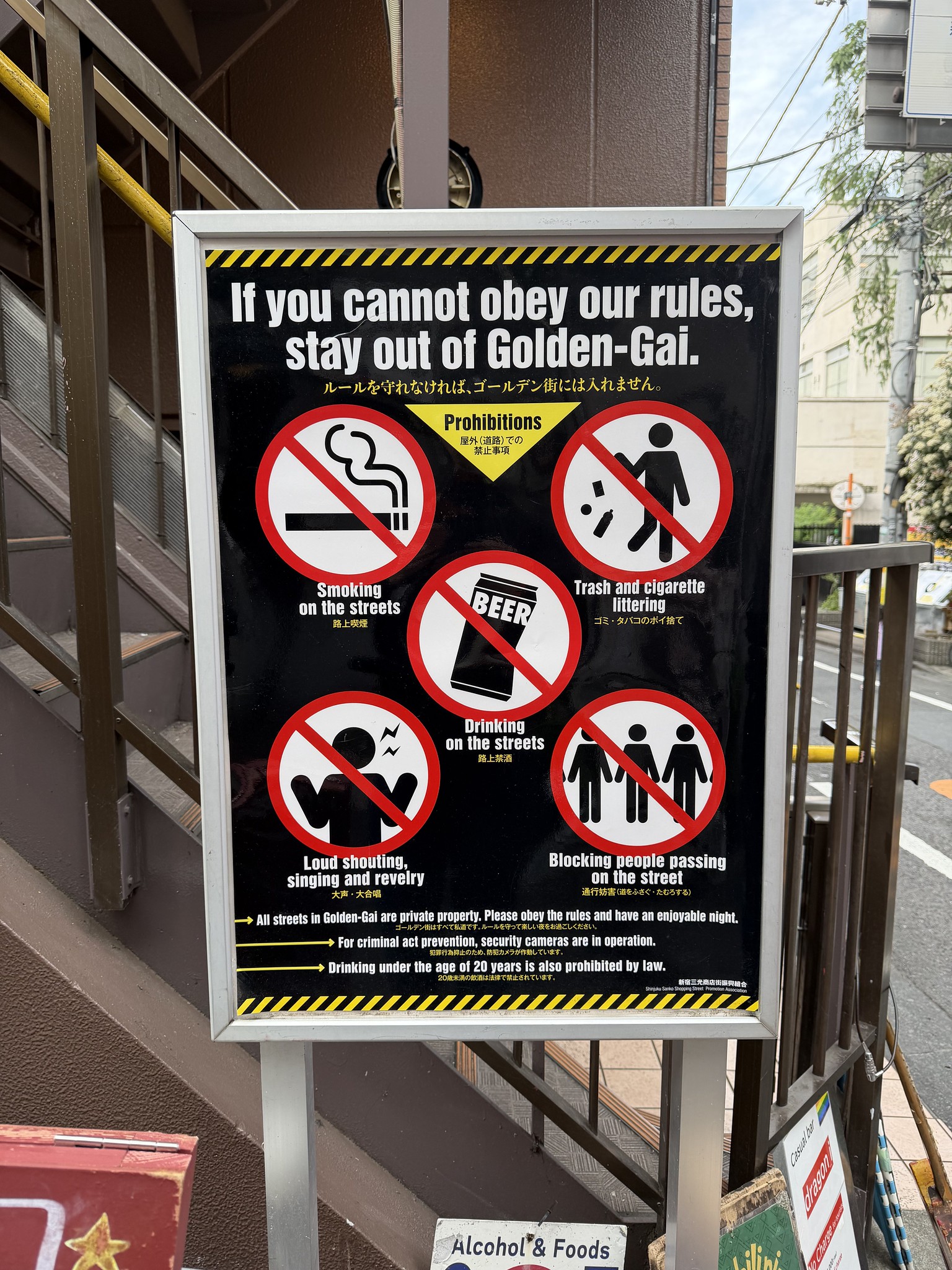
Interestingly, the entire neighborhood is private property, so they are allowed to have an extra set of rules. Some of them are redundant; for example, it’s already illegal to smoke outdoors in Shinjuku anyway. However, Americans might be surprised that drinking alcohol in public is generally not illegal in Japan, so that one stands out here.
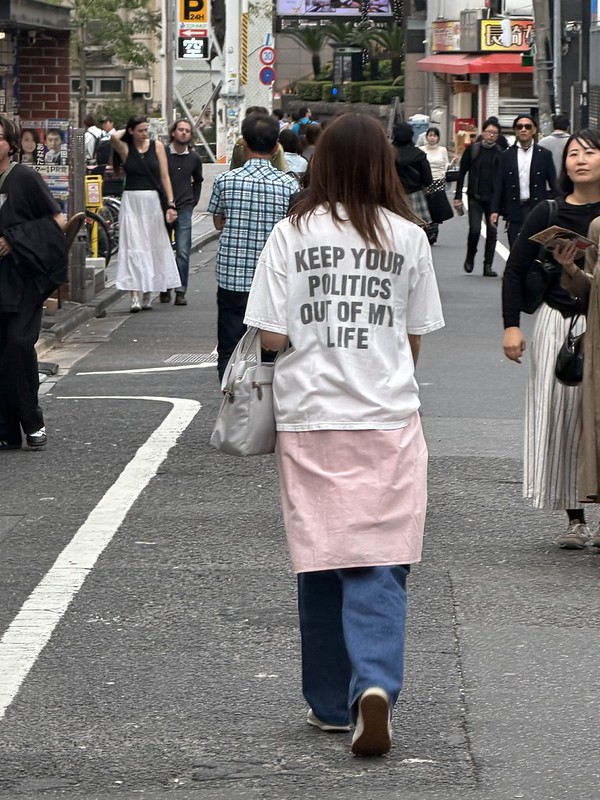
Another aspect of the private streets is that it’s generally frowned upon to take photos in public here, and it’s explicitly not allowed to take photos inside any of the establishments. Additionally, it’s taboo in Japanese society to take photos of other people without their consent. With that said, I had to get a snap of the fantastic shirt this woman was wearing. Amen, sister.
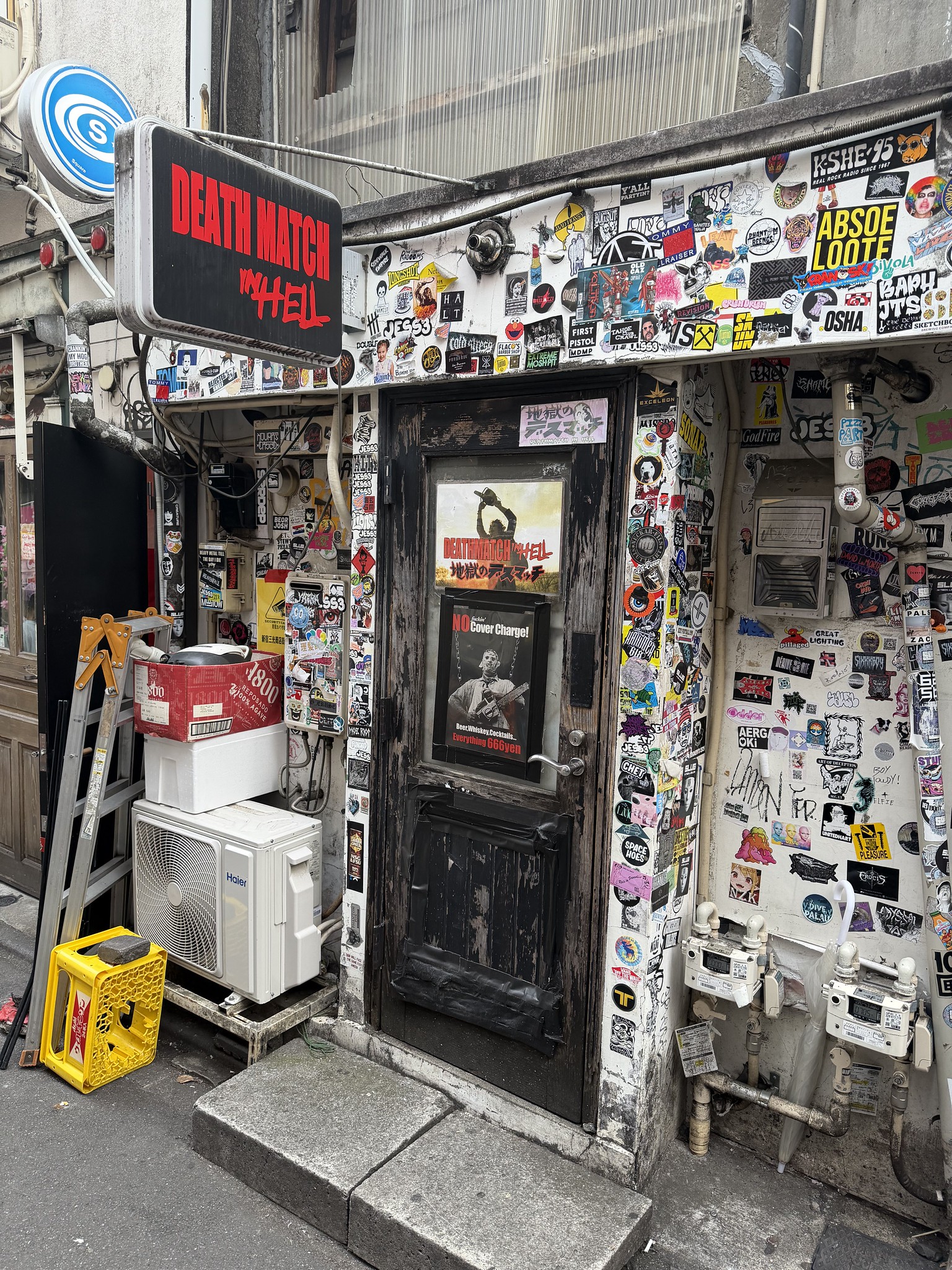
Being early in the evening, many of the bars weren’t even open yet. This place, which advertises “NO fuckin’ Cover Charge!” and all drinks priced at 666 yen (about $4.22) seemed intriguing, but they weren’t open yet.
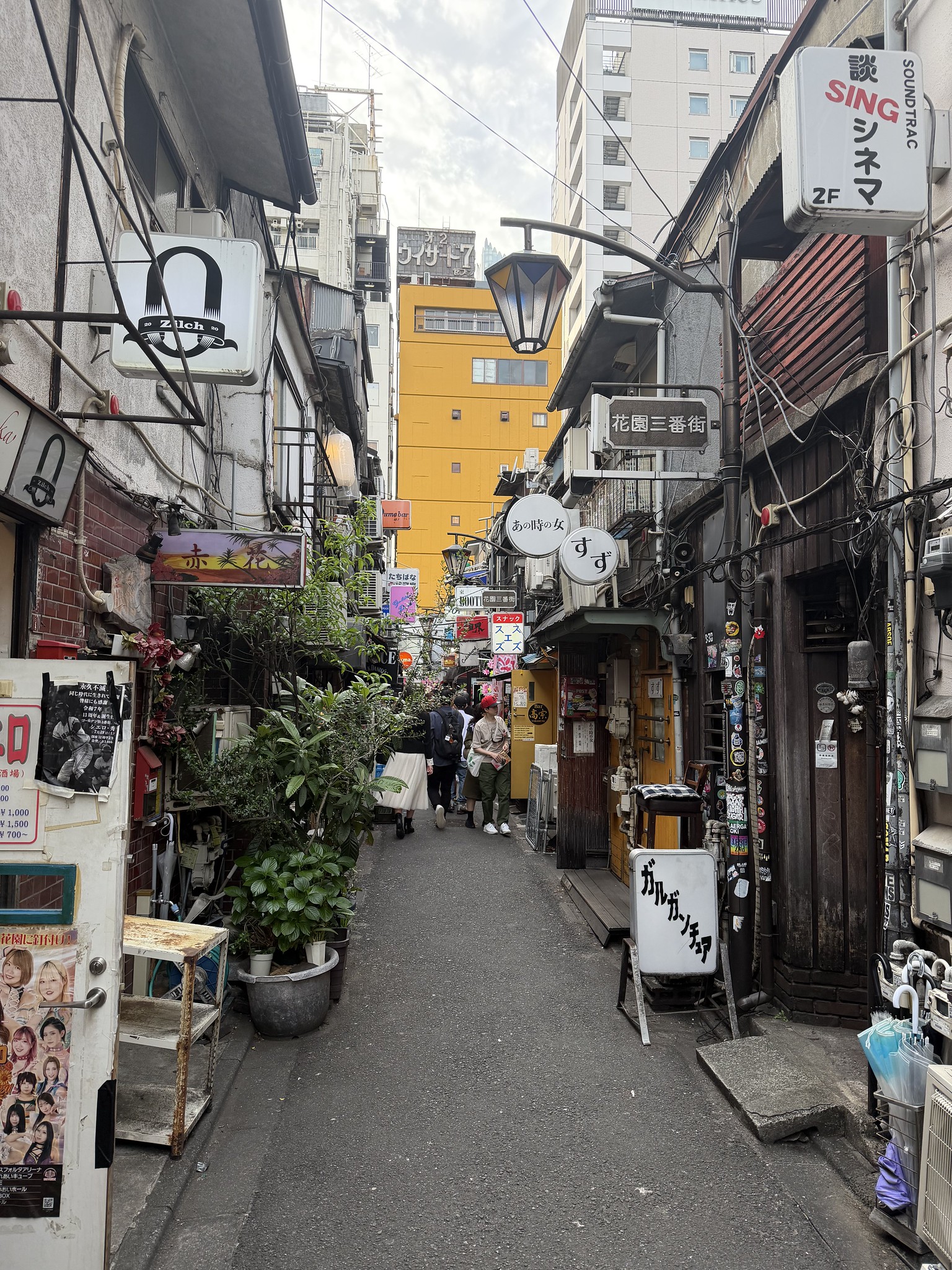
Wow, I took a lot of portrait-orientation photos here. I am generally against the concept of portrait photos, because most of the world exists in the left-right plane rather than up-down; that’s why virtually every creature on earth has their two eyes arranged horizontally. However, as you can see, there was a lot of verticality in this narrow neighborhood that just lended itself to the portrait format.
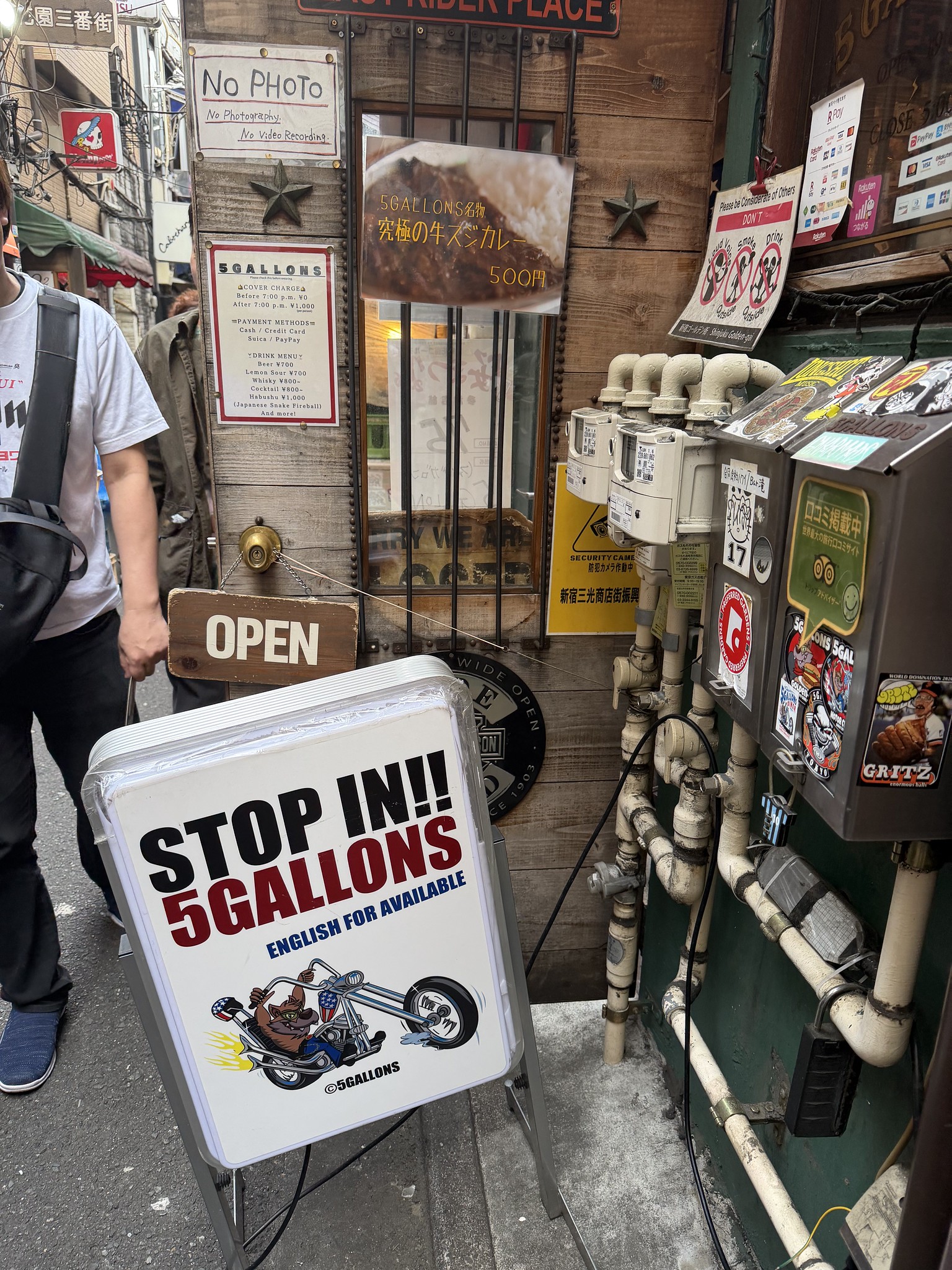
Little bit of everything here: some Engrish, a menu, and a no photography warning.
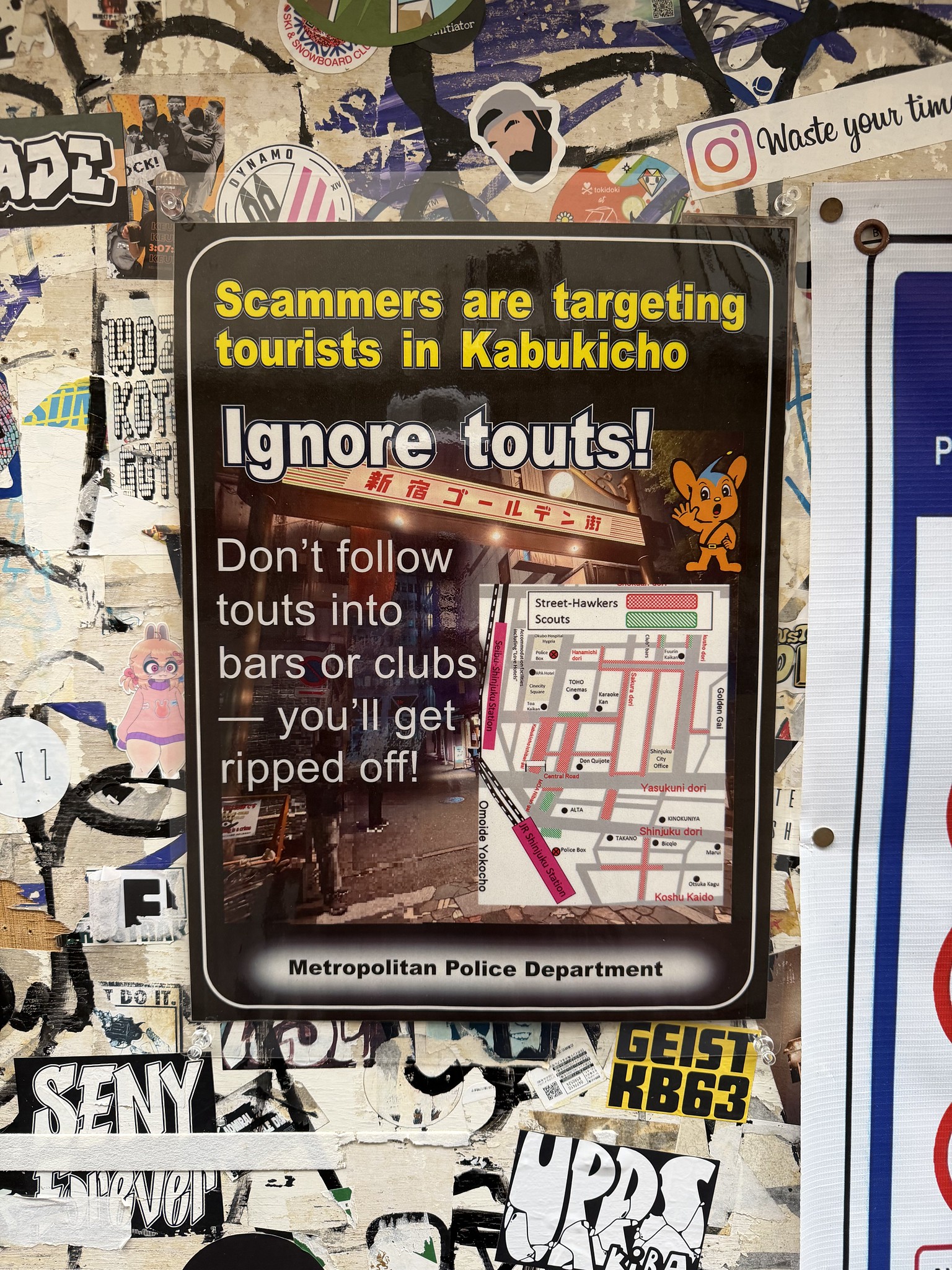
Here’s an interesting new vocabulary word for me: Tout, as a noun. I’m only used to it being a verb, in the context of someone touting their achievements, for example. Apparently tout can also mean to solicit patronage and accordingly, it can also mean one who touts. I think “hawker” (seen on the map) is probably a word that more Americans would recognize. I was warned about this before my trip, but perhaps these signs are doing their job because we had zero encounters with such people.
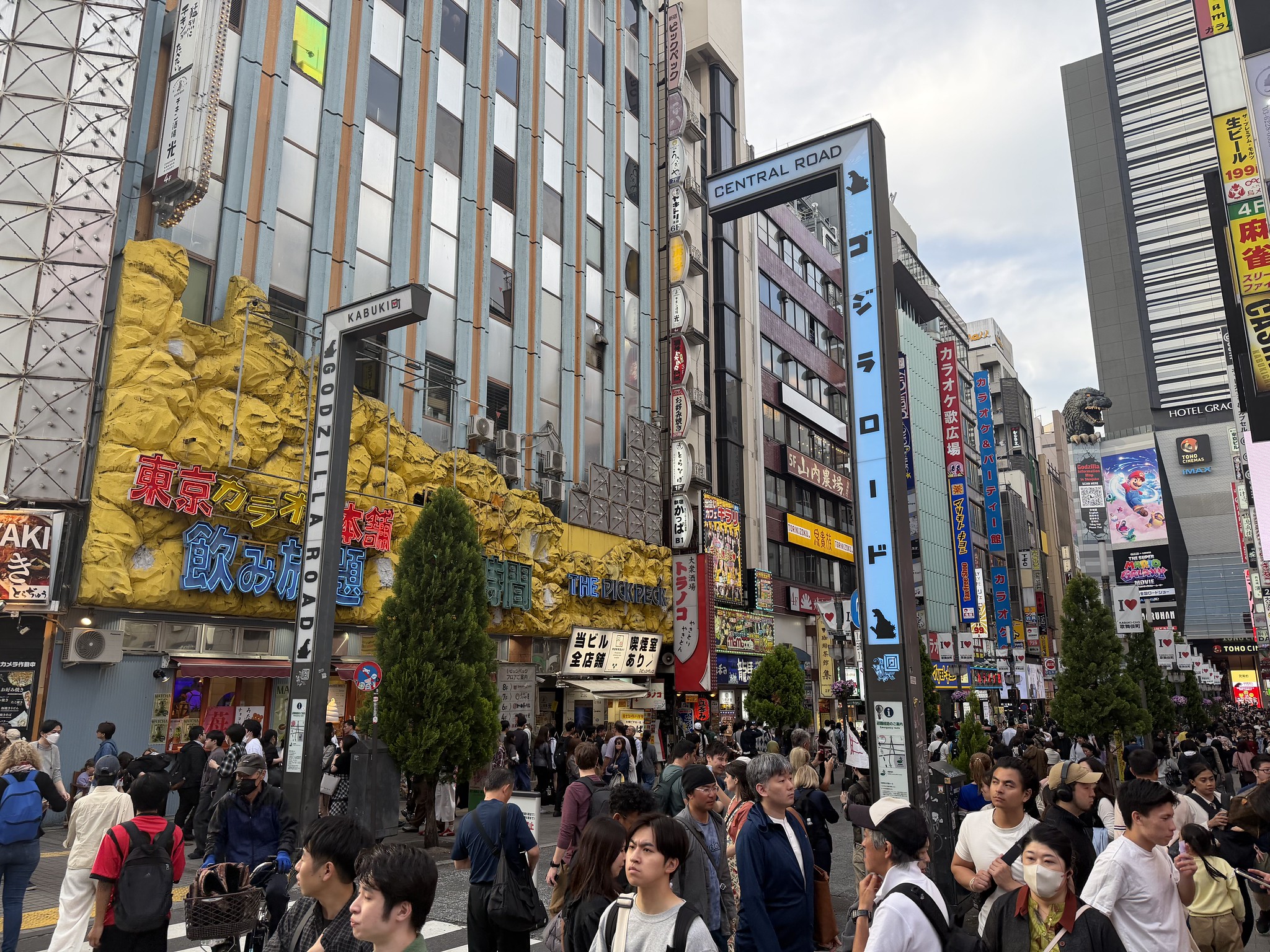
Our next area is even more renowned for aggressive touts/hawkers/barkers: Kabukicho. For me this was yet another bit of videogame tourism, because most of the Yakuza and Judgment take place in “Kamurocho”, which is a fictionalized version of the southern part of Kabukicho.
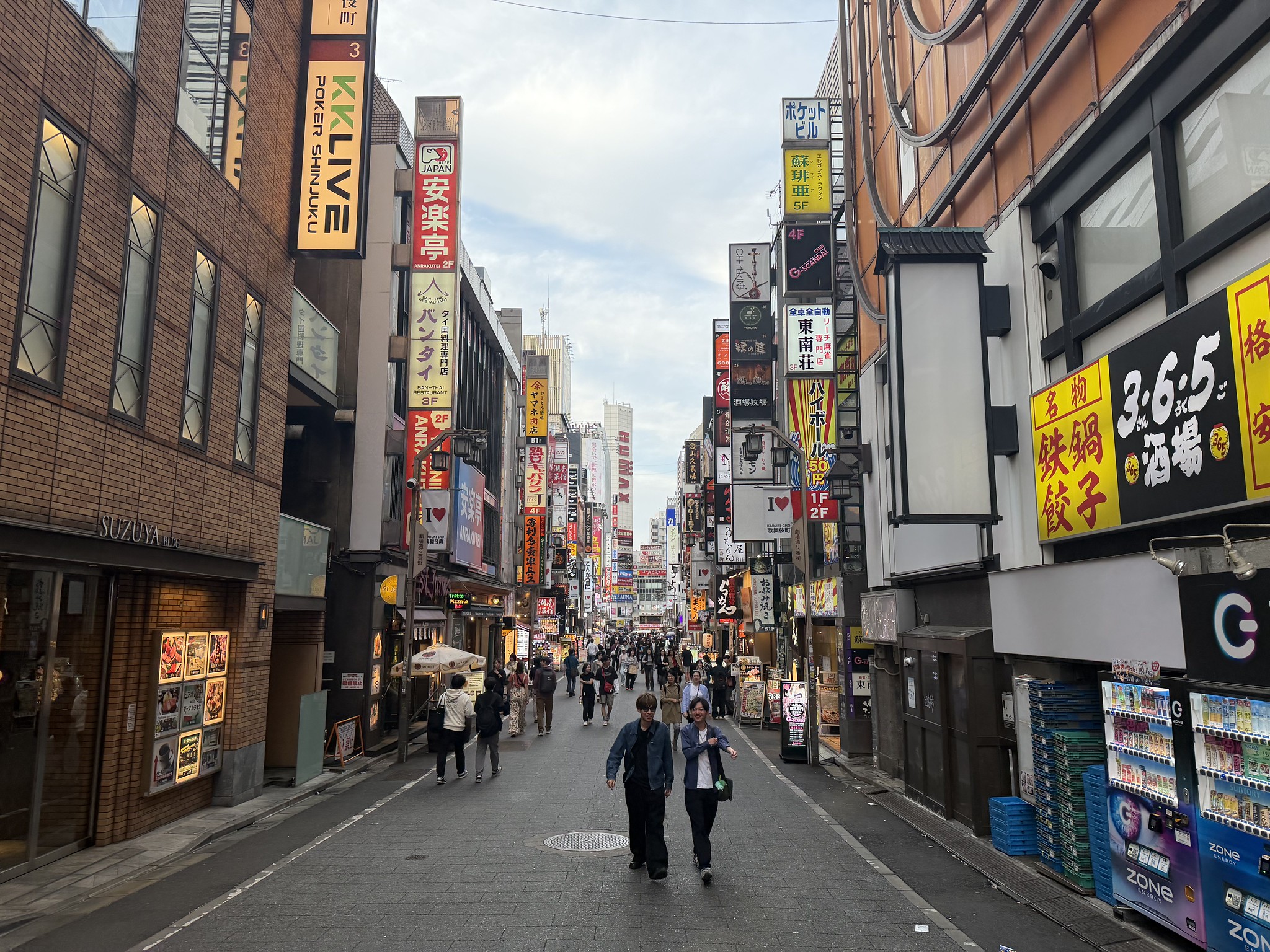
While they didn’t replicate every business specifically, the overall layout in the game is identical to this.
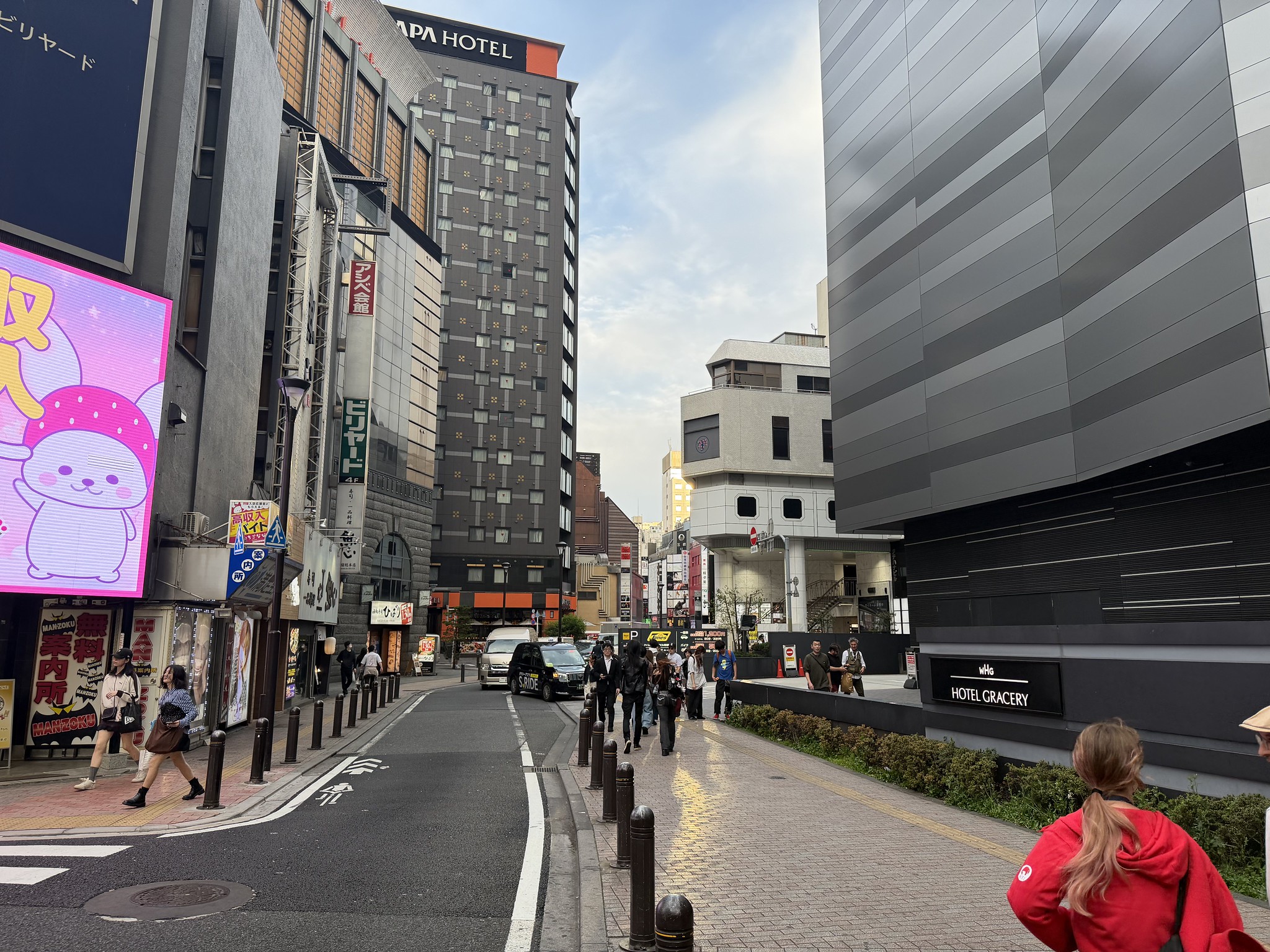
To the left, the game is completely different. But to the right, that’s just what the game looks like! I’ve always been fascinated by visiting famous landmarks that I had only previously seen in media portrayals, and we did a lot of that on this particular trip. As we came to the end of the week, this was the very last landmark to check off.
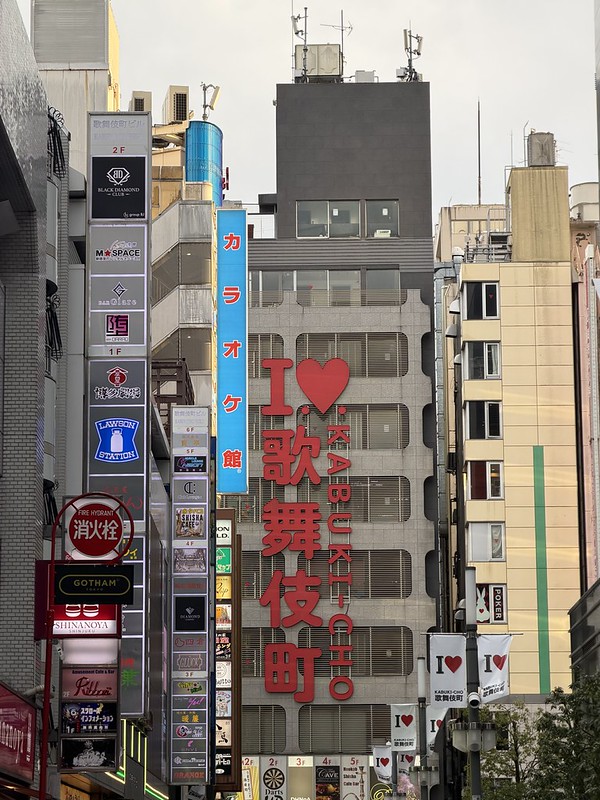
After walking around for a while pretending I was Yagami-san (Judgment) or Kiryu-san (Yakuza), we popped into an izakaya for a quick meal. This part of Japanese culture is very foreigner-friendly: izakayas serve a variety of food so you can always find something you like, and modern restaurants let you order and pay off a tablet at your table.
I would also like to share a brief story from inside the izakaya that encapsulates one of the many things I love about Japan. At this restaurant we shared a long table with two other people; they sat facing each other close to the wall, and Stefan and I had the aisle side. During our meal, the couple got up and left all of their stuff on the table. I cannot even fathom a place in America where someone would be so foolish, but in Japan I’m sure this lady didn’t even think twice about leaving her purse right on top of the table next to me while she went outside for a smoke.

Back at the venue, they were running ahead of schedule, so we arrived just after a band that Stefan wanted to see. Bummer. At the beginning of the show, I was keeping to the outskirts of the venue and still getting a great view. But when we returned in the middle of a band change the floor was empty, so I decided to grab a spot right at the front of the stage on the rail.
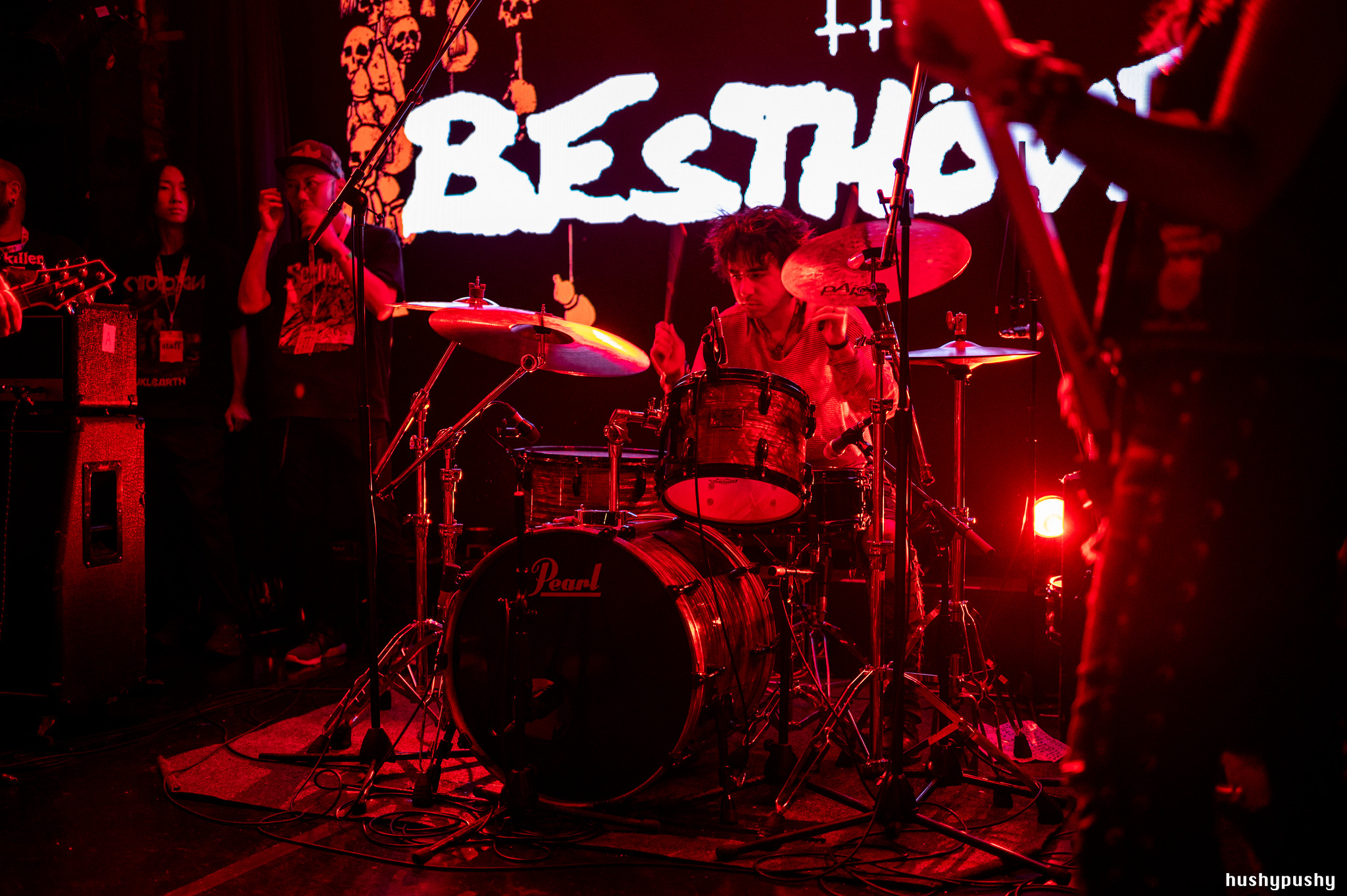
This was a band from Brazil called Besthöven. I liked them, but their guitarist and drummer had pretty low energy levels. I wonder if they had just flown in and were jet-lagged?
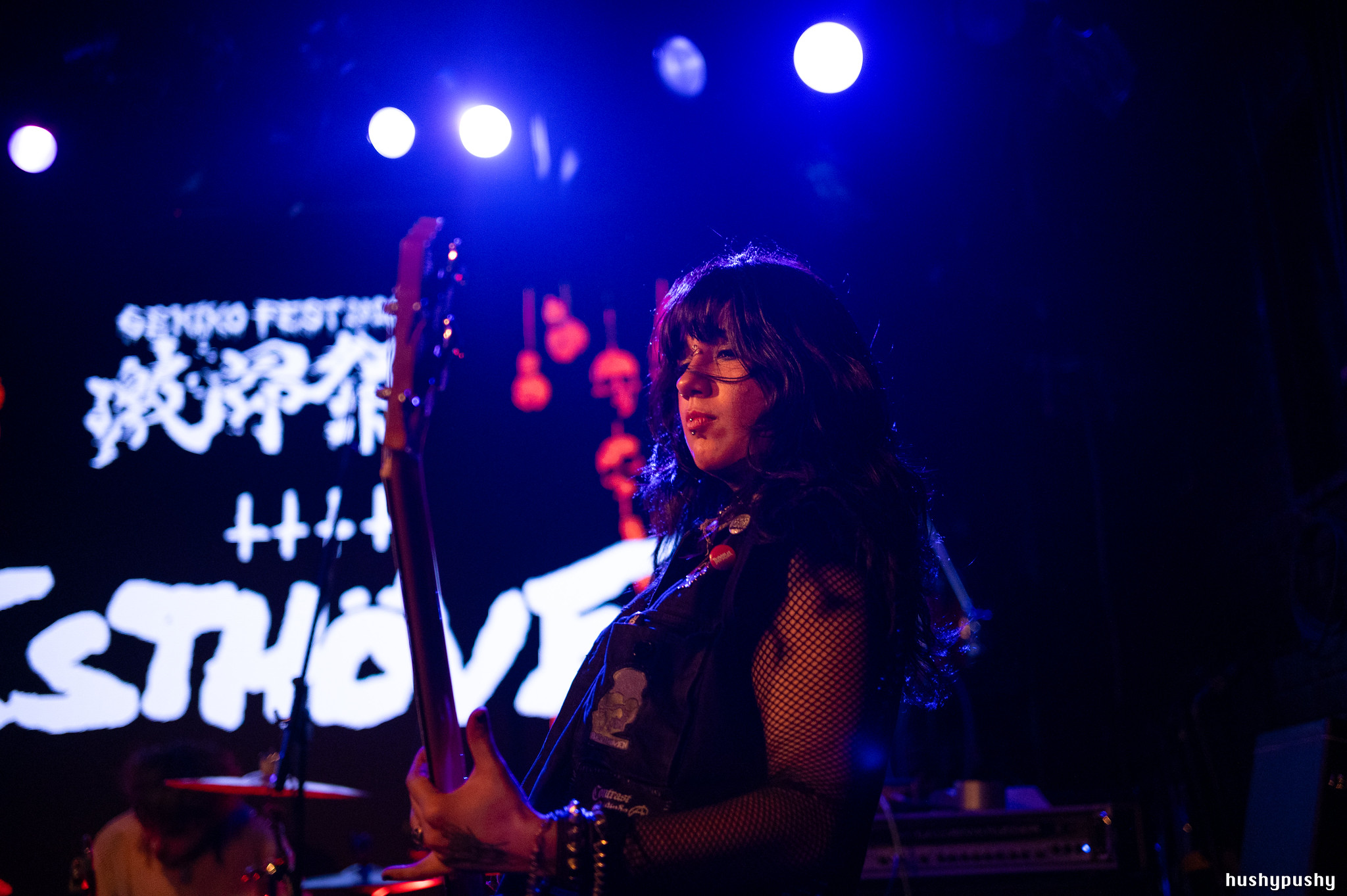
I was right in front of their bassist, and thankfully she was awake.
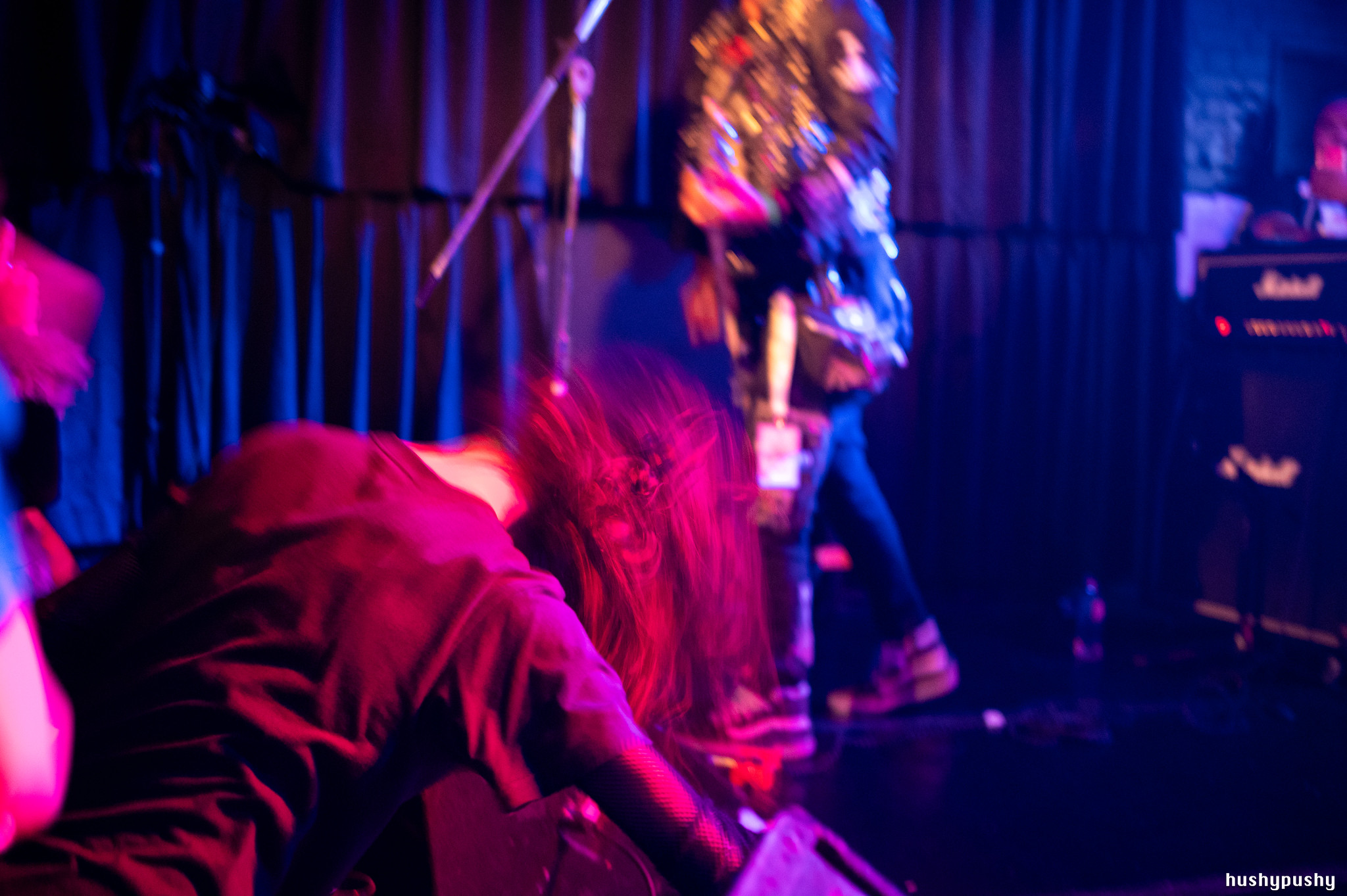
By far the most energy during their set was coming from this very passionate fan. He started off with some headbanging on stage, which quickly escalated.
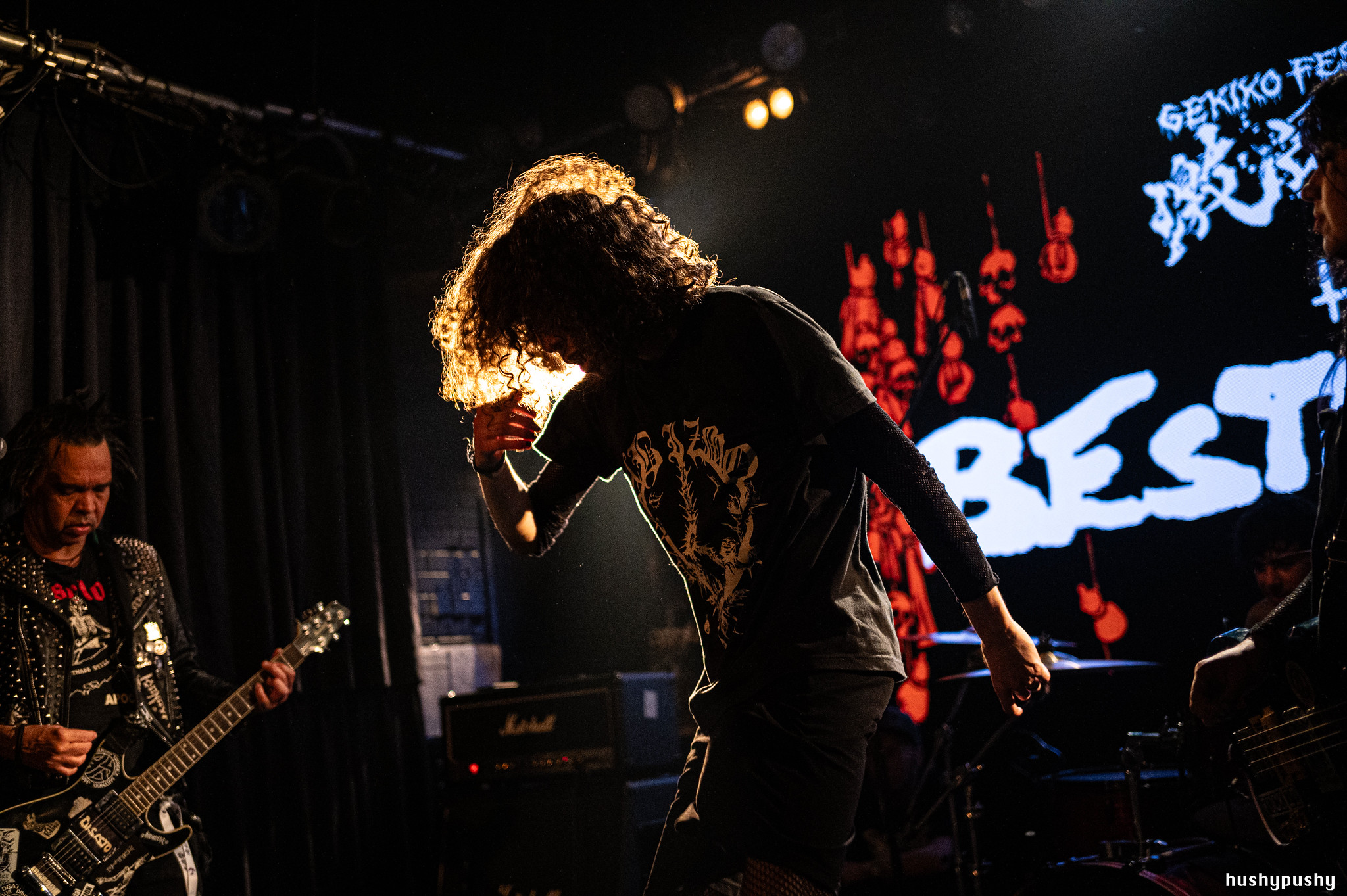
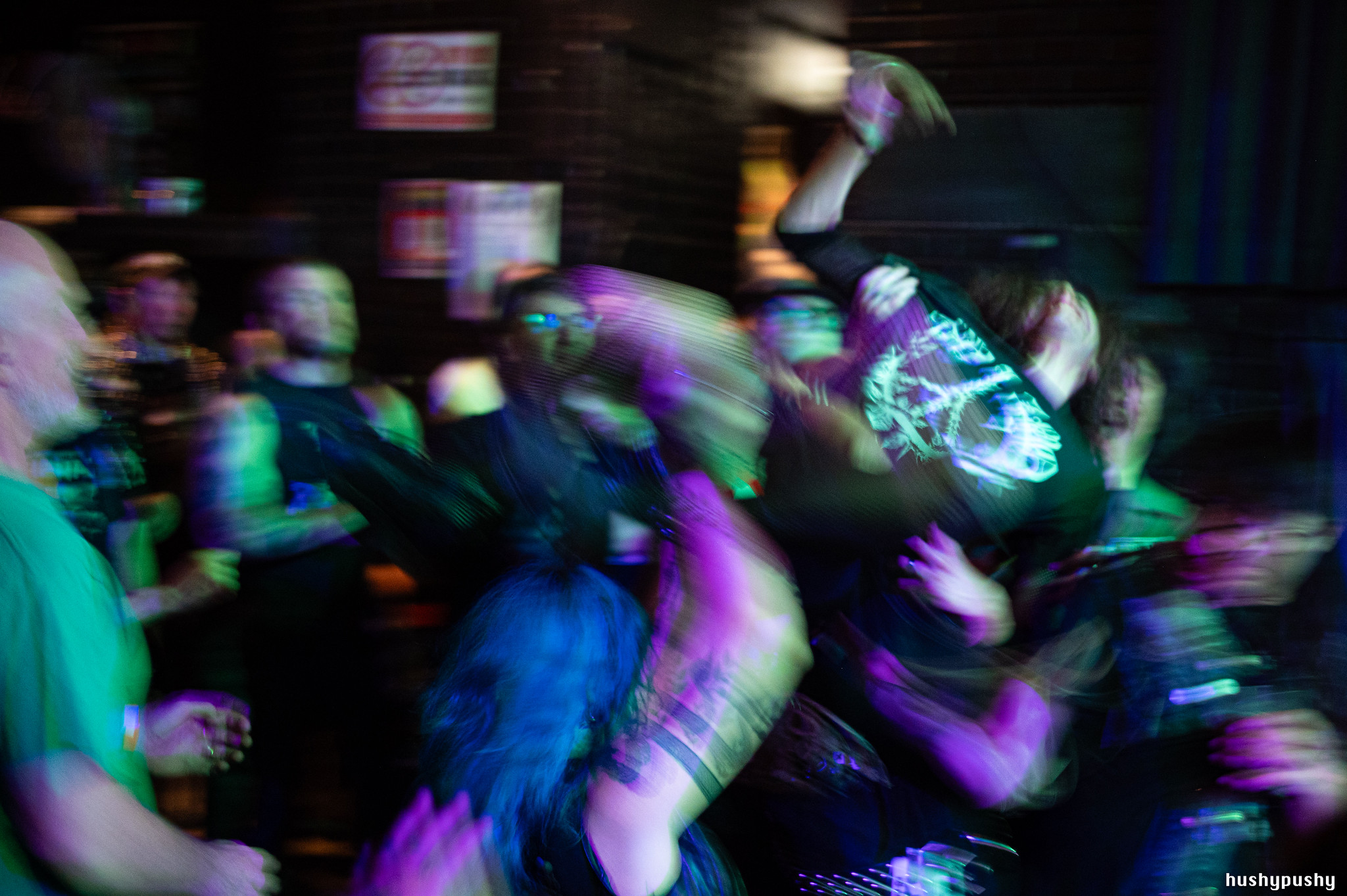
Then he went up on stage and repeatedly crowd surfed. It felt a bit odd on both sides; the musicians seemed a bit uncomfortable with him repeatedly going up on stage, and the fans in the audience seemed annoyed with having to constantly catch this guy. Alcohol is a hell of a drug.
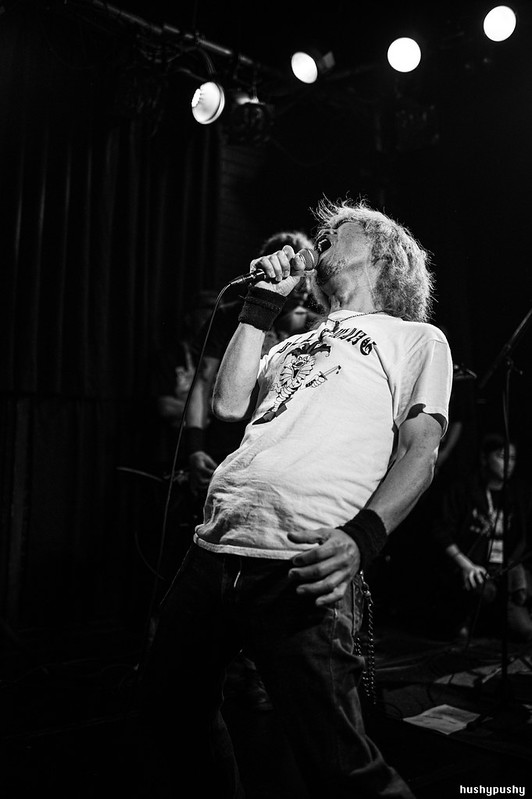
Next up was a really sick band from Japan called 324. They were super heavy and played very fast.
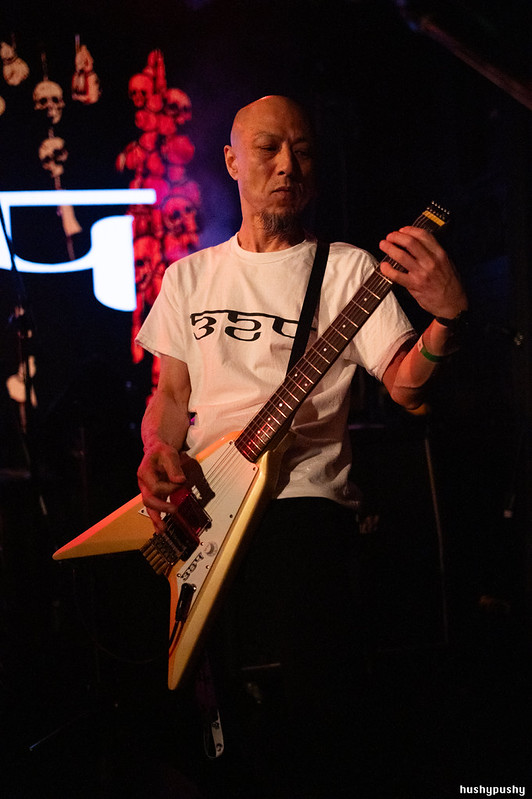
I was shooting with my 40mm from the front row of this tiny venue, so I was right up on the action. And of course, portrait shots like this are exactly where the “portrait” orientation term came from, so while I rarely use this framing (as discussed earlier) it was perfect for this event.
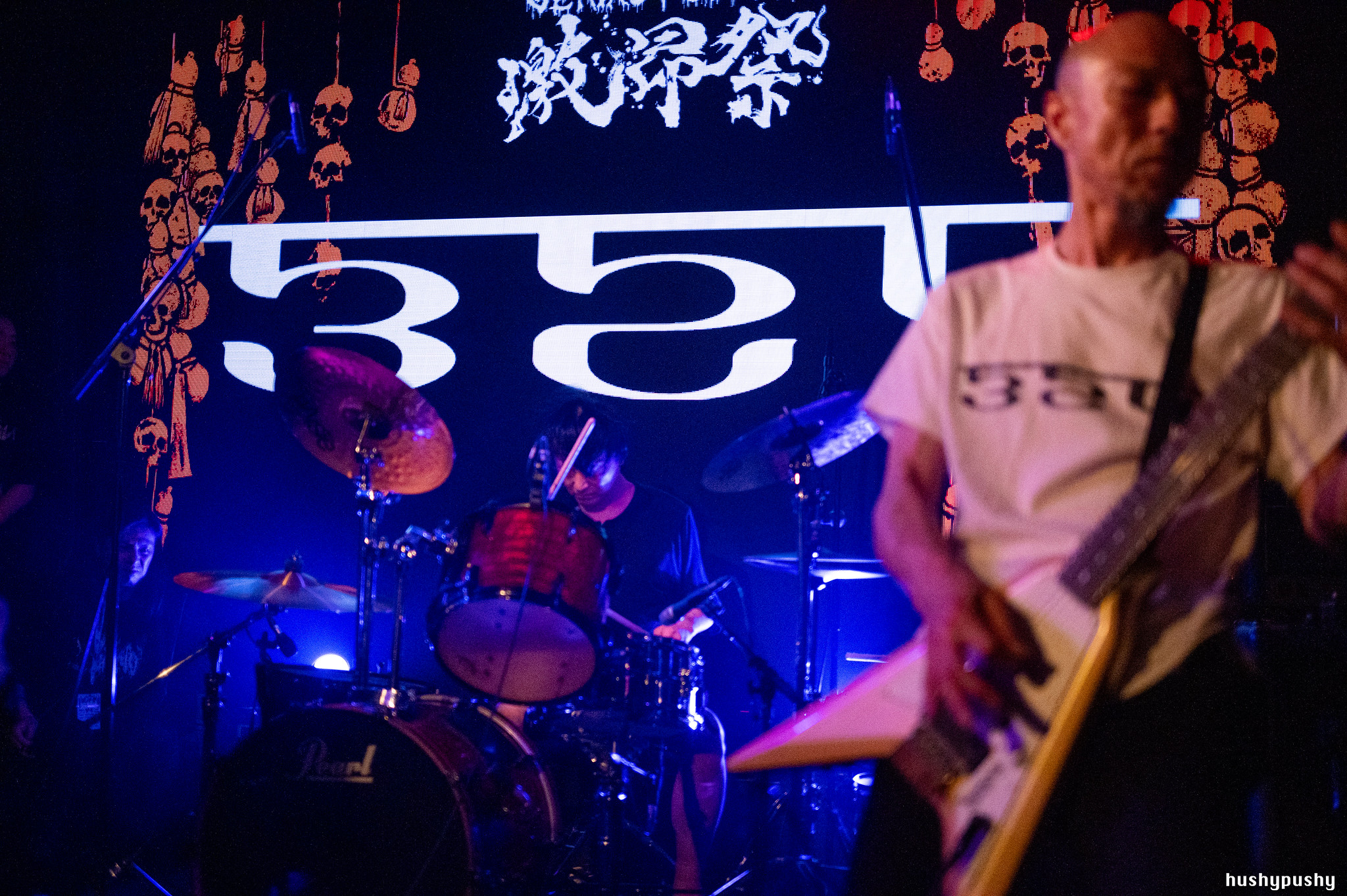
Although, I still try to shoot landscape orientation as much as I can, due to our side-by-side eyes. I apologize to all the drummers at this show, because I just had a hard time shooting them. There was always someone in the way, or they were poorly lit, or the drum kit was in the way, or a combination of those.
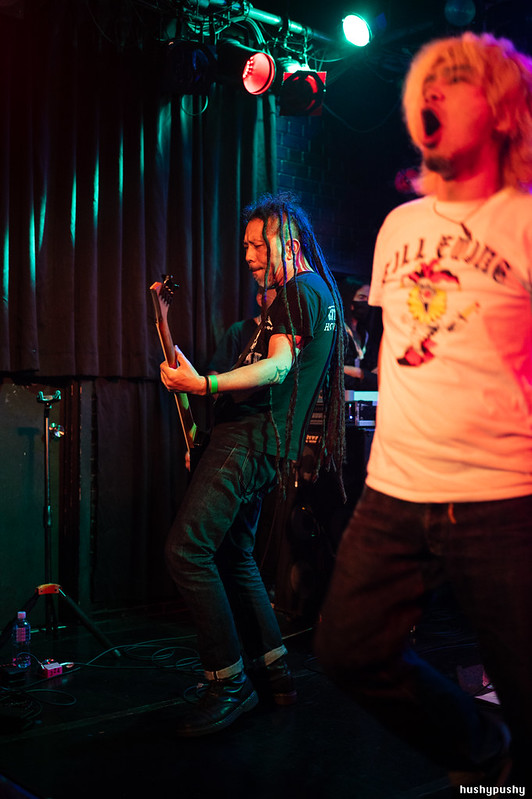
I also struggled with shooting the musicians on the left side of the stage for the same reason. There was another photographer there who was moving around and getting all kinds of angles (and her pics came out really cool!) but I just wanted to stay where I was and capture that perspective.
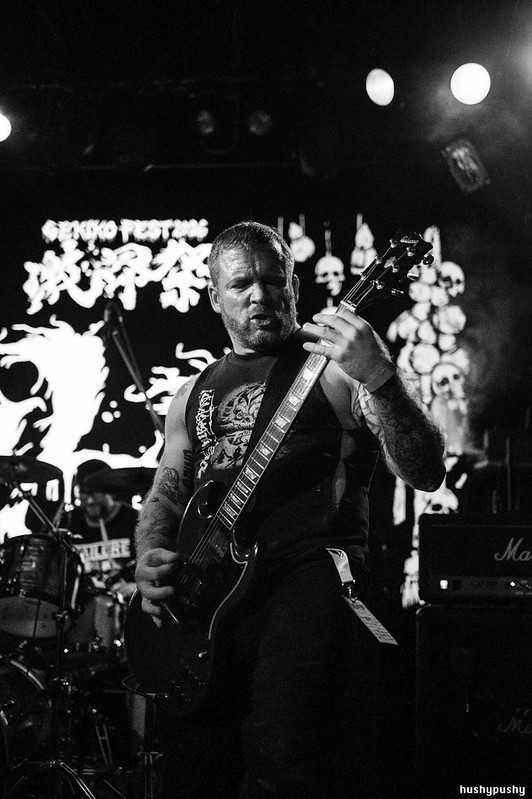
Next up was another American band. This was a grindcore duo from Houston, Texas called P.L.F.
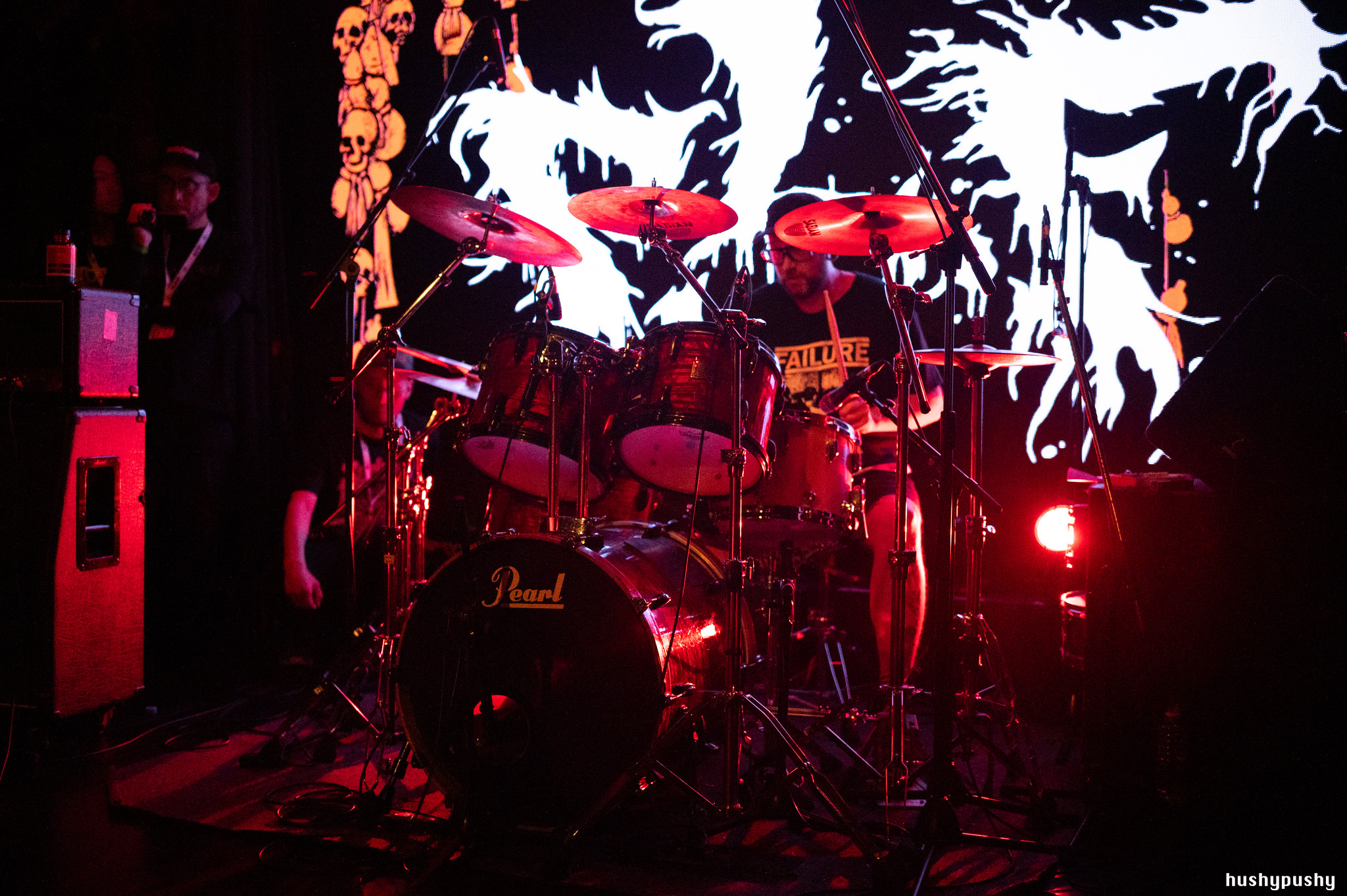
If you look closely, this pic is a bit front-focused. I shot most of these wide open, at f/2.0, to let as much light in as possible.
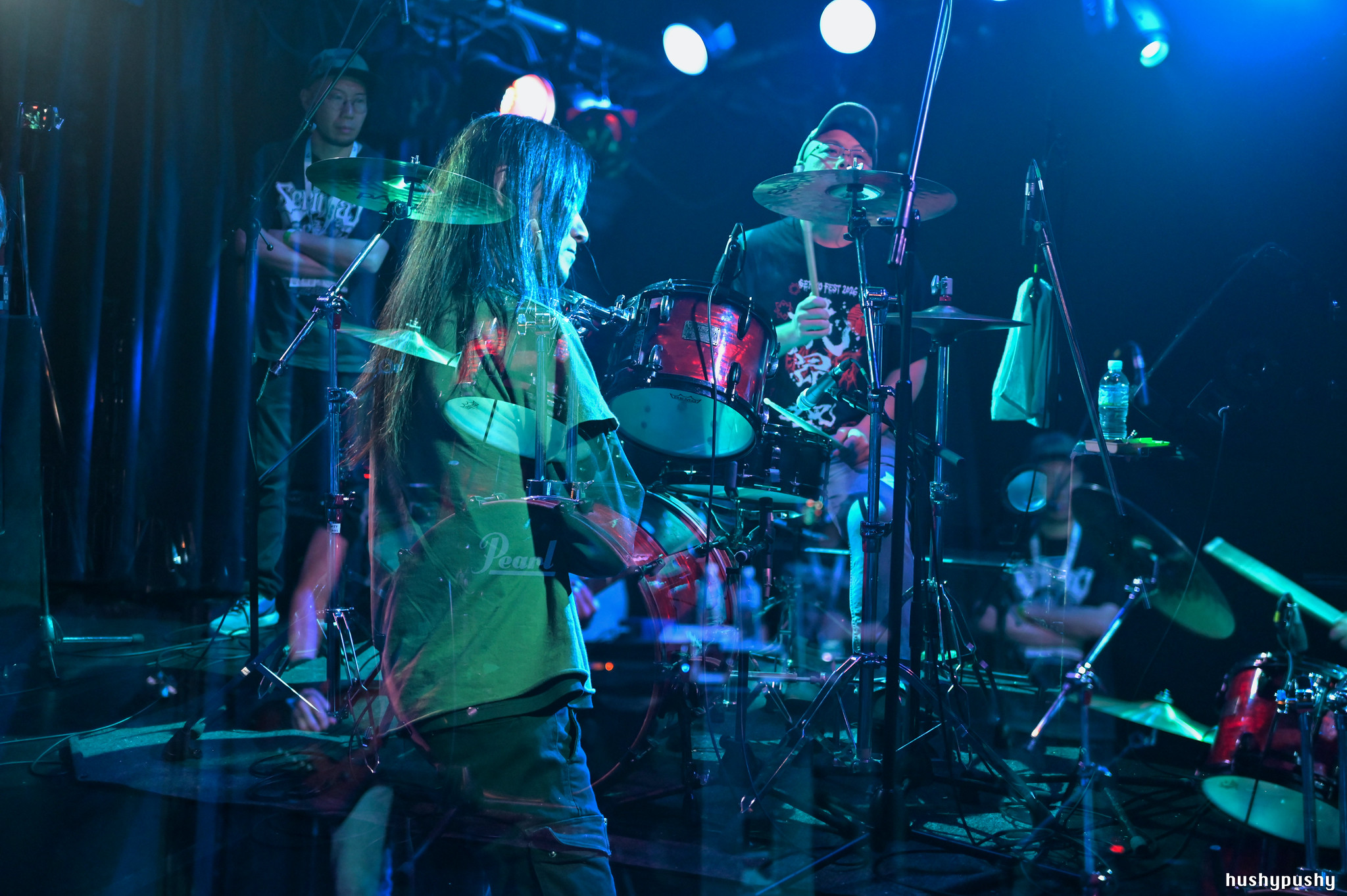
Next we went back to Japan with Unholy Grave from Nagoya. They had a much longer sound check than the other bands, so I decided to do something else I almost never do: a double exposure. This image was created entirely in-camera.
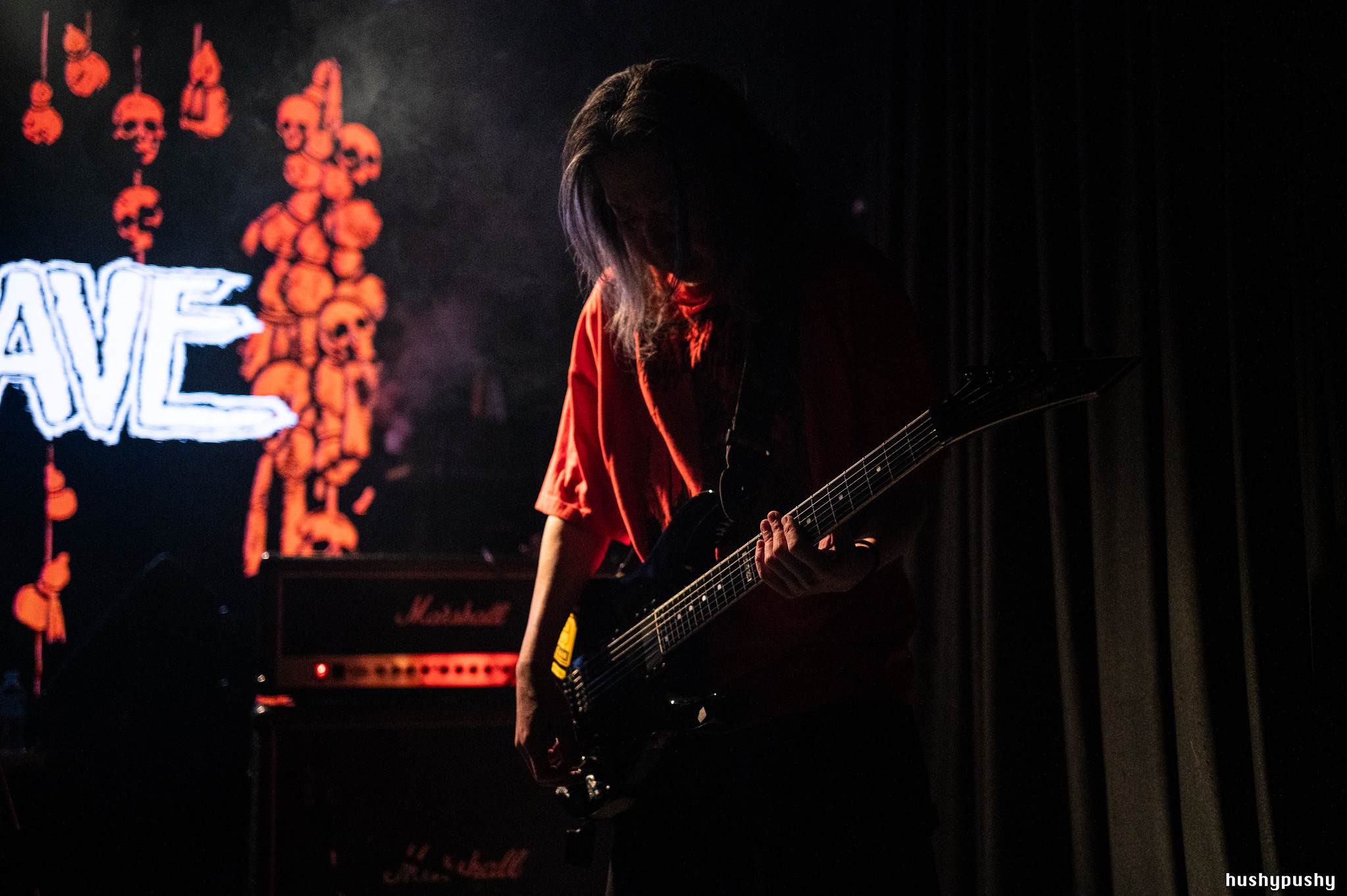
Most of the photos I shoot, and especially those with automotive subjects, require a significant amount of editing to bring them to an acceptable state. I was very surprised when I loaded up the photos from this festival, because they required almost zero setting changes.
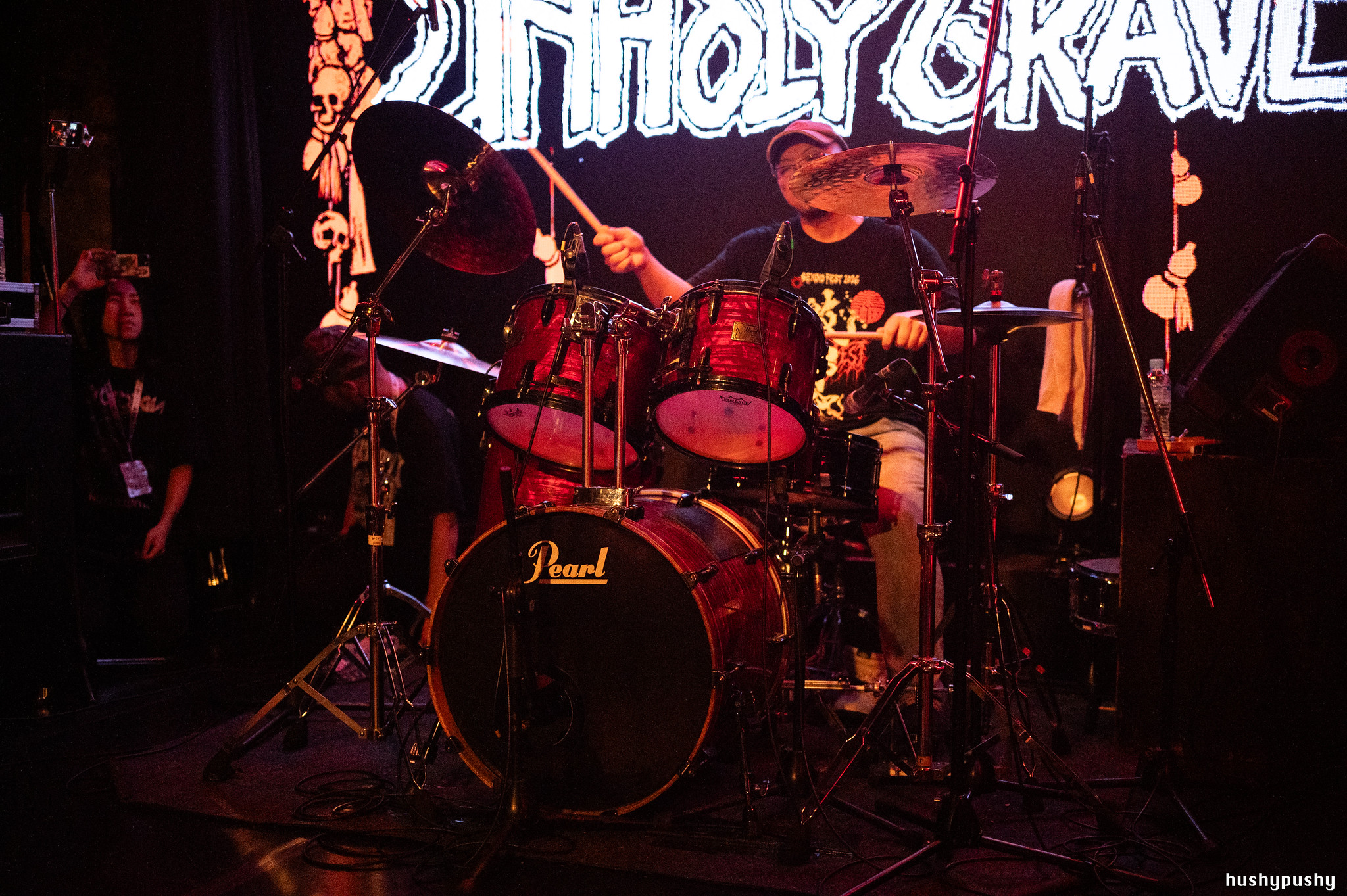
So believe it or not, but even though they were shot in RAW (which does without some of the camera’s image processing), these photos are pretty much straight out of the camera.
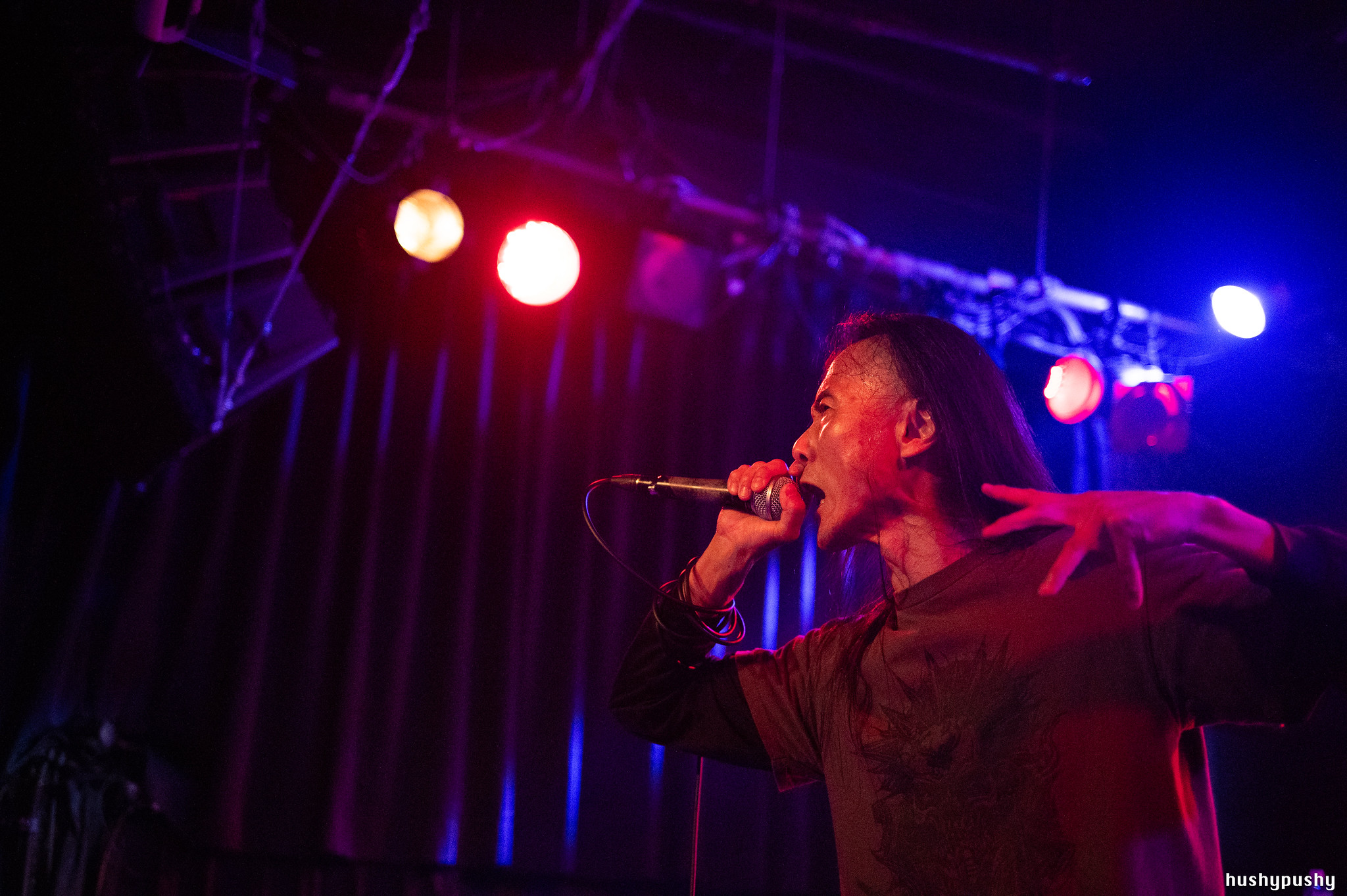
This photo, for example, has a tiny exposure and vibrance bump. That’s it! I didn’t feel the need to mess with any other settings.
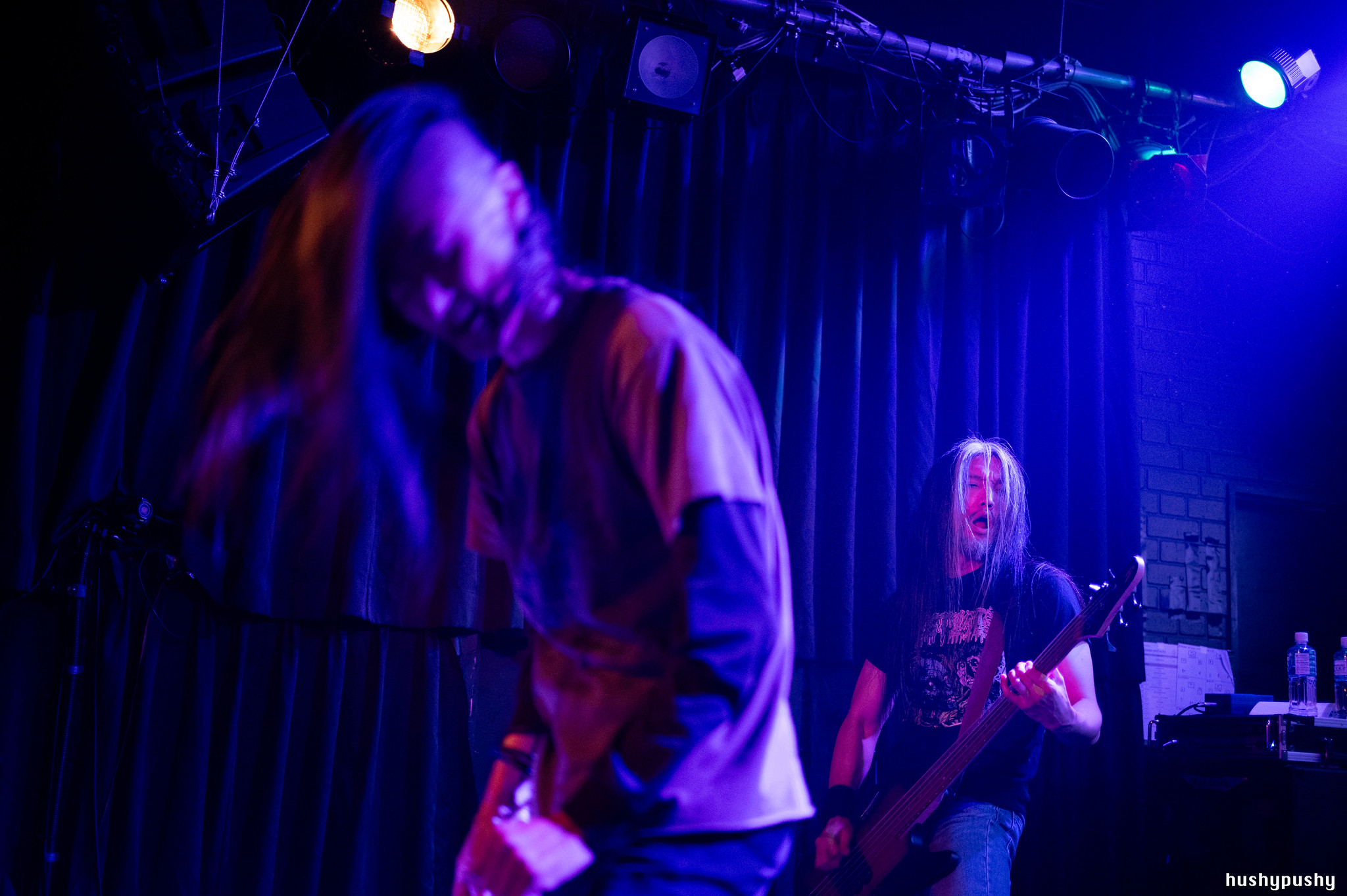
I figured the lighting would wreak havoc on this camera and confuse the hell out of the sensor, but it did remarkably well. And even at ISO 4000 and higher, the colors are good and the sensor noise is very reasonable. One of the things I’ve actually really enjoyed about my Nikon cameras over the years is how good they look at high ISO sensitivities.
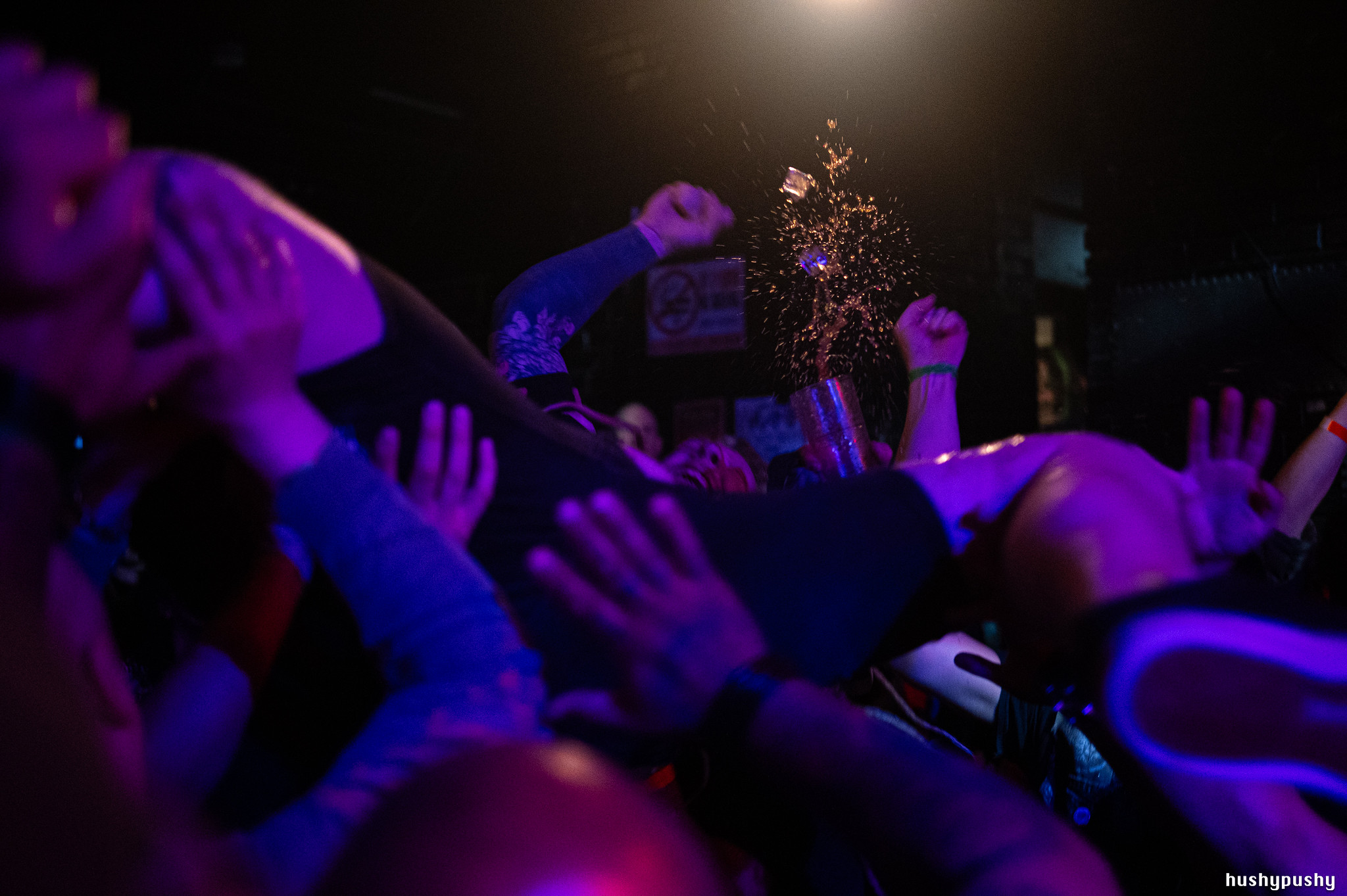
This was the closing band of the entire festival, and they had a crowd surfer too. I got pretty lucky with this capture, getting the exact moment of a drink and ice cubes flying into the air. I’m very much a “When in Rome” kind of guy, meaning that I try to blend in with the locals. For that reason, this crowd felt pretty rowdy to me in the context of calm and respectful Japan. Ironically though, it was actually really calm compared to all the metal shows I’ve attended back in California.
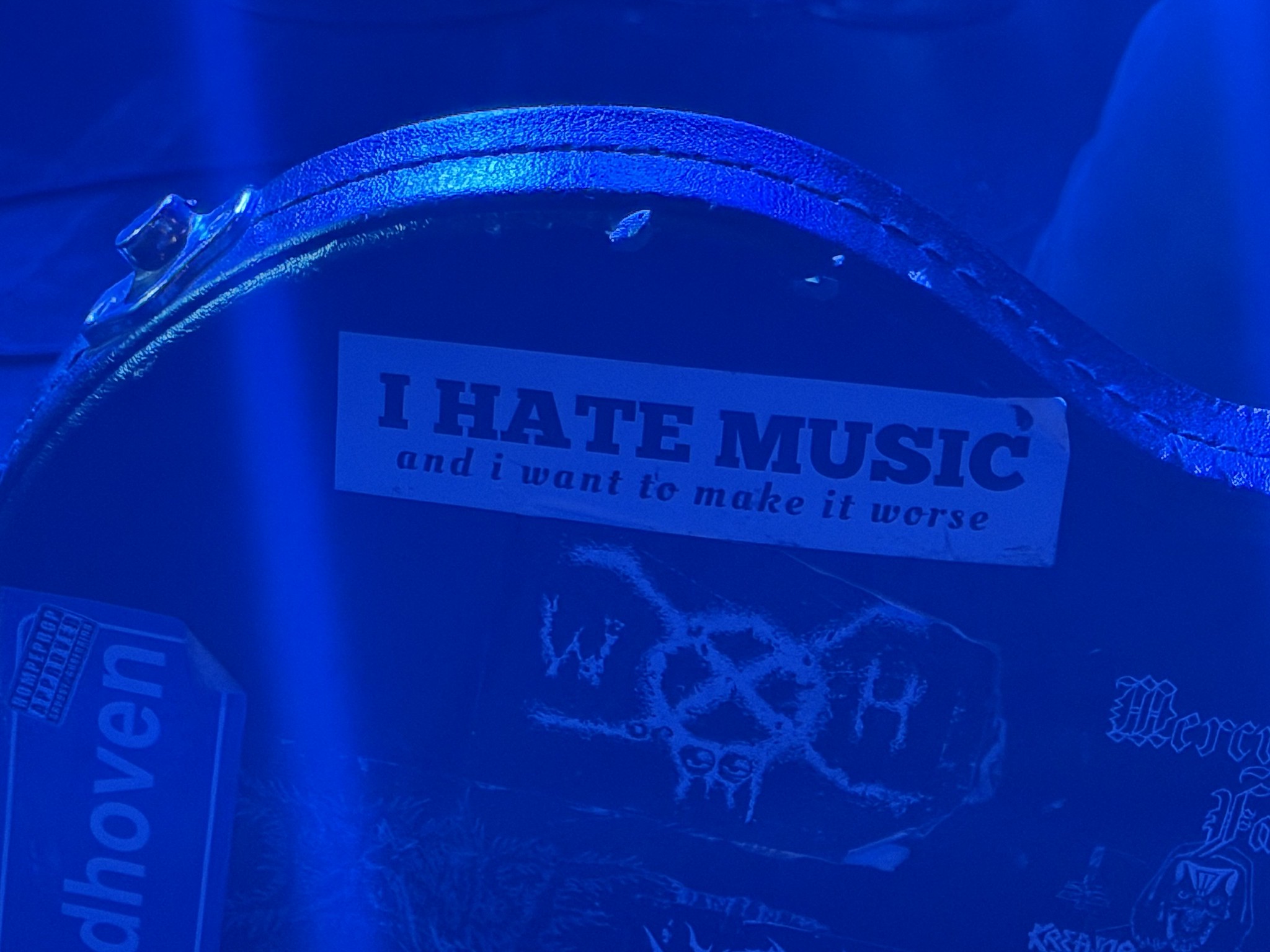
And that was it! As they were cleaning out, I spied this sticker on a guitar case that made me chuckle. I also saw a KFJC sticker on another case which I was very surprised by. That’s the radio station of a community college in Los Altos Hills, California that I absolutely love. I donate to them every year because I listen to that station every single day. If you like interesting music, check out them out. They stream on their site and have a phone app too. They play all types of music except what you would normally expect to hear on the radio, which makes them pretty awesome in my book.
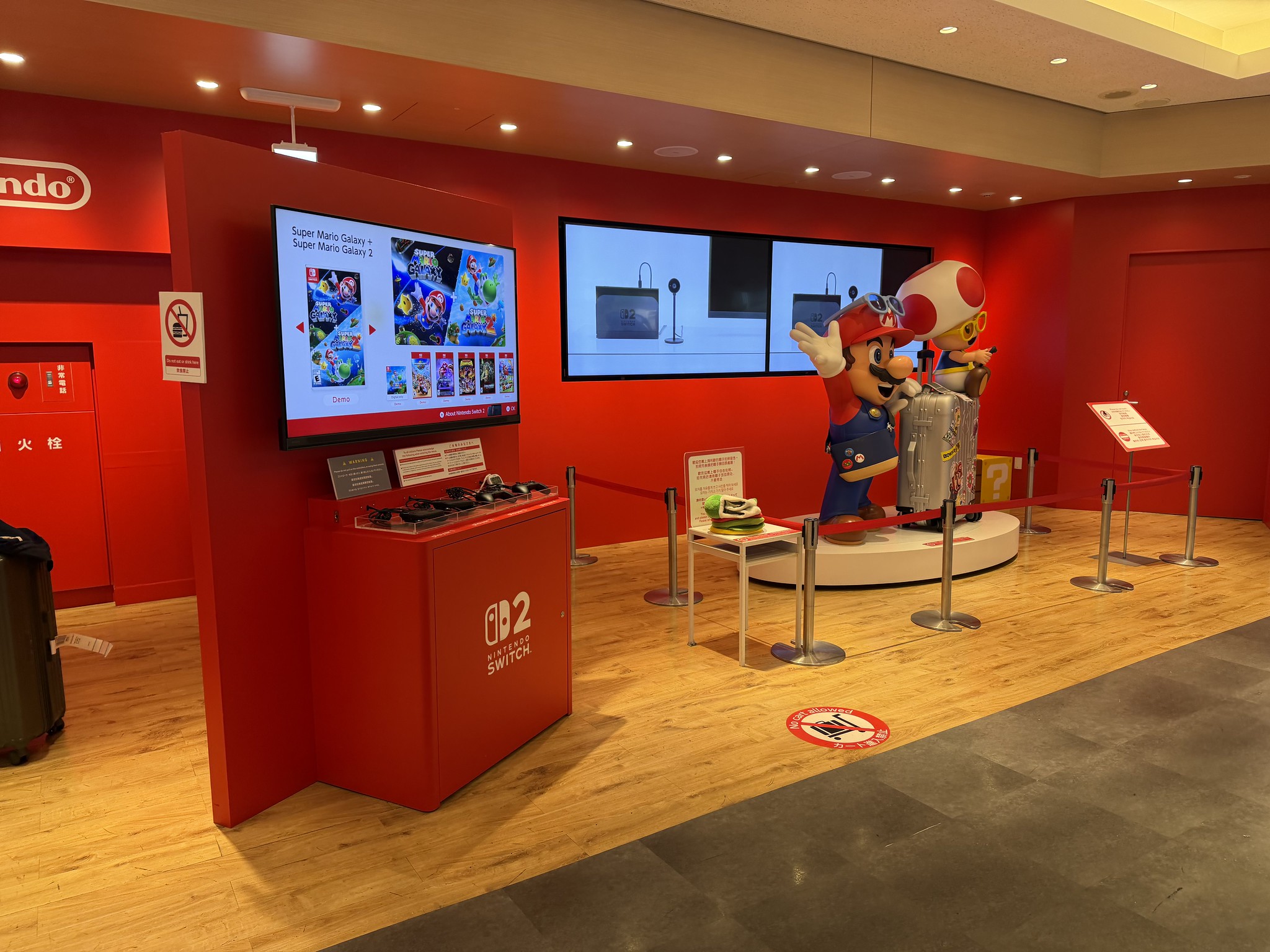
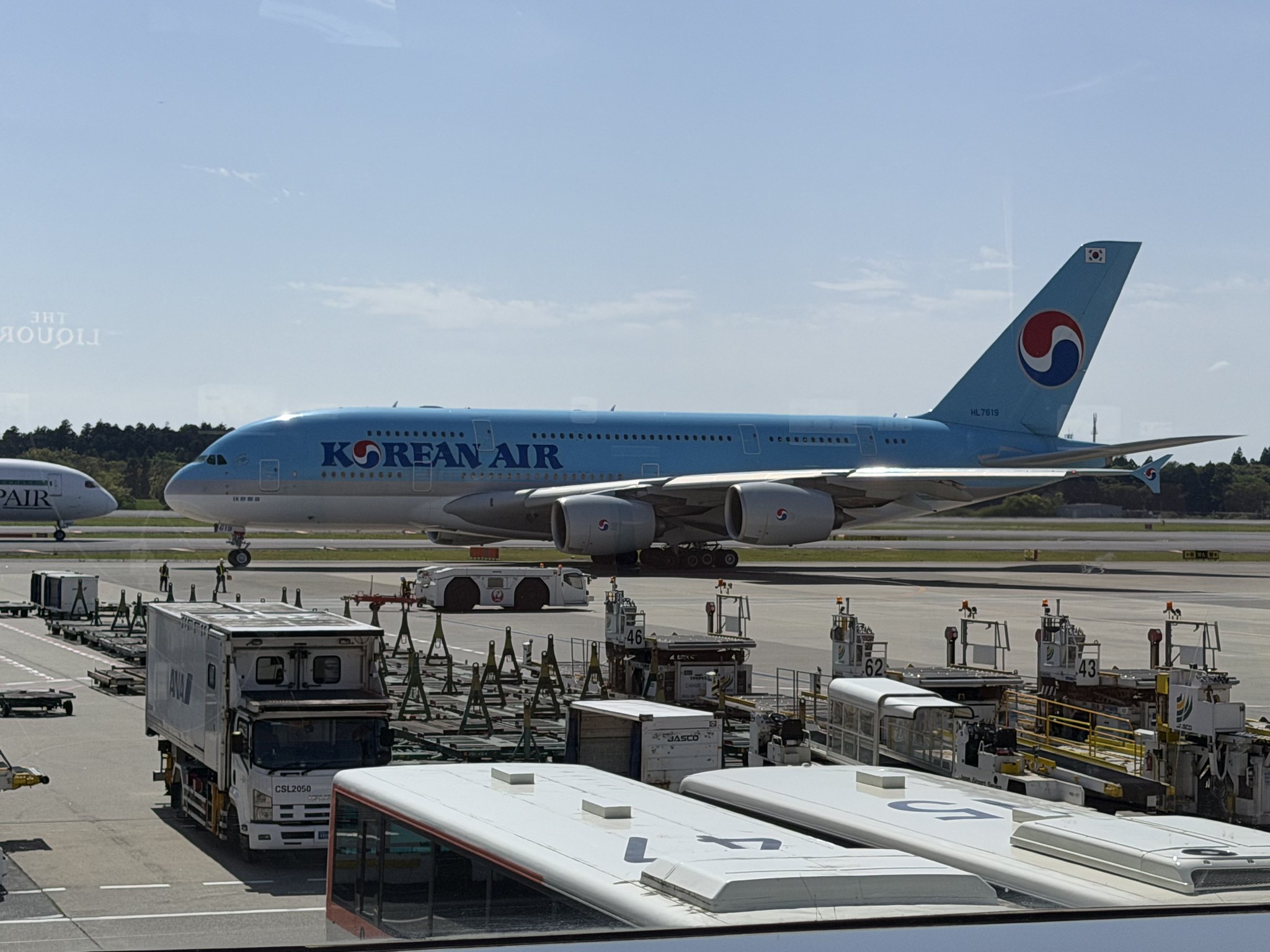
The next morning, I made my way out to Narita Airport while Stefan exited through Haneda. The airport gave me one more “only in Japan” moment with this cool Nintendo area. You could take a photo with Mario and Toad, play Switch 2 games, or get a variety of Nintendo themed gacha (not pictured). I had perfectly calculated my cash to run out before I left the country, so unfortunately I had nothing left to get a gacha toy.
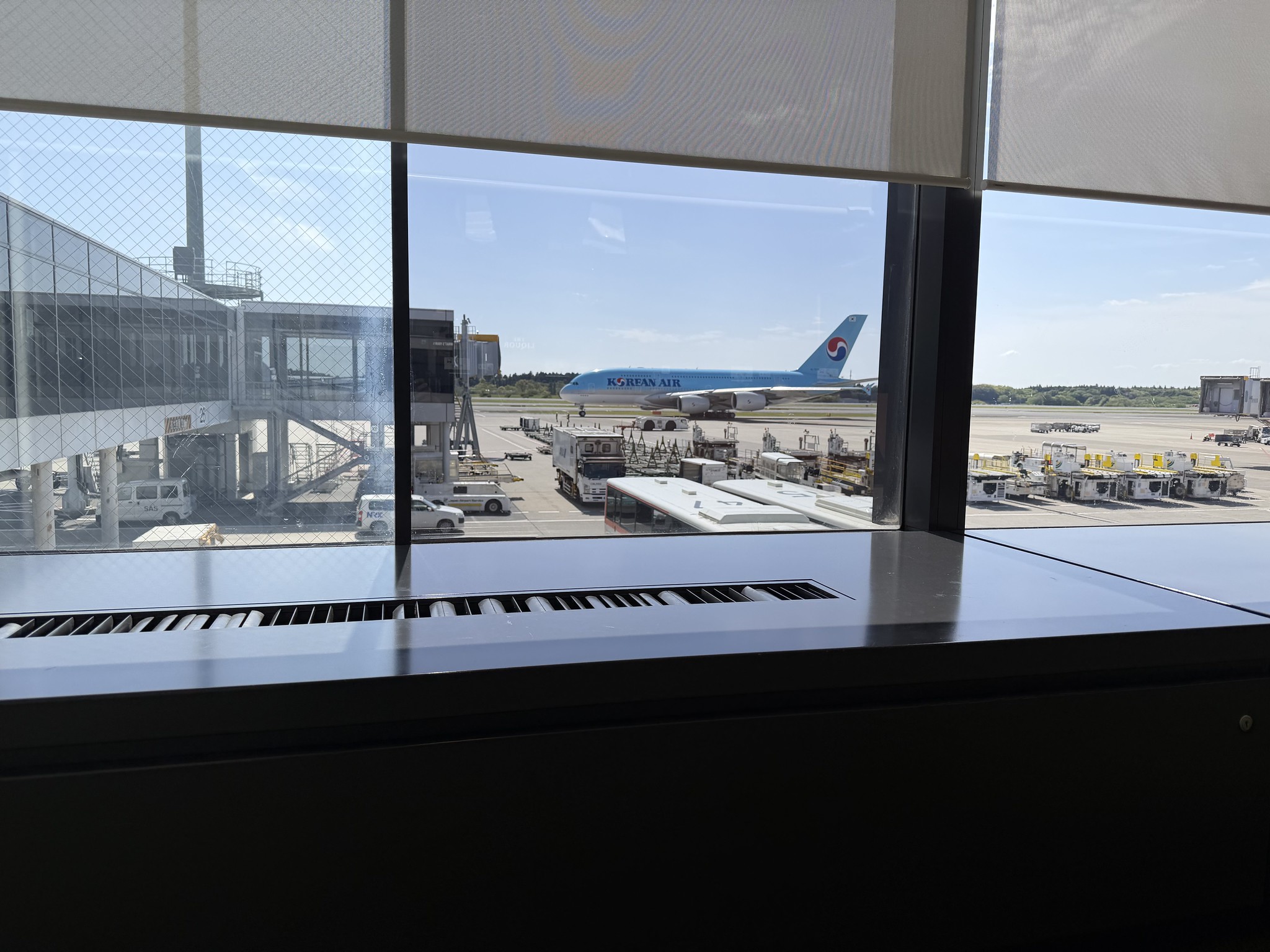
Sadly there isn’t a direct flight from Japan to my local airport, so I had to fly the wrong way to Korea first before flying back to the USA. Even then, such is the nature of the flight that you end up doing a fun bit of time traveling: I took off on Monday 4/20 at 5:20 PM and landed on Monday 4/20 at 4:20 PM.
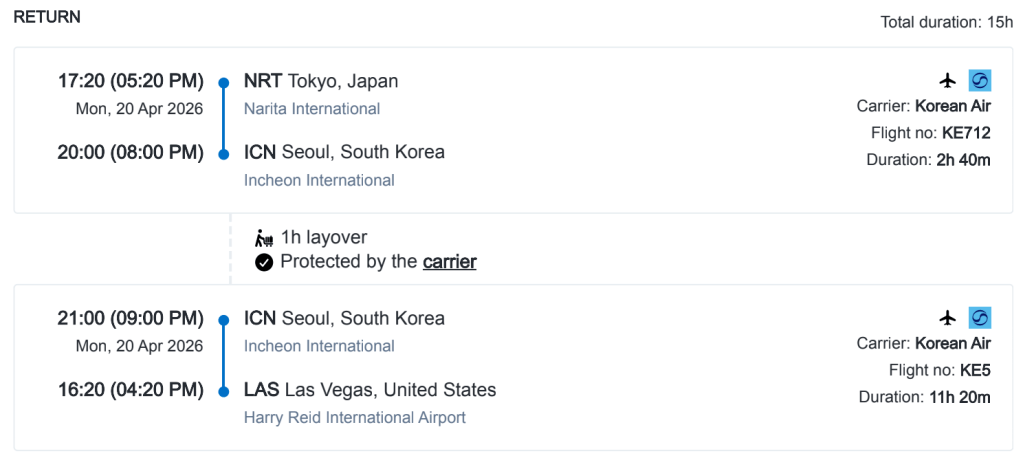
Yeah, I was scheduled to land at 4:20 on 4/20. Pretty ironic on a flight from Japan.
My flights were great, with an empty middle seat again over the Pacific and virtually zero turbulence. But…
I was so disappointed to be home.
Most places get you full with one vacation, like how you feel satisfied with one meal at a good restaurant. But Japan is an all-you-can-eat buffet where you can stuff your face for a week and still feel hungry for more.
That’s because Japan is filled with things that never get old. People are extremely respectful. This shows up everywhere from driving a car to the cleanliness of public spaces.
The food in Japan is great, and despite being very far from a “foodie” I enjoyed getting to try all kinds of stuff.
The exchange rate is very favorable for us right now; you get a lot of yen for your dollar.
Even though I’m a car guy, I loved getting everywhere on the train in Tokyo. That’s just how everything is set up. On the other hand, once we got out of Tokyo in our rental Yaris, it was clear that a car could be handy. Rural areas not only have rad roads that are far less populated (so driving is much more fun), but things are naturally spread out, more like I’m used to as an American. Both were awesome in their own ways.
There’s so much more of Japan to discover, and I absolutely can’t wait to go back. And I swear it’s not going to take twenty years this time!!


