
Sunday Morning Cars in Tokyo – Shake Shack Gaien Meet
When planning this trip to Japan, I knew this wasn’t a “car guy” trip, but there were still a few specific car-related activities I wanted to do. One of them was simply to attend a casual car meet in Tokyo. Probably the most famous of these would be the gatherings held at two different parking areas located in Tokyo Bay: Daikoku and Tatsumi. The major snag with those meets is that they are only accessible by car and taxis won’t pick you up there, so you need to drive yourself. This is a hassle as a tourist, because the meets are at night, meaning you need to find somewhere to park your (rental) car overnight–and virtually none of the hotels in Tokyo offer parking. Not the end of the world, but would it be worth the inconvenience?
The more I looked into it, the more it seemed like that answer was “no”. Not only did I keep finding post after post online about how the Daikoku night meet is no longer what it once was, with the car quality going down and tourist-in-rental quantity going up, but all of my friends who had recently been to Japan corroborated that with firsthand accounts. So how would I scratch my Japanese car meet itch? All of my problems were solved in one fell swoop: introducing the Shake Shack Gaien meet.
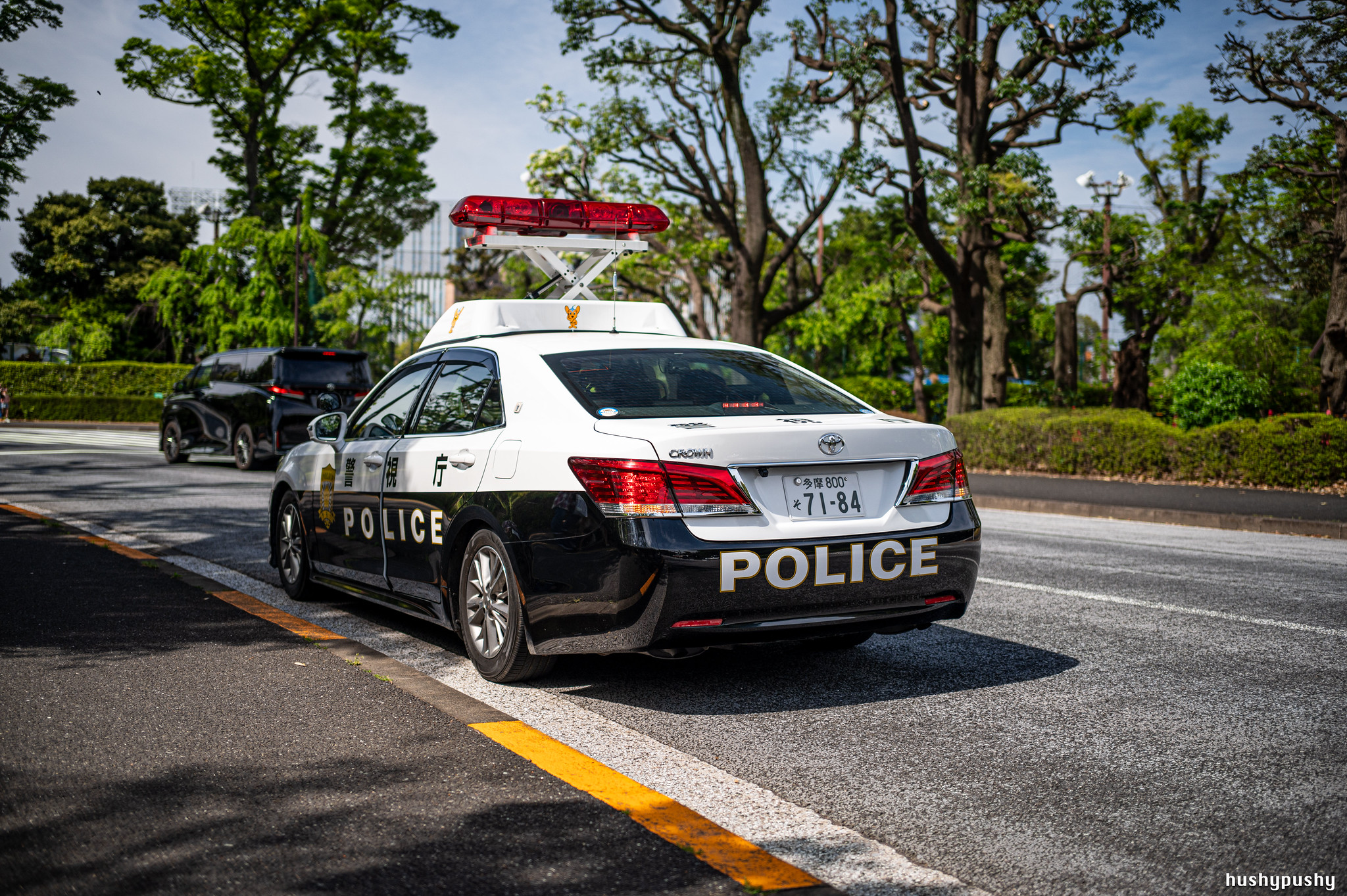
If you recall from my Thursday/Friday post, on Friday we visited the Meiji Jingu Shrine which is part of a huge park complex in Shinjuku. Near there is another park complex that features multiple stadiums and another huge park. “Gaien” means “outer park” and that is the area we visited on this lovely Sunday morning. And Shake Shack? Yep, the American fast food chain is there too.

While the parking areas are accessible by car only, this area is a train’s reach from anywhere in Tokyo, so there were no worries about transportation. As we started getting closer, I saw this mint Buick Century wagon and knew we were in the right place.
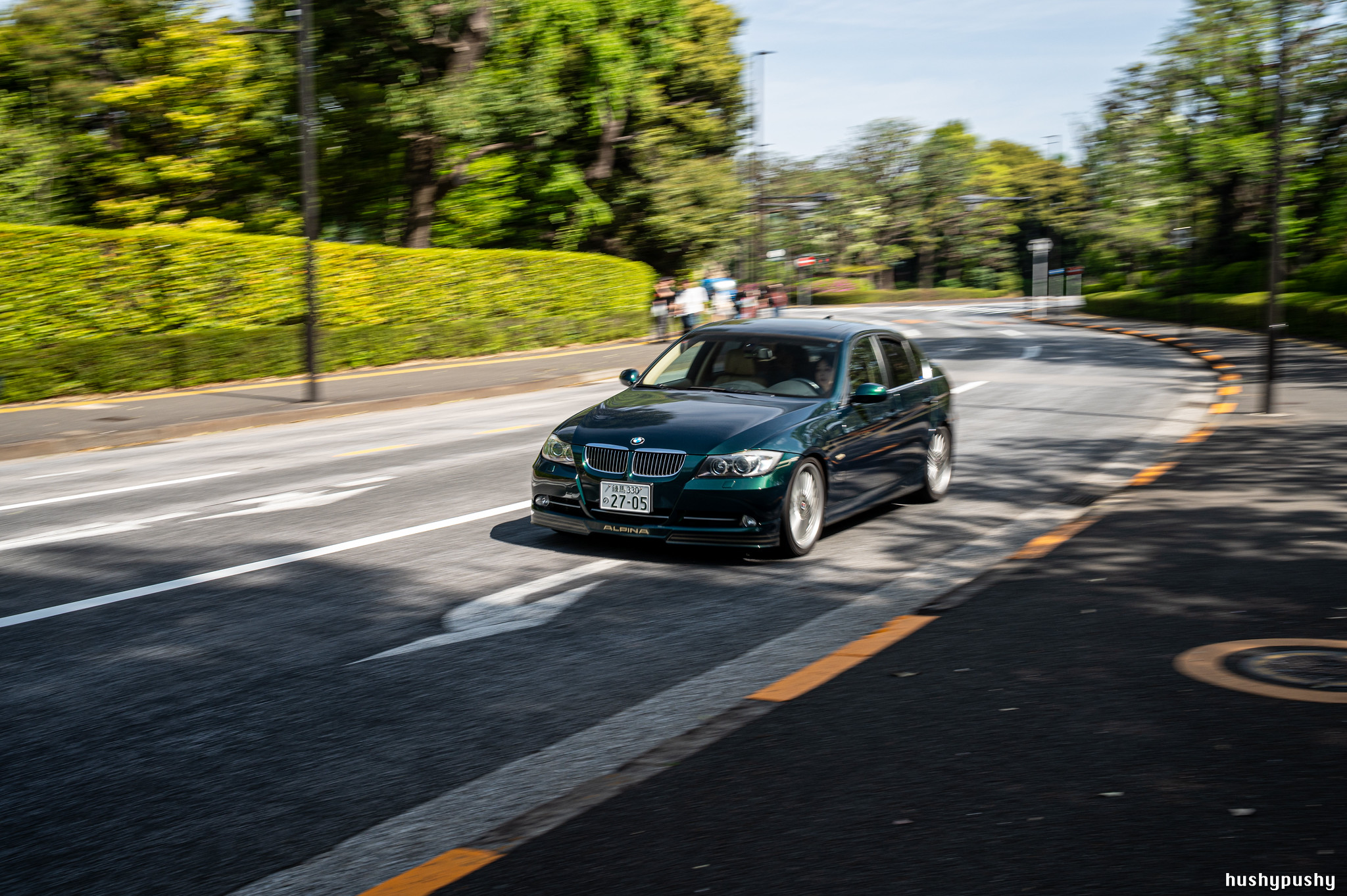
Ooh, an E90 Alpina–a very rare variant of an extremely common car.
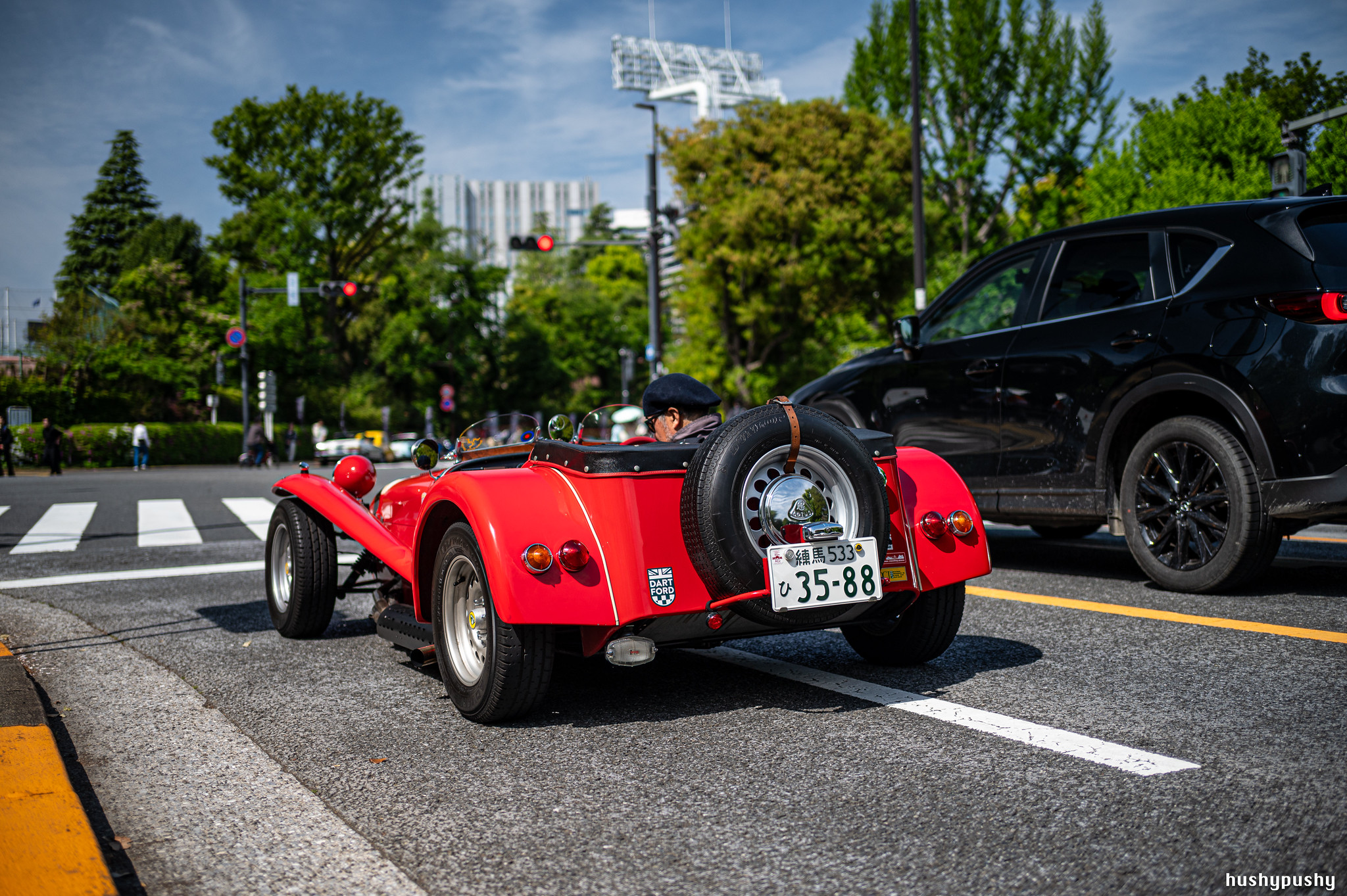
Then I saw what was the first of what would be many Lotus and Caterham Sevens. Unsurprisingly, small British sports cars are very popular in Japan; the roads and lack of space are similar, but the weather is far better over on these islands in the Pacific.
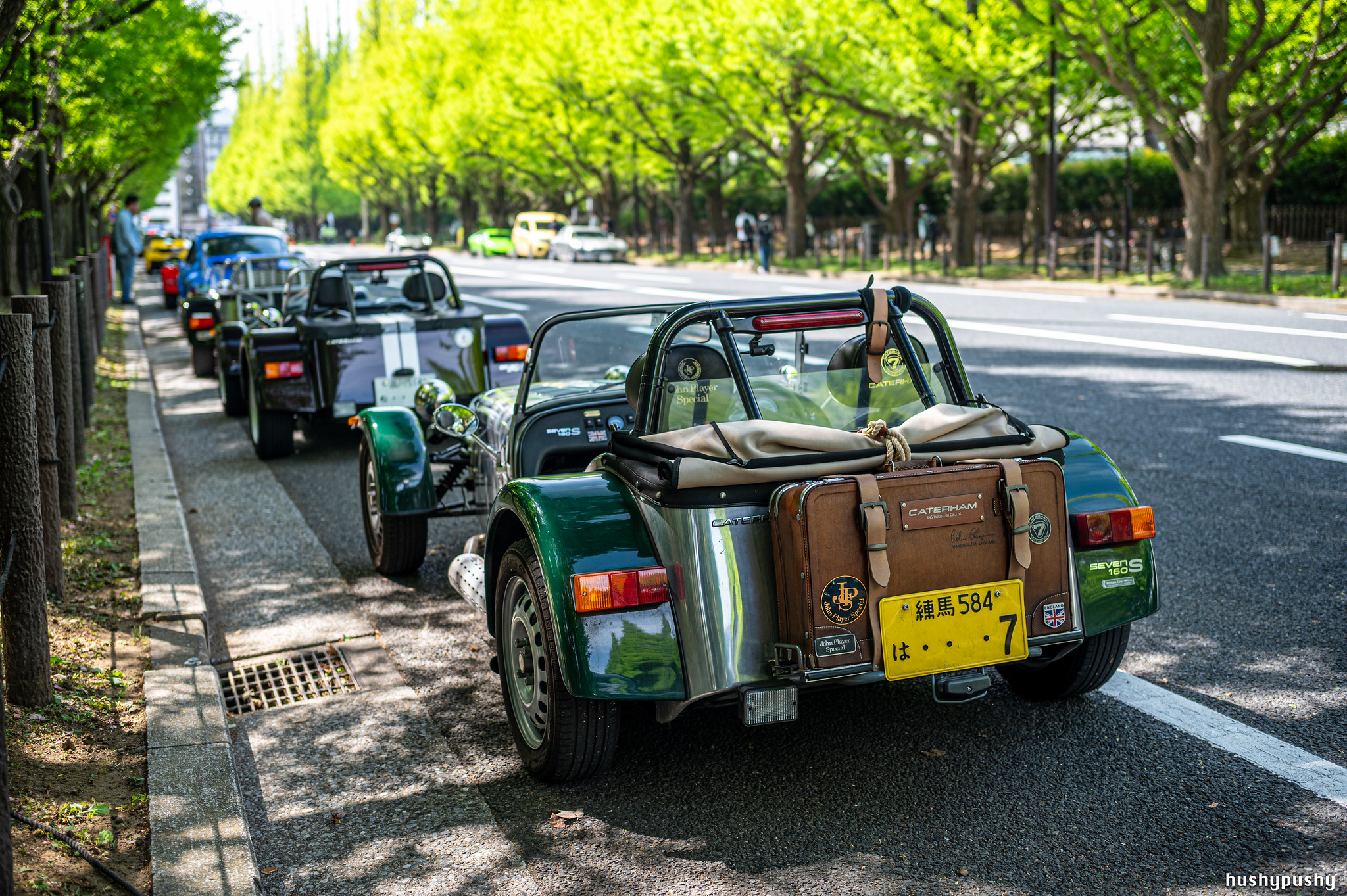
There were a few Sevens with yellow kei license plates. Kei (“light”) is a special class of car in Japan that has strict limits on vehicle size in exchange for lower vehicle tax and registration. Since this is a class of car that only exists in Japan, it’s naturally dominated by Japanese manufacturers. The Caterham Seven is one of the only non-Japanese cars to have a kei version.

They’re certainly small enough on the inside!
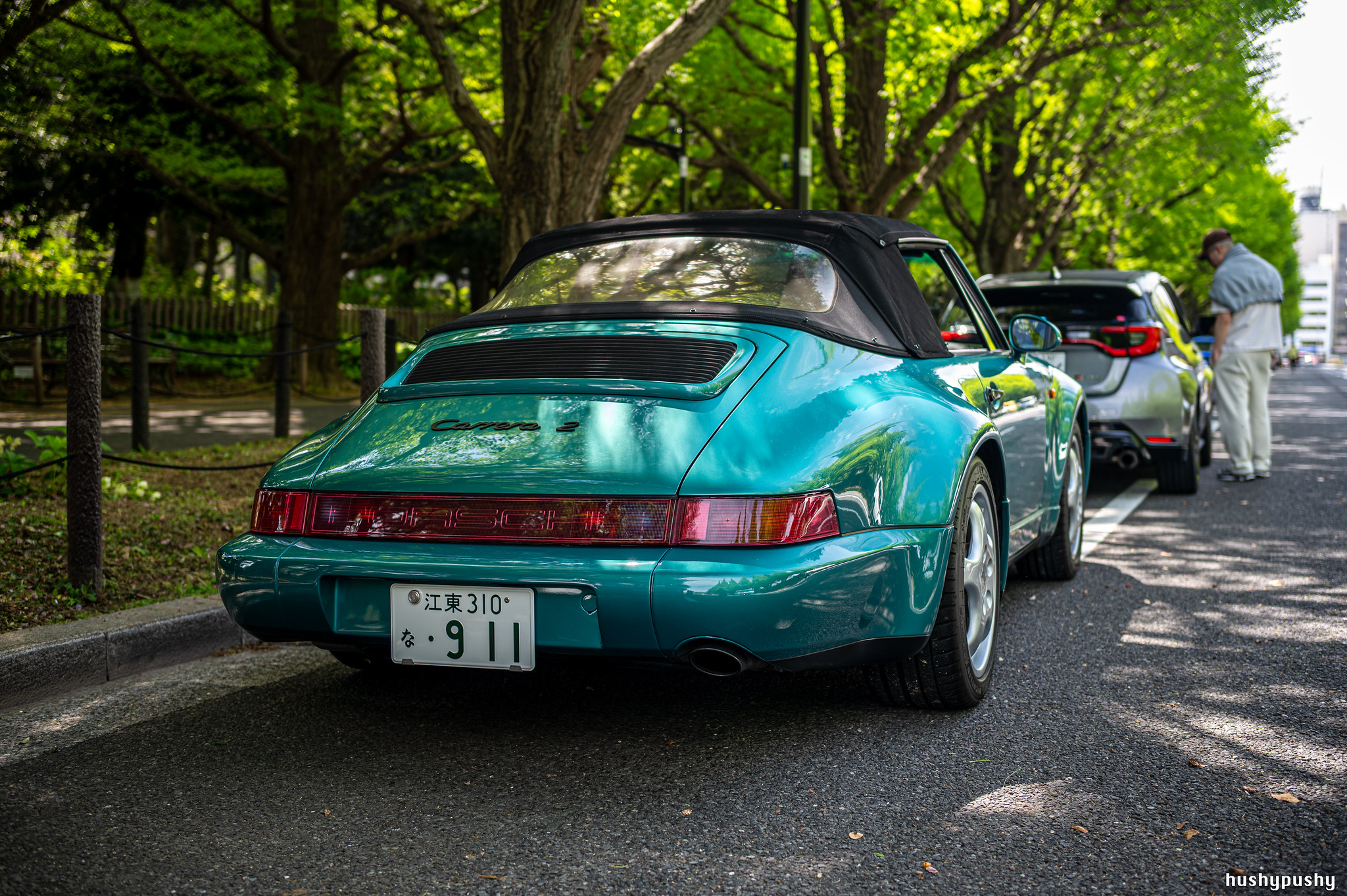
Here is another fairly rare car: a 964 “Turbo-look” cabriolet. The vast majority of 964 cabriolets were narrow-body, but the USA got 250 cars called “America Roadster” which, similar to the M491 package of the G-body era, was a Turbo body and suspension with the Carrera motor. This is not an America Roadster; in the rest of the world this was called the “Werks Turbo Look” (WTL).

I’ve liked the GR Yaris since it came out, but after renting a current-gen Yaris I really fell in love, so I was extra excited to see this newest facelift version.
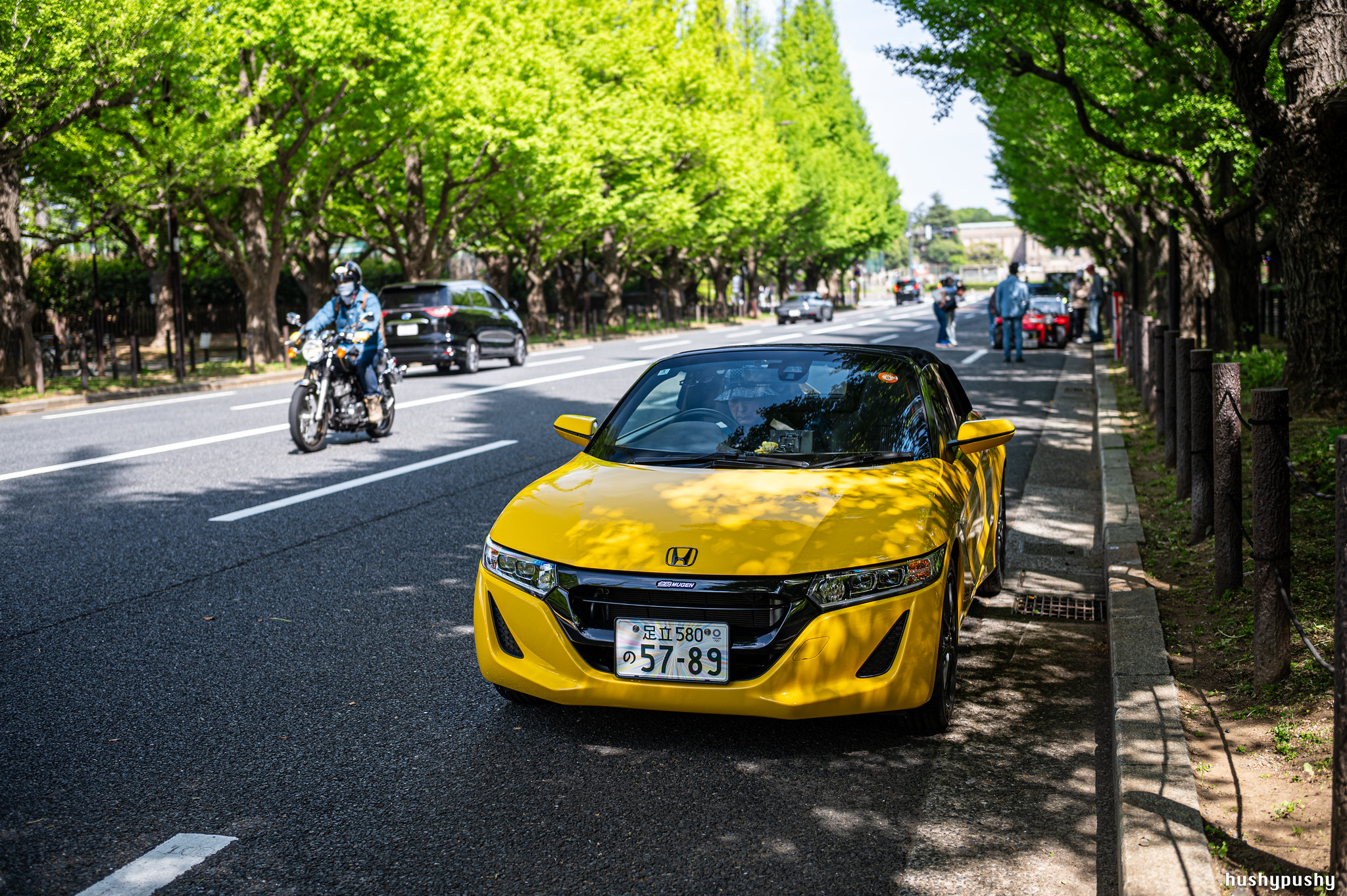
Kei cars are still popular in Japan because the roads aren’t getting bigger and gas isn’t getting any cheaper. Plus, it’s just a hoot to drive tiny sports cars! I’ve sat in an S660 and I actually fit, so I would love to see how they drive. This one had a couple Mugen pieces for extra flair.
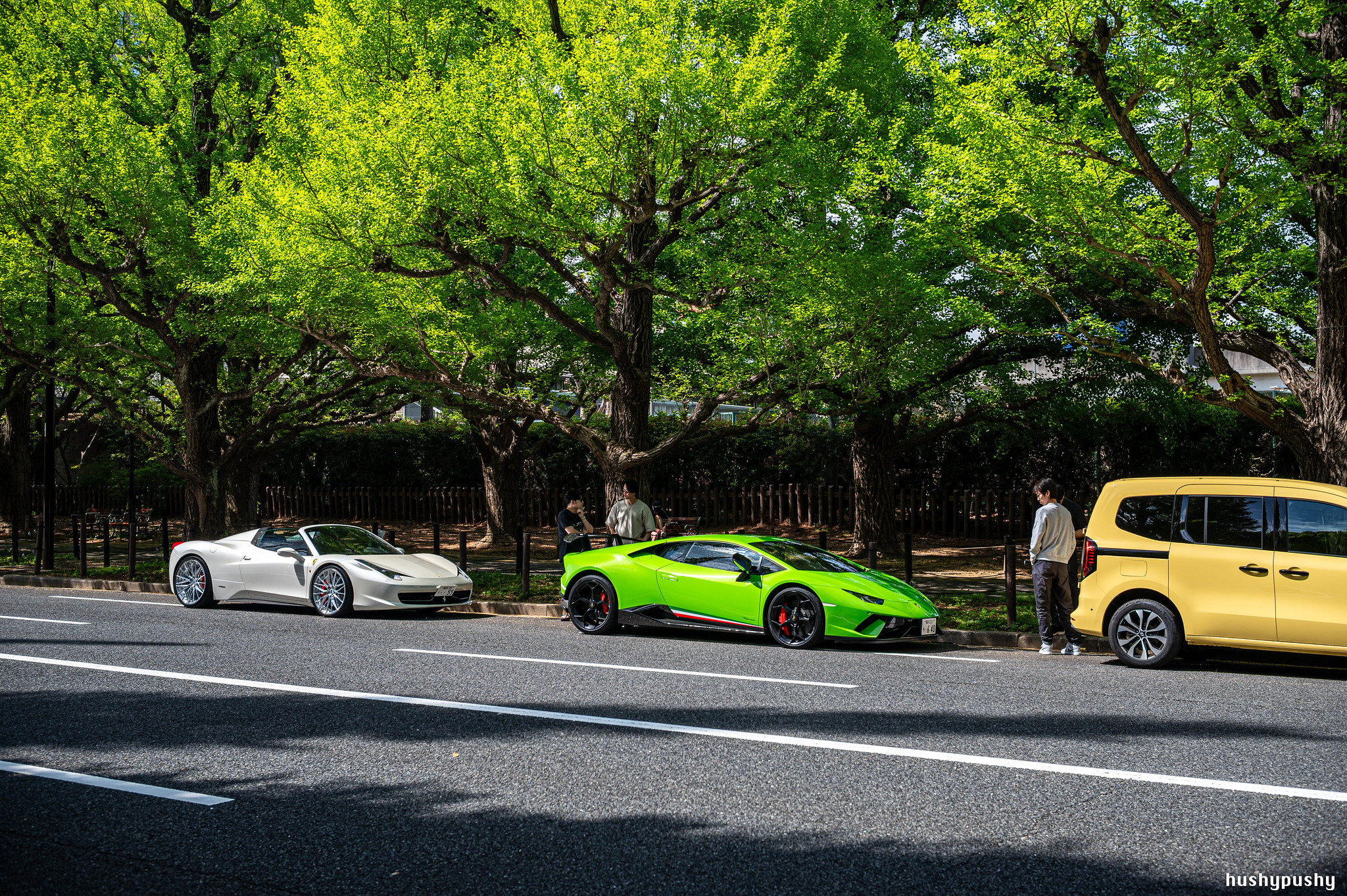
As you would expect, supercars were in attendance too. I’m not a fan of the big rimz, but it’s interesting to see a 458 Spider that’s not red. It’s also intriguing to see people actually presenting their front plates, which is something that pretty much does not happen in the USA (even if legally required).
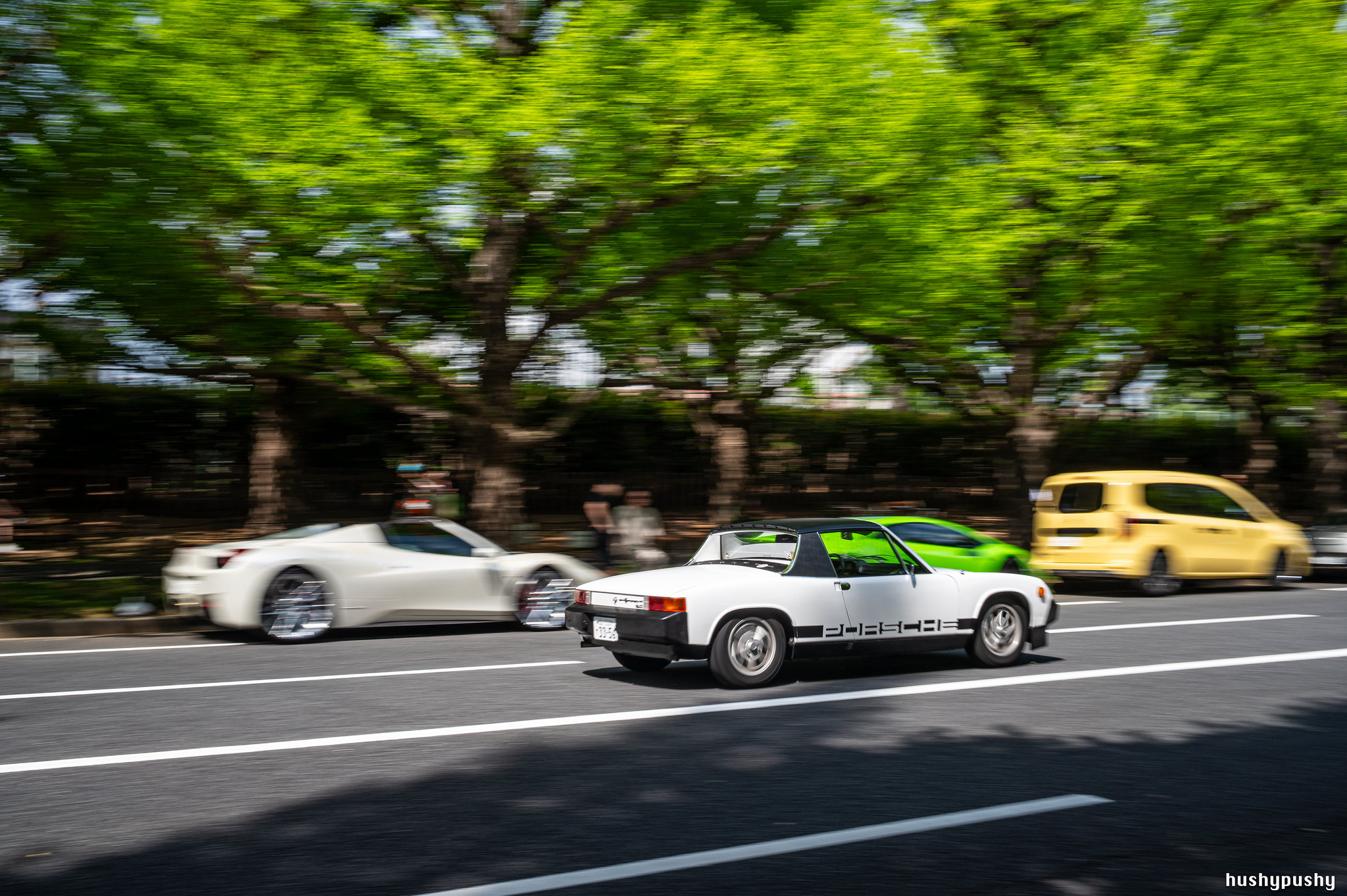
And then a 914 cruised by. Modern supercars are cool, but classic sports cars are just automatically more appealing.
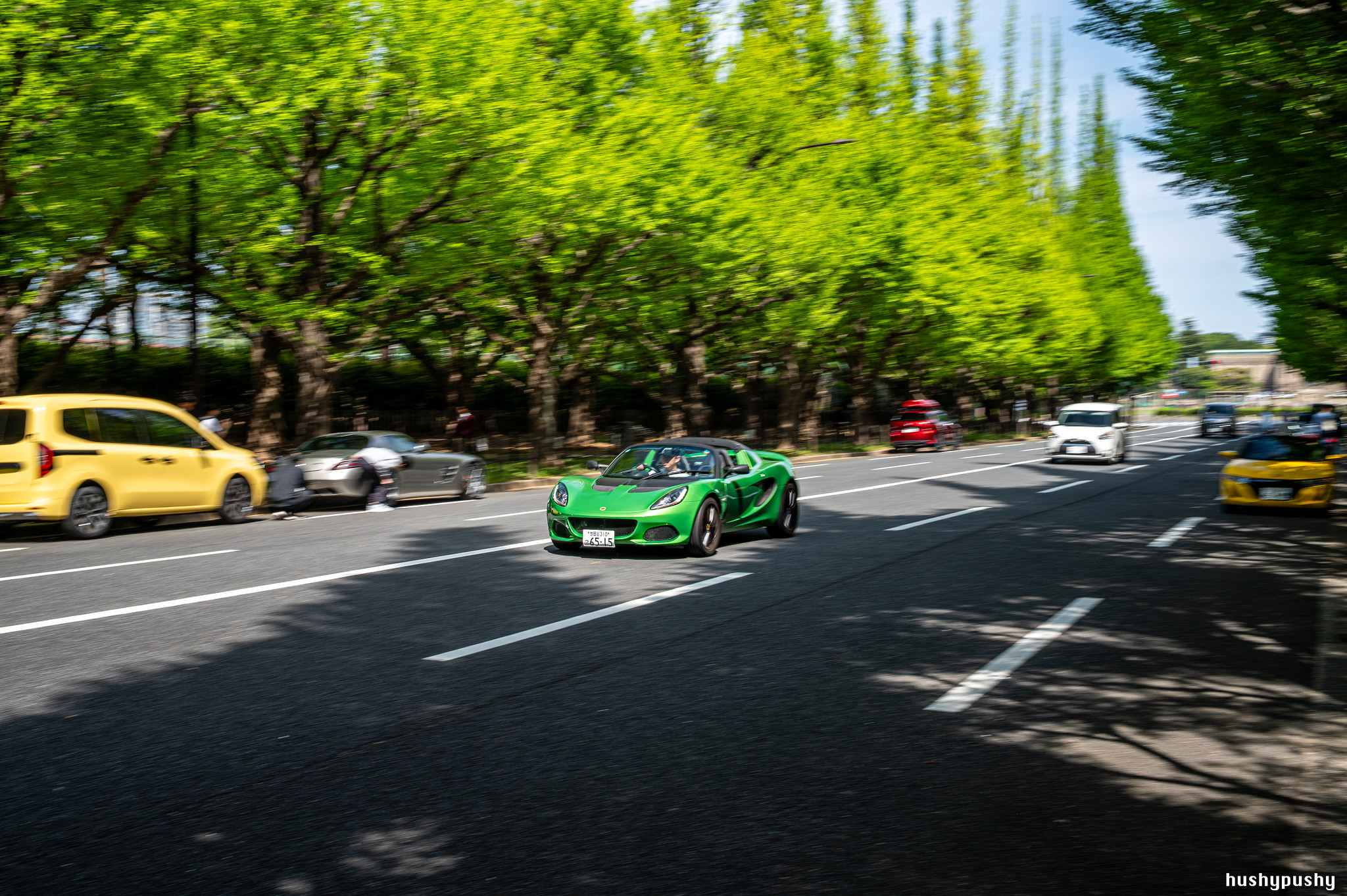
Here’s a rare car from my US perspective: a Series 3 Lotus Elise. Production of the Series 2 ended with the 2011 model year in the USA when their waiver to sell cars without smart airbags expired. For the 2012 model year, other markets received this refreshed version.
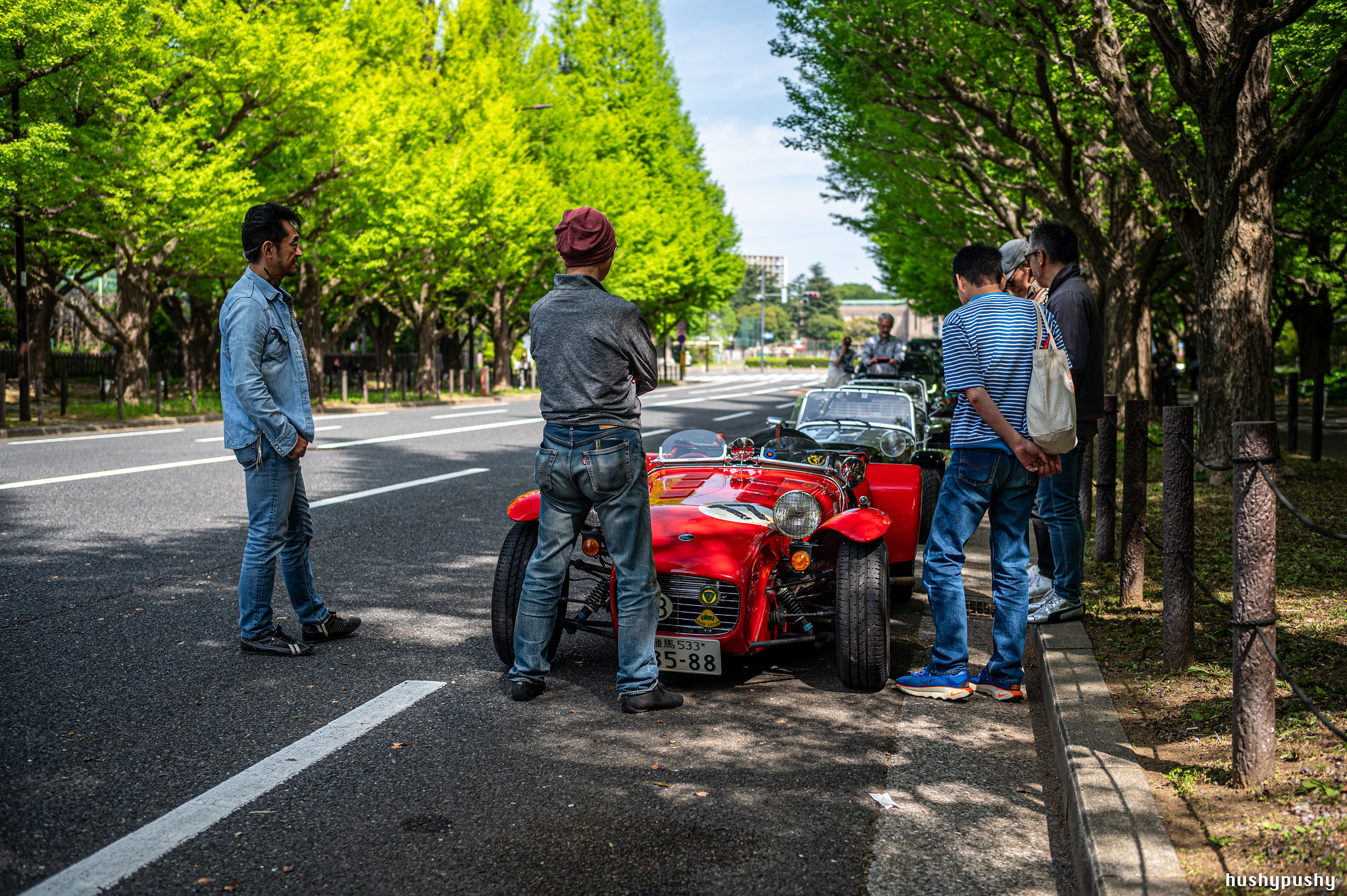
Standing around and yakking about cars: a universal weekend pastime. There was quite a variety of cars out there, but impressively it actually seemed like most popular car was a Seven.

Lotus in general seems to be a favored brand among Japanese enthusiasts: so far we’d seen several Sevens, an Elise, and now an Emira–and that wouldn’t be the end of the Lotus parade.
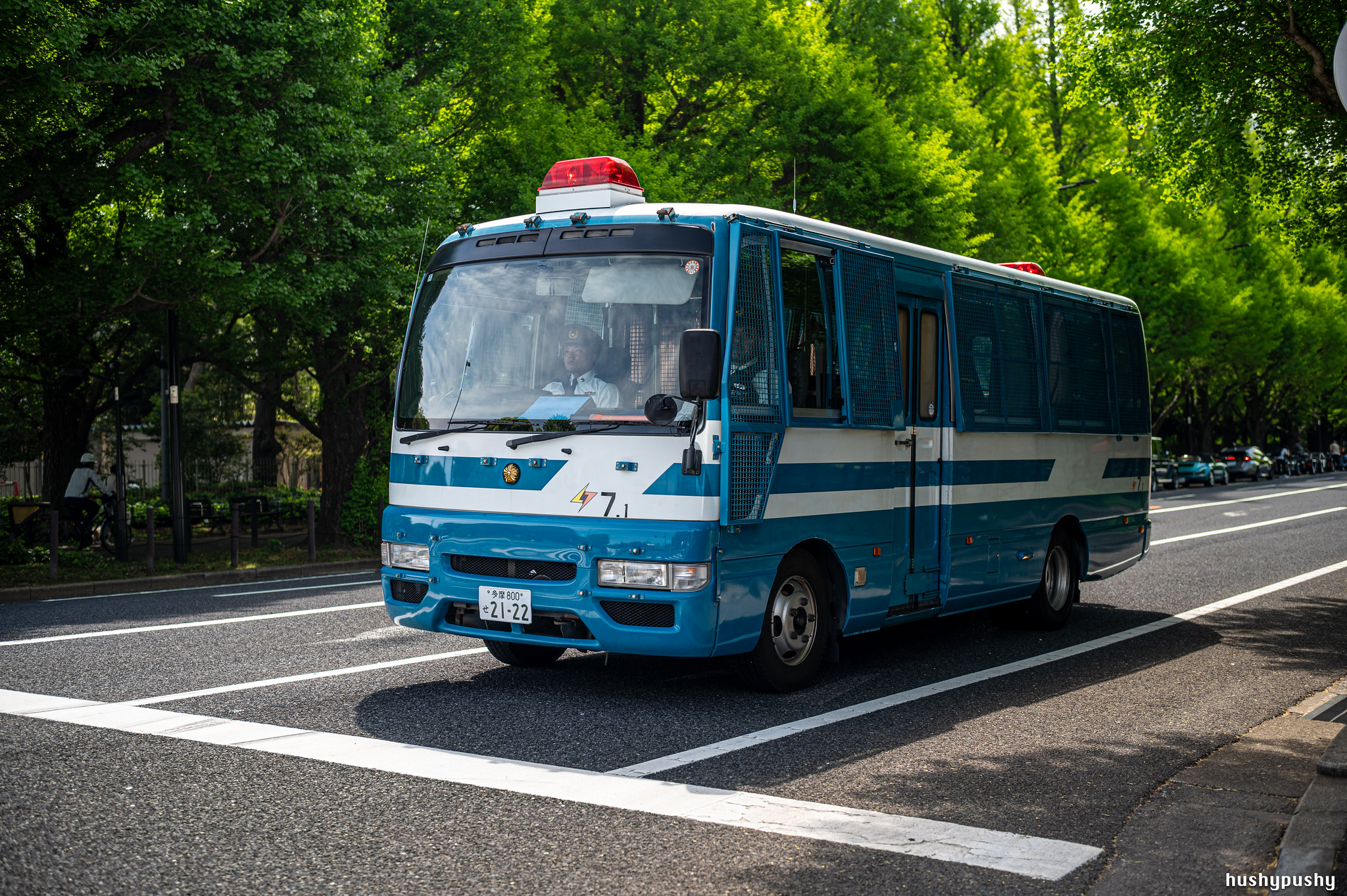
When visiting other countries, I love to discover vehicles I’ve never seen before. This police bus was a really unique spot; you hardly ever see such vehicles in general, and Japan is known for its light police presence. I wonder what it was doing in this lovely calm area of Shinjuku on a Sunday morning?
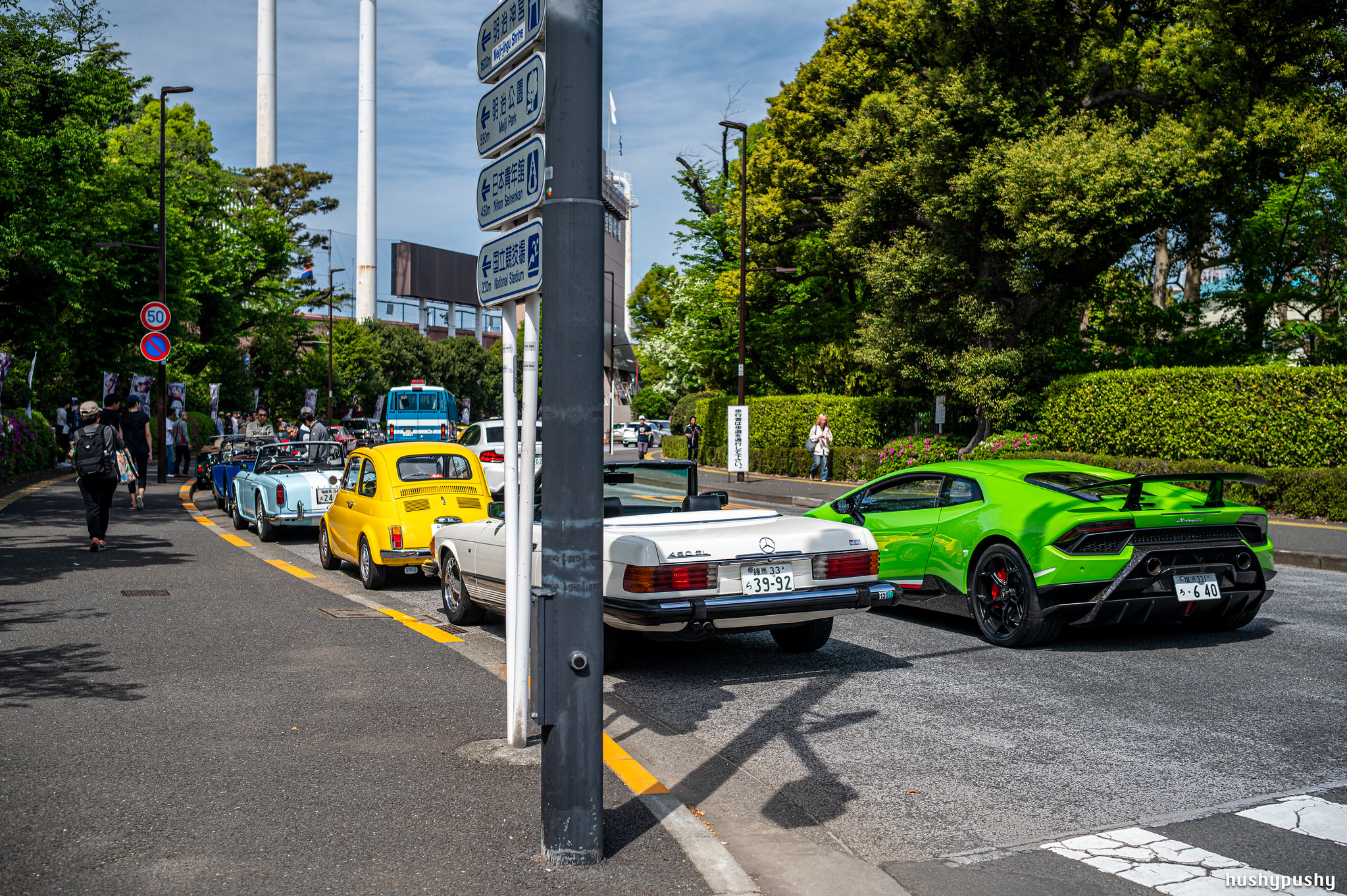
Unlike most meets, this one doesn’t take place in a lot; it’s entirely for parallel-parked cars on the street. So we walked down the block to see what was around the corner. This is the same Huracan as before, either leaving or parking again (for the third time!).
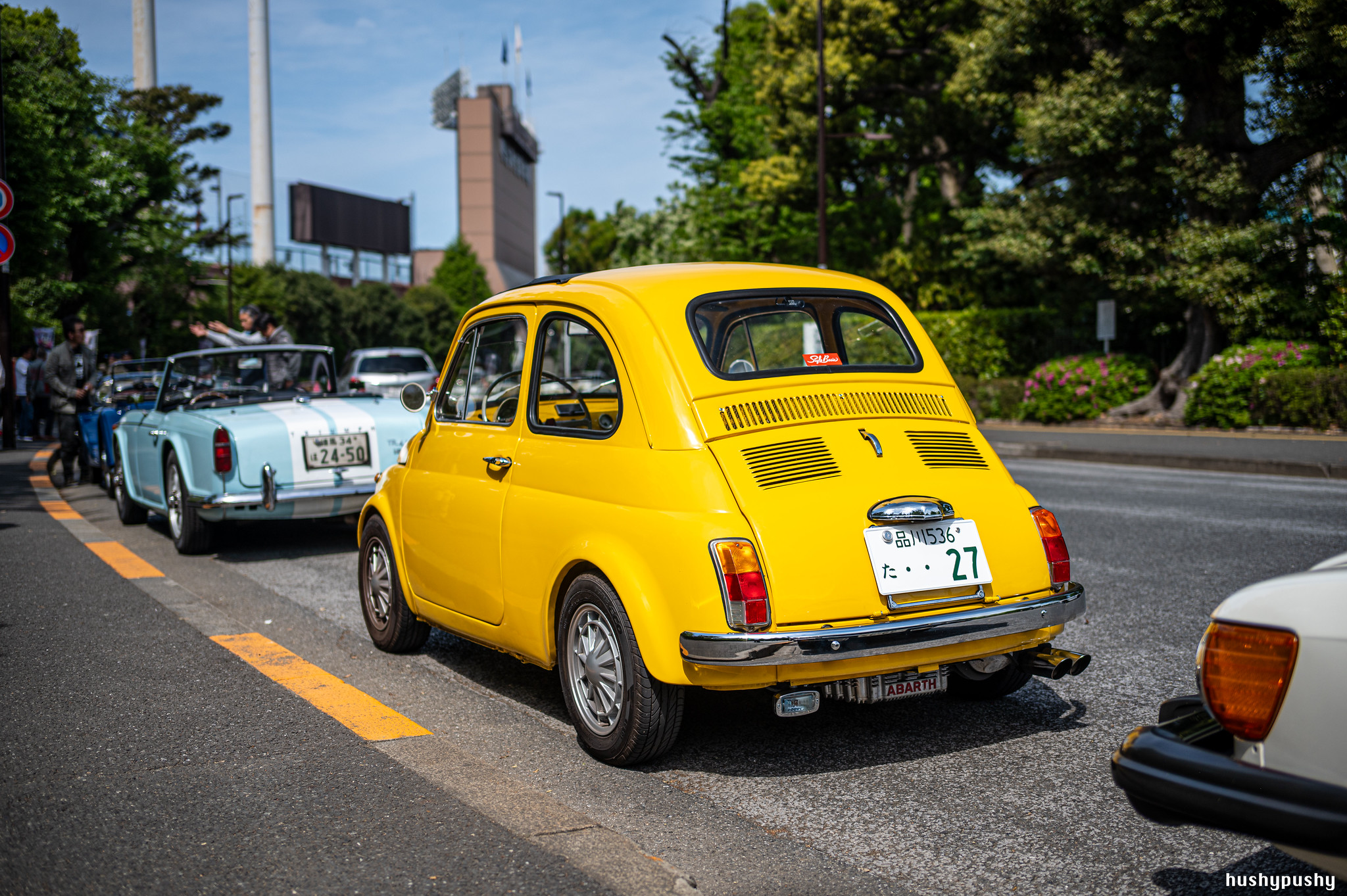
This clean Fiat 500 looks to be hiding a little secret: check out the ABARTH logo peeking out from under the rear bumper.
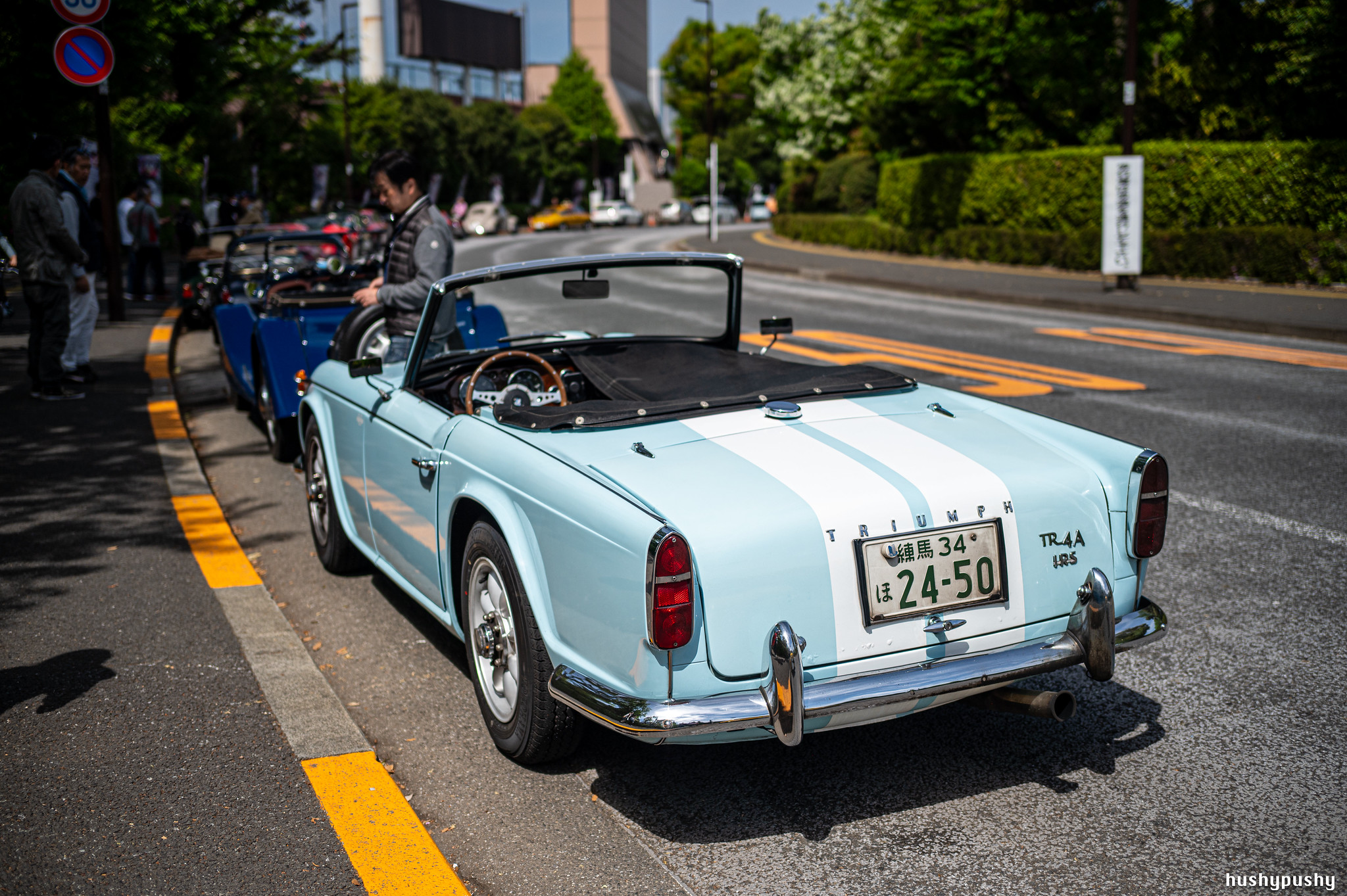
Yet another British sports car, this time a Triumph TR4A. Note the “IRS” badge; that doesn’t represent the dreaded taxman, but instead the new Independent Rear Suspension which was the most major change from the TR4 to the TR4A. Well, in most markets anyway. Apparently in the USA, the Triumph distributors were worried about the price increase of the new added tech, so they successfully lobbied Triumph to make a special version of the TR4A just for the US market that had the new TR4A chassis adapted to fit the leaf springs and live axle of the TR4. That was the default version, and then for an additional $147 you could equip your new US-spec TR4A with independent rear suspension.
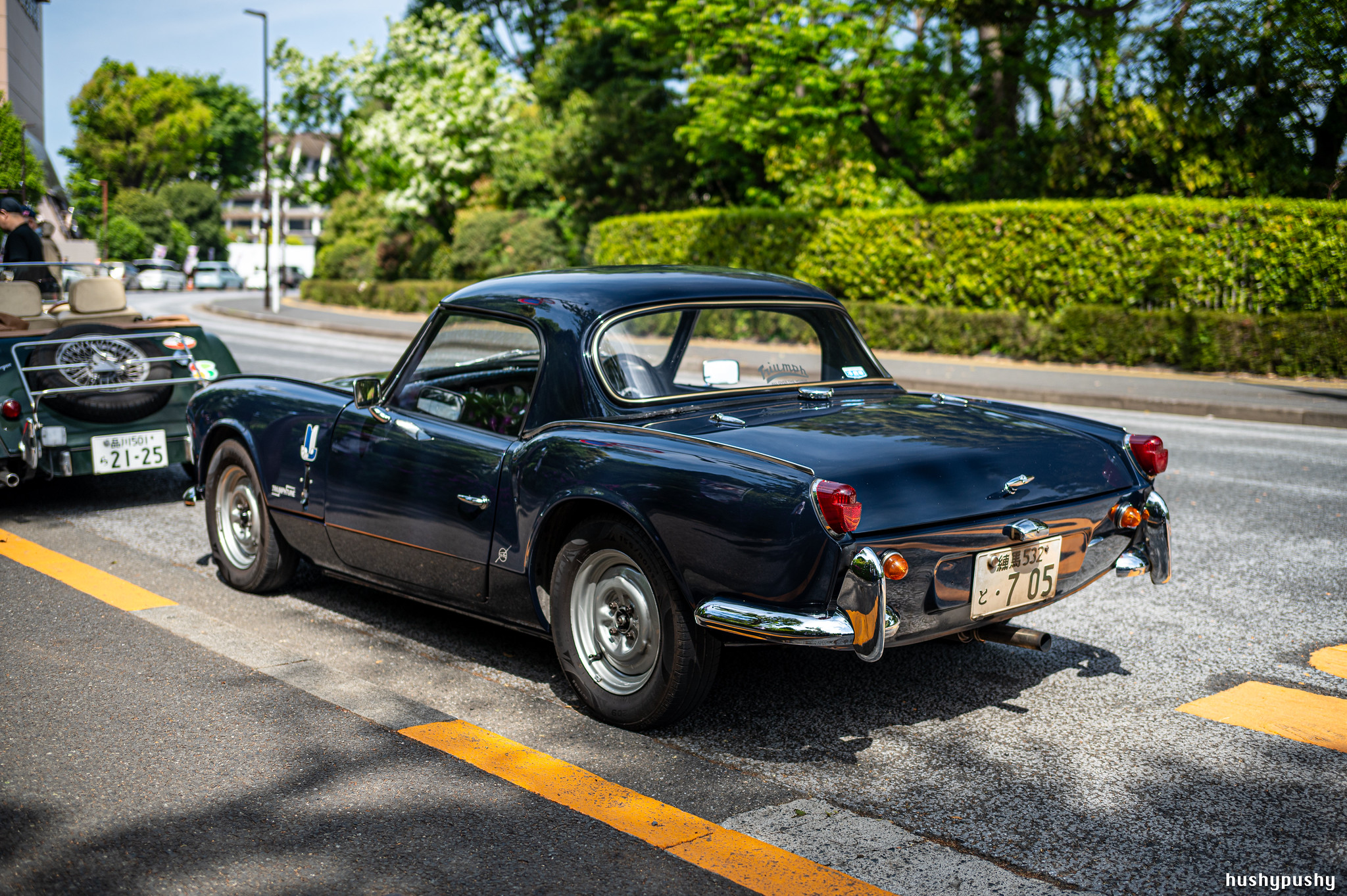
Here’s another Triumph, this time a Spitfire. Also note the Morgan behind. The British contingent was out in force this morning!

And then we came up to my personal favorite of the day: this Abarth Simca 2000. Talk about rear engine–just look at that inline-four hanging off the back! It made 190 horsepower which is pretty spicy in a car that only weighed 1500 lbs.
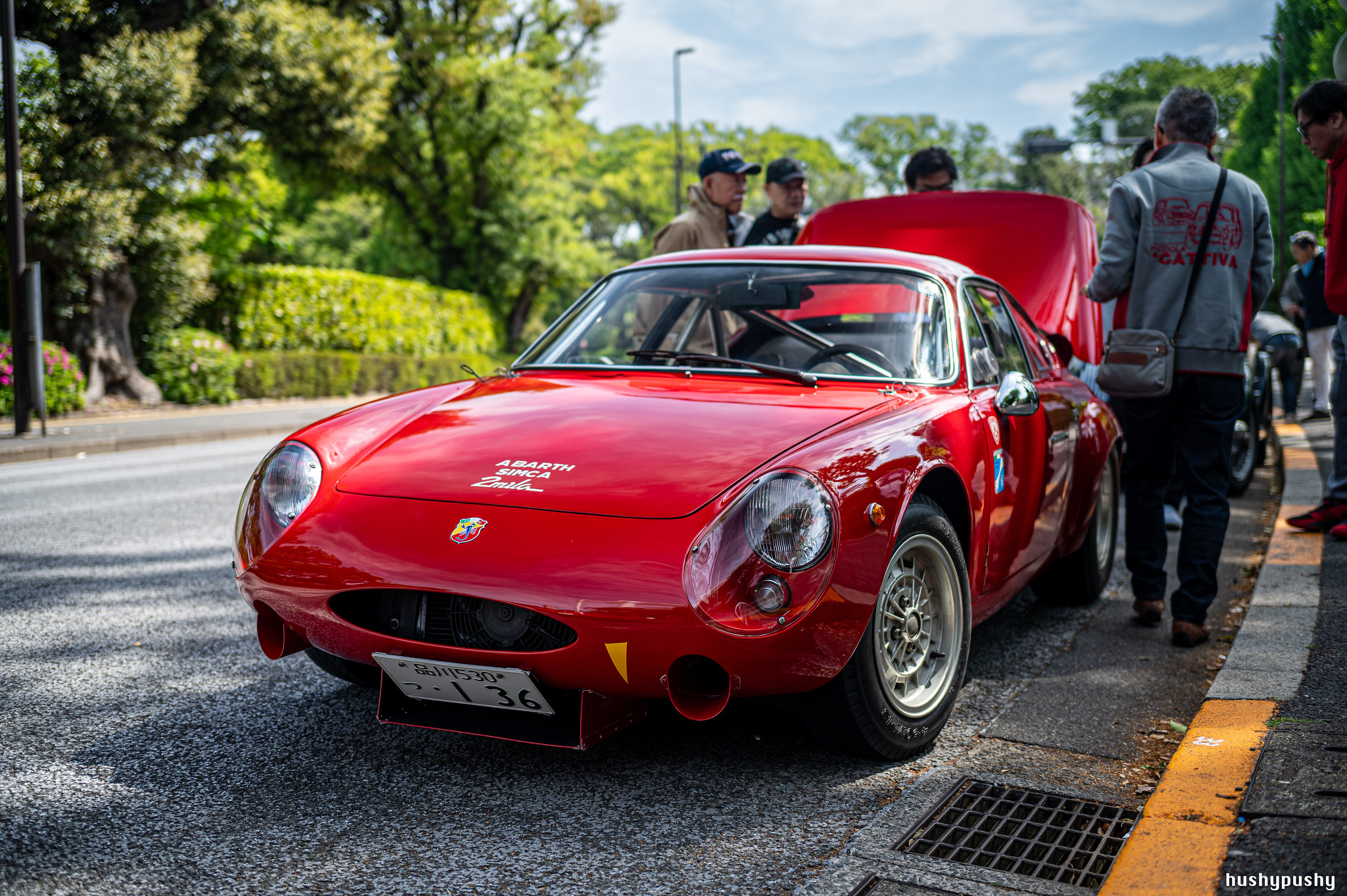
And it’s beautiful too, with gorgeous curves and lovely proportions. If the adults standing next to the car don’t clue you in to how tiny it is, look how large the license plate appears.
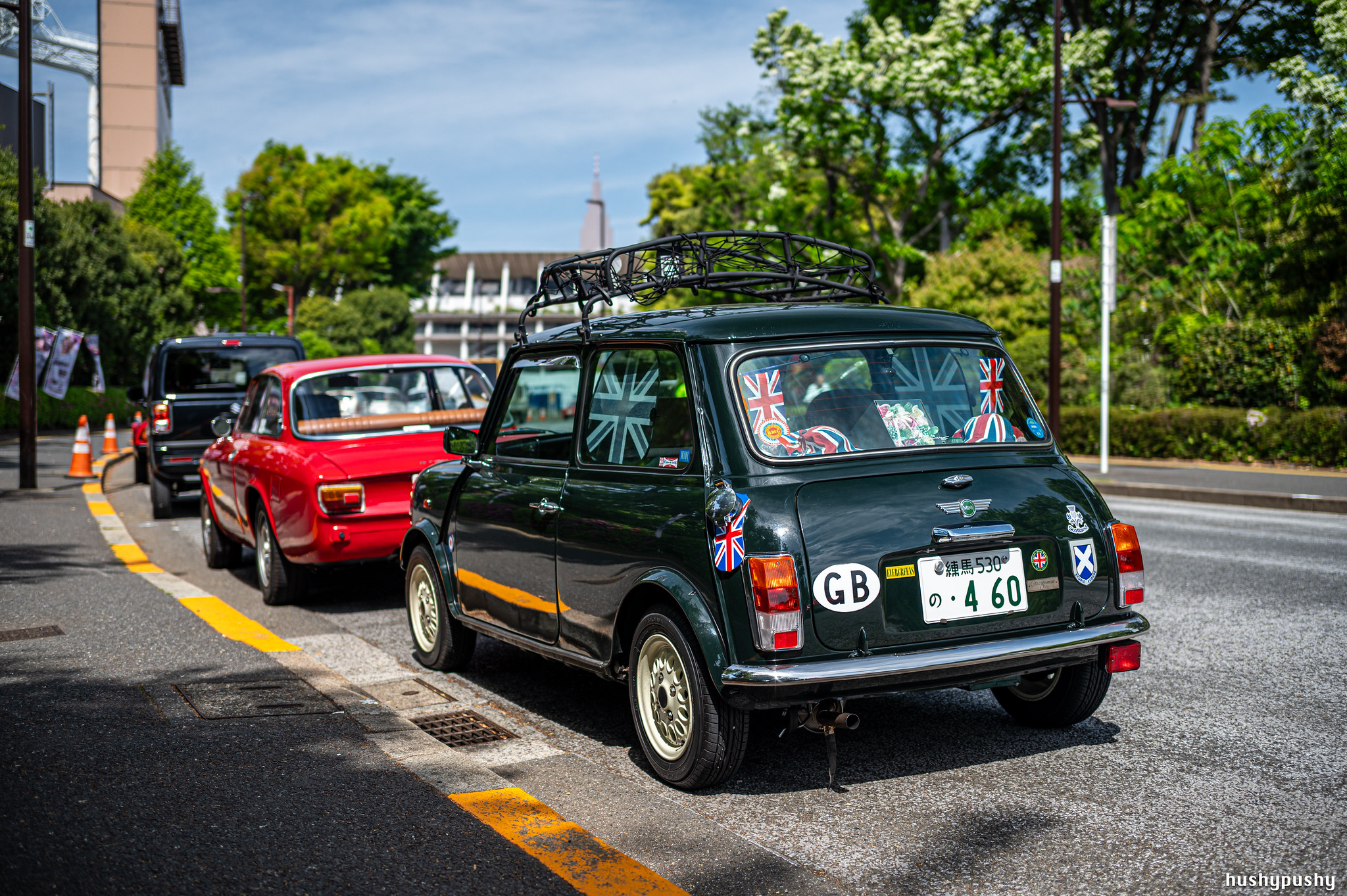
Even more British love: a gathering of classic British cars wouldn’t be complete without an original Mini. And this person appears to be quite the Anglophile, judging by the proliferation of Union Jacks inside and out.

Modern cars can certainly look cool, but it’s so hard for them to look beautiful. Back in the 60’s before we knew or cared about safety and aerodynamics, beauty was a much larger priority for cars–especially in Italy.
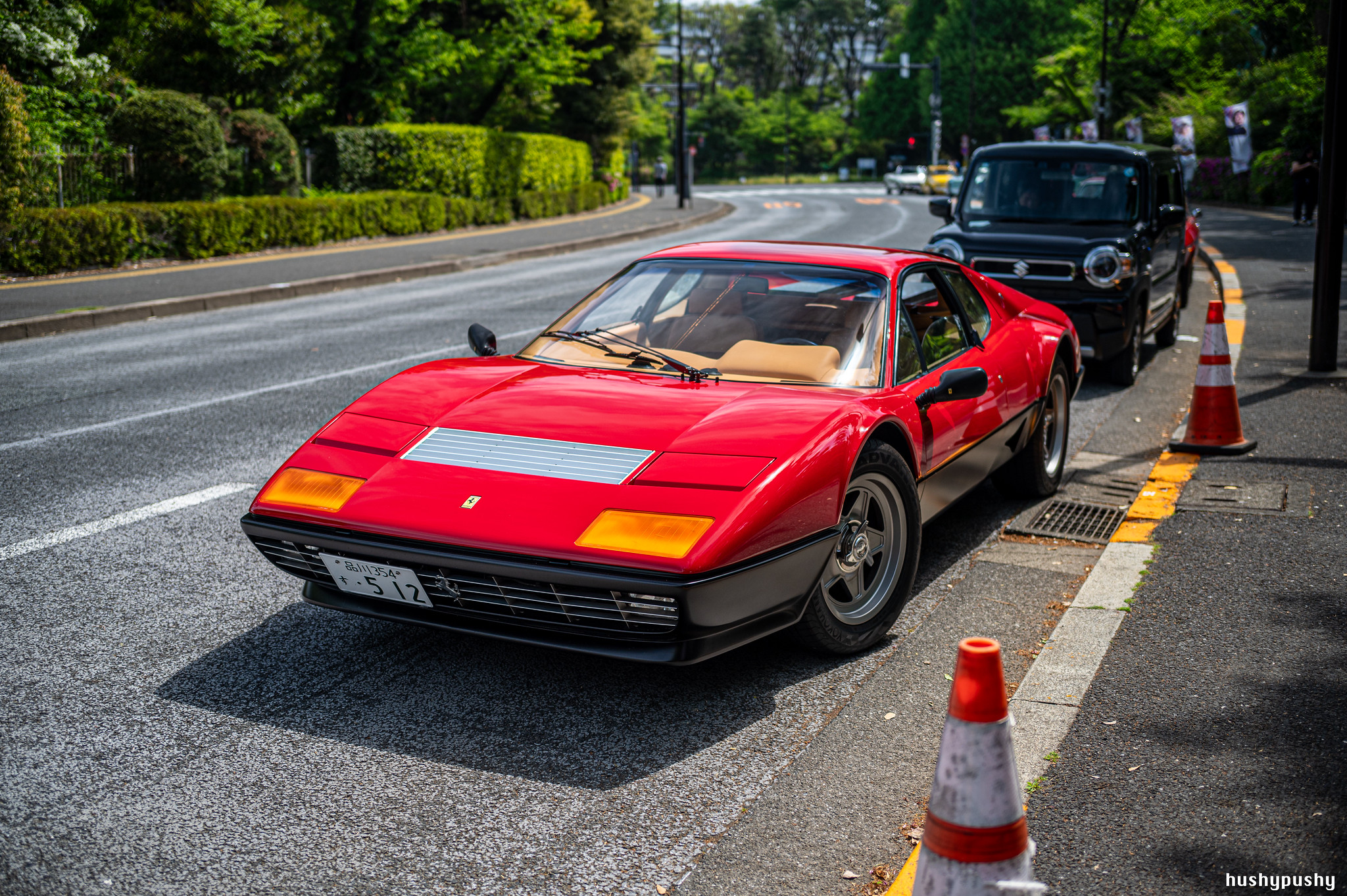
Into the 1970’s, when the US started requiring big ugly bumpers and smog equipment, Europe and Japan were still making cars with slim bumpers and free-breathing engines.
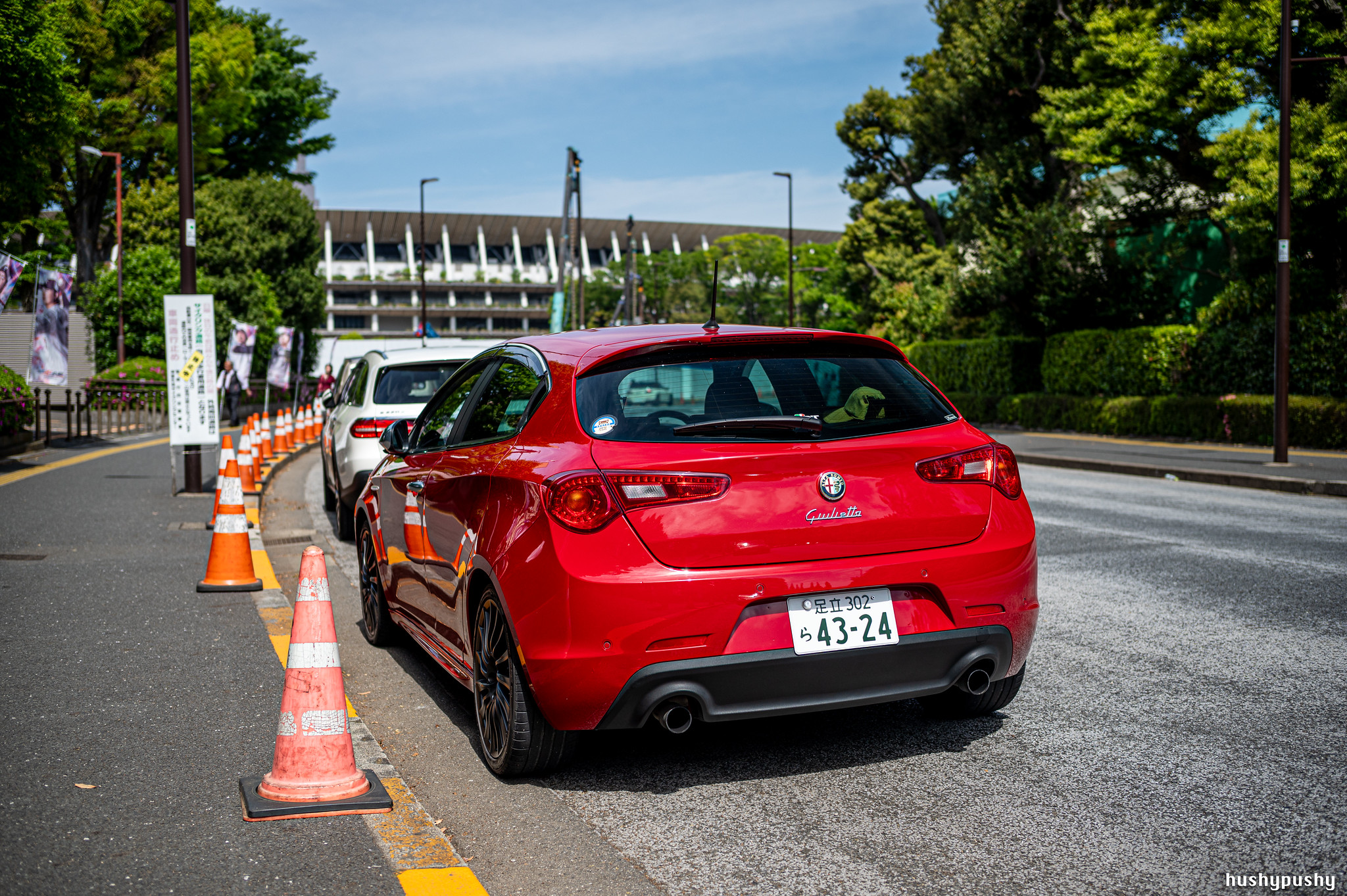
Whoa, a Giulietta hatchback–I had never seen one of these before. I have a Pokemon-like “Gotta catch ’em all” obsession with spotting every type of car possible and this was another one to check off. But man, what a bummer to be suddenly flung into the 2000’s with crash protection bumpers, giant lights, and plastic trim pieces.

Now don’t get me wrong, I love modern cars and the sports car in my garage is model year 2018. But isn’t something like this Fiat-Abarth 595 Esseesse much cooler than anything new?
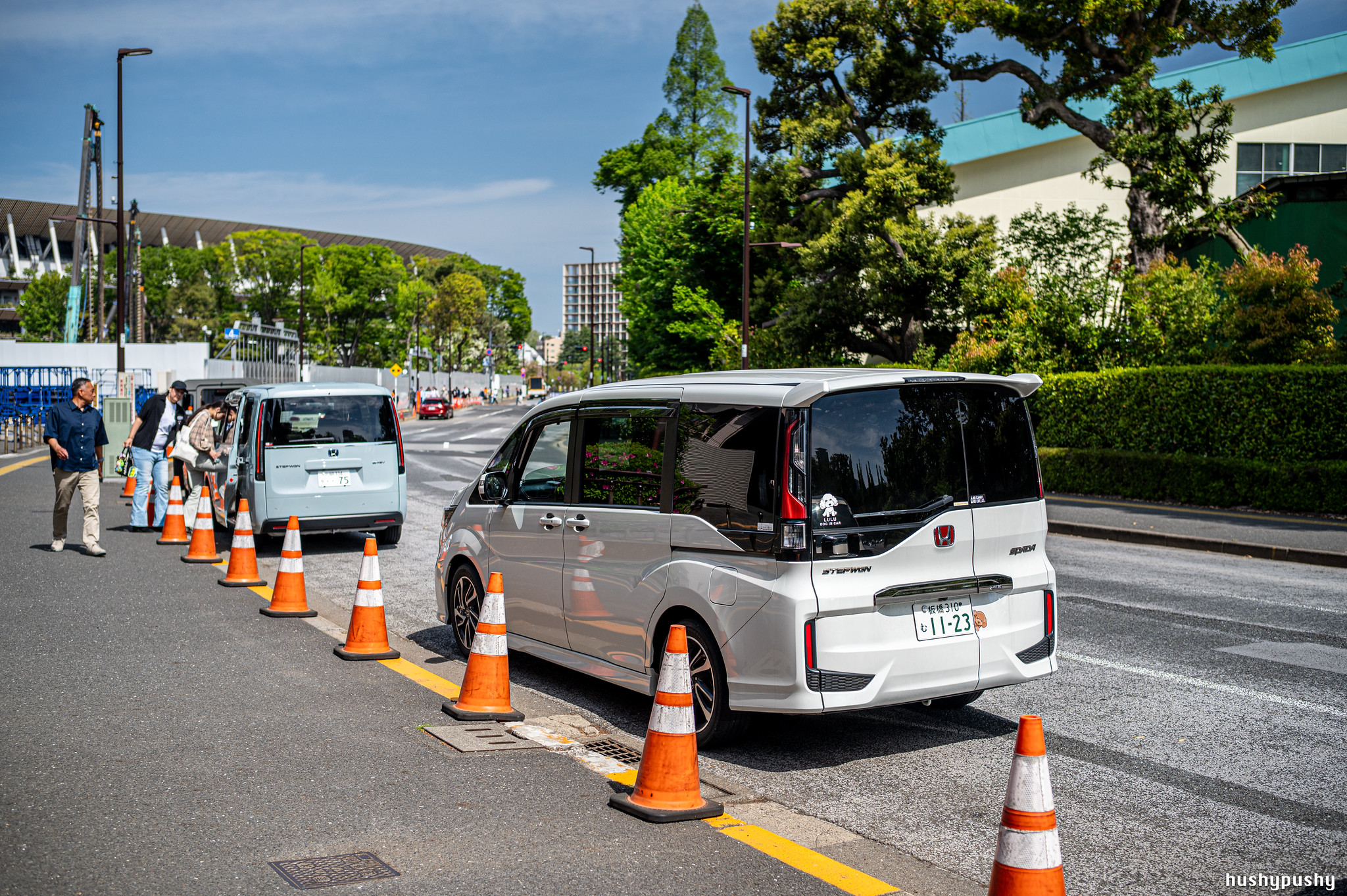
Another extremely popular class of vehicle in Japan is the small van. Each manufacturer has multiple models on sale in various sizes to cater to your various van needs. This is the Honda Stepwagon, stylized as Stepwgn. Would you rather have the split barn door setup of the previous generation Stepwgn (foreground), or the big hatch of the brand new model (background)? The only generation of Stepwgn with rear barn doors is that 5th generation, so maybe it wasn’t received well.
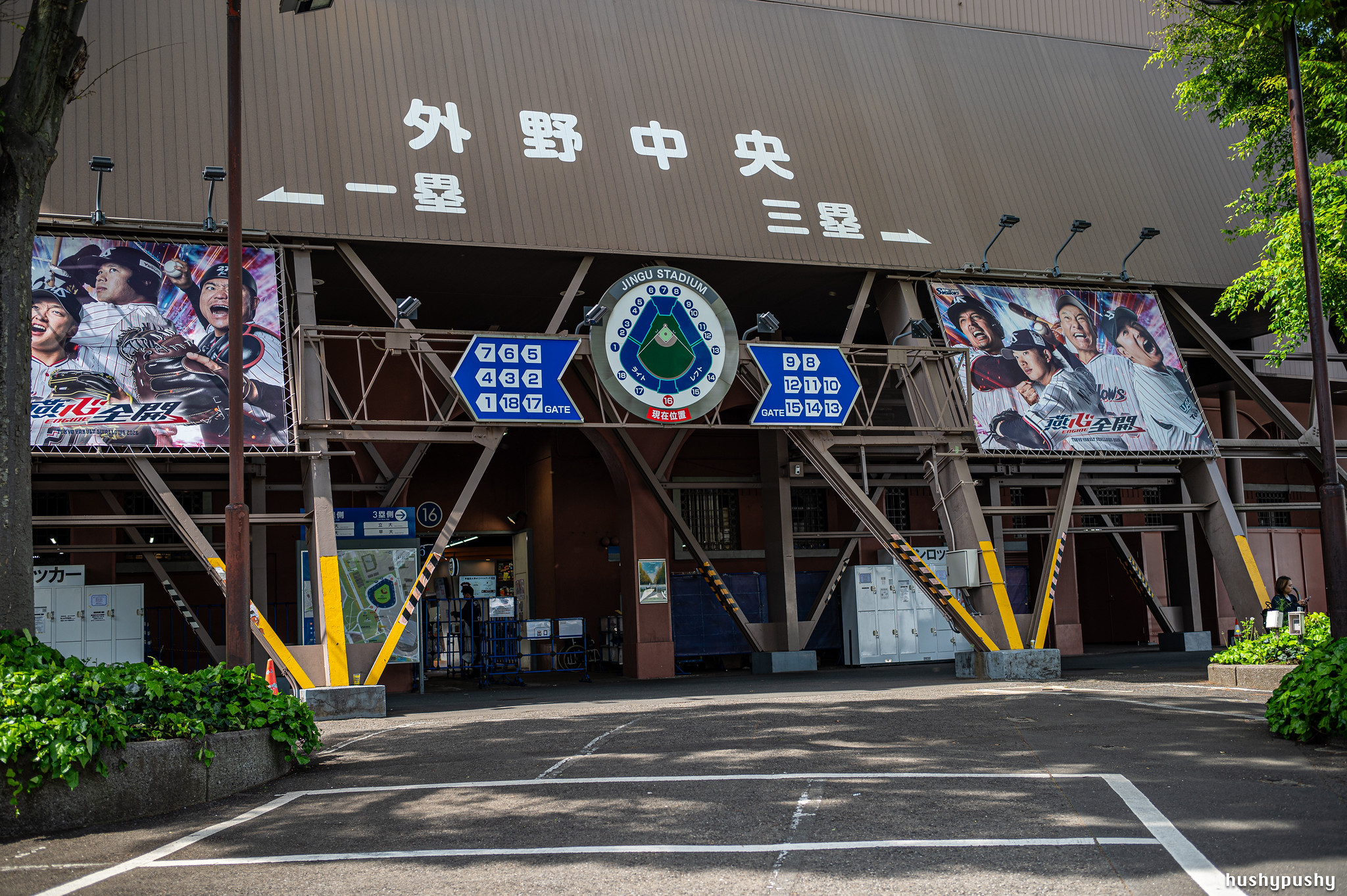
Here’s the entrance to the Meiji Jingu Stadium where we had just seen the Yakult Swallows play the Yomiuri Giants the night before. The stadium has an interesting layout where you first locate your section on the exterior gates before showing your ticket and walking right into the seating area. And if you’re wondering if you missed anything, don’t worry–I’m time-traveling a bit here by posting about my Sunday morning activity; the next (and last) post about my Japan trip will be about my other adventures on Saturday and Sunday before heading home.
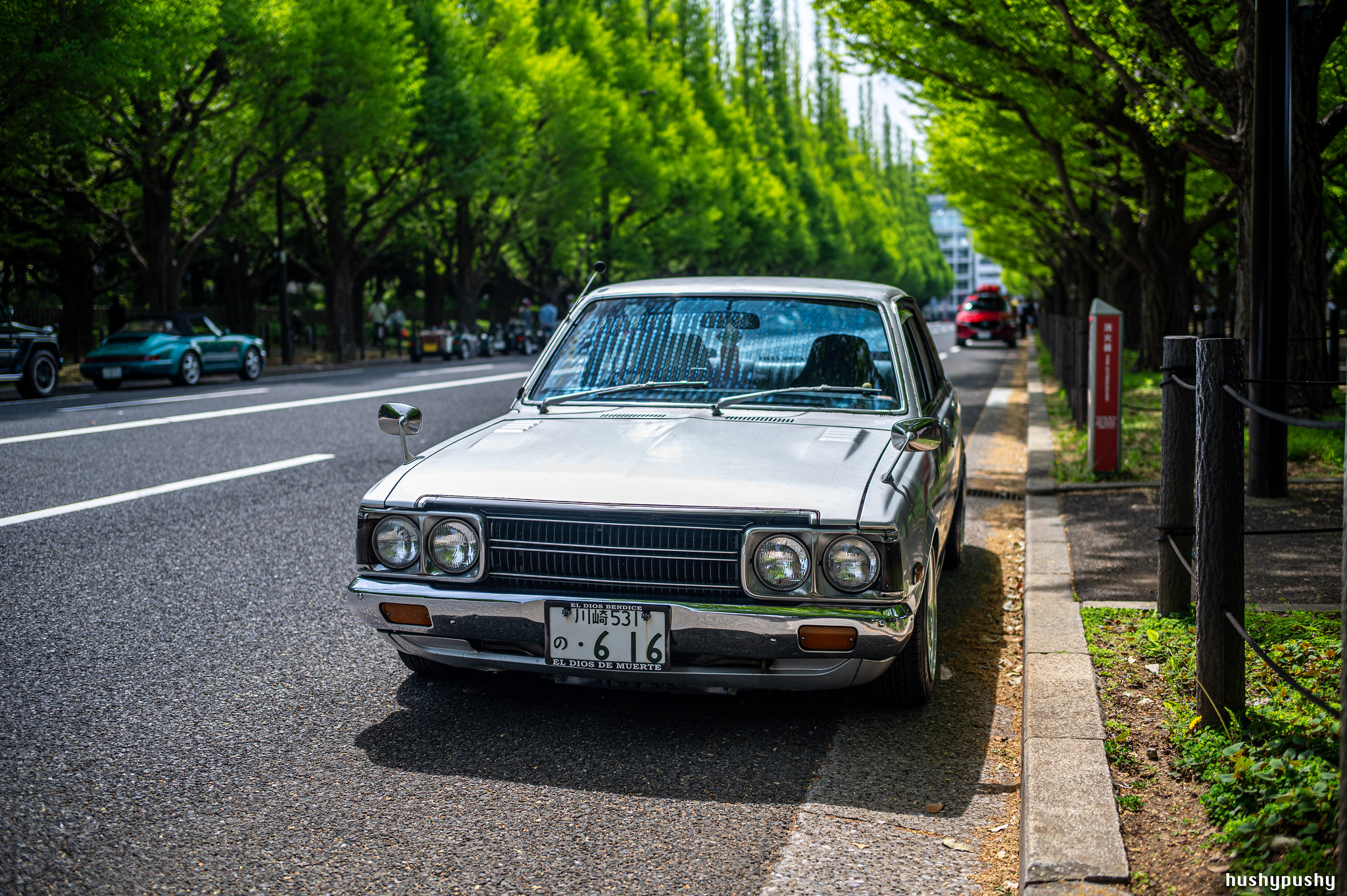
This is a super casual meet that appears to be part of a wider Sunday morning Tokyo car guy routine. Throughout the time we were there, cars kept coming and going, some only stopping for a few minutes. When we walked back to the “main” street, I noticed this Toyota Corona.
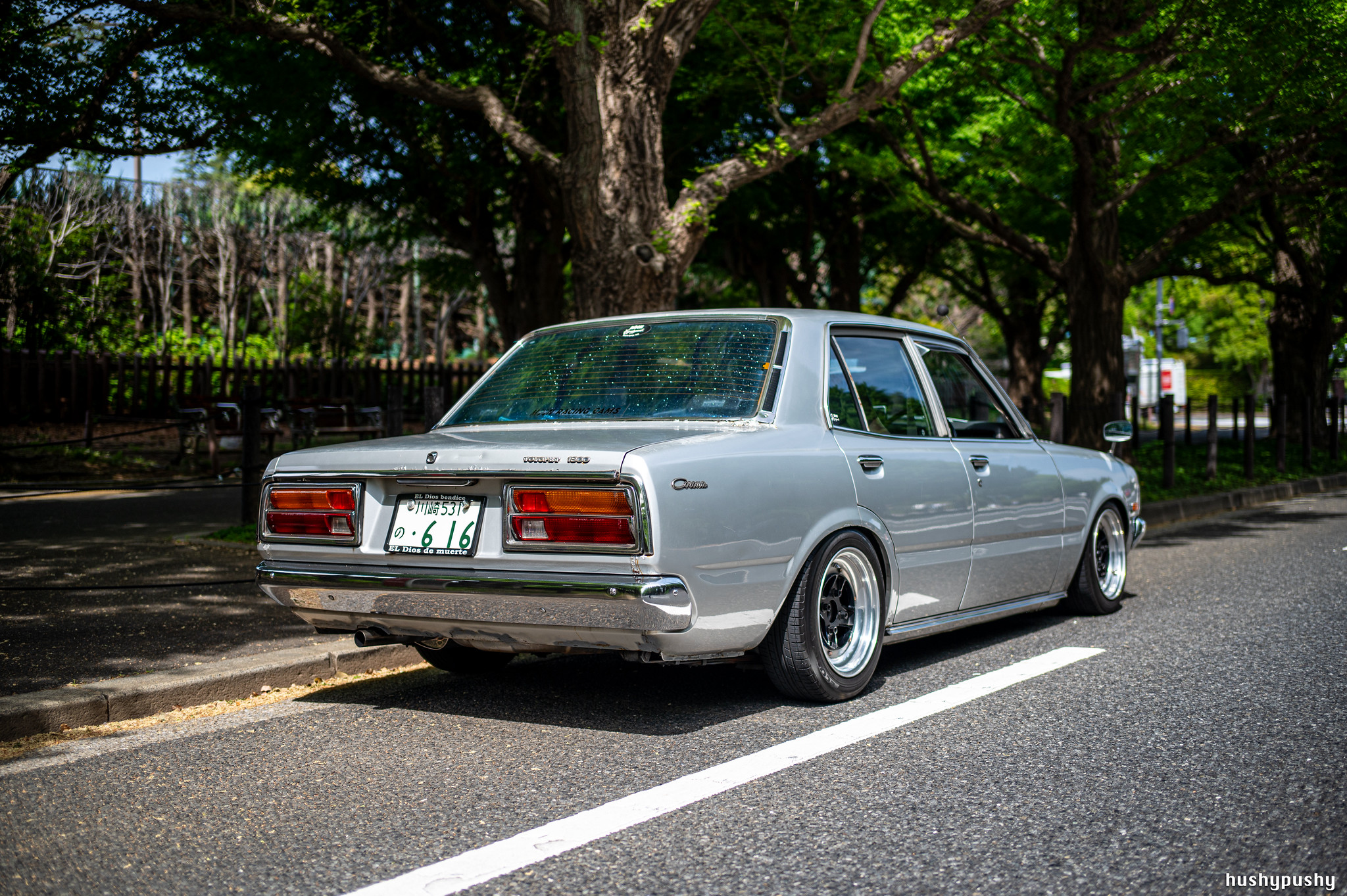
Toyota did sell the Corona in the USA as far back as the second generation in the early 60’s, but nowadays any US-spec Corona is extremely rare. Additionally, four-door-sedans have never been “cool” in the USA; even sedan versions of very popular cars like Chevelles disappeared. So that made it extra cool to see this JDM sedan.

I would say that generally this sort of thing is not my cup of tea, but on this particular day this car just felt right, and I took a bunch of photos of it.
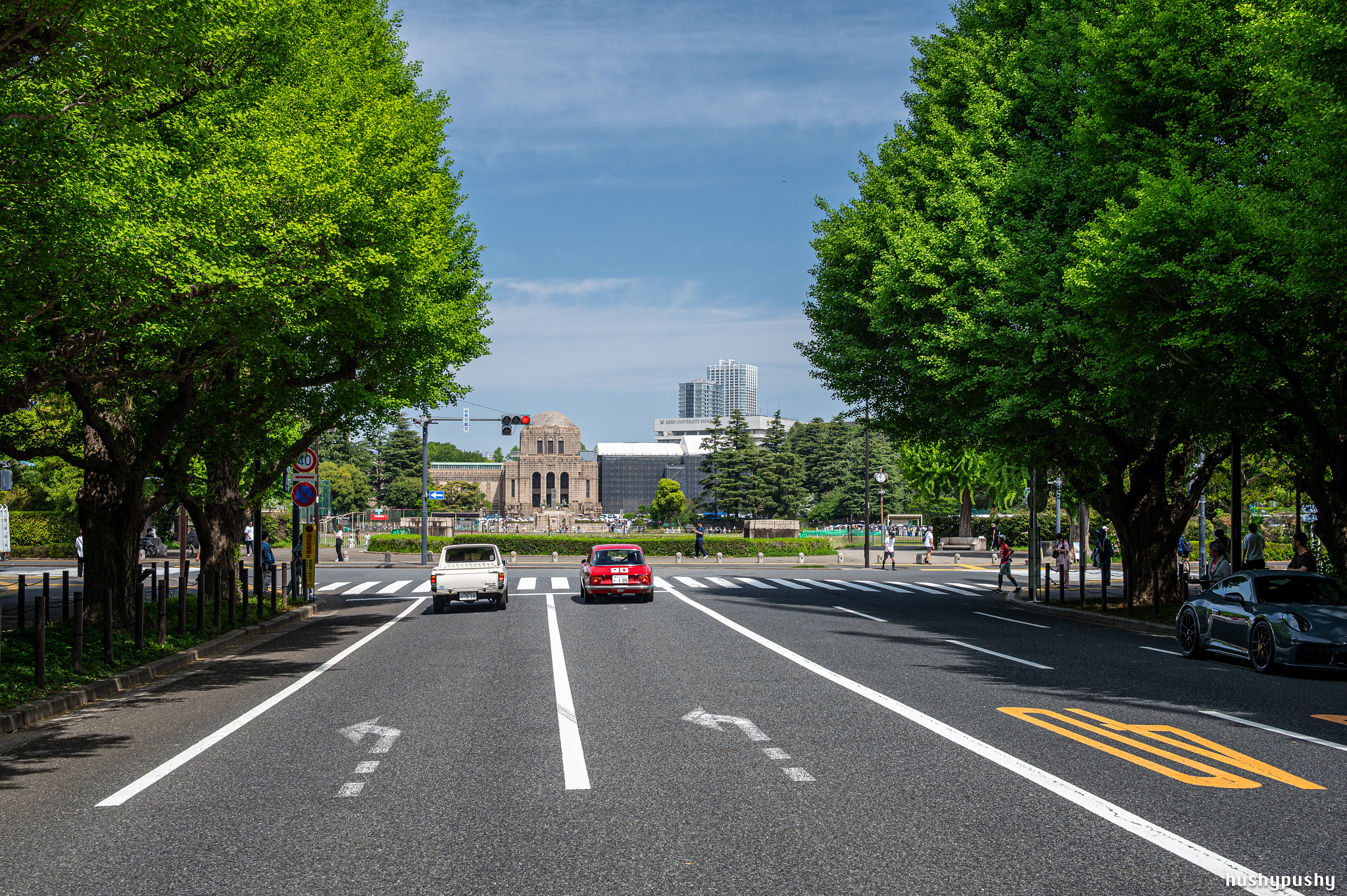
This meet takes place right in the street, but unusually for Japan and especially for Tokyo, the streets here are extremely wide and there is virtually no traffic outside of people coming for this meet.

One more pic of that Wimbledon Green 964, next to a lovely green G Wagen.
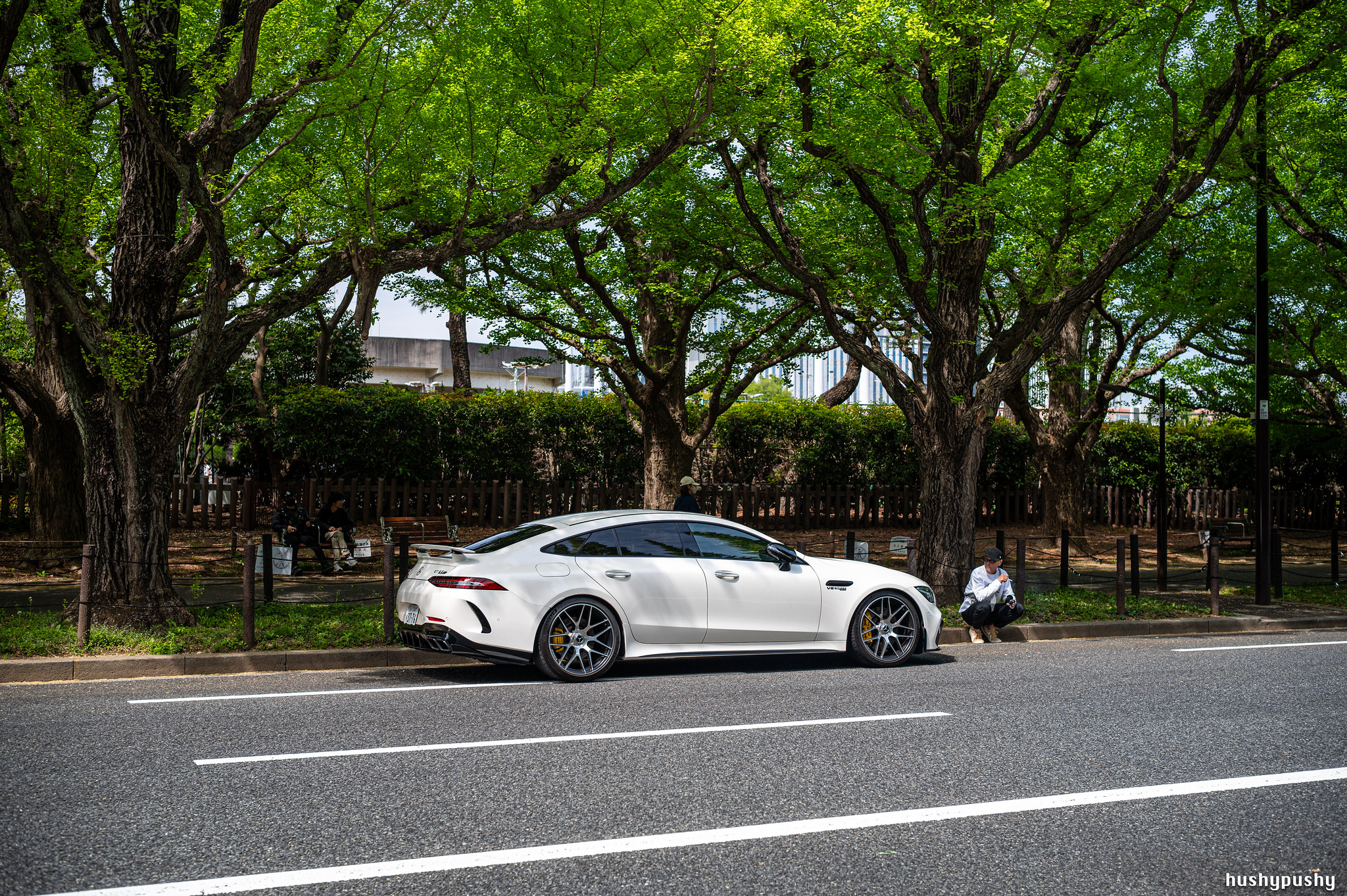
They say that familiarity breeds contempt. I believe this is true with cars, as is the reverse: rarity instantly makes any car cooler. I’m not really a fan of these Mercedes-AMG GT 4-Door Coupés (what a name, eh?), but I also hardly ever see one, and they all seem to be black. So, it was cool to see this white GT 63 S example.
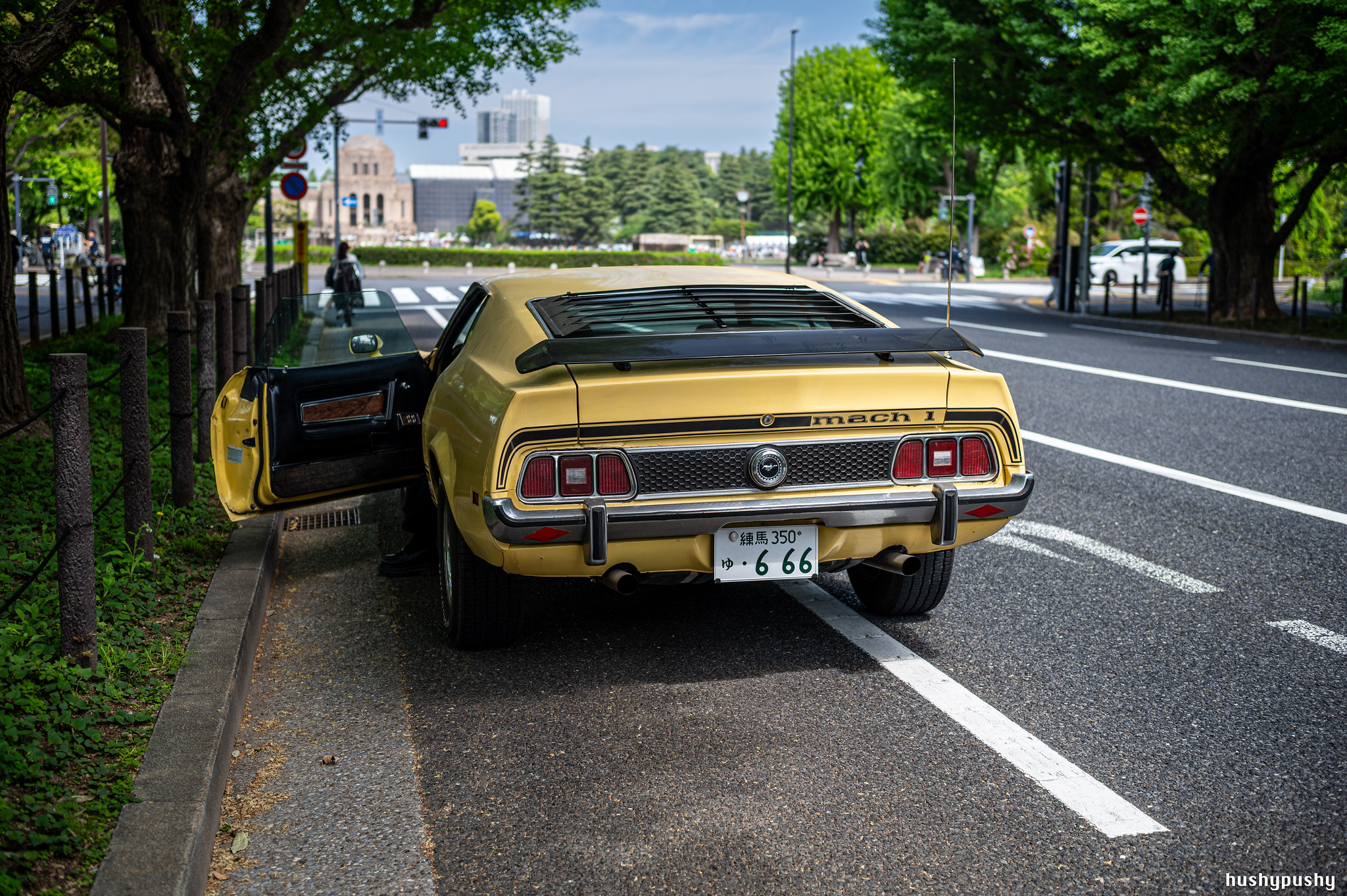
Another cliche that rings true in the car world is that the grass is always greener on the other side. Why would you want an early 70’s Mustang in a land of tiny cars and roads? Probably to be different! These cars were available with several engines, all V8’s, ranging from a 4.9L (302 CI) to a 7.0L (429 CI). On the other hand, V8’s are very rare in Japan, especially in passenger cars. Honda, for example, has only ever sold one production car with a V8, and it didn’t even have a Honda engine (the first-generation Crossroad, which was a rebadged Land Rover Discovery with a Rover V8).
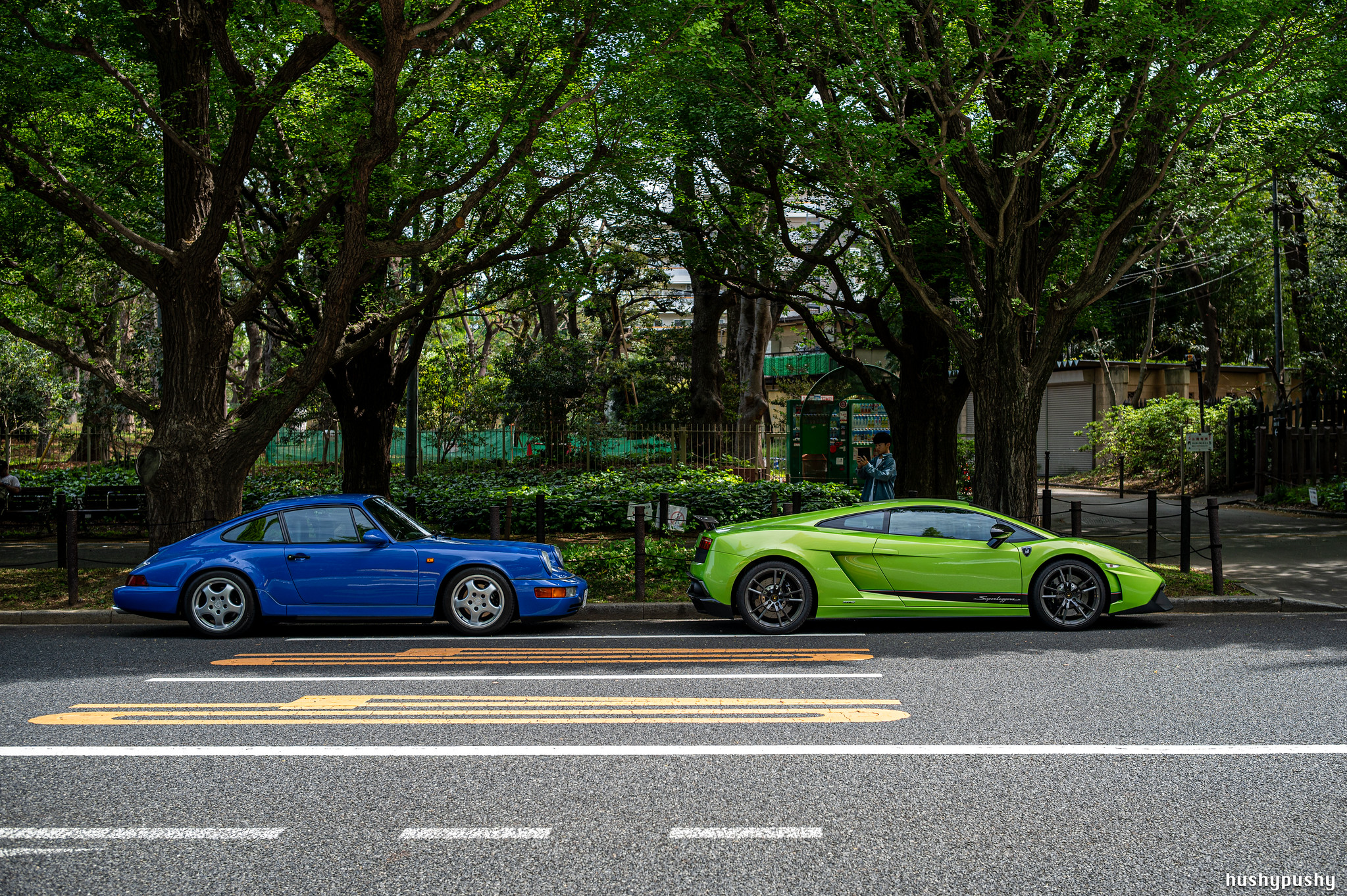
The same green Lambo again?? Actually, this is a Gallardo, which is a bit shorter (in length) than the Huracan. This is a later model Gallardo Superleggera, but the pre-facelift without the splitters sticking out was only an inch longer than a 964–and almost 10 inches wider!
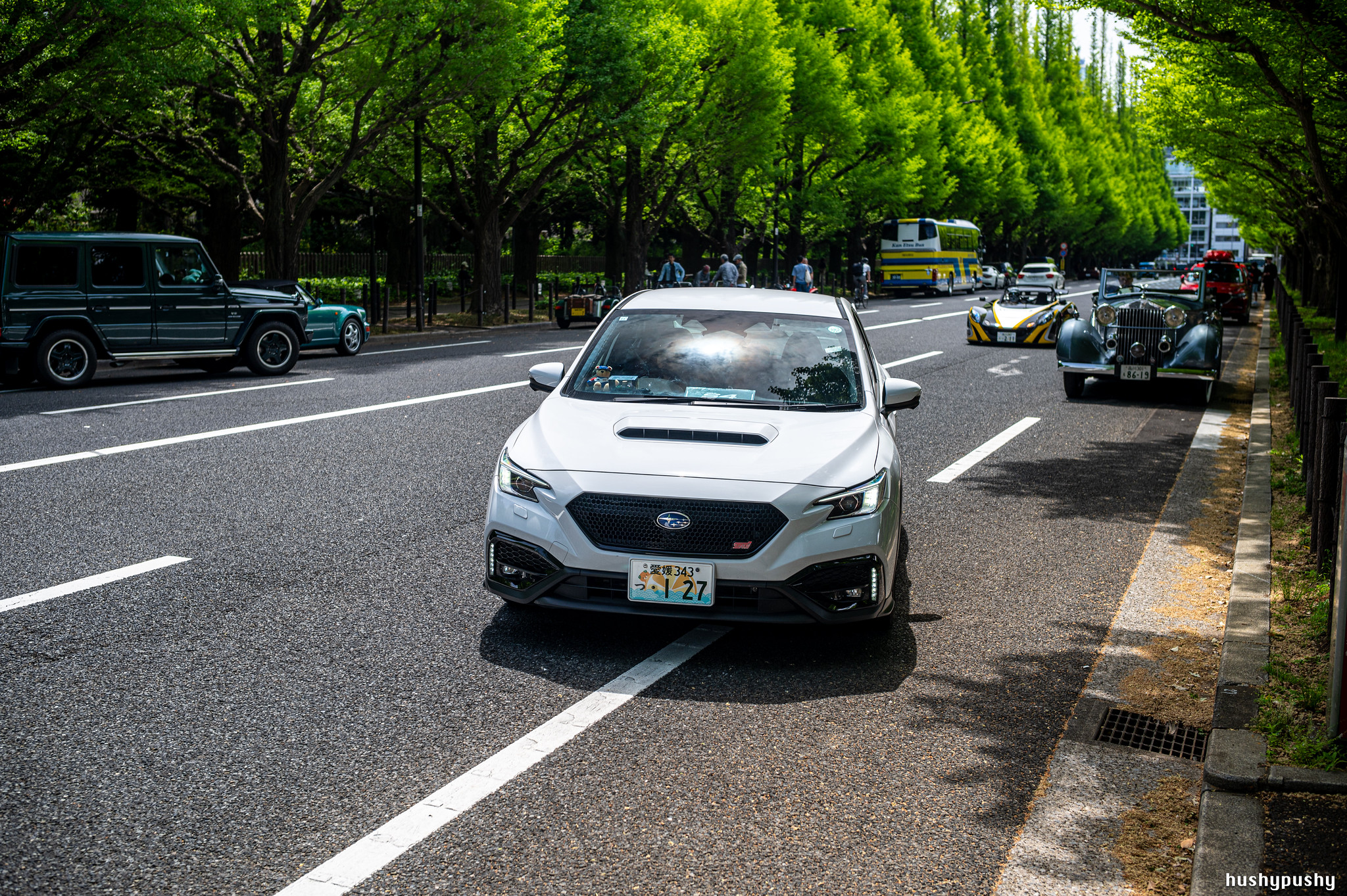
Here’s a special Subaru: this is a WRX S4 STI Sport, which is a Japan-only special edition of the current WRX. It came with Recaro seats and the whole STi catalog of mods. There were only 500 units available and the buyers were determined by lottery. Bizarrely, however, this car was only available with a CVT! Super weird, especially considering the WRX tS is available in a 6 speed manual, so it’s not like there isn’t an available transmission and powertrain calibration.

Next on the Lotus hit list: a 2-Eleven!!
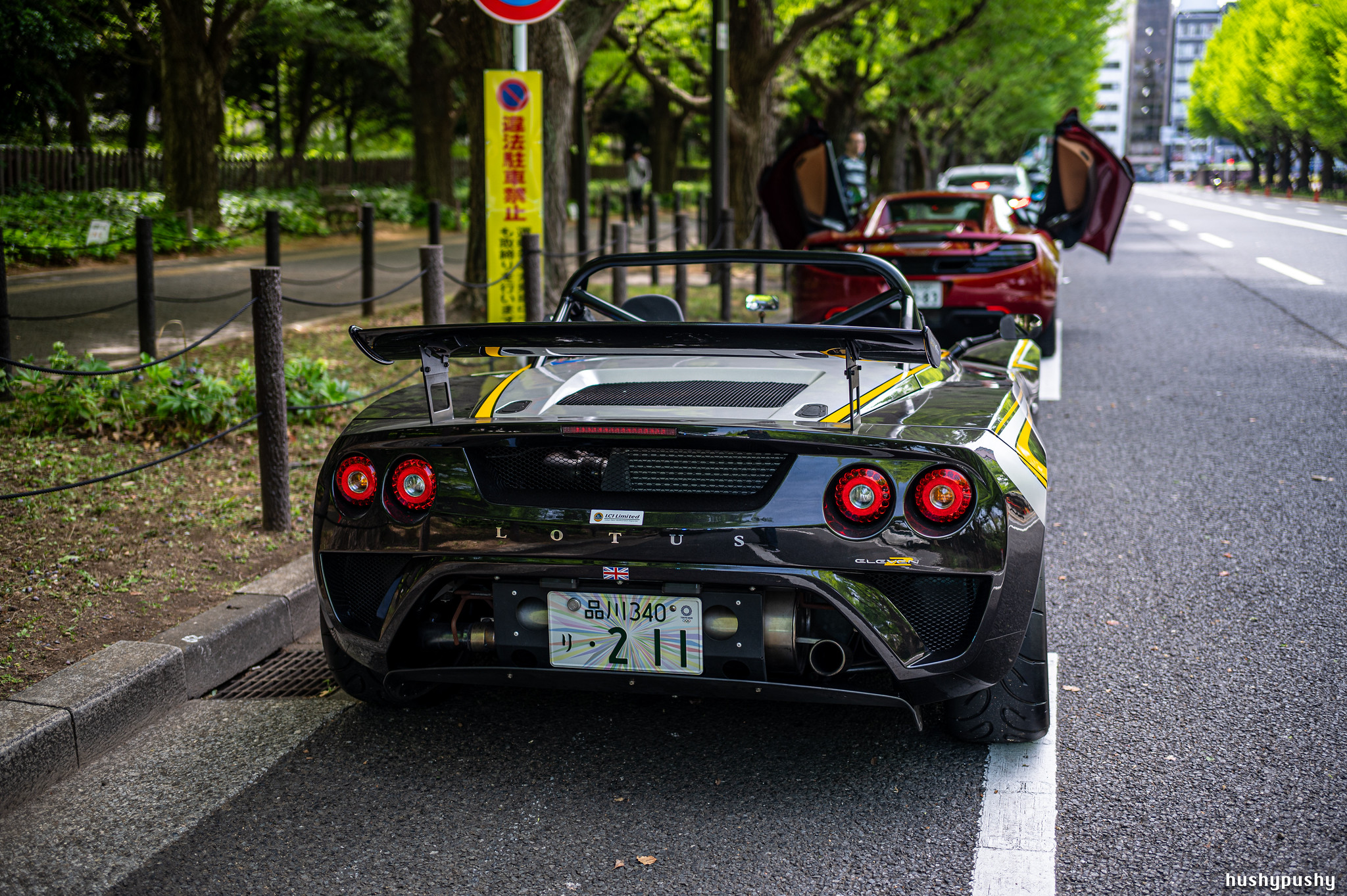
He immediately re-parked from the above location, so I had to chase him down. These are a super cool variant of the Exige S. Fun fact: road legality was actually a factory option.
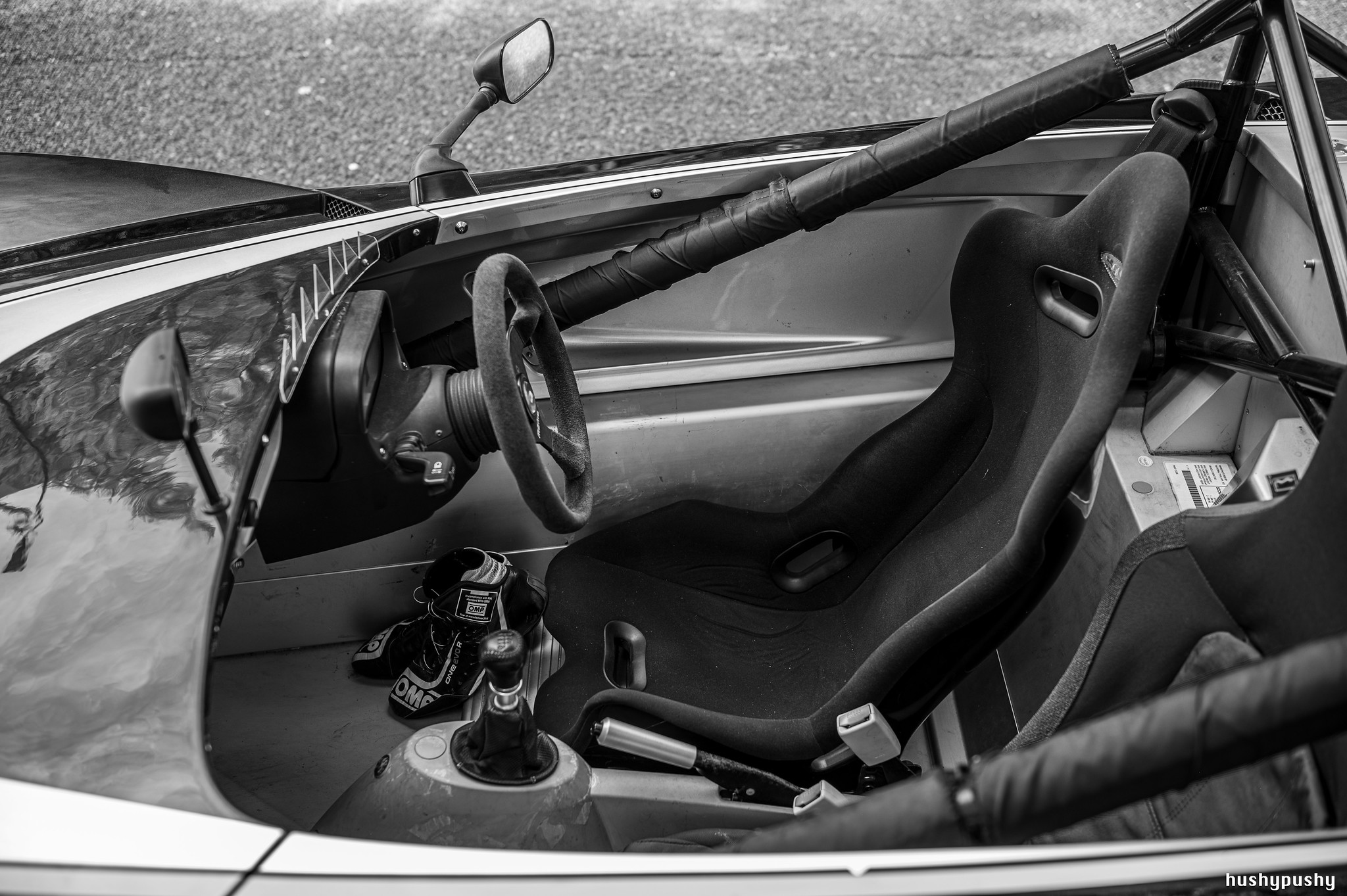
There was already not much going on inside an Elise/Exige, so this one isn’t too much different beyond a complete lack of doors. This thing is no garage queen; it looks like it’s had a good life of fun.
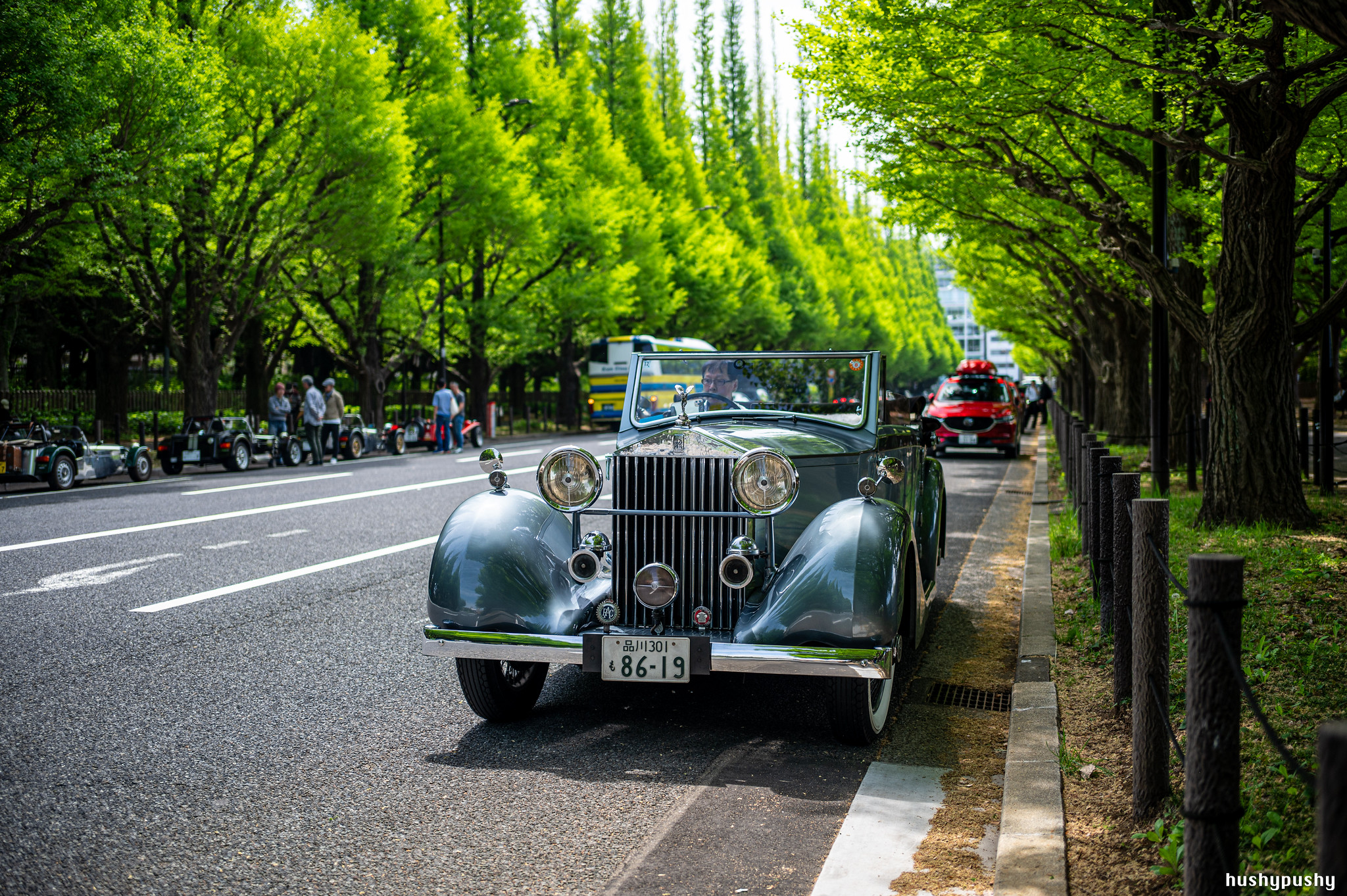
I wasn’t exactly expecting to see a Buick Century or Lotus 2-Eleven, but I also wasn’t surprised. However, despite all the British roadsters, this Rolls-Royce stopped me in my tracks. I was really not expecting to see anything like this.

Check out how small it is! Far from the giant boats you normally associate with the Rolls-Royce brand, this two-door “drophead” (convertible) looked rather sporty. From what I can tell with some internet sleuthing, I’m pretty sure this is a “Rolls-Royce 20/25 3 Position Drophead” with a body by Coachcraft Coachworks.
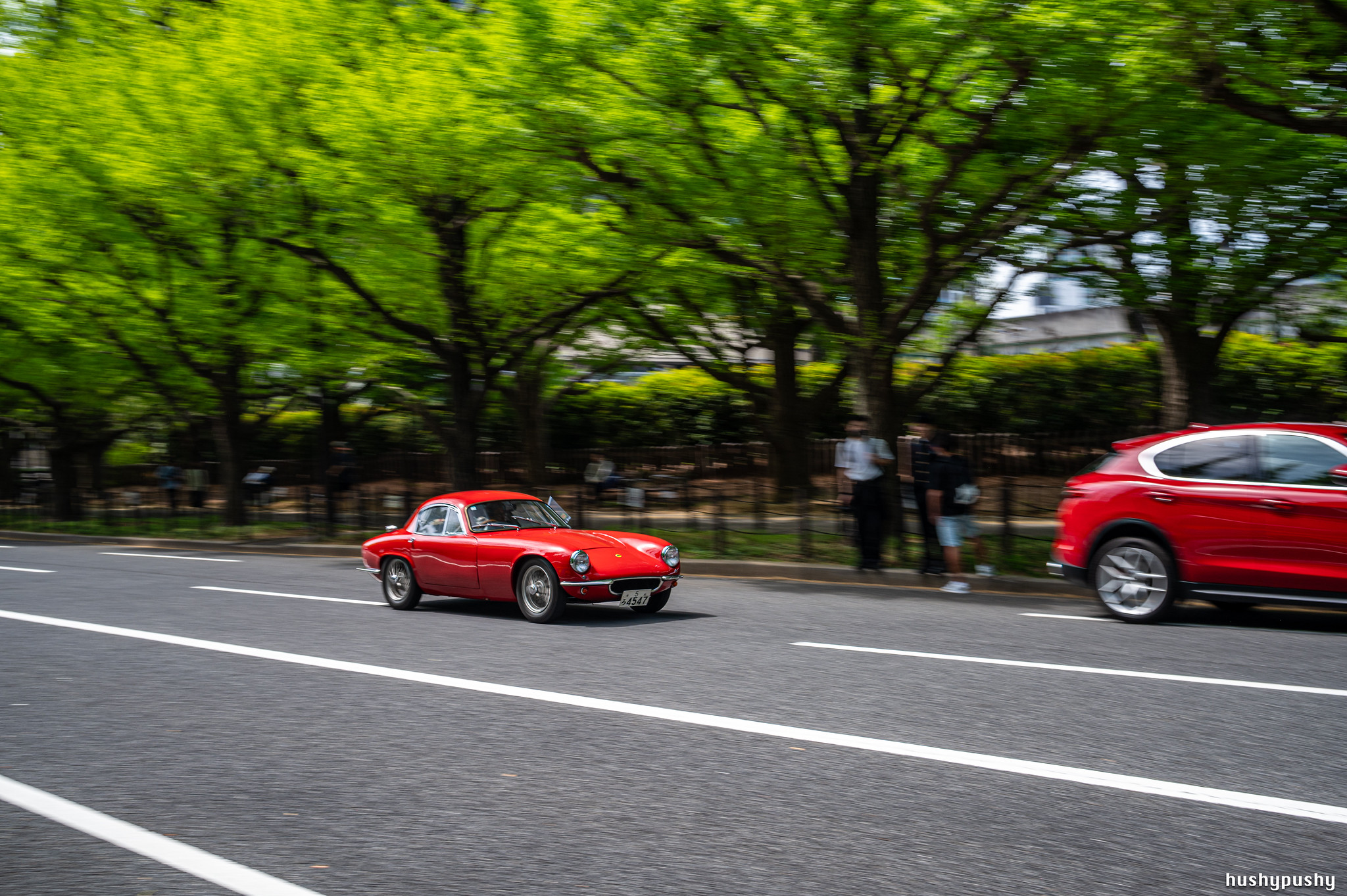
Another Lotus! This time, it’s an Elite. You could make a whole Bingo card with just Lotus models and come away a winner from this meet.
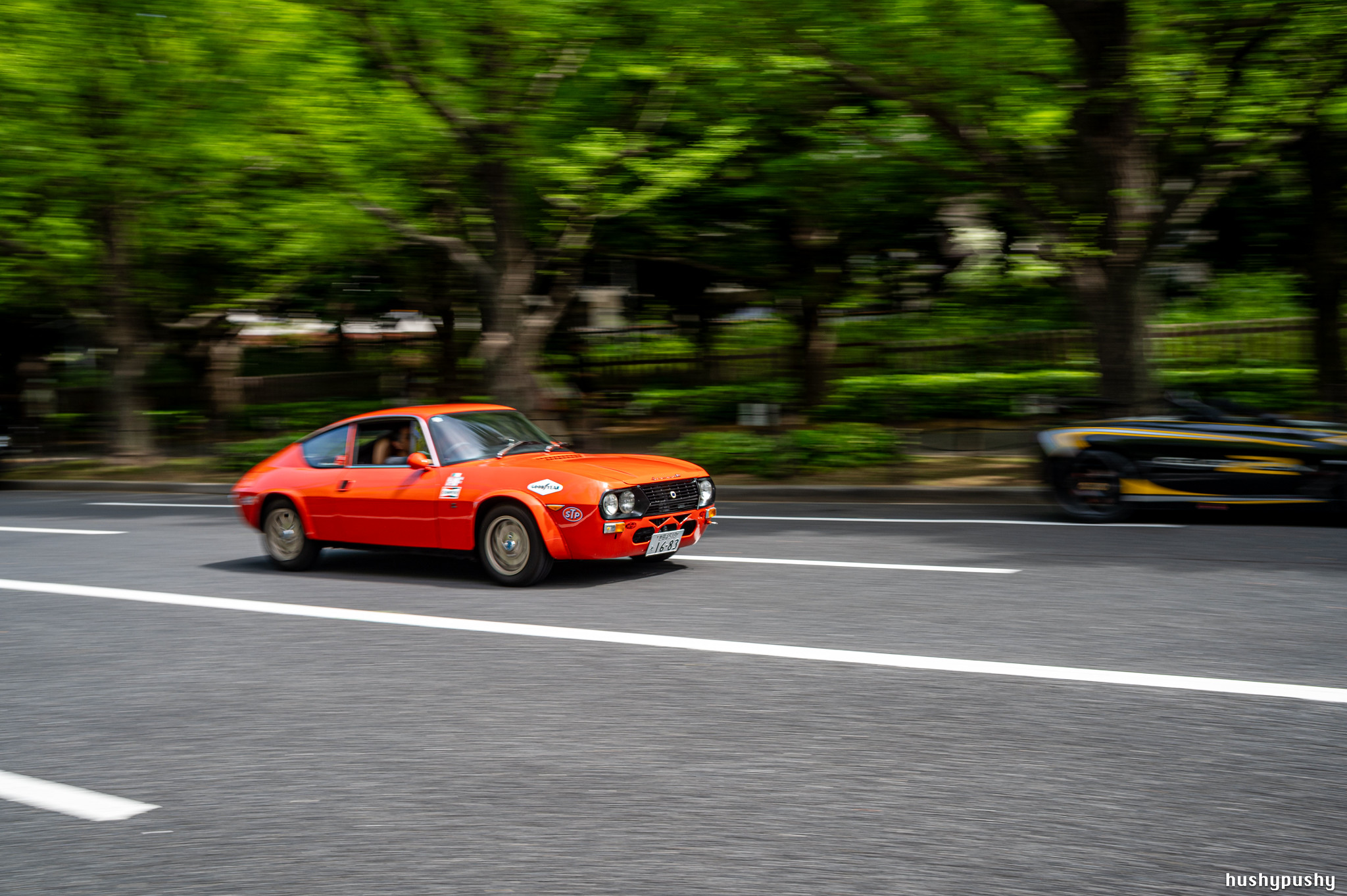
I’m sensing a theme here: tiny old European sports cars are very popular in Tokyo. This is a Lancia Fulvia Sport Zagato, which puts a sexy body on top of Lancia Fulvia chassis and narrow-angle V4 engine. Given the area, I’m also inclined to believe that the matte black grille and magnesium wheels mean it’s a real Sport 1600 model, the rarest and sportiest version of this car.
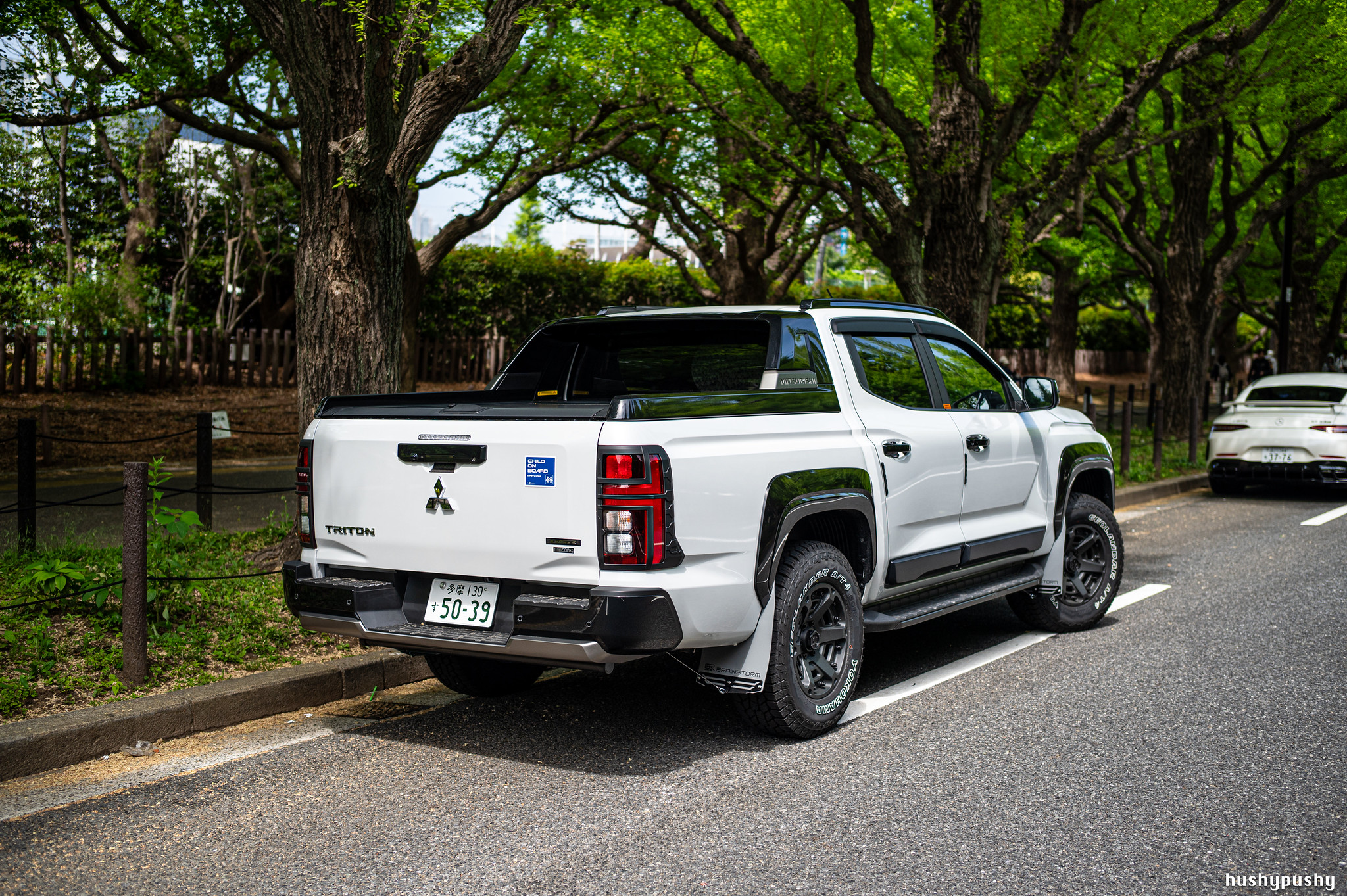
Some stuff is interesting just by virtue of being forbidden fruit. I see way too many trucks on a daily basis, but I was still intrigued at the sight of this Mitsubishi Triton. They sell these in many countries, but not the US or Canada.
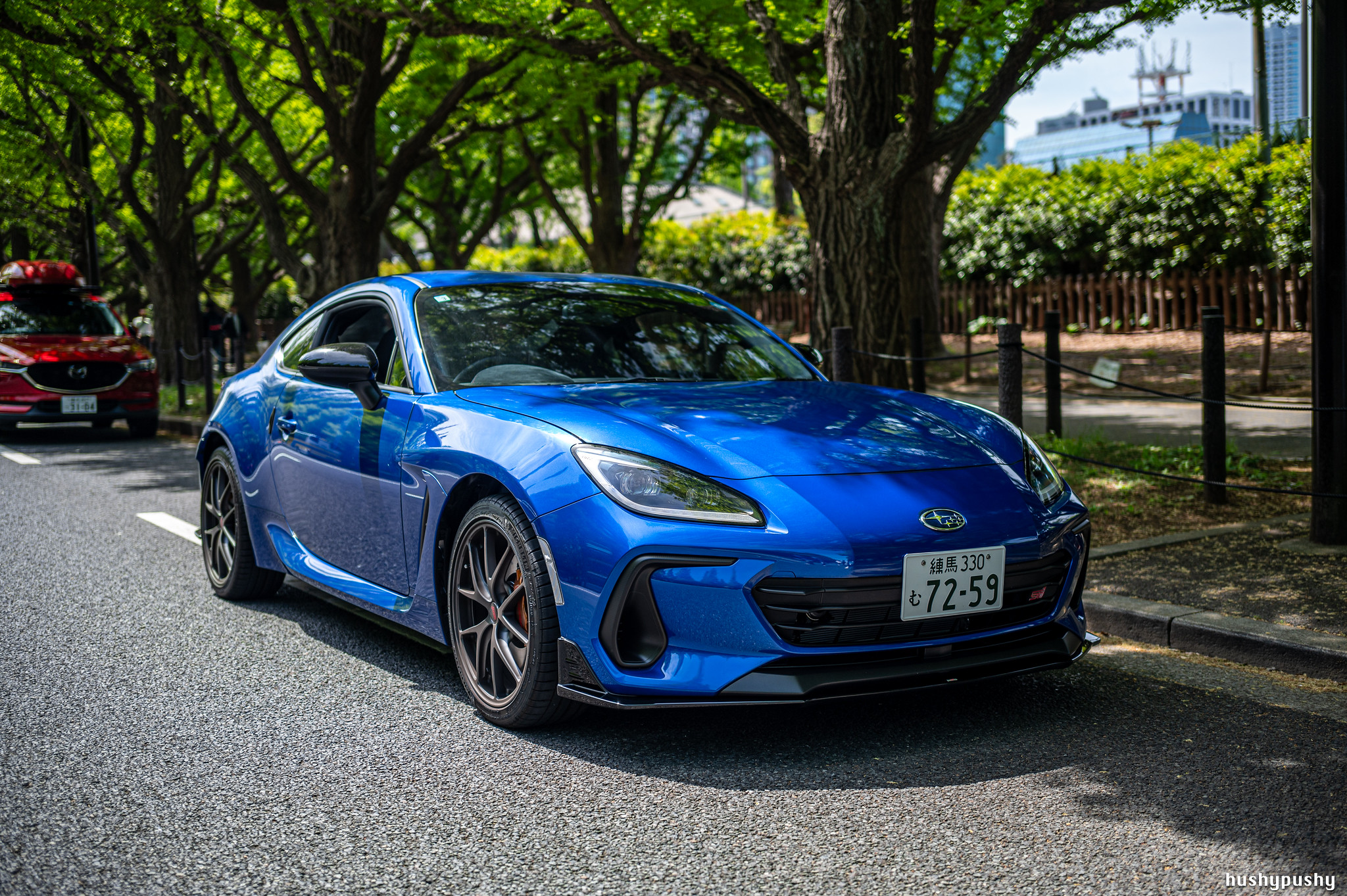
I know I already said the Abarth Simca 2000 was my personal favorite, but this one was probably the sentimental winner for me. At first when it rolled up, I saw it for its outward appearance: it’s a World Rally Blue BRZ! I have one of those!

In a meet with so many supercars and exotics, I was very excited to see one of my personal favorite cars. I was so excited I decided to walk over and pay him a compliment. To my delight, what followed was one of the highlights of my entire trip.
We’d been in Japan for about a week, and outside of very few exceptions I had spoken to everyone in Japanese. However, admittedly these interactions were fairly limited; going over the terms of the rental car, asking for directions, small talk with cashiers (they always want to know where I learned to speak Japanese), ordering at restaurants, that sort of thing. But with this BRZ owner, I actually had a full-blown proper conversation. We talked about his car, then my car and where I like to drive it. I showed him photos of my BRZ on some California roads, and then he told me about some roads in the area. One of this tips was regarding the toll booths on the highways around Tokyo (which are super fun to drive); since they only charge you on the way out, you can do as many laps as you want and only pay for one.
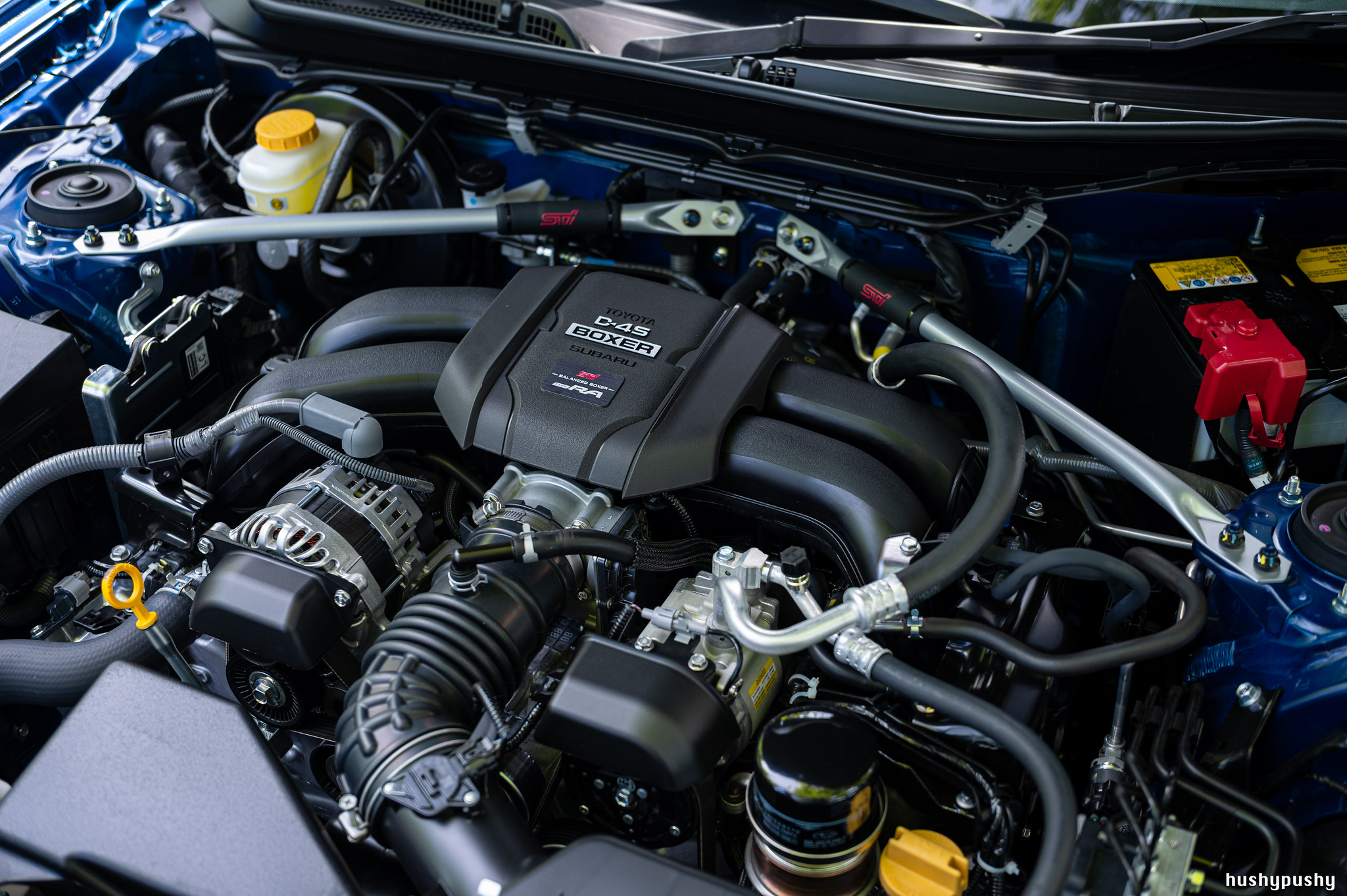
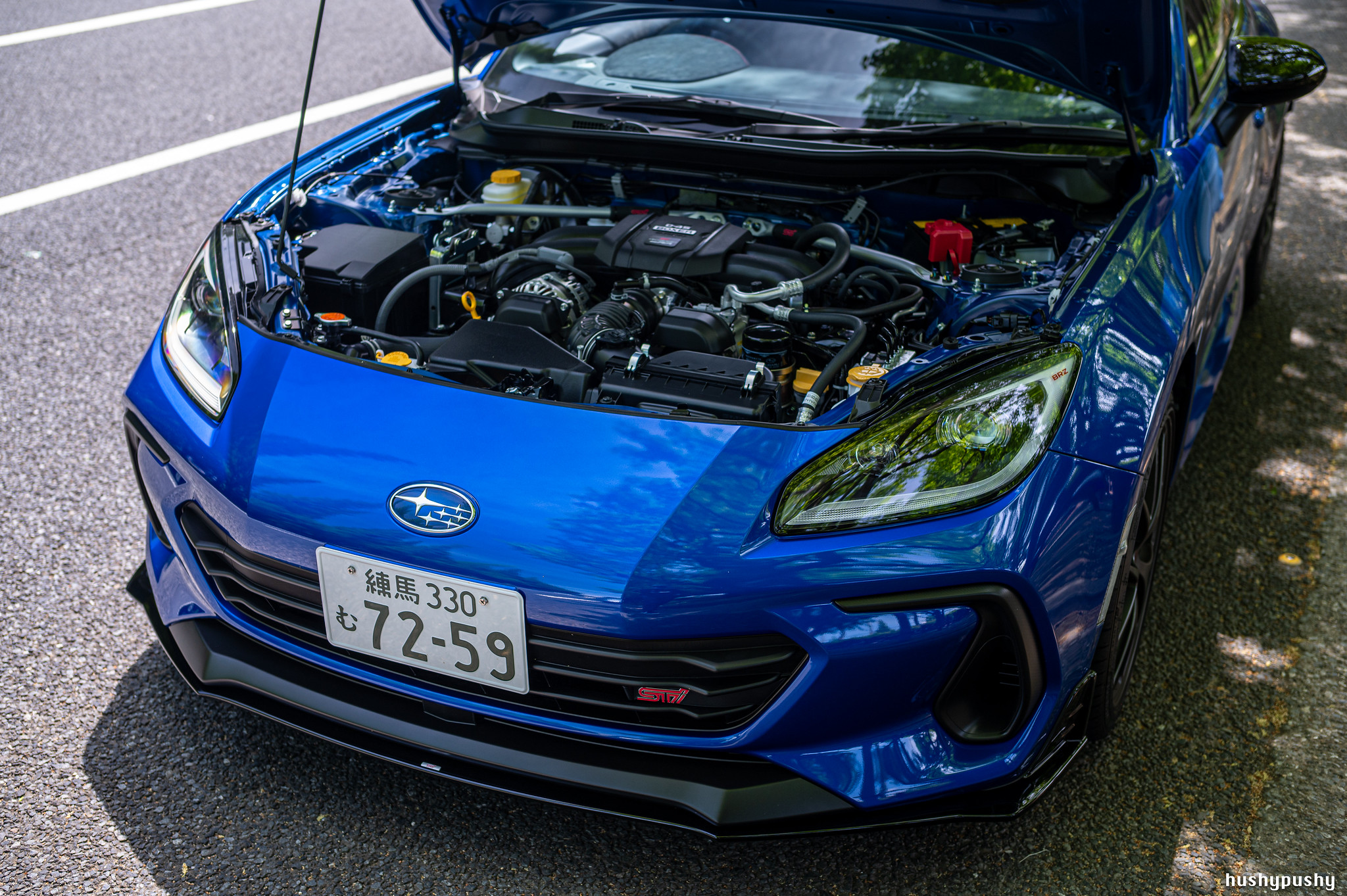
It looks absolutely immaculate because it was essentially still a new car; he said he had only put 500 kilometers on it so far. So what is this car anyway? This is a Subaru BRZ STI Sport Type RA, the sportiest factory GR86/BRZ yet. There were only 300 made (100 with rear spoiler, 200 without) and there was a lottery to pick the buyers, just like the WRX above. Curiously, Subaru refuses to do a proper “BRZ STi” but this car actually did get some engine upgrades: the pistons, rods, crankshaft, flywheel, and clutch are significantly lighter. They don’t quote any power increases, but the engine must rev sharper and quicker with less rotating mass.
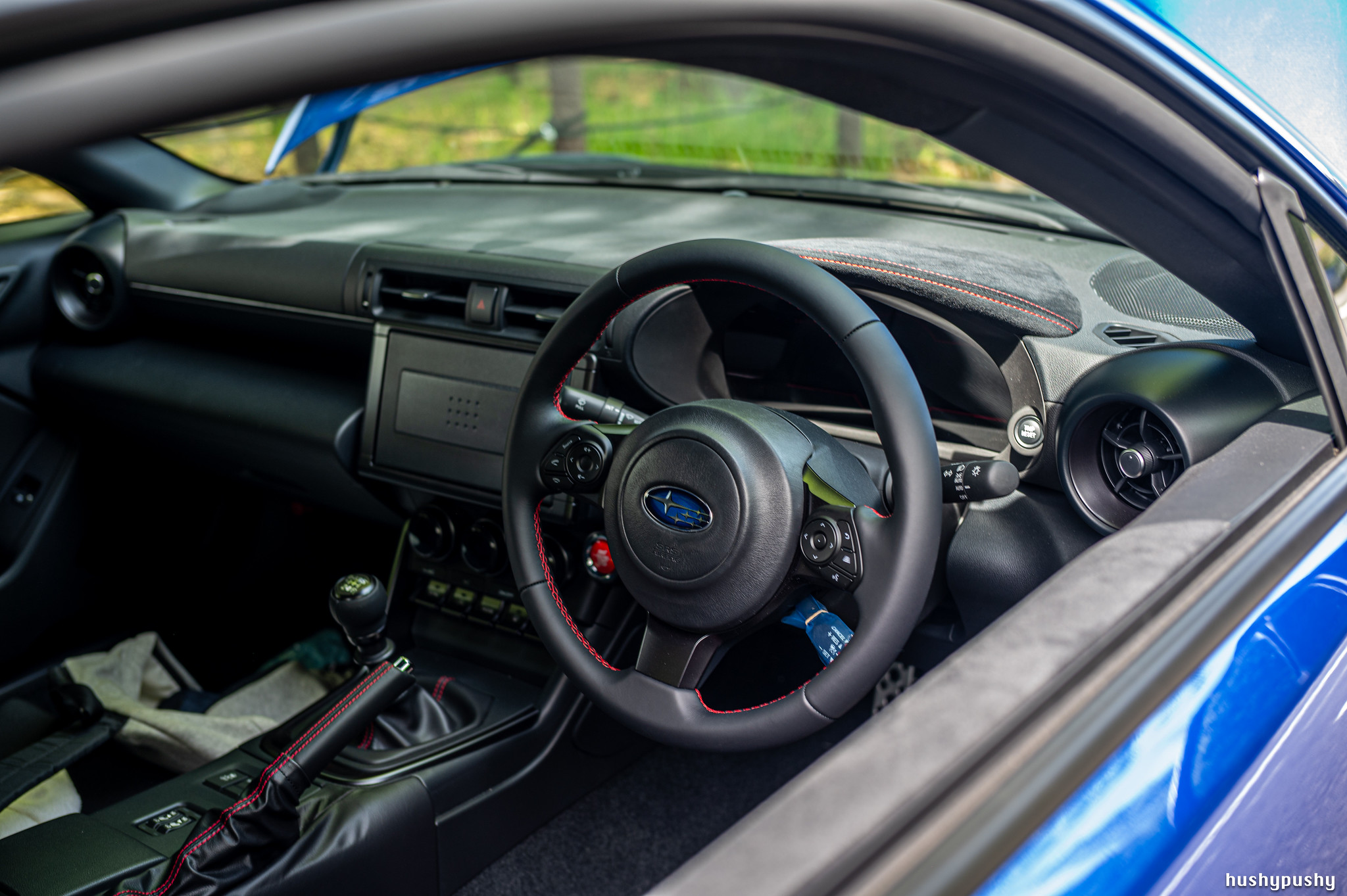
Strangely, the interior is virtually the same as a regular BRZ. I think the only difference is the red-stitched gauge hood and red start button. Specifically, I wonder why it has the standard seats instead of Recaros. There are some software changes you would feel from inside the car though: they added rev-matching and flat shifting to this model which I think are super cool. Also note the factory plastic wrapping on the cruise control; I don’t think this owner is ready to let go of having A Brand New Car just yet!

This model also includes BBS wheels, ZF dampers, and several STi parts like the body kit, underbody aero panels, sway bars, finned rear differential, muffler, draw stiffeners, and maybe even more that I missed while researching. If this car were available in the USA I would be seriously tempted to replace my 2018 BRZ: when GPF‘s become mandatory here in 2027 and AEB becomes mandatory in 2029, cars will be even more choked (a big deal for small, naturally aspirated engines) and more laden with unnecessary tech.
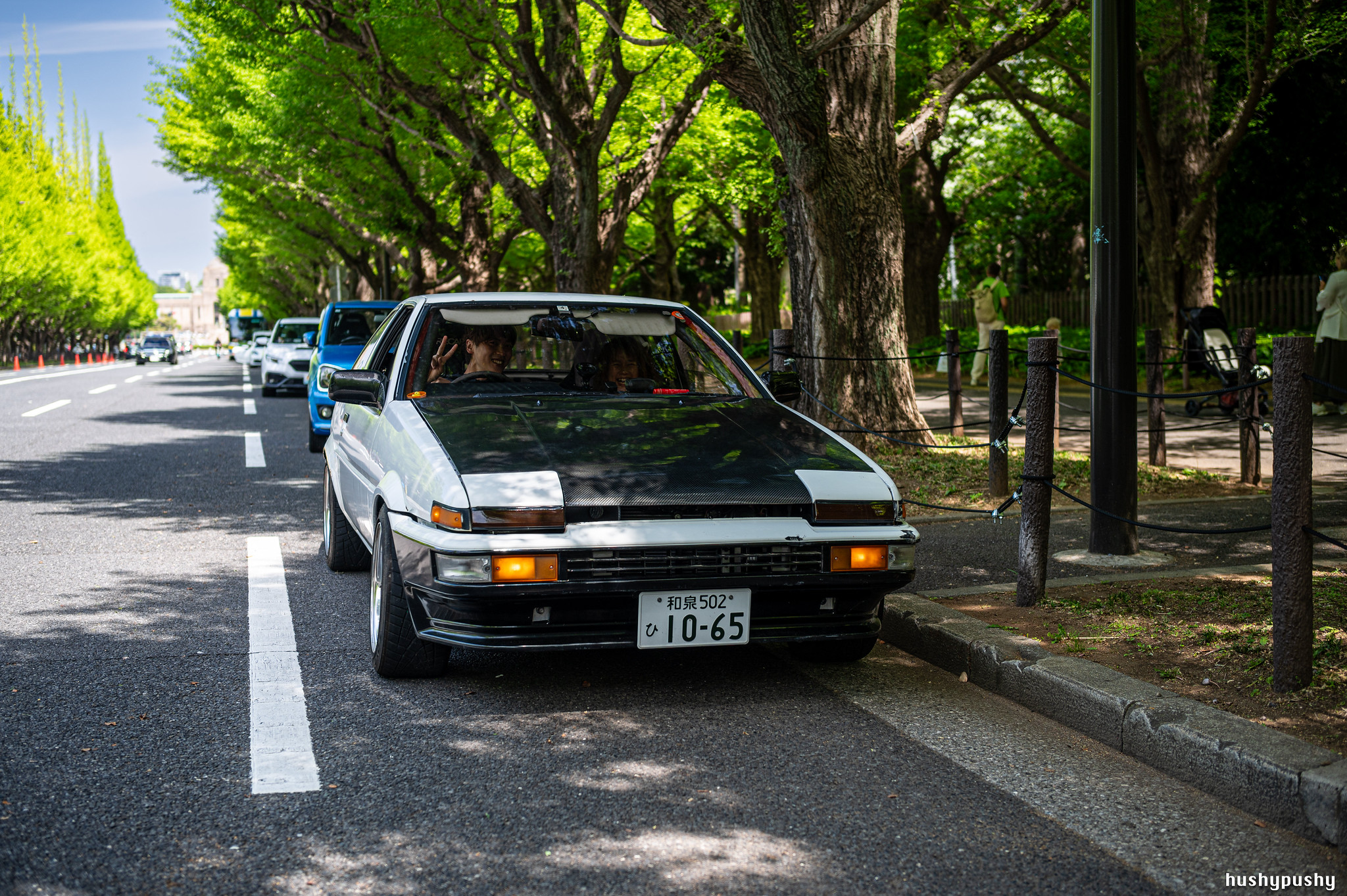
Japanese culture generally tends to look down on photography of strangers, but car people are a bit different. The driver and passenger of this AE86 seemed really happy and surprised that I was taking a photo of them!

This kouki AE86 Trueno was a bit rough, but I still loved it anyway. It’s a shame that prices have gotten so crazy on these cars, because a Japanese-spec AE86 is one of my dream cars.

When I first started doing event photography, I would show the photos to my mom and she gave me an entirely new perspective. While I was focused on what I considered the important subject matter (i.e. cars), she would always ask questions about the venue. This got me to realize there is so much context to an event that makes coverage interesting. Unfortunately, sometimes I still forget: although this meet is known as the Shake Shack Gaien meet, I completely forgot to take a picture of the Shake Shack! This Suzuki Alto snap is the only one I have with the restaurant in it at all.
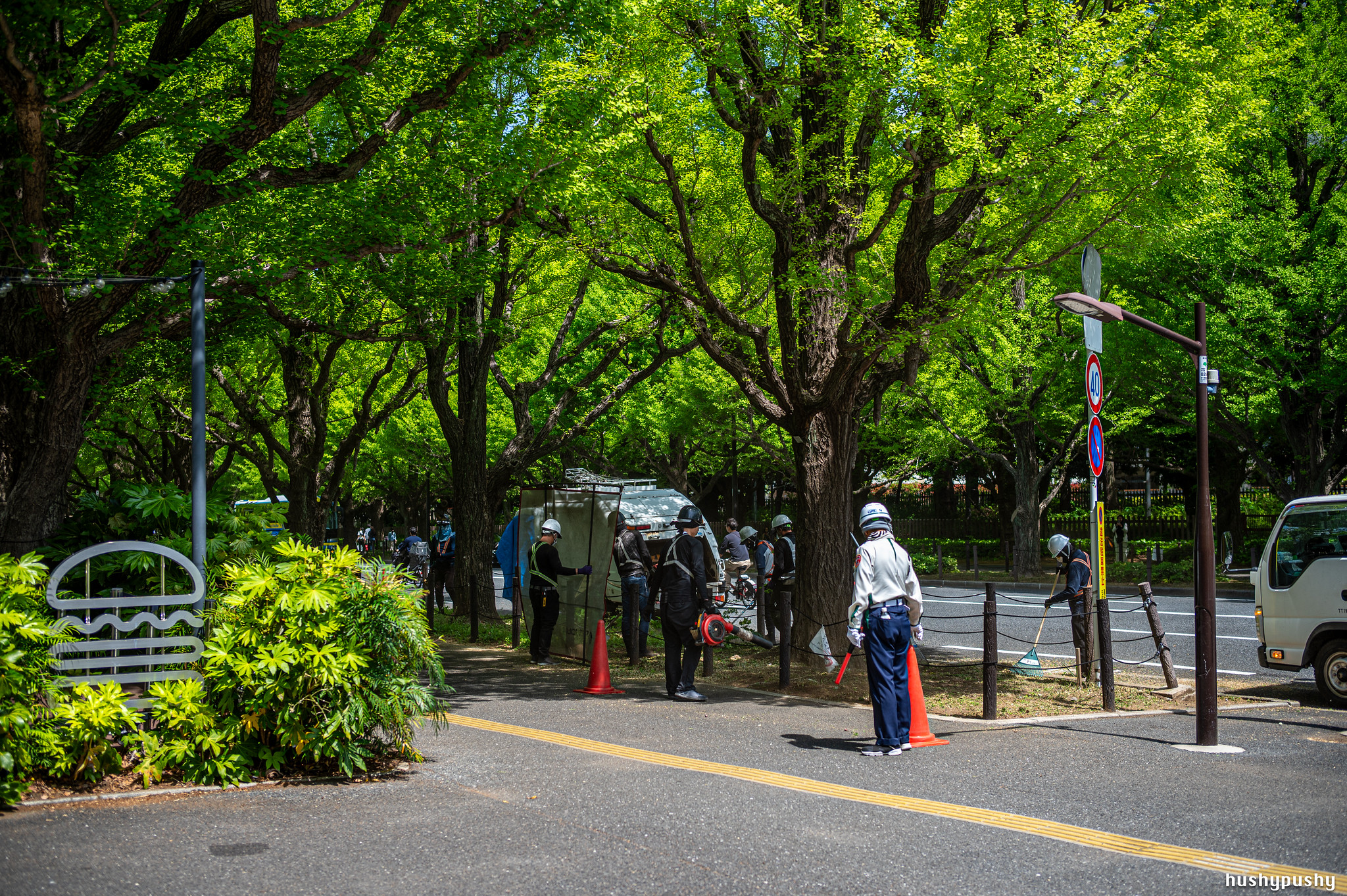
Another installment in my “men at work” series. I was fascinated by this huge team of very efficient workers. Check out the guy holding the shield so all the crap doesn’t blow back onto the sidewalk.
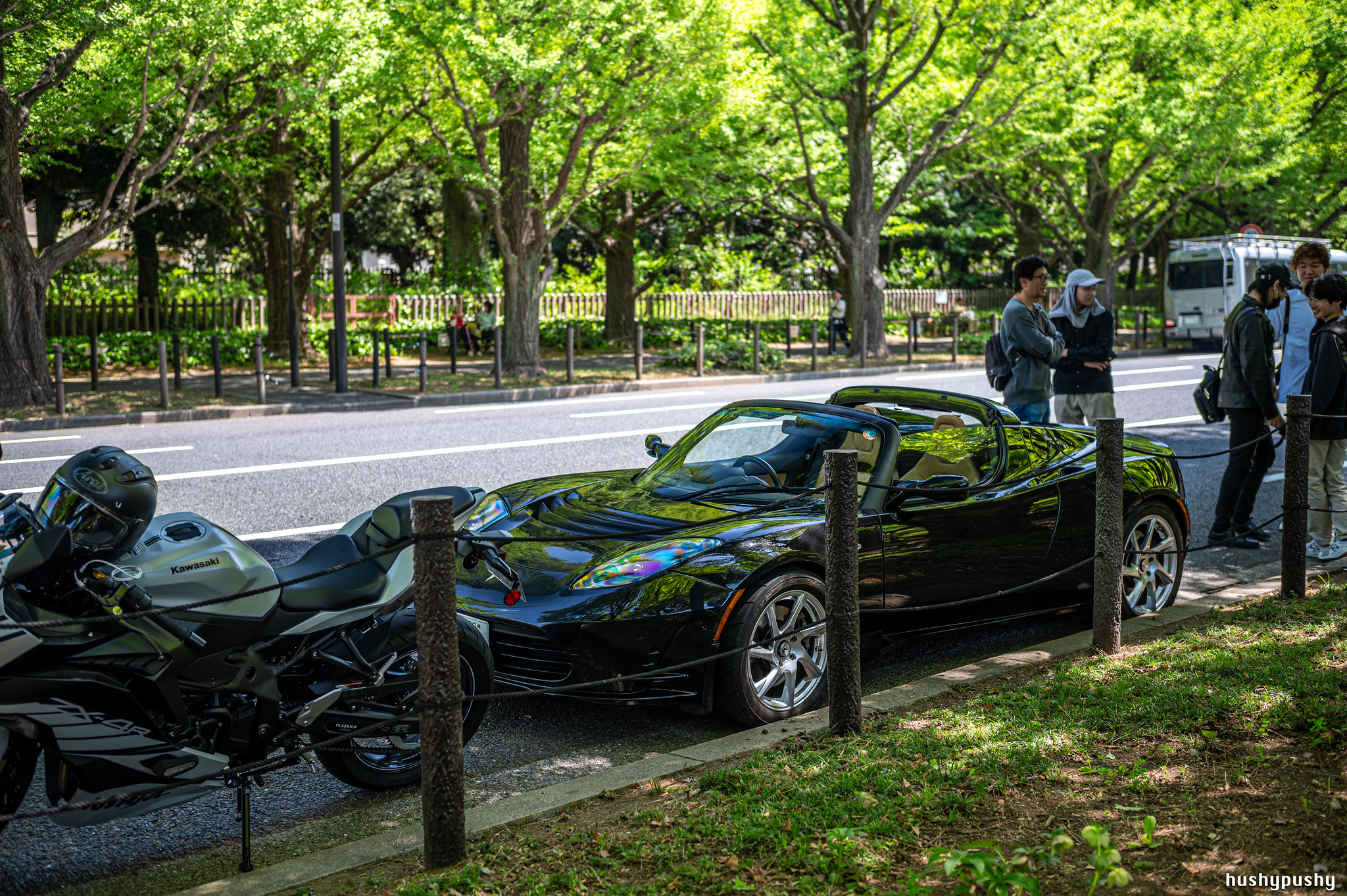
Another Lotus spotting! Well, sort of. This is a Tesla Roadster, which was based on a Lotus Elise chassis that was heavily modified. I actually didn’t even know they made a RHD Roadster, but that was apparently one of the things that was added or changed for the 2010 refresh.

Okay, this is a real Lotus: an amazing JDM-spec Europa.

“GT Terrorist” is a well-known Japanese car club, and this one of their most famous cars.
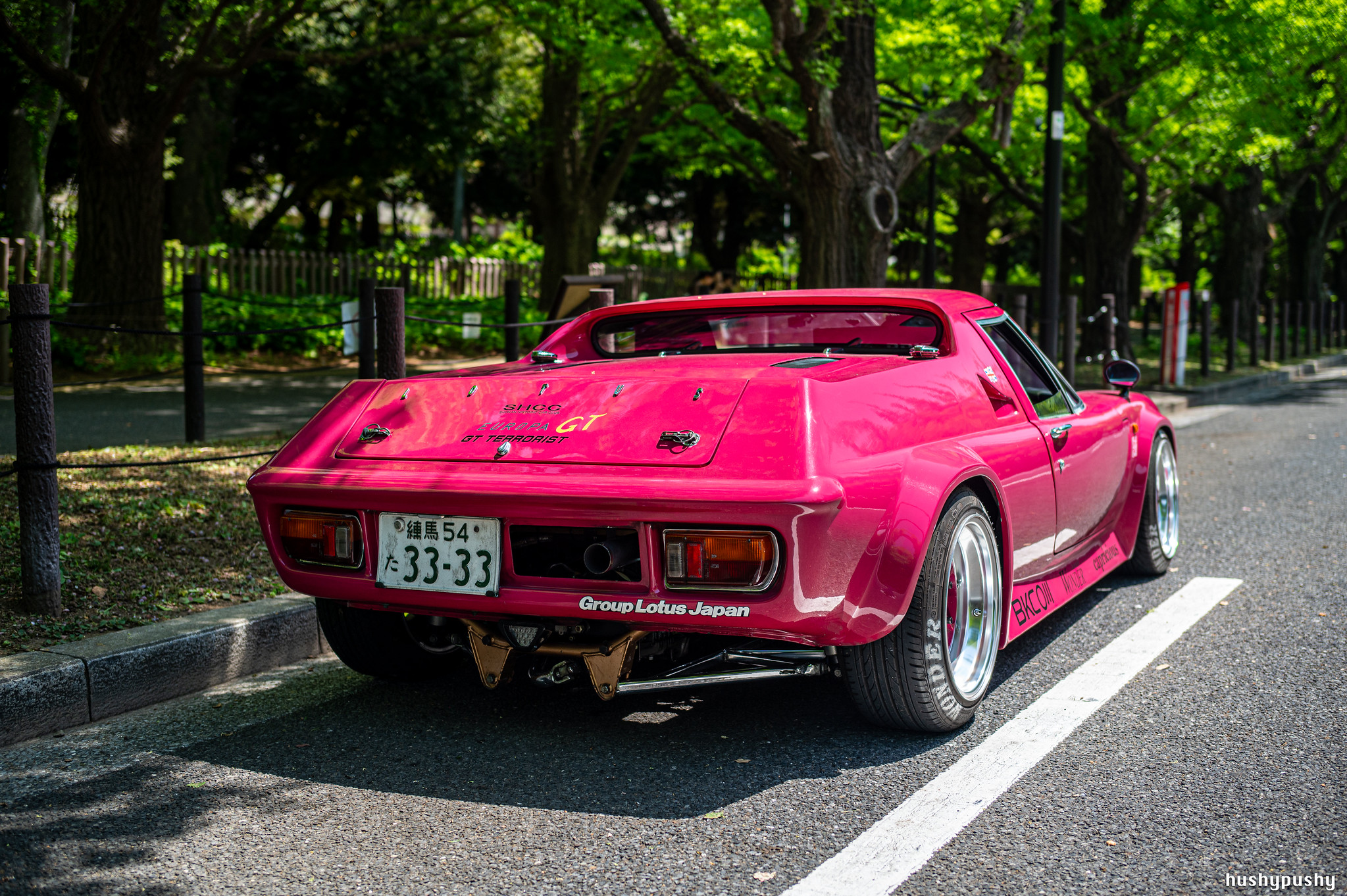
This car is extensively modified; it would probably be quicker to write a mod list of things that haven’t been modified on this car. I love the square headlights, the widebody, and the Ruby Star-looking paint color. What an awesome car!

Ah, I guess this is something that never changes around the world: somebody chilling next to their car in a fold-out camping chair. Funny to me he’s rocking a American-branded chair, too. It’s also a bit of irony that among all the cars seen at this meet, the McLaren 12C is definitely the car that I’ve driven the most different examples of. I wish every car enthusiast had the chance to drive a McLaren 12C or 650S and marvel at the insane supercar capability matched with the magic carpet ride quality and world-class hydraulic steering.
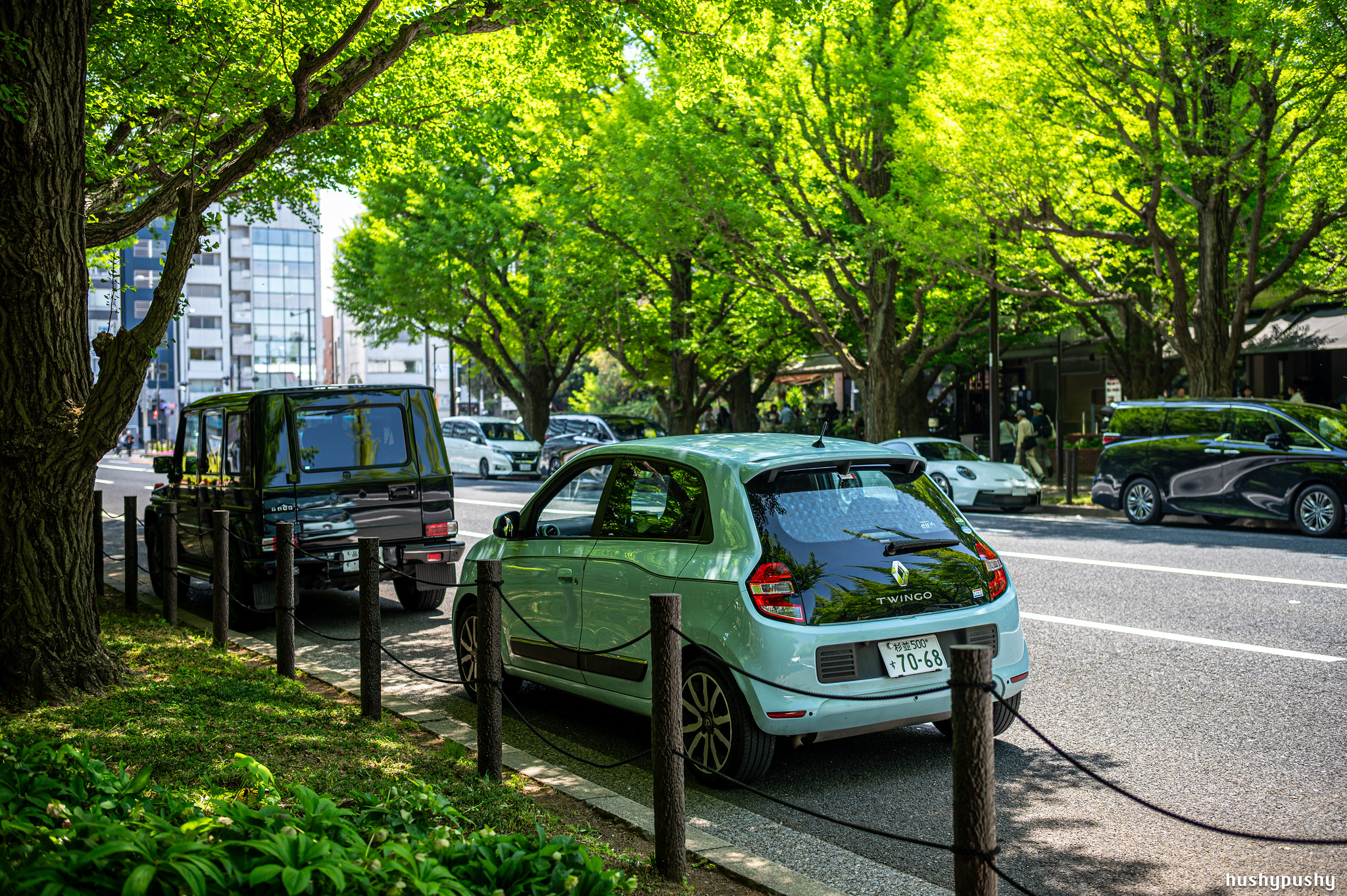
On the opposite end of the spectrum, this Renault Twingo. This thing is over a foot shorter than the Yaris I rented, and still has four doors (or is it five?). Toyota did make an even smaller hatchback called Aygo, although it was replaced by the Aygo X, a stupid crossover version that’s the same size as the Twingo.
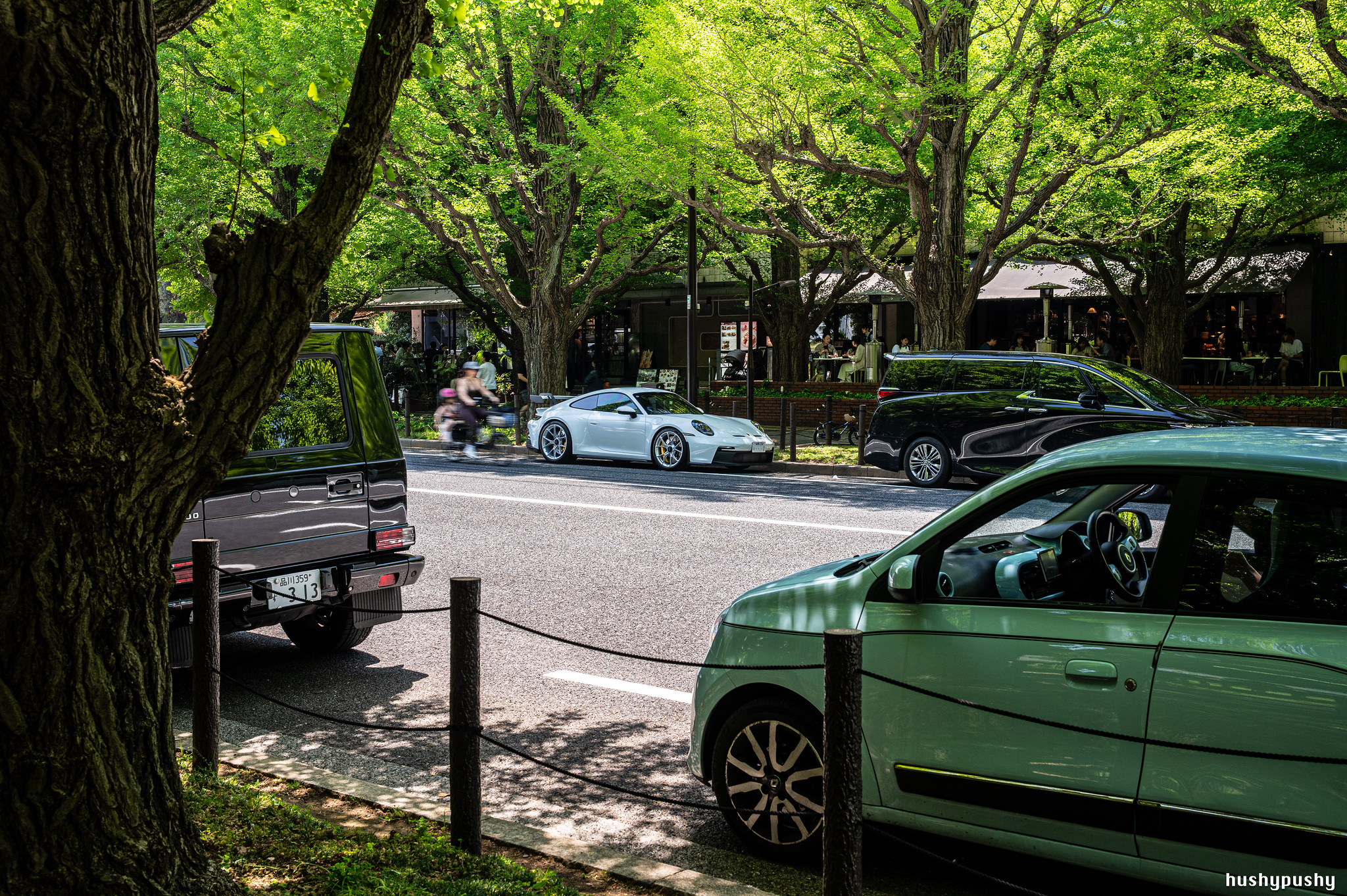
After all that special metal, a 992 GT3 actually seems kind of bland. On a photo note, this was shot at 1/25 second handheld with f/8 aperture, as I attempted a big depth of field and motion blur on the cyclist. For years, the theory was that you didn’t need image stabilization on fast short prime lenses, like my 40mm f/2, but I am so glad to have IBIS (In-Body Image Stabilization) on my Nikon Z6 II.
Then, we actually went to Shake Shack, which I’ve actually never been to in the USA. I would say it’s a pretty standard “Good Fast Food” burger, eclipsing the lower tier of McDonald’s and such, landing in the upper tier of Five Guys and In N Out. Was it as good as either of the burger shops I went to on this trip? No, but I also wasn’t expecting it to be, either.
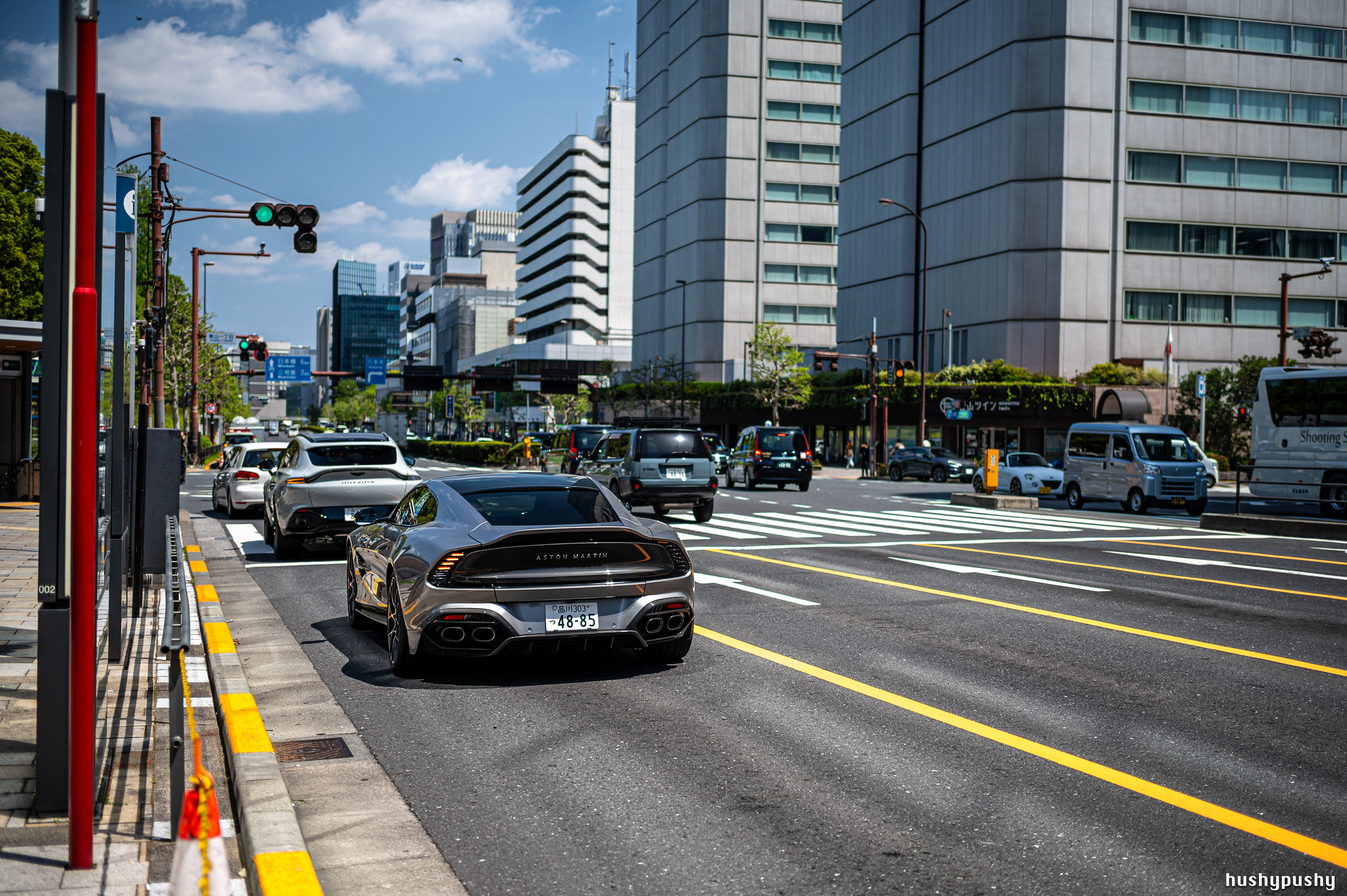
After lunch, we walked to catch a train to a different part of Shinjuku: it was finally time to attend the grindcore festival that this entire trip was planned around. On the way over, we saw this Vanquish and DBX combo driving away from the Gaien area.
What a cool event! This is just the sort of thing I wanted to do and the timing couldn’t have been better. After a whole week of hustle and bustle, it was so nice to have a relaxing morning walk. The meet didn’t have as much of a settled hang-out vibe as I’m used to; it definitely seems like a place that people stop by on the way to somewhere else, or perhaps as part of a routine of different stops. That seems like the next level of this adventure: tagging along with a local enthusiast to see what a Sunday morning Tokyo car routine is.
And what about Saturday? We did skip ahead a bit here, so stay tuned for the next post where I’ll wrap up the Japan trip saga by sharing what we did on Saturday and Sunday.


Pingback: I Went to Japan Twice (Part 2 – 2026) – Saturday/Sunday | Star Road