
Every PS1 Game – Dino Crisis 2
The turn of the century was a whirlwind time for game development. In 2000, just one year after the release of Dino Crisis, its sequel Dino Crisis 2 arrived. Without series veteran Shinji Mikami at the helm, major changes were made in Dino Crisis 2 and the series drifted further from Resident Evil toward its own identity.

Well, I’m used to playing this type of game. I just finished Dino Crisis, so let’s see what this sequel is like.
The intro movie is straight out of 2000; I can practically hear Don LaFontaine narrating the text.
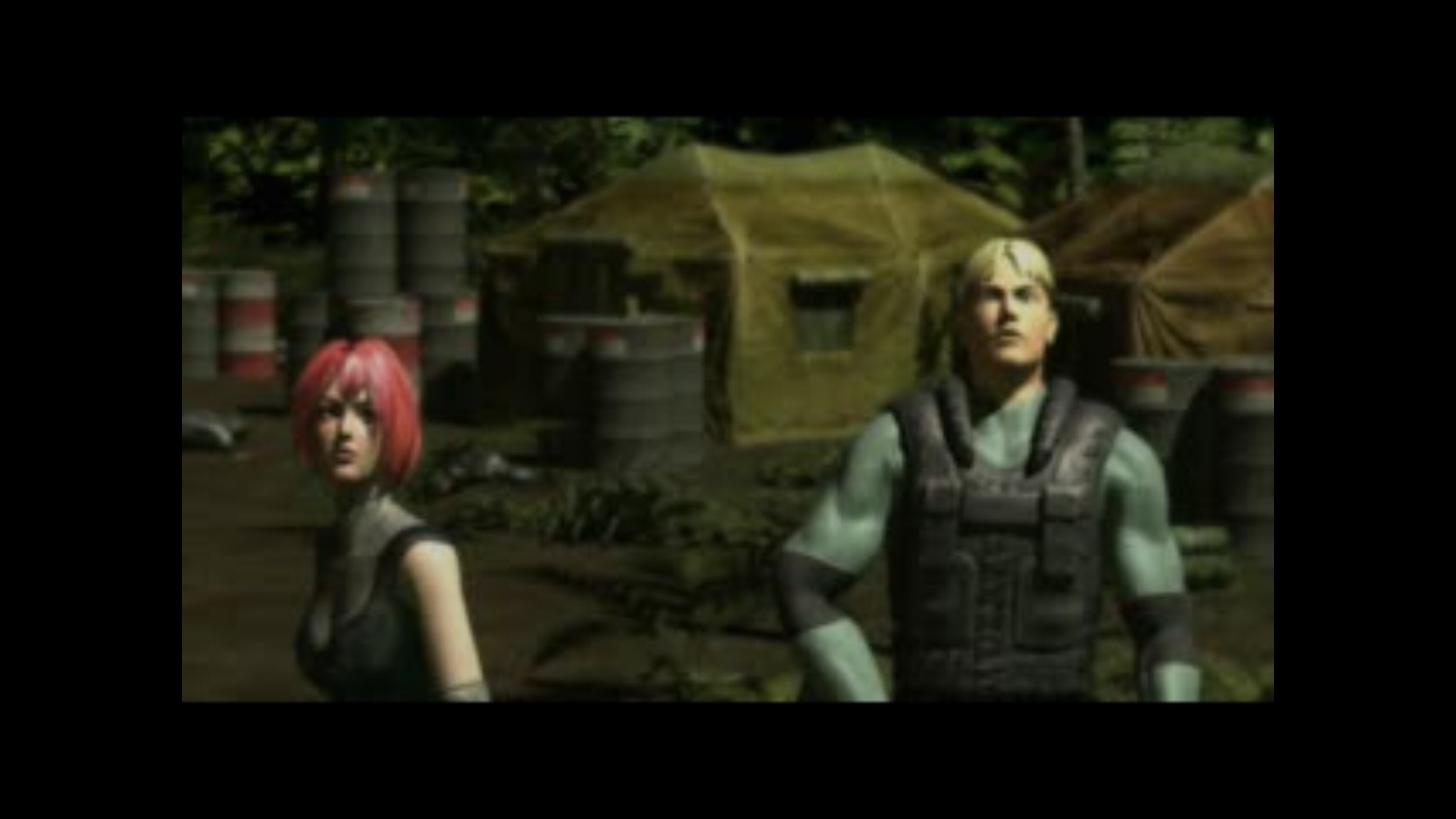
This game takes place right after the events of Dino Crisis, in the future: May 10, 2010, to be exact. Regina is still the star, but this game introduces a second playable character named Dylan.
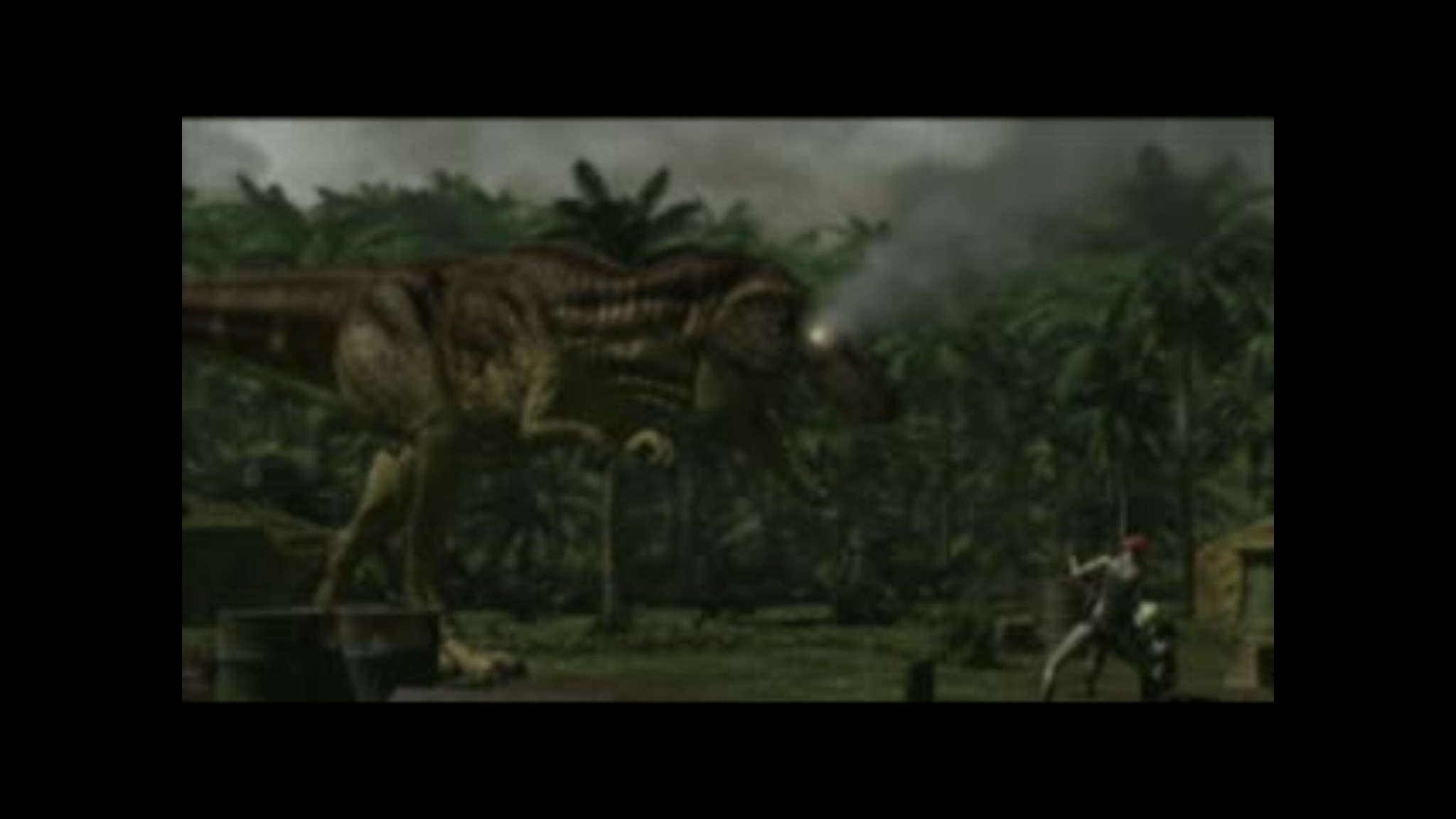
Rocket to the eye socket! We are temporarily saved by a well-placed RPG, but that doesn’t seem to phase this T-Rex. He just gets even more pissed and chases us into hiding.
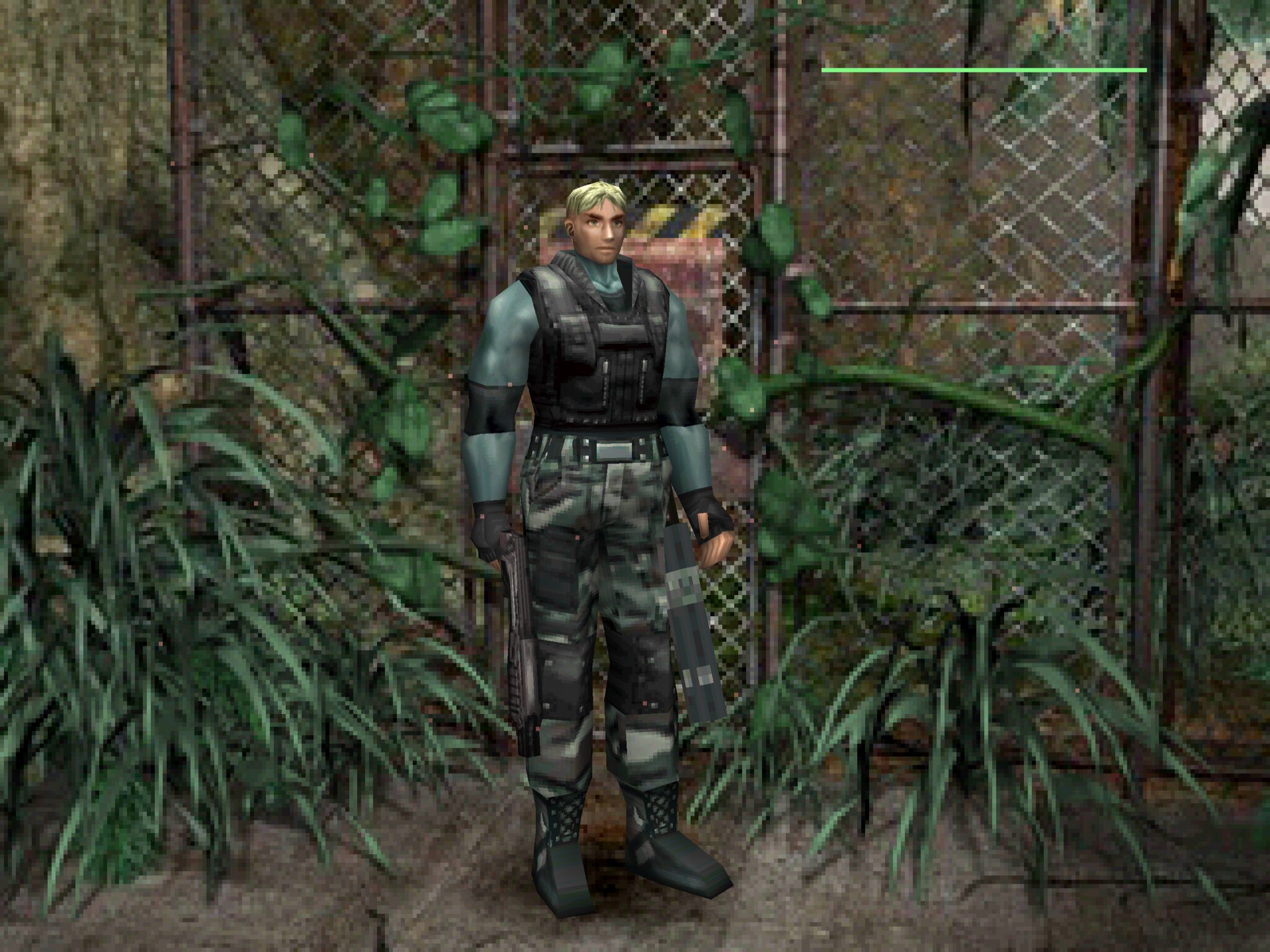
And then we’re thrown right into the gameplay. Regina storms off, so we start this game playing as Dylan.
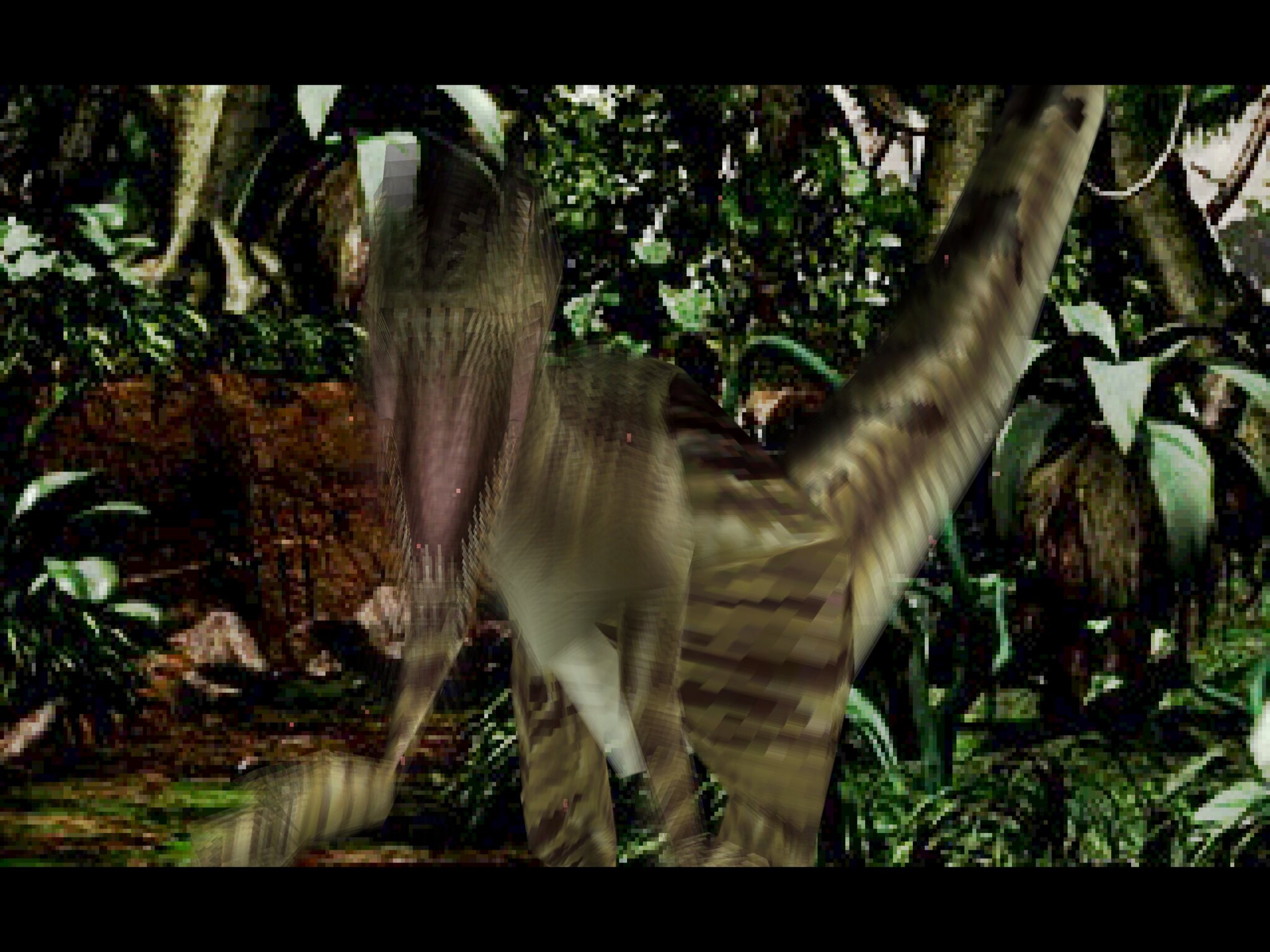
Motion blur was pretty rare in the 90’s, and usually used as a special effect, like in Metal Gear Solid. But in Dino Crisis 2 it’s very pervasive through the entire game. Motion blur is an option I always turn off in modern games because I’m just not a fan. The implementation here is very streaky and unappealing on a big modern TV. Unfortunately, it ruined a lot of screenshots. Oh well.
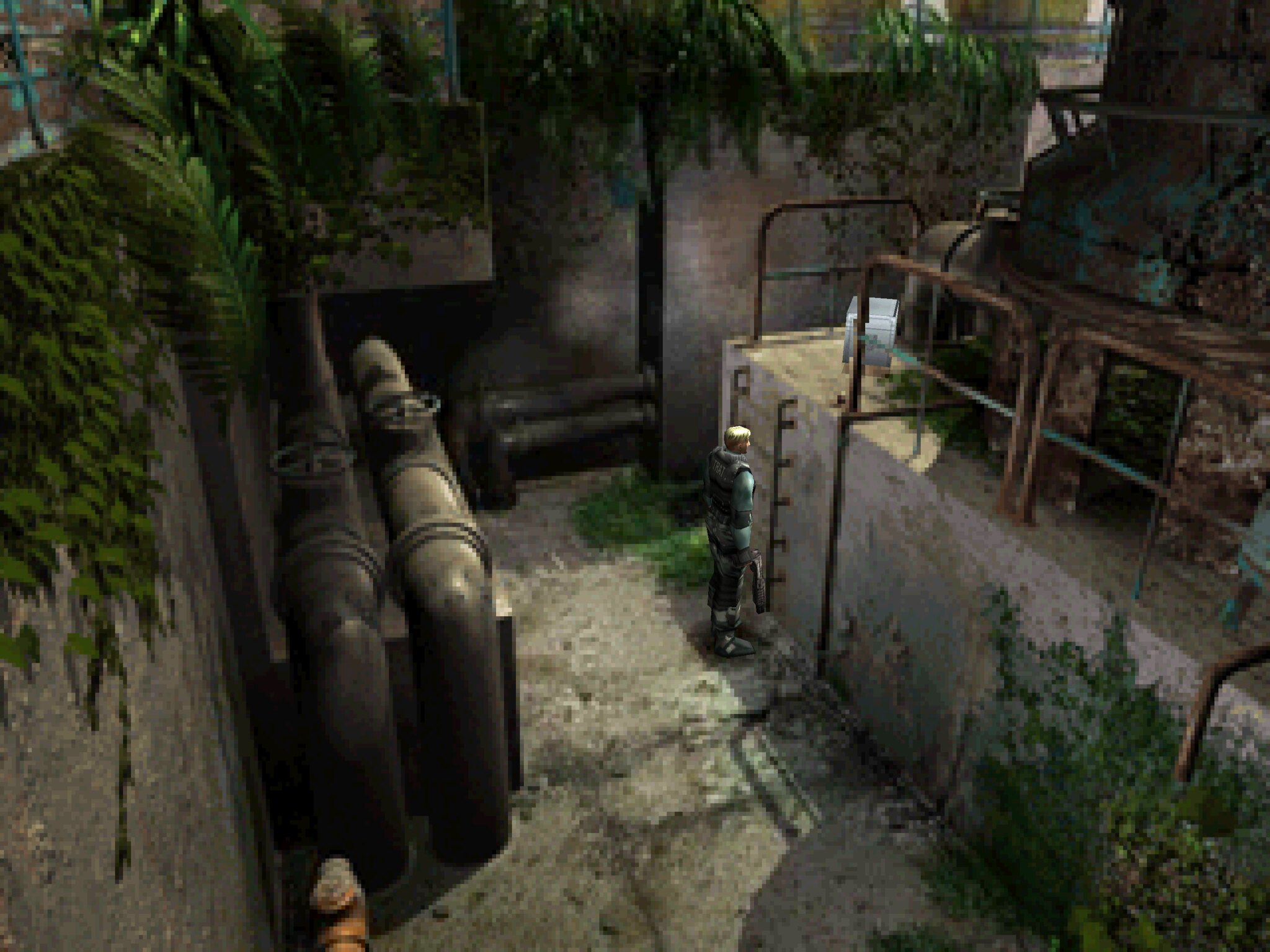
Between Dino Crisis 1 and 2, the first main difference is that while DC1 has full 3D backgrounds rendered in real time, DC2 has pre-rendered backgrounds like Resident Evil.
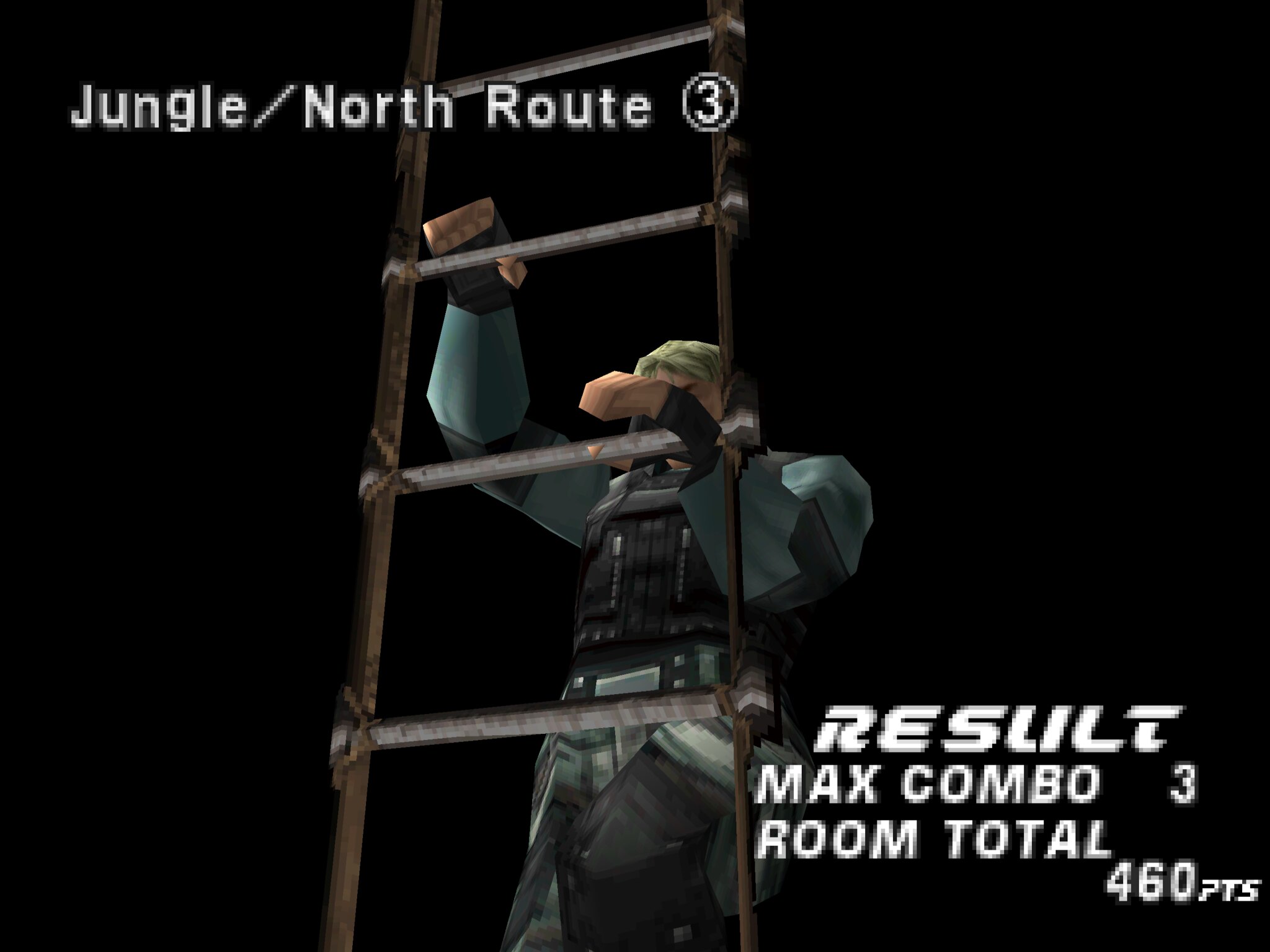
The other main difference is the gameplay style. While it still has tank controls, you can now run and shoot at the same time. Dinosaurs are much easier to kill and there is exponentially more ammunition to collect, so instead of dodging dinos as much as possible, you’re urged to kill as many as possible. This earns you “Extinction Points” that you can spend on weapons, ammo, health, and upgrades.
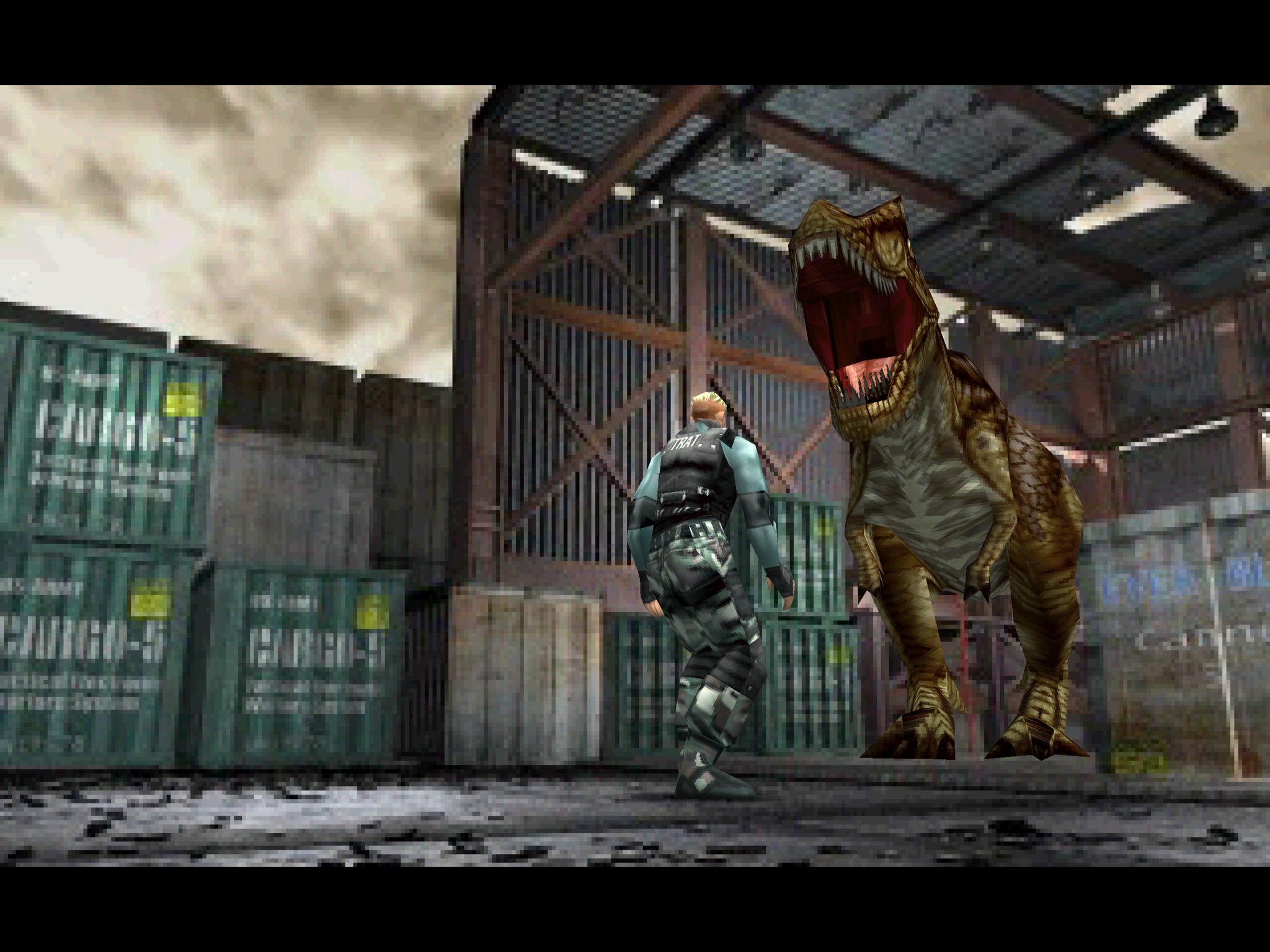
As a result of those changes, this is much more of an action game. Sprinkled between blasting dinosaurs are short scenes like this that move the plot along. I wish modern games, which have gotten so cinematic and long-winded, would take a cue from the concise cinematics of this era.
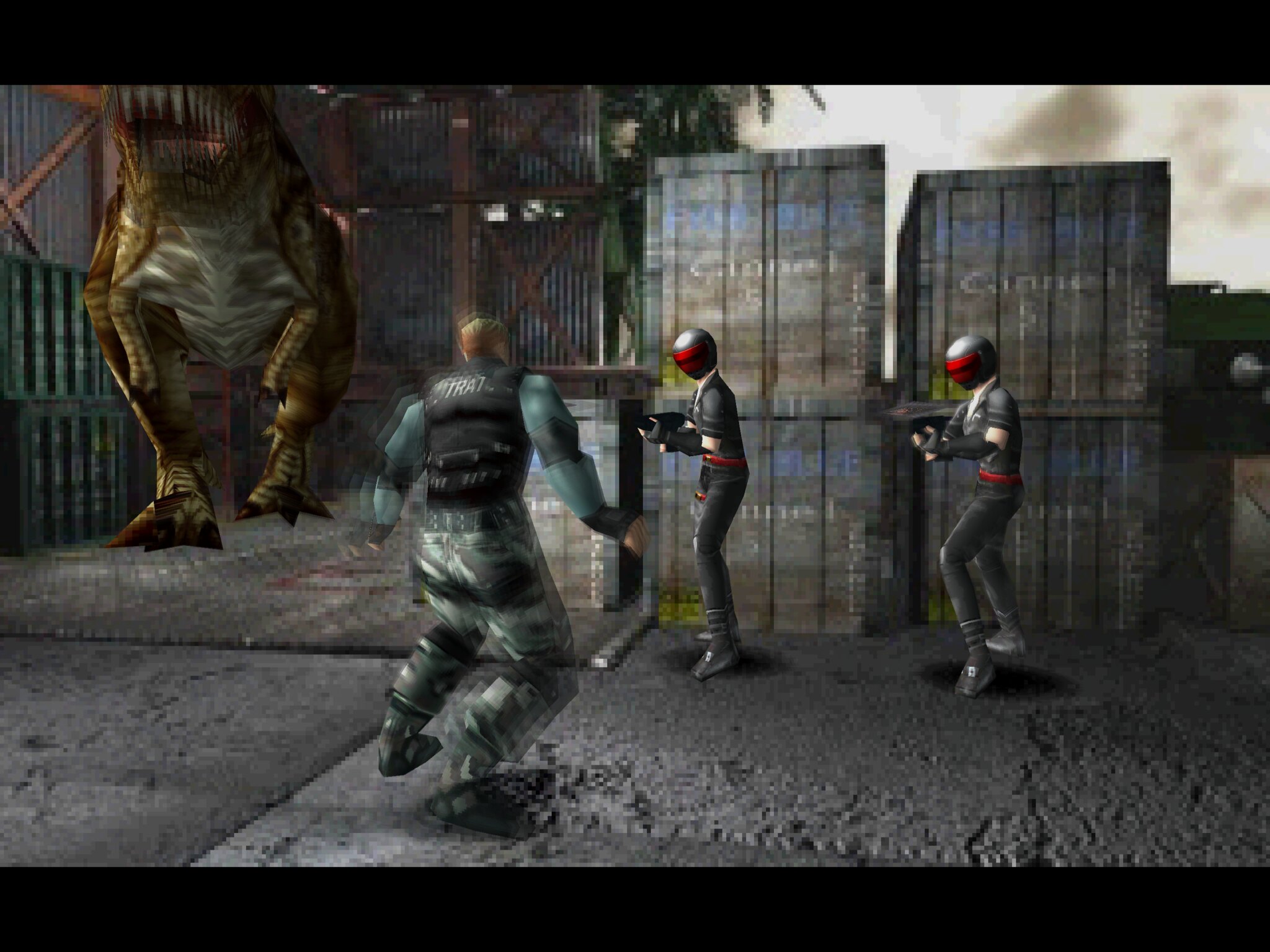
What? There are people here? And they don’t seem friendly…
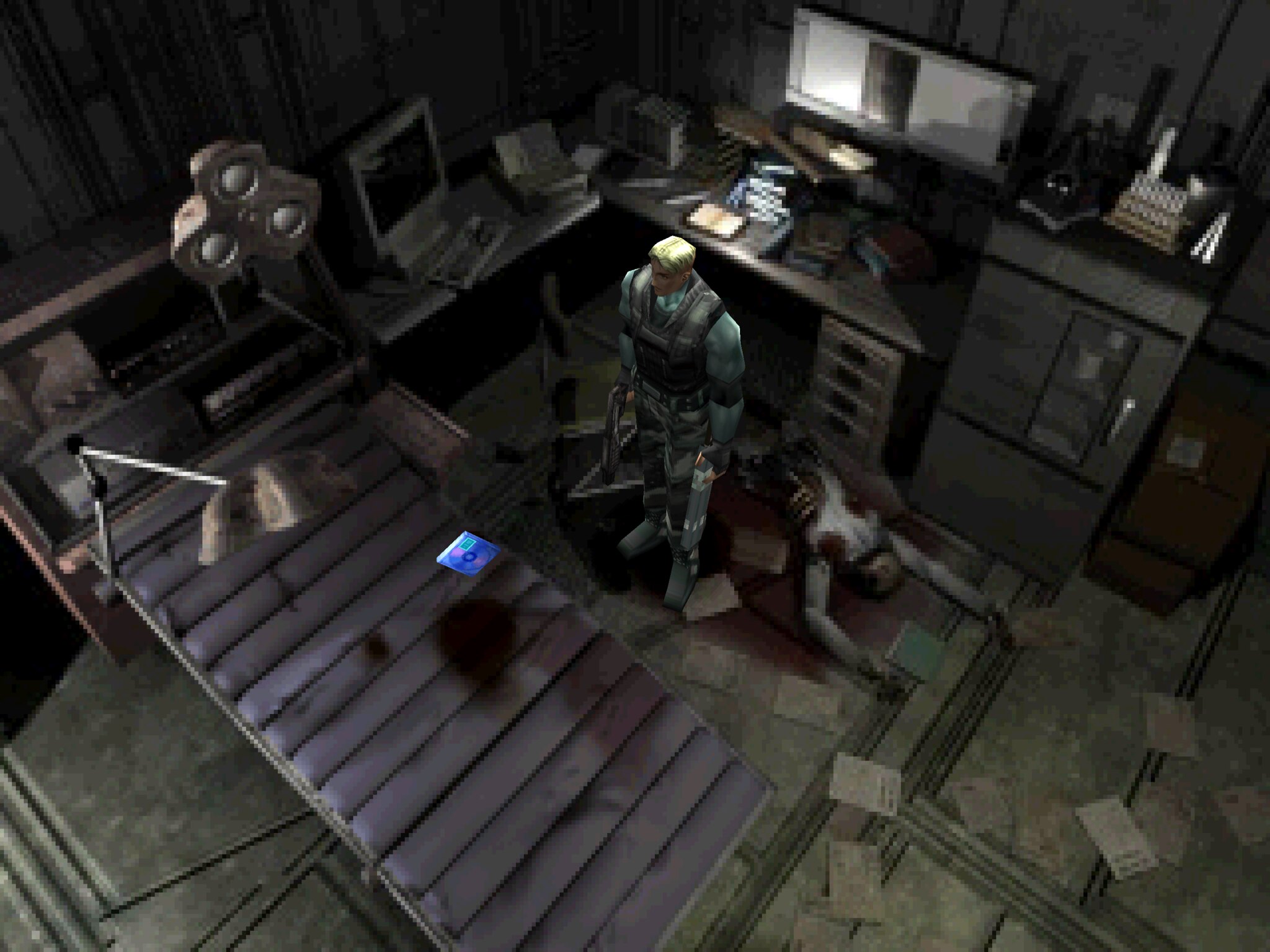
Pre-rendered backgrounds were great in the CRT era, and upon release the graphics of this game were considered an improvement from part one. However, the nature of the games means that Dino Crisis 1 can take greater advantage of modern emulator enhancements than part two.
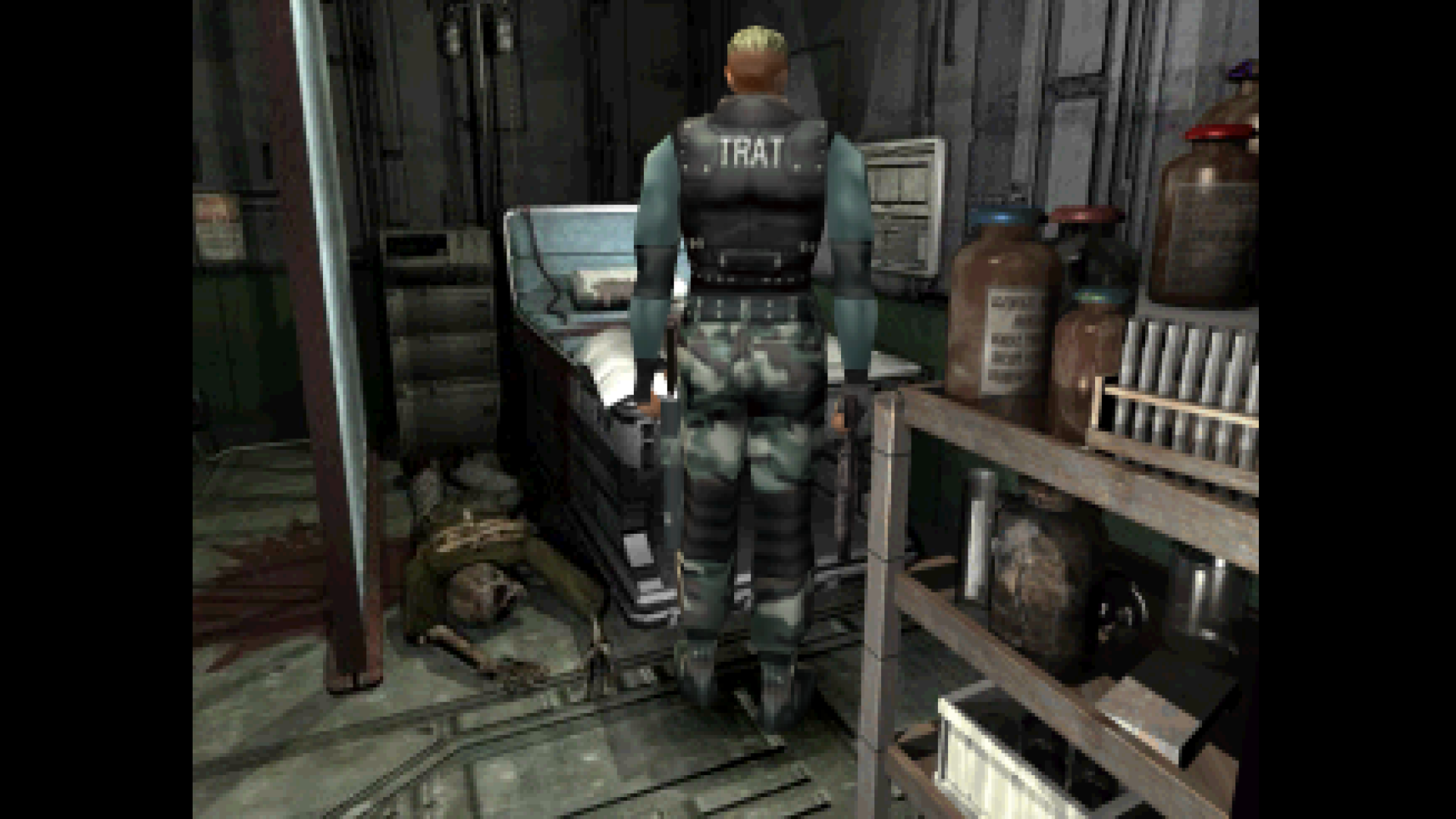
This article is based off my 2026 playthrough and screenshots, but when I played in 2024 I used one emulator feature that can provide a subjectively improved appearance of games that have pre-rendered backgrounds: Box Downsampling. This feature first increases the internal rendering resolution (the same as in all the other screenshots in this article), but then it outputs everything through a lower resolution. In this case I picked 2x, or roughly 640×480. Note how Dylan’s character model is a similar resolution to the background, which makes the contrast less jarring.
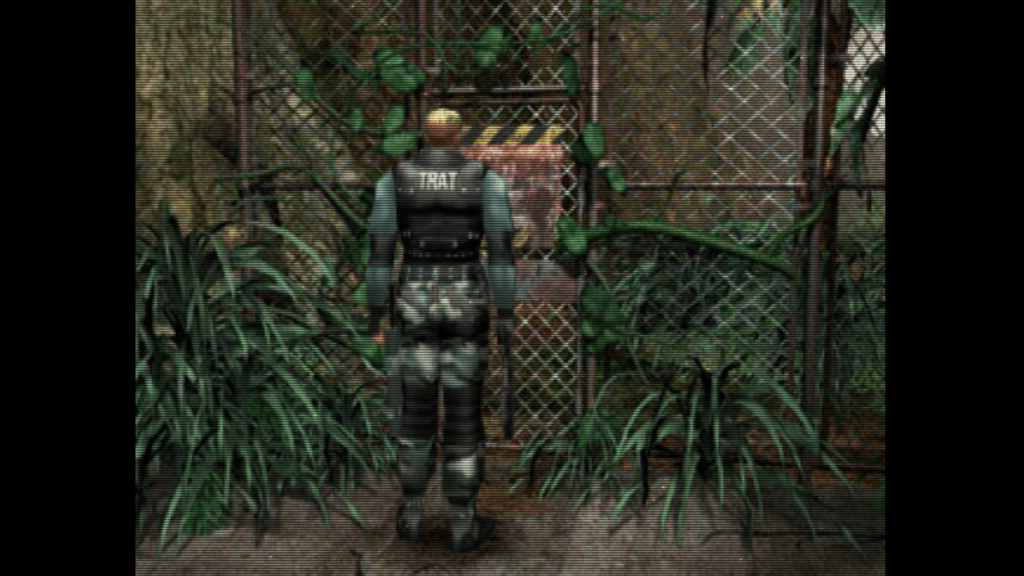
Another thing you can do with these low resolution games is turn on a CRT filter. These are pretty controversial in the emulation world, with some people considering them essential while others consider them an abomination. I hate the ones that simulate cheap composite cords to ugly TV’s; I tend to go for the “perfectly calibrated high-spec CRT via RGB” look. I rarely opt for this though, and the main reason is TV size: I only sit about 10 feet from a 65″ TV, so CRT simulations often look ridiculous. Just on pure size, that would be considered a 55″ 4:3 CRT, and such a thing doesn’t exist (the largest mass-produced consumer sets were 40″, and the largest ever CRT was the 43″ Sony PVM-4300). Anyway, despite the nice optical illusion these filters and shaders can provide, I decided to complete this playthrough with the full crunchy sharpness.
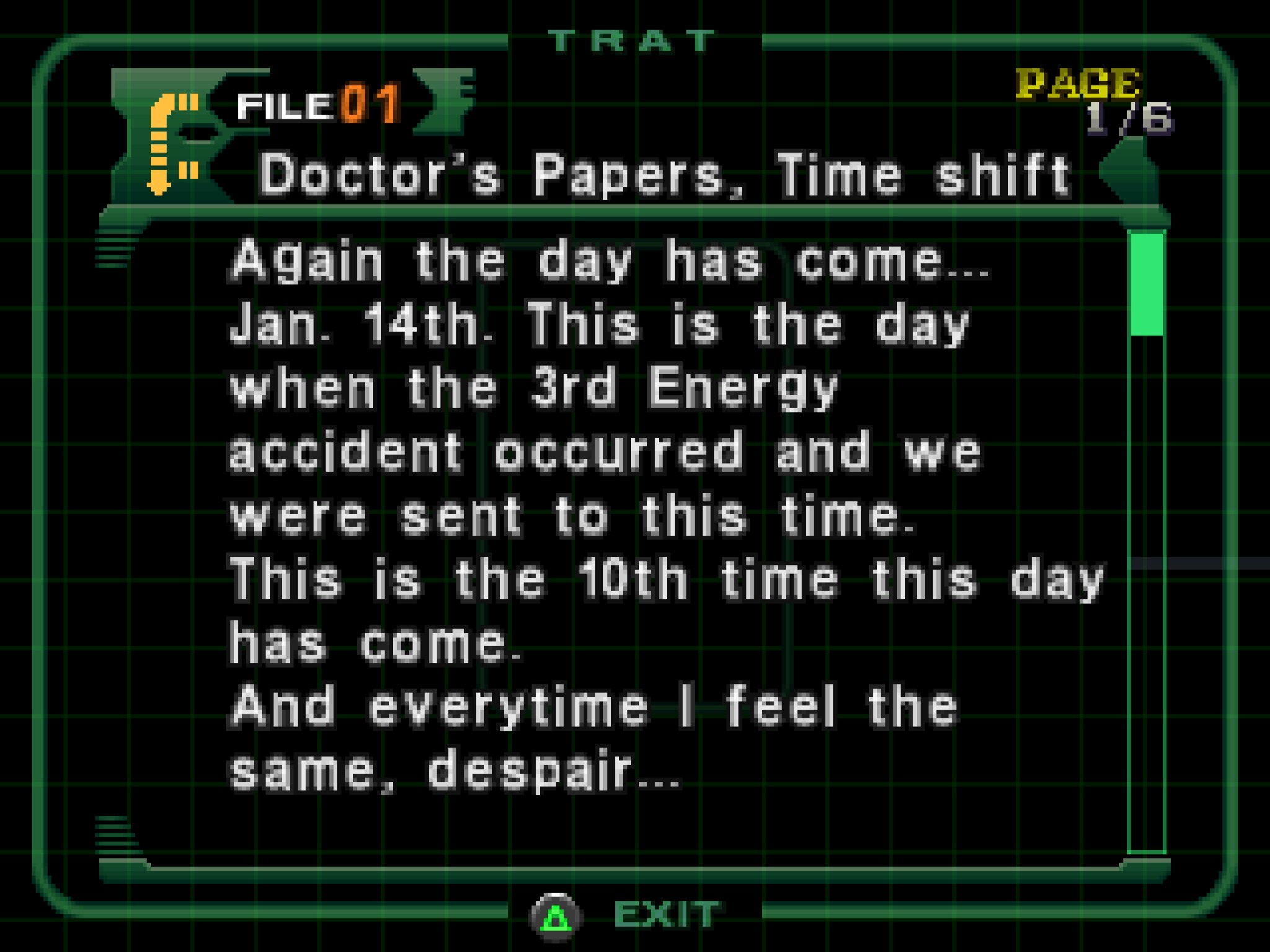
Predictably, this game is also about time travel, but it goes into a way trippier realm than the first one. There are some interesting plot points and twists in this game, and naturally I’ll reveal a few in this article. If you are interested in this game and would like to be surprised, I’ll cut right to the chase: go play it! For everyone else, read on.
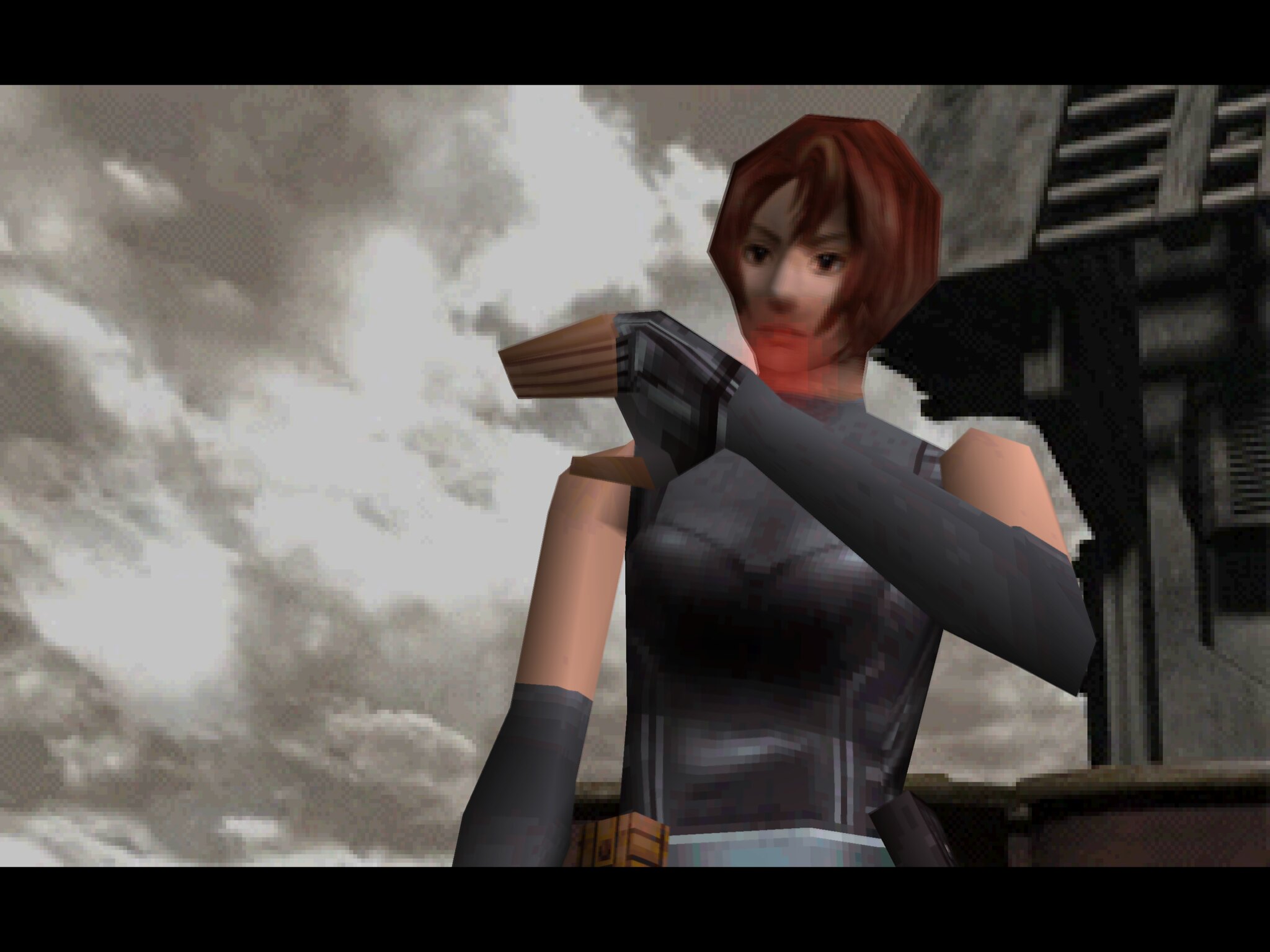
It used to seem so futuristic to be able to communicate with someone through your watch, but nowadays everyone seems to be rocking a smart watch which has that functionality and more. Also, I know hands are hard to draw, but Regina’s claw looks pretty huge and weird in this shot.
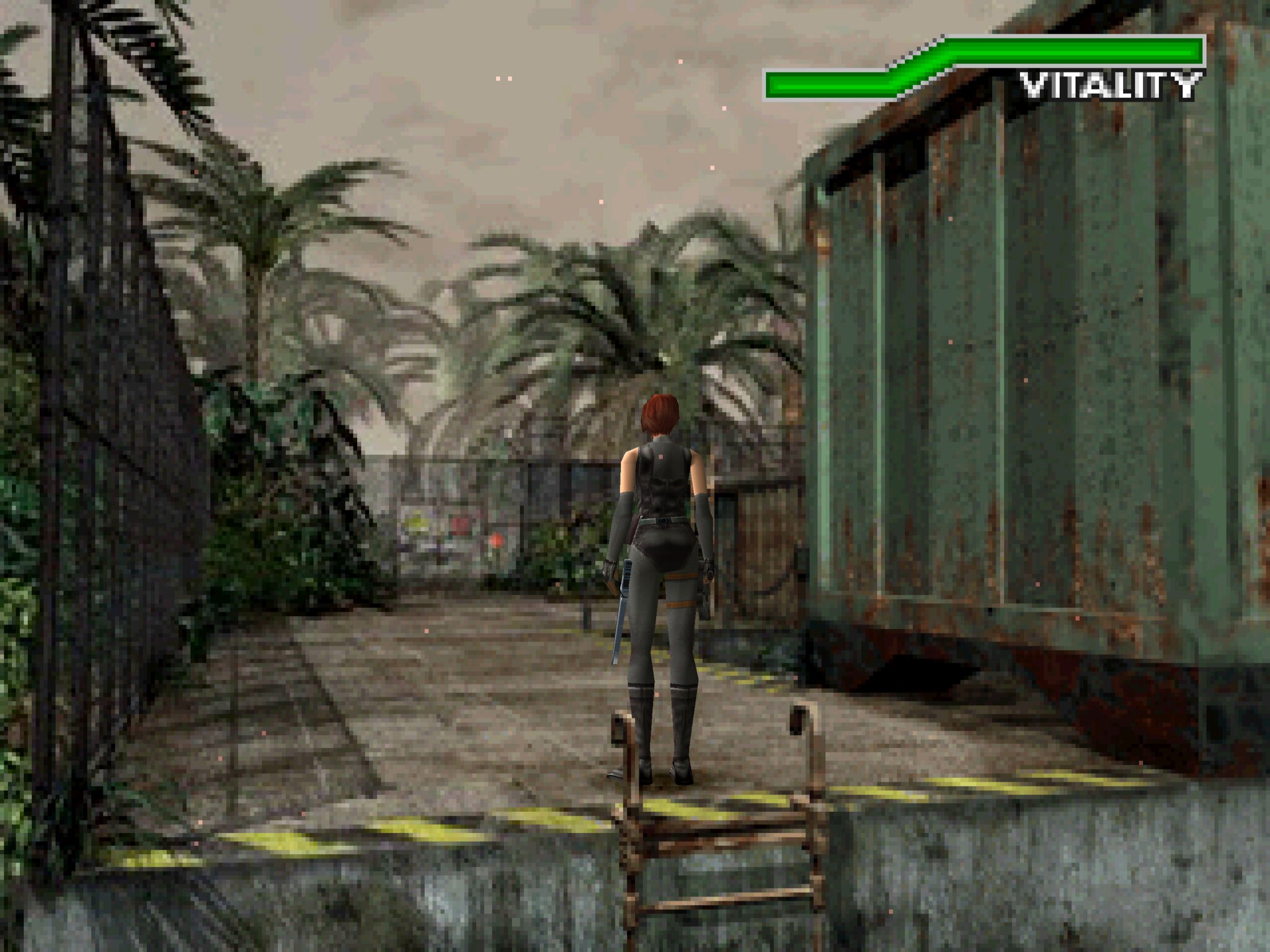
Alright, now we get to play as Regina. Check out that new Quality of Life feature: they added a life bar to the HUD, which is something the first game didn’t have at all, even in the pause menu.
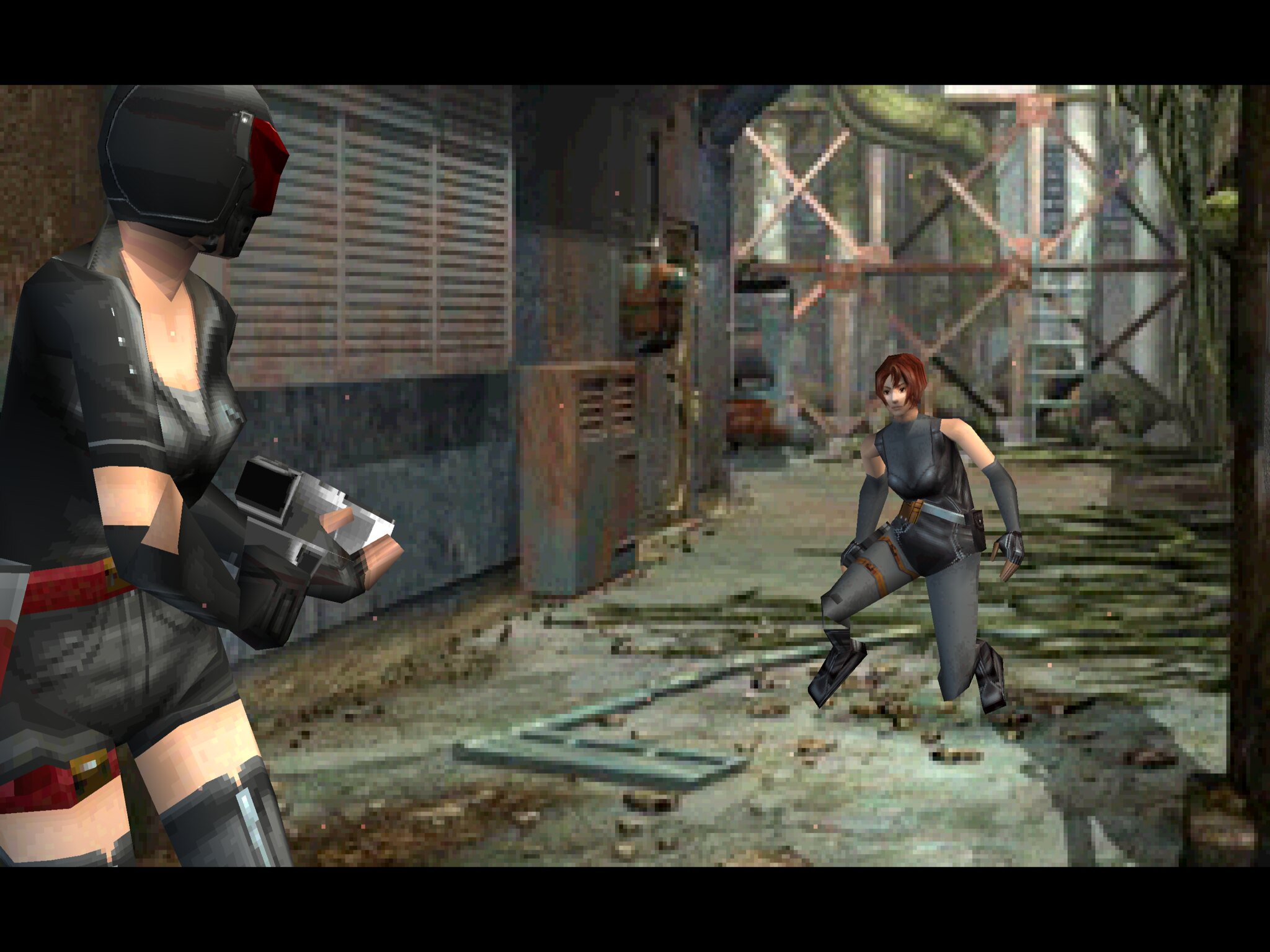
Almost immediately, Regina gets her turn to have an encounter with the helmet people.
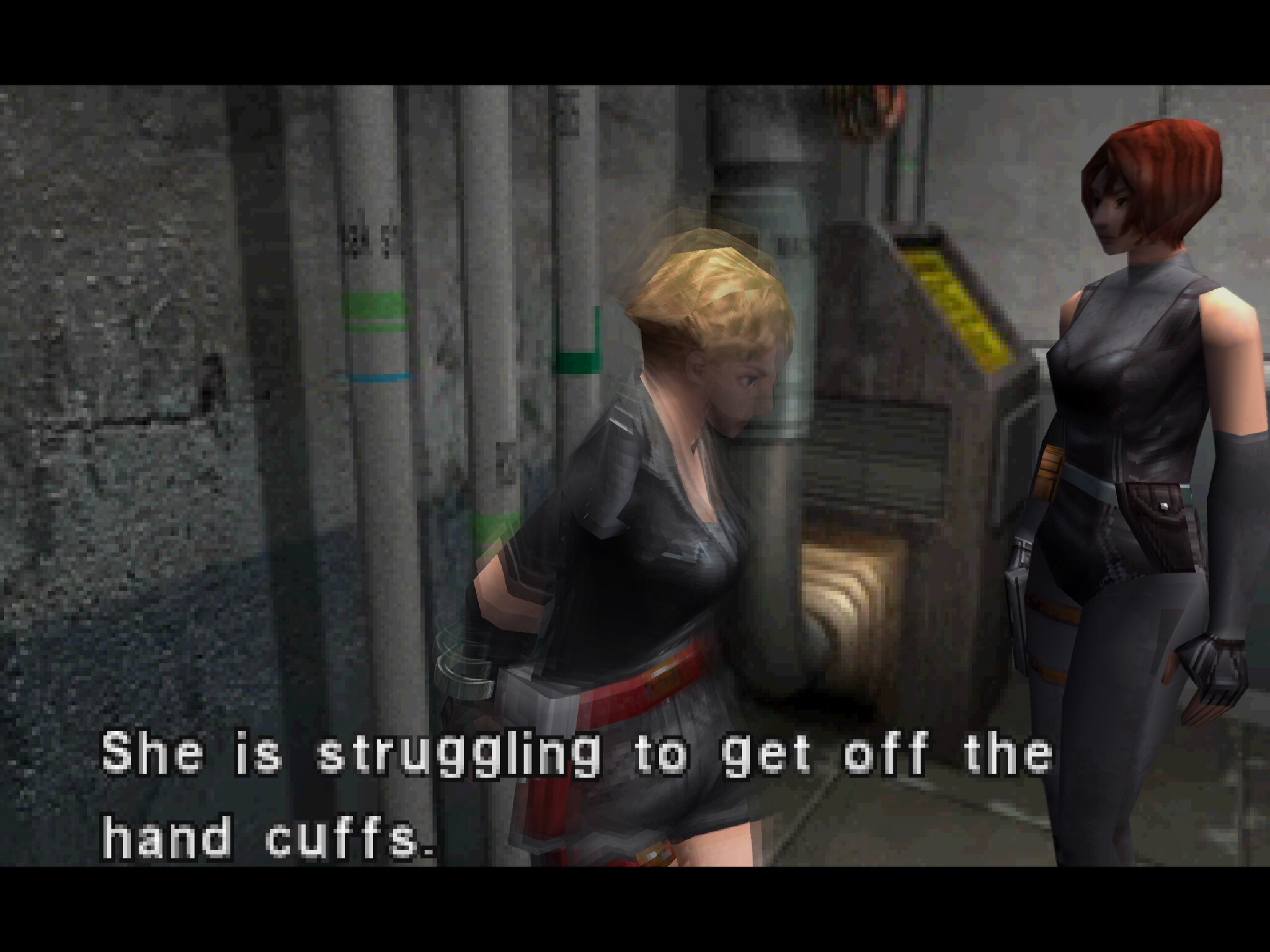
But because Regina is tougher than Dylan, she manages to apprehend one of them. And it’s a young blonde girl…who won’t speak?
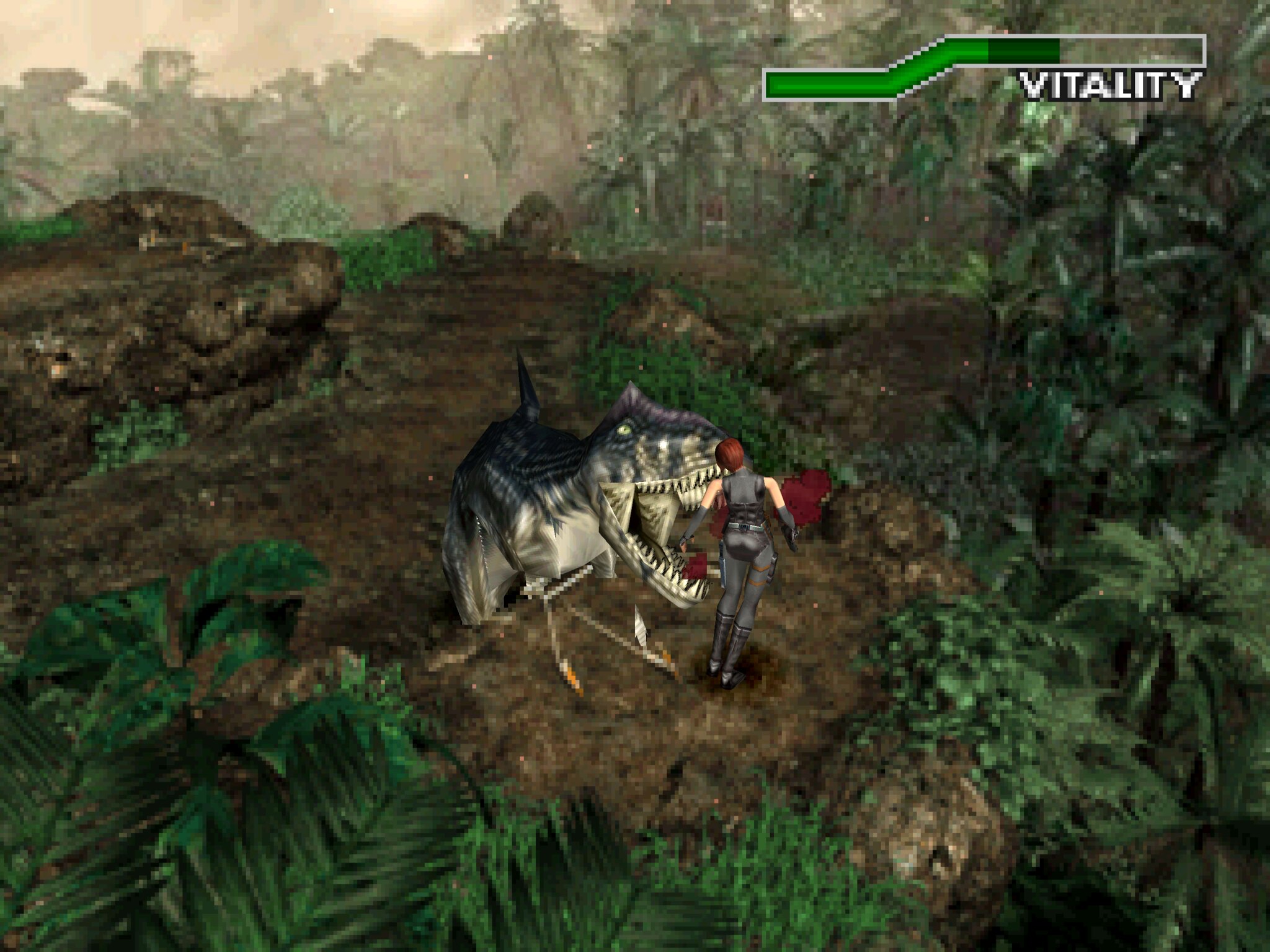
There are many more types of dinosaurs in this game, which is refreshing. This might be an Allosaurus, which is like a smaller T-Rex.
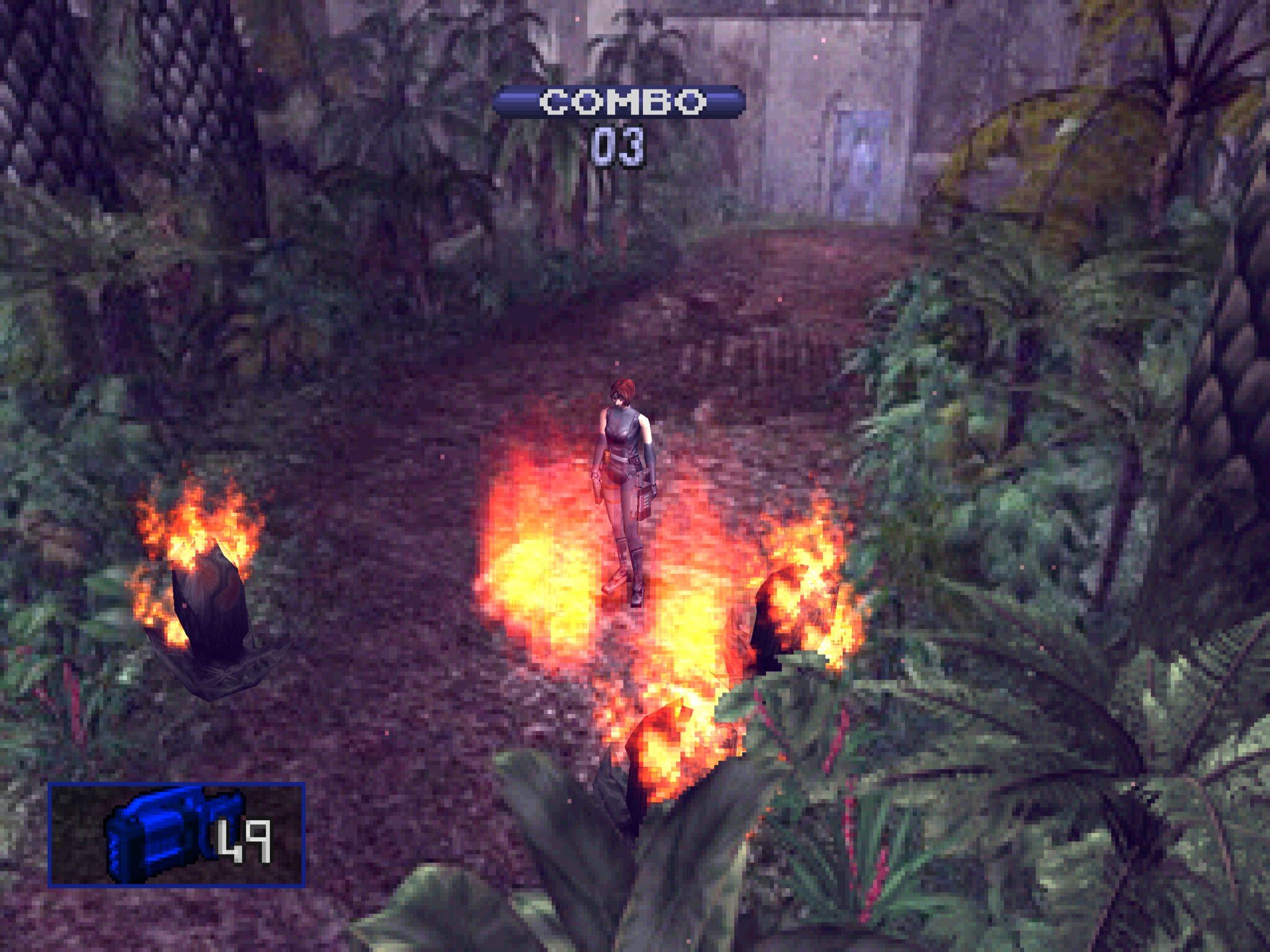
Although this game is more straightforward than the first one, some parts are a bit obtuse. For example, you need to spend your Extinction Points on a flamethrower, which lets you pass these poisonous plants.
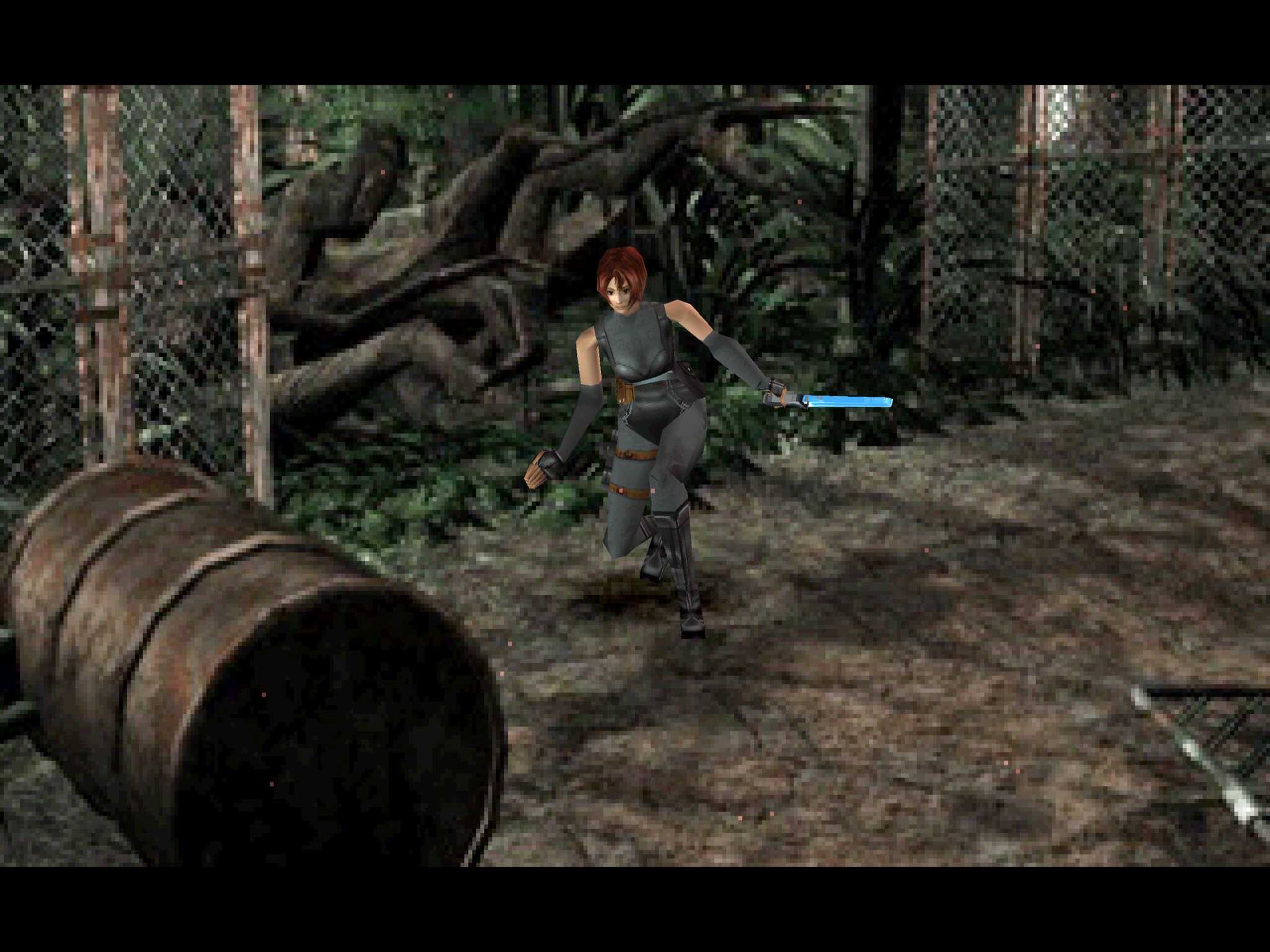
Each playable character gets their own selection of main and sub weapon. One of Regina’s sub-weapons is called the “Stungun”, which is a direct translation from the Japanese (ラージスタンガン, “Large Stungun”). But far from any type of gun, it looks and acts like a Star Wars lightsaber, especially in this scene where Regina is using it to deflect lasers fired at her. In-game, you mainly use this weapon to open electronically locked doors, but it can also be used as a melee weapon to stun dinosaurs.
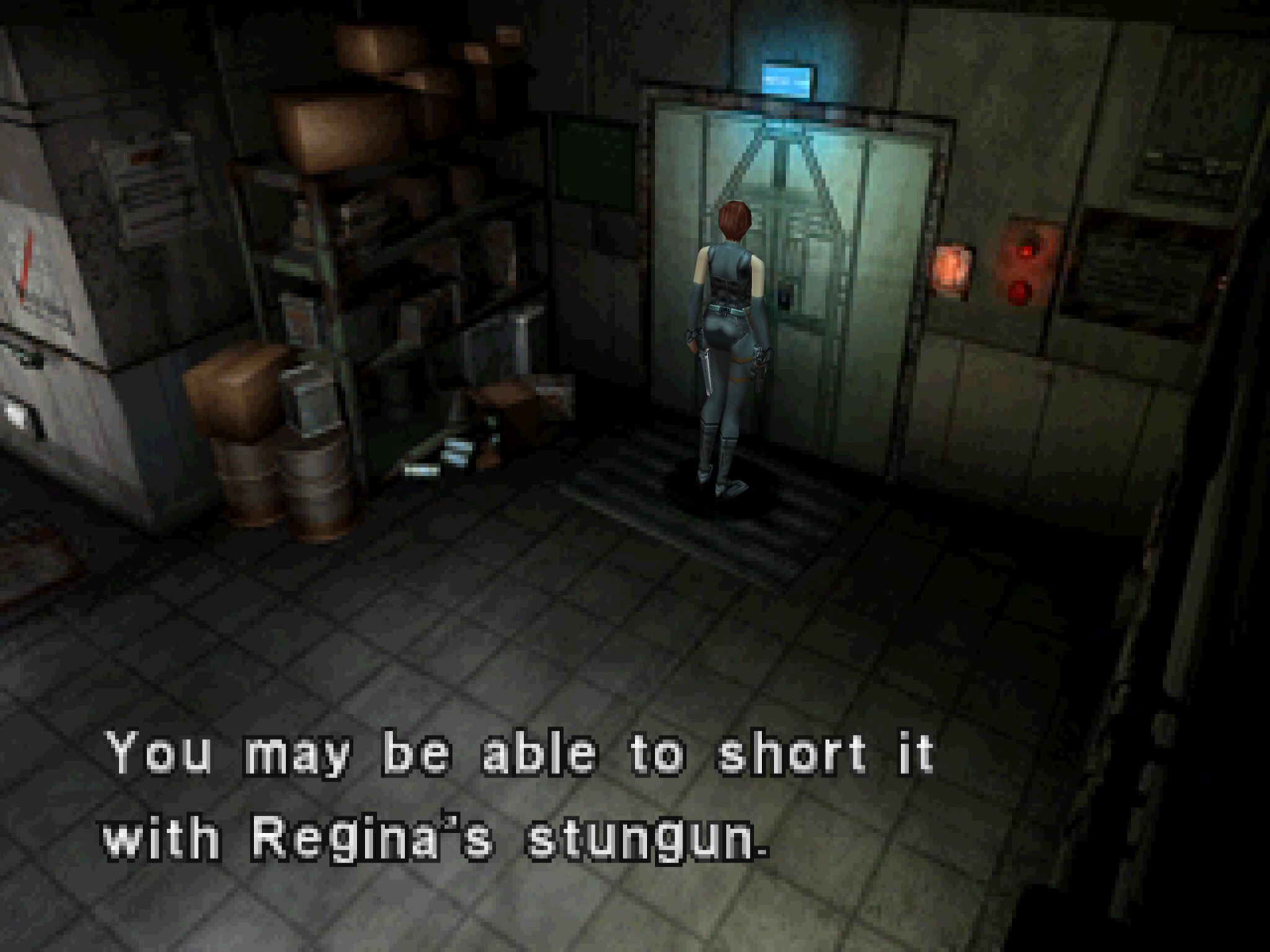
One quick whack of a door like this, and you’re through. These doors can be unlocked by Regina, but they re-lock when you play as Dylan. When you play as Dylan, you can use his machete to open doors covered in vines, but likewise, the vines re-grow (??) when you switch to Regina.
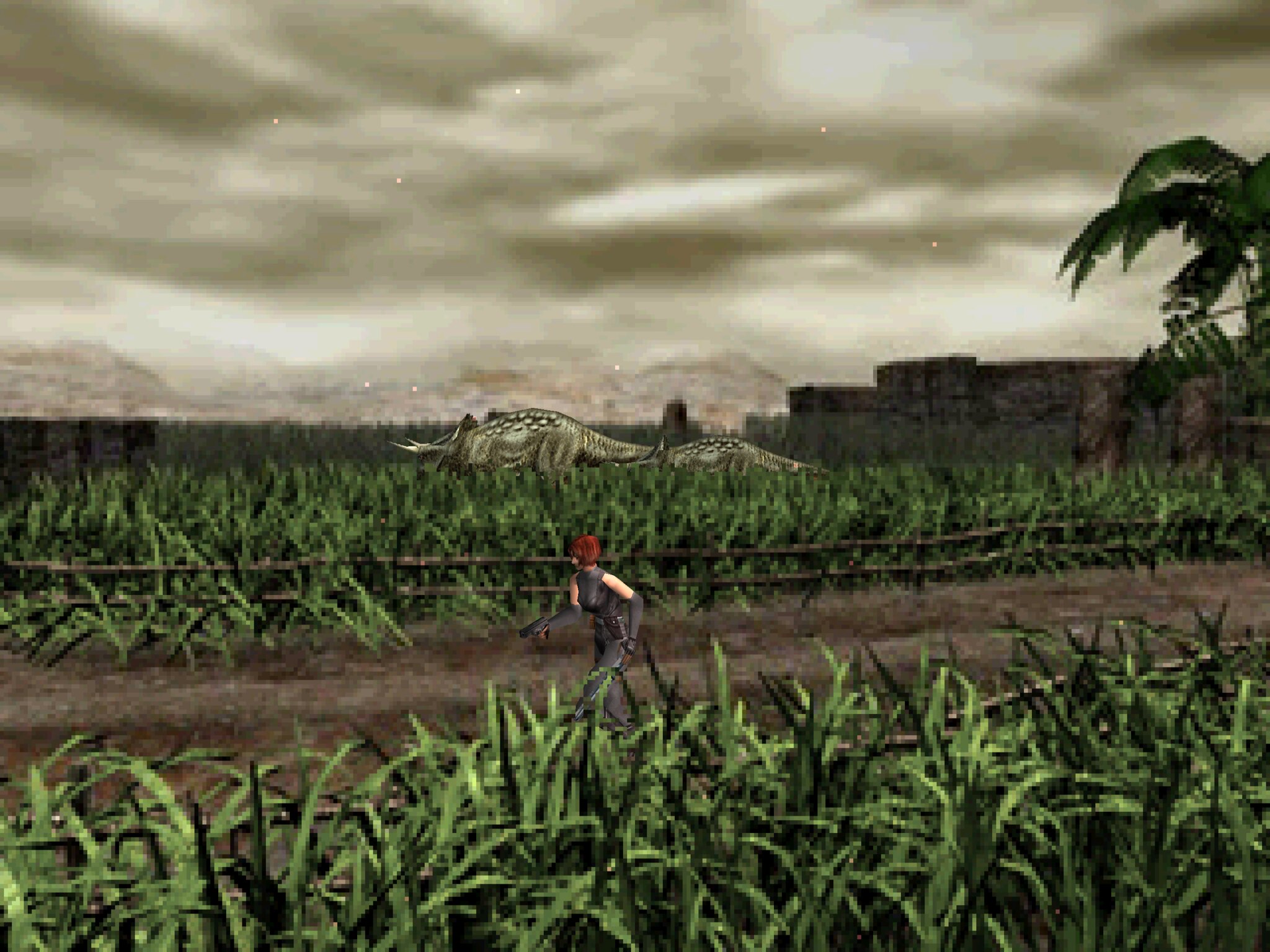
This is one of the coolest cinematic moments of the game. It’s a simple linear path you traverse from right to left, but the strolling Triceratops family in the background gives this scene a really cool feel.
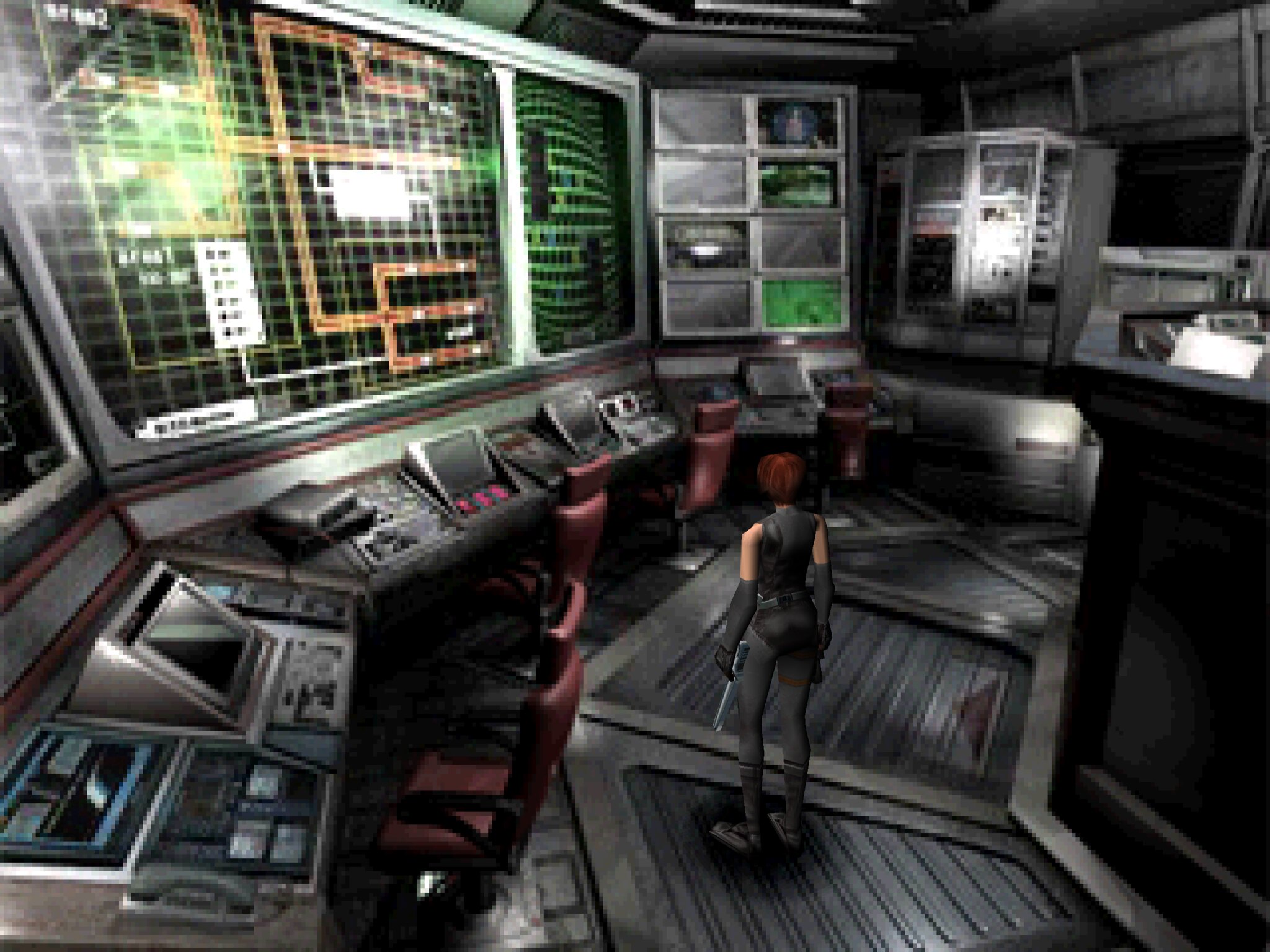
Remakes are something I rarely advocate for, but I think remakes of the first two Dino Crisis games could be awesome. Wouldn’t it be so cool to run around slaughtering dinosaurs with great 3D graphics and good 3D shooter gameplay? On the other hand, this graphical style and the tank controls are very reminiscent of the PS1, which is part of what makes this particular version fun to play.
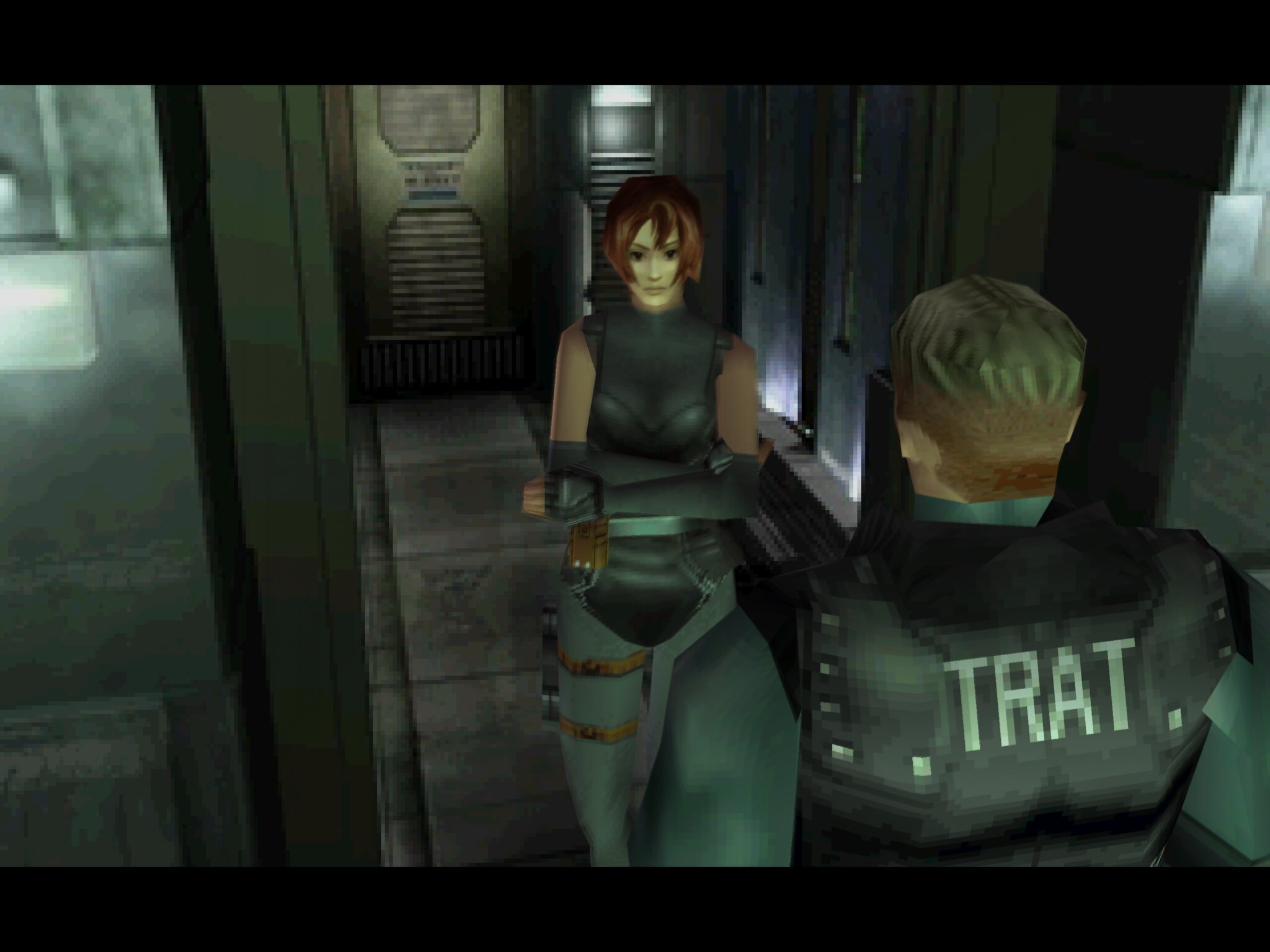
Our team is the fictional TRAT, which stands for “Tactical Reconnoitering and Acquisition Team”. Although, it always reminds me of the “Trat Pop” story line from Unfrosted, the Seinfeld film about Pop-Tarts.
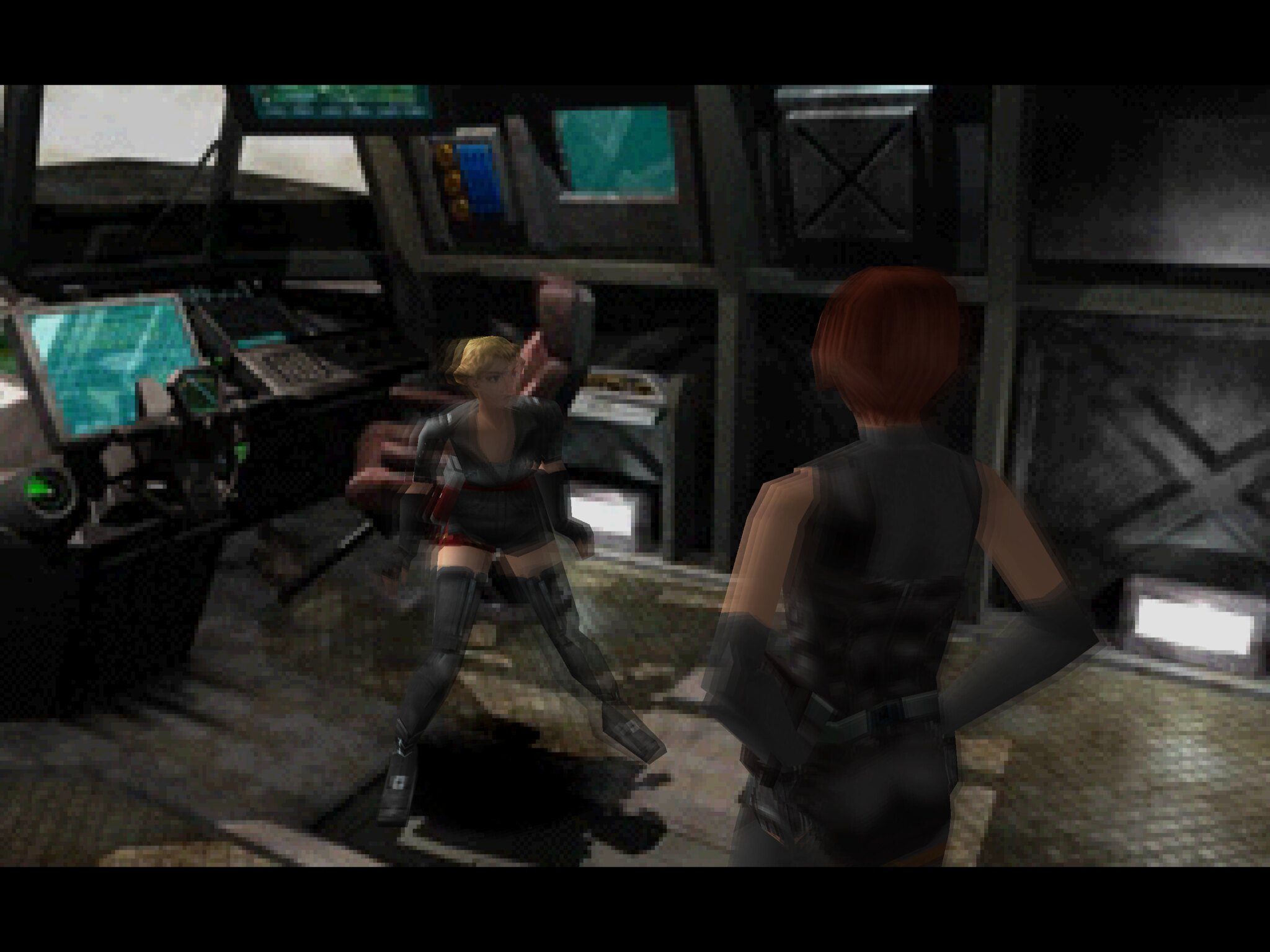
2000 was also the year of the PS2 release, and this frame buffer accumulation motion blur tactic would be used heavily by games on that console, so this game is a bit futuristic in that regard. I’m not a big fan, but I don’t blame them for doing what was in fashion at the time.
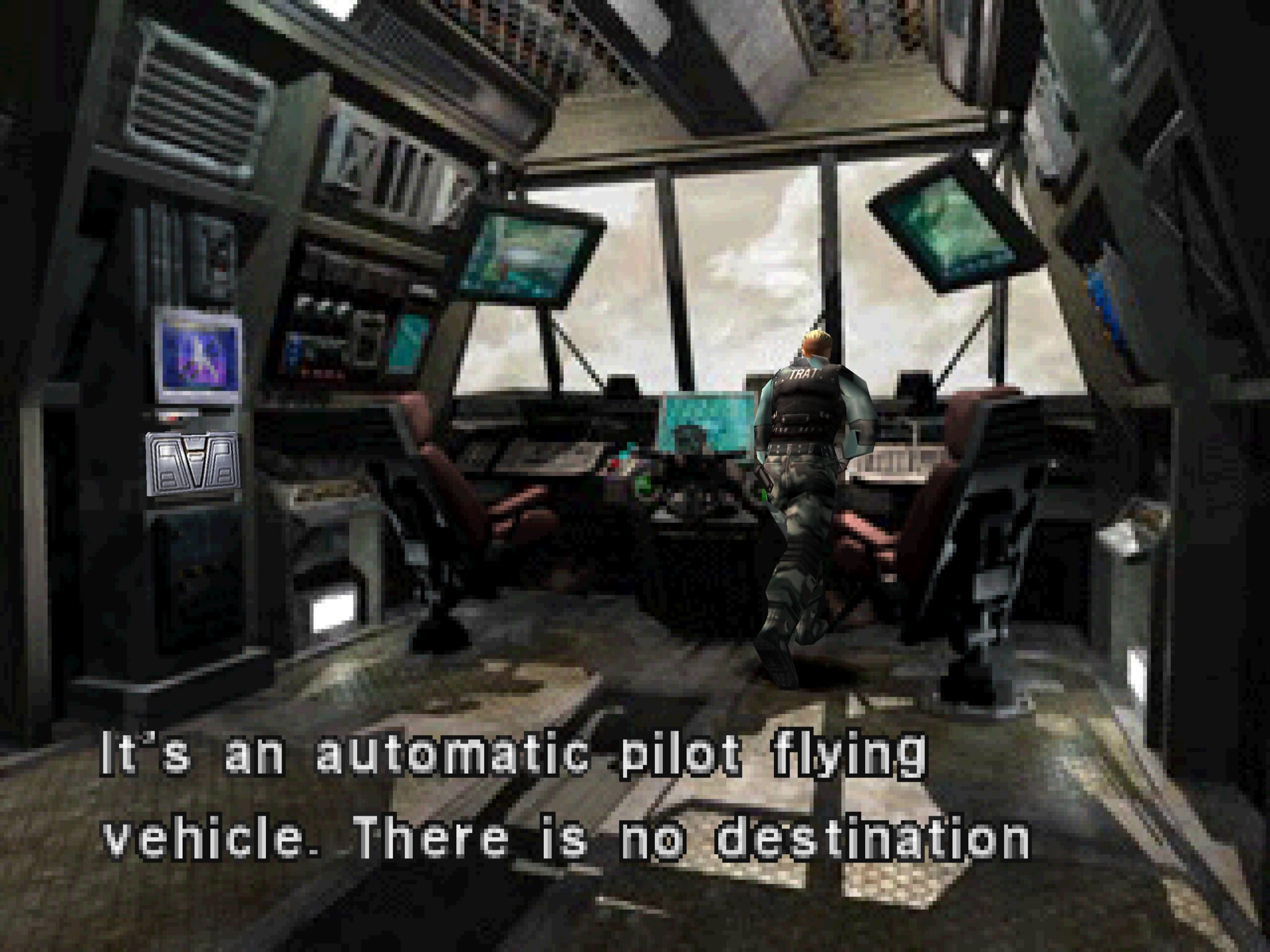
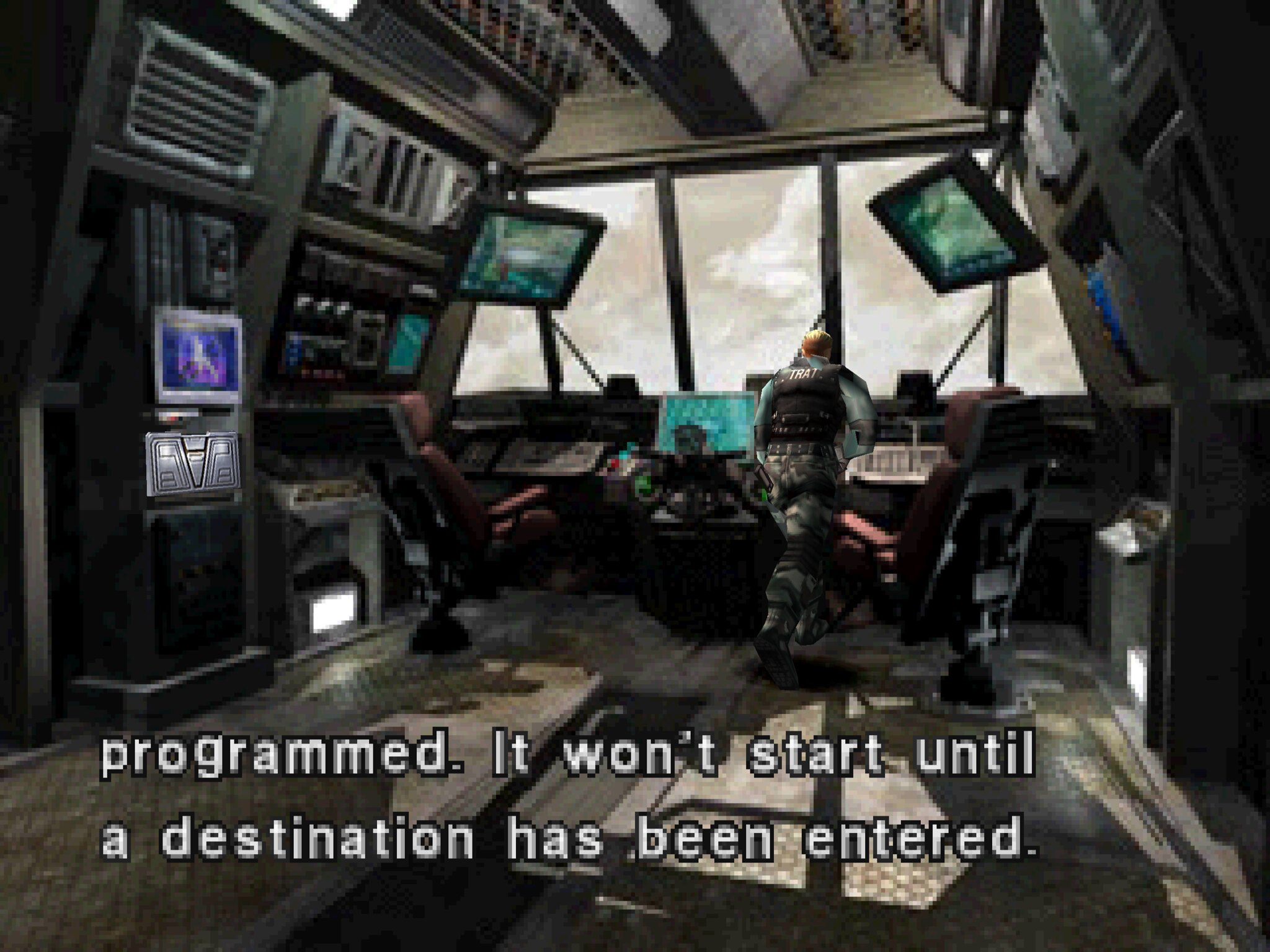
Like the first game, this one suffers from sub-par translation. It’s good enough to convey the meaning, but it’s missing the flair of good writing.
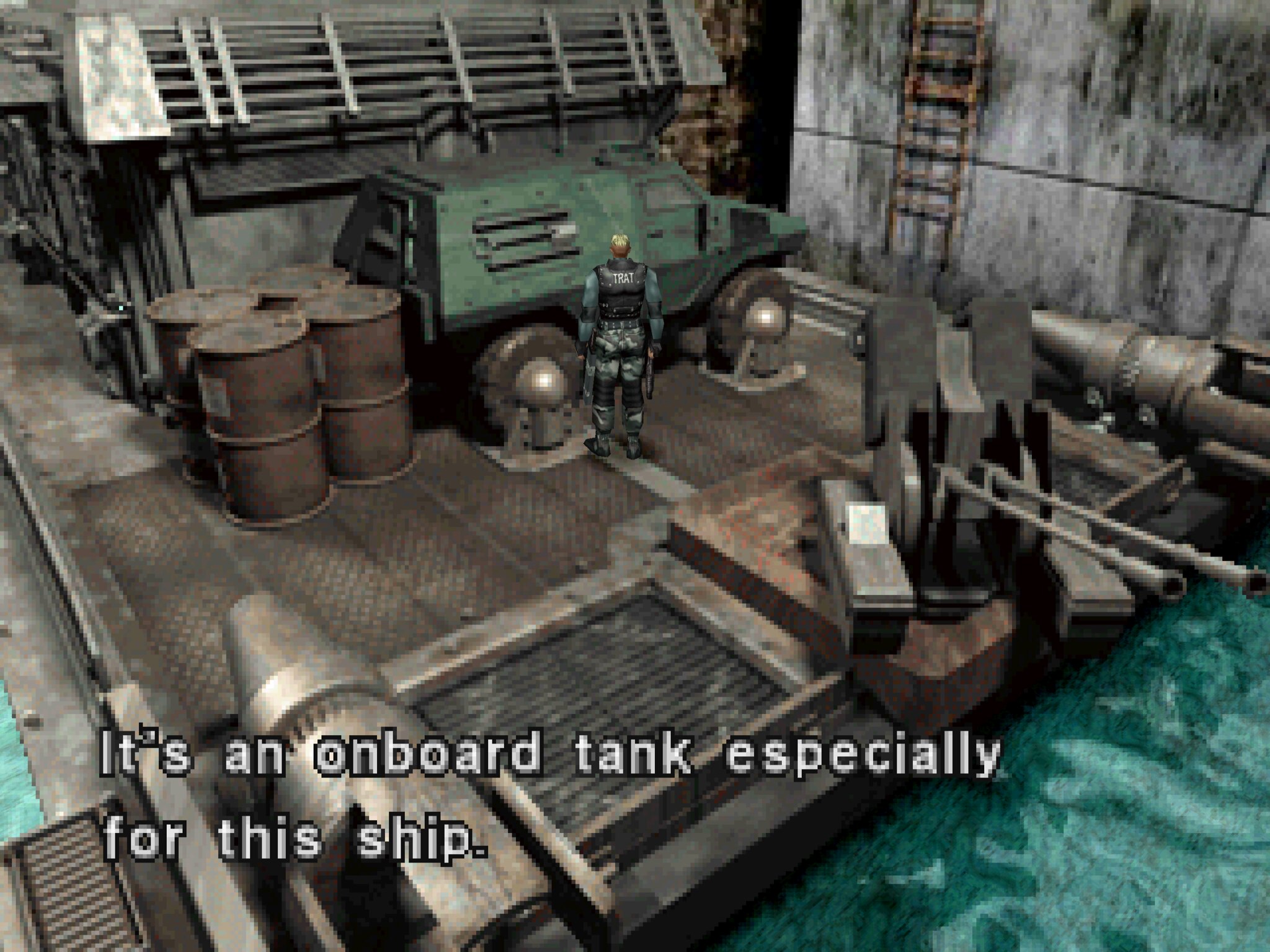
On the ship is this “tank”, which looks like some kind of MRAP, but unfortunately it’s not part of any gameplay.
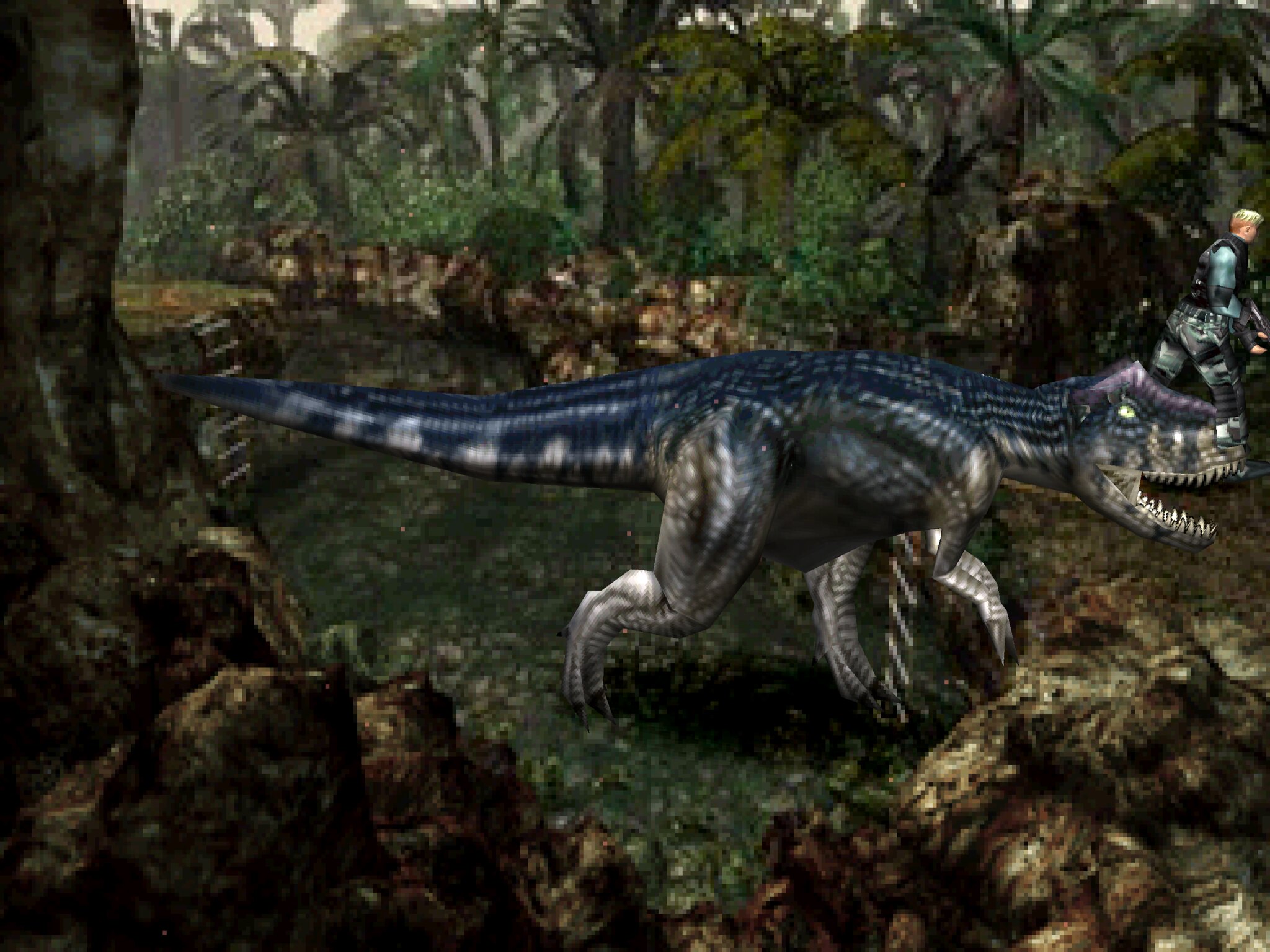
There are an infinite amount of dinosaurs, so sometimes it’s faster just to keep running when something like a big tough Allosaurus is on your tail (again).
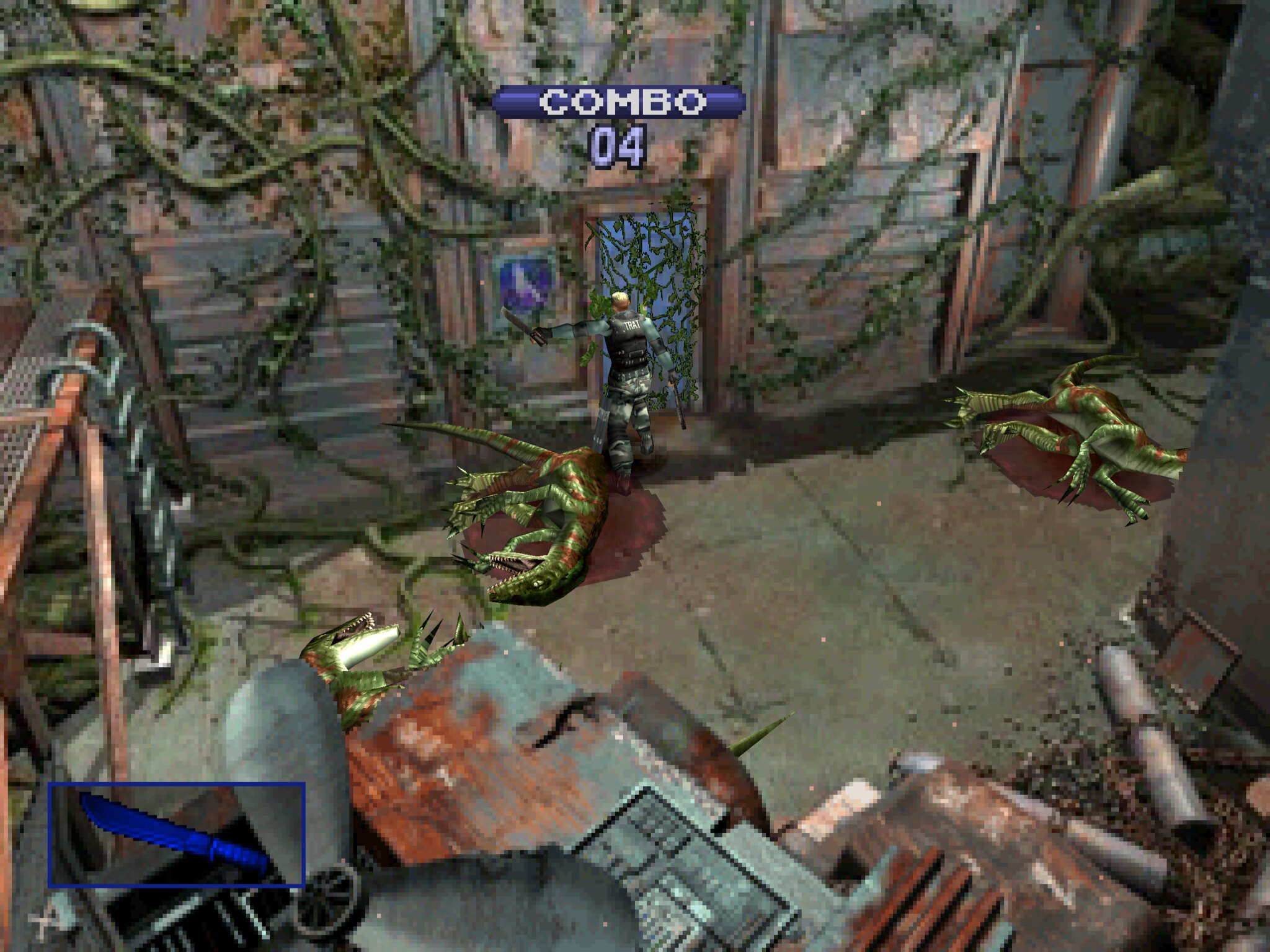
Here’s an example of the type of vine-covered doors that only Dylan can open with his machete.
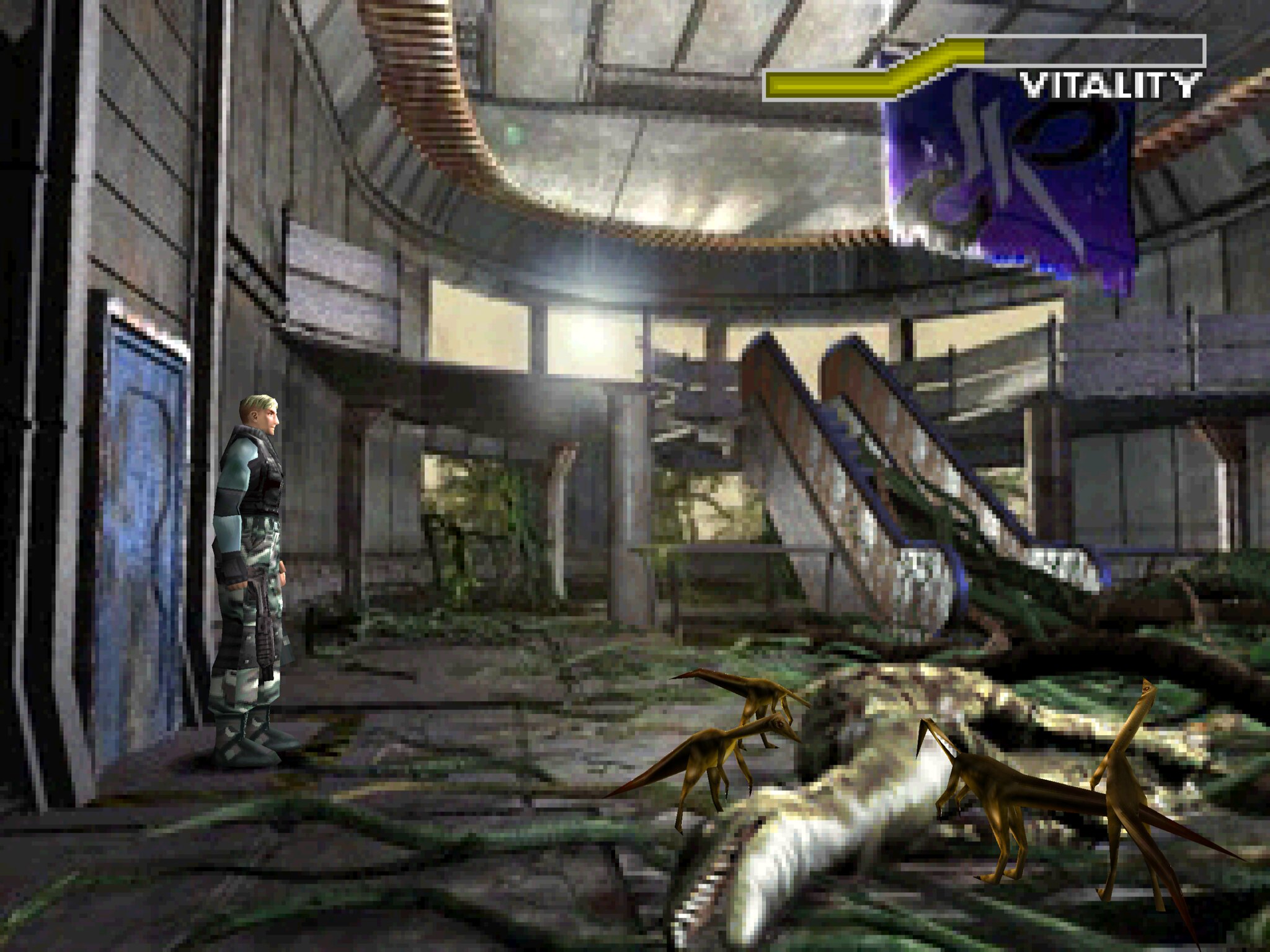
The Compys are back! This is a good example of a stark difference between high resolution models and low resolution backgrounds, the type of thing that Box Downsampling can help with.
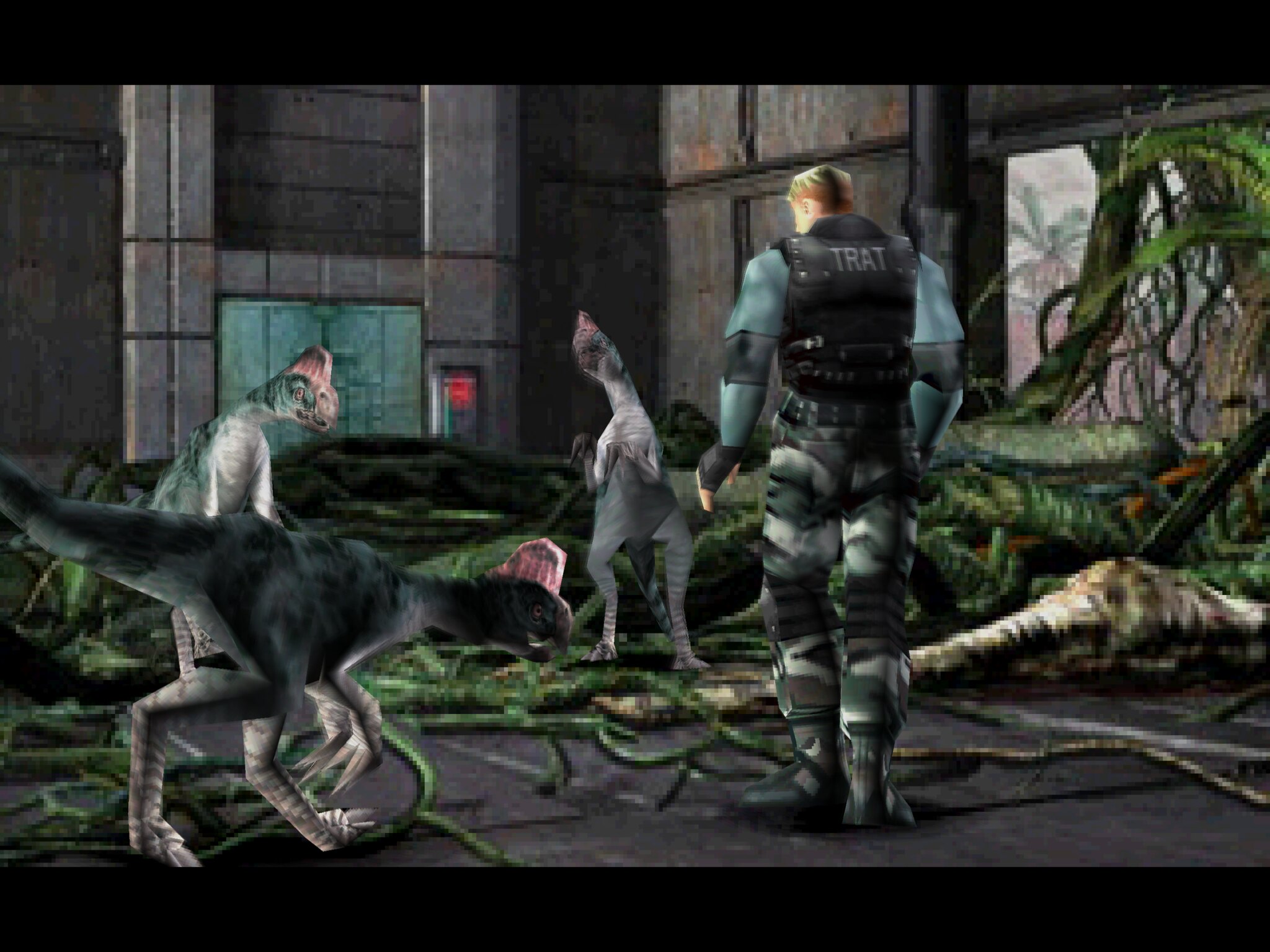
Another new dinosaur! This is an oviraptor, but an old depiction; we are now very confident that this species, like most theropods, was covered in feathers.
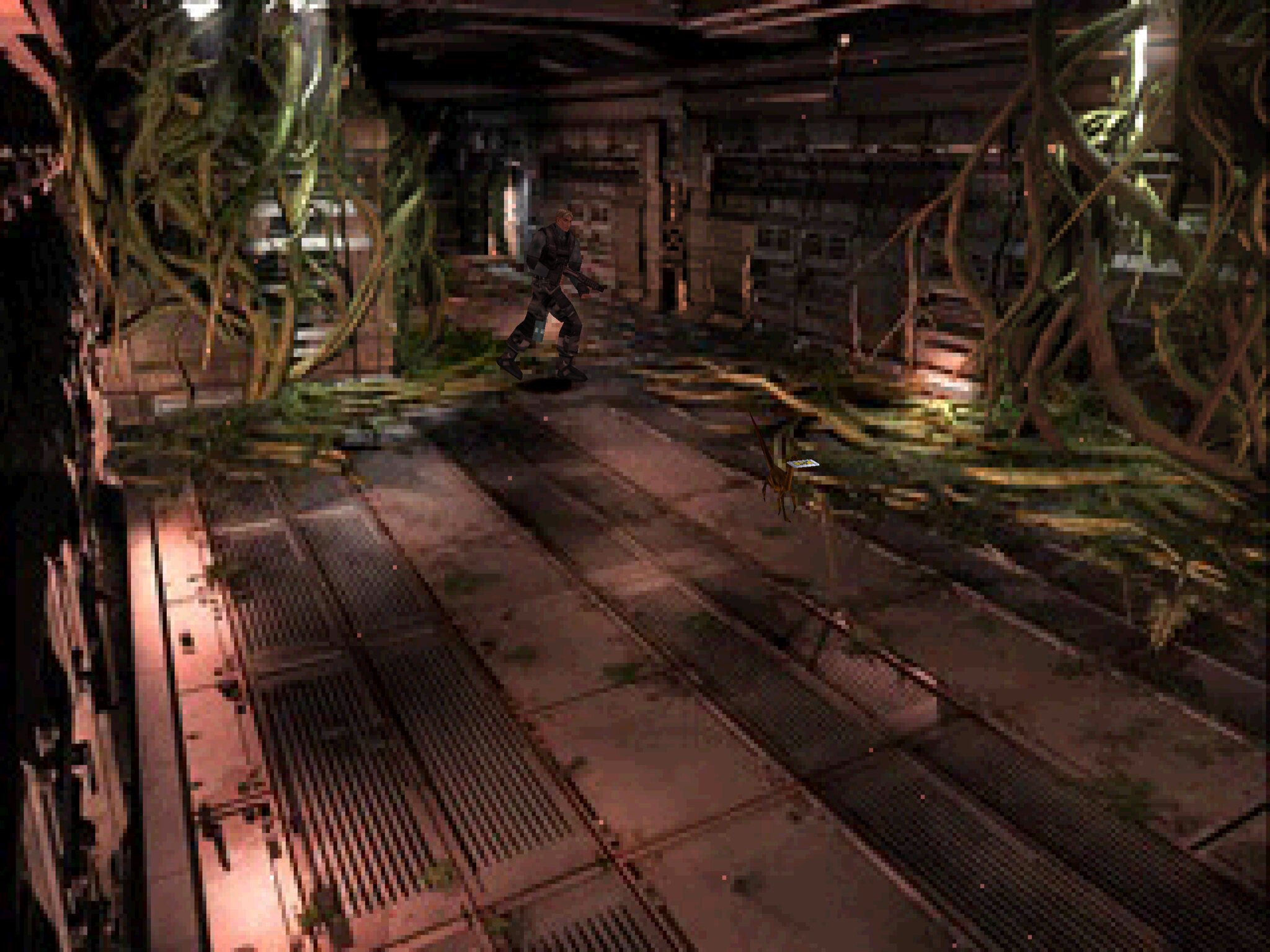
This is a pretty fun little section of the game, but I had to laugh at this screenshot when I reviewed it because it’s just a blob of barely distinct similarly colored pixels. In the top center, you can see Dylan chasing after a Compy slightly lower and to the right. These little guys are portrayed as having a magpie-type tendency to steal shiny things, and one of them steals your key card, which leads to this wild goose (dino?) chase.
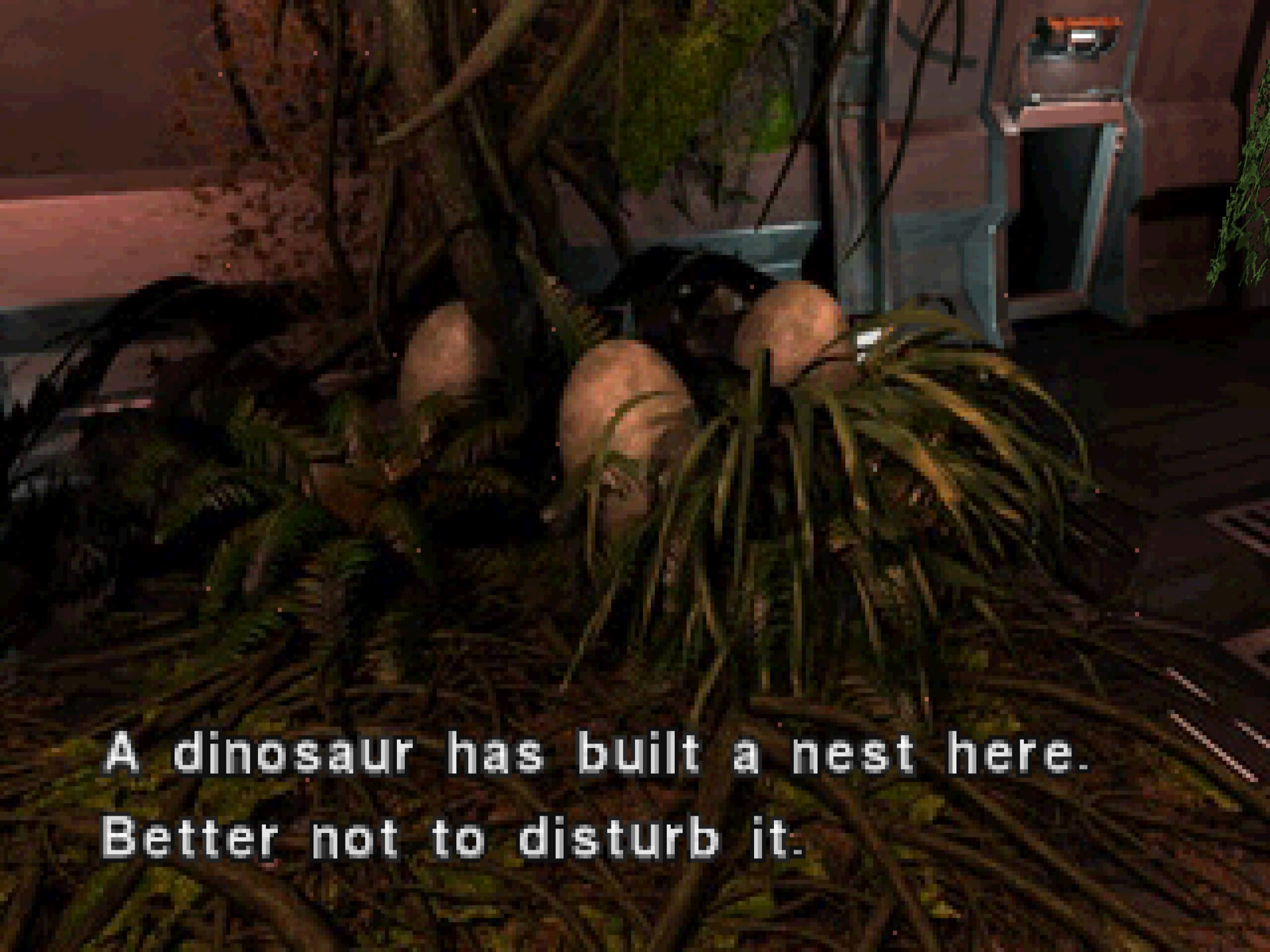
If you try chasing it through the lab, you’ll find that it keeps escaping through small “doggie doors”.
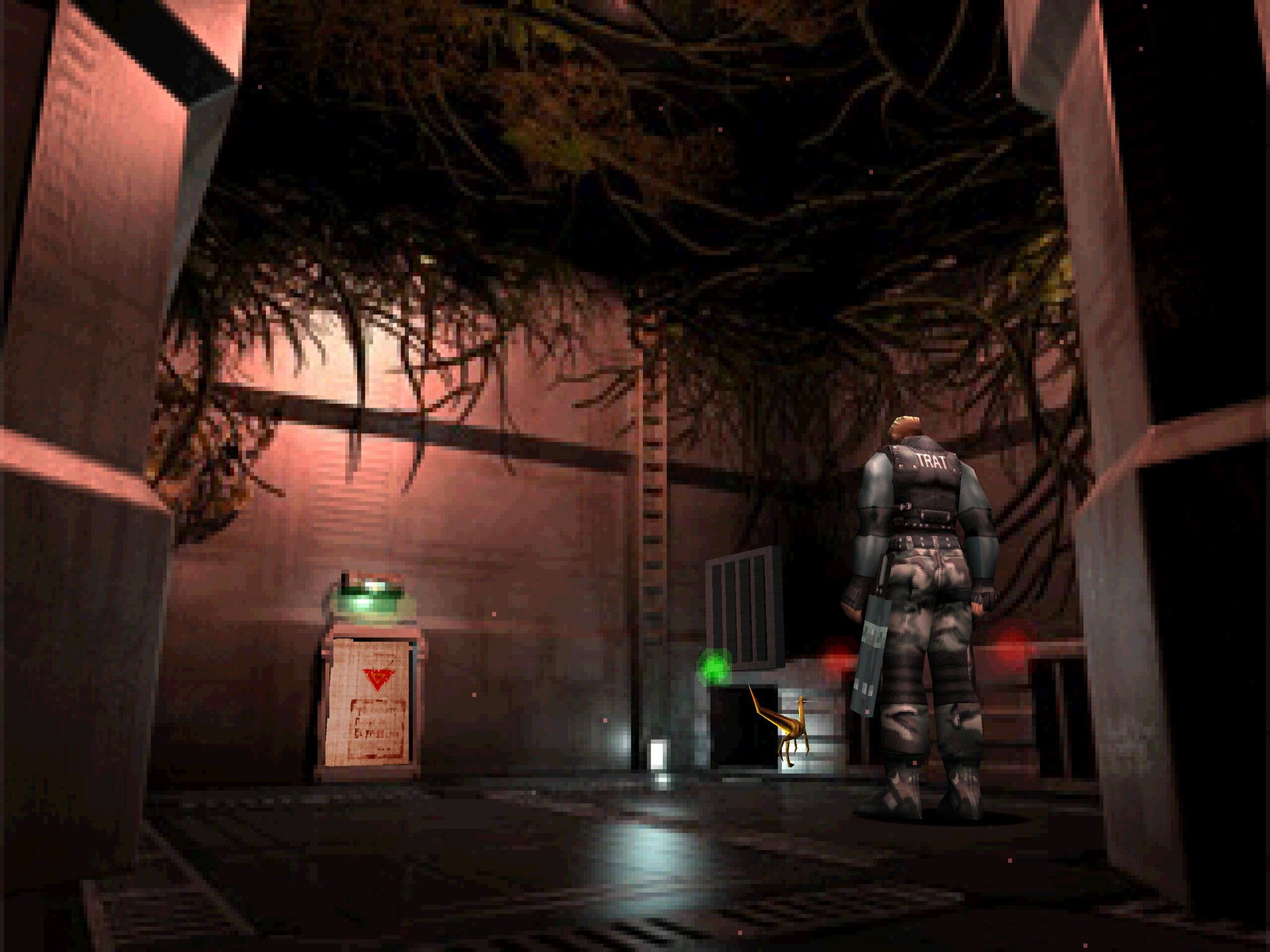
What the heck are those little doors for? Anyway, once you close all of them, you can corner the Compy in this cage and get your keycard back.
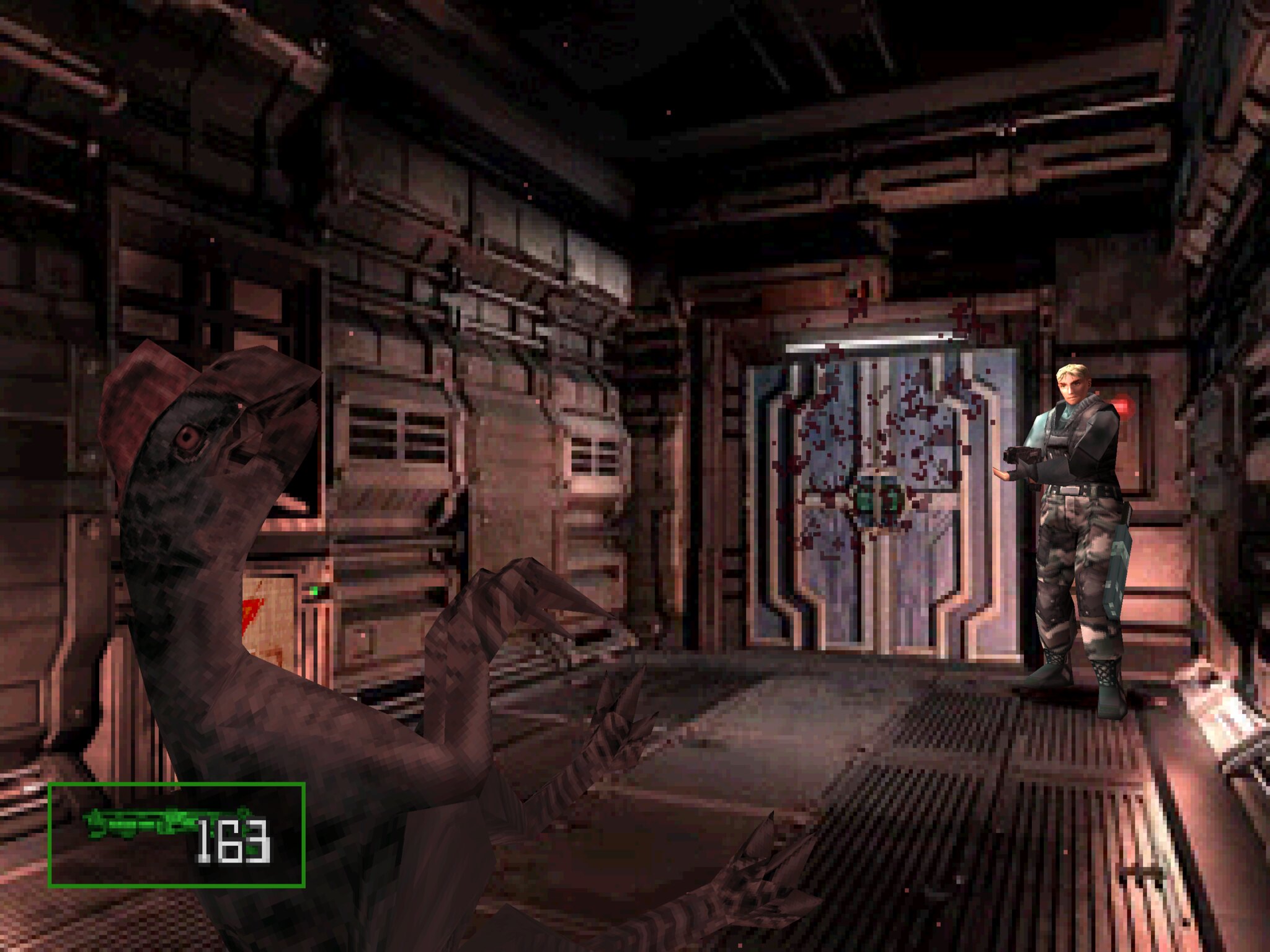
Once that puzzle is over, oviraptors invade this area. Check out this one getting blown away in a spray of blood! M Rated indeed.
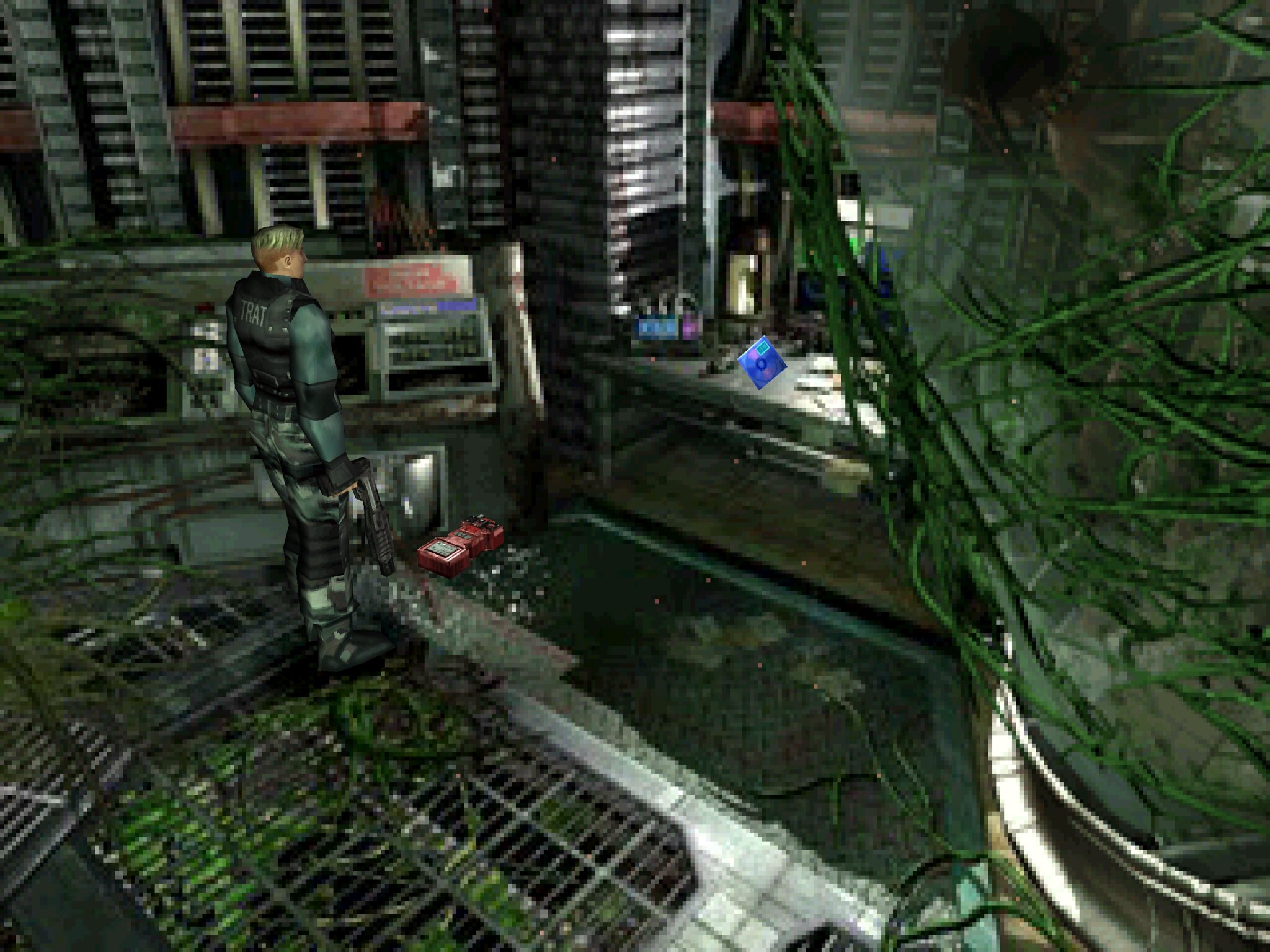
CD’s had plenty of space for textures, so despite a lack of VRAM, PS1 games often had much higher resolution textures than the original hardware could display. It’s amazing how sharp and detailed those items are; way sharper than anyone would have been able to see back in 2000.
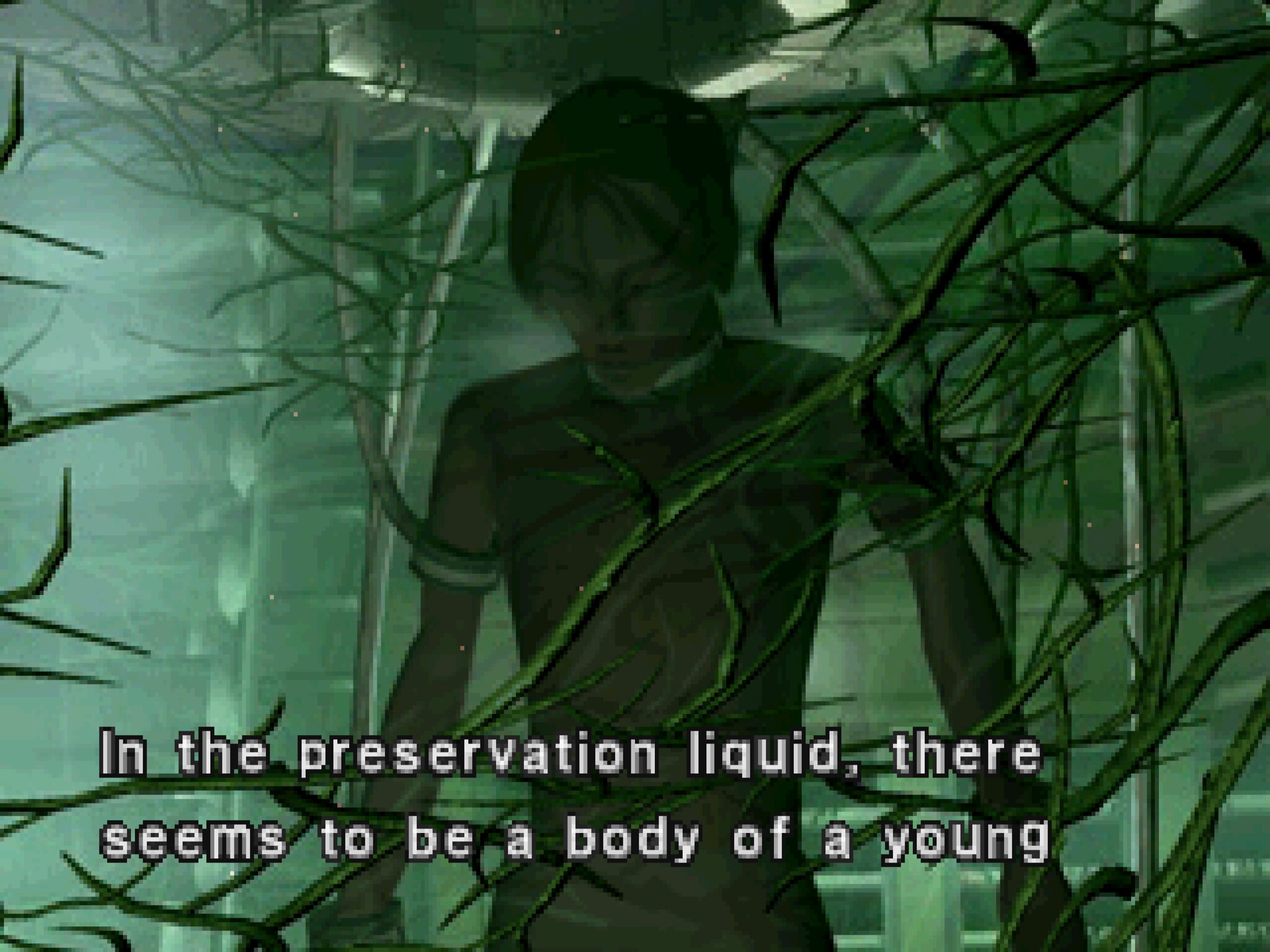
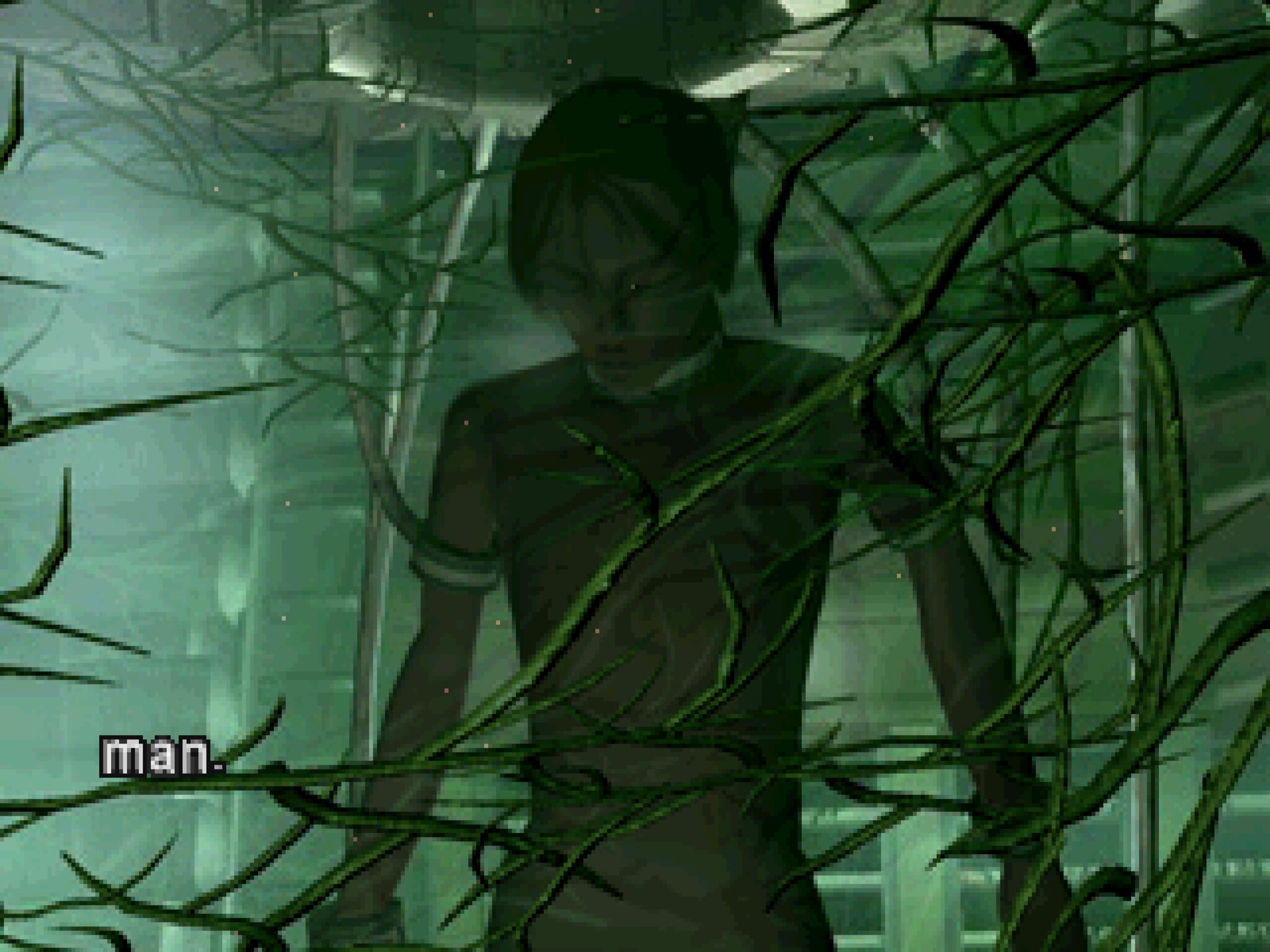
In addition to the occasional typo or awkward turn of grammar, this is another aspect that bothers me about both Dino Crisis English localizations: they made absolutely zero effort to evenly split up text over multiple screens. When one box fills up, it just spills over to the next one.
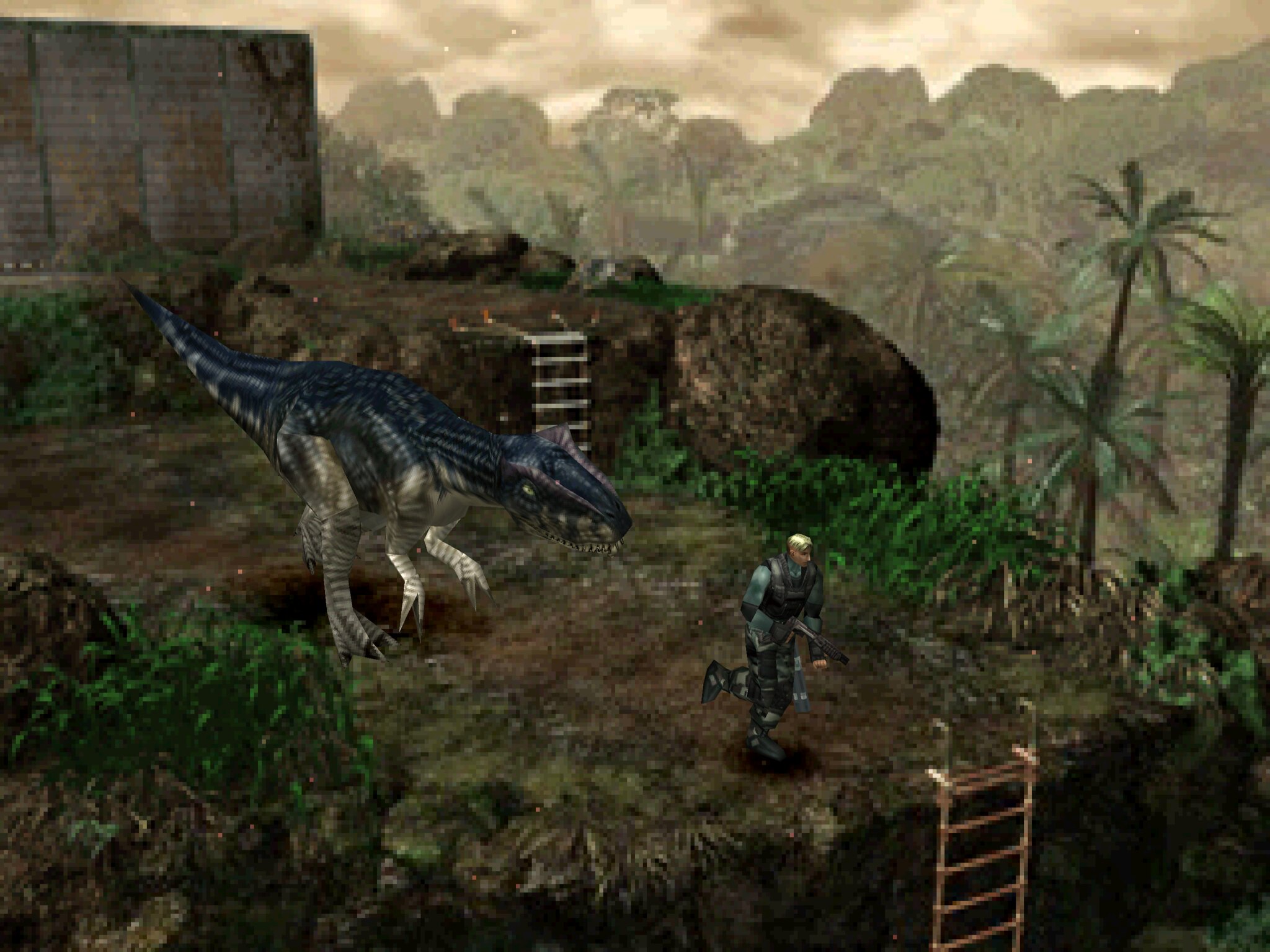
You can stop and fight this Allosaurus, but like the other scene, I never bothered to because it’s much faster to just run past.
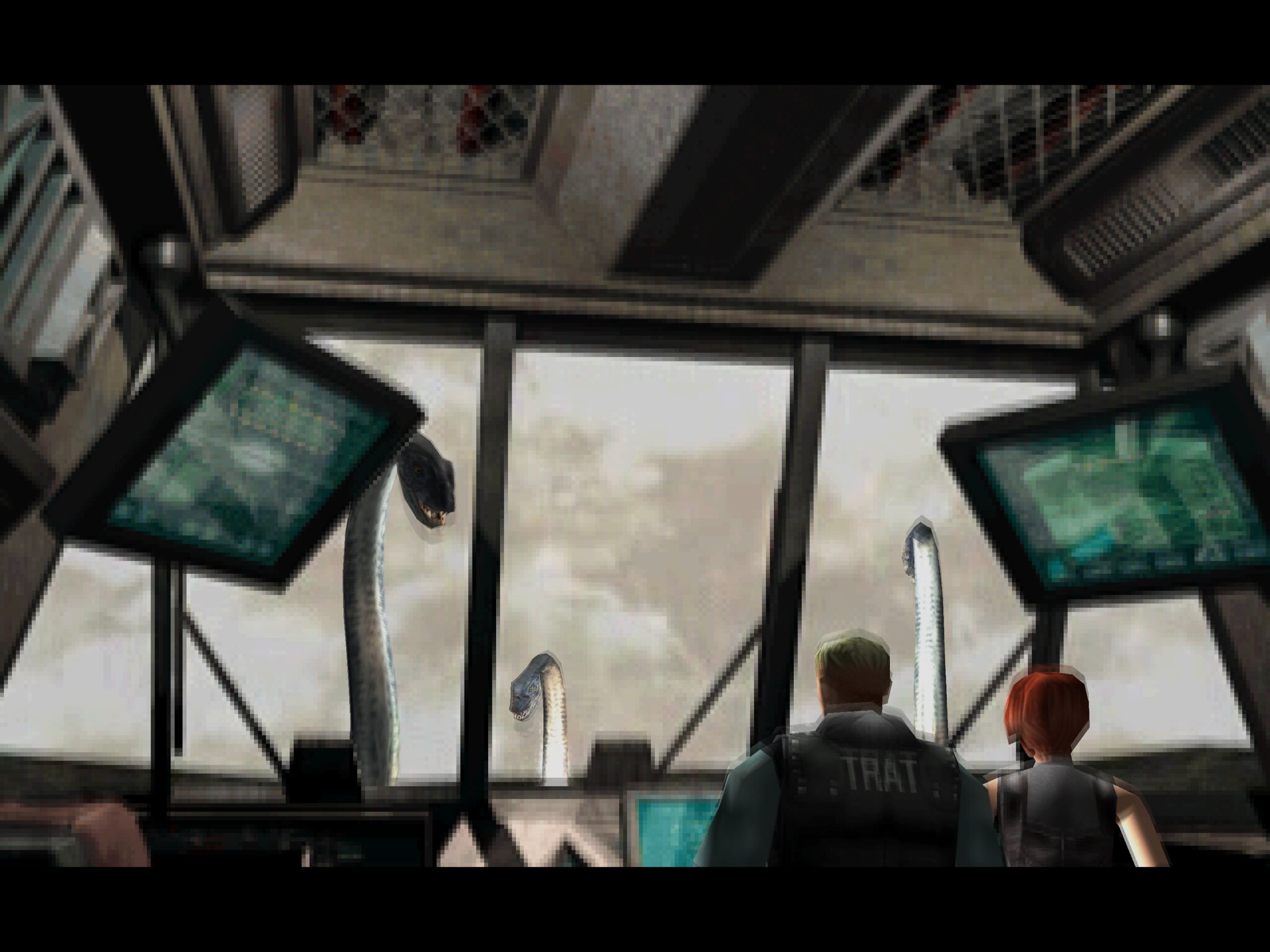
We escape back to our boat base, then get attacked by a group of Plesiosauruses. Despite the “saurus” suffix, Plesiosaurus was actually not technically a dinosaur.
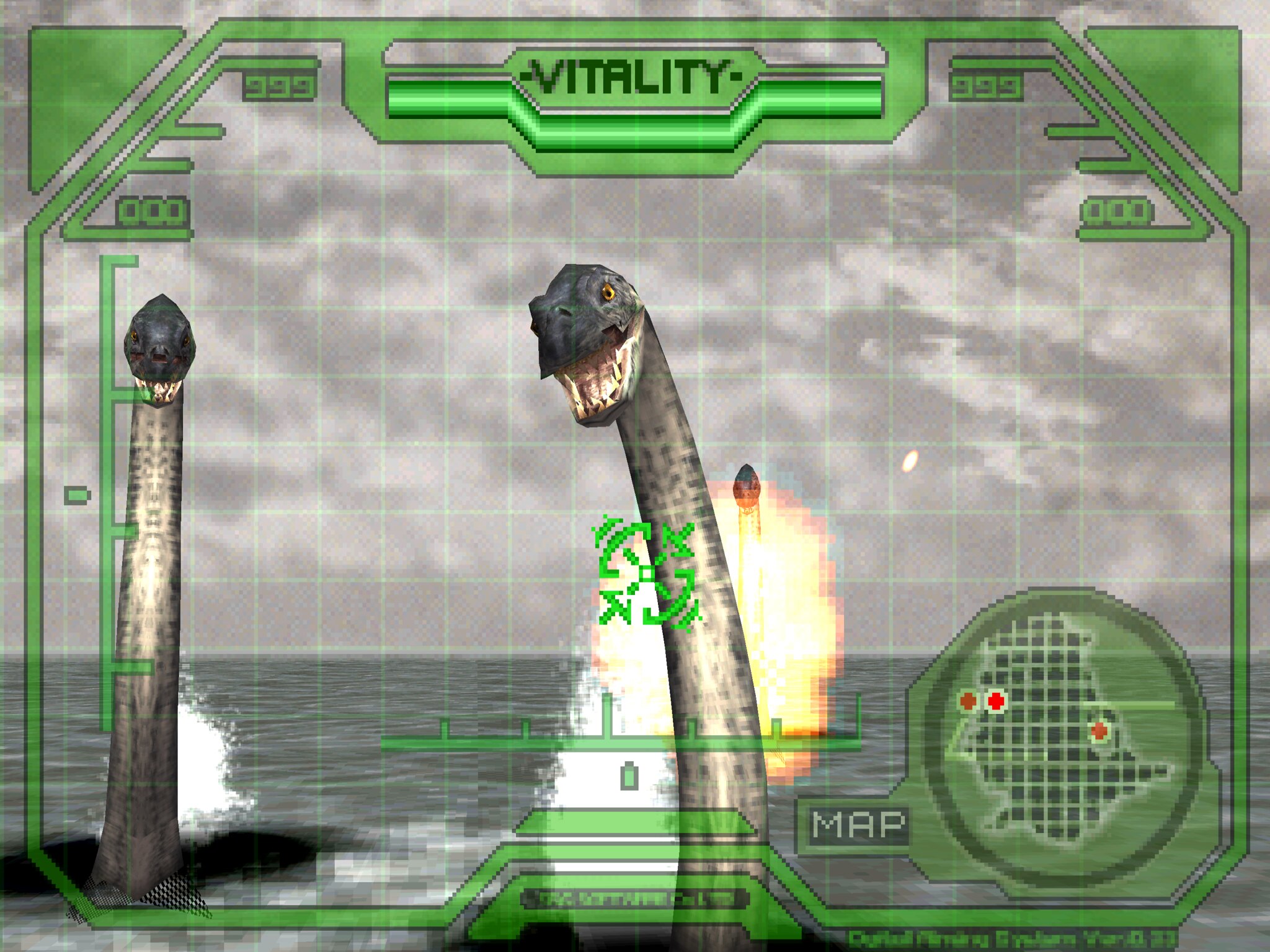
Dinosaur or not, we’re under attack! This is a really fun first-person-shooter sequence where we are hanging off the back of the boat with a machine gun, shooting the dinos that are chasing us.
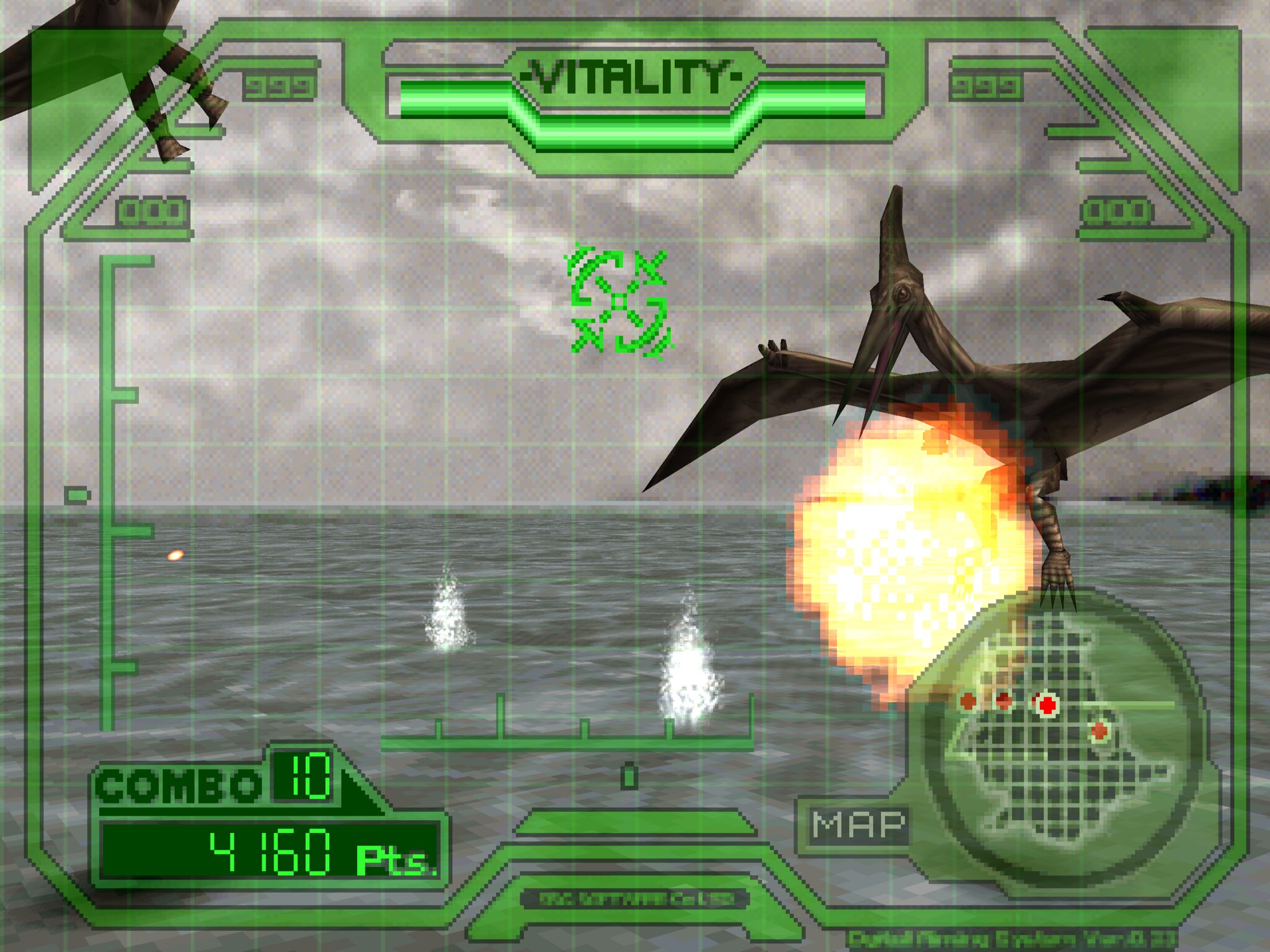
Actually, Pteranodons are technically not dinosaurs either. Yet another useless fact that you probably shouldn’t bring up at a party.
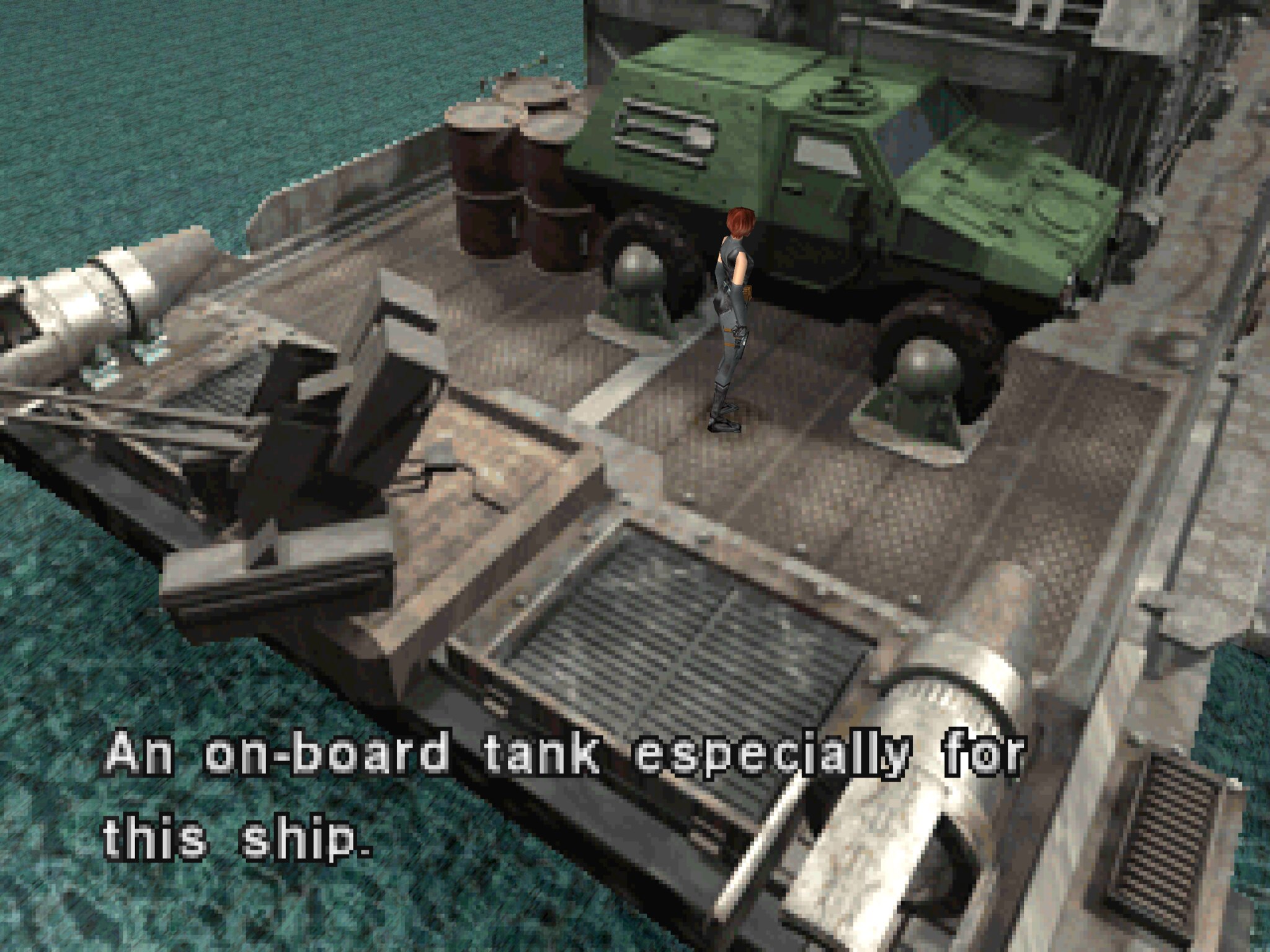
When we arrive at our next location, there’s a different camera angle for when you walk out on deck. Just a nice simple touch that adds variety.
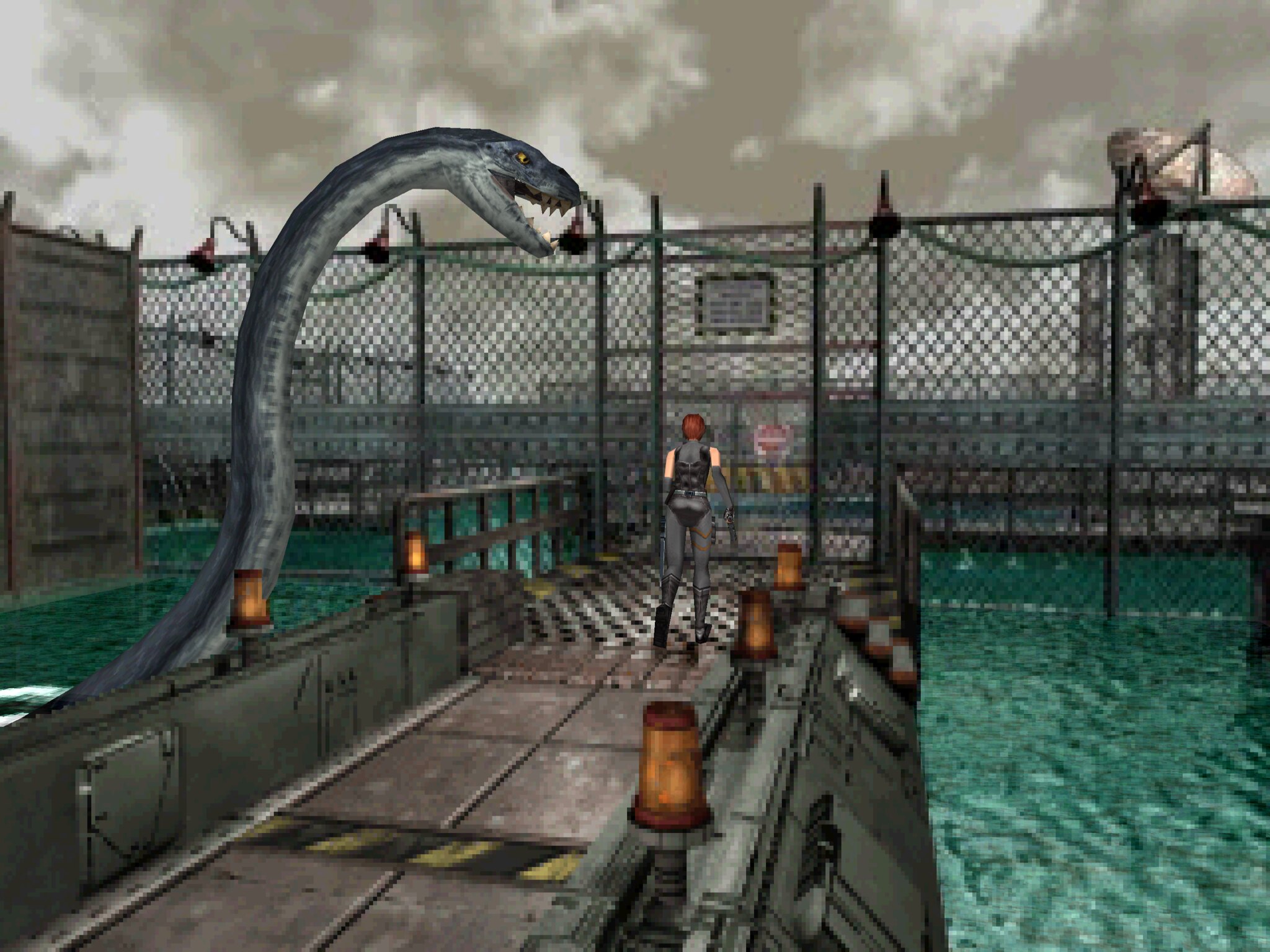
We’re not quite done with the Plesiosauruses yet! There’s a bit of a gauntlet you have to navigate past to get into the main area.
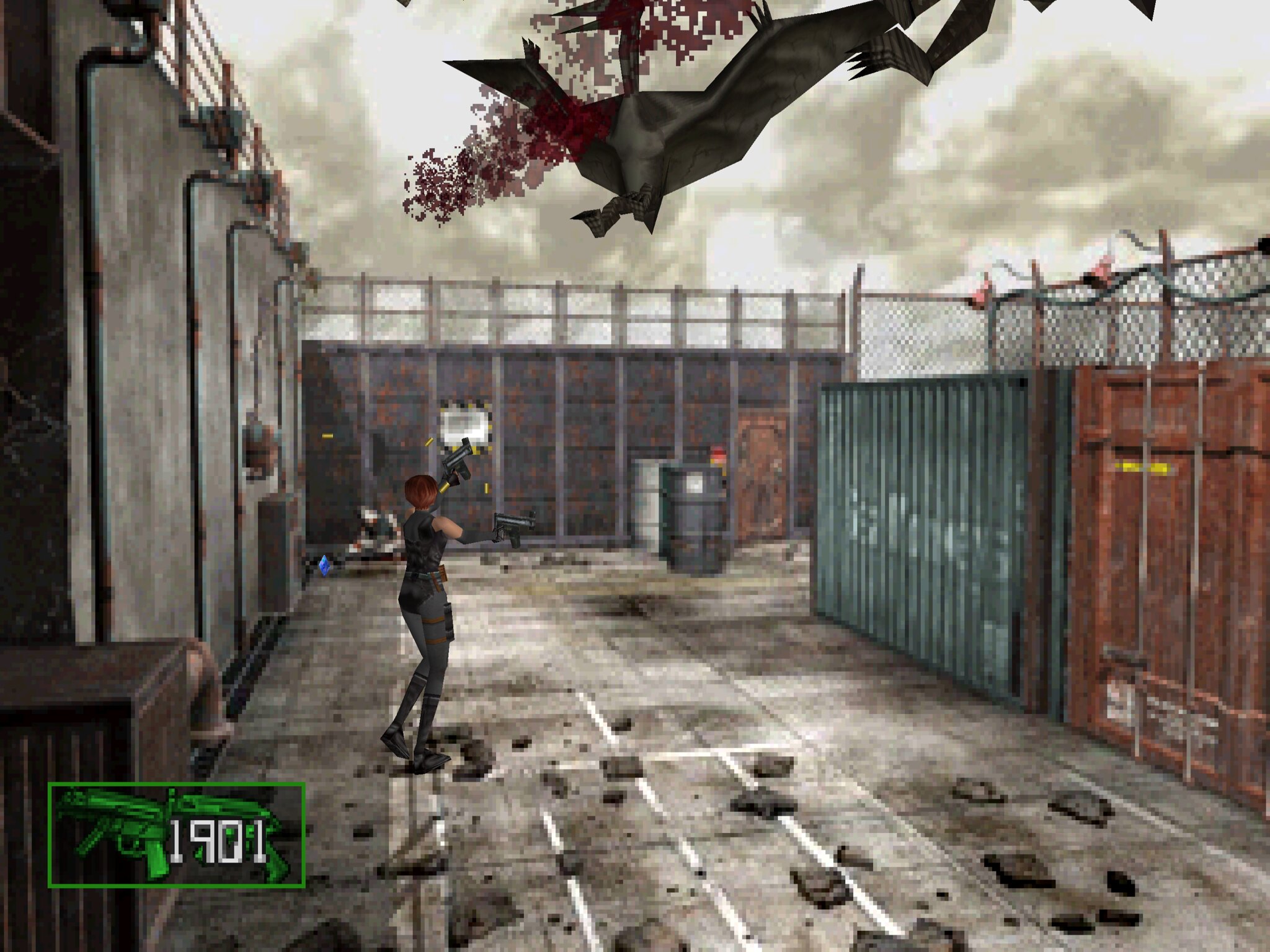
Next up is a very janky section of this game that is technically avoidable. The blob of pixels in the background behind Regina is a dead soldier; on him you find a set of notes that mention leaving the key for this facility “somewhere near the spring in the jungle”. So now that we’ve gotten to this new area, the key to open the front door is…back where we just came from. Sigh.
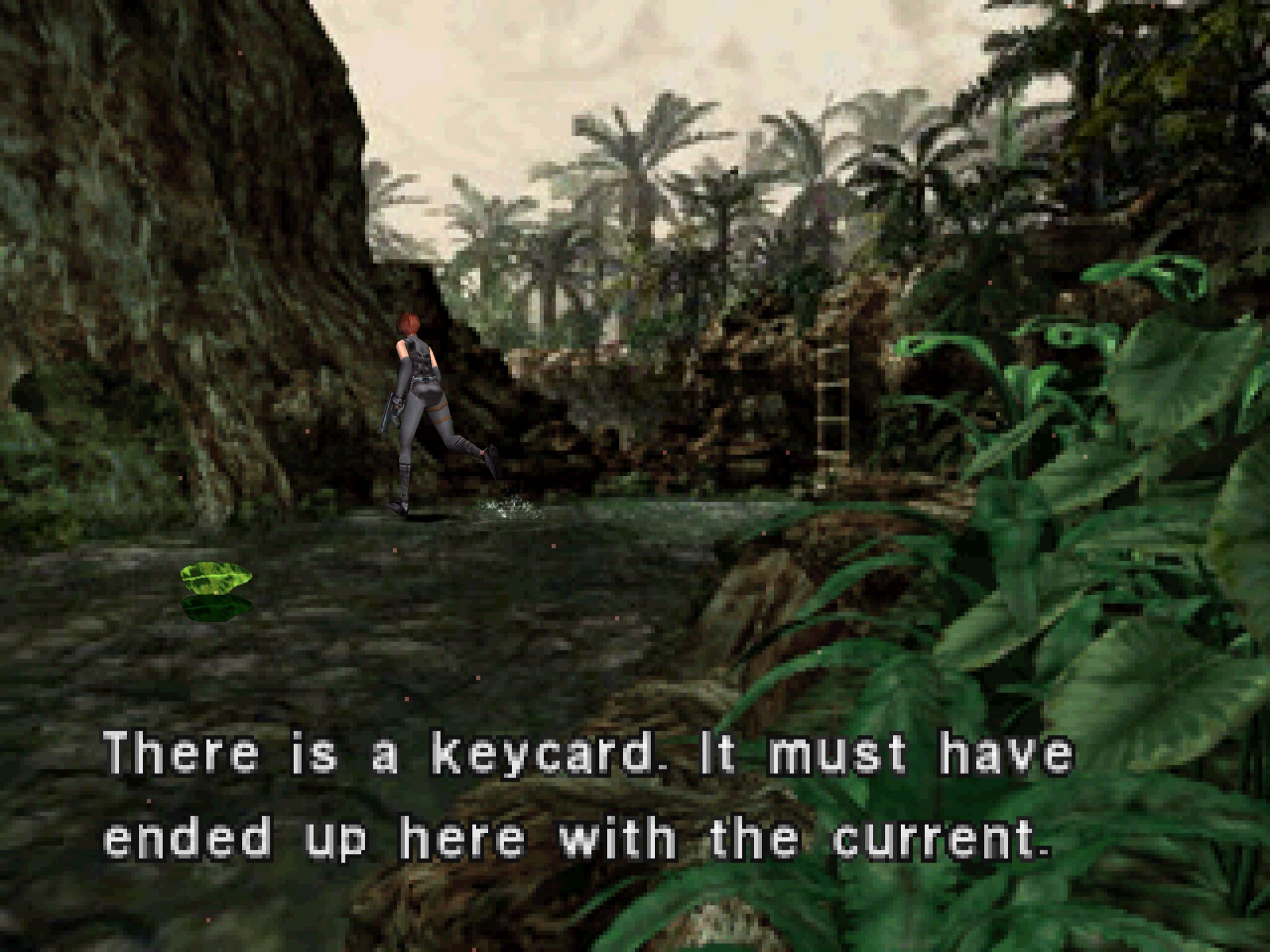
So we have to backtrack past the Plesiosaurus gauntlet and leave that area, get back on the boat, go to the jungle, and navigate back here to grab the keycard.
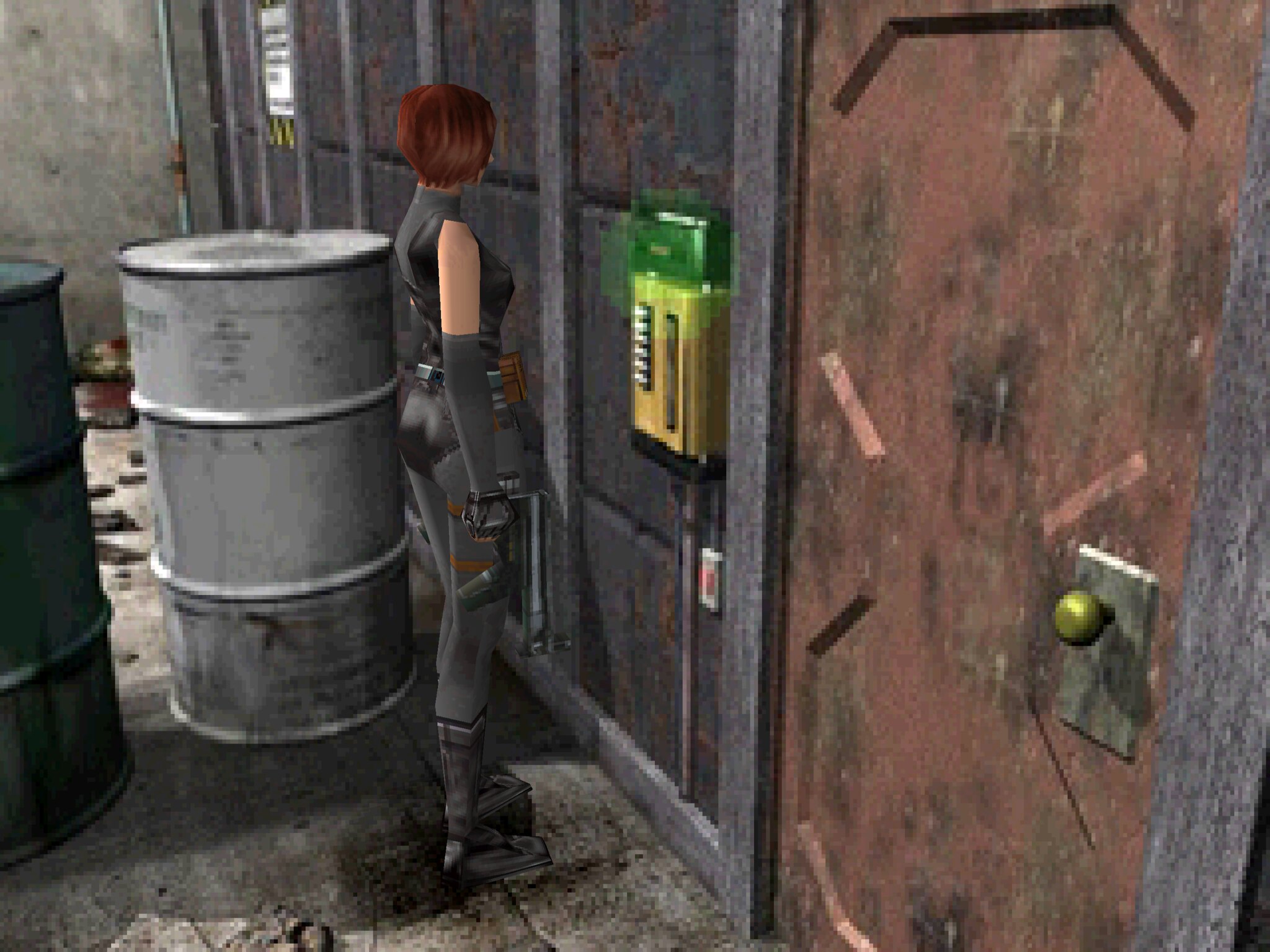
And then repeat this journey in reverse so we can now unlock the door that was five feet from where we found the soldier in the first place. Sigh. Backtracking in the Resident Evil games was always a significant component, but this one is pretty egregious. Luckily, the cardkey apparently shows up in the stream before you leave the jungle, so according to a guide I read, you can actually pick it up before you leave the first time and skip the redundant return trip.
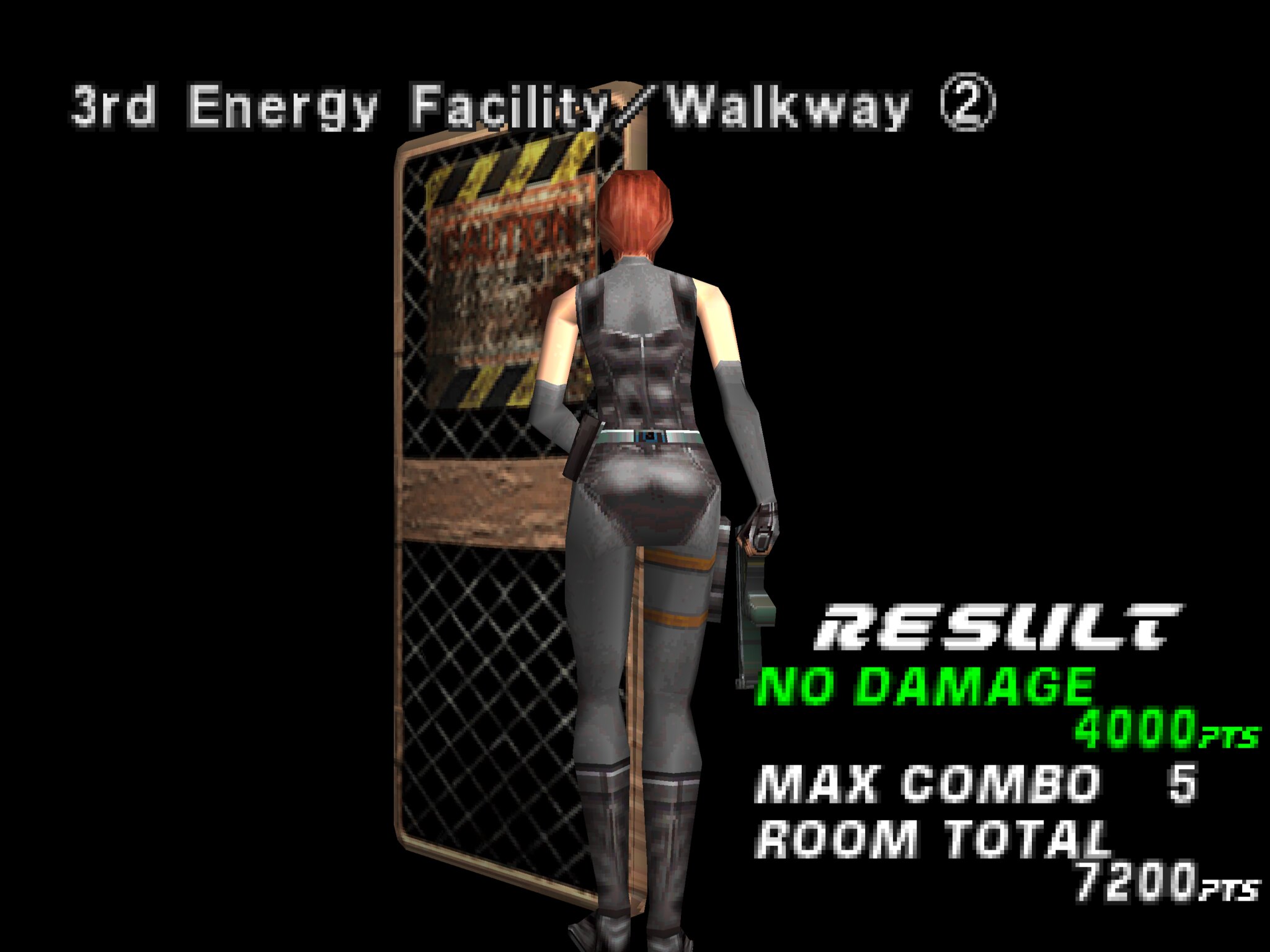
In a testament to how easy it is to both take damage and restore your health, they give a significant points bonus if you can clear a room without taking any damage.
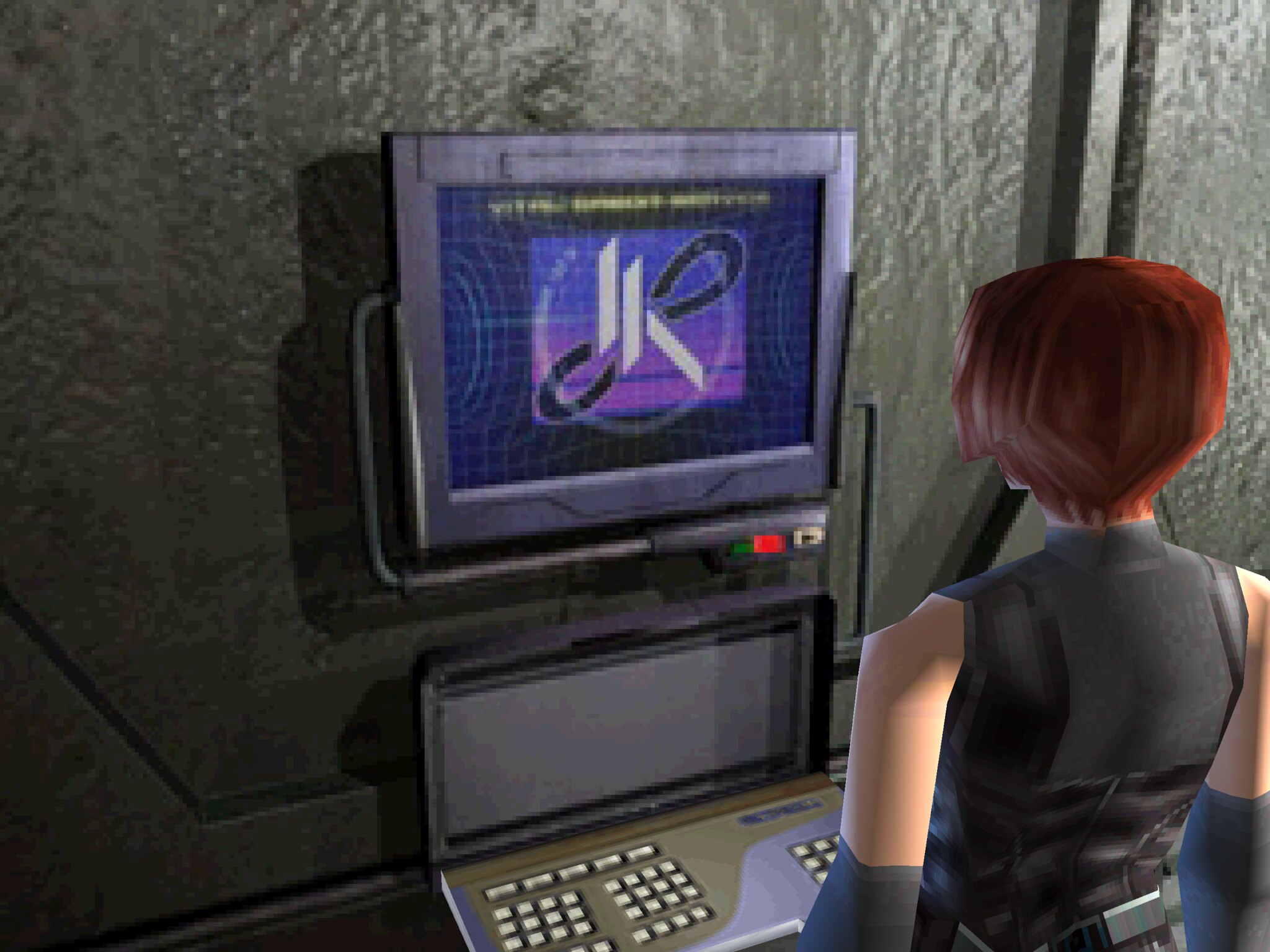
One of my favorite things about science fiction in general is the portrayal of future technology. This computer in the wall looks cool, but also very unergonomic.
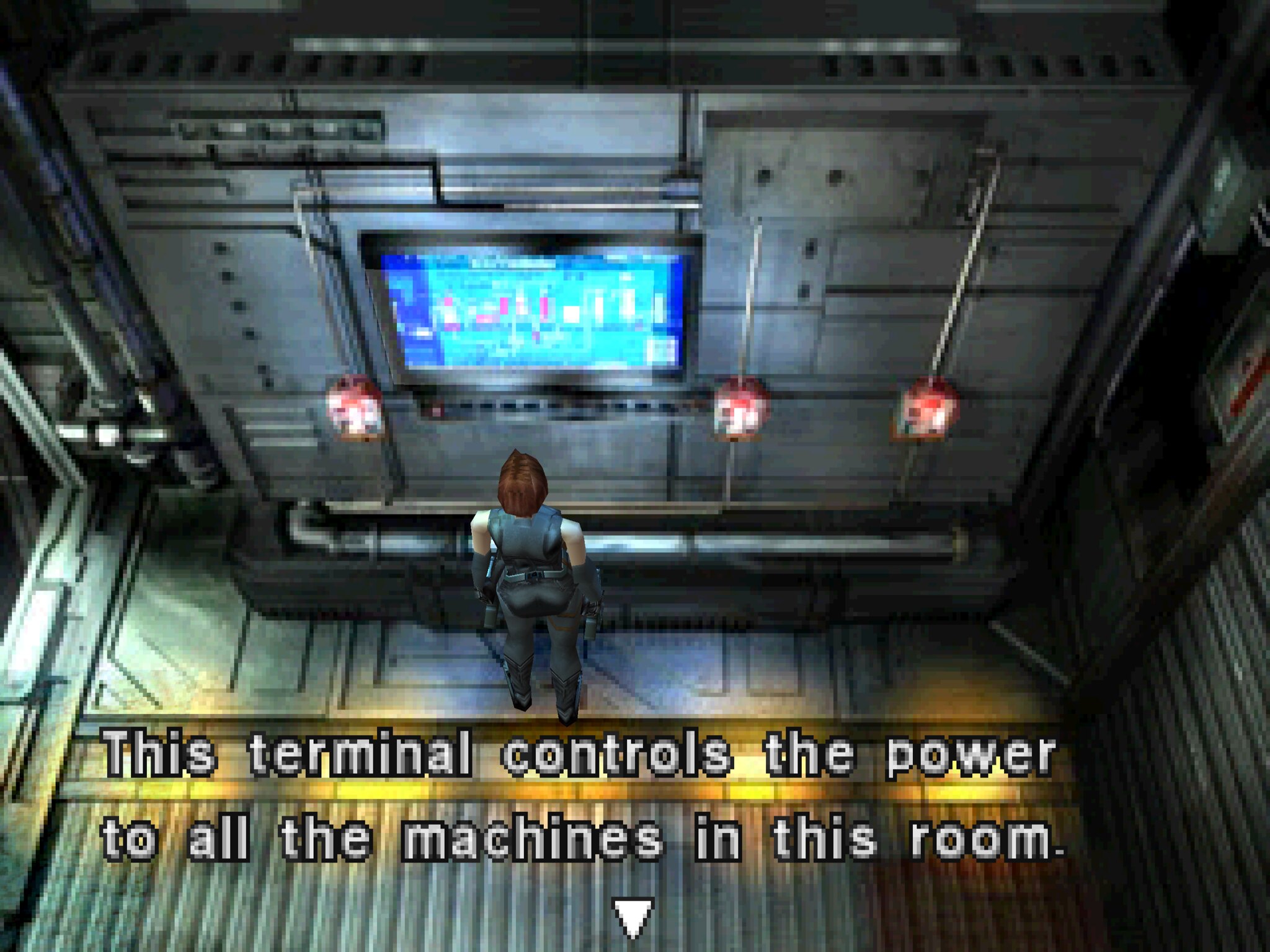
This is a fun little mini-game. It doesn’t make any logical sense, but your belief is fully suspended at this point so let’s go with it. Apparently, initializing the program causes the warning lamps to turn red, which you can fix by smacking them with your stungun. They’ll go green, but then they’ll randomly go red again, so you need to “reset” the fuse with another smack. Anyway, it’s an entertaining version of whack-a-mole and a welcome addition.
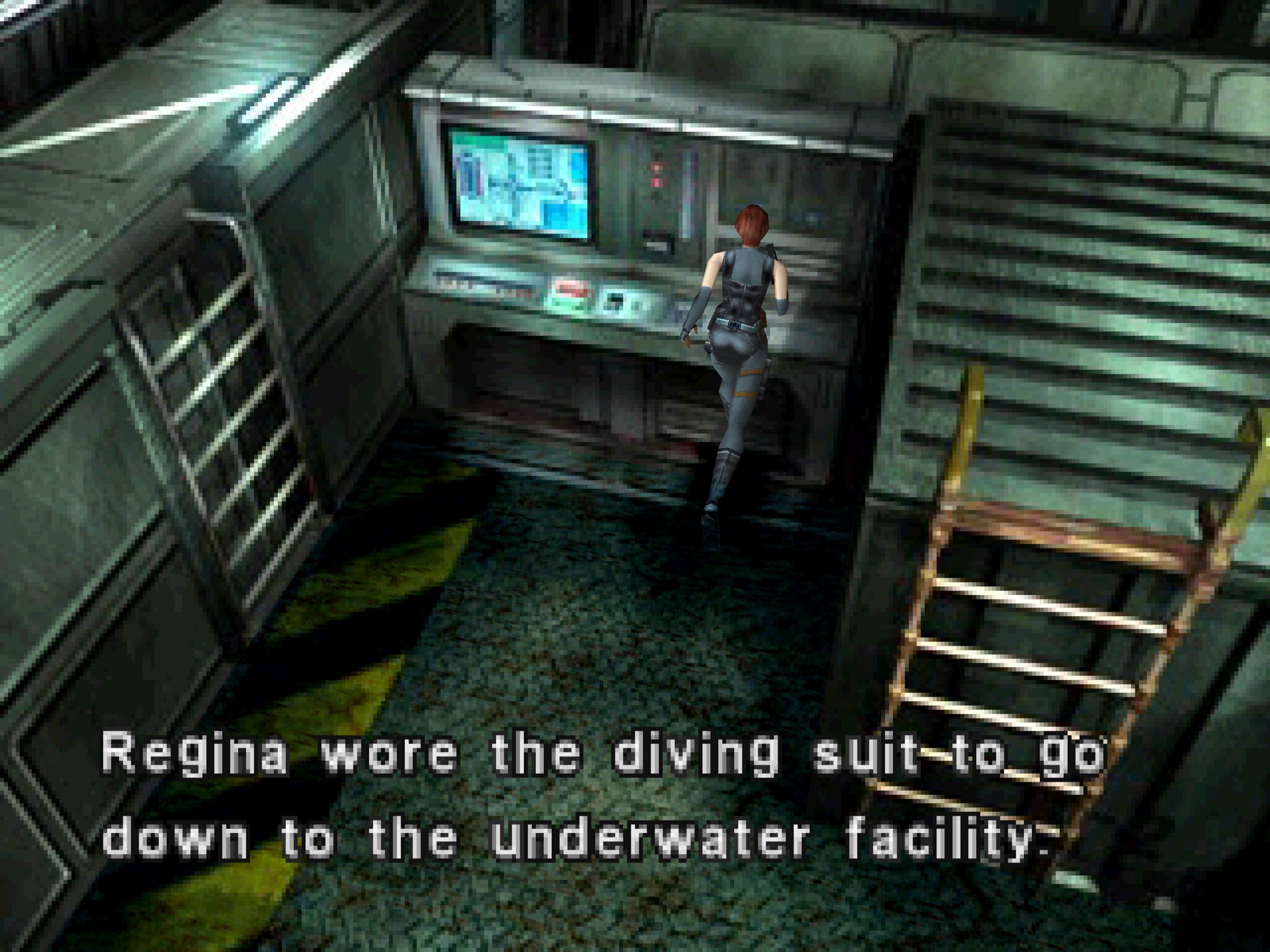
I’m not sure if this also a translation hiccup, but this feels like a [SCENE MISSING] type of card. When you select the diving suit, you get a line of text and then it immediately transfers to…
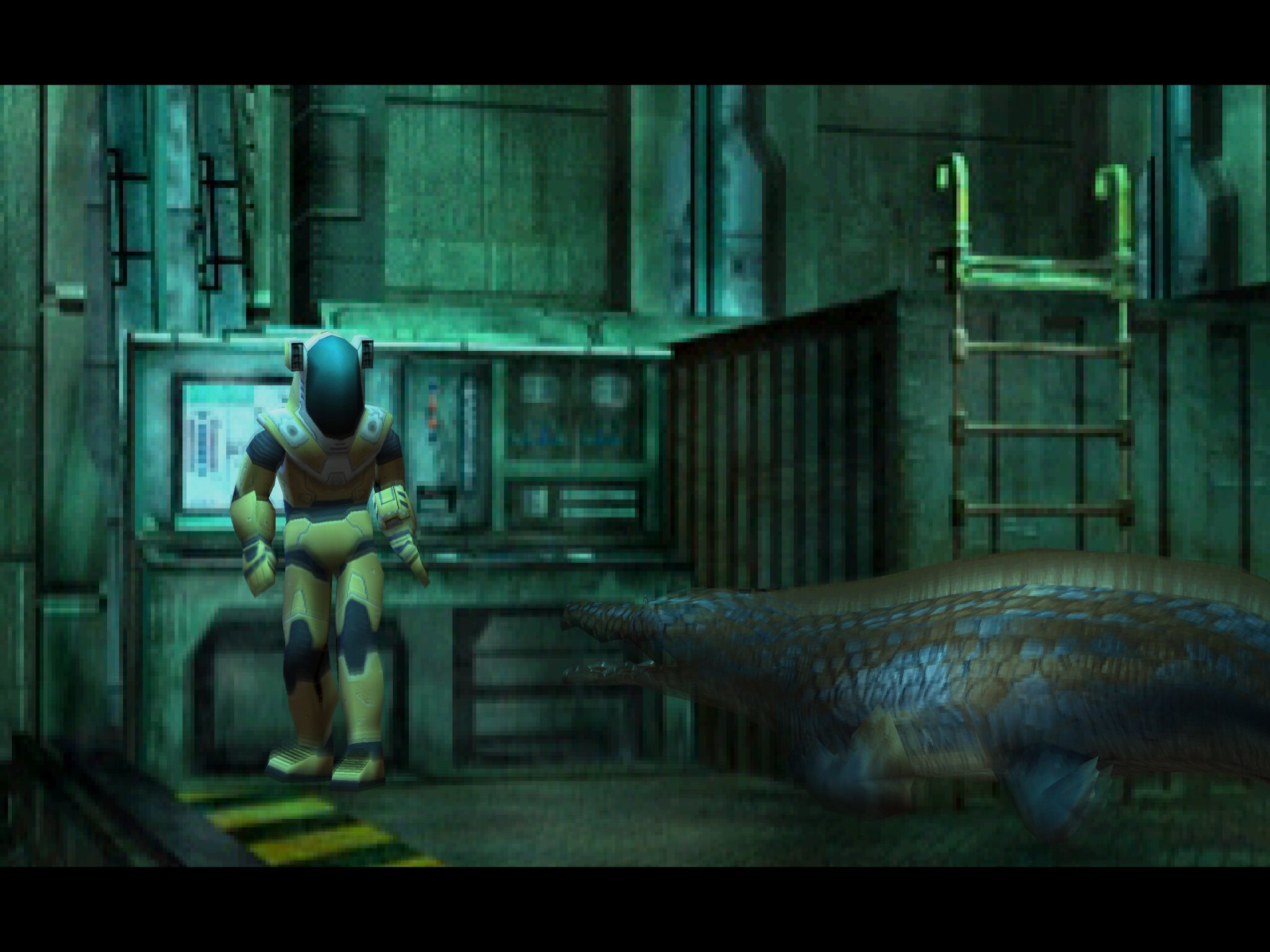
…a cutscene where you’re underwater. With more motion blur. Which to me is even more terrifying than that aquatic monster.
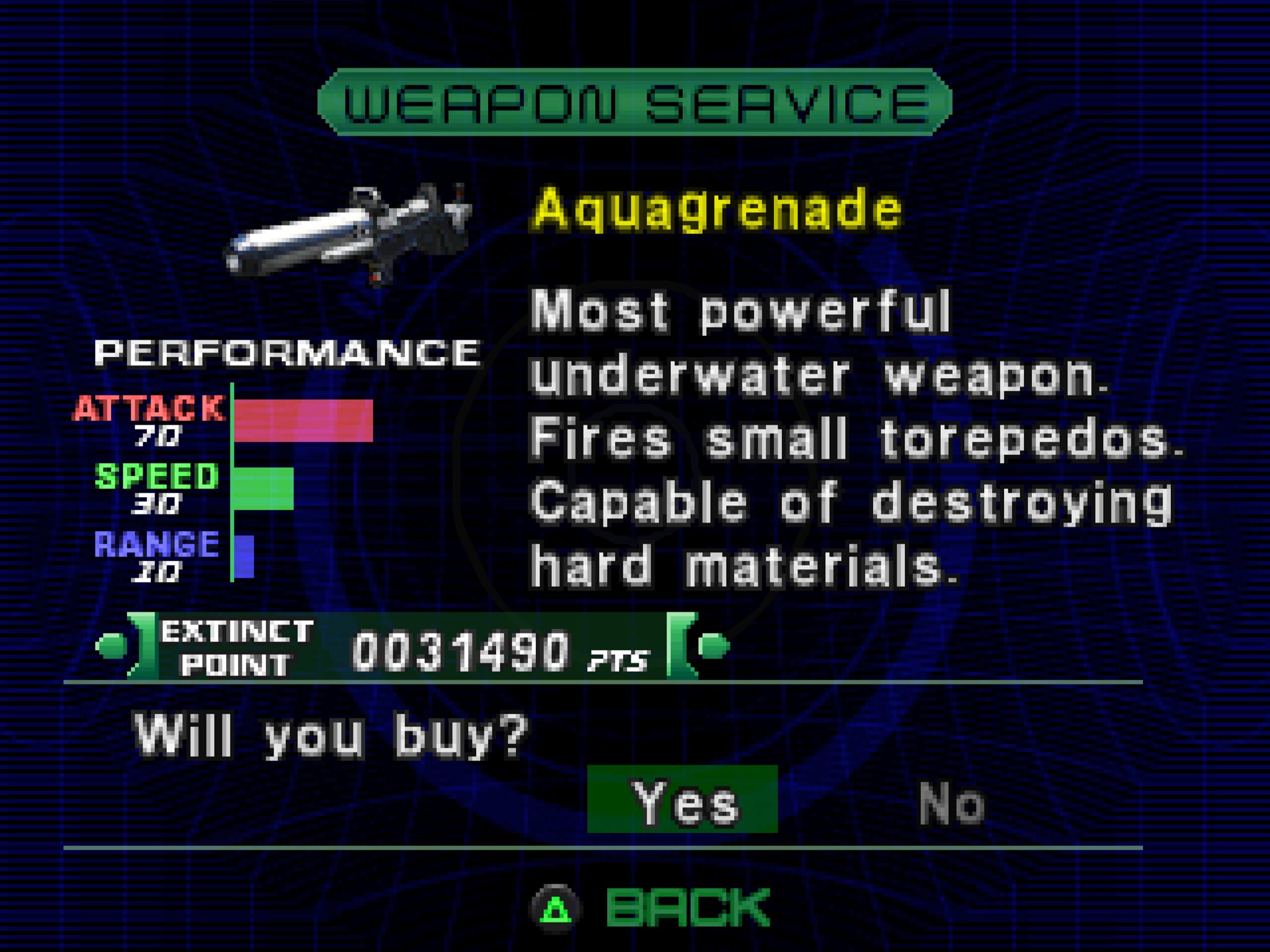
“Capable of destroying hard materials”. I like how there’s a hint to its purpose even before you buy it.
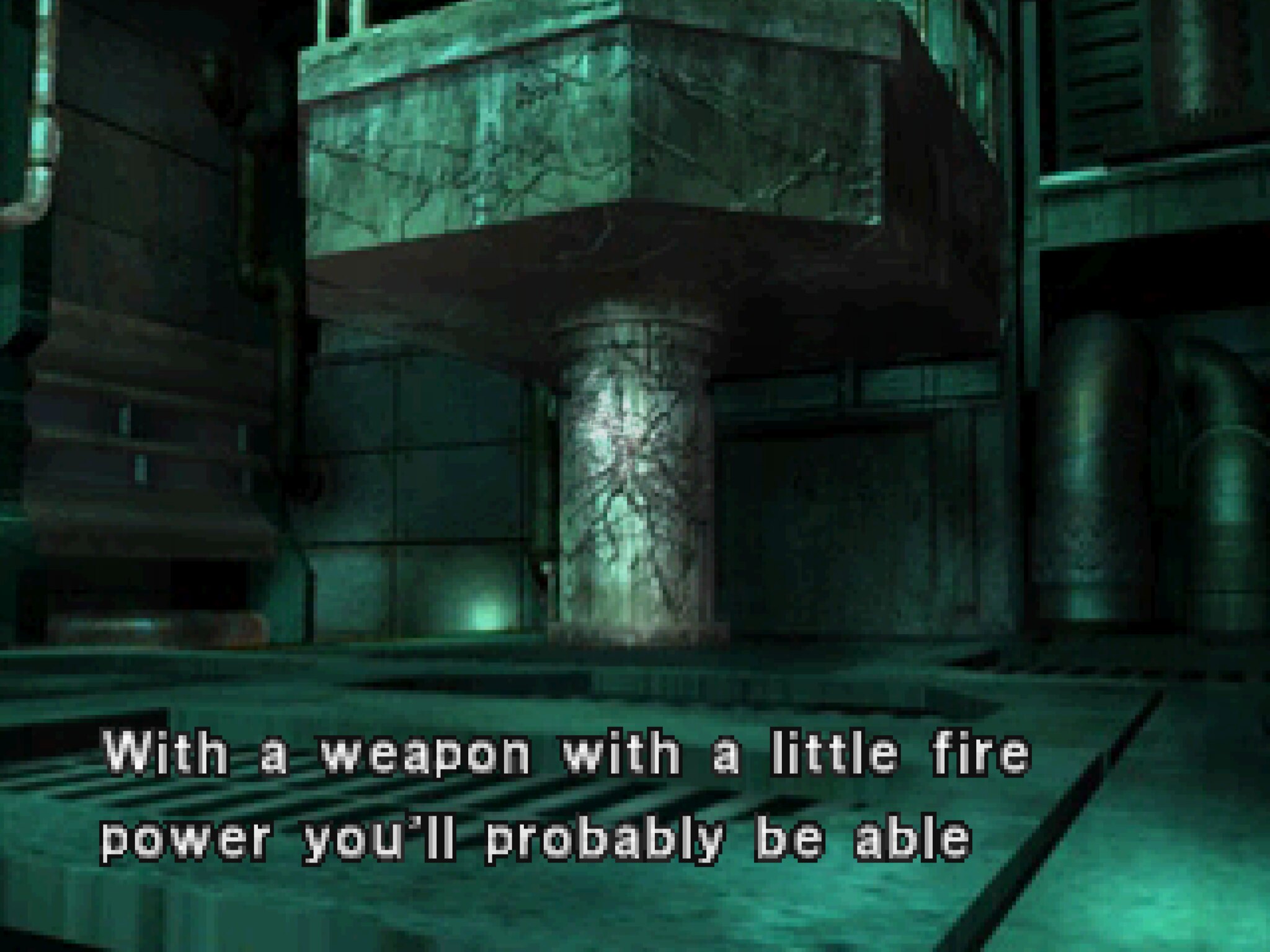
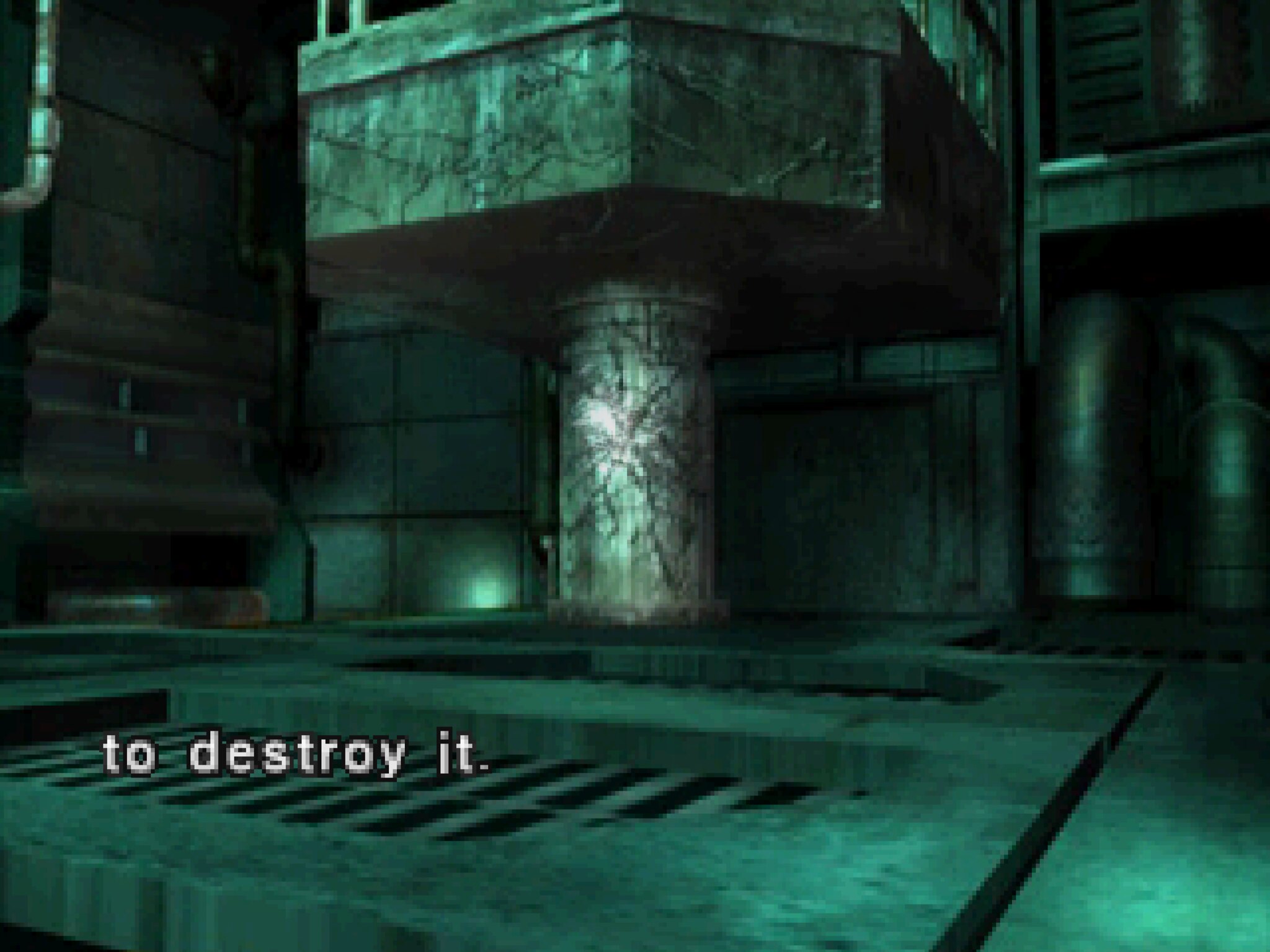
And after a short bit of exploring, we’ve found the key spot to use the mighty Aquagrenade.
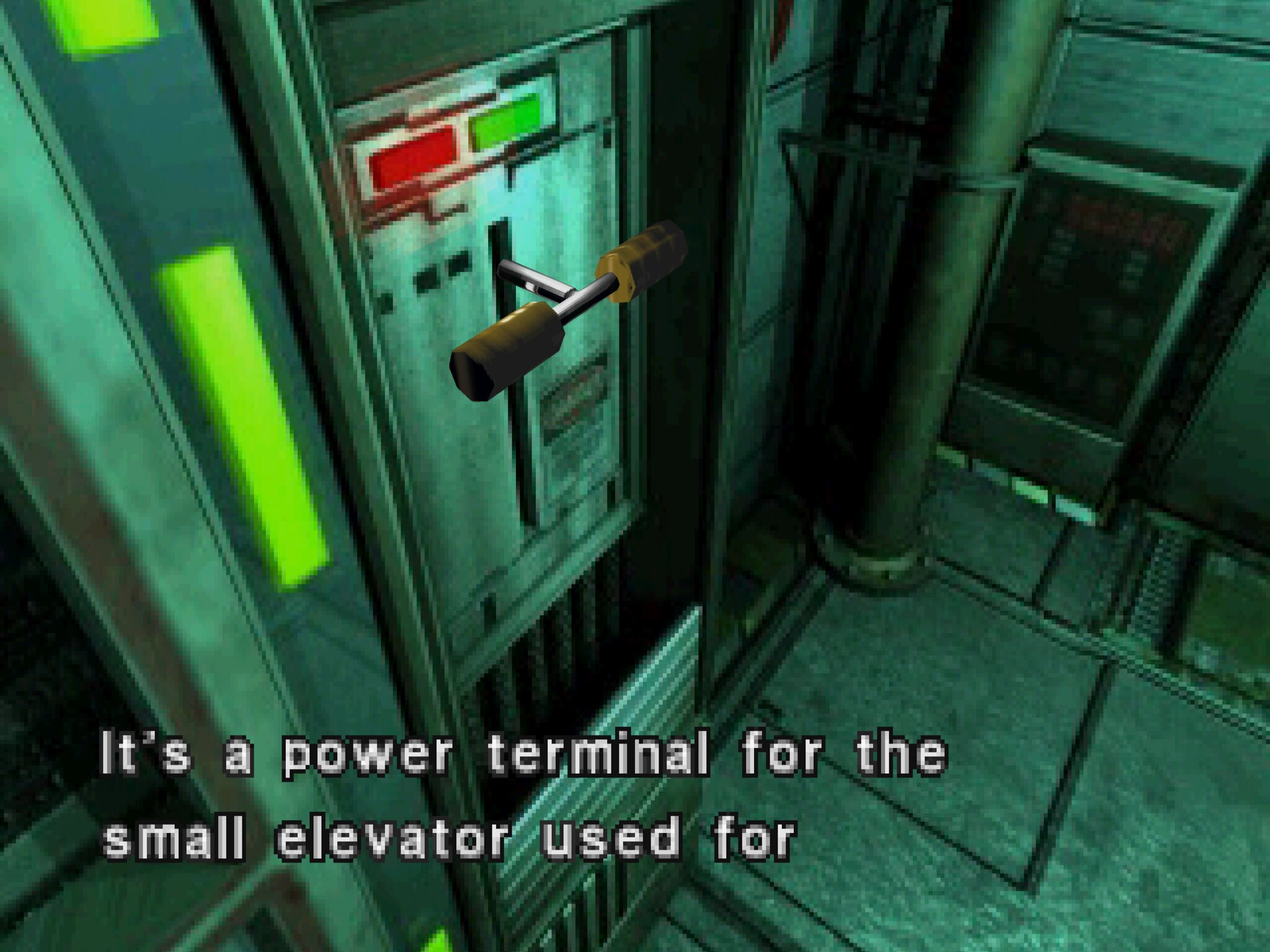
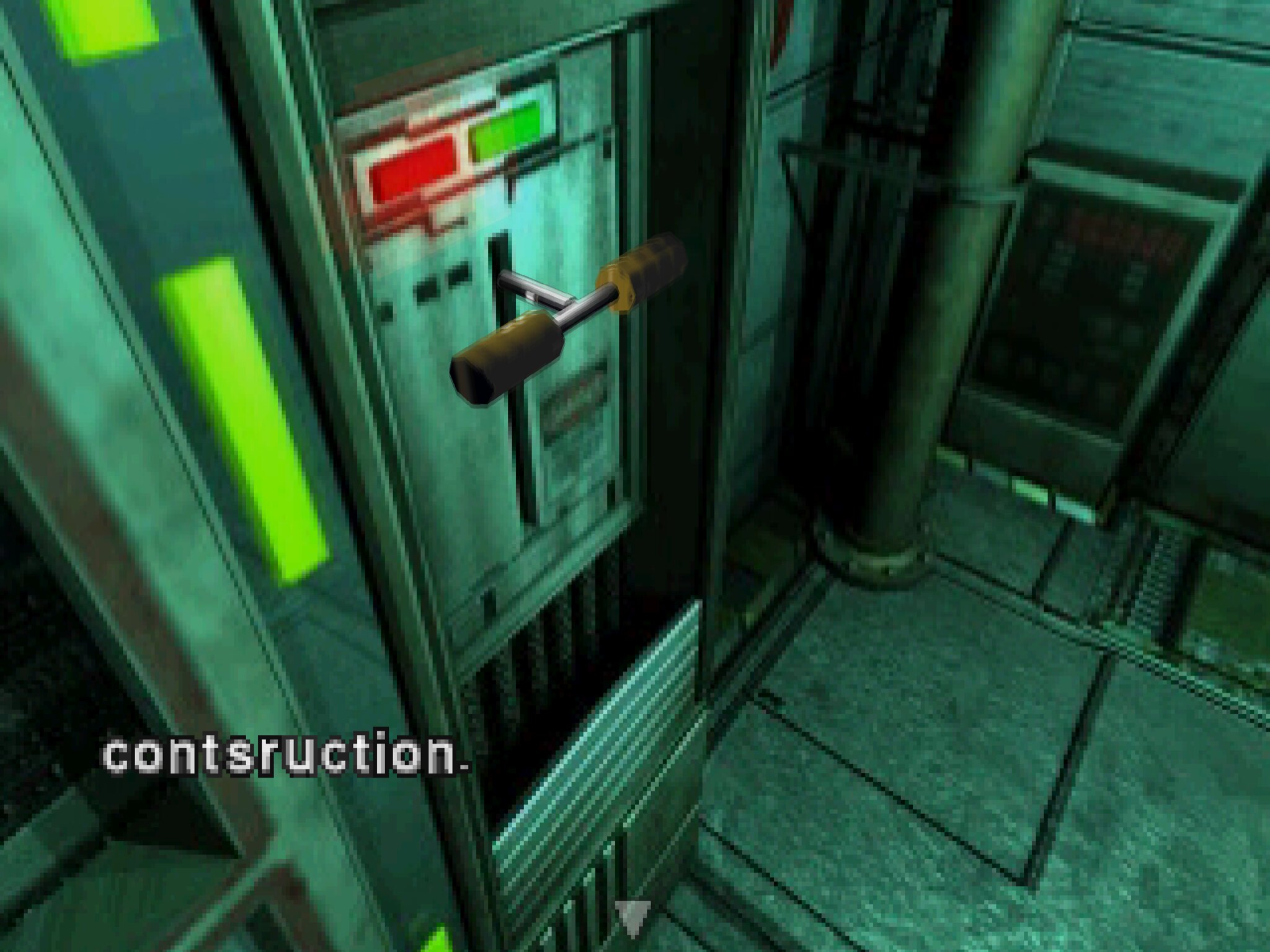
Another one with an entire card dedicated to just one word, and it happens to be a typo as well. Oops!
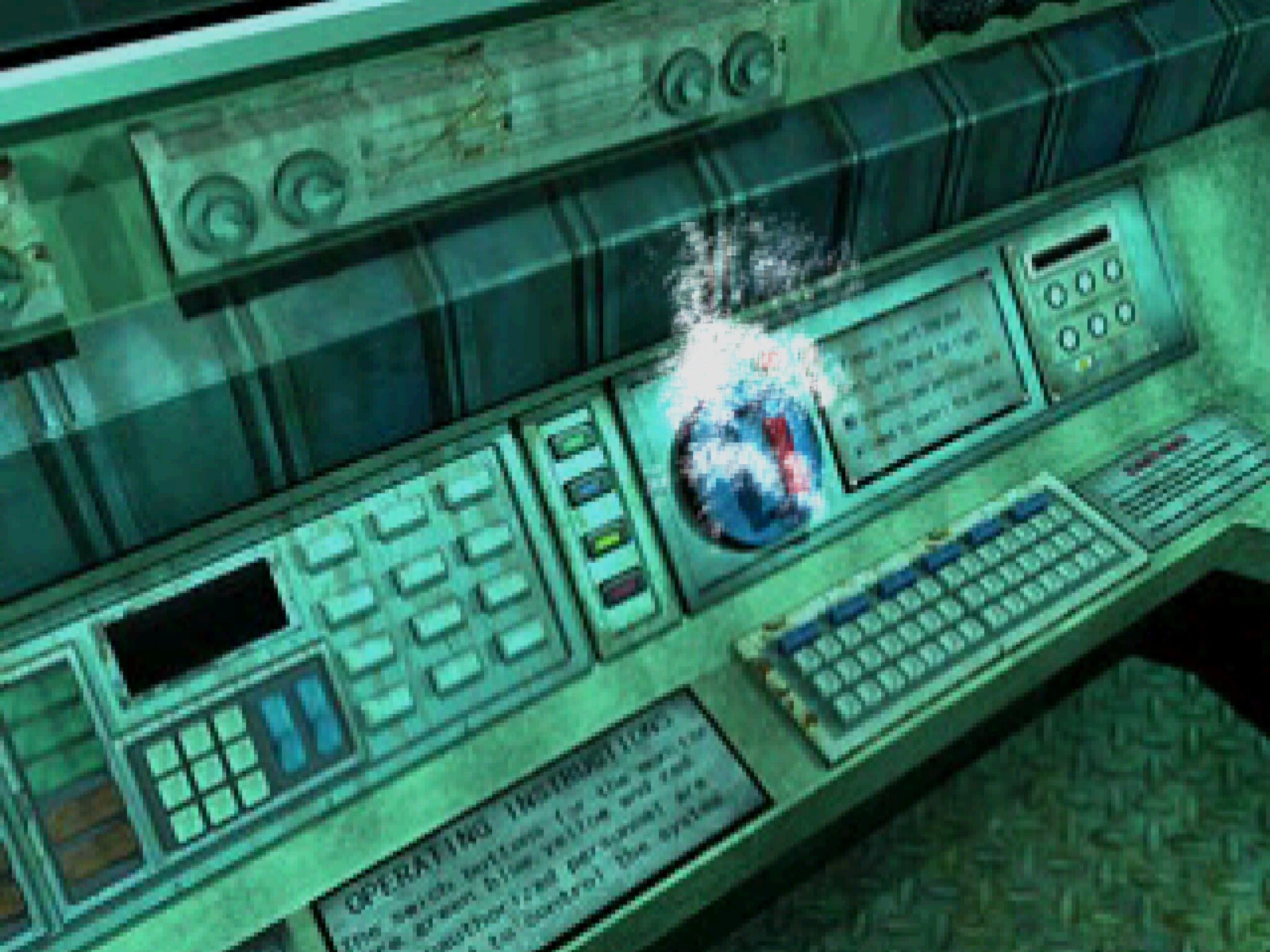
So all of these computers and things still work completely underwater? This “Underwater Facility” is another odd environment. Remember to keep that disbelief suspended if you want to enjoy this game.
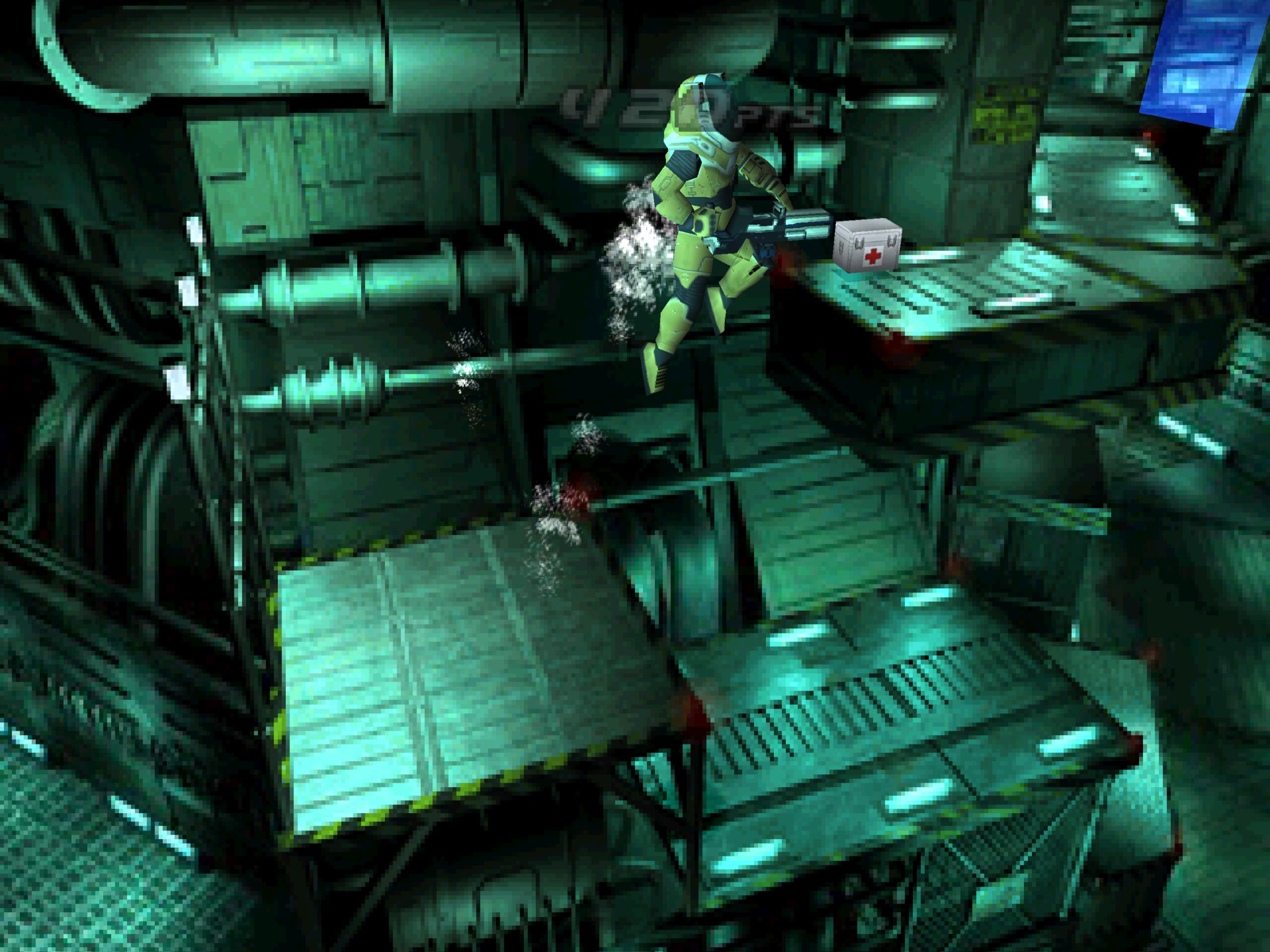
More gameplay variety: You can jump underwater, and there is even a short platforming section.
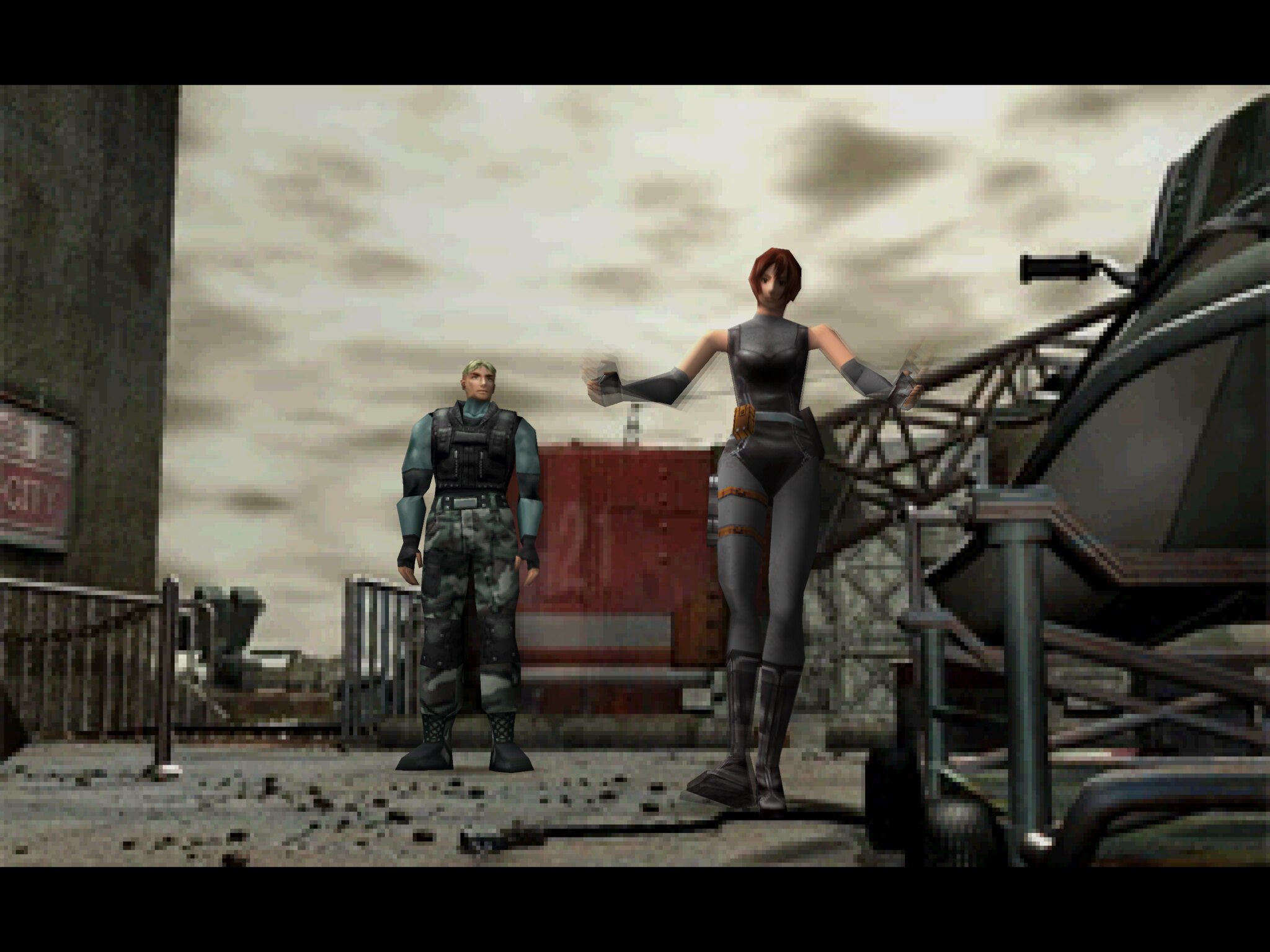
Like the majority of games from this era, there are no subtitles. I really wish it did, as it would be very helpful to understand all the jargon and keep up with the bizarre exposition. And it would also be nice to know what Regina was saying to accompany the handwaving in this screenshot.
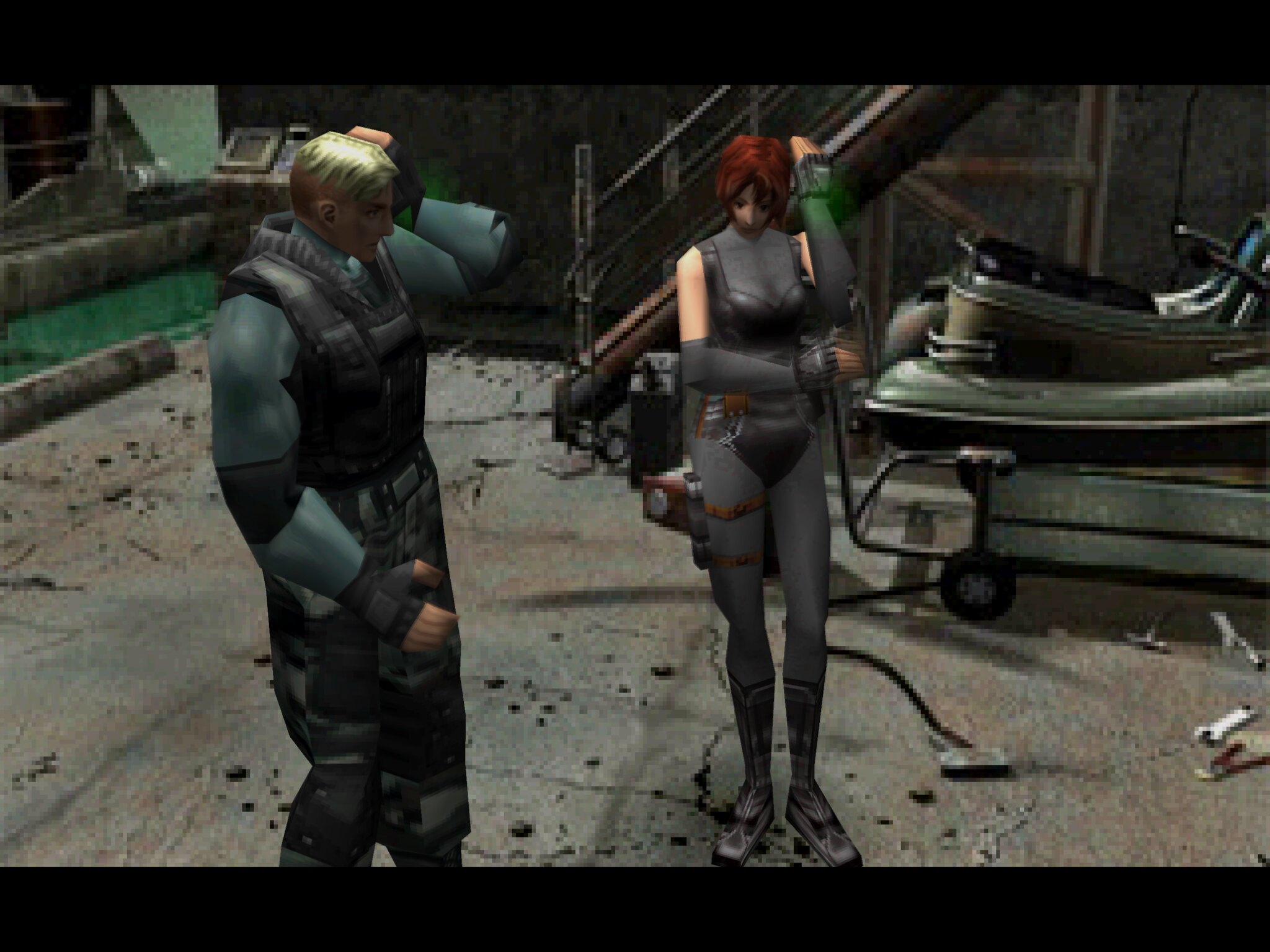
Conference calls are a bit awkward with the watch radios.
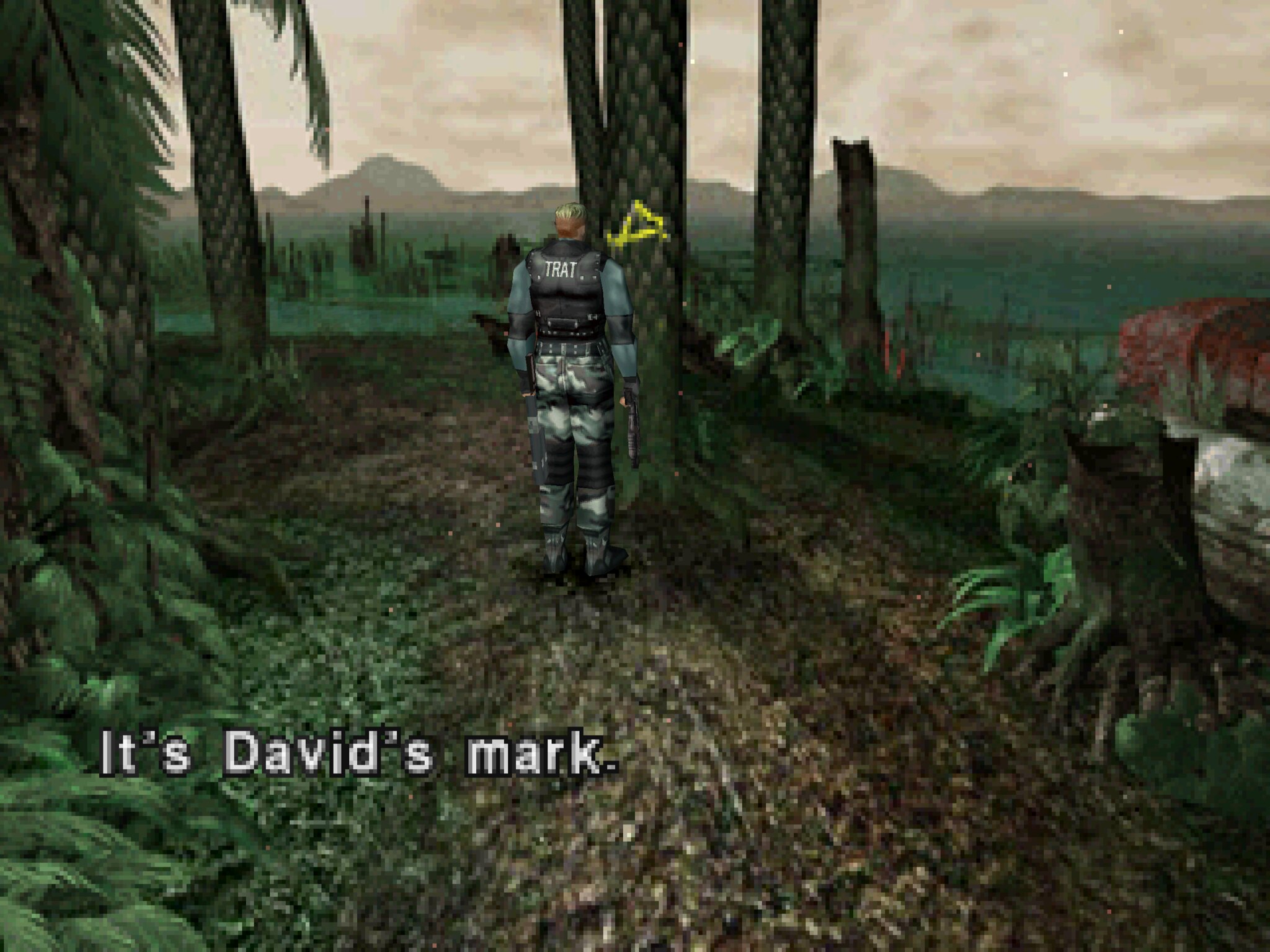
It’s a good sign, literally. Our boy David said he’d paint yellow triangles to help us find the way.
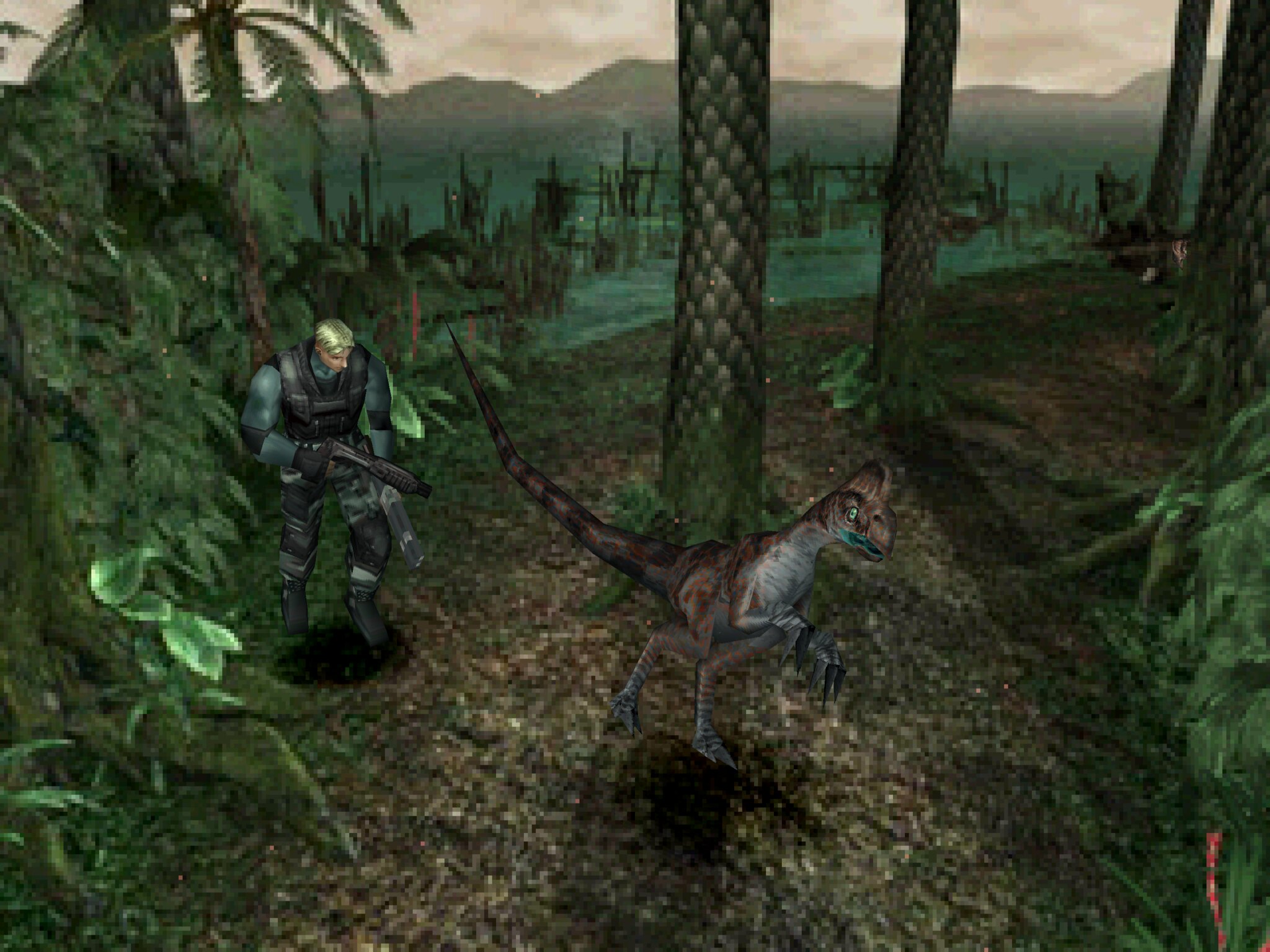
Get back here you little rascal!
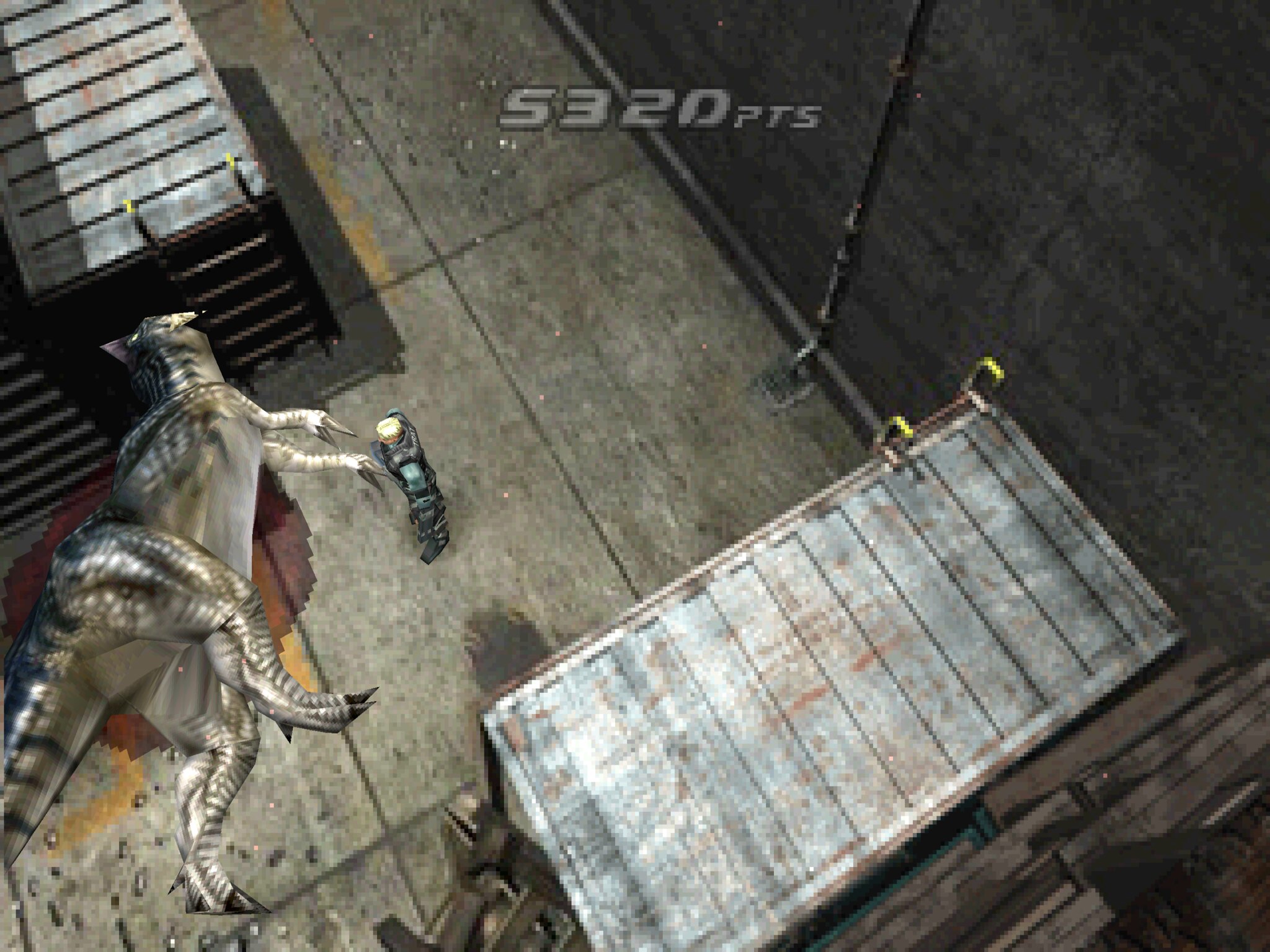
Killing the Allosaurus takes some time, but it also gets you a good points haul, so I decided to finally kill one.
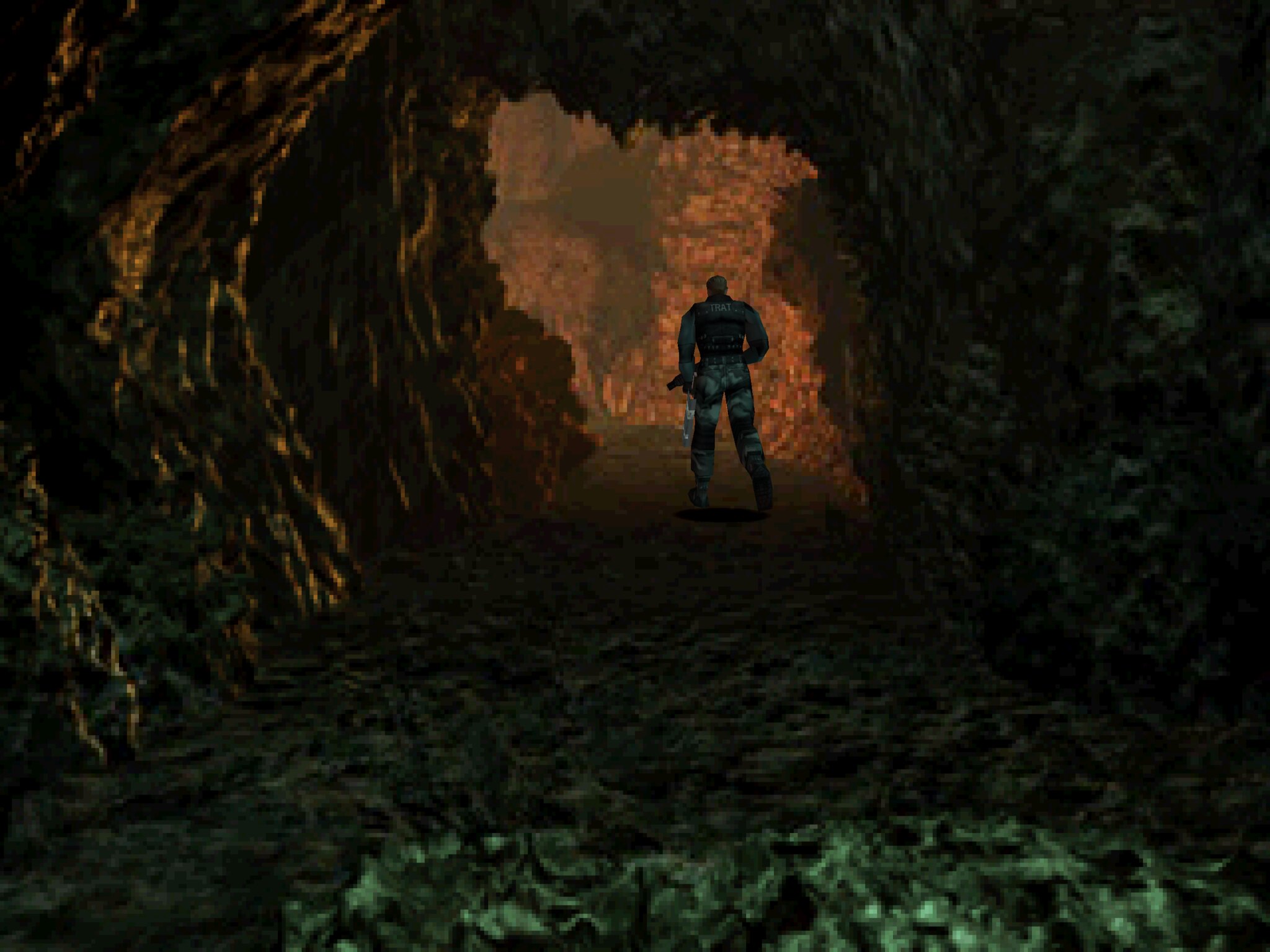
This game is right up there with all the best pre-rendered backgrounds on the PS1.
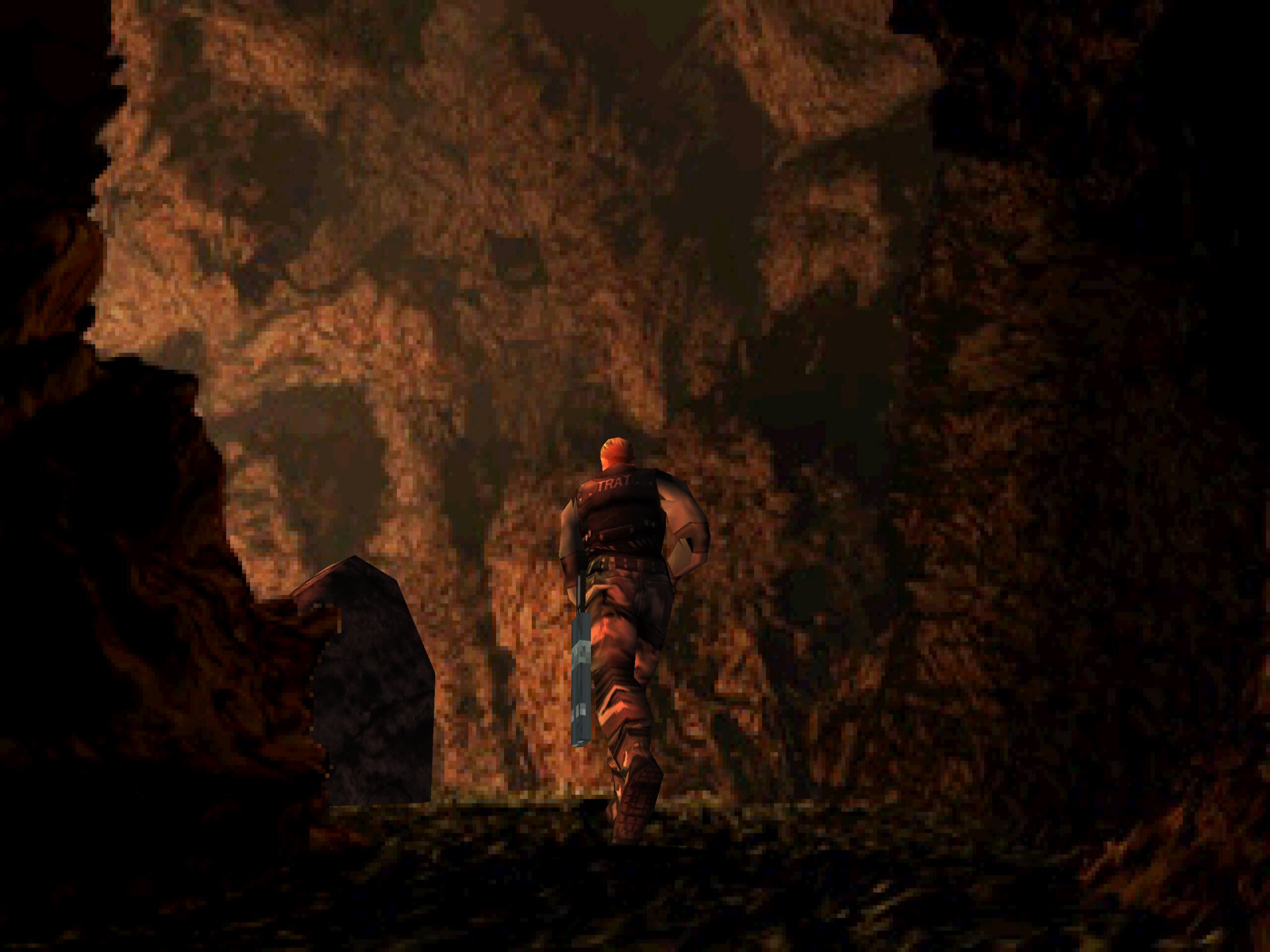
Not only does the pre-rendered lighting look awesome, but PS1 realtime lighting is so simple and effective.
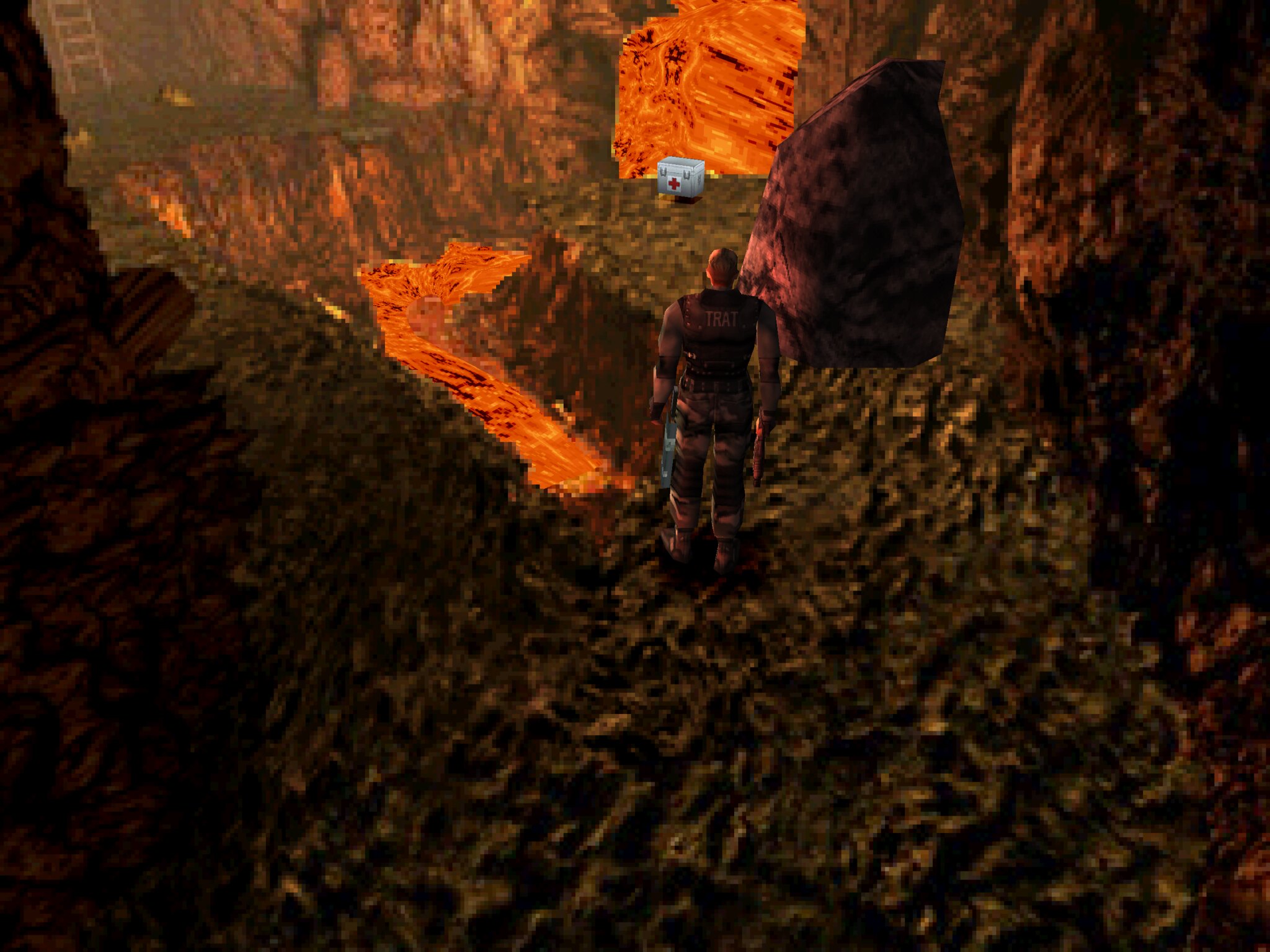
I loved the environment inside this volcano. The variety of different biomes helps keep the game fresh, and marks a big change from the single location of the first one.
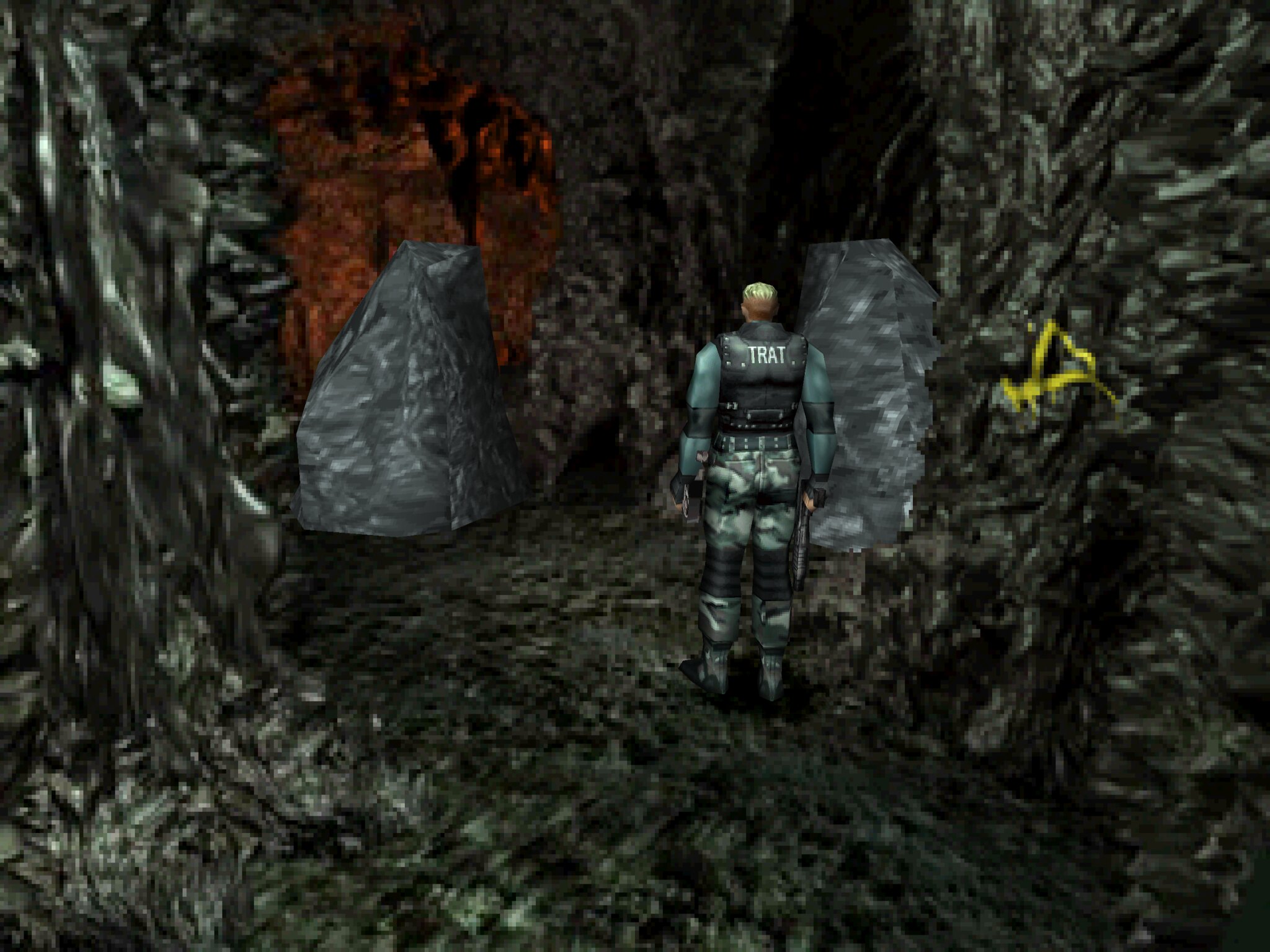
Yellow triangle, big rocks.
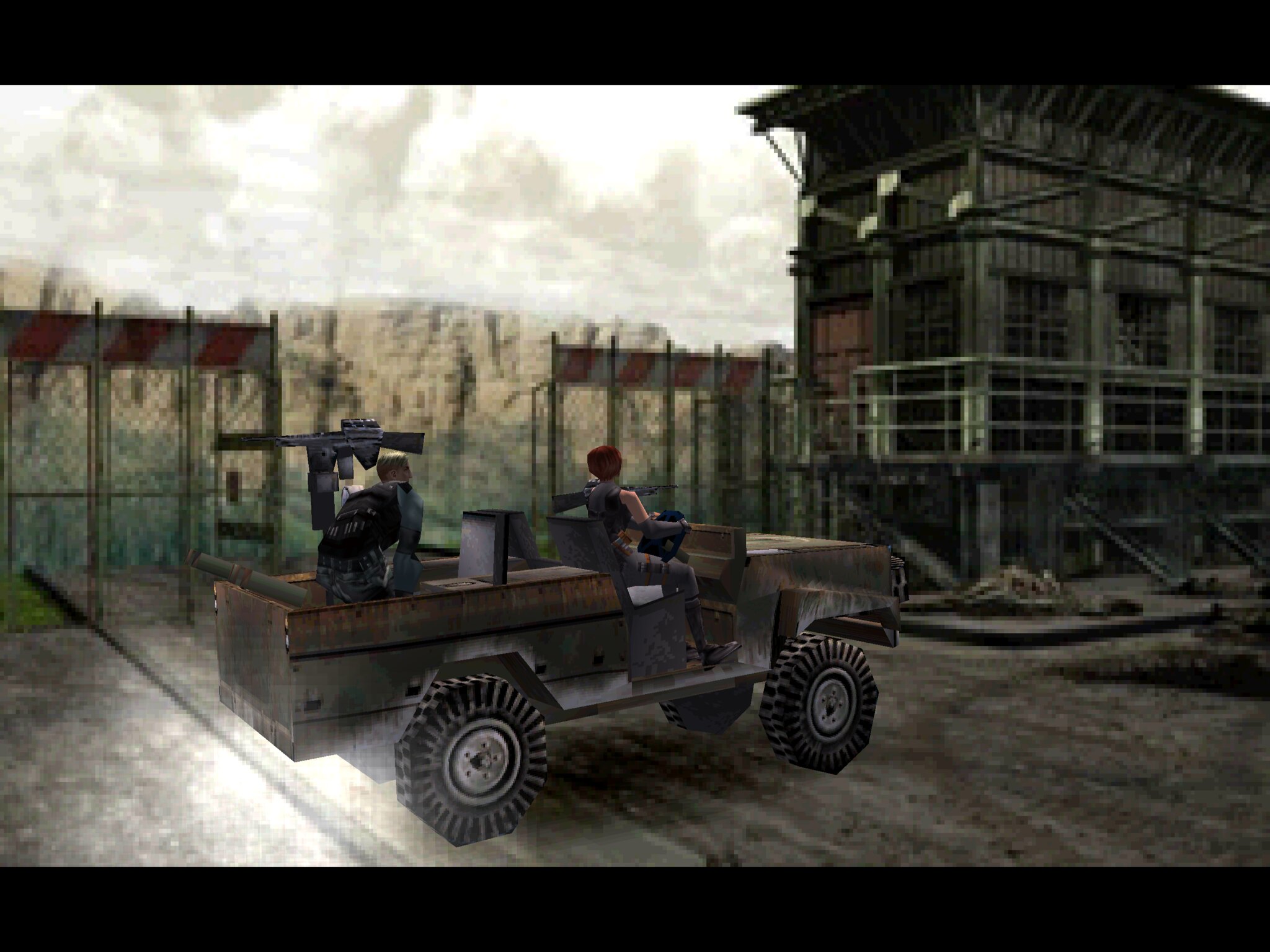
Is this an homage to Metal Gear Solid? For our escape, Regina drives a Jeep with a turret-mounted gun, and Dylan hops on the back—just like Meryl driving Snake out of the parking garage at the end of MGS.
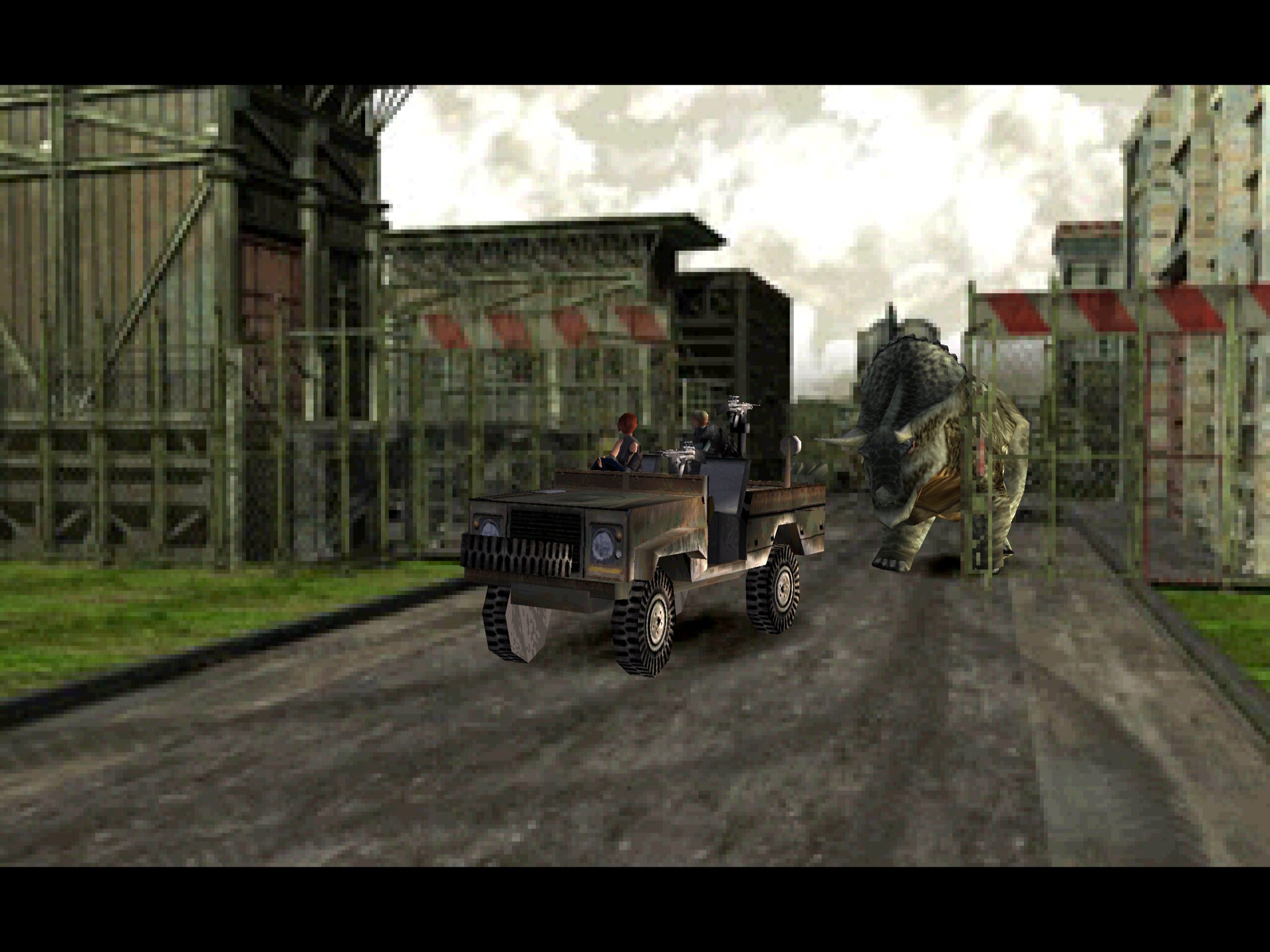
Although instead of being chased by Liquid Snake, there’s a Triceratops on our tail!
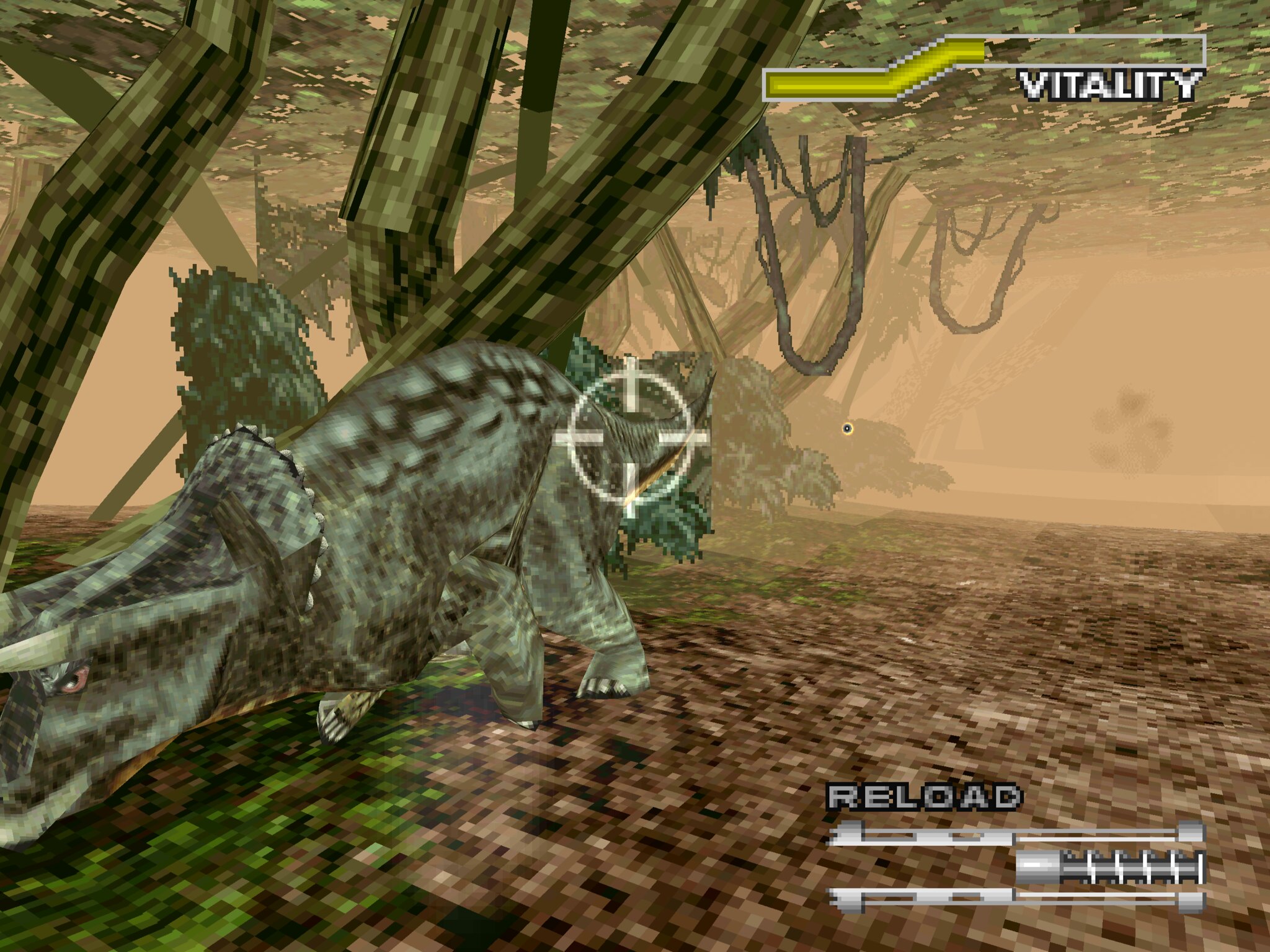
This scene is very similar to the earlier battle on the boat, but I’m not complaining as these shooting sections are pretty fun.
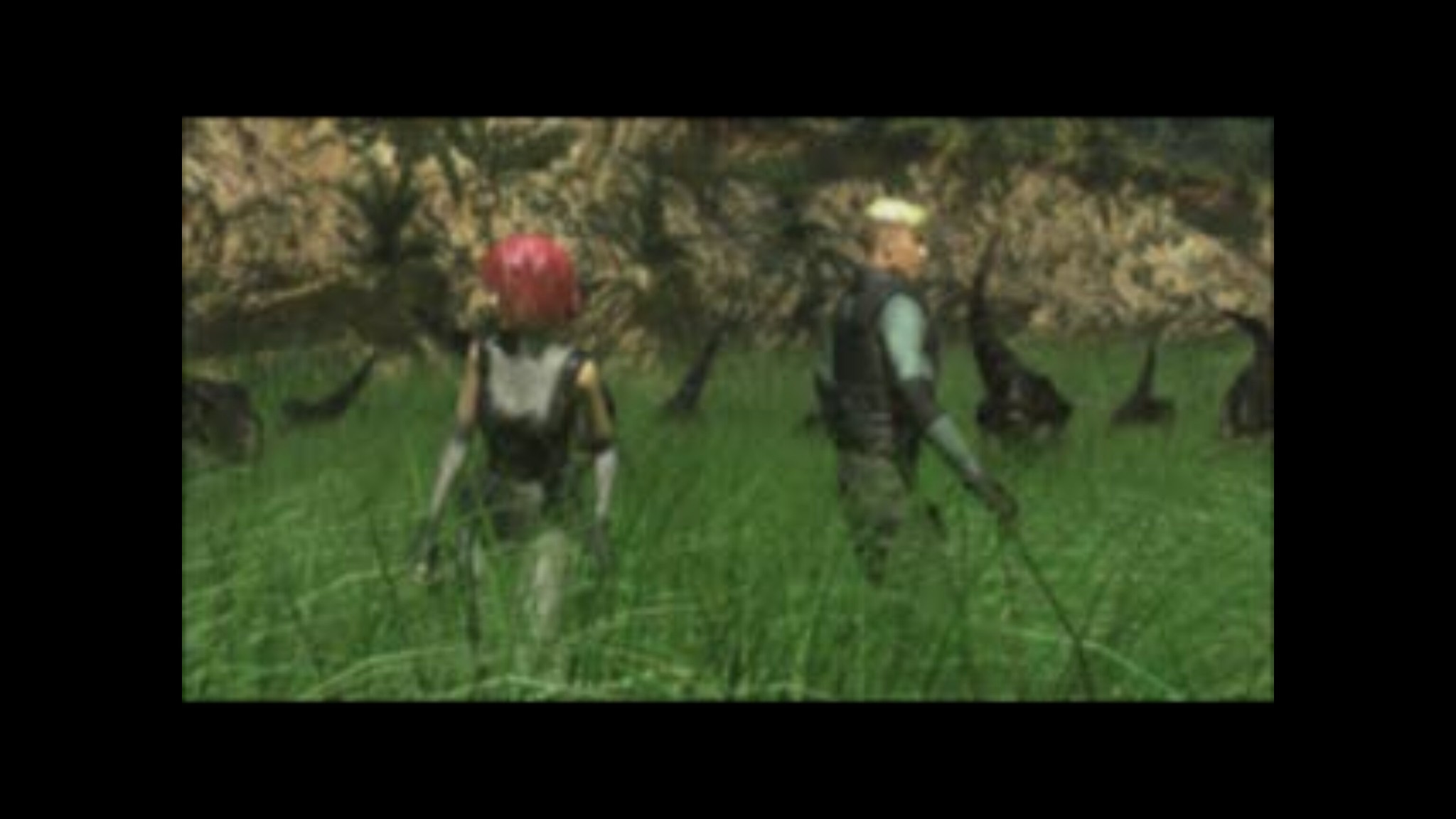
Then it goes into a relatively long cinematic section, where we crash the Jeep and get surrounded by dinosaurs.
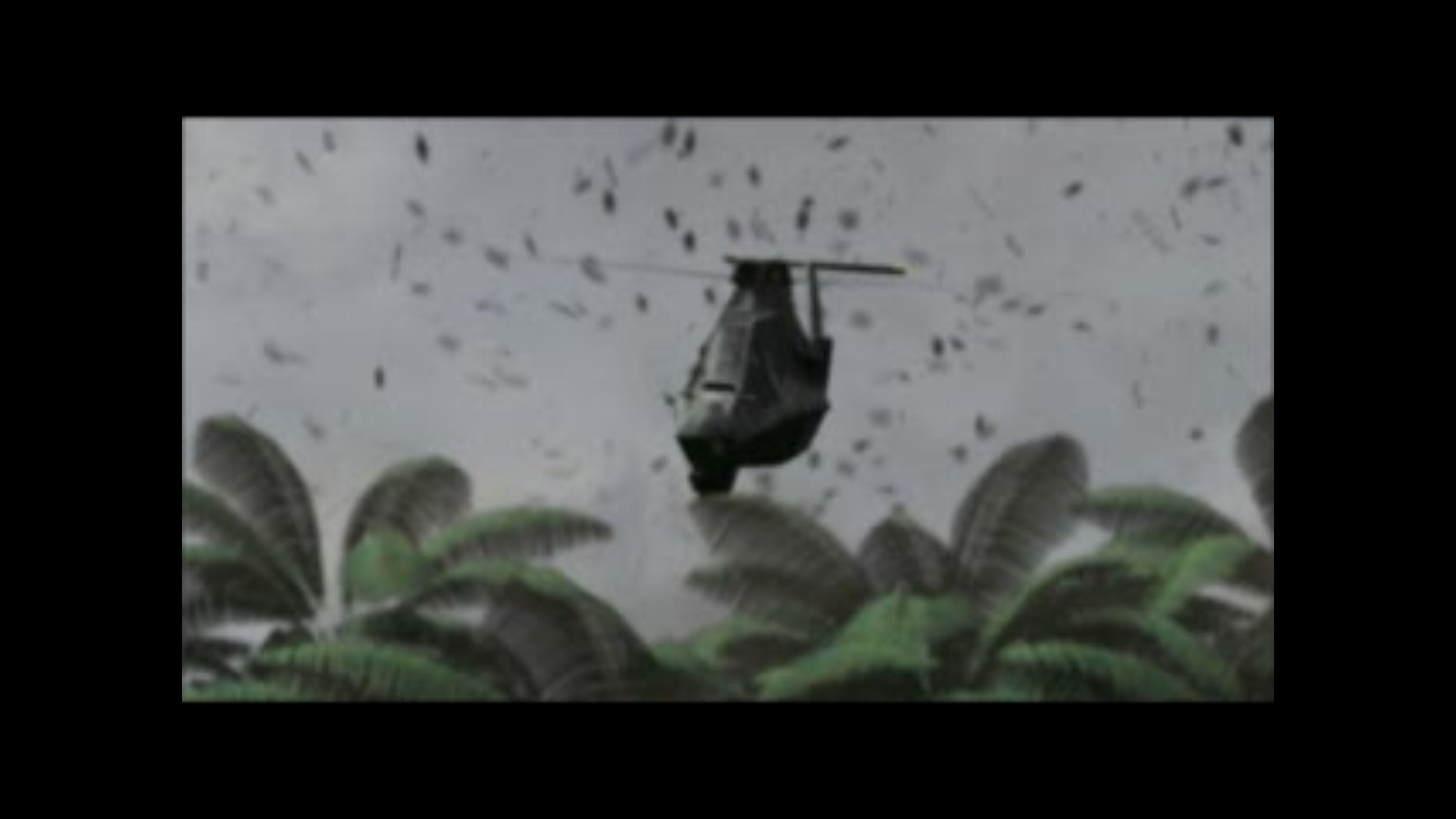
But thankfully our homie pops up in a helicopter to save the day! It’s just a shame that this cool sequence, like all the FMV’s in this game, is pretty muddy and indistinct.
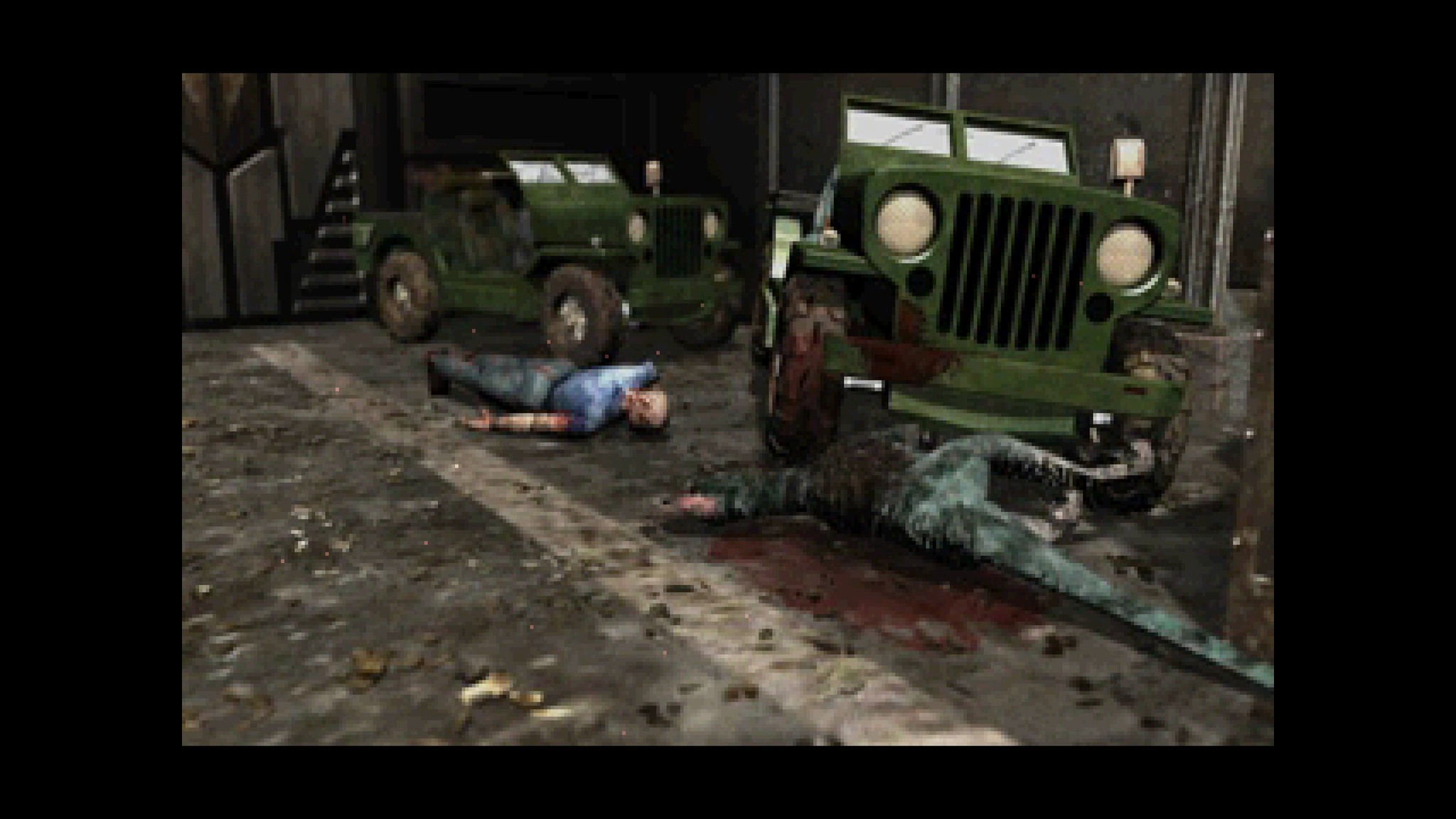
The pre-rendered backgrounds are static, so they look a little better. I thought this was a pretty evocative scene.
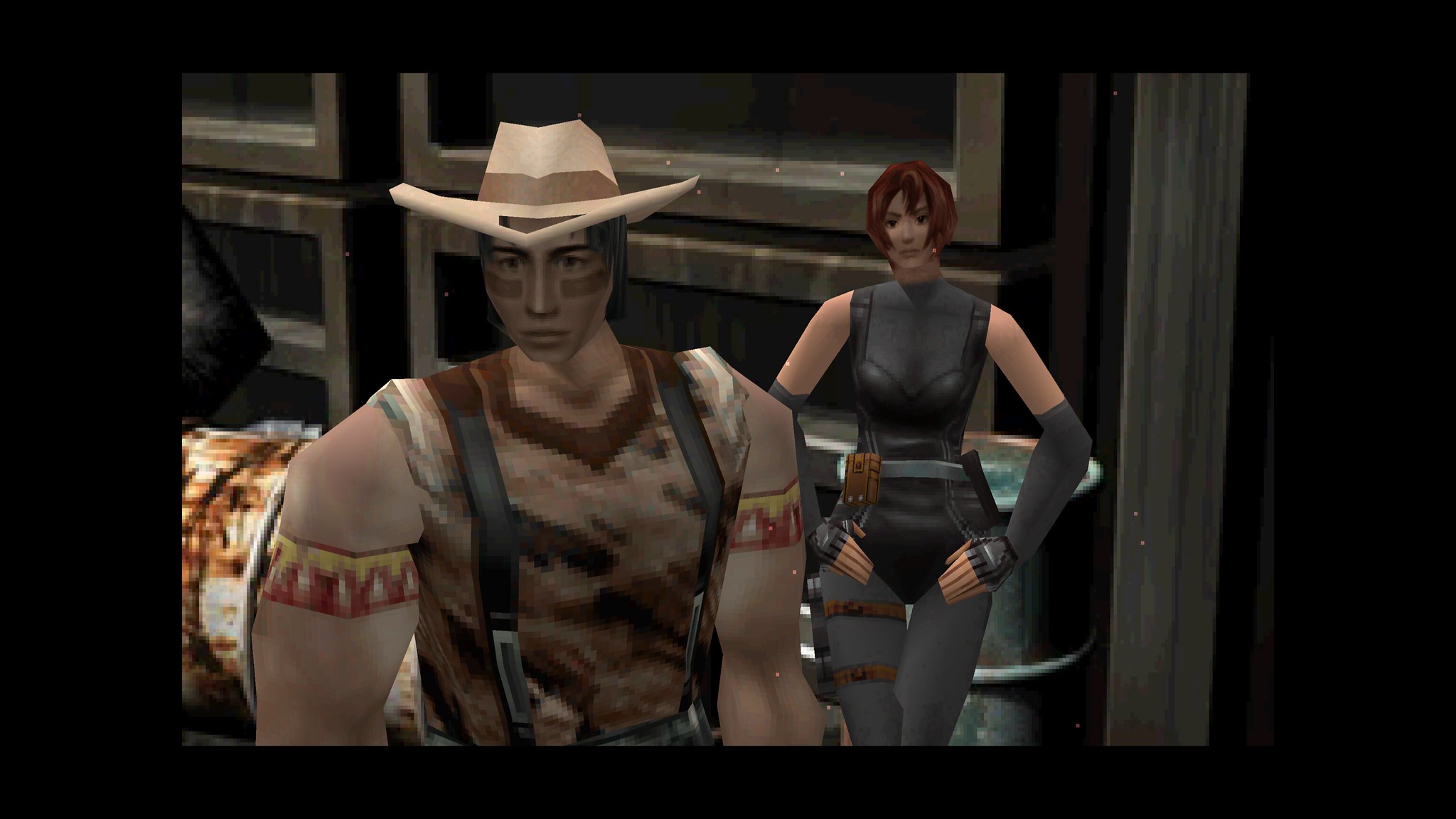
At this point we finally meet up with David, one of the few human characters in this game.
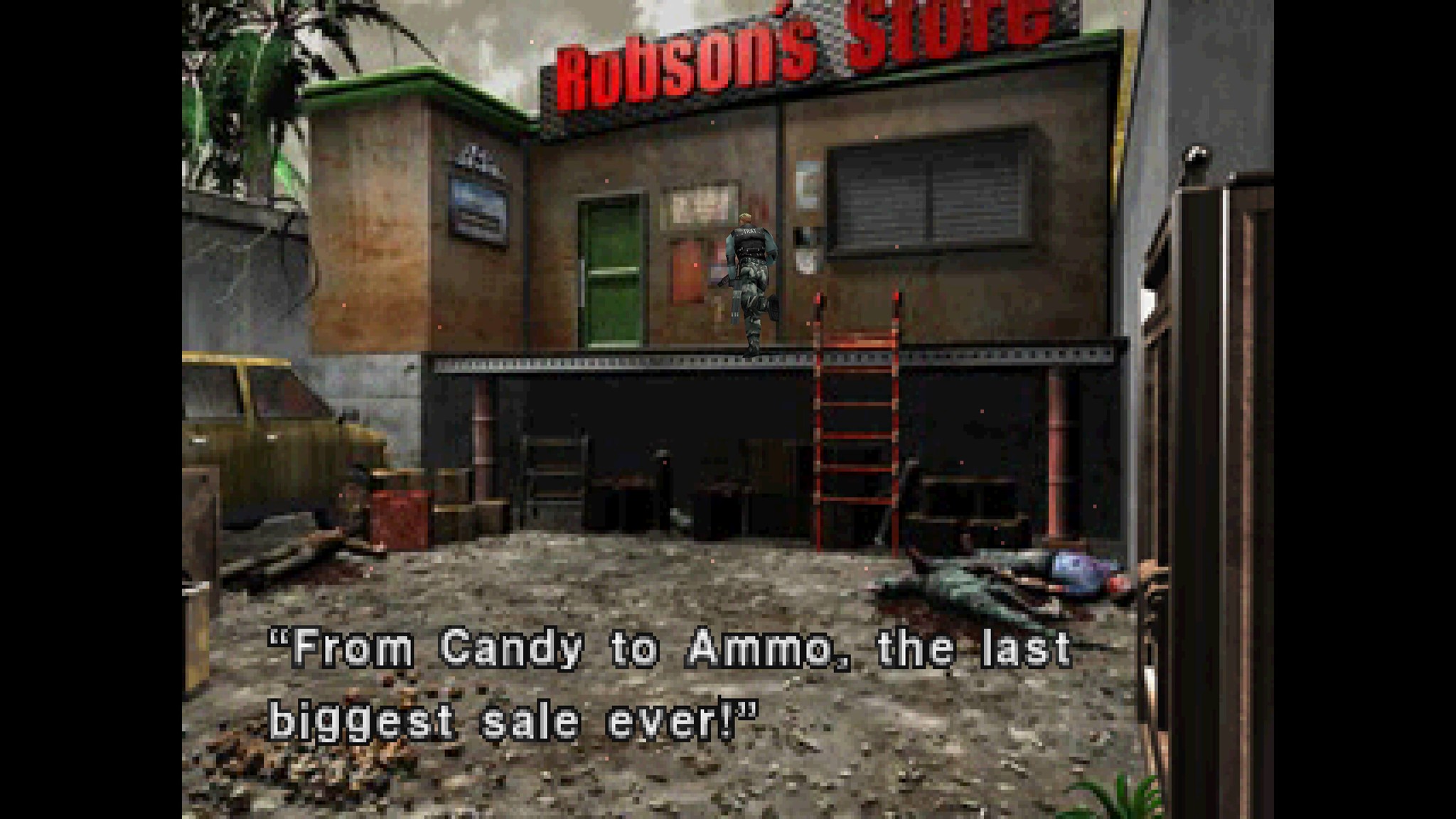
Another odd bit of localization. And is it just me or does that store logo look like a version of the Gamestop logo?
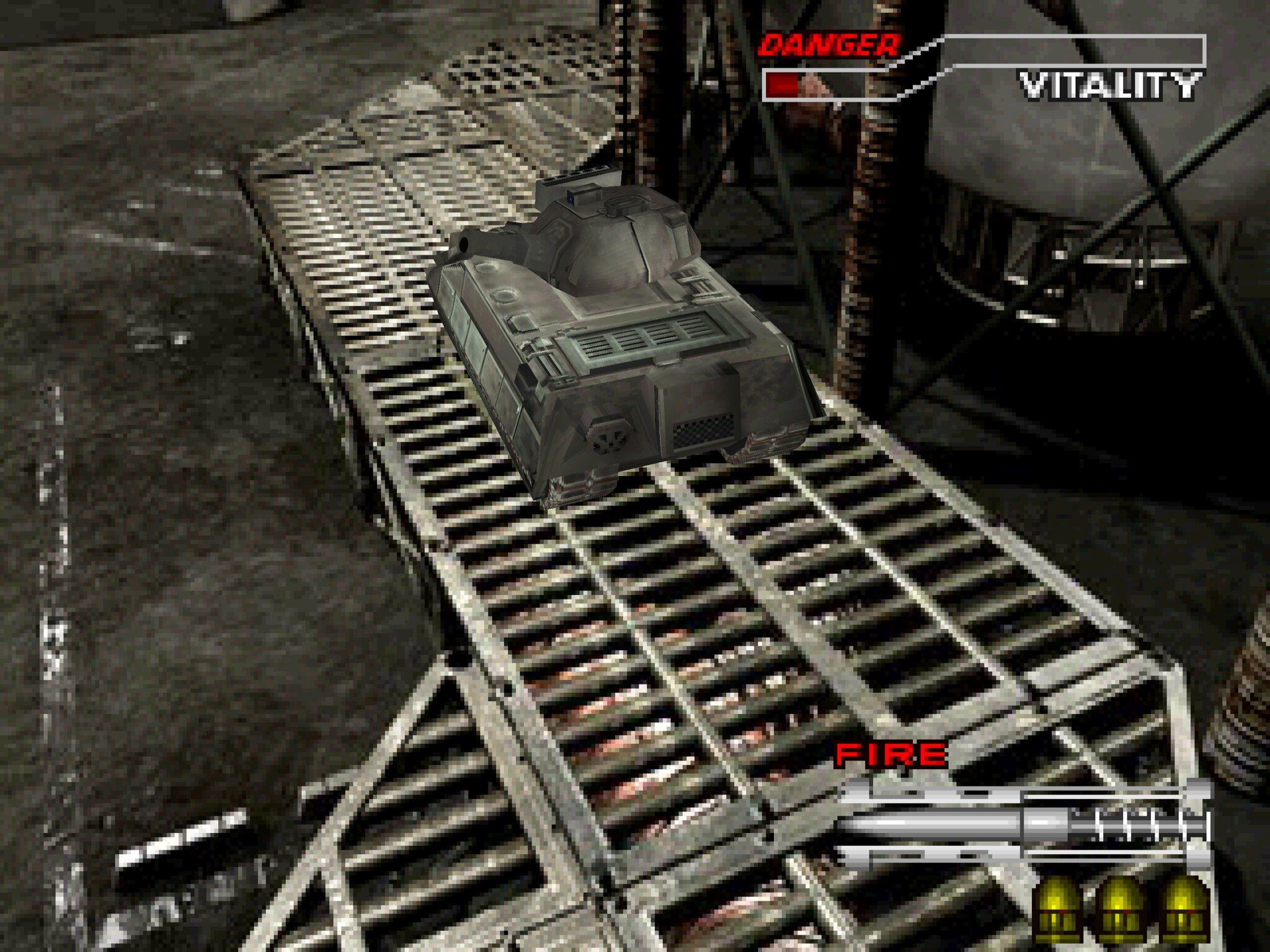
I love the added mini-games, despite this tank driving level not being as polished and fun as it really could be.
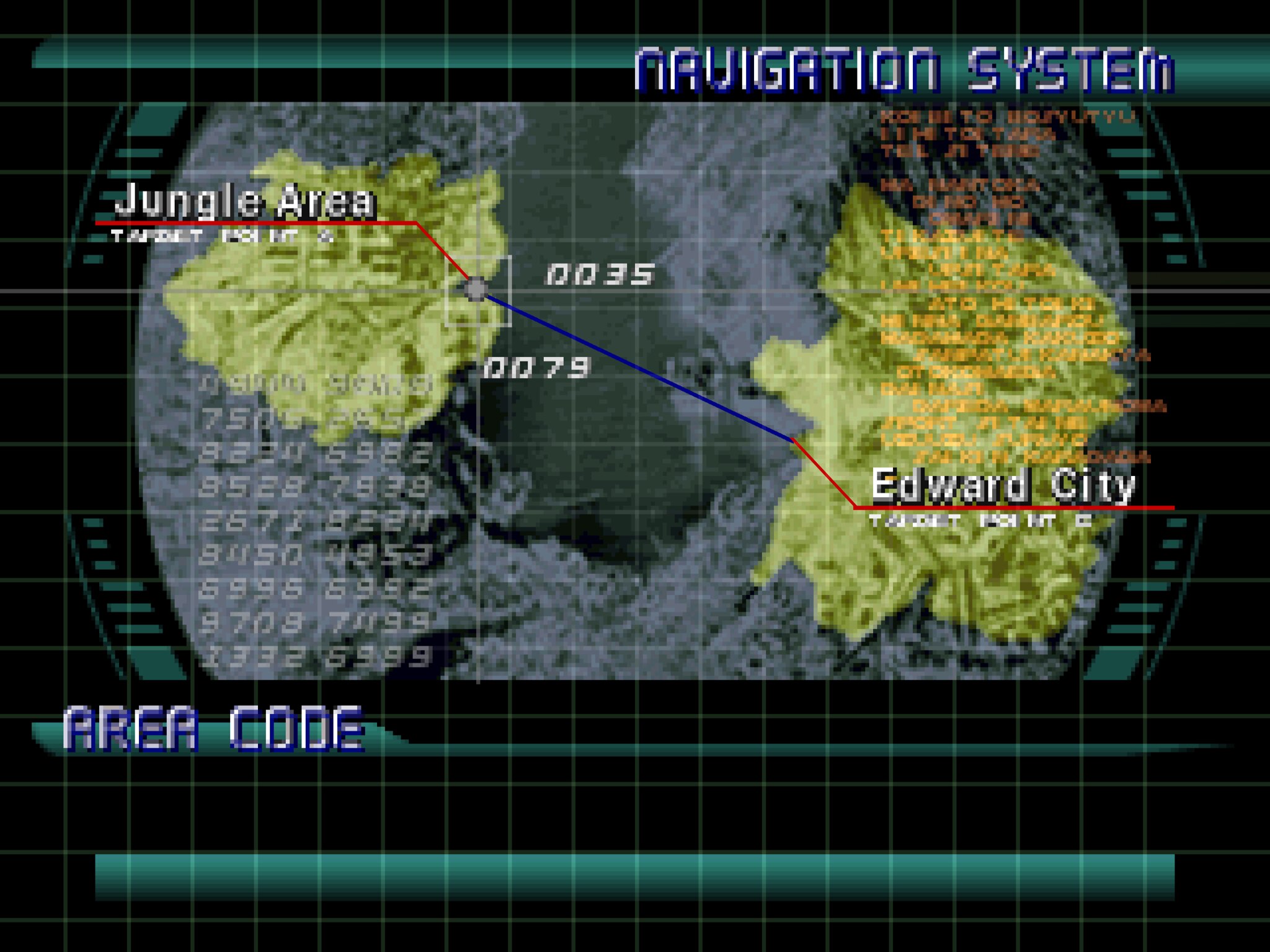
After that little diversion, it’s time to head back to the jungle.
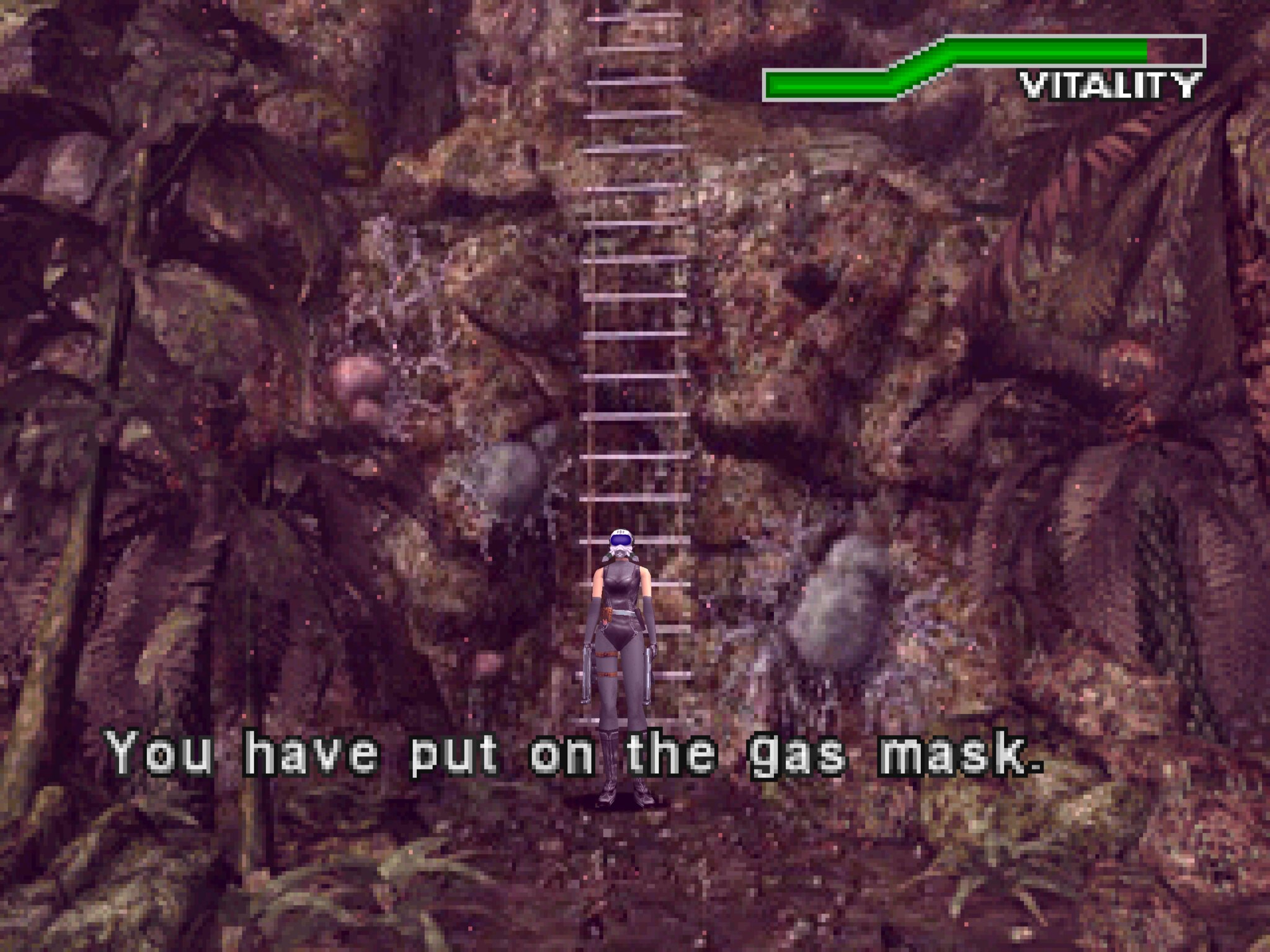
Now that we have the gas mask, we backtrack through the jungle to a previously inaccessible area.
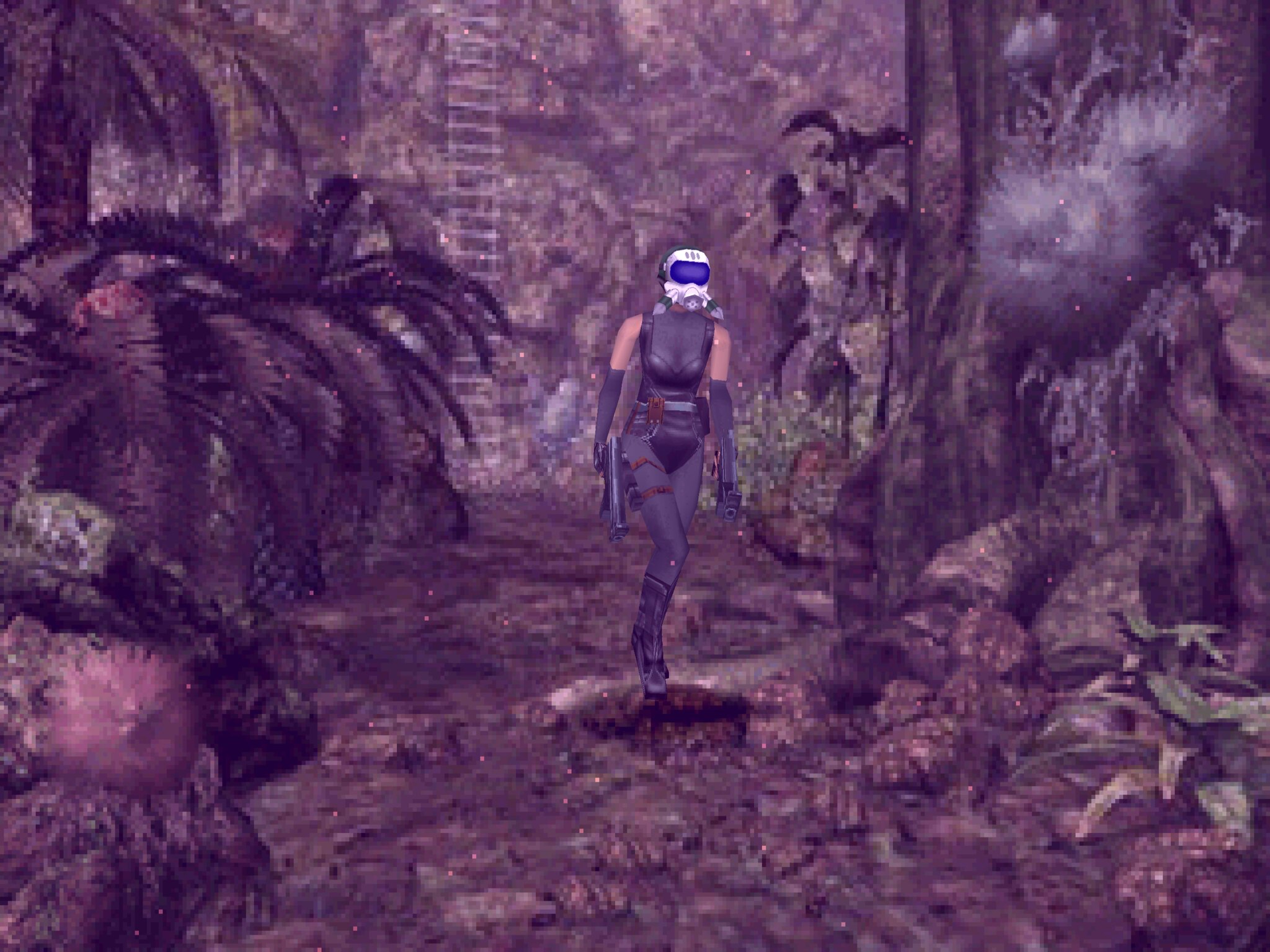
It does look pretty cool on Regina.
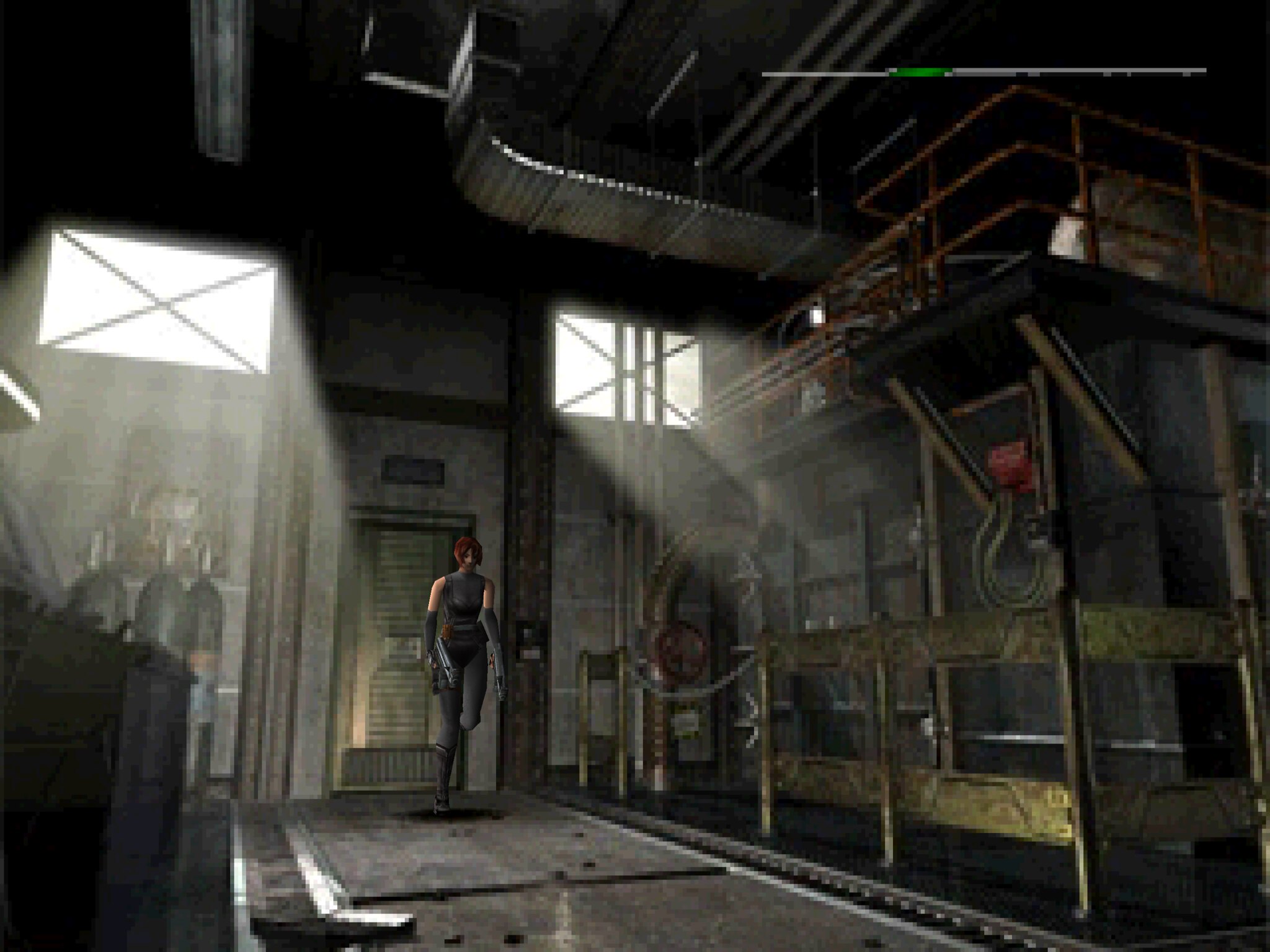
The soft diffused light coming through here is a pretty good example of the benefits of pre-rendered backgrounds back in the day.
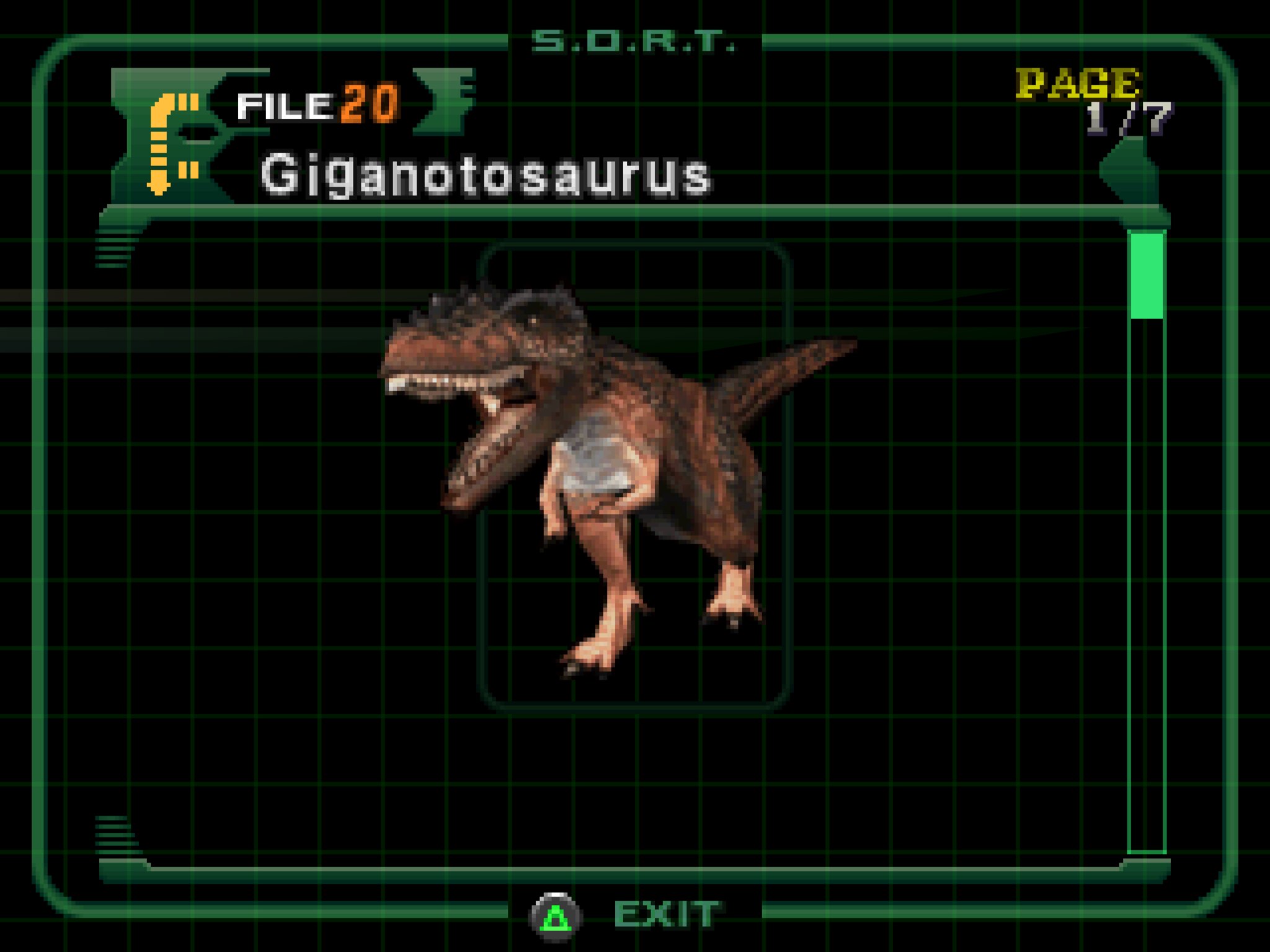
Well if a T-Rex was the big boss of part 1, what would they do for part 2? Giganotosaurus (not to be confused with Gigantosaurus which was not real) is one of the largest known dinosaurs. Well, we think so anyway, as there is a lack of conclusive fossil evidence.
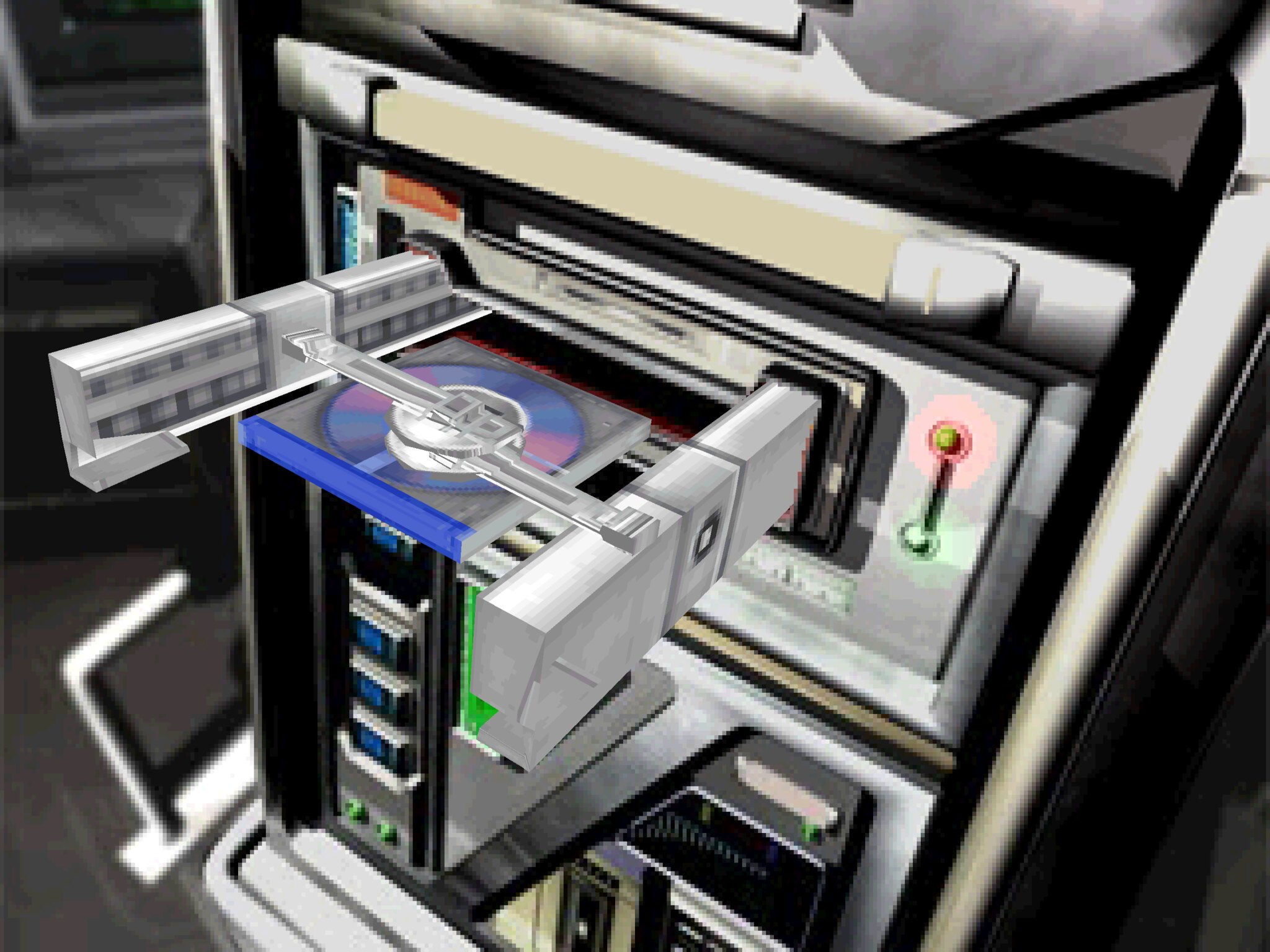
Another rad near-future computer, this time containing something very important.
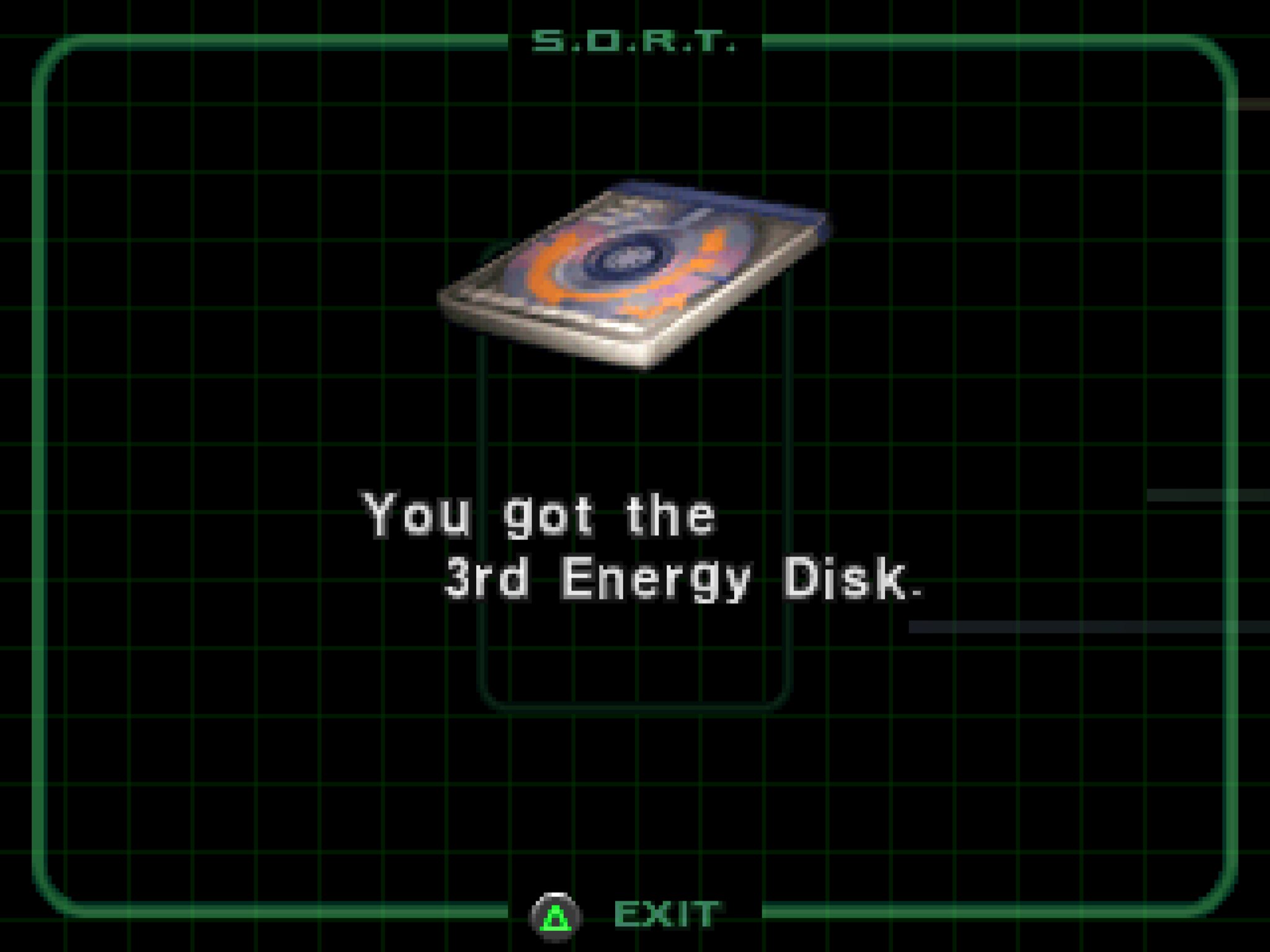
It’s the 3rd Energy Disk! This is the MacGuffin of this game, which contains all research data for the 3rd Energy Project. By the way, doesn’t that sound exactly like the optical disk in Metal Gear Solid that contain all of Metal Gear Rex’s research and training data?
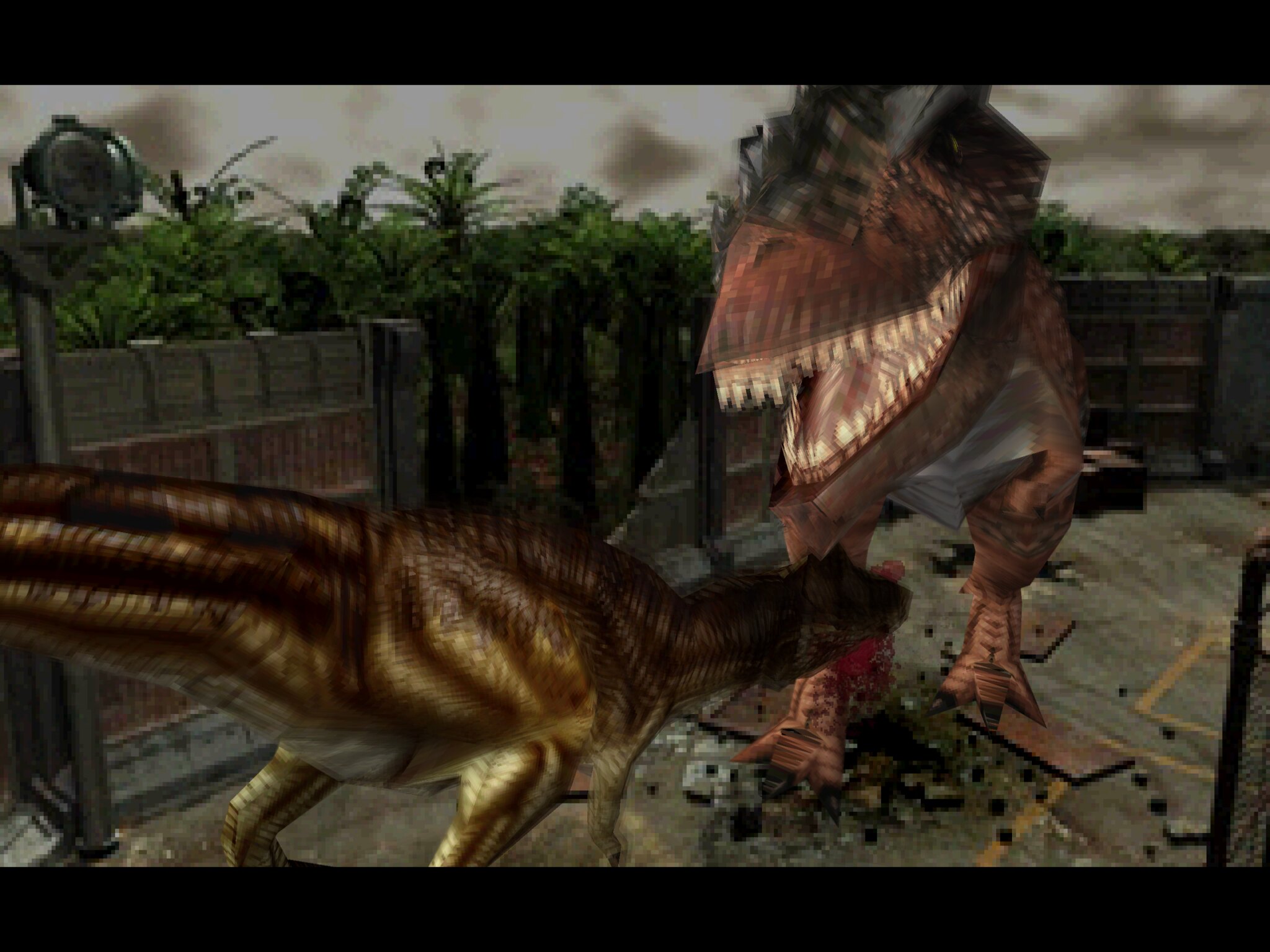
Then the Giganotosaurus appears, towering over the T-Rex. Some paleontologists think the Giganotosaurus was indeed that huge; others think it was about the same size of a T-Rex.
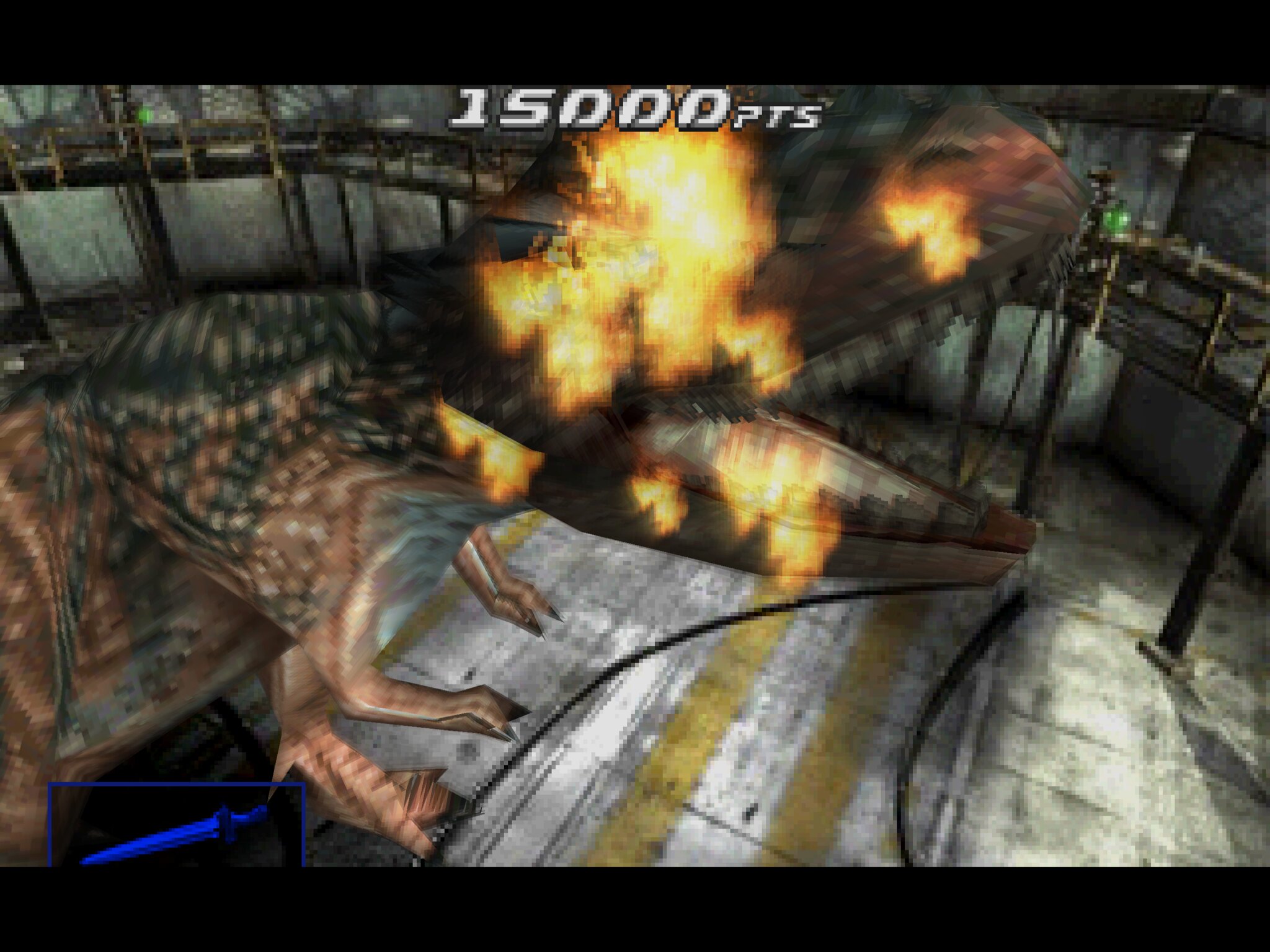
The first half of this boss fight is reminiscent of the fight against the tentacles in the blast pit in Half-Life.
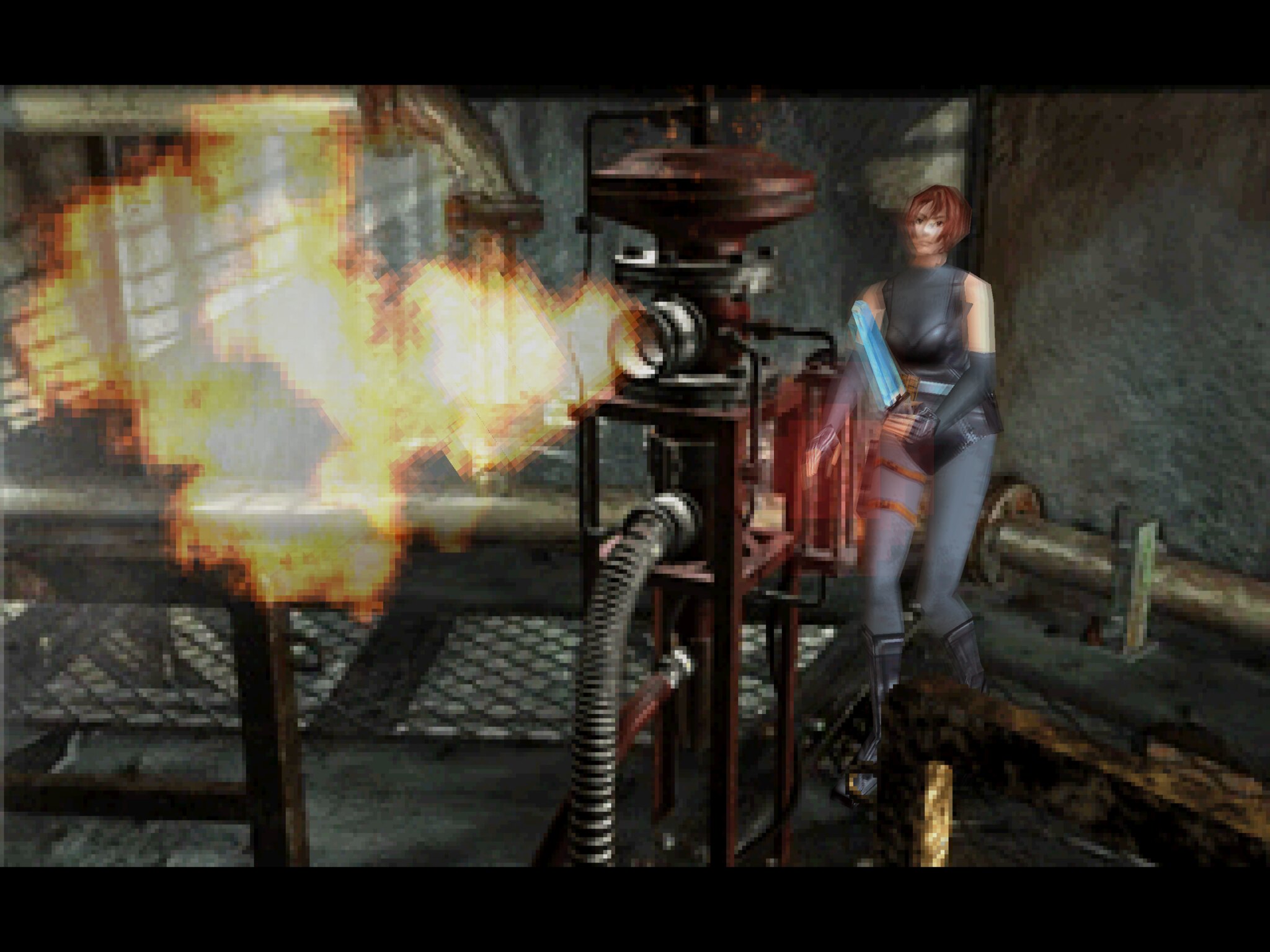
We lure the Giganotosaurus over and whack these valves, which ignites the high pressure gas that shoots out.
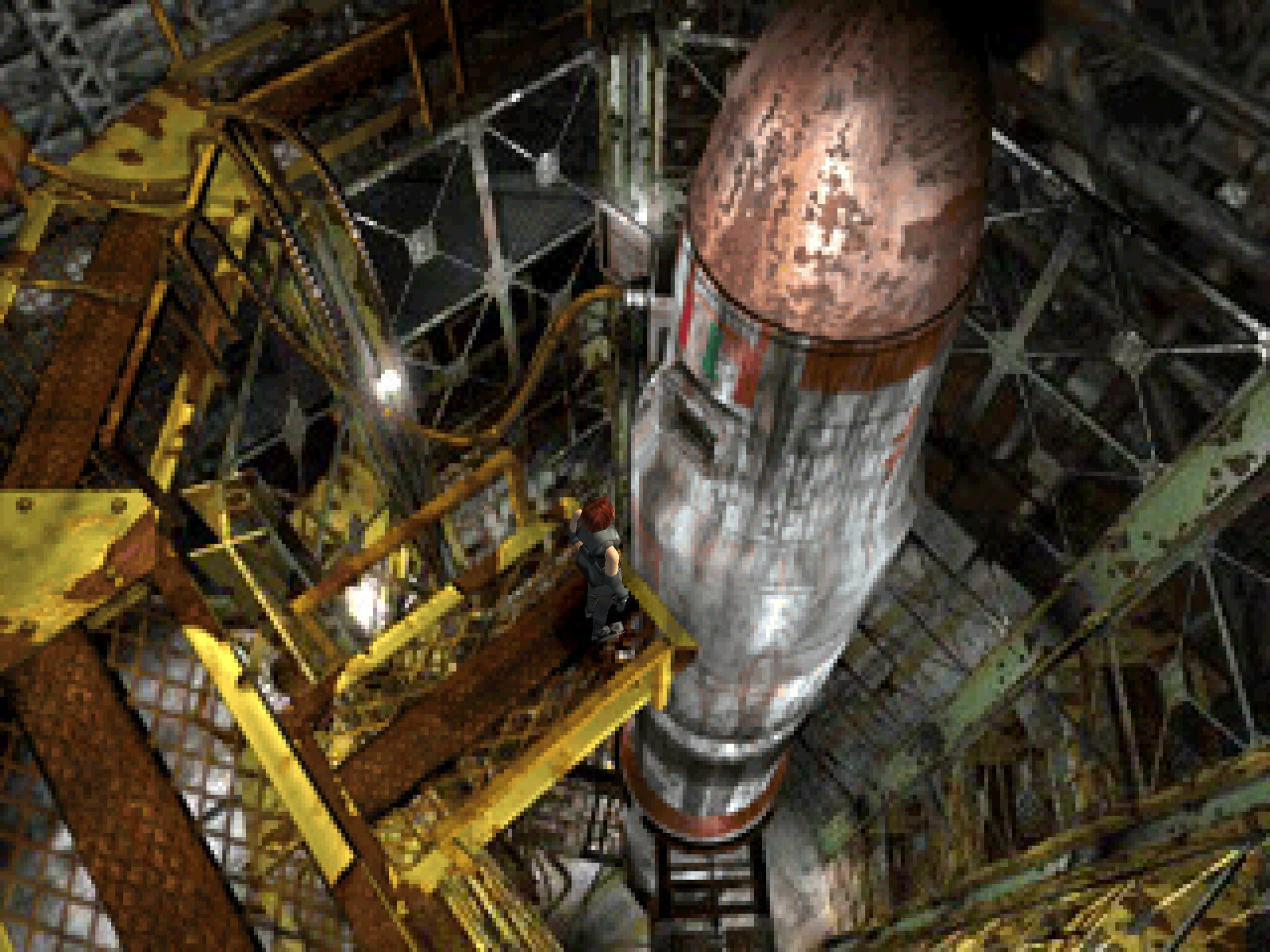
The Dino Crisis pair was recently re-released on PC and sadly, it has the exact same backgrounds as the PS1 version, just like Resident Evil 1 and 2. The PC release of RE3 actually got high resolution (640×480) backgrounds, but unfortunately Dino Crisis 2 was not so lucky. I’ve read a lot of sad stories about how original assets for 80’s and 90’s games were simply not preserved because it wasn’t deemed important.
Glass breaking was one of those effects that seemed to make its way into every early 3D rendered video. It’s definitely something that looks better in action, especially in this game.
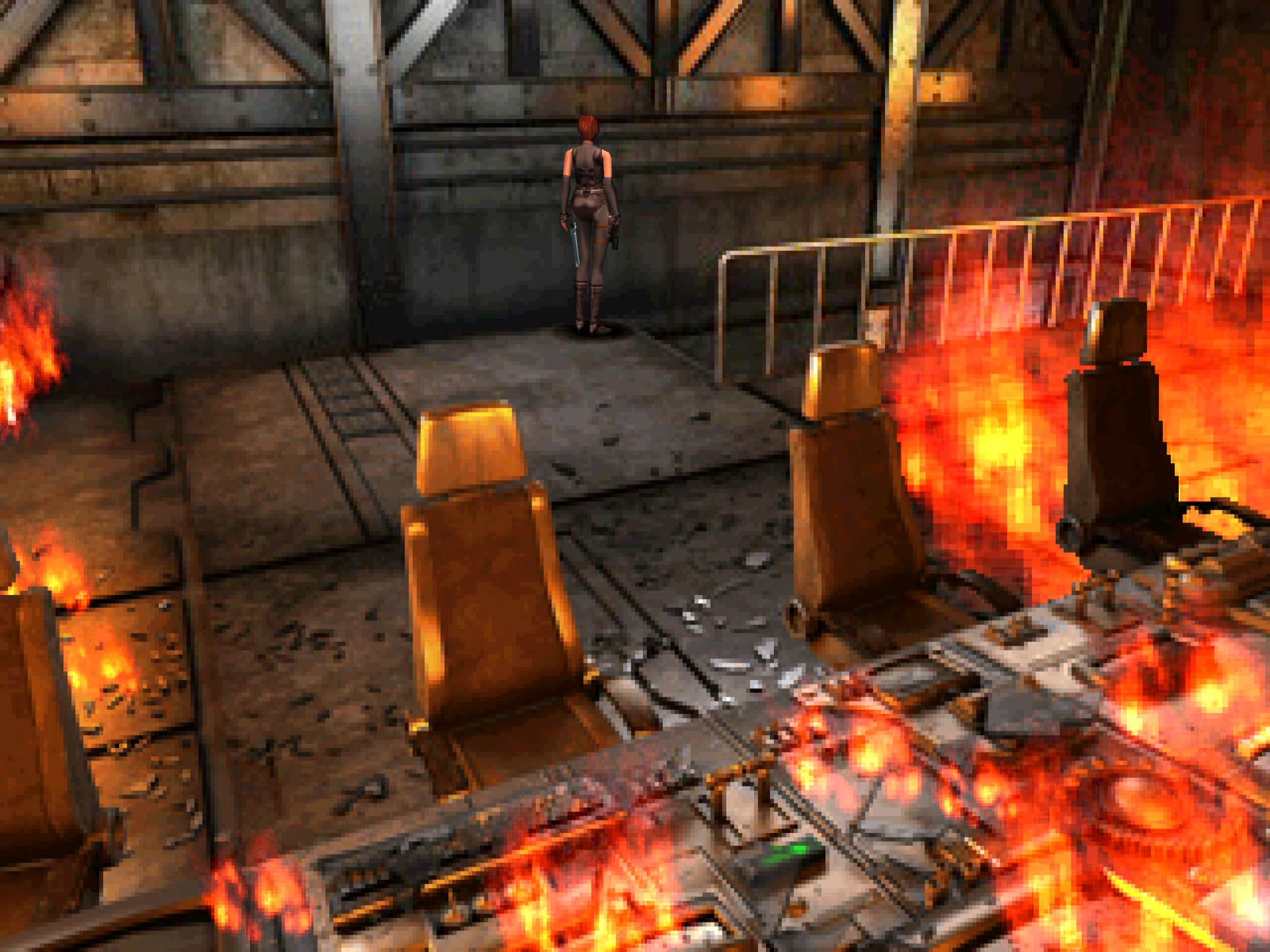
This is another one of my videogame fascinations: the immortal fire. In real life, buildings on fire tend to quickly fill up with smoke while everything gets immolated. Not so in videogames, which often have small flames that never spread or grow. And smoke? What smoke? Regina is just walking around like the heater is on.
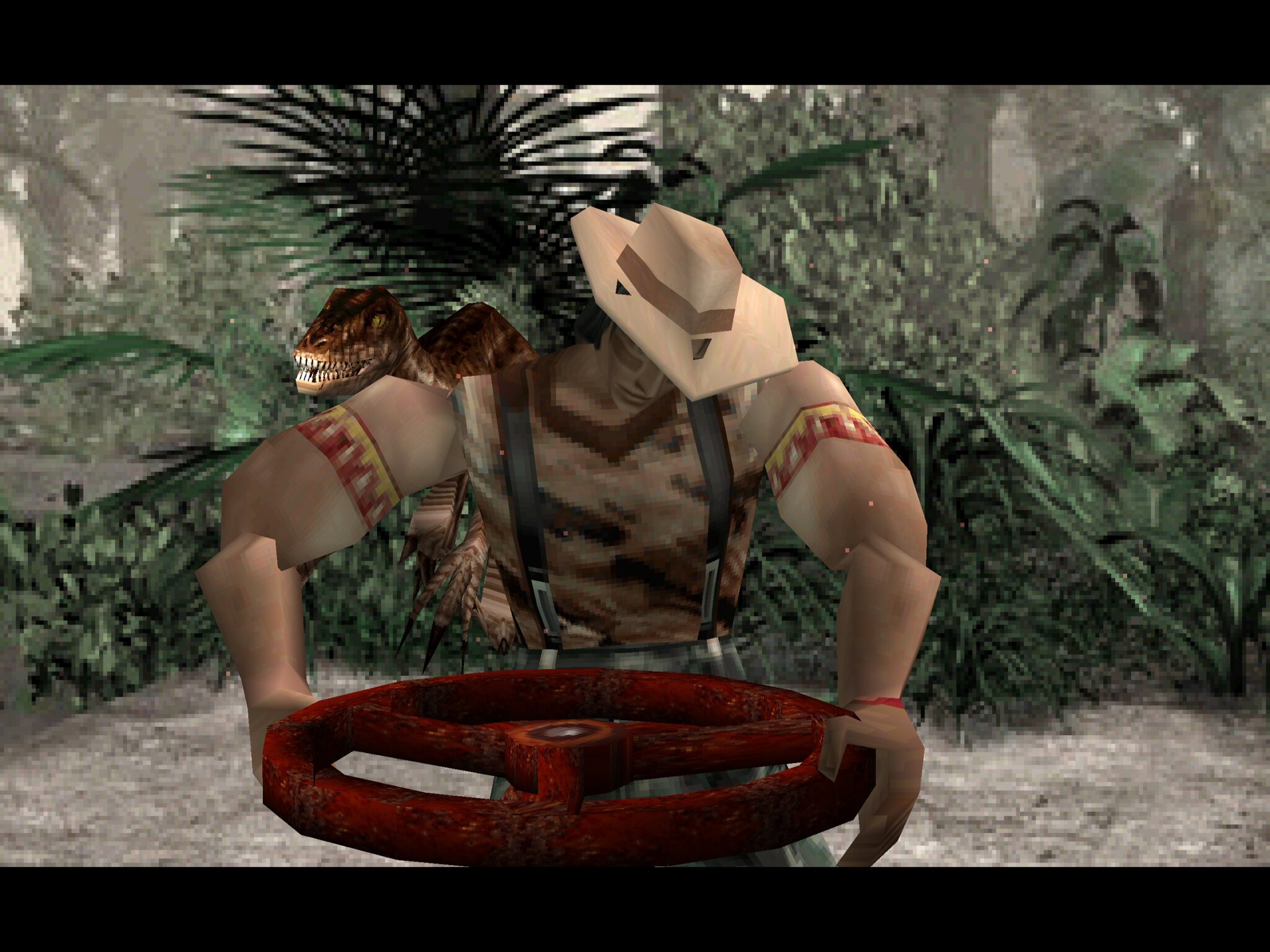
David is going to help us escape, but raptors approach while turning this tough valve wheel. That’s a trope that Capcom seems to love: every Resident Evil game also features multiple versions of valve wheels or cranks.
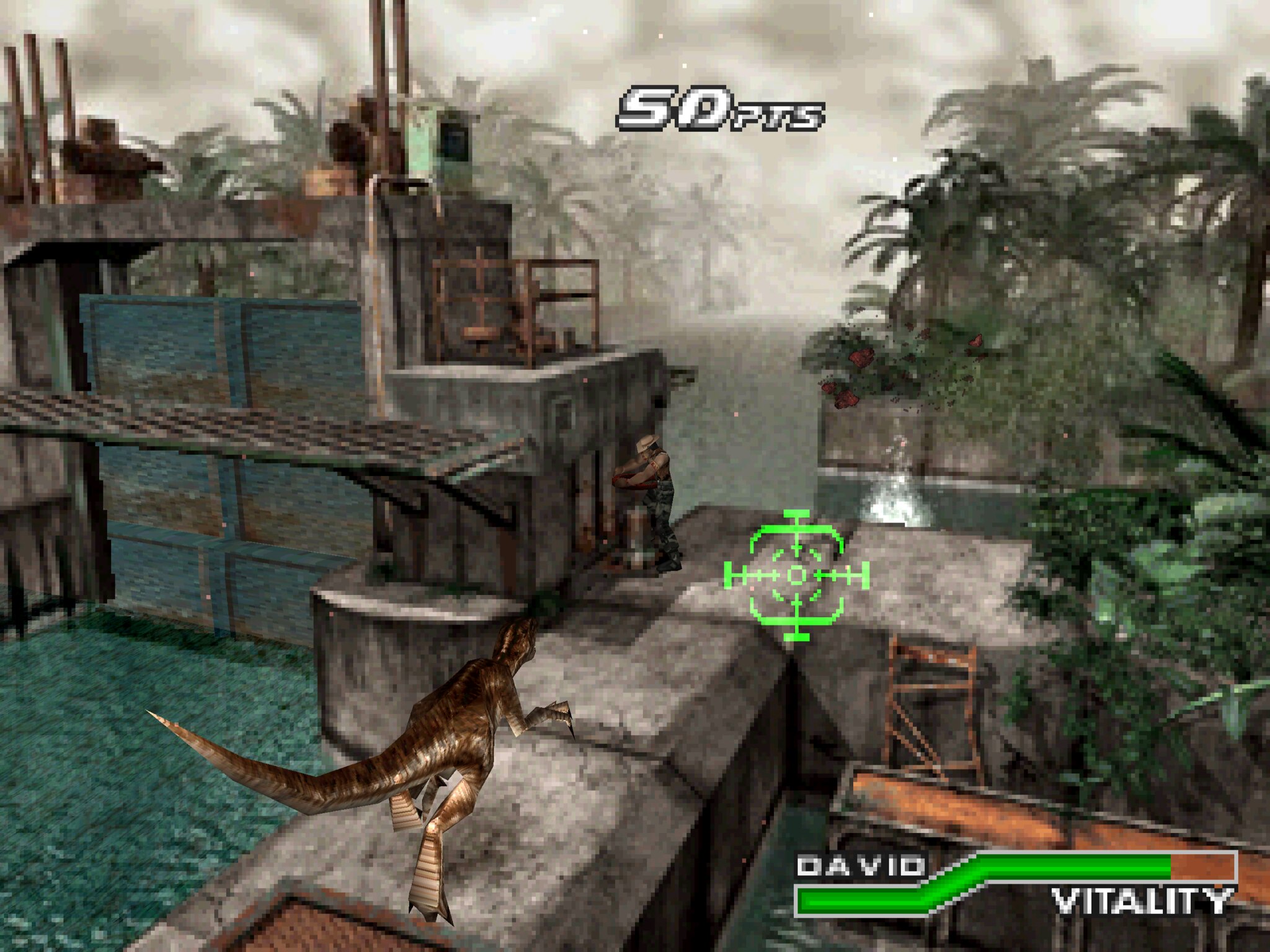
This is another fun shooter scene, as we have to protect David as he attempts to open the gate.
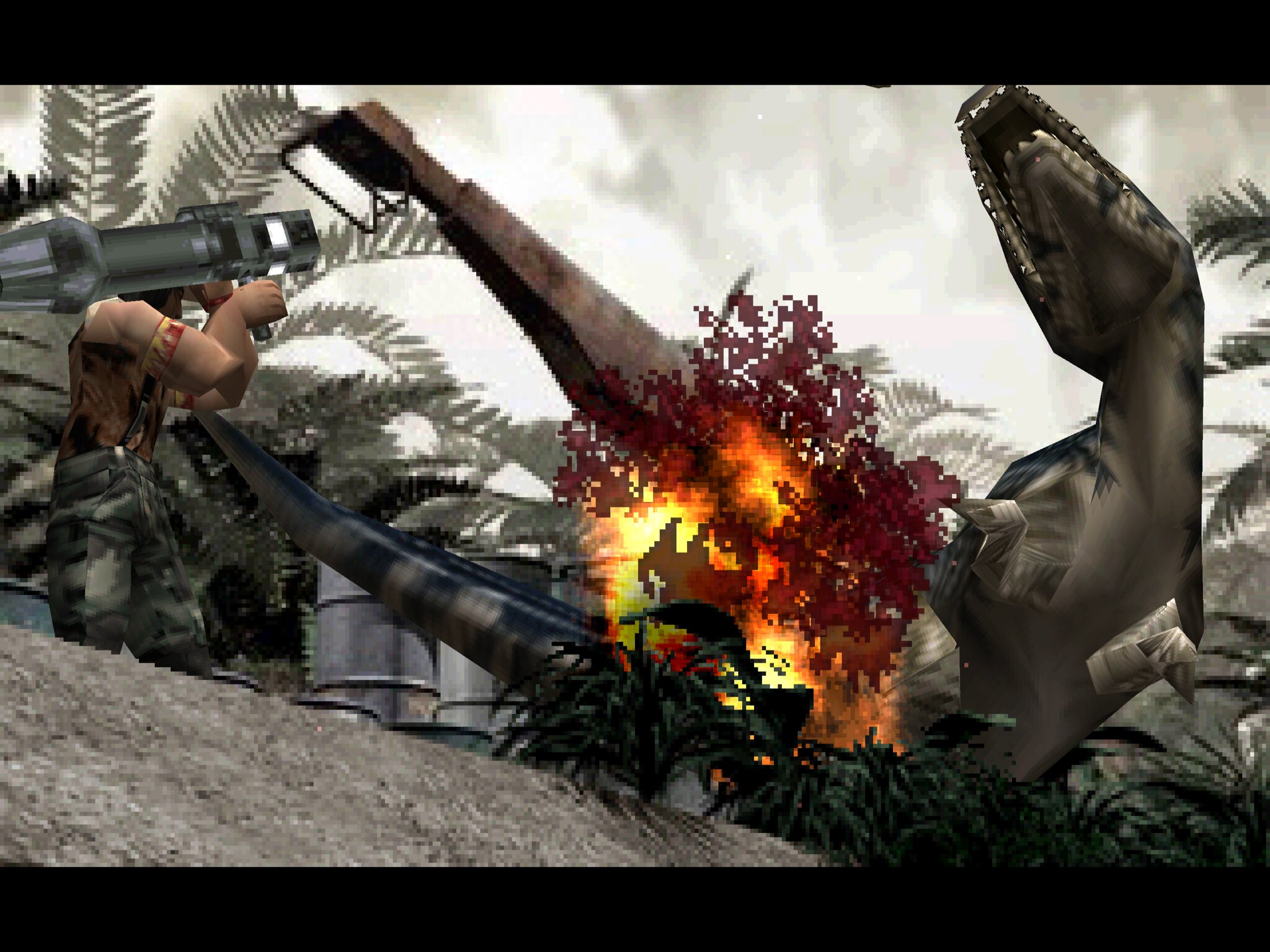
Boom! David has a rocket launcher and saves Dylan by distracting the Allosaurus!
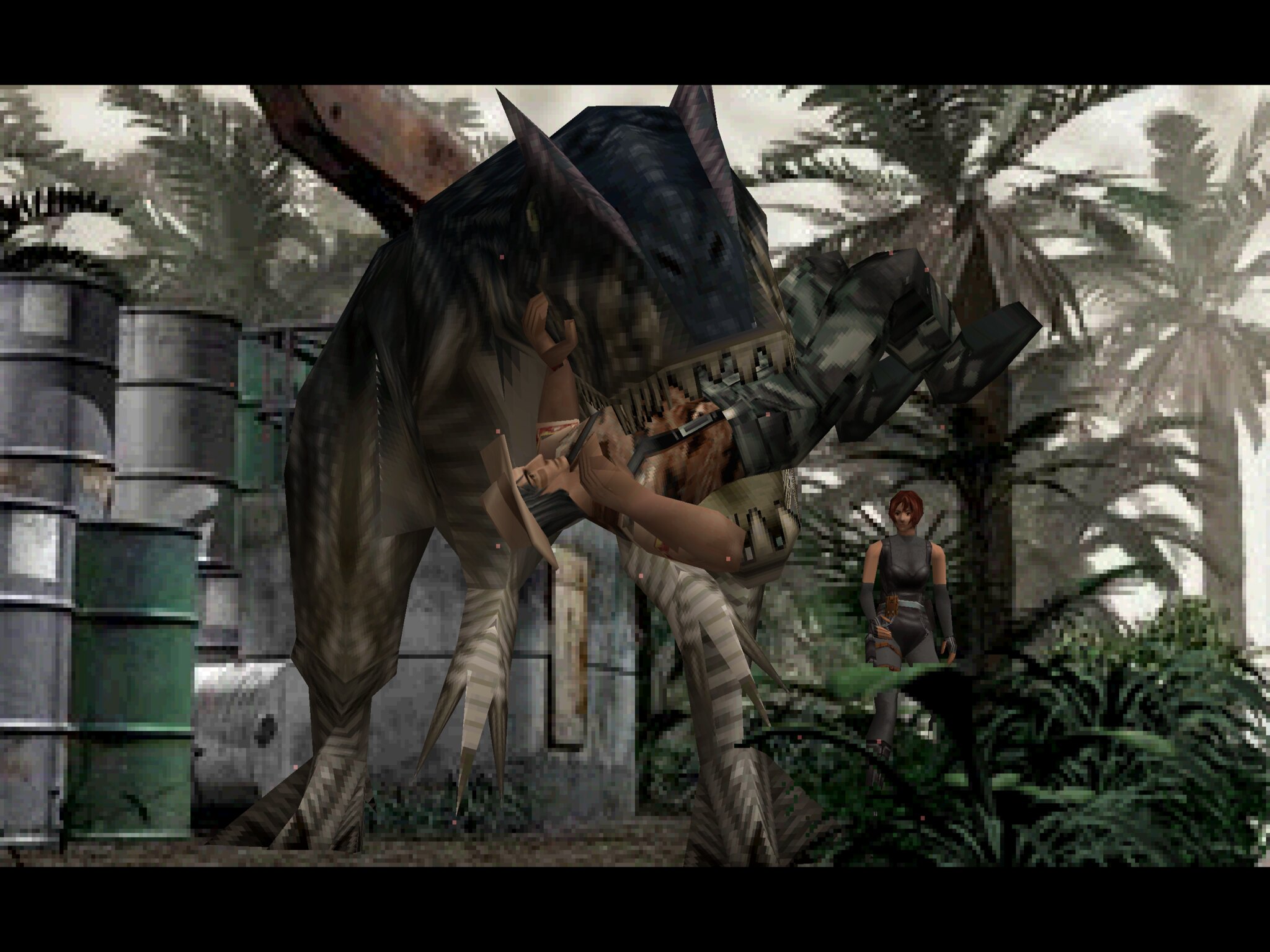
But then, sadly, the Allosaurus picks up David and chomps him down, thus ending that very brief character arc.
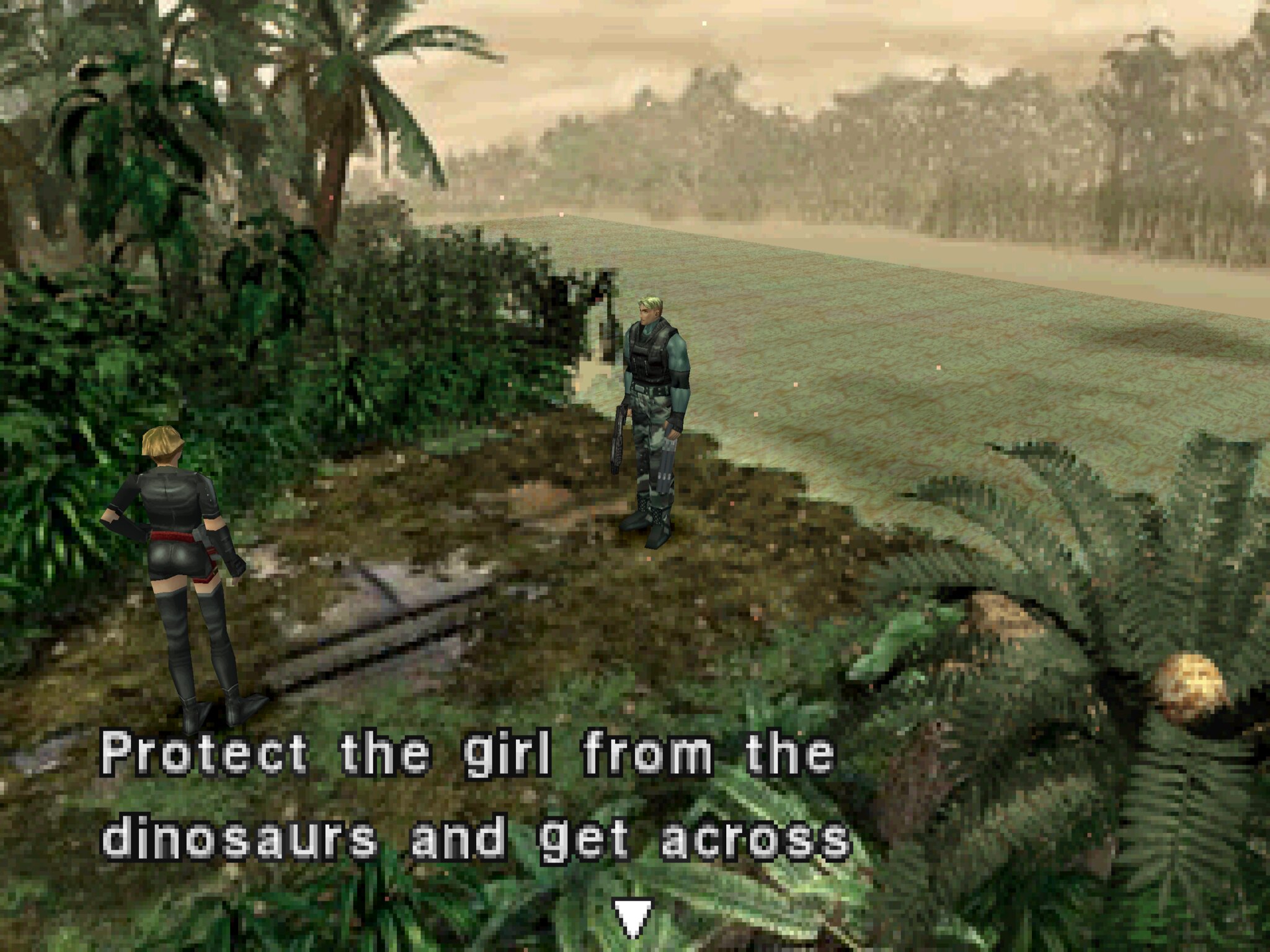
Dylan washes up downriver with that weird girl we captured earlier.
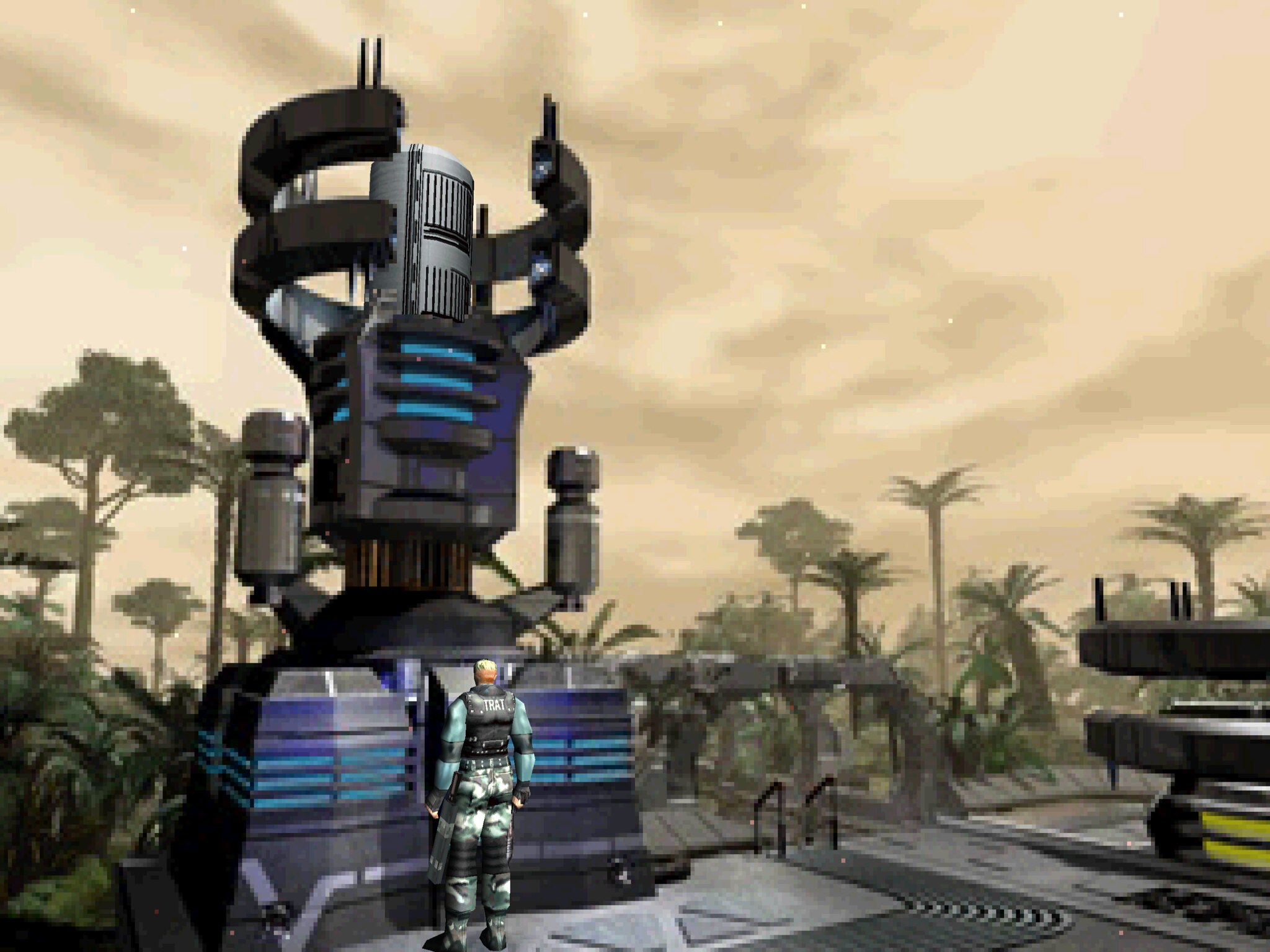
This section has some really cool backgrounds. These towers animate when you activate them, which is a neat touch.
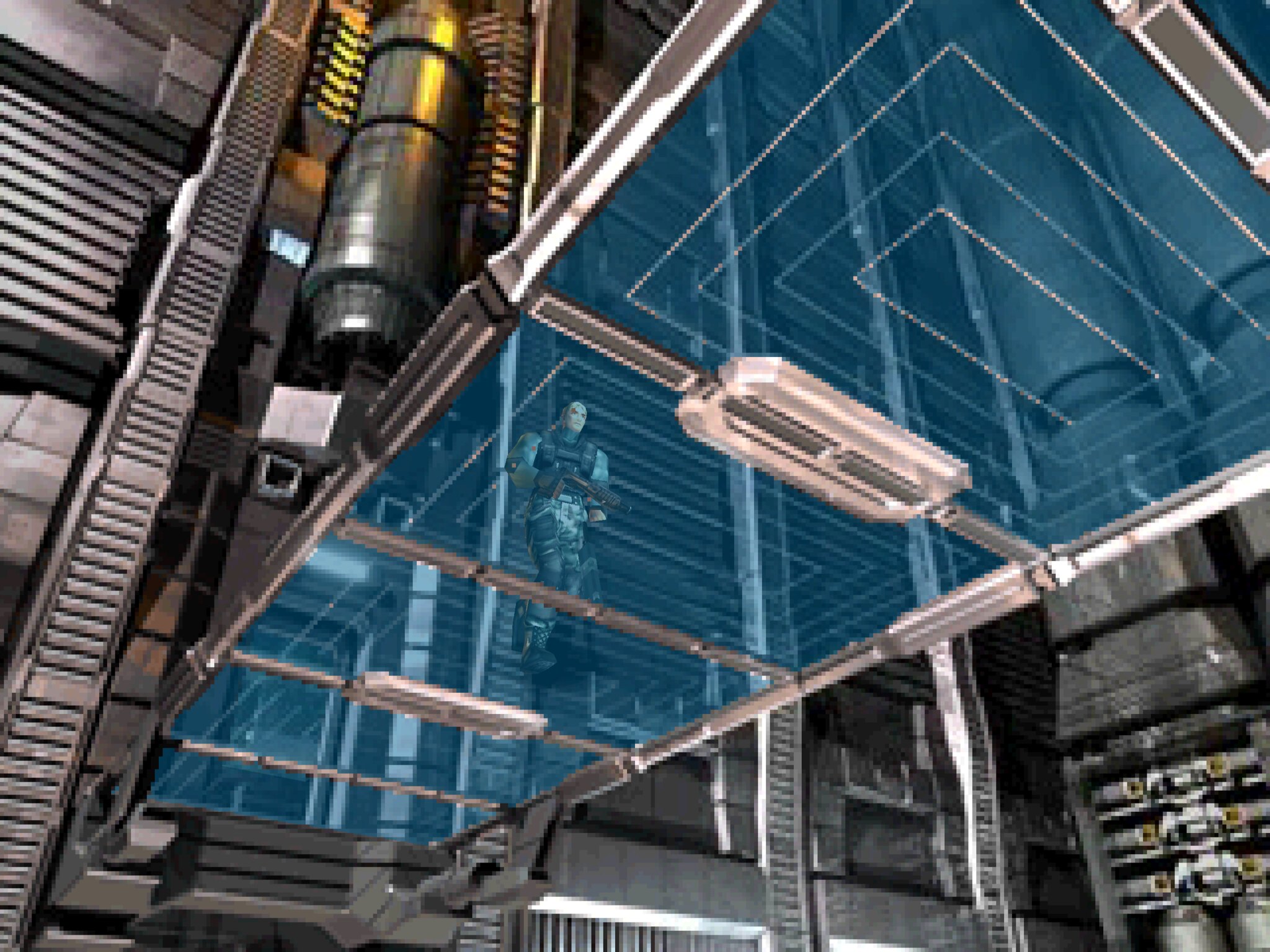
I loved fixed camera angle games because they encourage the game creator to think more like a filmmaker and really pay attention to the way a scene is presented.
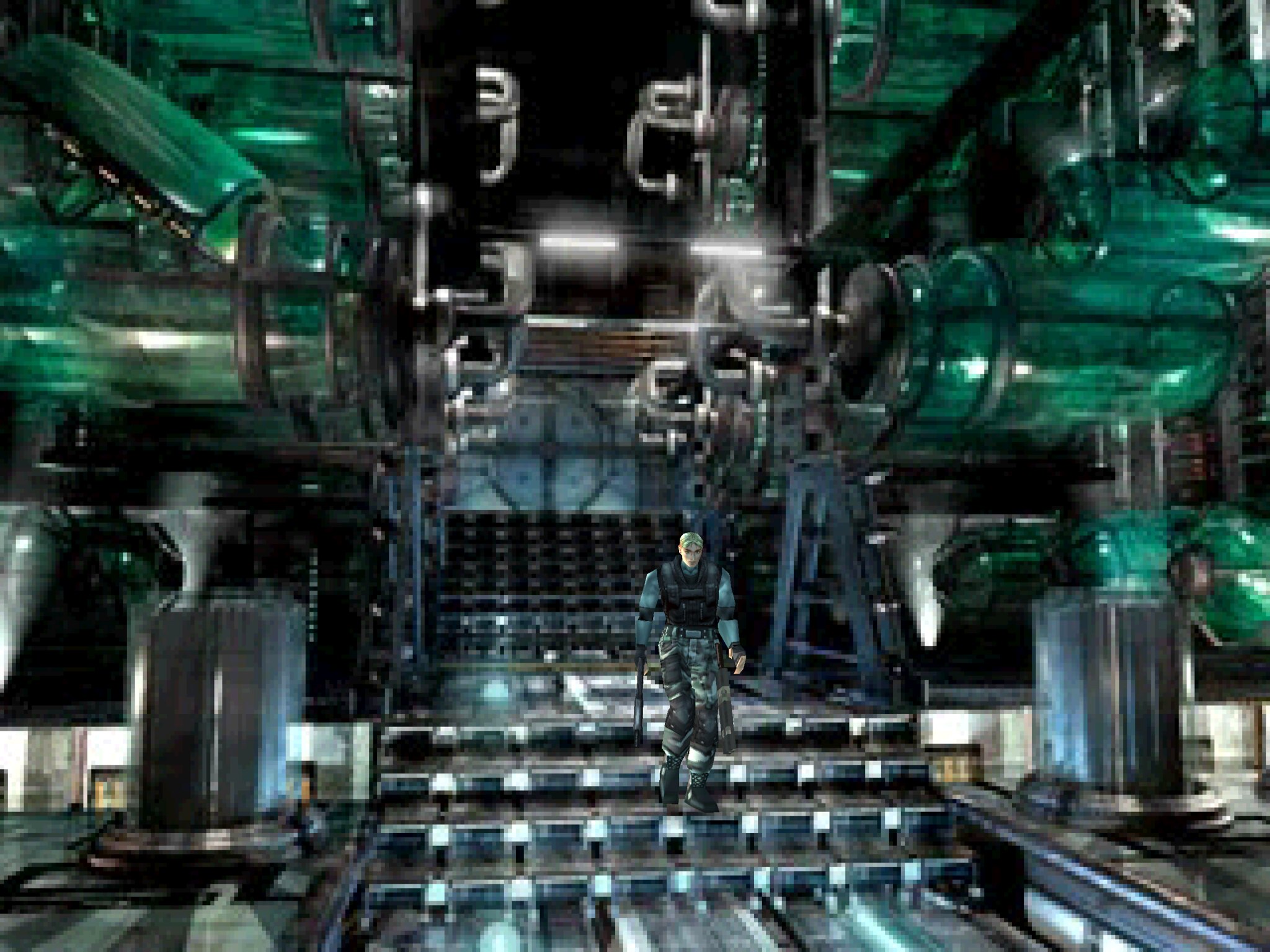
Aren’t these detailed environments just begging for a remaster? Despite the pace of graphical improvements slowing down in the last decade and the de-emphasis of the importance of impressive graphics, it’s still fun to play modern games that have “wow” level graphics.
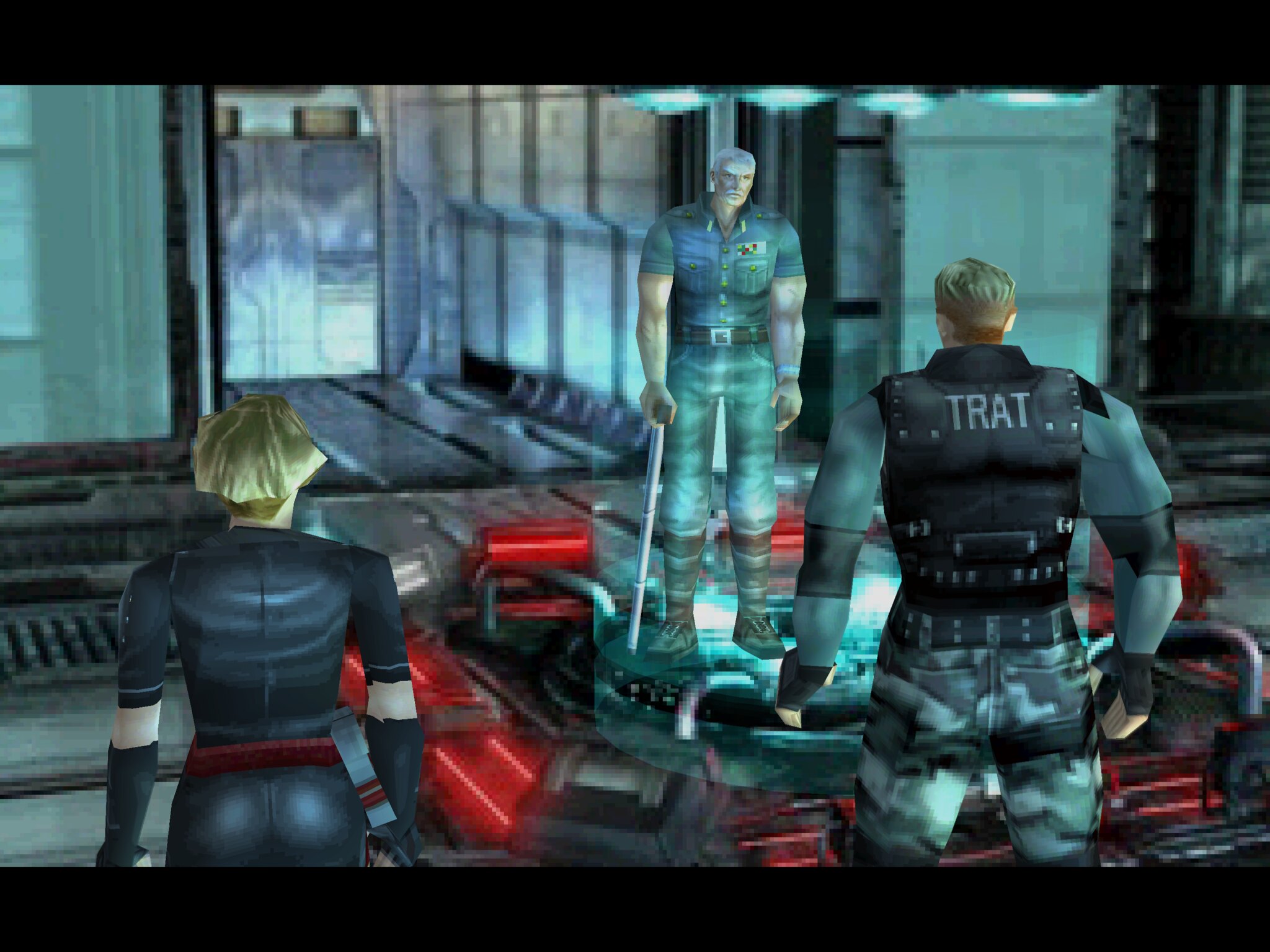
Then the plot twist that I really didn’t see coming: you watch a hologram of an older Dylan from 45 years in the future that explains everything. This whole time we thought we were traveling back in time because of all the dinosaurs, but what about the technology? We’re actually three million years in the future. In a bit of a time-travel-paradox situation, older Dylan recorded a message that he knew his younger self would see, explaining that the mute young lady is actually his daughter (!) and they can use the one remaining Timegate to go back to their original time (2010).
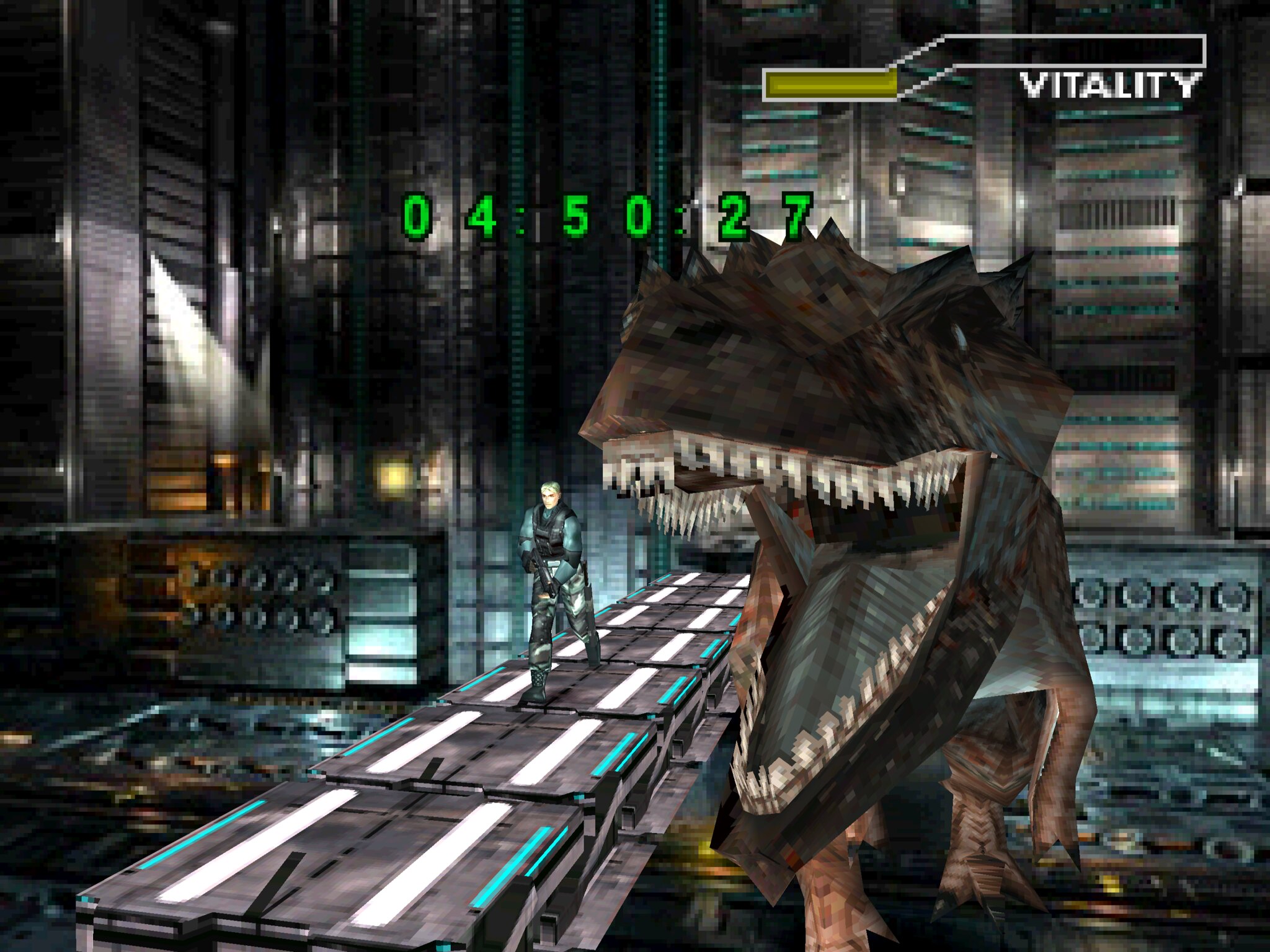
Ah, the classic “big boss won’t die” trope, and the Giganotosaurus returns once again.
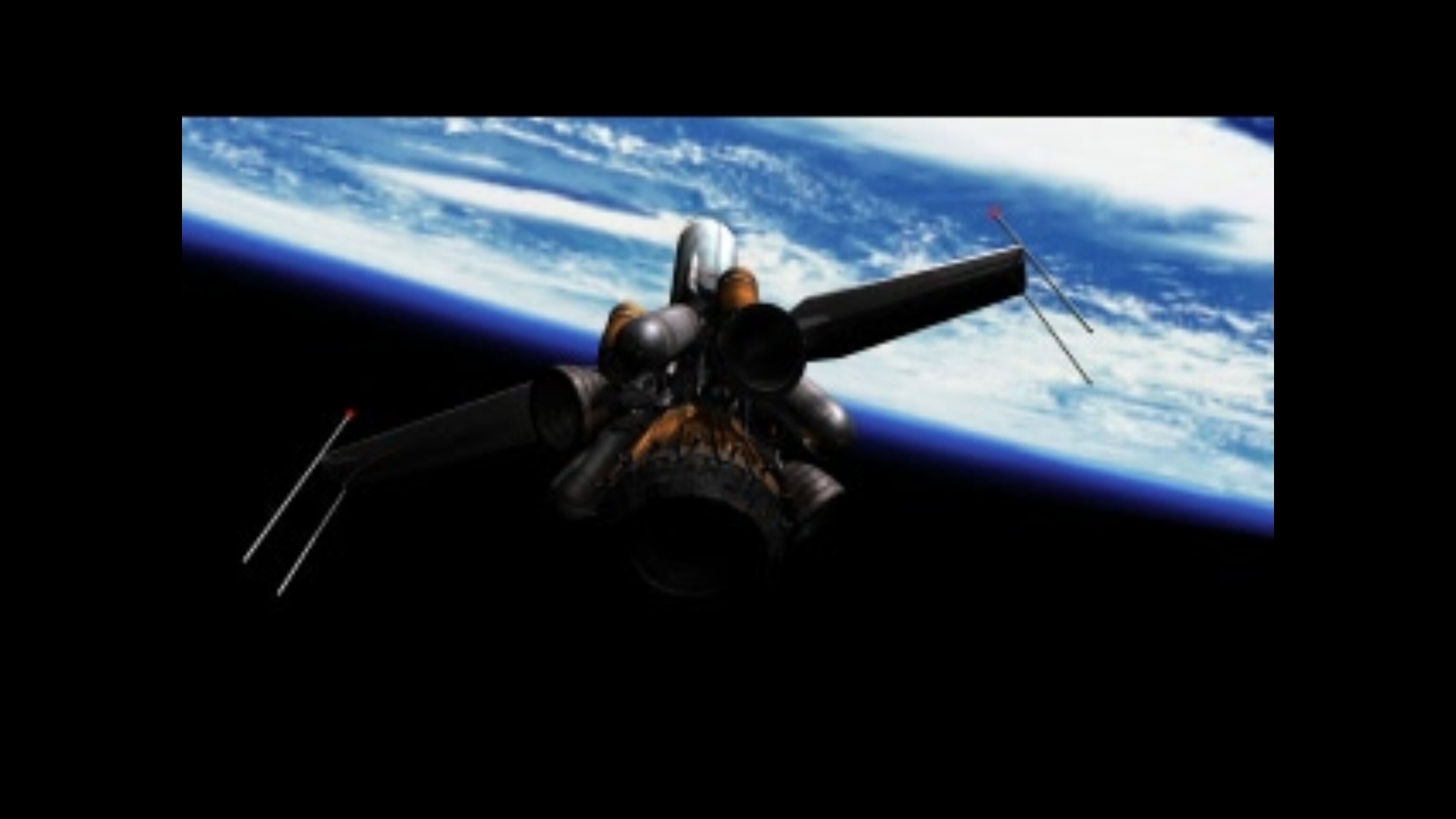
Killing the Giganotosaurus is straight out of Akira, with this satellite that can fire a super powerful laser.
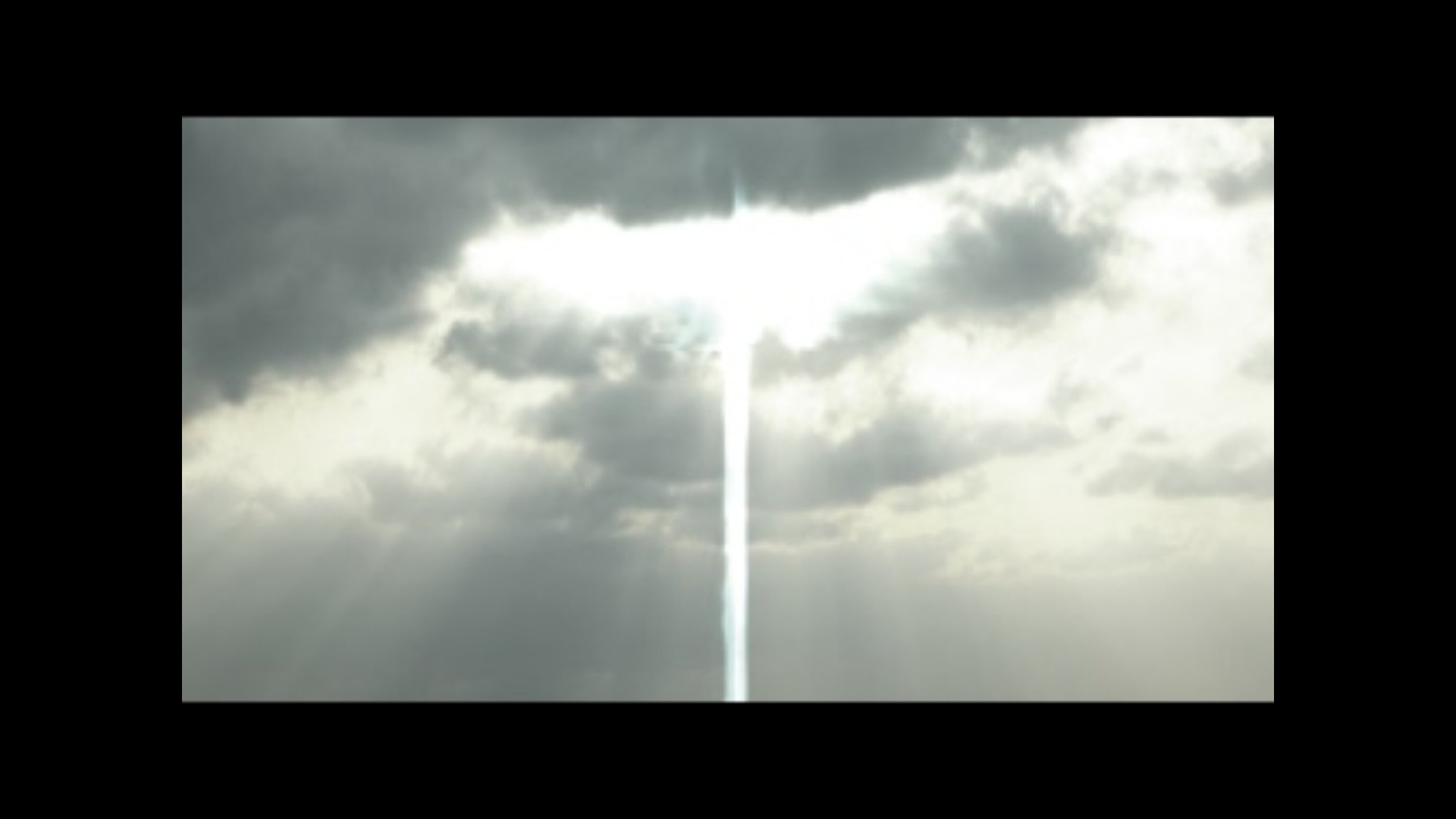
They even included the “blowing a hole in clouds” imagery from Akira.
I mean, I know it was a violent beast out to kill us at every turn, but you kinda feel sorry for him here.
Alright, here’s the ending, so skip the next few paragraphs if you don’t want to know the ultimate conclusion.
Another classic trope at the end sees Dylan’s daughter Paula trapped under a piece of falling debris right at the last moment before they can escape. Rather predictably, Dylan does the classic hero thing and decides to stay there, urging Regina to save herself for now, and then come back (to the future!) again later to rescue them.
Regina doesn’t bother to argue with this and simply obliges, getting into the Timegate and returning to the present.
Bam! And that’s it. I really liked Stephanie Morgenstern in this game. Although she was in dozens of TV shows and anime (including the voice of Sailor Venus in Sailor Moon), the only video game character she ever played was Regina in Dino Crisis 1 and 2.
That ended up being a pretty epic game. At first you think you’re in a straightforward action game, and gameplay-wise, it is. But the story keeps taking turns for the ridiculous in that classic old-school way. The twists keep building and then it just ends on the cliffhanger. Does Dylan really think that Regina will travel through time again to save them? Or does he not want his daughter to die alone? Why would he not go with Regina and then return to save his daughter himself? Unfortunately, all of these questions still remain unanswered to this day. Dino Crisis 3 was released in 2003 for Xbox and had nothing to do with the Playstation games, taking place aboard a spaceship in 2548 with no trace of Regina or any familiar characters.
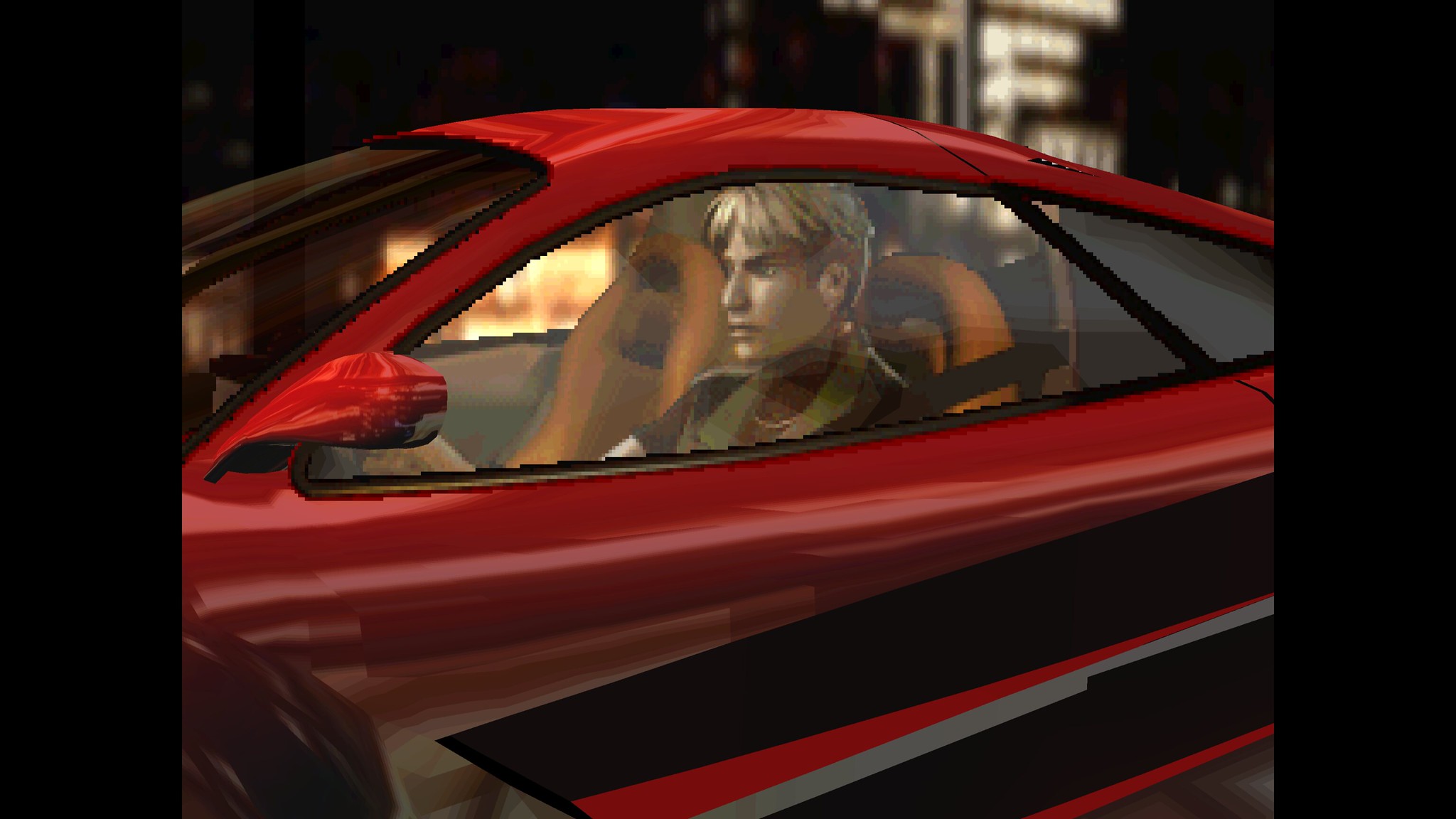
They saved one more bizarre twist for the end: there are three different ending cards that appear under your game stats, and the first one is Dylan driving a McLaren F1-looking supercar (with only two seats). Does this imply that Dylan did end up making it back? Is it a flashback to before this whole mess kicked off? It’s probably just a fun bonus image, but it’s still interesting to think about.
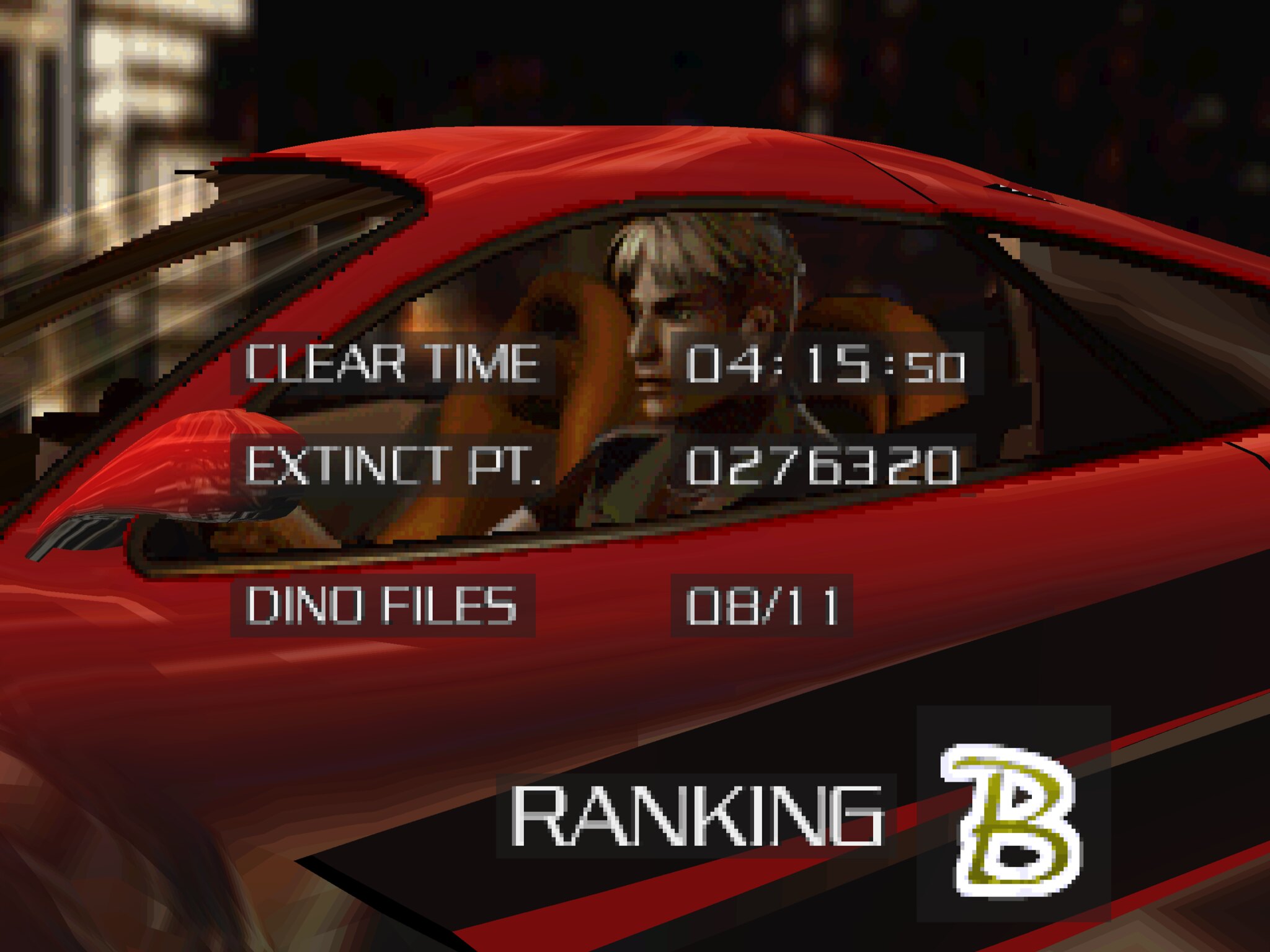
When I started a new game, I didn’t load my clear data from the 2024 playthrough (oops), so I got the Dylan screen. After you beat the game twice you get Regina artwork on this screen, and then Paula artwork after your third completion. I got 9/11 Dino Files on my 2024 play and only 8/11 on this one in 2026. I wonder which ones I missed. Getting all 11 files earns you the EPS Platinum Card, which gives infinite ammo on all weapons.
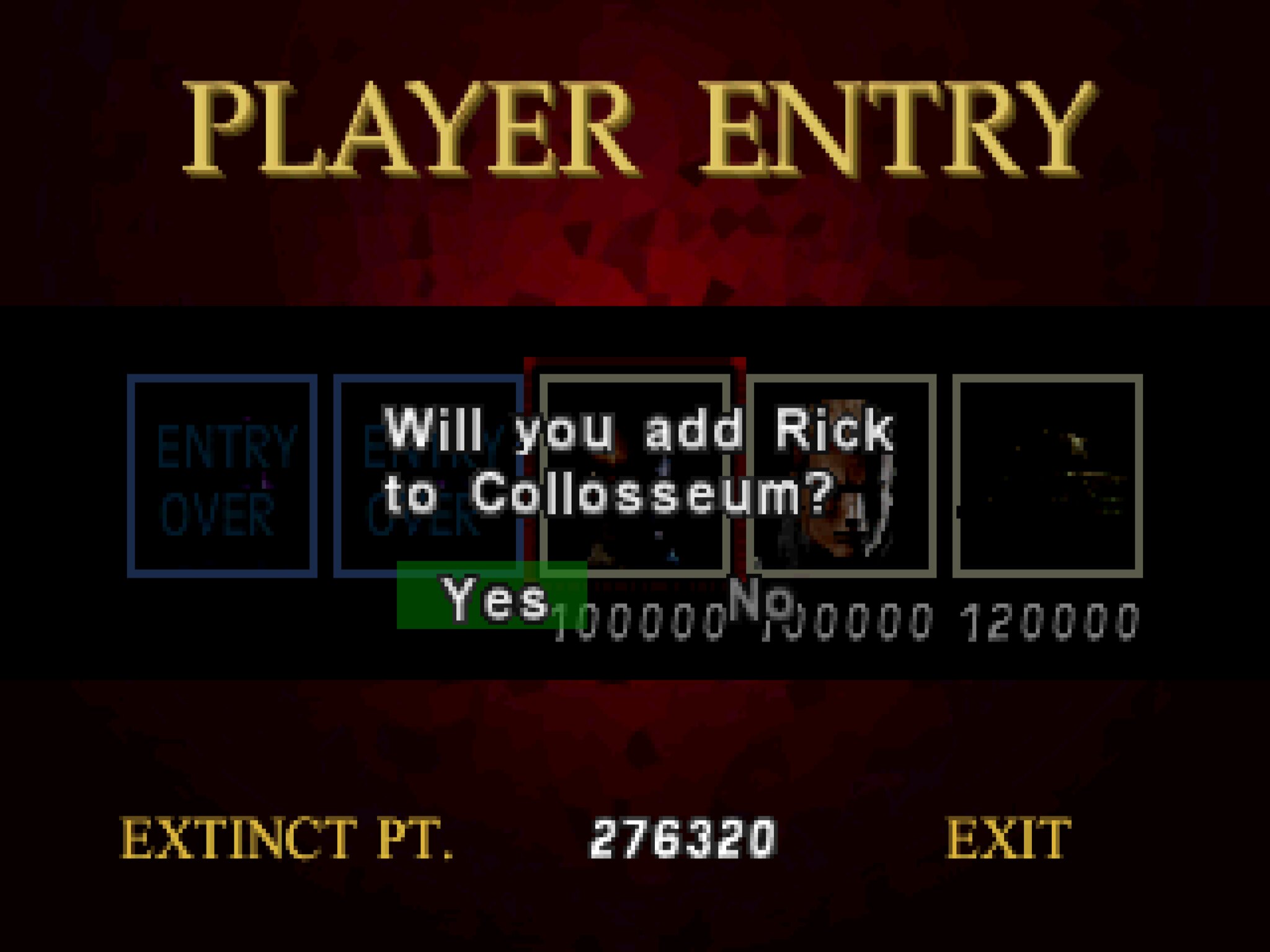
When you finish the game you unlock the Colosseum (yes that’s another typo) which is an arcade-style survival mode for which you can purchase other combatants with your earned Extinction Points, including Rick and Gail from Dino Crisis 1. You can unlock the Dino Duel mode which lets you fight dino versus dino against another player. There’s also a Hard Mode unlocked, but that just seems tedious as you take more damage and deal less.
Better than part one? It’s hard to say, because they are ultimately quite different. While DC1 tries to be slow and scary like Resident Evil, DC2 tries to be thrilling and fast paced. Overall I think DC2 nails its brief better; I want to like DC1 more but it has quite a few clunky and frustrating moments.
Despite the cult following, Capcom has shown little to no public interest in reviving the Dino Crisis IP, either for a remake or a new game. However, I recently read that they want to release a new Resident Evil game every year, starting with 2026’s Requiem and then going to 2027’s Code Veronica remake and beyond. Maybe if those games do well there might be some hope for Capcom to make a bit of a dinosaur diversion?


