
I Went to Japan Twice (Part 2 – 2026) – Thursday/Friday
This post is part of a continuing series of my trip to Japan. If you haven’t read the other posts I suggest you start there:
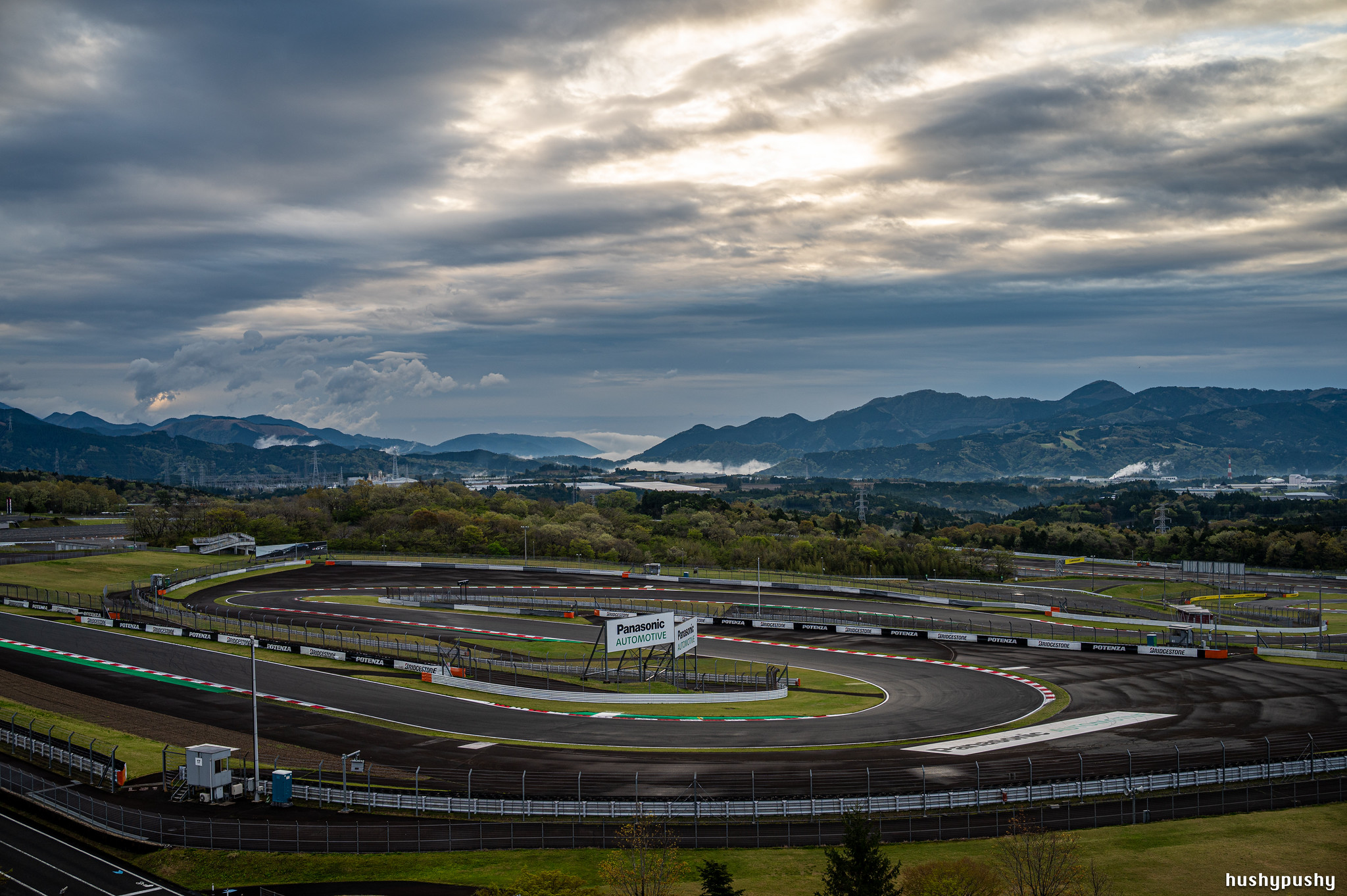
When I woke up in my hotel room on Thursday morning at the Fuji Speedway Hotel, the sun was peeking through the clouds. Maybe the rain shower had passed and we’d have a dry day. Maybe we’d finally be able to see Mt. Fuji!
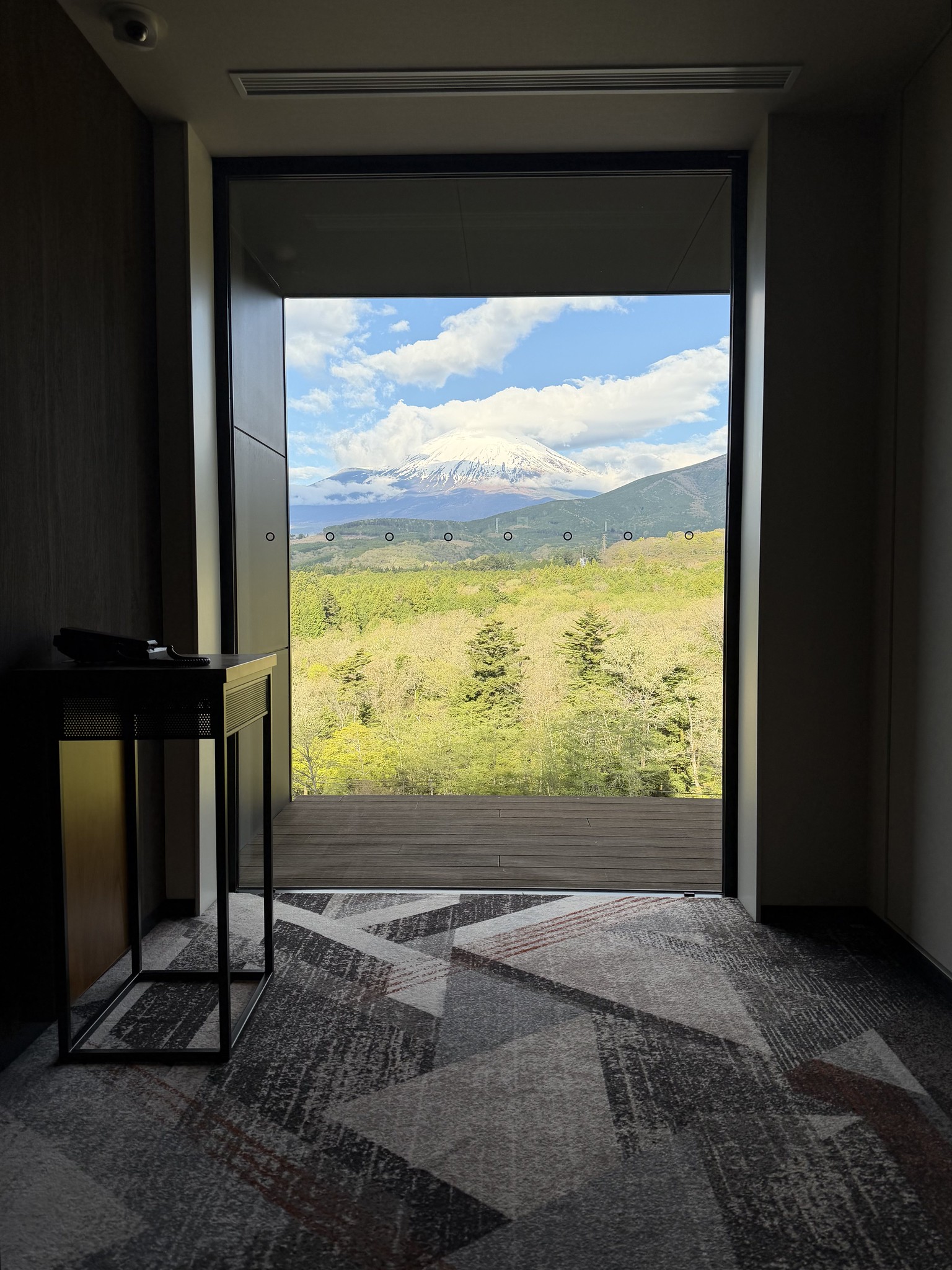
Walking down the hallway to the elevator revealed the answer: there it was, the incredibly epic, awe-inspiring Mt. Fuji.
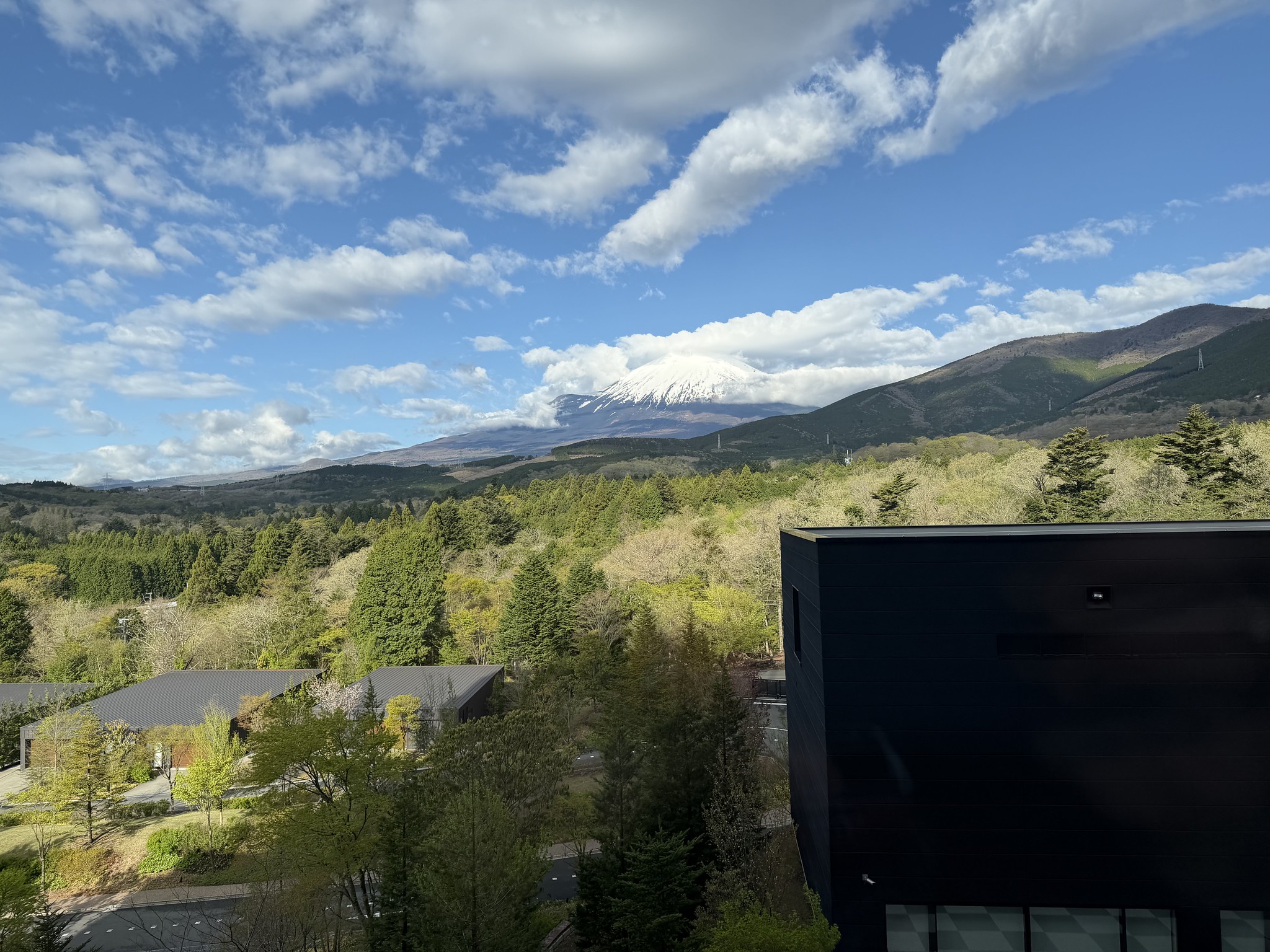
Breakfast at the hotel was a smorgasbord of dozens of choices. I wish I had the appetite in the morning to fully appreciate it. This was the view while I ate my eggs and sipped coffee.
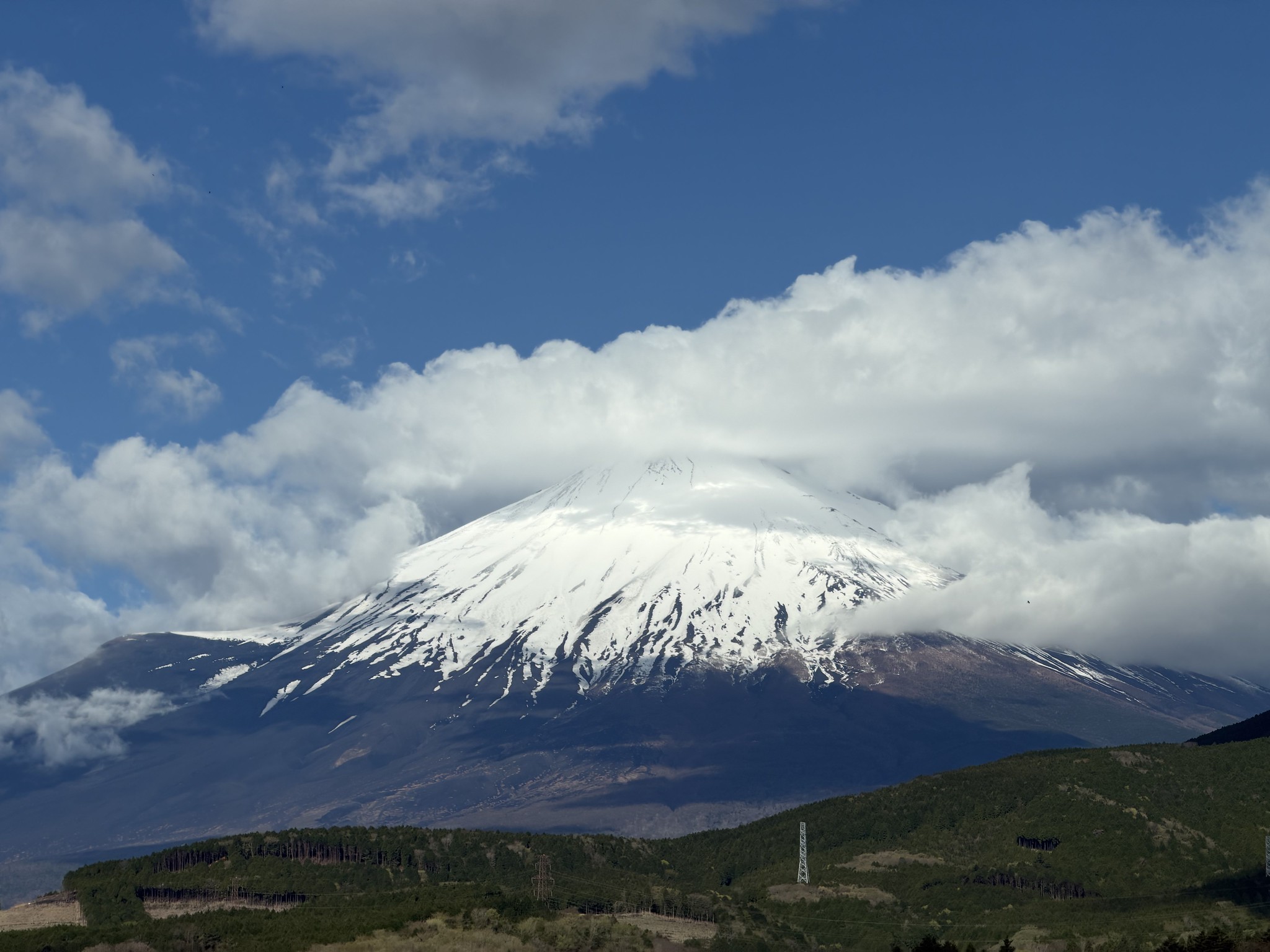
Due to the cloudy weather of the past few days, we hadn’t been able to see the mountain from anywhere, so this was the first time I had ever seen it. The scale is impressive: you really have to look up at it when you’re this close. The mountain peak is 12,388 feet while the elevation of the track is only about 1900 feet, so you have about two vertical miles of volcano to admire.
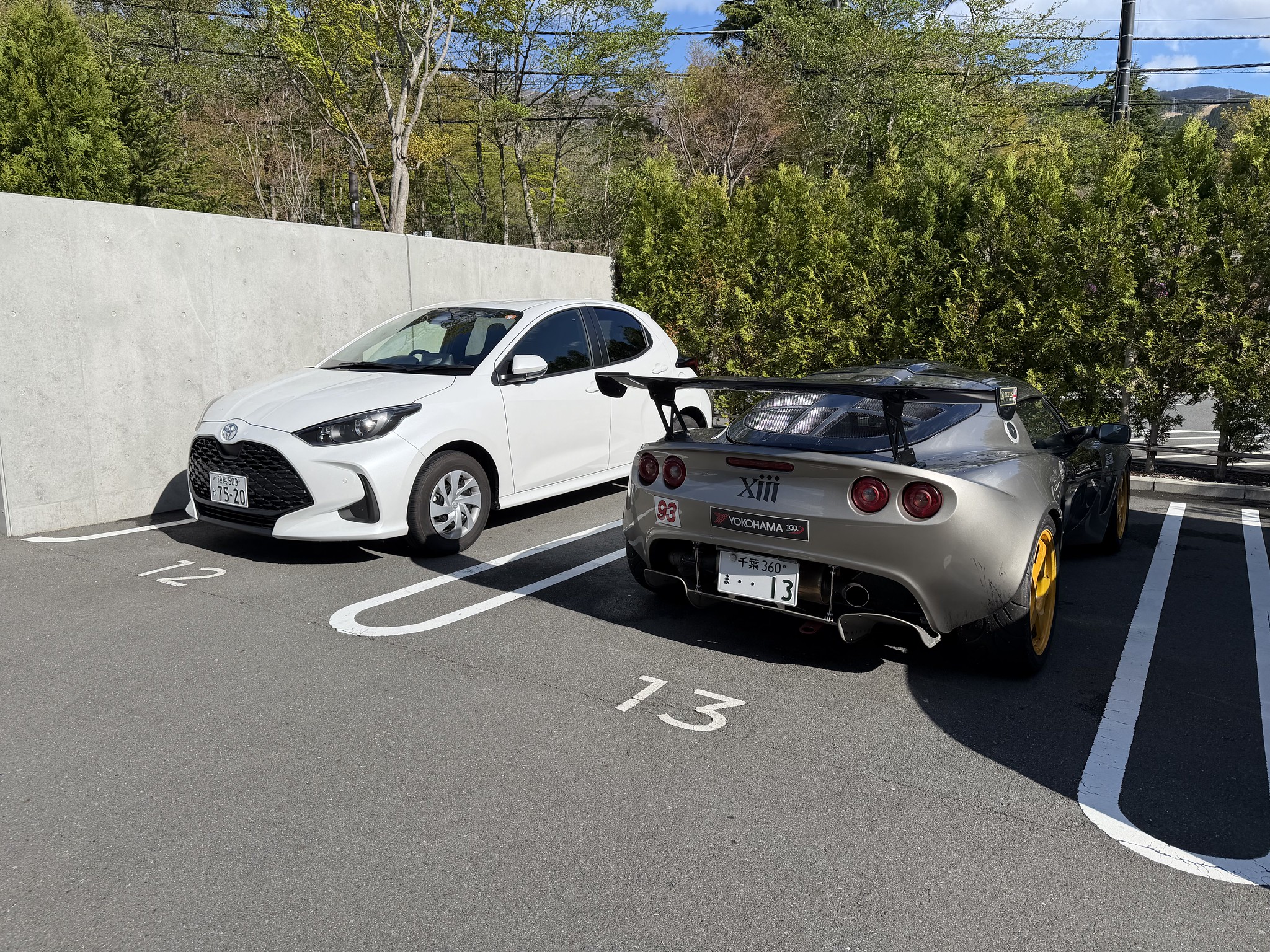
I went out to my rental Yaris and the Exige was still there.
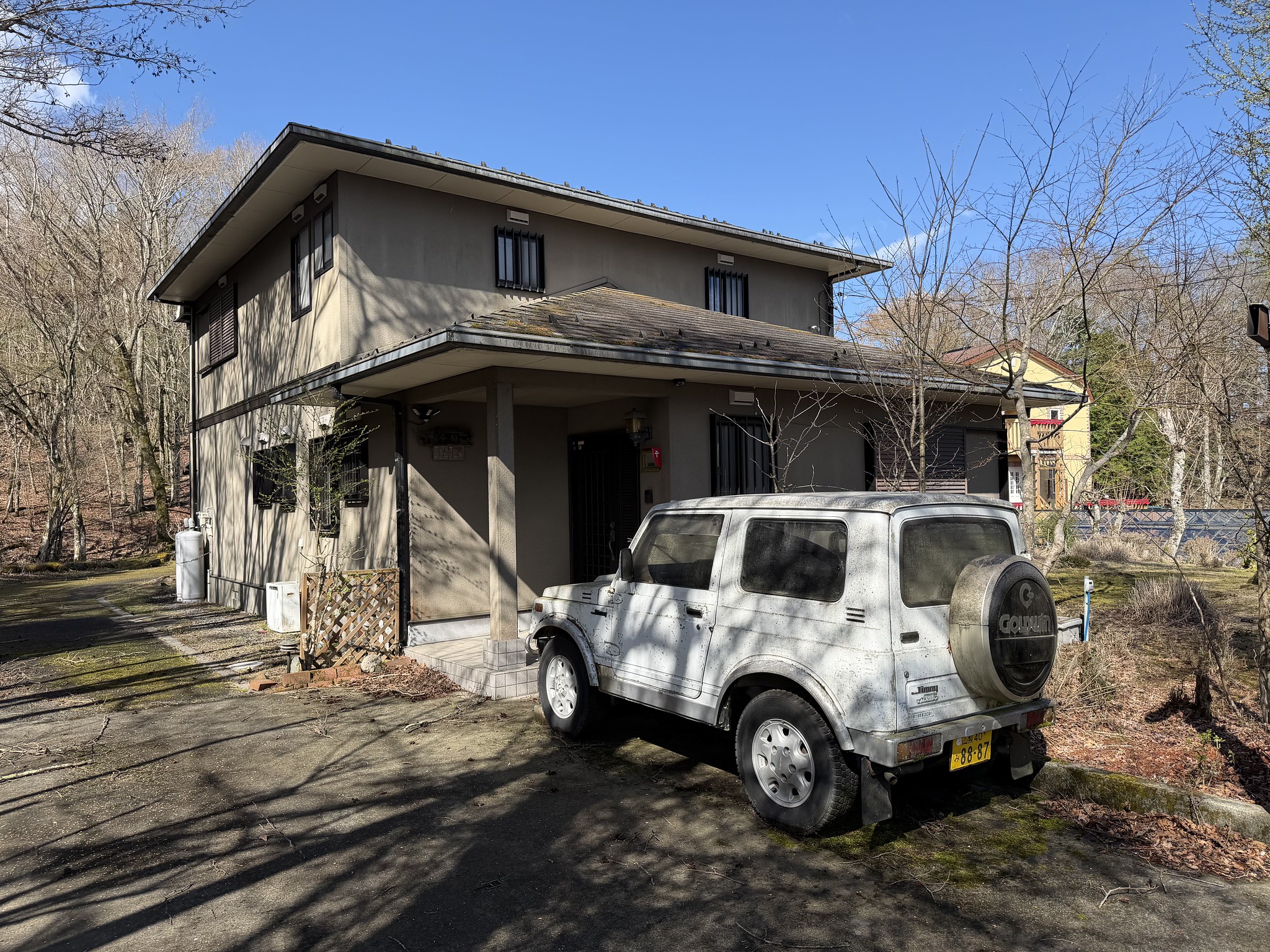
Across the street from Stefan’s Airbnb was this poor moldy Jimny.
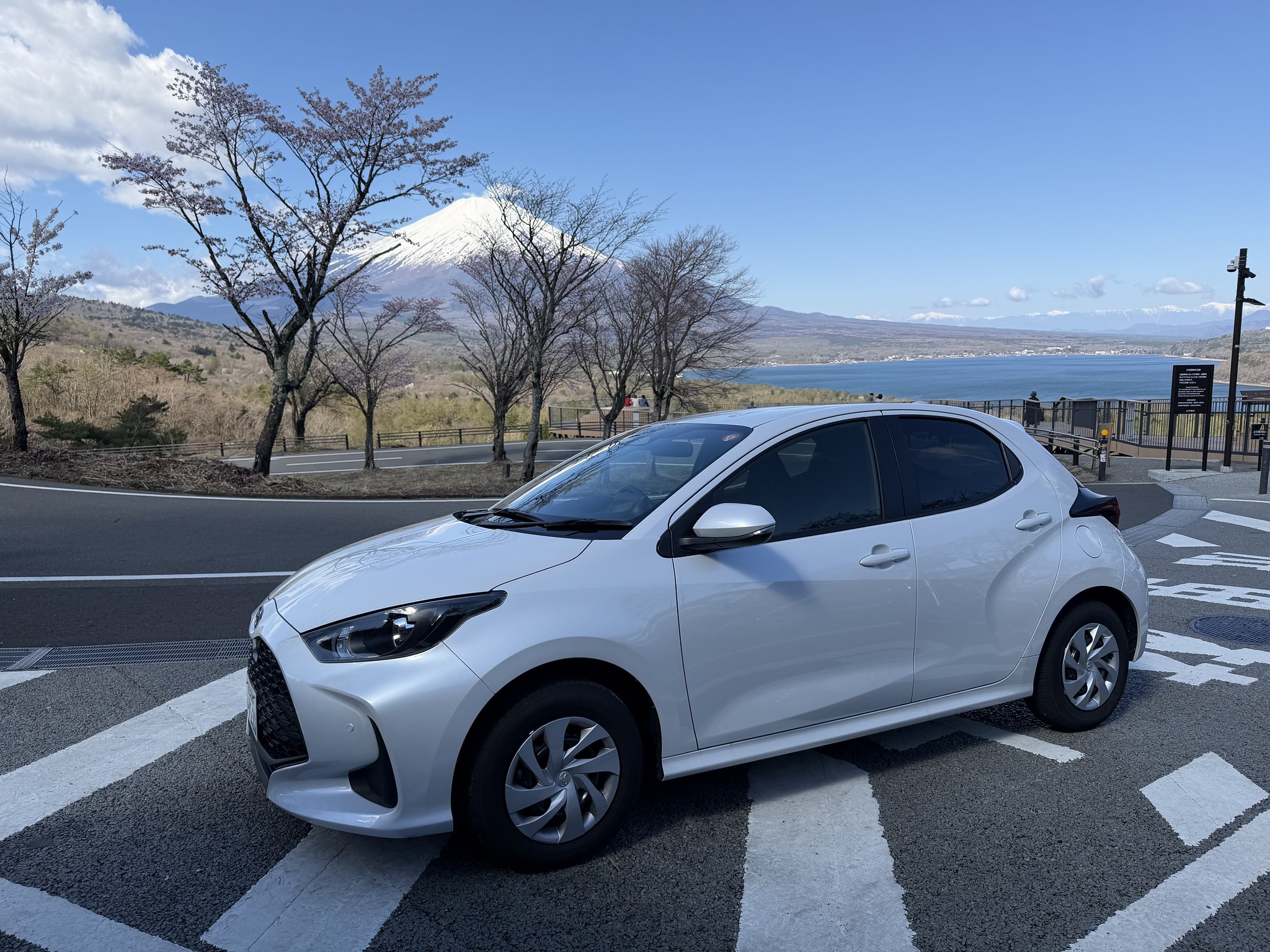
As you can see, the weather was rapidly clearing, and the mountain pass that had been completely deserted the previous evening was alive today. I had to do some illegal parking so we could stop at this lookout because the parking lot was completely packed.
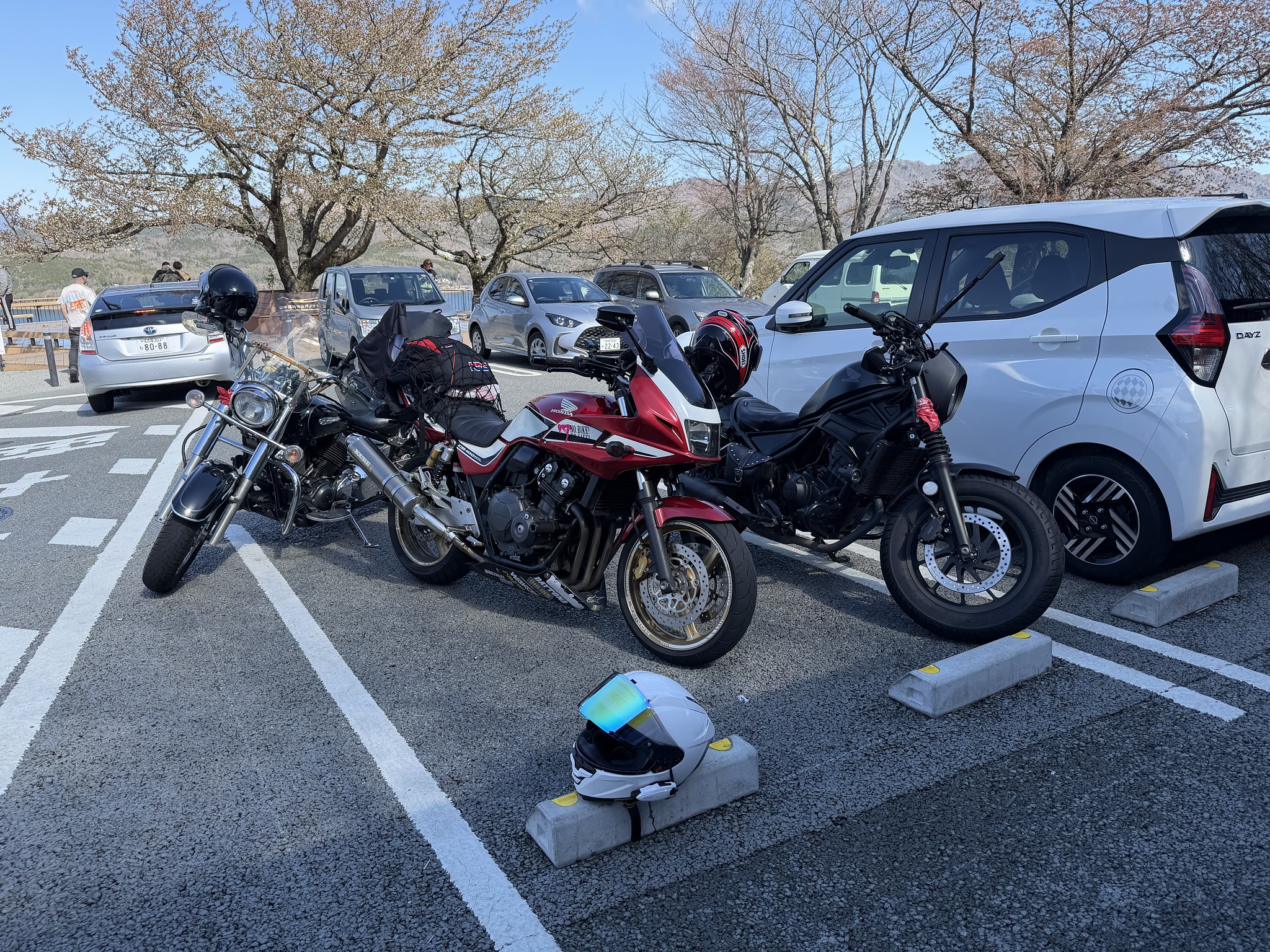
This was an awesome day to ride a motorcycle, especially on a road like this.
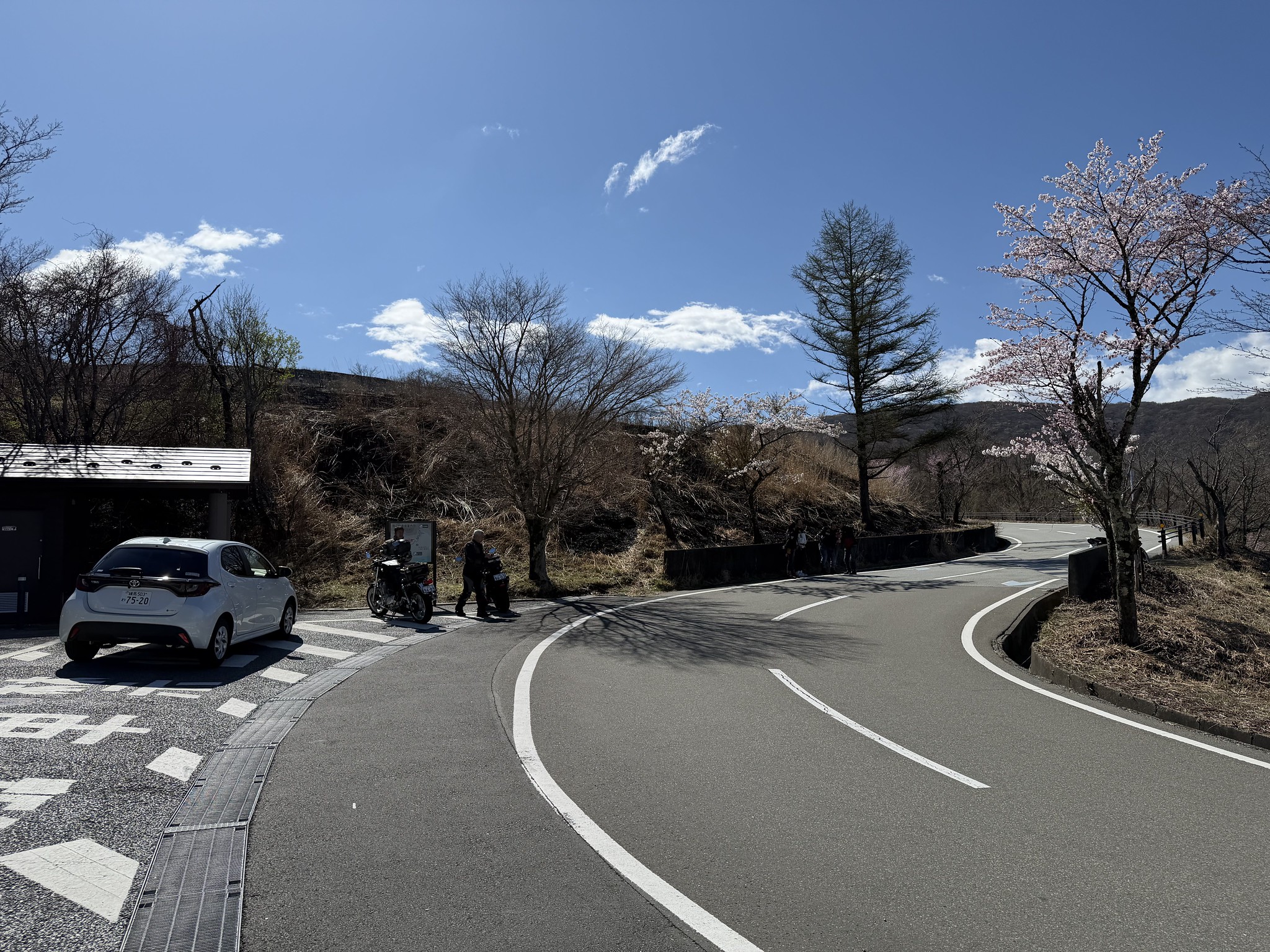
There were a few riders up there taking photos just a bit up the road of their bikes with Mt. Fuji in the background (obscured by the tree on the right in this photo).
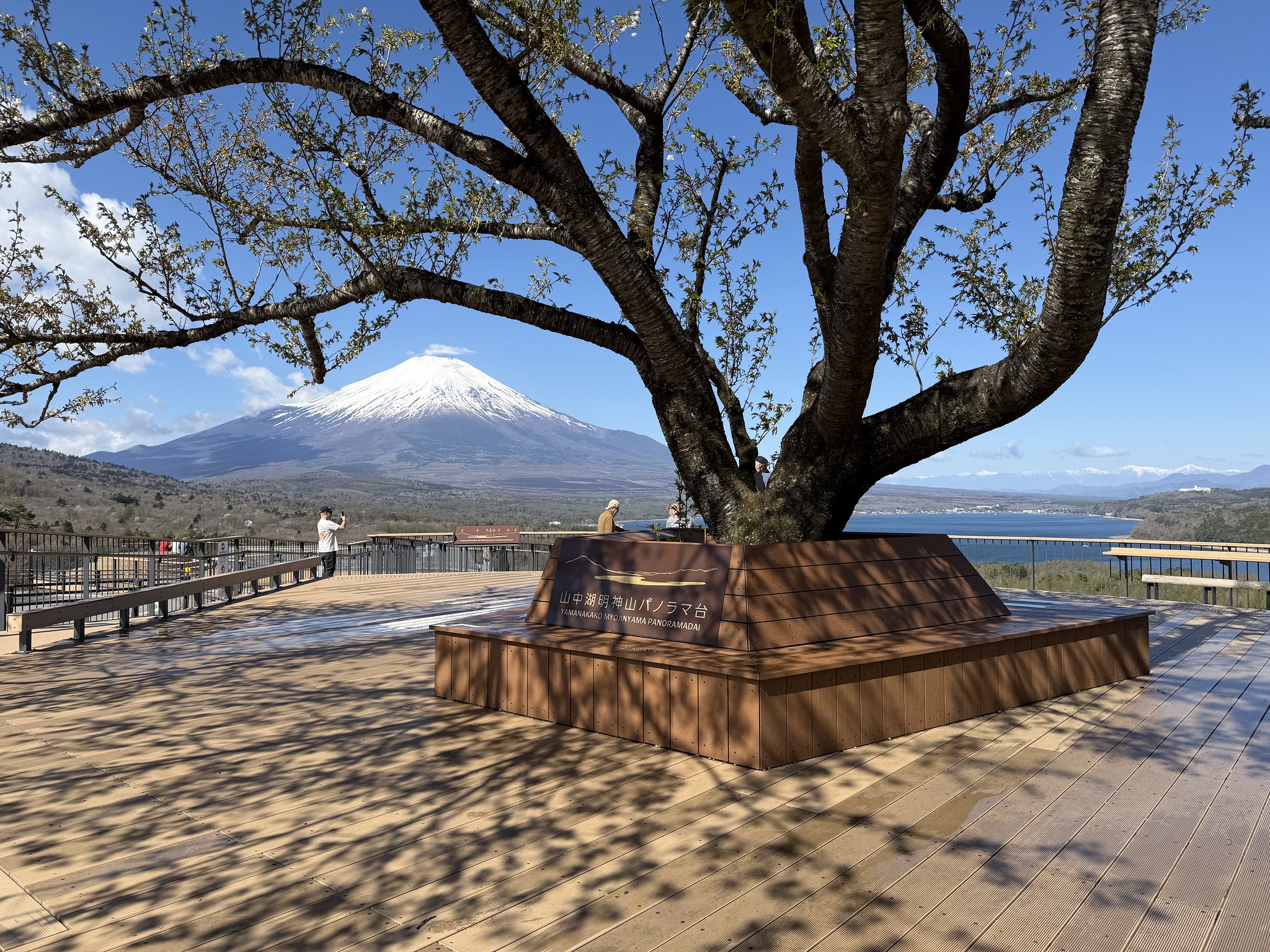
It was a bit perplexing to me that the space was so much larger than the accessibility; recall from above that the parking lot was overflowing, and yet there was this epic large artificial space that felt empty.
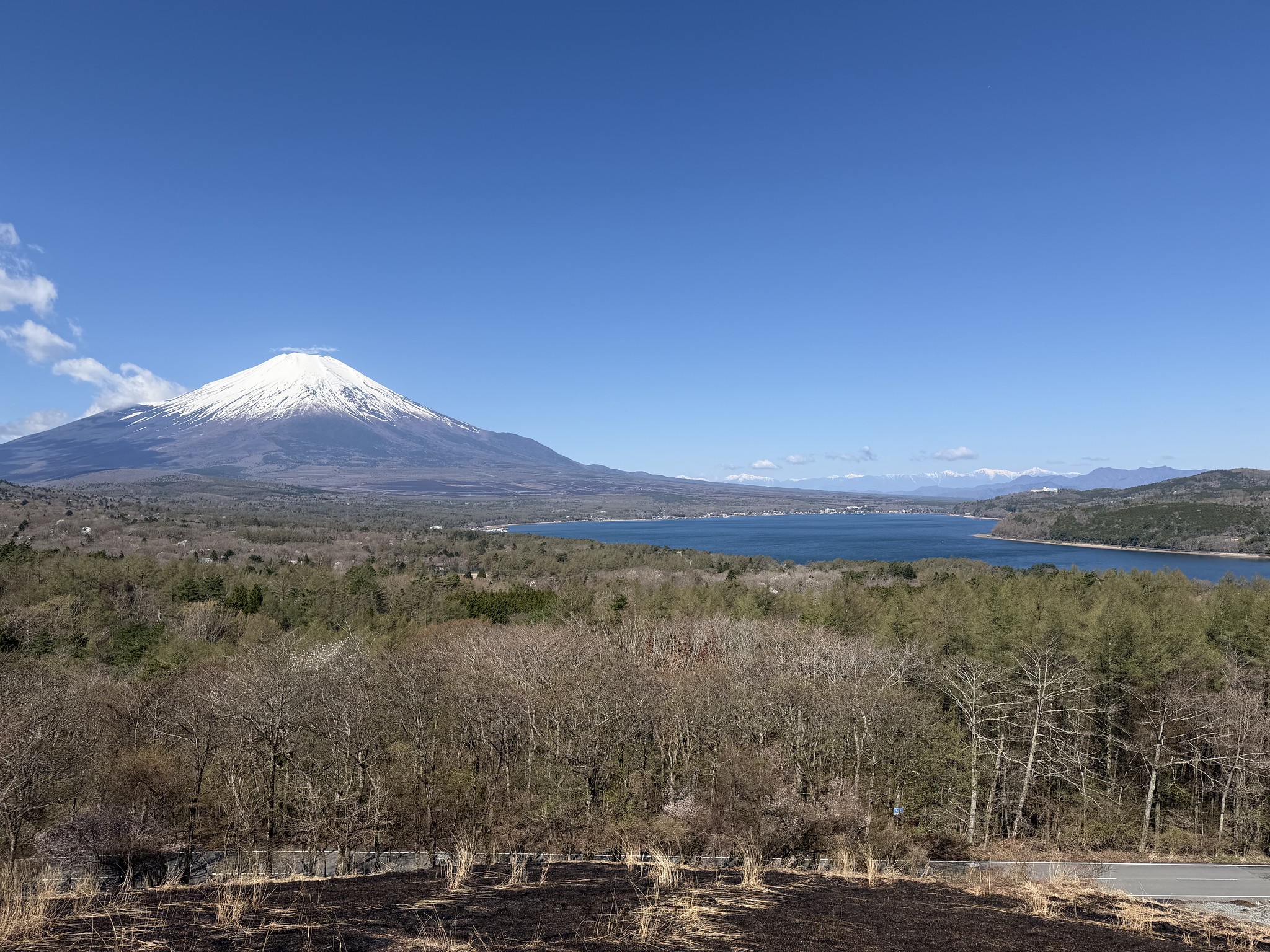
“Empty” is not necessarily a bad thing, as it felt very peaceful up there. And in stark contrast to the previous couple hazy days, it was clear enough to see all the way to that snowy mountain ridge in the background.
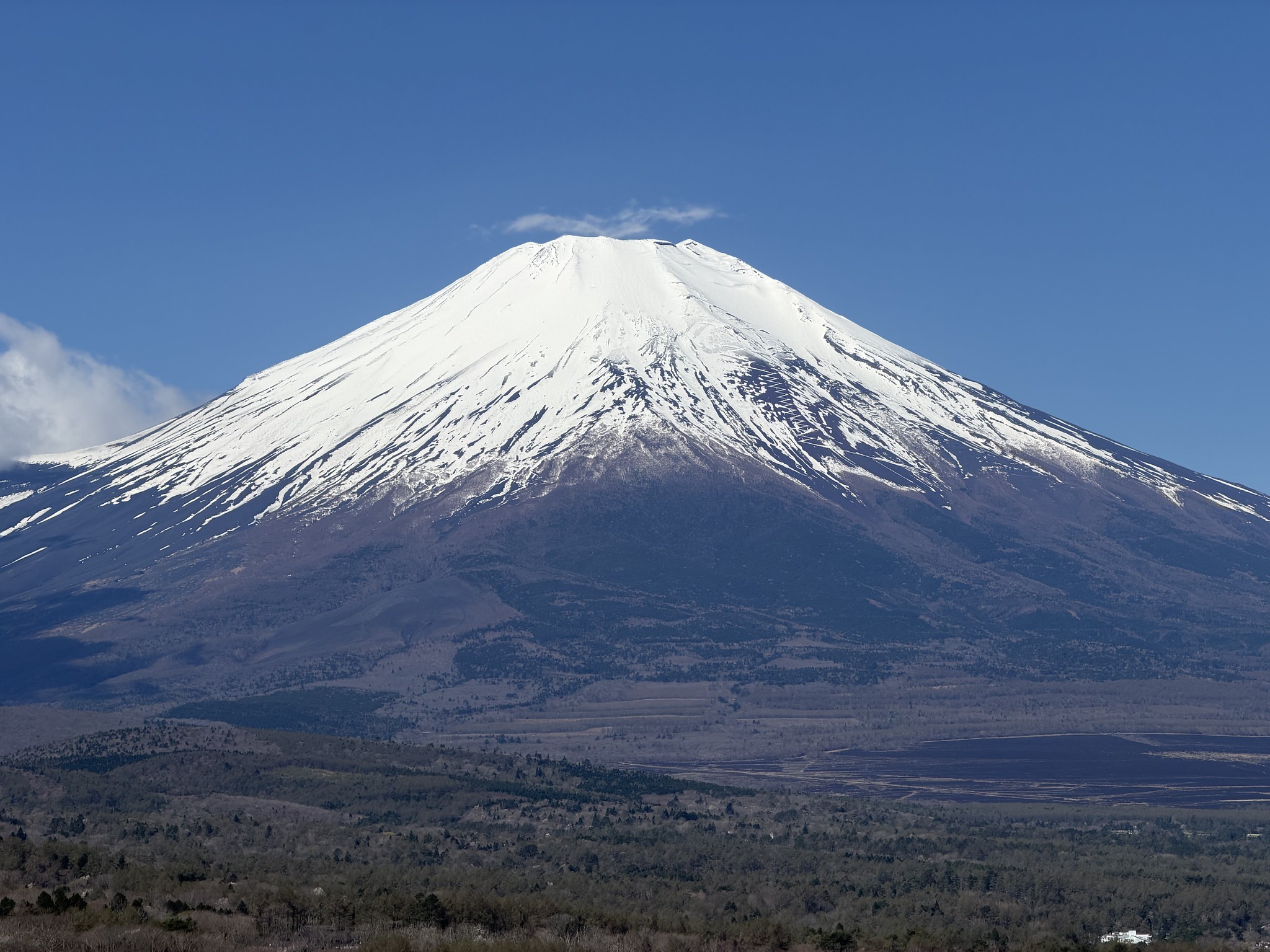
It was also clear enough to get great results out of the “telephoto lens” on the iPhone. Here it is at “4x”. Those snow-filled zigzags are the Yoshida Trail (吉田ルート).
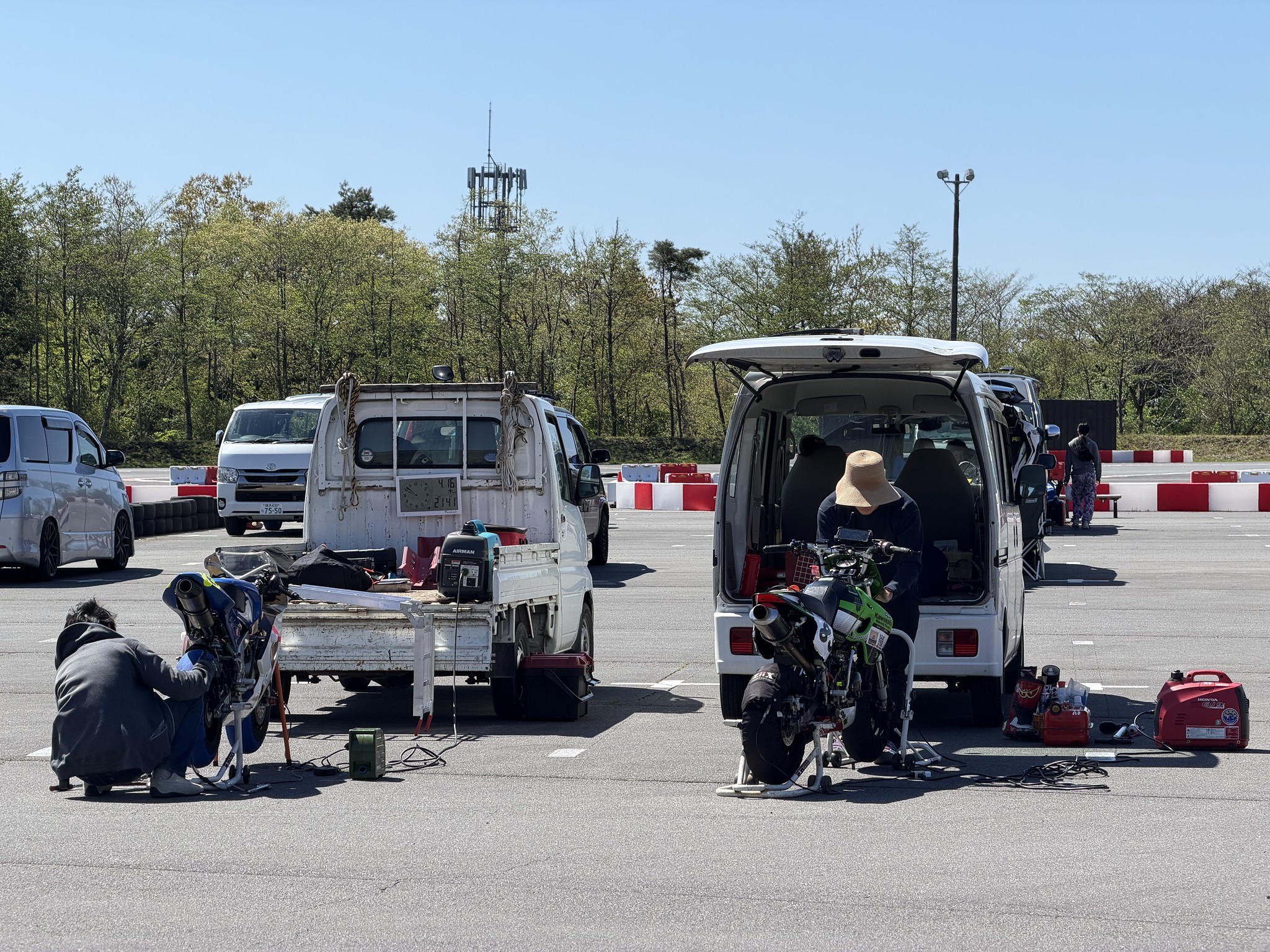
We drove into Fuji Speedway, which is a huge sprawling facility that is completely open to the outside public roads. We made our way into the karting track where there was apparently a motorcycle track day happening. I saw a small cone course next to the kart course; some kind of tiny bike autocross?
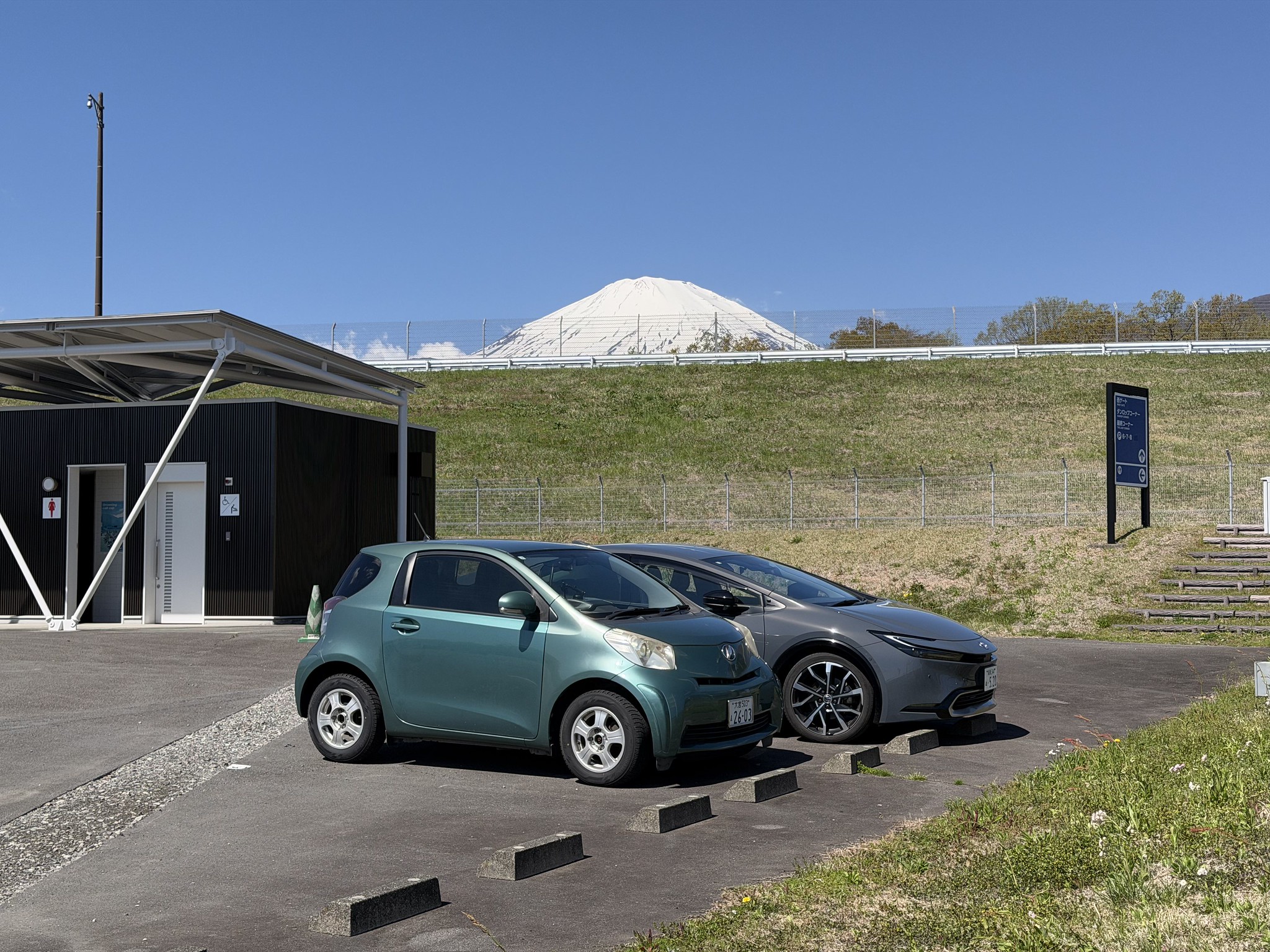
In this area you see Mt. Fuji poking up everywhere. No wonder people are so obsessed with it.
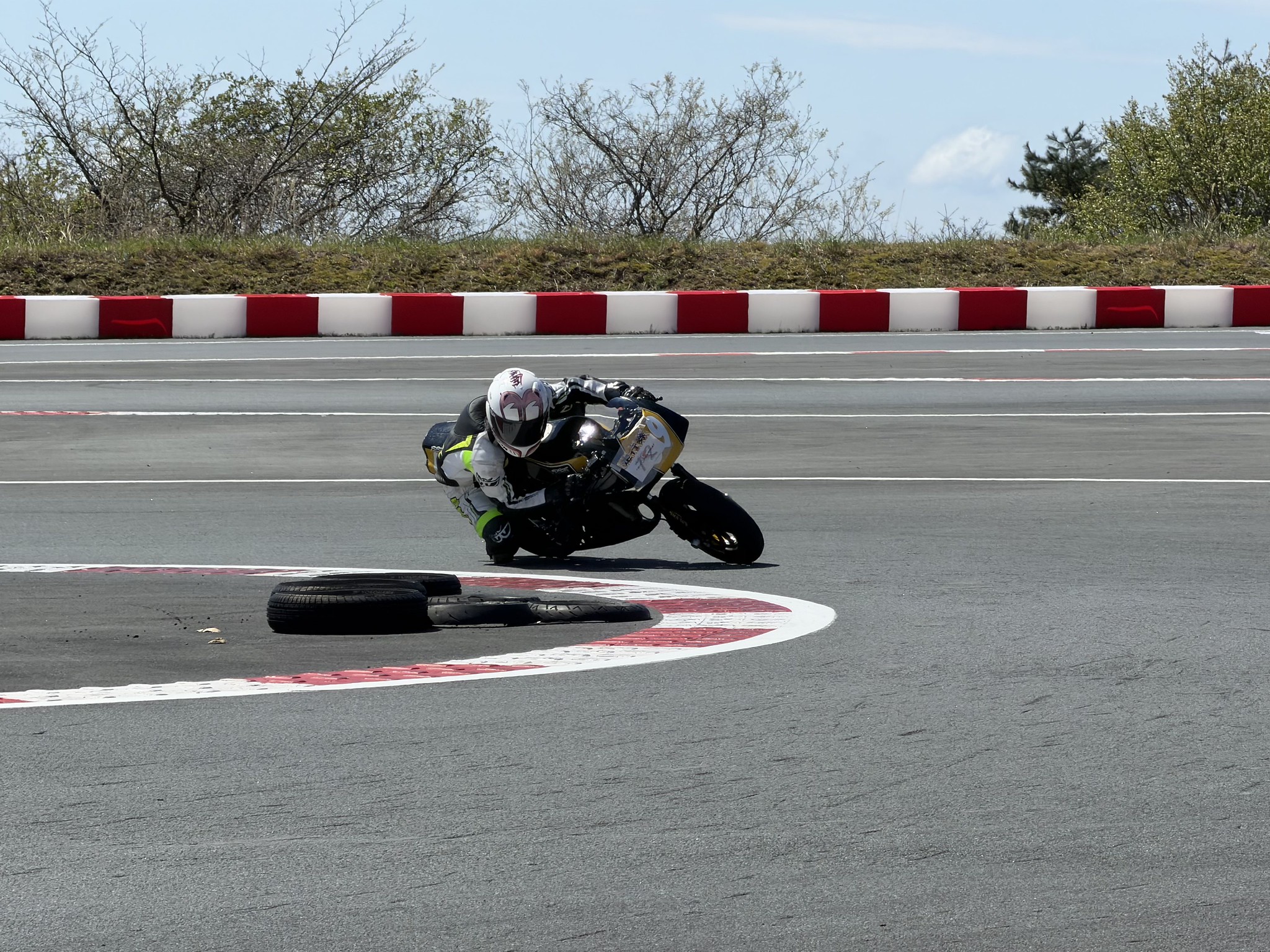
Our timetable for Thursday had been pushed back a bit. Originally I planned to do Fuji Motorsport Museum on Wednesday evening, but I didn’t realize they actually close at 5 PM on weekdays until I arrived there at 5:15. I decided to do it on Thursday right after I checked out of the hotel, but before that we would go karting next door at the Speedway. We arrived at the kart track just before it opened for business, but we had to wait: the motorcycles were rolling out! Stefan and I were the only two people there for karting anyway, so we waited and watched.
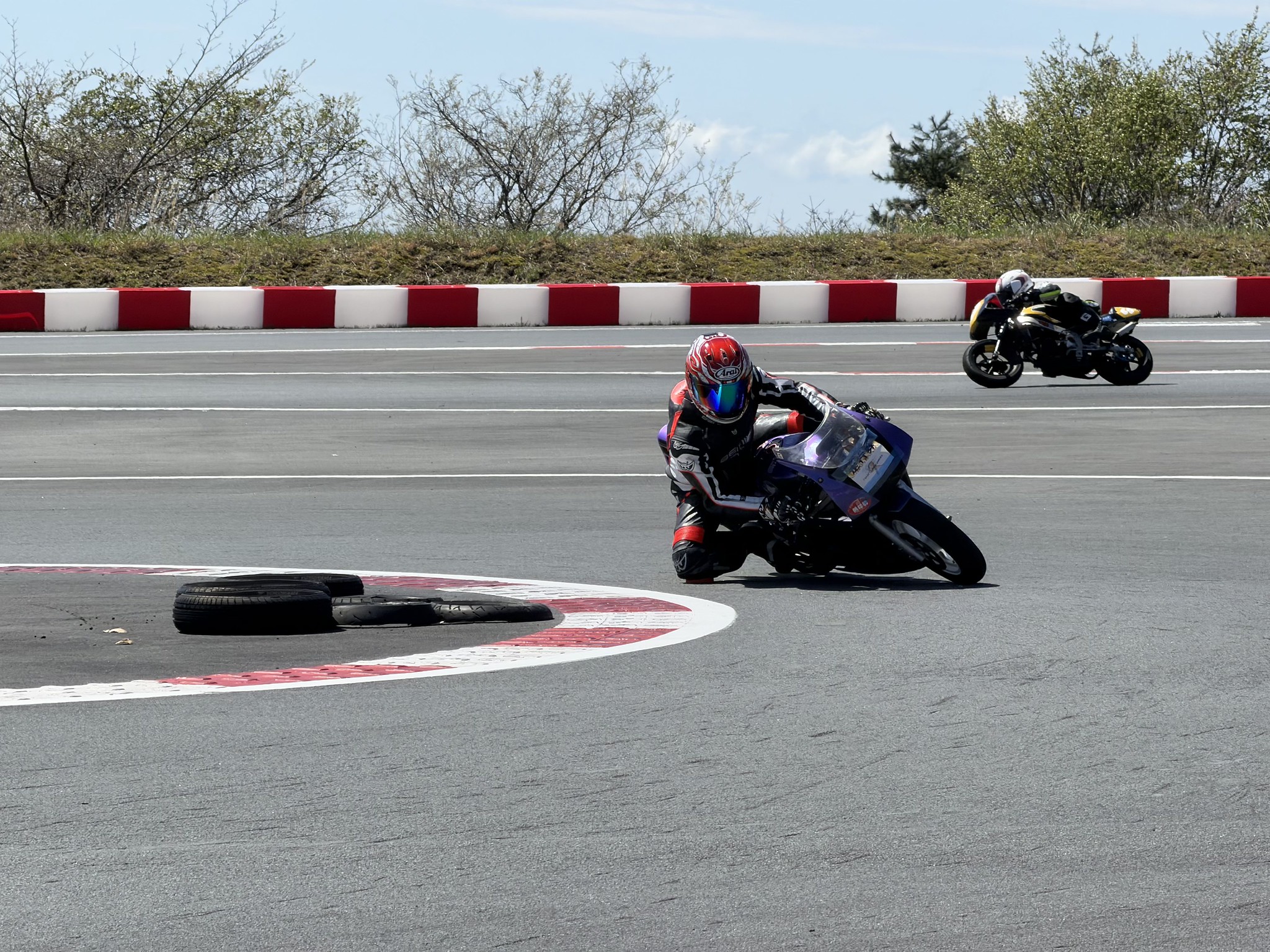
Some of those riders were really laying it in there! Far from being inconvenienced, I thought it was a really cool treat to be able to watch this.
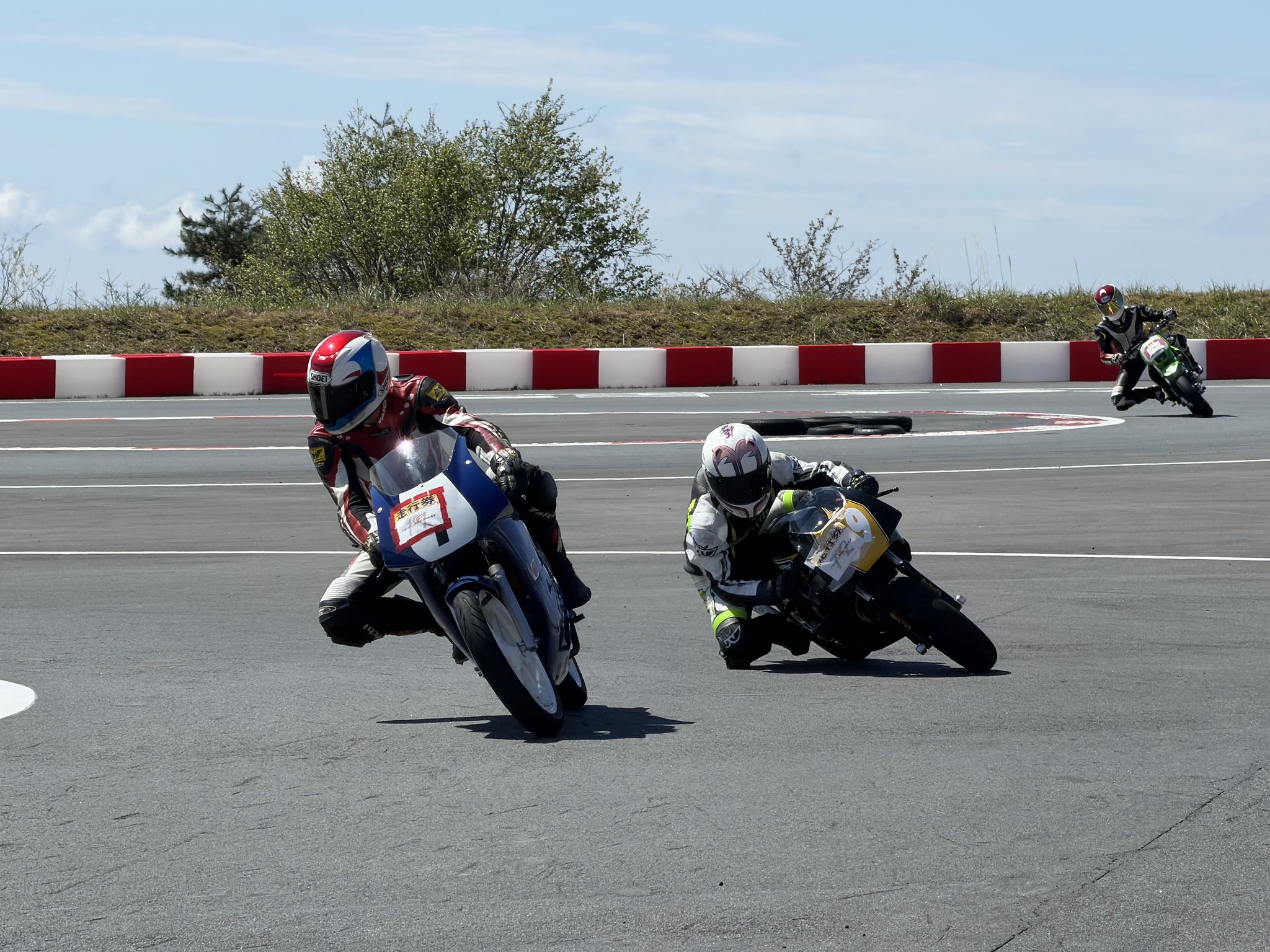
Like any amateur track day, there was a large variety of machinery and skill levels. Check out how skinny the tire on that front bike is! Man, at this moment I really wished I had my 70-200mm telephoto lens with me. I actually didn’t even bring my Nikon to the karting track at all.
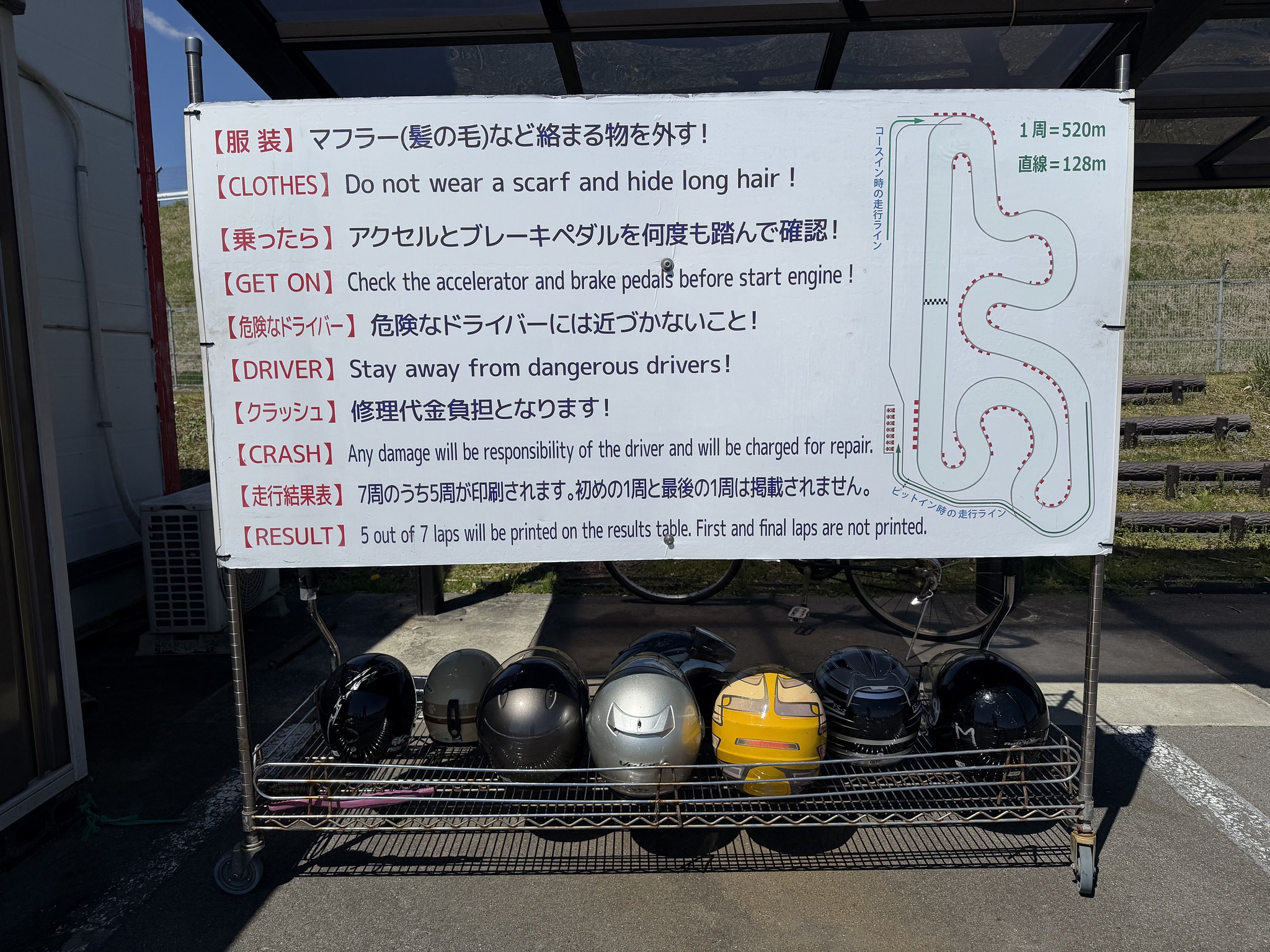
We had our drivers briefing which was the usual stuff. The interesting part for me was that our host had much more to say than what was on this board, so I had to interpret in real time for Stefan! That was pretty exciting, and reminded me of what I could have spent my career working on.
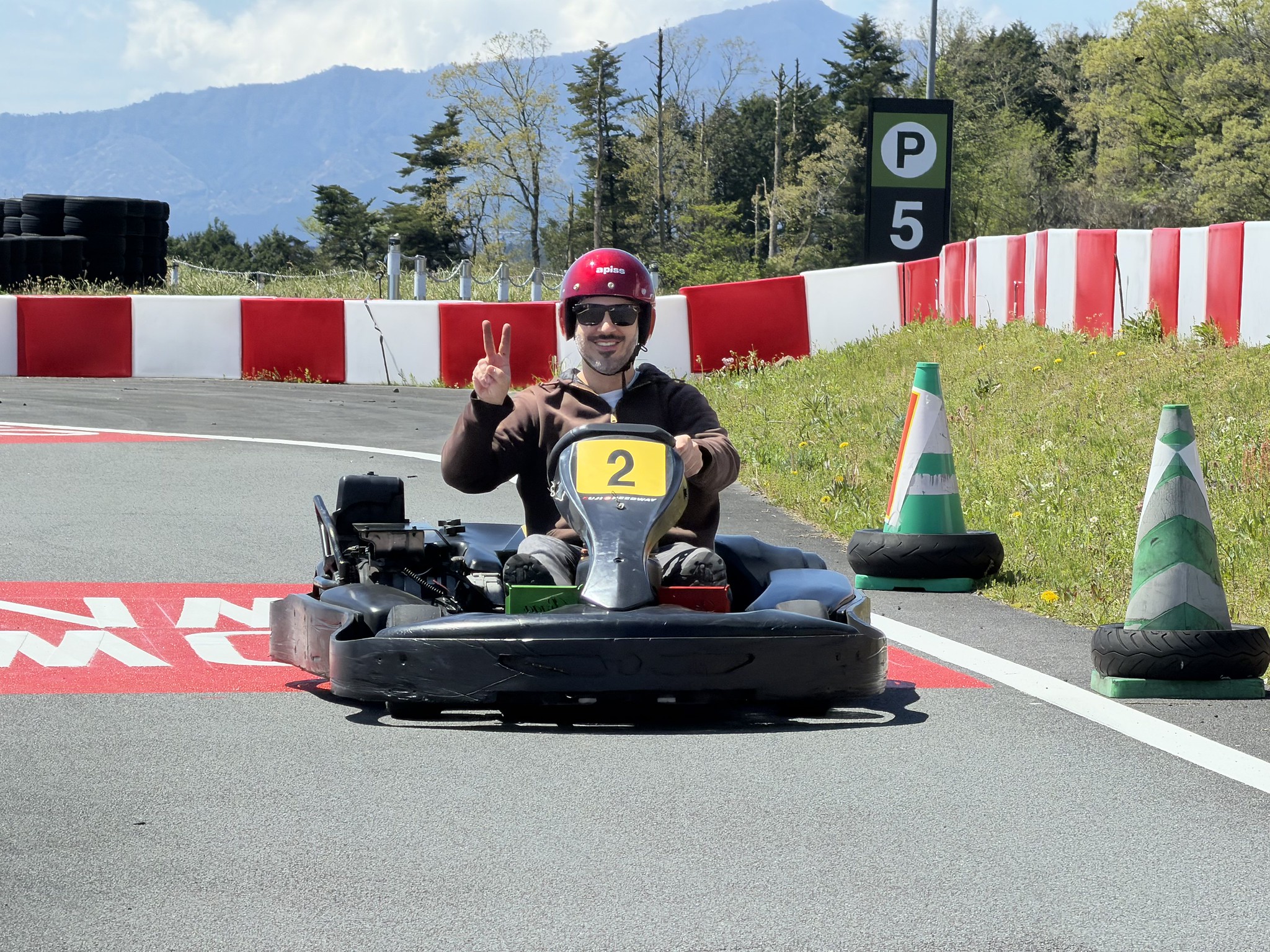
The kart was very slow, sitting at the rev limiter on the main straight for multiple seconds, which meant that relative to the vehicle, this was a properly fast course that required very little braking or even lifting of the throttle. I had an absolute blast and wish I bought the extra laps. And I very much regret not bringing my GoPro to Japan to record this! It was Stefan’s first time ever driving a kart, and after I jumped out of my kart I realized he was still on track. I grabbed my phone and managed to get a few snaps as he rolled into the paddock. That tiny helmet is hilarious! I actually put on a full-face helmet because I didn’t have any glasses.
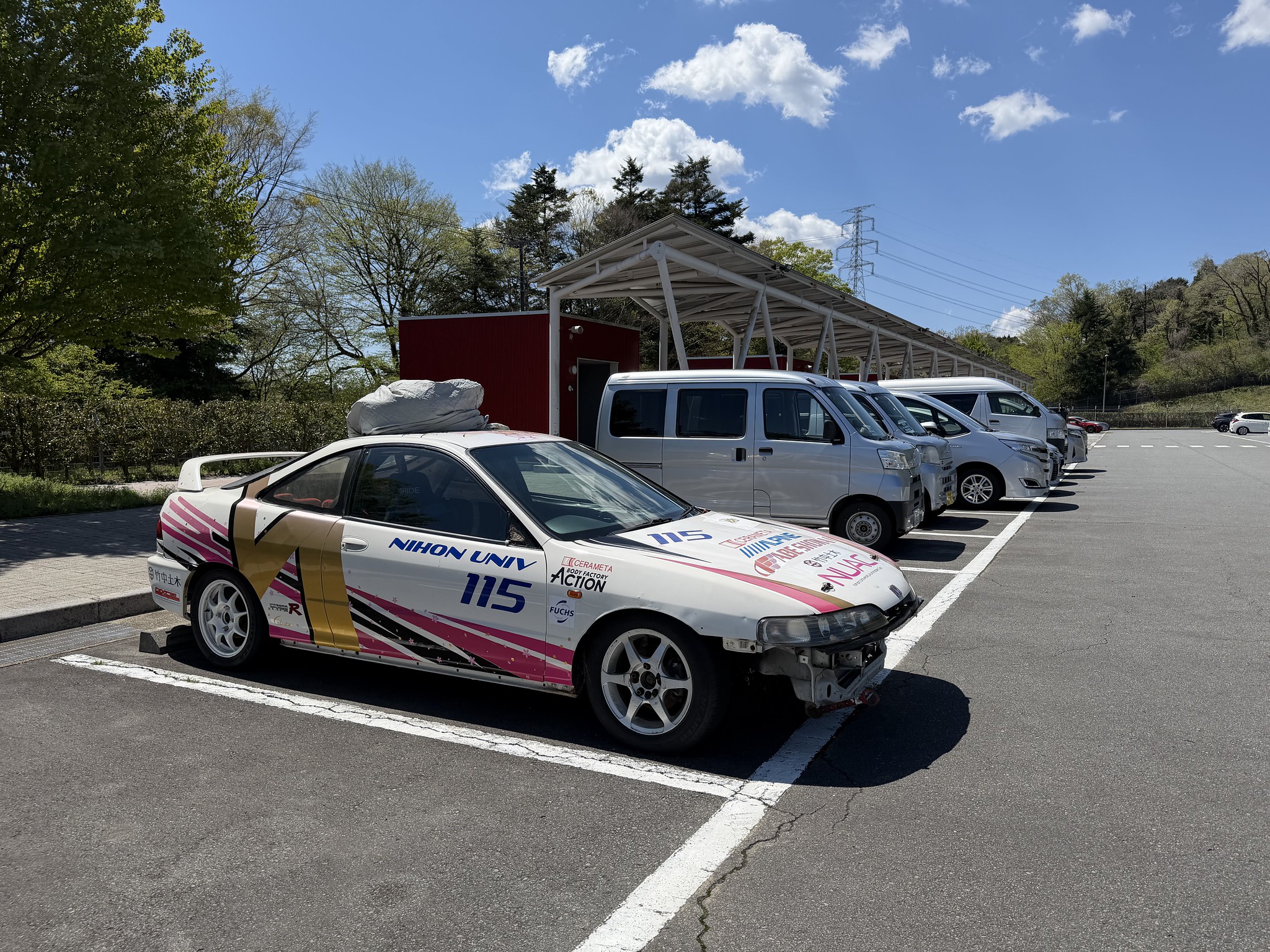
On our way out, I had to stop when I saw this line of parked cars, especially this DC2 Integra Type R with racing modifications.
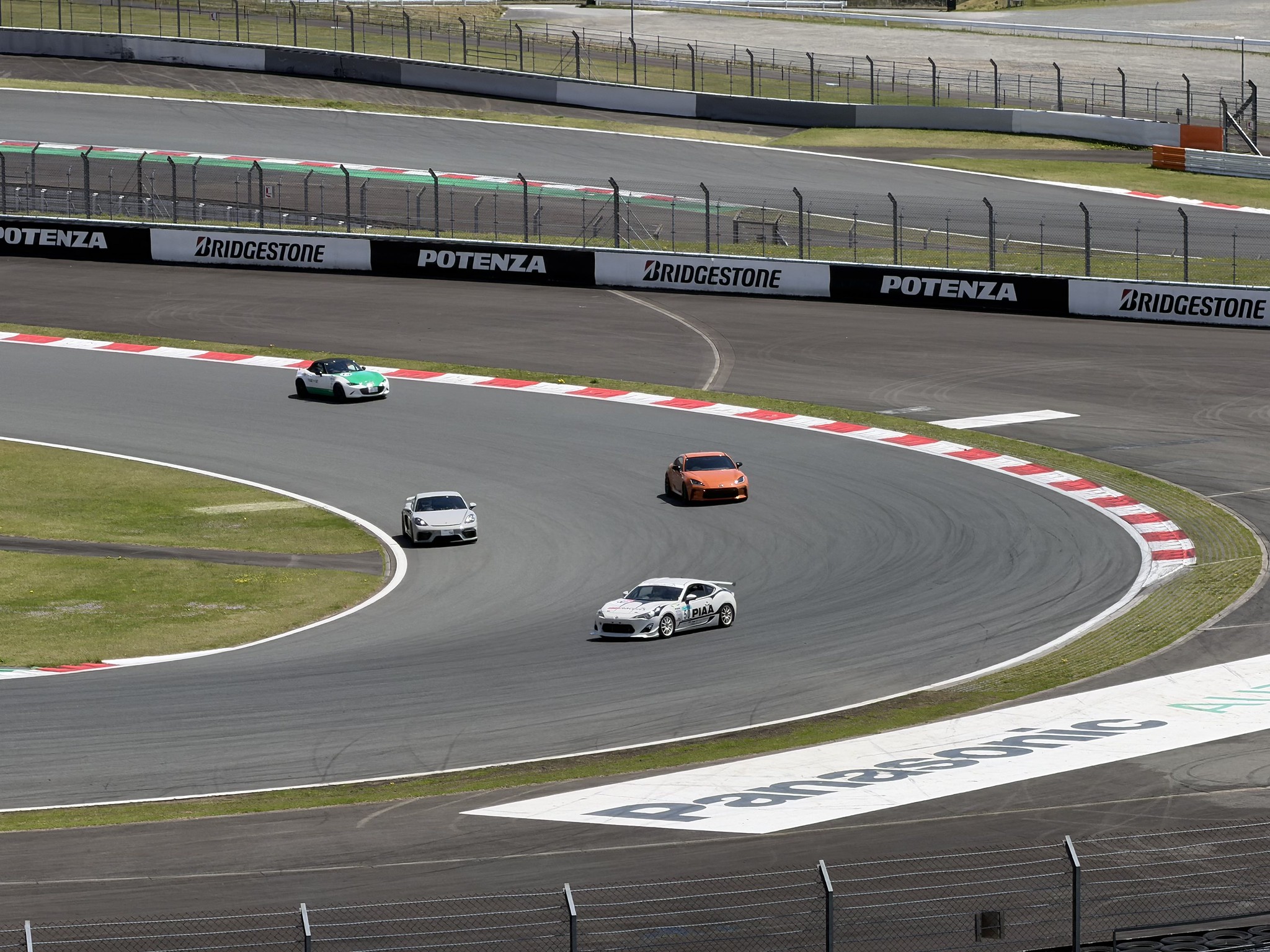
Back at the hotel, I went to get my things and check out of my room. Of course, I couldn’t help but get distracted from watching the track day from my balcony. Just like back in the USA, 86’s, Miatas, and Porsches are very popular track cars.
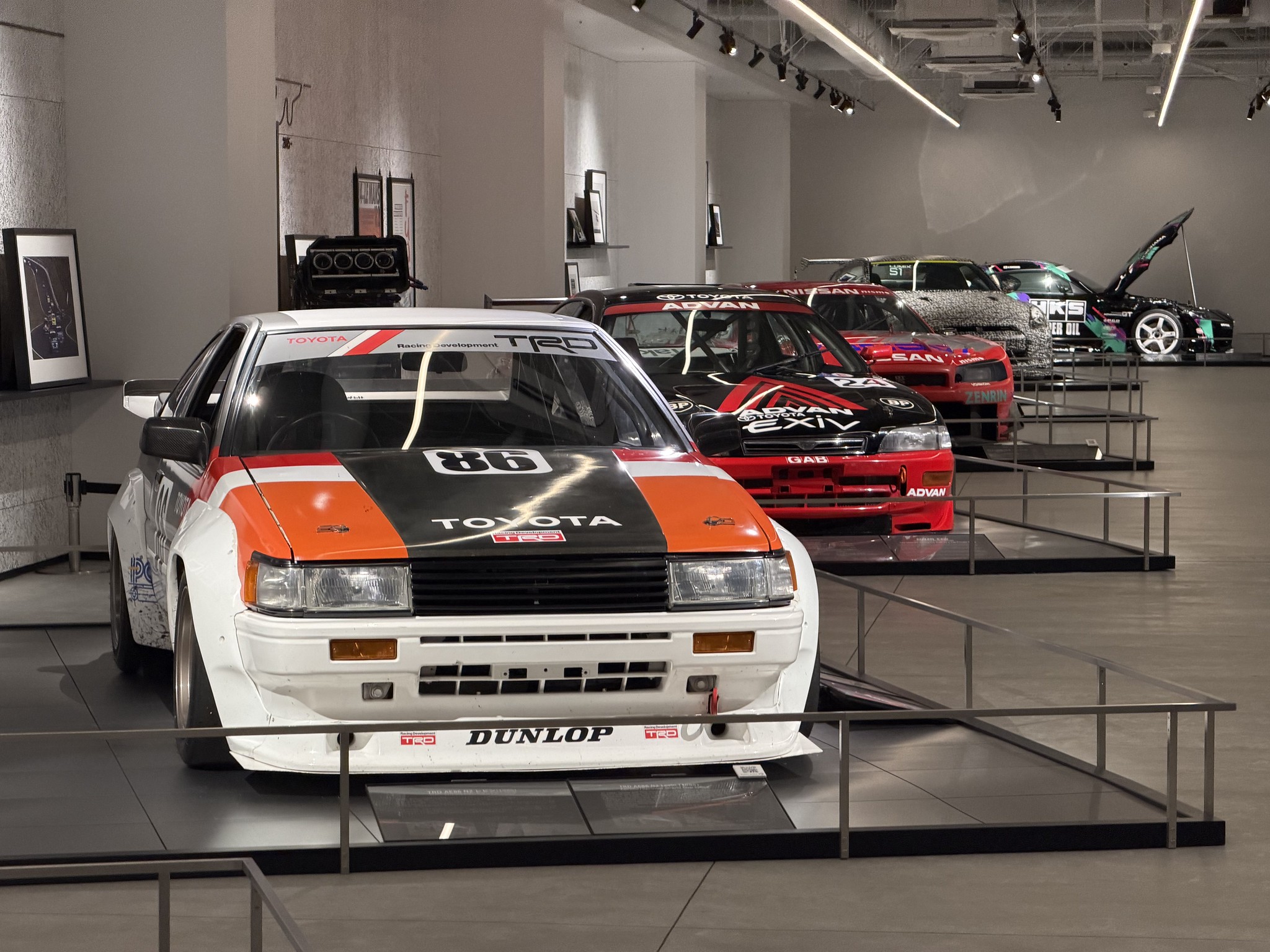
Then I went to the Fuji Motorsport Museum, which I absolutely adored. I had pretty high expectations and was not disappointed. It was so cool that I made an entire post about it, so I’ll skip past it for now.
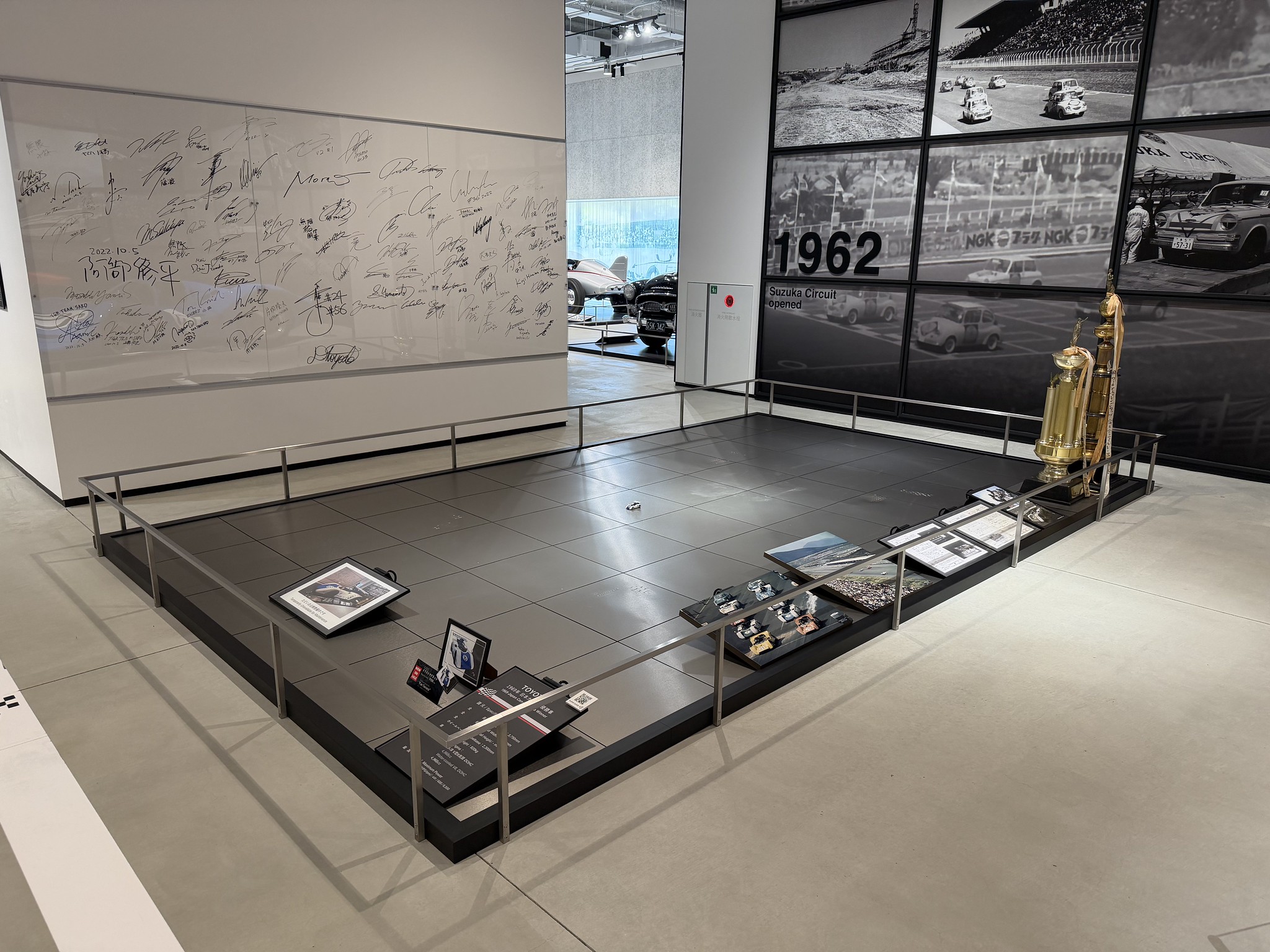
Hey, I knew Japanese cars were tiny, but this is ridiculous! They have a really funny system of putting a tiny model car as a placeholder when the real car is away for maintenance or an event.
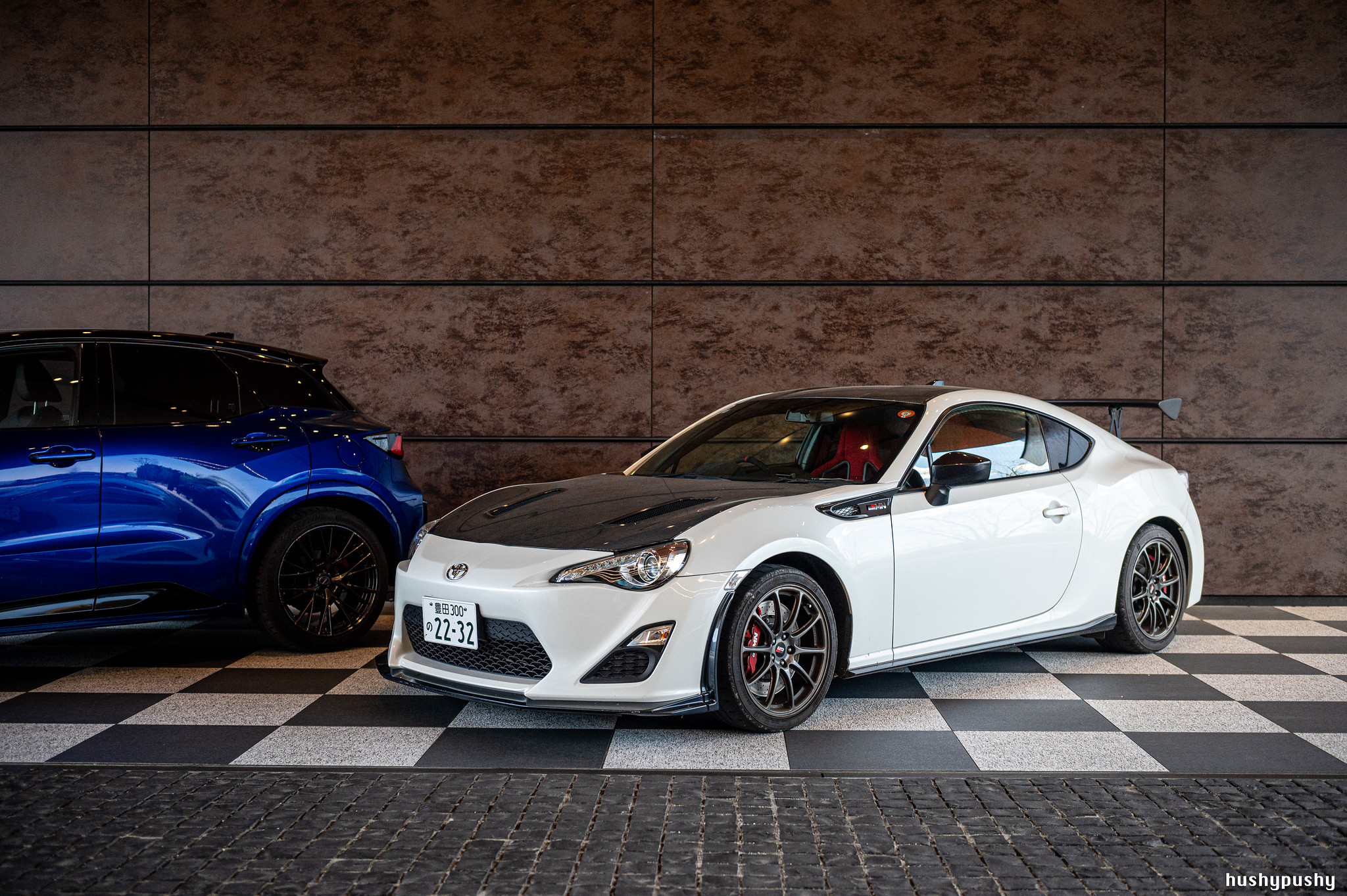
Then, leaving the hotel, I saw this parked out front: a 2016 Toyota 86 GRMN!! Of all the different variants of the first-generation (ZN6/ZC6) 86/BRZ, this is my favorite.
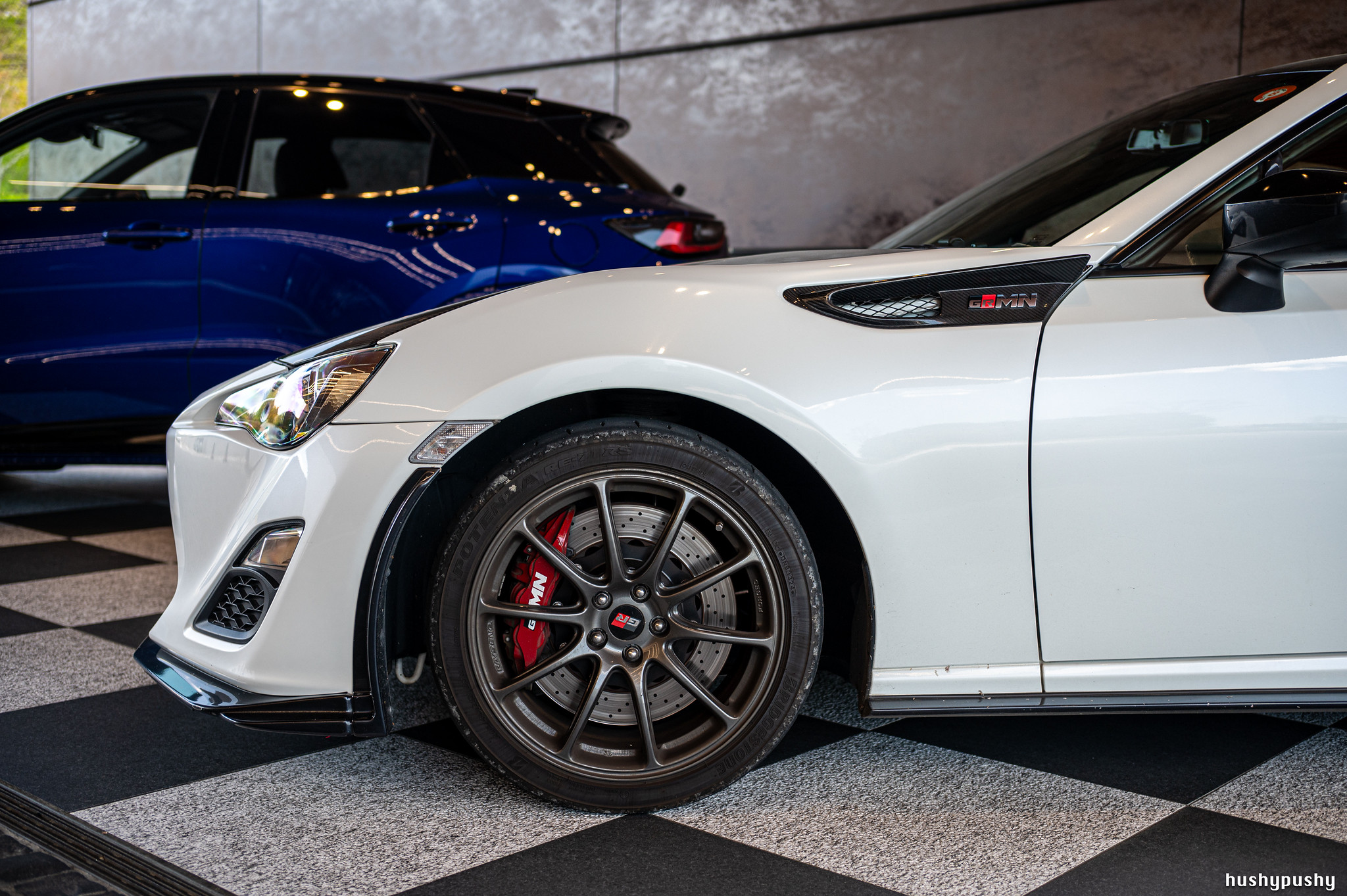
Developed from Gazoo Racing’s experience with the Toyota 86 at the Nurburgring, this car had a ton of extras and they were all performance-related. It had several carbon fiber aero bits including the hood and trunk. It had bigger brakes and lighter wheels.
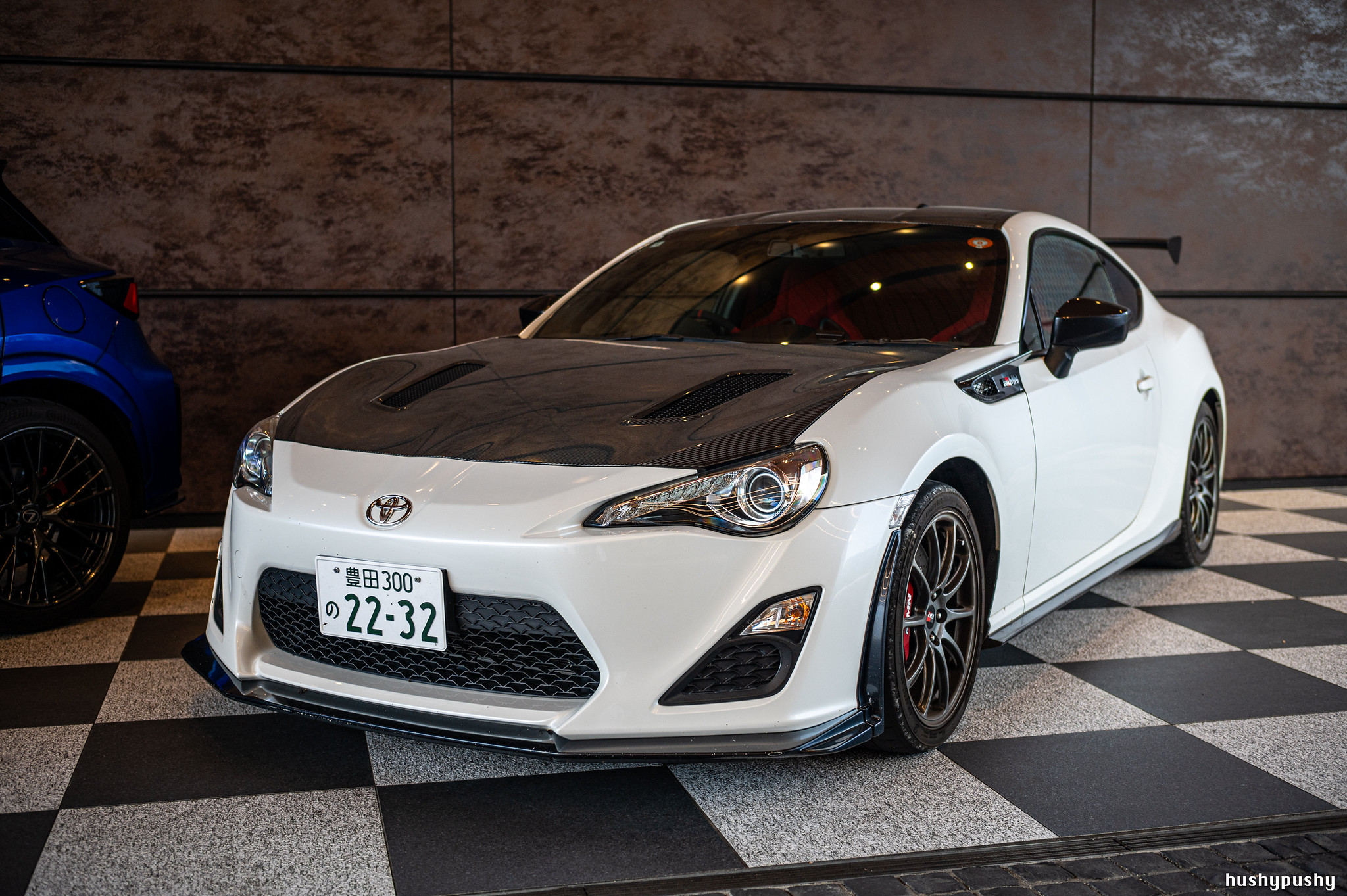
I wish I was able to poke around inside. These had Recaro seats and Alcantara steering wheel, shift knob, handbrake, and dash trim, in contrast with the base model (RC/G) simple door panels. And for the 86 nerds, the interior has an interesting combination of black trim and buttons from the RC/G and the dual climate control of the GT/GT Limited.
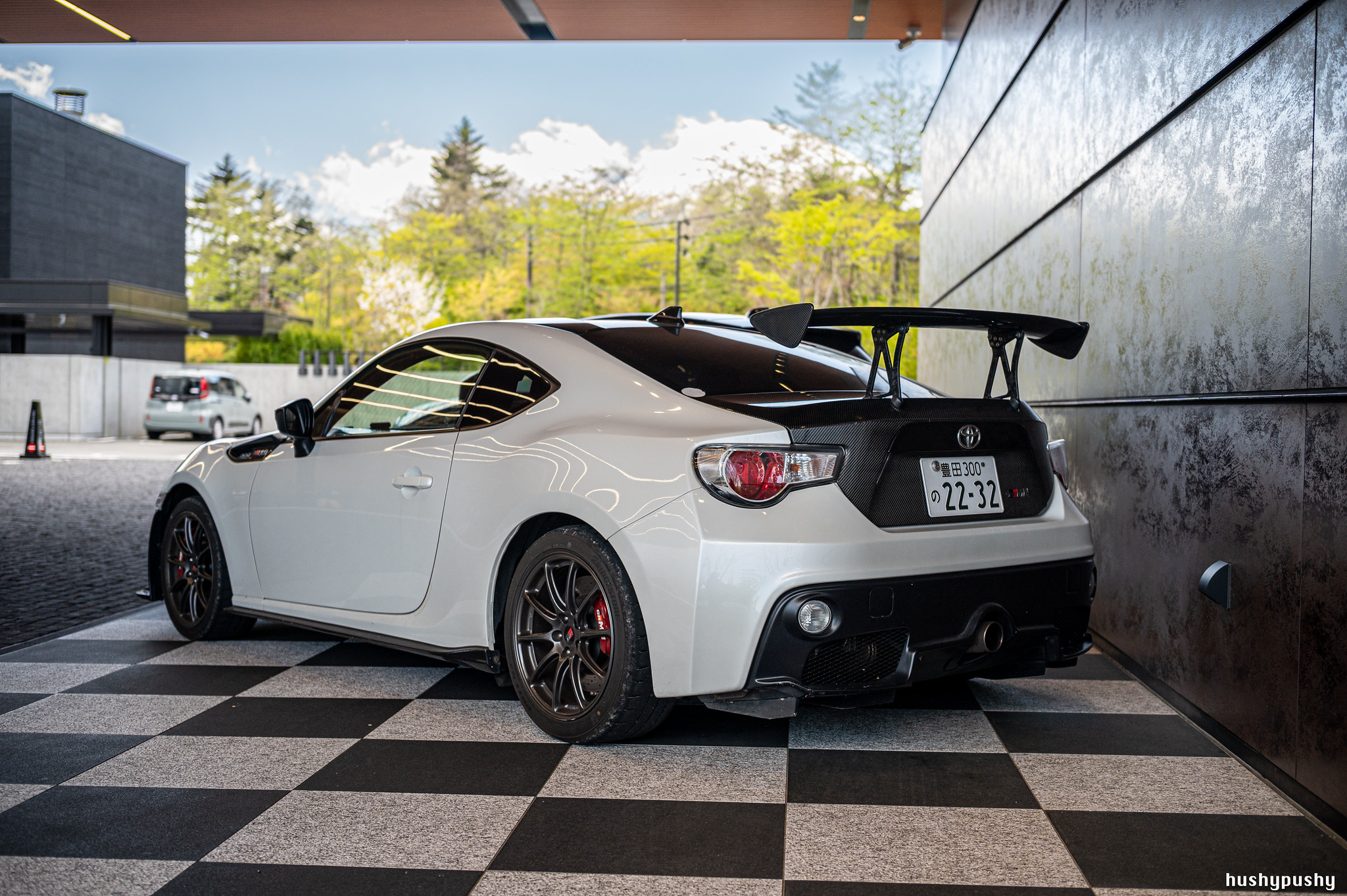
Check out the big diffuser, center exit exhaust, and high mount wing.
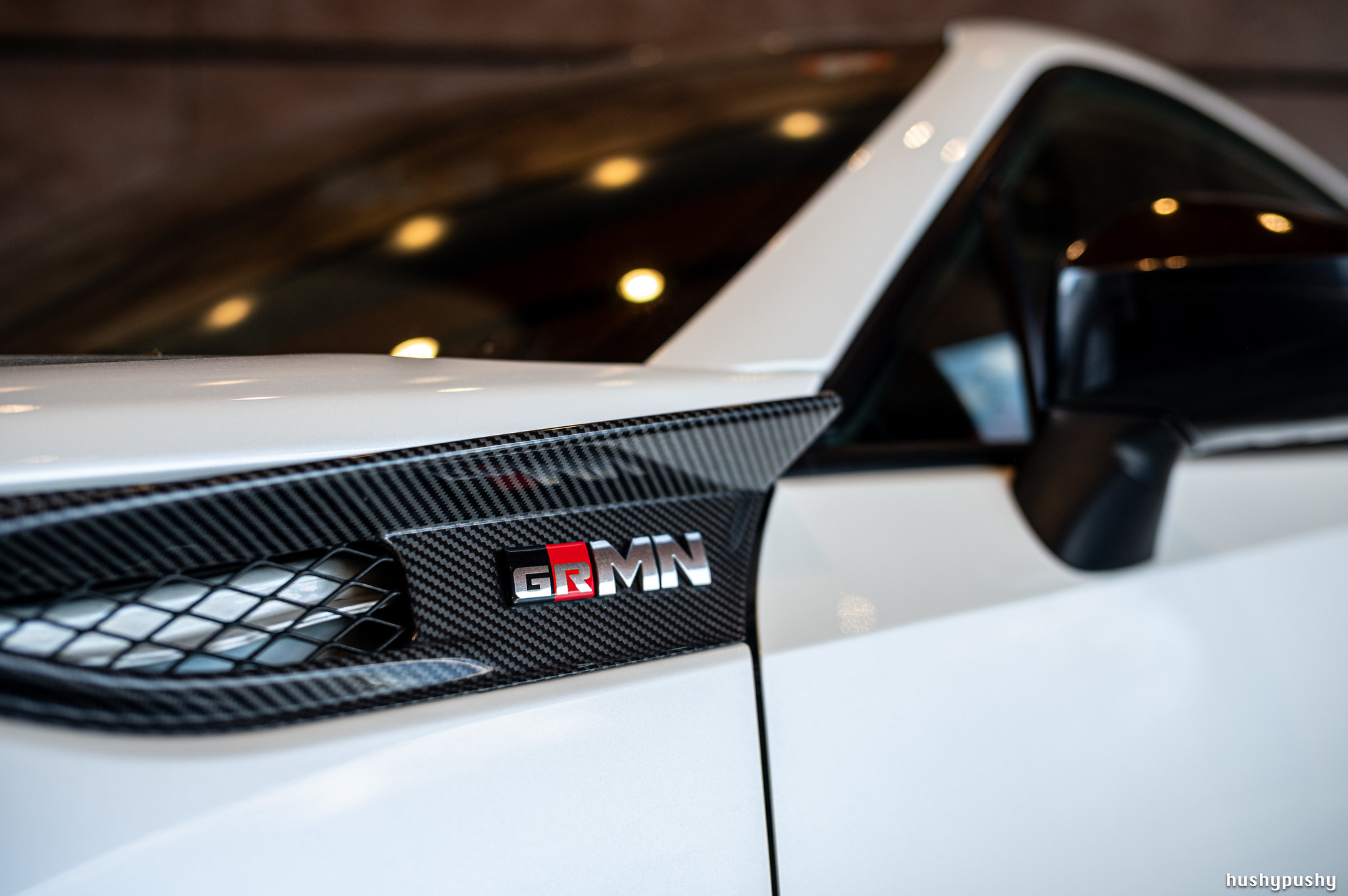
While all of that is awesome, there were tons of 86 and BRZ special editions with varying degrees of Recaro, carbon fiber, body kits, brakes, and suspension. The one thing that sets the 86 GRMN apart is that it’s the only 86 or BRZ special edition so far to actually get more power. When the 86 had 200ps, this had 220ps. Not only that, it apparently has a close-ratio gearbox too. They only made 100 of these, so it was awesome to see this one out there with evidence of proper use.
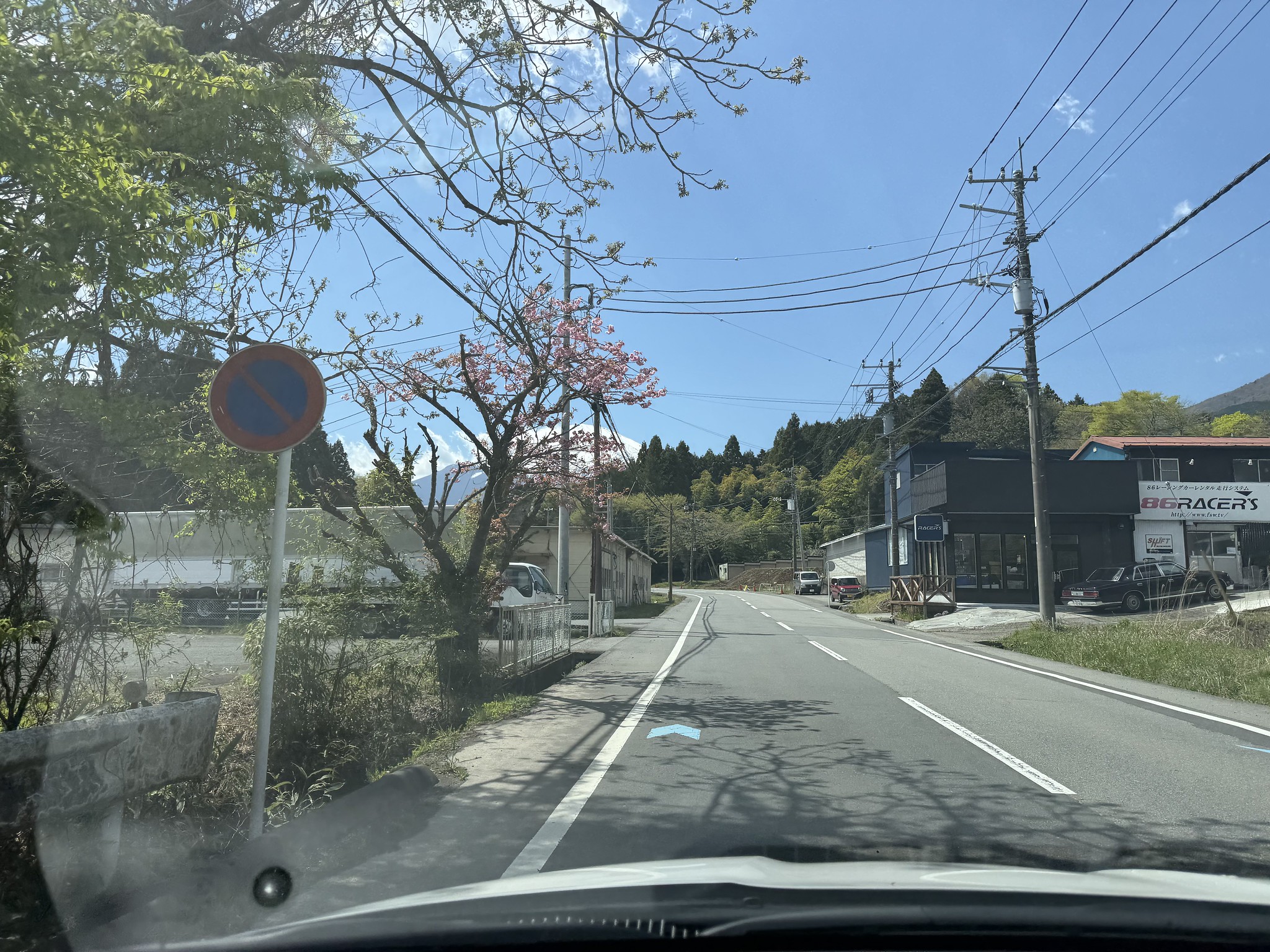
It always feels funny to me to ride passenger in a right hand drive car, getting the feeling of being in the “driver’s seat” but not actually driving at all. This is just leaving the Speedway with Stefan at the wheel. He wanted to get a taste of driving in Japan, so the drive from the hotel to lunch in the next town was perfect. On the right that’s 86Racers, a company that rents Toyota 86’s and GR86’s. 40 minutes of track time in a manual 86 is 96,200 yen, although you have to successfully complete a session with the auto car first (at least it’s cheaper, at 77,600 for 40 minutes). I think that’s a great deal: $485 all-in to drive a Toyota 86 on slicks around the super-fast Fuji Speedway? I’m sold! I could easily spend that much or more tracking my own 86 back home.
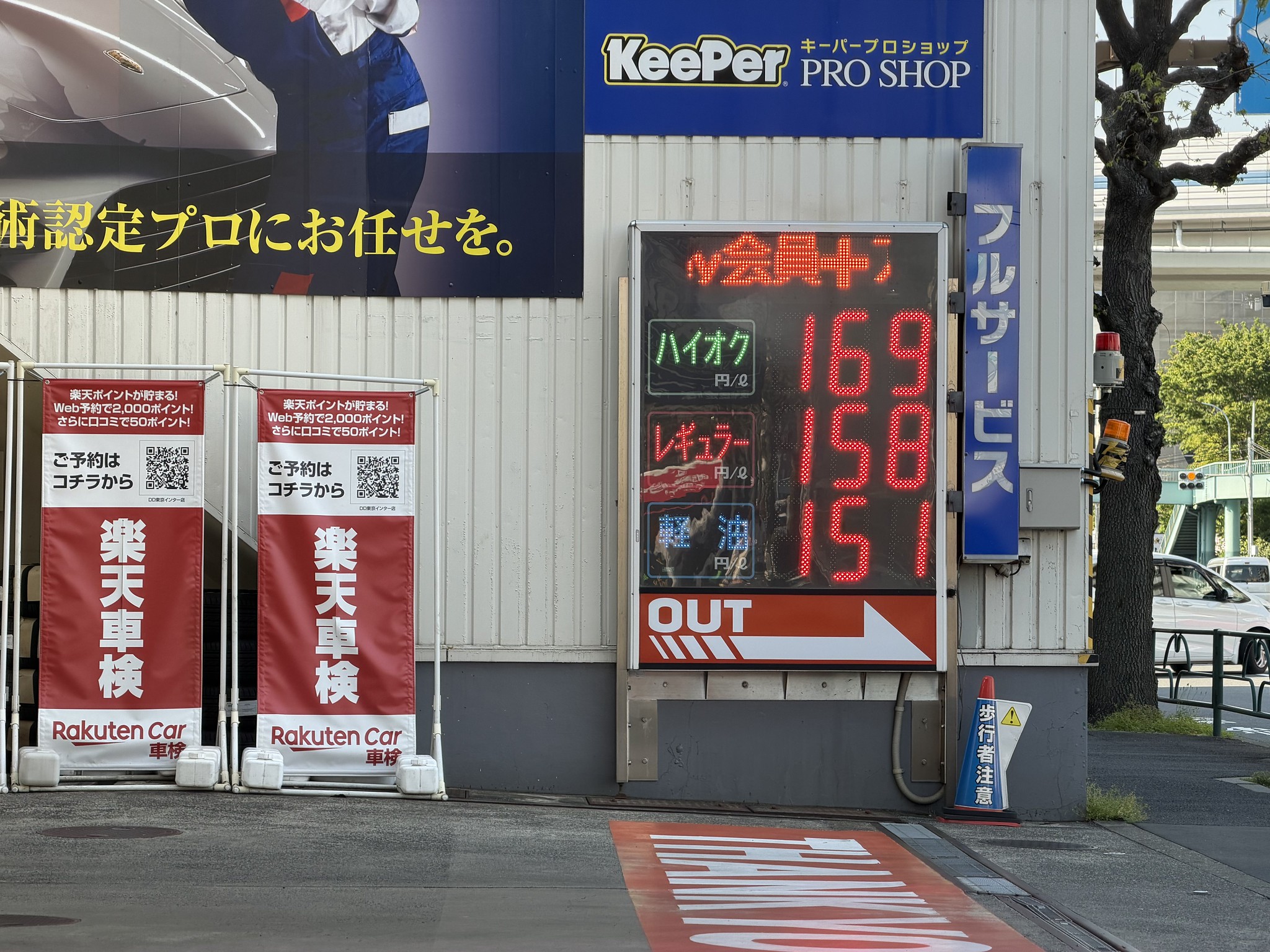
Especially with the exchange rate, the gas prices were very reasonable. That’s yen per liter, with “High Octane”, “Regular”, and “Diesel” from top to bottom. That’s only about $4/gallon at today’s exchange rate. We spent significantly more money on tolls than we did on fuel while driving from Tokyo to Mt. Fuji and back.
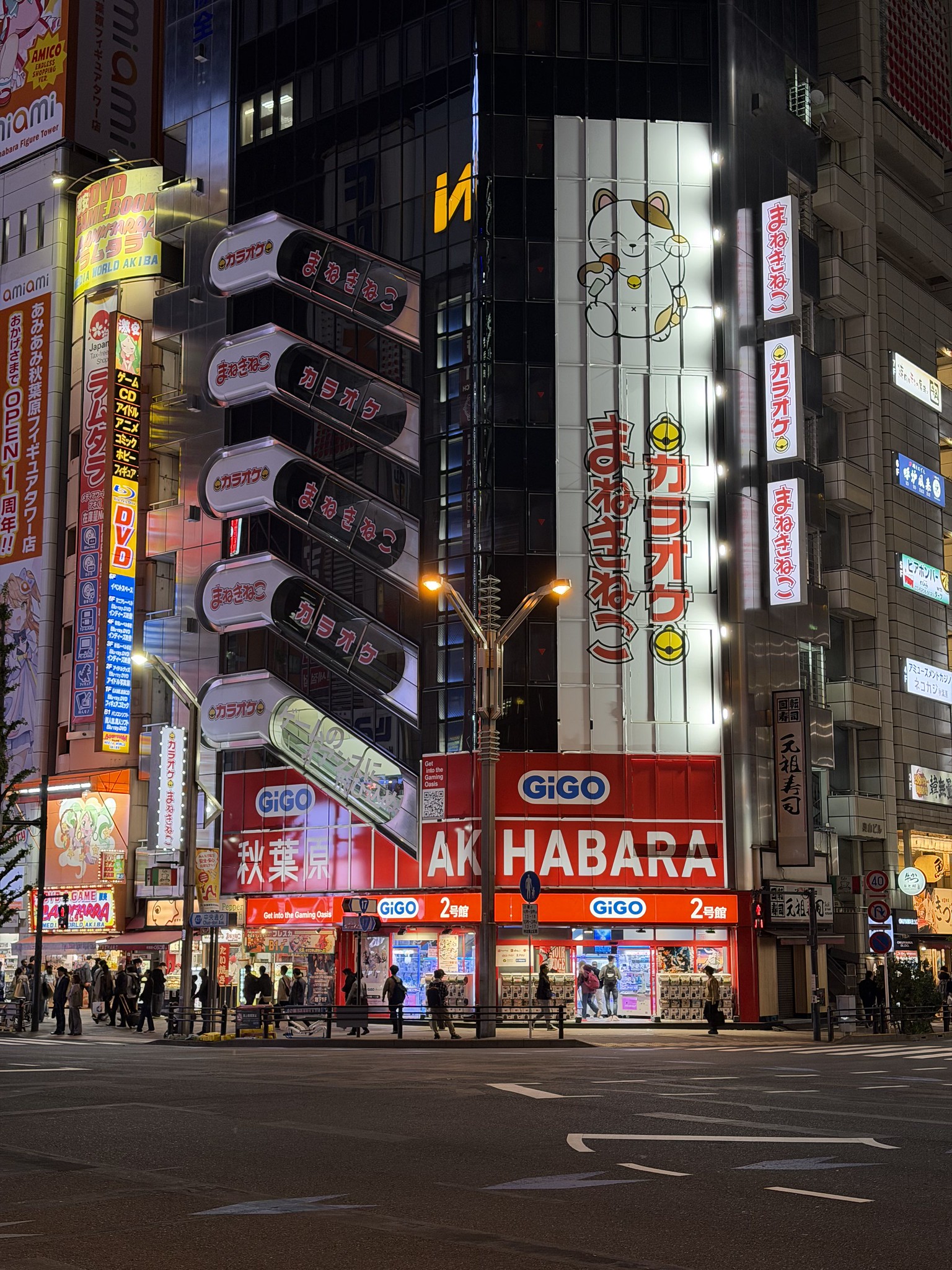
Now we were back in Tokyo for the third leg of our trip. We were staying in Akihabara, which was fairly close to Kanda, where we had stayed on the first leg. On Thursday night, we went to the “Electric Town” area of Akihabara to see the night scene and of course, play some arcade games.
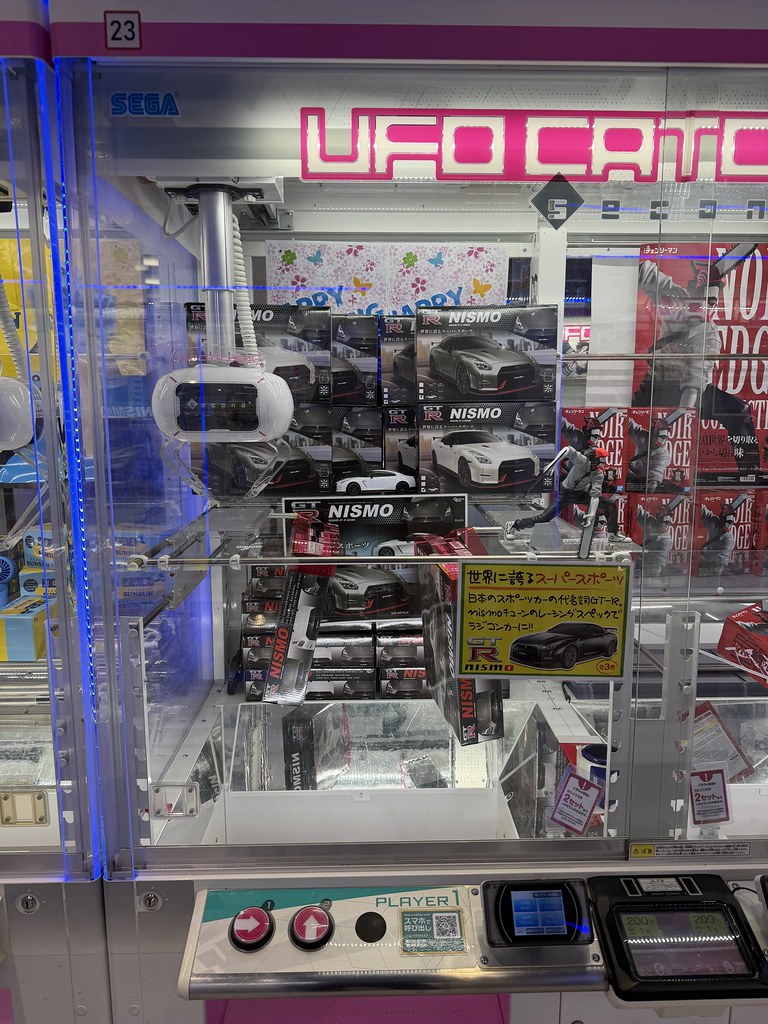
We were on the way to GiGO 3, but stopped at GiGO 2 (pictured above) because it was on the way. It turned out to be floor after floor of nothing but these “UFO Catchers” and similar crane games. Here you can see just a tiny slice of what’s on offer: everything from an R35 GT-R remote control car to a Chainsaw Man figurine and pretty much anything else you can imagine.
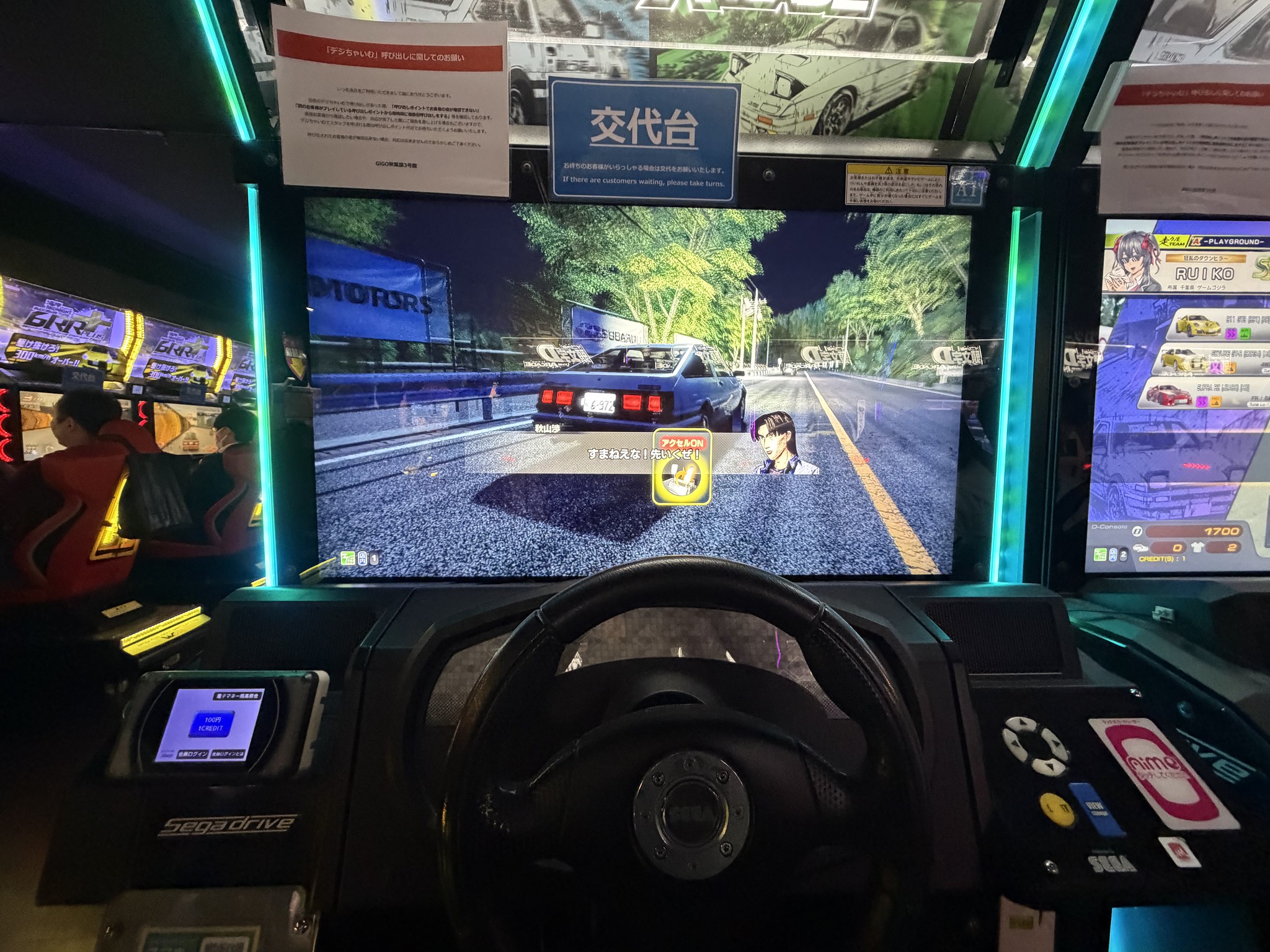
I have no interest in playing sort of games. I was there for the modern arcade games we don’t get, with the current Initial D one of my highest priority finds. A very nice surprise was that there were no worries about having to withdraw cash: the newer arcade machines accept IC card, the same method you can use to pay at train stations and vending machines, so you just tap your phone to refill credits.
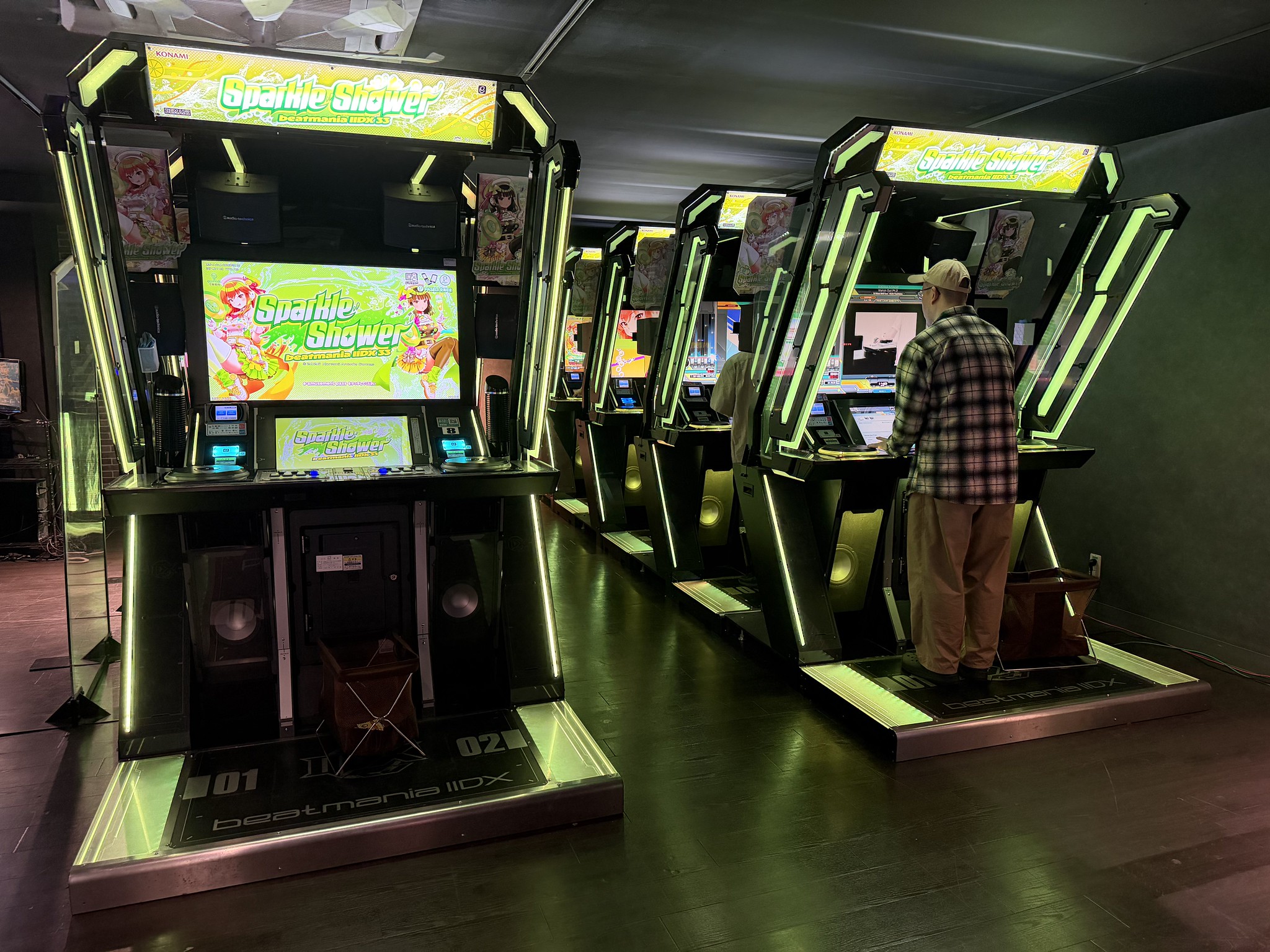
It’s been quite a while since I played a modern Beatmania IIDX, and it was super cool to play it on the high quality arcade hardware.
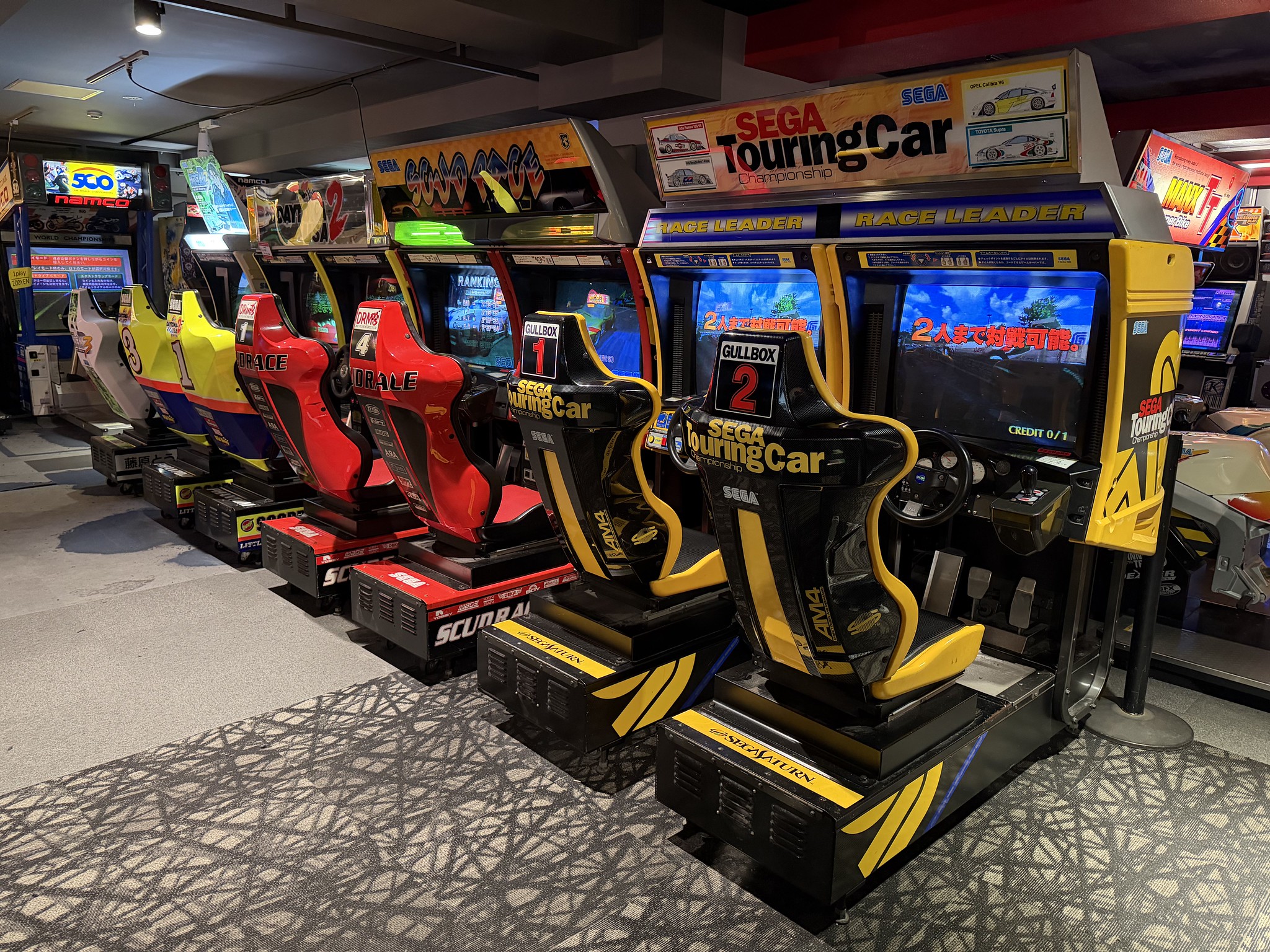
There was even a retro floor which was amazing. Check out this lineup of classic racing games!
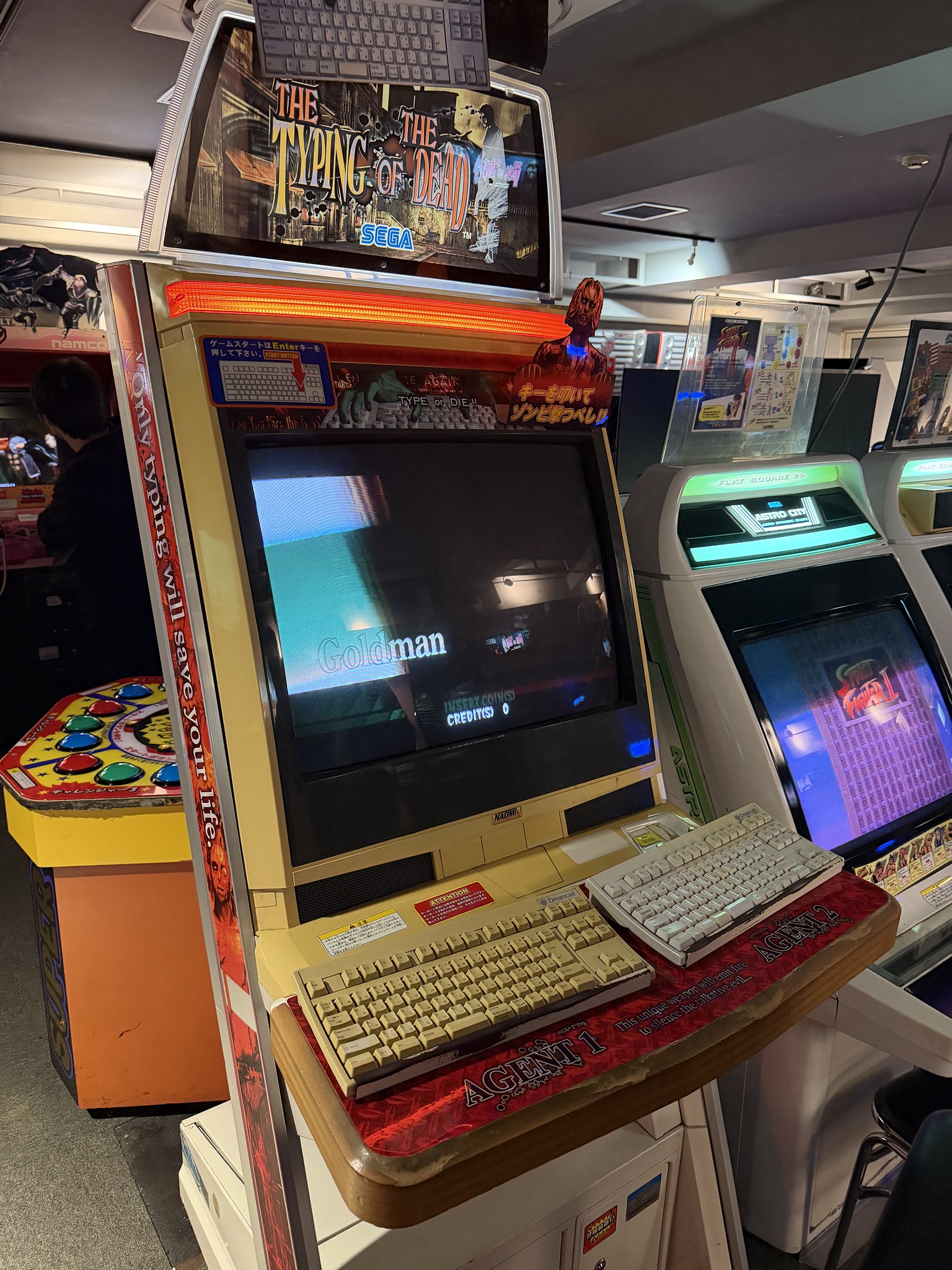
This was a treat to see: the arcade version of Typing of the Dead! I completely forgot this was even an arcade game at all; for some reason I thought it was just on the Dreamcast. Even though this version was in Japanese, Stefan and I got pretty far. We finally hit a roadblock at the three-headed boss, though; it asks you a question and then you immediately have to type the answer over the correct head, but I can’t read Japanese fast enough so it became a guessing game that we could not overcome.
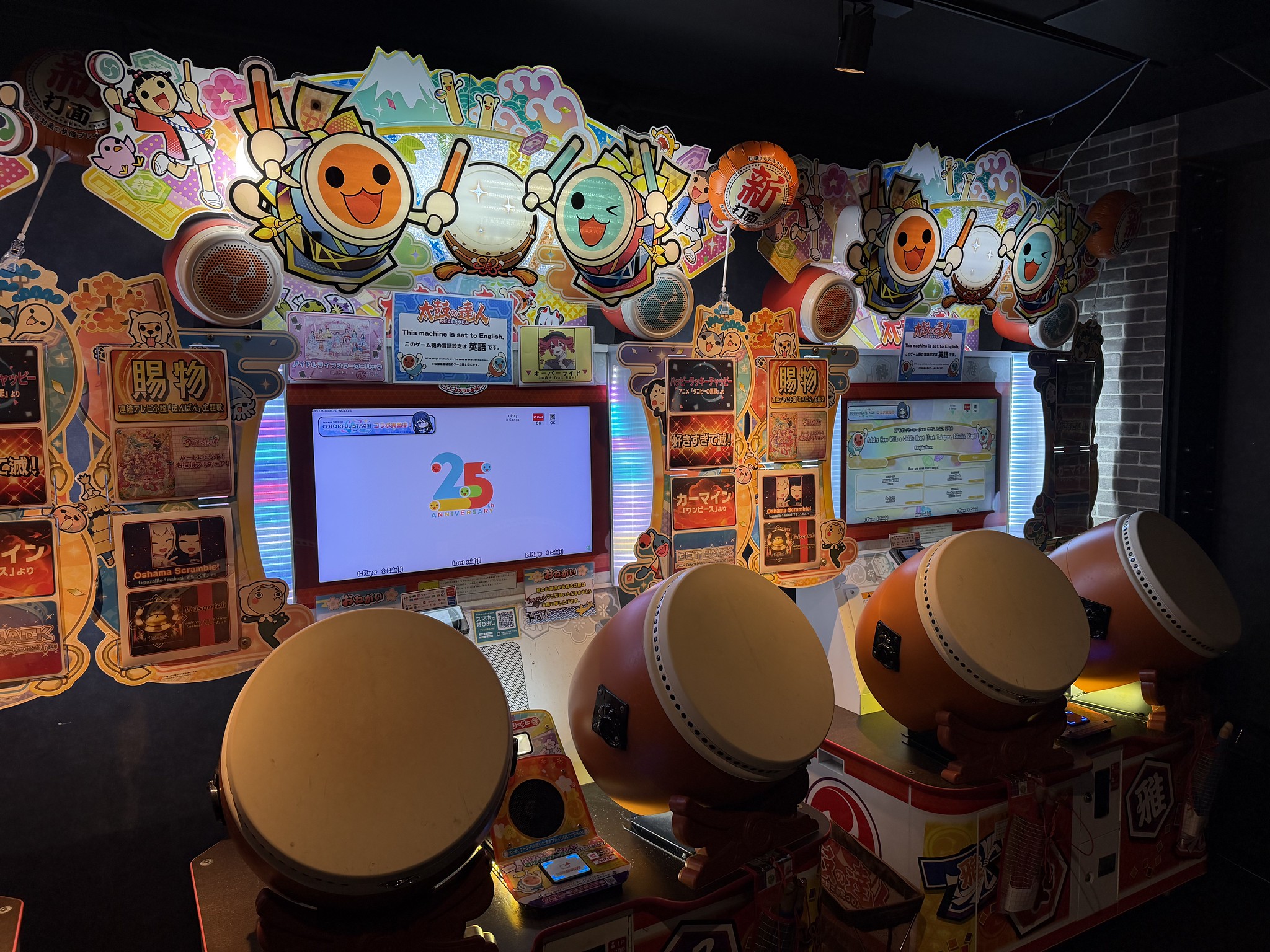
The Taiko no Tatsujin games were set to English, which I thought was an interesting choice. At least on this Thursday evening, it appeared to me that most of the patrons in the arcade were Japanese.
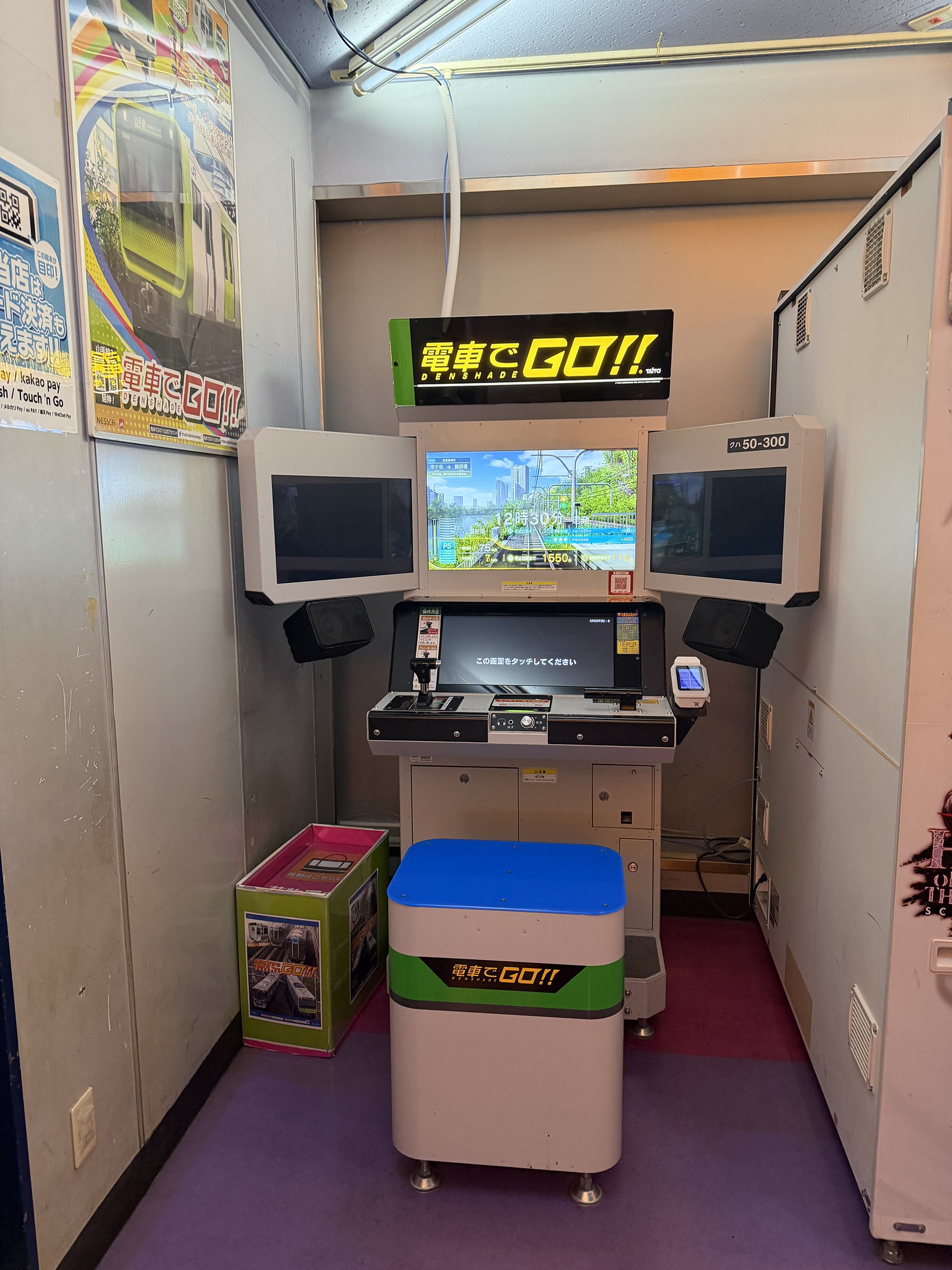
GiGO was fantastic, but they did not have the number one game I wanted to play: Densha de Go. Luckily, right across the street from GiGO 3 was a Taito Station, another Japanese arcade chain. DDG was developed by Taito, so they had to have it. Well, it wasn’t the super cool full room-size cabinet, but tucked away in the corner, there it was! My favorite thing about arcade games is getting an experience you can’t get at home, which has meant various things over the years. Nowadays, for me it’s about the controllers. For example, Beatmania IIDX has really sturdy feeling keys that are just fun to slap. Densha de Go has a really robust and tactile mascon (“master controller”, the lever that controls the acceleration and braking of the train). The triple screen setup is cool because it allows you to look left and right, but what about the fourth screen in the middle? In real life, Japanese train operators use the “point and call” system where they point at certain indicators to know when to open and close the doors, change speeds, etc. On the console version, you simply press a button on your controller to point; on this arcade version, the fourth screen is a touchscreen and you actually touch the speedometer, lights, and wipers!
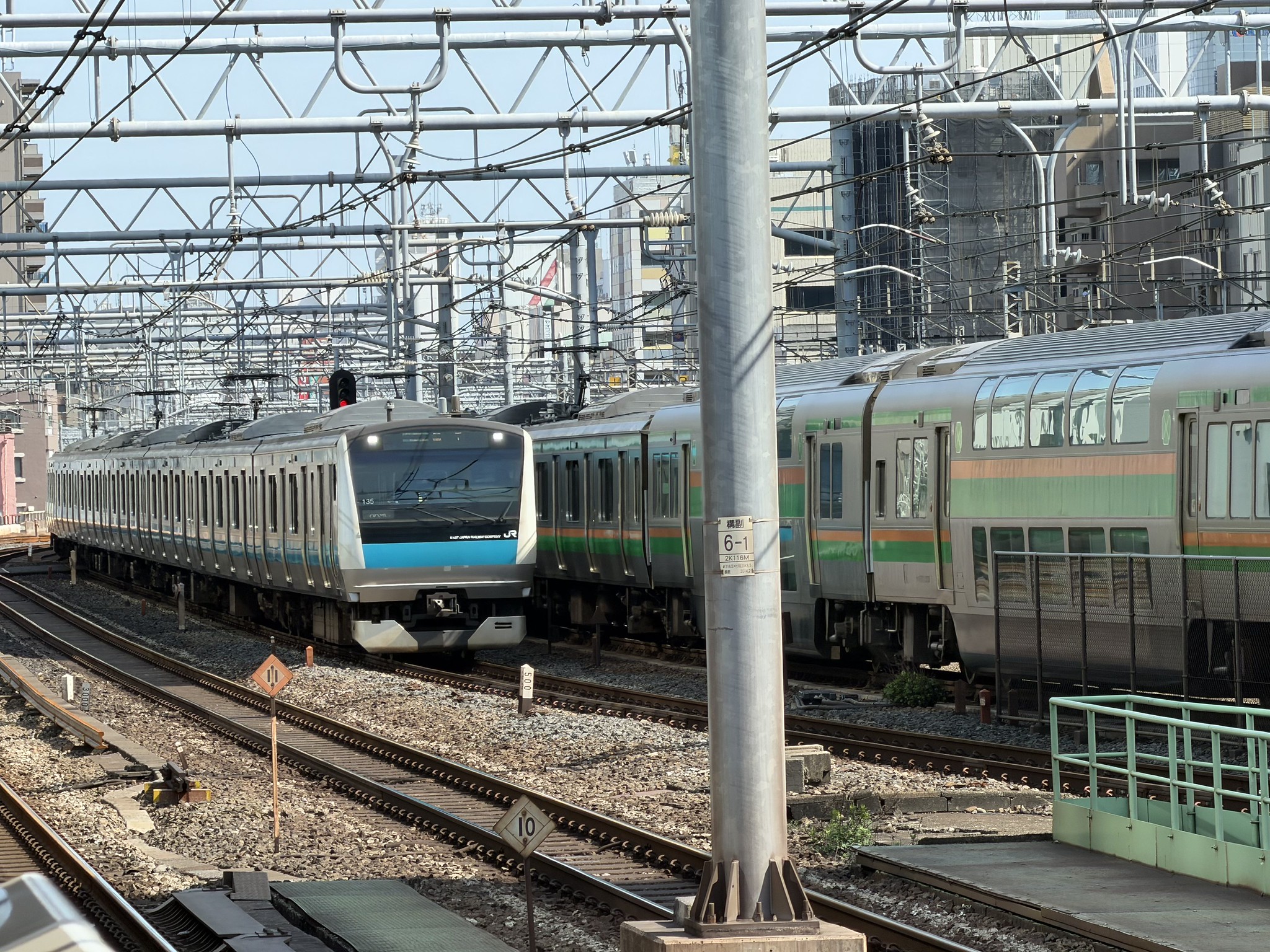
On Friday morning we departed from Akihabara Station. We reached the platform at the top of the stairs just as the train was departing, which of course is no big deal in Tokyo because trains come every few minutes. Actually, this turned out to be an incredible stroke of luck.
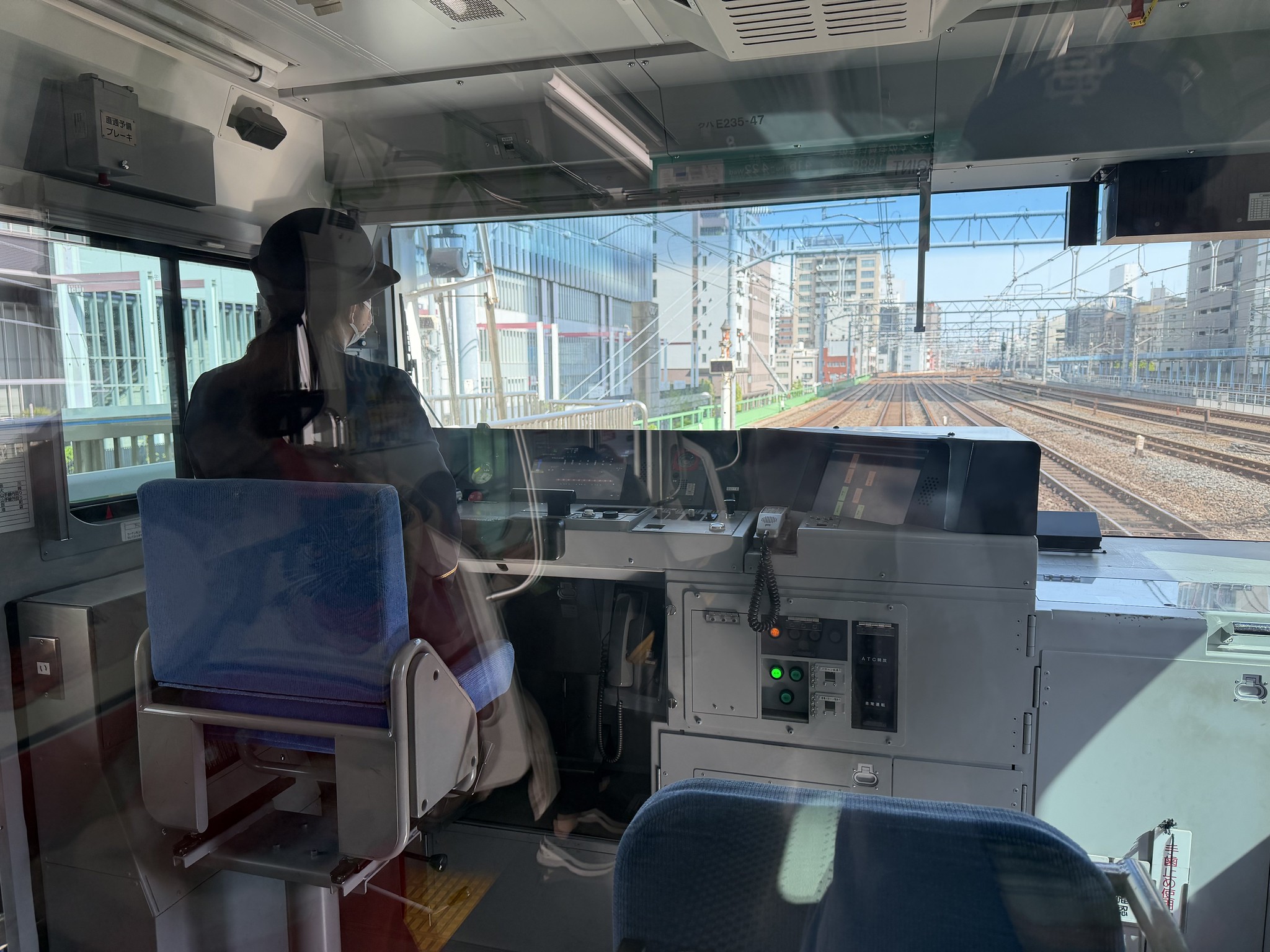
Missing the train meant we had time to walk to the front of the platform and be first in line for the next train. It was time to watch a professional driver in an E235 on the Yamanote Line!
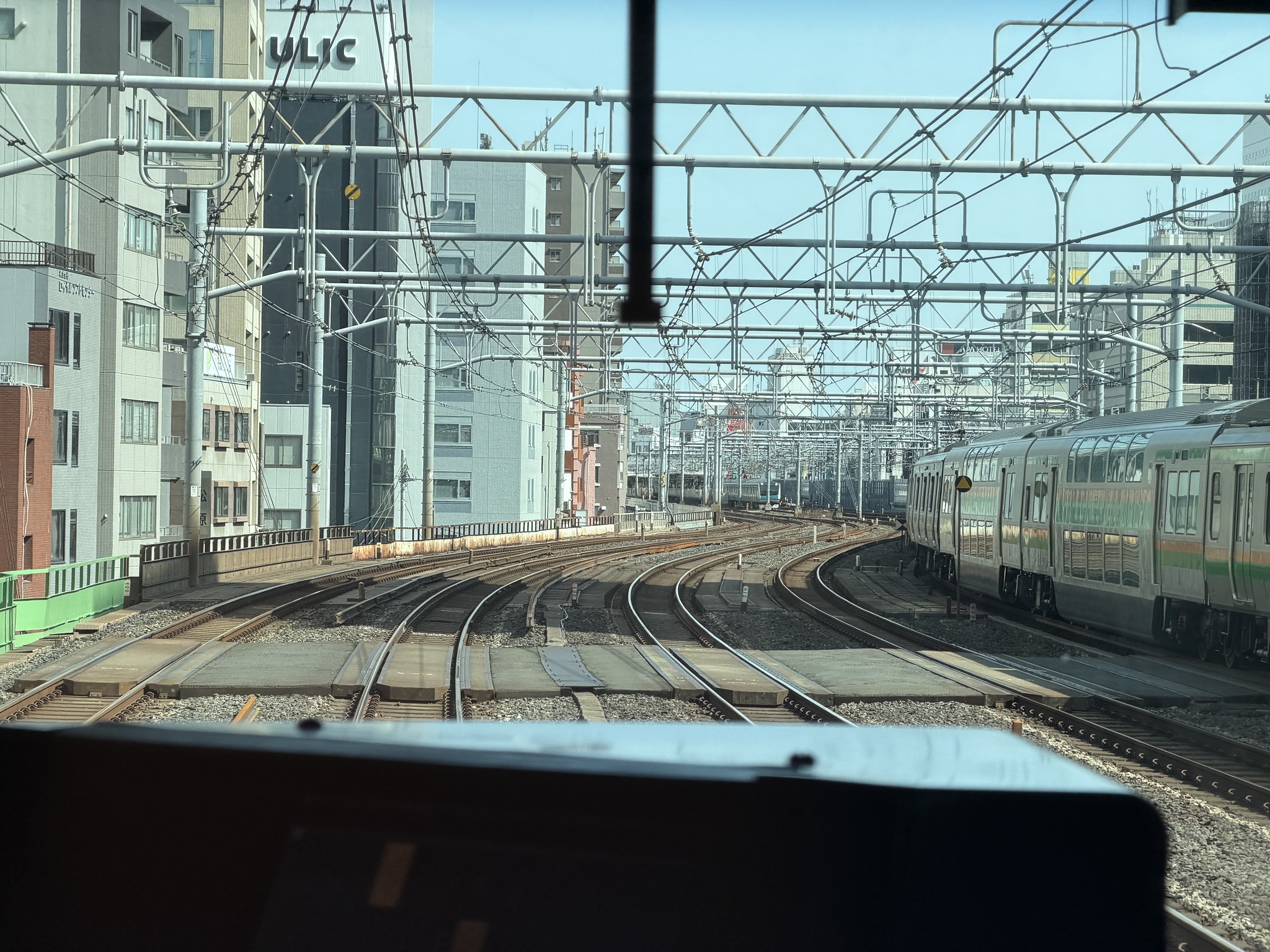
As I mentioned under the very first picture in the first post of this trip, the newest Densha de Go game is almost entirely focused on driving around the Yamanote Line, and mostly in the E235系 (the green train in the photo below). It was amazing to actually see these tracks and stations that I’ve driven so many times in a videogame. It reminded me of the first time I ever drove to LA on Highway 1 along the ocean and recognized some of it from Project CARS.
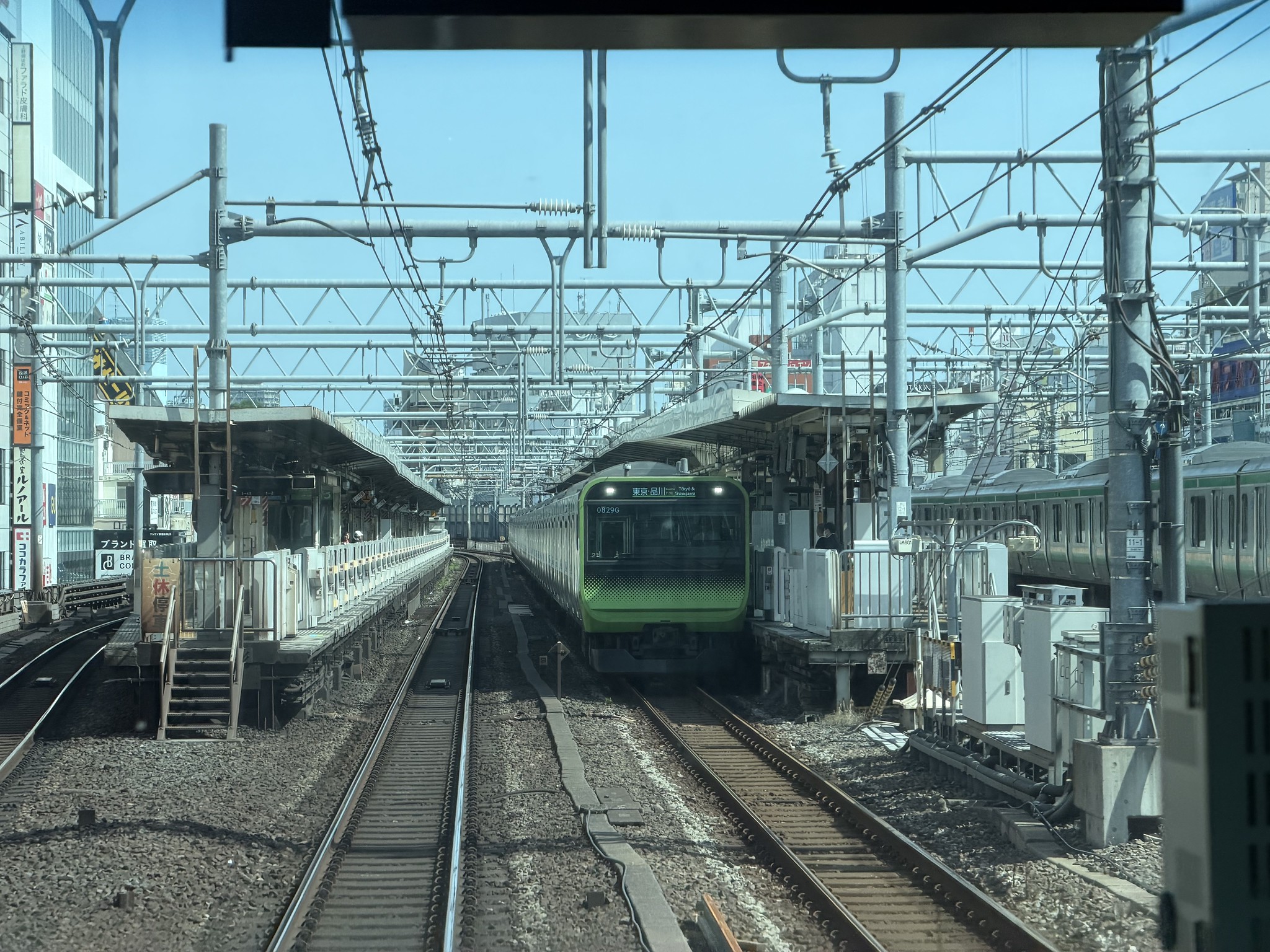
Here we are pulling into a station, which was also super exciting. The game is actually surprisingly challenging. Stopping at the station in a train is nothing like stopping at a stop light in your car, and you have to be incredibly precise: your stops are measured down to seconds and millimeters. I love watching any professional operate their equipment, and this was no different. She was amazing! We came into the station perfectly smooth and stopped exactly on the mark, every single time. Of course.
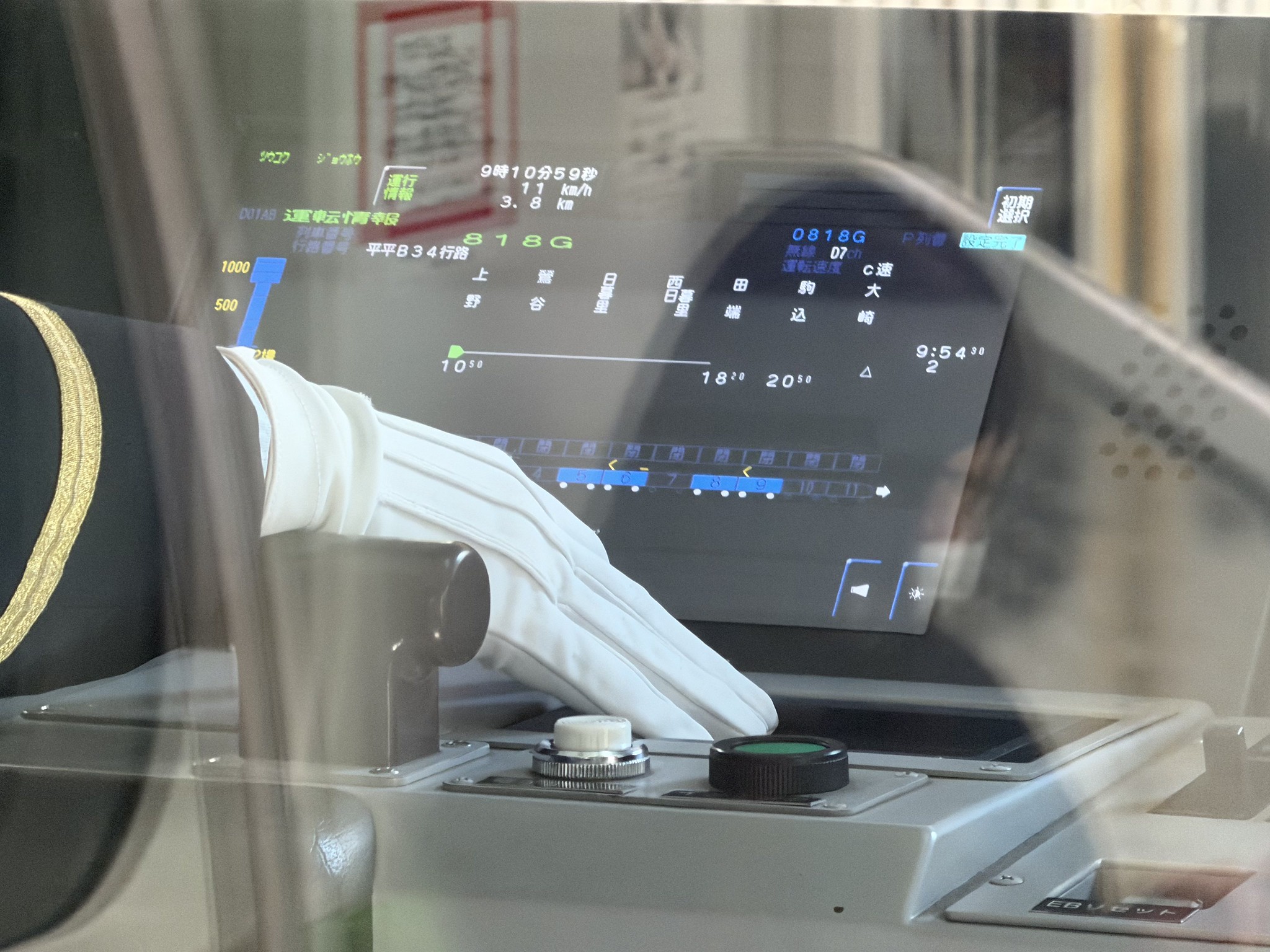
Check out those sweet gloves! I was nerding out on every single thing, from the driver’s gloves and hat to the various screens and levers in the cabin.
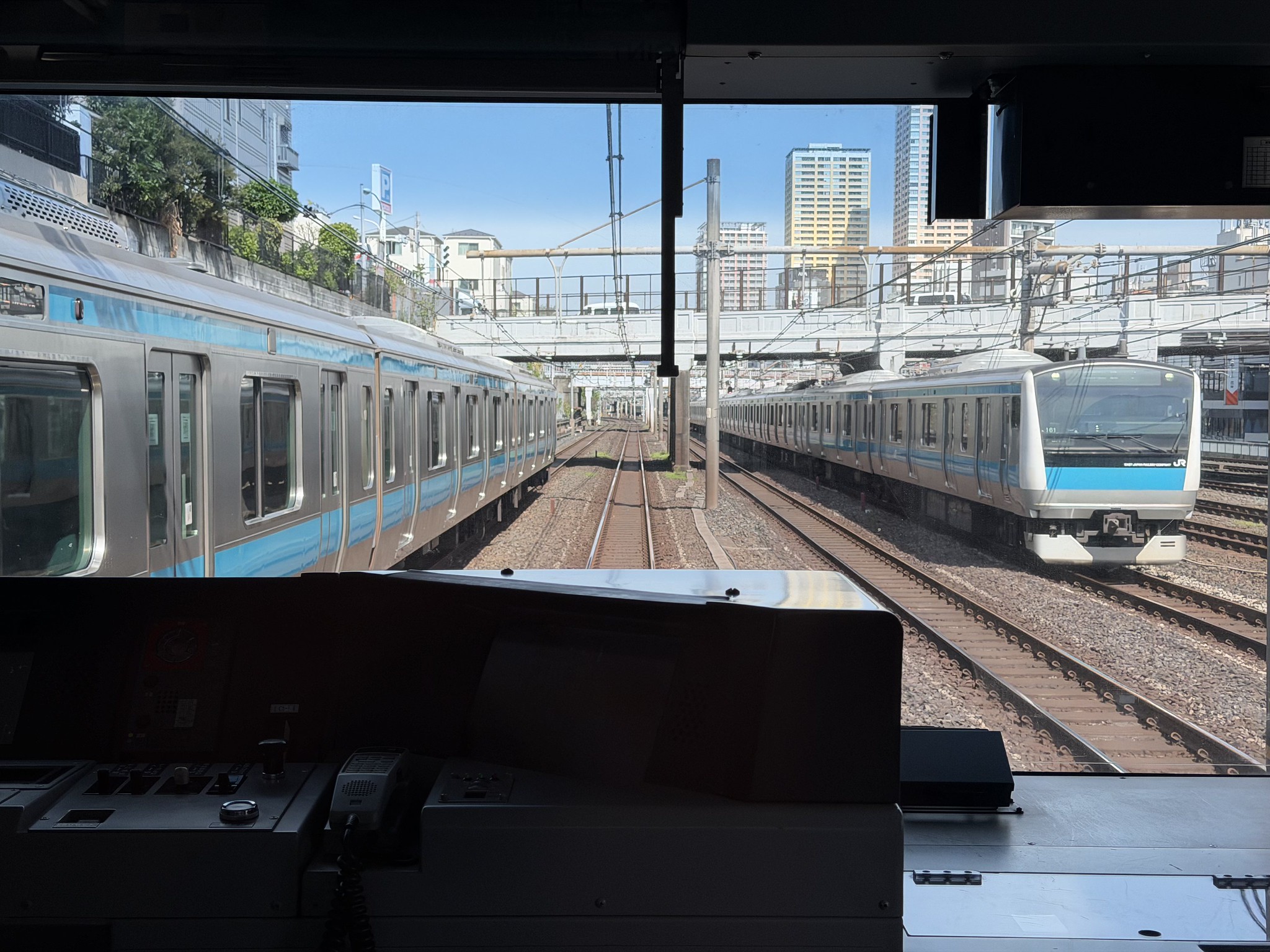
Train traffic! We were going the same direction as the one on the left, and the one on the right was coming at us. Trains are fascinating to me because not only are they incredibly functional machines, they are also stylishly designed inside and out–especially in Japan.
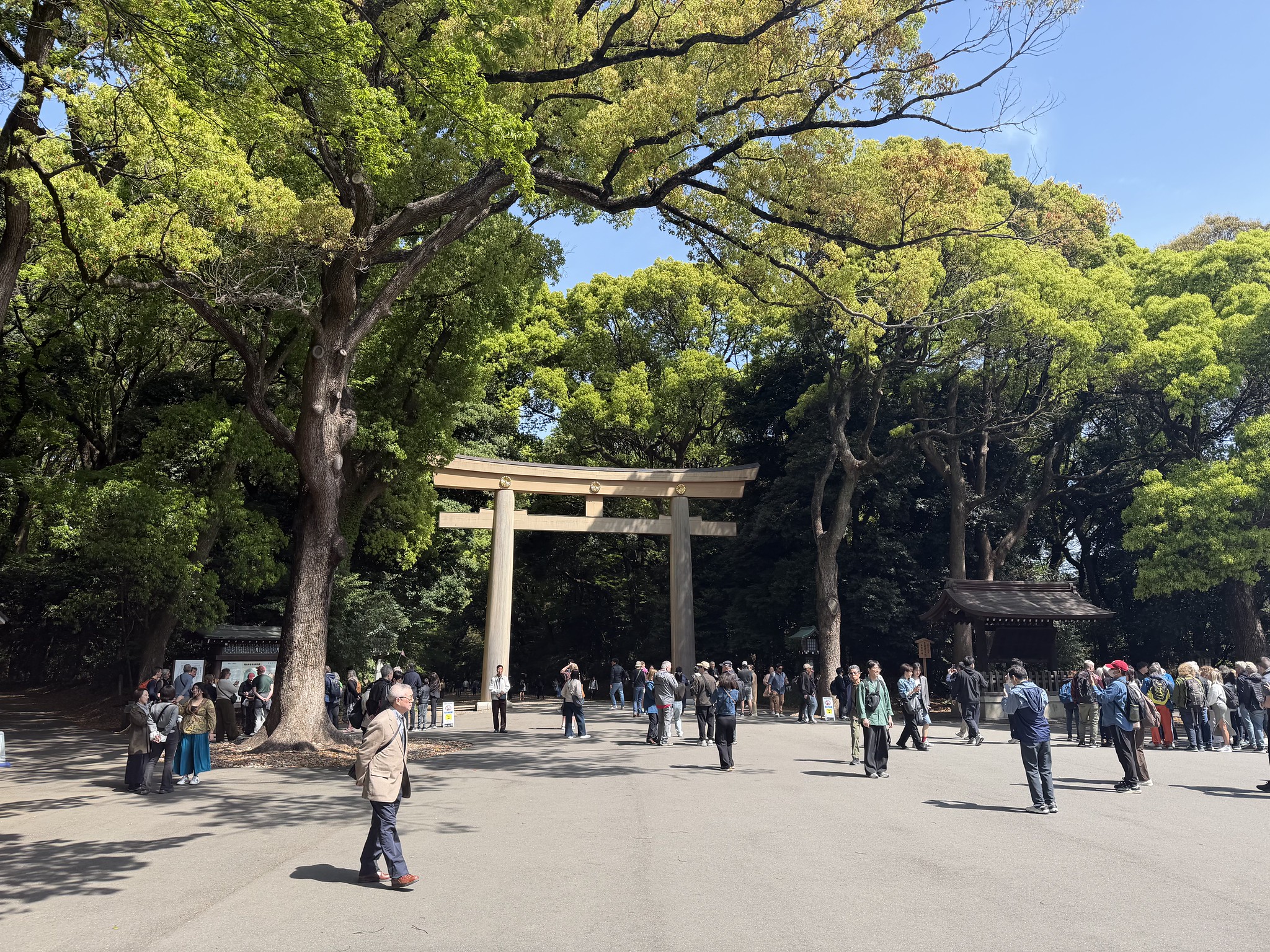
We disembarked at Harajuku Station to visit the Meiji Jingu (神宮 or “Jingu” is a high-status shrine with connections to the Imperial Family, in this case Emperor Meiji). This is the largest shrine in Tokyo and one of the most famous in the country. It’s next door to Yoyogi Park, and together they make up a gigantic forest park right in the heart of Tokyo. This turned out to be some unintentional Persona sightseeing, as both Meiji Shrine and Yoyogi Park are featured in Persona 5.
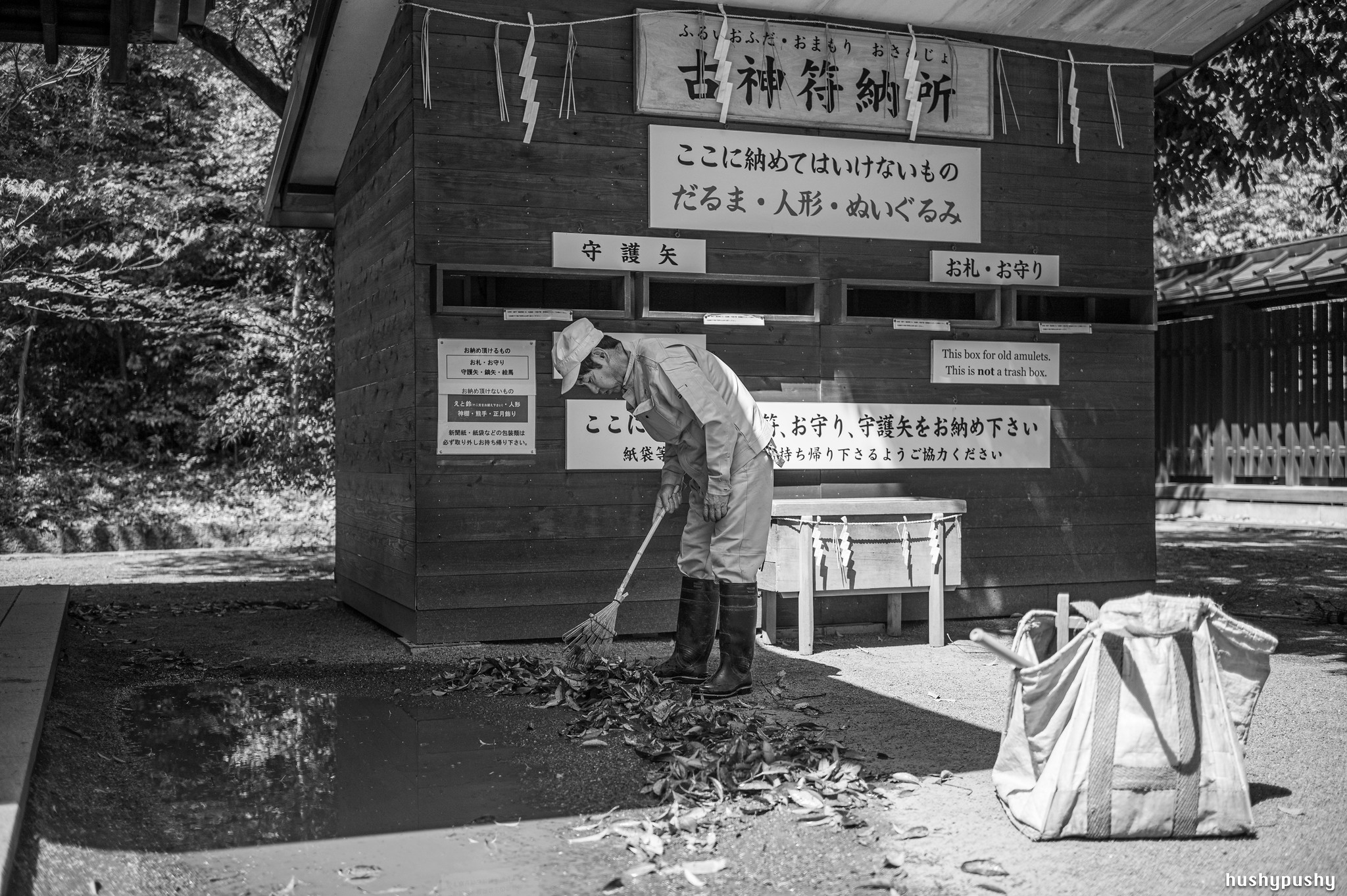
I love all the old guys working with wooden brooms, keeping these places immaculate.
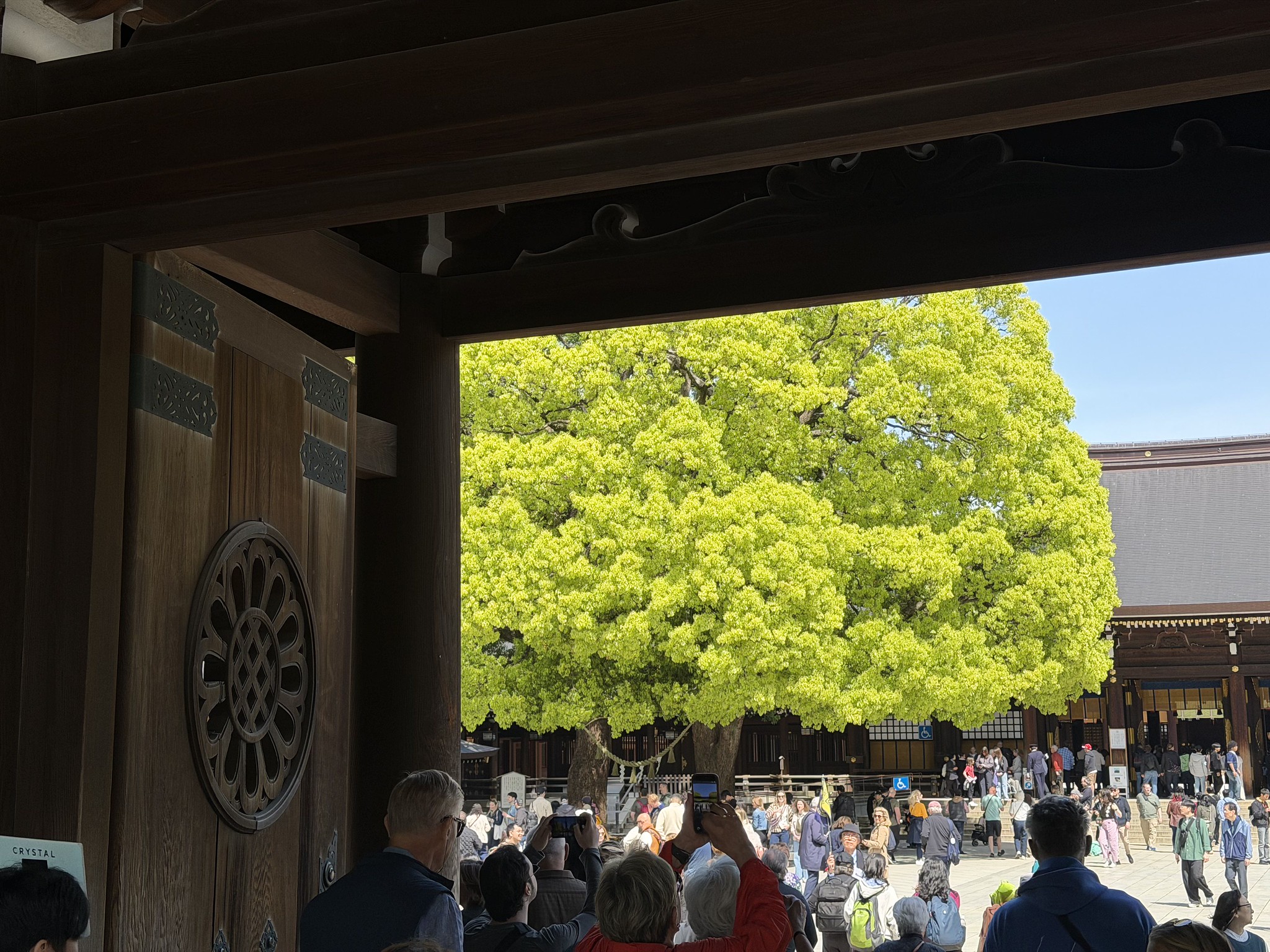
Entering through the gates reveals a view of an amazing pair of camphor trees.
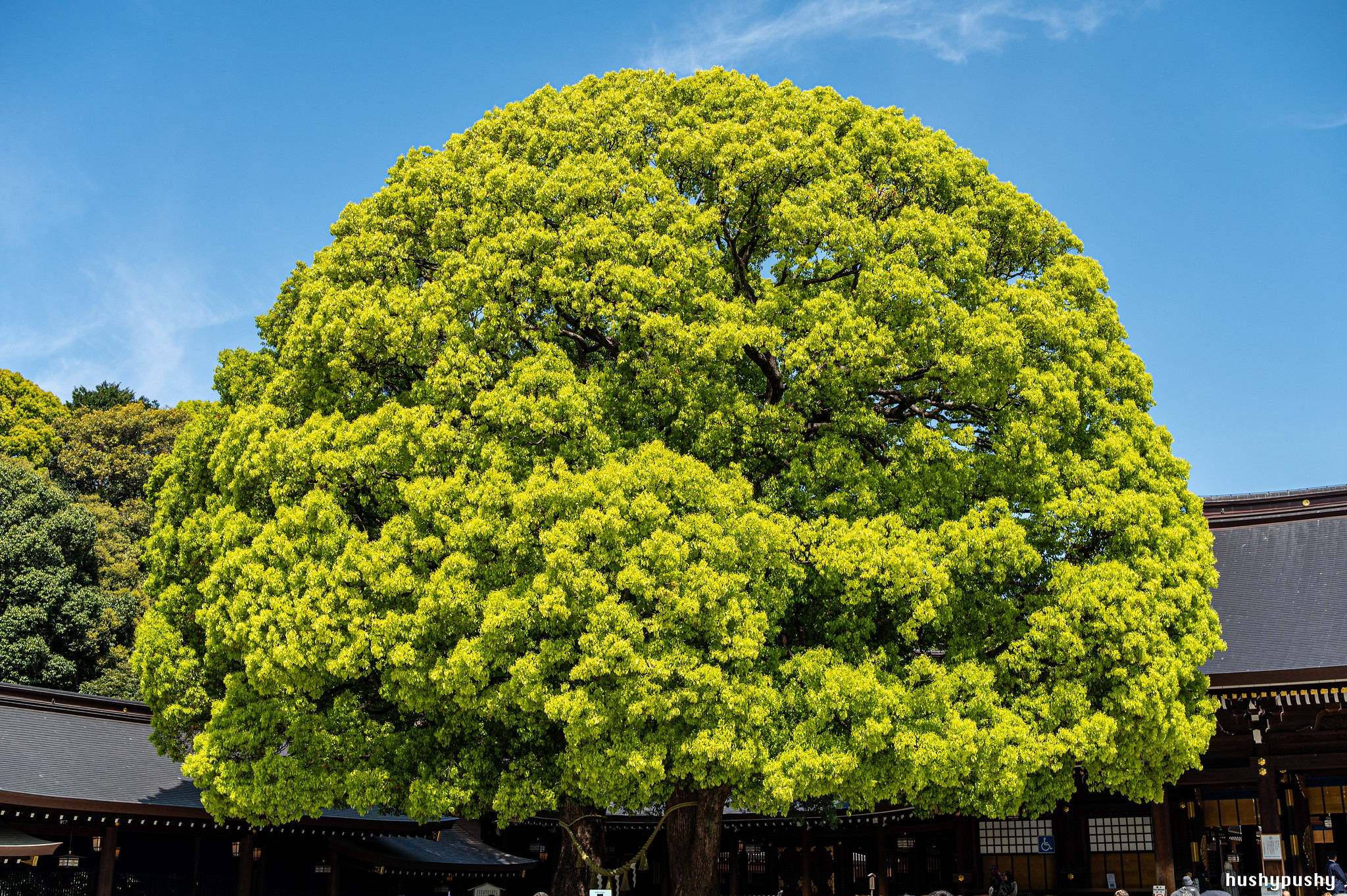
Known as meoto kusu (夫婦楠) in Japanese, these “husband and wife trees” are tied together with a rope called shimenawa (しめ縄) that symbolizes the sanctity of marriage. The leaves on the trees are an absolutely amazing shade of green that I was unable to capture on camera: sort of like Laguna Seca Blue (BMW) or Miami Blue (Porsche), there were some bright green tones that don’t come across at all in photos.
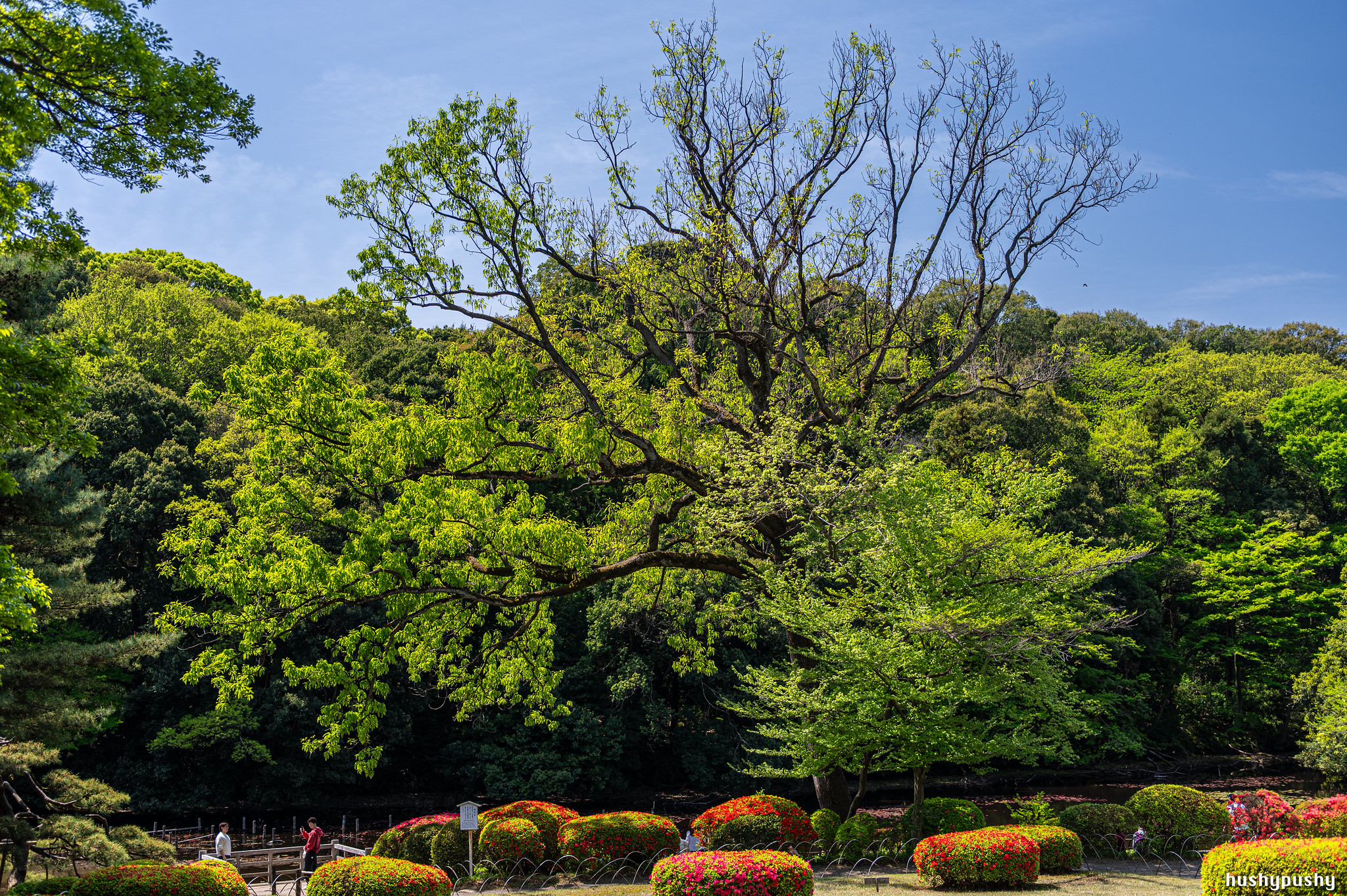
The shrine itself was pretty neat, and of course I made sure to say a prayer and throw in my change. However, the bigger draw for this shrine are the amazing gardens. I’m glad there are a couple people in this shot to show the scale of this absolutely massive tree.
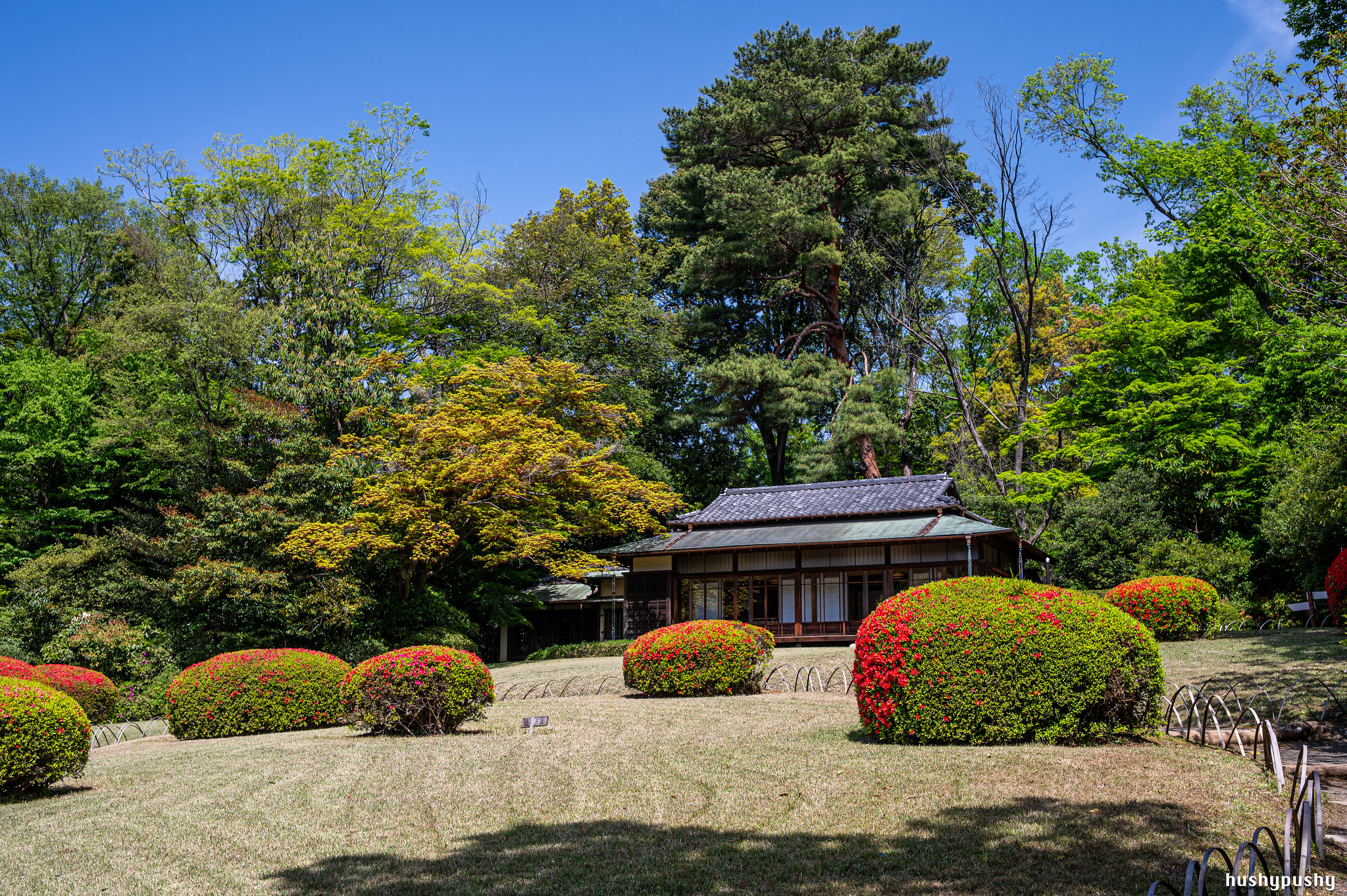
From where I took the previous photo, I walked closer to the tree and turned around for this shot. In a way it’s a bit of a pity to see the brown grass in April, but then again it’s nice that they don’t use sprinklers.
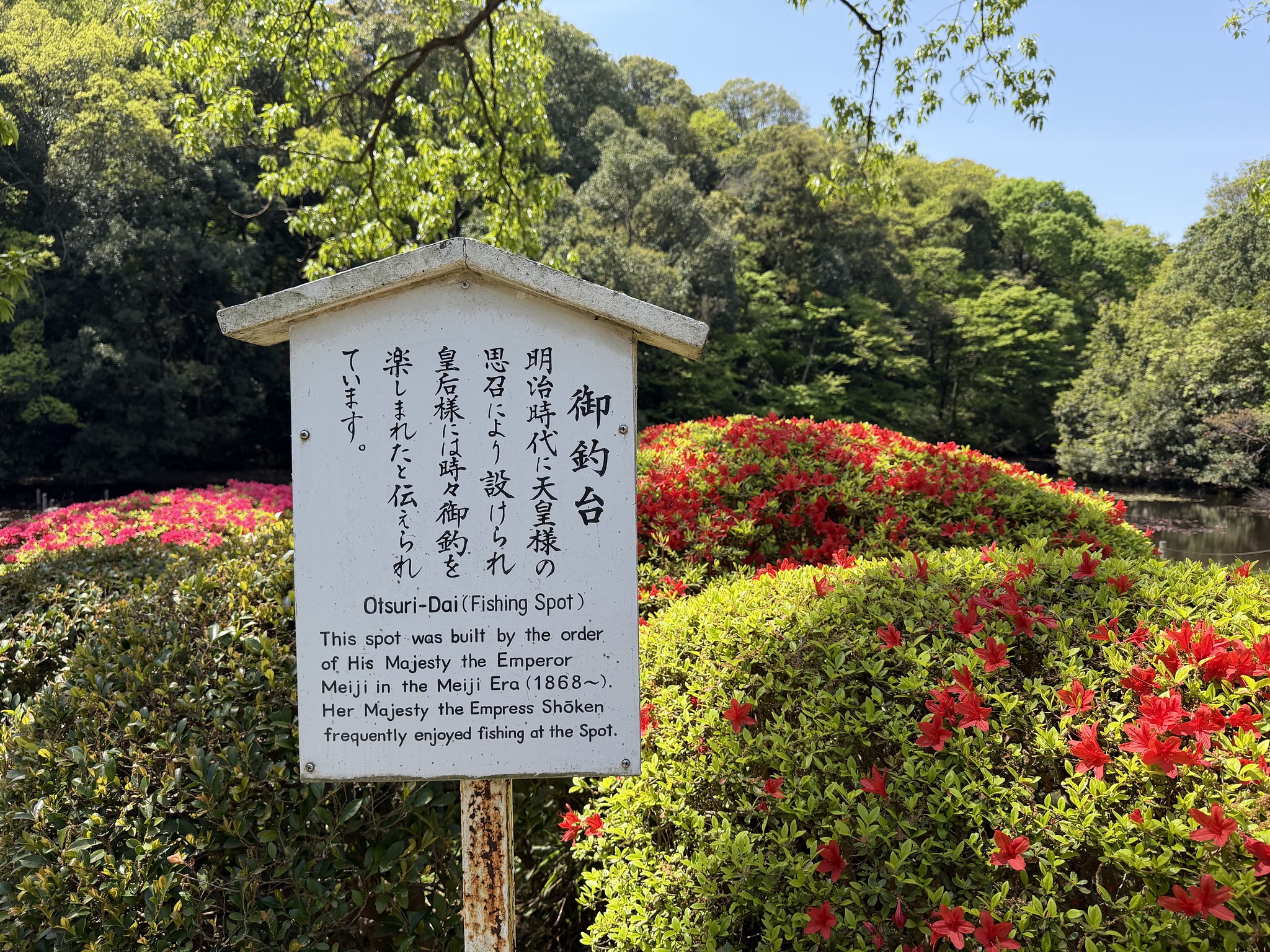
Do I have some form of “Tokyo Syndrome”? I just find everything to be magical in Japan; even the way this sign is written (in both Japanese and English) is just so nice. And I love the wooden signs, which remind me of The Legend of Zelda.
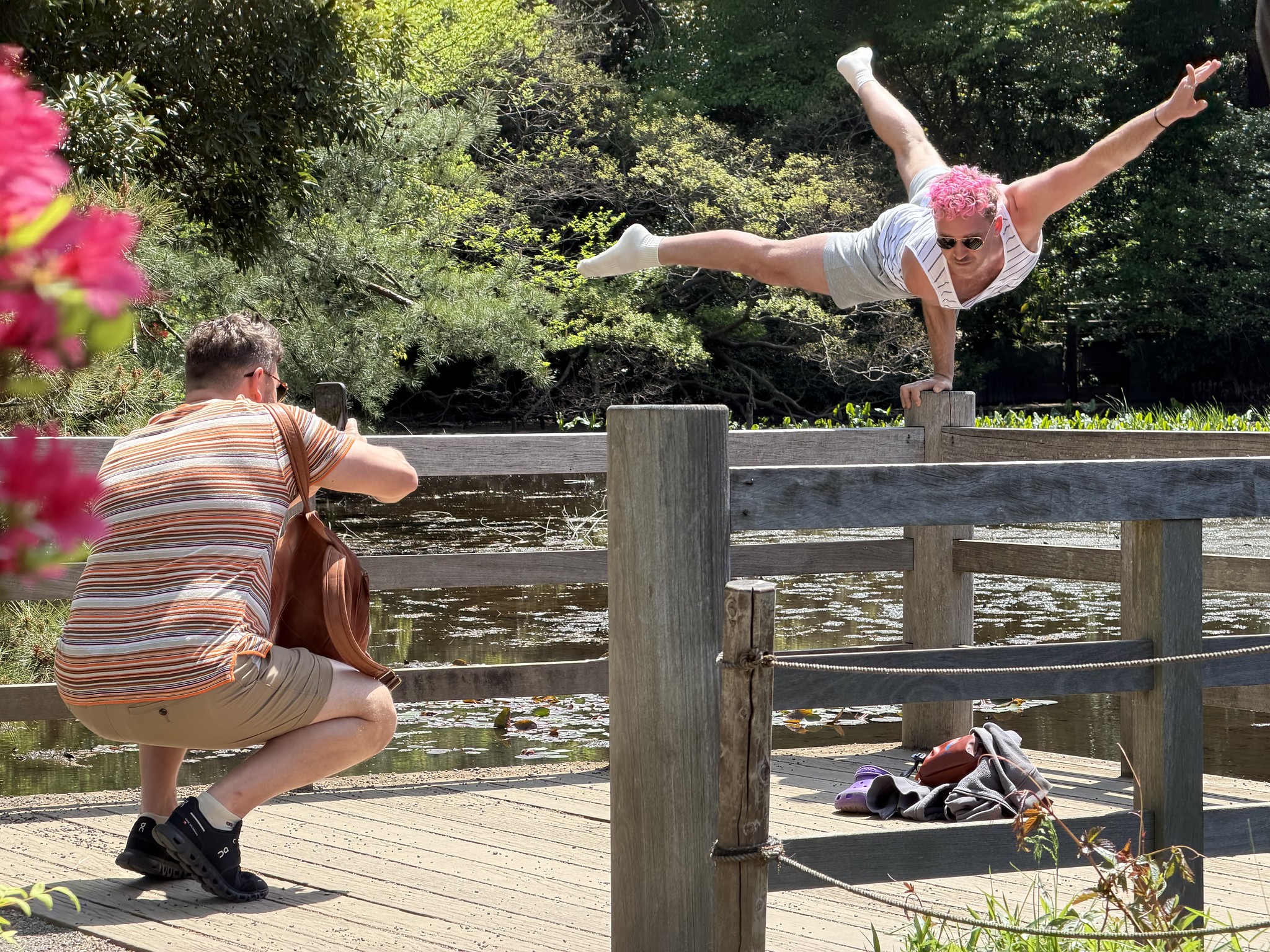
Well these guys looked like they were having a good time!
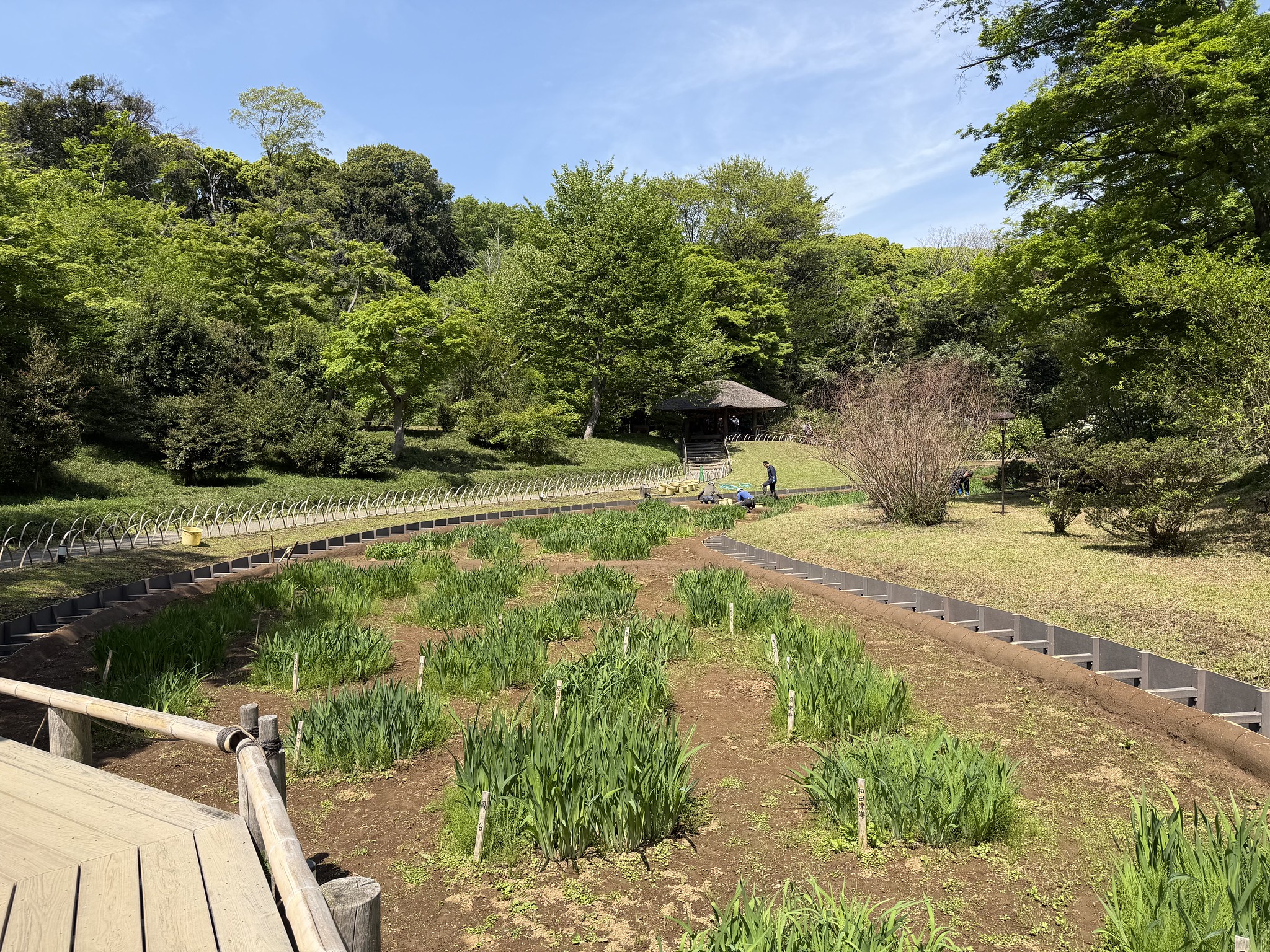
Normally this looks like a flowing river of irises, but unfortunately at this time of the year they were replanting them all. The upshot is that we got to see people at work, which I always enjoy seeing.
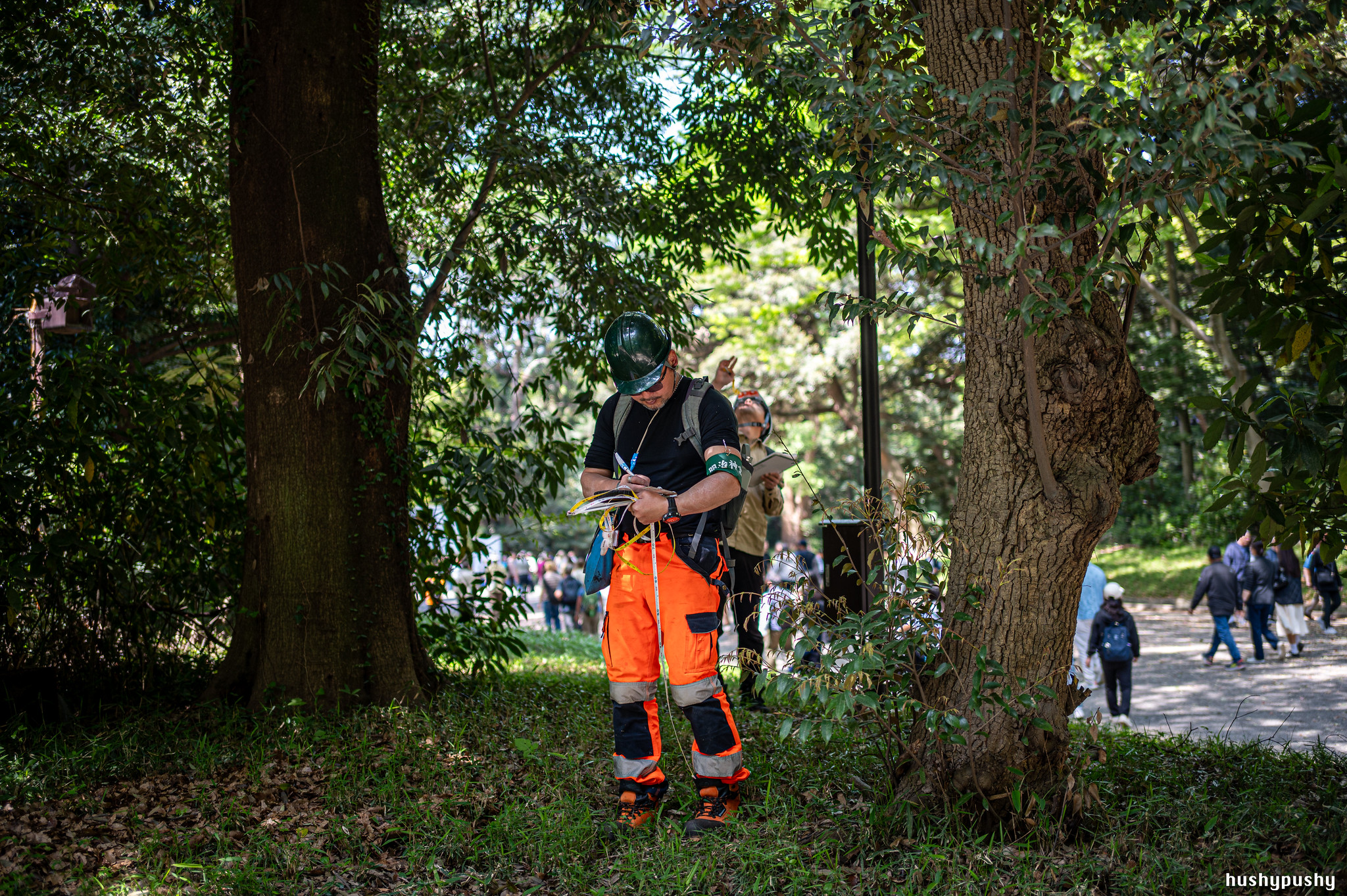
These guys were looking at stuff, taking measurements, and writing notes. I love to put myself in outdoor workers’ shoes and imagine what their job is like.
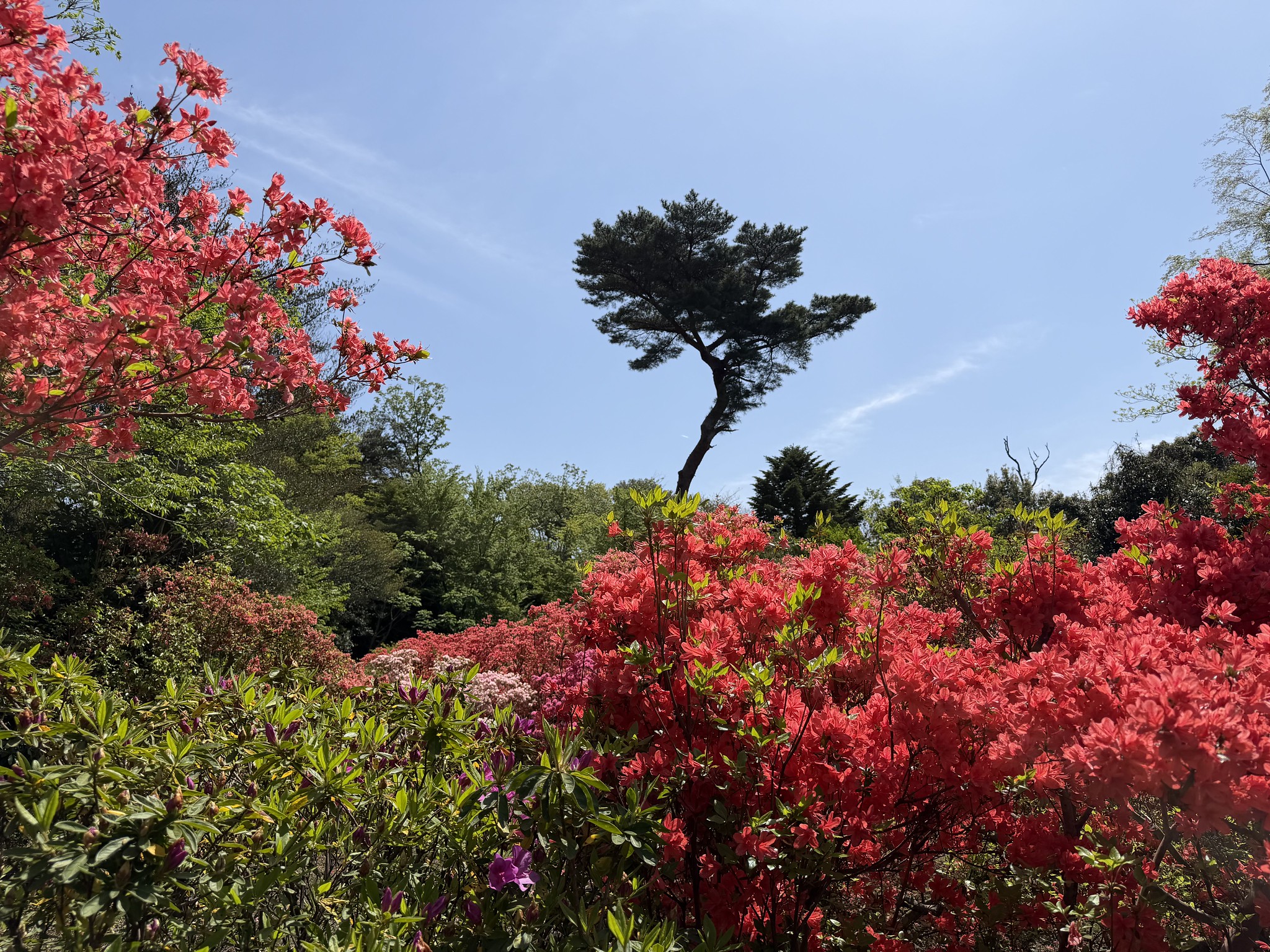
I hate the phrase “photos don’t do it justice”, but goshdangit, my photos do not do this place justice.
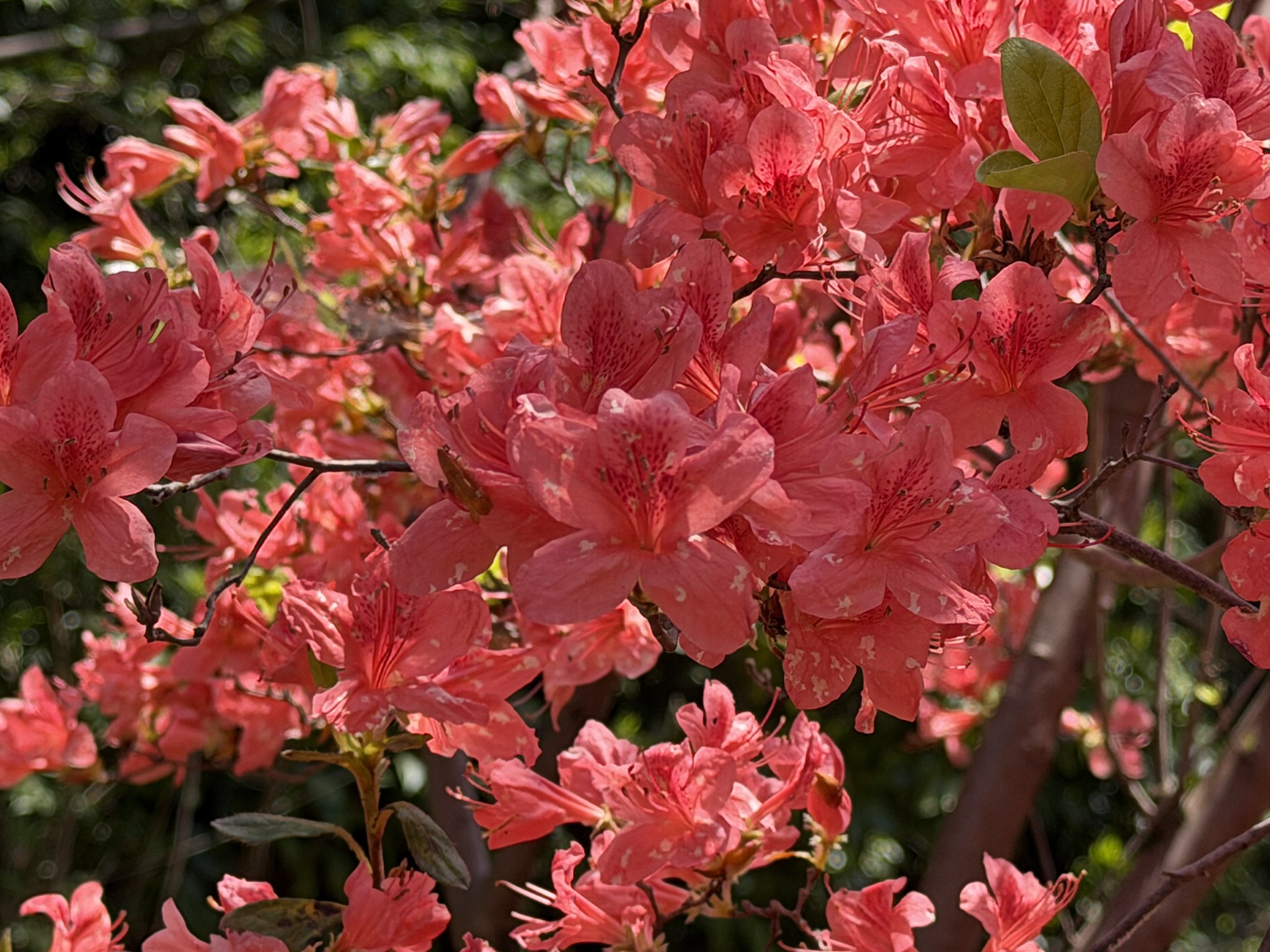
The vibrance of these flowers was intense. Somehow they seem to reflect wavelengths that my cameras can’t capture. But you know, a poor workman blames his tools and all that. I had a fun time working on my nature and landscape photos on this trip.
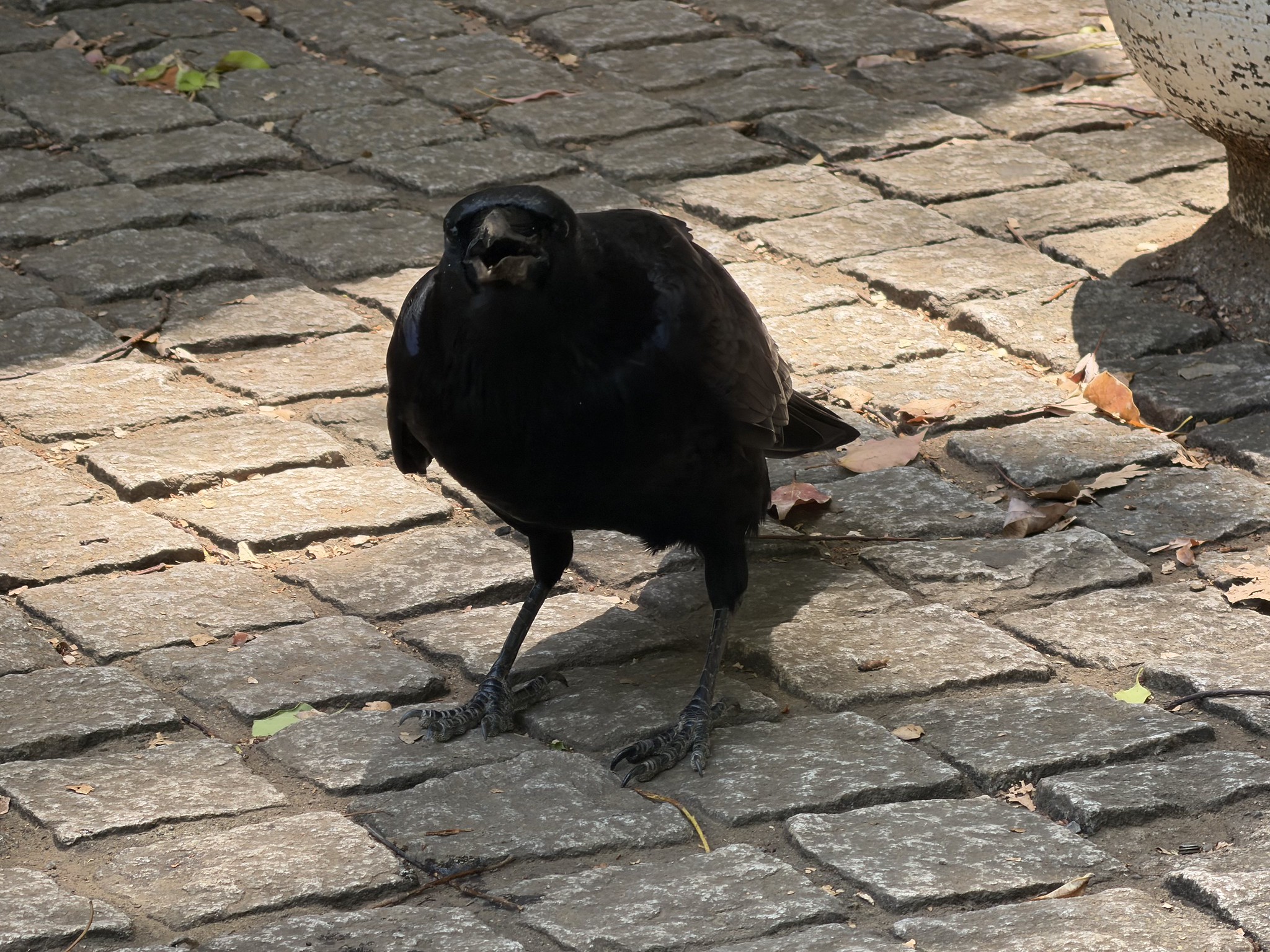
Another funny crow. This one noticed I was taking pics of him eating, so he gave me the “hey what are you lookin’ at buddy?”
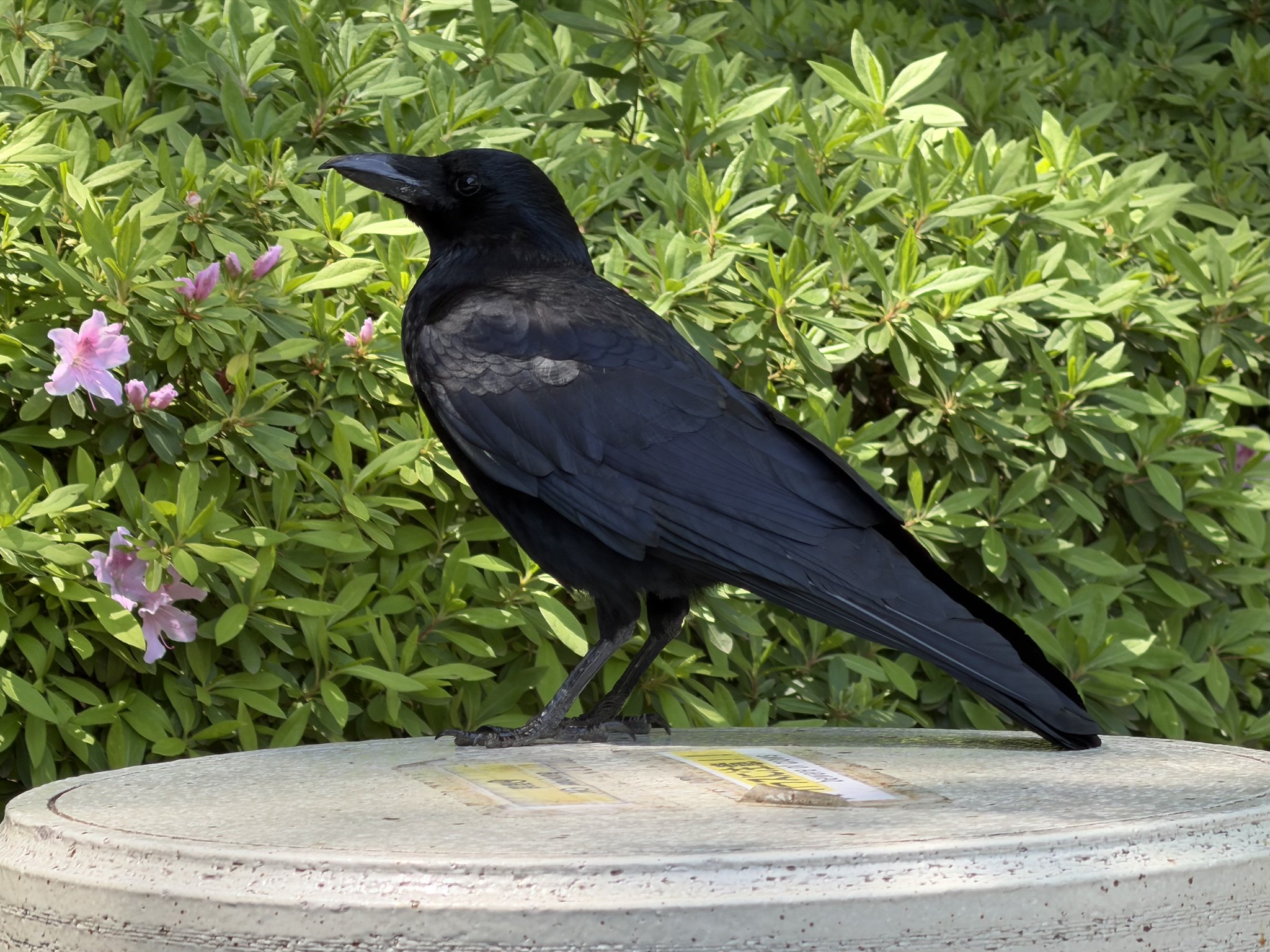
And then, as they seem to love doing, he jumped up on the table next to me and started posing like a model!
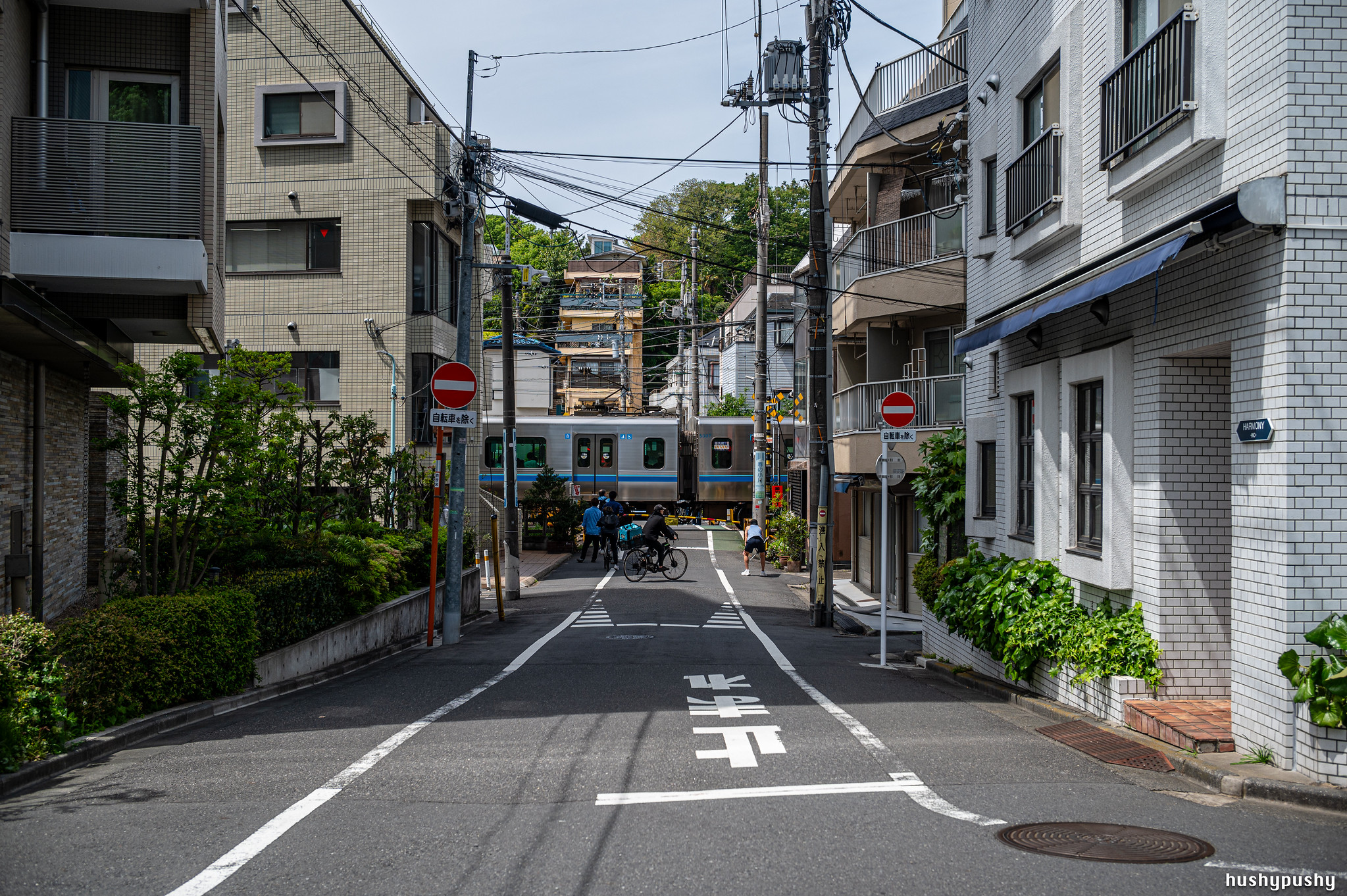
Next, we made our way towards Sangenjaya, a neighborhood in Setagaya. There were a lot of cute little streets here, and it didn’t seem so crowded or packed-in as other parts of Tokyo.
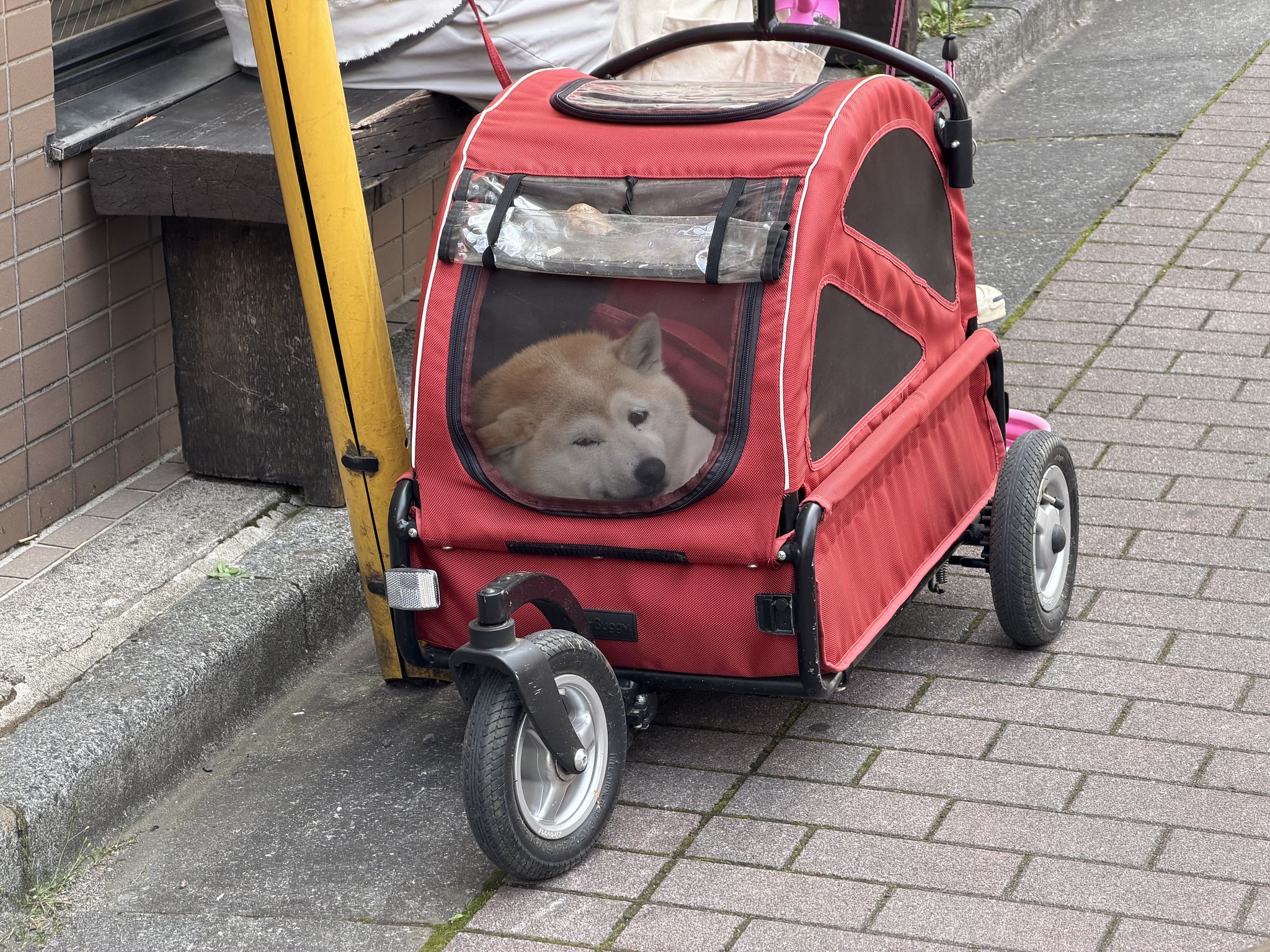
As I was hoping and expecting, there are a lot of Shibas in Japan. I’m more of a cat guy in general, but I just love Shibas.
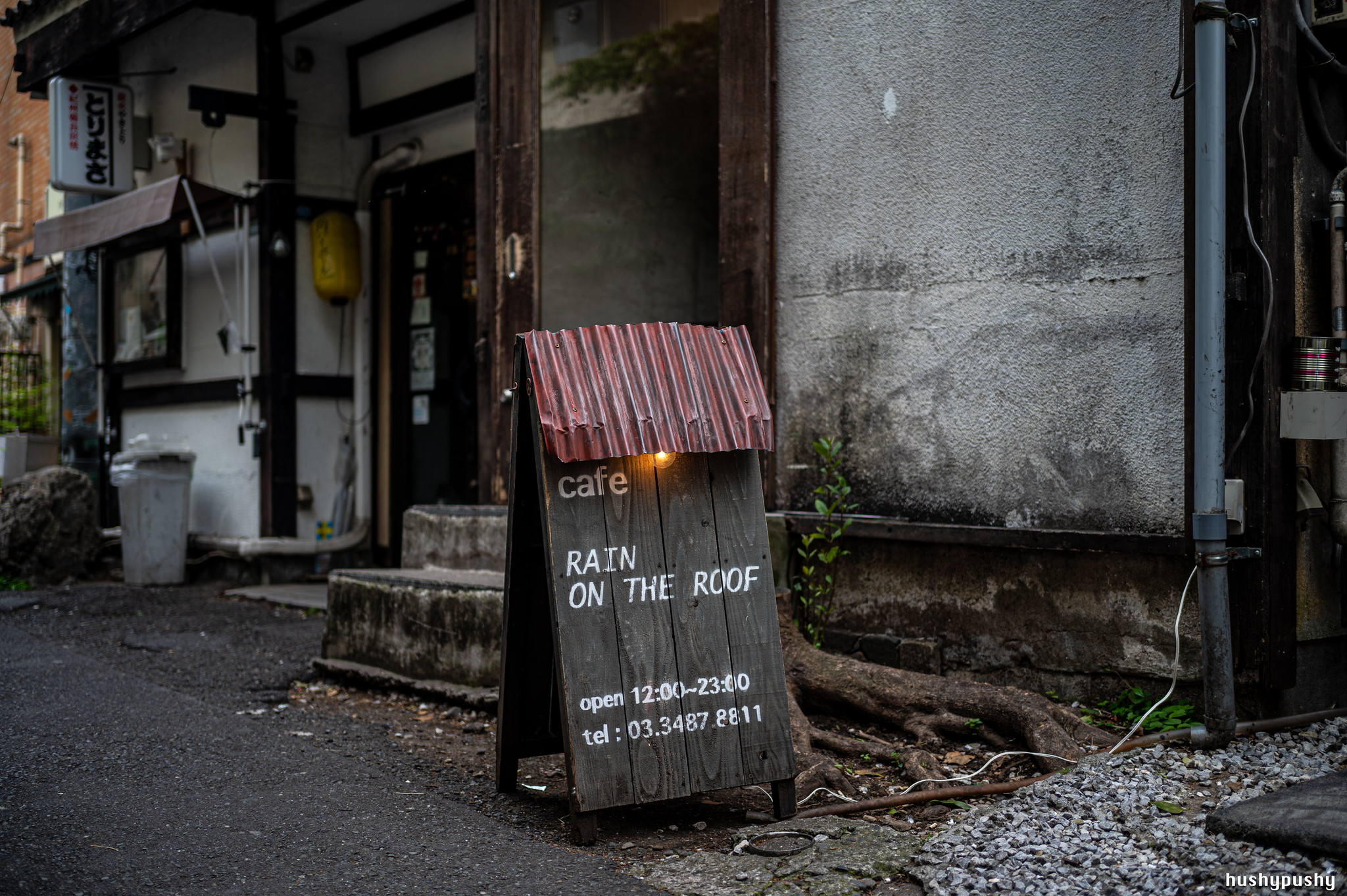
We navigated through some narrow alleys to our next location, Cafe Rain on the Roof. This is more Persona tourism: supposedly the cafe in Persona 5, Le Blanc, was “inspired by” this lovely jazz cafe. Recall that this area is called Sangenjaya (三軒茶屋), which means “Three Tea Houses”. In Persona 5, the protagonist lives on the top floor of the cafe which is located in Yongenjaya–Four Tea Houses (san = three, yon = four).
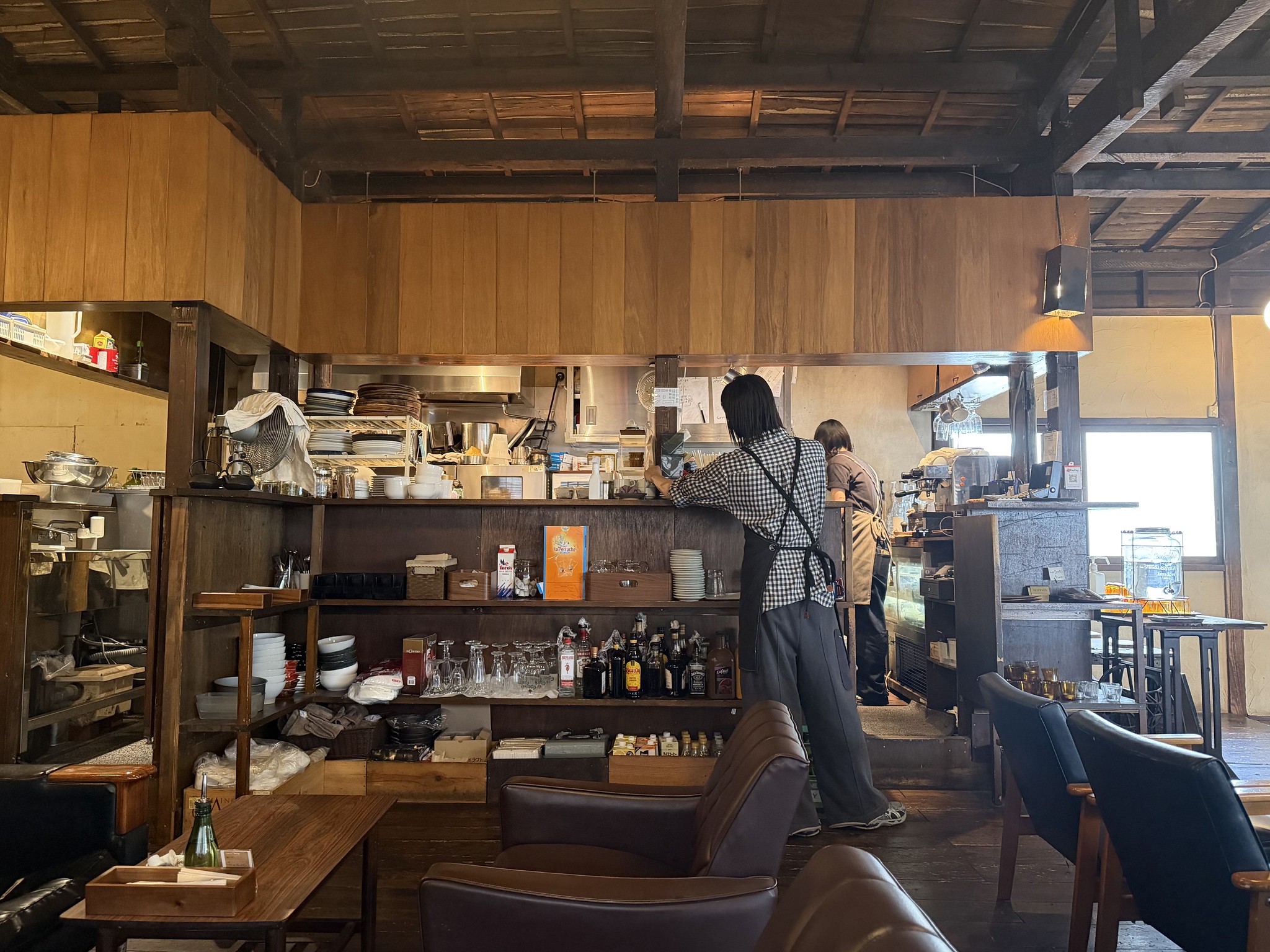
It didn’t really seem very similar to me, but it was a rad place to chill. All the windows were covered in screens, so despite the bright photo it was actually fairly dim in there. We sunk into the leather recliners and sipped a drink while listening to chill jazz. We spent so much time on this trip walking and standing, so it was very nice to just sit and chill for a bit.
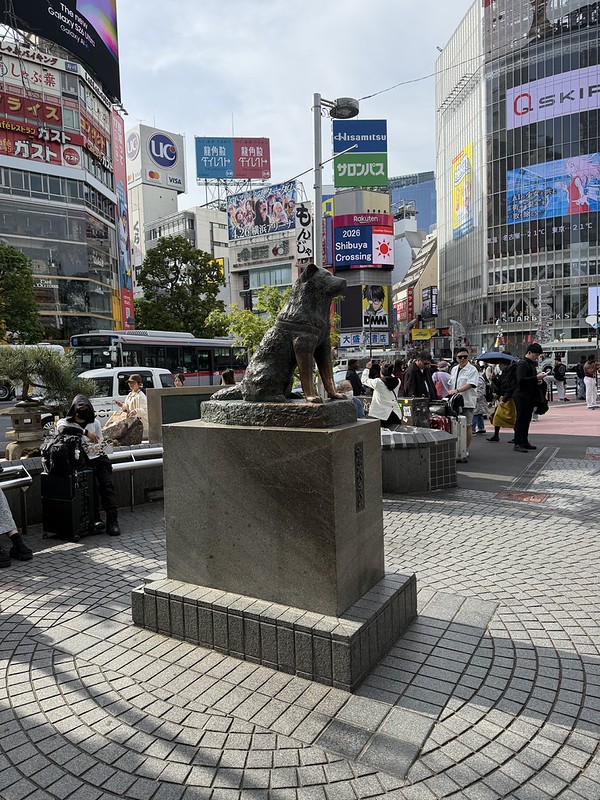
In a rare moment of doubling-back, we decided to go back to Shibuya. Stefan wanted to go to a store that was closed the first time we visited, and I wanted to go back to Tower Records to buy a book I had waffled on. This time, we made sure to visit the Hachiko statue, one of the most famous pieces of public art in Japan. This is actually a recreation; the original was made in 1934, but it was recycled for the metal in WWII. In 1948, the Japanese government commissioned the original artist’s son to make another one, and it’s stood there since. Why a statue of a dog? In 1923, a professor at Tokyo University got an Akita dog. Every day the dog would meet him at Shibuya station and they would walk home together. In 1925, the man died of an aneurysm at the university, and never came home. From 1925 until the dog’s death in 1935, the dog visited Shibuya Station every single day to wait for him. He became famous in Japan for his loyalty while he was still alive, and the statue was actually finished a few months before he died. Good doggie!
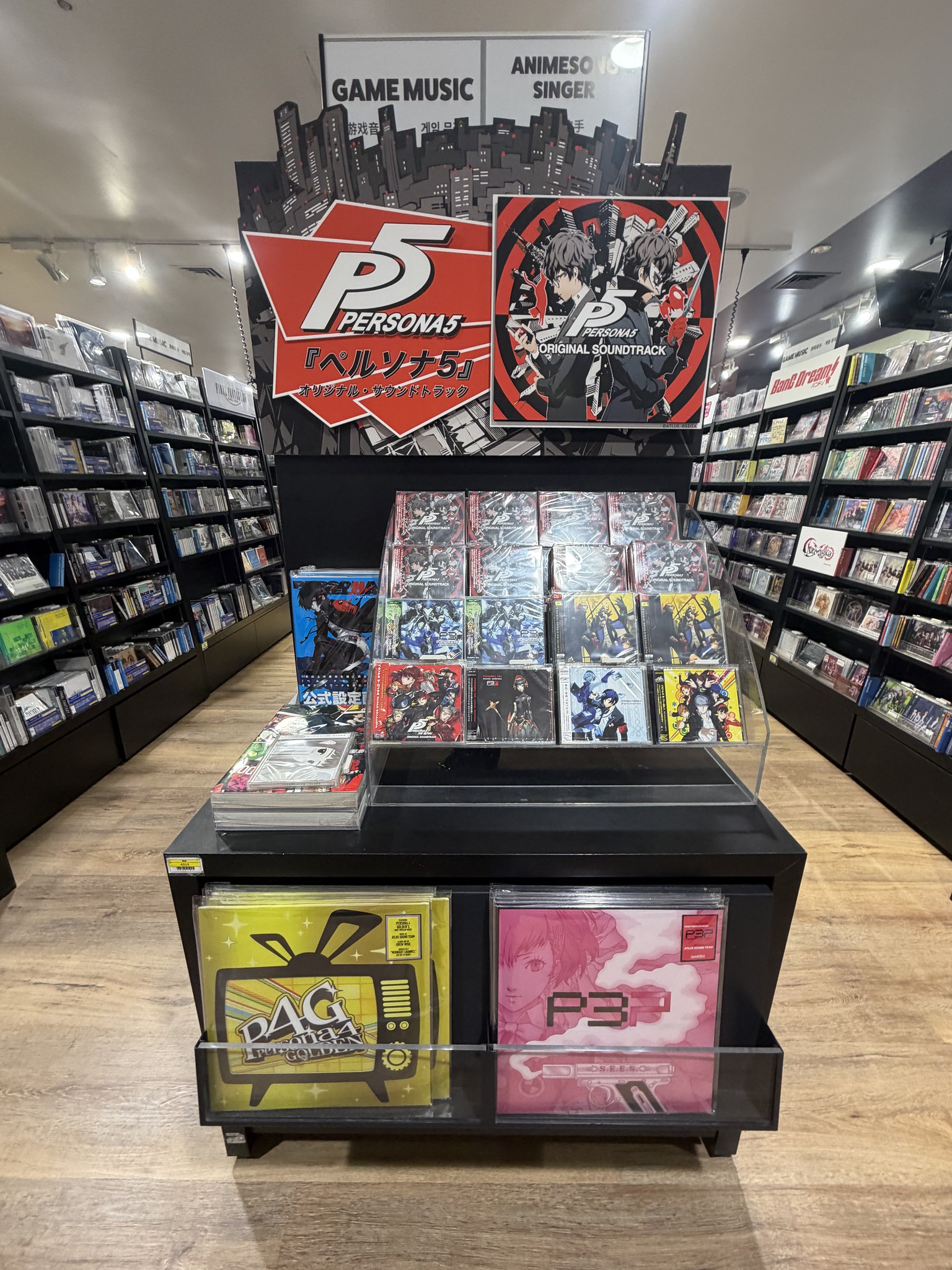
I’ve mentioned Persona several times in these Japan posts. Despite being around since the 1990’s, I only became aware of the series a few years ago. Although the series has sold over 30 million units total, whenever I mention this series to fellow Americans I get a blank stare of unknowing. So it was super cool that not only did Persona have its own huge section at Tower, it had an end cap too! I went back to get those two books on the left side of this display, the Persona 5 and Persona 3 Reload art books. They were only 3000 yen, which is about $21. These books can go for $60 or more at shops in the USA like Kinokuniya!
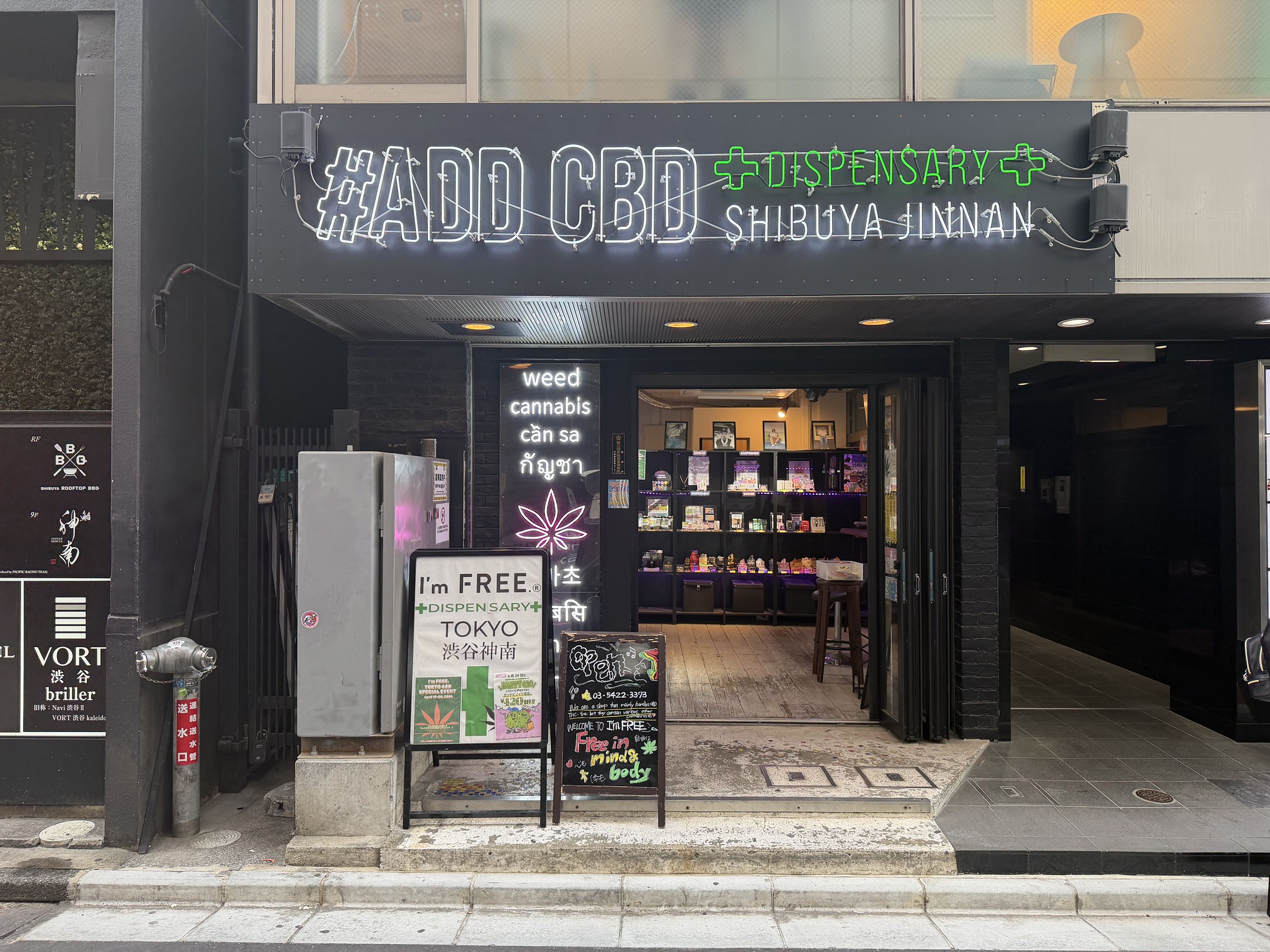
I wish I had gone in here just to see what it was like. THC is insanely illegal in Japan; they do not believe in medicinal marijuana nor recreational toking. Although CBD is not psychoactive, it was still a shock to see a cannabis product in Japan.
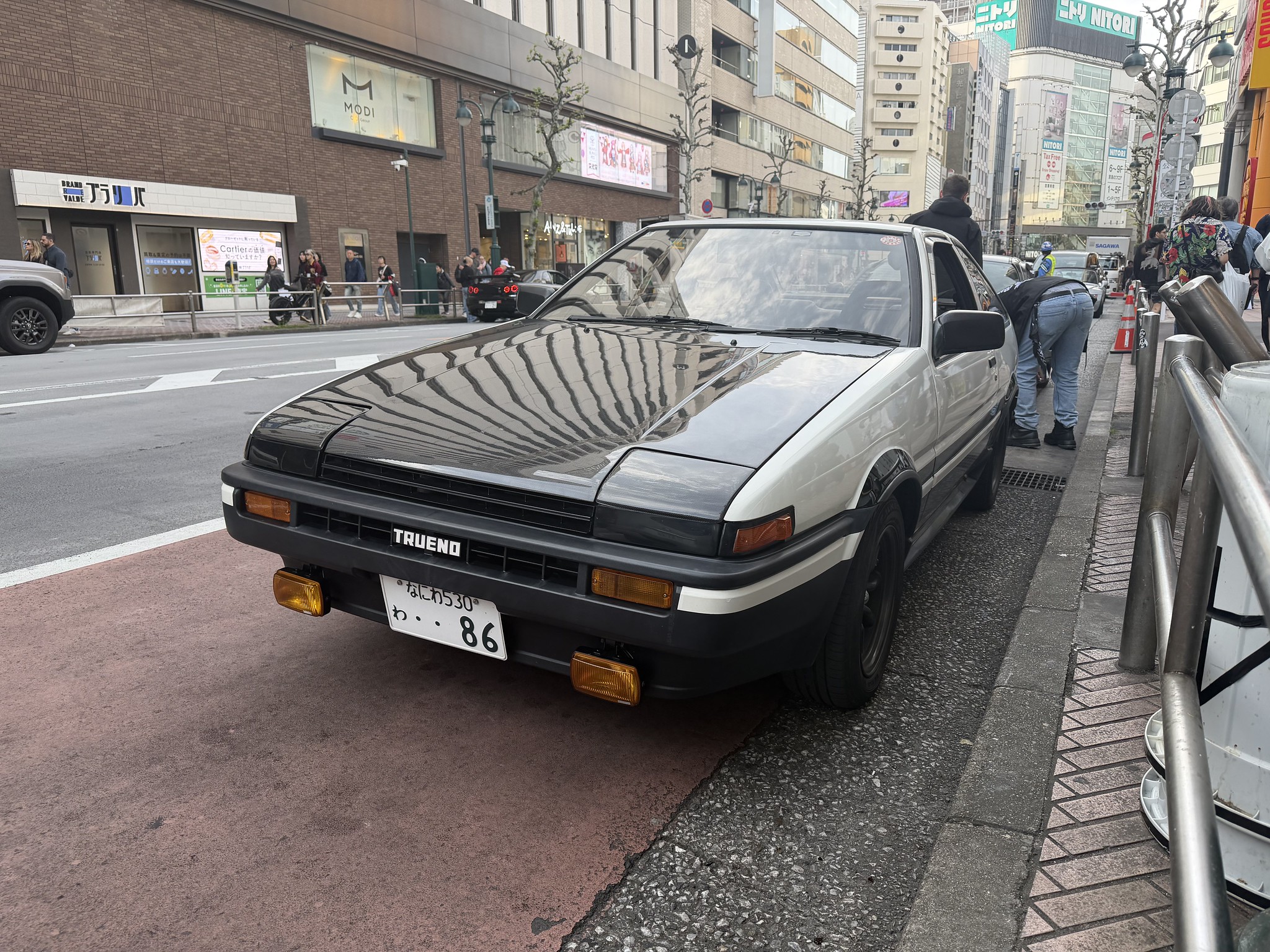
Even in Japan, the Takumi Fujiwara cosplay is popular. Of course, “panda” zenki Truenos are just badass anyway.
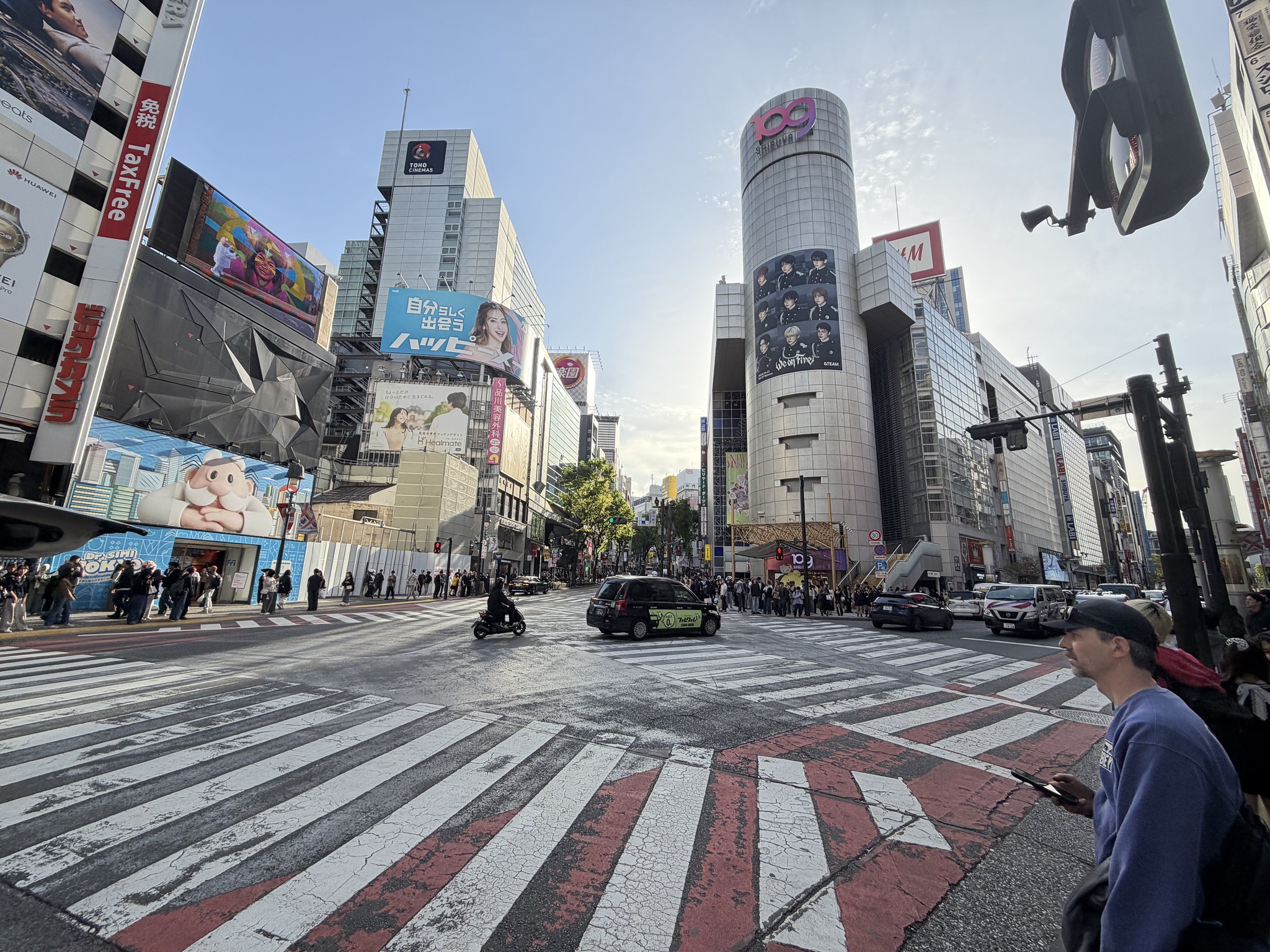
Something I just wanted to see was this Shibuya landmark, the 109 department store building. This cool cylindrical building was opened in 1979 and has been featured in many movies, anime, and games. I don’t have any interest in going inside though, because all eight floors are dedicated to clothing and accessories for 20-30 year old women.
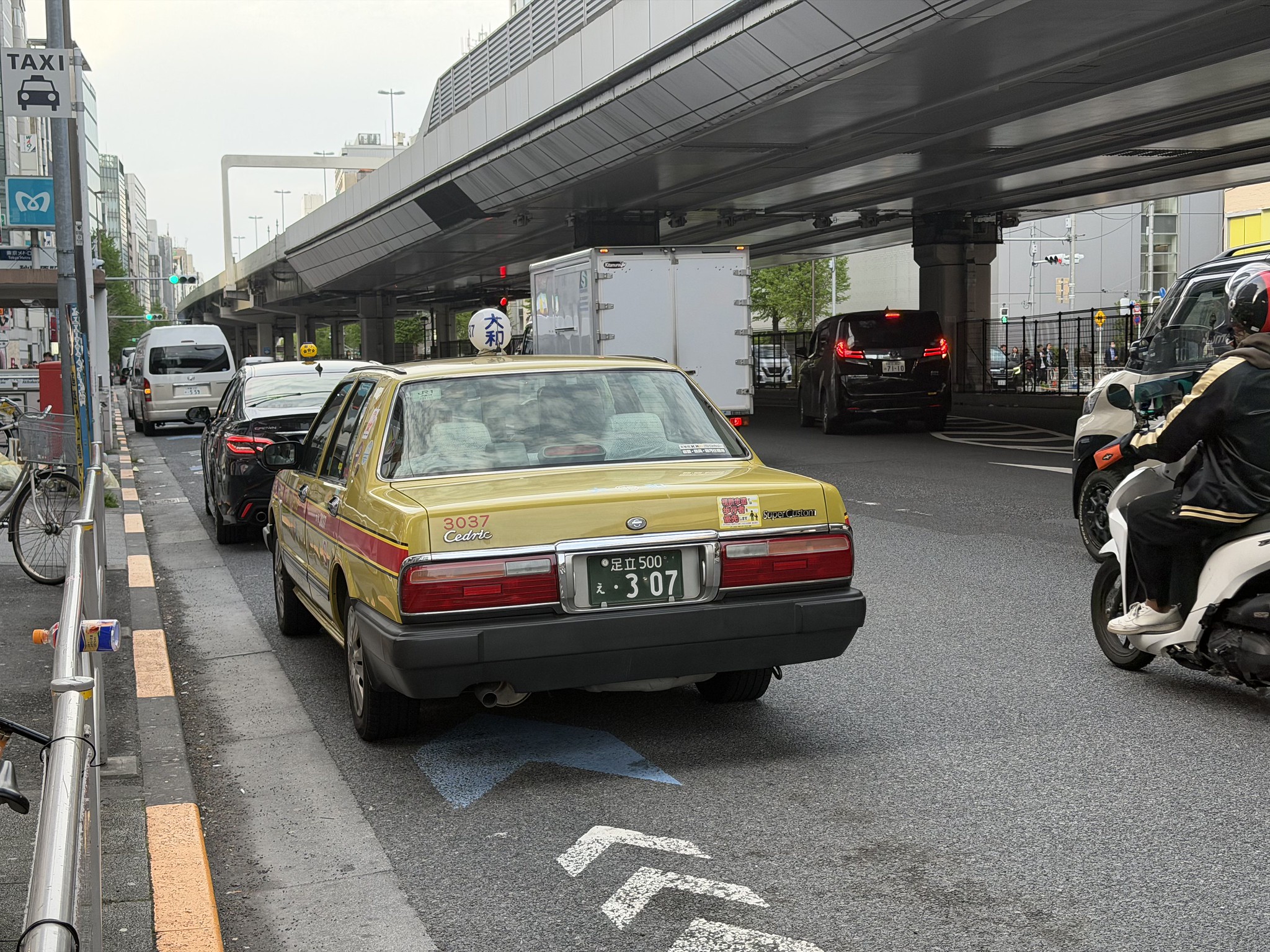
Toyota’s new JPN Taxi seems to be the king of taxi duty especially in Tokyo, but there are still Toyota Comforts and Nissan Cedrics in service, like this one. This is a seventh generation (Y31) Cedric, which debuted in 1987. Although the eighth generation (Y32) was released in 1991, they continued to produce this Y31 taxi version until 2015!
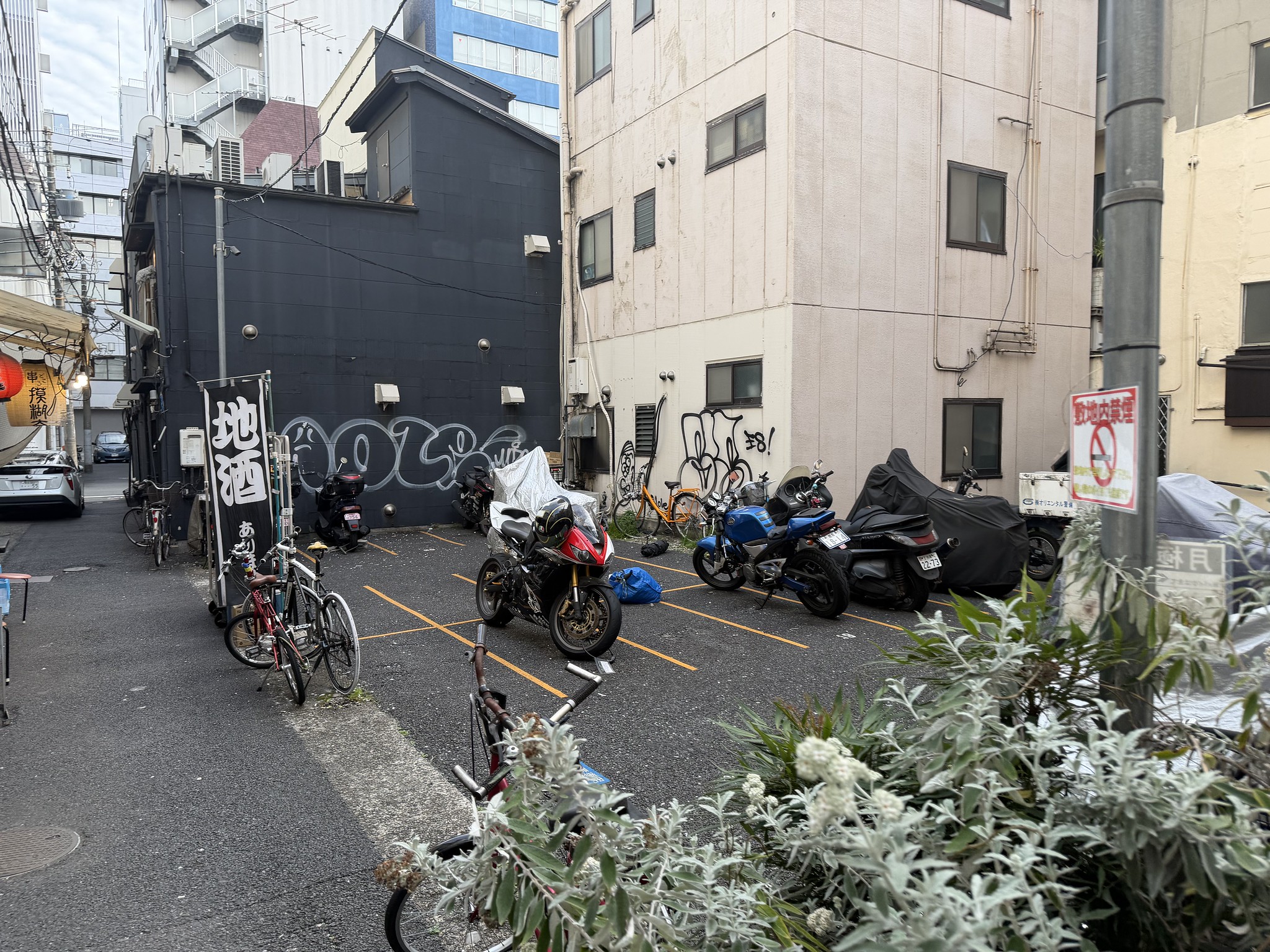
Every time we walked back to our hotel, we passed by this interesting tiny back-alley motorcycle parking lot.
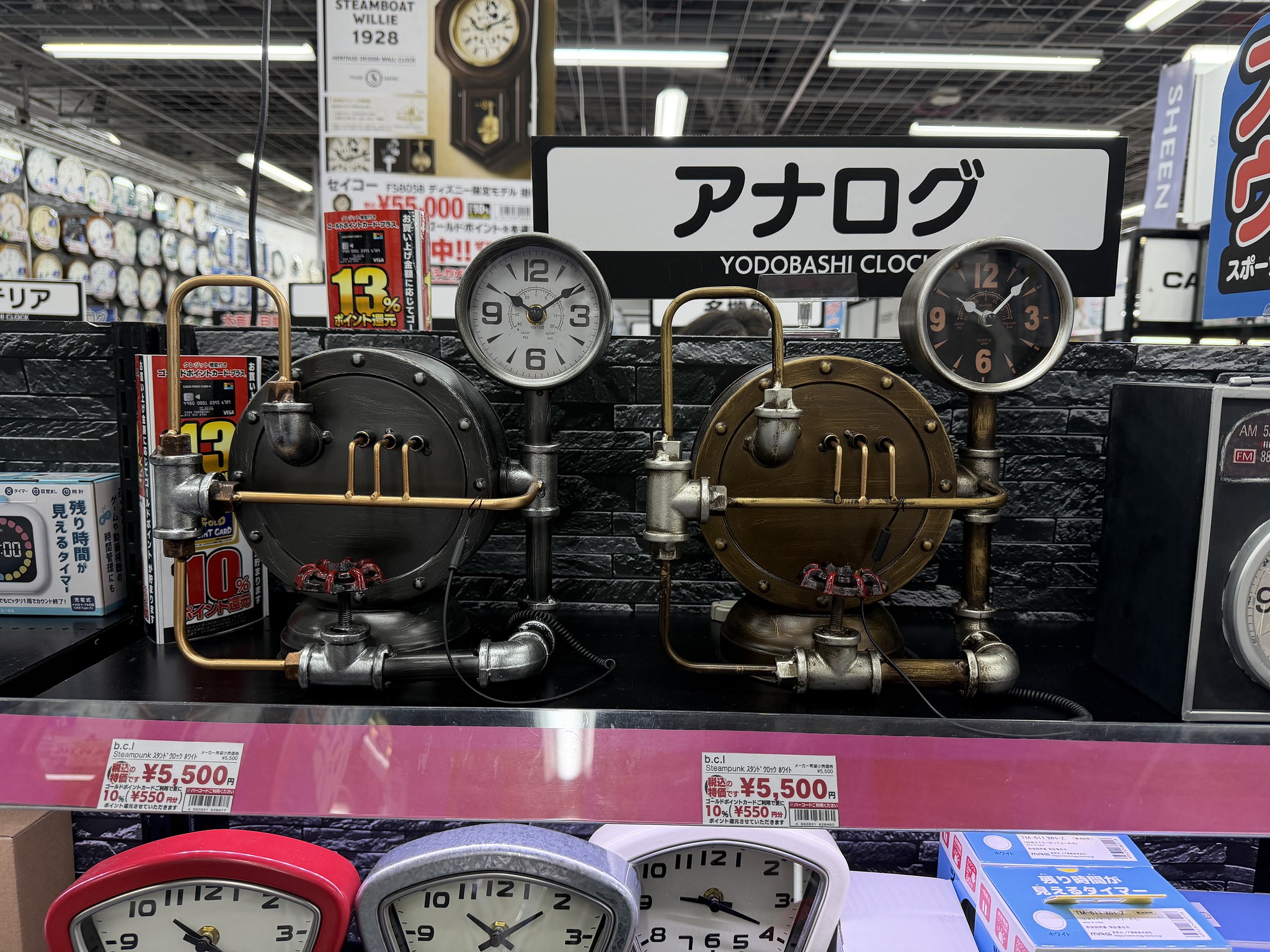
I stopped by Yodobashi Camera to see if they had the JR East mook and clock but unfortunately they did not. They did have a bunch of other interesting timepieces, like this steampunk setup here.
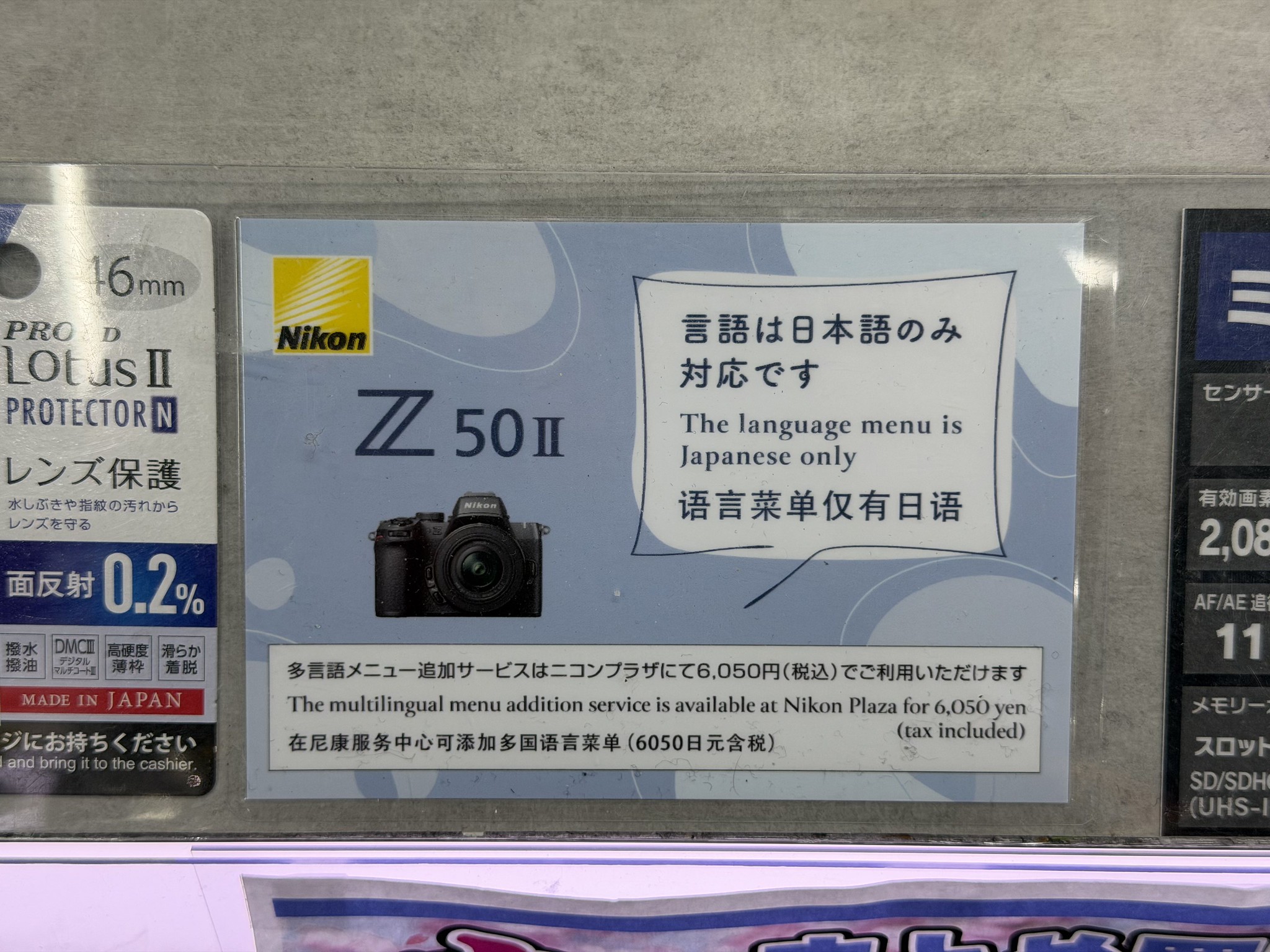
I also looked at cameras and was extremely disappointed. I’ve been wanting the Nikon 14-30mm, and figured Japan might be the place to get it due to the favorable exchange rate, lack of tariffs, and no sales tax on account of being a foreigner. However, I was amazed to find out that even after all that, I could have it next day from Amazon USA for cheaper! I also had to take a photo of this “multilingual menu addition service”, because cameras are locked to regions now. Want to buy your Nikon in Japan and use it in a different language? You’ll need to cough up 6050 yen (about $37) for the privilege.
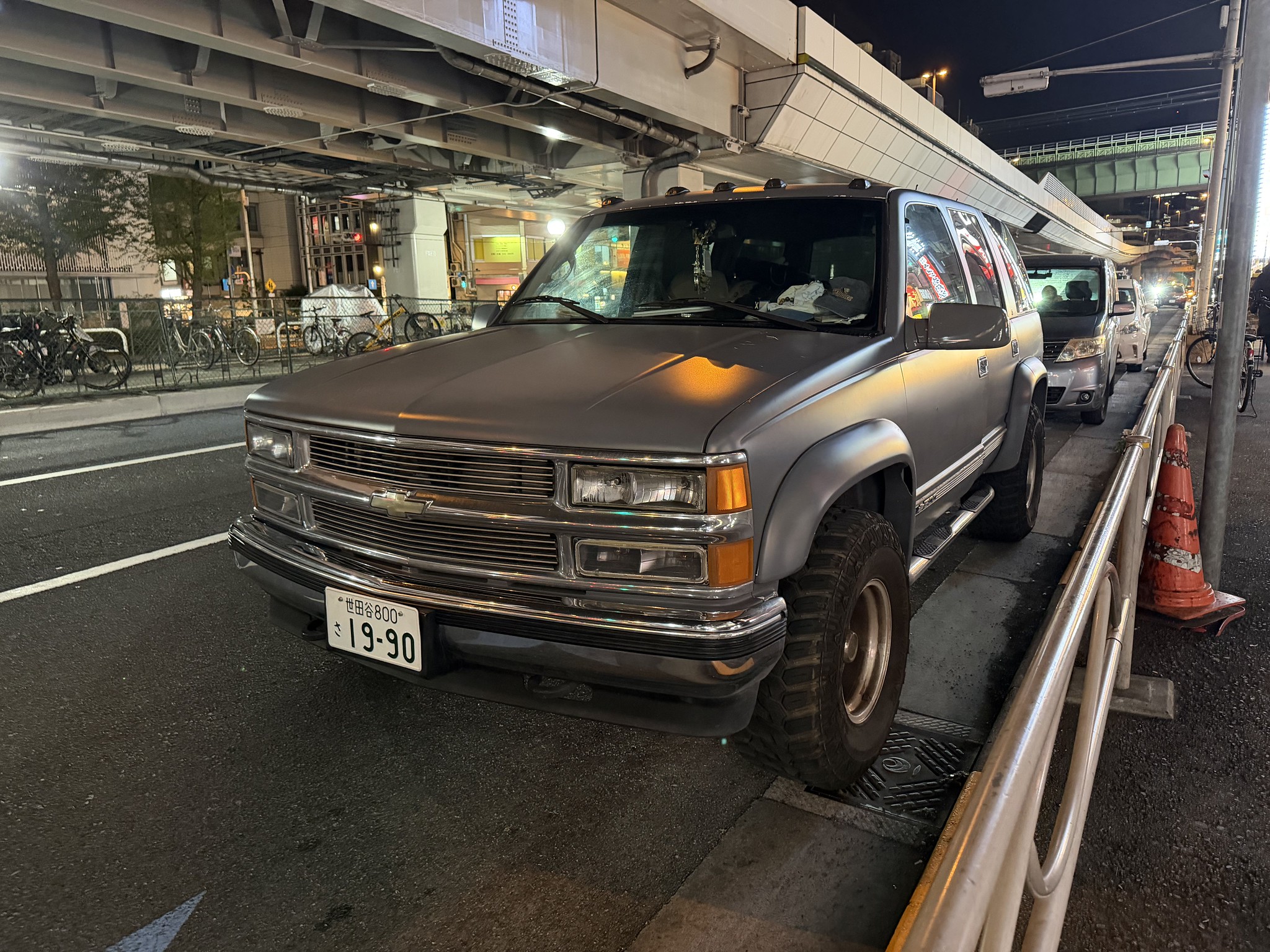
I was never able to get over the sight of American cars in Japan, especially giant ones like this flared Tahoe which are totally inappropriate for navigating Tokyo.
Oddly, I realized that I have exactly zero photos of when I finally got to play the arcade version of Densha de Go. Although the music festival was three days, I decided to only go for the one big day on Sunday. Stefan wanted to also go on Friday, so I was on my own that evening. After dinner, I walked to Taito Station and played Densh de Go until I could barely keep my eyes open.
Of course it doesn’t stop here; we had two more jam-packed days before flying home on Monday. On Sunday morning we went to a really casual car meet in Shinjuku, and I’ll share that story next before wrapping up the trip with the Saturday/Sunday/Monday post.


Pingback: Sunday Morning Cars in Tokyo – Shake Shack Gaien Meet | Star Road
Pingback: I Went to Japan Twice (Part 2 – 2026) – Saturday/Sunday | Star Road