
Fuji Motorsports Museum ~ 富士モータースポーツミュージアム (April 2026)
When you walk through the front door of the Fuji Speedway Hotel, you’re standing at the entrance to the Fuji Motorsports Museum.
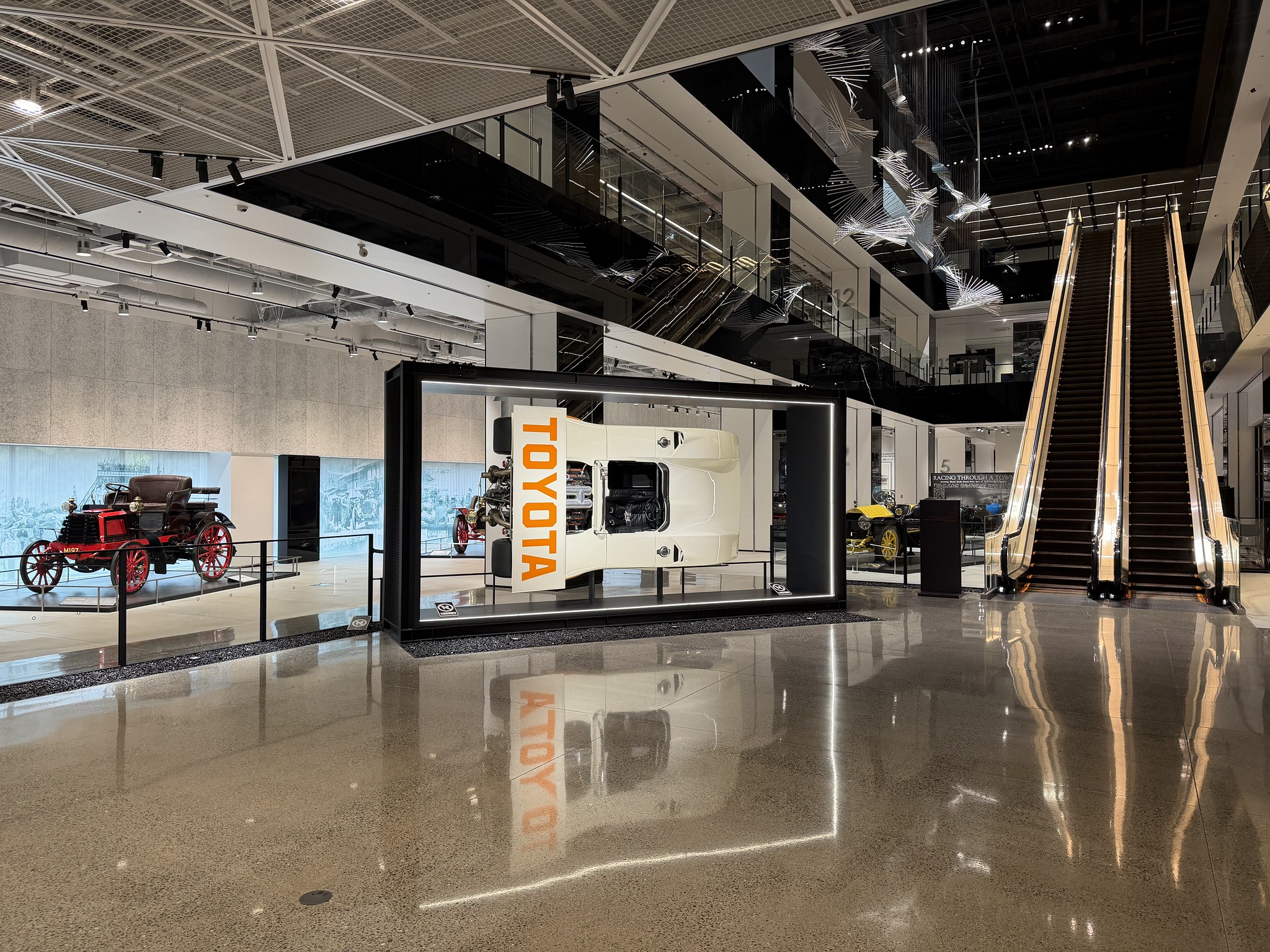
To get to the front desk of the hotel, you ride that escalator up to the 3rd floor, enjoying a great preview of the museum in the process. We’ll turn left here and enter the museum on the first floor.
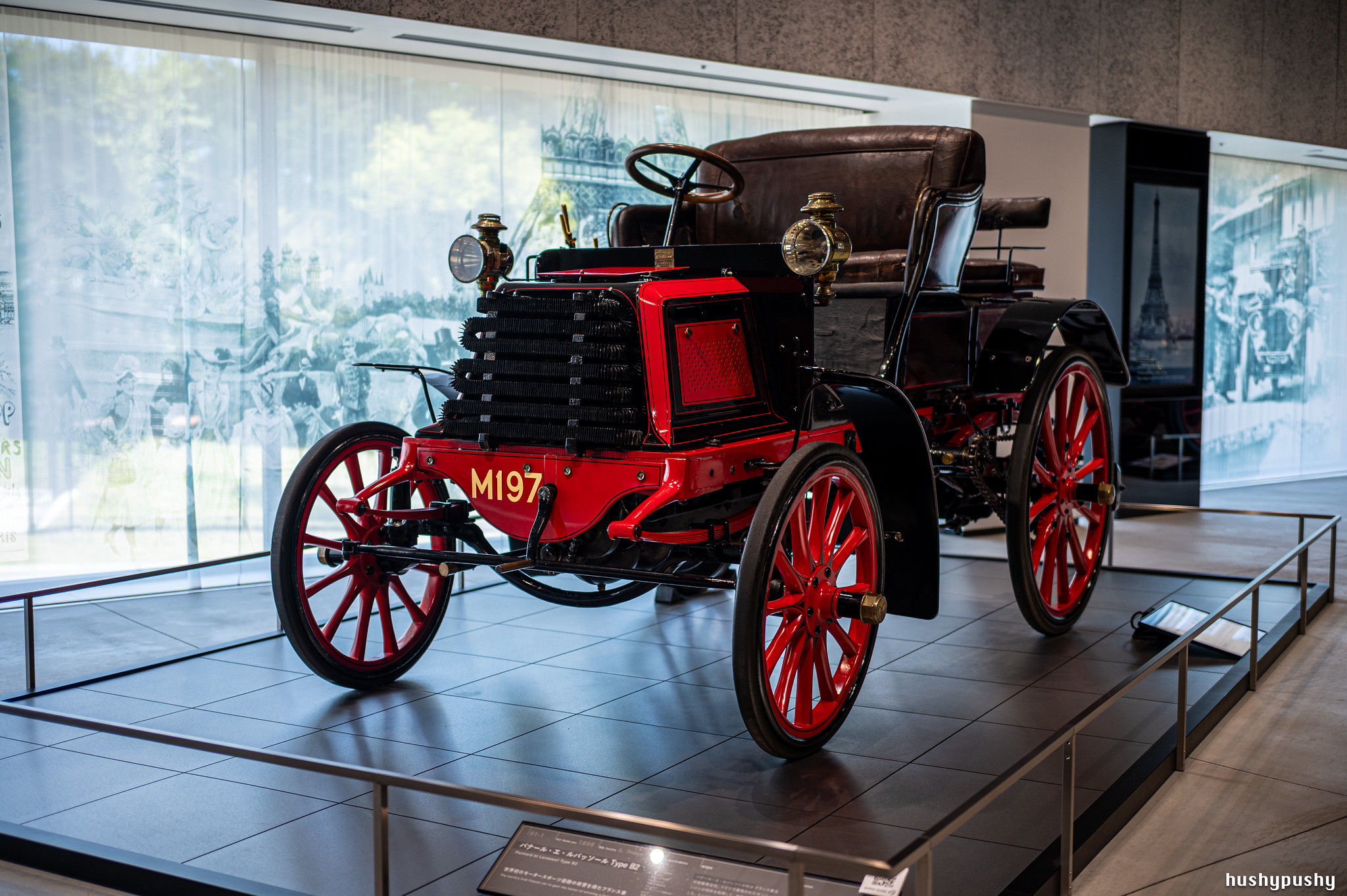
The museum opens with a Panhard et Levassor Type B2 from 1899, the second version of what is considered to be the first car to ever do the front-engine rear-wheel-drive drivetrain layout properly.
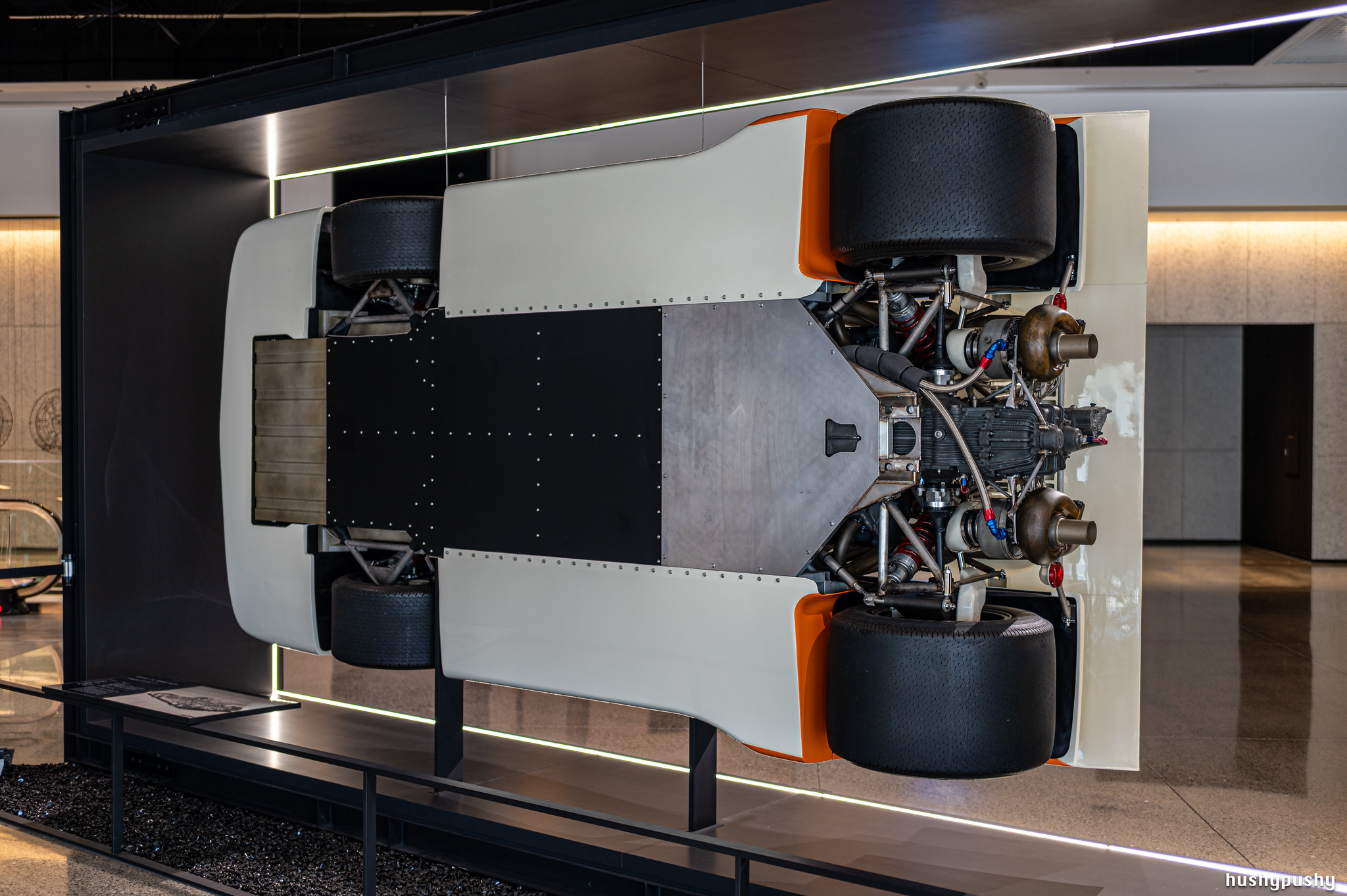
This is a Toyota 7 Turbo. Well, this display is actually a replica built by Toyota: they used an original engine, transmission, wheels, and tires from a 7 Turbo prototype and then built the exhibit car around those. The 7 was designed for FIA Group 7 and had success in 1968 and 1969. For 1970, Toyota started development on a turbocharged version that was intended for the 1970 Japanese Grand Prix at Fuji, but Nissan withdrew from the race, then so did Toyota, which caused the race to be cancelled entirely, so the Toyota 7 Turbo never actually saw competition. On a different note, check out the area under the car. What is that black stuff? Rocks..?
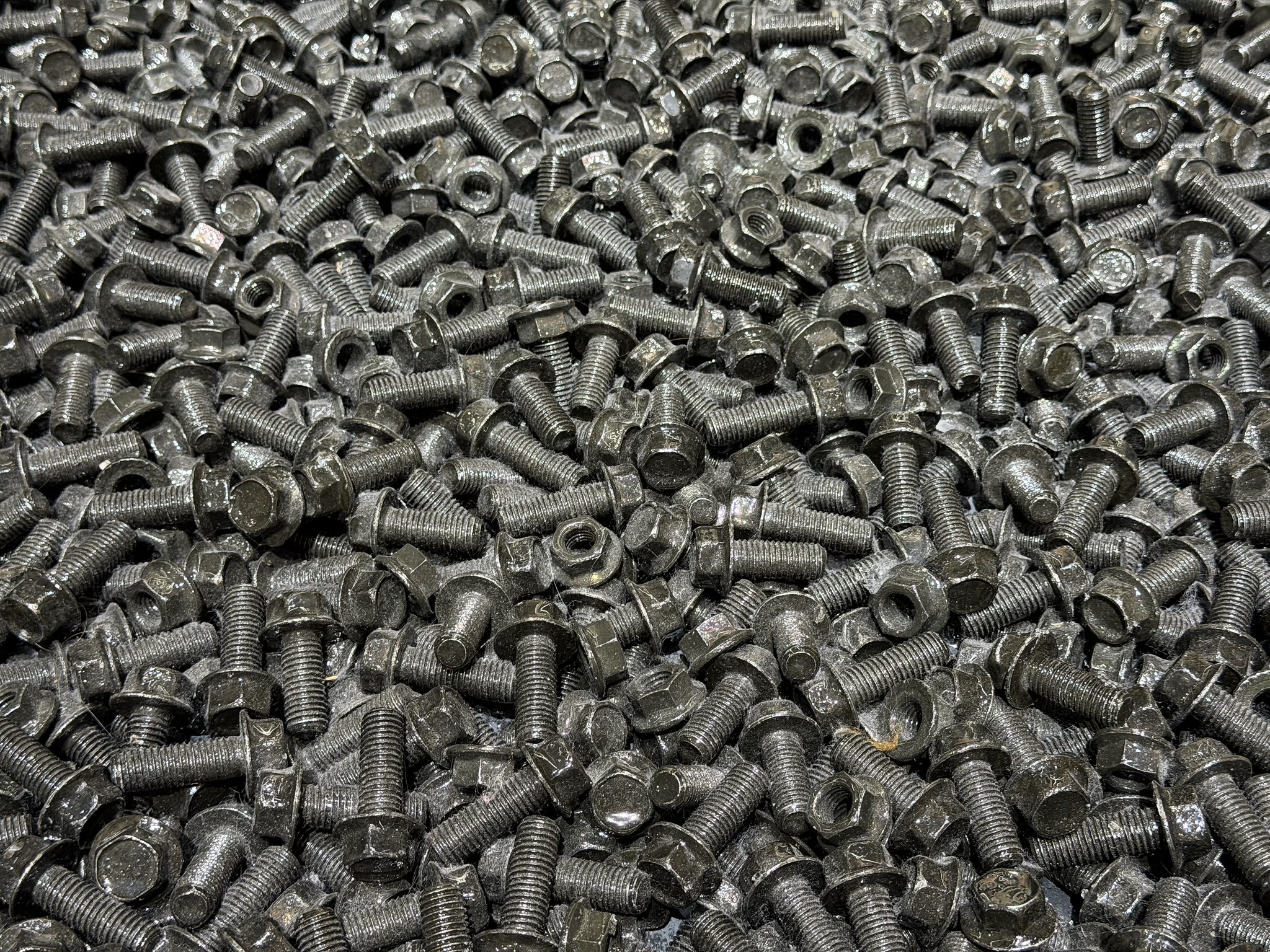
Nope, they’re bolts. What a cool detail.
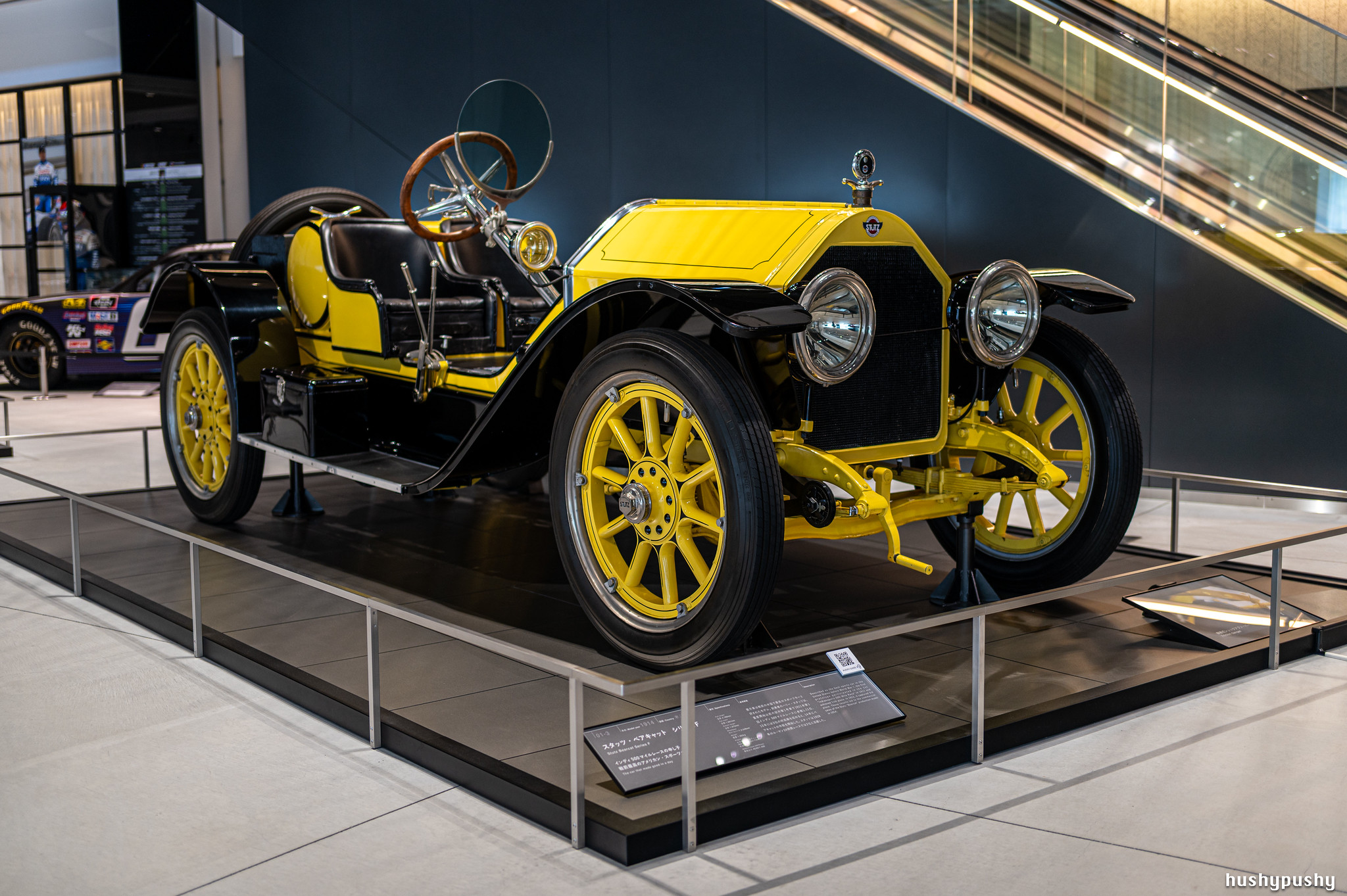
This is a 1914 Stutz Bearcat, an early model with the open body. While the Model T made 20hp, this car made 60hp and the plaque says it weighs 1362 kg (3003 lbs). This was a proper sports car in its day. In 1915, Erwin “Cannon Ball” Baker drove a Stutz Bearcat from Los Angeles to New York City in 11 days and 7 hours, which would be impressive in this car in 2026, but back then a significant portion of that route didn’t include travel on roads at all, let alone paved roads.
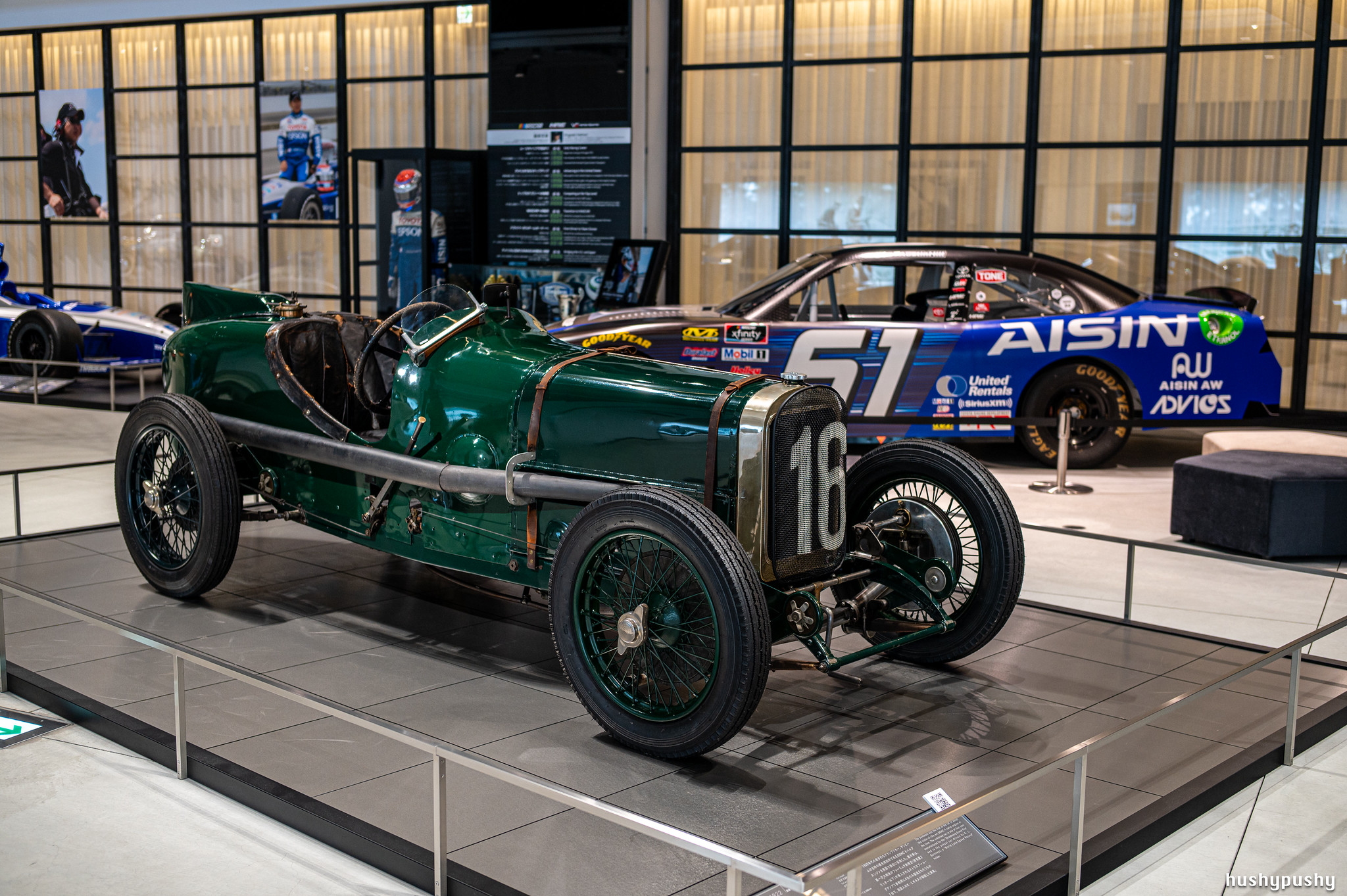
Now we’re up to the 20’s, with this 1922 Sunbeam Grand Prix. Their emphasis with this car was that it was the first race car to show that front brakes were necessary and could be made to work properly.
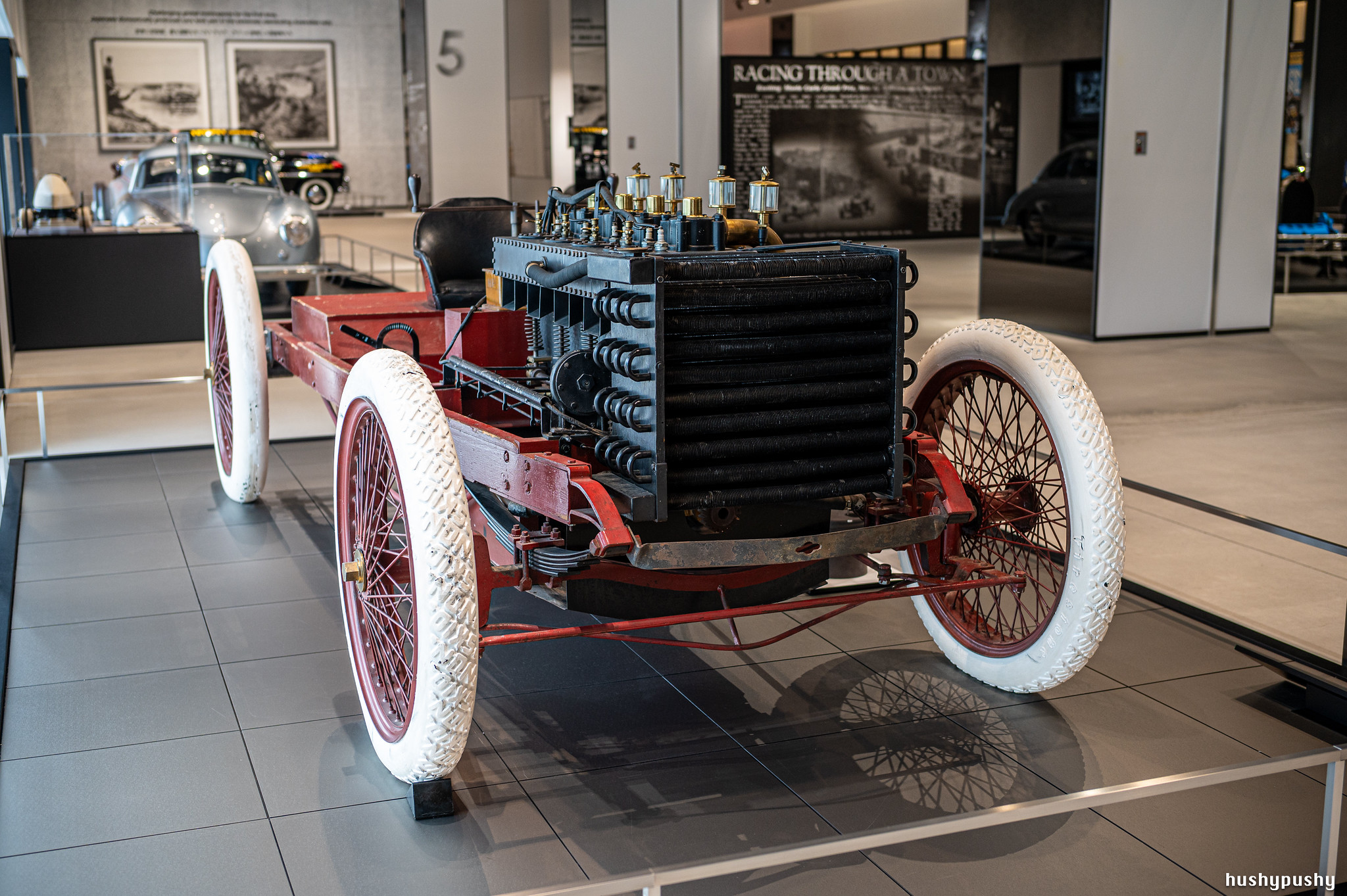
This was a “1902” Ford 999, which was Henry Ford’s first race car that he sold. What you’re looking at here is actually a replica that Ford made in the 1960’s. That means the replica itself is now almost exactly as old as the original car was when they built it.
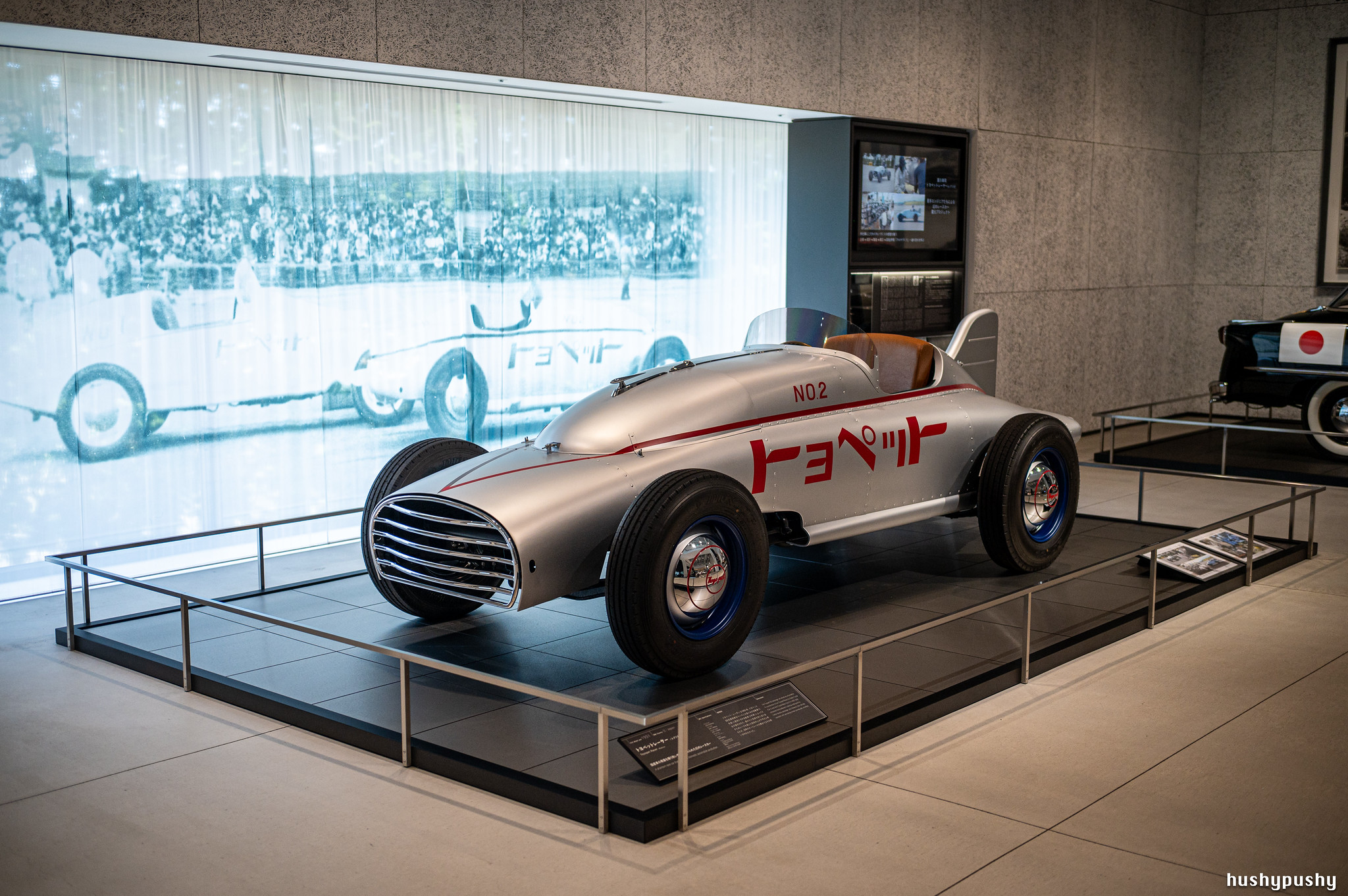
While I appreciated the general tour through automotive history, I came here for cars like this: unique cars from Japan’s history. The Toyopet Racer from 1951 was created by Kiichiro Toyoda, the grandfather of the current Toyota CEO Akio Toyoda.
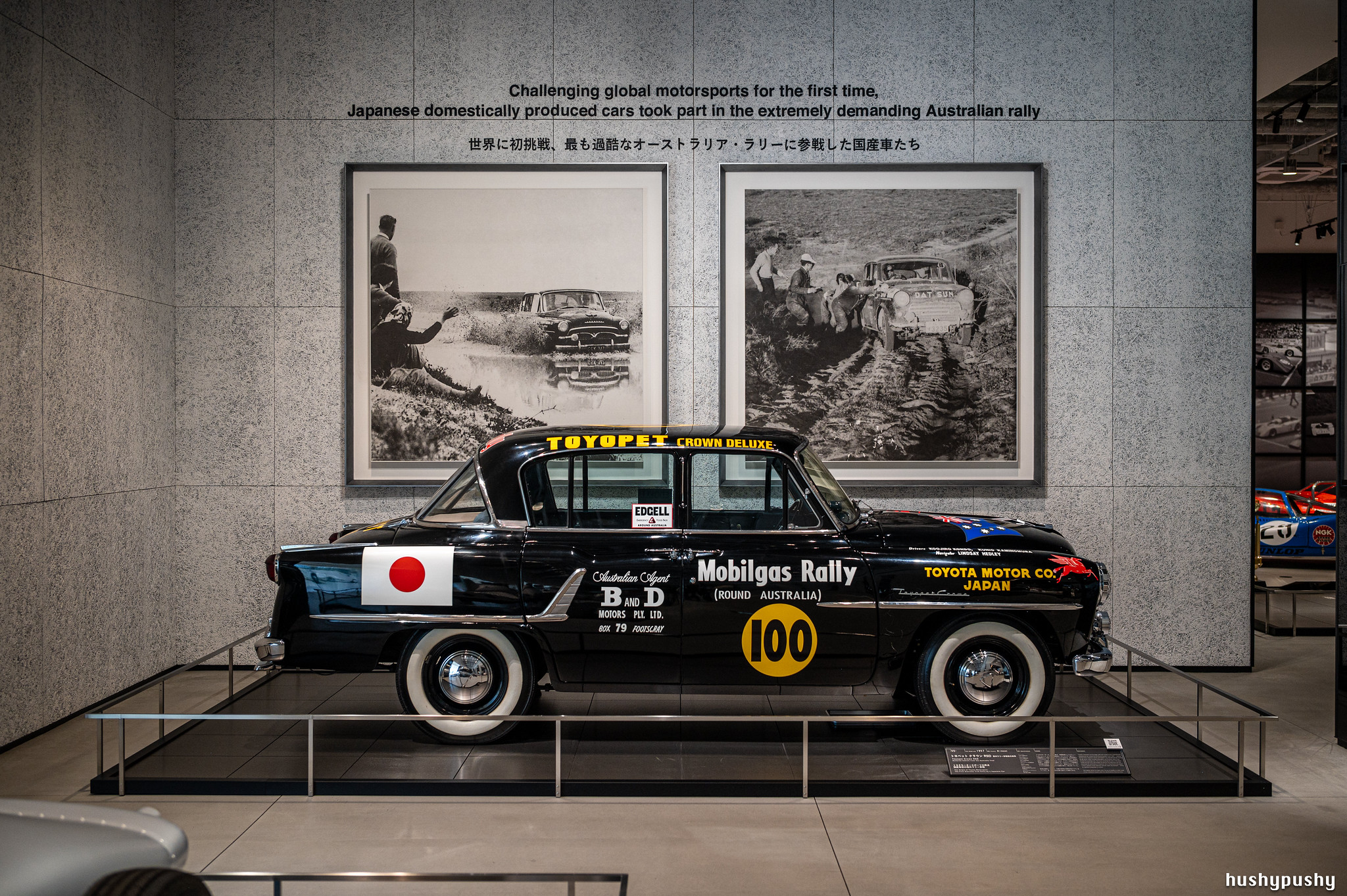
After the war ended, Toyota wanted to prove themselves in motorsports. Behind the Toyopet Racer was this Crown Deluxe decked out for an Australian rally.
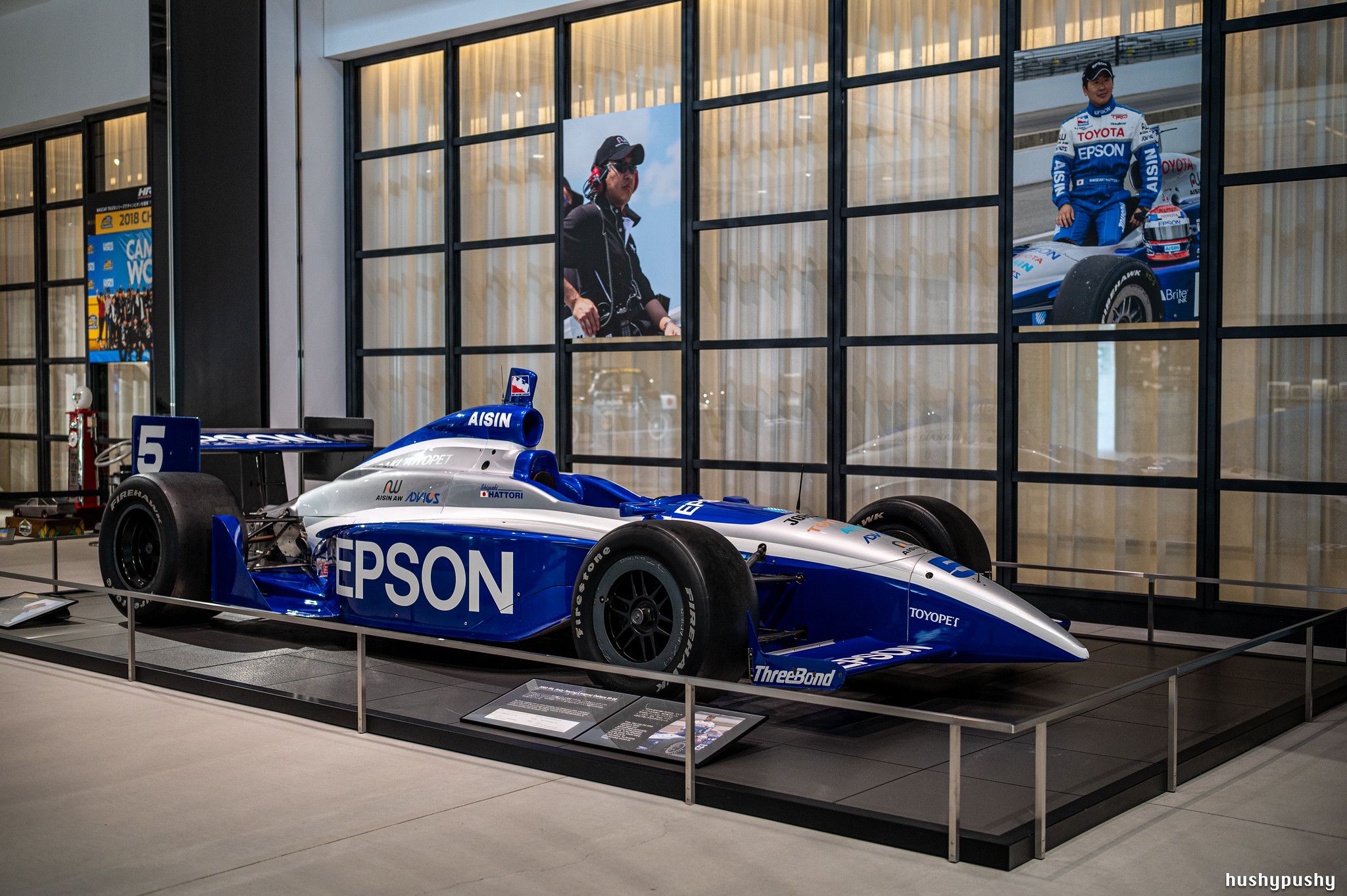
The museum had a section dedicated to Shigeaki Hattori, who passed away last year. He drove this Dallara in the 2002 Indy Racing League season.
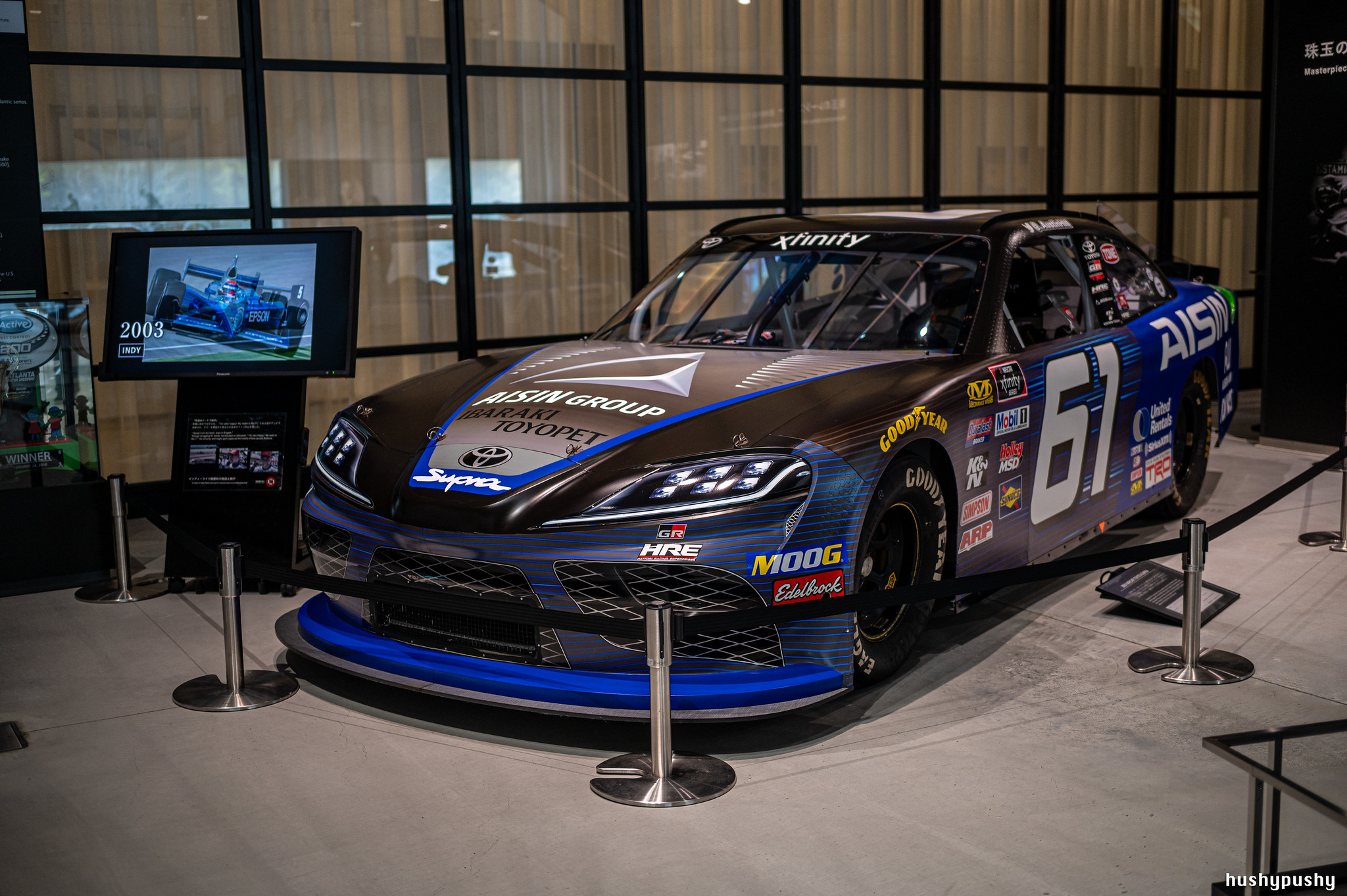
They also had a NASCAR Supra from the team he owned, Hattori Racing Enterprises. Since when did Toyota race the Supra in NASCAR? Well, they didn’t race it in the top tier that you may be thinking of; this has been Toyota’s car for the second-tier series (currently “Xfinity Series”) since 2019.
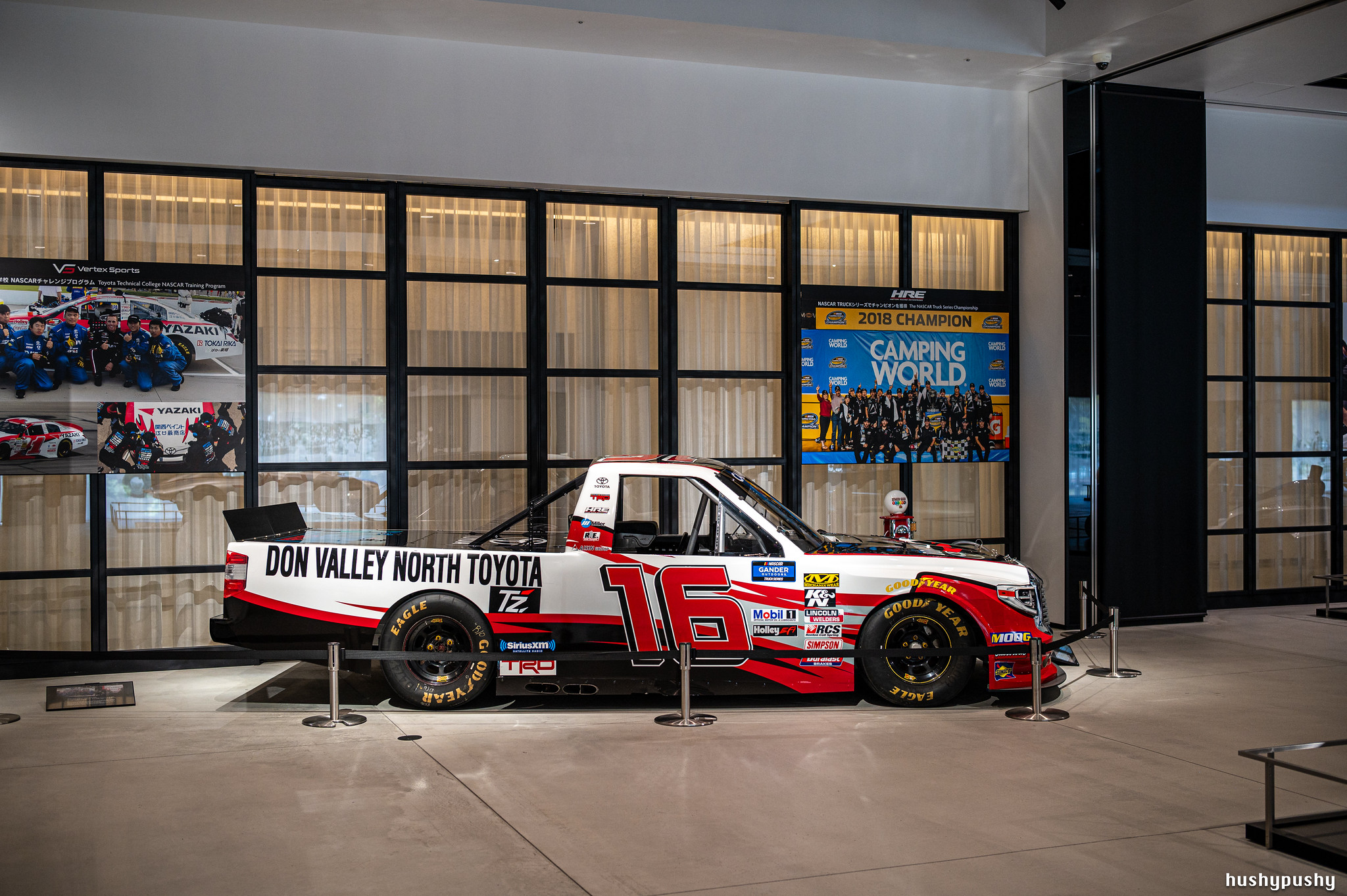
They also had their truck from the 2018 season where Brett Moffitt won the driver’s championship in the truck series.
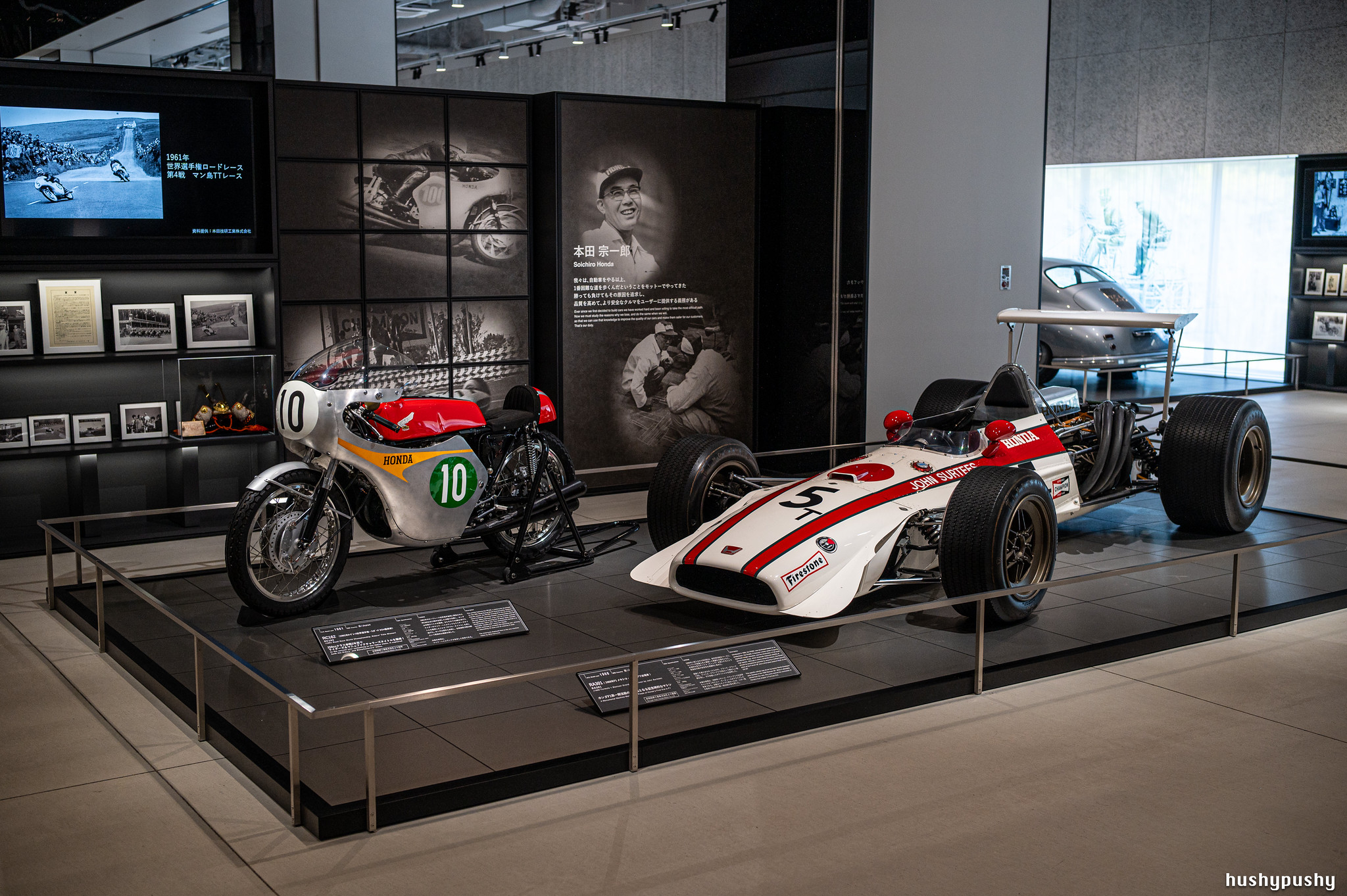
This was my favorite area of the museum, which showed off two of Hondas coolest Grand Prix vehicles ever: the RC162 motorcycle, which won both the Riders’ and Manufacturers’ World Championships in 1961, and the RA301 car which competed in the 1968 Formula One season.
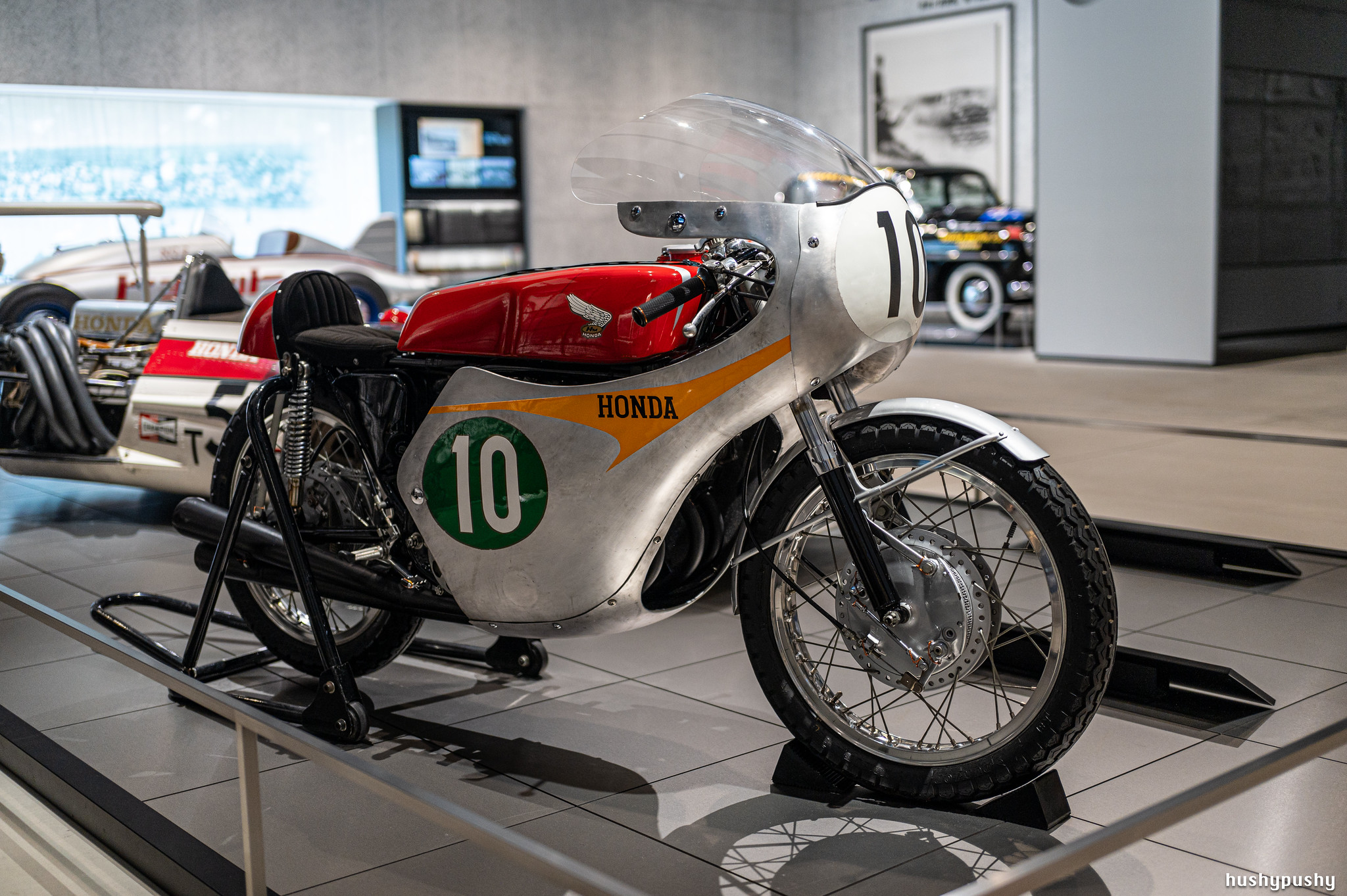
The RC162 has an air-cooled 250cc four-cylinder that makes 40hp at 14,000 RPM. It could apparently go 220 km/h (136 mph), but the more impressive thing is that Bob McIntyre rode an RC162 around the Isle of Man TT course at an average speed of 99.58 mph, setting the lap record. During the 1961 Grand Prix Motorcycle Racing season, an RC162 won 10 of 11 races, and finished 2nd in the other one.
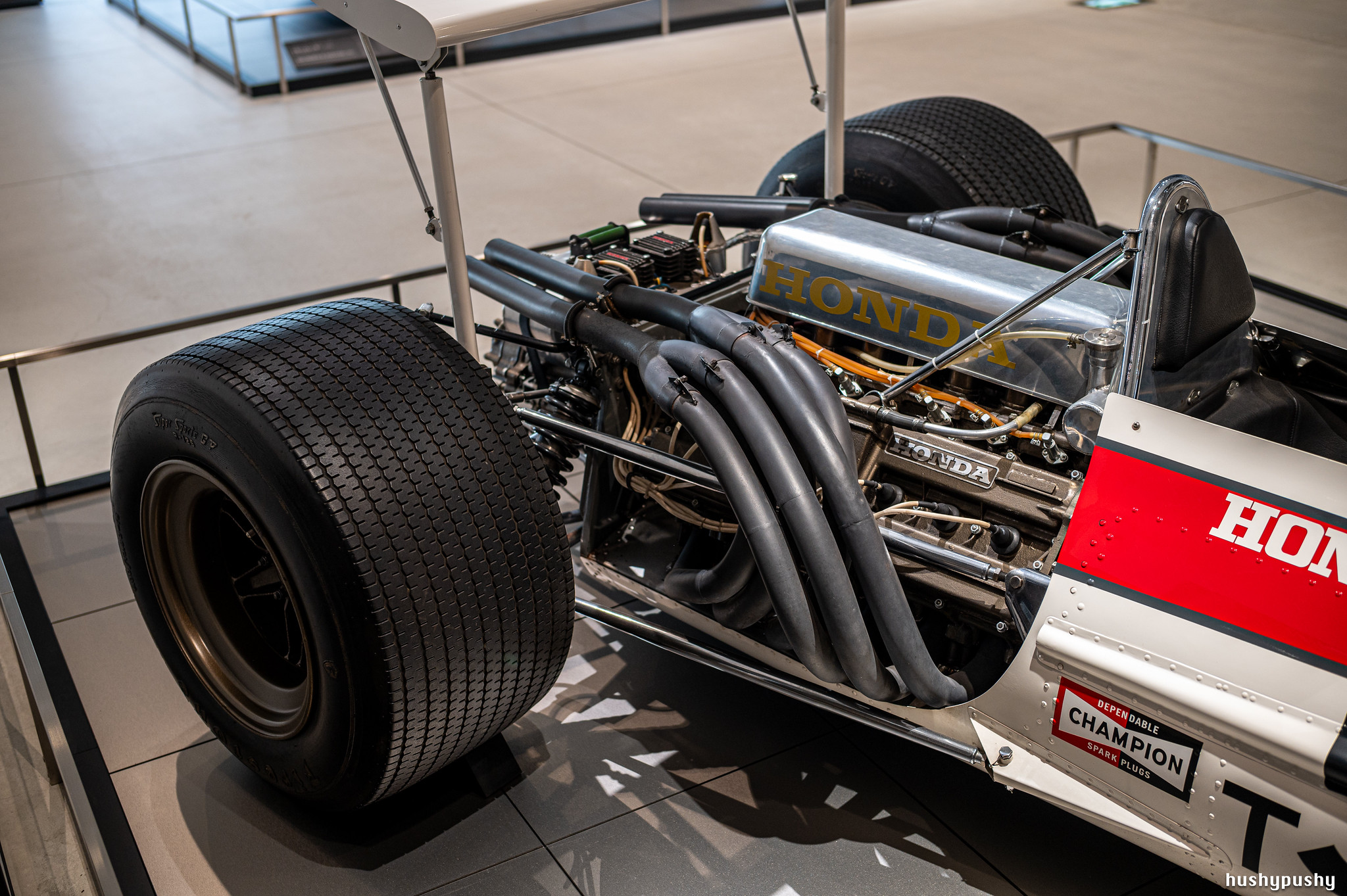
By 1968, Honda’s final year of F1 involvement until the 80’s, the RA301 had a 3.0L V12 that made 440hp at 11,500 RPM.
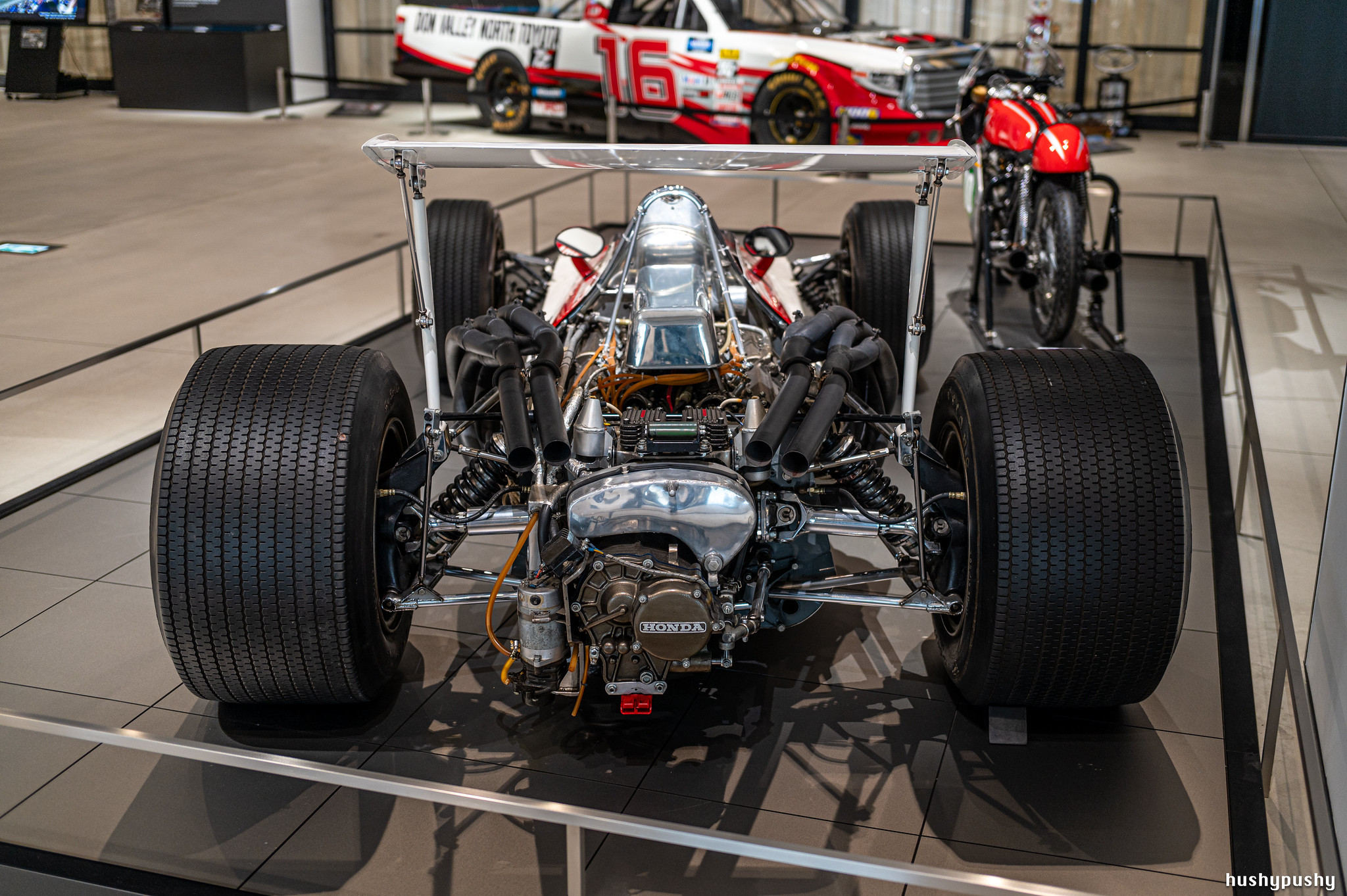
This was the first year of wings in Formula One, a sport which is now defined by aerodynamics.
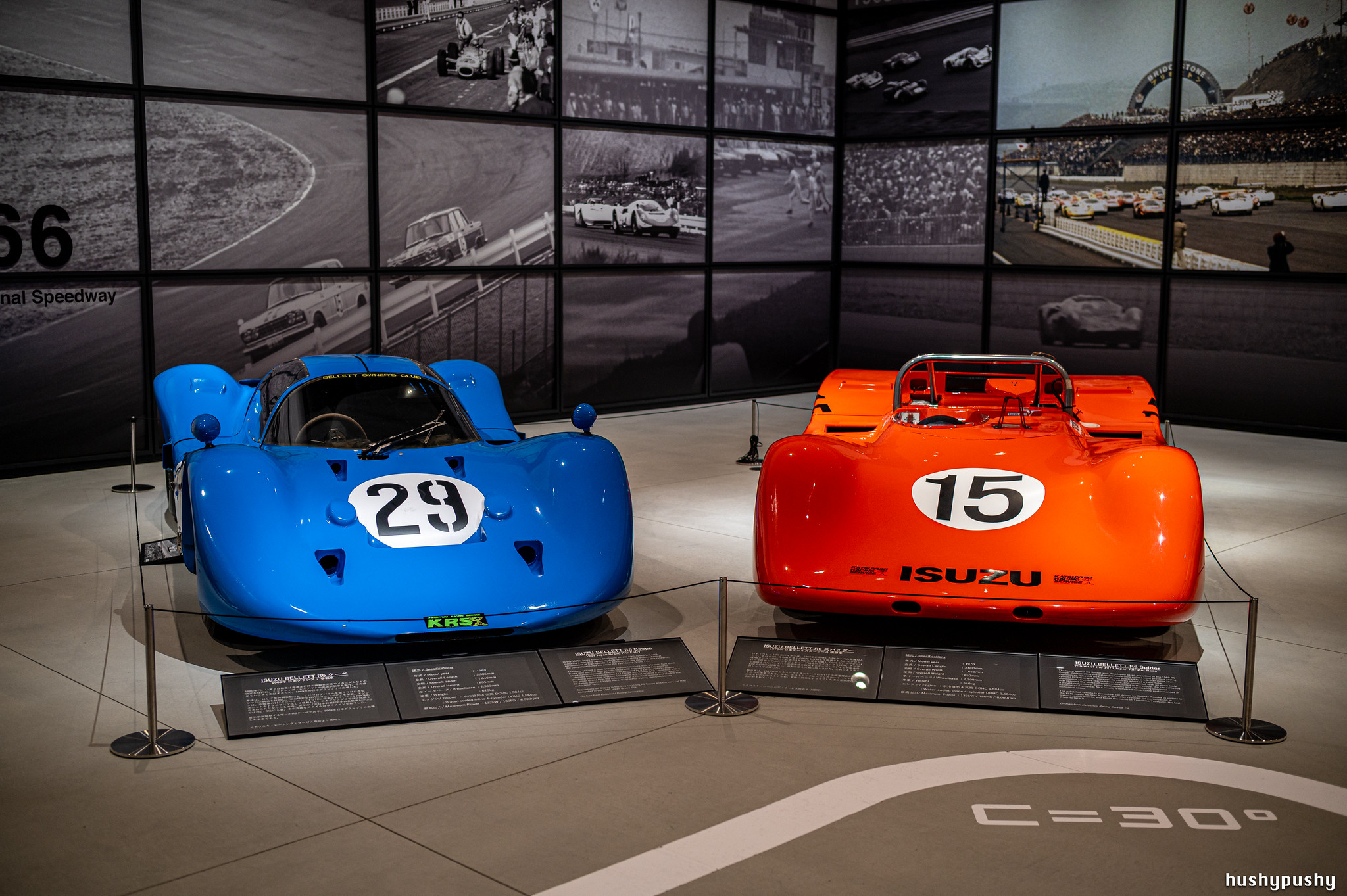
Here is a pair of cars I was not familiar with: the Isuzu Bellett R6, seen here in both Coupe and Spider versions. The blue coupe is the only surviving R6 Coupe, and is the actual car that competed at the 1969 Japan Grand Prix at Fuji Speedway. The R6 Spider on the right is the actual car that won the 1970 Japan All-Star Race at Fuji Speedway.
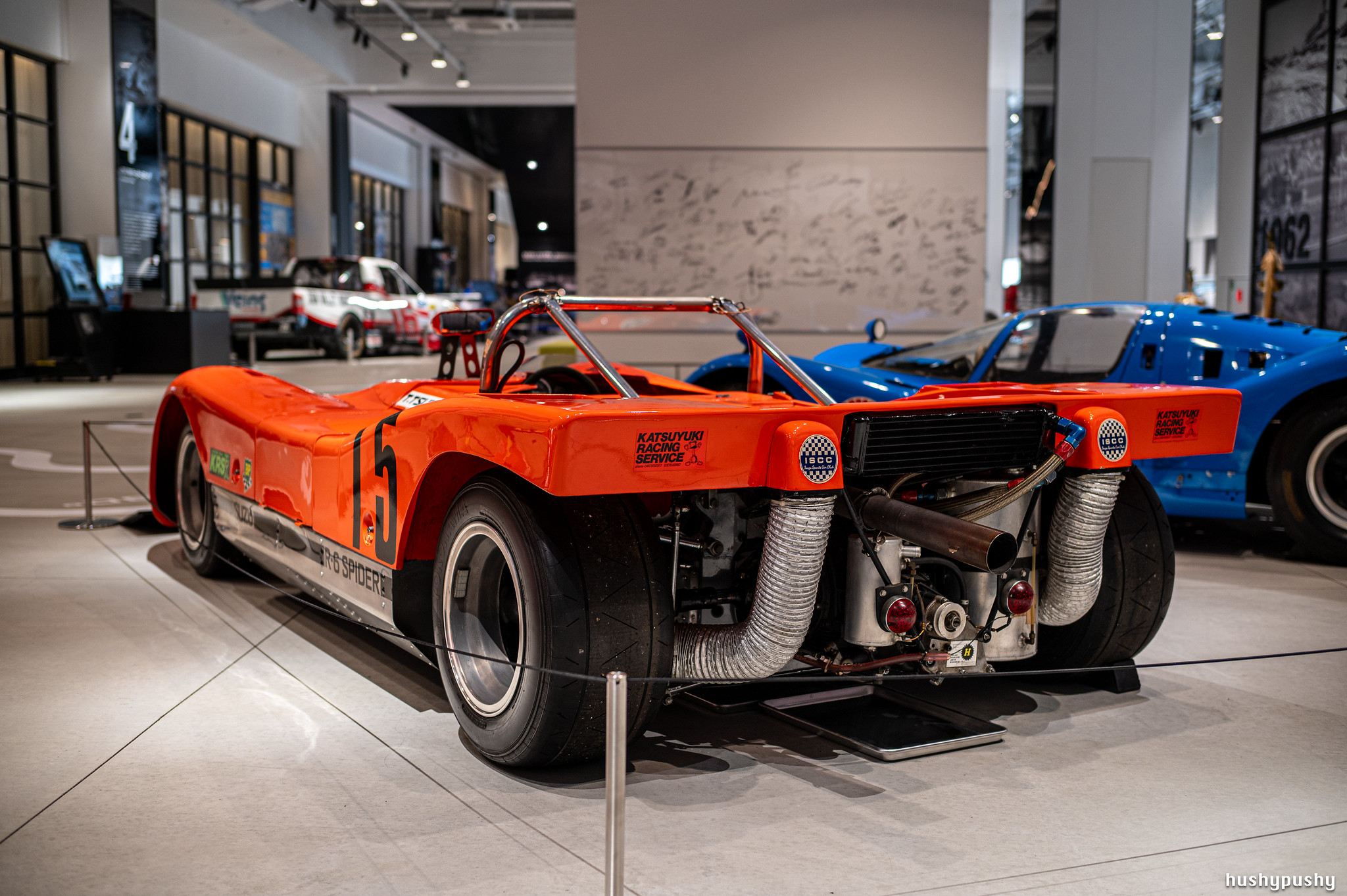
It’s always cool to see the regular “history lesson” cars, but the most interesting ones for me were cars like these which are seldom seen outside of Japan.
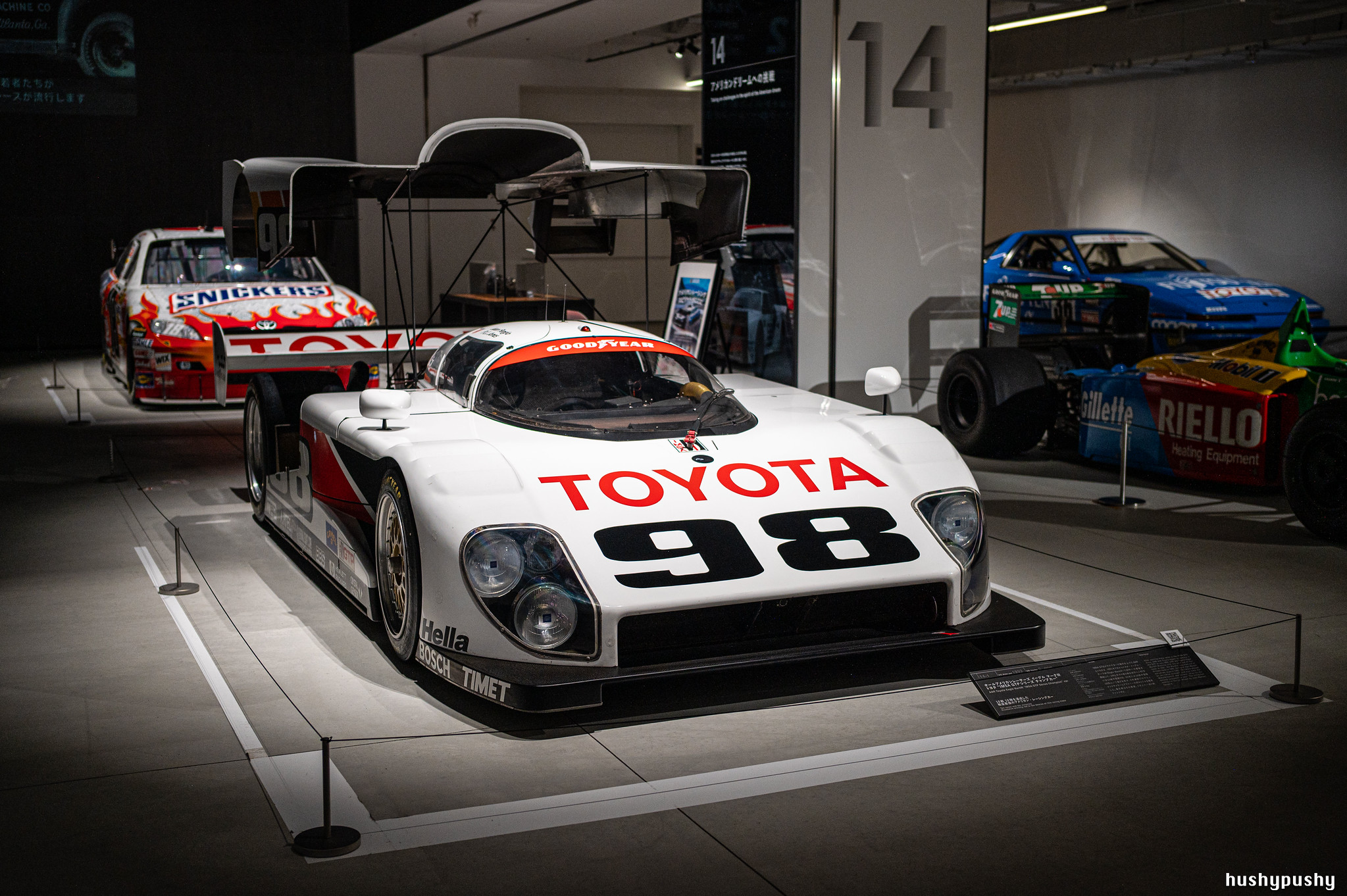
Going up to the 2nd floor, the first thing you see is this AAR Toyota Eagle MkIII; this car dominated the 1993 IMSA GTP Championship, winning 10 of the 11 events that season.
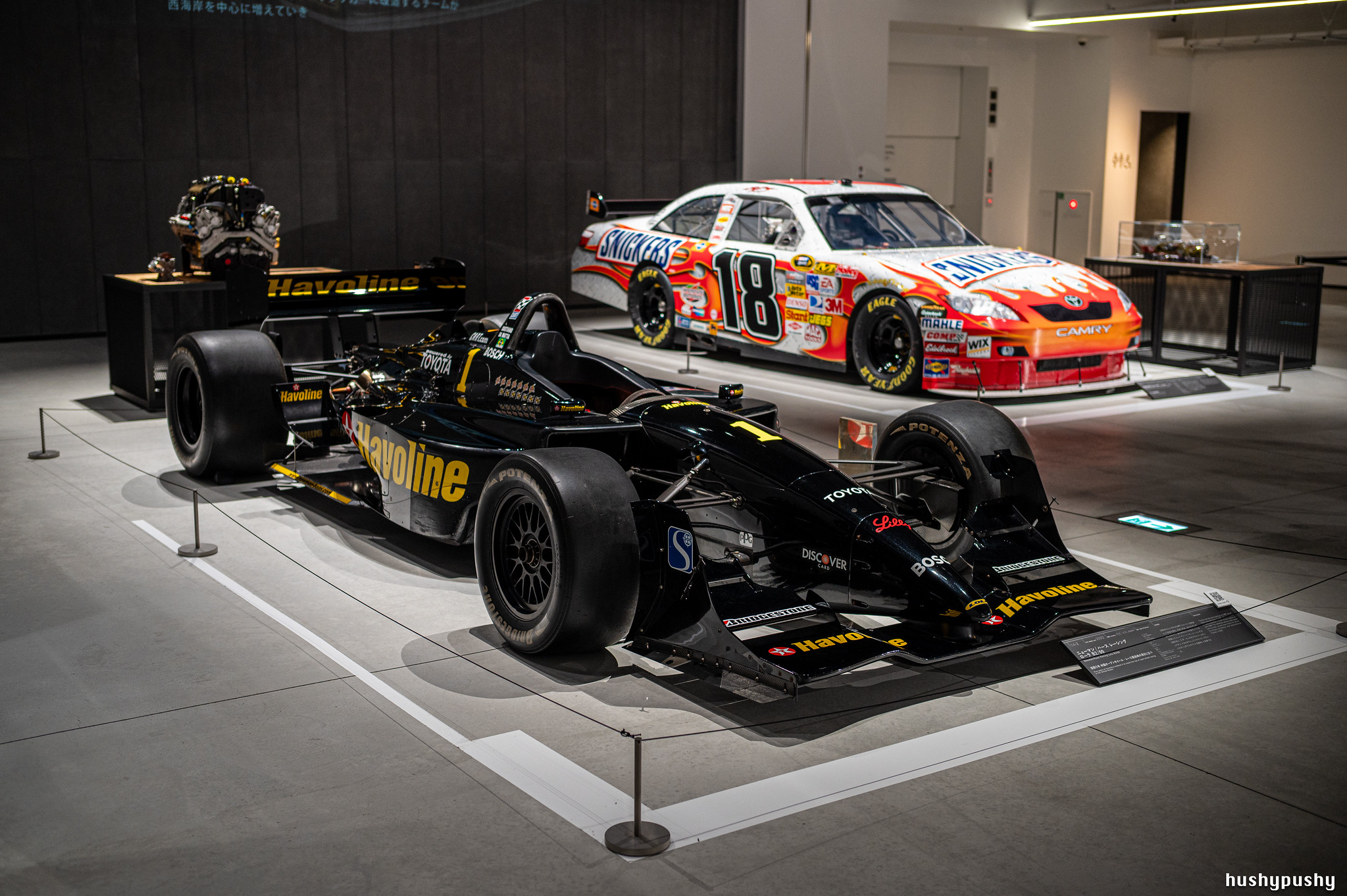
Continuing the line of significant race cars was this pair of Toyota V8 powered racers. The Lola B02/00 in front was driven by Cristiano de Matta to the 2002 CART Drivers’ Championship. The 2008 NASCAR Camry in the back is, in retrospect, a bittersweet find: this car was driven by Kyle Busch to eight wins that season. Sadly, as I write this, the NASCAR world is still mourning his untimely passing last week at only 41 years old.
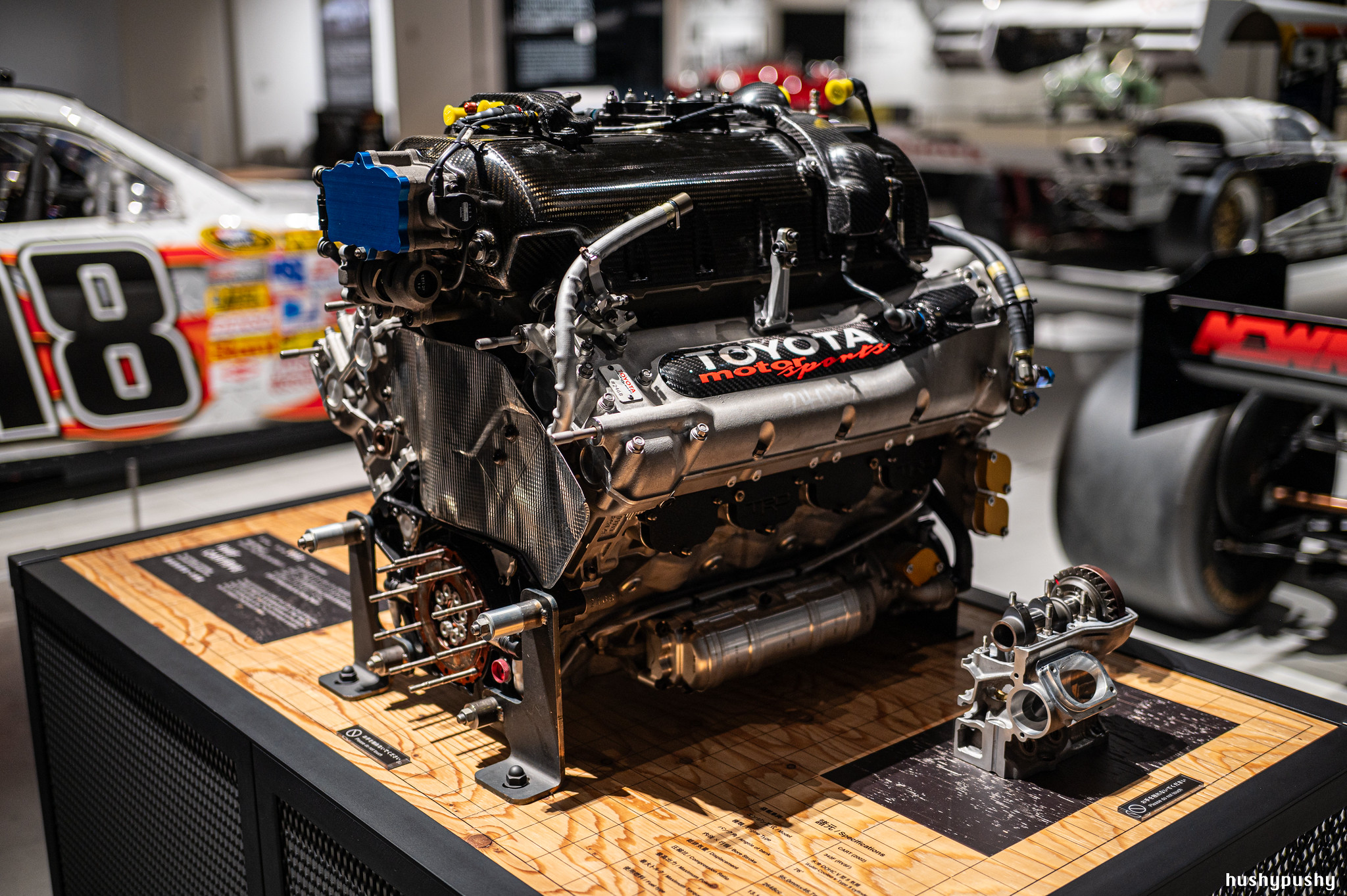
This DOHC V8 is amazingly compact. Next to it, they highlighted a pendulum damper they developed to help solve the “abnormal vibrations” that were occurring at high RPM.
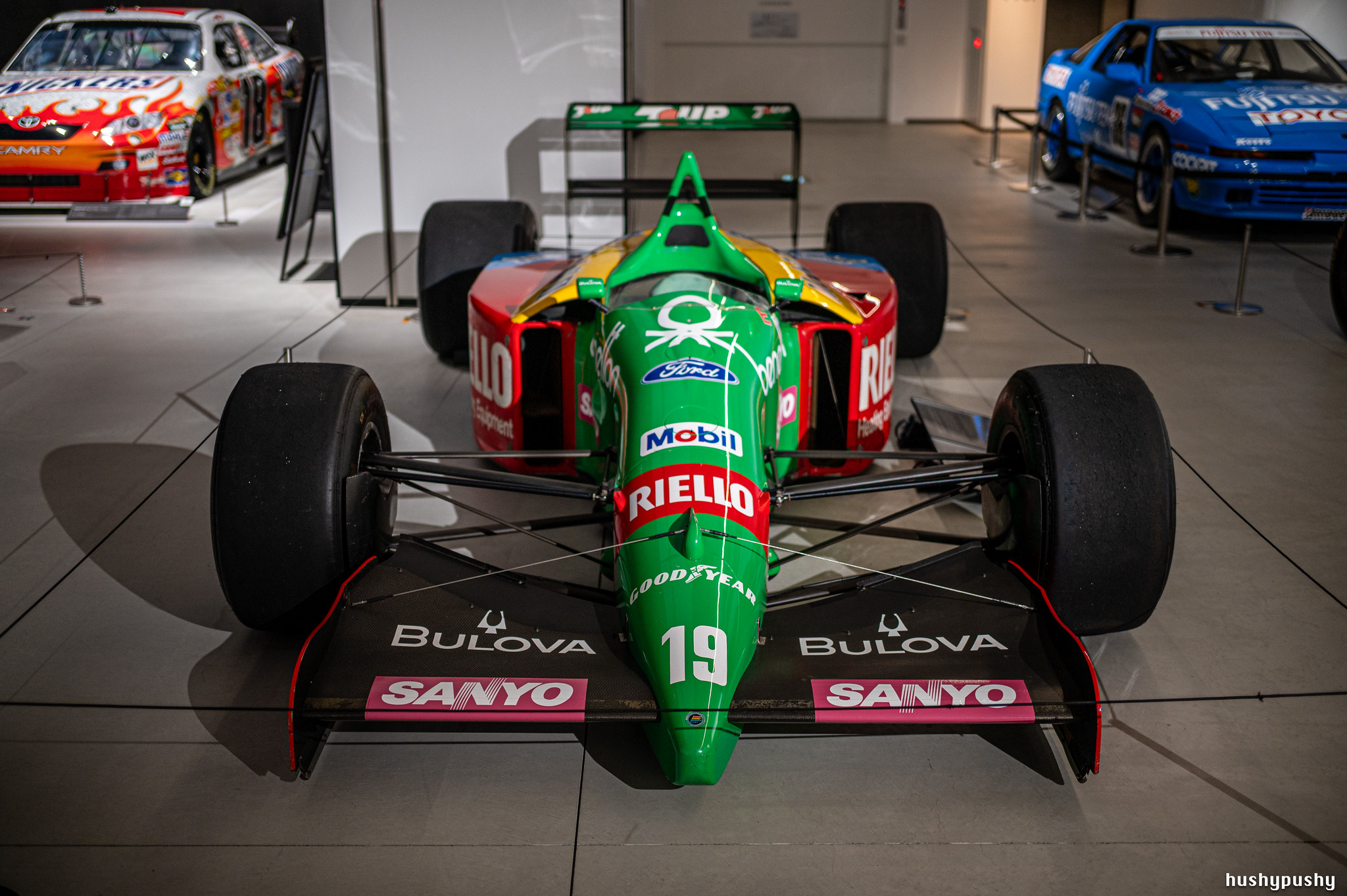
They even had some Radwood-era Formula One cars. I love this era from about 1988 to 1991, when F1 machines were so svelte and clean. This is a 1989 Benetton B189, a very significant car: Alessandro Nannini drove this car to the only F1 win of his career at the infamous 1989 Japanese Grand Prix. That’s the one where Senna threw his car underneath Prost at the chicane, leading to one of the most questionable decisions in F1 history: Senna was disqualified for driving through the escape road to skip the chicane, which gifted the race win to the second place finisher, Alessandro Nannini.
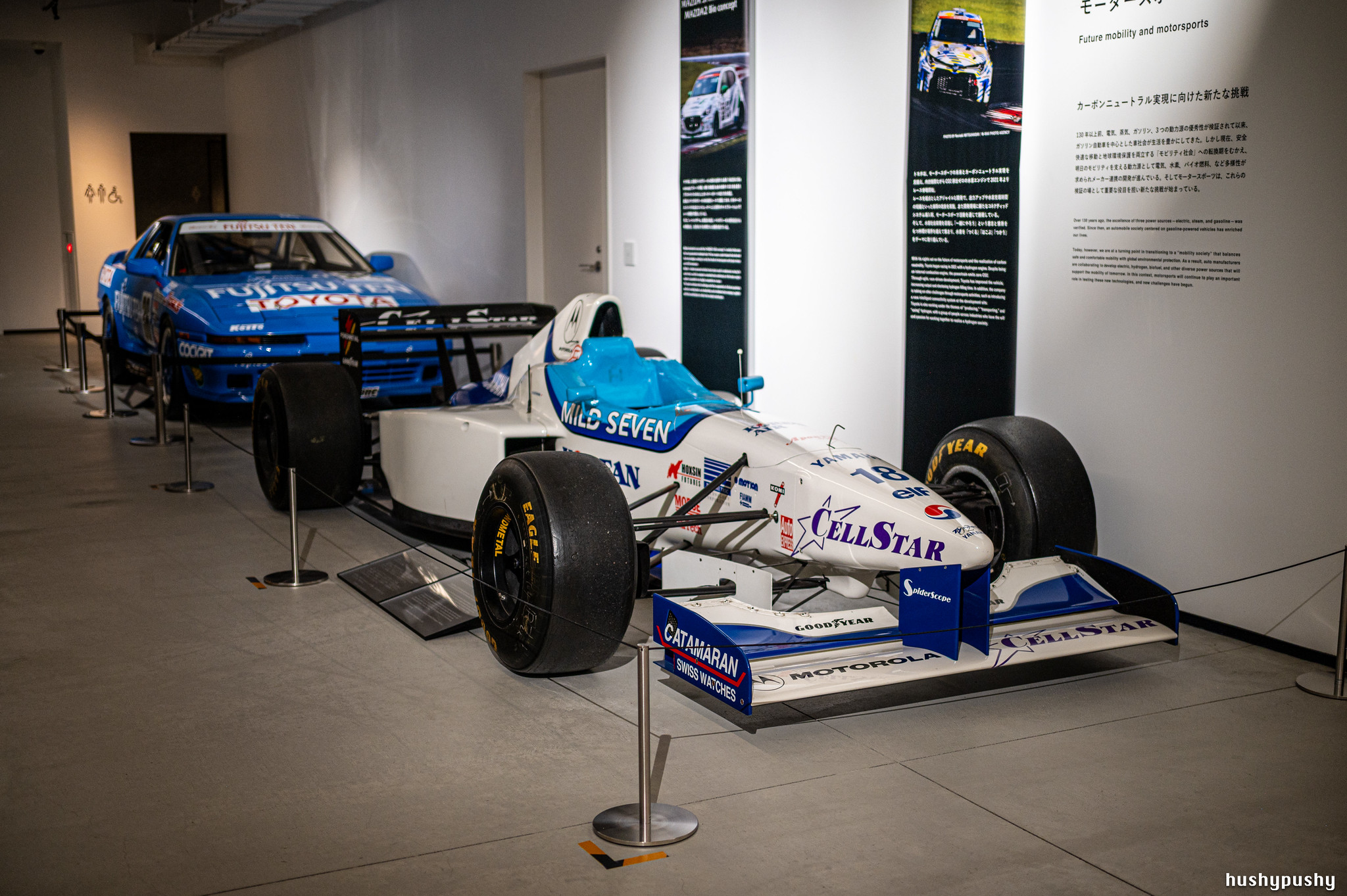
Next to it was this Tyrrell 024 from 1996, featuring the high nose design that had started to come into favor in 1995.
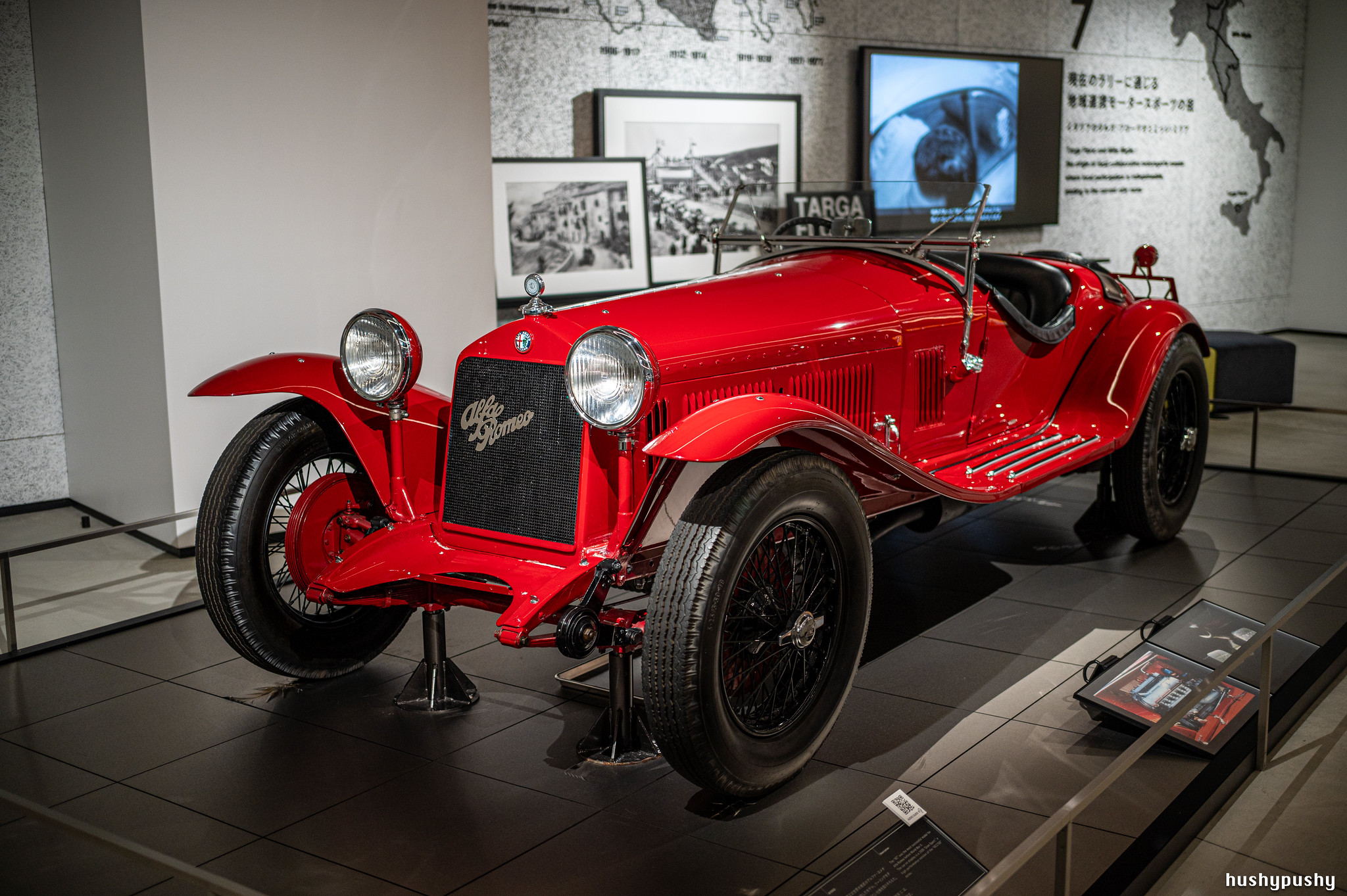
This section started getting into road and rally racing. Tazio Nuvolari won the 1931 and 1932 Targa Florio in an Alfa Romeo 8C 2300 Spider. I didn’t take get a photo of every plaque, so although I assume this was the actual winning car given the rest of the museum, I’m not completely sure.
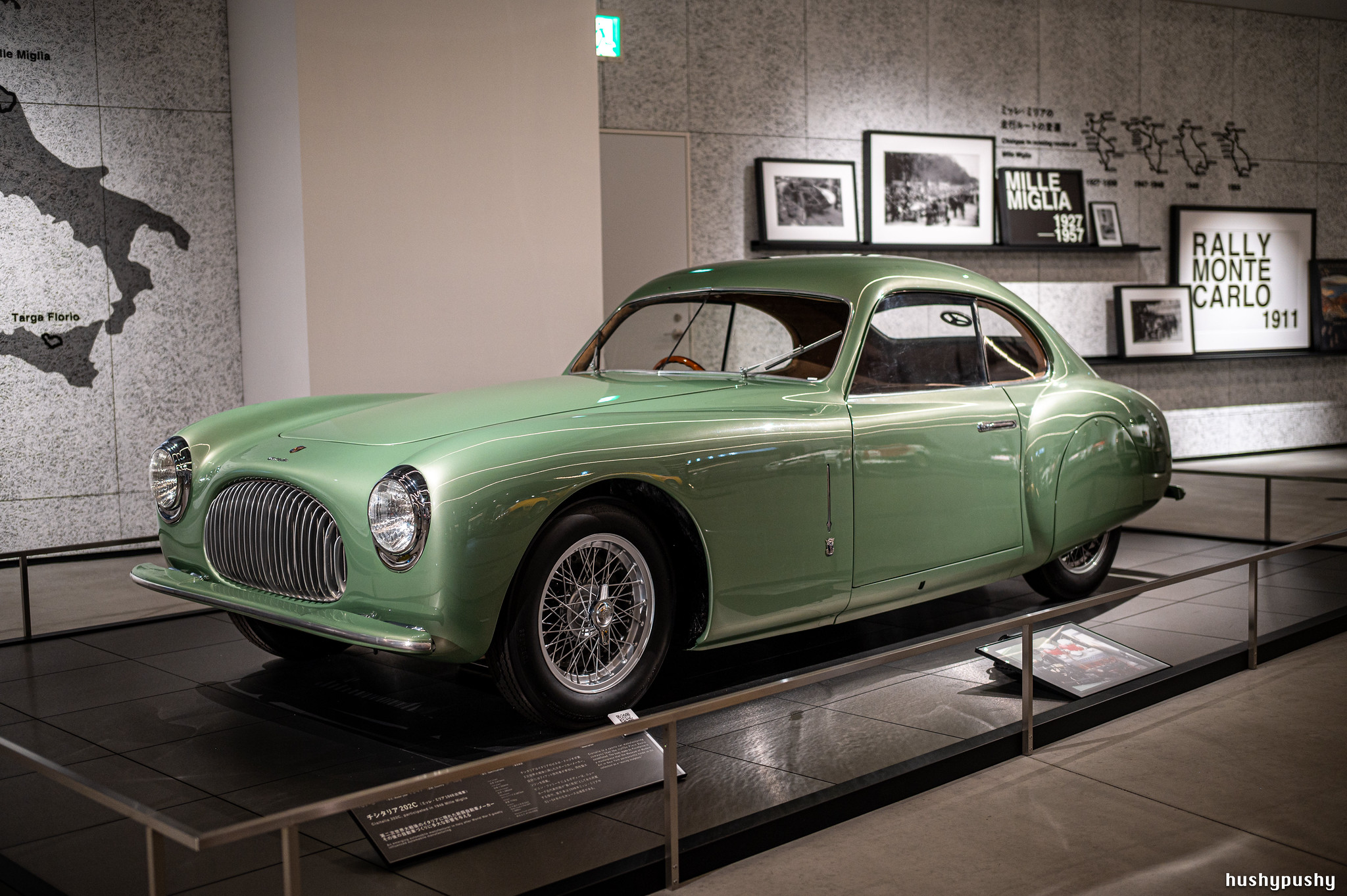
This, however, was definitely the exact Cistalia 202C that competed in the 1948 Mille Miglia and several other races in period. For this car and some others, I’m getting some help on writing from the museum’s website, which has detailed info on some of the exhibit cars.
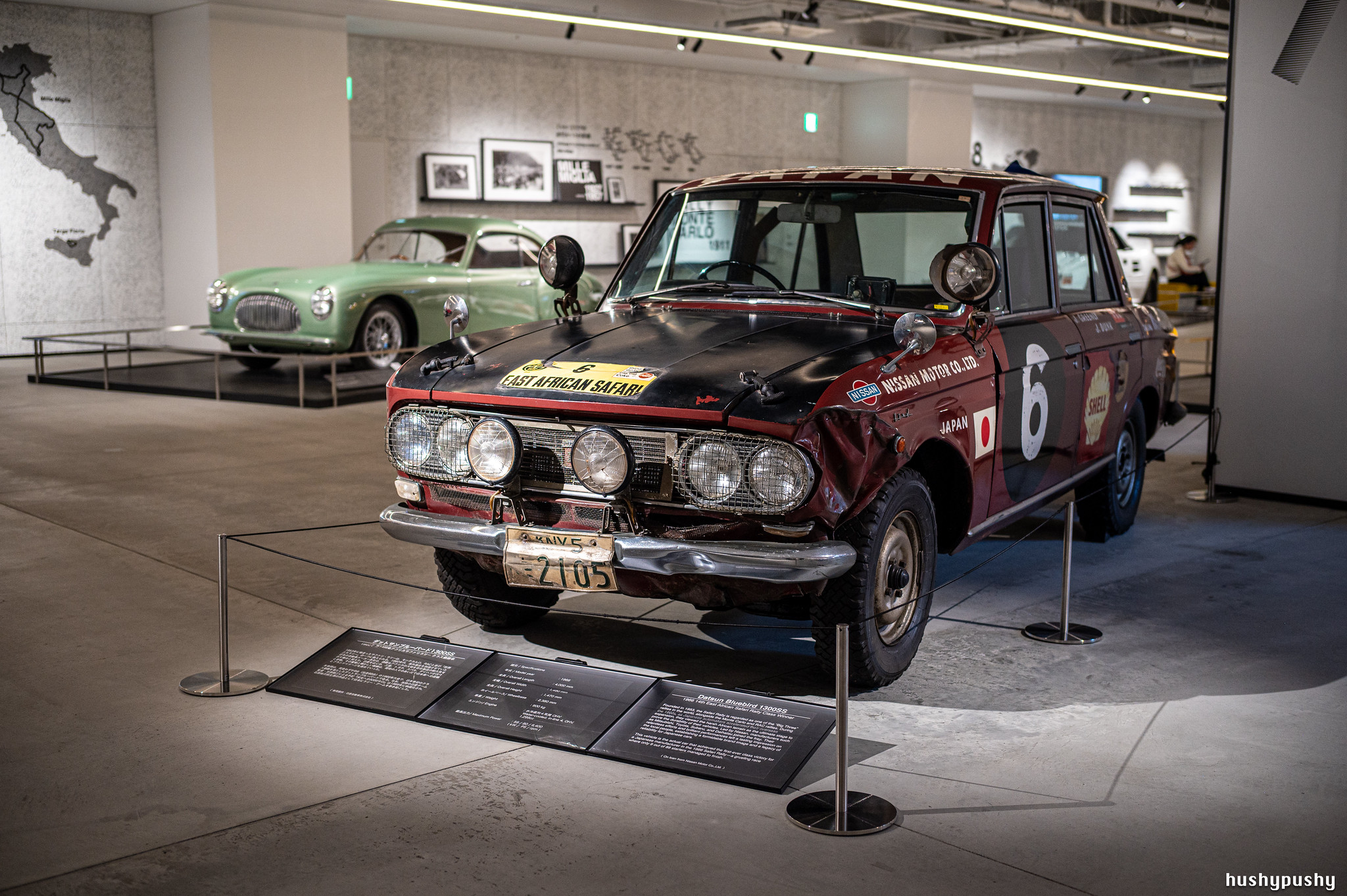
Next was the rally car section. This Datsun Bluebird 1300SS won its class at the 1966 East African Safari, and still retains the damage it sustained during that event.
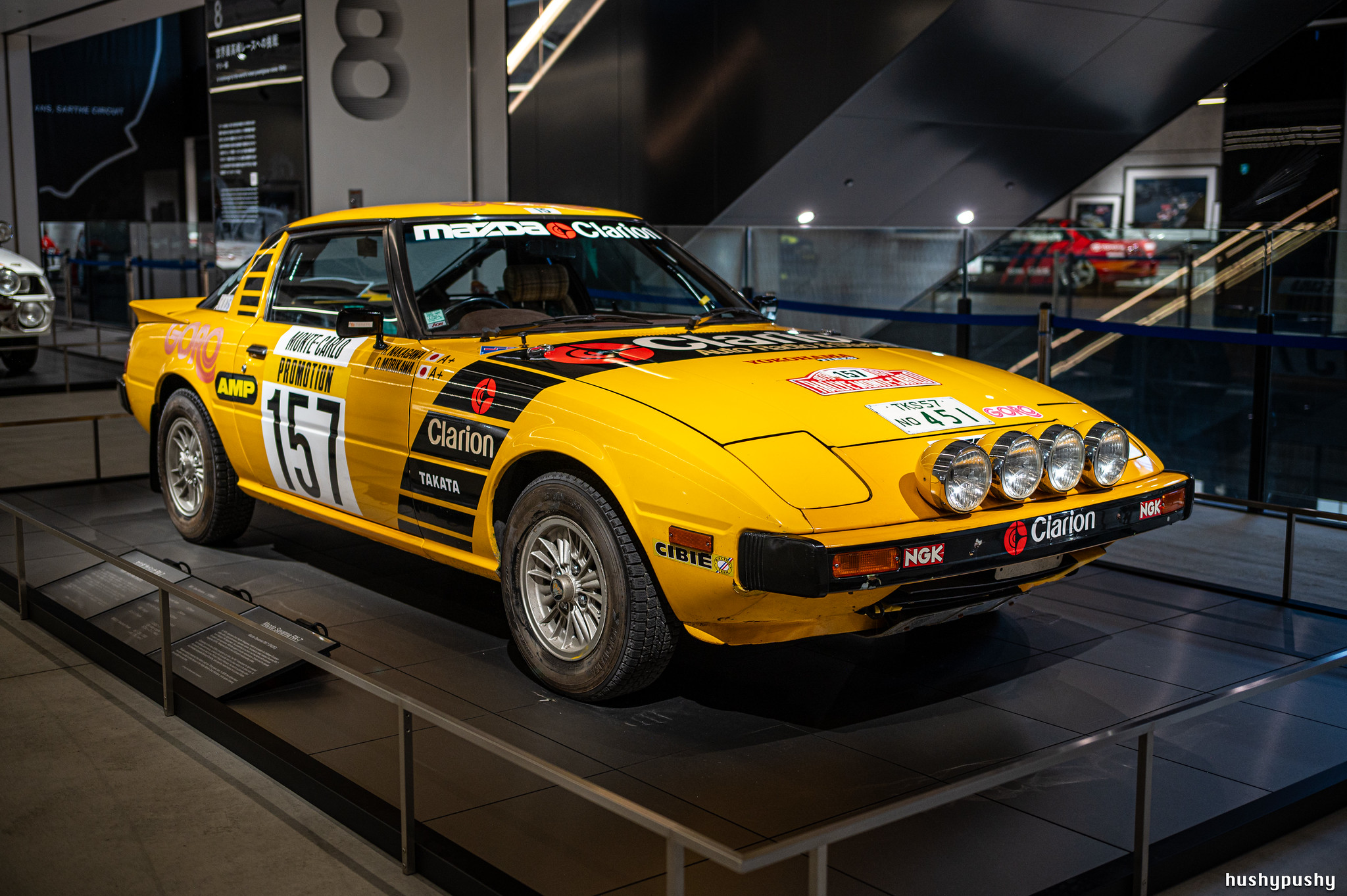
Rally cars are probably my favorite overall type of race car. I’ve always loved the concept of a car that can be fast on any surface.
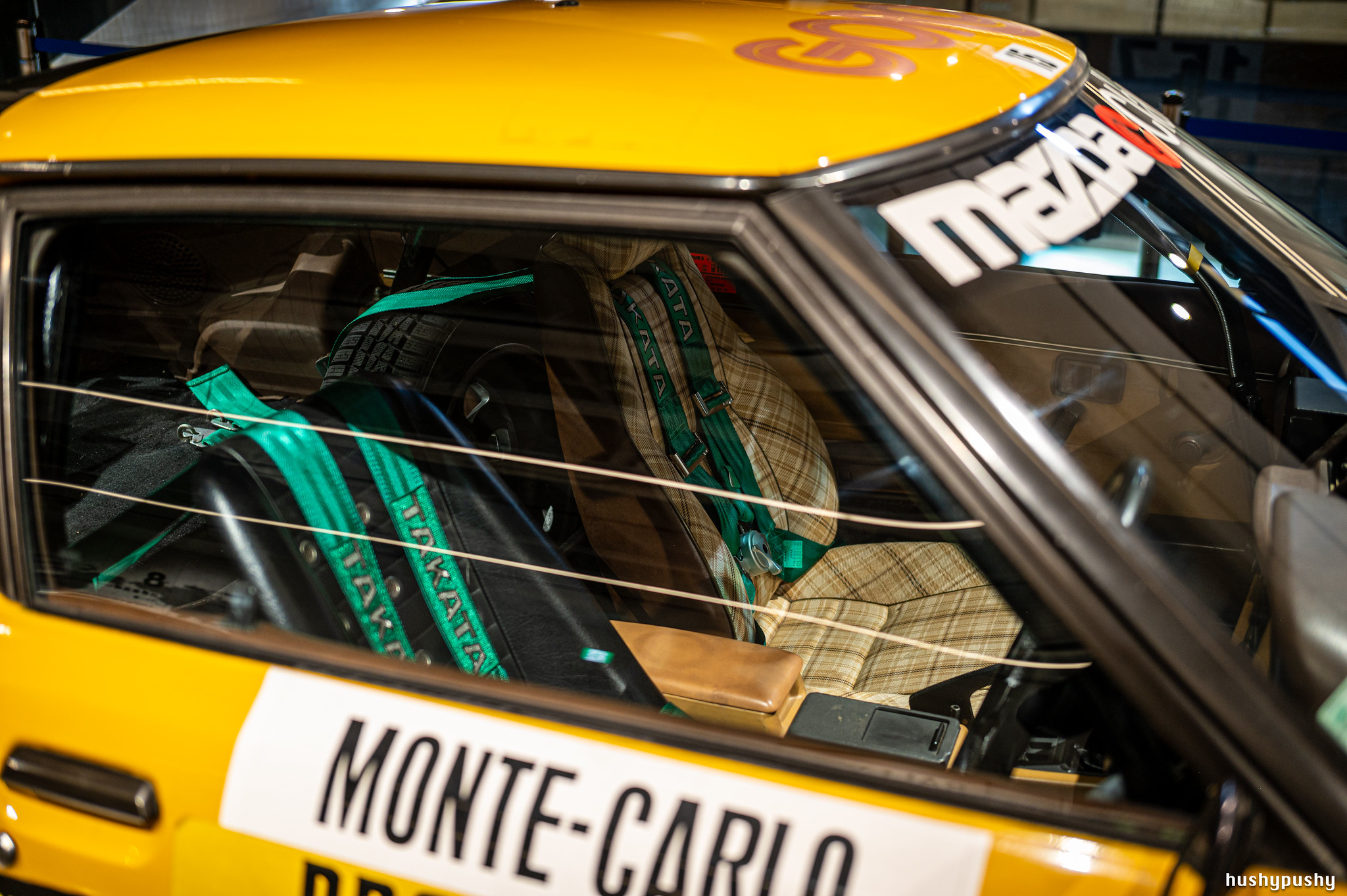
Plus, it’s super cool how rally cars have historically just been modified regular cars. Checkout that rad brown plaid passenger seat!
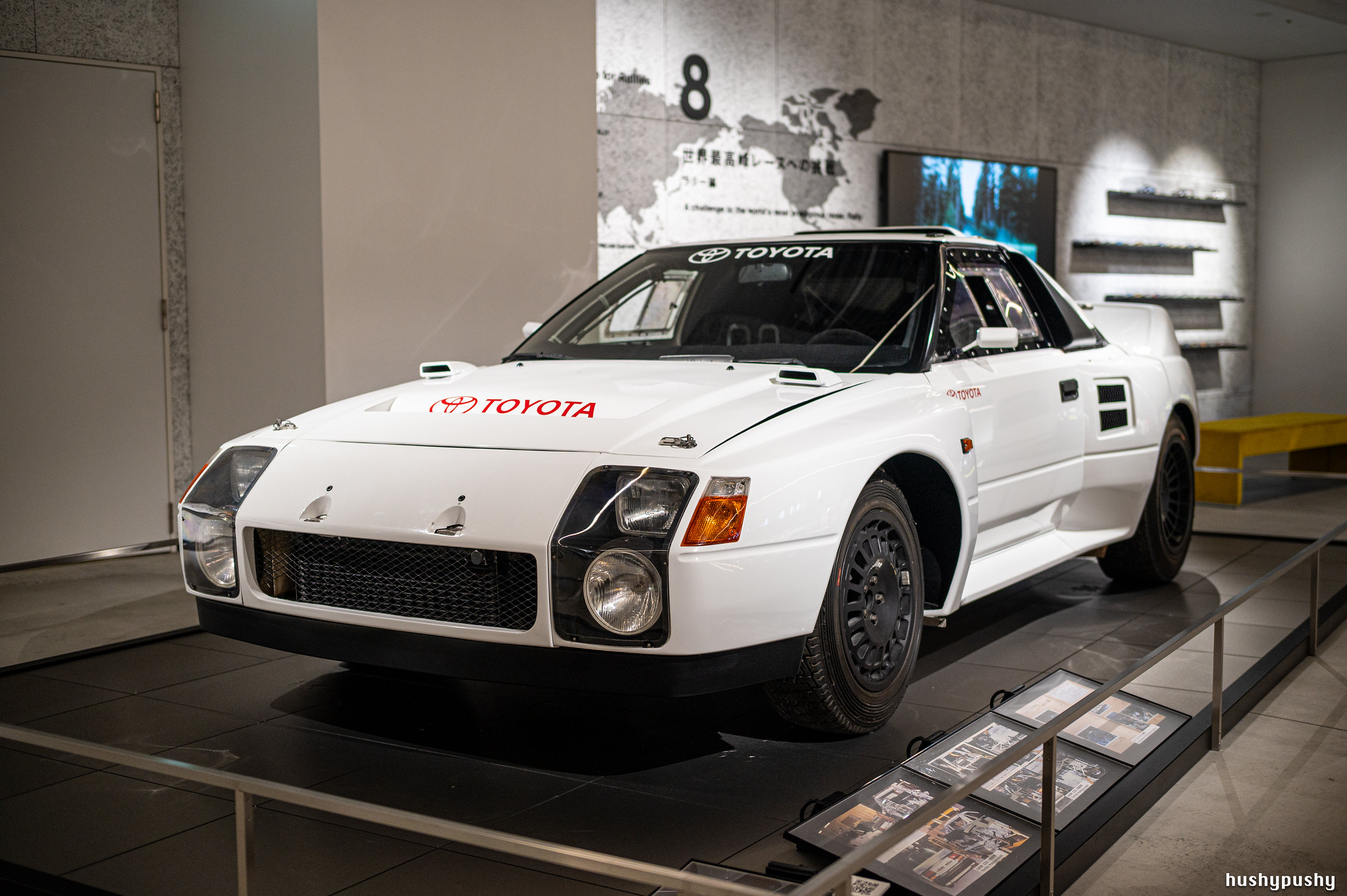
This is a Toyota 222D, a prototype based on an MR2 that was developed to compete in Group S, which was intended to be the most technologically advanced rally category. Unfortunately, the same events that led to the cancellation of Group B also caused the demise of Group S, so this car never saw active competition.
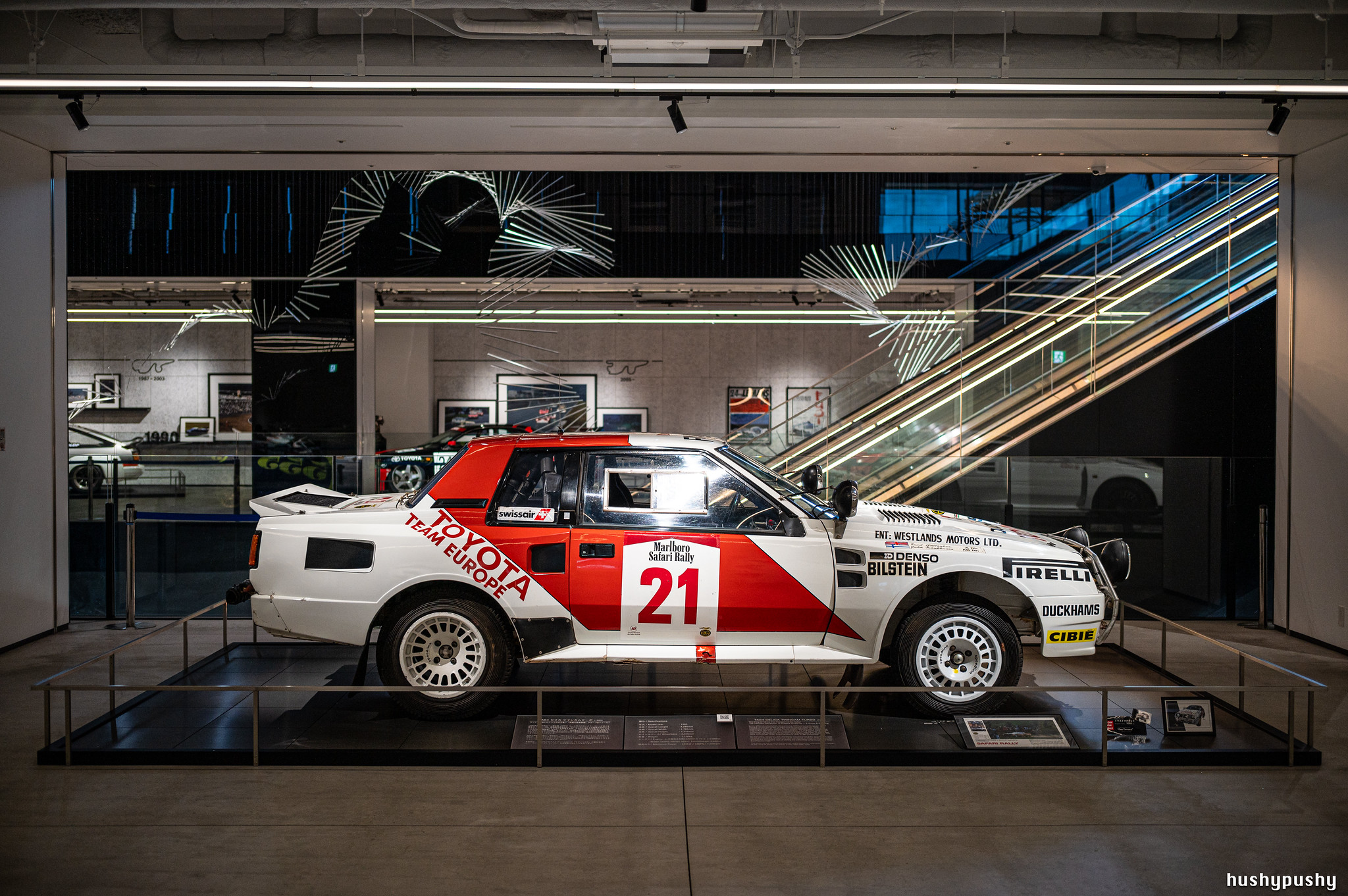
So many of the cars in this collection are the car that did something, and here is another example. This is the actual TA64 Toyota Celica as driven by Juha Kankkunen and Fred Gallagher to a win in the 1985 Safari Rally.
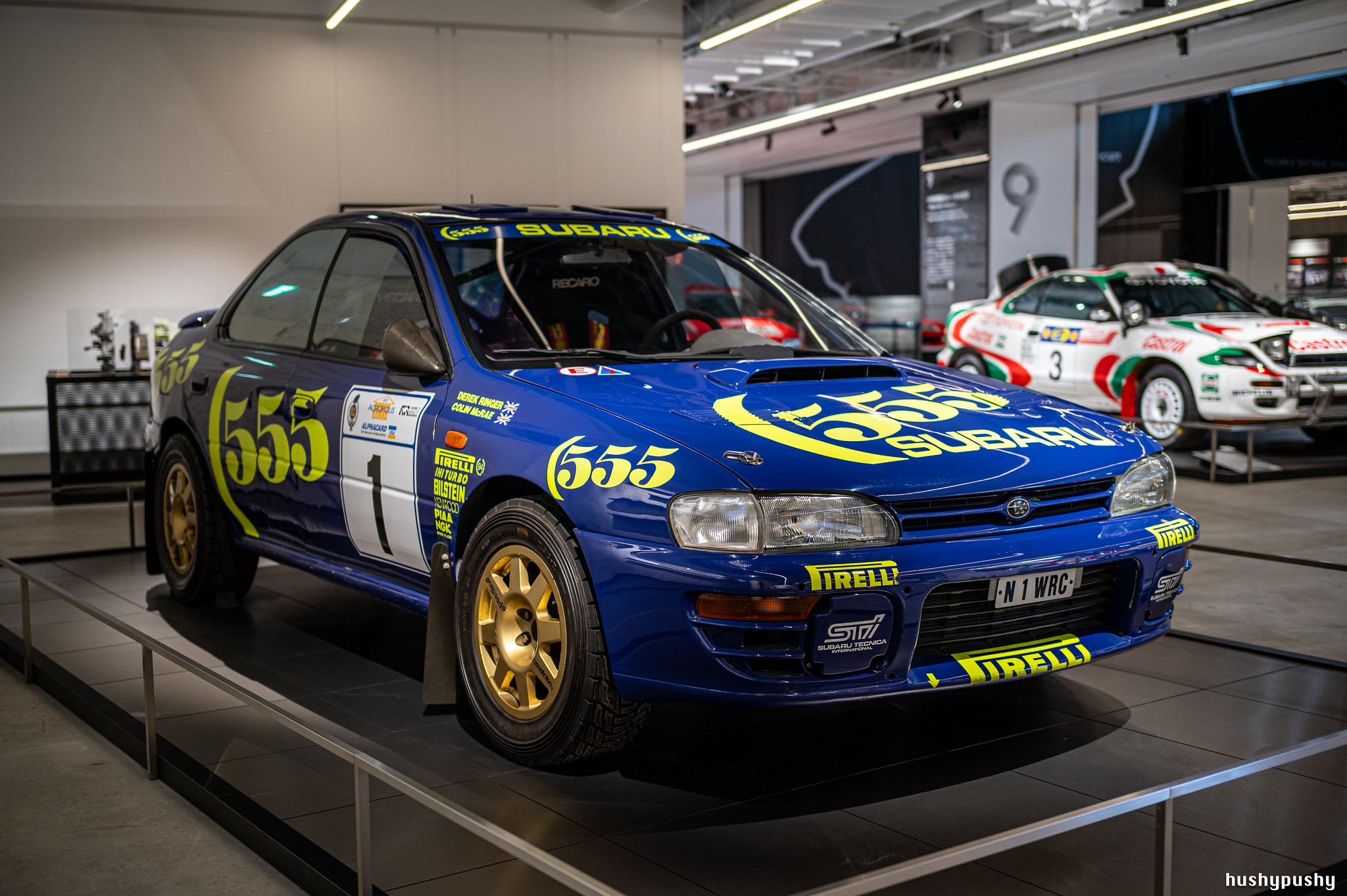
This is the Subaru Impreza that Colin McRae and Derek Ringer drove in the 1996 WRC season. This season was notable for being the last full year of Group A before the “World Rally Car” regulations; in the 1997 season, Subaru switched from this narrow Impreza sedan to the widebody coupe.
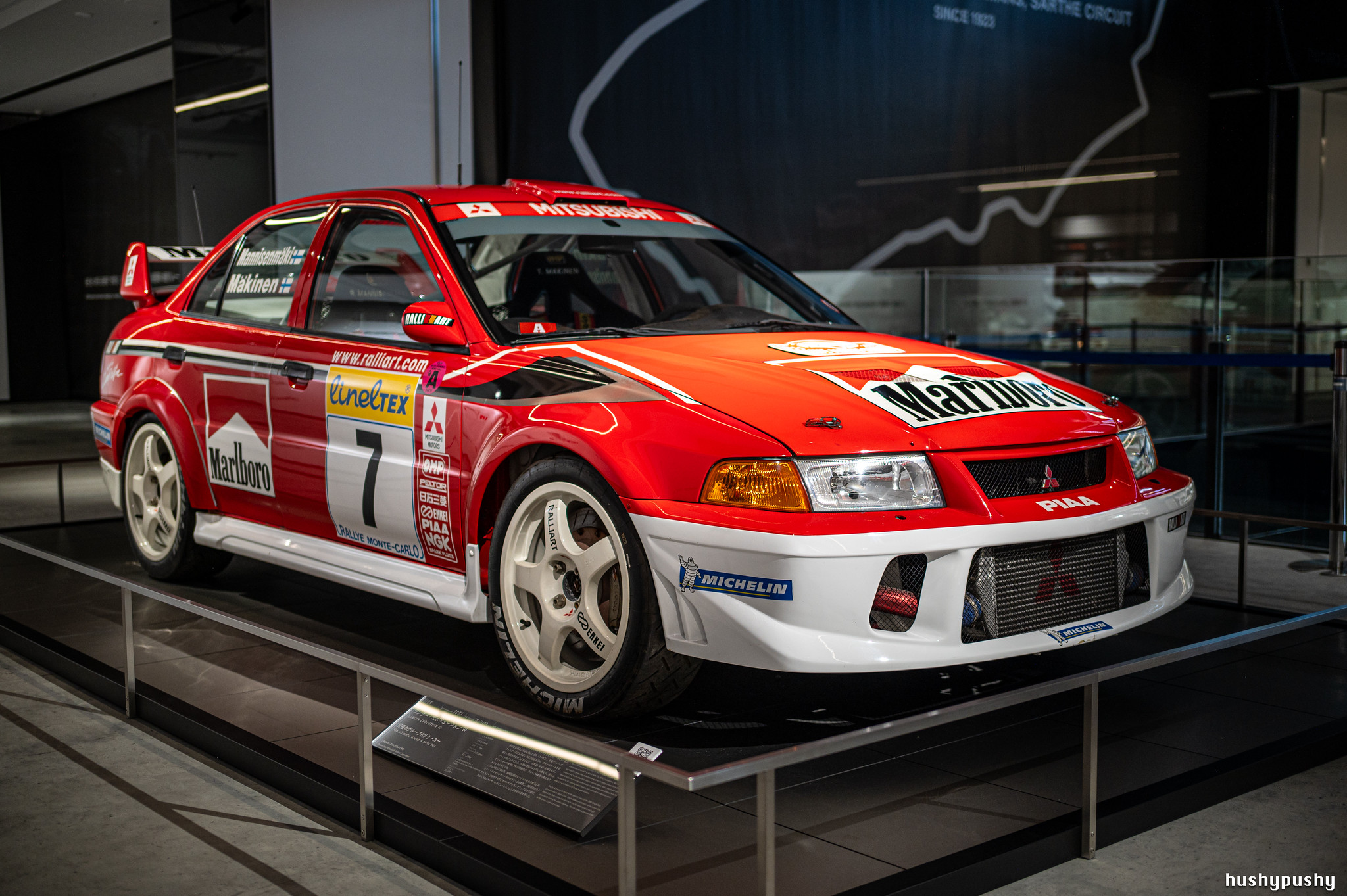
Although, the funny part was that not all manufacturers gave up on Group A right away. Mitsubishi is the most notable example, with Tommi Mäkinen winning the Drivers’ Championship three years in a row in Group A cars (1997-1999) while competing against the new WRC cars. Mitsubishi kept racing Group A cars in WRC as long as they could: this Lancer Evolution was raced by Tommi Makinen in the 2001 season.
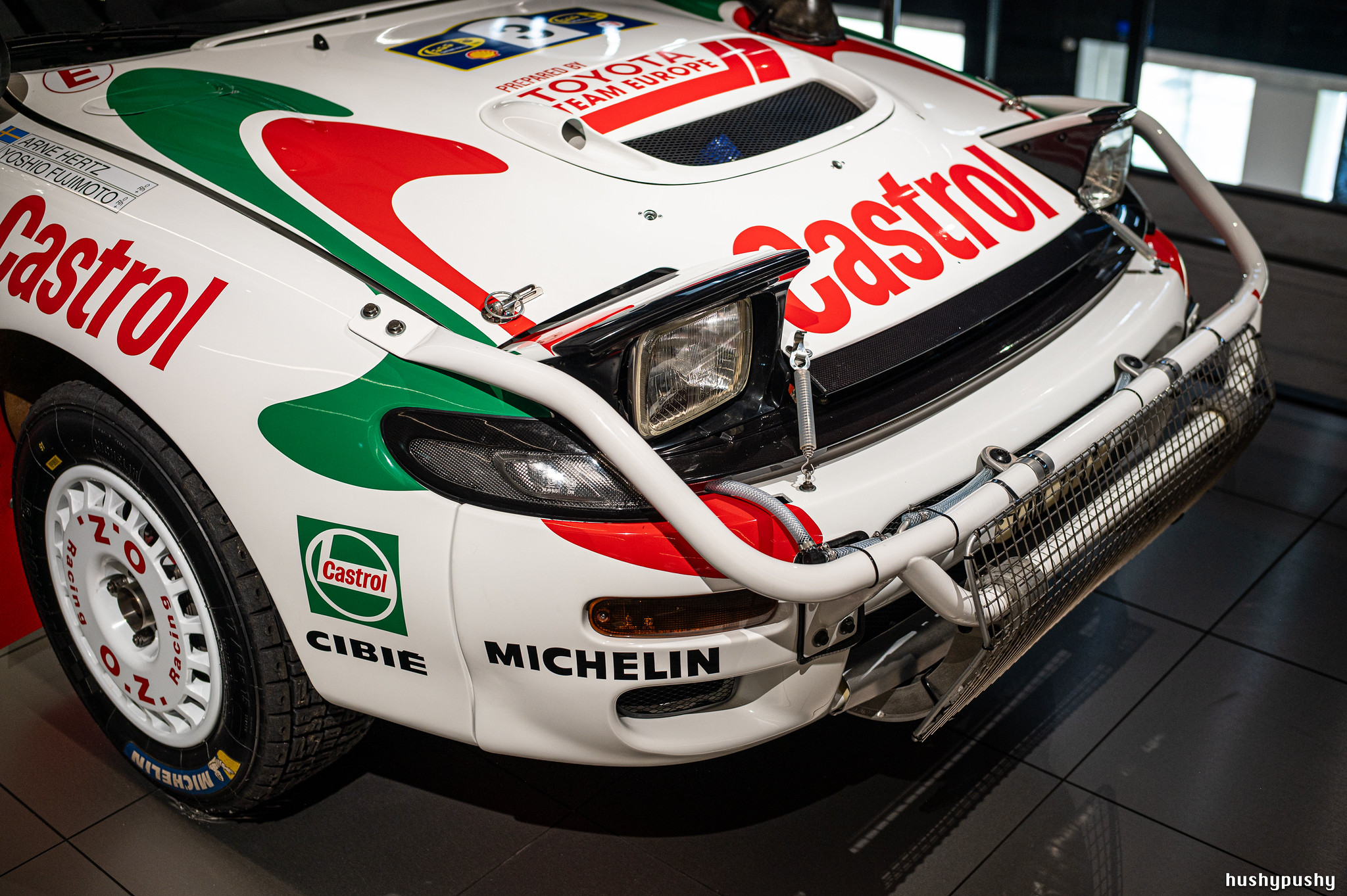
This Safari-spec ST195 Celica had some awesome details. I love all the extra stuff that’s added on for the grueling safari rallies.
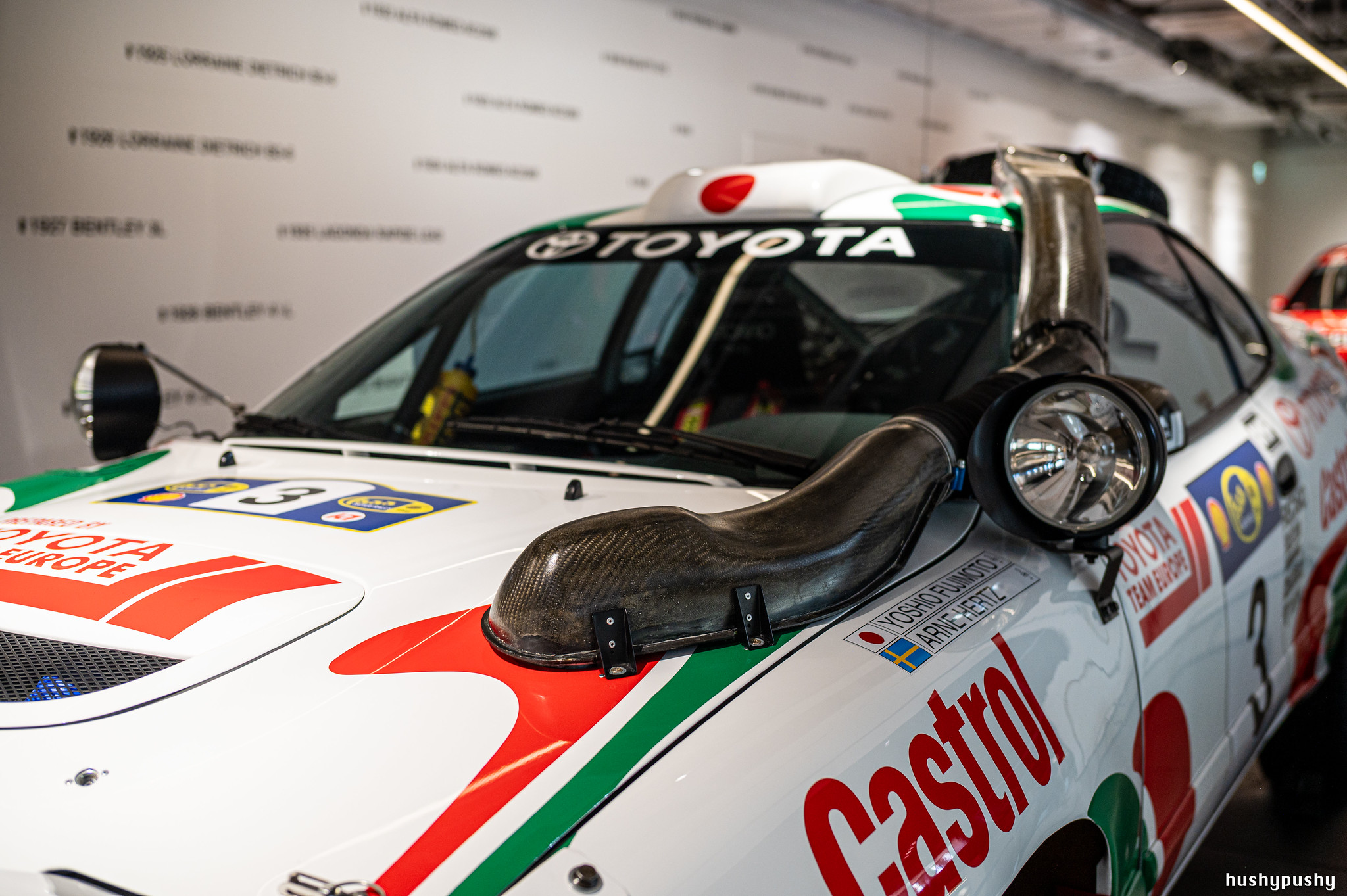
Like this carbon fiber airbox, which looks rad now but would have been truly exotic back in 1995.
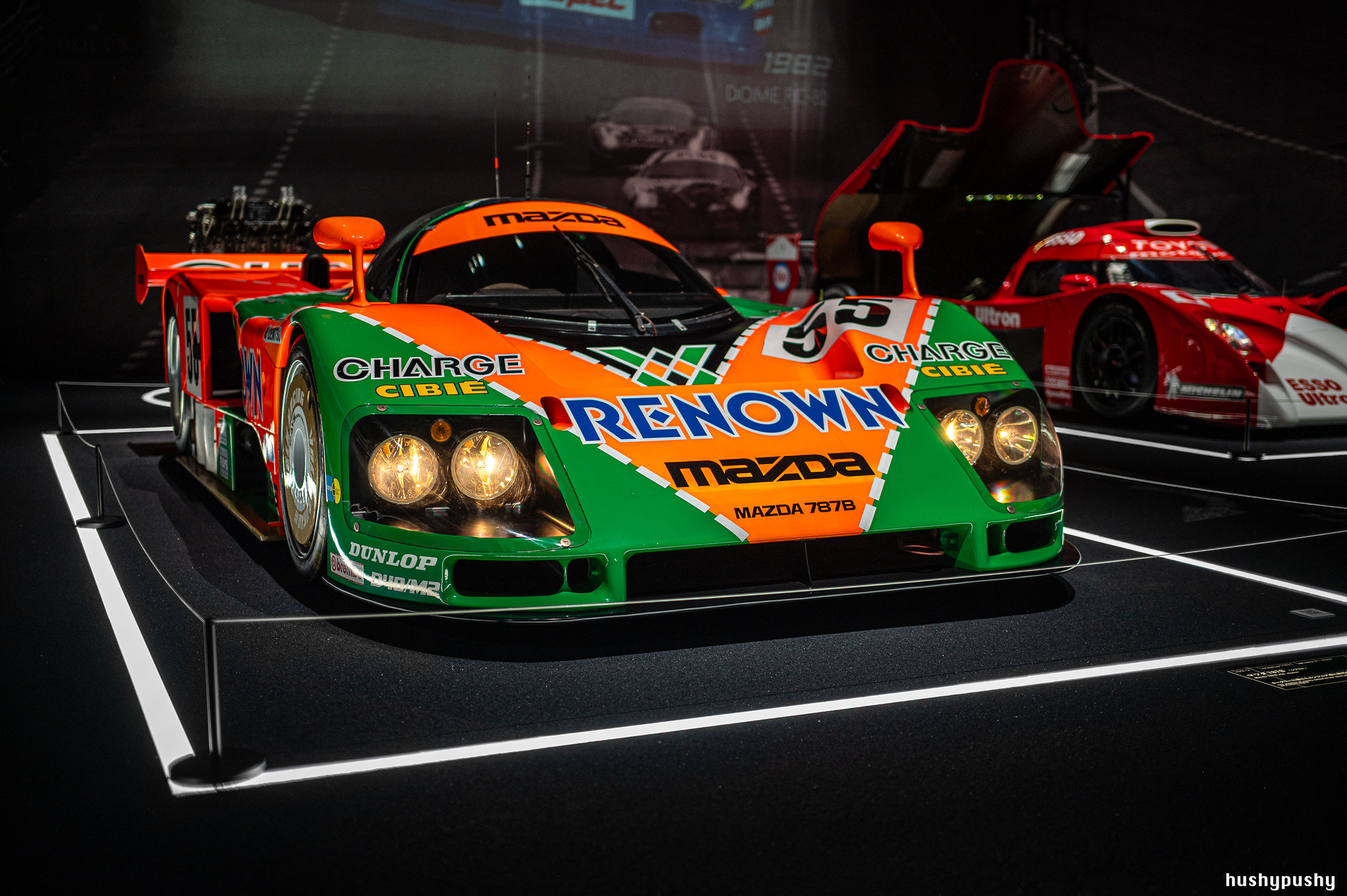
Down at one end of the museum is a special room for two Le Mans legends: first, the Mazda 787B that won the 1991 24 Hours of Le Mans.
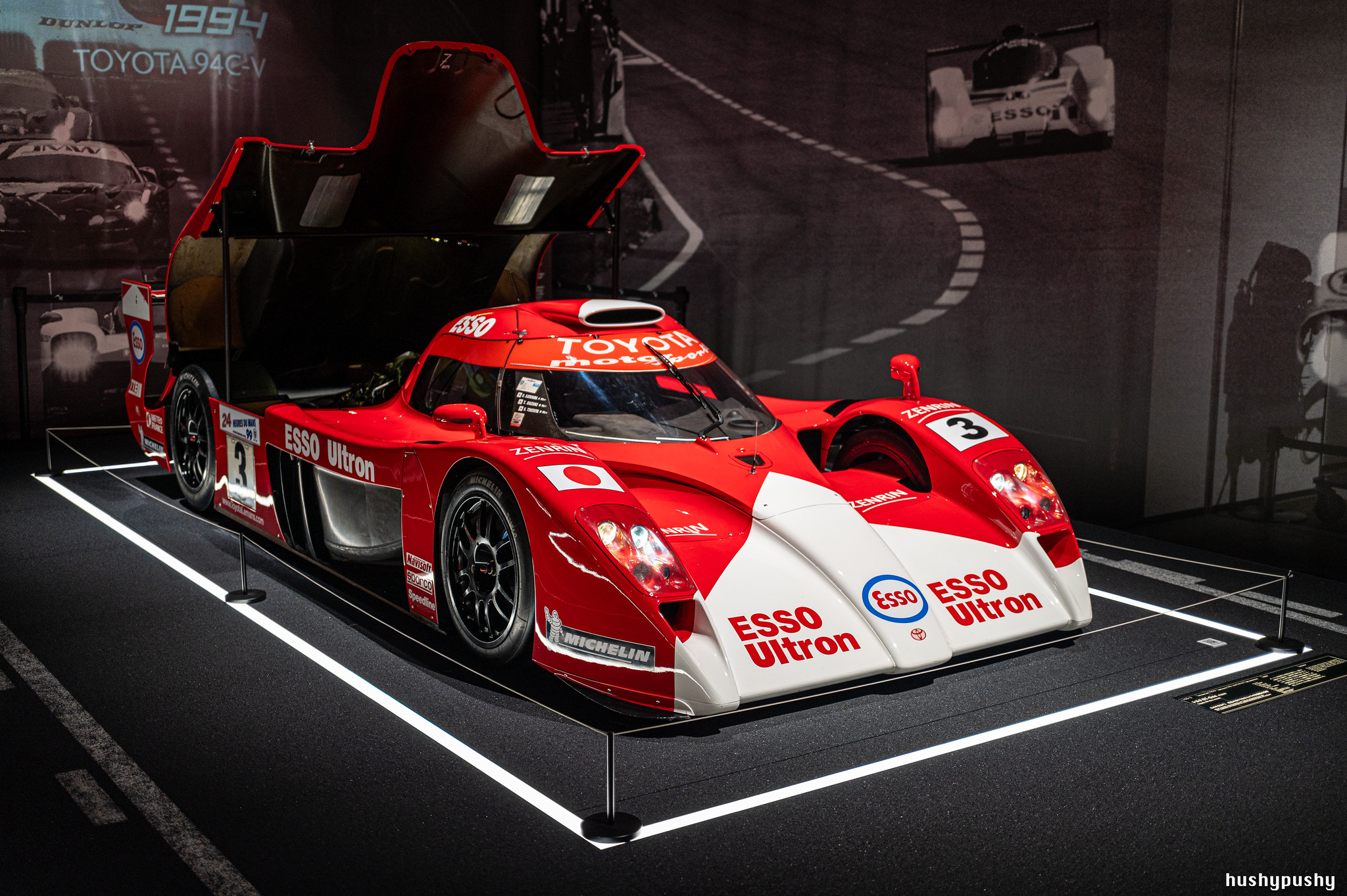
Next to it was the Toyota GT-One that competed in the 1998 and 1999 running of the 24 Hours of Le Mans.
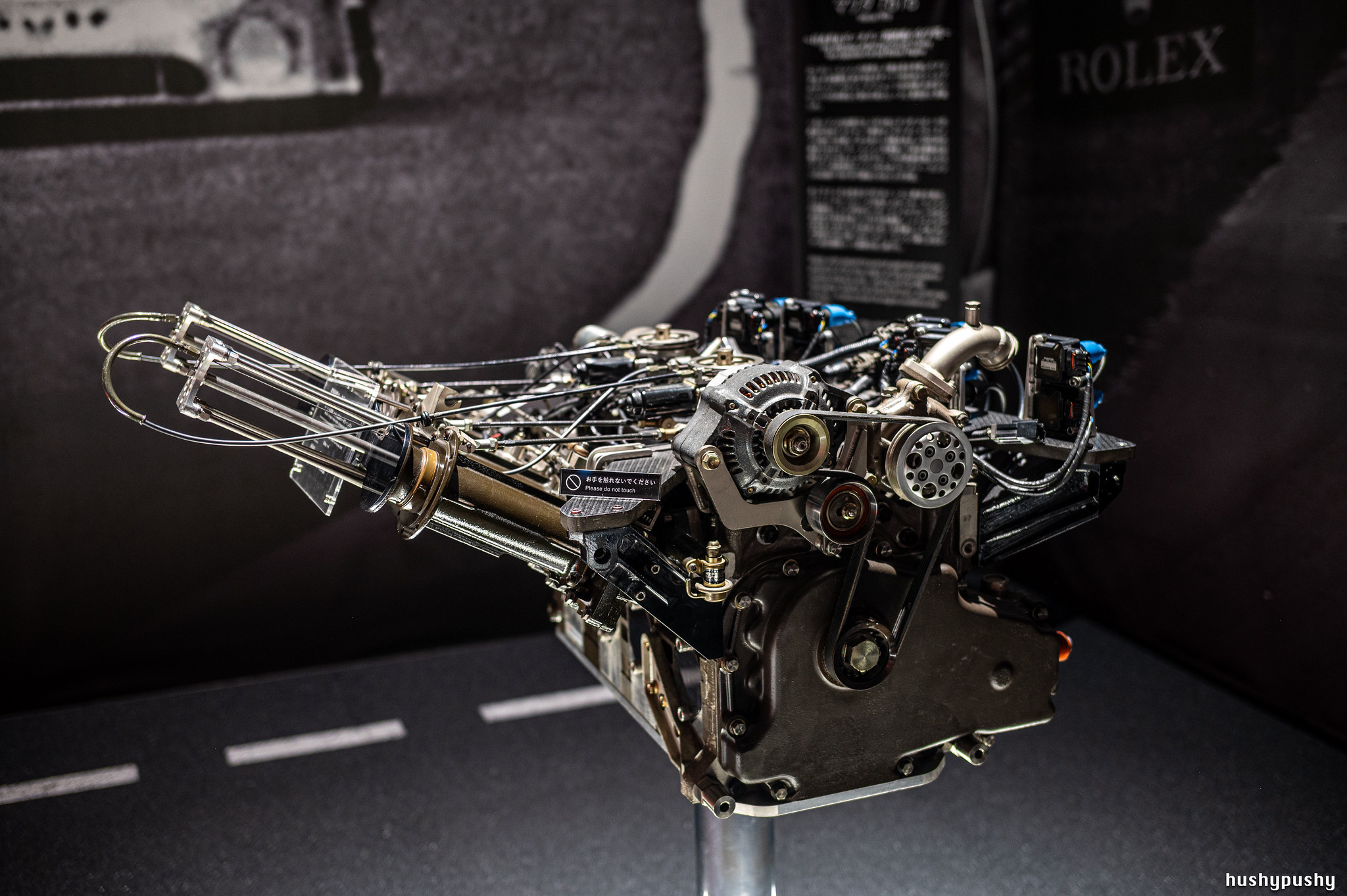
They had a 787B engine on a stand, which was a treat to see. Look how tiny it is! Also check out the very cool variable-length intake system. You might think that this racing spec engine spins to turbine RPM’s given that the 13B in a road-going 1991 RX-7 redlined at 8000 RPM, but the 787B engine actually redlines at “only” 9000 RPM.
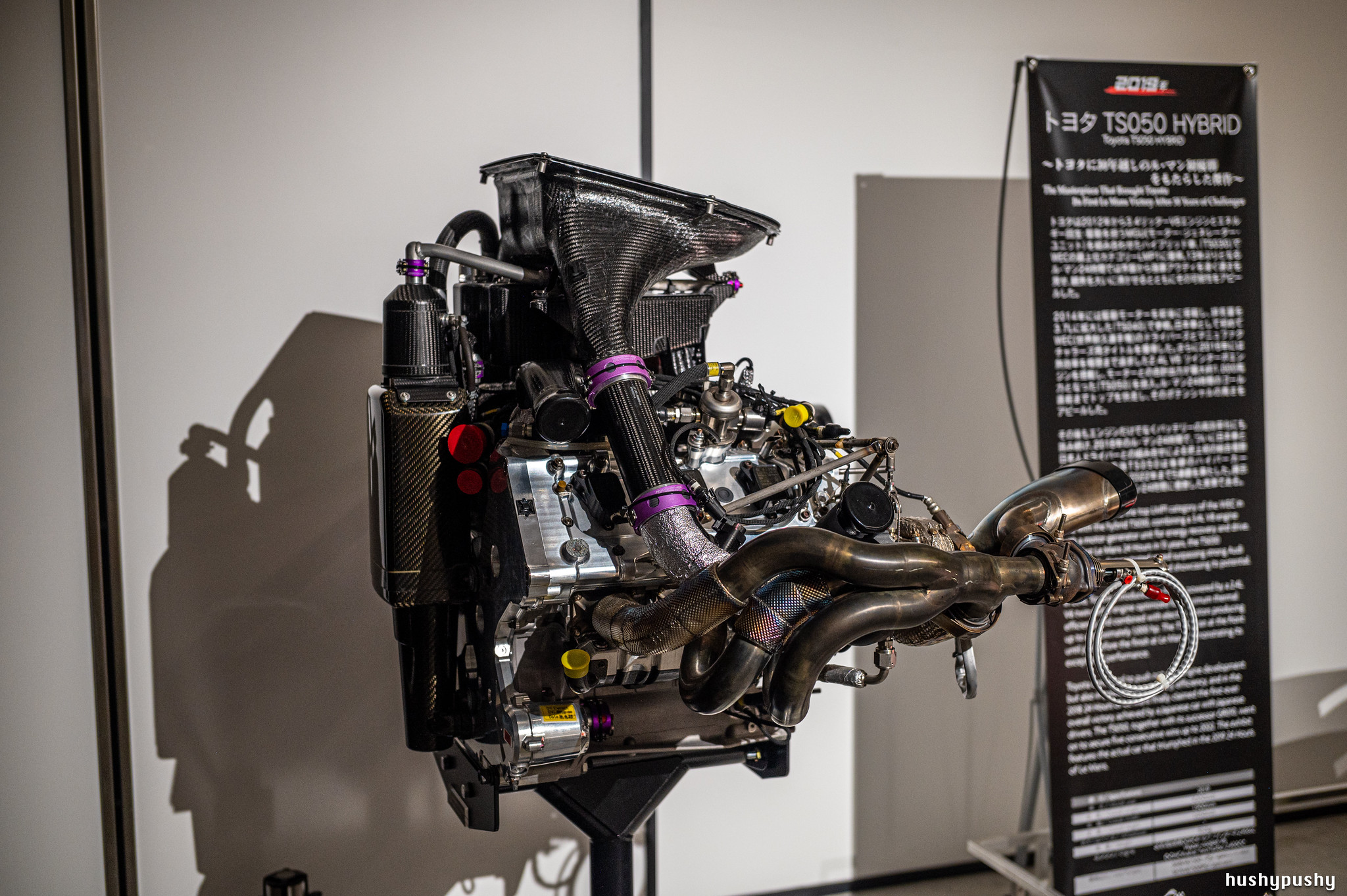
Around the corner was another engine on a stand, this time a twin-turbo 2.4L V6 hybrid from Toyota’s TS050 Hybrid.
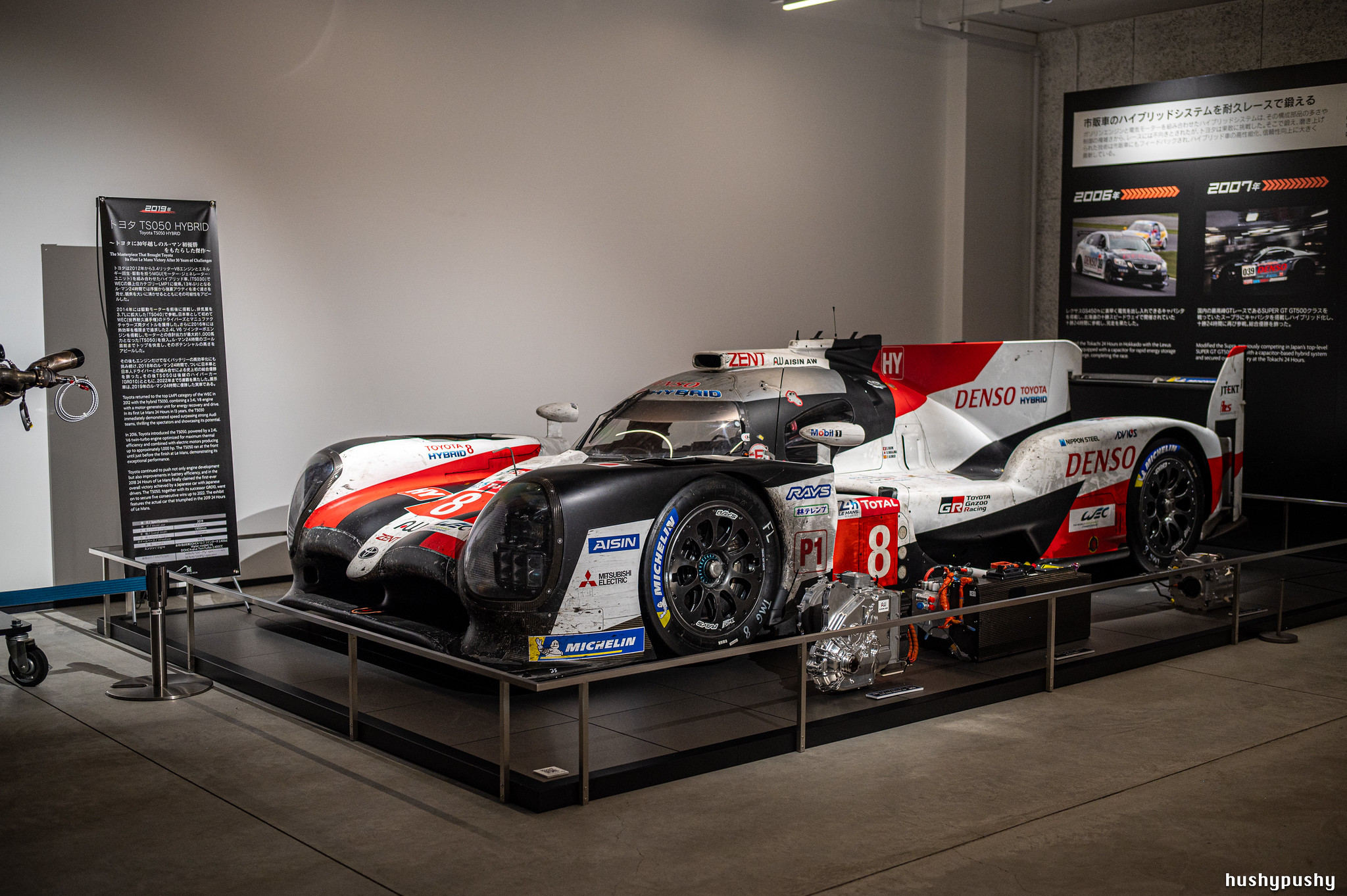
In 2018, a TS050 Hybrid driven by Alonso, Buemi, and Nakajima (all ex-F1 drivers, by the way) won the 24 Hours of Le Mans. After the 1991 Mazda 787B pictured above, the 2018 Toyota TS050 was only the second Japanese car to ever win the 24 Hours of Le Mans.
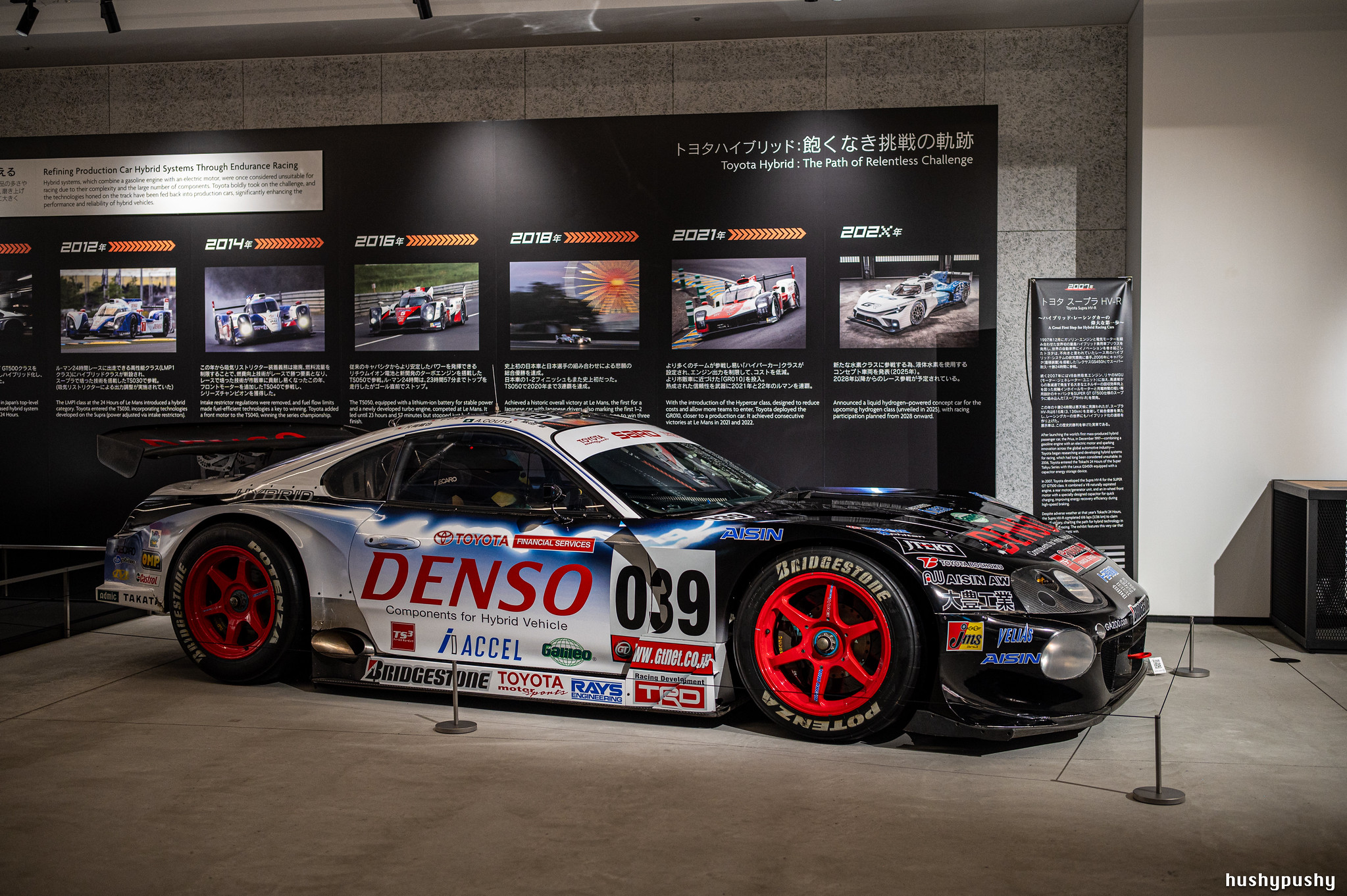
Here’s a trippy car that I had forgotten about. In 2007, Toyota entered a fourth-gen Supra (which had last been sold new in the US in 1998, and Japan in 2002) into the GT500 category of Super GT with a V8 engine and an electric motor up front.
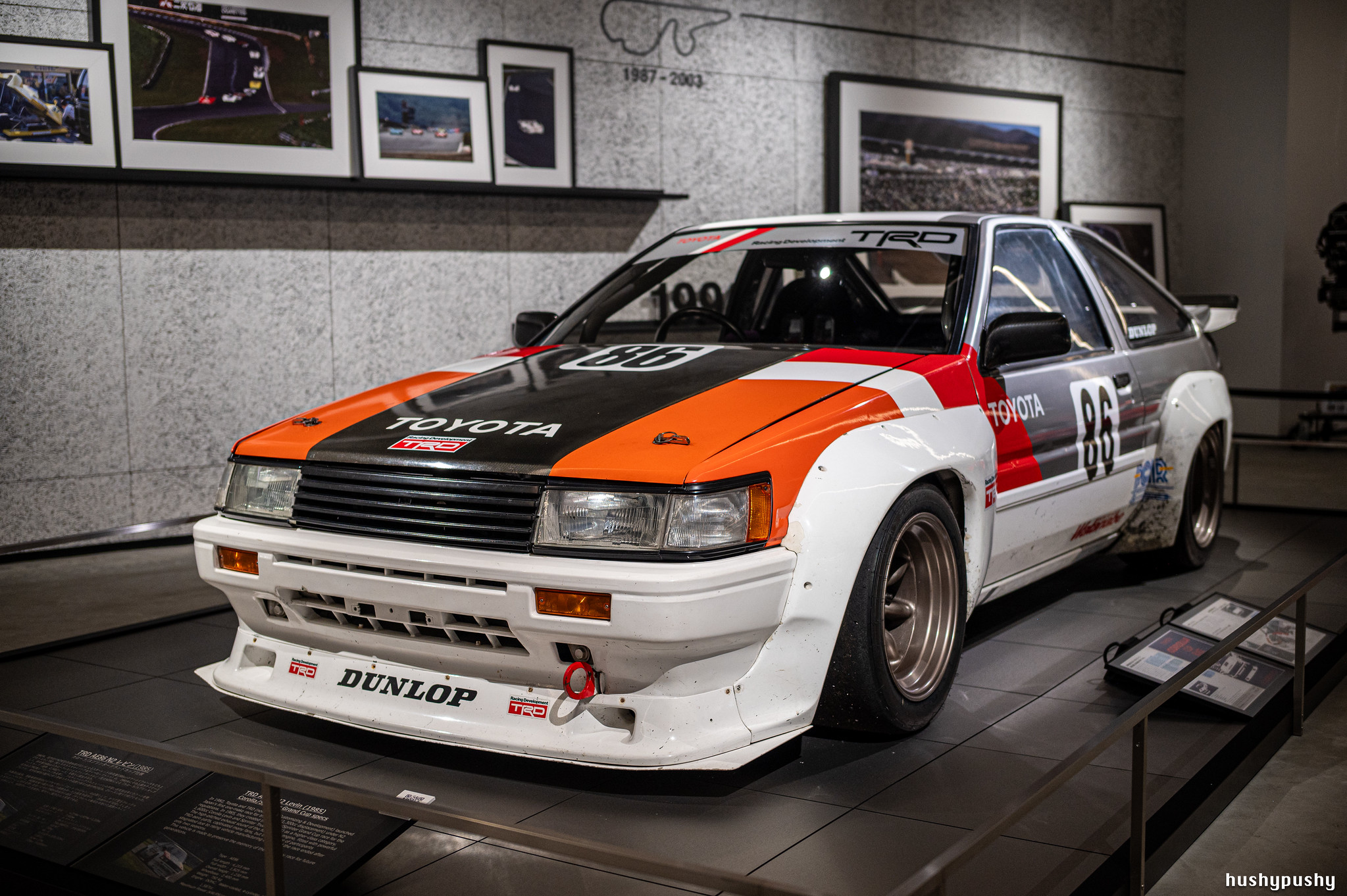
Here is one of my all-time favorite cars, an N2-spec Corolla Levin/Sprinter Trueno.
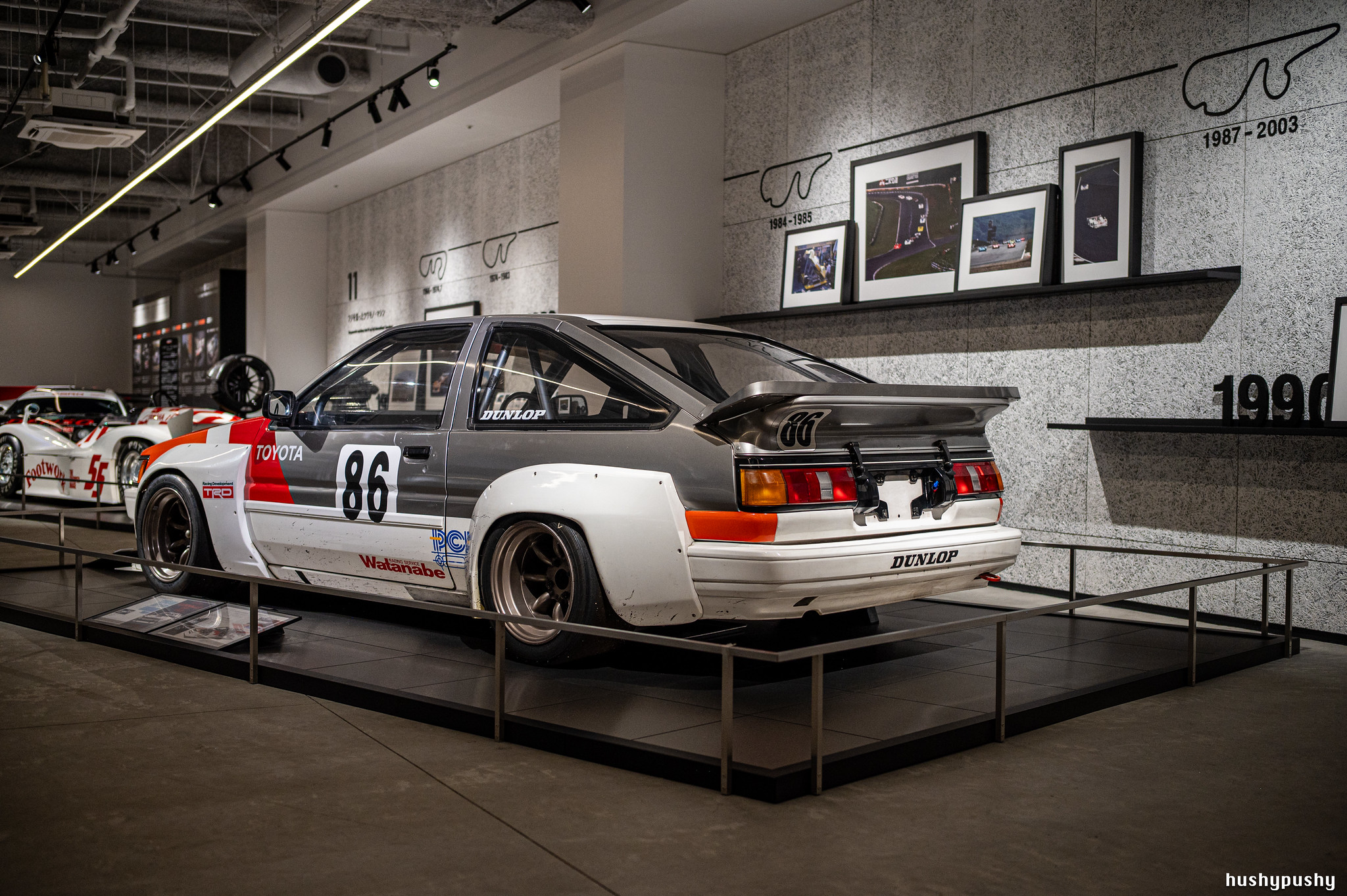
There is something just right about that fat body kit that perfectly compliments the AE86’s slim and delicate lines, and the splattering of tire boogers down the side shows how this car is still used properly.
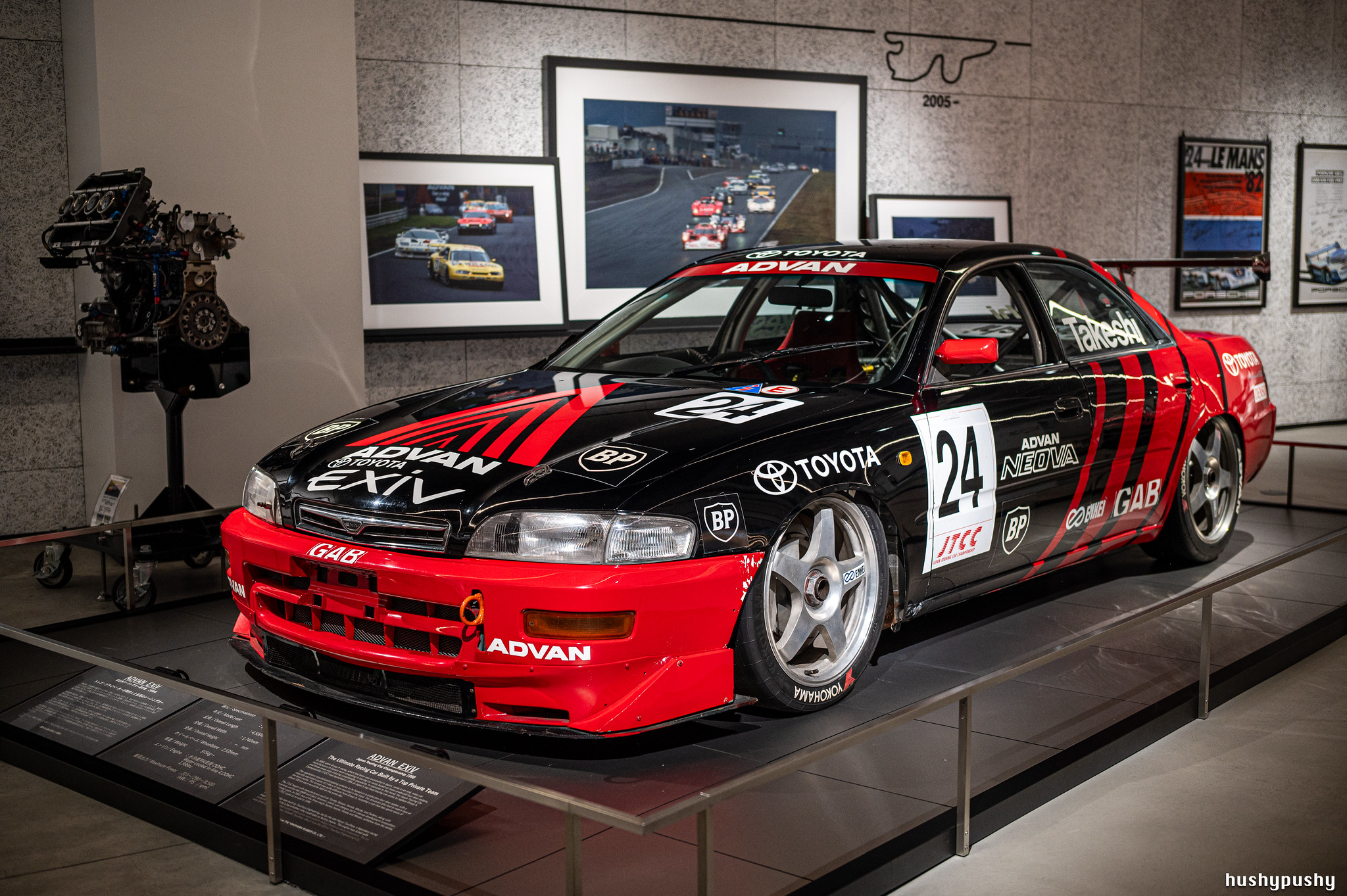
Even now, Japanese manufacturers offer many cars to the domestic market that aren’t available elsewhere, but in the boom time of the 80’s and 90’s this was taken to the extreme. Toyota offered a car called the Corona EXiV which was a slightly different version of the Carina ED, and we didn’t get either of those cars in the US. This car competed in the 1998 JTCC series.
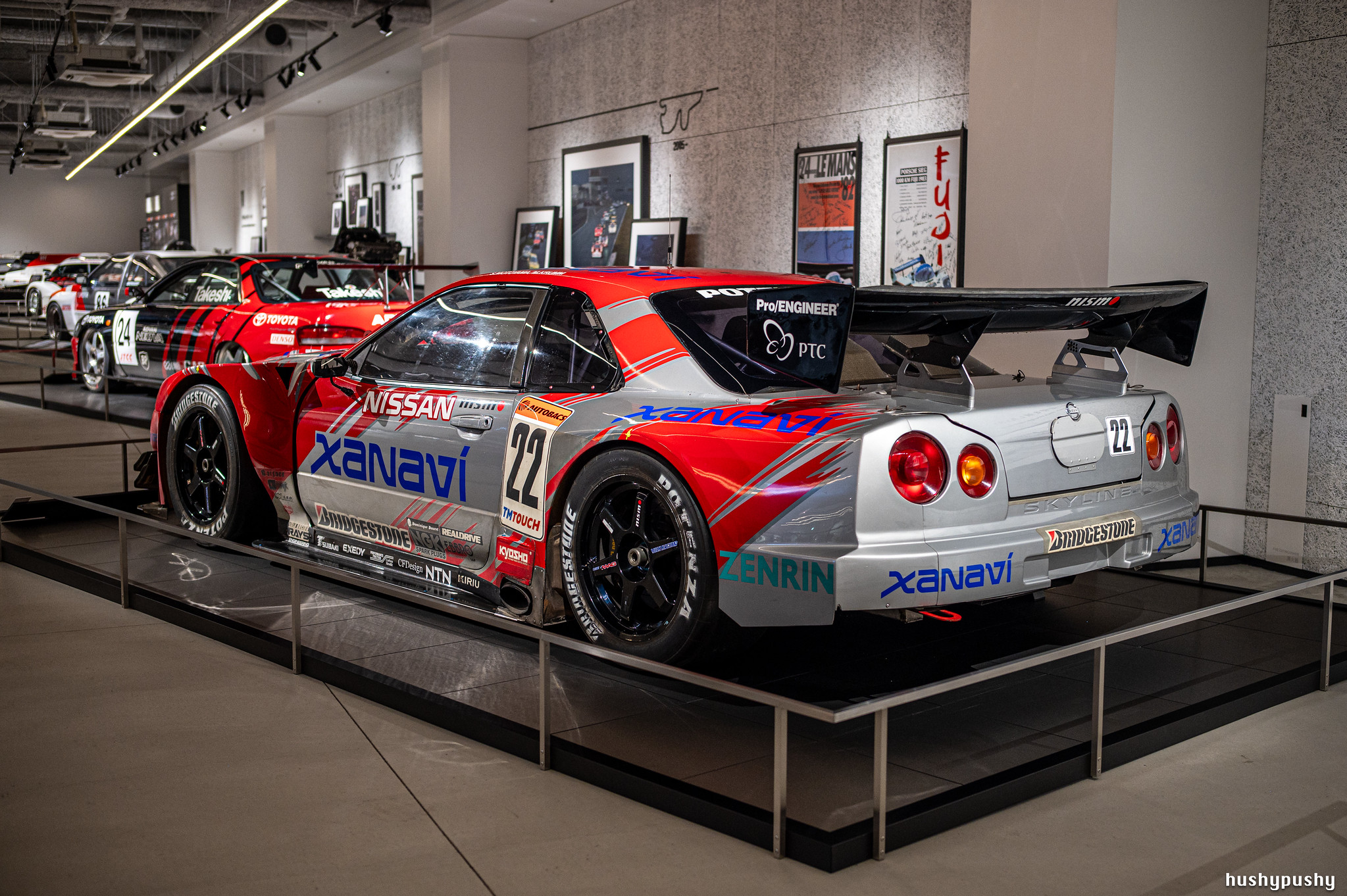
This R34 Nissan Skyline GT-R competed in the 2002 JGTC series, the predecessor to today’s Super GT. This car is notable for being the last GT-R to compete with the legendary RB26 straight-six engine; in 2003 they again competed with an R34, but it had the VQ30 V6 engine instead, and in 2004 they switched over to the Fairlady Z (aka 350Z).
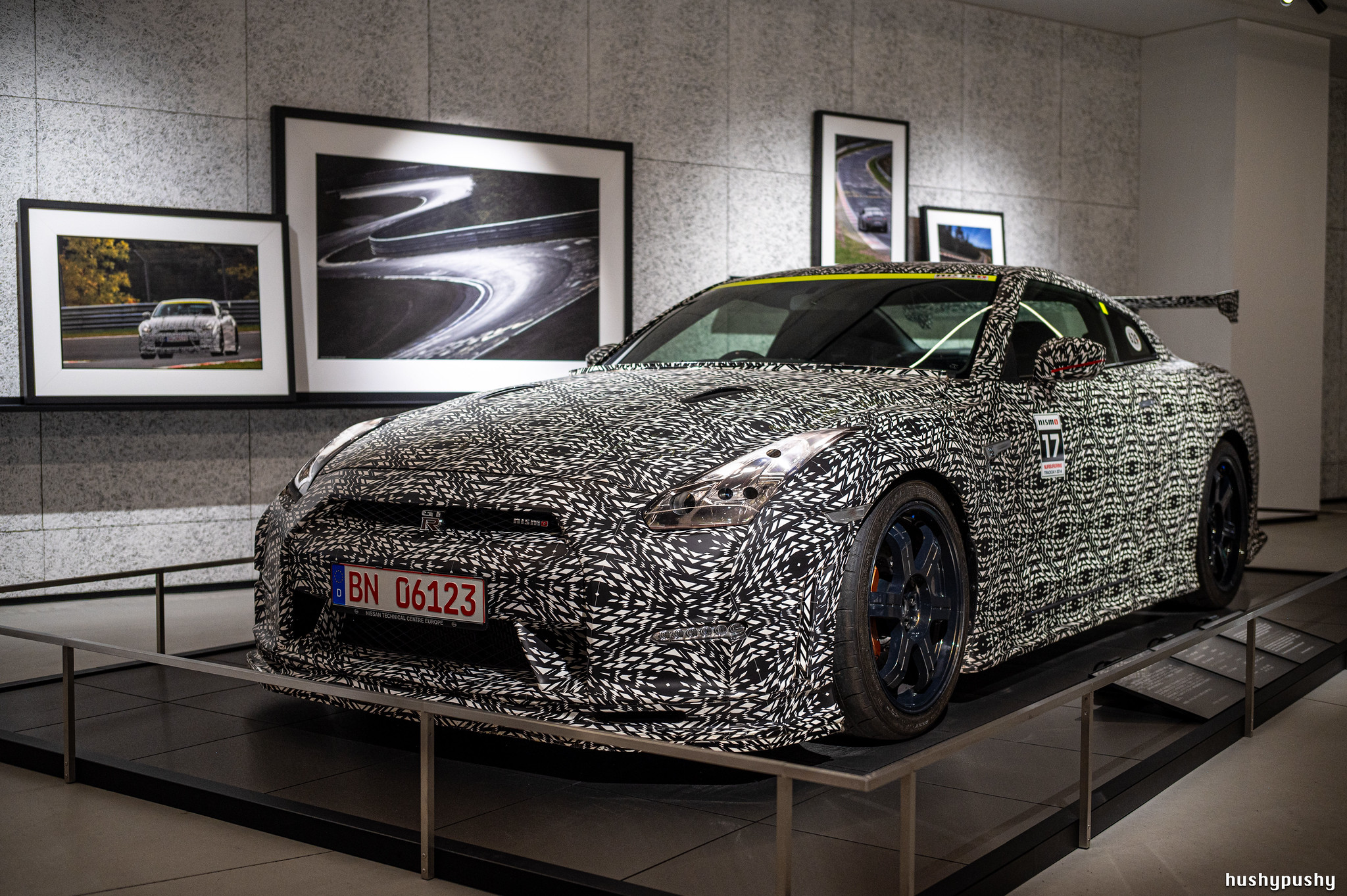
Nowadays they have all manner of supercars setting crazy Nurburgring laptimes, but even just a few years ago this wasn’t the case. This is actual car that set the Nurburgring production car lap record of 7:08.679 back in 2013. This is a GT-R Nismo with the “N-Attack Package”, a special setup that touches the powertrain, suspension, and aerodynamics to optimize the Nurburgring lap time.
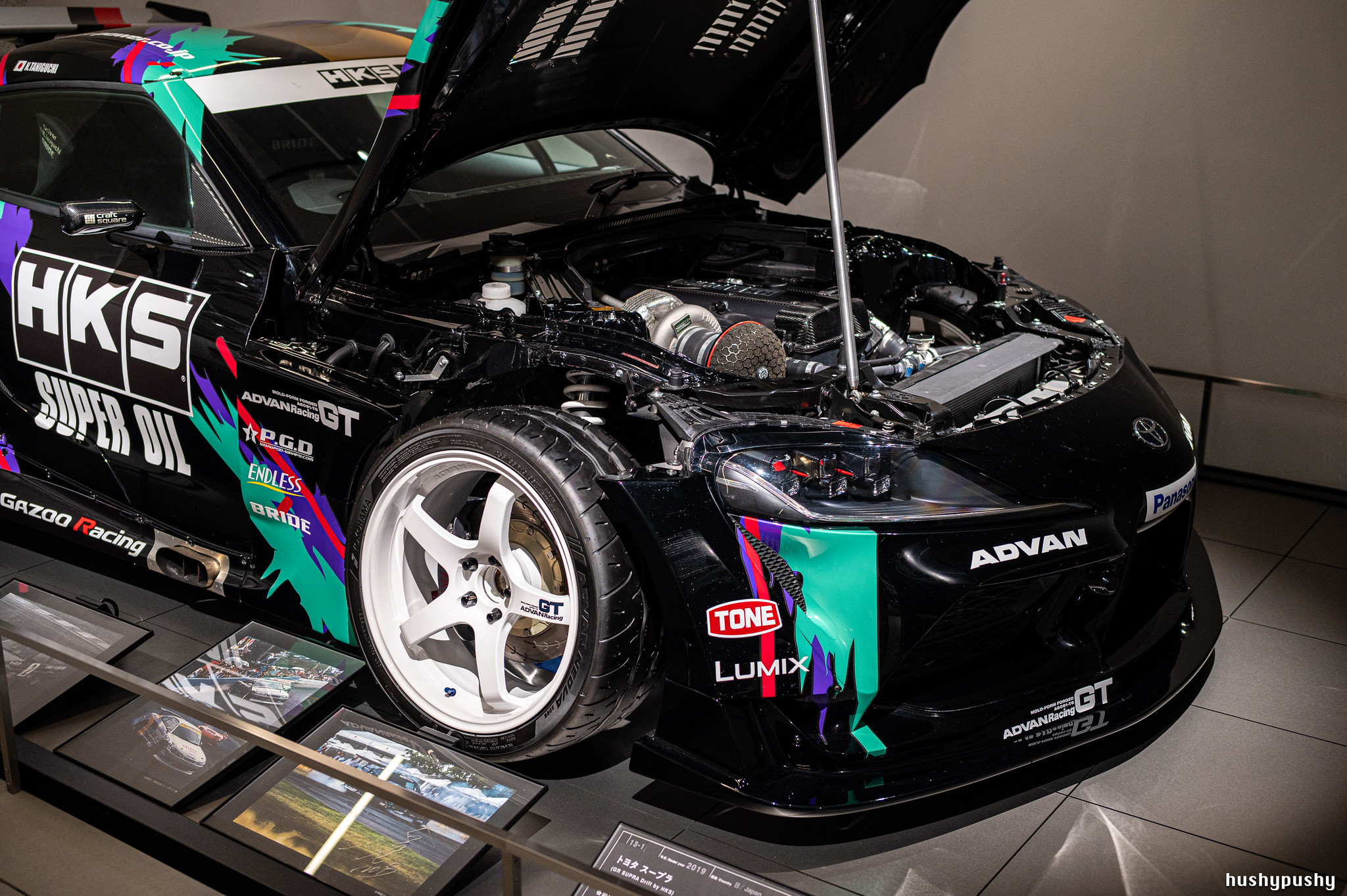
This was kinda funny because cars like this don’t feel like they should be in a museum yet; this is a 2019 Supra built to drift spec by HKS. Of course, the BMW engine was ripped out to make way for a proper Toyota straight-six, the 2JZ.
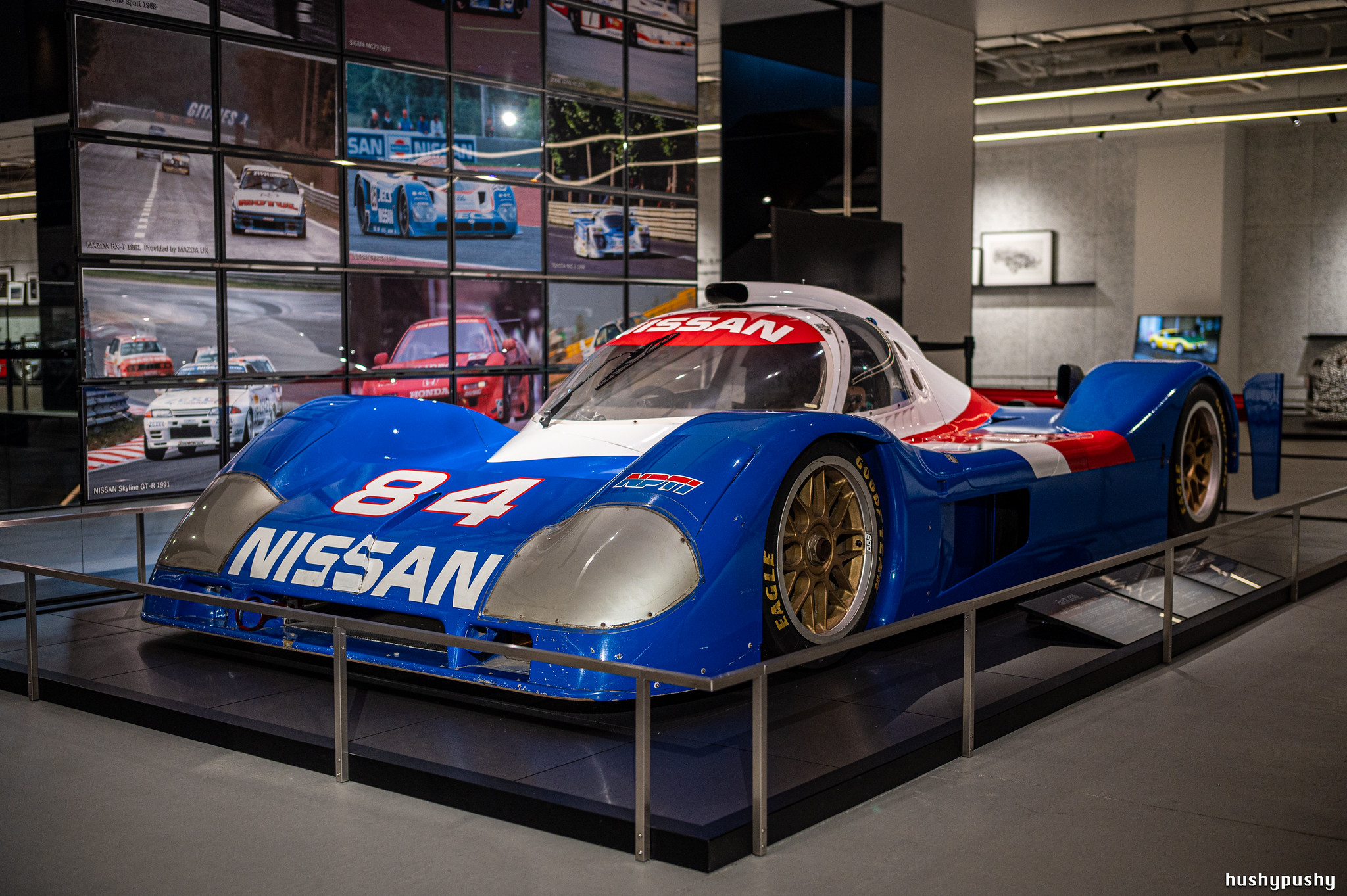
The last thing you see before getting in the elevator to leave the museum is this Nissan P35, which was the planned Group C replacement for the R90C that never made it to fruition. It had a 3.5L V12 (like a Formula One car of the time) and was intended to compete in the All Japan Sports Prototype Championship. Unfortunately it never actually raced, although a version by Nismo (named NP35) did actually race one time, at Mine Circuit in 1992.
Ding! The elevator doors open and you leave the exit-only elevator on the third floor landing, with the front desk to your left and the museum gift shop and cafe to your right.
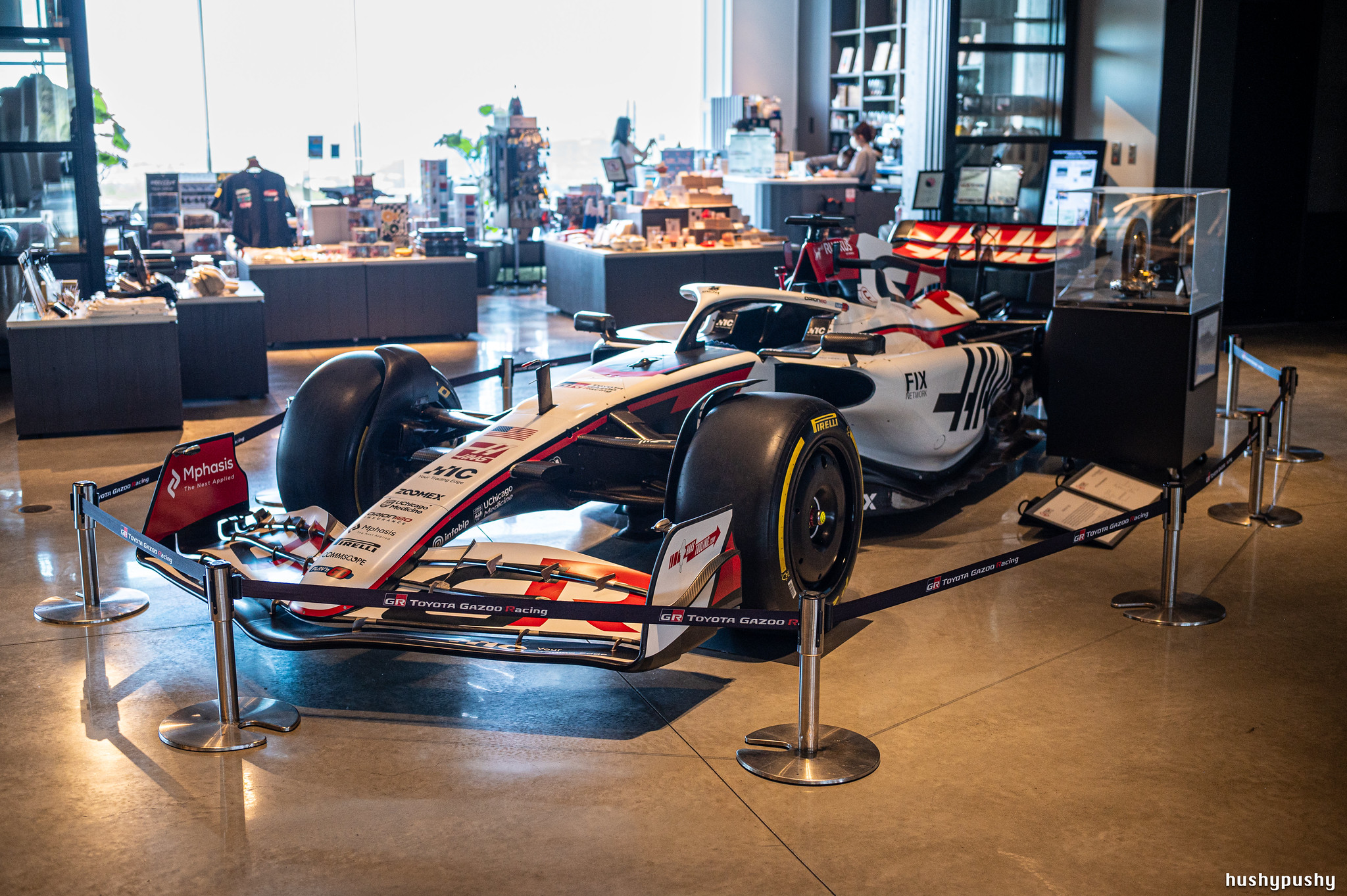
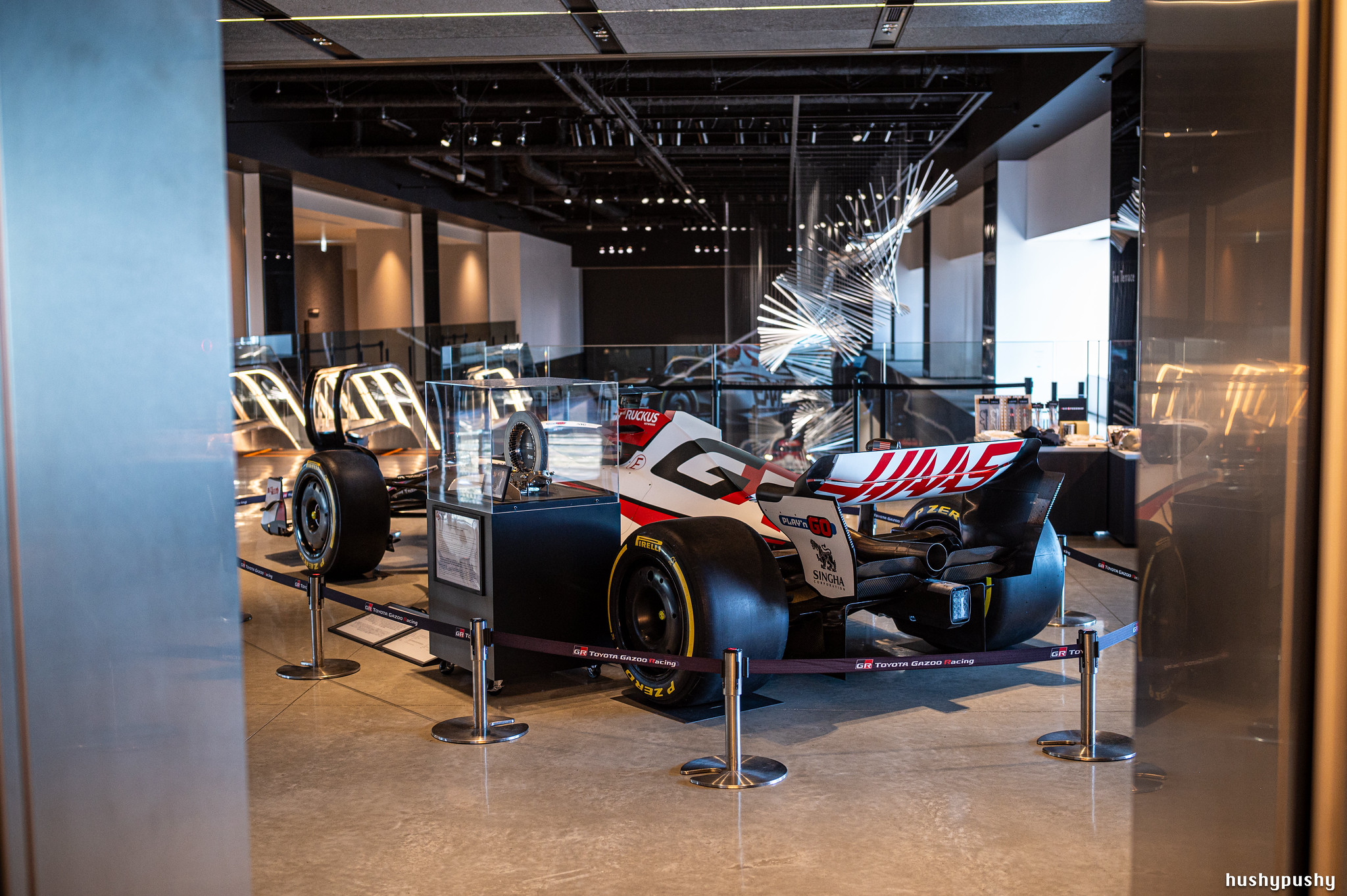
This is a Haas VF-23, which was driven by Niko Hülkenberg and Kevin Magnussen in the 2023 Formula One season. Behind it is the gift shop, which had all kinds of neat little trinkets.
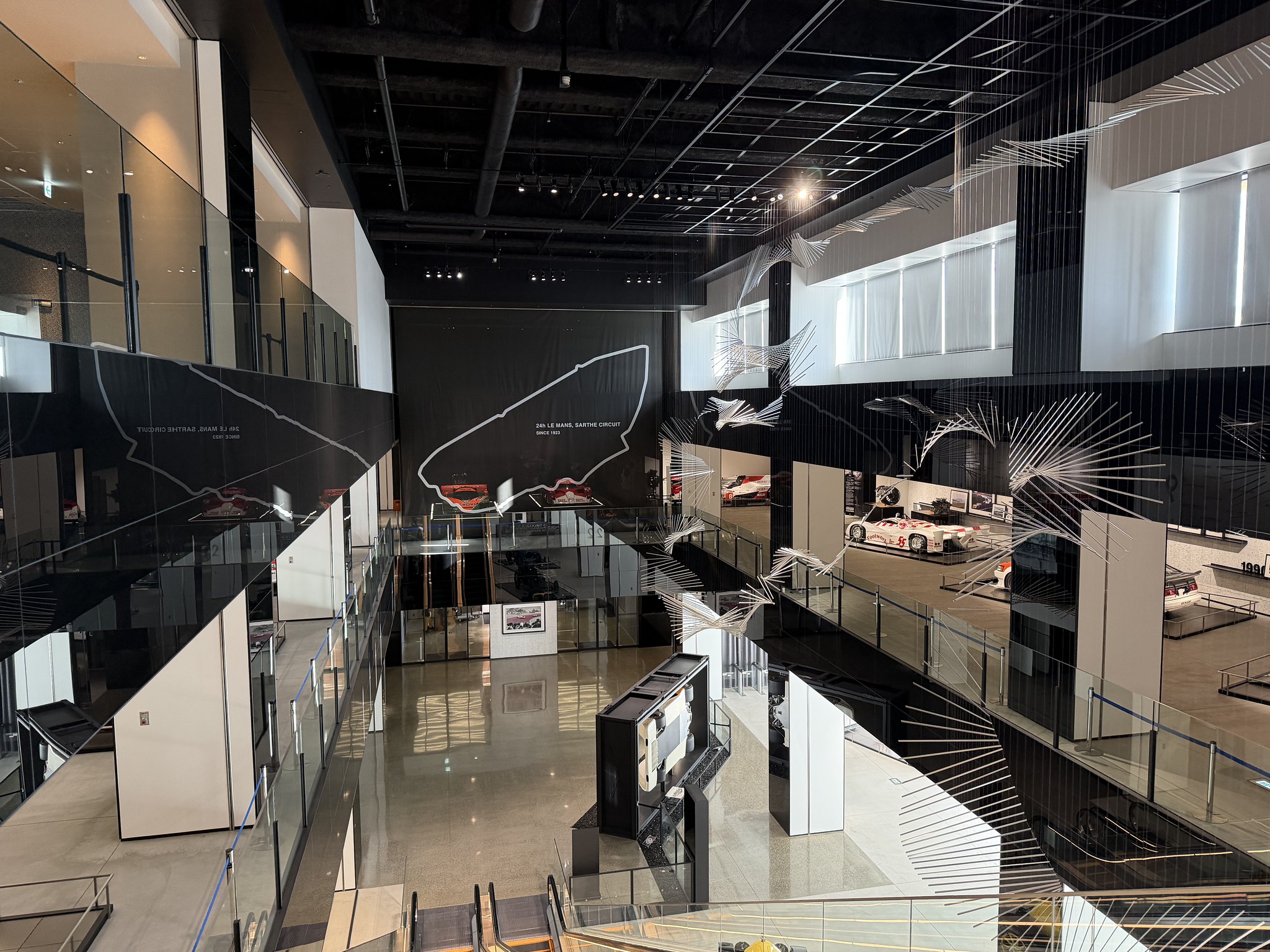
Past the Haas, you can head to the exit down the escalator. This is the same view as the first photo in this post, just from the other direction.
And that does it for the Fuji Motorsports Museum! That was probably my favorite car museum so far. I’m a huge fan of Japanese cars, and it was very cool to see so many special cars that are rarely or never experienced outside of Japan. The fact that so many of the cars were the actual car that won or were driven in a significant event is even cooler.
On top of all that, this is not a static museum: cars are constantly being swapped in and out. In the process of writing this article I glanced at some other information and noticed that within the last few years there have been quite a few changes. That means another trip to this wonderful museum is definitely in my future. For anyone reading this article, I hope I’ve convinced you that this museum is a must-see for a motorsports fan visiting Japan. Oh, and the world-class hotel that surrounds it is pretty neat too.
If you want to see even more photos I took at this museum, please check out my Flickr album here.


