
Because Ignorant People Say So.
It’s funny owning an underrated car.
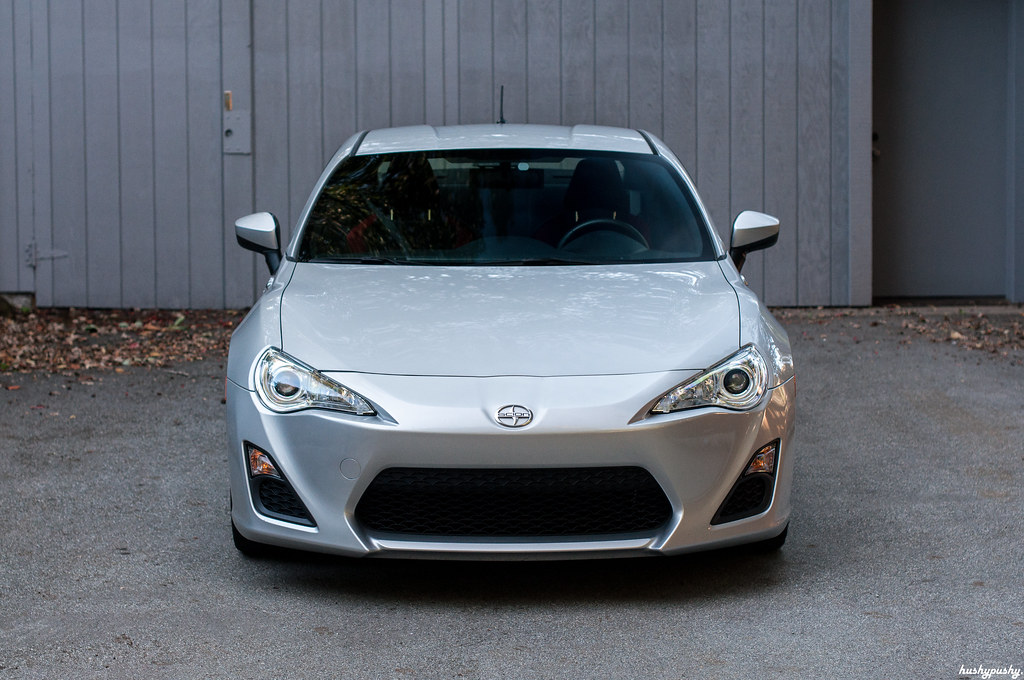
Funny because it’s strangely satisfying just being underrated in the first place. I know exactly why I drive what I drive–but not many other so-called “car enthusiasts” can really begin to comprehend it.
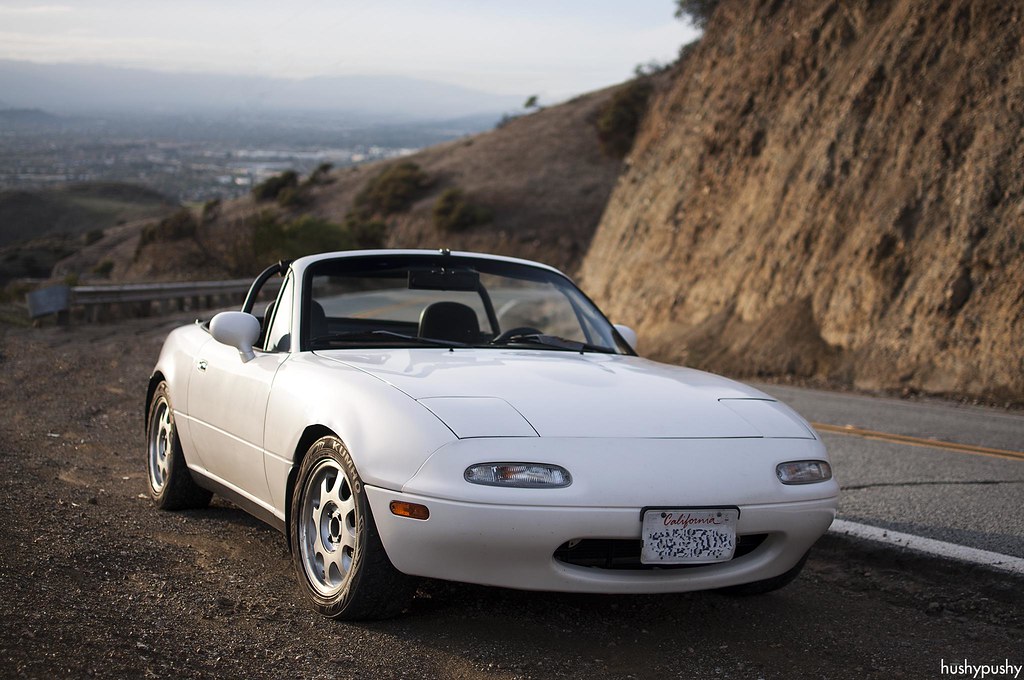
The thing is, I have nothing to prove to anyone but myself. And that’s why the cars I want to drive tend to be looked down upon by those who are perhaps a little insecure. The ones who might be, shall we say, compensating for something.
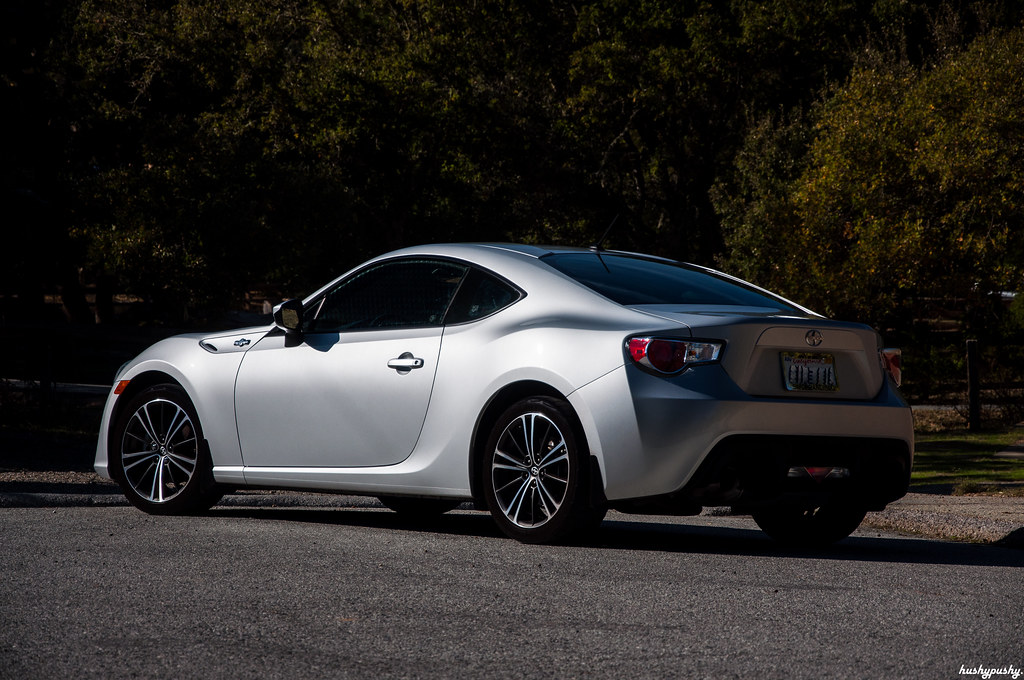
But again–that’s funny. And I mean properly “ha ha funny”, not just peculiar. For example, check out this comment I recently received on a popular car forum. Here it is verbatim: “The car is underpowered but it might just meet the needs of somebody with very low expectations. Not everybody is picky about their cars.”
Now, let’s not get involved in who wrote that, nor why they did. If that was an attempt at trolling, then it was laughable; if they were actually trying to make a serious point, then it’s even more laughable. The point of the matter is this: something about underdogs makes people furious. Because, said in jest or not, it was still said–and that means there was a reason for it.
For years (about 25, to be more precise), people have been clamoring for Mazda to just put a little more power in the Miata. And would you please add a hardtop, coupe-style body while you’re at it?
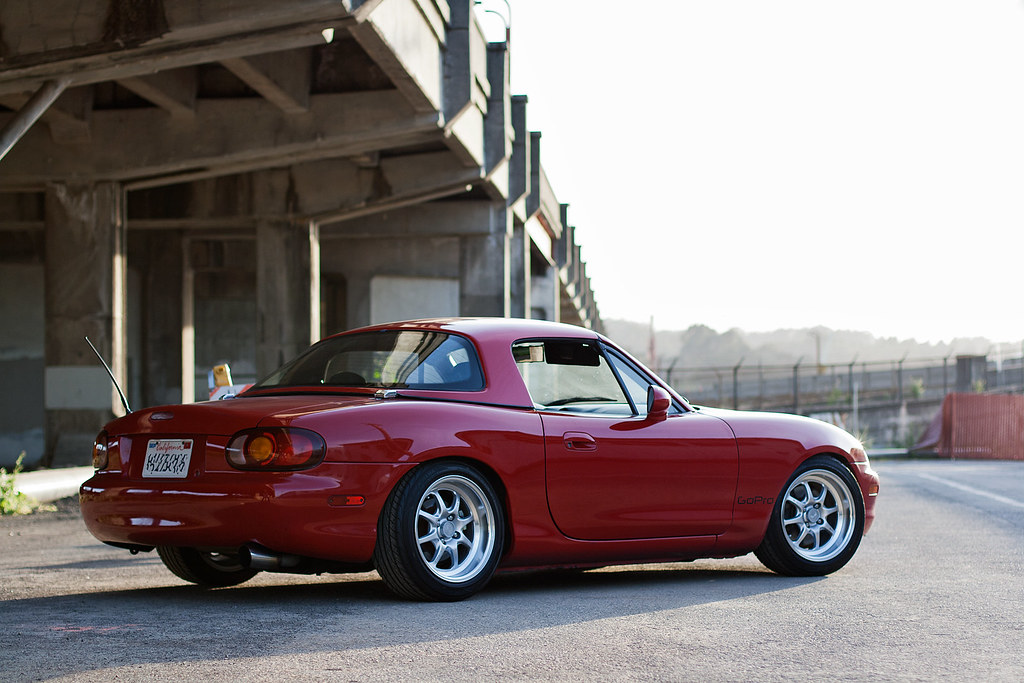
Uh, no, that’s not exactly what I meant. That’s just a hard top on the regular body, and it only has like ten extra horsepower compared to the outgoing model! C’mon! We’ll see about the new ND Miata, but the NC chassis has been stuck at 167hp for a decade already. They did add a power retractable hard top–but that just added weight, not rear seats or extra space.
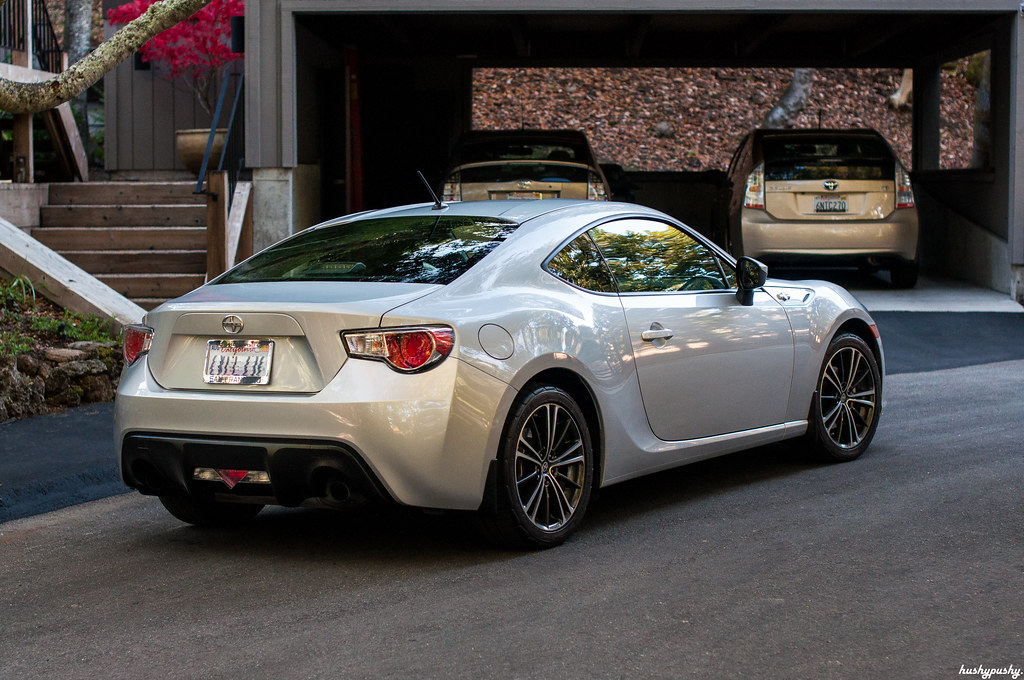
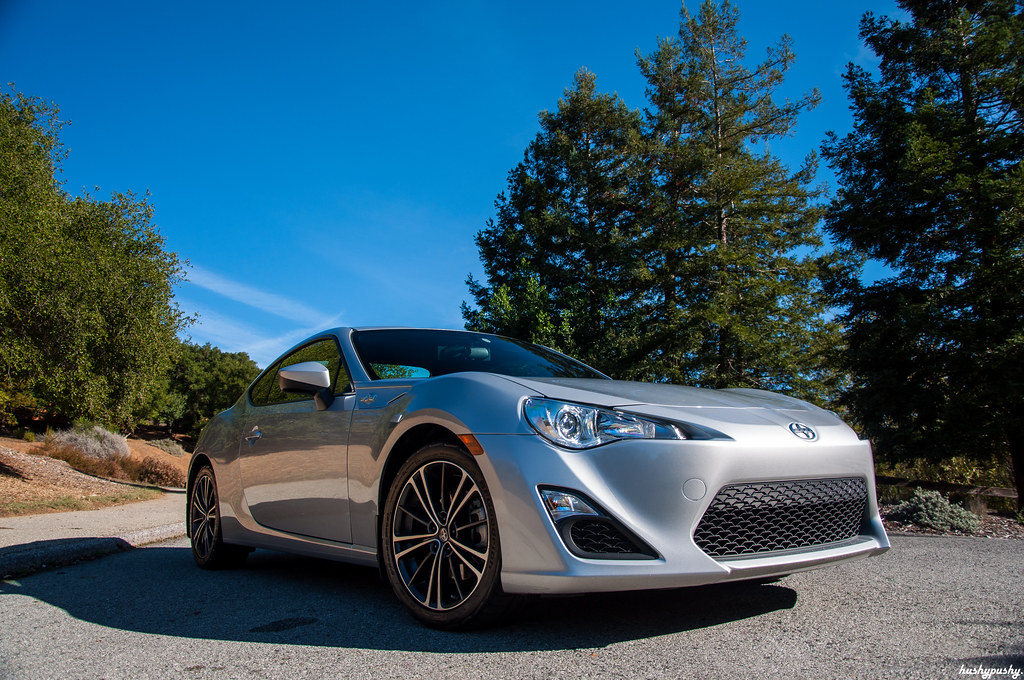
But then Subaru and Toyota got together and had a rear-wheel-drive baby. With a rigid roof, back seats, and a trunk. Not to mention it has something a stock Miata never had–even with a turbo–two hundred horsepower. Sure, it weighs a couple hundred pounds more, but the “Toyobaru” (why doesn’t anyone ever say Subota?) still has a better power-to-weight ratio while returning better fuel economy than any Miata.
More power delivered more efficiently in a coupe body that costs about the same as the beloved, best-selling Miata.
And yet it’s still an underdog.
You see, that’s because there’s something evil about this car. Something that strikes fear and jealousy into the hearts of men, and makes them say completely irrational things to other people on the internet. Here are a few highlights:
“Underpowered” — Here’s a question no one seems to be able to answer: how much power do you really need? And why does everything seem to be “underpowered” unless it’s a 707hp Dodge Hellcat? Even then, the only thing internet tough guys want to talk about is how soon someone is going to make 800 horsepower with one of those, as if they would even know what to do with half that much power under their right foot. You know what, if someone said “the FA20’s torque dip between 4-5k really bugs me,” I would respect their opinion. But no one has ever said that; they all just say it’s too slow, and usually without having even driven the car.
“Fiesta/Focus/GTI/WRX/MINI/hot hatch” If I loved understeer, then yes, I would buy one of those cars. On the street I don’t want to drive something that sends power to the front wheels.
“370Z/Mustang/BMW/Genesis/big coupe with big engine” — I have three basic requirements: small, lightweight, and nimble. Maybe everyone on the internet is so used to driving their leased Jetta that they actually believe a 370Z, Mustang, or 135i embodies any of those attributes. The 370Z, which is the same length as the FR-S, weighs 500lbs more (that’s three passengers!). Don’t even get me started on how much bigger and fatter the other cars are. Not many people seem to appreciate how few lightweight RWD sports cars are even in production at all anymore, regardless of the price range.
“Should have bought an air-cooled 911 instead” This one is also suspect, because it makes the assumption that someone with enough funds to finance a new $25,000 car also has the funds to buy a $25,000 car outright. Beyond that, I wouldn’t want to daily drive an “affordable” (read: old/needs work) 911 anyway. They’re cool cars, but the prices are beyond insane now. Five years ago when a super clean 964 was $25k, you might have had a solid argument here. Then again, the FR-S didn’t even exist five years ago.

At the end of the day, no one wants to acknowledge the elephant in the room: personal preference.
Or maybe they do. There’s something evil about this car, something that makes people hate it. But you can’t turn up to The Car Lounge and say, “I hate the FR-S because it’s evil.” Everyone will laugh at you! That’s why they have to disguise their ignorant and irrational fears as “opinions” (which they will always remind you they’re entitled to having). That gives them an escape route if confronted, because then it becomes your fault as the reader for taking them seriously in the first place.

What other people think is irrelevant to me–the fact is that the car entered production, which enabled me to buy one. The satisfaction I derive from it has nothing to do with what some ignorant imbecile on the internet says. Actually, that’s not true at all; I really do like being the underdog. I’m not looking for public approval, but I actually kind of like the disapproval because it makes it really easy for me to identify dipshits.
Are other people satisfied with their cars? On one hand, it’s easy to be cynical and assume that people get fired up into a jealous rage when they see my Japanese mutant because I’m having fun, and they aren’t. However, I’d like to assume that people really do enjoy their cars in their own personal ways and are just being oblique or unreasonable when they can’t see how I enjoy mine.
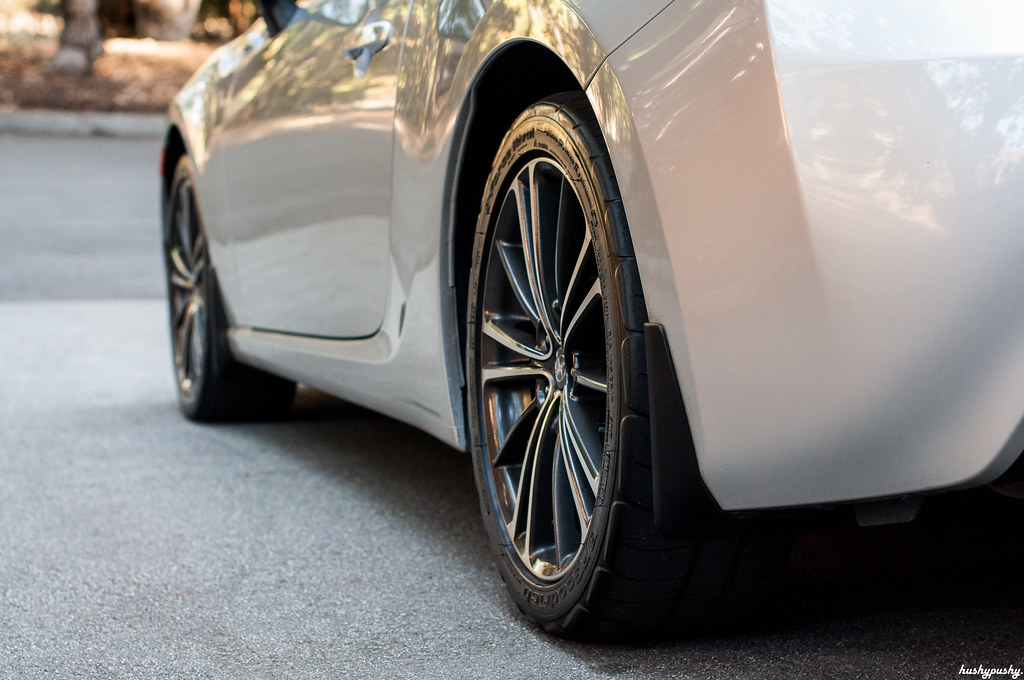
I don’t think my car is underpowered; I powerslide it every day, even on grippy BFG Rivals. I find myself easily surpassing the comically low speed limits of whatever roads I drive, and it’s more fun to be flat-out for seconds instead of milliseconds. My car handles impossibly well; if it understeers at all, I’ve done something horribly wrong. Do I have any complaints about this car? Well, of course–but none of them are related to performance, value-for-money, or any of the things that I hear non-owners moaning about on the internet.
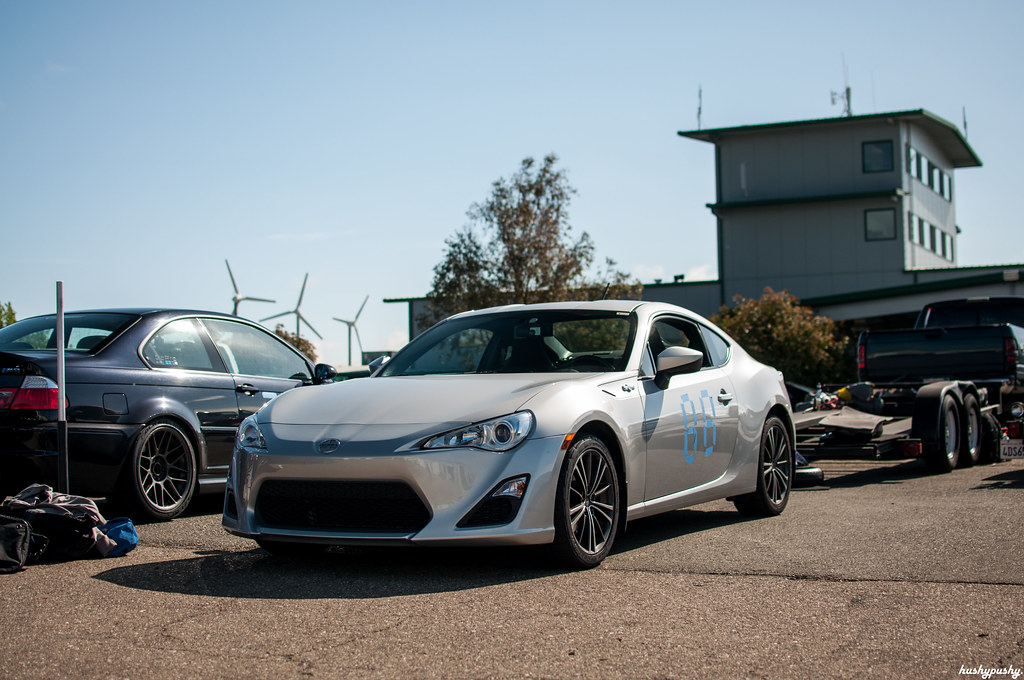
In the past couple years I’ve been lucky enough to drive so many interesting vehicles as part of my job. Even luckier, I’m not just shuffling them around; I’ve had the chance to properly flog some sexy cars in the local twisties. And don’t get me wrong; if I were wealthy enough to own a squadron of cars, I definitely would.
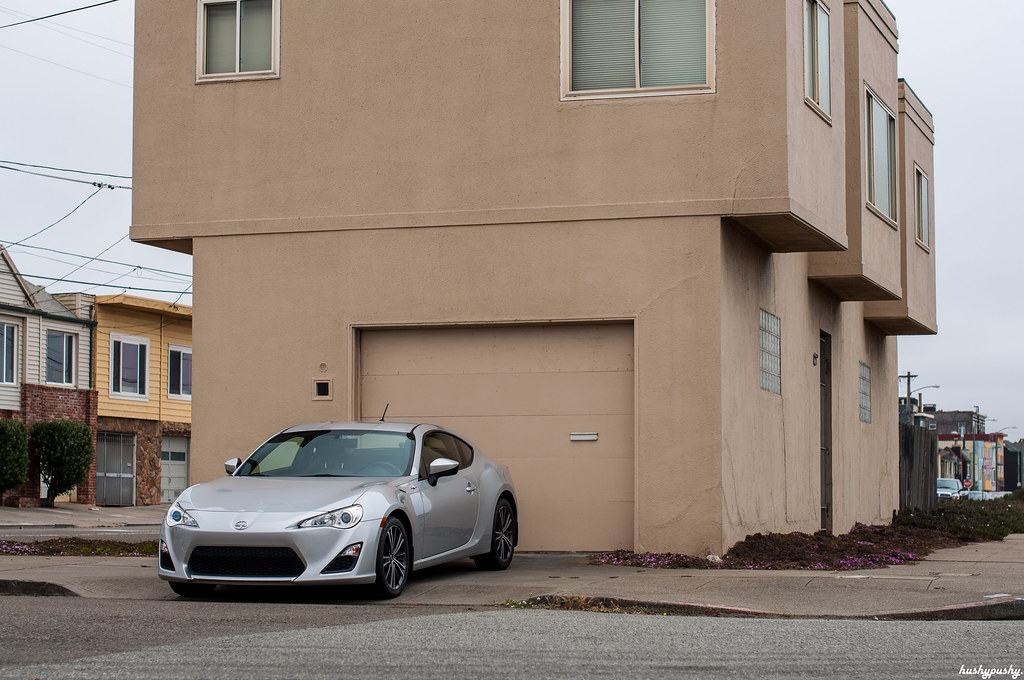
But if, for some reason, my wealthy alter-ego was forced to have one car to do it all? I’d still be driving this FR-S. Because it’s the right car for me. I don’t expect everyone to like it, but I do honestly expect anyone who might think of themselves as a “car enthusiast” to respect it for what it is. Or is that too much to ask?
Unforeseen Distractions
On a daily basis I experience my fair share of distractions at work, although I would hardly consider that A Bad Thing. In fact, what I could classify as things that distract me from doing my job are the exact reasons I created this website. Whether it’s a Cobra replica interrupting a photoshoot or car flipped over in the street in front of the showroom, it seems like not a day goes by where I’m either distracted, or can find a distraction.
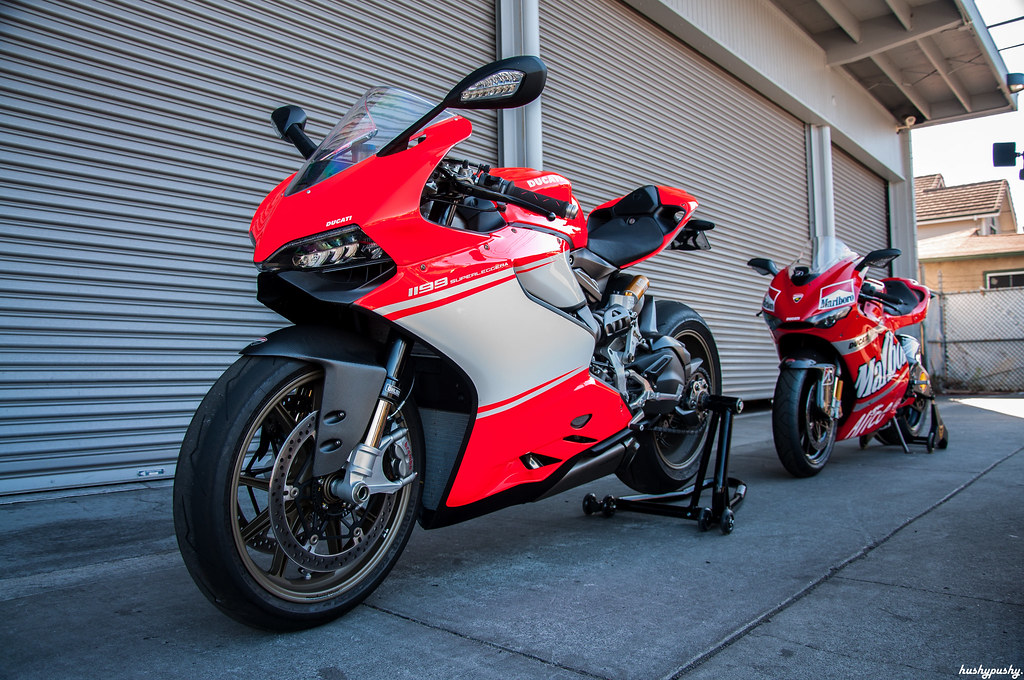
So when I saw a few Ducati’s roll up, I didn’t really think anything of it. After all, a few guys who work here ride Ducati’s, and exotic car and exotic bike dudes mingle often.
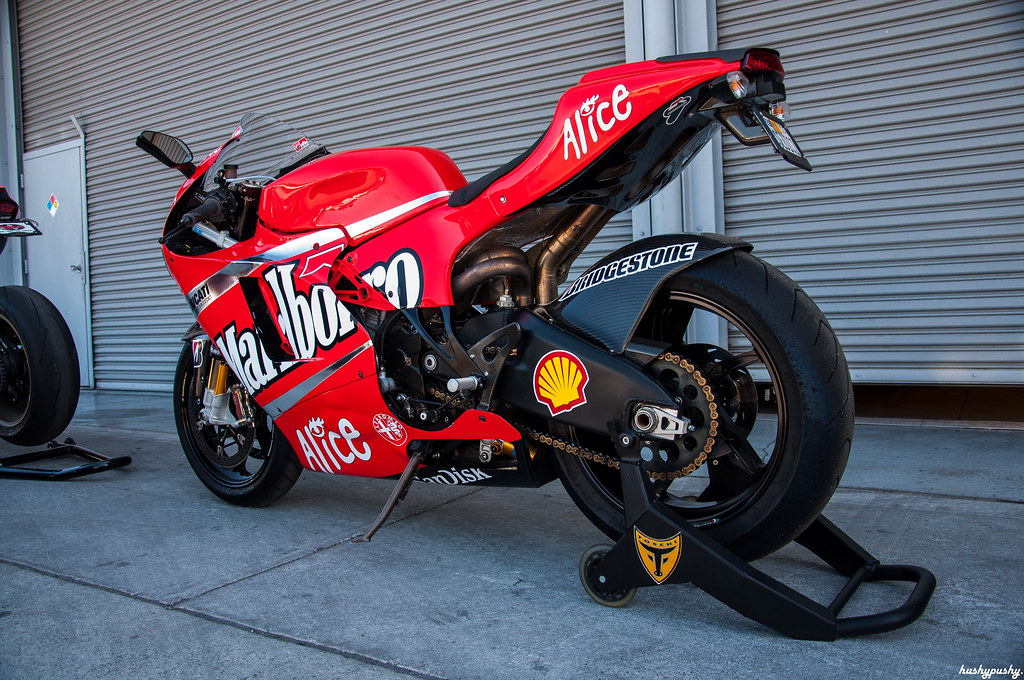
Quite literally, I have no idea what I’m looking at, other than the fact that it’s a Ducati and looks incredibly menacing. By the way, the biggest, fastest motorcycle I’ve ever ridden was a Honda CT70, which is a tiny trailbike that makes a whopping 5.5hp (and at 8000 RPM, no less!).
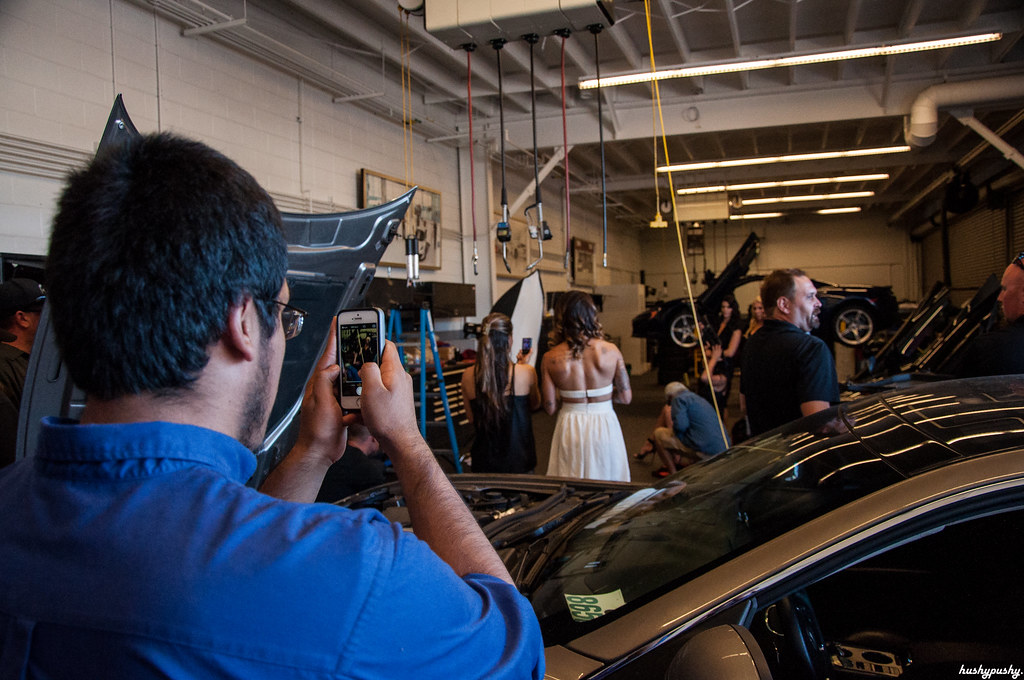
But…why are the doors to the shop closed during the peak hours of the morning? I peeked inside and I saw five models, a whole armory of semi-automatic weaponry, and a full photographic staff to take advantage of it all. Of course, the majority of the dealership’s staff (which is heavily skewed toward the male gender) stood on the outskirts of the shoot wielding phone cameras.
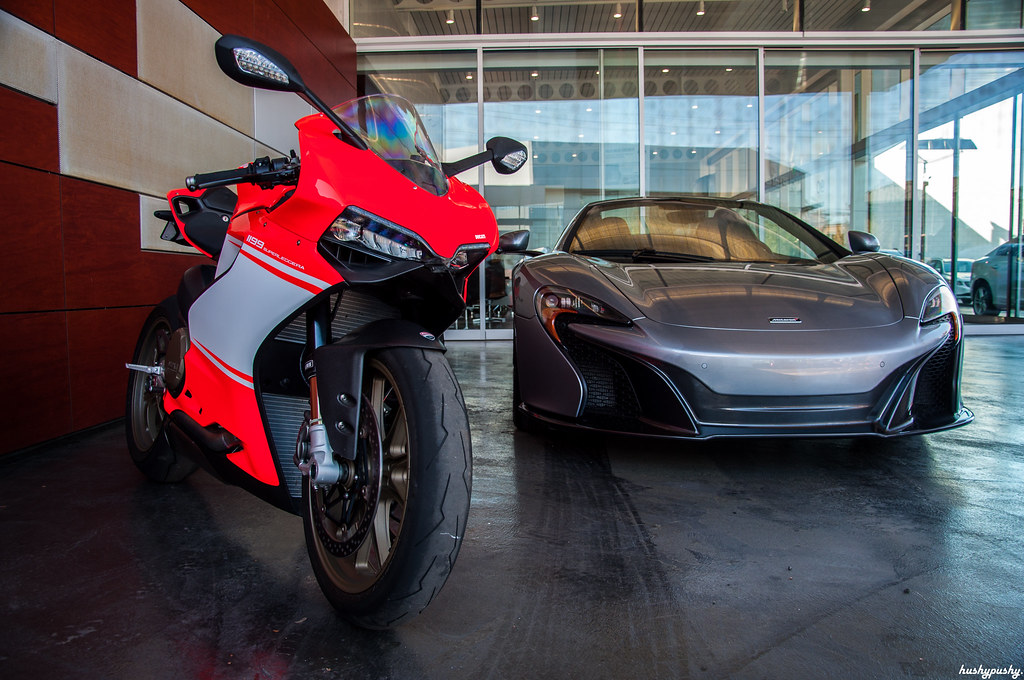
Cars, bikes, and guns: Boys’ Toys if I ever saw ’em. I know even less about guns than I do about motorcycles, but those firearms looked like the type of assault rifles you see tearing up the middle east (or Metal Gear Solid, if you’re a nerd like me). My boss commented, “Why does anyone need a gun like that?” Quite a fair point; it’s not like you need a semi-automatic assault rifle to take down anything during hunting season or down at the range.
But what about a motorcycle with 200hp, or a car that does 0-60 in 3.1 seconds? Why does anyone need a Dodge with 707hp? The answer is: we don’t. We have those things because we can. Whether you’ll ever need to burst 15 rounds/second with your assault rifle or hit 125mph in under nine seconds in your McLaren is irrelevant–the point is that they’ve been engineered to do so.
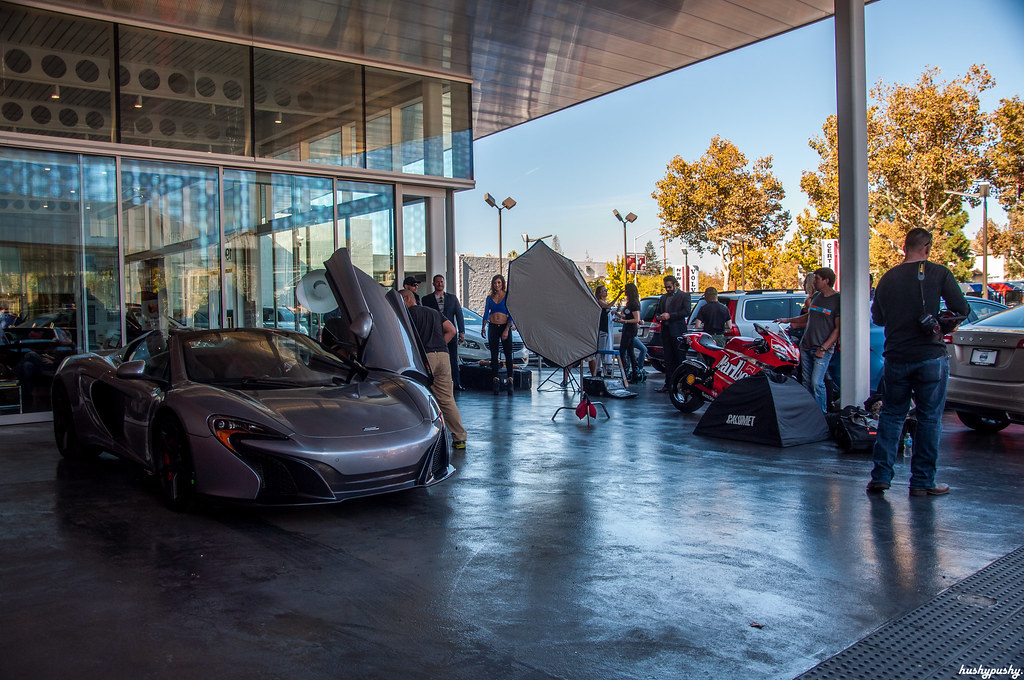
Professional shoots are fascinating. I’m used to heading out into the hills by myself or maybe with a friend and shooting a car with natural light, then doing some light post-processing. Not here, though. A squadron of models was attended to by separate hair and makeup artists, and the photographer had his assistants helping with prep and execution.
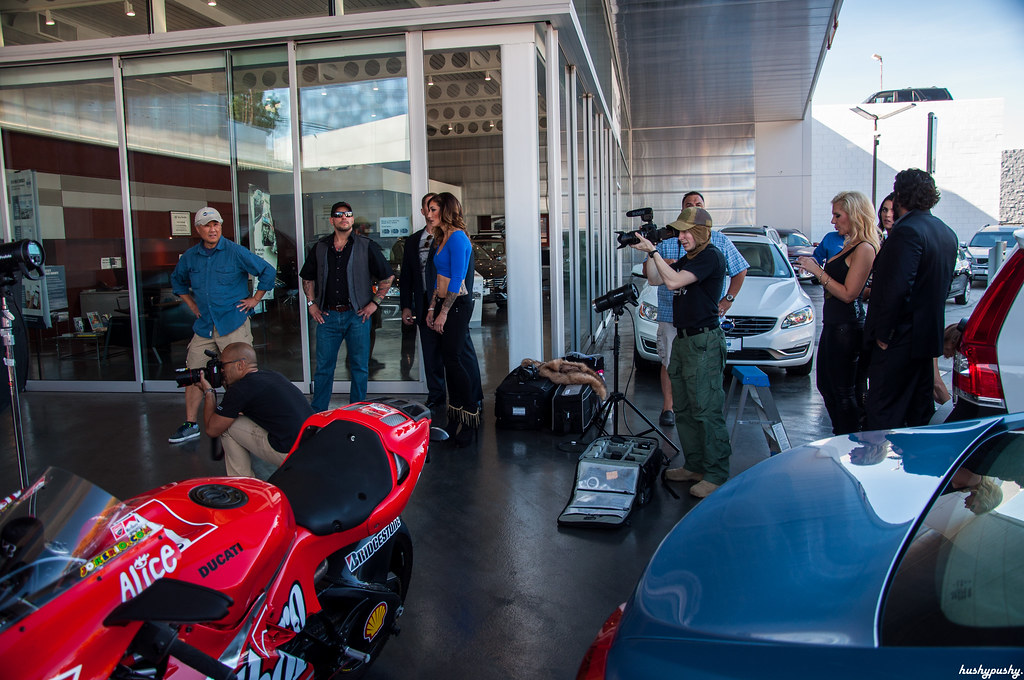
There was even a dude filming what I can only assume is the behind-the-scenes documentary about the shoot. He was the definition of Business, with his serious demeanor and Desert Storm attire. I never saw him speak a single word to anyone.
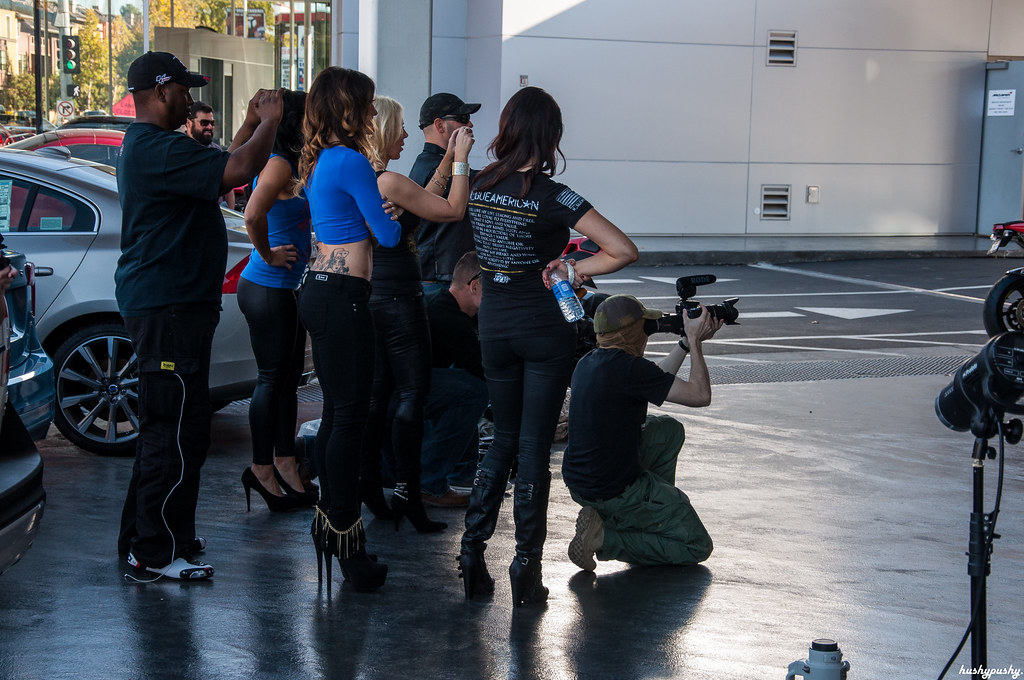
Quite a lot of standing around and watching is involved with these things.
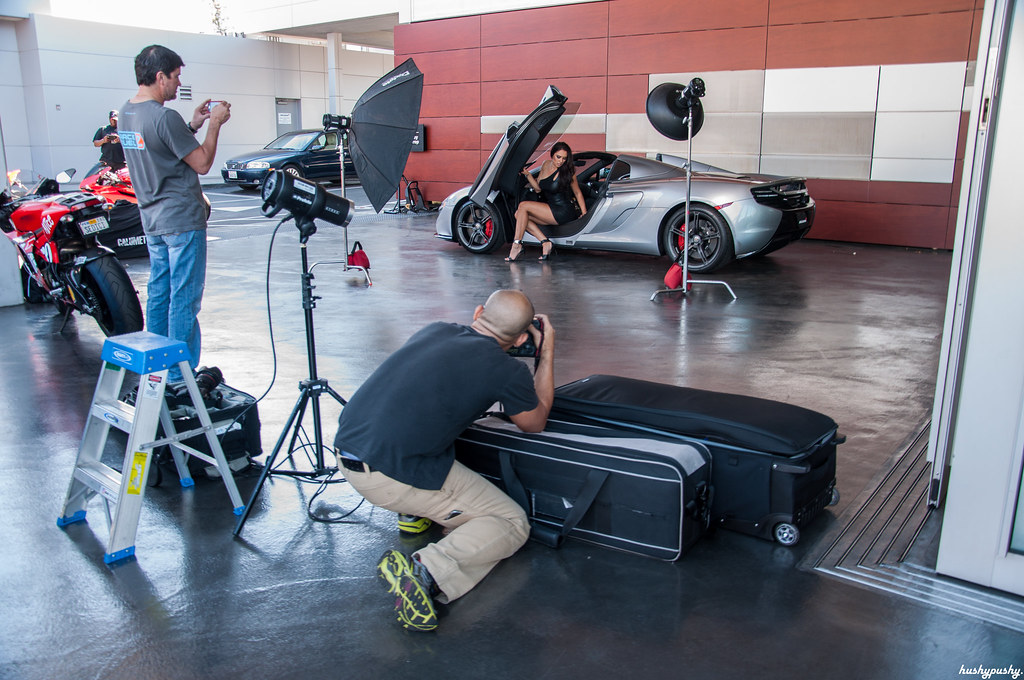
But at the end of the day, what really impressed me was the professionalism and work ethic of the team. While my coworkers were busy wearing out the digital zoom on their phones, I observed a lot about the logistical aspects of the shoot. I also started to think about how firearms are a pretty good metaphor about the good and bad aspects of living in a “free” society such as ours; but that is not the sort of thing this blog is about. And, for now, neither are scantily-clad professional models. Sorry.
Another Hybrid with Knock-Off Wheels
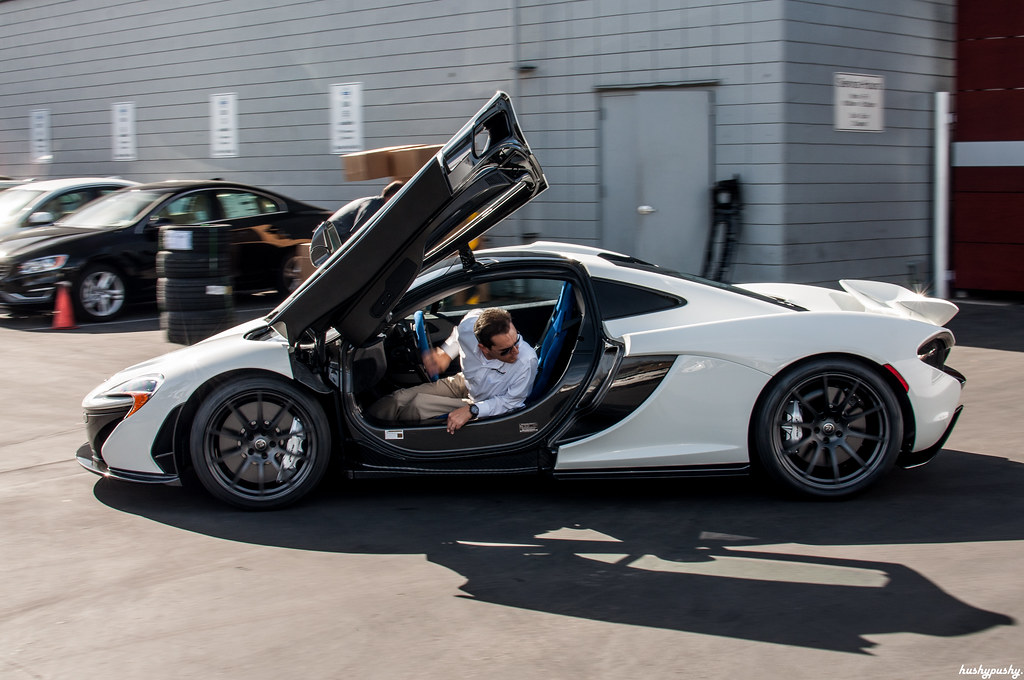
You don’t have to reverse Lambo-style in a McLaren, but it does help in certain situations. Furthermore, you don’t even have to use the 727hp twin-turbo V8 to move the car short distances, because it’s a hybrid: there’s a 176hp electric motor that will take it six miles on a single charge.
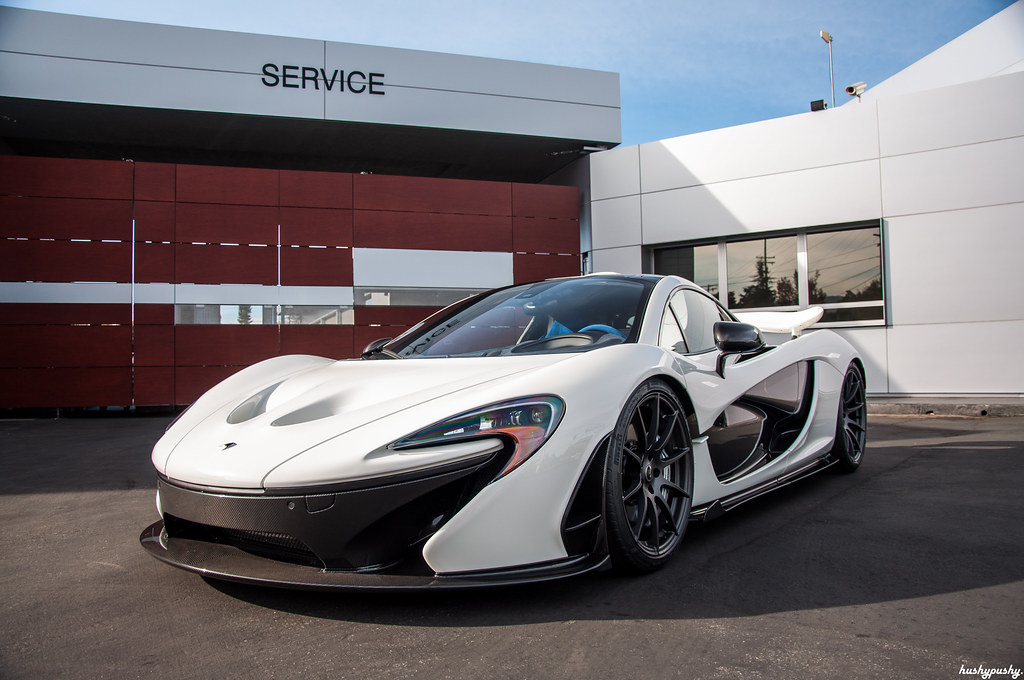
For a while the term “hybrid” was hijacked for eco-friendly driving appliances that added an electric motor for the purpose of improving fuel economy. However, hybrids are going back to their roots as performance machines, as the electric motors are used for “torque fill” (as McLaren refers to it) to help create immense, useable powerbands in what would otherwise be laggy, high-revving forced-induction engines.
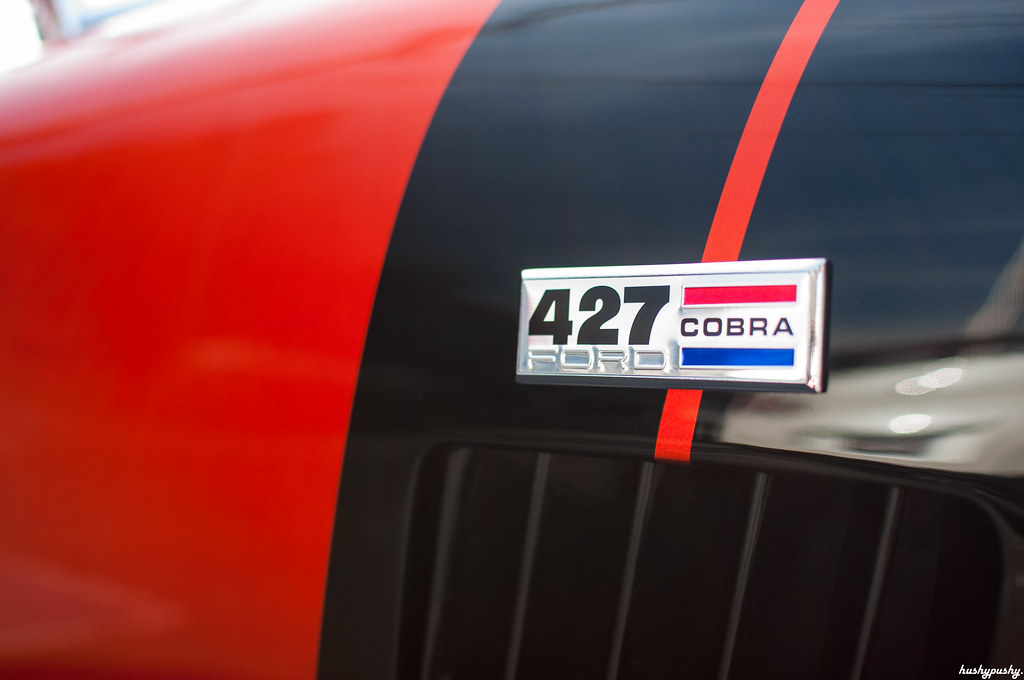
“Hybrid” has always referred to propulsion, even when cars only had singular powerplants. In this case, it was the marriage of a nimble, classically-styled British chassis (the AC Ace) with a beefy American V8 (supplied by Ford) that created a world-class performance hybrid.
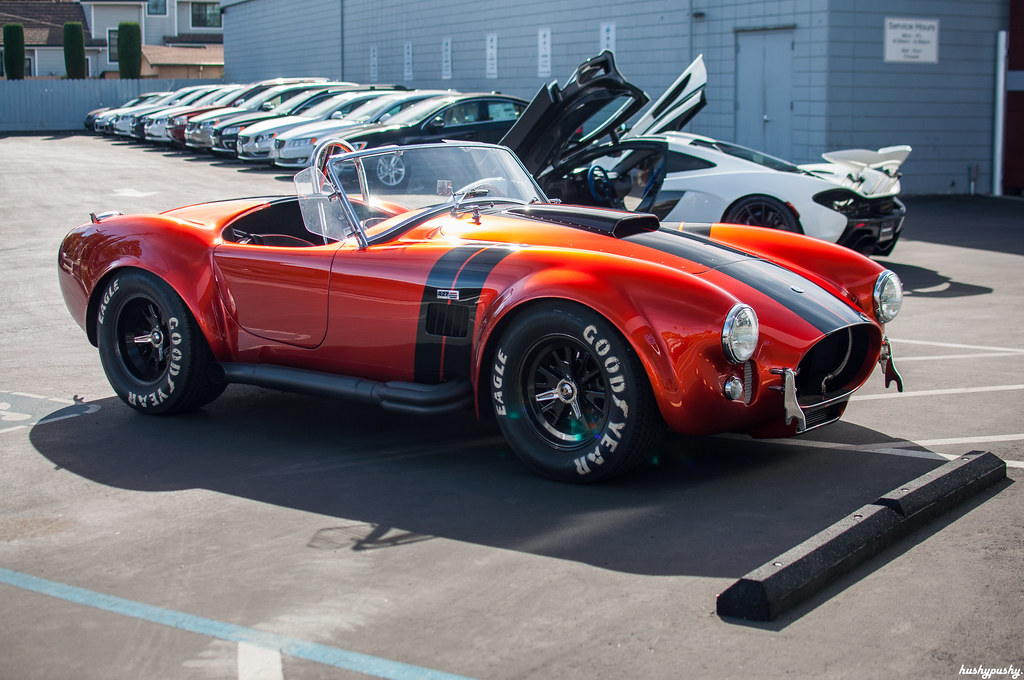
So while I was shooting a modern hybrid, this vintage hybrid rolled up. You know what, I didn’t really mind the distraction.
As you may have guessed from the badge posted earlier, this Superformance Cobra is packing quite a few cubes under the lid.
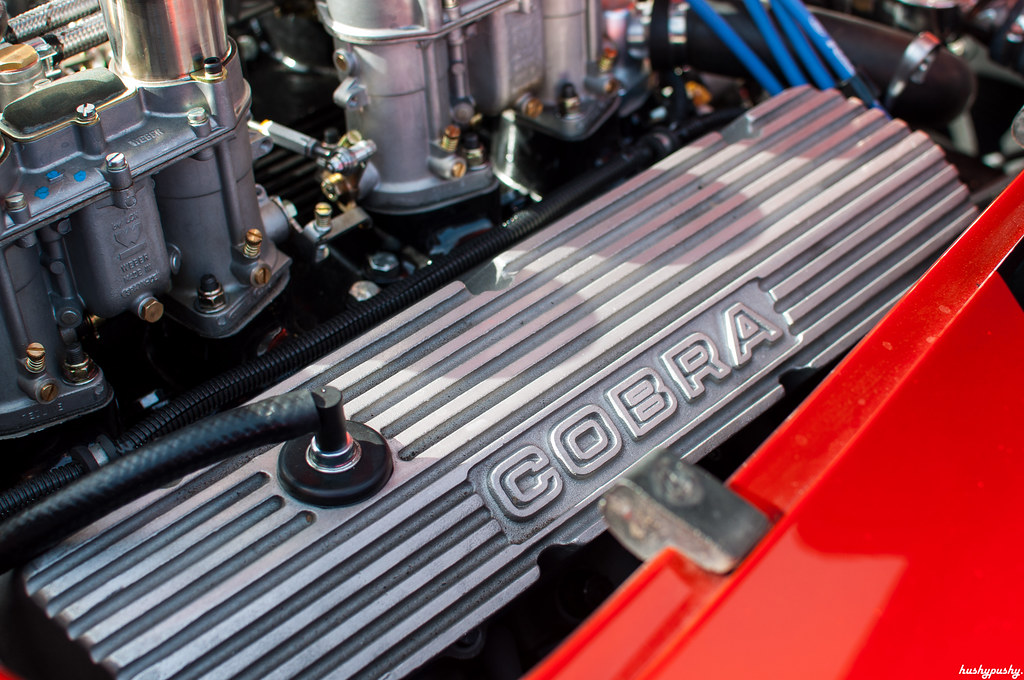
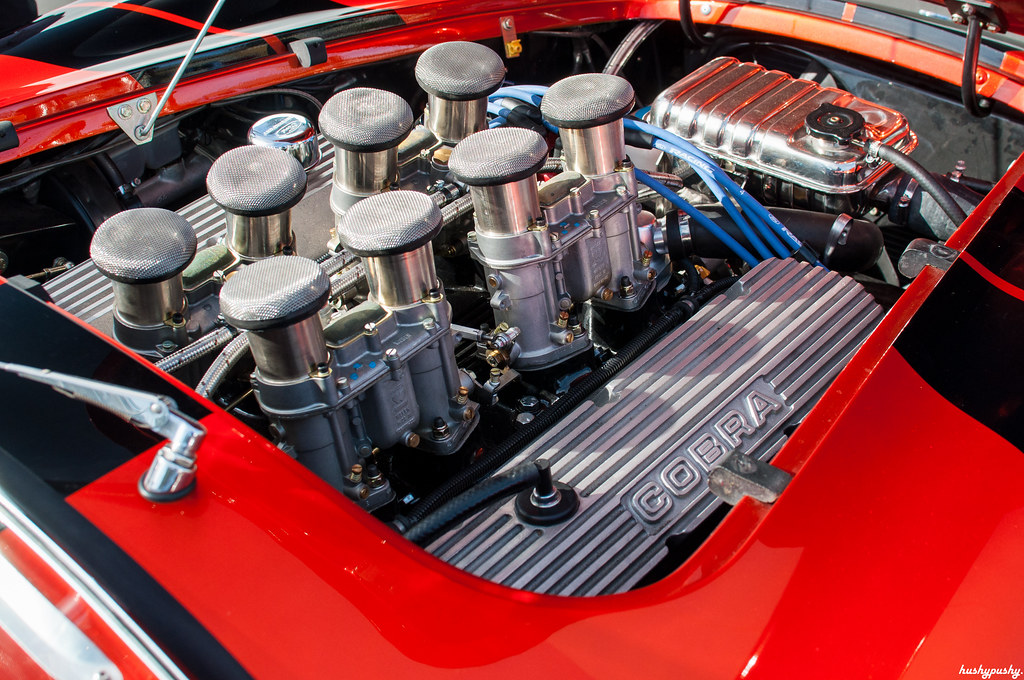
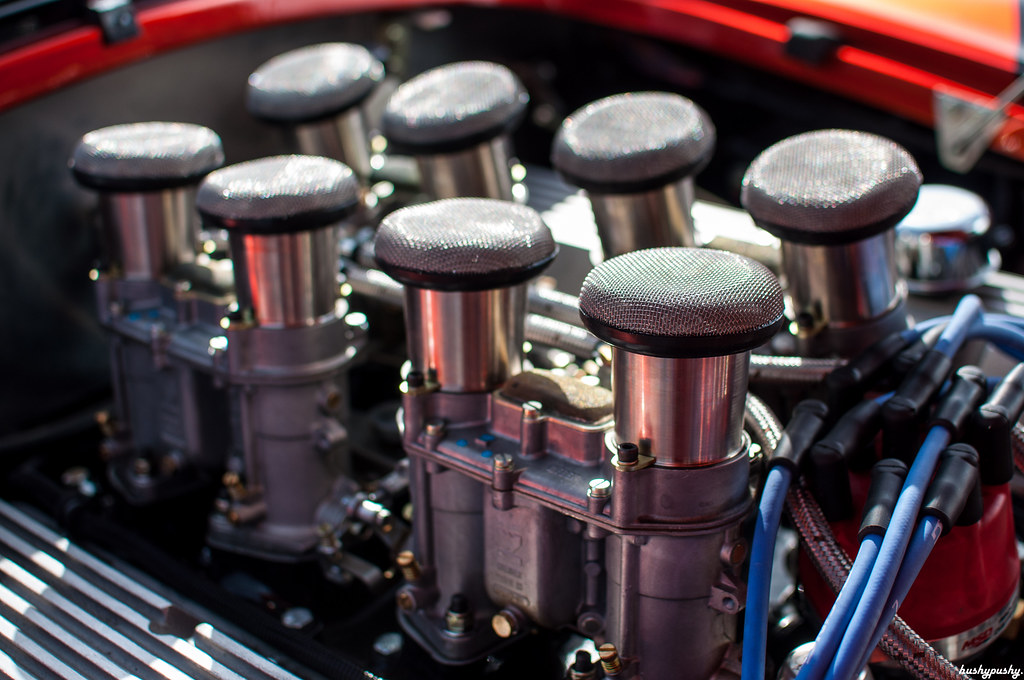
In a world of fuel injection, it’s refreshing to see carburetors.
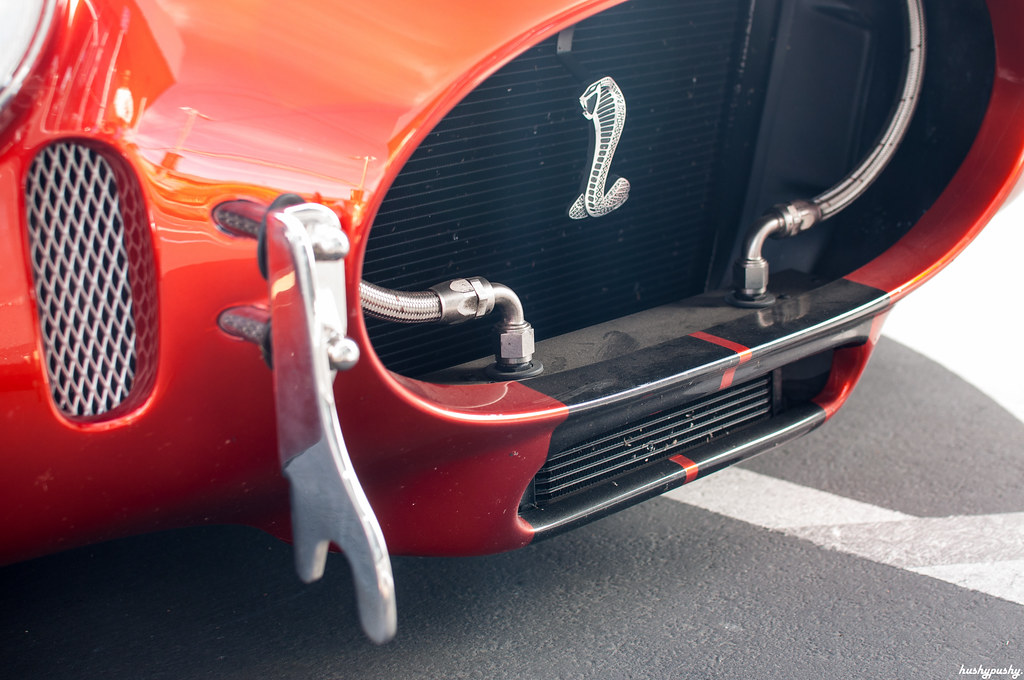
Of course, there’s a nice little oil cooler in the proper location.
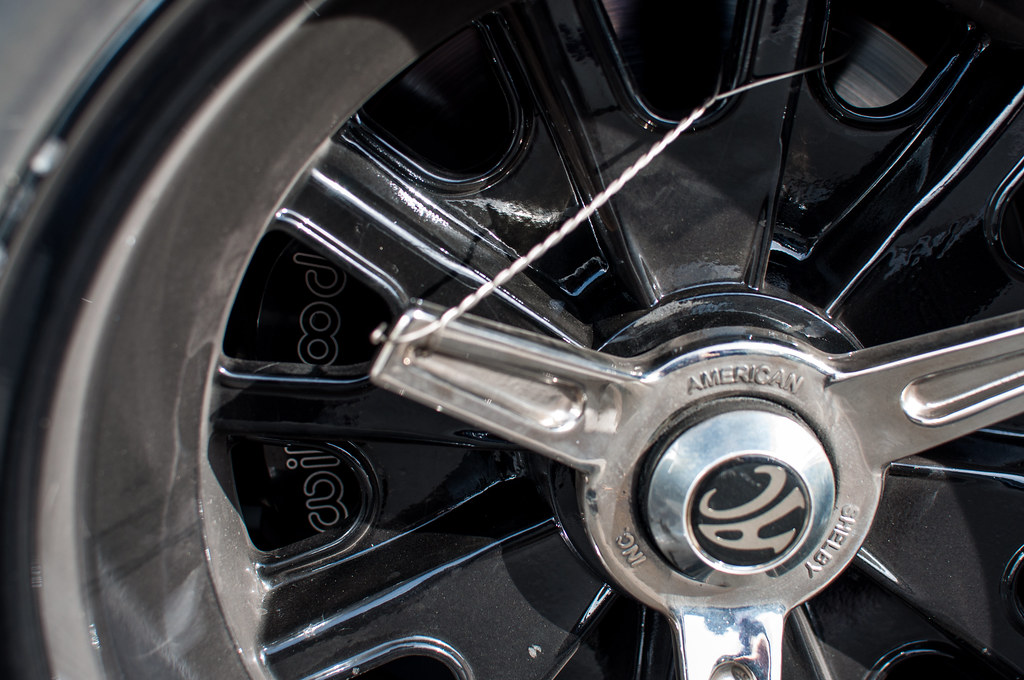
Another term that’s fallen from ultra-cool to ultra-lame is “knock-off wheels”. Nowadays, a knockoff usually conjures up images of a factory in the Philippines cranking out sub-par cast aluminum versions of popular or classic wheels, but that wasn’t always the case. The precursor to today’s center lock wheels were the so-called “knock-off” wheels, which used a single lug nut that got its name from how lead-headed hammers were used to literally knock off the spinning wheel nut. Of course, now it takes a giant wrench applying 375lb/ft to get a center lock nut off, but I digress…
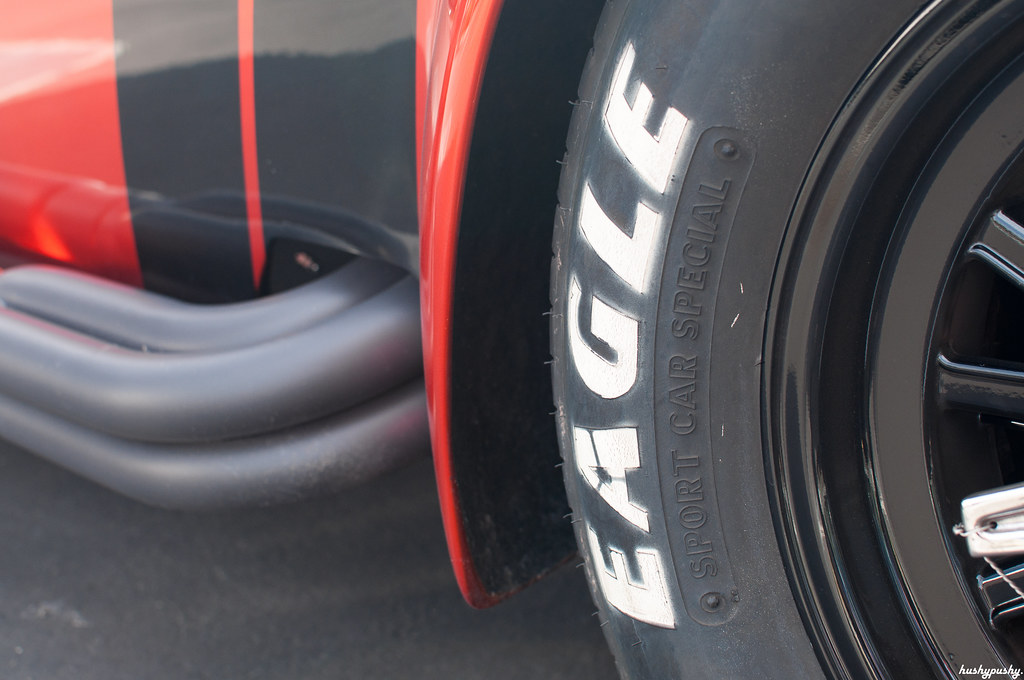
It’s next to impossible to have “too much brakes”–you want all the help you can get with seven liters of fury pushing around 2,600 lbs with the only crash protection being a tiny hoop behind your head. Still, I would imagine the Wilwood brakes can easily apply enough pressure to lock all four Goodyear Sport Car Special tires, which look straight out of a late ’60s endurance race.
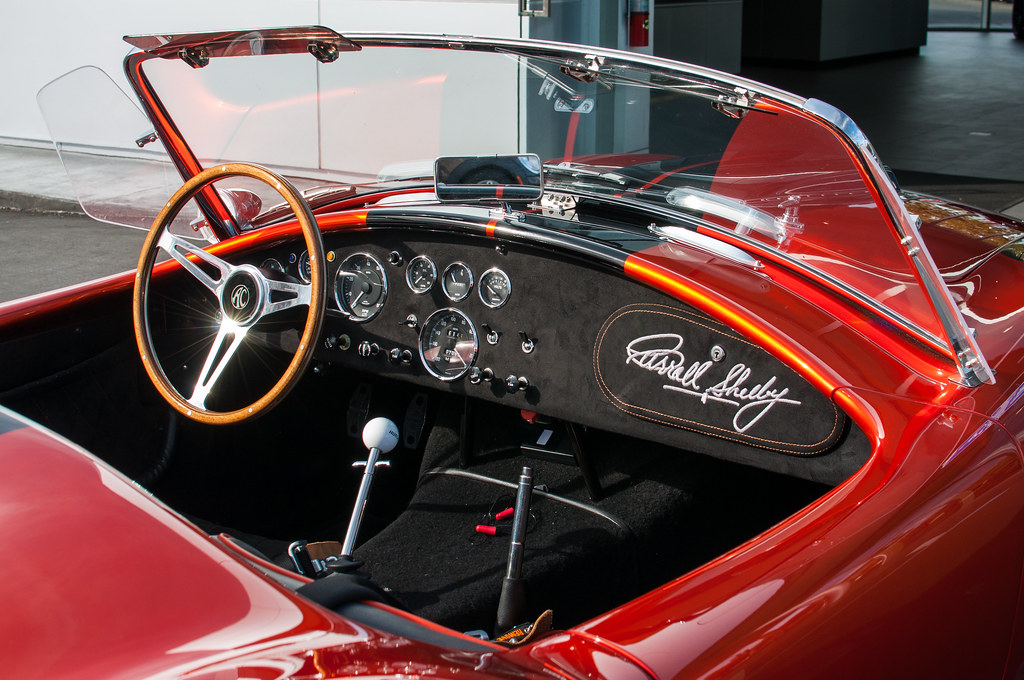
Everybody and their mom’s Cobra has a glovebox signed by Carroll Shelby, so here’s a fresh take on that old concept: this one is embroidered right on!
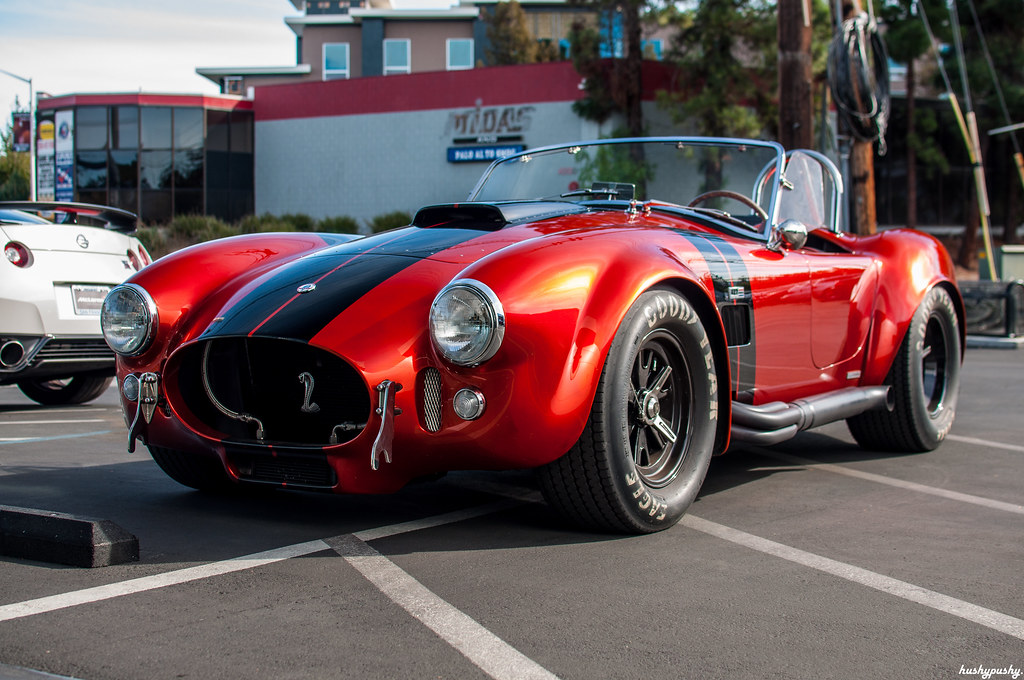
I really don’t know how I feel about replica cars. As I mentioned in the P1 gathering post, it’s a paradox of the value of exclusivity versus the desire to be visible. On one hand, I’d like to leave ultra-rare cars alone so they retain their cachet, so that when you see one, you know you’re seeing something really special.
On the other hand, some classics are so rare and valuable that not only would you never, ever see one driving the streets, they’re out of reach to all but the super-wealthy. For example, a real Porsche 550 Spyder will run you three to four million dollars–assuming you can even find one for sale. But a quality Beck replica? An assembled rolling chassis comes in at $25,000 and you just have to add an engine.
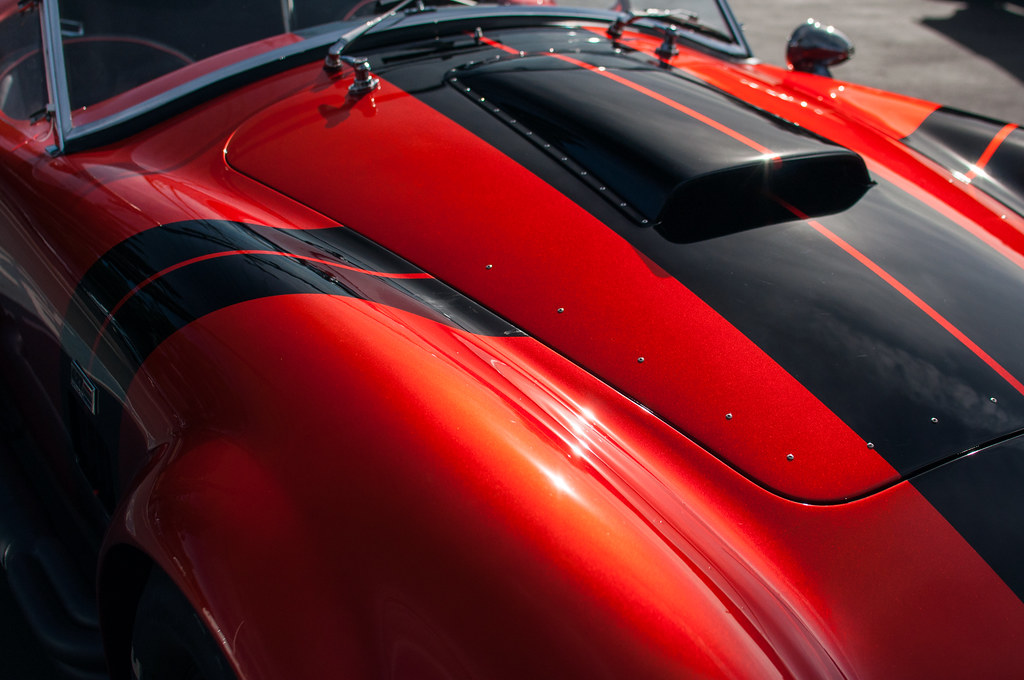
Another benefit of cars by Beck, Superformance, and the like is their extremely high quality fit and finish. The Cobra you see here was immaculate in every way–looking it over with a fine tooth comb gave me every reason to believe this car was built by people who knew what they were doing. There has been plenty of garbage (mostly Fiero-based) over the years that’s given replicas a bad name by infecting our streets with misshapen Lamborghini and Ferrari wannabes.
Oh, and one more thing–as I was walking around the Cobra, the owner casually quipped, “Does this color look familiar?” I stepped back and took a half-second to think before I asked the question I already knew the answer to: “Is it really Volcano Orange?”
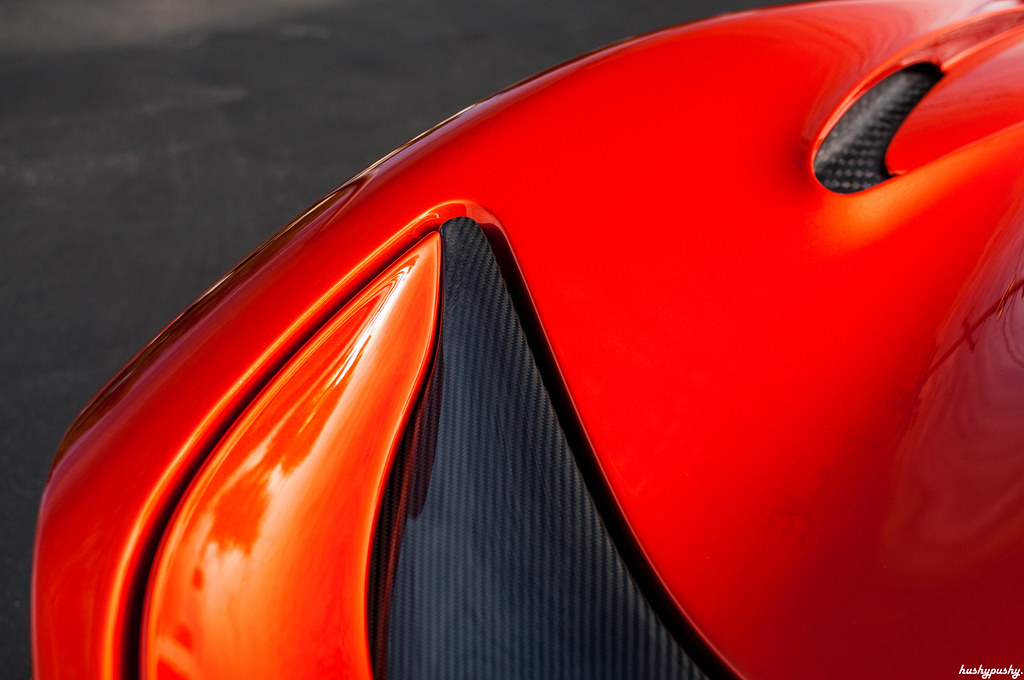
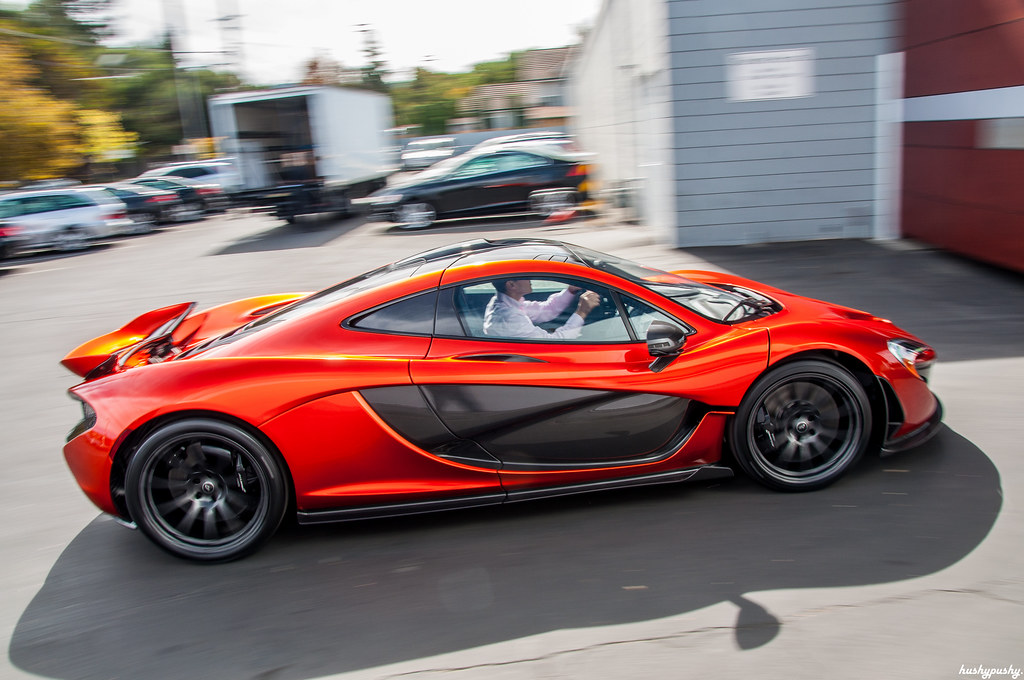
Yup.
Meeting of the P1’s
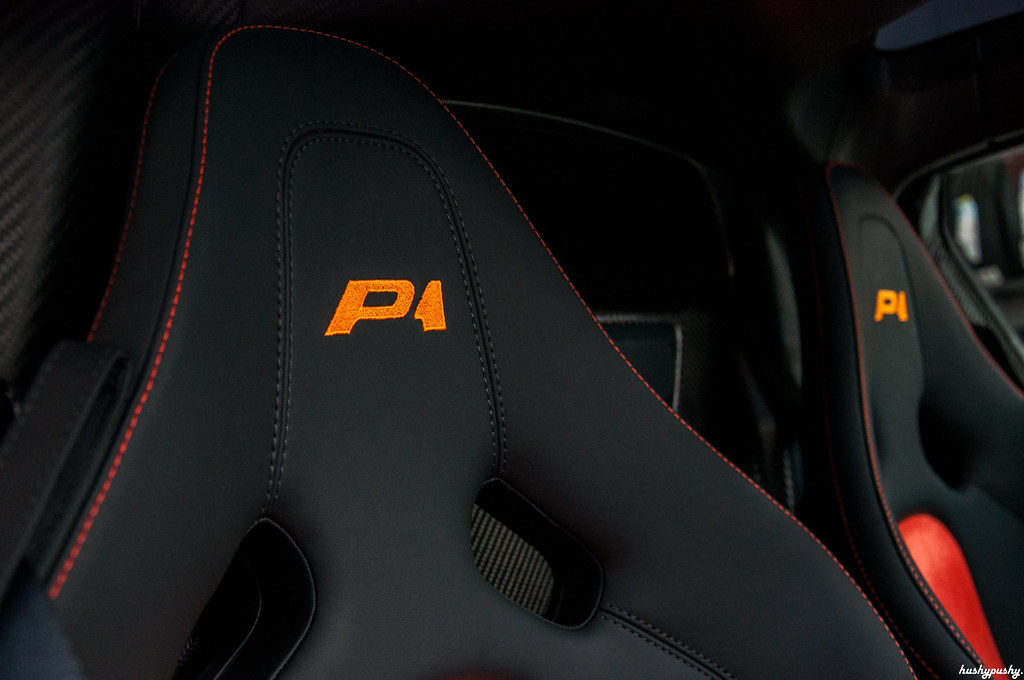
The paradox of hypercar ownership is that exclusivity is ultimately a factor in their desirability. This has a negative effect for some of us, the so-called bystanders, who might even be satisfied with simply seeing some of these machines in real life.
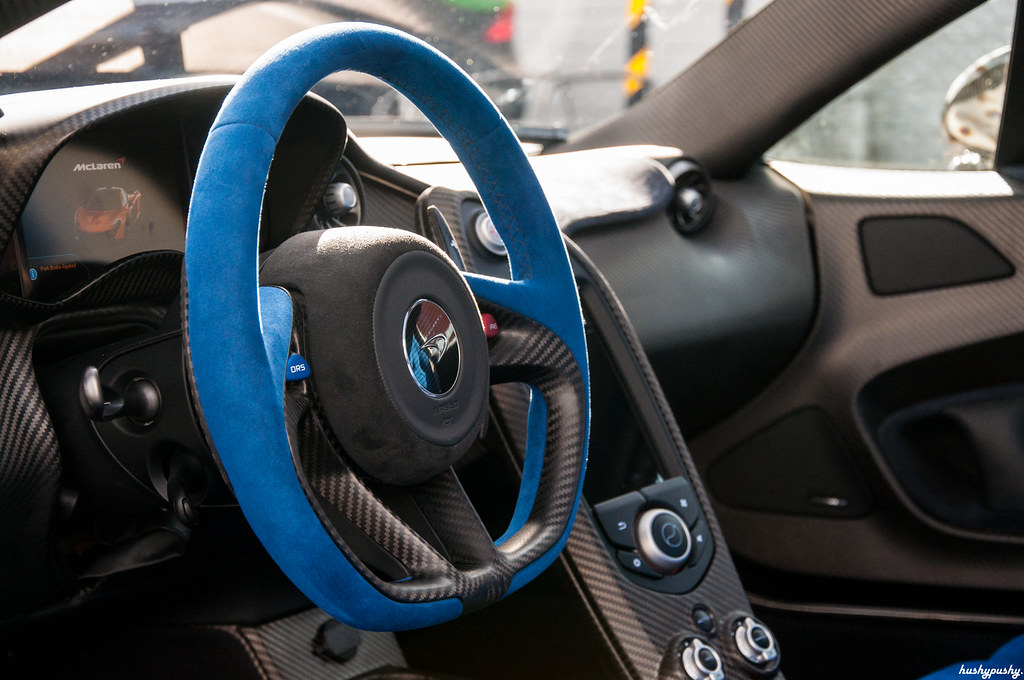
But on the other hand, for the lucky 375 people who actually do have (or are waiting for) a McLaren P1 right now, the exclusivity means that ownership is automatic entry into The Club.
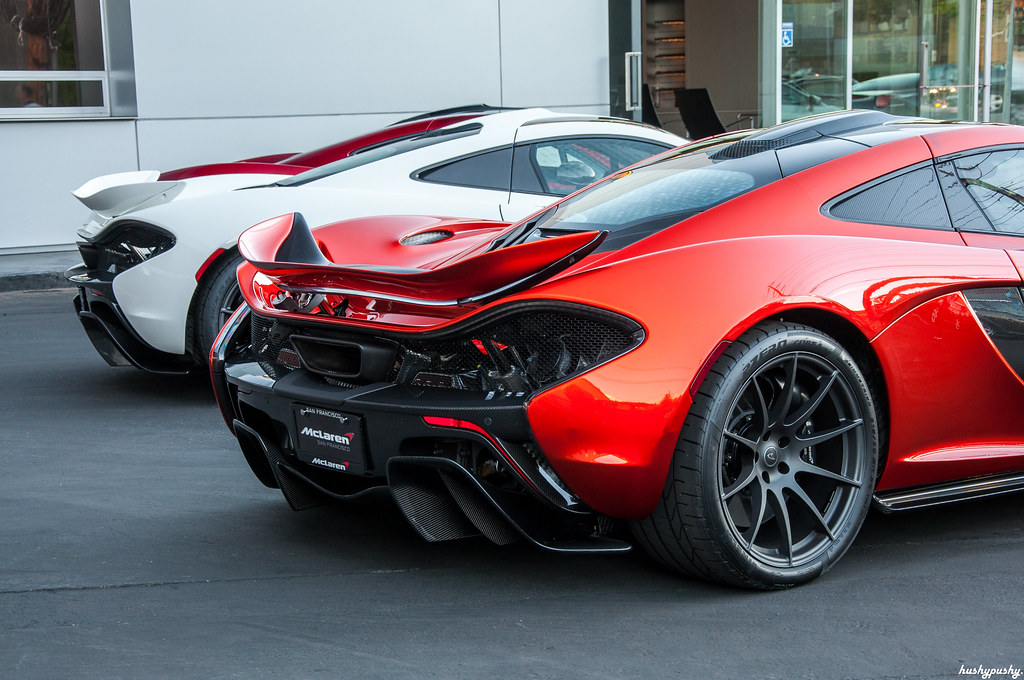
So when Mr. Orange came out to pick up his car and noticed Mr. White was seeing his car for the first time, a photoshoot was suggested and Alan–the cool cat you can find in the McLaren building a few days a week (when he’s not wrenching on race cars)–graciously obliged by bringing out McLaren San Francisco’s Volcano Red P1 to join the fun. Cars were arranged…

…and then wings were raised…
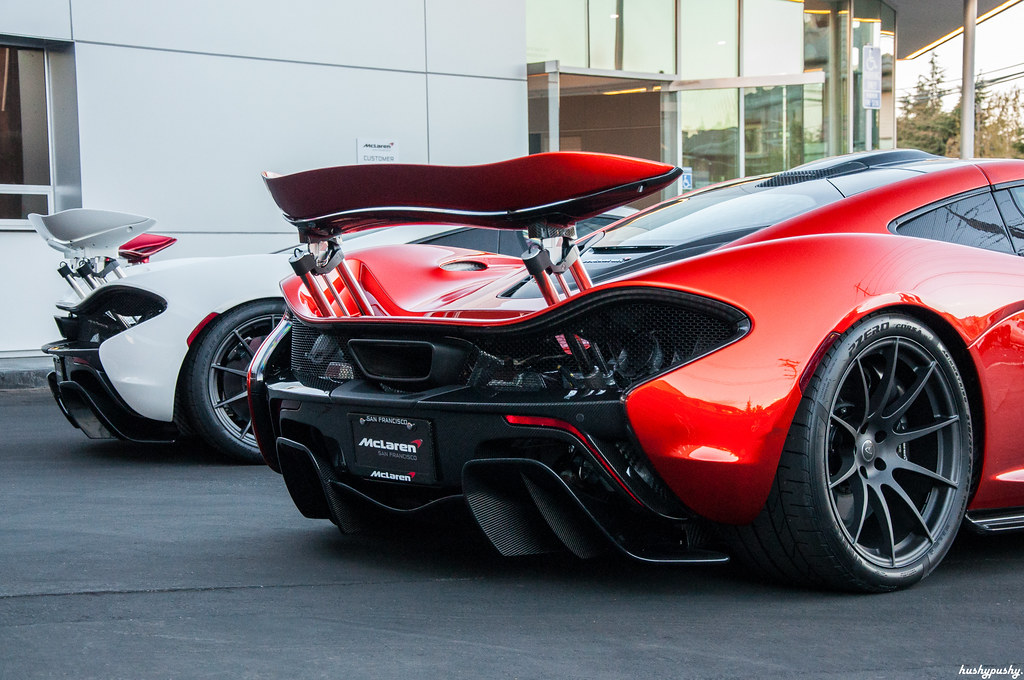
…as everyone settled into Race Mode.
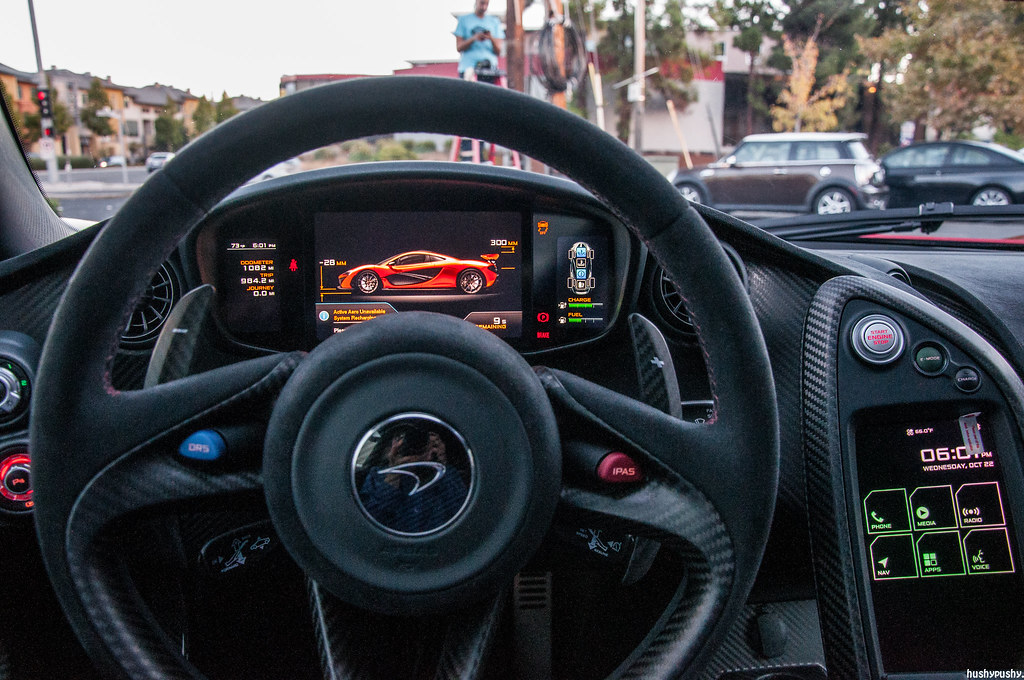
And of course I volunteered to be the one to do it for the dealership car!
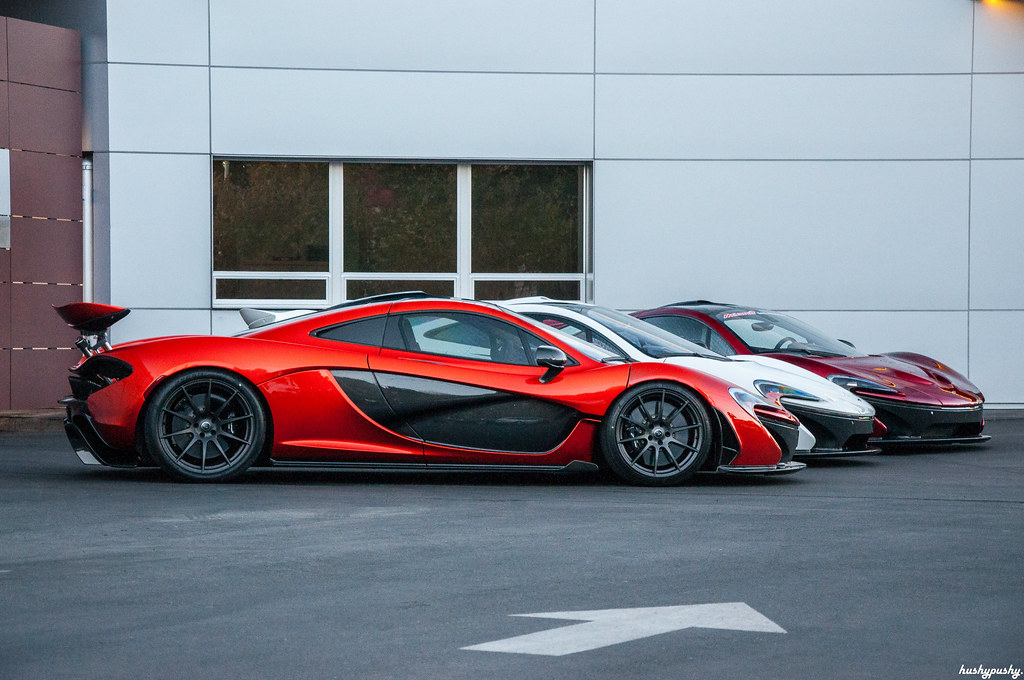
If you’re wondering why most photos are in this direction, there is one unfortunate distracting answer.
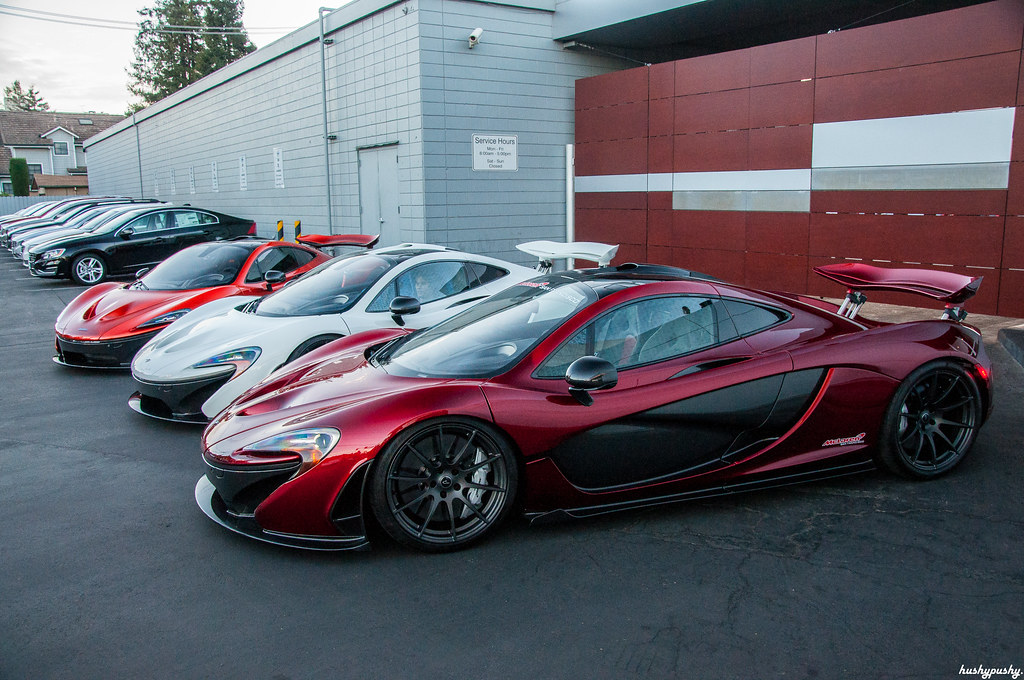
Those Volvos! Oh well.
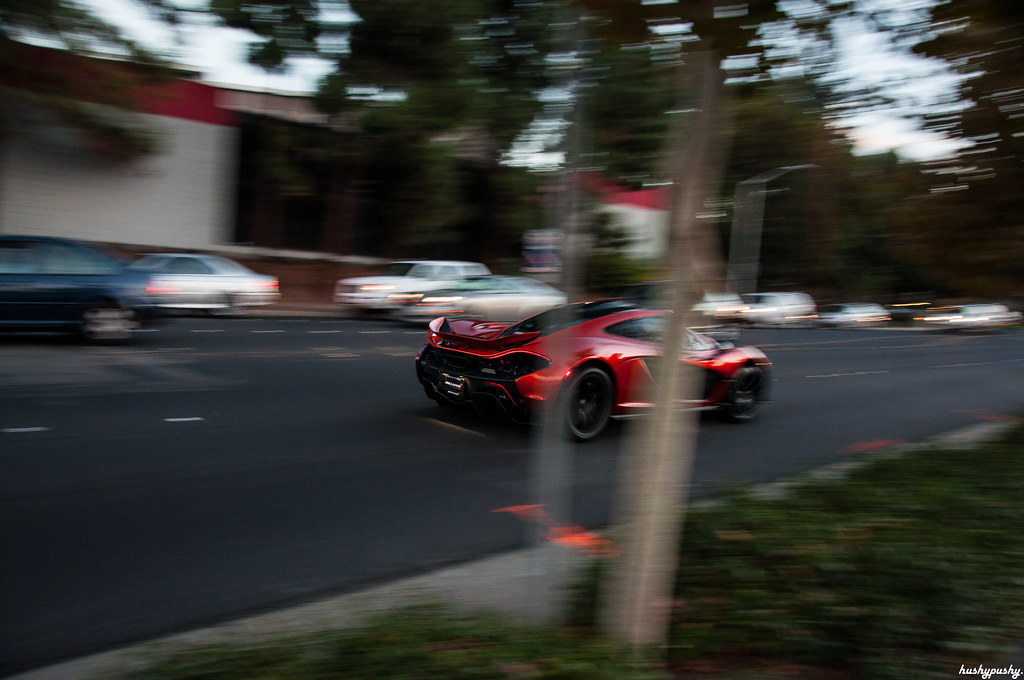
With the sun receding, Mr. Orange lowered wing, lifted chassis, and took off like an orange demon at sundown.
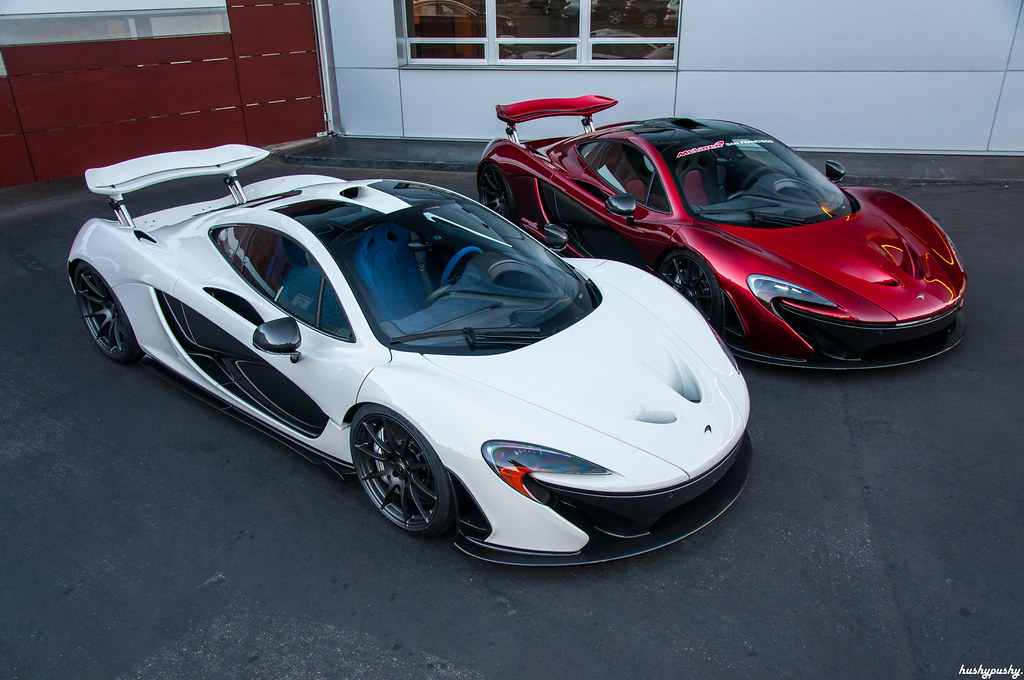
I could read the writing in the sky. It was time to wrap up.
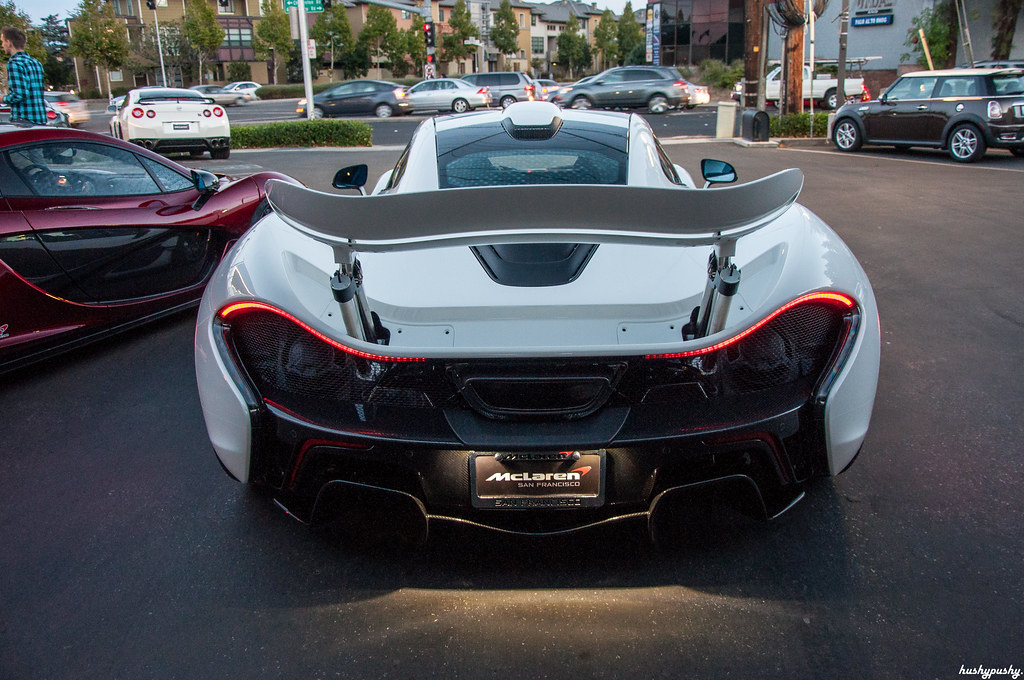
“Your P1 is ready for you, sir.”
Okay, now wake up! I’ll see you next time.


