
A New High
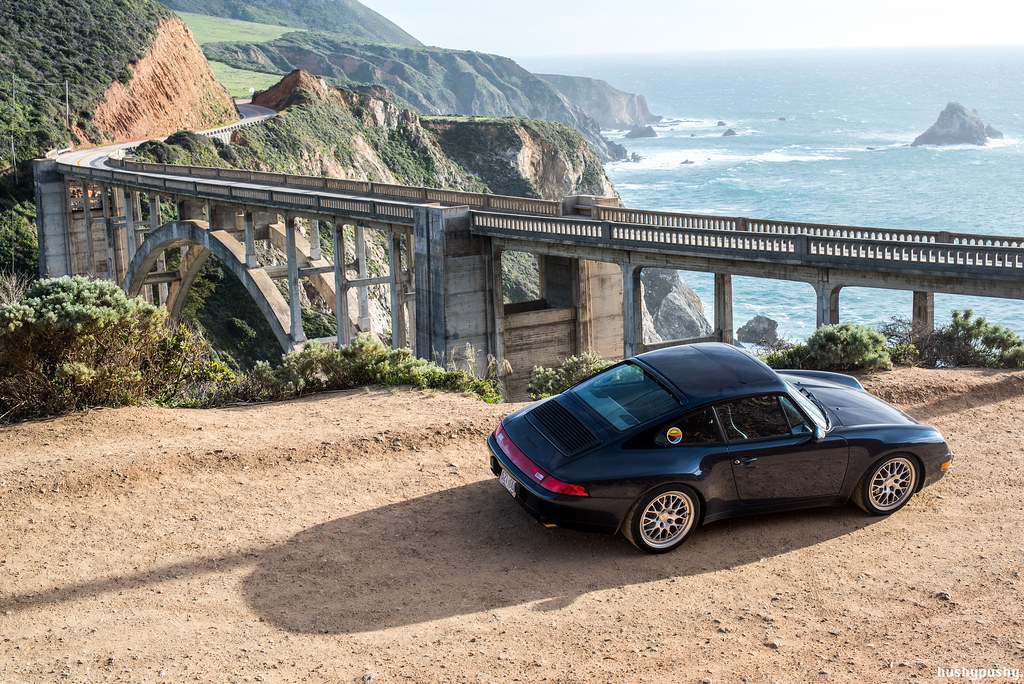
I’m pretty proud of that photo. I usually don’t like to talk about my own work (mainly because I feel that it has a long way to go), but I think this photo is a real zinger.
Nice composition full of top-notch elements; an iconic bridge, the beautiful California coastline and a beautiful Porsche 911. The only real downside to this photo is the shadow of the giant pole in front of the car, which I could possibly Photoshop out, but prefer to leave intact for some reason.
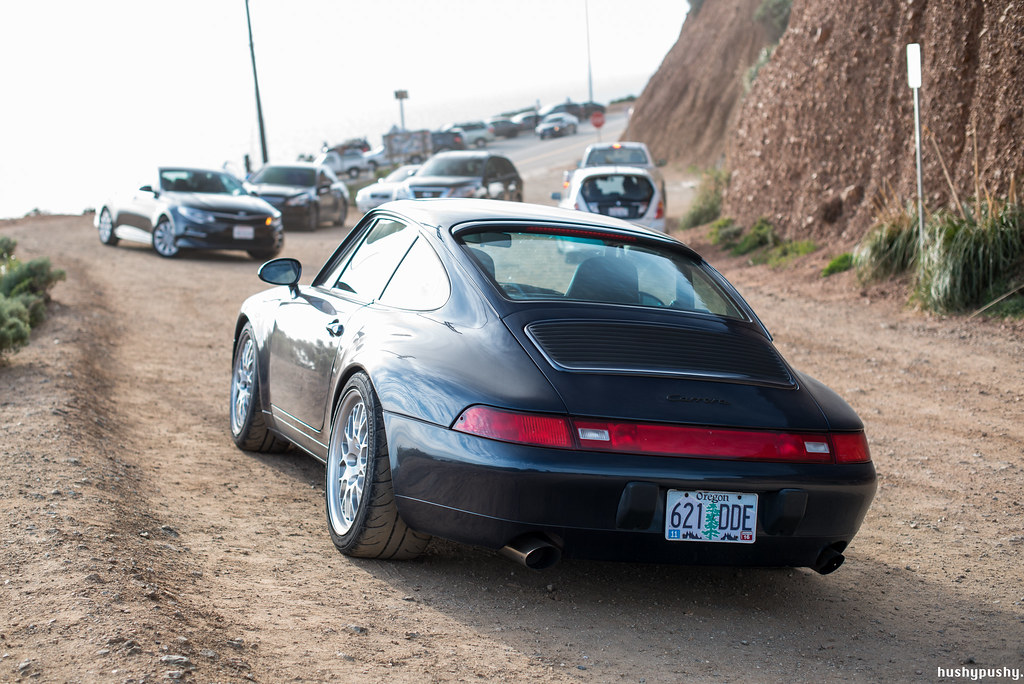
I had to wait a while for that shot. Bixby Bridge is a pretty touristy spot, and there were dozens of cars parked not far away.
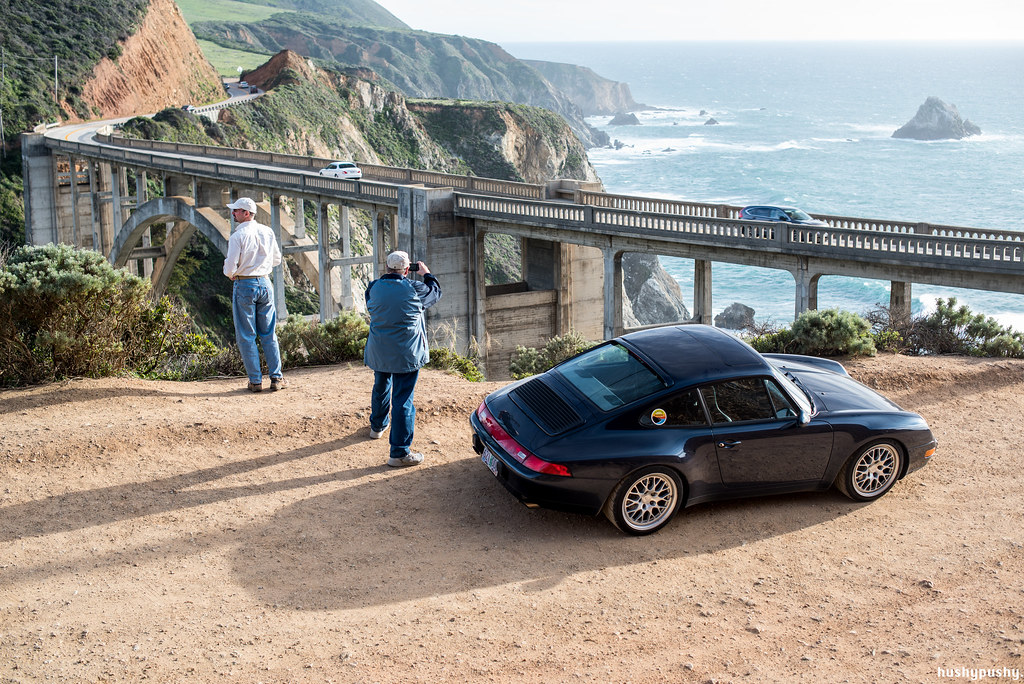
While I was waiting, the shadows were a bit more mellow due to the roving marine layer providing diffused light here and there. In my head I kept shouting “hurry the hell up!” while knowing full well that these old farts had as much right to be standing there snapping as I had to be clinging on 15 feet up a rock wall waiting for them.
The “real” photo ended up with a bit harsher light due to more direct sun, but then again that means the image has more contrast, which is probably a good thing. The only downside is that the pole’s shadow is stronger. Then again, I kind of like the horizontal element of that shadow for some reason.
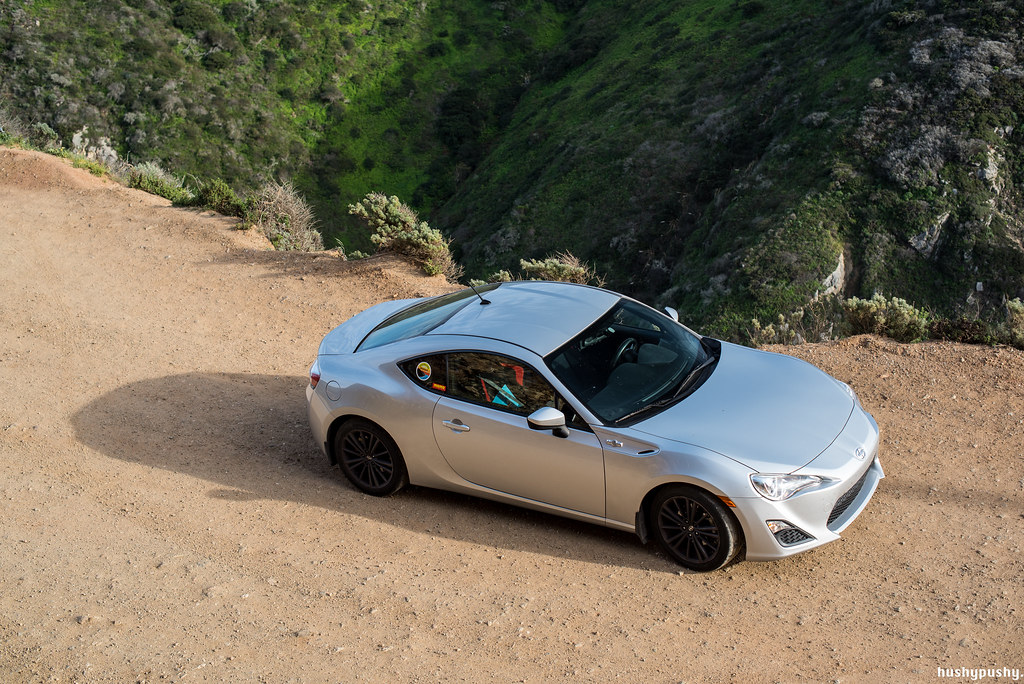
And here’s a bonus snap of my chariot from while I was waiting for those dudes to move.
Road Closed?
No way! This road will remain open for the foreseeable future. Hard to believe it’s March already and I haven’t made a post in 2016 yet. Yikes. This post will be a bit of a blog style chronicle, because there’s good news: I managed to take photos of the most interesting things that have been keeping me busy since the last time I posted here.
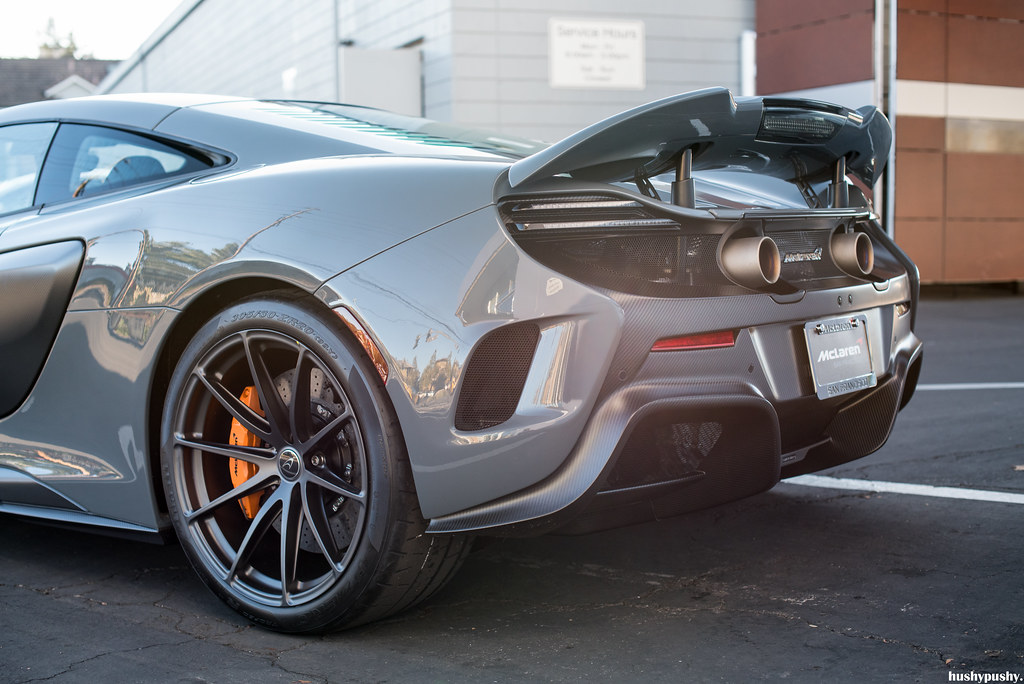
One of the most exciting developments is a nice selection of 675LT’s have come across my path.
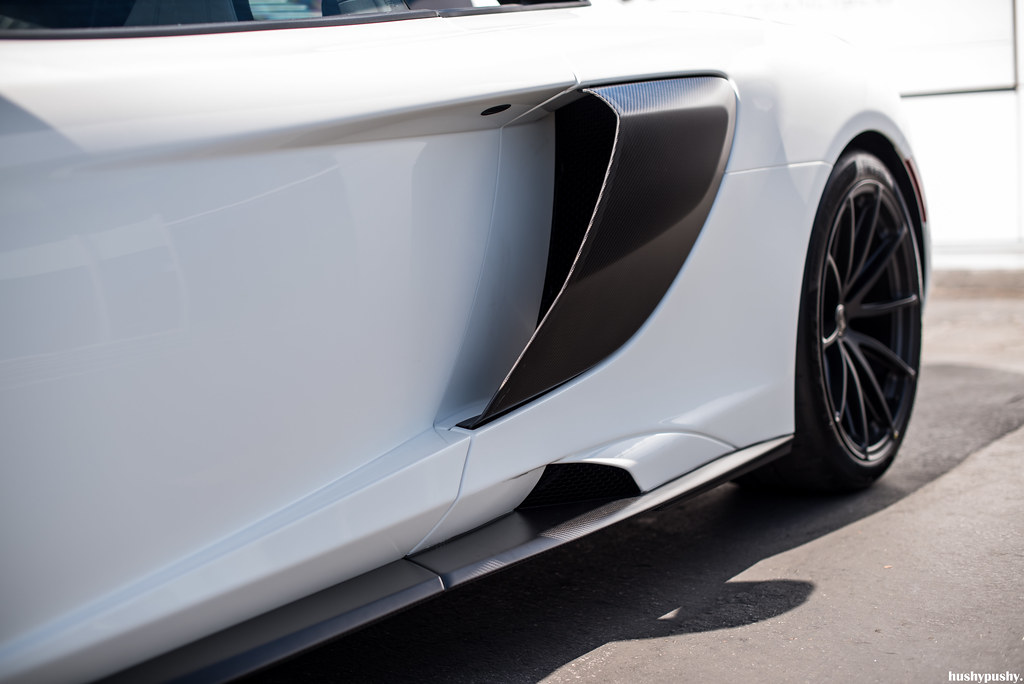
There are literally infinite choices with regard to color, which is probably why I always find myself being drawn to whatever I saw last. Unlike certain other cars where people tend to buy particular colors, McLaren owners seem to like to differentiate themselves by ordering something different.
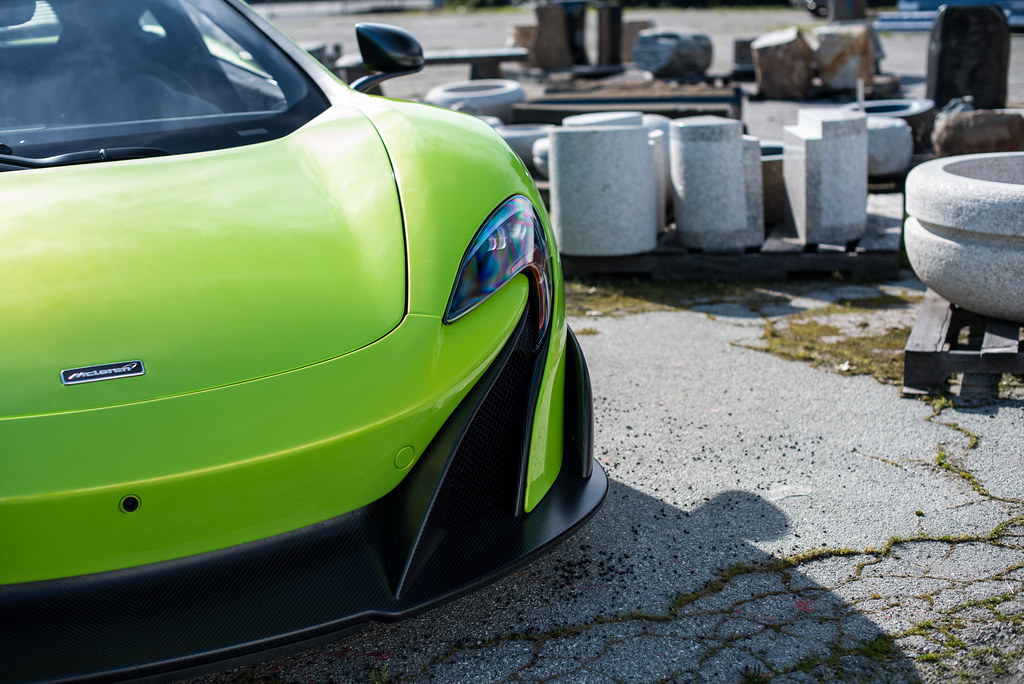
It can be painful when you’re actually driving something insanely bright and eye-catching, but you reap what you sow as soon as you get out and look at its glory.
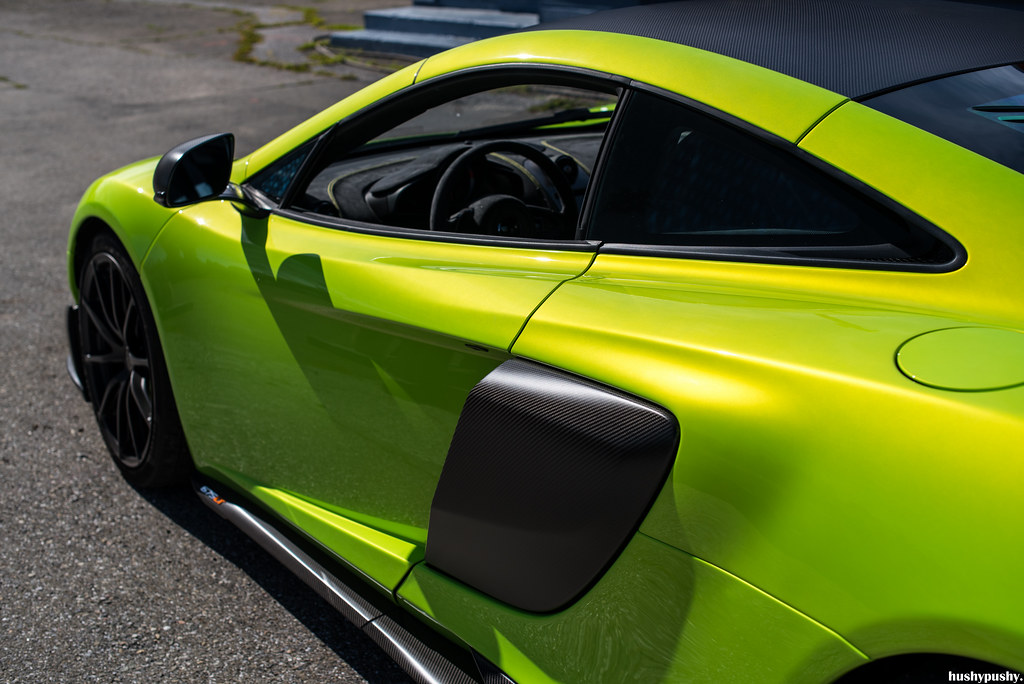
I’m not sure if I could handle owning a car painted Napier Green, but my eyes are drawn to it like bees to a flower.
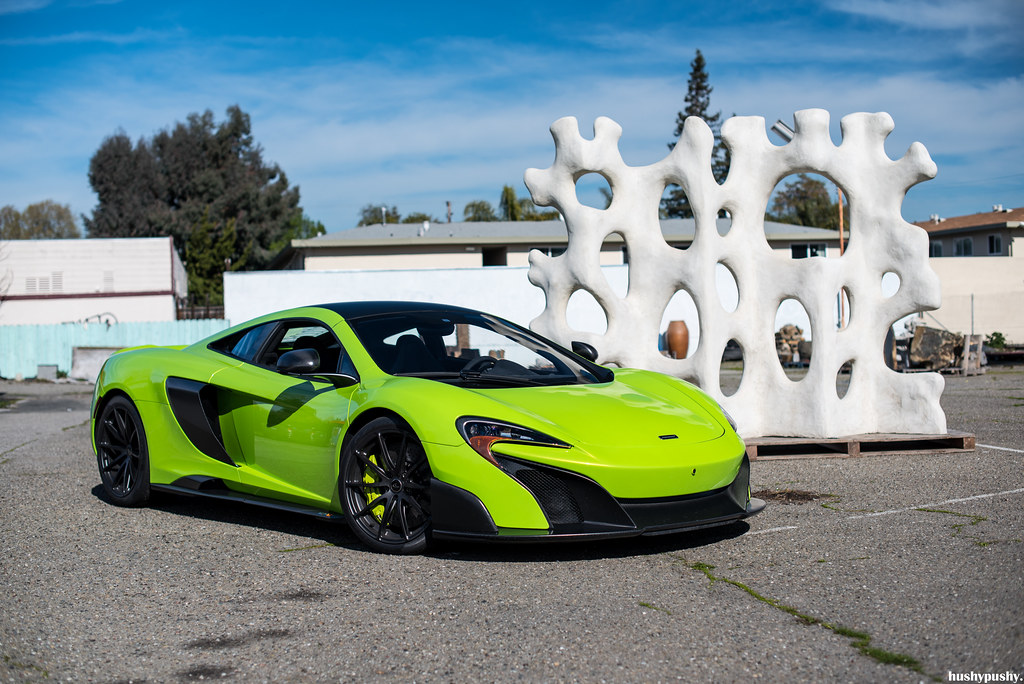
Yabba dabba doo! This car is from McLaren’s press fleet, which gave me plenty of leeway to take it for a proper drive.

And of course that included a stop by this prehistoric sculpture.

I shot a 2015 WRX for SuperPro Suspensions–that was pretty cool.
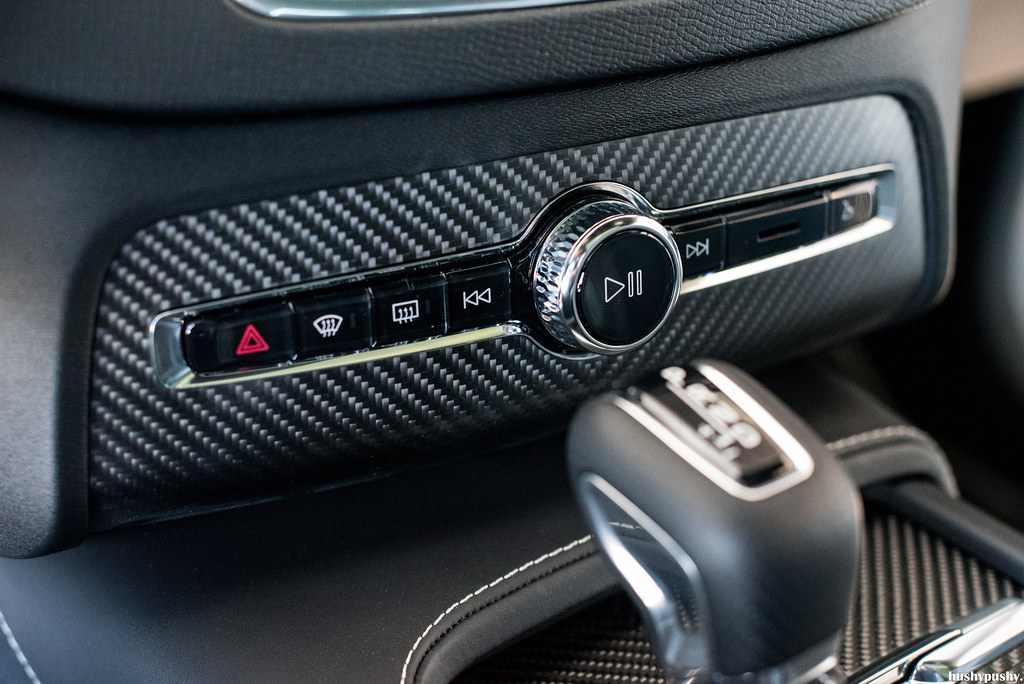
Where can you find such exquisite carbon fiber?
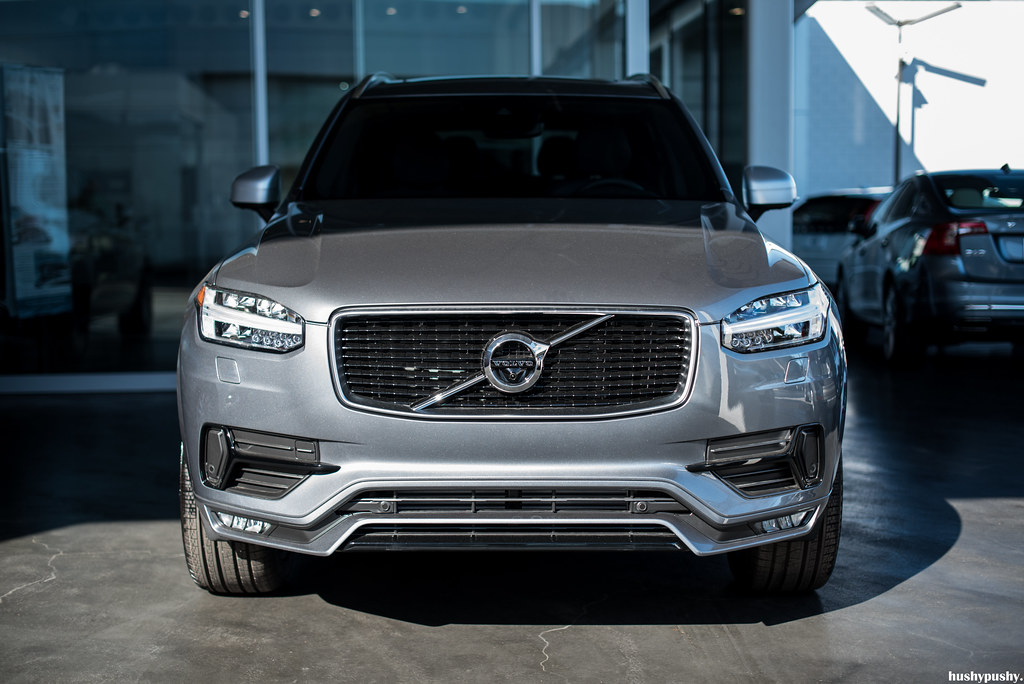
In a Volvo, of course.
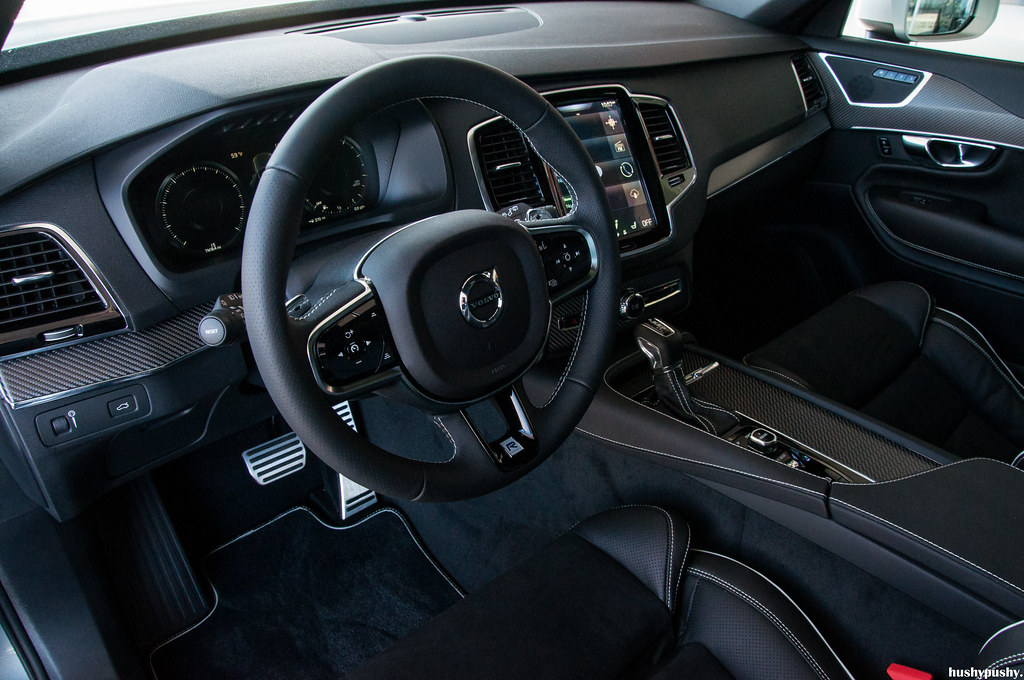
For a cool 800 bucks, you can have carbon fiber inlays throughout the interior (the rear doors also have them). I can’t think of any reason not to! That much carbon fiber in a McLaren would cost you several thousand dollars.
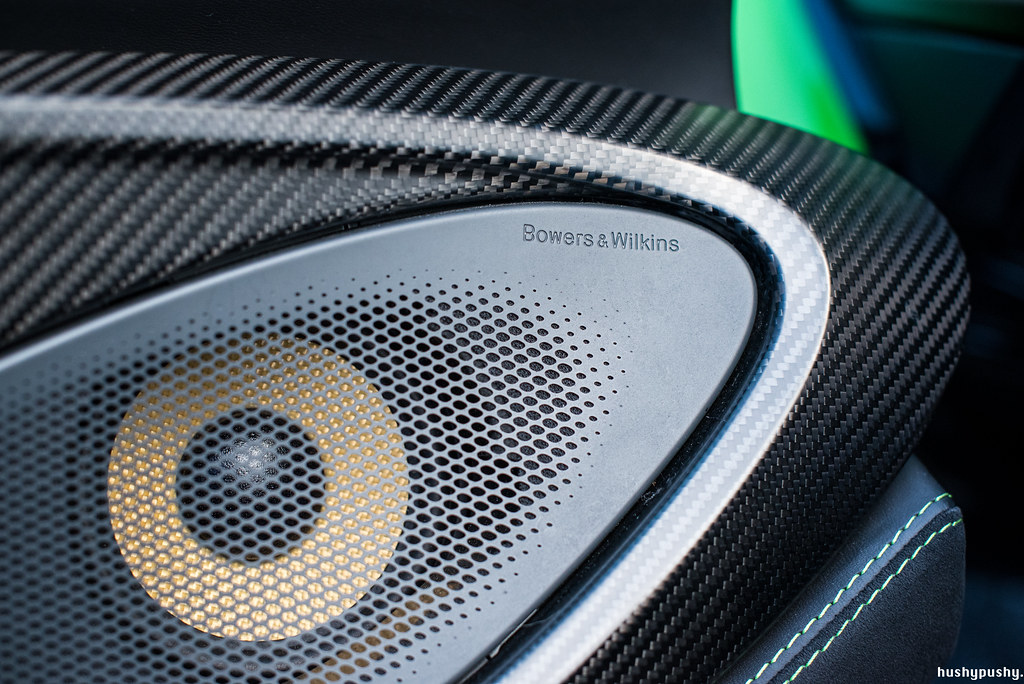
Speaking of which…what’s another hot new car with carbon fiber trim and Bowers & Wilkins audio?
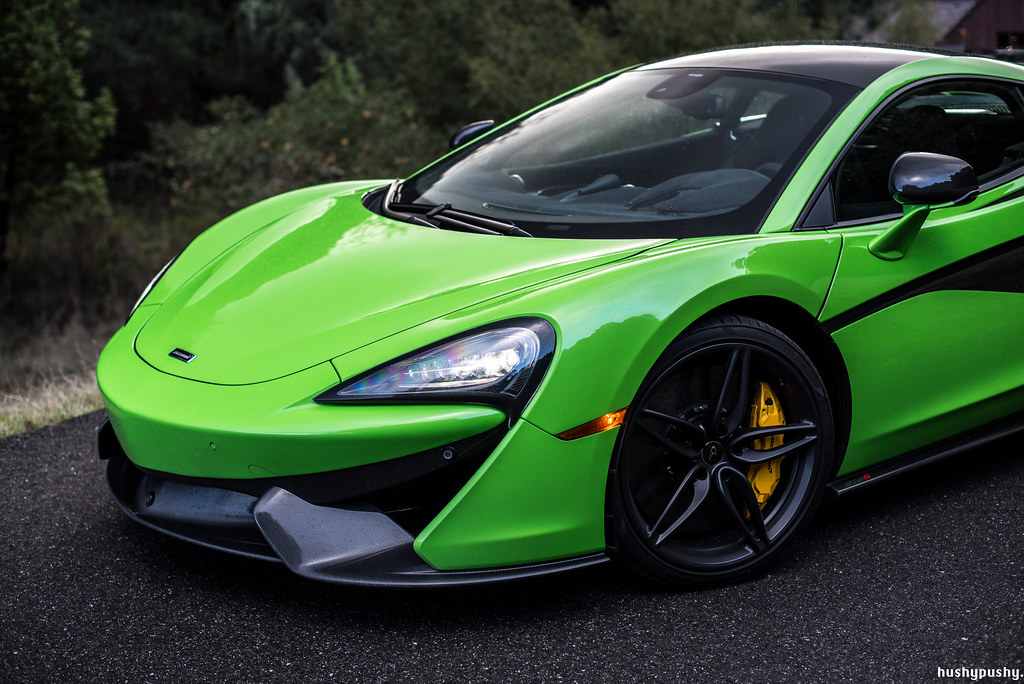
That would be the exquisite new McLaren 570S. I would take one of these over a 650S–it’s a more satisfying, engaging drive.
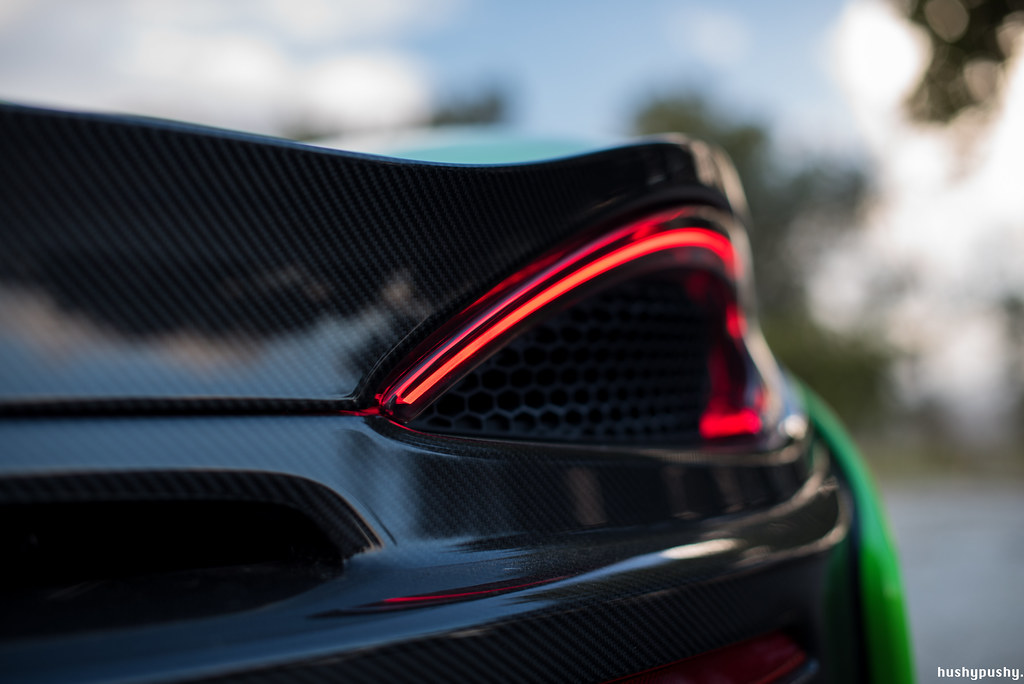
It took me a while to warm up to the styling, but the more you look at it the more you appreciate it.
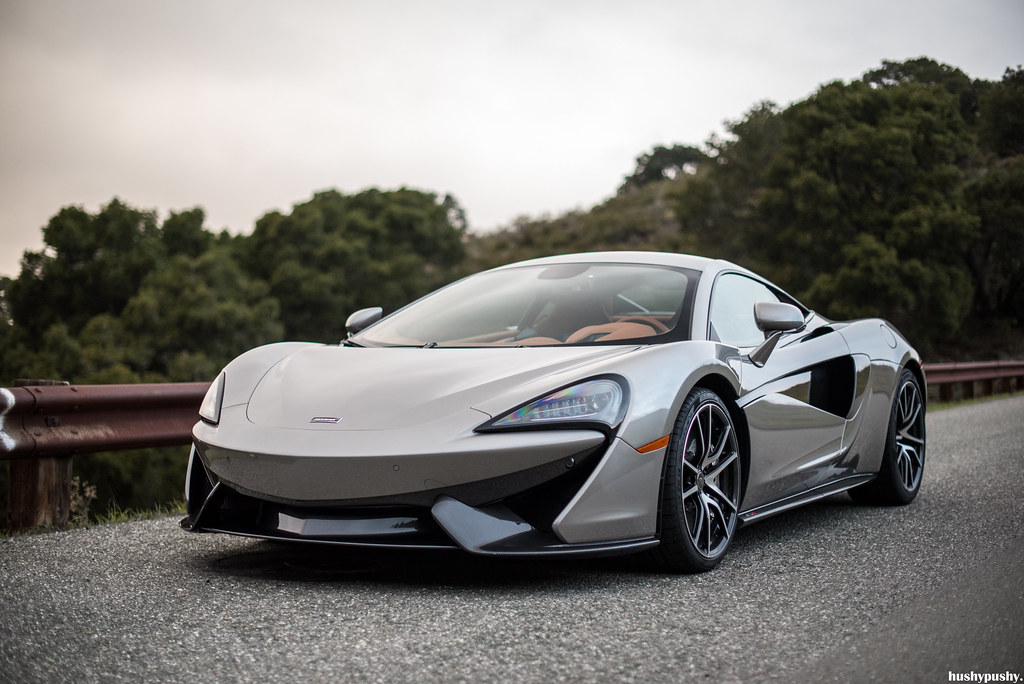
Beige supercar, eh? It works.
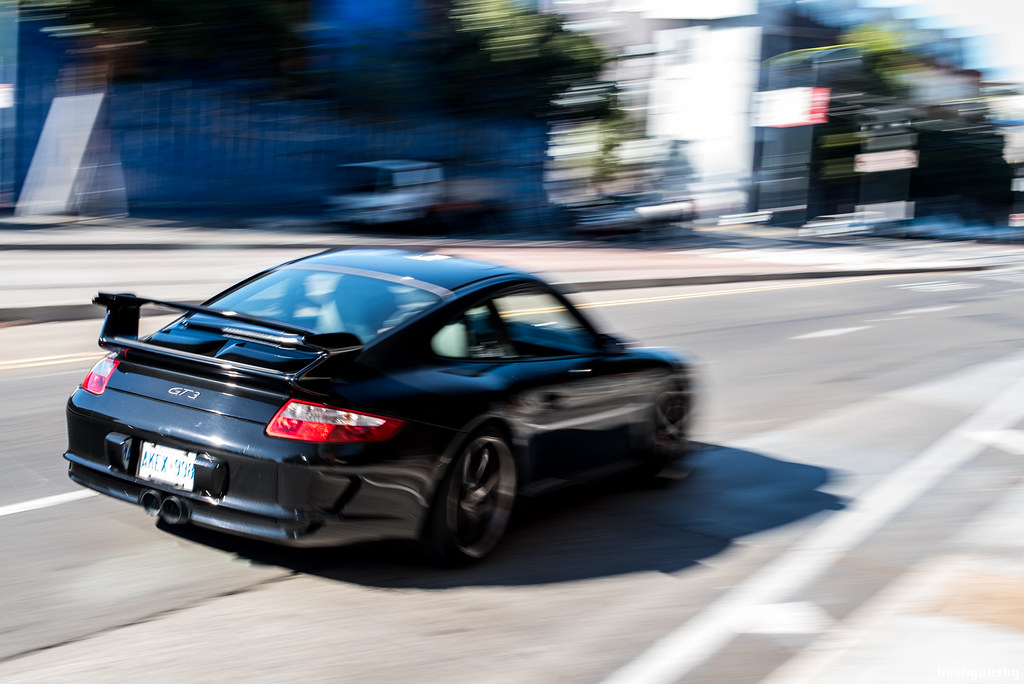
Even though I’m not a teenager, sometimes I still partake in a bit of carspotting. 997 GT3’s are some of my favorite cars…ever.

My first time getting a media pass at Laguna Seca was for this ChumpCar race; I shot the Belgian VW Club as they piloted a Mk4 Golf TDI.
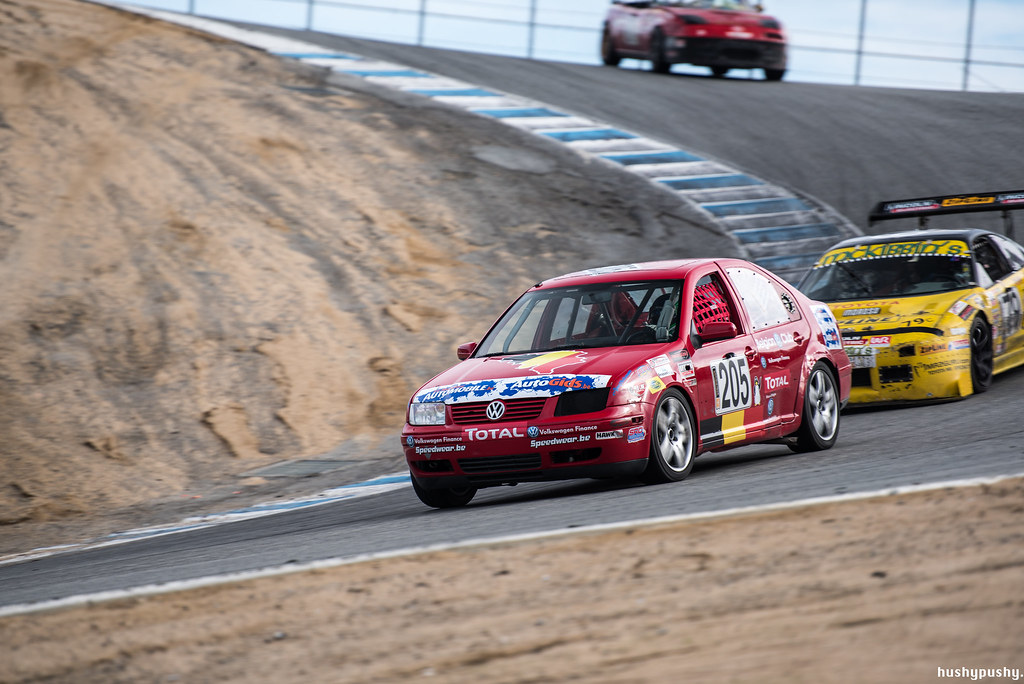
That was great–it’s amazing how many great vantage points are hidden behind fencing at Laguna Seca. I finally got to shoot at the bottom of the corkscrew!

Most recently, I participated in the “Coastal Range Rally” held by Driving While Awesome. I wrote an article highlighting my experiences, so check it out.
Okay, I promise to keep this site more updated. There are actually a few posts in the works, I just haven’t gotten around to finishing them up. Keep an eye on this space!
Only the Best?
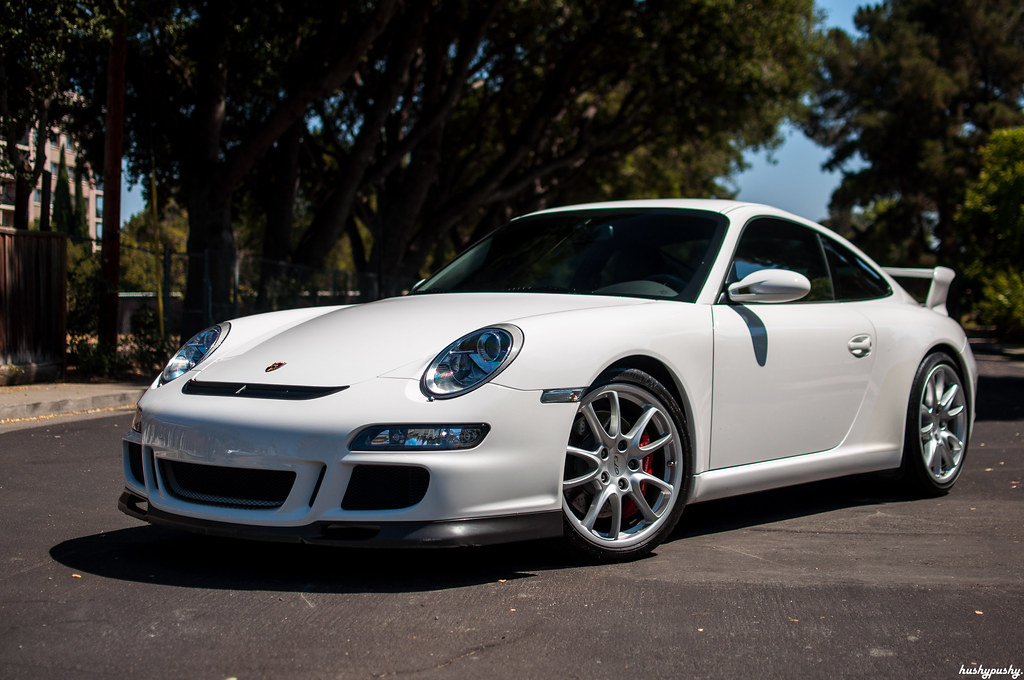
That is a 2007 Porsche 911 GT3. Of all the 997’s I’ve driven, that one was easily my favorite. In fact, of all the cars I’ve ever driven, that is one of my absolute favorites. Every control is perfectly weighted, the chassis is balanced, and the engine just sings to 8000 RPM. In short, it’s one of the greatest driver’s cars of the 21st century.

That Prius was my daily driver for a while. Whaaaat? Yep, my Scion FR-S (another one of the best cars I’ve ever driven) was recently at the dealership getting its transmission replaced under warranty, so I had a loaner car.
And you know what?
I loved it.
Okay, so it’s not a 911 GT3. A Prius doesn’t turn, go, or stop nearly as well as a Volvo, let alone a Porsche. It’s also butt-ugly inside and out; the seat shape and steering wheel arrangement put you in a weird driving position; and the interior materials are uninspiring and crappy, even compared to a Corolla.
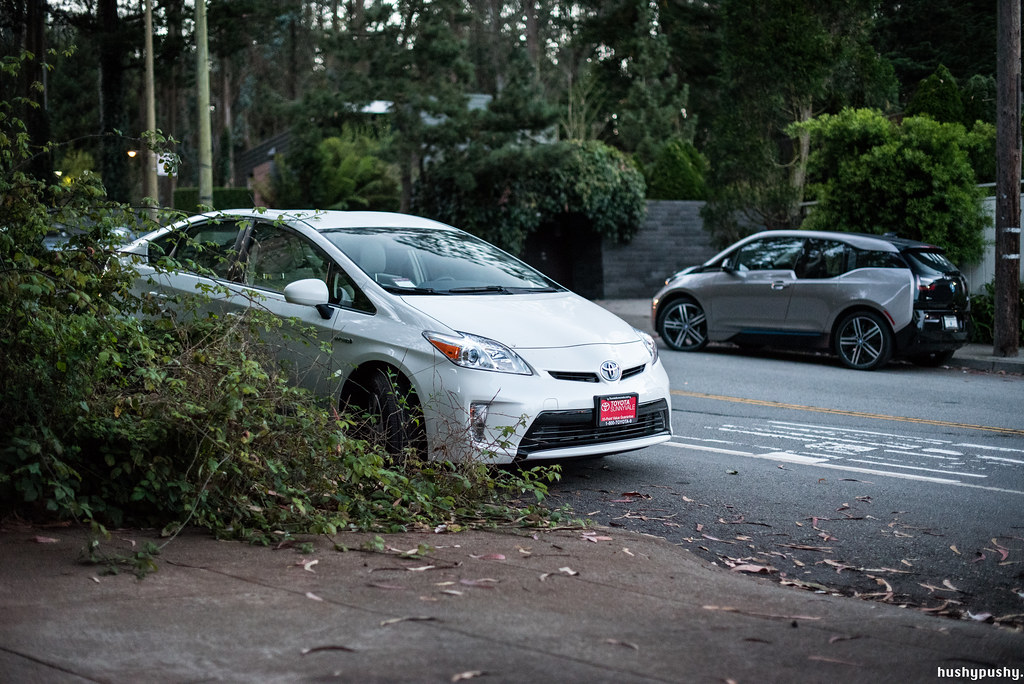
But it has a decent stereo and a reasonable trunk, plus a ton of legroom and enough vertical space to wear a top hat.
And for reasons completely unrelated to Porsche, the Prius is fun to drive. Yep, I said it. So you don’t have to back-track, I’ll say it again: the Prius is fun to drive.
Have I gone insane?? Nope. You still take it to the limit in a Prius, just in a different way. There’s a meter in the dashboard that shows your throttle and brake inputs, which you use to try to maximize the battery’s intervention. In particular, I really get a kick out of braking right at the limit of the regen meter to get the most energy back into the battery. And if you accelerate slowly enough, you can do so without waking up the internal combustion engine and continue to cruise as a polar bear friendly EV all the way up to 44 miles per hour.
The other strangely alluring thing about the Prius is something that is very important to me. After driving it all over the place for a couple weeks, I realized something: every single time I got out of it, I felt relaxed. For some reason the Prius gives me a zen-like feeling about being stuck in traffic. Repeatedly getting cut off by people who immediately slam their brakes doesn’t seem so offensive in a Prius, plus there’s that whole EV function, which really takes the edge off stop-and-go traffic because your mileage actually improves when you’re inching down the highway at twenty miles per hour.
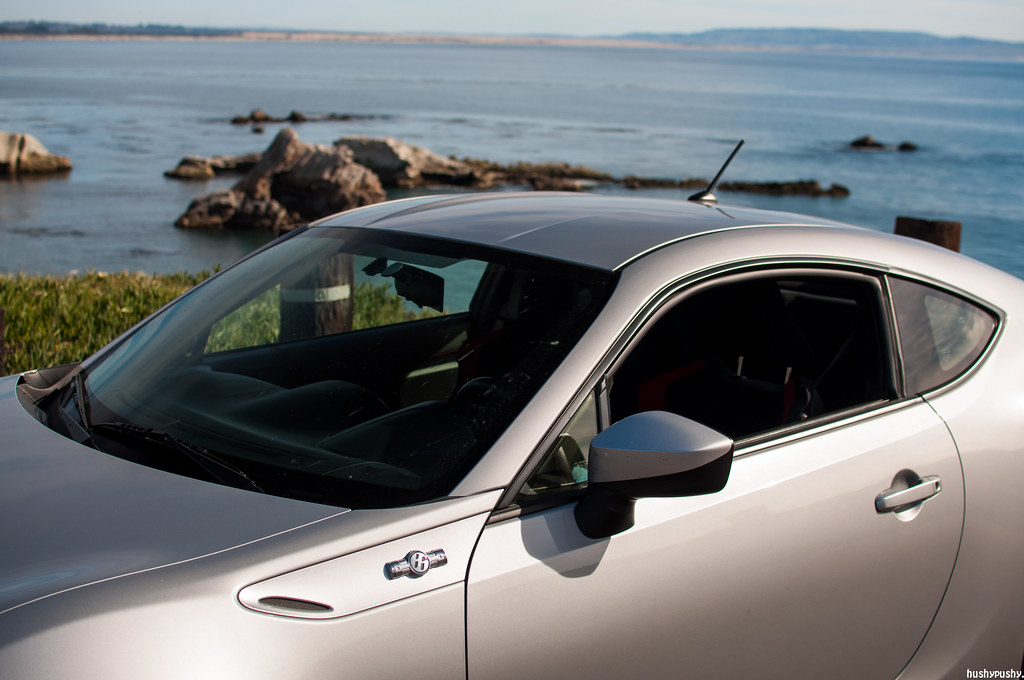
Just because the Prius has none of the most important things I truly value in an automobile doesn’t mean I can’t appreciate it for what it was designed for and what it actually does.
But that seems to be really difficult for many people.
The announcement that I got a Prius loaner was met with derision from everyone I told (well, except my mom). Which I find strange because people never share any personal experiences about how bad a Prius is, just how theoretically evil they are. Hmm, that’s actually starting to sound just like my FR-S.
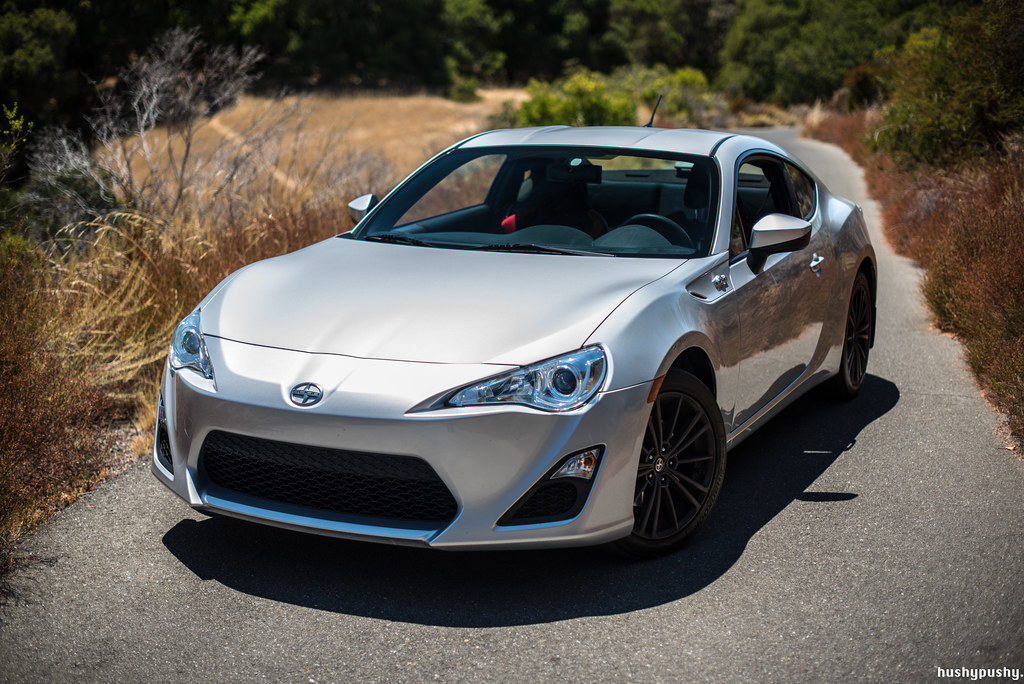
I see the same thing all the way up and down the spectrum, from the lowly Prius to hypercars like the Veyron. People are so quick to unleash negativity. Maybe it has something to do with the internet, where negativity attracts attention and people seem to be more interested in “winning” an argument than actually having a discussion with someone.
One problem with the internet is that it’s given everyone a voice, but not everyone knows what to do with that power. There are a lot of people talking, but there aren’t a lot of people with something to say.
But even more dangerous is that people don’t understand why they say the things they do.
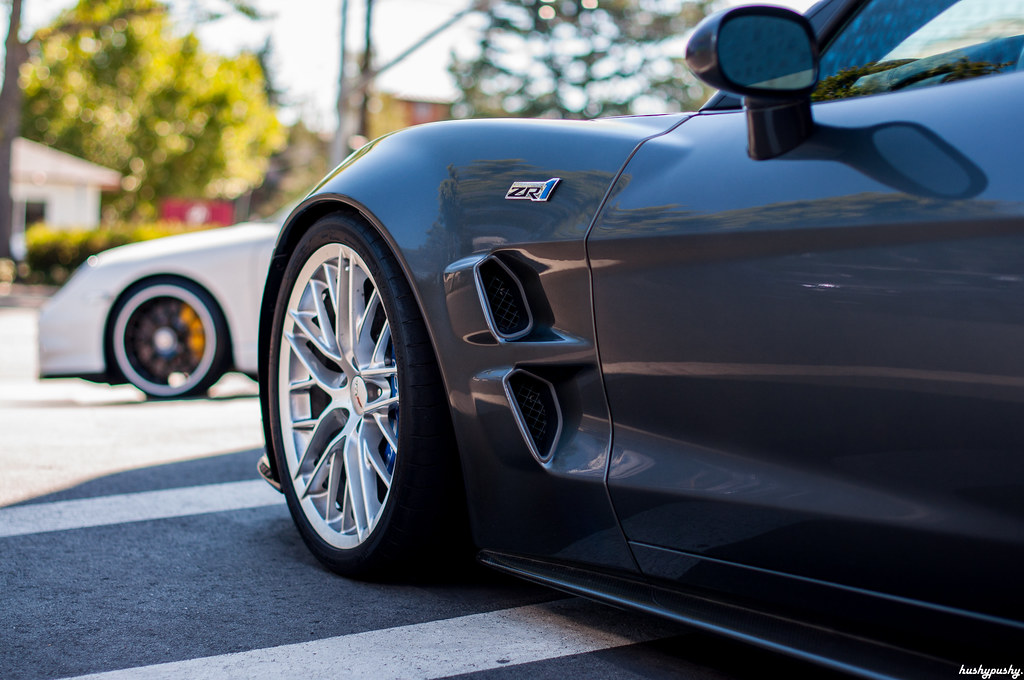
Take the C6 Corvette for example. There are so many things that might come to mind when looking at these cars, but online discussions always come back to one place: the interior. Guess what? It’s really not as bad as people think it is. In fact, for the time it was released–2004–it’s not bad at all.
Want proof? Go search for what a 2004 Lamborghini Gallardo interior looks like, which was loaded with the switchgear from the lowliest Audi’s. Or how about a 2004 Porsche 911—yes the 996, which has that roundly loathed interior. If anything, this should serve as a reminder to just how far automotive interiors have come in the past twenty years.
But people don’t care. It’s much more fun to argue about bullshit than to actually have a realistic outlook, right?
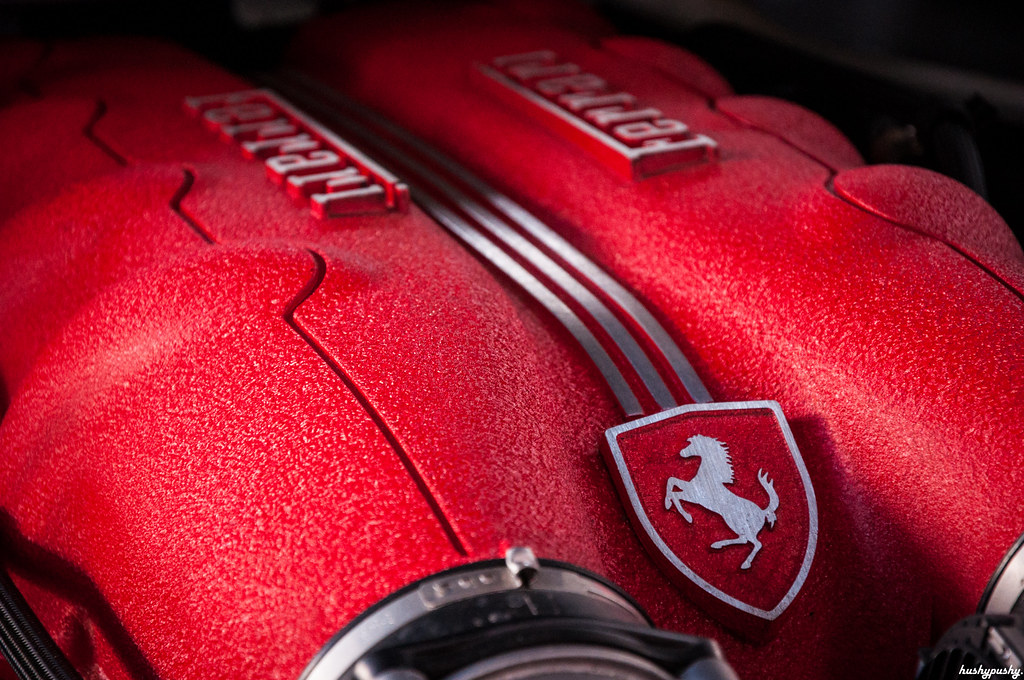
Which brings me back to the Prius. Does it sing like a Ferrari? No; it actually sounds quite bad even for a four cylinder.
But, when you think about it, the Prius achieves its goal of being very quiet and unobtrusive most of the time. It also has plenty of space for passengers and cargo, is extremely reliable, gets excellent fuel economy in the real world, and so on and so forth.
Most importantly however, if you drive a Prius the way it’s meant to be driven, it’s really fun. Just like a Porsche.
Parking While Awesome – The Newest “Cars & Coffee”
While the Cars & Coffee meet held at Canepa Design is the new king of early Saturday morning meets ever since the original Irvine gathering got shut down, it only runs half the year, from March to October. Everybody knows California weather is good all year long, so what are we supposed to do in winter?
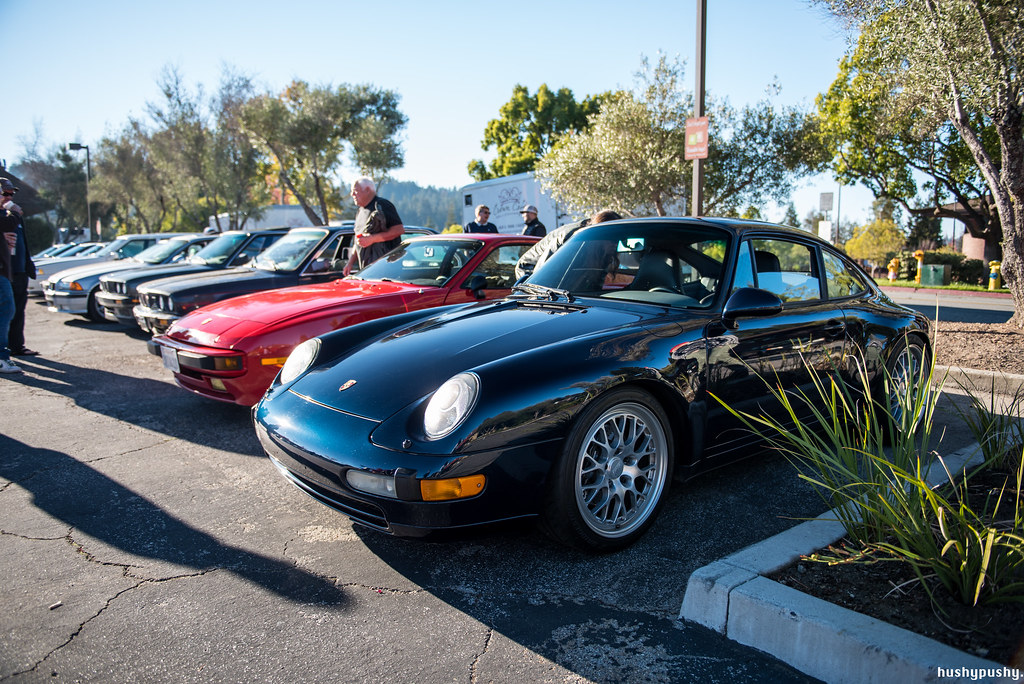
Hold our own meet, of course! Well, actually I had nothing to do with this, although I am good friends with the organizers. They call themselves “Driving While Awesome” and if you have some time, you should check out their website. And if you have a lot of time, you should check out their podcast.
Anyway, I think it was a resounding success for a first meet, for one simple reason: variety. What makes these “C&C” events so fun is seeing all kinds of different cars. You expect to see everything: 911’s, hot rods, classic cars, supercars, tuner cars, and random crap, right? It was all there at the first DWA C&C.
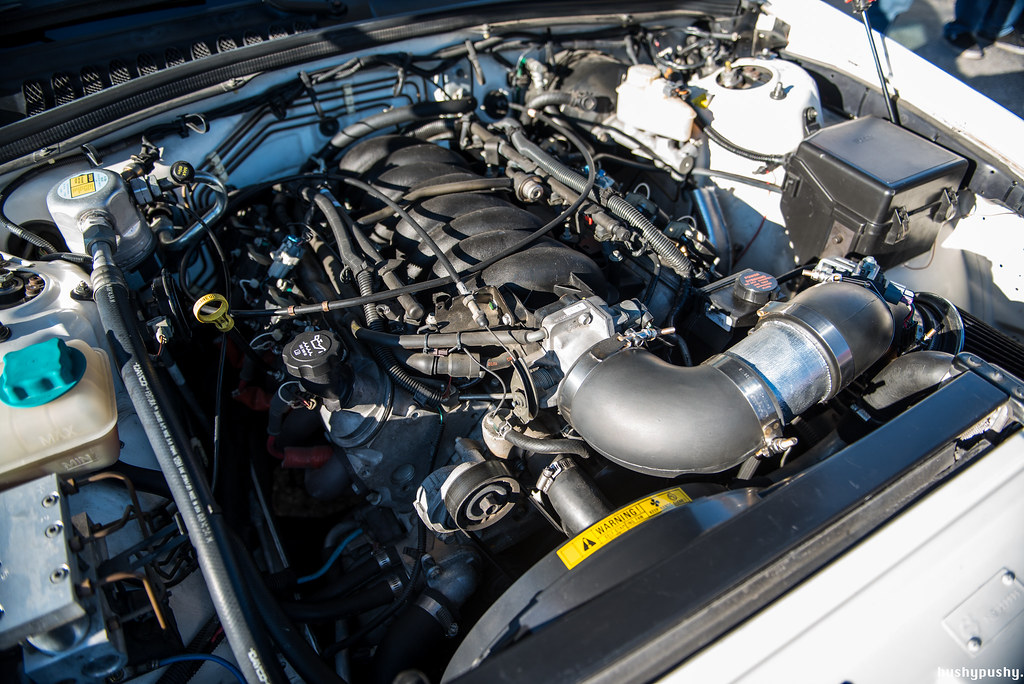
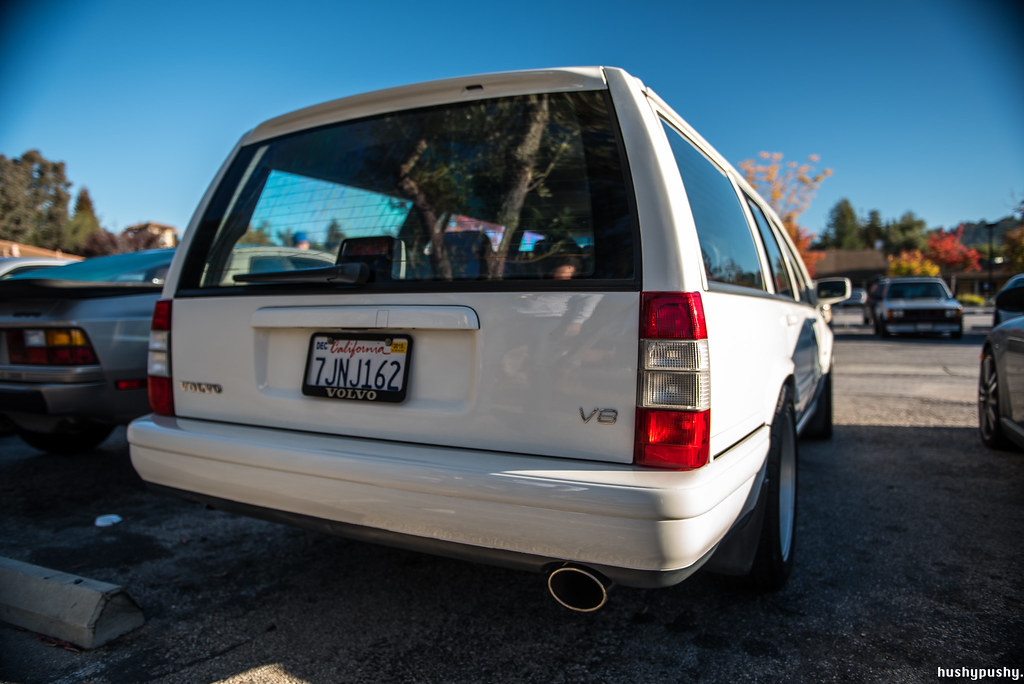
LS swap all the things! So let’s begin the roll call with with something LS-swapped—Drew’s Volvo V90. It blows my mind that these engines make so much power and are so efficient. All while sounding awesome and being incredibly reliable. And with the new electronic exhaust cutout, I’m struggling to think of a downside to this setup over the straight six that originally powered this car. Time to hit up a road course!
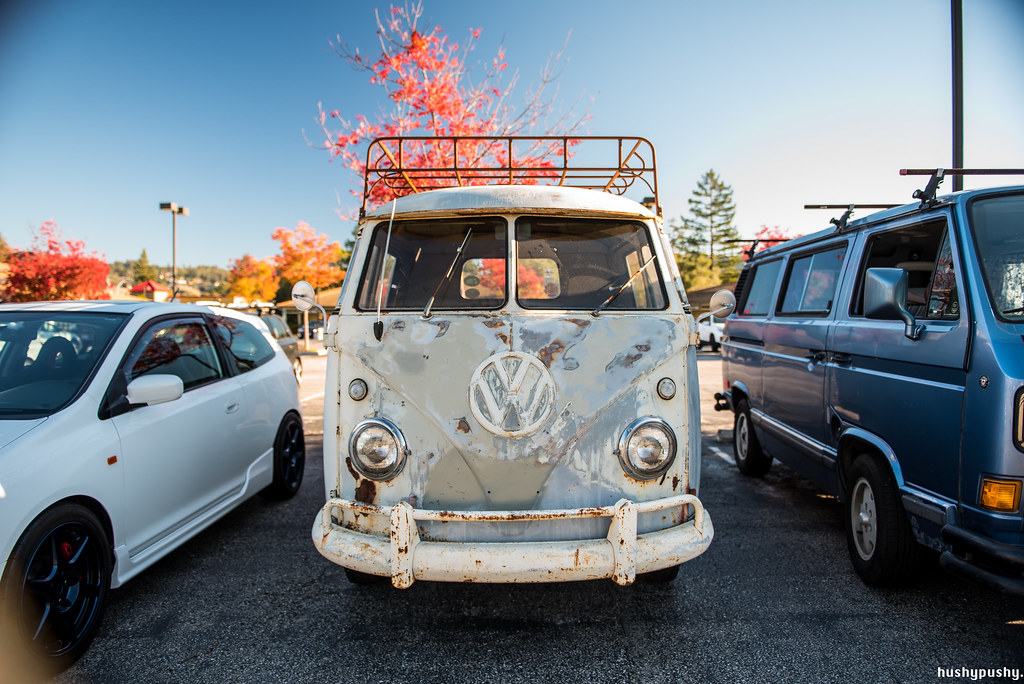
Gotta have some old VW buses, right?
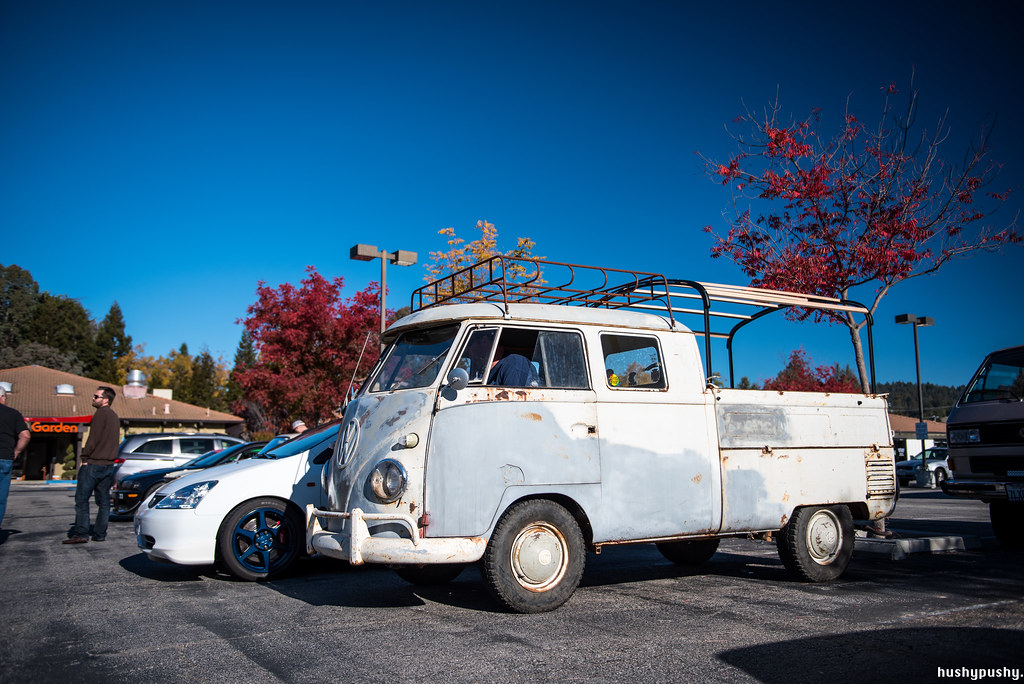
Although I guess this Type 2 is technically not a bus, eh?
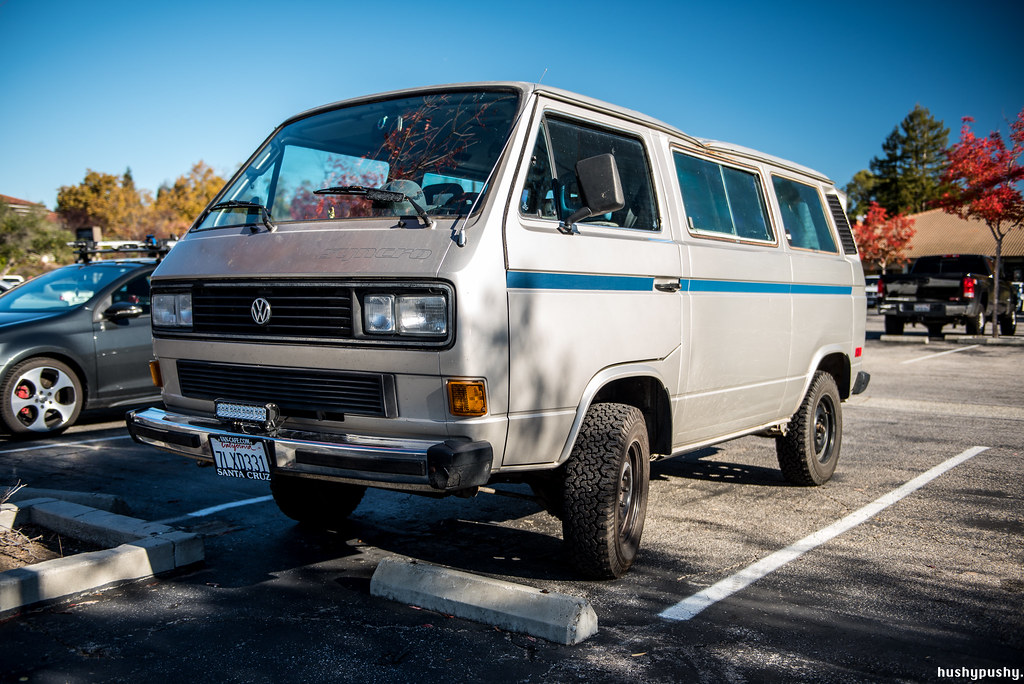
This Syncro looked like it had seen some action.
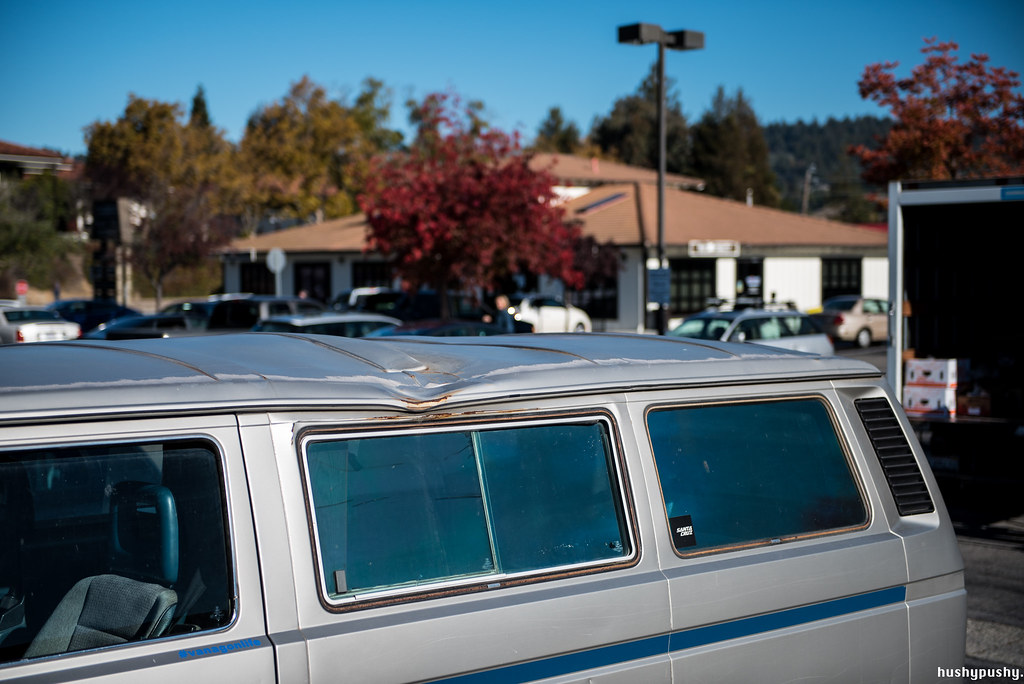
Yikes!
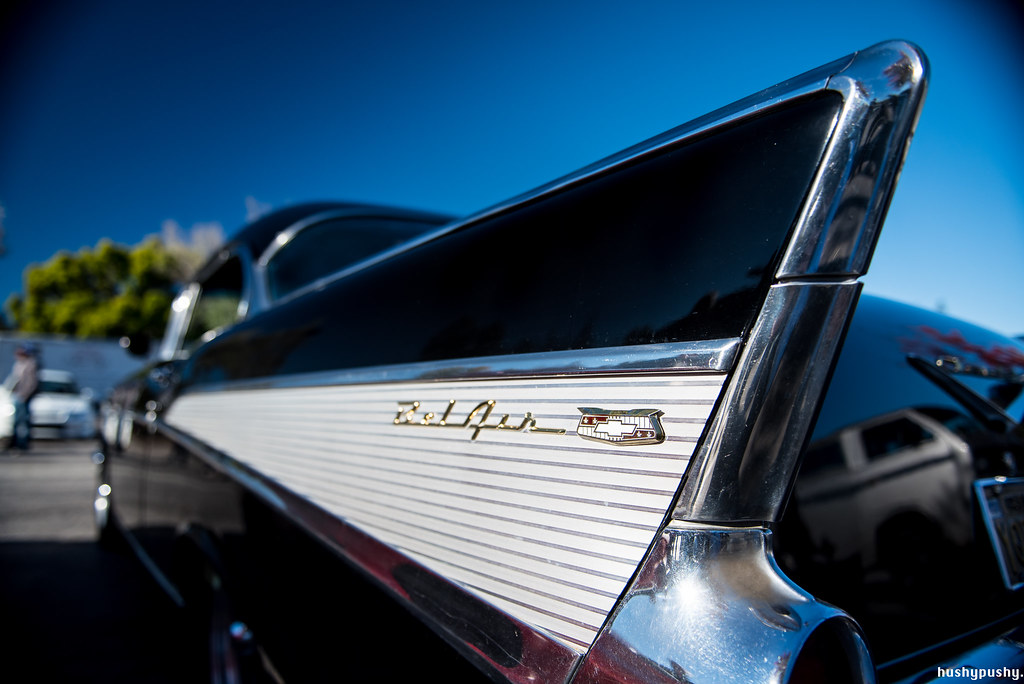
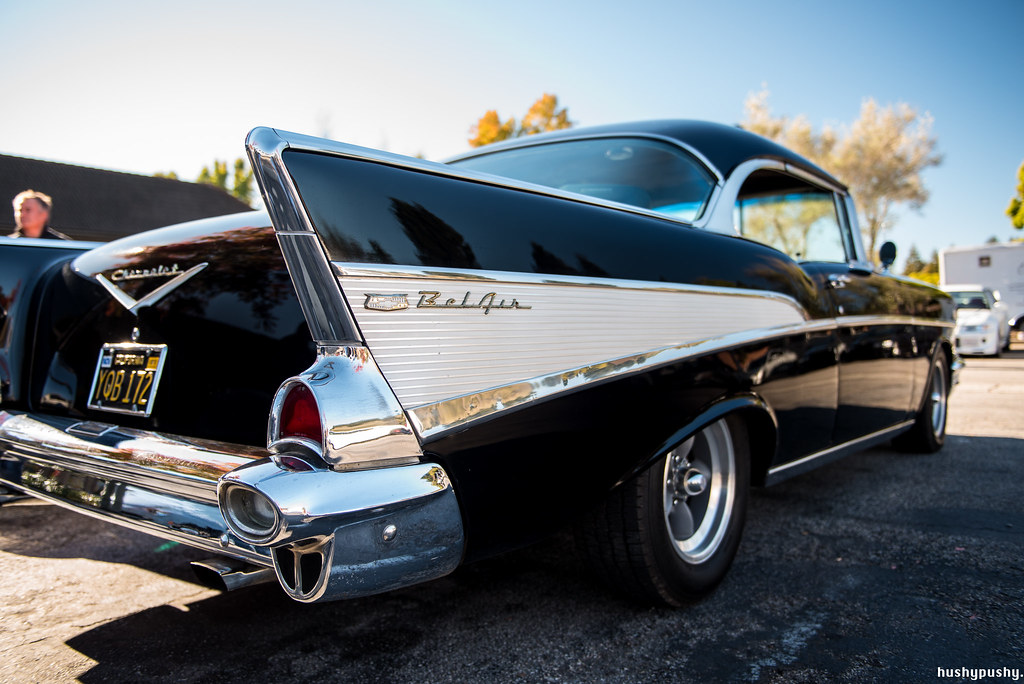
Any of the Tri-Five Chevys would have been perfect, but the fact that it was a ’57 Bel Air two-door hardtop–perhaps the absolute most iconic year, trim level, and body style–was especially poignant.
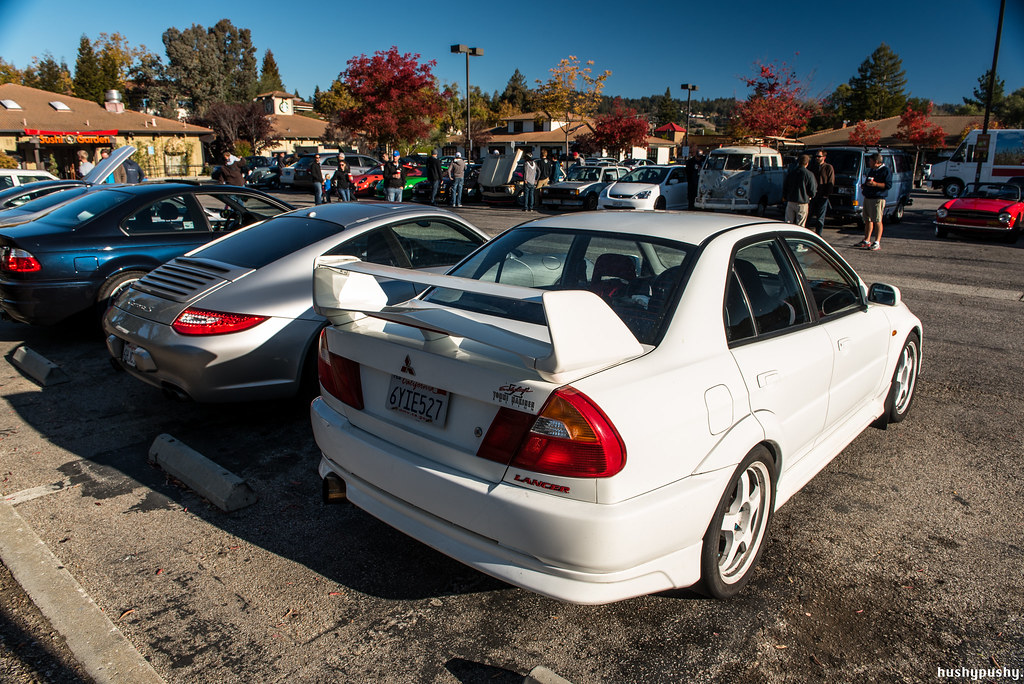

And how about something that we never got in this country? Present and accounted for, courtesy of this Evo 6.5 Tommi Makinen Edition.
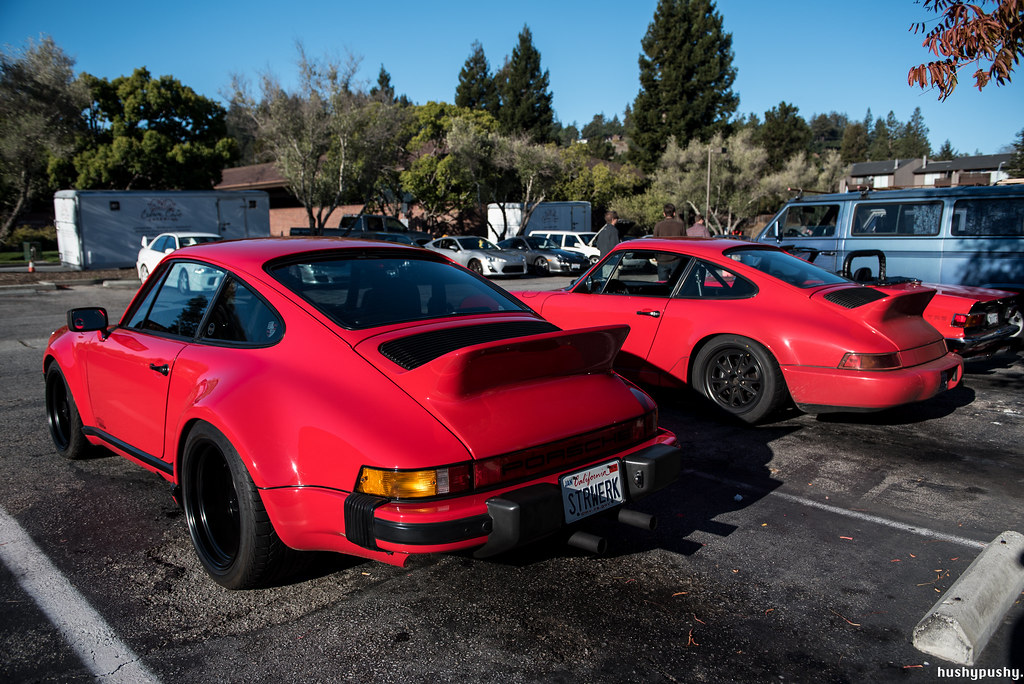
Air-cooled 911’s? Of course.
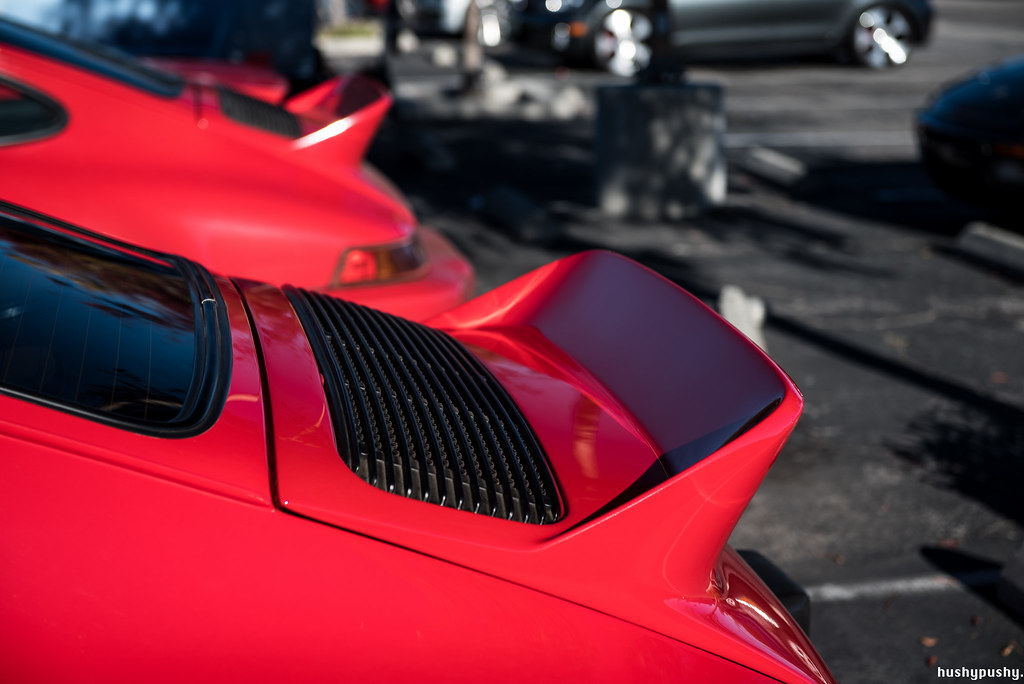
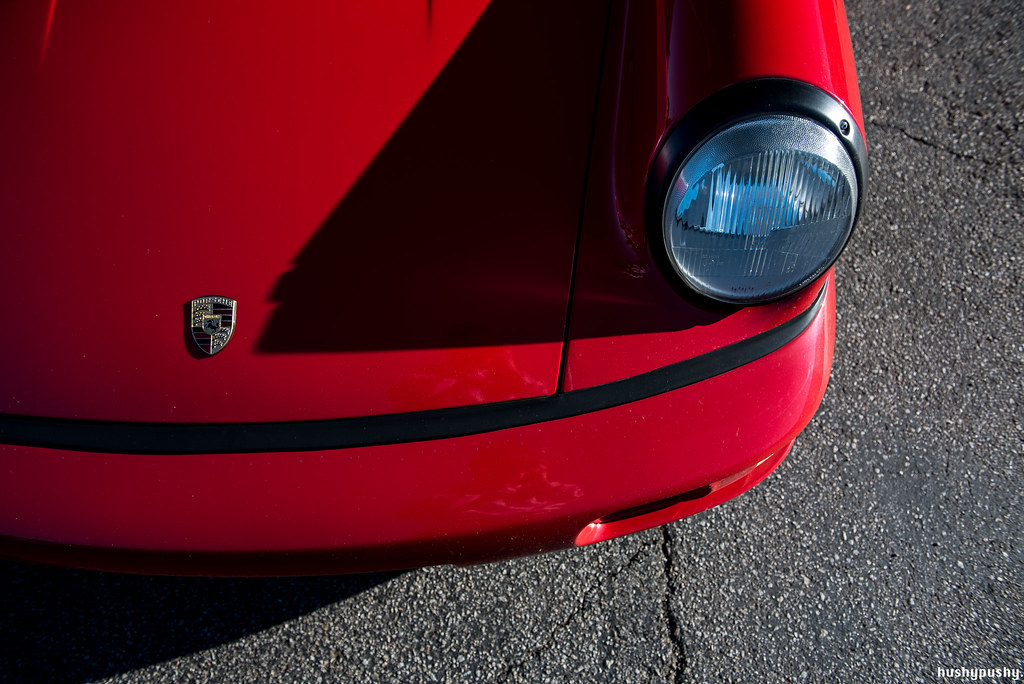
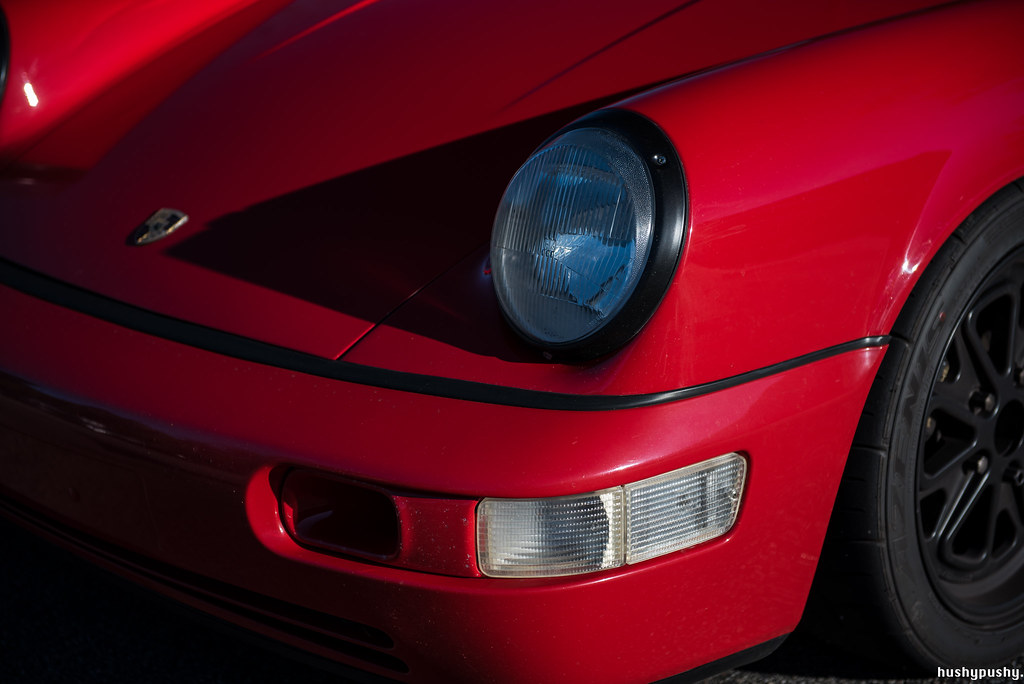
I couldn’t resist playing with that shadow!
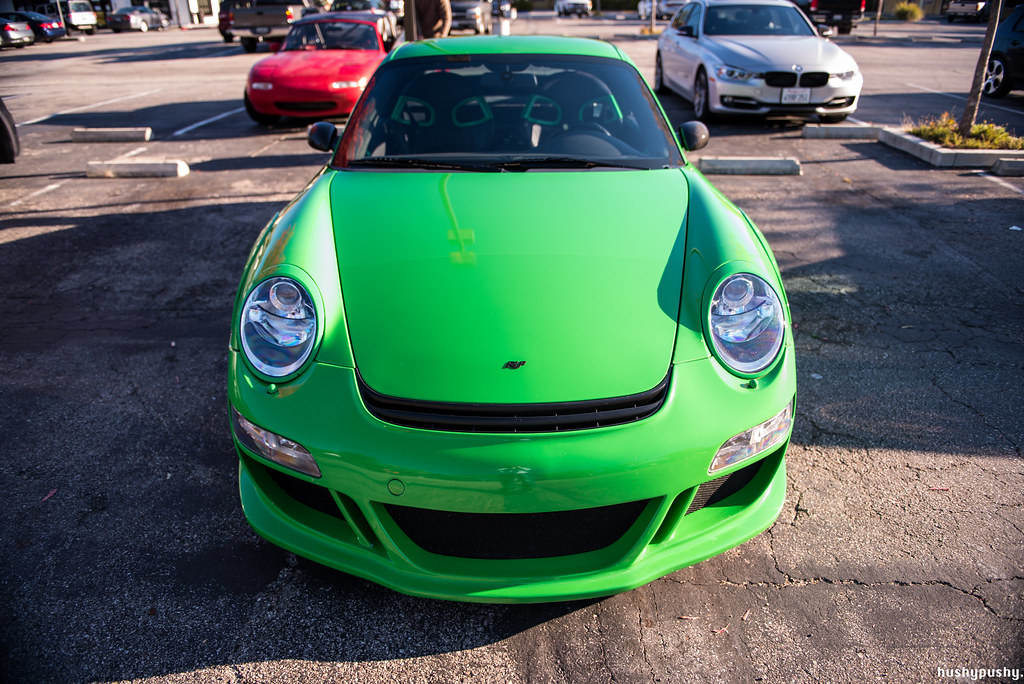
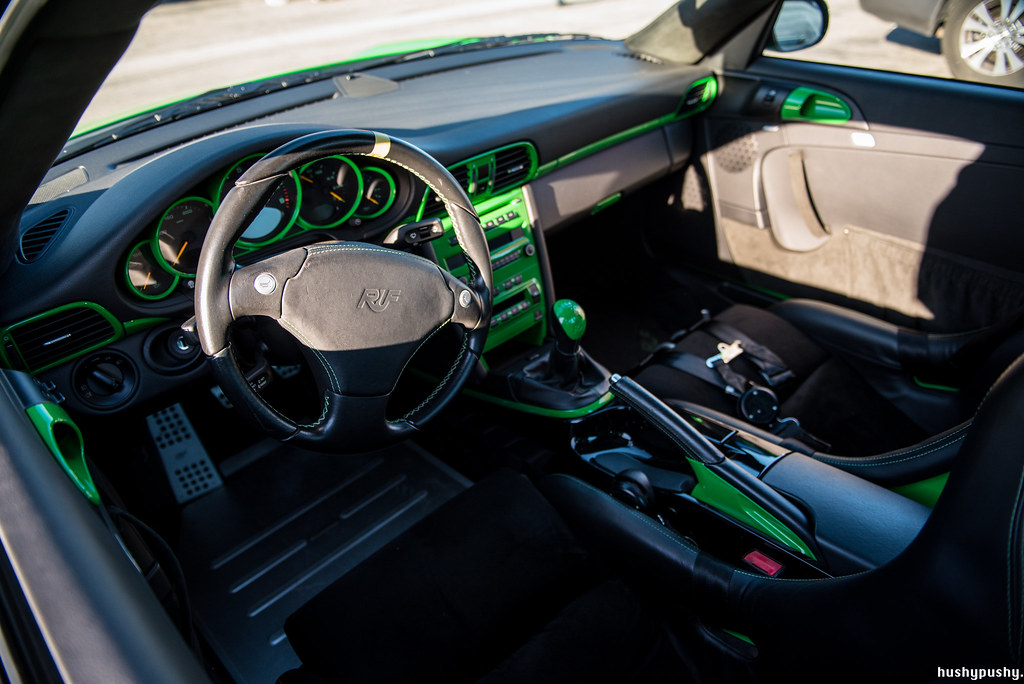
Modern supercars were present too, like this RUF RGT…
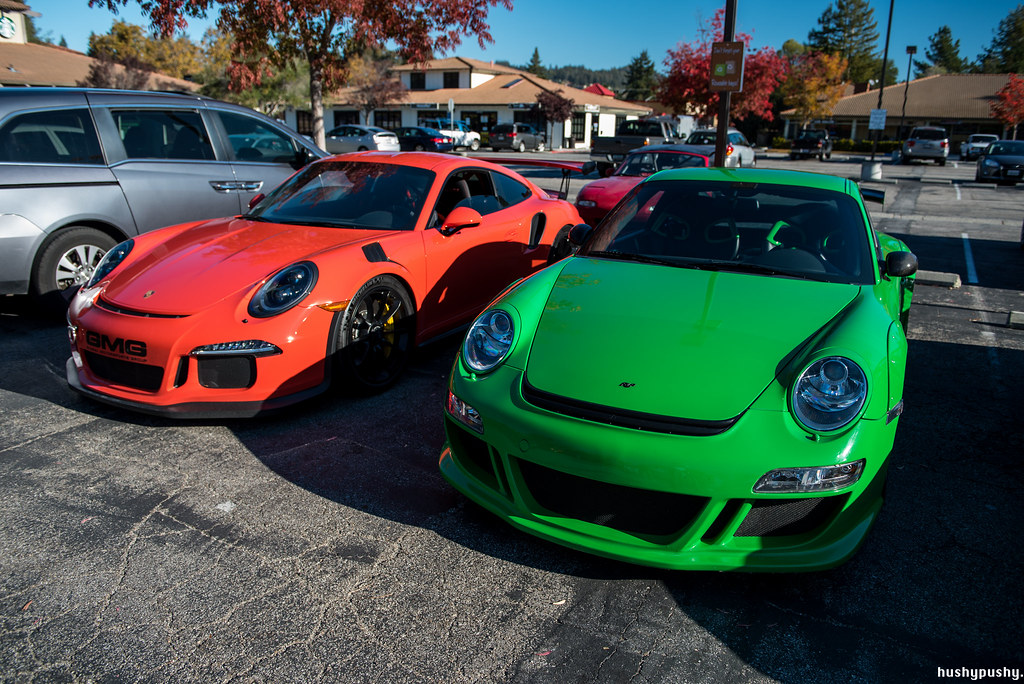
…and its younger cousin, the 991 GT3 RS.
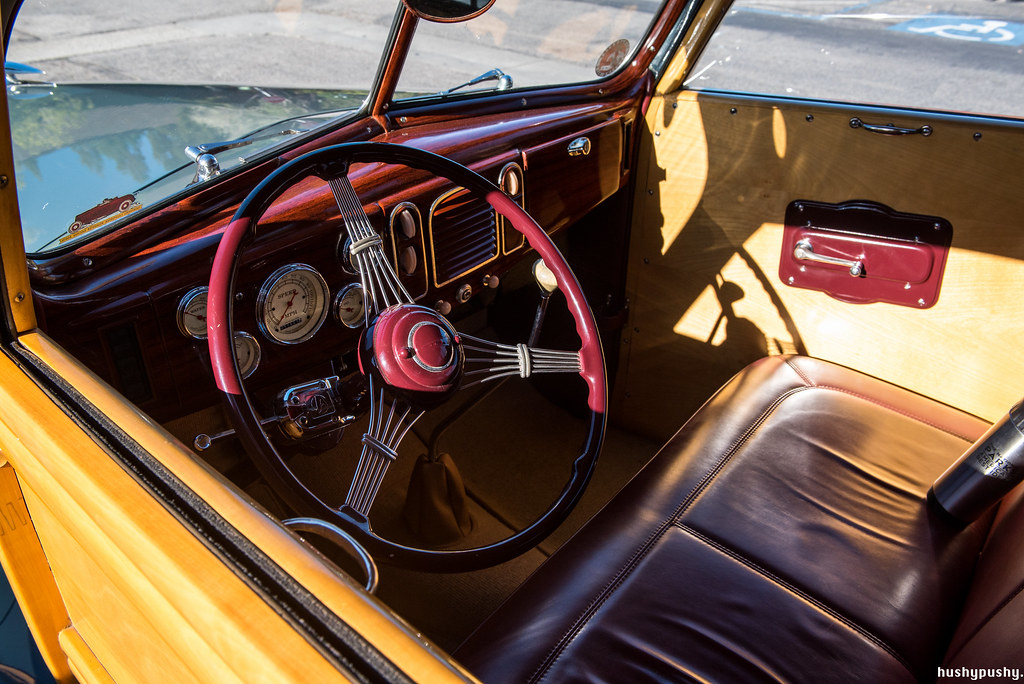
What about a hot rod or something pre-war?
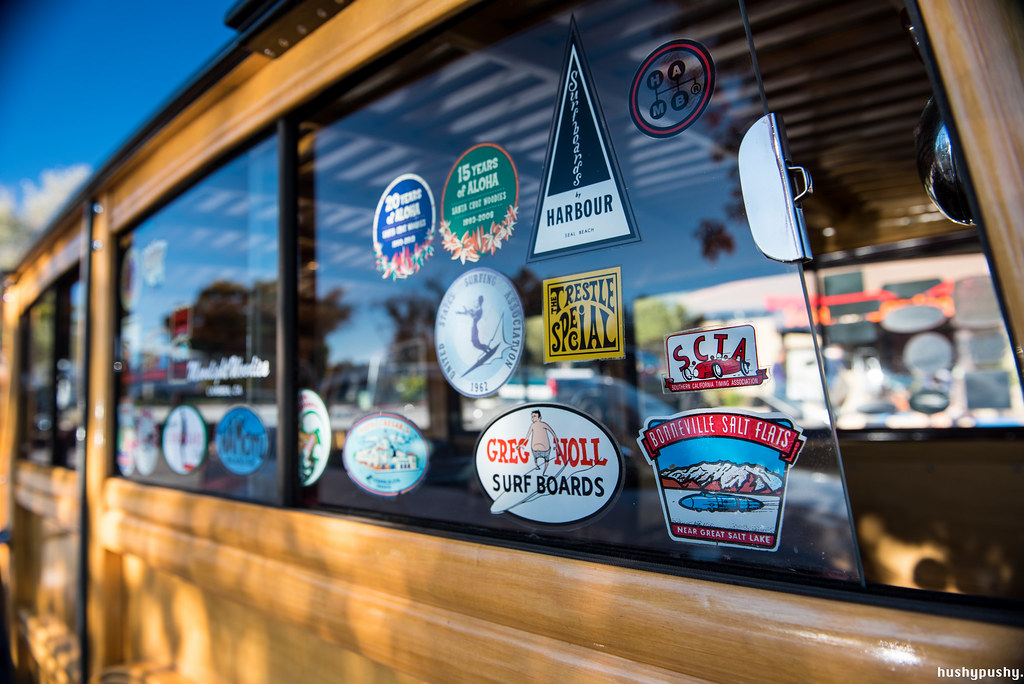
Got that covered with this 1938 Ford Woody.
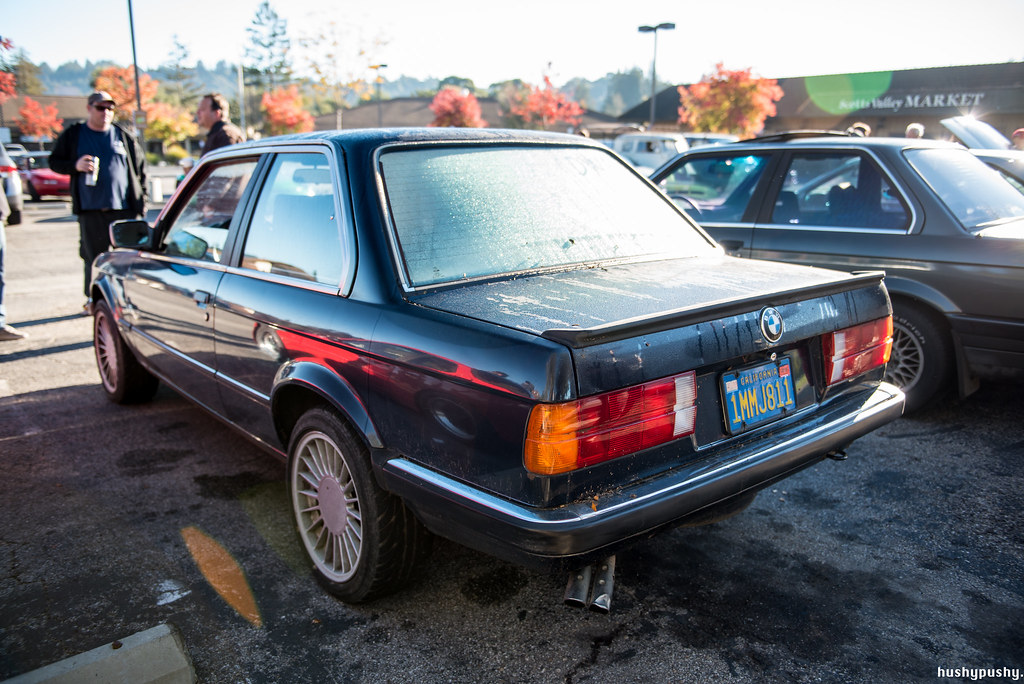
One cool thing about DWA is their “project car” series. That whole idea has become kind of a fad now (hell, even Speedhunters has staff project car features), but it’s definitely still fun. It’s so much more interesting to follow along with a build rather than simply be presented with a “finished” product. This Euro-spec 1984 BMW 323i is the latest addition to the DWA project car stable. With no sunroof, crank windows, and a dogleg manual gearbox, this definitely has the right funky attitude.
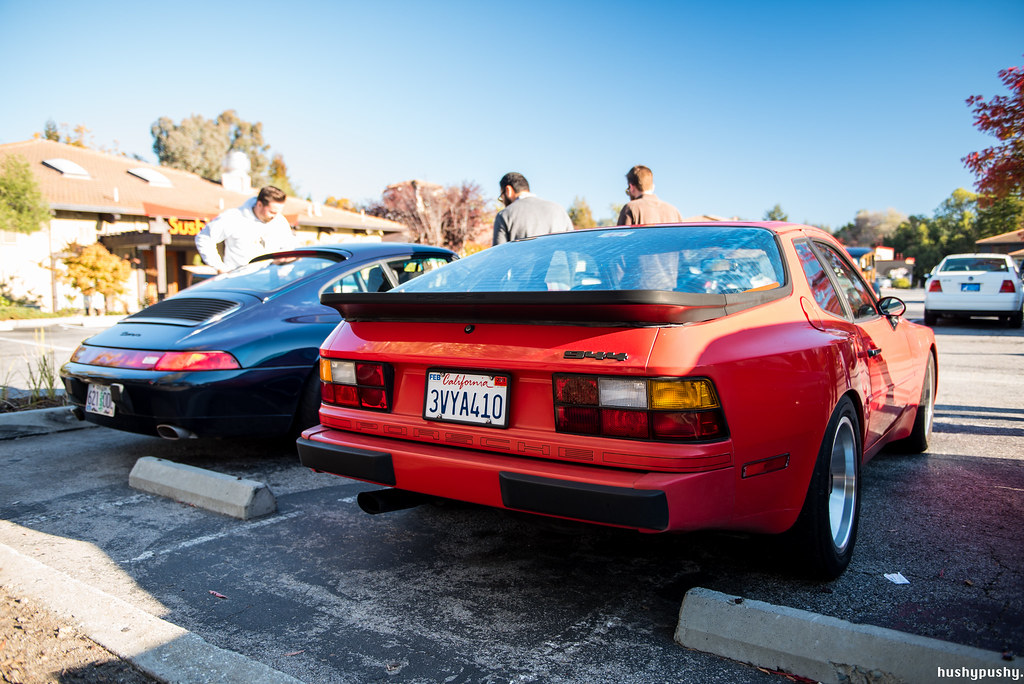
Lane’s 944 is another one of the DWA cars. His latest project was an “RS” console delete with a lightweight stereo replacement.
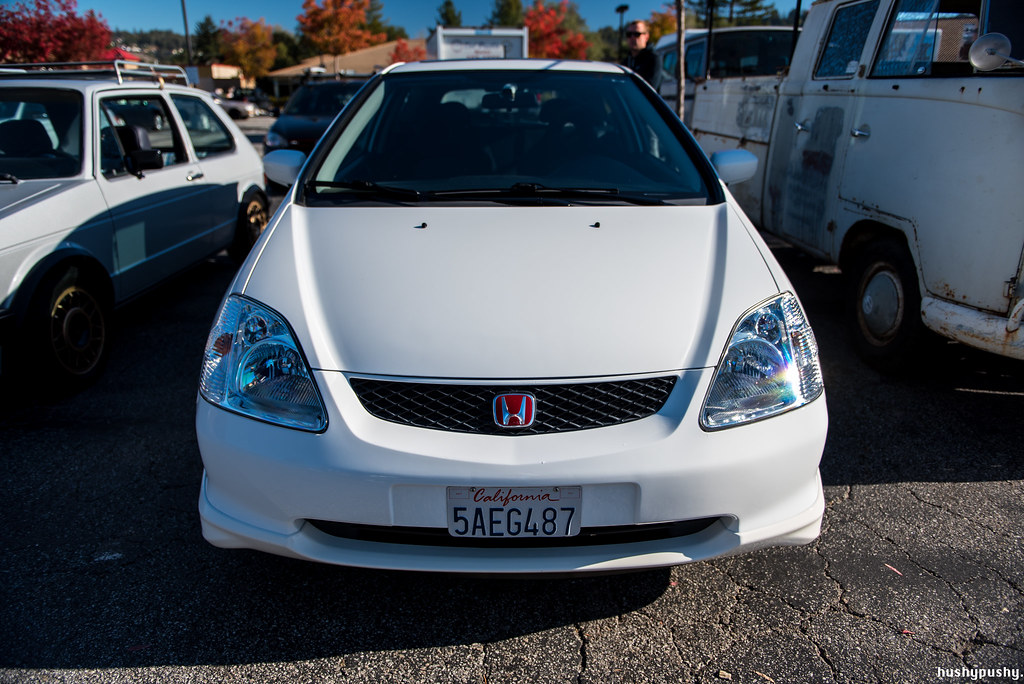
Ah yes, the black sheep of the Civic Si family. It’s almost like they sabotaged this car to say “See! Americans hate hatchbacks! So coupes and sedans it shall be.” If this car had a proper K20 that revved to 8000, it would be a cult classic. Instead, it just begs for an engine swap.
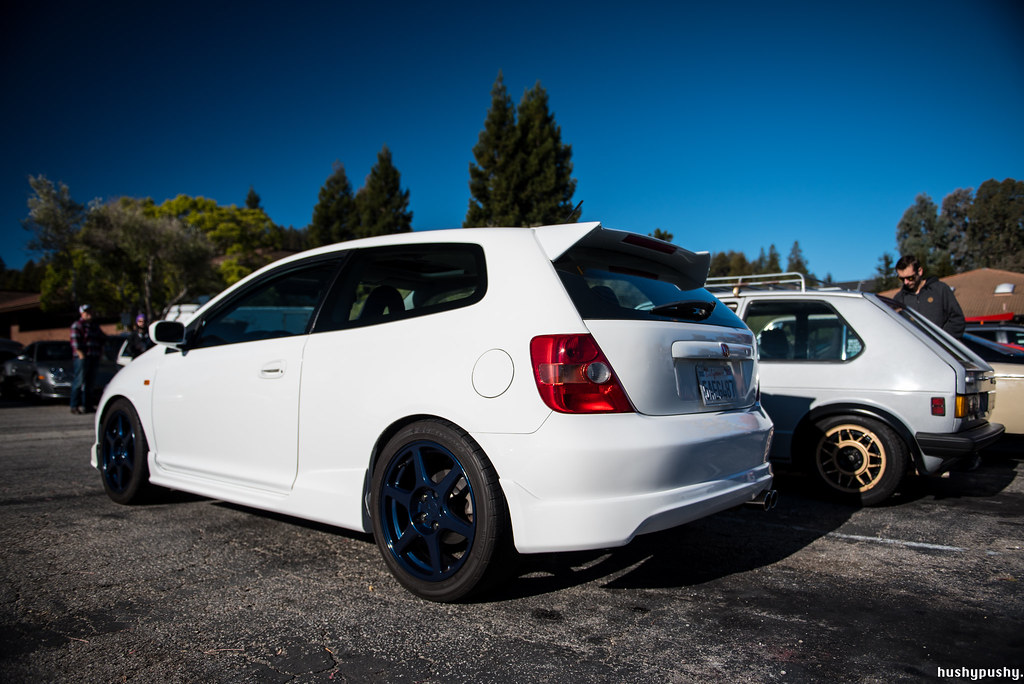
Whatever, I still think they’re pretty cool, although I haven’t actually driven an Si from this generation. An interesting side note is that the ’02-03 was 4×100 and the ’04-05 was 5×114.3; this car is on Evo wheels so it must have a conversion.
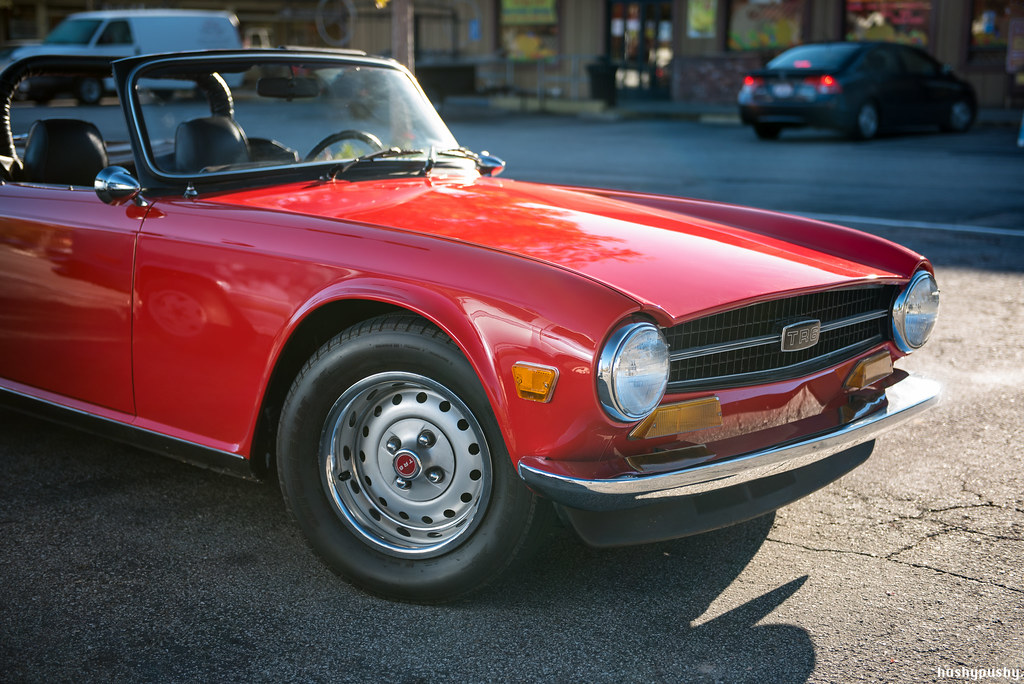
Sometimes you just point and shoot. I don’t really know anything at all about these Triumphs, but I love all the cool details, from the silver steelies to the front air dam to the bullet mirrors. Even the government-mandated reflectors have an interesting design.
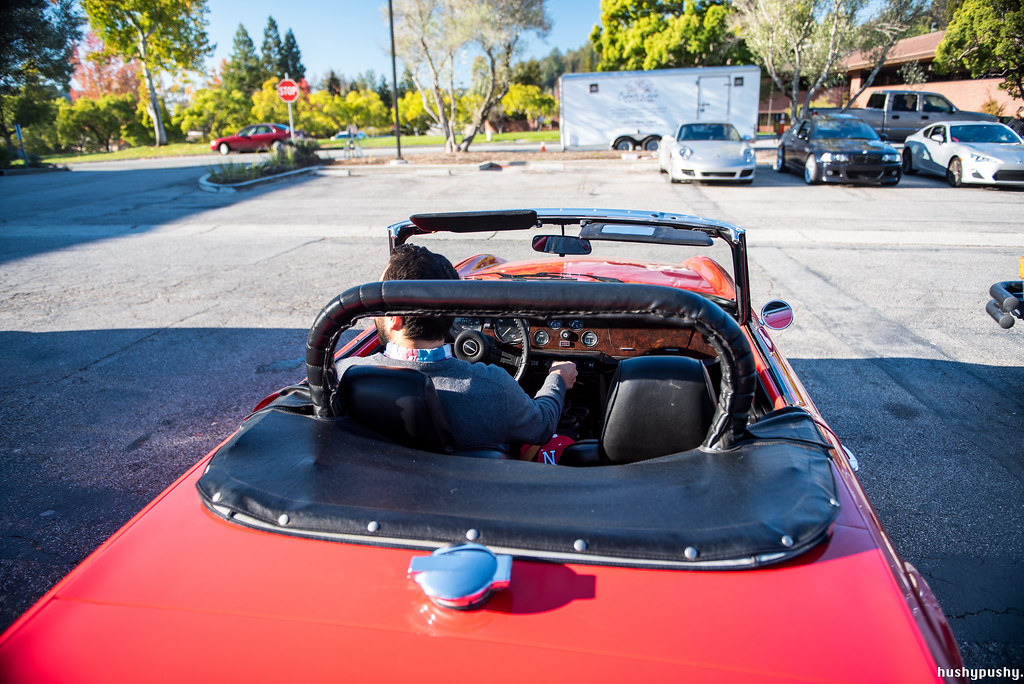
It’s totally normal to want to feel how a car shifts, right? I jumped into a ’79 911 and felt the 915 gearbox, and Art really wanted to see what this TR6 was like.
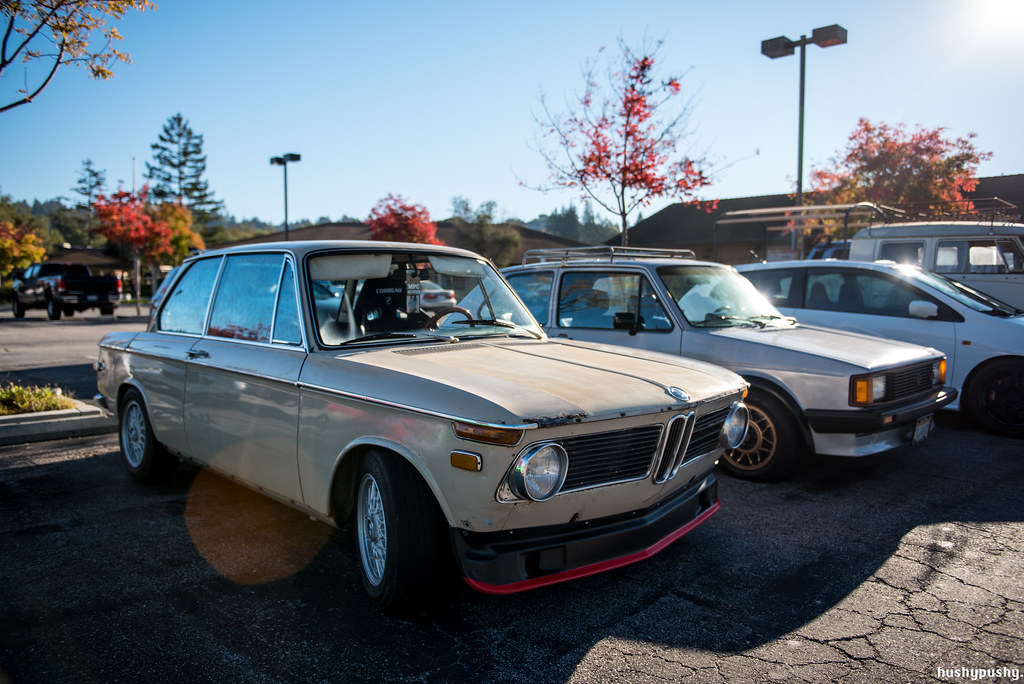
This 2002 was pretty cool.
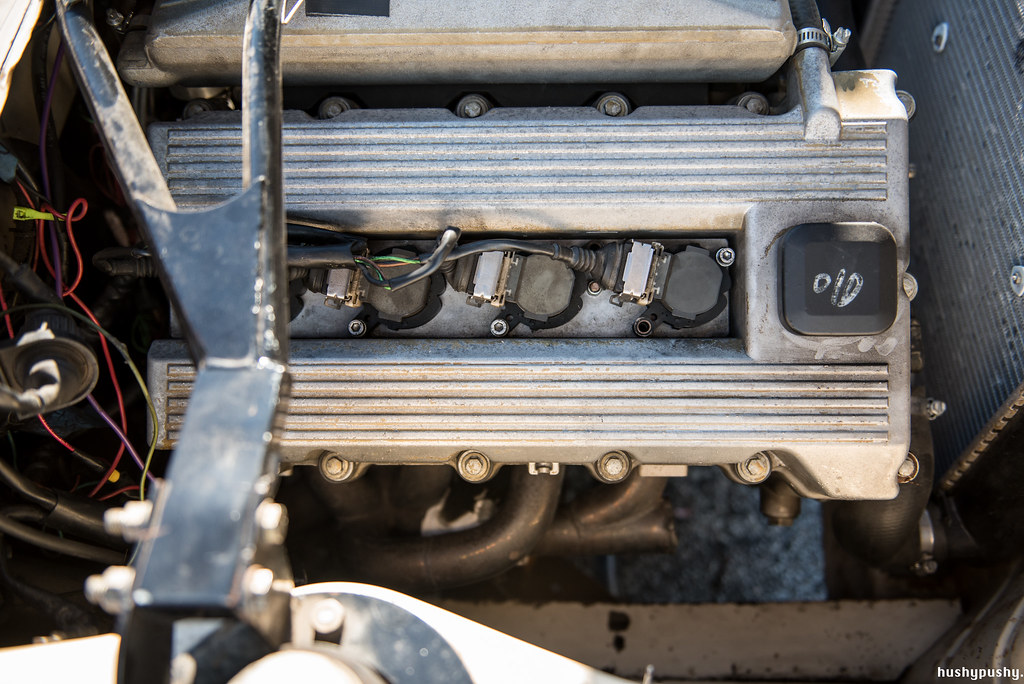
Especially because of the M42 swap from a 1991 318is. A nice amount of power in a reliable, OEM+ package. By the way, apparently that header is horrible and it’s being replaced very soon.
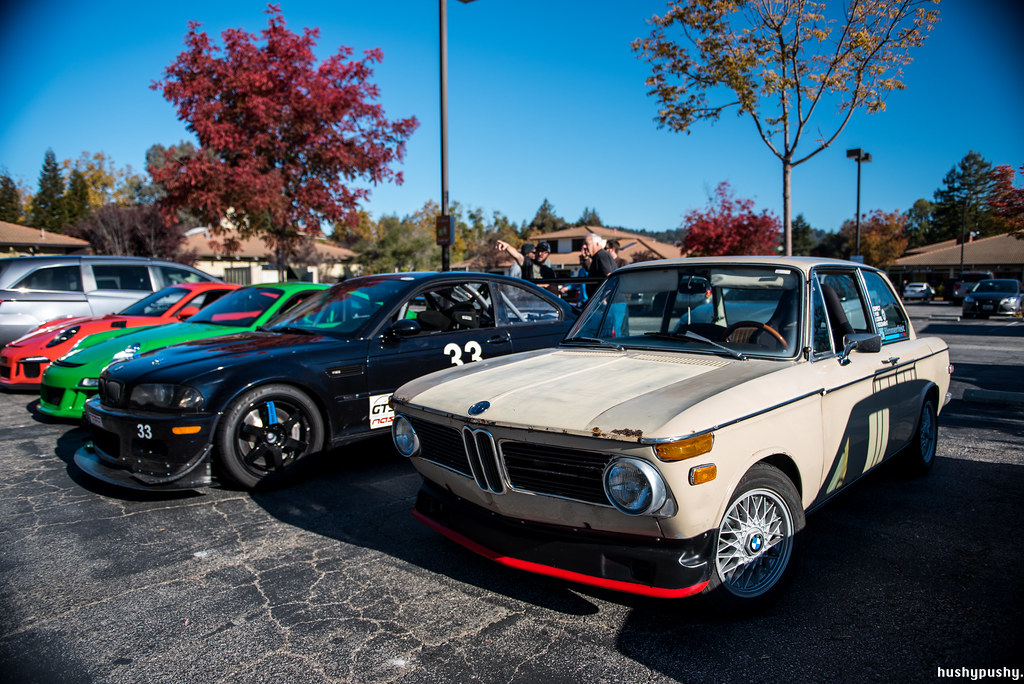
Next to that was Ruben’s GTS4 E46 M3 race car. Yup, that’s a full on race car that is still technically street legal.
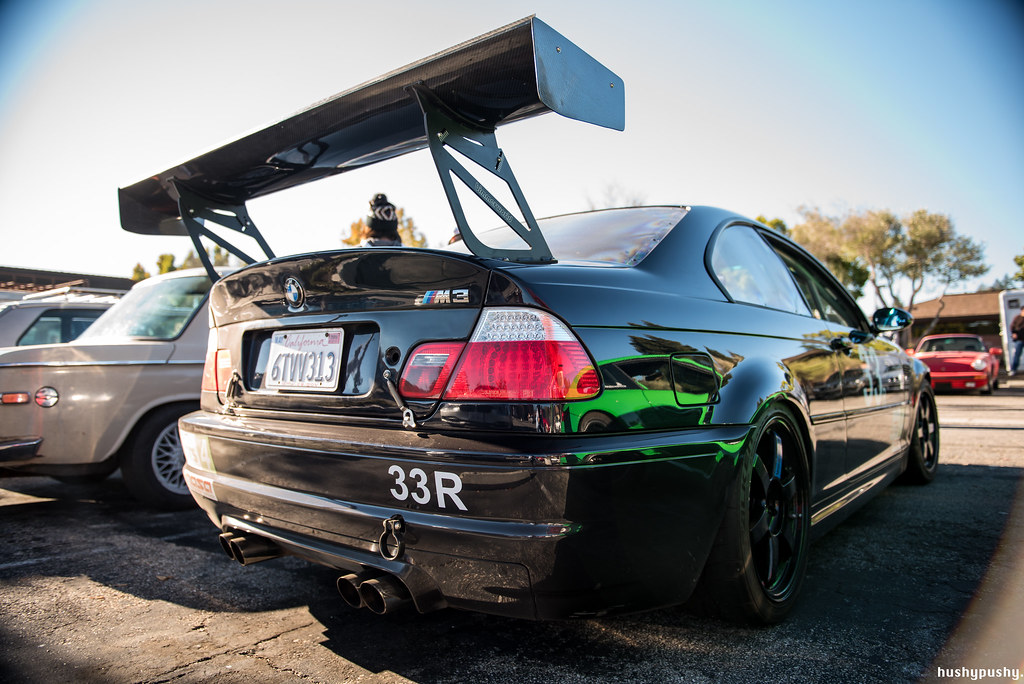
The funny thing is that it’s actually extremely quiet! He put the stock exhaust back on to lose a few ponies, because his engine build was a little too strong for his class.
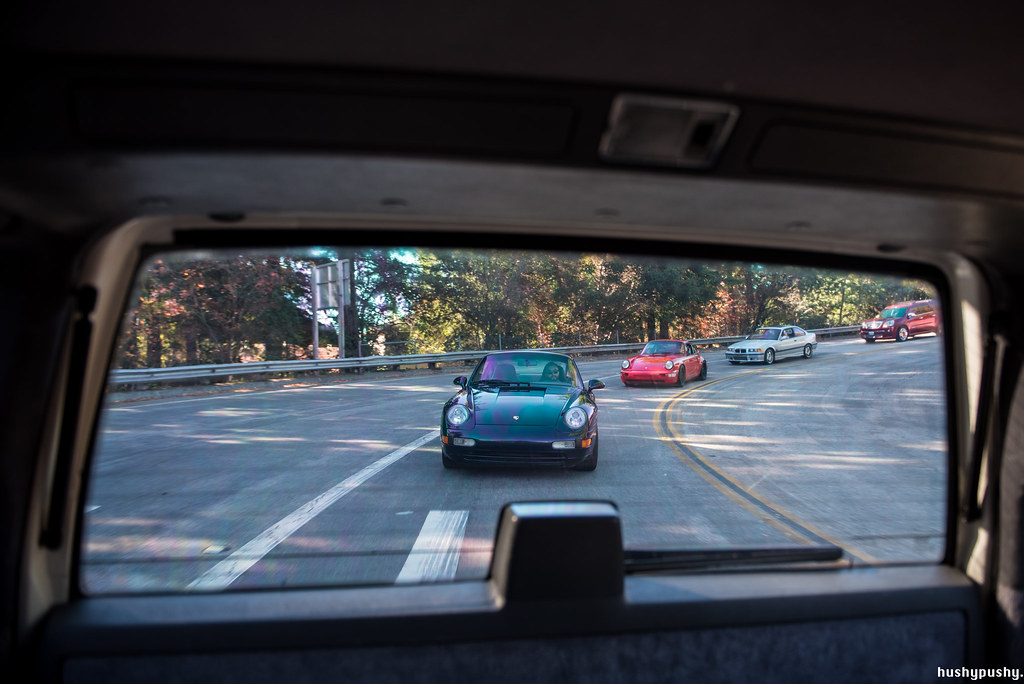
After that, we hit the road for our pilgrimage to the Summit Store. The group spread out pretty quickly, but I took the opportunity to grab some rolling shots from the back of Drew’s Volvo. Unfortunately we didn’t plan ahead with something to hold the hatch up, so I shot from the side windows.
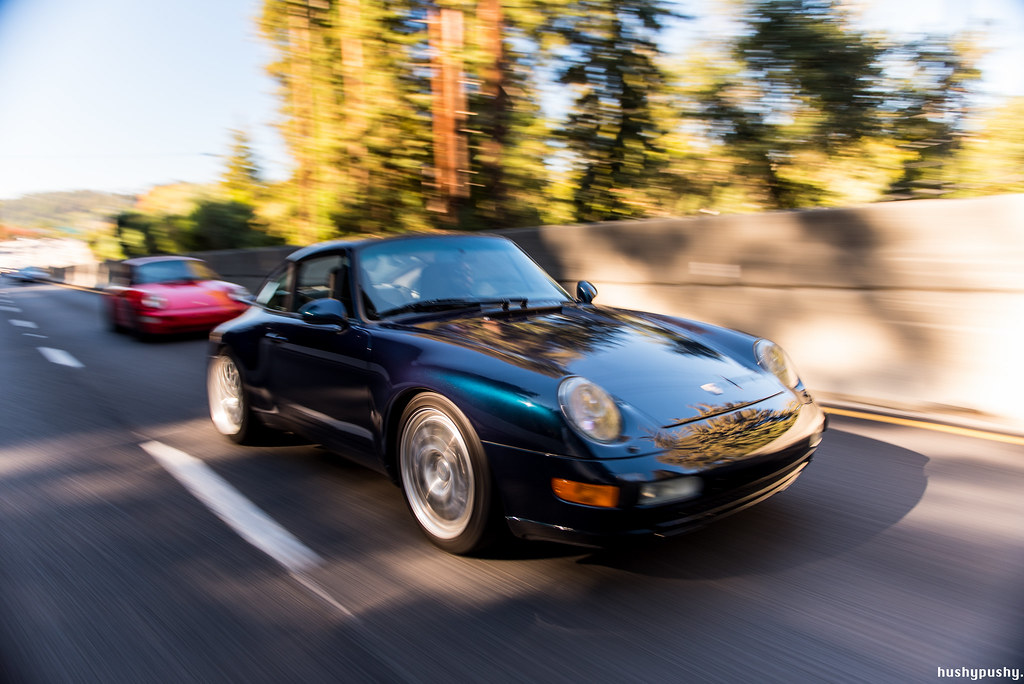
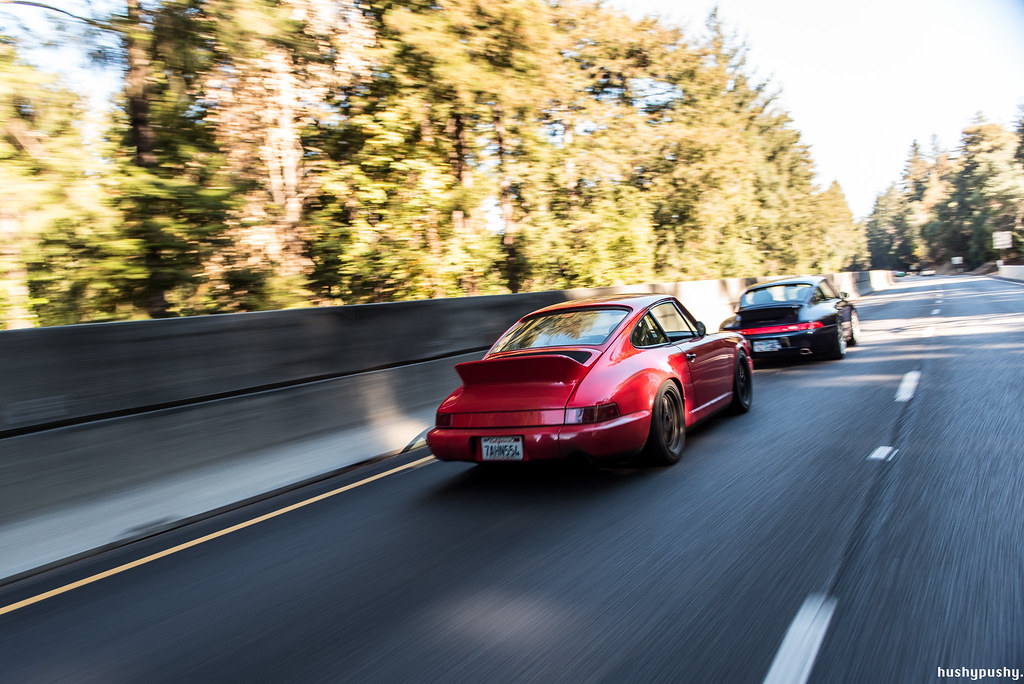
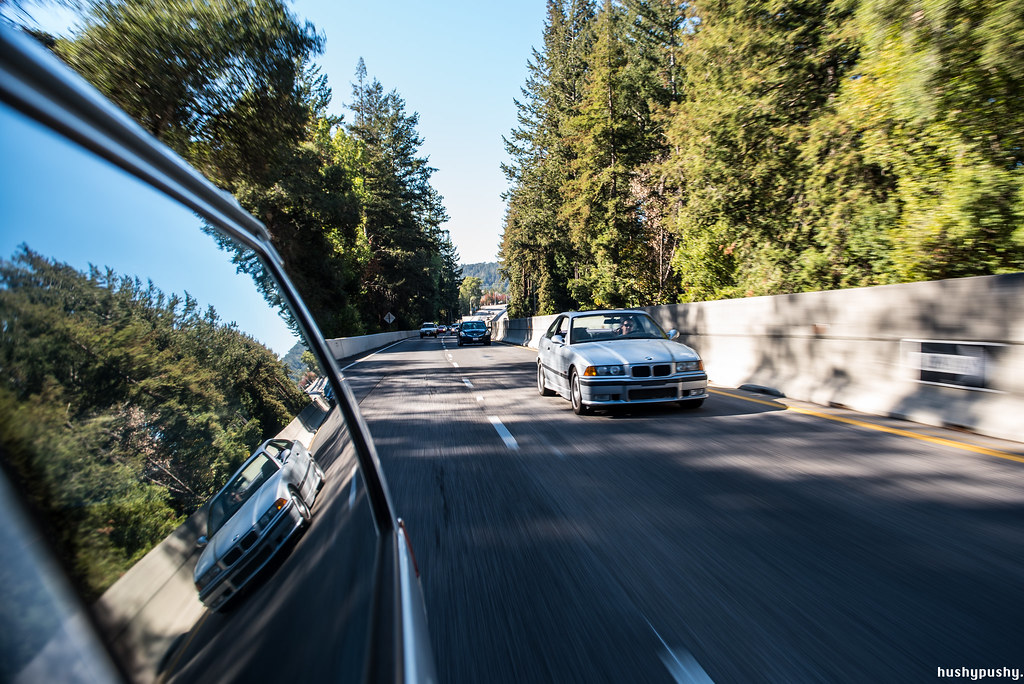
I’ve never really tried to do rolling shots, and it was an interesting experience. While fairly “easy” from a photography perspective, I realized that there needs to be some aspect of directing involved.
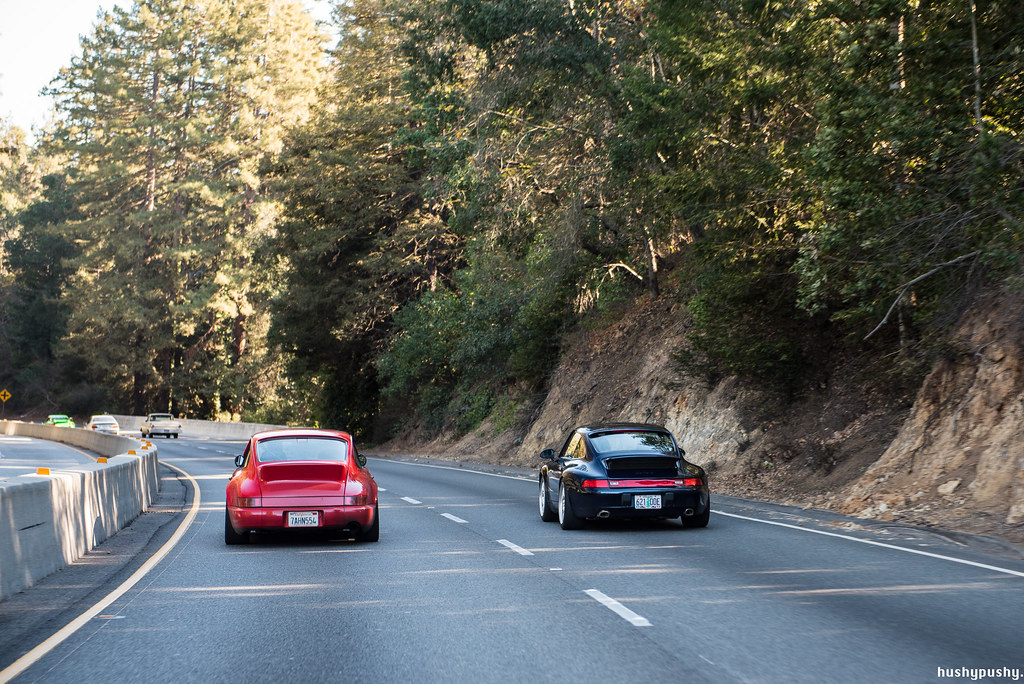
These are both narrow body cars, but check out how much it grew in width over one generation.
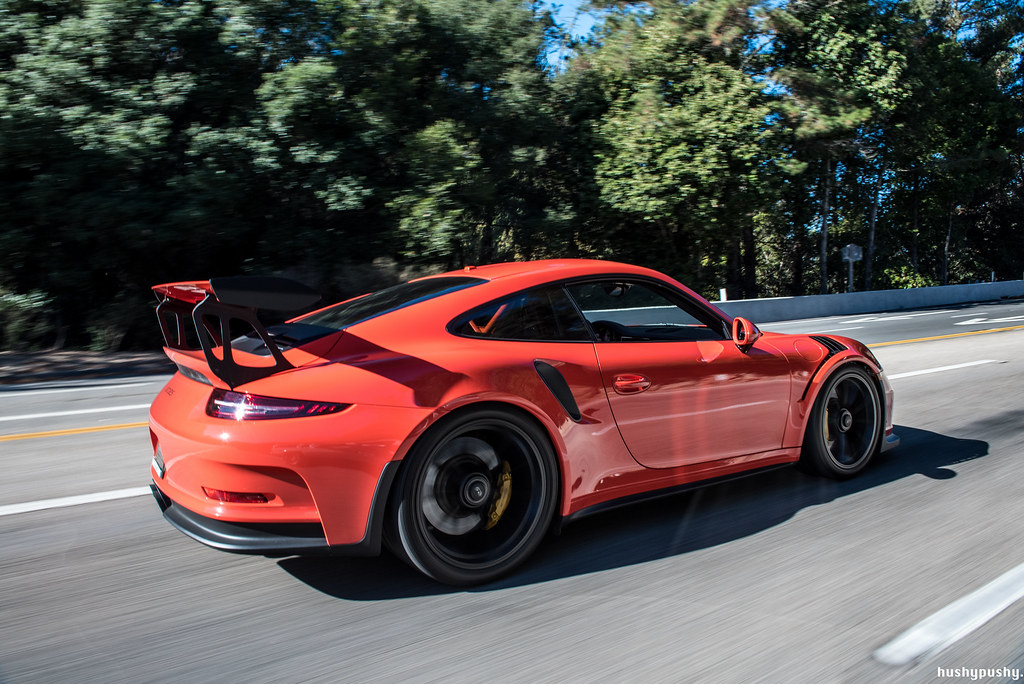
But you don’t know wide until you see this thing. I never really liked the look of the GT3 RS when I was looking at it on the internet. But when I saw it in person, it all made sense.
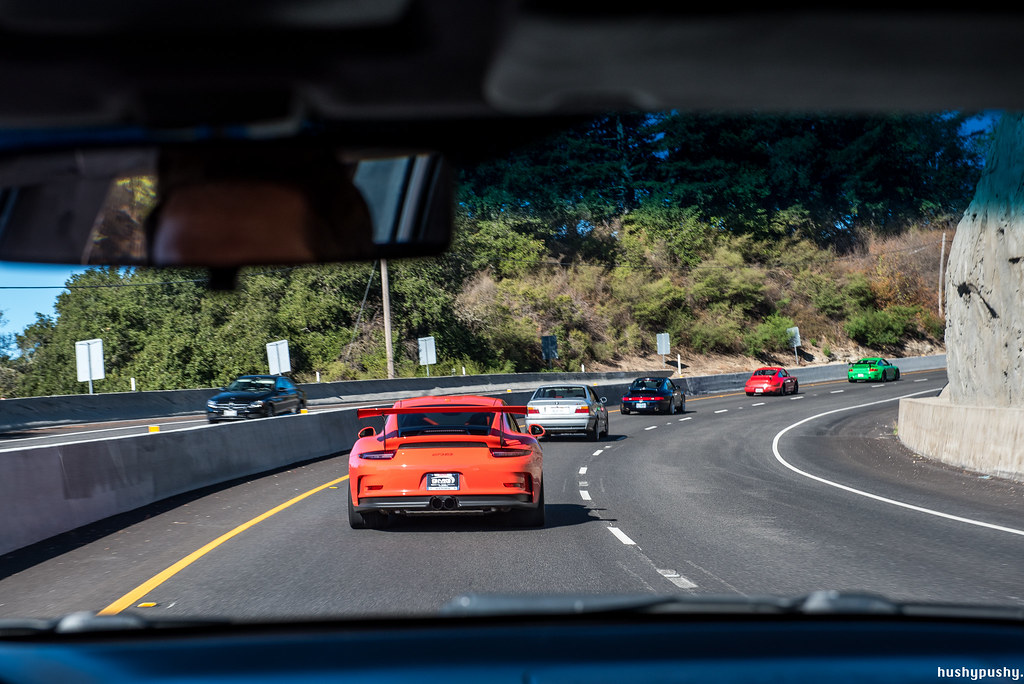
Highway 17 was pretty torn up and nasty for a while, but a recent repaving project has made it smooth an extremely satisfying to drive. The only problem? It’s “cop heaven” (as Art likes to say), which is on one hand infuriating, but also totally understandable; everybody thinks they’re Senna, right up until they understeer their Camry into the center median.
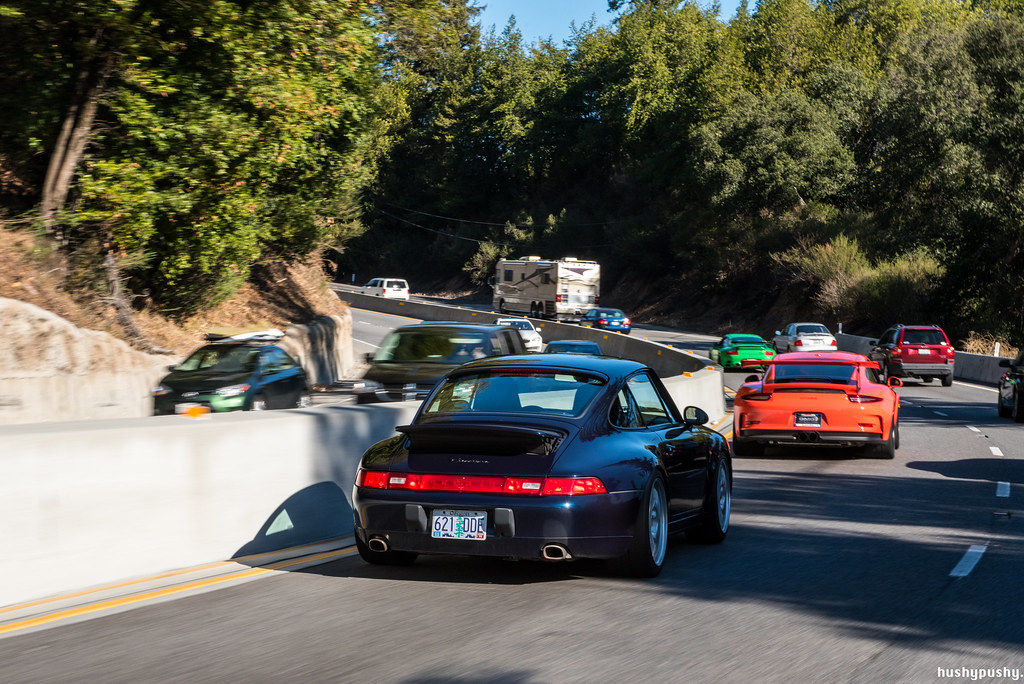
We, however, were simply out for a Saturday cruise amongst the other hoards of weekend traffic. Don’t forget that this sexy snake of tarmac is also the main artery between San Jose and the Pacific Ocean.
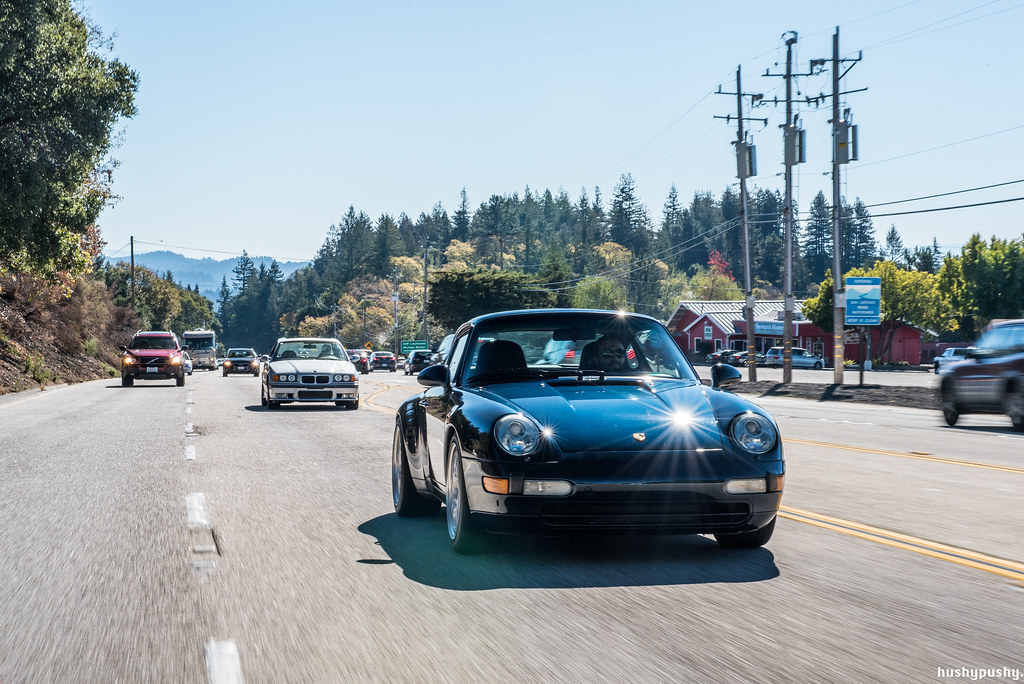
The summit is the only place that doesn’t have a center median. Seems hard to believe the entire road used to be like that. They began to add metal barriers in the 70’s and then concrete throughout the 80’s.
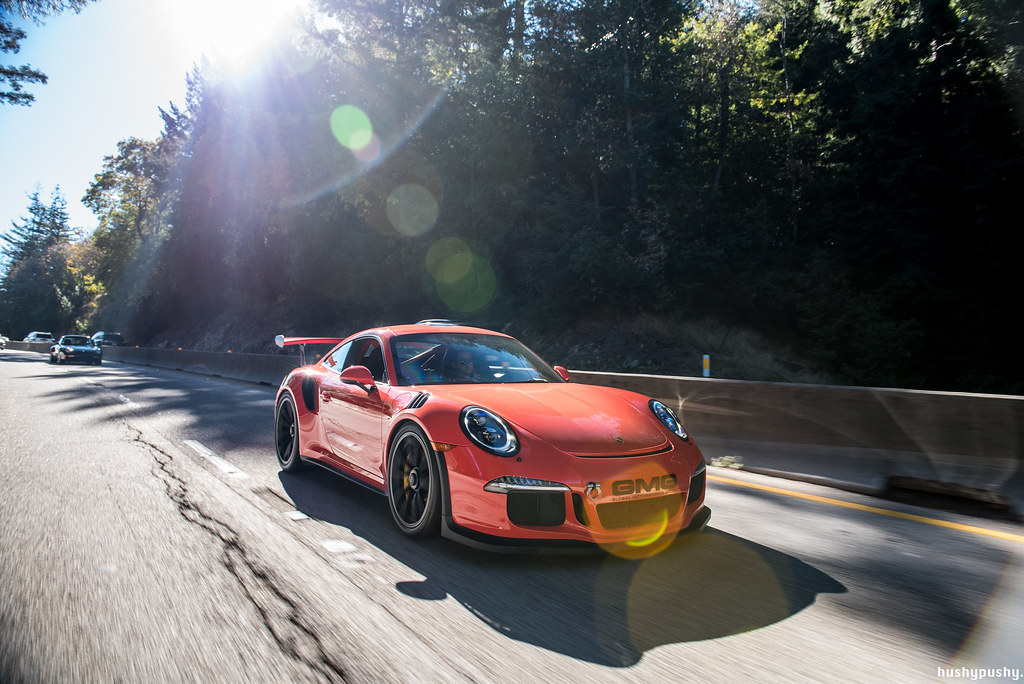
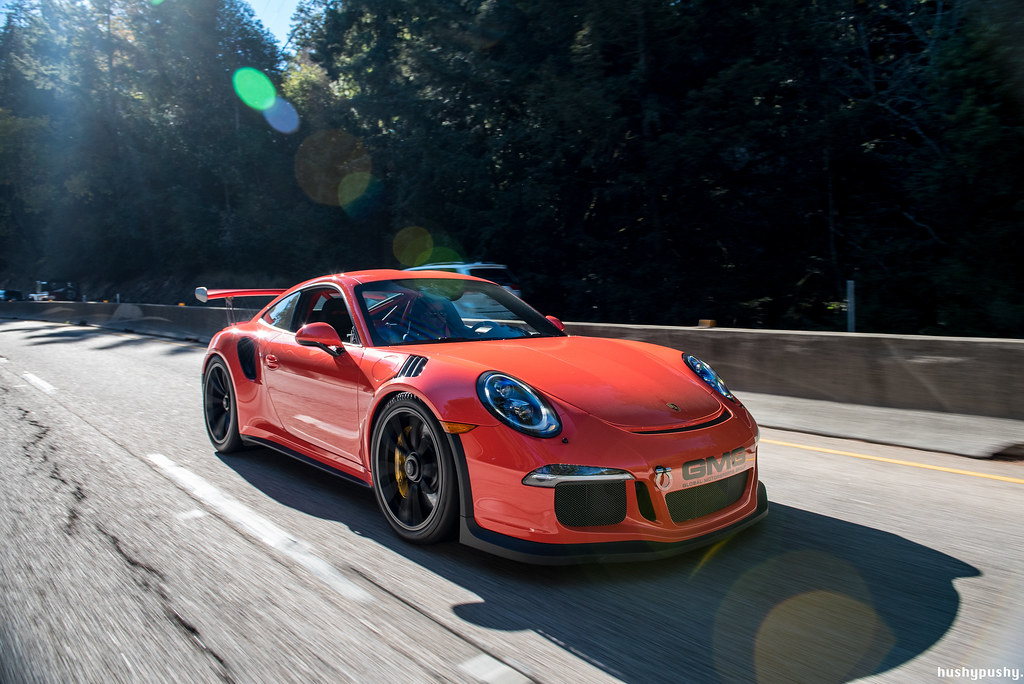
Note that now we’re on the other side of the mountain, and the newest revisions haven’t yet caught up. The pavement isn’t bad over here, so it’s not a big deal, but it is noticeably older. The big difference is the center median; it’s basically a series of old jersey barriers on this side, whereas the renovated sections get a more attractively designed permanent wall (see above). Okay, enough of the highway stuff, check out that Lava Orange GT3 RS!

Strange as the colors might look there, that’s reality. Ocean Blue Metallic is a very light blue where the sun hits it, mostly a medium blue in direct light, navy blue in indirect light, and then totally purple at oblique angles.
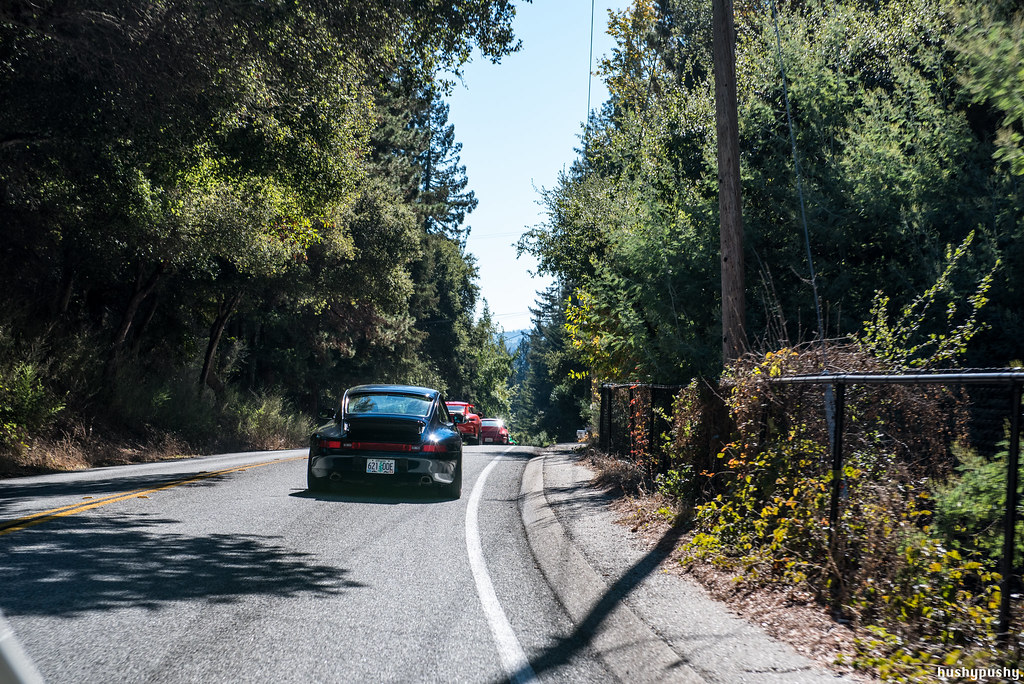
Then we cruised along Summit Road, which can best be described as meandering. It’s not really twisty as such, but it is a curvy road. Although you might think of the limit as being “only” 35 miles per hour, the scenery and elevation make it interesting enough to be an ideal cruising road: you could roll casually in anything from a Model A to a Model X and feel right at home.
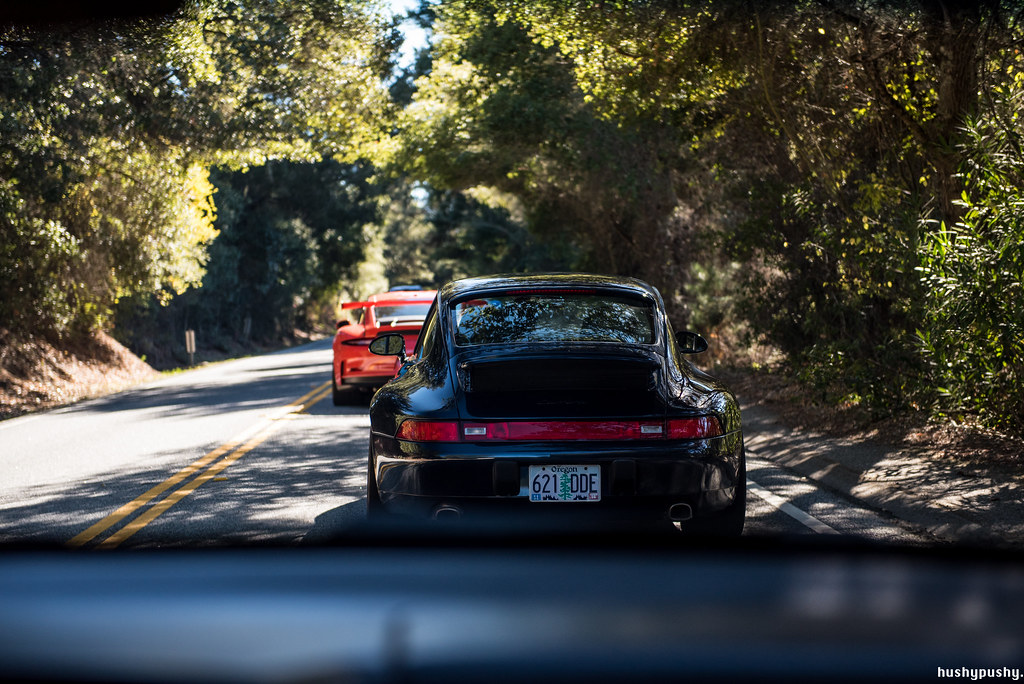
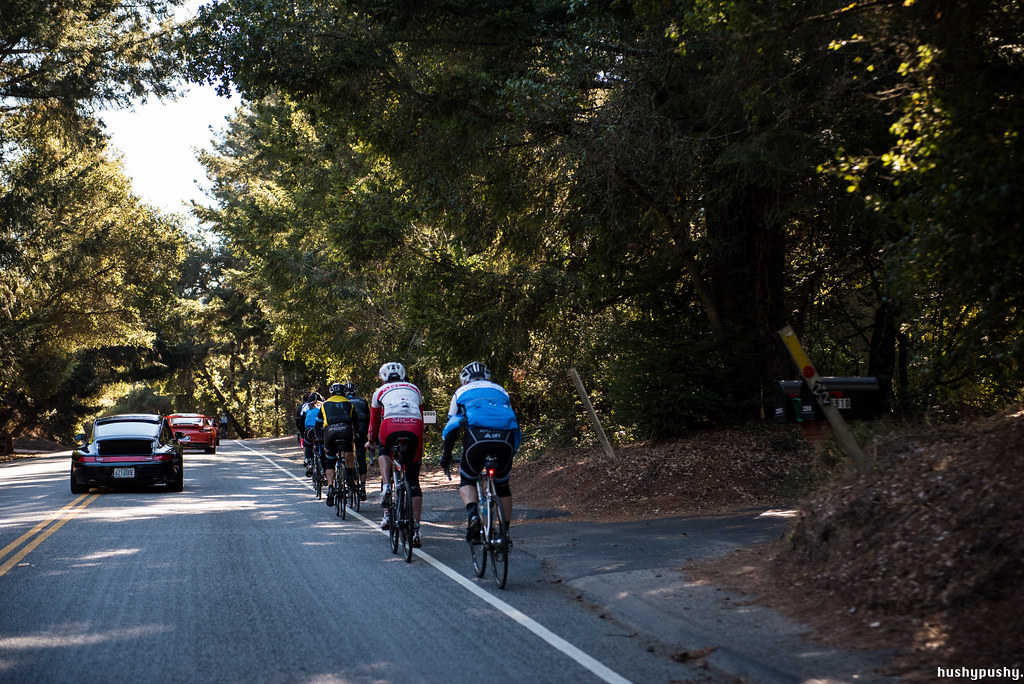
Even though cars can cruise at 40-45 without attracting the ire of local authorities, bicycles are free to engage their top speed, which unfortunately is much lower than the 35 MPH Speed Limit even at the best of times. When faced with an obstacle, such as any slight incline, that top speed drops drastically.
I was very surprised the other day when I opened up my BBC World News app to read about something that happened very close to where I work. A Mountain View police officer was riding along on his motorcycle and noticed a huge line of backed up traffic. When he worked his way up to the front, he saw the source of the calamity: there was a Google self-driving car, going 24 in a 35. Heroically, MVPD pulled over the offending car (no word on whether Google has written an algorithm that recognizes when it’s being pulled over and acts accordingly) and “educated the operators about impeding traffic.” Google’s excuse? Their cars’ speed is capped to 25 for safety reasons. In other words, “Suck it, we’ll go as slow as we want and you have to deal with it.” Kind of painful, isn’t it?
That’s how I feel about bicycles on narrow roads. While I’m free to go 35 miles per hour, even around a turn or up a hill, bicycles can struggle to make even ten miles per hour at times. It would be considered pretty unsafe and anti-social to pilot a motor vehicle at speeds that aren’t even befitting a horse, so why is it acceptable for cyclists to crawl up narrow, steep roads with blind turns at single digit speeds?
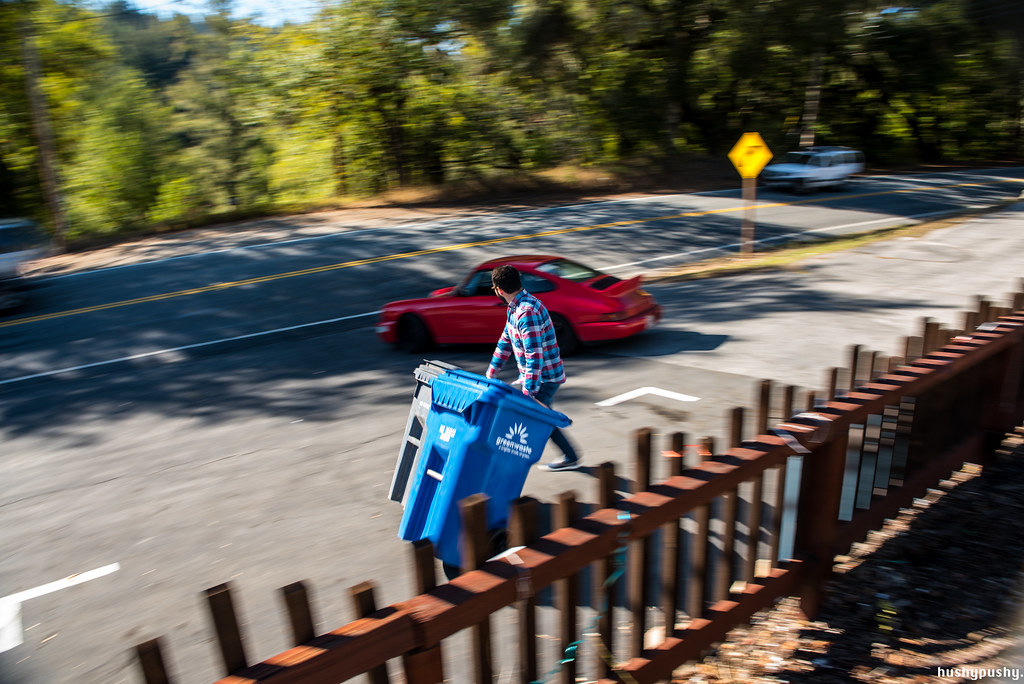
Anyway, a few minutes later we arrived at the Summit Store. We drove around the parking lot, where there was actually a surprising amount of cars. Since we had more cars than usual, a plan was hatched to park all the Porsches down in front. Art jumped out and cleared the (empty) trash cans, while Hunter got Ruben’s 964 ready.
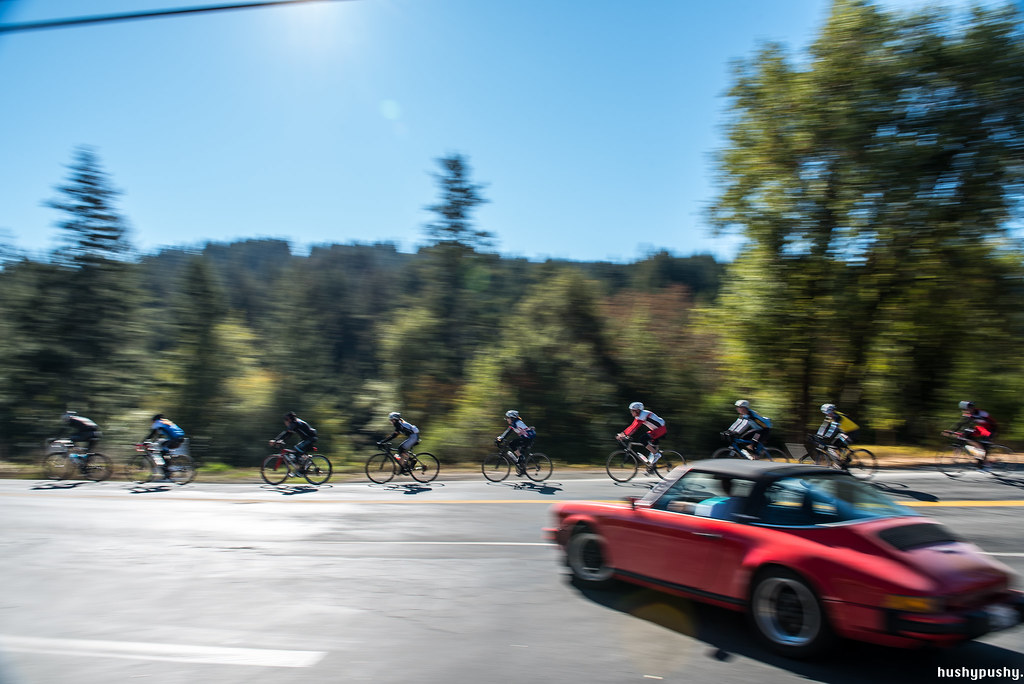
Finally, we saw the cyclists we’d passed. However, after we arrived a much larger gathering of people wearing helmets and neon spandex took over the entire Summit Store for a big lunch party.
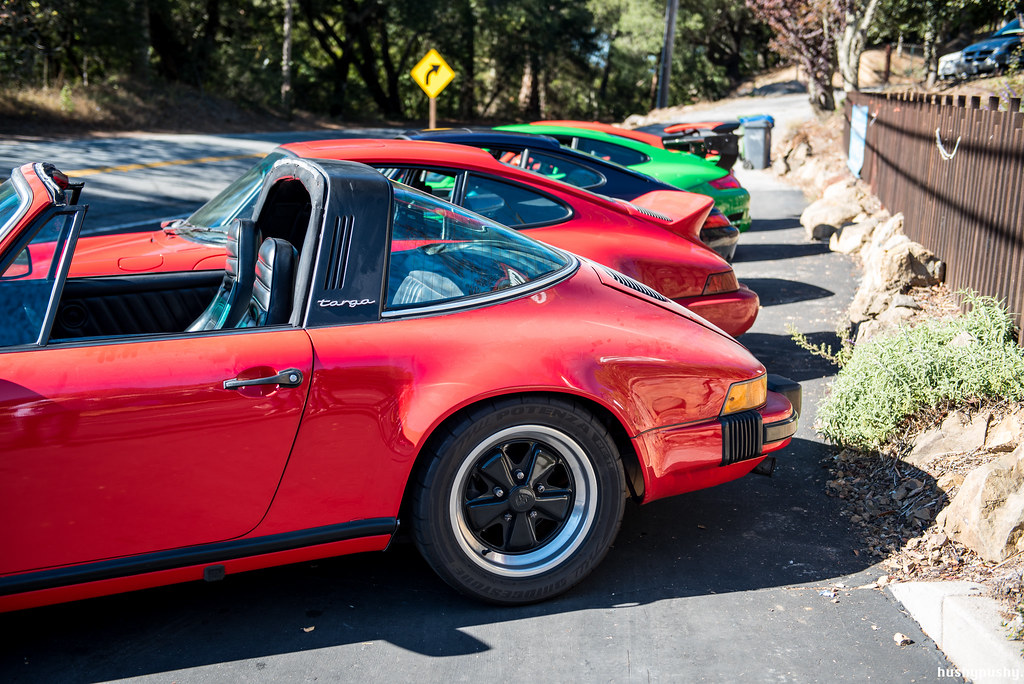
Okay, no long hood or 996, but otherwise it was a pretty complete lineup of 911’s.
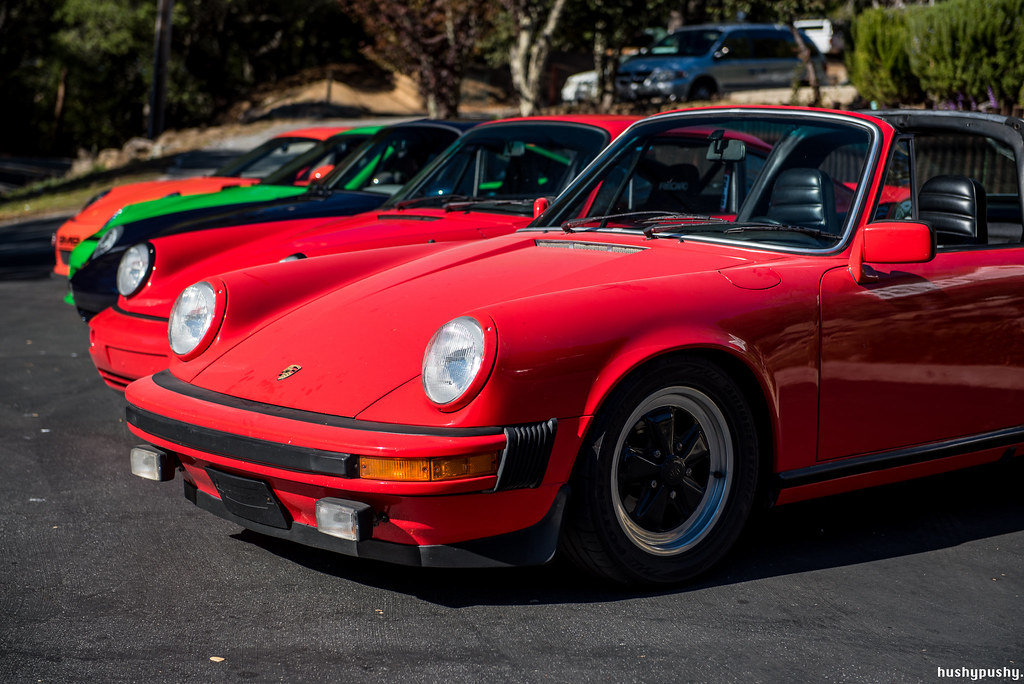
You know what, it’s true: there really is no substitute for a 911.

Ah, the good ol’ Summit Center. They make some damn good sandwiches in there.
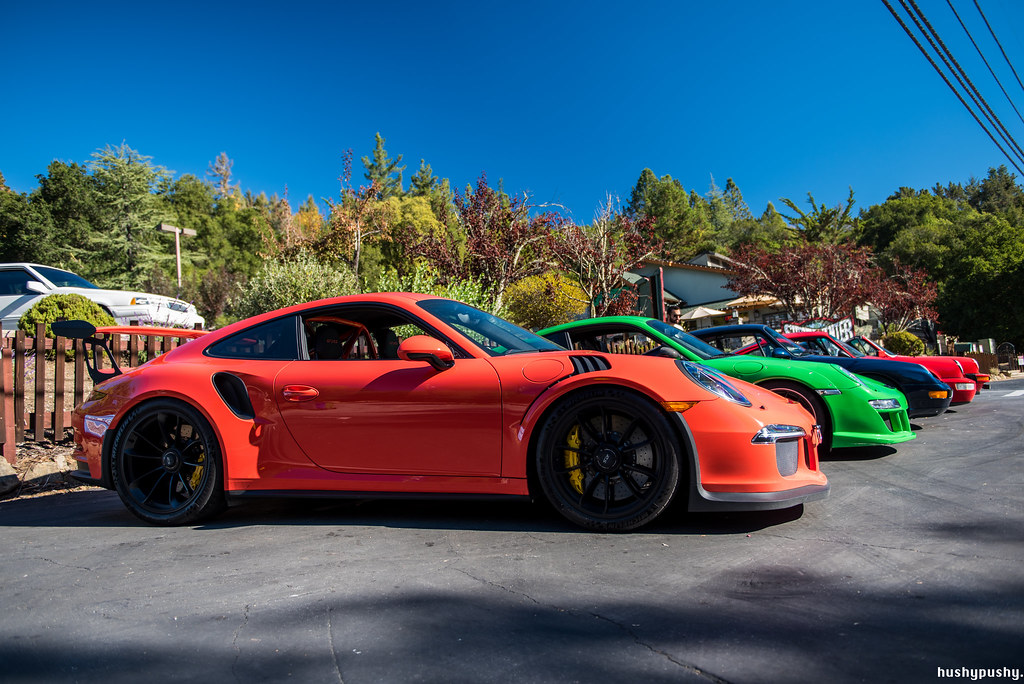
I love how the V90 is just lurking in the background, so spooky and Swedish.
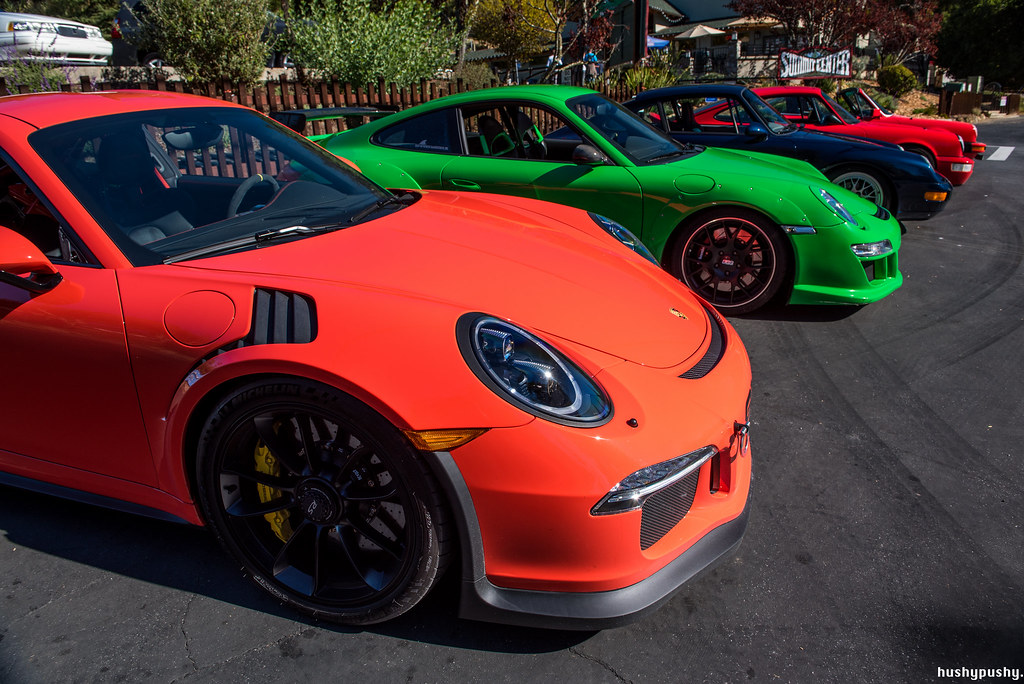
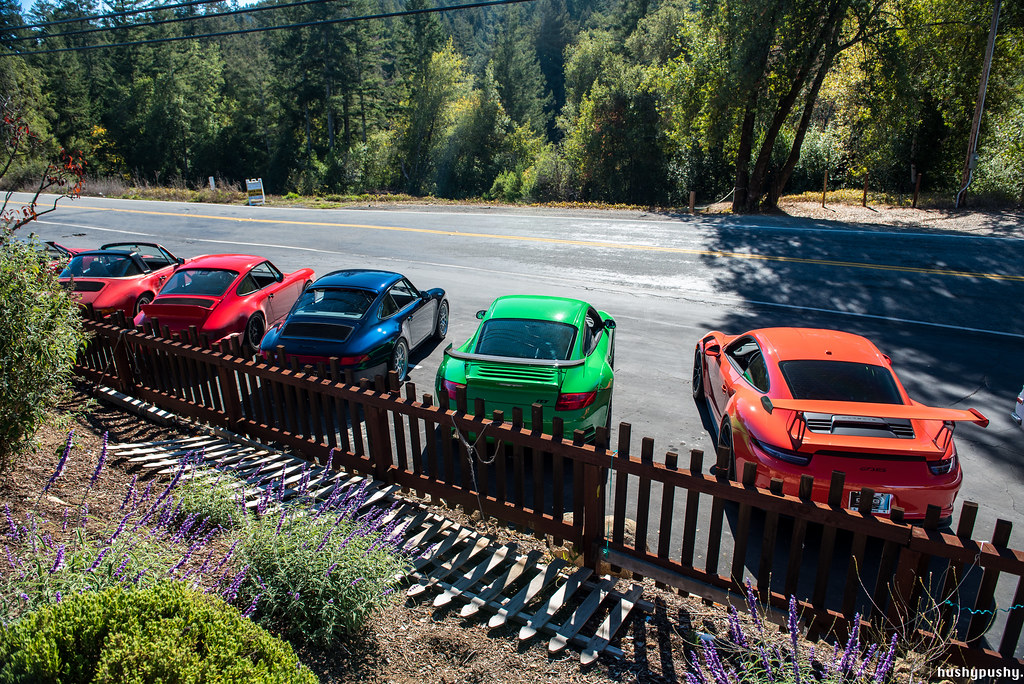
Not a grey or silver car in sight. Long live colors!
Okay, that’s it for this month’s coverage. The next one is December 12th; we hope to see you there! Follow @drivingwhileawesome on Instagram for all the juicy details (and much more, of course).


 Star Road