
Warm Saturday
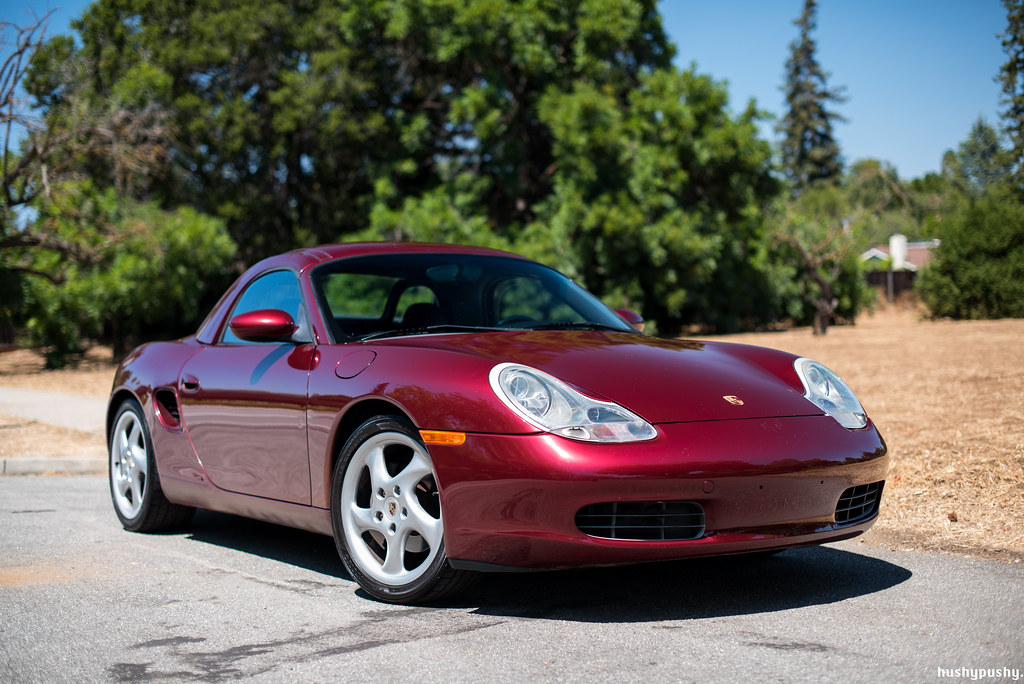
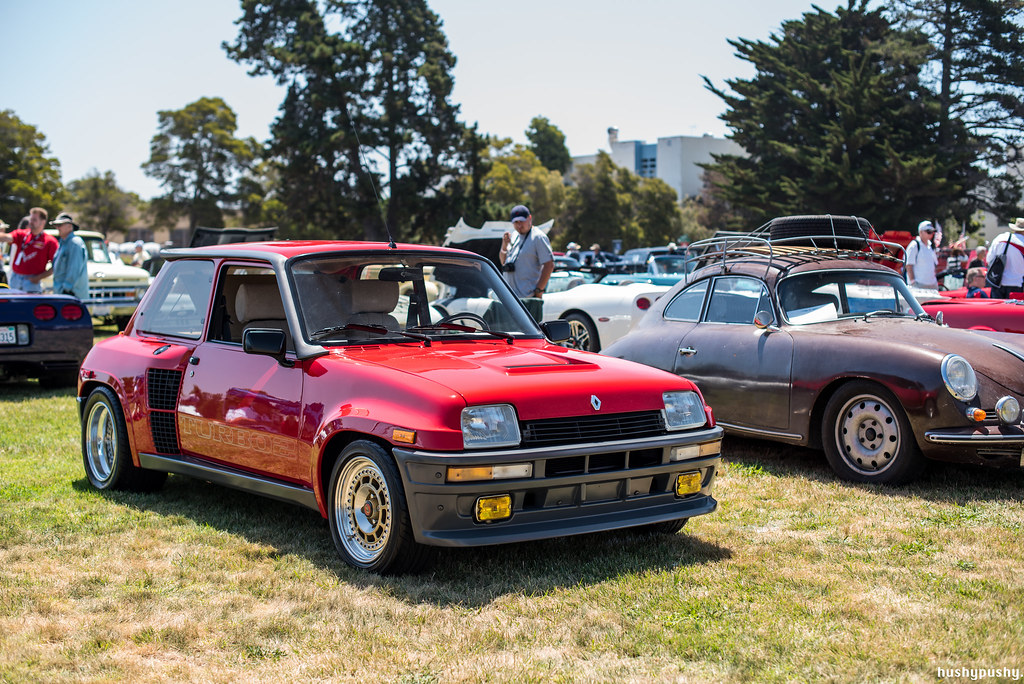
Well, that looks like California.
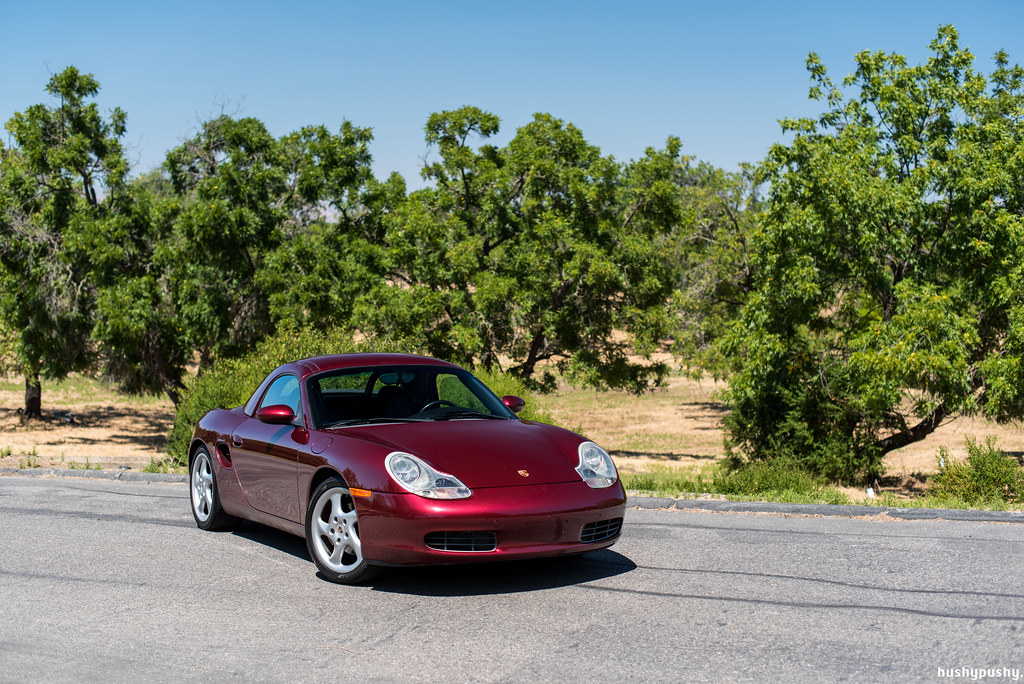
And that looks like California too!
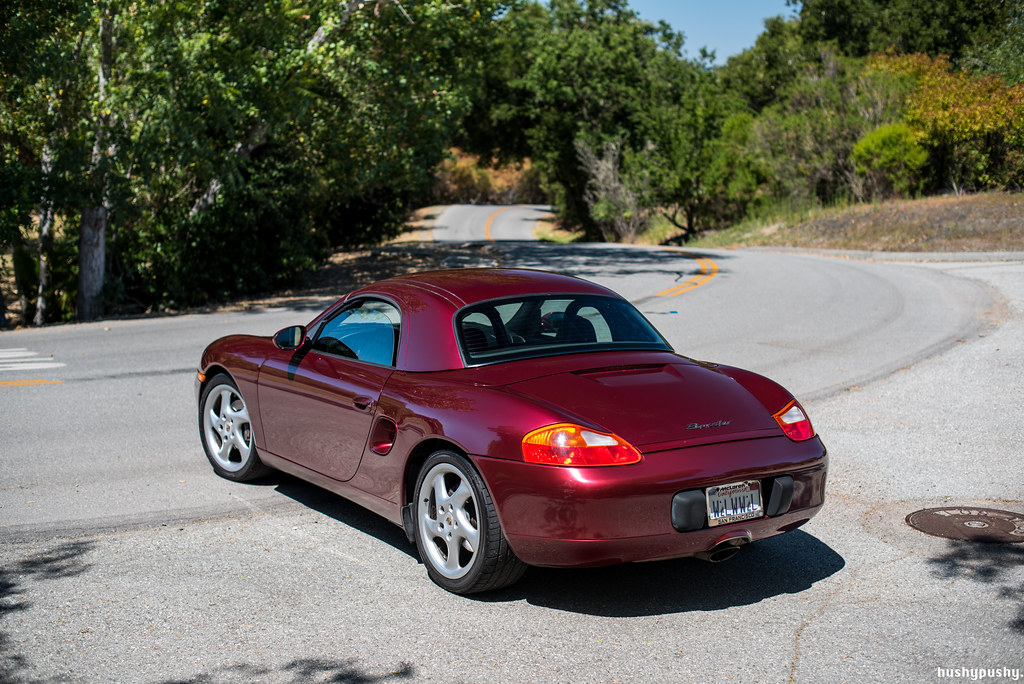
I was just cruising around some backroads after washing my car, stopping occasionally to grab some snaps. I use these little excursions to relax, but also to scout for areas I might want to bring my “real” shoots.
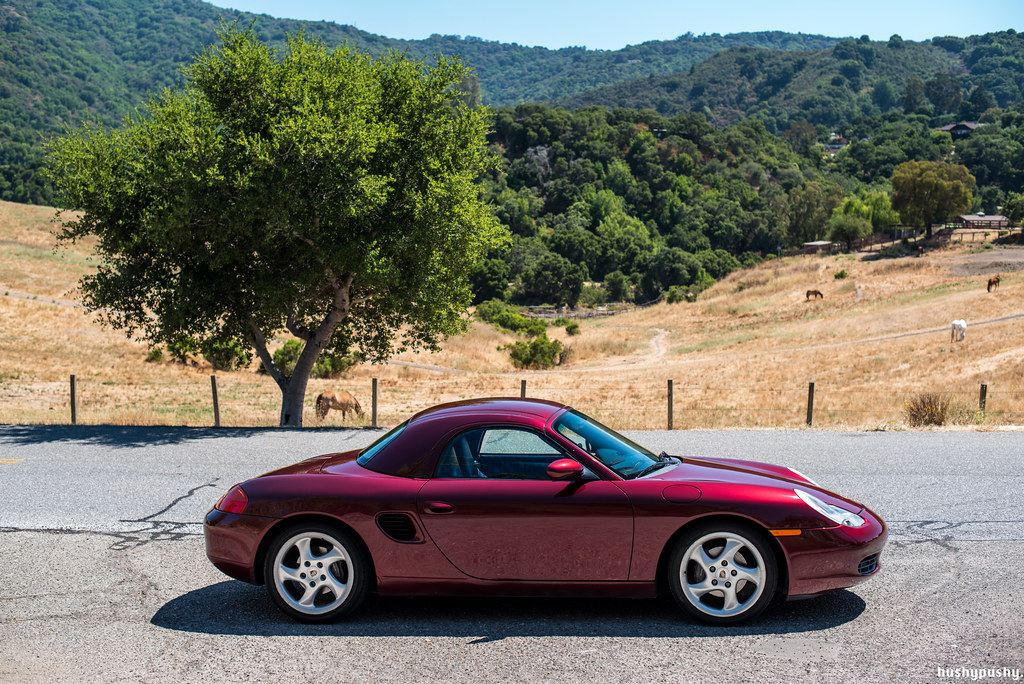
The truth is, interesting locations do just pop up out of nowhere. But if you can’t stop, drop, and shoot with your own car, how are you going to get it going when the shots count?
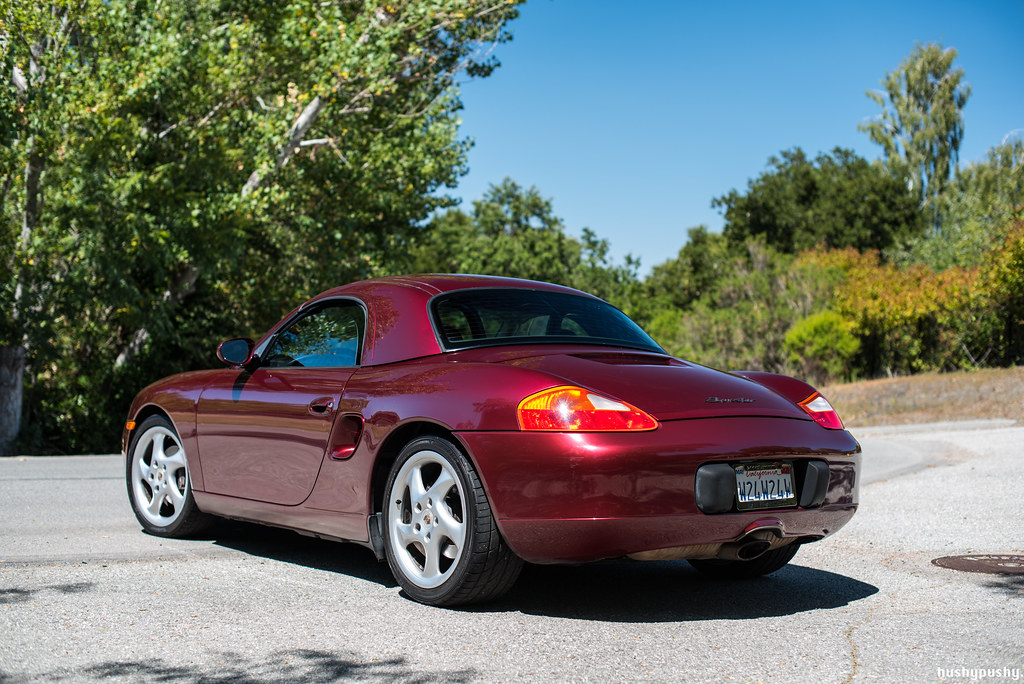
It’s hard to mistake this location for anywhere else but Northern California.
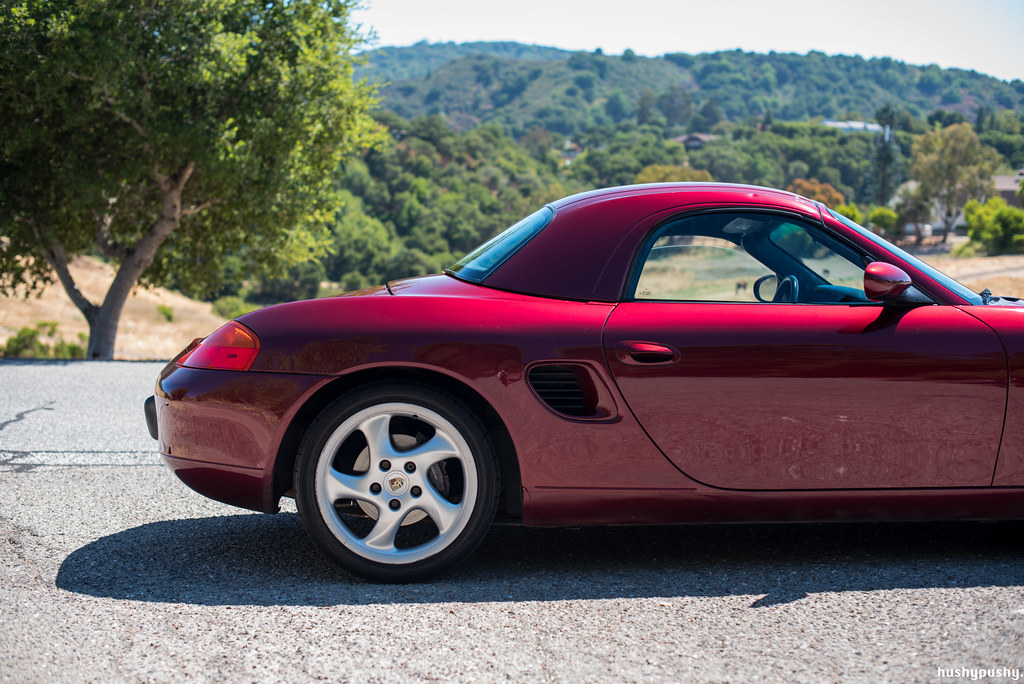
The golden grass and green hills are a scene that always reminds me of home. And hey, is it a selfie if you catch your own reflection in the side of the car?
We Drive Harder
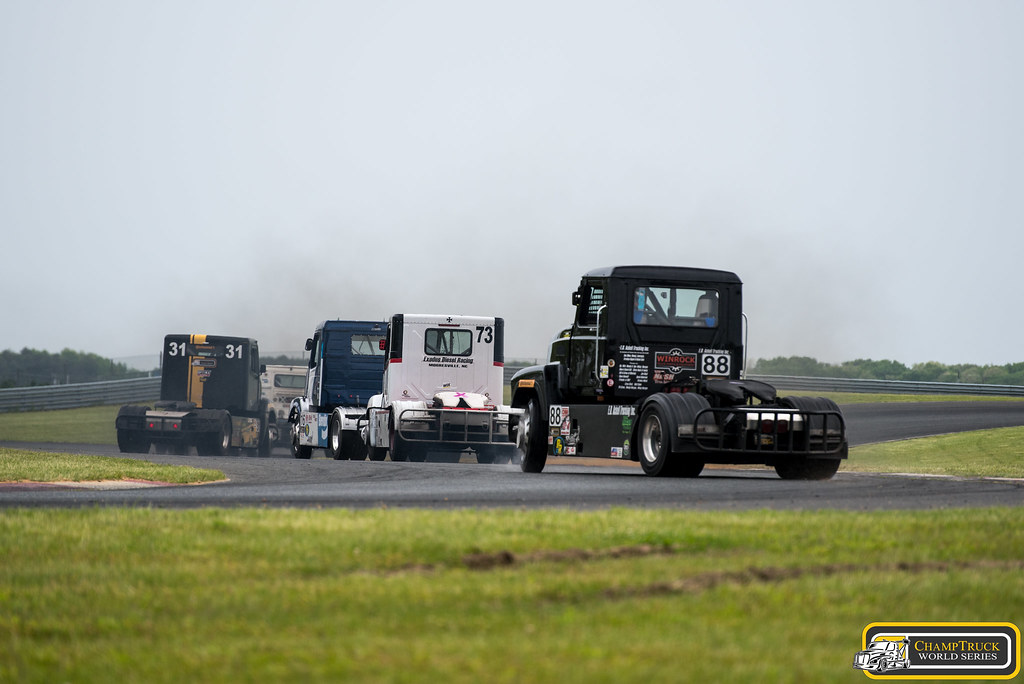
My favorite thing about shooting ChampTruck races, besides the obvious allure of seeing 12,000lb trucks going sideways, is seeing the support series that share the track for the weekend.
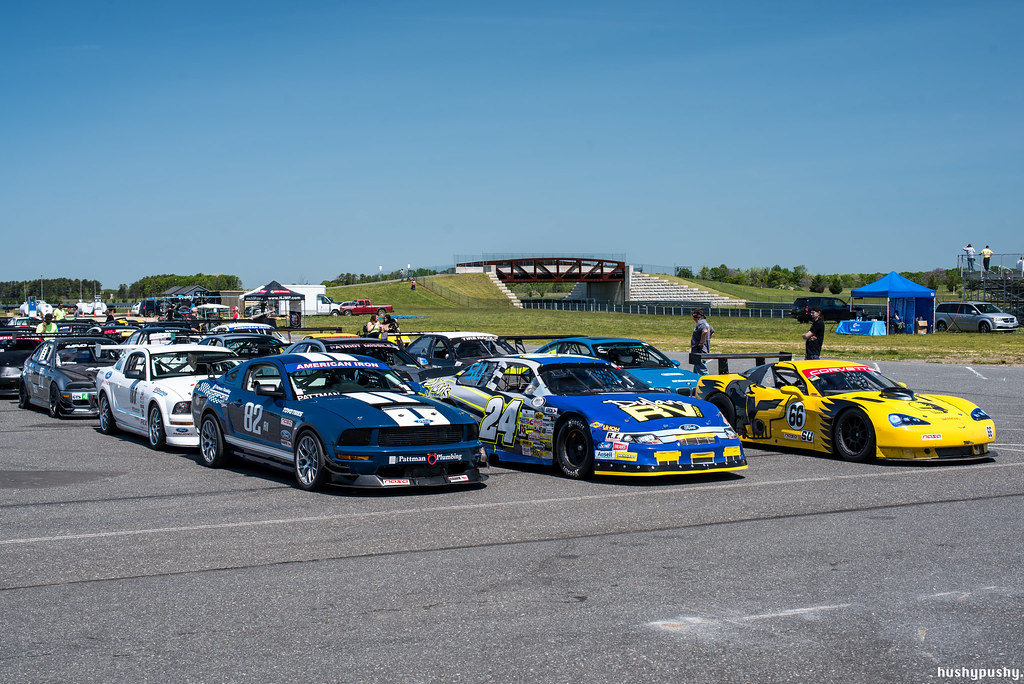
At the 2016 New Jersey Motorsports Park race, the support series on Saturday was a variety of NASA groups.
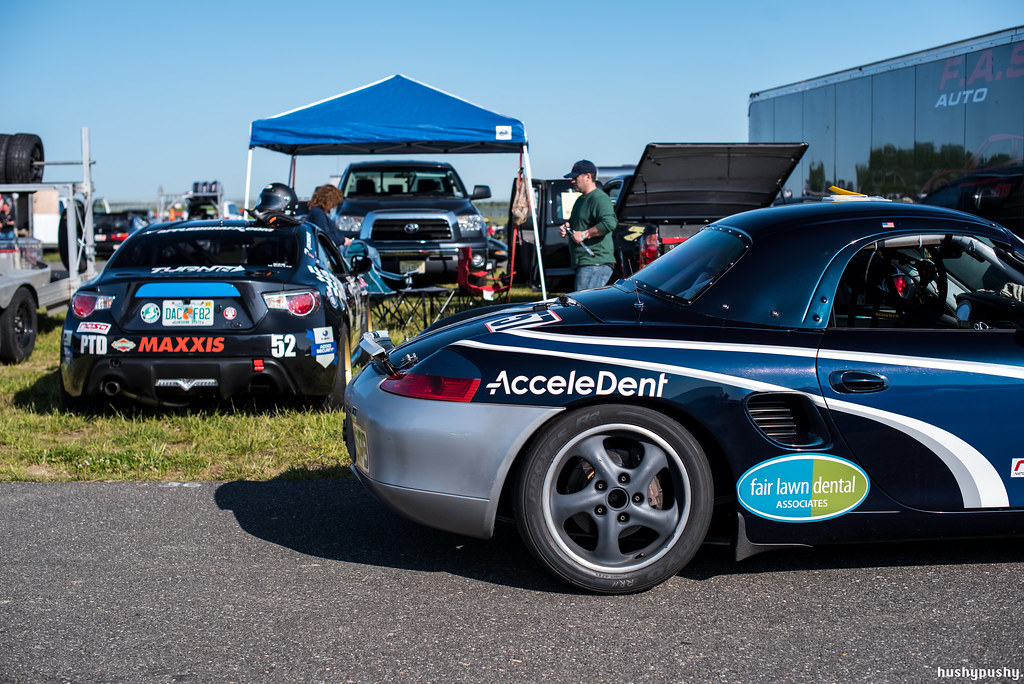
I’ve seen some pretty awesome support series in the past year, like US Drift Circuit in Palm Beach. But seeing these NASA groups really got my heart pumping due to their immediate relevance to my own tastes. As followers of this site know, I own two cars: a 2013 Scion FR-S and a 2000 Porsche Boxster. And there were many 86 and 986 race cars to drool over!
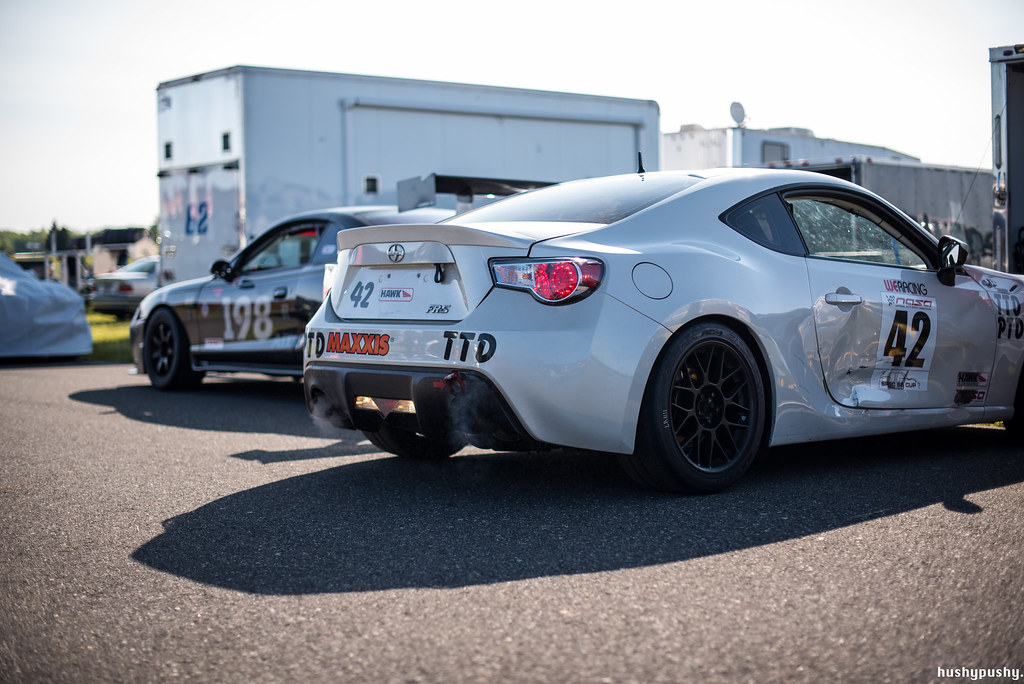
Track cars are infinitely more interesting to me than any show car, because you don’t do things to a track car for no reason. Sure, you can put your life savings into buying racing parts, but if all you do with the car is take it to WekFest and gently wipe the dust off it, those parts don’t mean anything. When you go a track, you see why these parts exist.
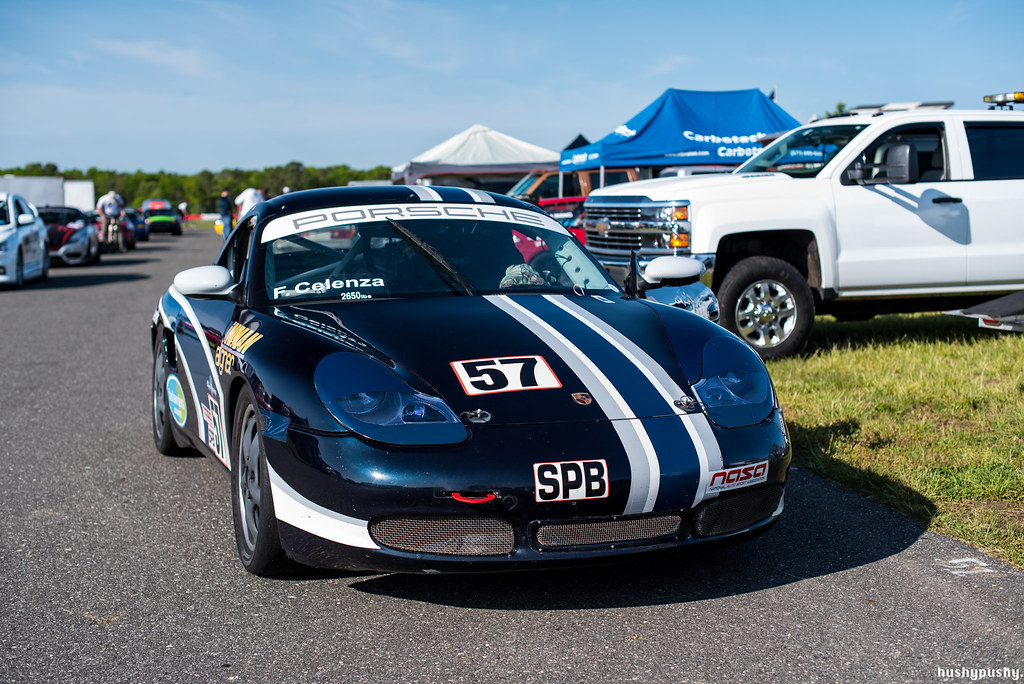
It’s always interesting to see things done not necessarily in the name of aesthetics, but performance. Like the bumper grilles, single wiper, and deleted-and-taped-over reflectors in the bumper.

I also like that the Spec Boxsters have their little spoilers permanently erect. It’s an all-business look that’s probably a bit too much for the street, but just right at the track.
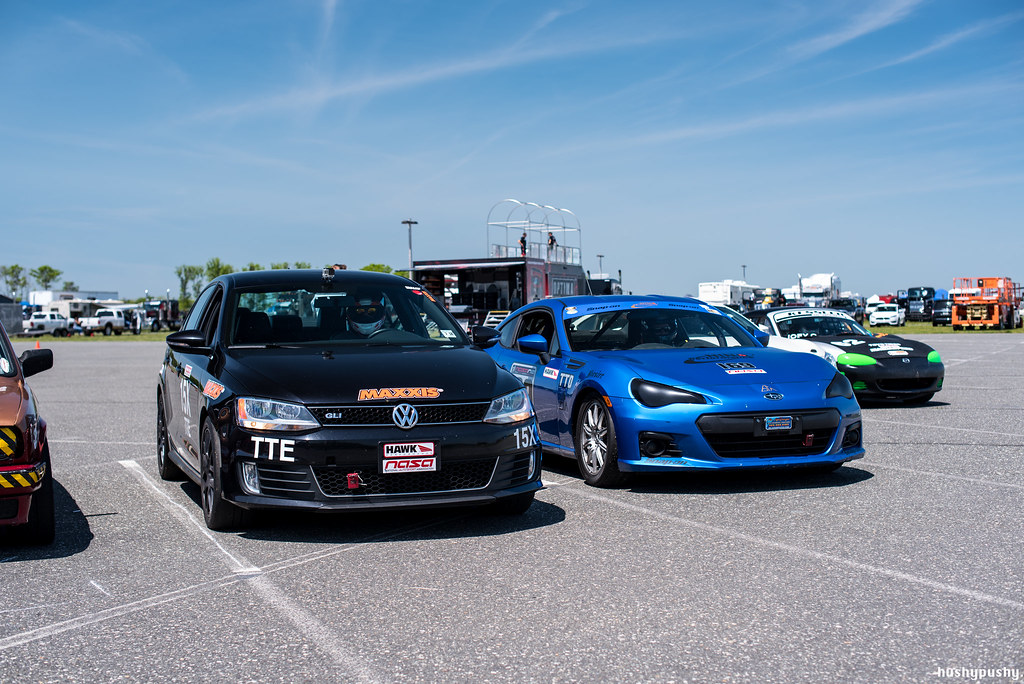
One of the most important things I’ve learned in my career as a photographer is not to care what anyone thinks about you. Look at the drivers in these cars–probably thinking to themselves, “What the hell is that dude taking photos of?”
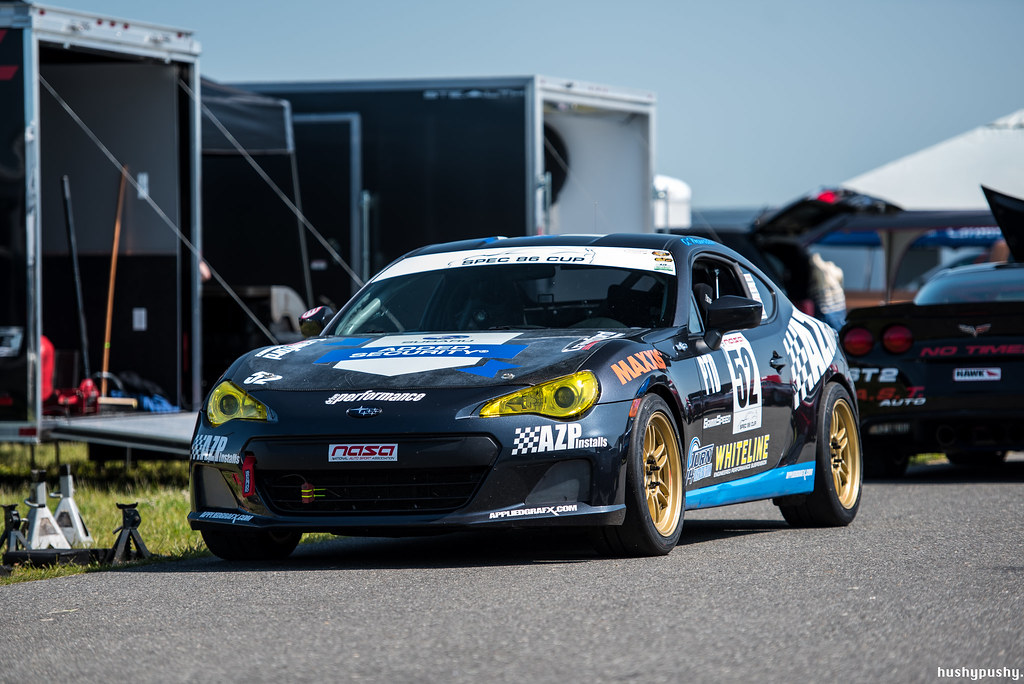
Unfortunately I didn’t have time to talk to many people, so most of these were quick stealth shots. I don’t think they would be so perplexed if they knew I had an FR-S and a Boxster back home and I’m a huge fan of grassroots motorsports.
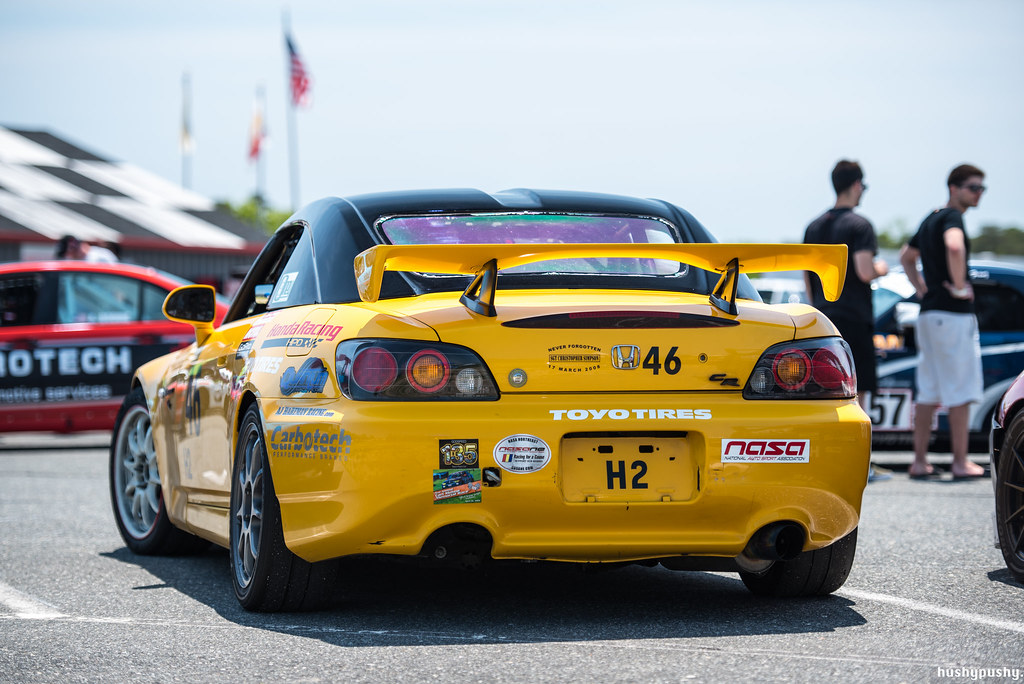
It wasn’t all Spec 86 and Spec Boxsters, though–some of my other favorites were there too! There was a nice showing for the Honda Challenge series, including this S2000, which is a real CR (Club Racer) model.
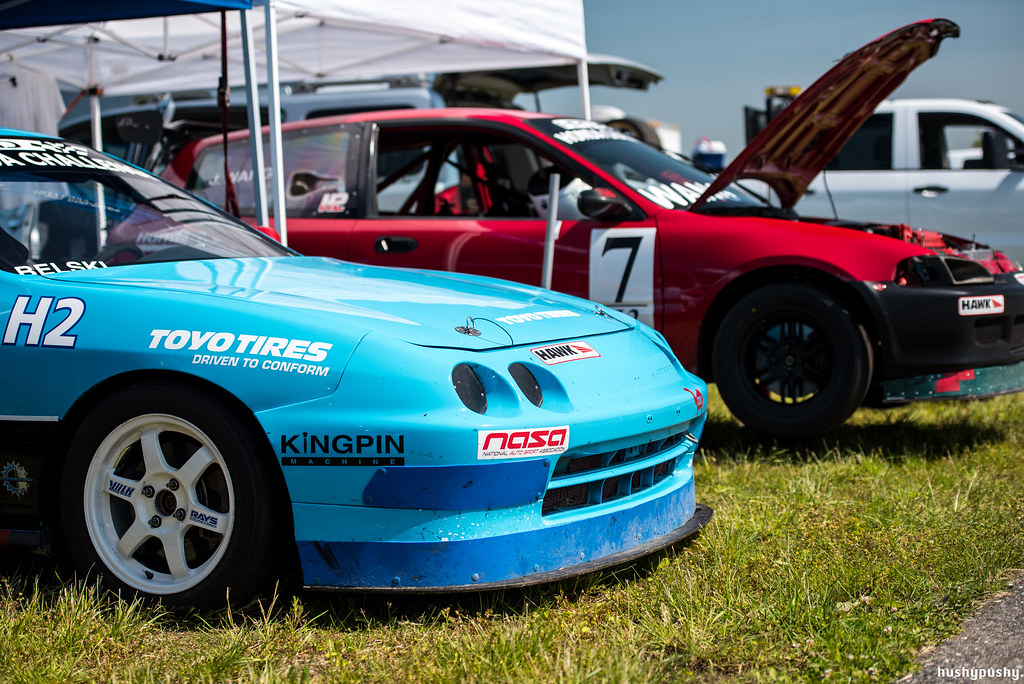
“Driven to Conform”–love it. I probably spent more time talking to the owner of this DC4 Integra than everyone else combined. He was running a B16B, the engine from an EK9–the Japan-only 96-00 Civic Type R. With a tiny 1.6L making a massive 180hp, it’s a pretty impressive little lump.
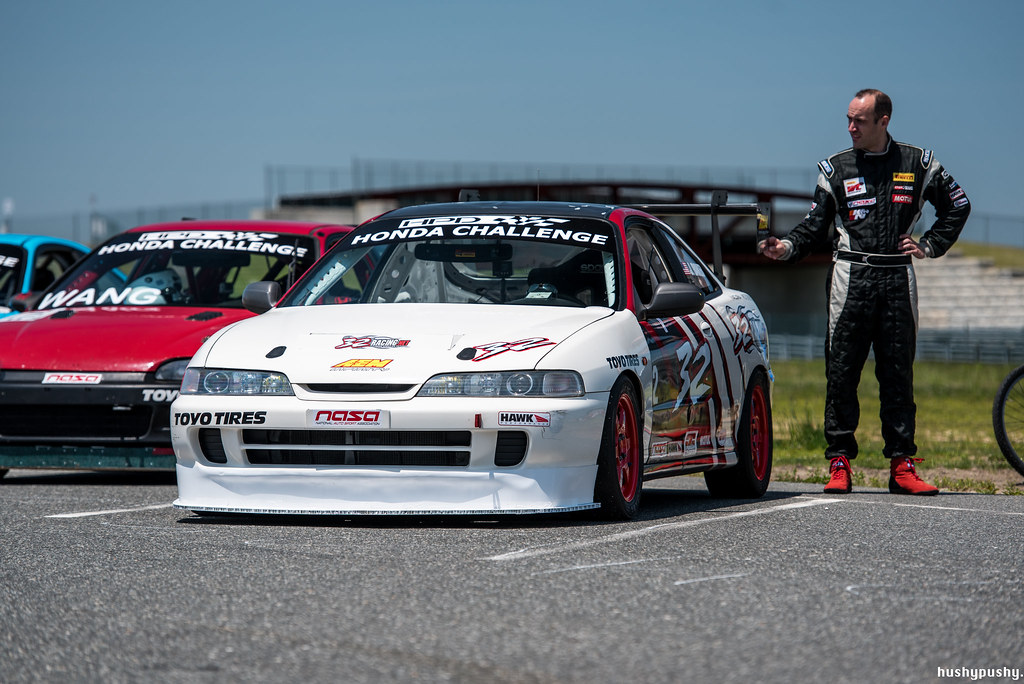
Another badass Honda. I always thought the “bug-eye” Acura Integra front end was pretty cool, but the Honda Integra is one of the best looking Hondas ever. Even if it does look like an Accord.
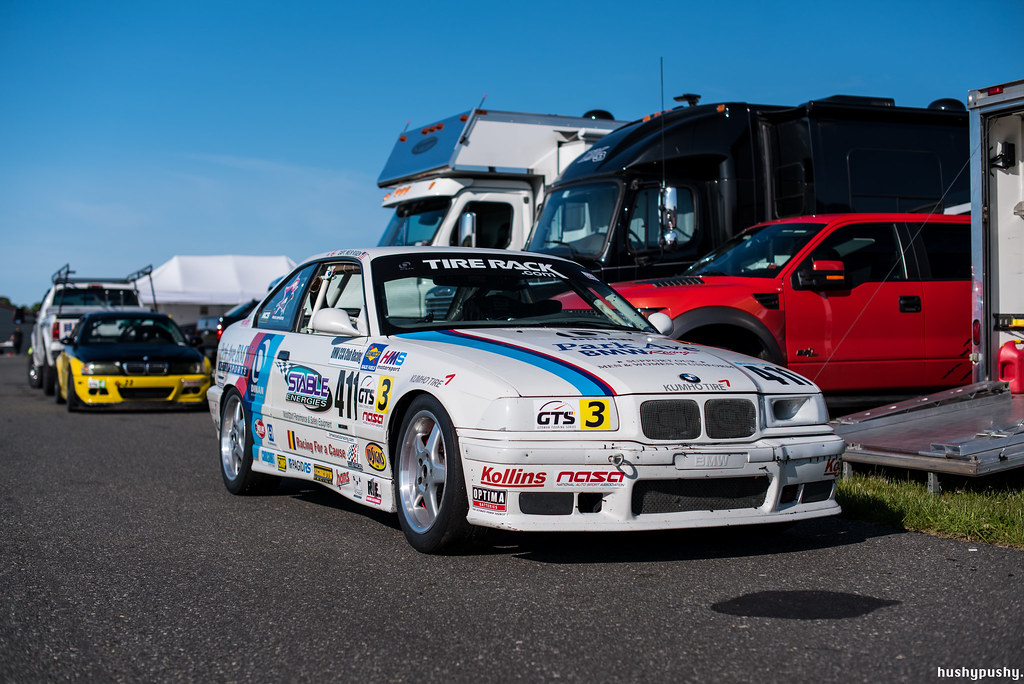
Of course, there were a lot of BMW’s as well–starting with E36 M3’s (in both coupe and sedan varieties)…
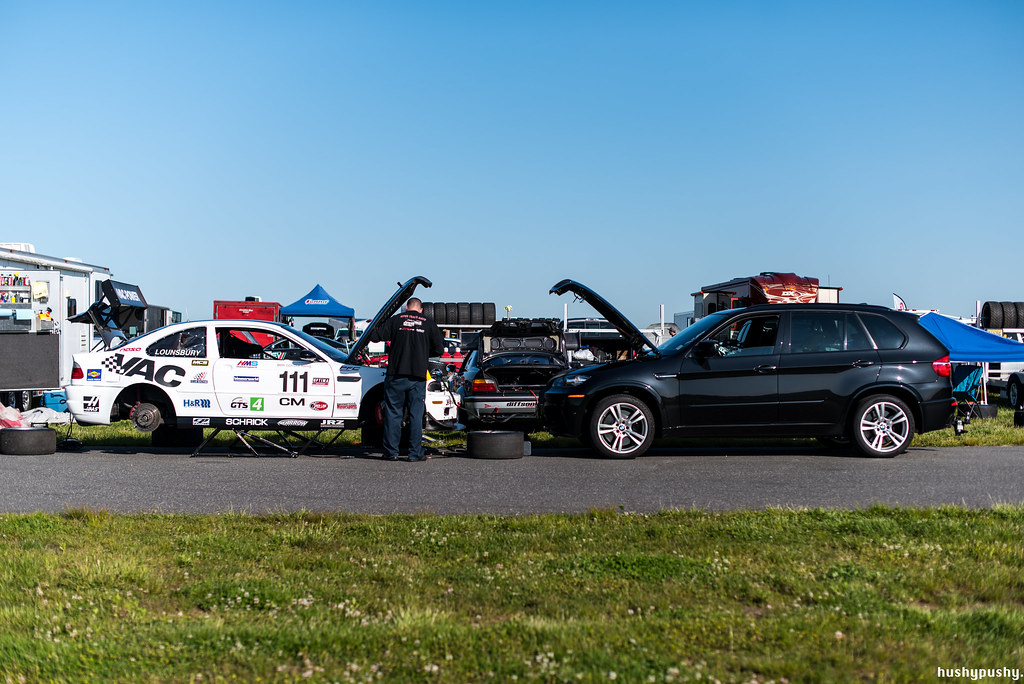
…and moving up to E46’s of various descriptions.
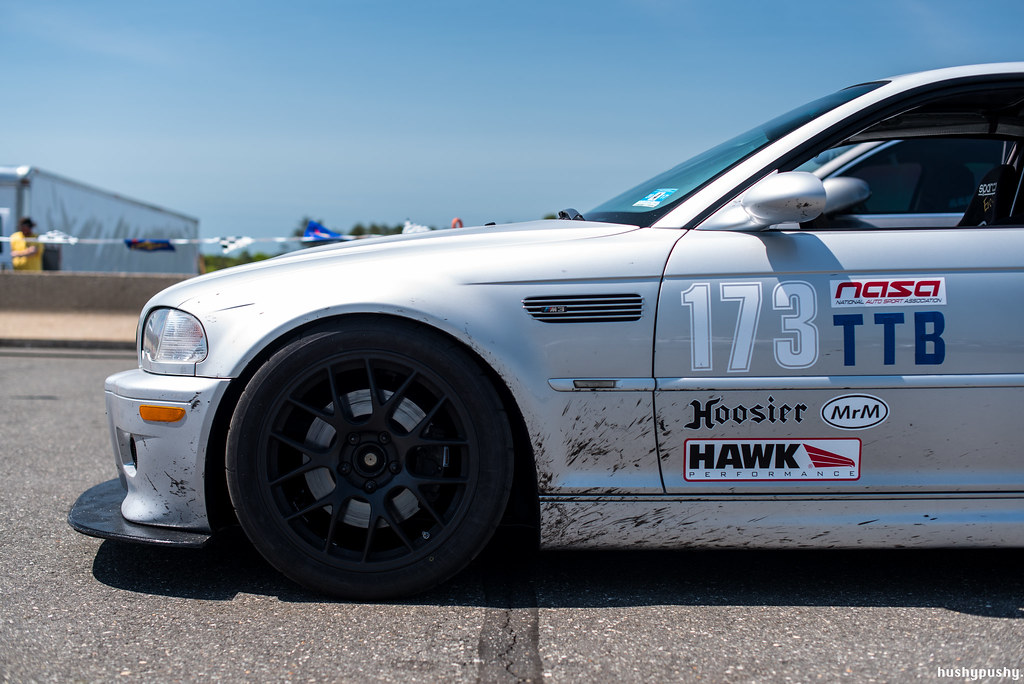
Tire boogers…what great looking patina.
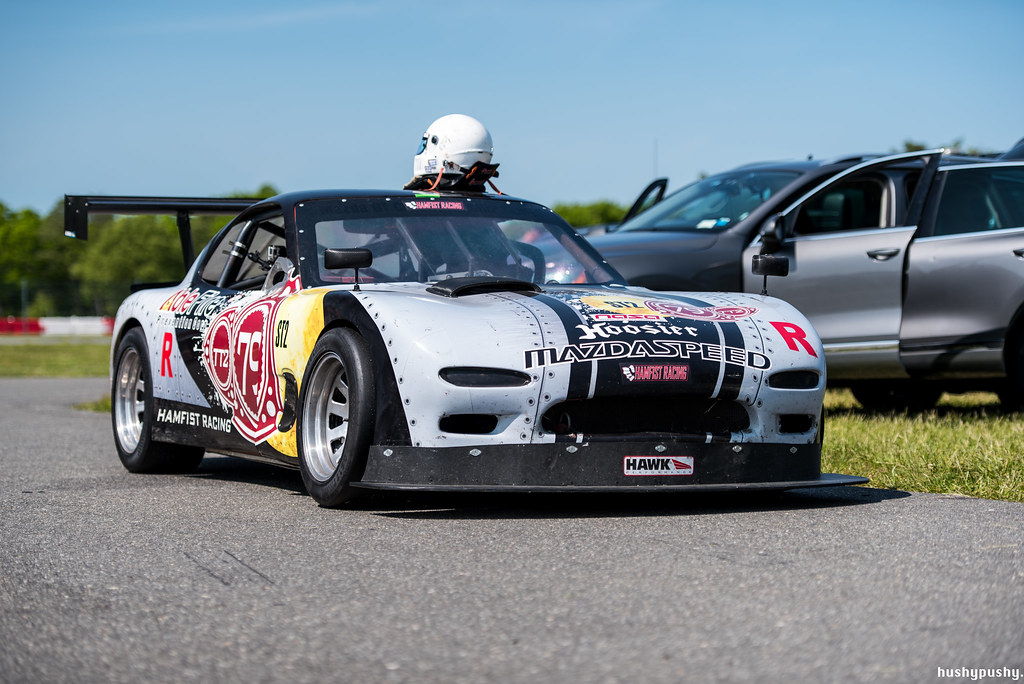
Now here’s something you rarely see anywhere, let alone as a full race car—an FD RX7!
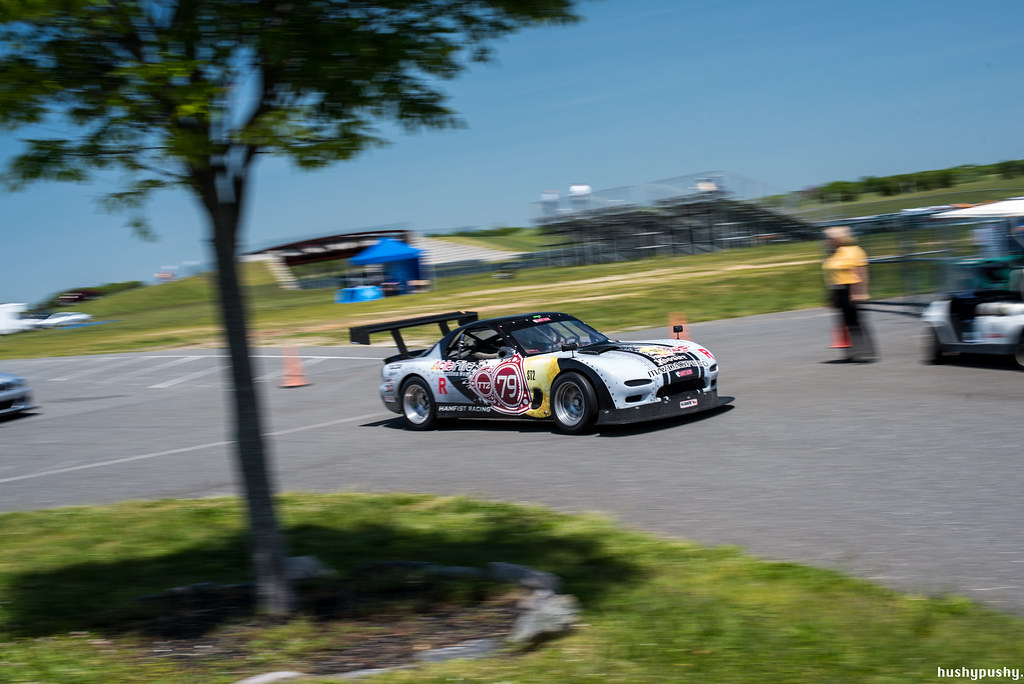
What a beautiful car.
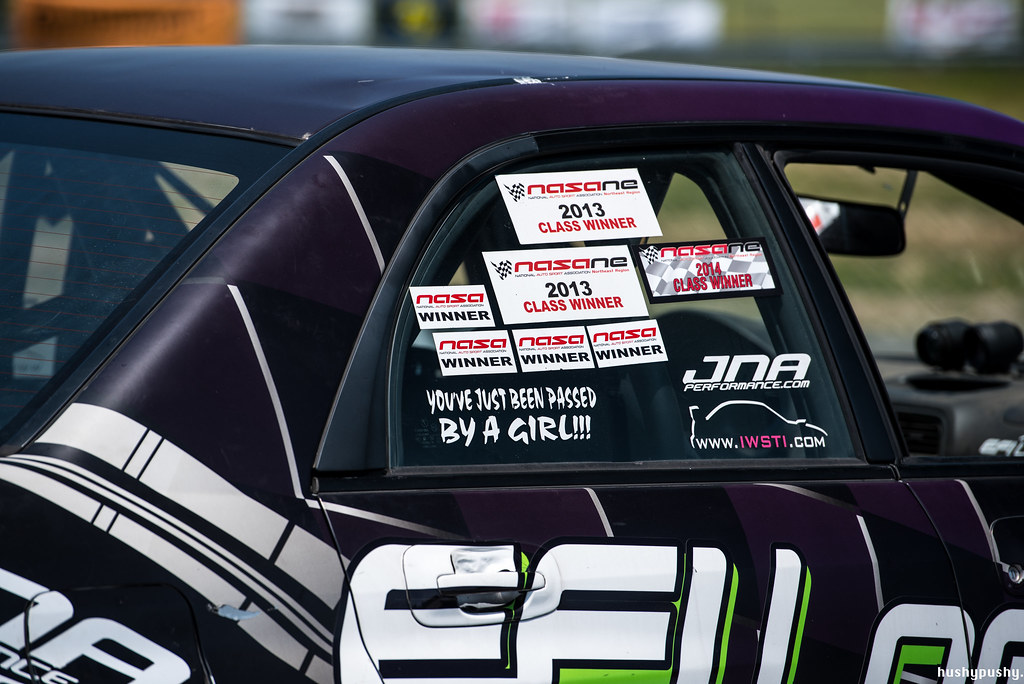
I probably wouldn’t have noticed this WRX in the paddock if it weren’t for this collection of stickers.
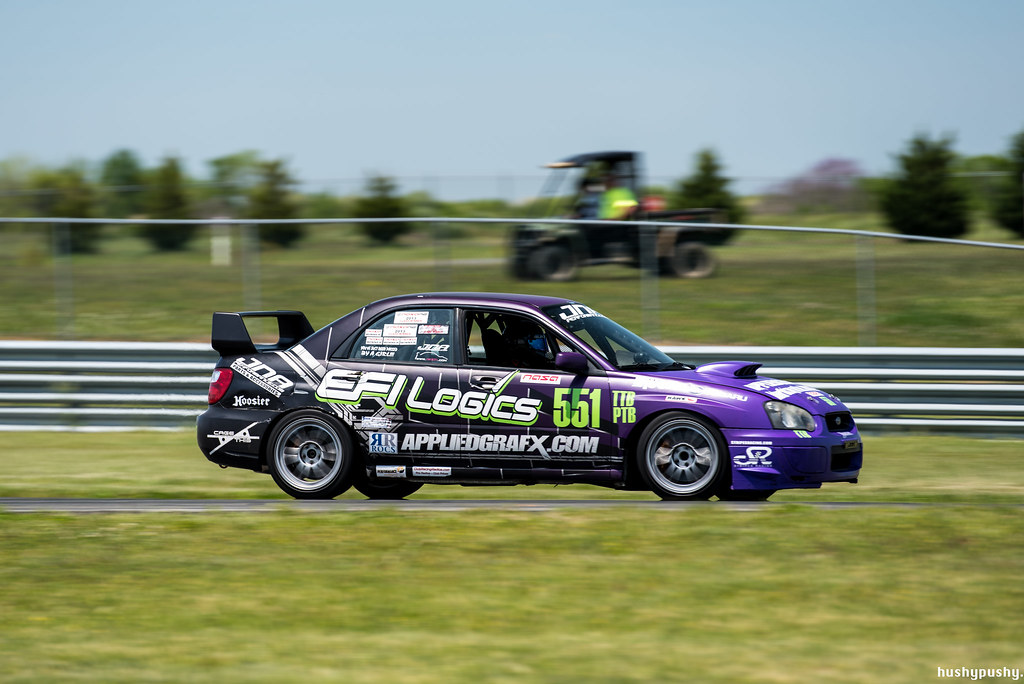
Out on track she was hauling ass though!
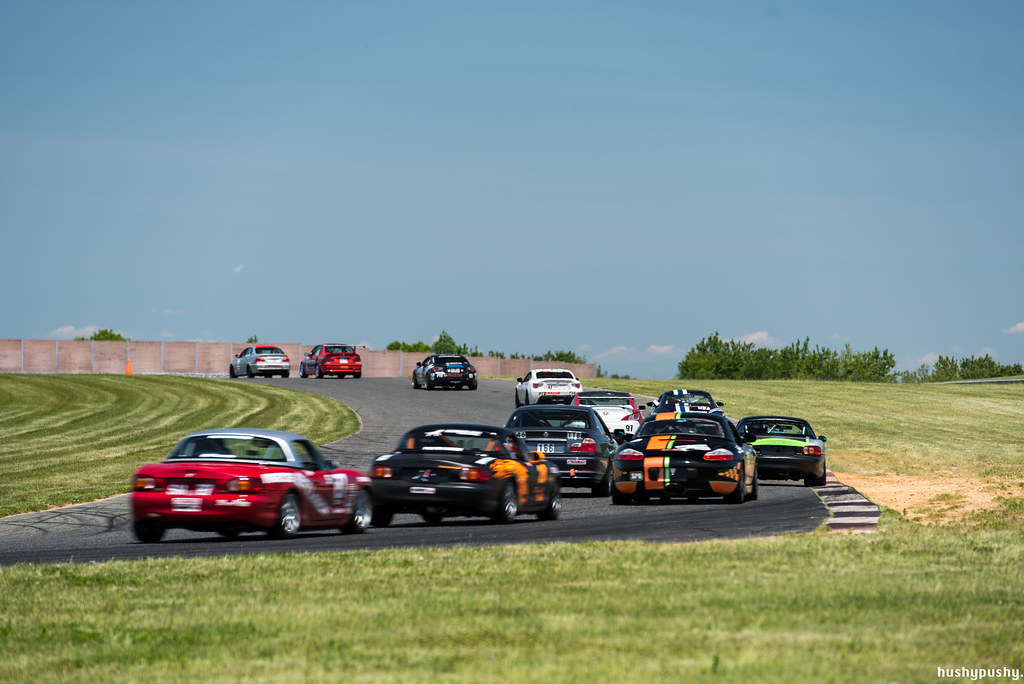
Ah yes, the on-track action. I did manage to stay out and grab some shots of this particular run group.
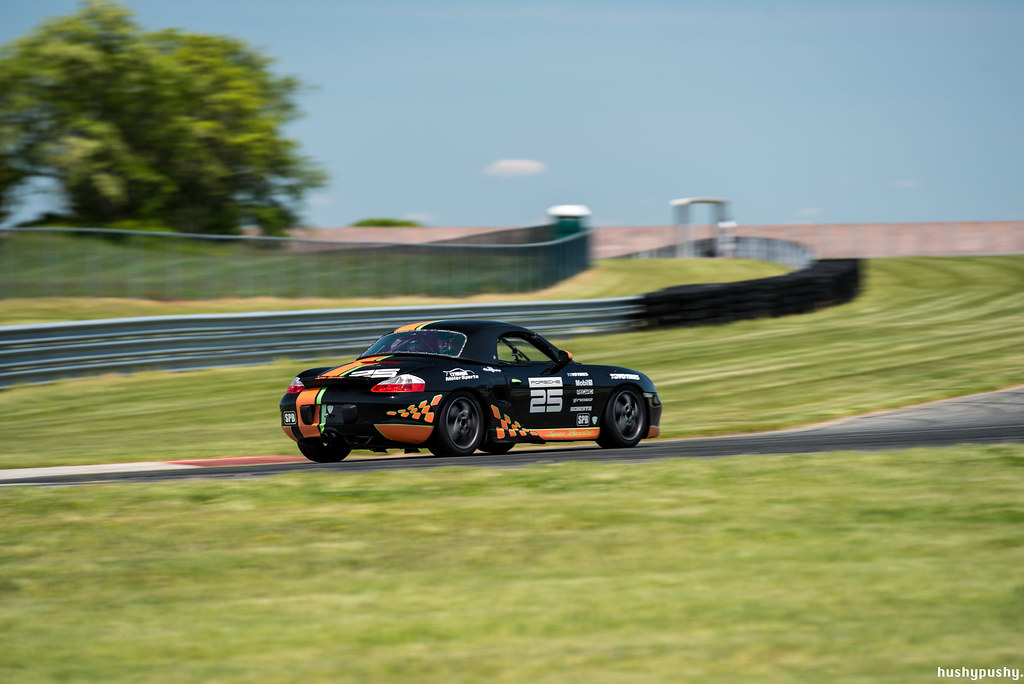
I love pretty much anything that goes around a track, but it’s just a bit cooler seeing “your” car out there.
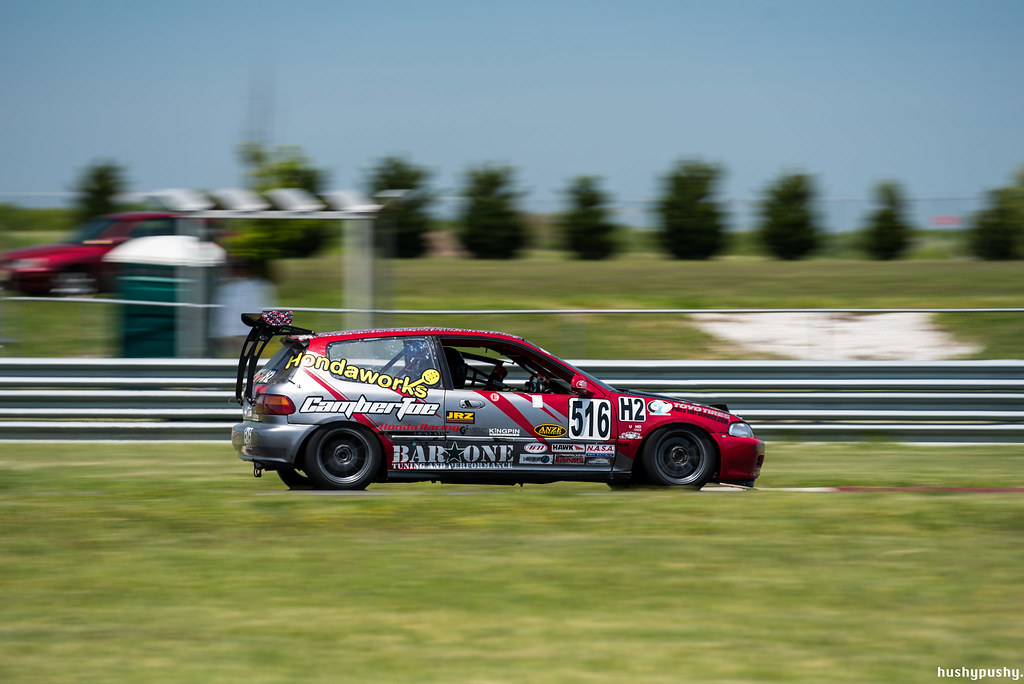
I’ve owned several fifth gen Civics as well. I had a ’93 Si, ’95 EX coupe, ’92 VX with a D15B, and a ’92 Si with a B16A2. Great cars.
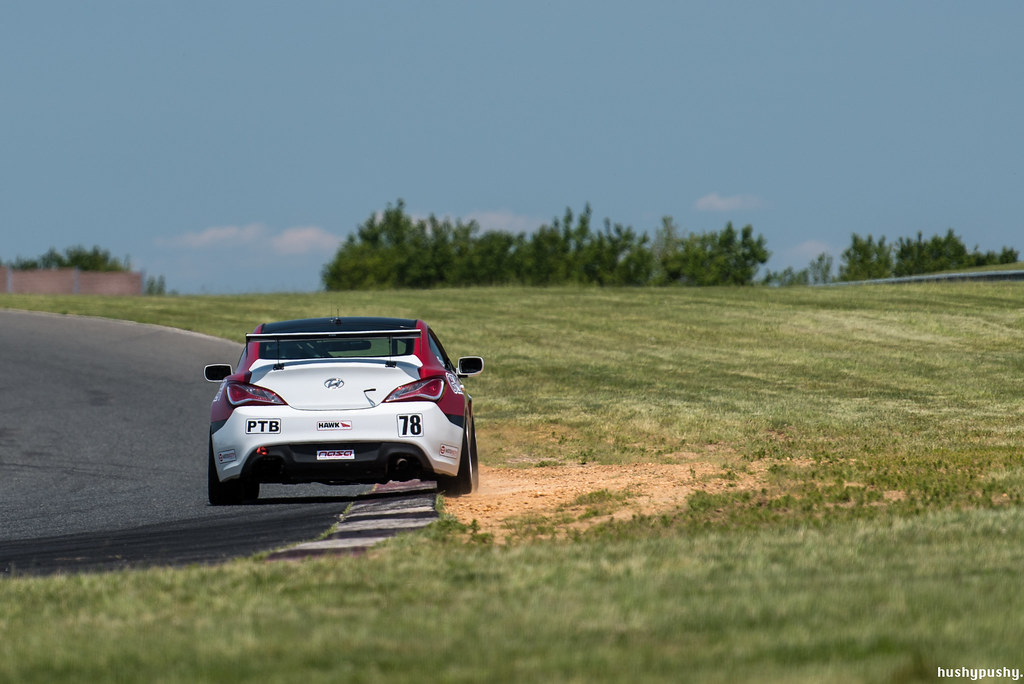
Admittedly it’s not the fairest comparison, but I drove an early V6 Genesis and it was a total piece of crap. I do like this capture of a Genesis about to dip its toes in the dirt, though.

Check out this GTS 2 E46 chasing a Spec E46. Interesting that the GTS car has a “Laguna Pipe”–a left-curving exhaust tip commonly seen on the west coast by track-day cars trying to sneak an extra few decibels past the strict noise regulations at Laguna Seca. I wonder what track(s) are that strict in the North Atlantic region?
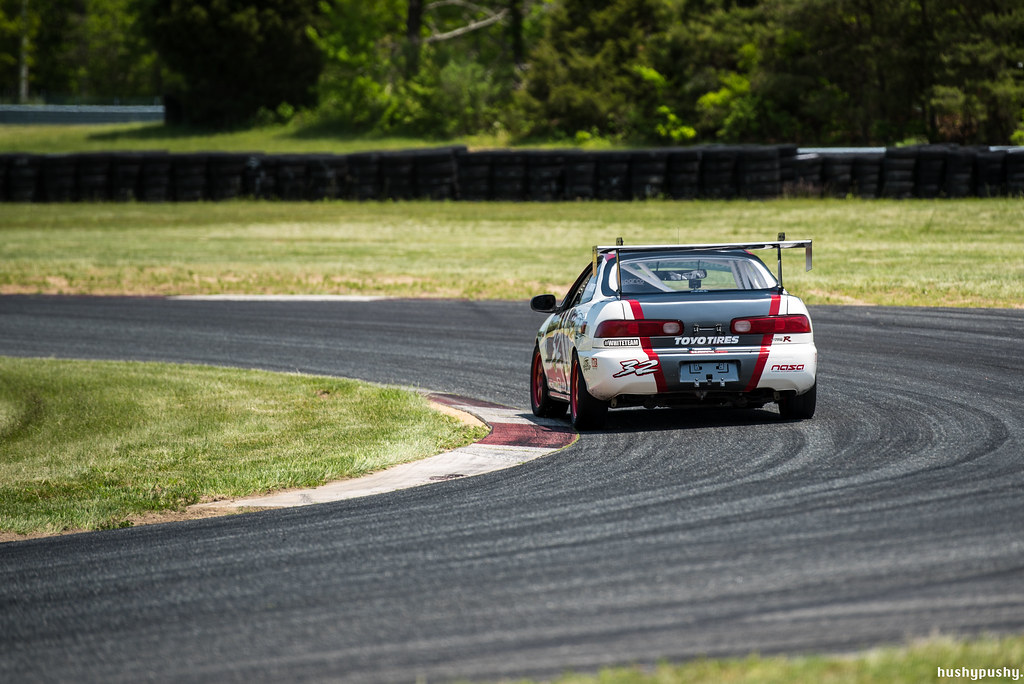
There are a few angles on the track that are just special. I love watching cars dive into the apex from this particular view, which lets you see them rotate into and through the turn.
I made this quick clip using the D750. Even with a monopod I can’t hold the damn camera steady!
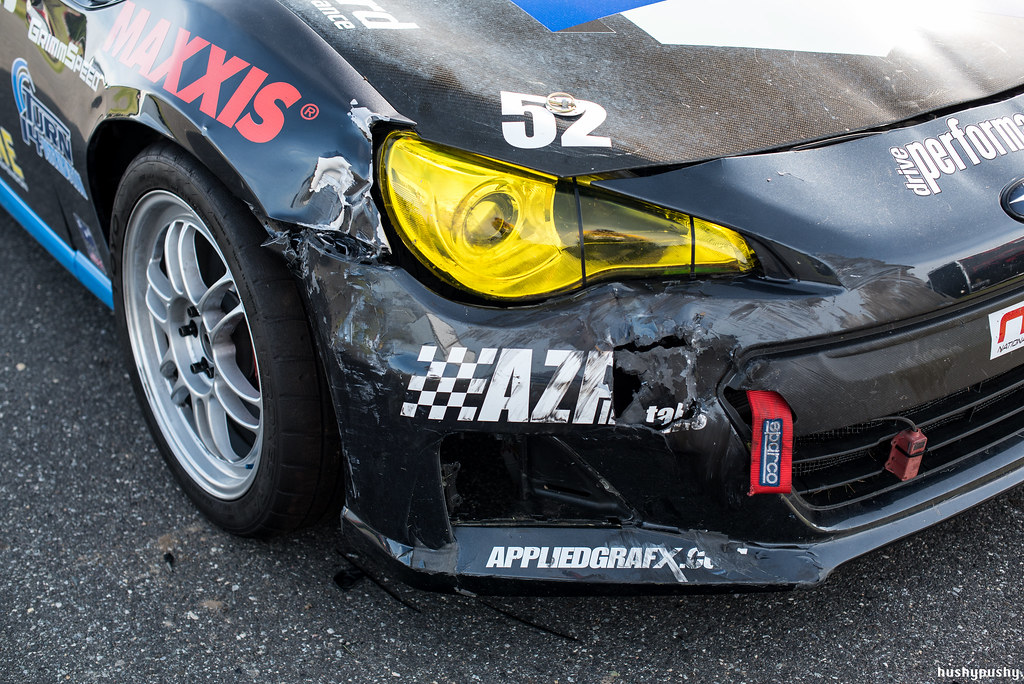
Ouch! I didn’t see any super-close racing, but I did see some scars afterward.
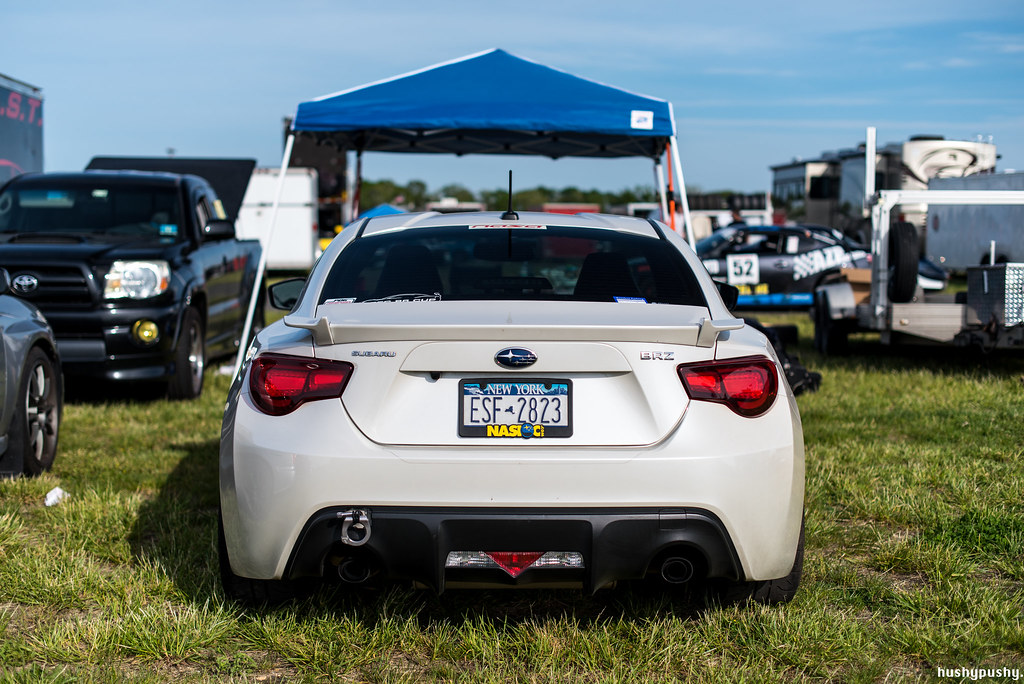
Those are the Tom’s tail lights, which I’ve always wanted to put on my car. They look exactly like what should have always been on the car since it went into production.
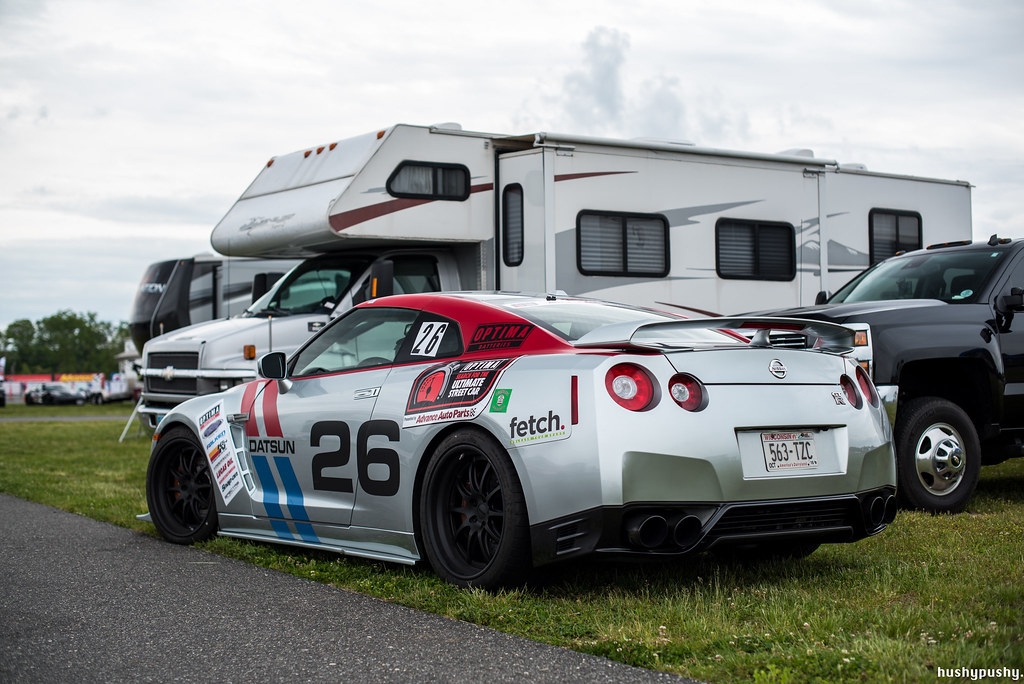
On Sunday, the support group was the Ultimate Street Car Association, which sanctions the Optima Batteries Search for the Ultimate Street Car, which used to be called the Ultimate Street Car Challenge. Whatever they call it, it’s a place for high-end builds to prove they have as much ‘go’ as ‘show’. The events consist of five segments: a road rally (public road driving from A to B), autocross, road course, a “speed-stop time trial”, and a non-driving judged stage called “Design & Engineering”.
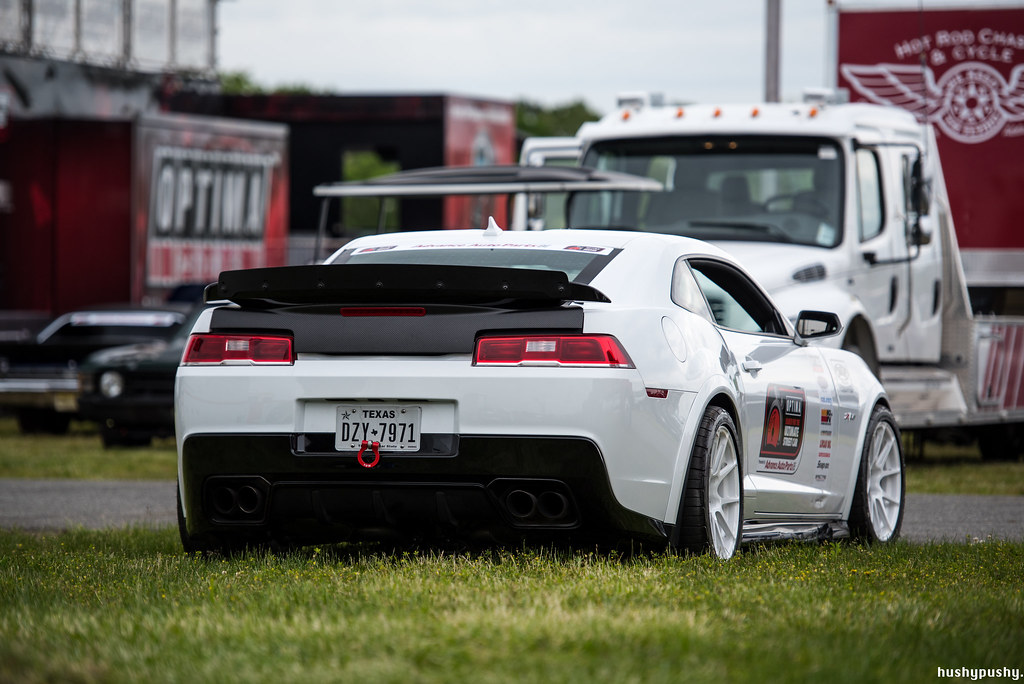
Unfortunately, the day went from overcast to pouring rain, so these are the only shots I was able to capture. There were some incredible machines though, from 60s muscle all the way to brand new cars with badges reading GT-R, Z/28, and GT350. Not all of them were off-the-shelf modern builds, and I wish it wasn’t pouring rain all day so I could have gotten a look around all the amazing cars I saw. They did everything on schedule, but I wasn’t interested in hanging around and getting soaked.

It’s hard to showcase just how rainy it was, but I assure you, it was pouring and the track was soaked. Thankfully, the track has good drainage and I didn’t hear any complaints about the driving conditions.
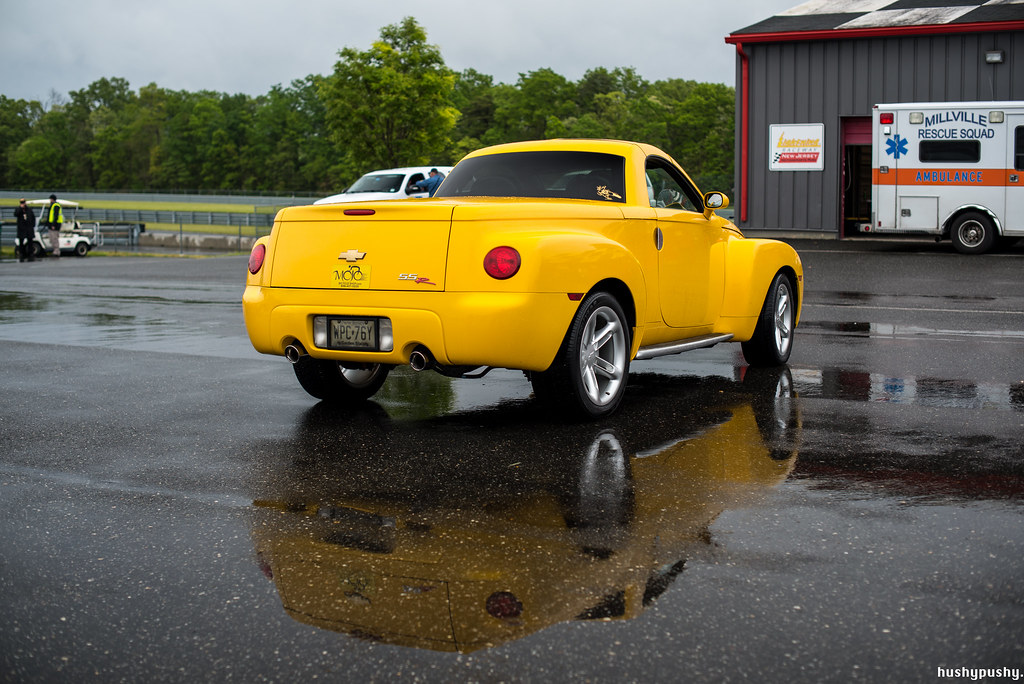
Certain cars generate more enthusiasm than others, so maybe it’s not surprising that the owner of this SSR gave me a stereotypical experience when he saw me taking photos of his truck.
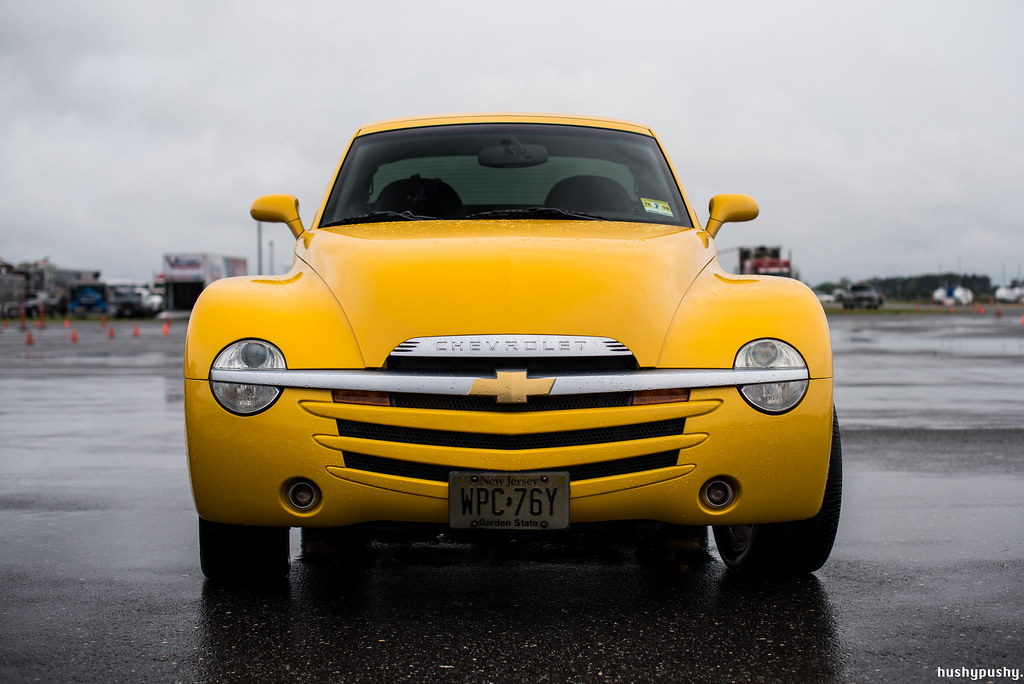
He came up and asked me if I wanted to know anything about it, and I said that no, I just like these and wanted to grab a few snaps. But he just started rattling off facts and figures anyway! This is not the first time I’ve been in this situation–I think some people just get really excited when someone takes notice of their pride and joy–so I let him run out of steam and then quietly snuck away.
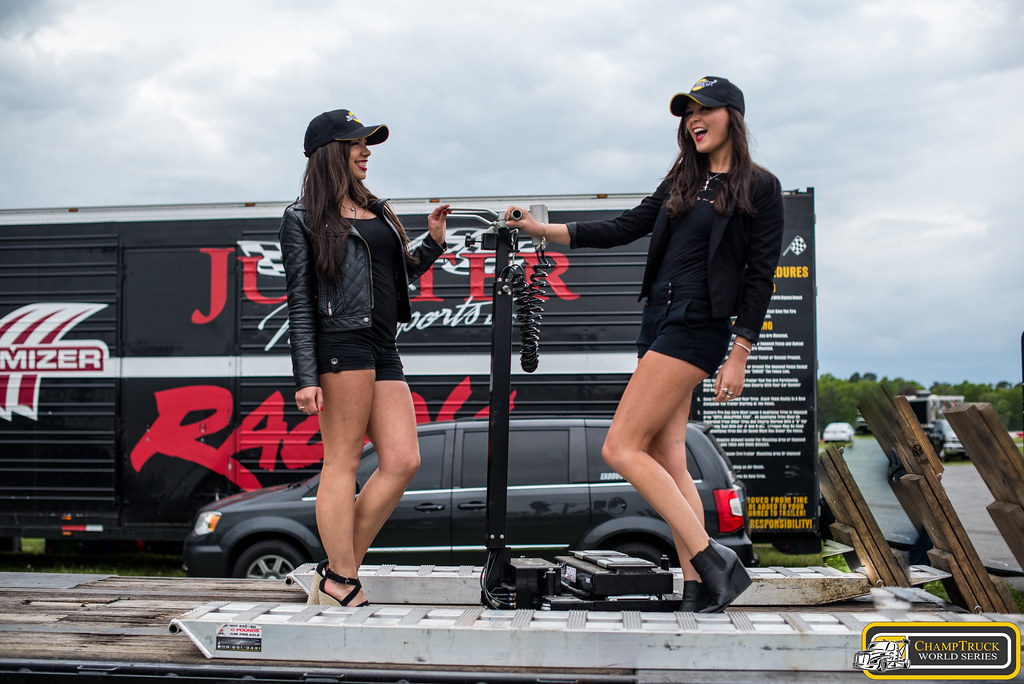
Of course, the rain had to let up right when all the racing was done. But there was no time to hang around, for me or any of the teams. They packed up their race cars and I helped pack up the ChampTruck gear. In closing, here’s a quick snap of one of my failed assignments for Scorpion Jacks, makers of high-quality super heavy duty pneumatic jacks.
Total Recall
Nobody wants a face full of shrapnel. That’s why the Takata airbag recall is so scary–many cars are literally rolling deathtraps, and the parts to solve the issue can’t be made fast enough.
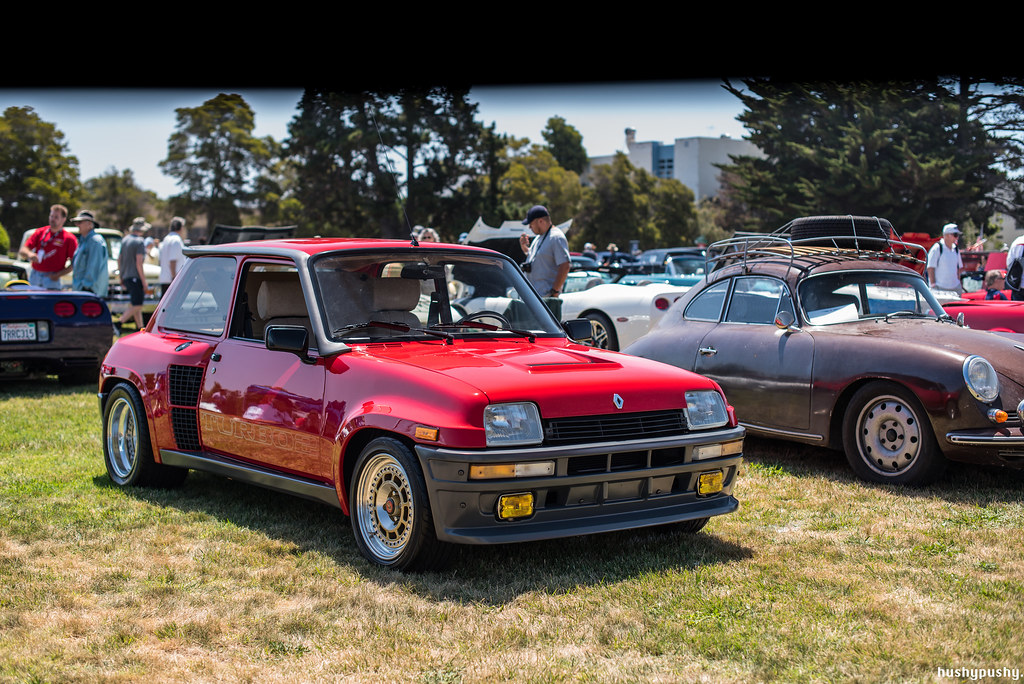
Luckily, with my Scion and an “old” Porsche, I’m completely unaffected. However, another big recall just hit me square in the jaw, and you can see it right above this paragraph. In 2015, Nikon recalled some D750’s–shortly after I bought one!–for a shutter issue. In their words, “the shutter in some Nikon D750 digital SLR cameras may not function normally, sometimes resulting in shading of a portion of images.” Unfortunately, here’s an example of that.
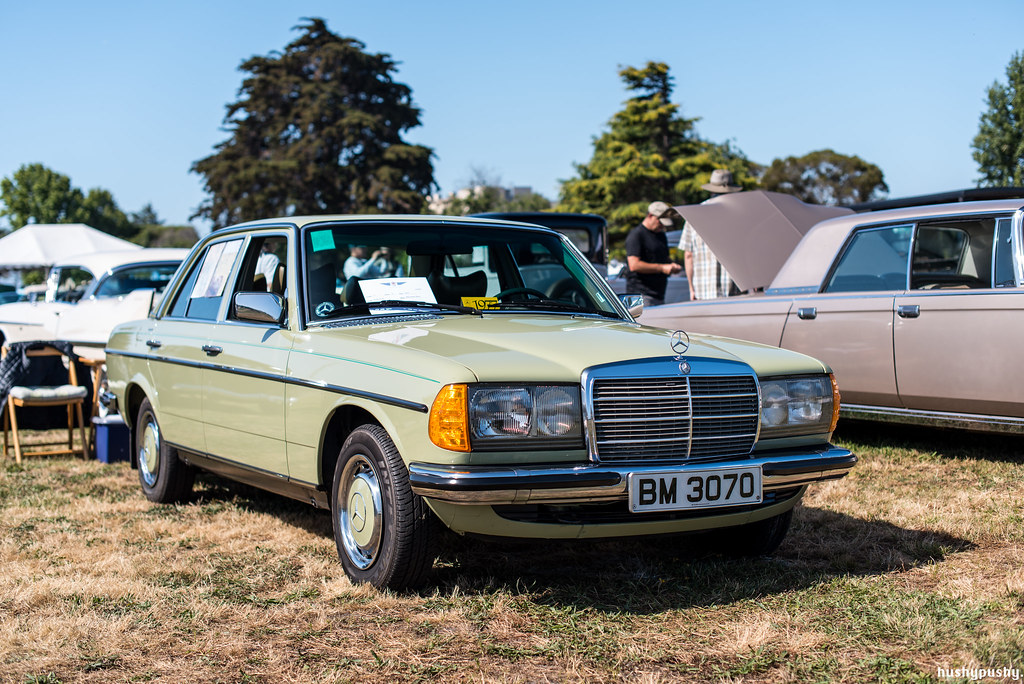
Well, I was using my camera for a lot of work (shooting McLarens at home and ChampTruck on the road) and my shutter was working fine, so I decided to roll the dice and keep shooting. Unfortunately, on this glorious Sunday in Alameda, it finally crapped out. It started to go on the fritz, and then finally gave up the ghost completely.
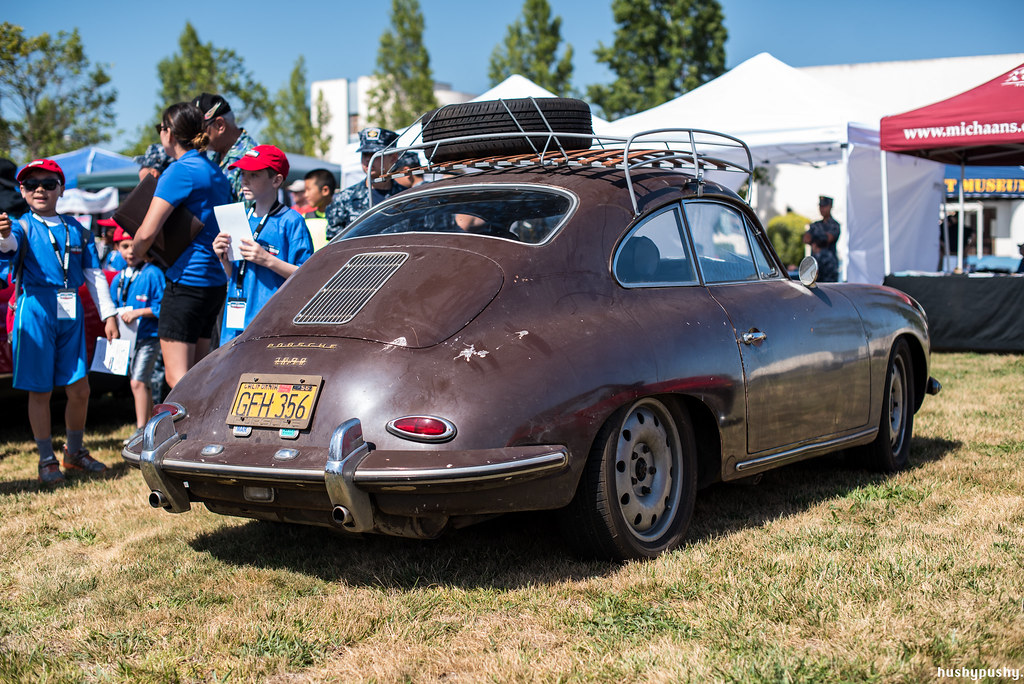
Which is a pity, because I was having a great time before that. Right when I arrived, I saw my friends Greg and Linda and their Porsche 356. They’ve definitely conquered the fear of having fun in that car–they drive it everywhere. And it showed up at a “Concours”–codeword for an event catering to obsessive polishing–wearing all its patina, dirt, and poop proudly.
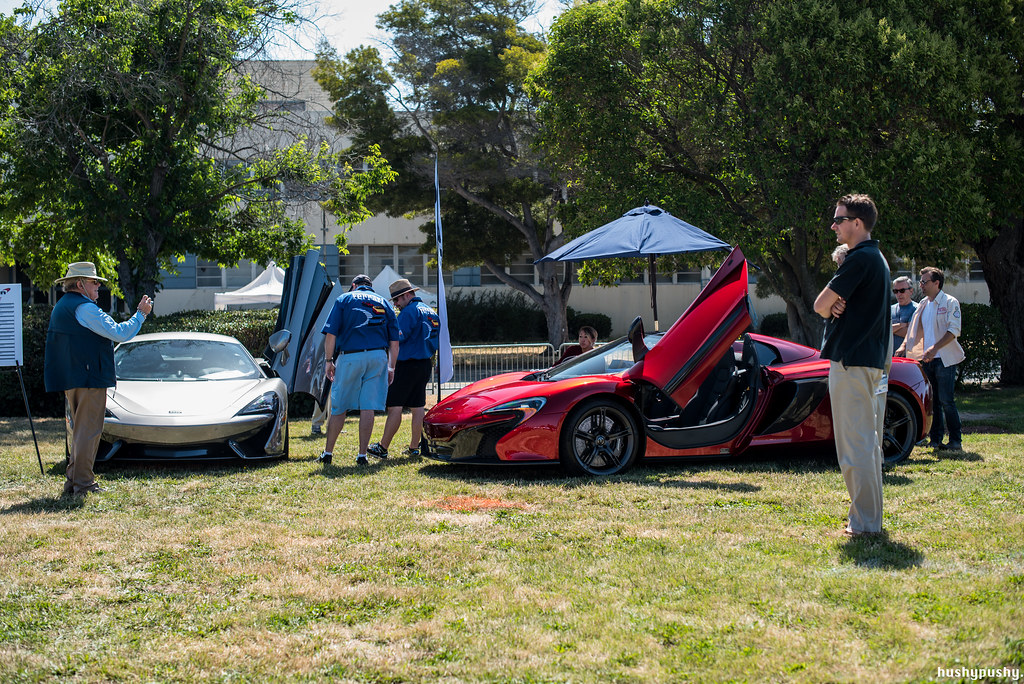
So what was I doing there? Well, showing off some McLarens.
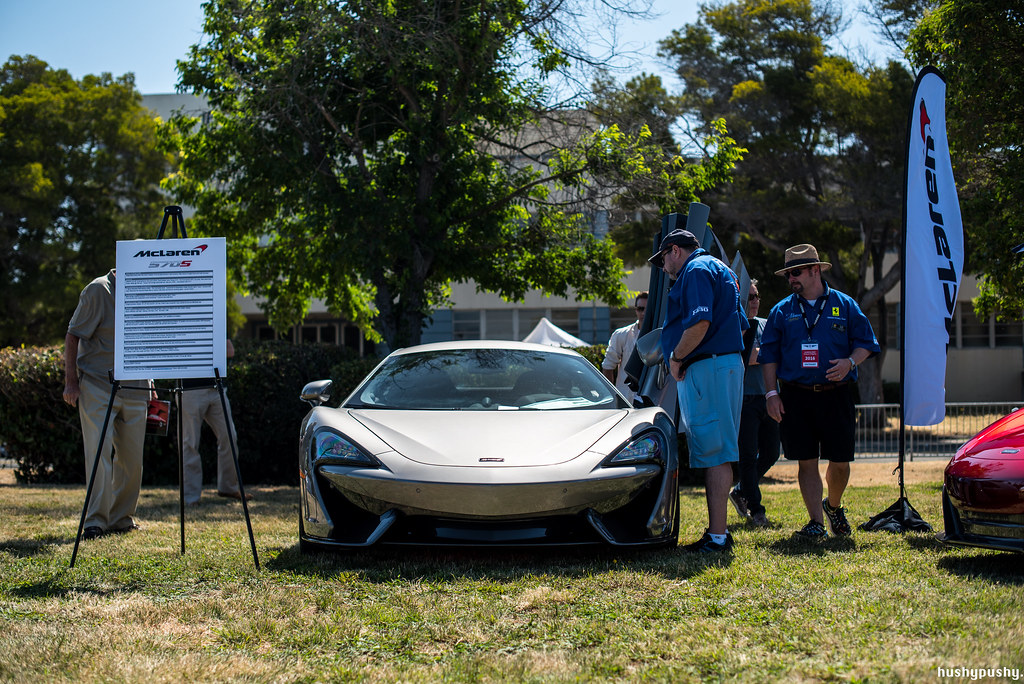
My coworker and I drove up there in a Blade Silver 570S and a Volcano Red 650S. Unlike the last concours we did, there was a pretty big crowd around us all day.

It was pretty cool to see how enthusiastic people were about seeing the car and taking pictures. People thanked us for bringing the cars out–a few people mentioned they had never even seen a McLaren in person before. I think the fact that Top Gear aired a film on the 675LT the previous weekend helped us a lot. Although, some guy did stare at the back end of the car for a while and then asked me if McLaren was a type of Corvette.
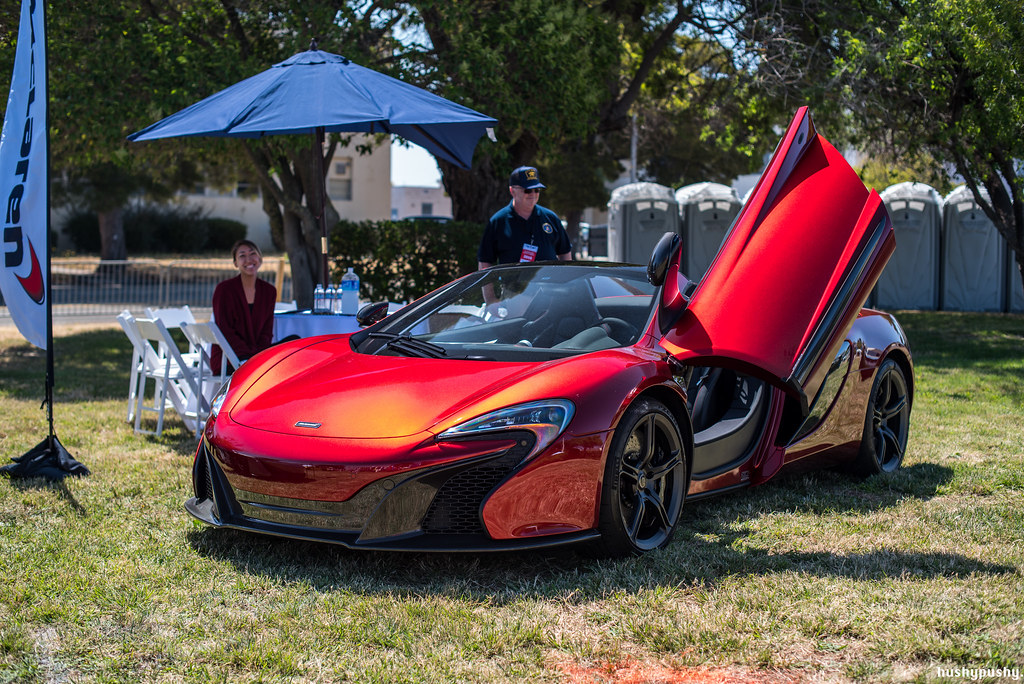
Smile! Not the most picturesque location, but you gotta admit it’s nice to be 25 feet from the toilet.
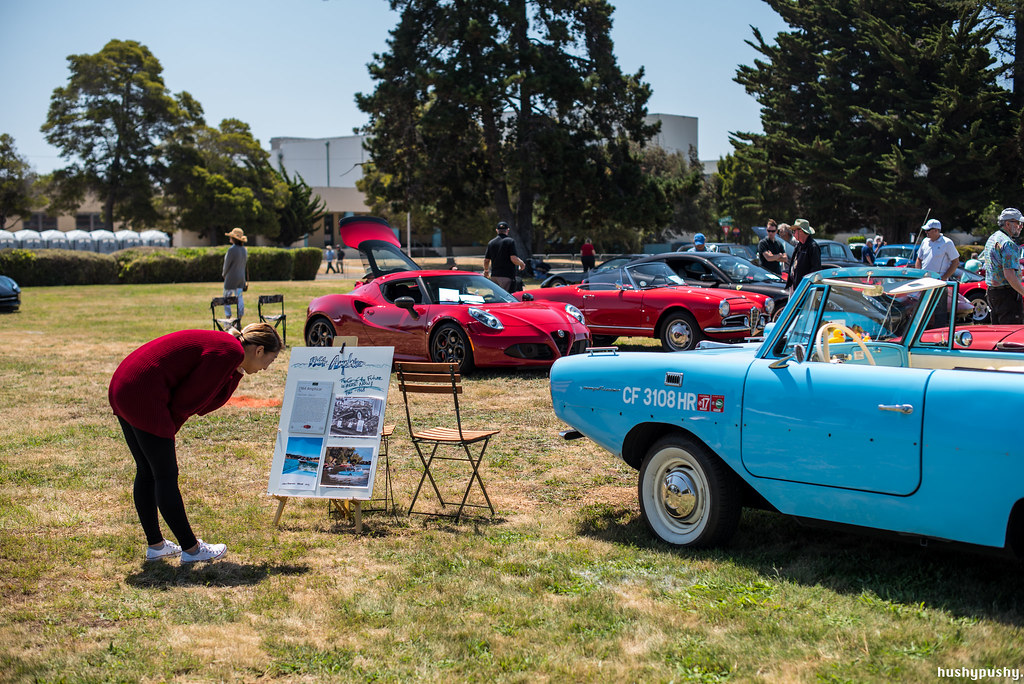
It’s not all work–we got to walk around and enjoy the show too. Jessica seemed pretty interested in this Amphicar, and I don’t blame her. What a funky little vehicle.
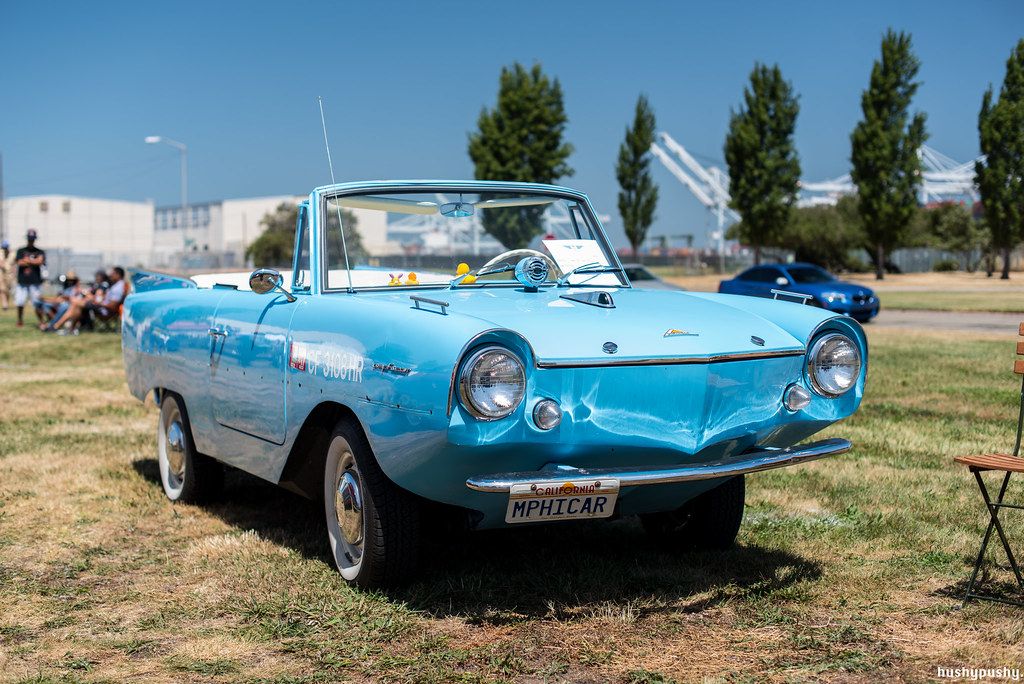
It’s a car AND a boat! When was the last time you saw one of these?
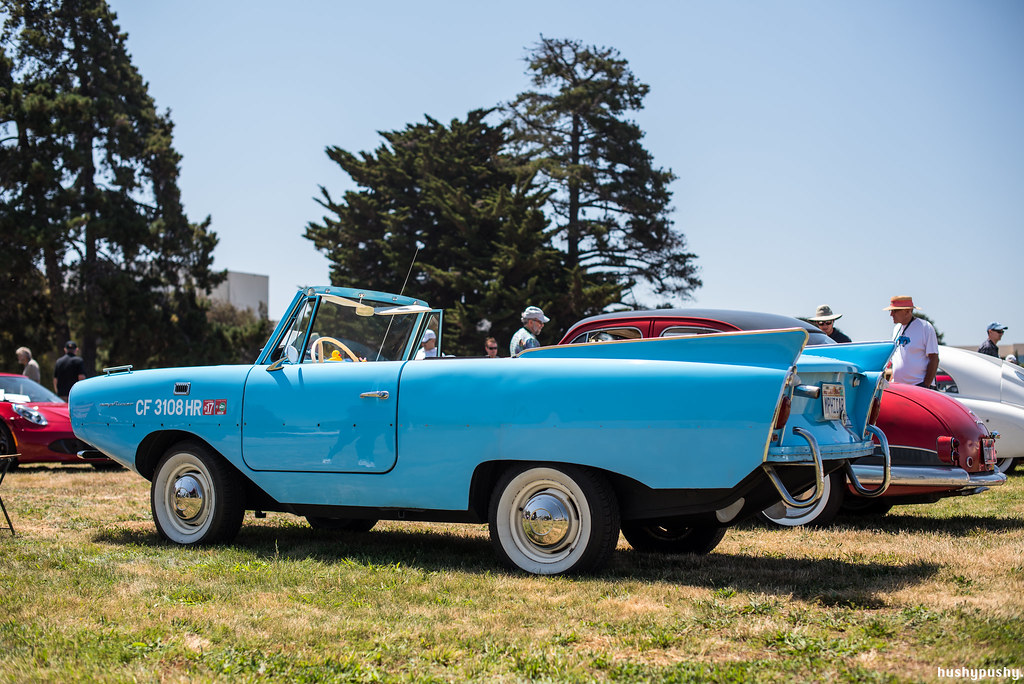
It’s actually from the mid 60’s but I love how it has some late 50’s fins.
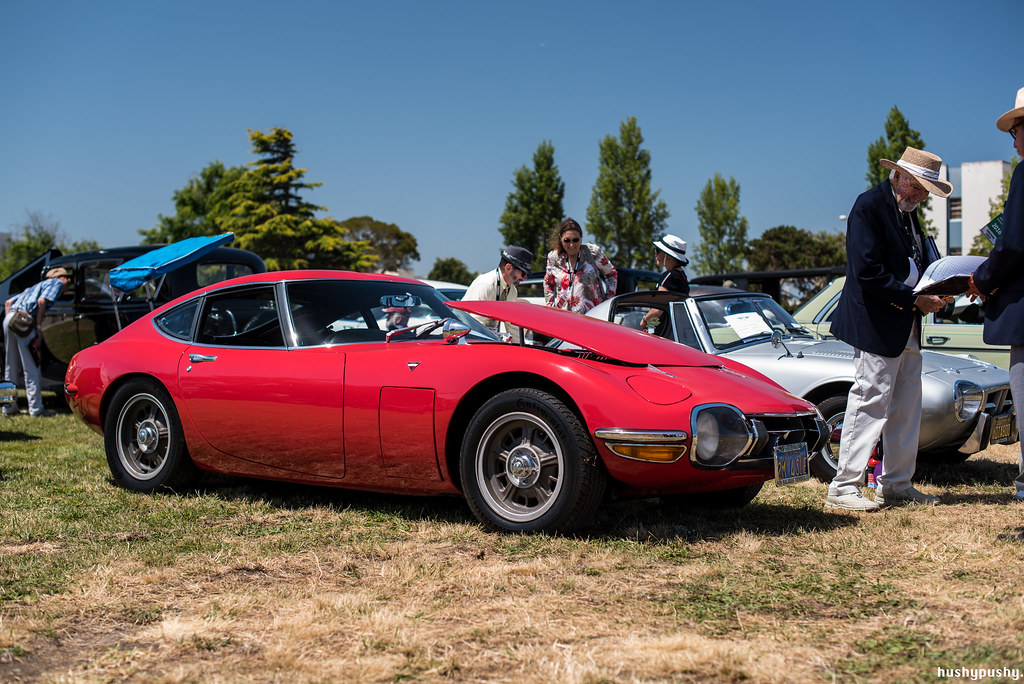
I love Japanese classics, and the 2000 GT is no exception. I always imagine it in white, but it almost has a Ferrari flavor in this red.

There were a lot of red cars there, now that I think about it.

Although in the place where you would most expect to find bright red, there were some other refreshing hues.
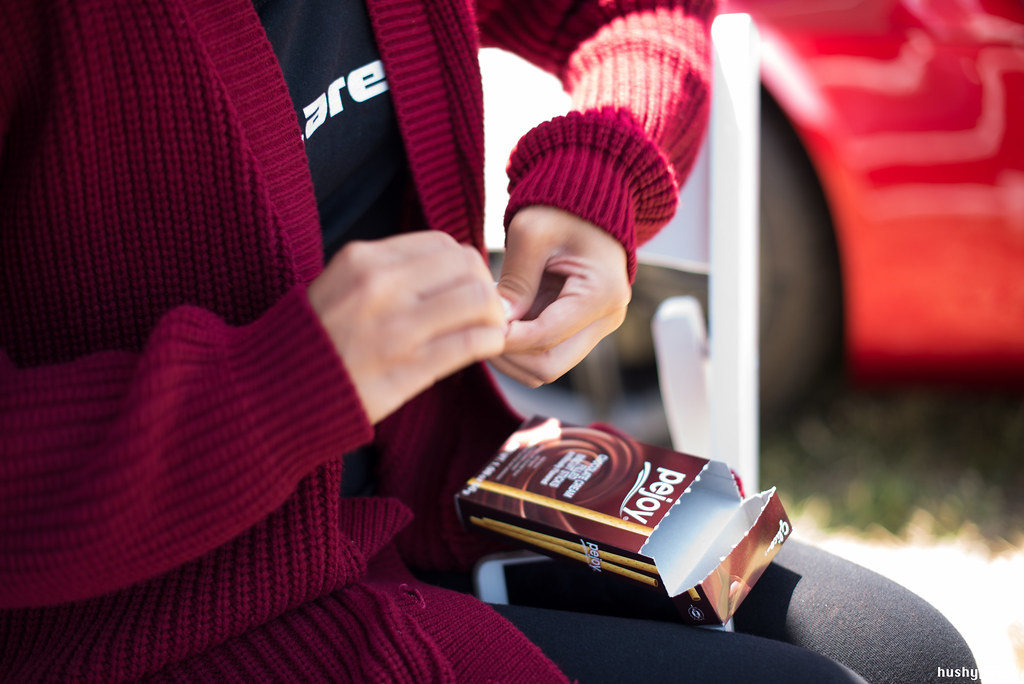
I didn’t actually take many photos on that first quick walk-through, figuring I had the rest of the day to grab some snaps. After one lap of the show, we retreated back to our spot and dove into some Japanese snacks.
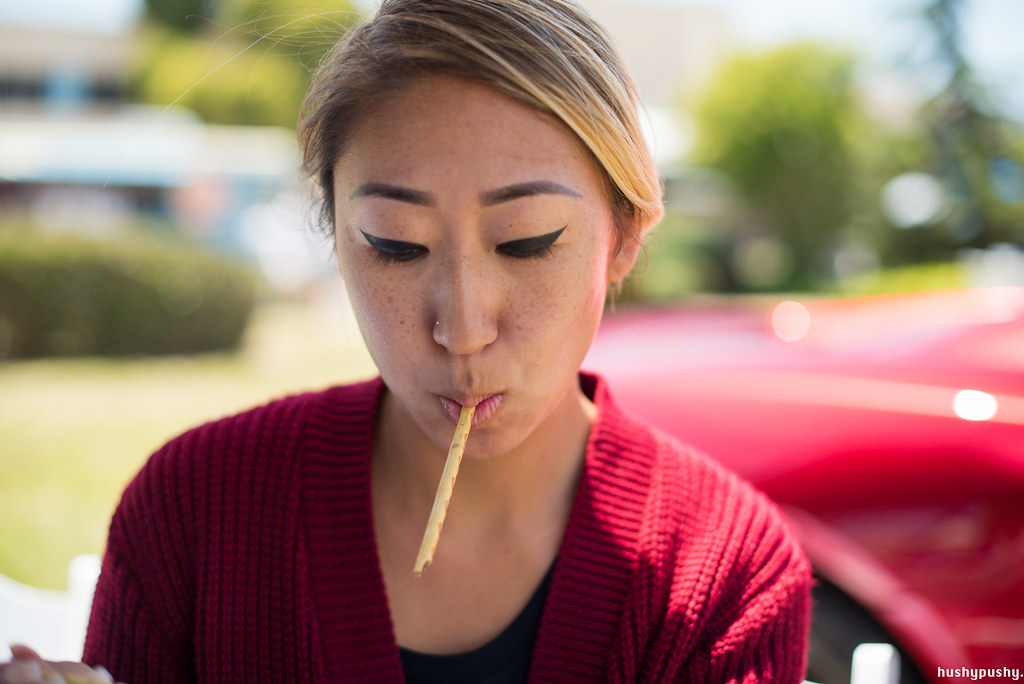
People make a big deal out of Pocky, which is a biscuit dipped in chocolate. If you like that, check out its lesser known sibling Pejoy, which is also made by Glico but is the reverse formula—it’s like a biscuit straw filled with chocolate.

And then it happened. The shutter made some weird noises and when I checked the photos, even more of the shutter was in frame. At this point the top display of the camera read ERR instead of the aperture, and the shutter refused to properly function. I read about a few quick fixes online, but it seemed I was sunk because nothing changed.
So that’s it for now–I sent the D750 in. I still have my D90 so it’s not the end of the world, and I actually have not one, but two more event posts coming up: the long overdue Palm Beach wrap-up, plus some shots from the Sonoma Historics! So check back soon.
Finally

What’s a pirate’s favorite letter?
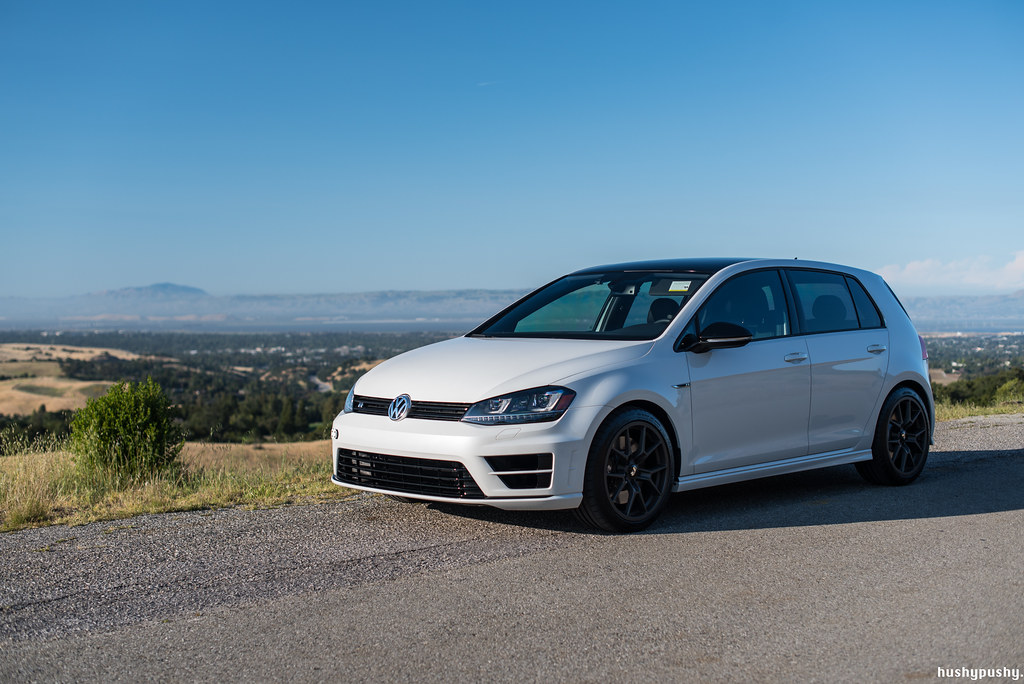
If you thought it was R, you are so wrong. Of course it’s the C! You know, the sea, get it?
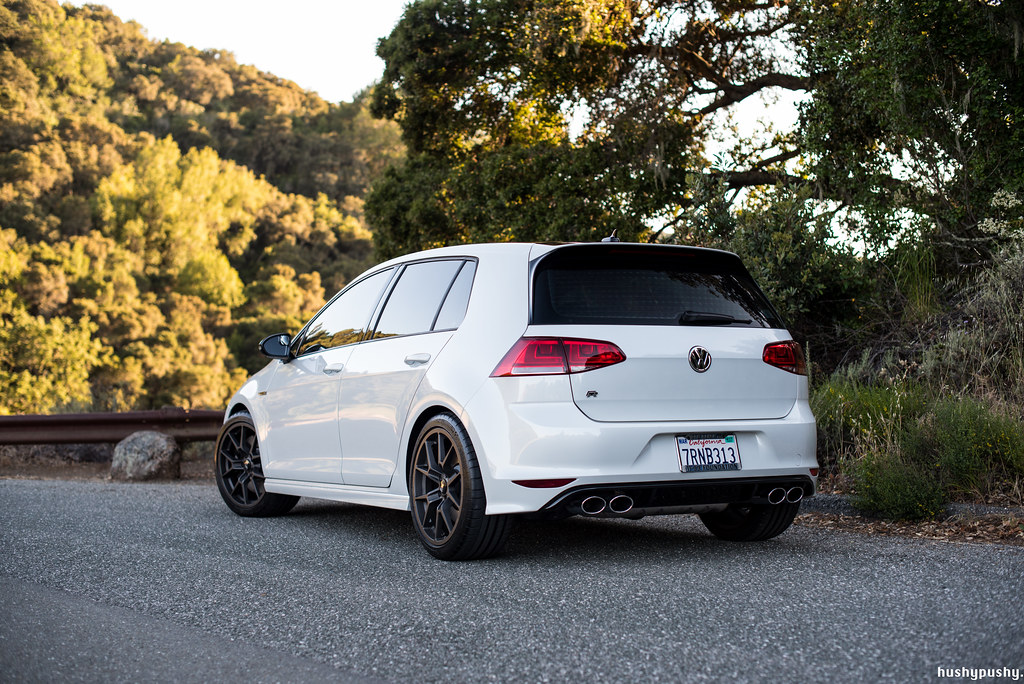
Previous generations of Golf have generally left me as cold and lifeless as that joke. Then again, if you laughed, just remember that some people have always liked Volkswagens.

Having previously driven a Mk7 GTI and come away feeling impressed by its maturity and modernity, I had high hopes for the Golf R. With a front-wheel-drive hot hatch, you can make some excuses about the driving experience because “that’s the way it’s supposed to be.”

The Golf R, however, has nothing to hide behind. Starting at $35k it faces competition up and down the marketplace from its little brother GTI to the Ford Mustang to the M3. I’ve seen it cross-shopped from the most logical competitor (Focus RS) to something you may not think is relevant (Porsche Macan). Seems like everybody could use a bit of Golf R–but would they want it?
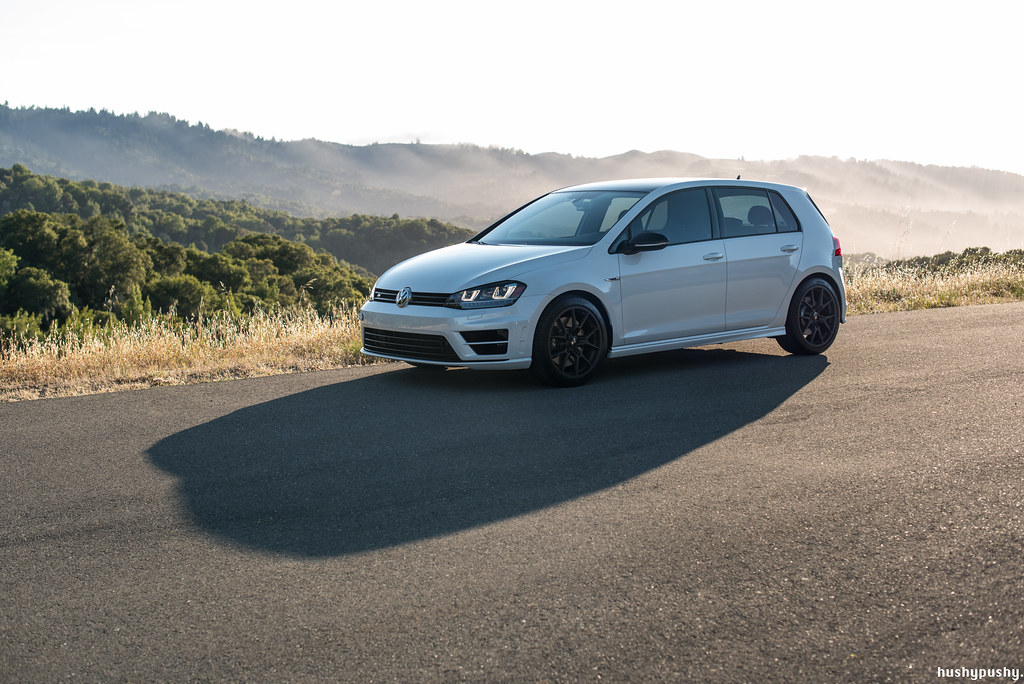
I wish you could hear the bells chiming and angels singing behind me, because hallelujah, Volkswagen launched a winner. I expected greatness and was duly rewarded.
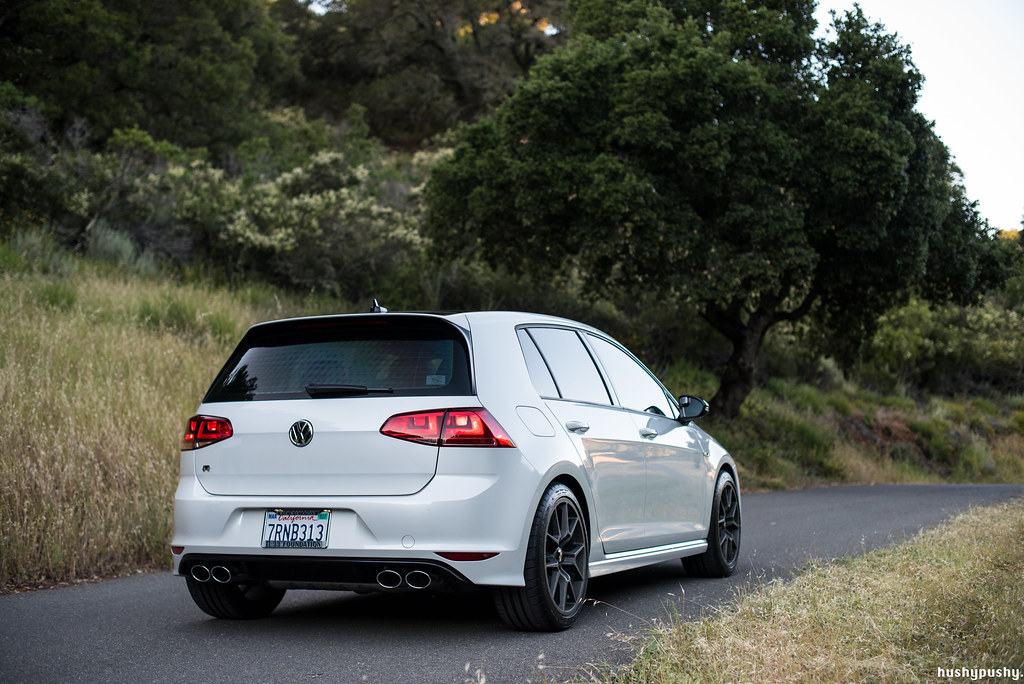
Of course, you might look at these pictures and think you were not looking at a completely stock car. Well, you’d be mostly correct: the engine has been given a mild tune to enhance the powerband, and the wheels and tires have been swapped out for a bit more grip. But that’s it!

Well, okay, almost. The sharp-eyed VW fans out there will notice that the aluminum-esque shiny accents from the front end have been vinyl’d black, as well as the mirrors and roof.
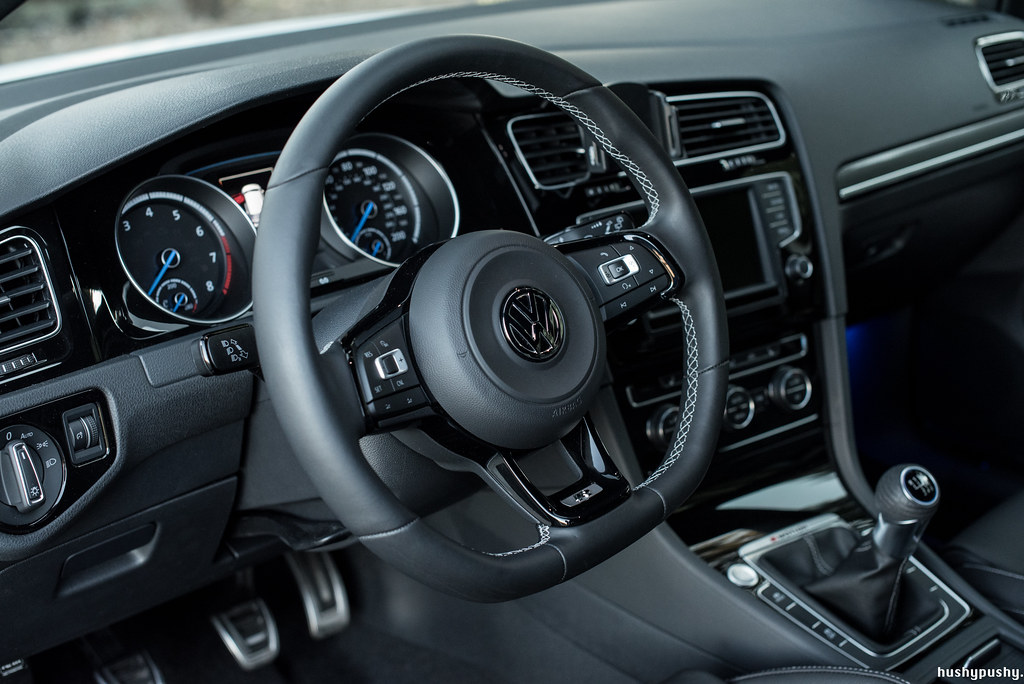
But performance-wise, it’s really only the chip and the slightly grippier rubber. Everything else is as it came from the factory.
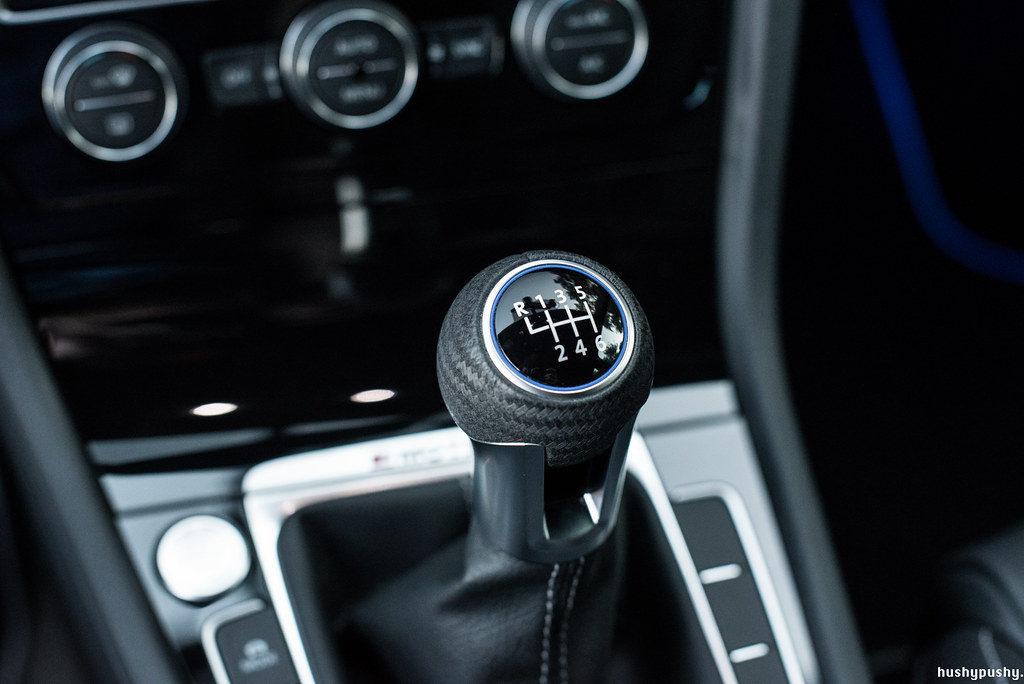
Including, of course, the manual gearbox. I can’t imagine this car being anywhere near as fun with two pedals and two paddles–it’s just nowhere near frantic and fast enough to make you want that shifting experience.

I chucked this thing down my favorite twisty road and was impressed by its crisp turn-in and the way it powered out of corners with the rear wheels, feeling very much 50-50 balanced and sporty. Even the engine’s character and shift engagement were conducive to sporty driving.
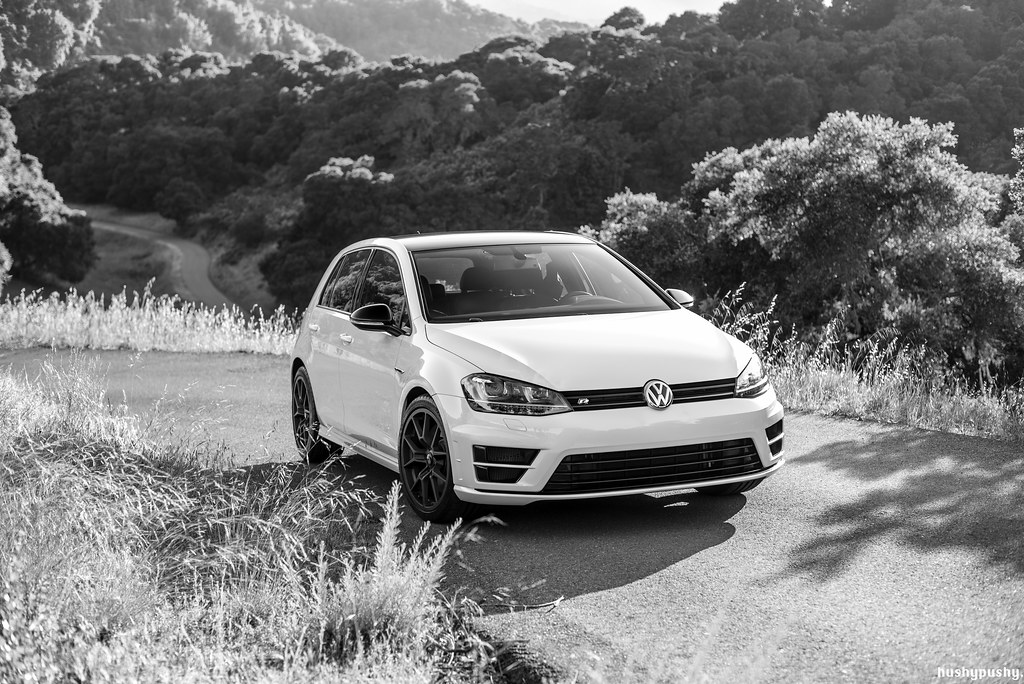
In a world where the demand for an isolation box far outstrips the demand for an exhilarating driving experience, it’s pretty amazing what Volkswagen has done with the Golf. The same chassis that can be an EV or econobox can also be a hot hatch or, as VW themselves refer to it, a “performance hatch”. And each one is a great car for its intended purpose. Well done, Volkswagen. Now I’m impressed.


 Star Road