
Every PS1 Game – Gran Turismo 2
So you’ve just released the greatest racing game yet created, which would go on sell more copies than any other game released on the Playstation. What next? Well, you get back to work and improve it in every single way, of course. Released almost exactly two years later, Gran Turismo 2 is based on Gran Turismo but every aspect was tweaked and expanded.
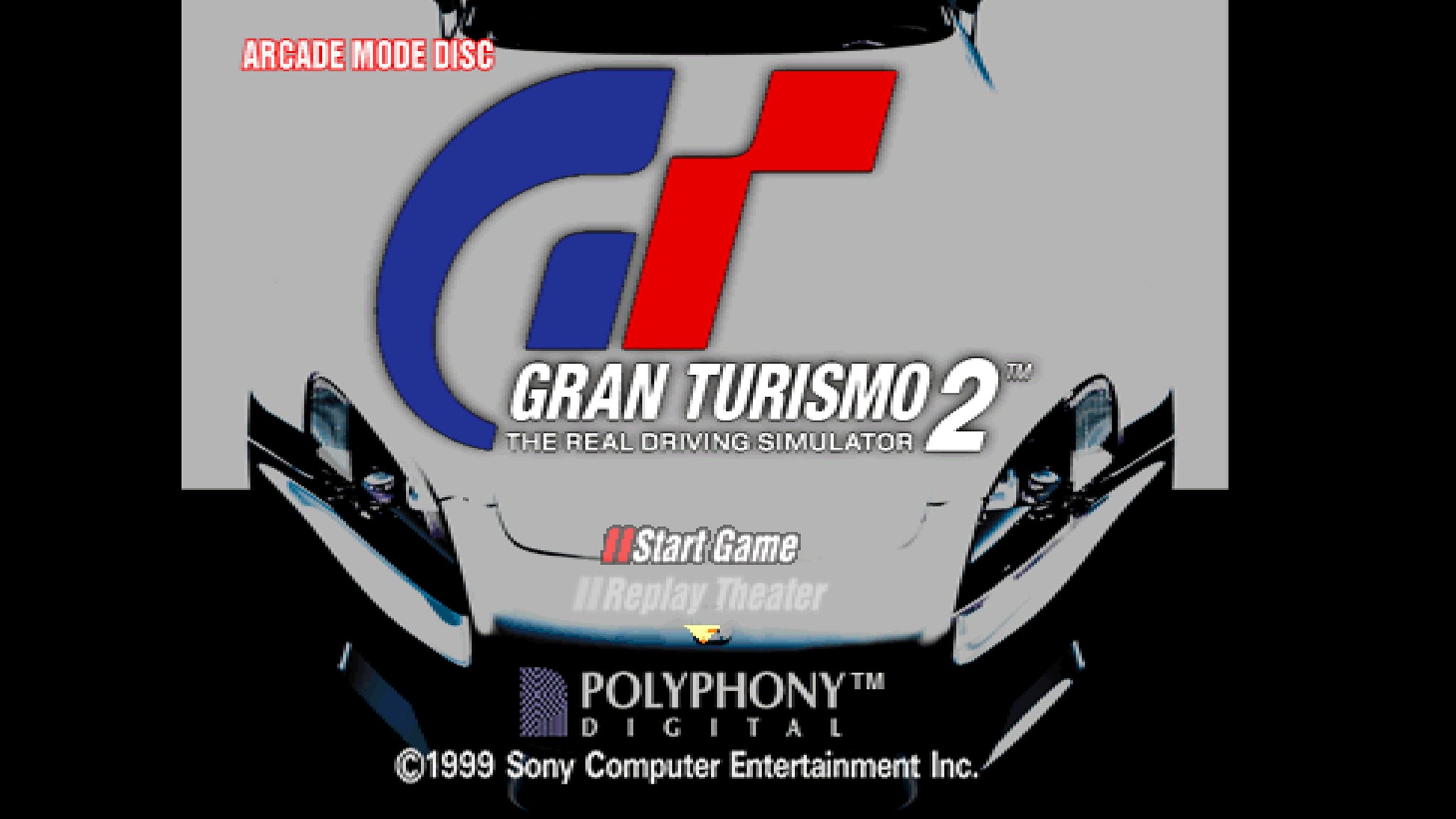
Gran Turismo came in a double-disc case because it contained a huge supplementary manual. Gran Turismo 2 also came in a big case, but it actually had two discs inside: they split Arcade and Simulation (previously “Gran Turismo”) modes into their own discs due to the addition of so much new content.
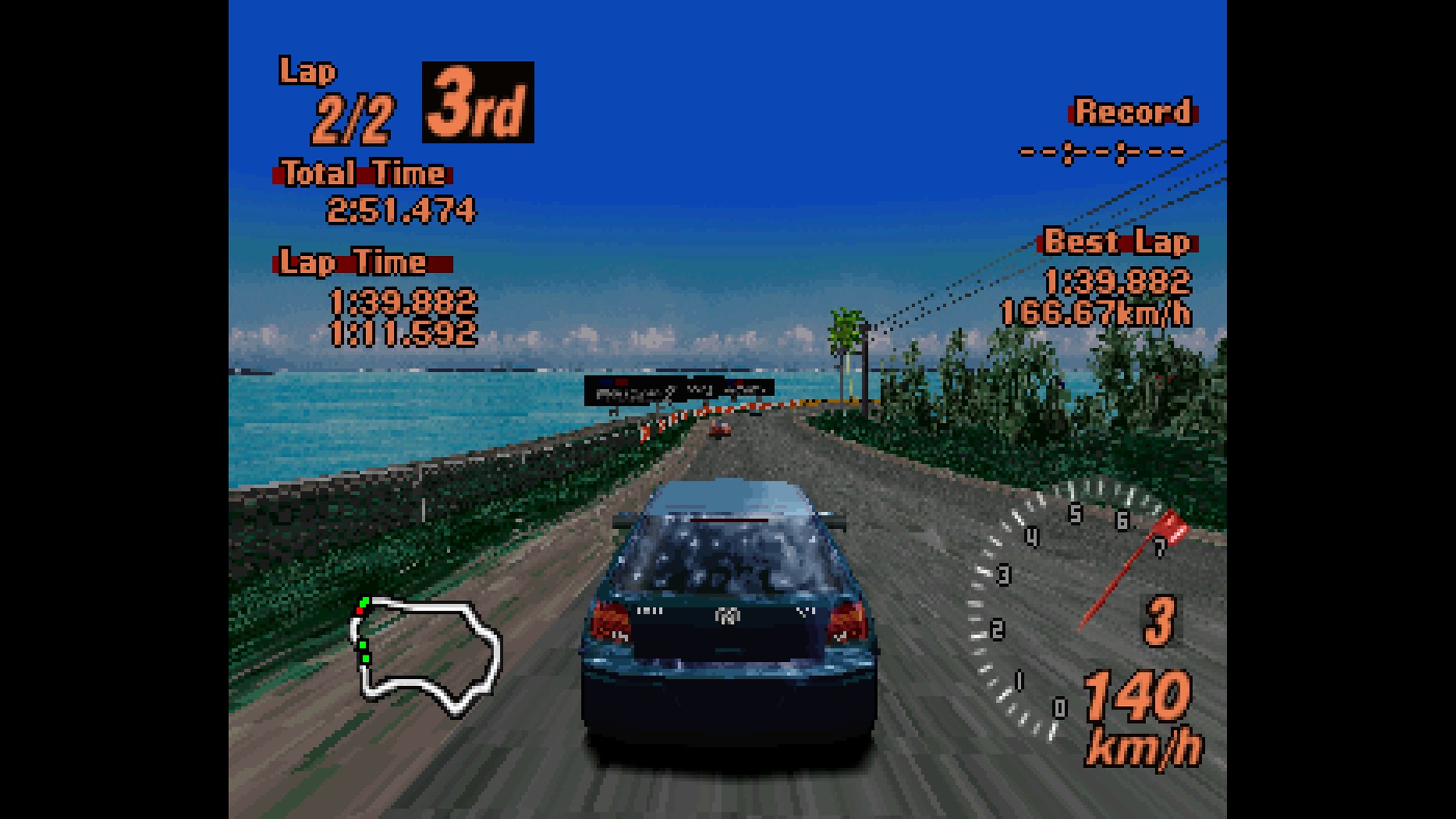
The graphics of GT2 are pretty much the same as GT, at least in standard form. There is a high level of texture detail for a PS1 game, great models, and it runs at a solid 30 fps.
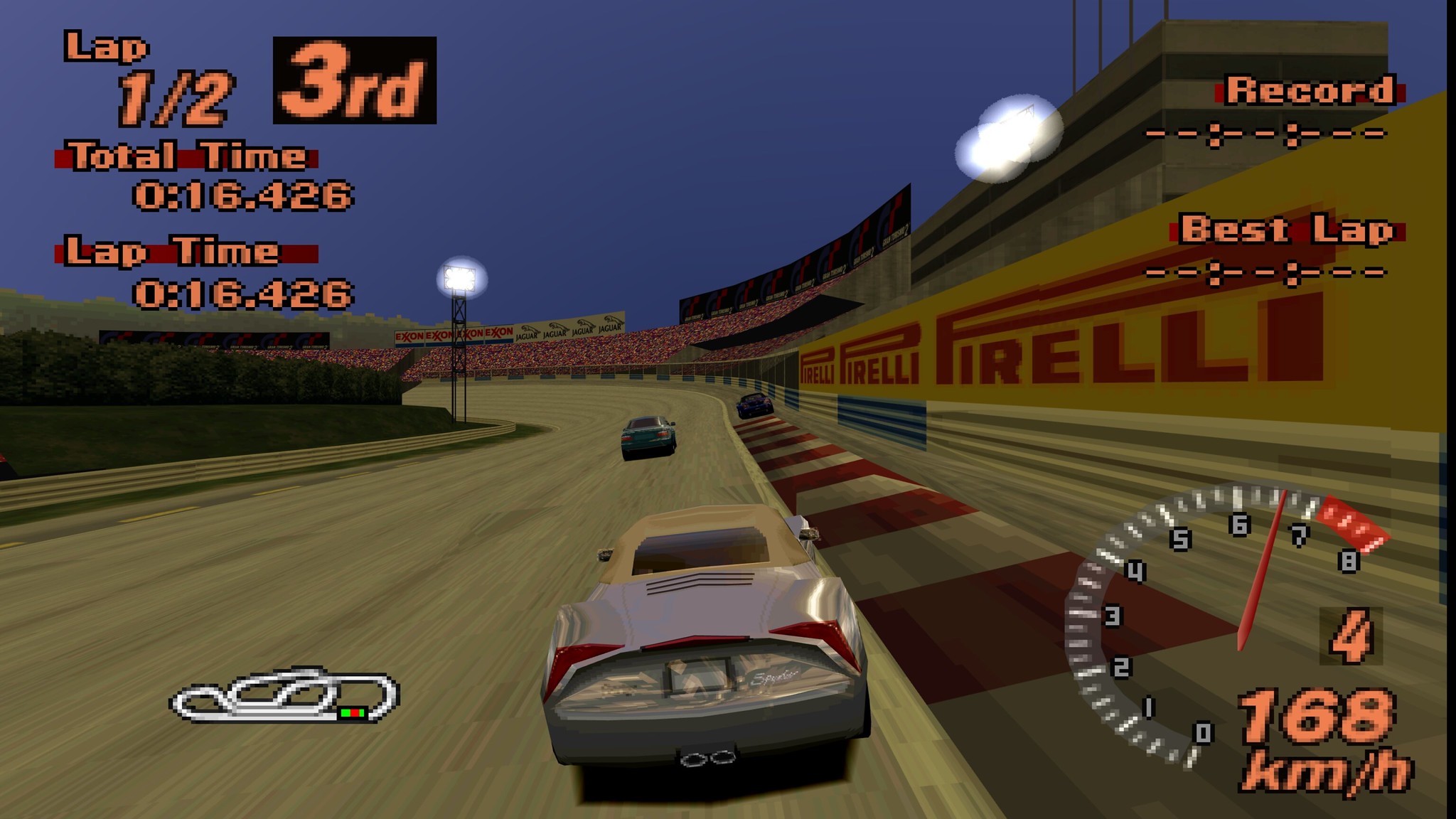
But we’re in an emulator, so as we did for Gran Turismo, we are skipping the period correct vibes and bringing this classic right up to the 21st century. By the way, have you ever seen a Plymouth Pronto Spyder anywhere outside of this game? Yeah, me either.
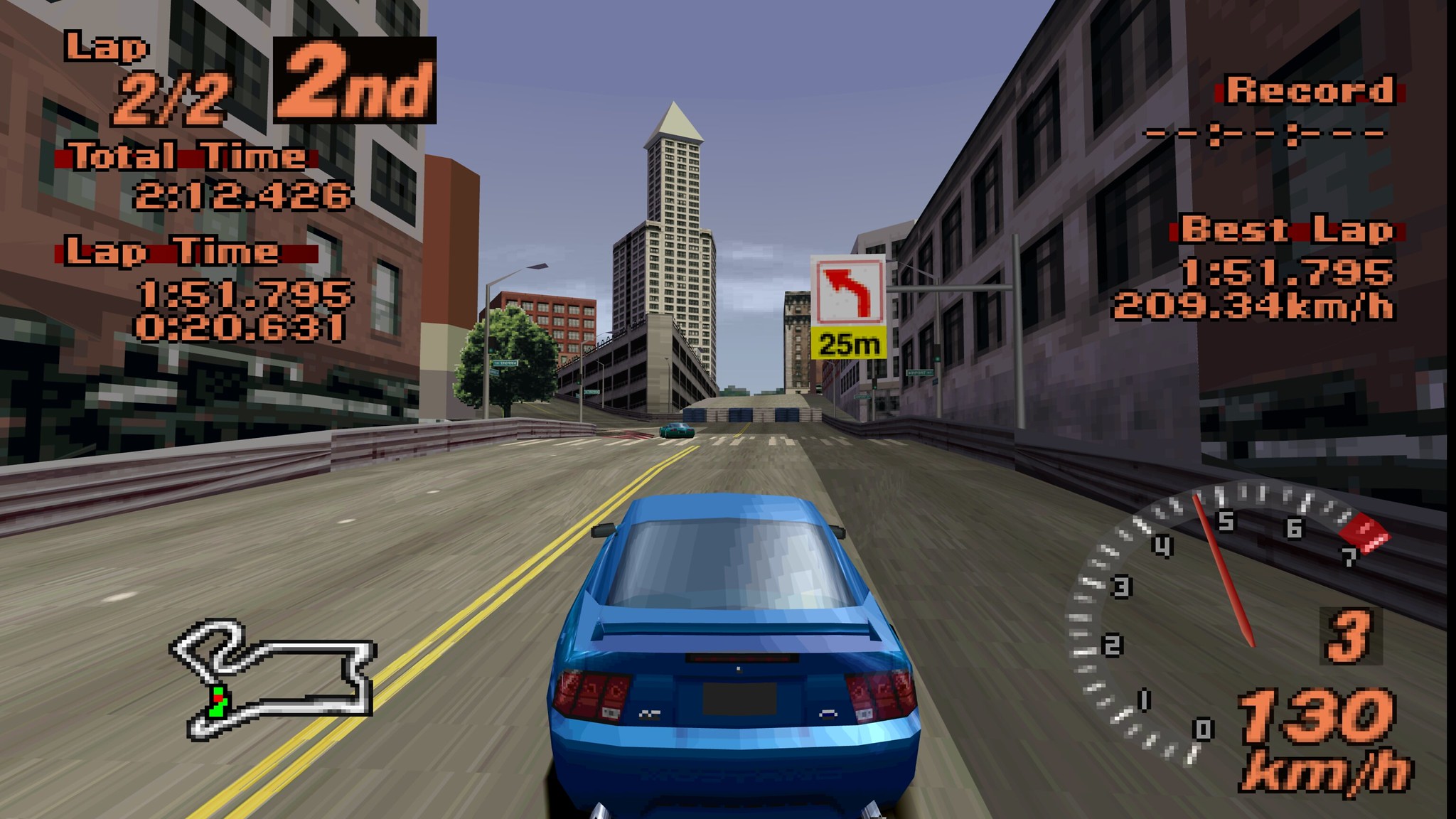
One of the key words with Gran Turismo 2 is “more”: it’s the original game with more of everything. It has far more cars and tracks than Gran Turismo, and in fact most racing games made before or since: there are 27 distinct tracks (rising to 49 total tracks if you count all the layouts) and somewhere around 620 cars (although that number includes minor variations). The new tracks are awesome, especially this Seattle circuit.
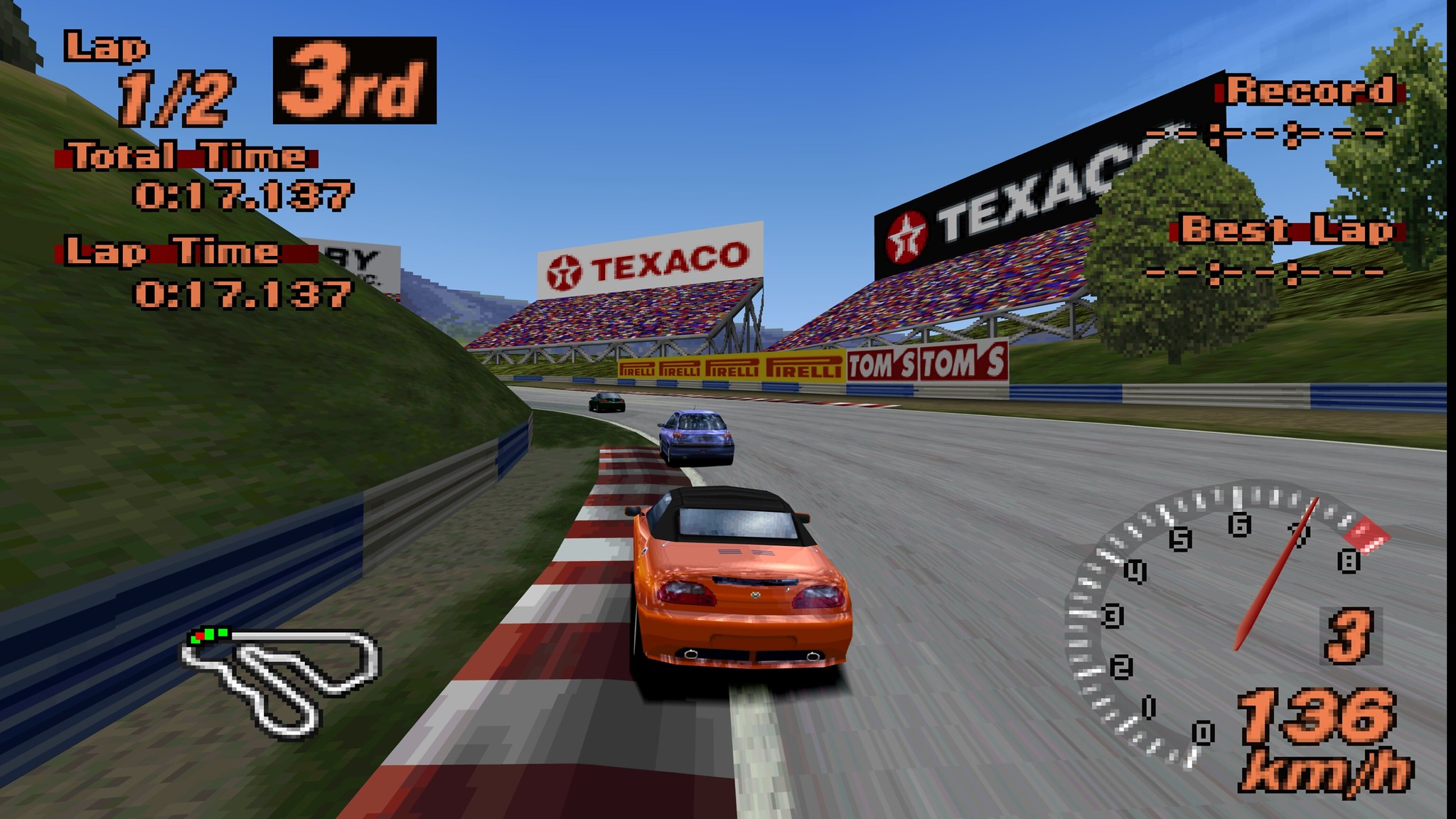
Right away, this game feels a little different. The original Gran Turismo is generally about understeer: if you enter a turn too fast, or get on the throttle too early, you get understeer. Thus the key to speed in GT1 is managing proper entry speed with proper timing of exit throttle. GT2 adds an extra dimension: oversteer. In this game, the cars are much easier (some would say too easy) to spin out, so while you still need to control your entry speed and throttle points, you have to be careful with the steering as well.
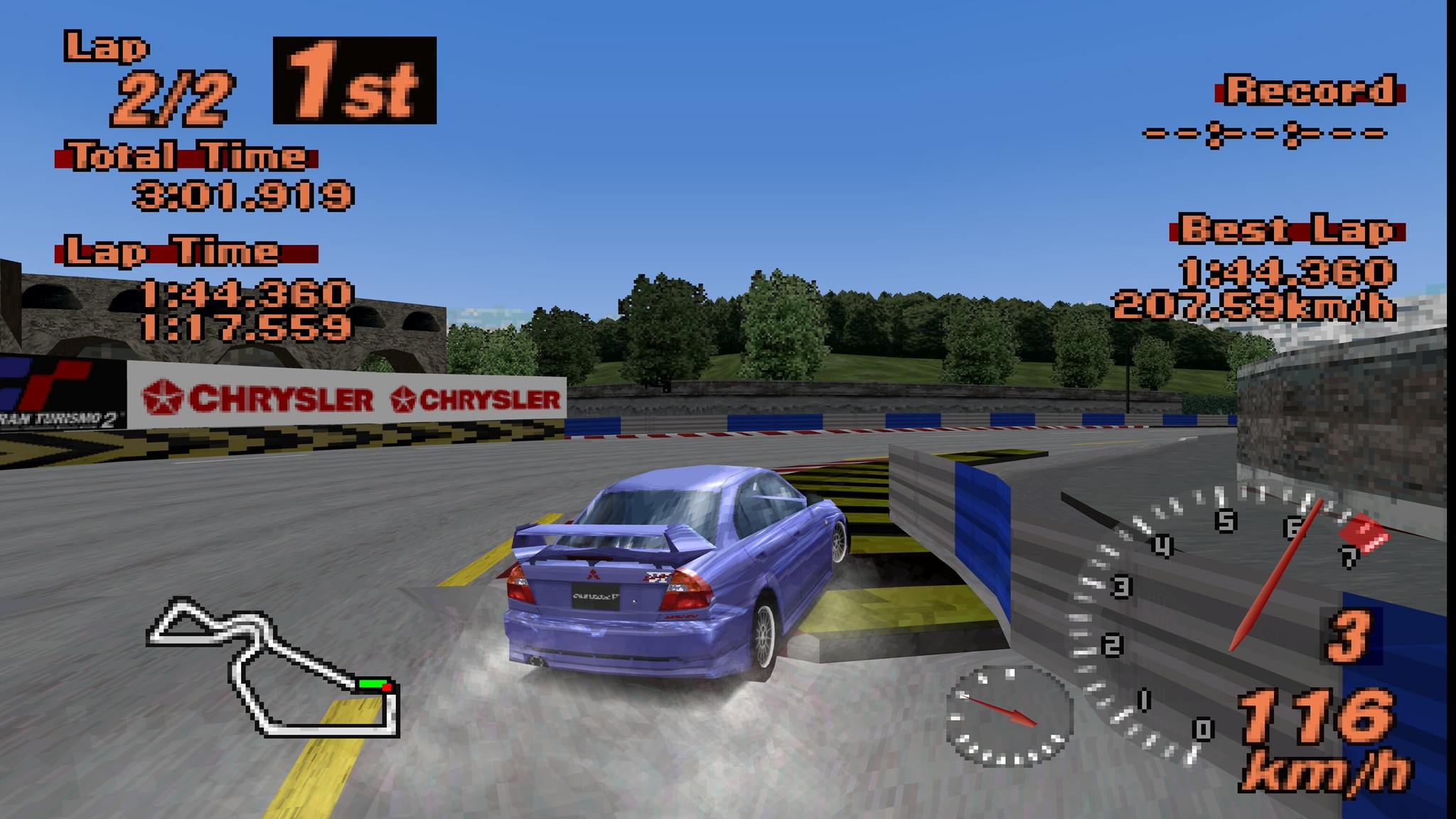
This was just the beginning of the Gran Turismo series’ constant progression towards realism. Crucially, Kazanori Yamauchi and his team at Polyphony Digital have always understood that realism in a racing game shouldn’t mean difficulty. In fact it should be the opposite, because your real-life ideas of how a car behaves should translate directly into the game. That means that within a few corners you’ll be throwing the car around and landing centimeters from the clipping points.
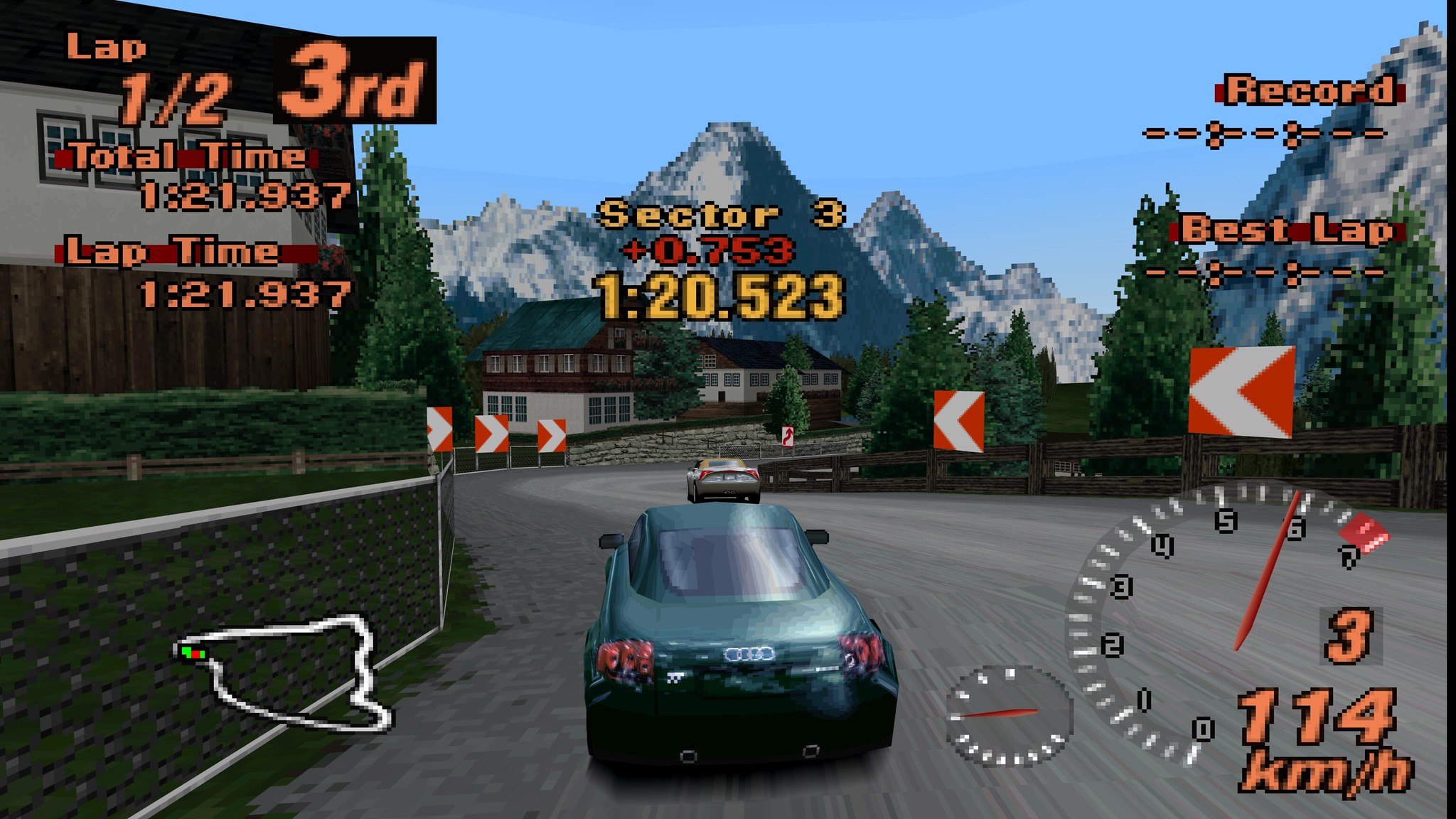
With all the emulator tricks turned up, running at 4k and a smooth 60 fps, this game feels like it could be released tomorrow and still be a hit. Well, except for what is possibly the least impressive thing about this game: the car audio. Even up until Gran Turismo 6 on PS3, most cars in this series sound like someone running a vacuum cleaner in the apartment upstairs.
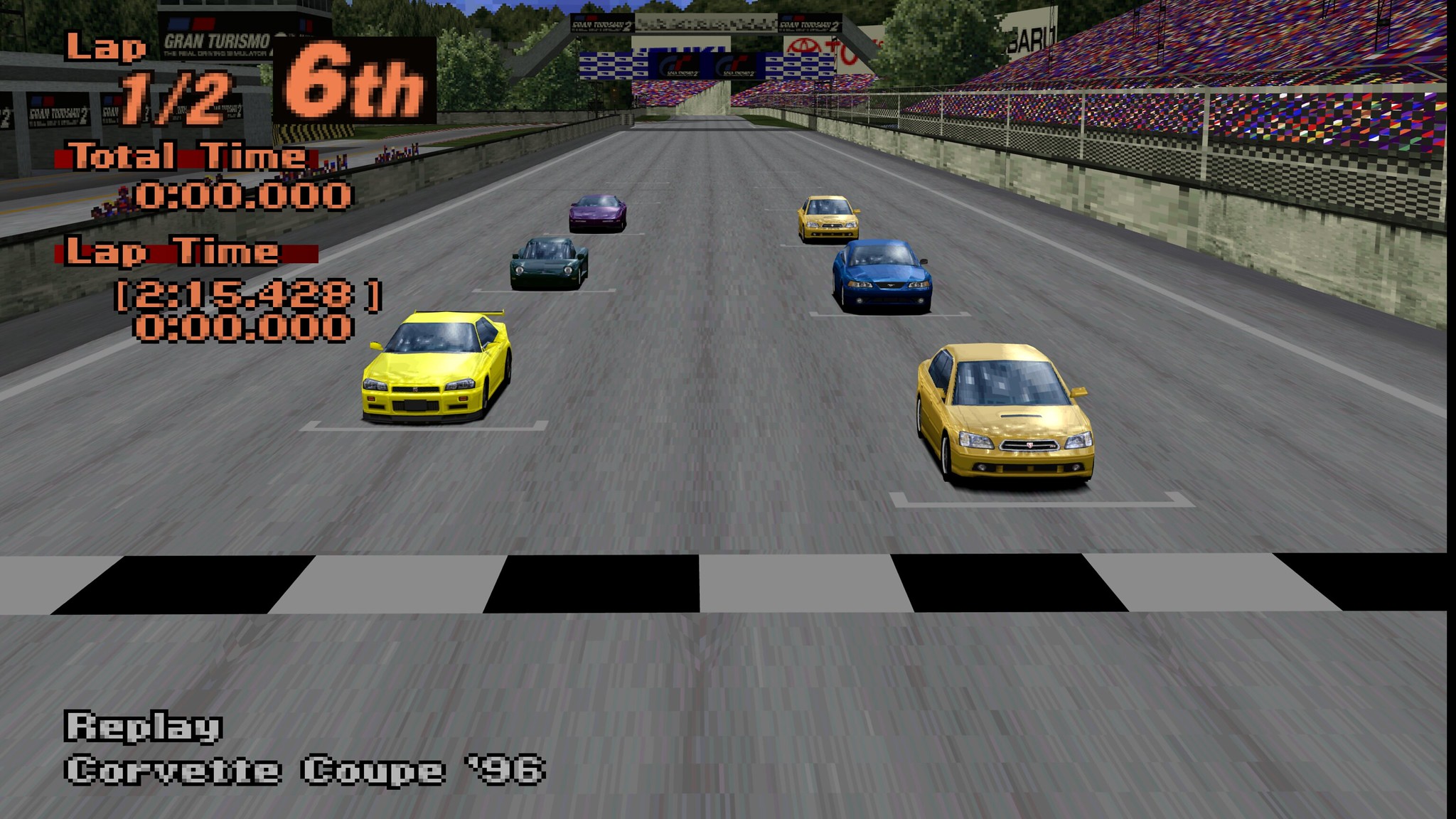
Speaking of emulation, Gran Turismo 2 is probably the most interesting PS1 game when it comes to emulation. And no, I’m not referring to Bleem, although that story is quite interesting too. Rather, a modder called Silent has created and tweaked several awesome cheats for GT2 that greatly improve the experience. I highly recommend clicking that link; not only does it explain the different cheats, there are sliders so you can directly compare them!
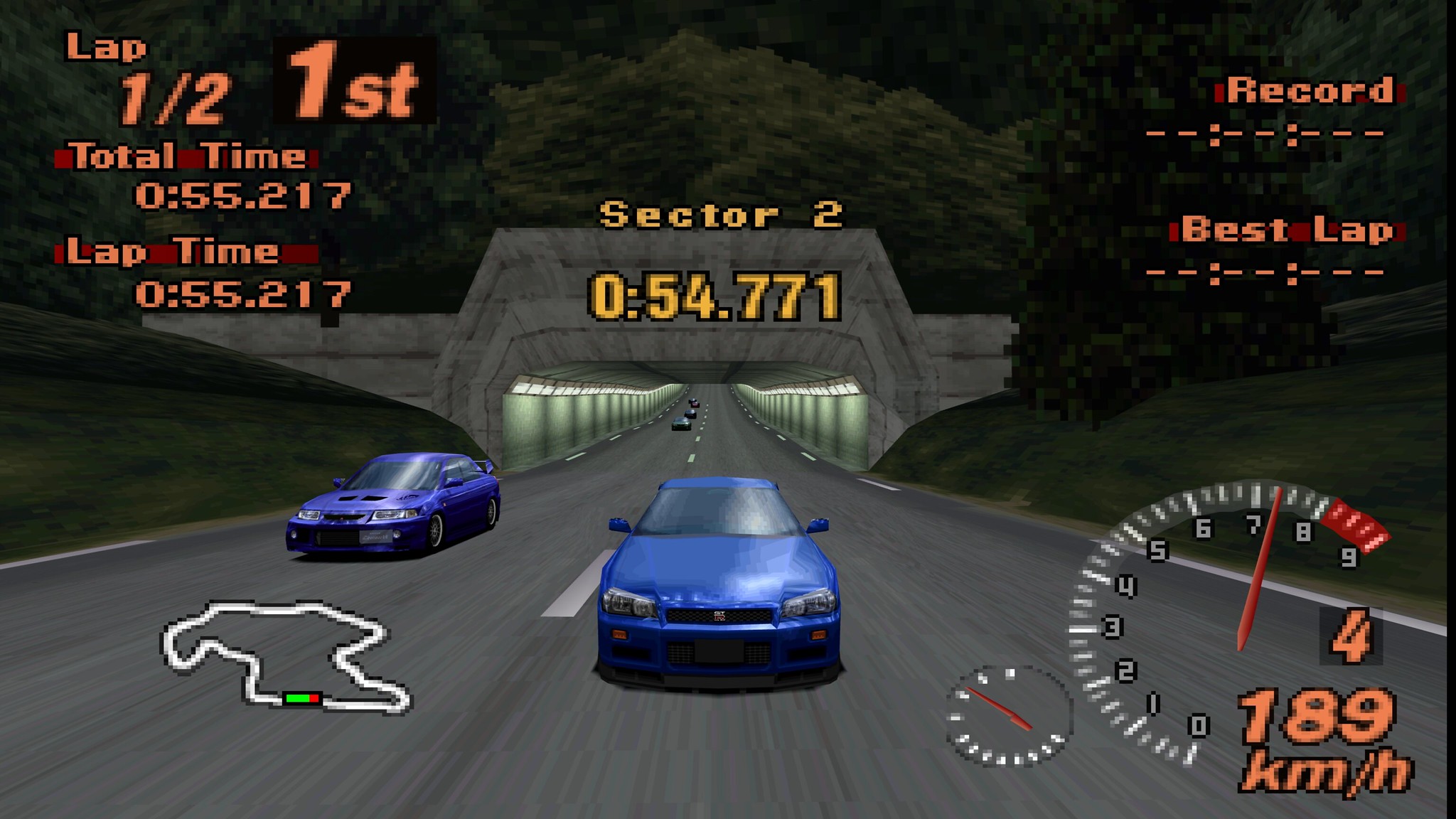
There’s a proper widescreen cheat; the standard hack in Duckstation doesn’t quite work for this game. You can enable 60fps and overclock the emulated CPU, so it always runs super smooth. This game has very aggressive LOD’s, but you can disable them and also increase the overall draw distance; these make a huge difference paired with increasing the internal resolution. Note how every car in all of these screenshots looks sharp and clear, which is a big difference from the pixelated blobs of Gran Turismo. That amount of extra geometry is too much for the PS1, so there is also a cheat that enables the gargantuan 8MB of RAM from the development consoles (retail consoles only had 2MB). On top of that, you can also enable some emulator tweaks that work quite well for this game: Fast Forward Memory Card Access automatically fast forwards through memory card saves and loads, which are quite slow in this game; setting the CD Read and Seek speedup to “Maximum” makes the lengthy load times virtually instantaneous.

As a kid growing up in Silicon Valley, this blew my mind back in the day. The first real-life circuit in the Gran Turismo series was my home track, Laguna Seca!
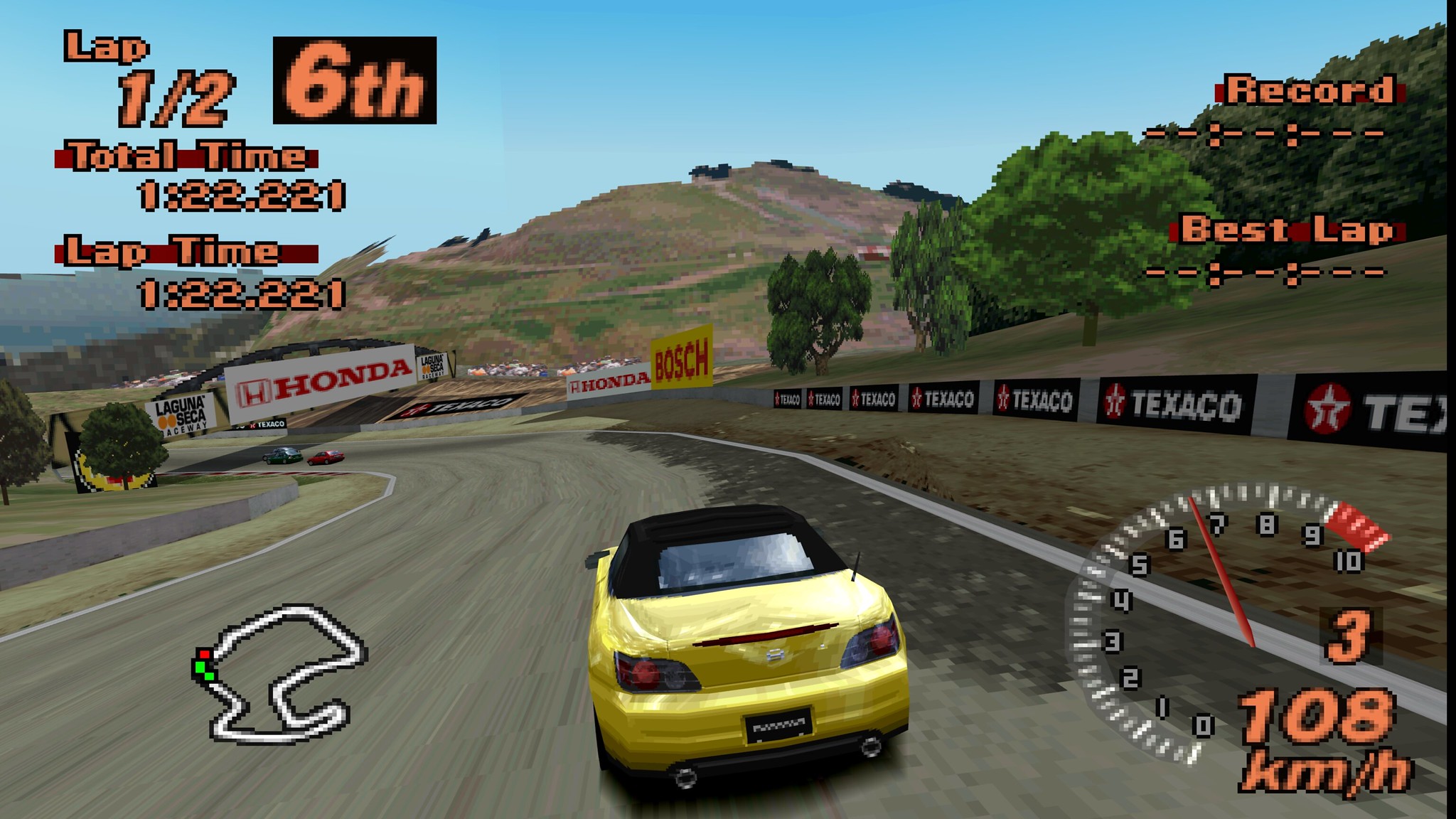
Going over the Corkscrew and down Rainey is one of the most fun corner complexes in the world. I’ve driven my own cars through here and done many sim races around this old dry lagoon in Salinas. This is not the first video game to feature Laguna Seca, but it’s the one that I started on.
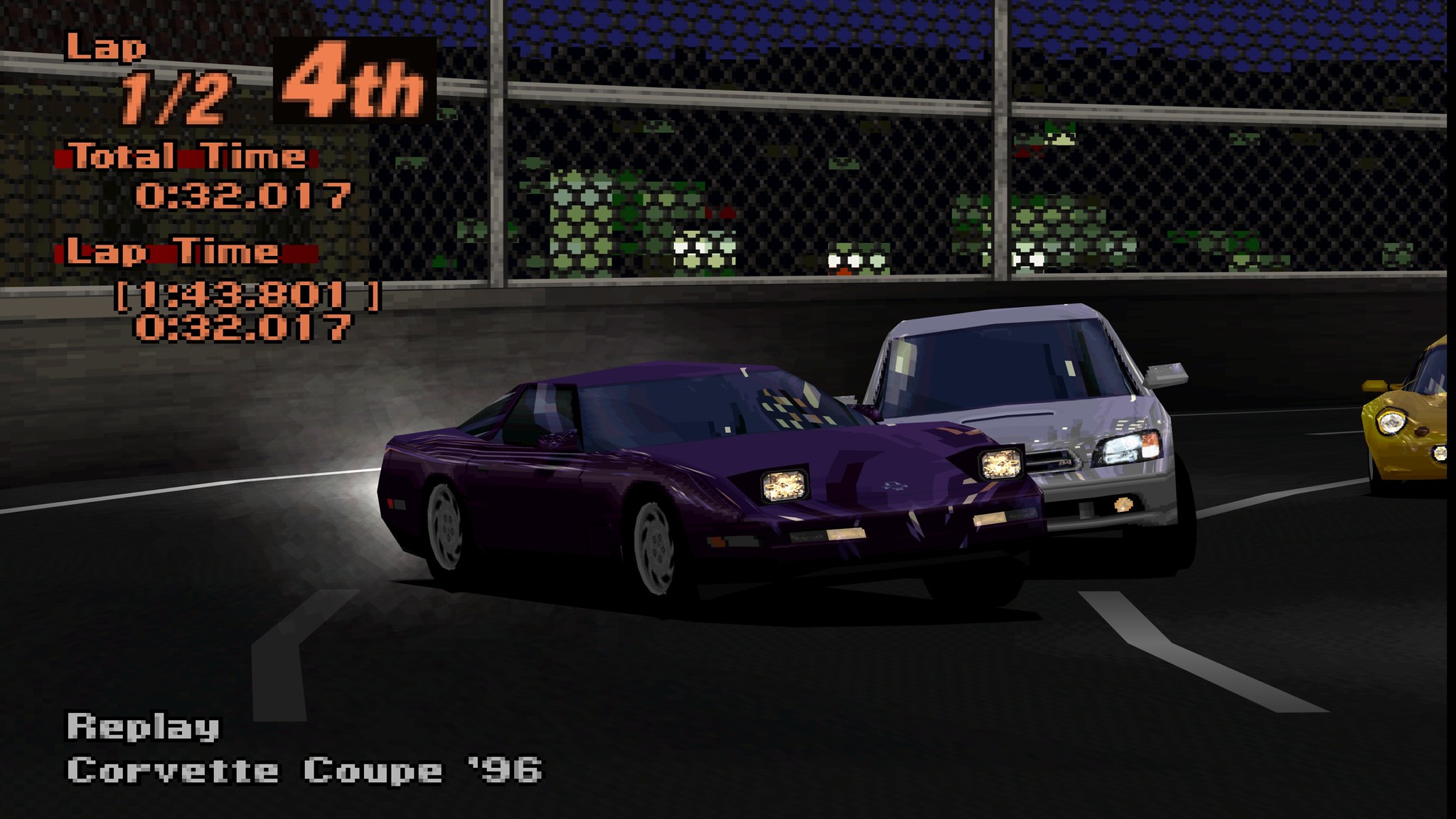
A lot of the things I mentioned in the Gran Turismo article still hold up for GT2. These replays, for example, were still very impressive in 1999. I think they even look great today, particularly the headlights.
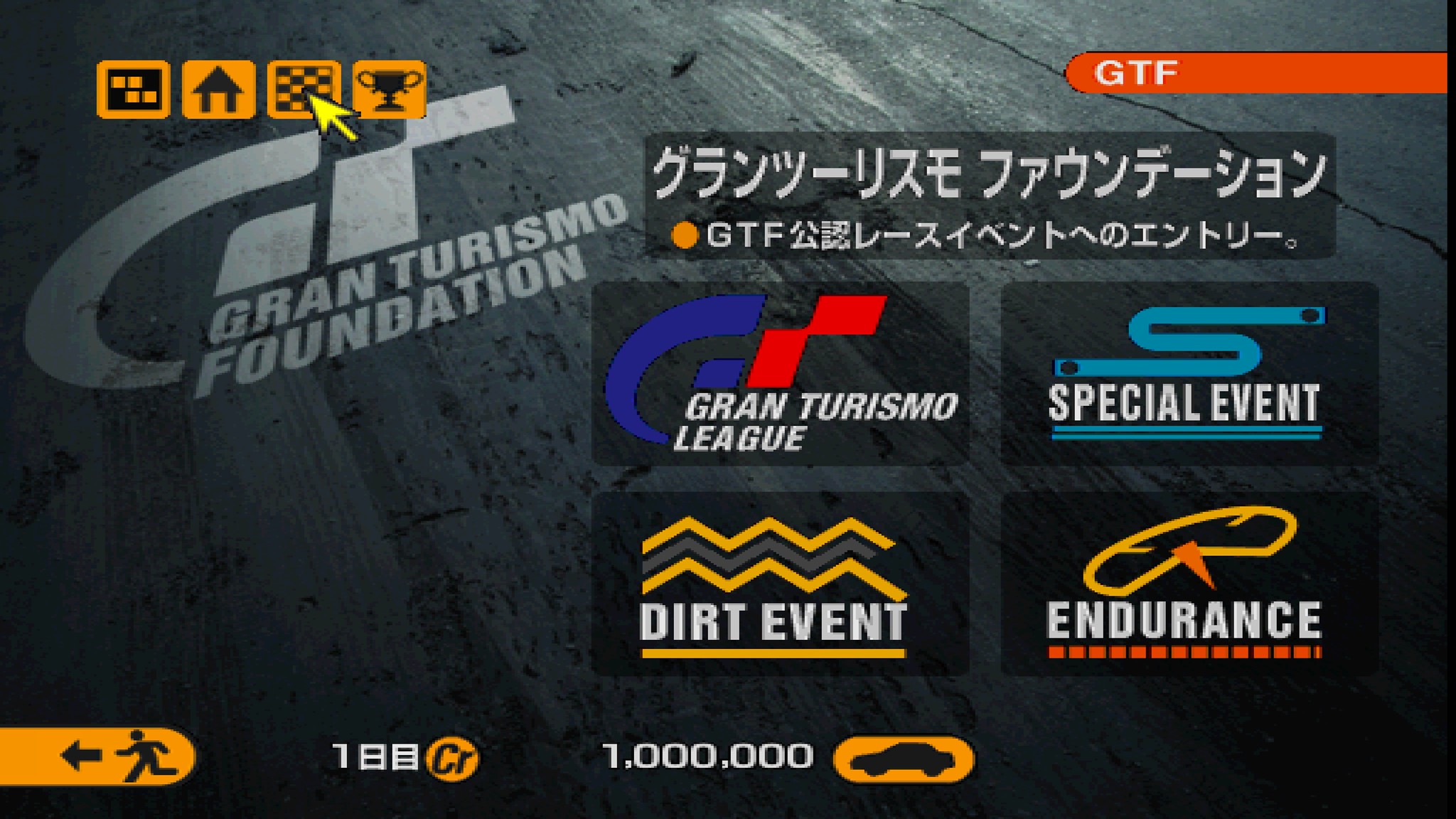
While Gran Turismo was a seismic shock that brought a load of new innovations, Gran Turismo 2 was the same formula but much more of it. This is the most apparent when you look at the new Simulation (previously “Gran Turismo”) mode which has a significantly larger selection of events. Plus dirt!

Eagle-eyed readers will have noticed this from the title screen at the top of the article, but like Gran Turismo, I decided to play the Japanese version of Gran Turismo 2. I did this for one reason in GT2: the Masahiro Andoh music in the races. The USA version doesn’t have unique menu music anymore, although it does have a different opening movie. Most of the changes are simply the usual regional changes, although there is one downside to the Japanese version that is very noticeable: there is hardly any grip on the dirt tracks in that version. The difference is reflected in the target rally times; some of them are almost fifteen seconds faster on the USA version compared to Japan!
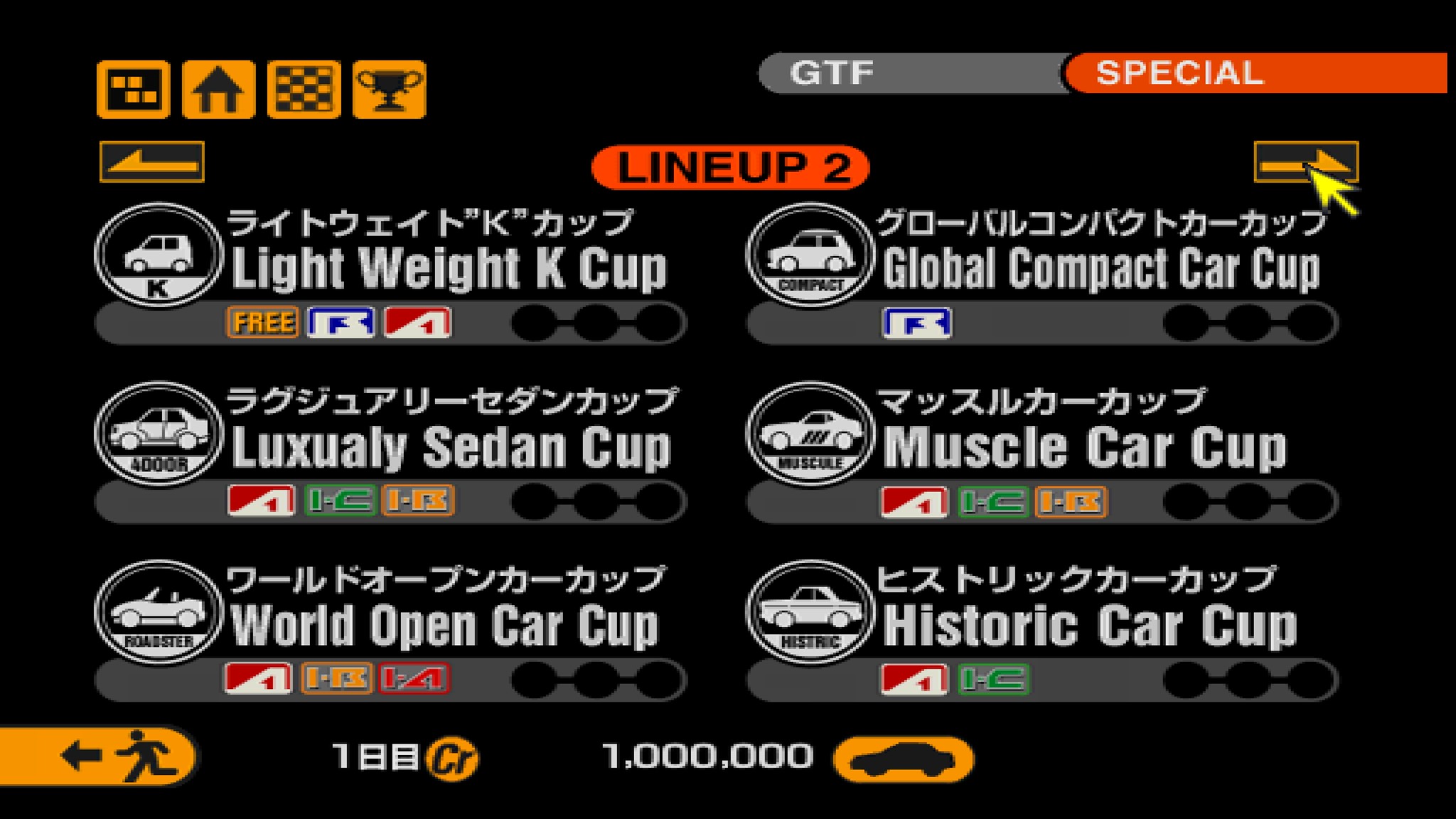
There are significantly more events in this game; there are four pages just of these “Special” events! And similar to GT, there is a bit of Engrish to be found in the Japanese version that was tidied up for the Western releases.
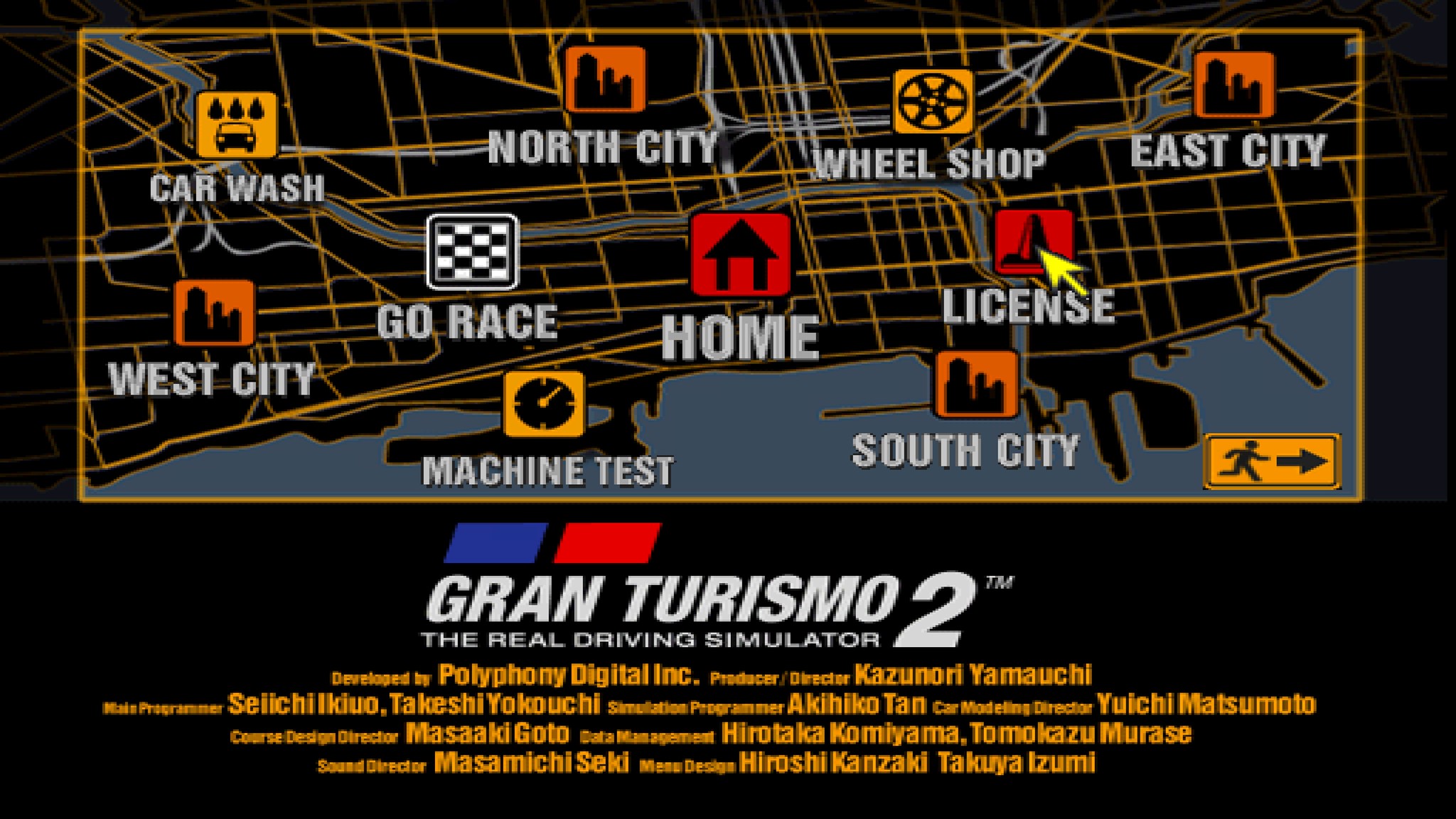
They really simplified the home screen here. Instead of showing every manufacturer on the main screen, the map is broken up into “cities” that roughly correspond to corners of the world where they lump together manufacturers.

For example, “East City” has the flag of Japan and is the space for Japanese manufacturers.
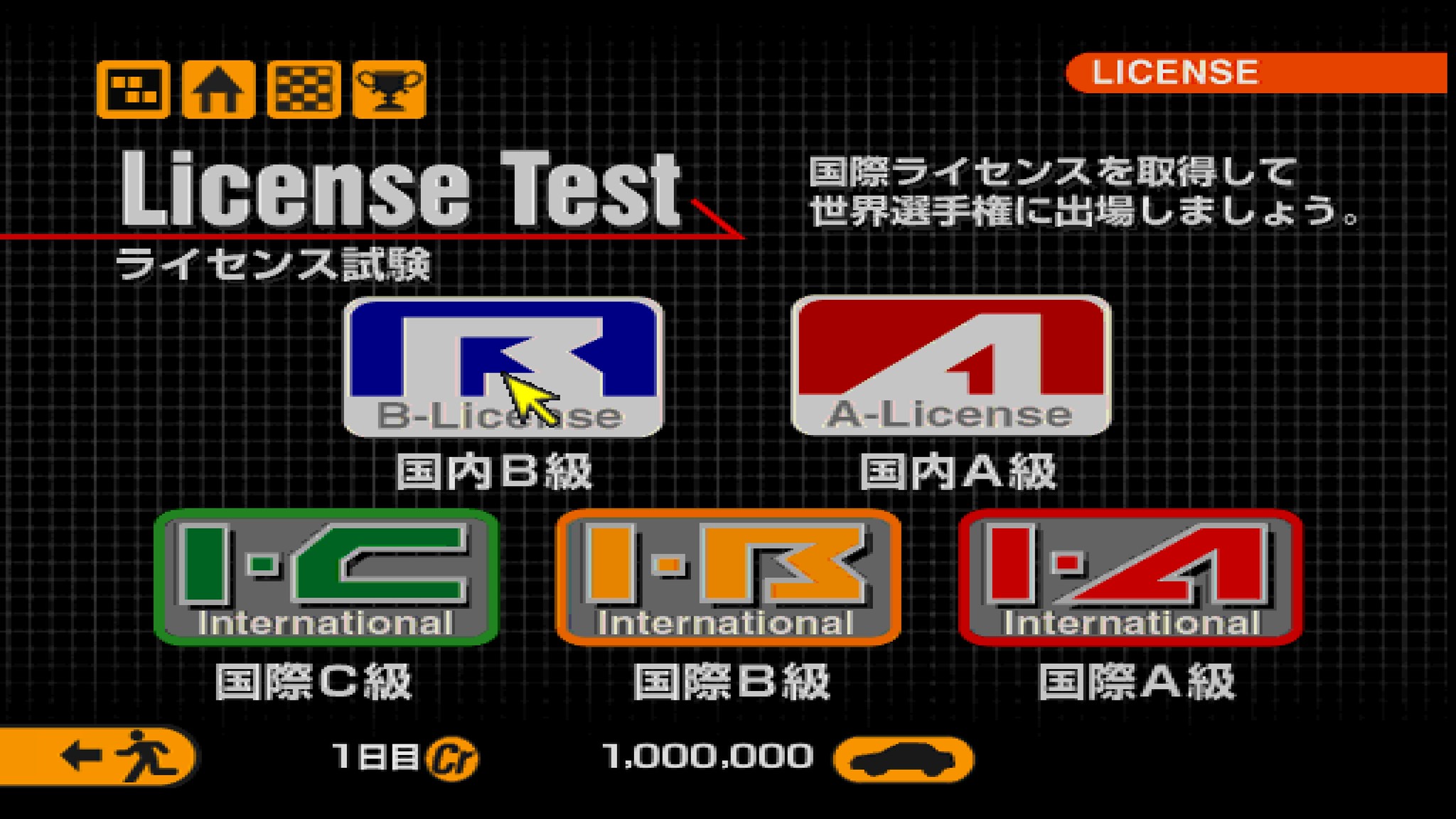
Was there anything in this game that wasn’t an improvement? Well, one thing that bothers me a little is that Arcade Mode progress is tied to your license in Simulation Mode; as you earn licenses, you unlock tracks in Arcade Mode. In the original Gran Turismo, Arcade Mode stood alone as its own challenge.

Perhaps the most infamous aspect of GT2 is the license tests: most of the Gold times are so strict that you essentially need a perfect run to achieve them. Sliding in by 0.001 seconds? I’ll take it!

Another new feature is the input display. The input curves for the brake and throttle are a bit wonky so it doesn’t control like a modern game, although the good news is that the game was designed for it. It still plays great with digital controls, but it’s nice to have that extra degree of control from analog throttle and braking.
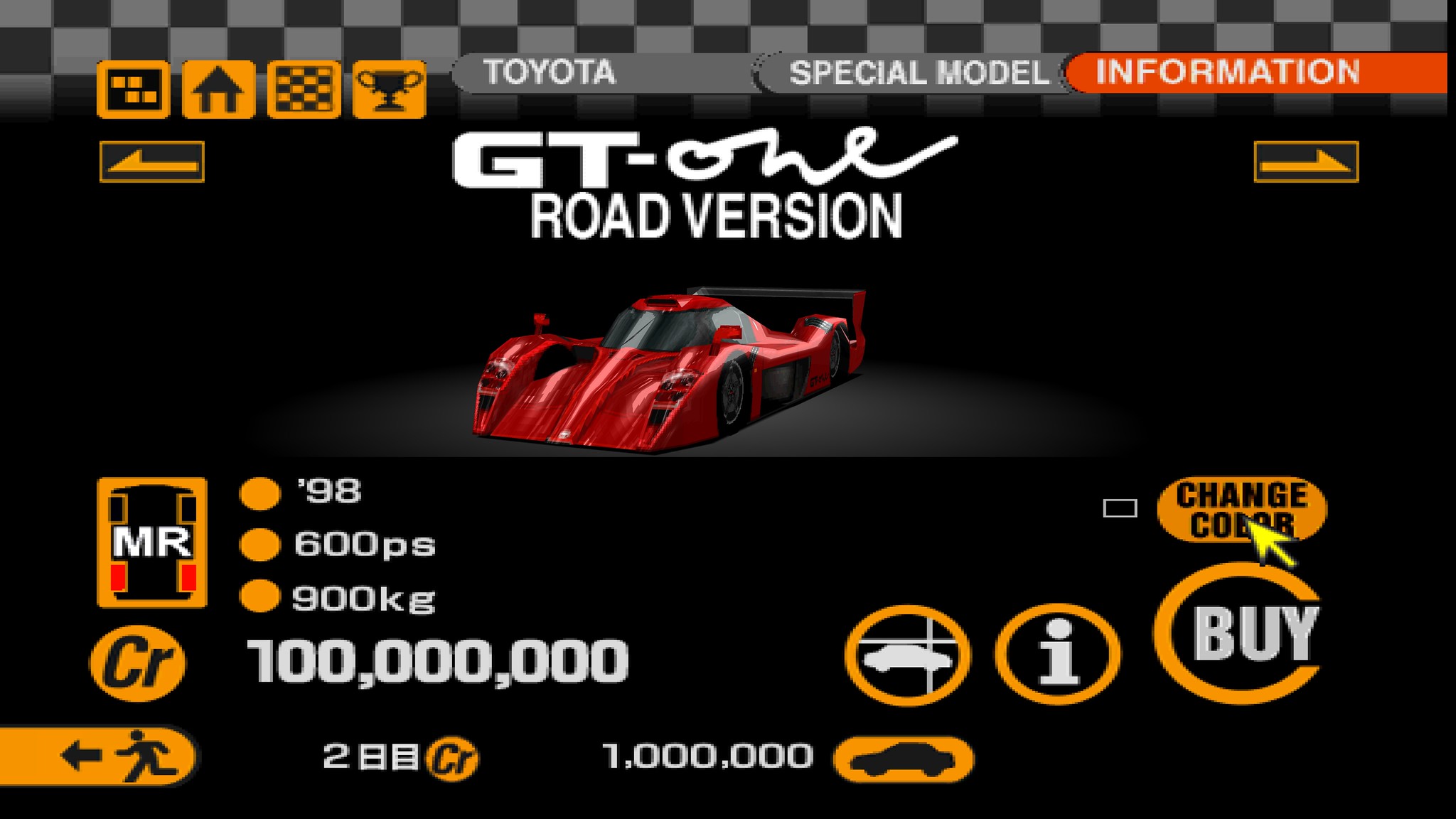
With a 1999 release date and over 600 cars, you are bound to find some RADwood gems, like the one-of-one Toyota GT-One Road Version…
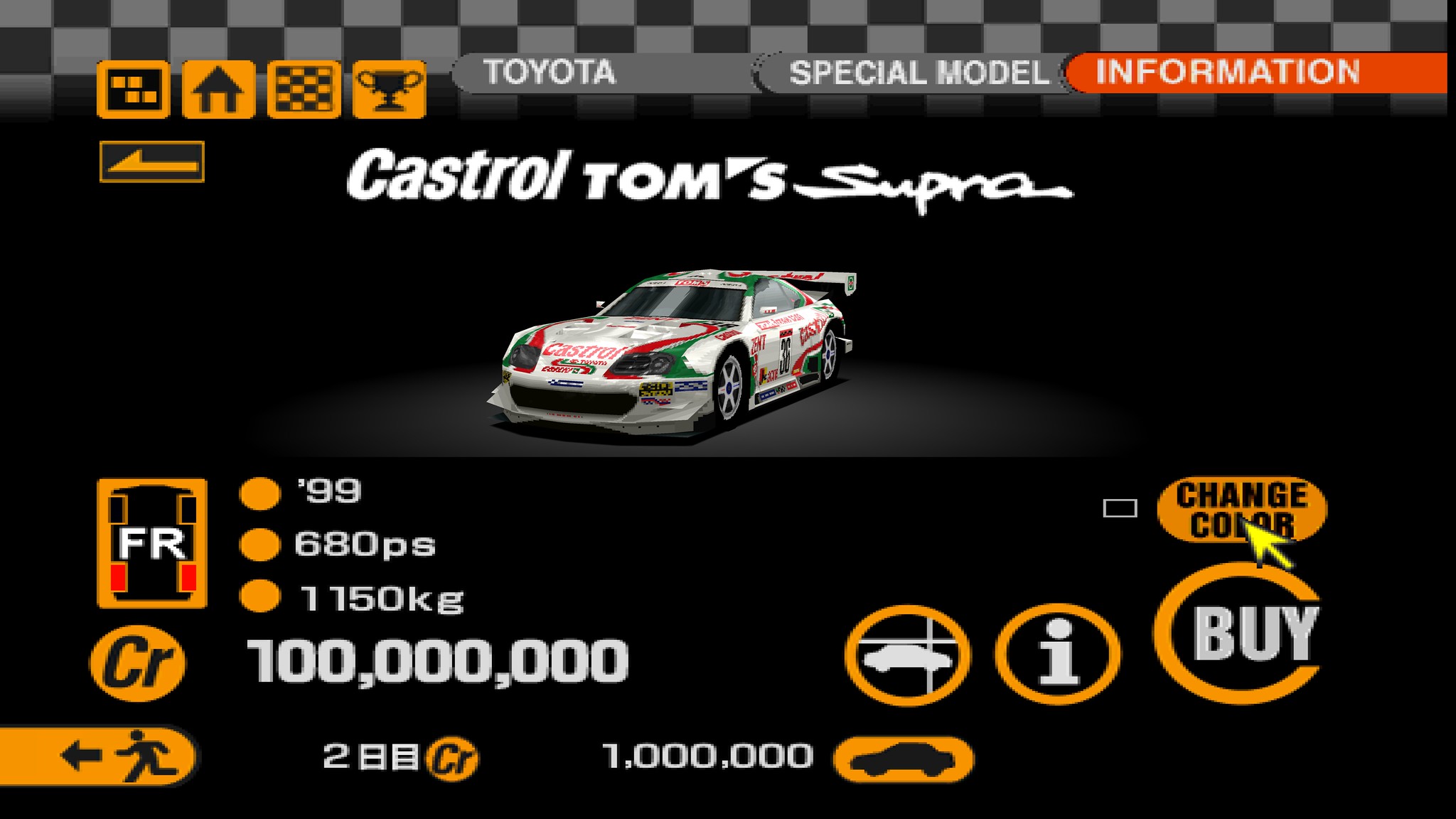
…the Castrol Tom’s Supra…
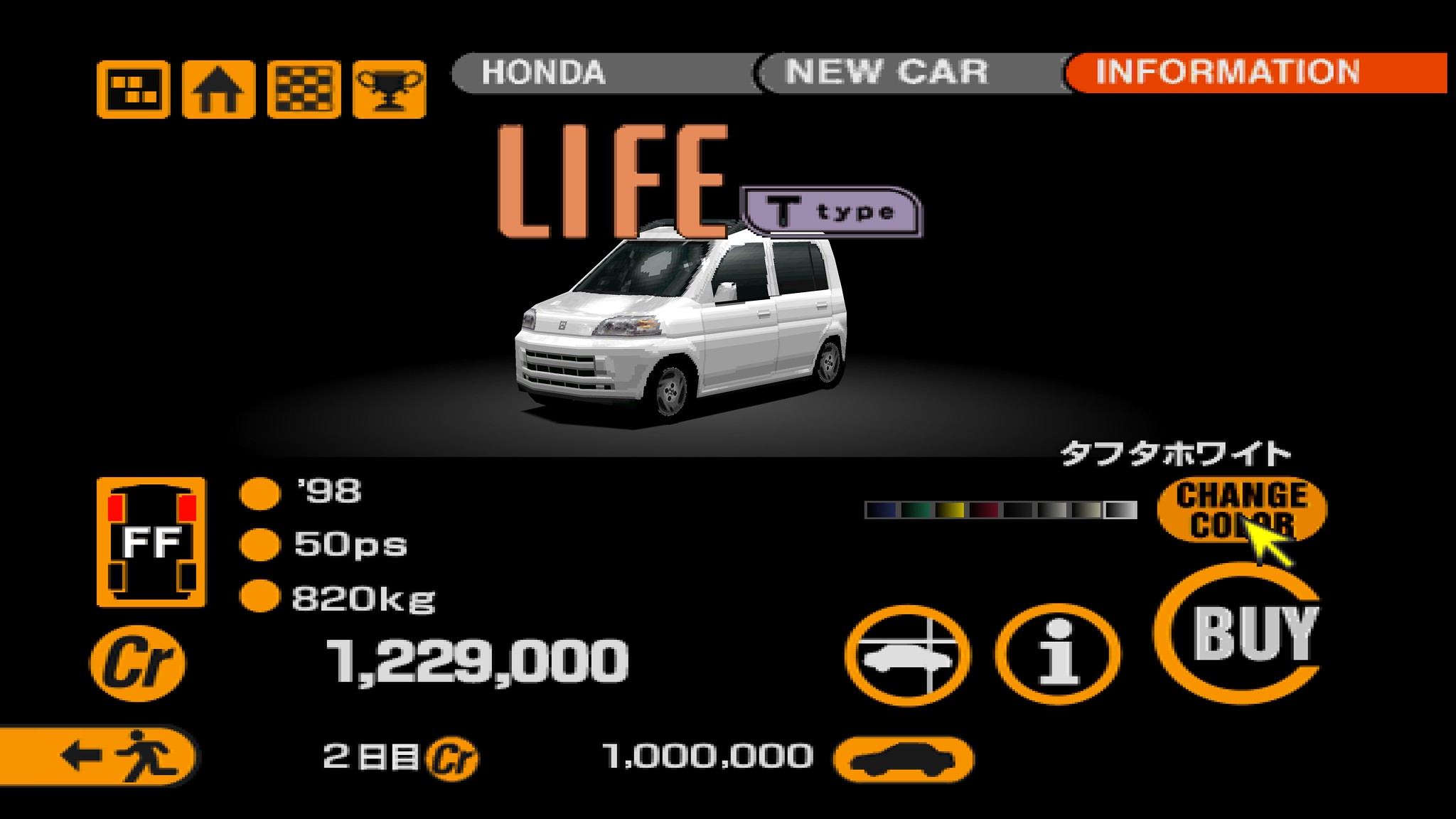
…or even the legendary Honda Life. Wait, what? Yeah, there have always been shitboxes in the Gran Turismo series. I’ve read people complaining that GT7‘s updates have included cars like the Renault Kangoo, Peugeot 2008, and Toyota RAV4. First of all, this is always in addition to legitimately desirable and cool cars. But guess what? The beauty of Gran Turismo has always been that you can race the regular car in your mom’s driveway.
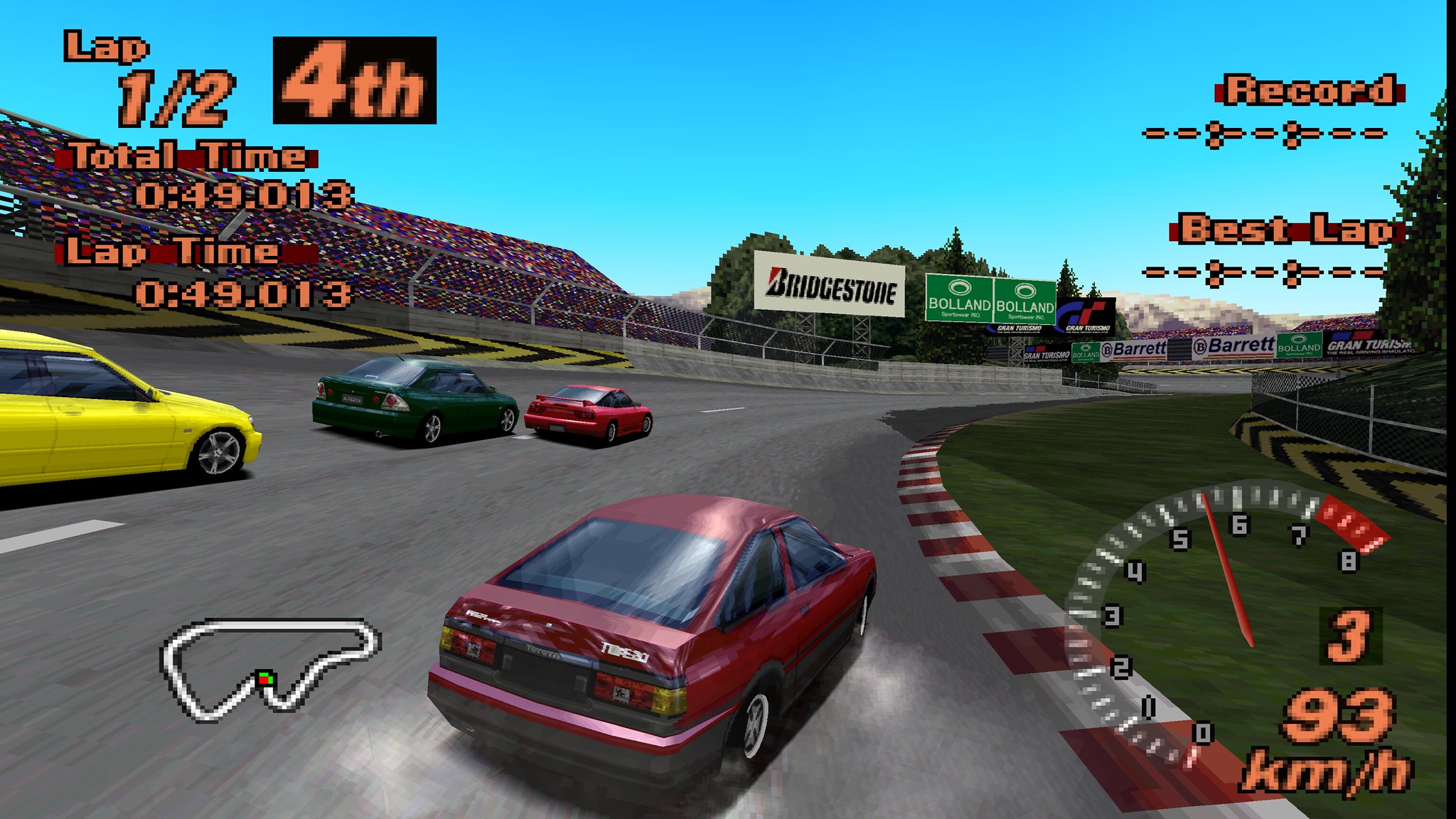
Is that a smidgen of countersteer? There is a very satisfying element of rotating your car in this game that was missing from the first one.
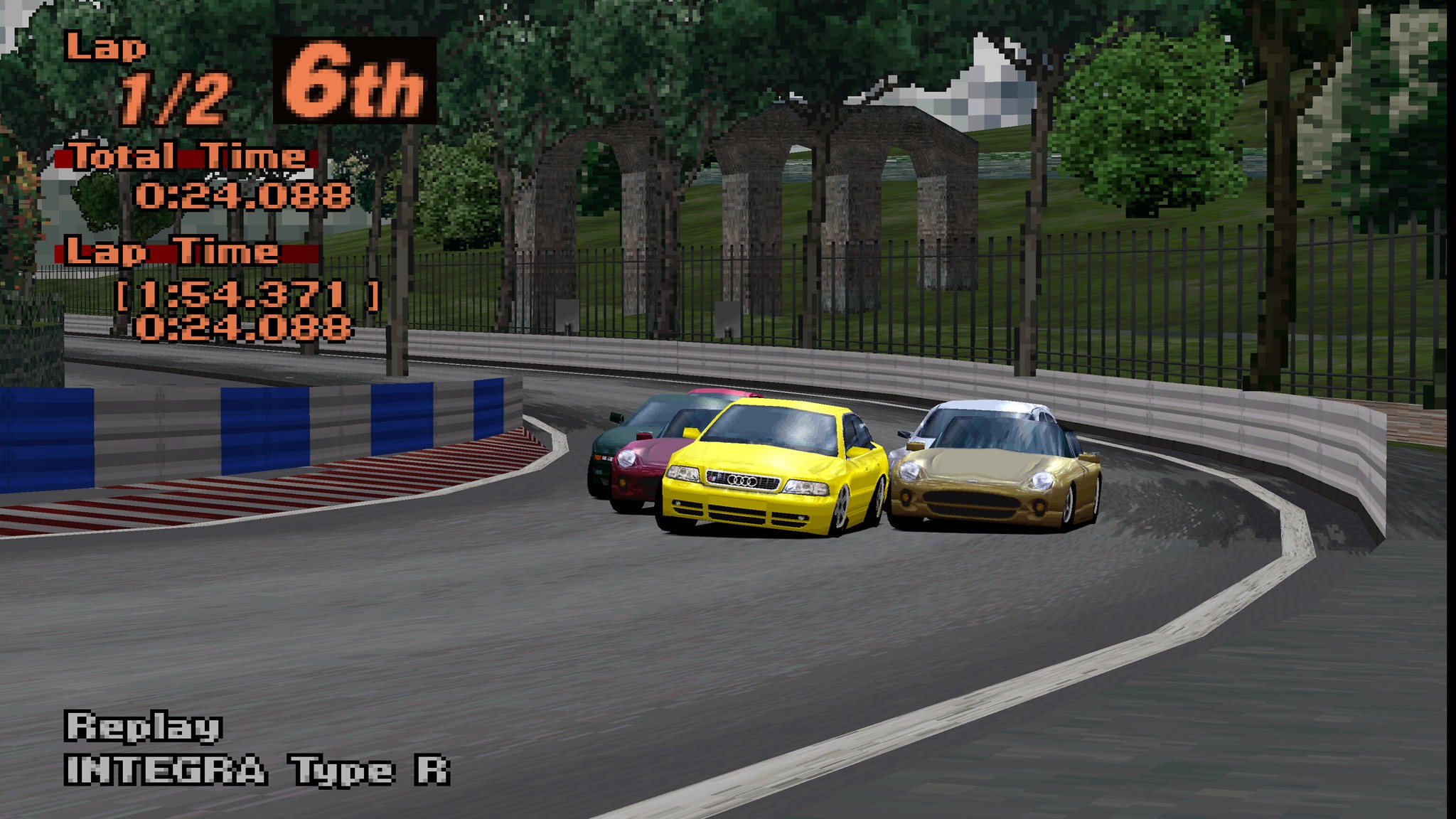
Another infamous aspect they beefed up was the rubber banding. The first game had a system where the cars in the front went slower and the ones in back sped up; this one moves it to the next extreme and tries to keep the entire field as bunched up as possible.

This is where the “Gran Turismo driving style” really took off. The computer-controlled drivers definitely believe that rubbin’ is racin’ and show absolutely no mercy–so neither should you.
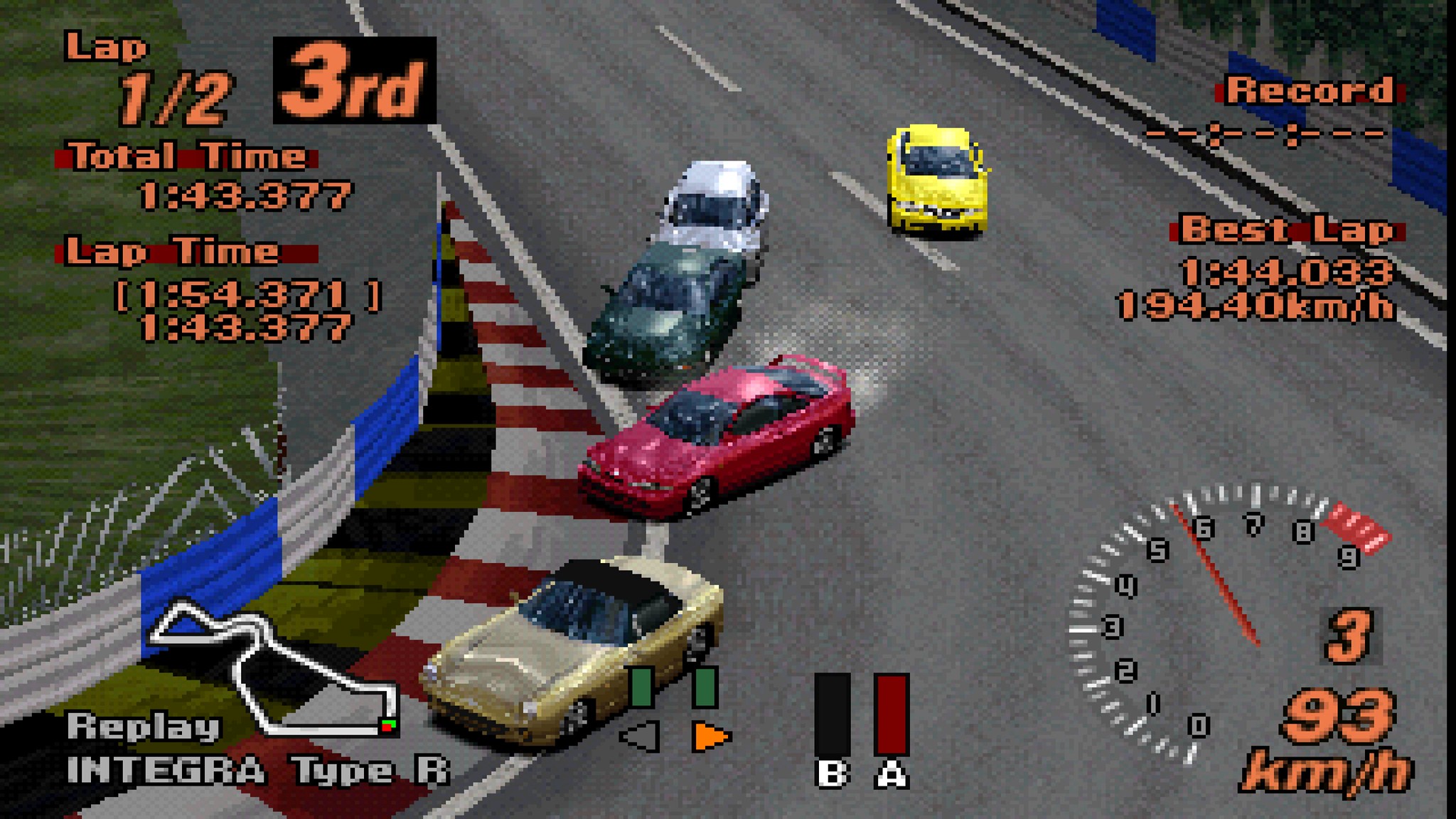
Every once in a while I like to throw in an original resolution shot for comparison. This game does look awesome at 320×240, but it’s also amazing how much it comes alive when internal resolution is turned up.
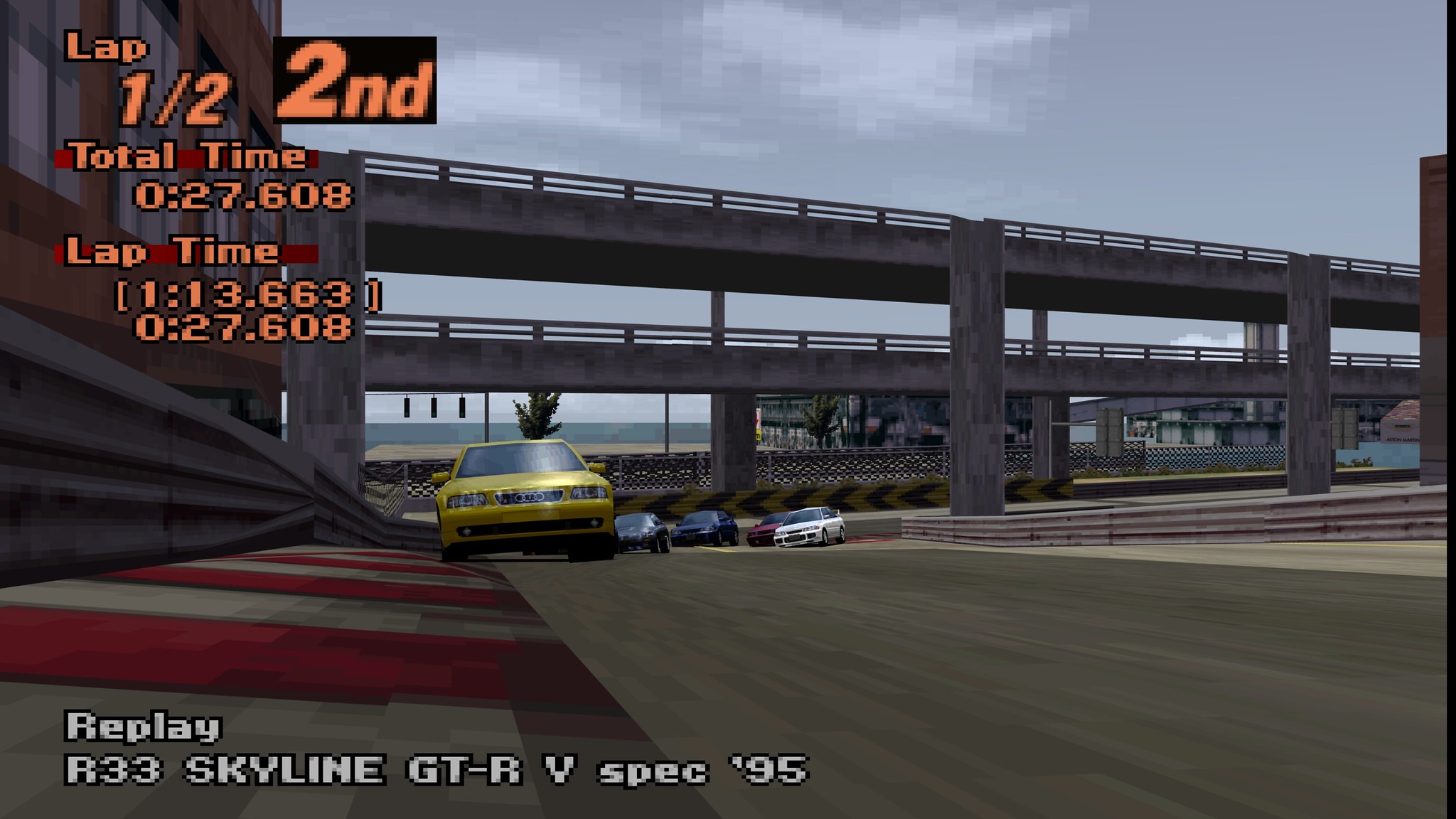
I love the extreme replay camera views that are so different than the race cams. Racing games in particular tend to optimize for looking forward, the direction you’re driving. Just due to the replay cameras, the tracks in GT need to be significantly more detailed.

This particular angle, looking up at the Corkscrew at Laguna Seca, is one of my favorite angles anywhere in the world. It’s been made famous by countless race broadcasts, but it’s also one of my favorite places to shoot photos in real life.

I visited Laguna Seca with my dad in the 90’s, but I never really thought about how much I would love visiting and driving there in my adult years.
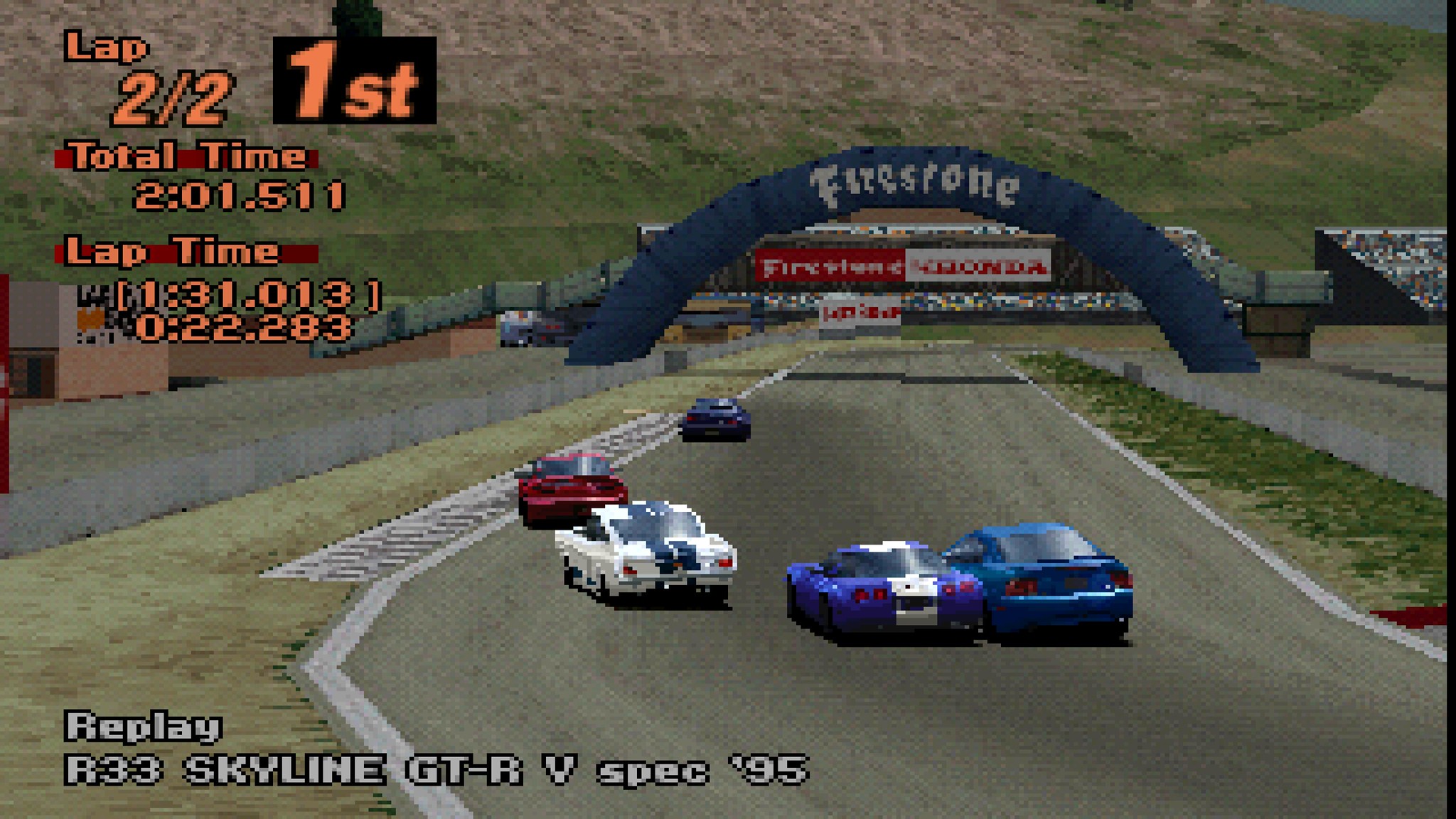
Overall, the track is remarkably accurate for 1999. Nowadays we have laser scanning so we expect racing games to have picture-perfect tracks, but back then they did everything by hand.
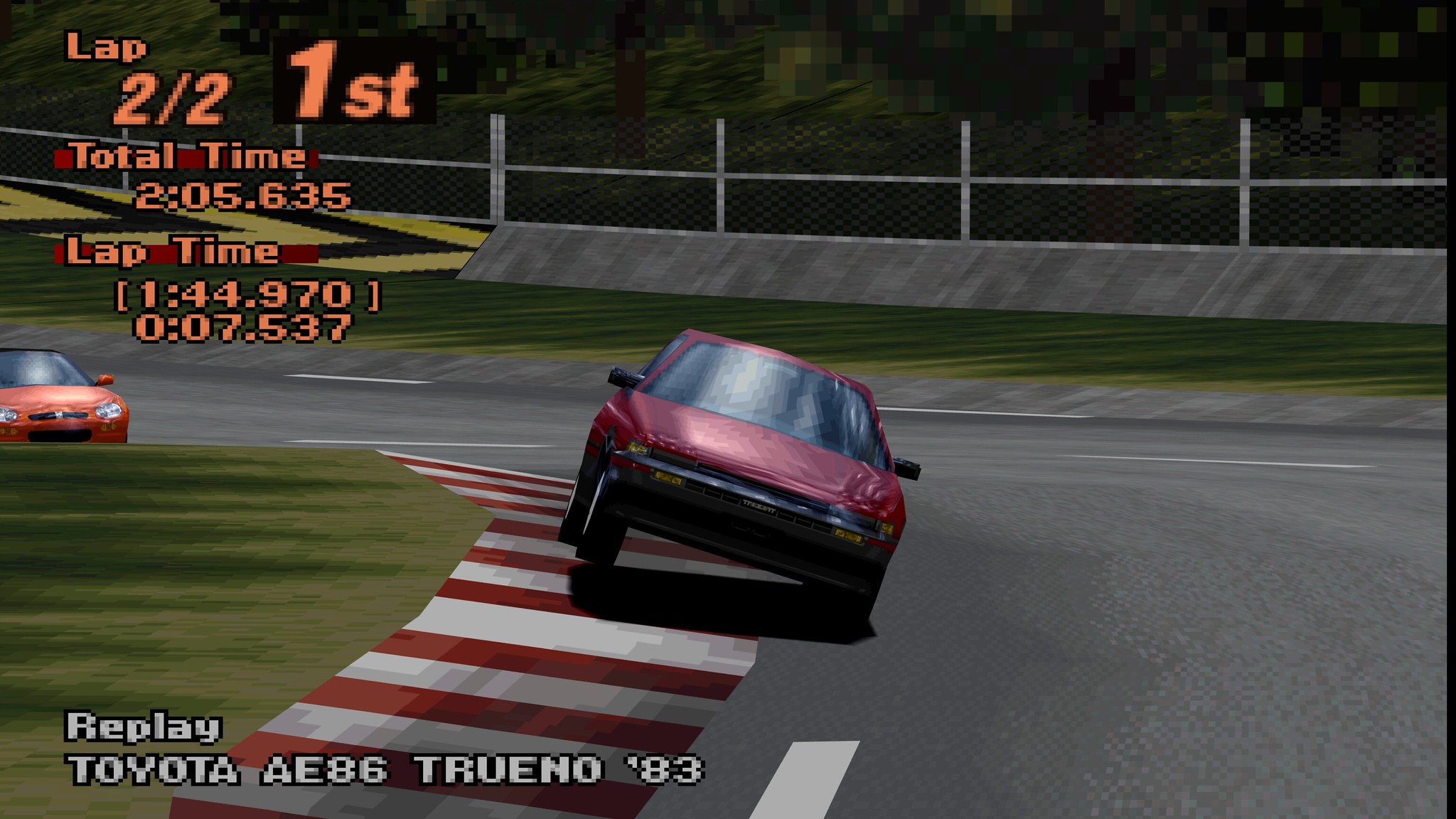
Of course I couldn’t write about this game without including at least one curb jumping shot from Trial Mountain.

I think the only thing I didn’t enjoy on this playthrough was driving on dirt; the cars are just too slippery in the Japanese version, and not in a fun way.
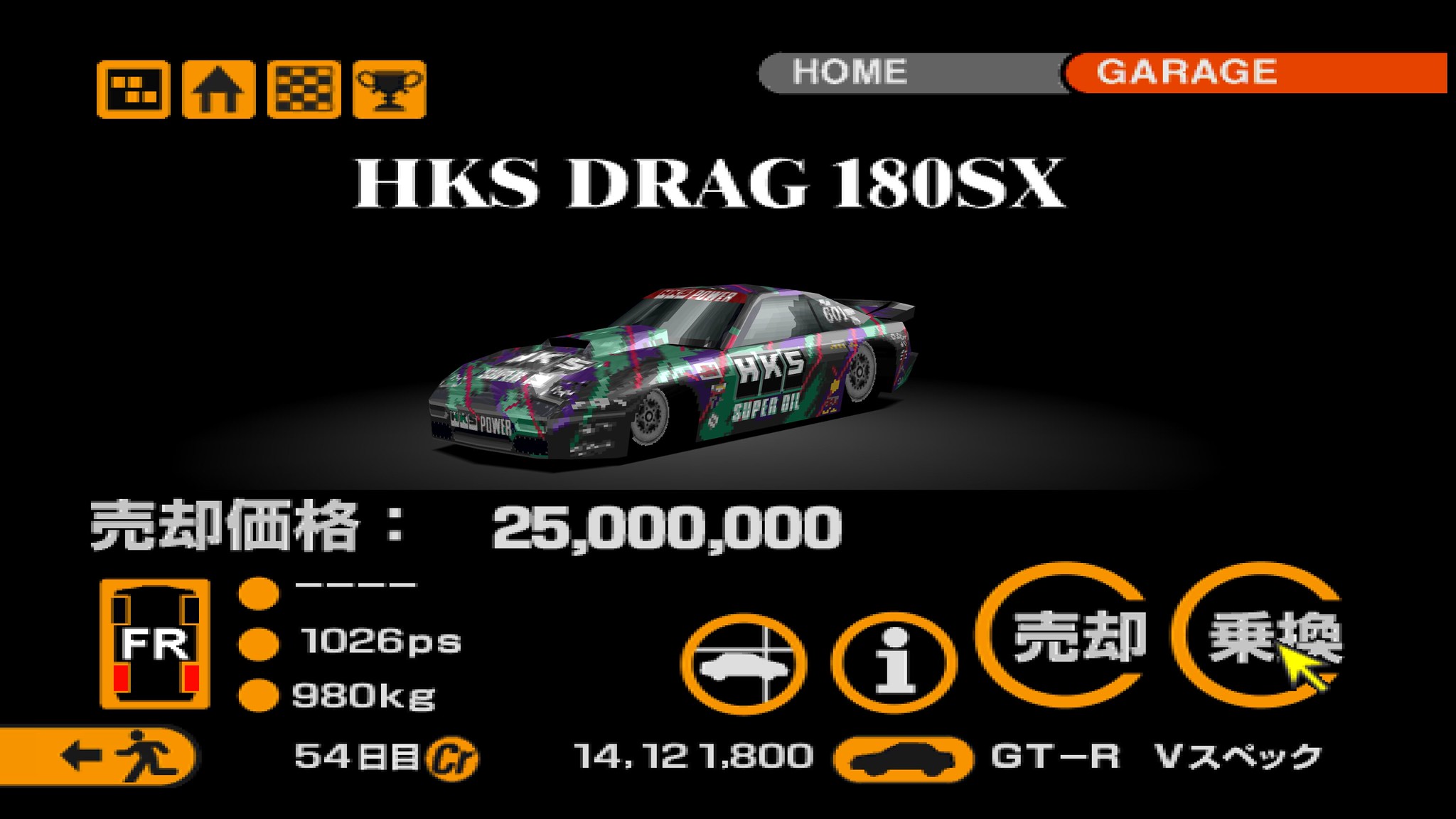
Supposedly there was a drag racing mode in this game, but it was cut right at the end of production. In the original release of the game you can only reach 98.2% completion, allegedly because they removed the drag racing events from the game but forgot to take them out of the calculation for completion percentage. I am fairly confident in saying this game has more revisional changes than anything else on PS1; you can read all about them on TCRF.
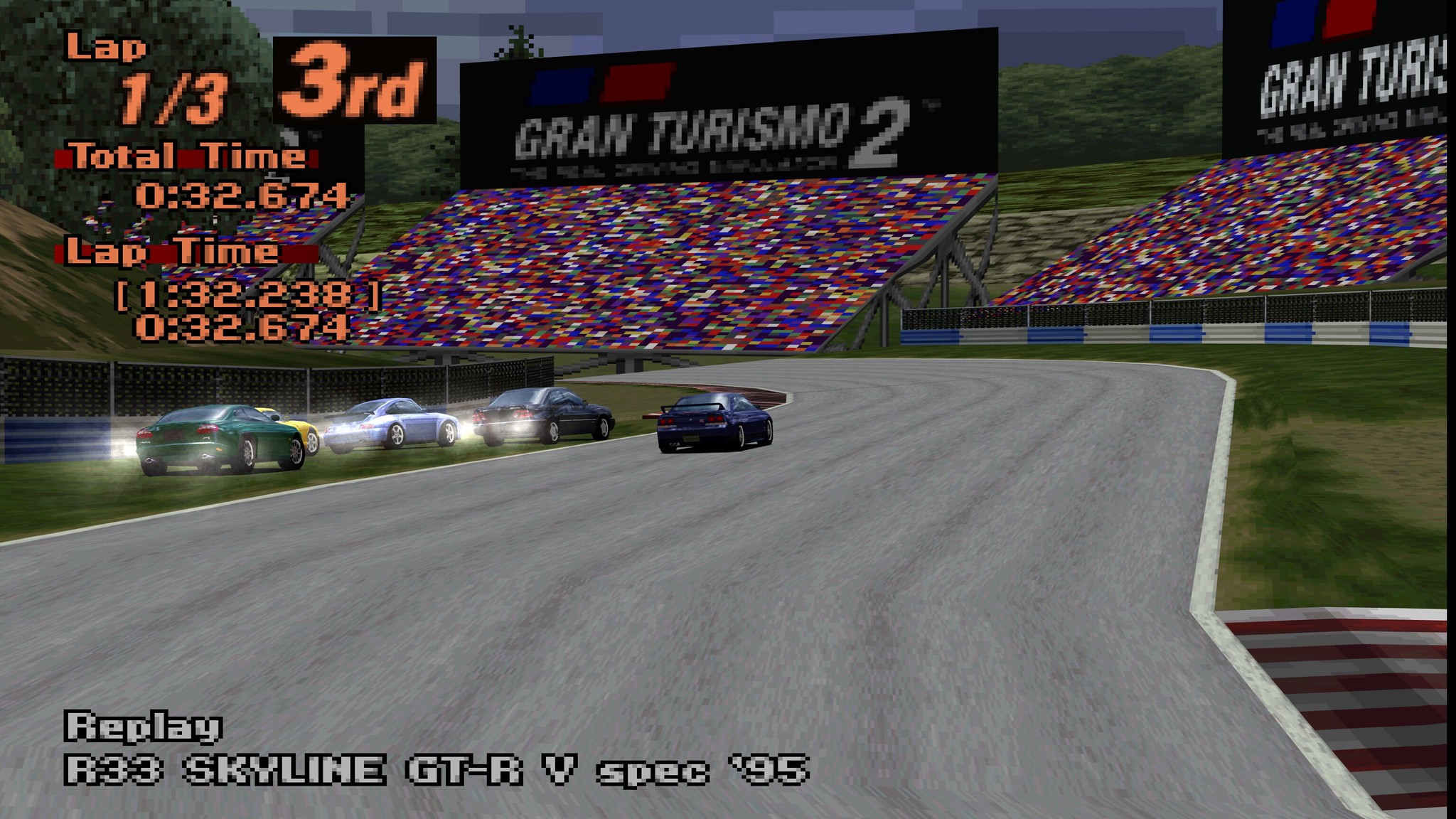
Sometimes the rubber-banding produces hilarious results; here is the entire field going off track as they get their power boosted trying to keep up with me!
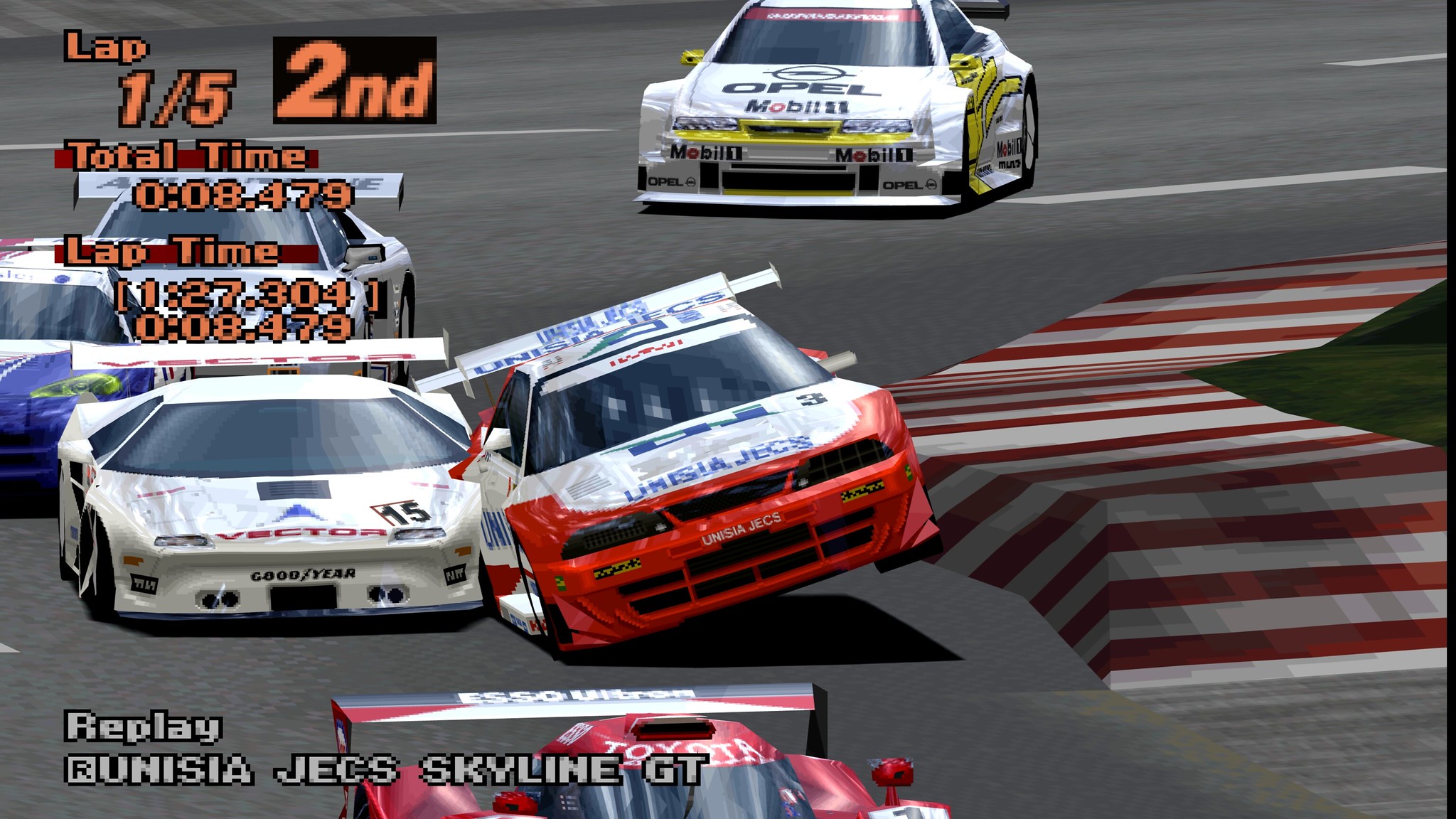
Although much of the emphasis in Gran Turismo seems to be street cars, you start getting involved with beefy race cars at the end of the game.
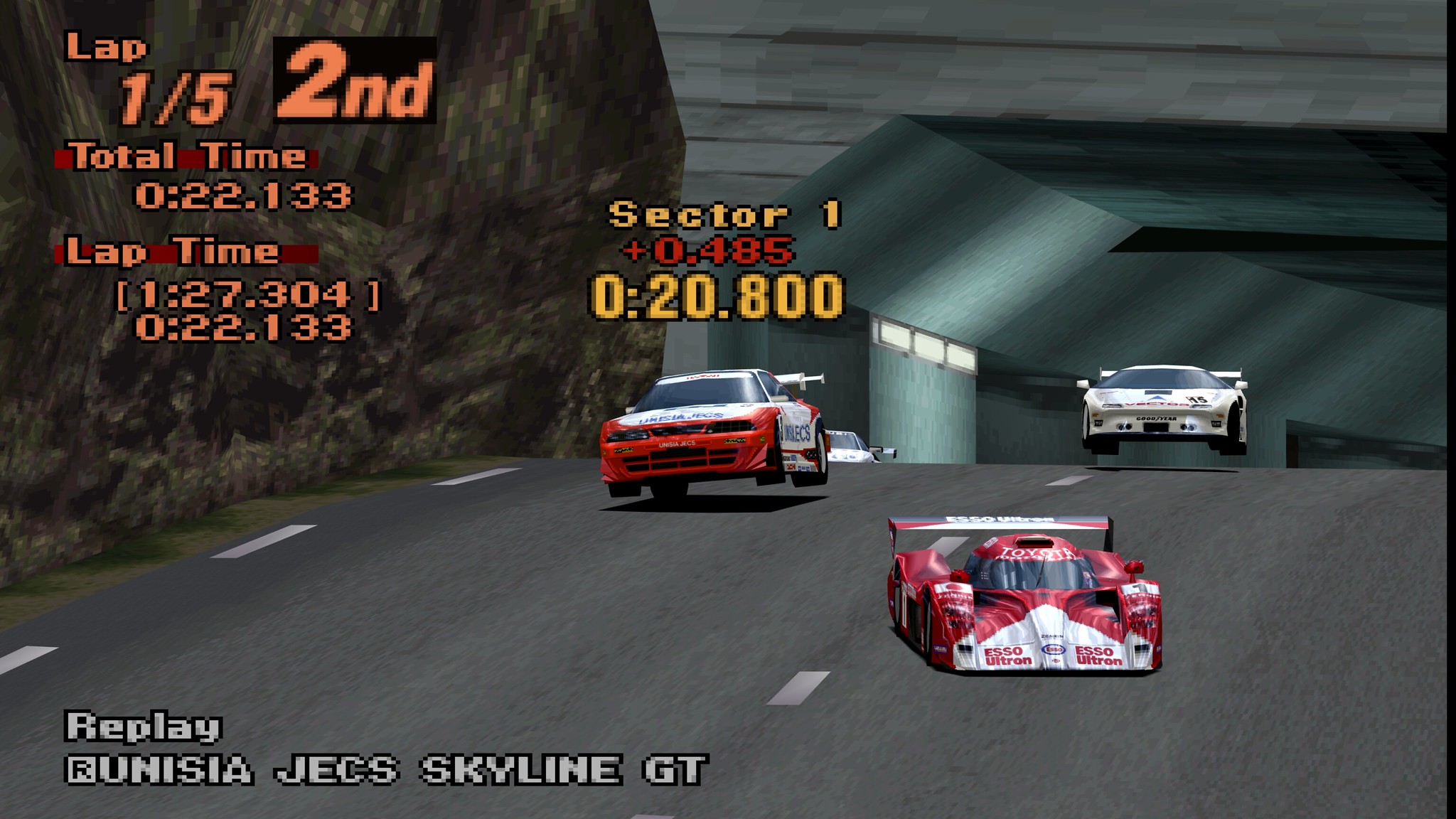
Remember how the super grippy cars at the end of GT1 would corner with two wheels off the ground? The fast cars in GT2 similarly break tracks; even the CPU is literally flying coming over the crest out of the tunnel at Trial Mountain.
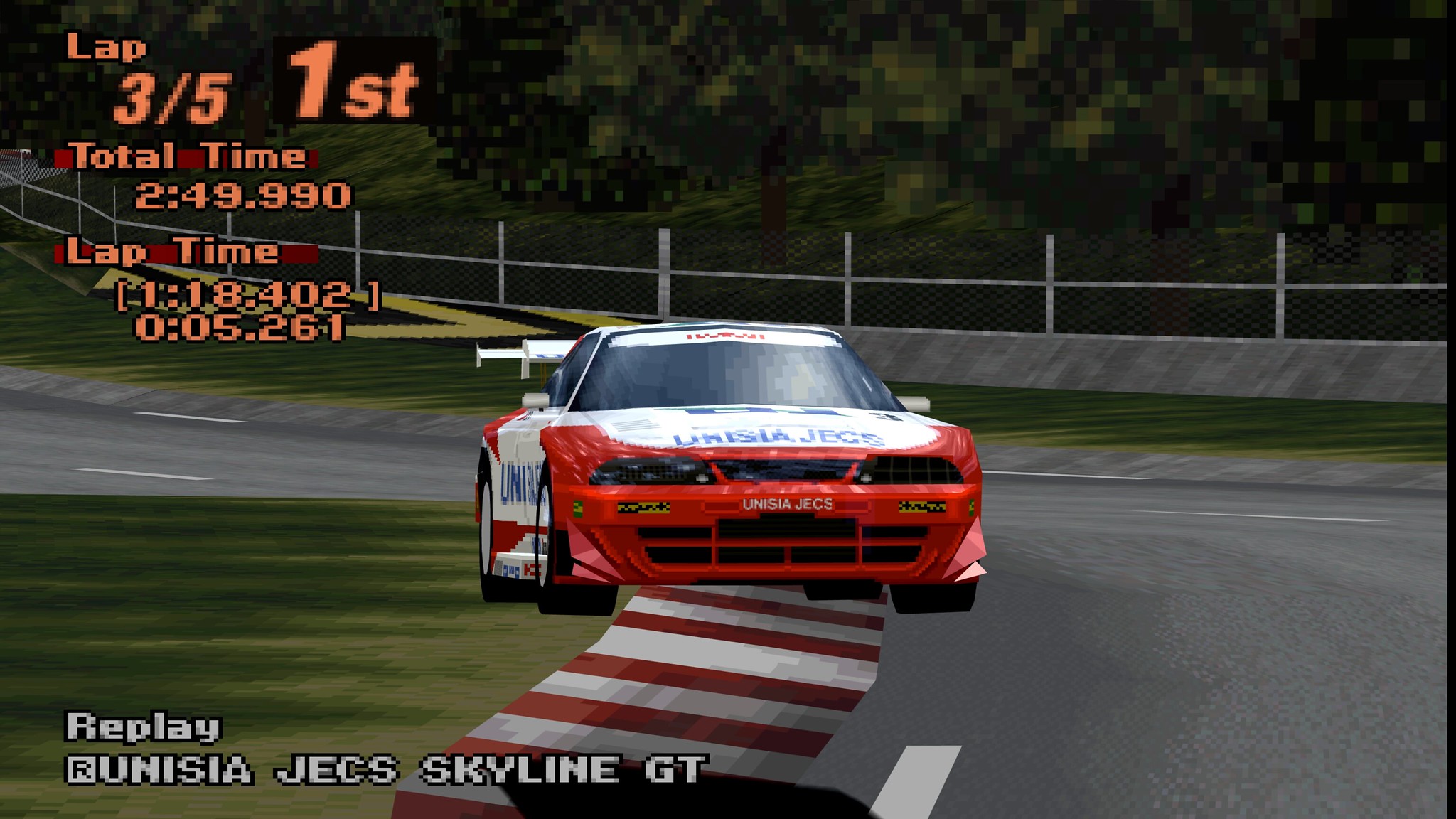
And the shortcut through the esses? In most road cars, you can just about get over that grassy section if you’re going fast enough. With a full race car, I’ve already cleared the grass and I’m not even on my way back down to earth yet!
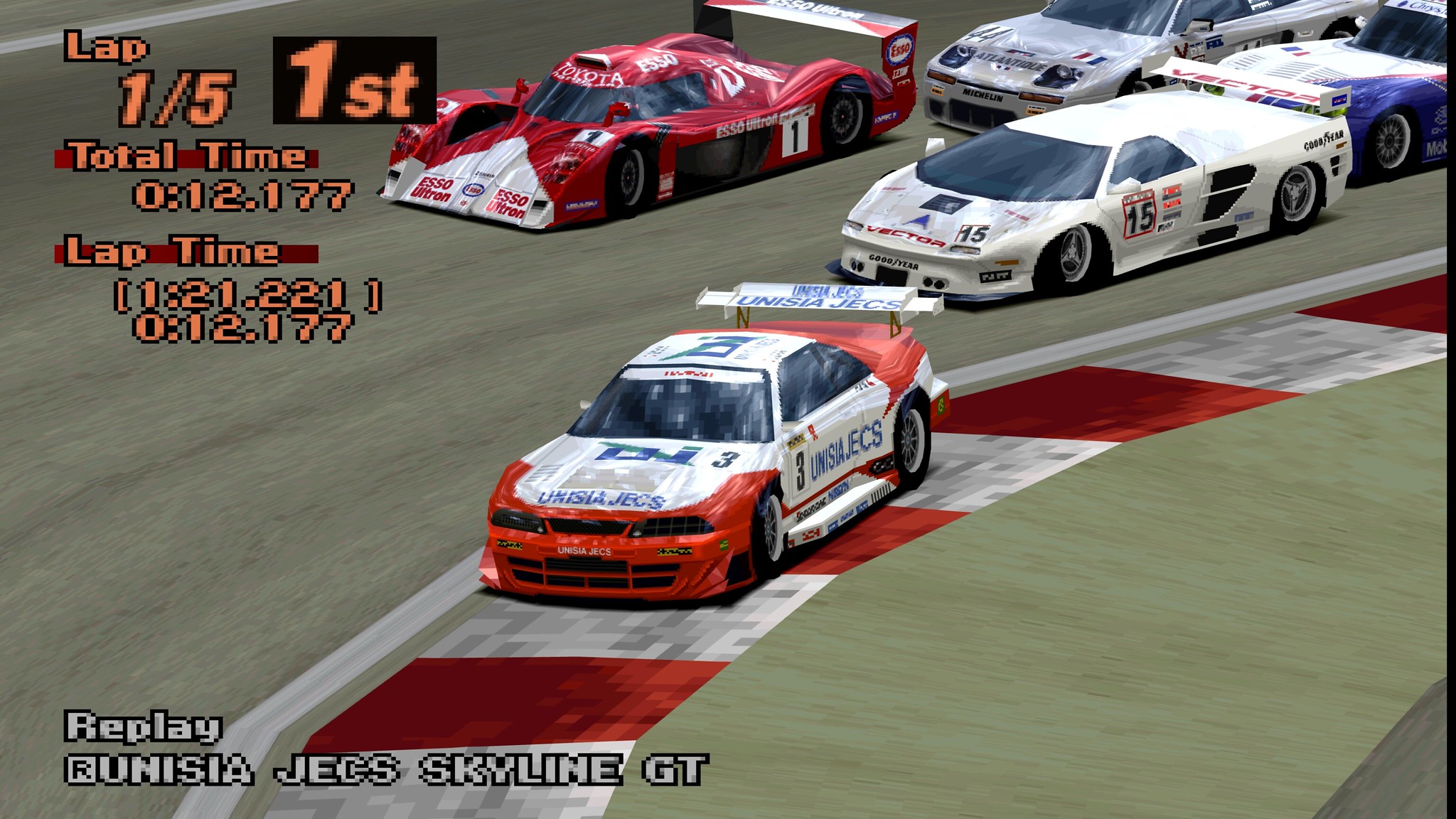
Don’t mind me, I just think these cars look incredible racing together.

Ah yes, the classic Zanardi Line through the Corkscrew.
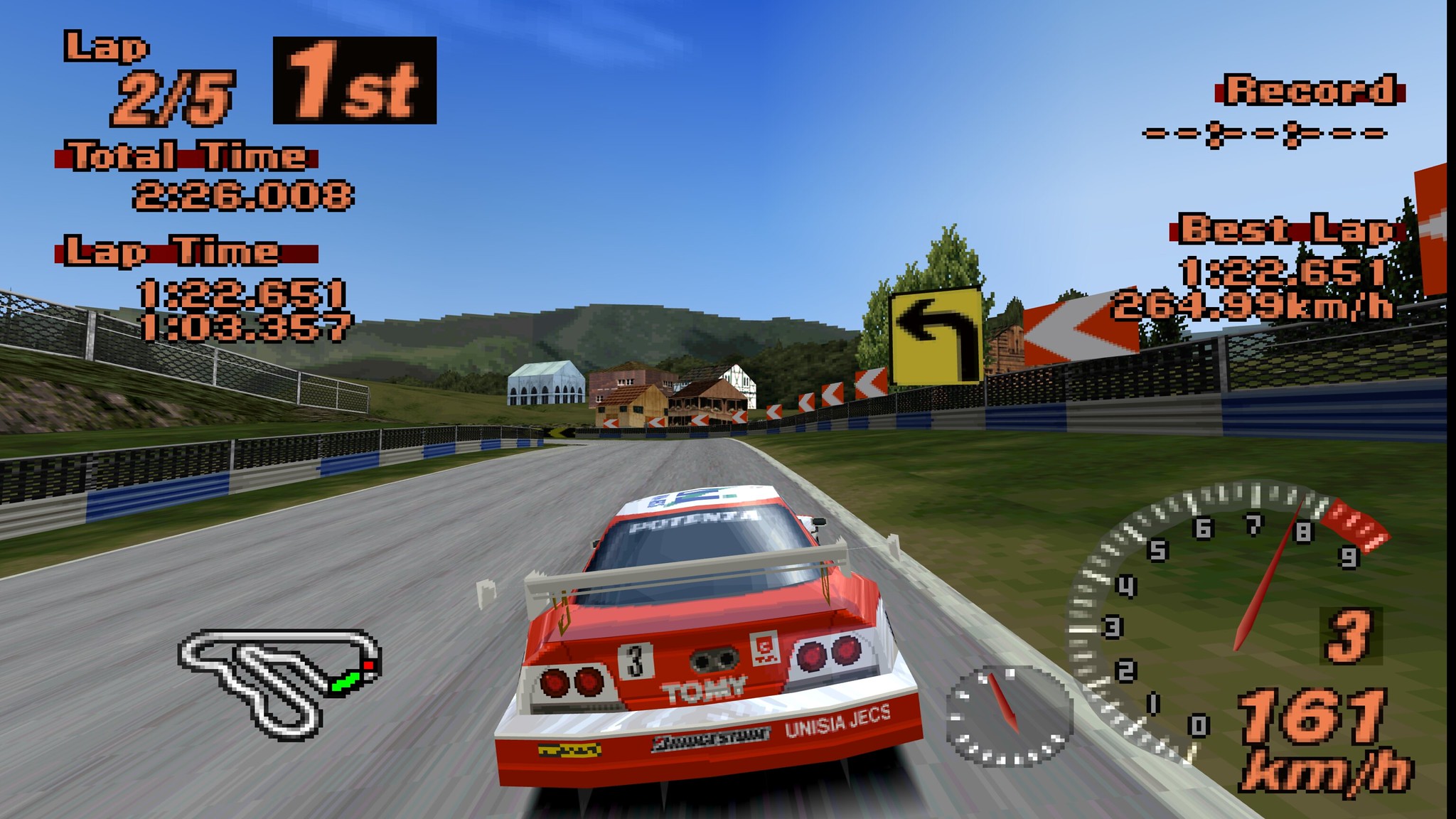
It’s amazing how just a few small details make everything pop. The buildings in the back; the trees; the guardrails and fencing; the car textures. Everything in this game feels like it was made with love, and that is the highest compliment and my favorite thing to say about anyone’s creation.
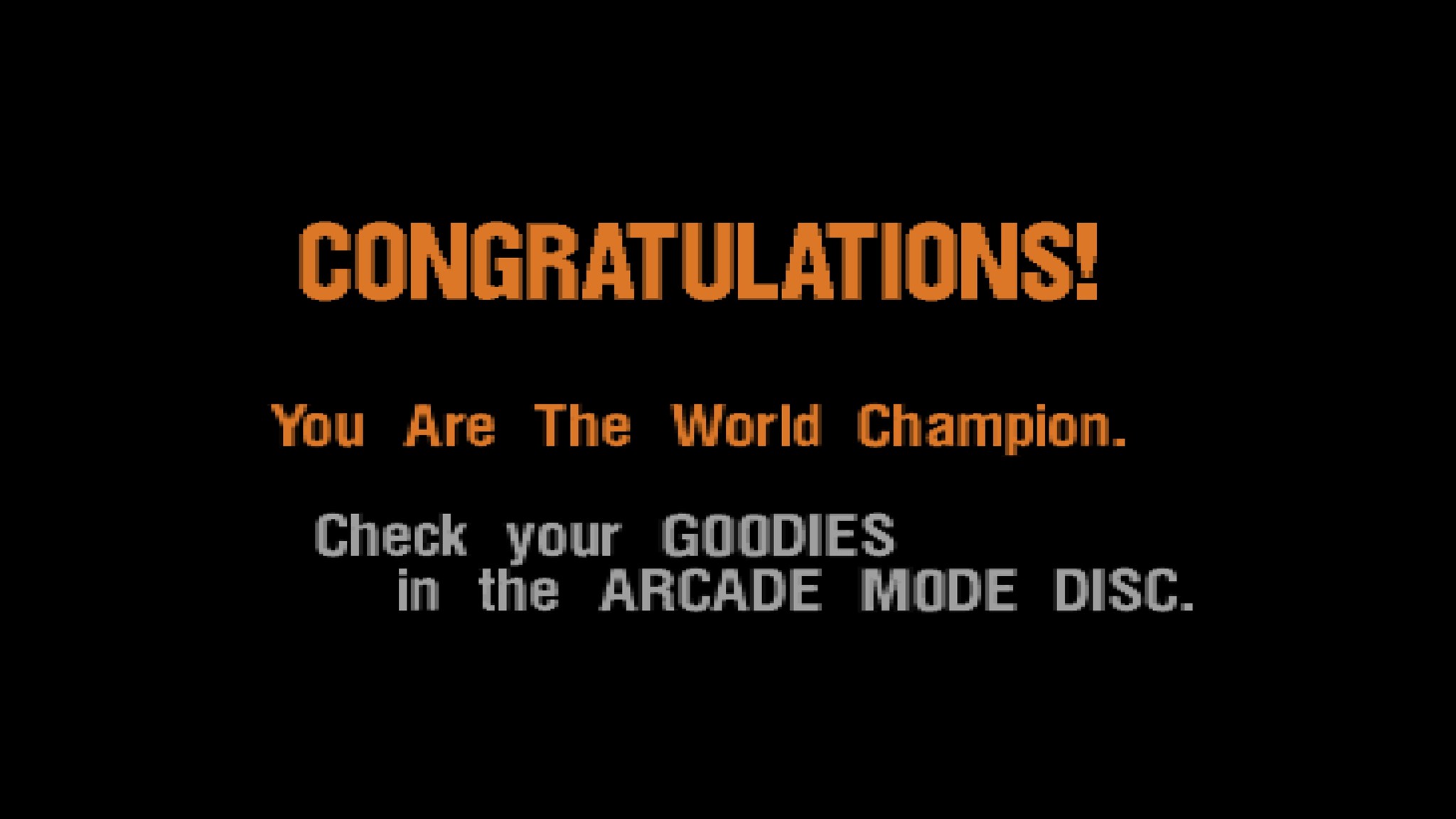
When you win the world championship, that’s all you get! You need to visit the other disc for a comical although pragmatic reason: that’s simply the disc that holds the ending movie.
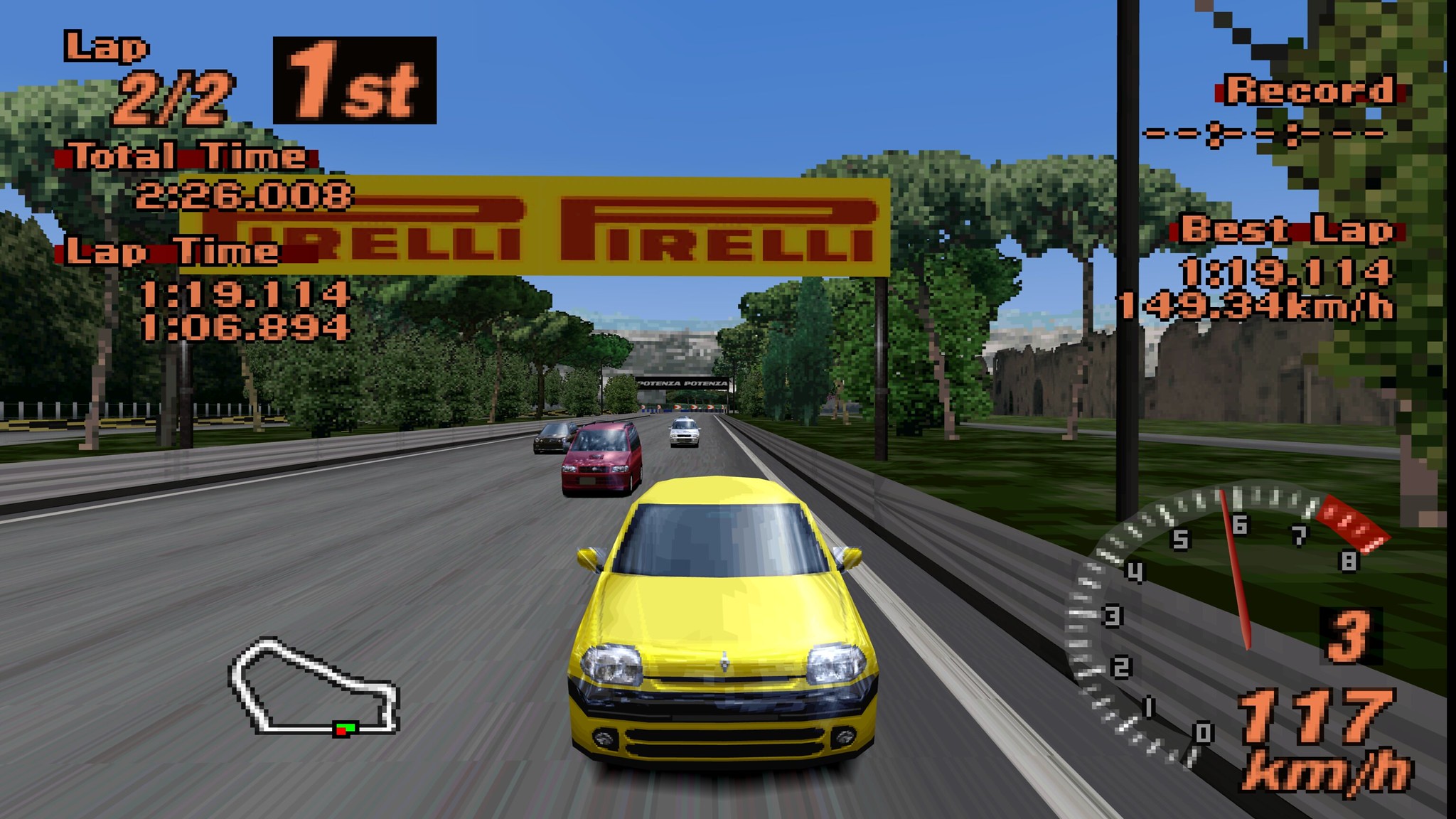
The beauty of GT2 lies in the variety and replayability. Sure, you can power through the game like I did for this article, but this game is absolutely huge. There are dozens of races where you can put all kinds of cars to the test.

The Nismo 270R is another car that I’ve never seen in real life, and originally learned about through this game. I didn’t intend to spin out here but it did end up as a good screenshot.
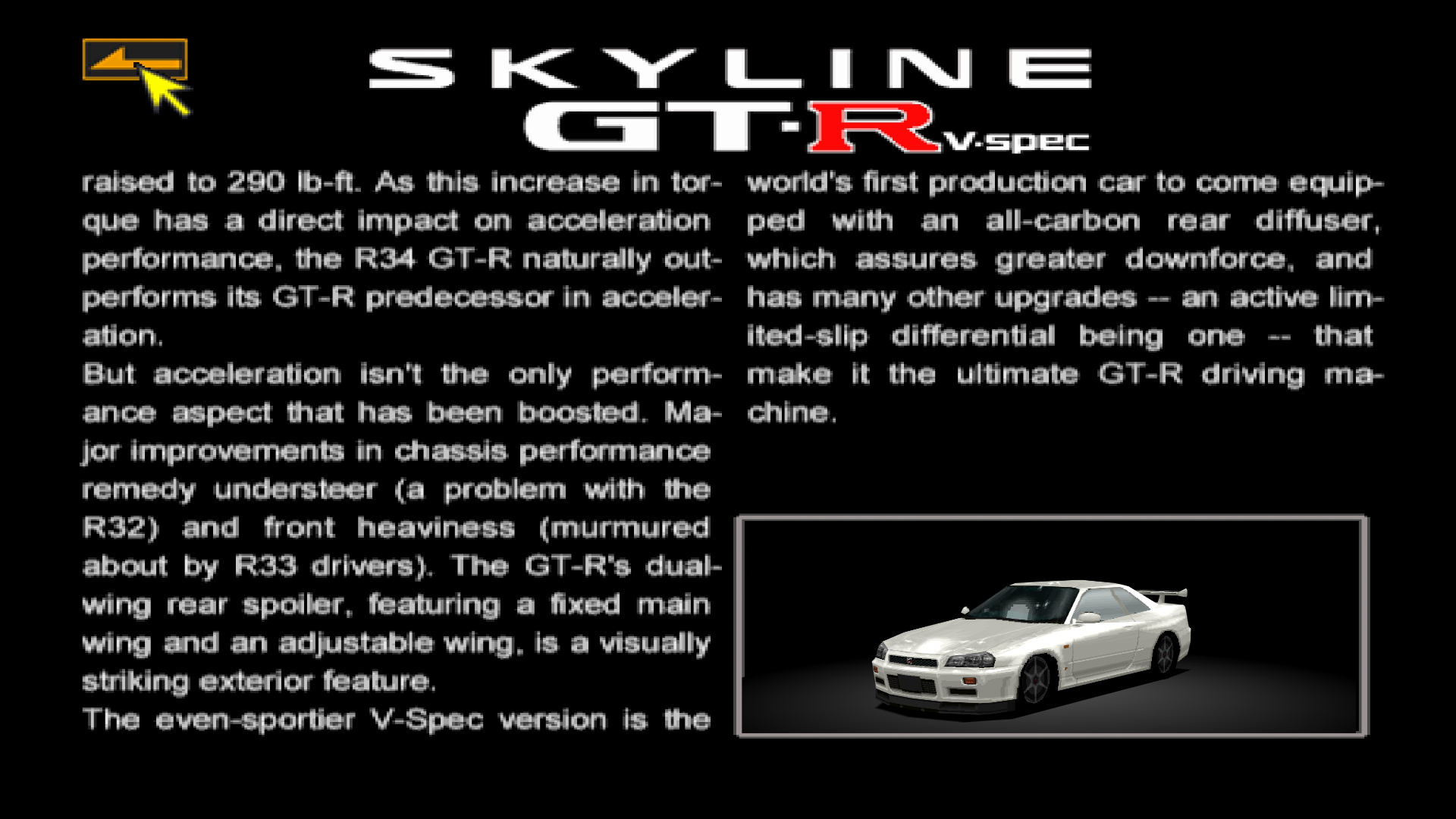
You can read about every car in the game with some amusingly-written info. I love the parenthetical “murmured about by R33 drivers”. And yes, this is the USA version as you can see from the English text.
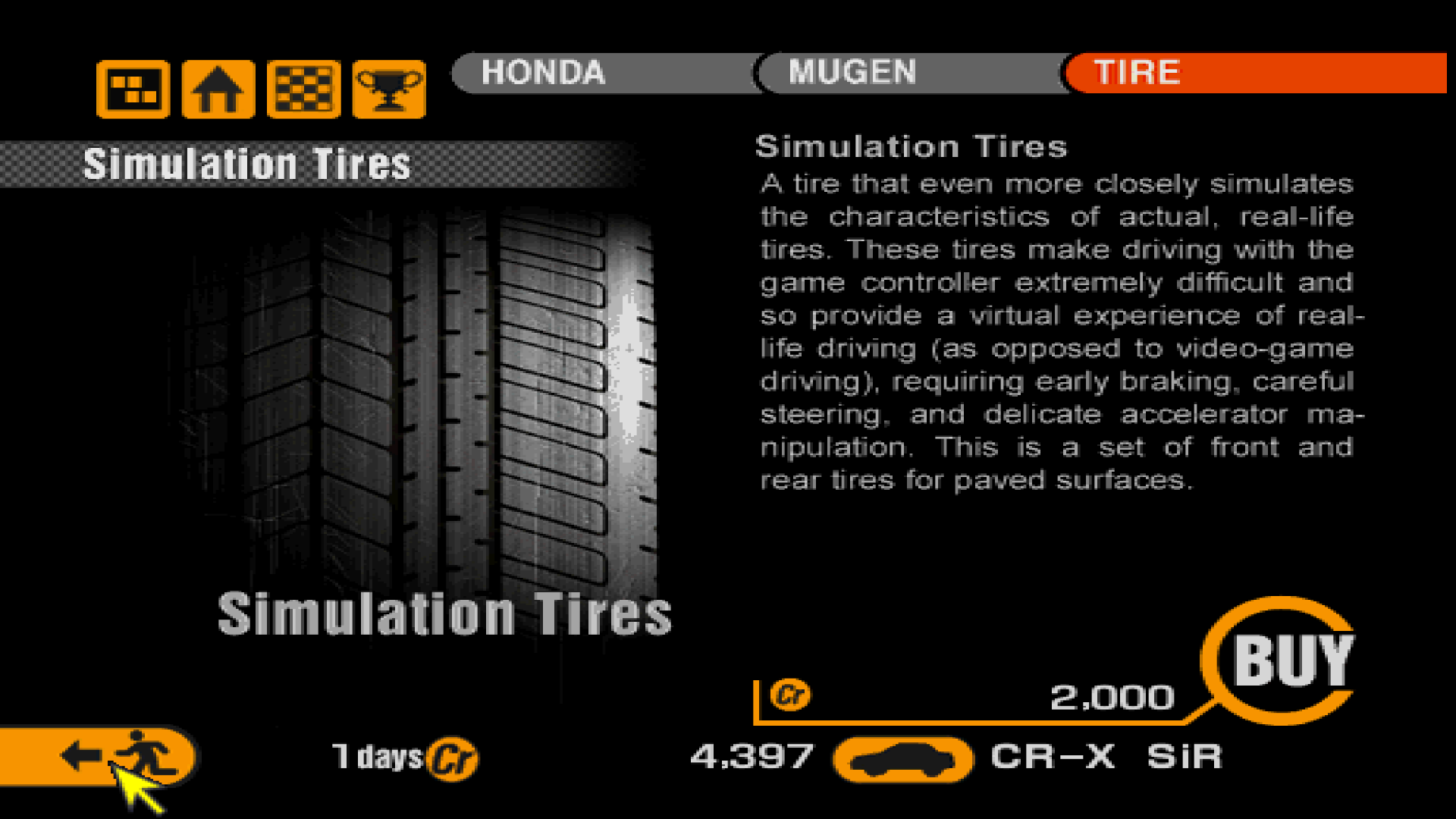
I always found the “Simulation Tires” (called “Control Tires” in the Japanese version) to be quite odd; it’s a tacit admission that as good and realistic as the handling might feel, you still have way more grip than you would on the road. With that said, road car tires have progressed significantly in the last 25 years; I wonder what the standard GT2 tires are the equivalent of in modern terms?
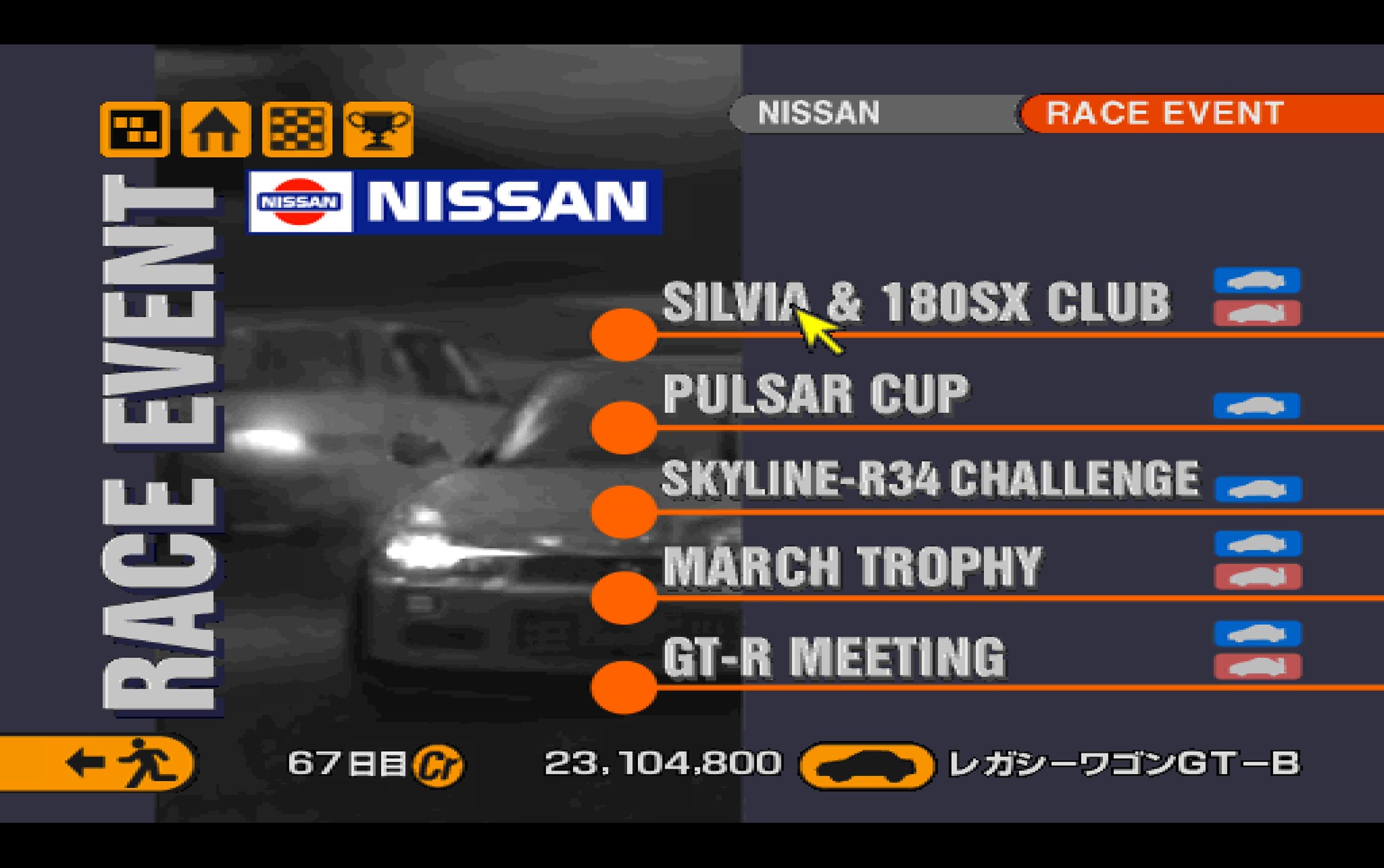
There are even more races when you poke around the dealerships; each manufacturer has some sort of model-specific race series, and a few manufacturers (like Nissan here) have several.

They let me in to the “GT-R Meeting” with my 627hp Mine’s R32 and I was so much faster that I just slid it around.
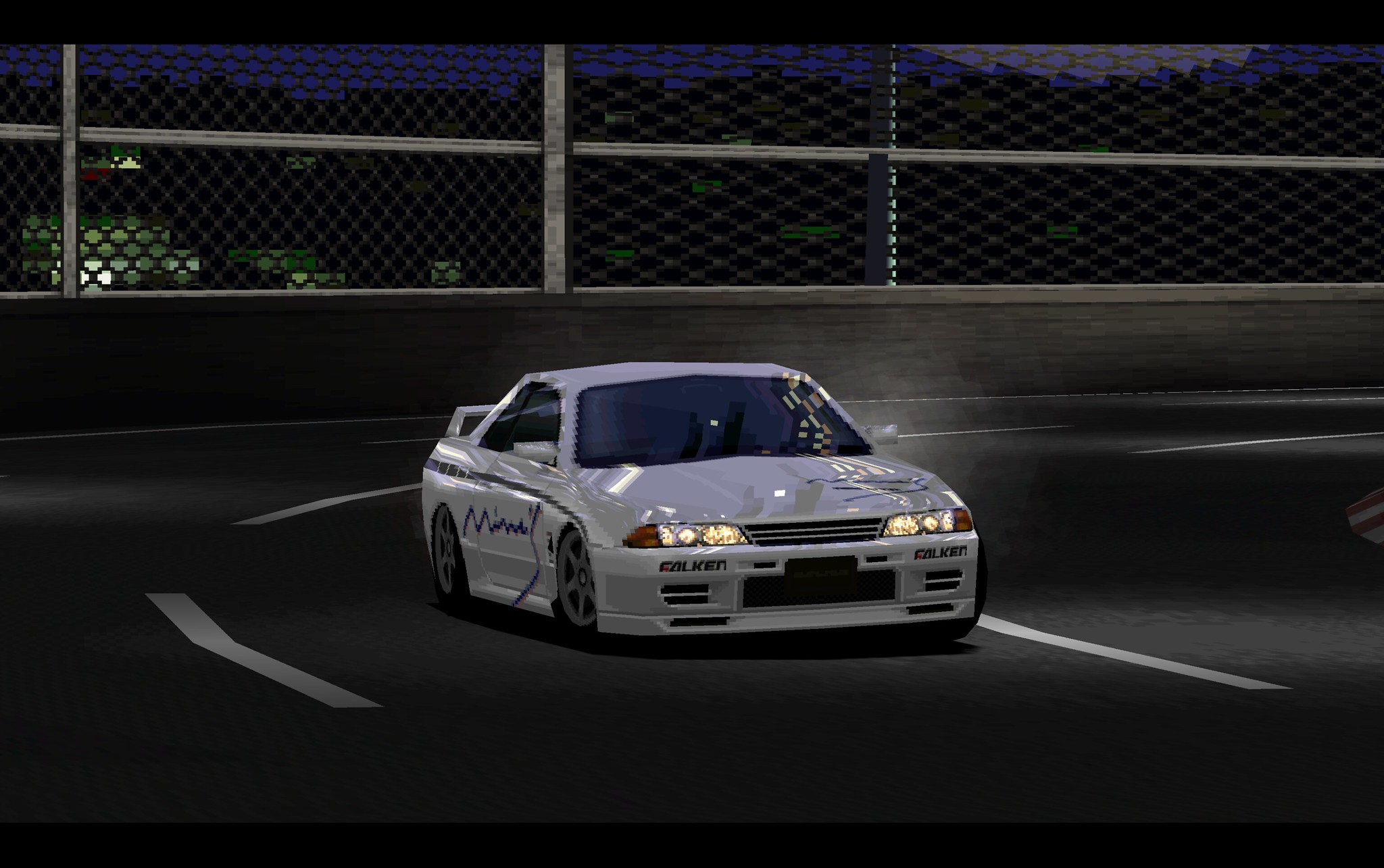
One thing I completely forgot about through most of my playthrough was this cheat: Hold L3 to remove the HUD entirely. The text is helpful, but sometimes you just want the cinematic quality of a good replay. Even now, the subtle body language of the cars looks very realistic and cool.
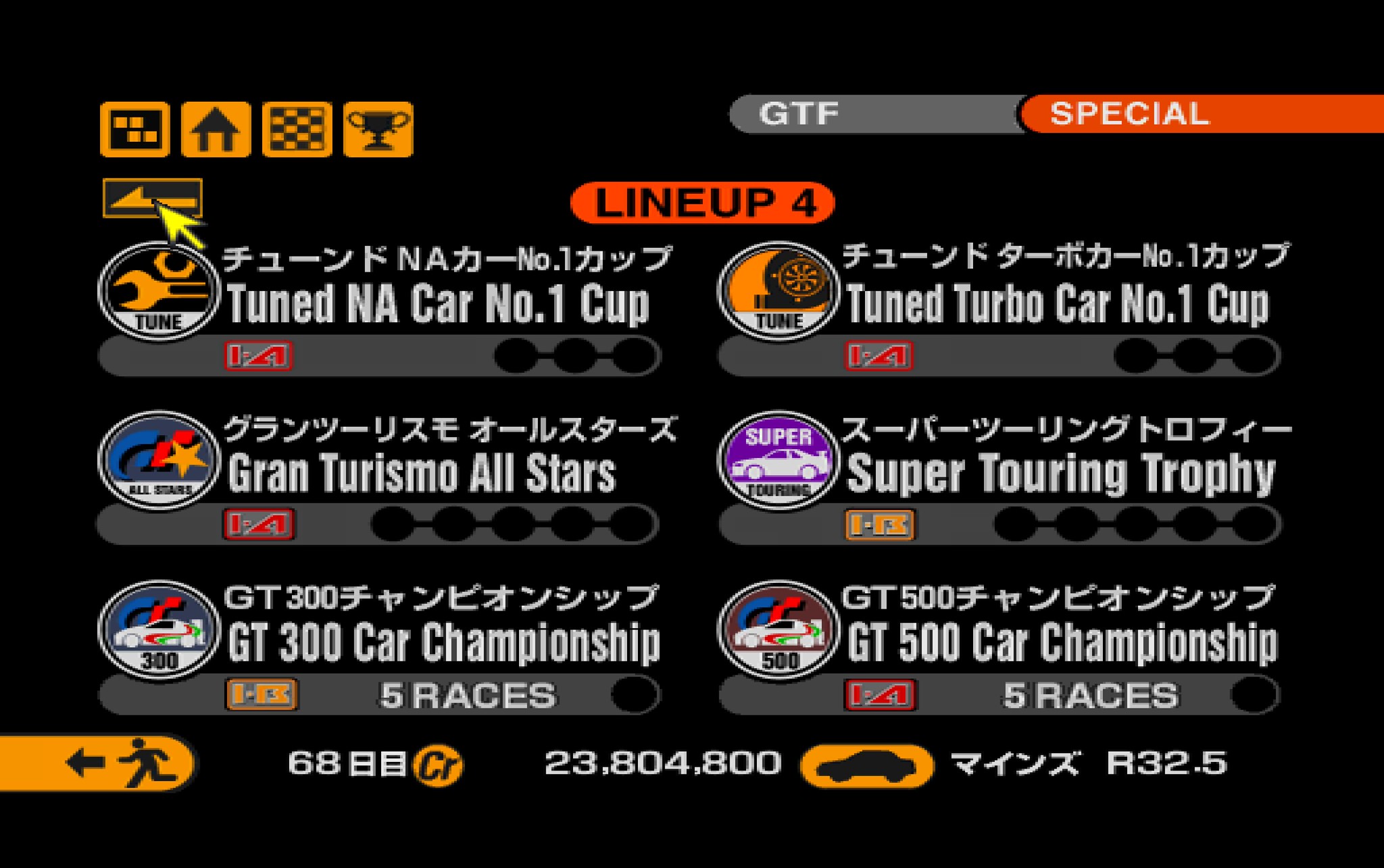
The replay value of this game is amazing. It’s fairly easy to blast through the game and see the ending cinema, but the real fun is going through the huge variety of events.

Where does it really end? Well, for this game, it kind of doesn’t. If you manage to complete the vast amount of objectives that are bundled with this game and still want more, there is a wealth of community-created mods to extend the GT2 experience. There are simple mods like GT2 Plus and Gran Turismo 2.1 that aim to fix bugs and improve the quality of the game, and then there are huge mods like Project A-Spec and Beige Edition which add dozens of new cars. The latter mod is only a month old as I write this in 2025–more than a quarter century after the original release of the game! Despite all the choice in racing games these days and the progress they’ve made, and despite Gran Turismo 7 still being actively supported and updated by Polyphony Digital, the GT2 community keeps this epic game alive. Long live Gran Turismo 2!


 Star Road