
Every PS1 Game – Gran Turismo
The history of racing video games stretches back to the 1970’s, and as far as I’m concerned has two eras called “BGT” and “AGT”: before and after Gran Turismo. Released December 23rd 1997 in Japan and in the rest of the world in May 1998, it sold almost 11 million copies on its way to becoming the best-selling Playstation game. It was a cornerstone of the Playstation experience and redefined racing video games, spawning a franchise that is still going strong today.

Gran Turismo managed to outsell any Final Fantasy or Tomb Raider or Crash Bandicoot or even Metal Gear Solid. They did this by first making the most realistic looking and feeling driving game yet–and then they actually made it fun to play. You can jump right in to the “Quick Arcade” and play a traditional mode where you pick a car and track then go racing. But it’s the aptly-named “Gran Turismo” mode where Kazunori Yamauchi and his team revolutionized racing games.
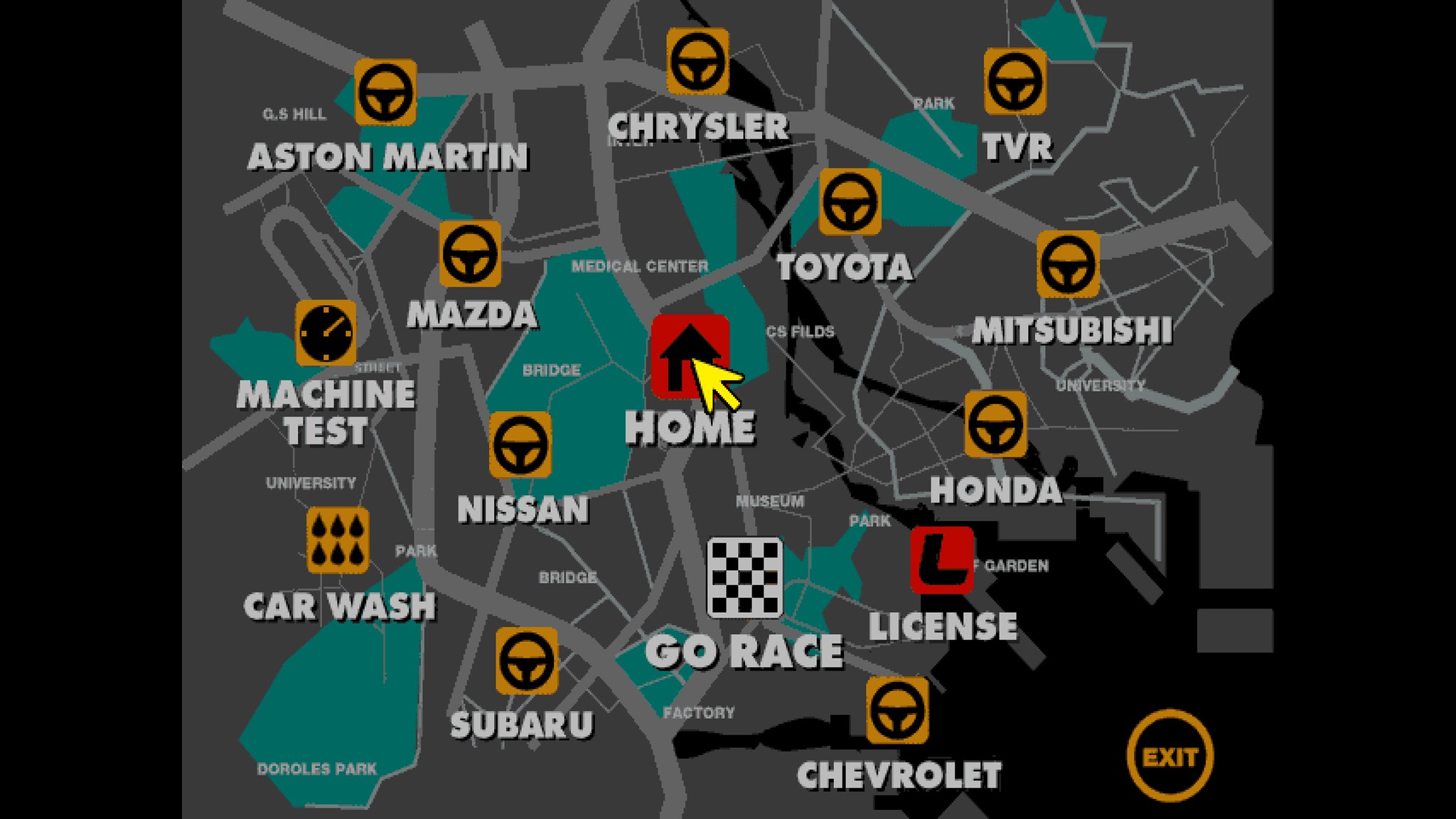
This is quite a busy home screen here in part one. They really simplified the main hub in GT2 and 3, before returning to the super busy look for GT4 and beyond.

Although my favorite racing game, Assetto Corsa, has won its GOAT status on the strengths of its sandbox and multiplayer aspects, I love when a racing game provides a mode with some progression. This is the first area where Gran Turismo raises the bar. There are some races you can enter for free, but you quickly realize you need at least a B license to do anything, so it’s off to license tests.

You may have noticed that I have a million credits on day one and everything is in Japanese. Well, the Japanese version has credits that roughly equated to yen, so they are exactly 100x the other versions: only 10,000 US-spec credits, I’m afraid. But there is one main reason I’m playing the Japanese version: the music. In this version, the menu music is done by Isamu Ohira, who did the menu music for the rest of the series; in the US and European releases, the music was by Jason Page. No disrespect to Mr. Page, but I strongly prefer the compositions by Ohira-san, plus they also match the other entries in the series. That’s similar to the opening movie, which features the “Gran Turismo theme song”, Moon Over the Castle by Masahiro Andoh in the Japanese version. A variation of this theme song would begin every Gran Turismo game–in Japan. The US and European versions received something different until Gran Turismo 7, the first GT with the same opening movie in all regions. Speaking of Masahiro Andoh, he also did all the in-race music for the Japanese version as well, while the US and European versions got radio-style rock and electronica. There are a few other minor differences, which you can read about over on TCRF.
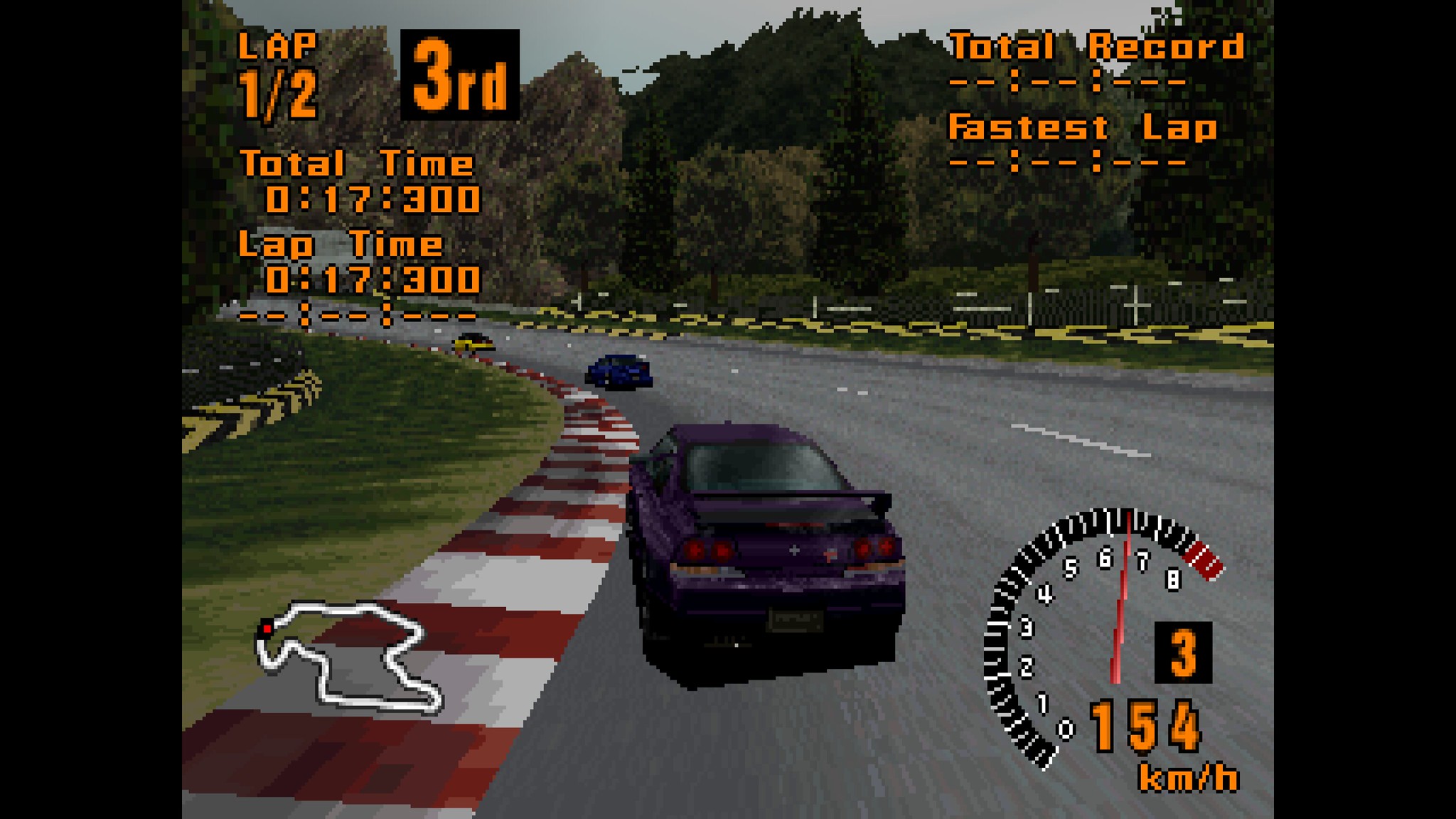
There’s no way to turn off just the racing music: the volume slider affects menu and racing music equally. Normally I don’t like listening to music while racing, so in the past I’ve just played this game with all the music off. Not unexpectedly, it turns out the Masahiro Andoh jams are pretty sweet and suit the gameplay well, so they are well worth keeping on while racing. Another revelation emerges: the widely-panned exhaust sounds of Gran Turismo are meant to be heard with the music playing. In 1998, these exhaust sounds weren’t so bad. When they still weren’t any better by GT4 in 2005 it became a little harder to defend, however.
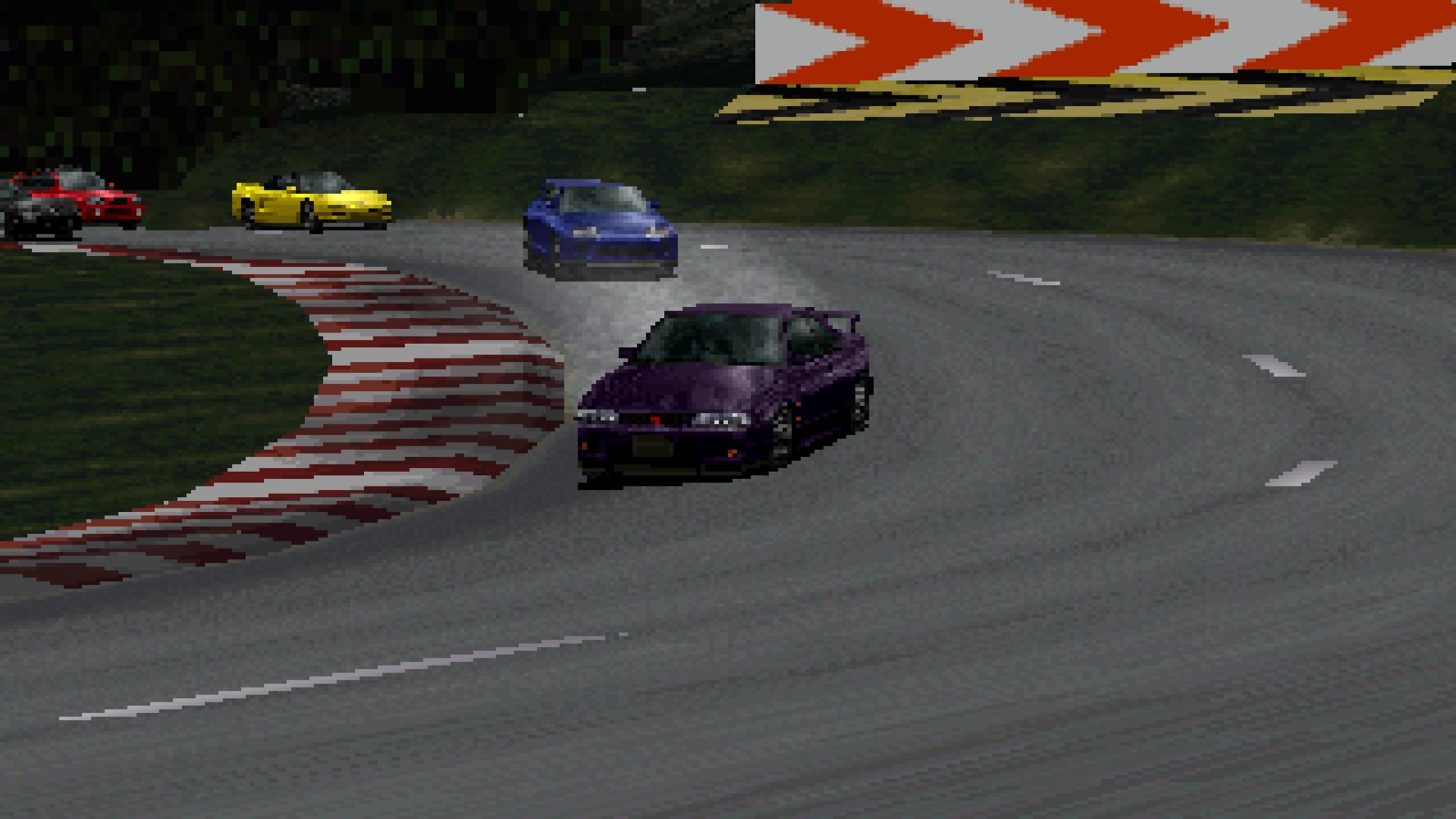
The next area that Gran Turismo raised the bar was graphics. The car modeling was exquisite; other games would struggle to match this quality, even in the PS2 era. Their textures were high resolution, and they used clever lighting techniques. And the movement of the cars was so realistic too; look at the body roll of the GT-R as it turns in.
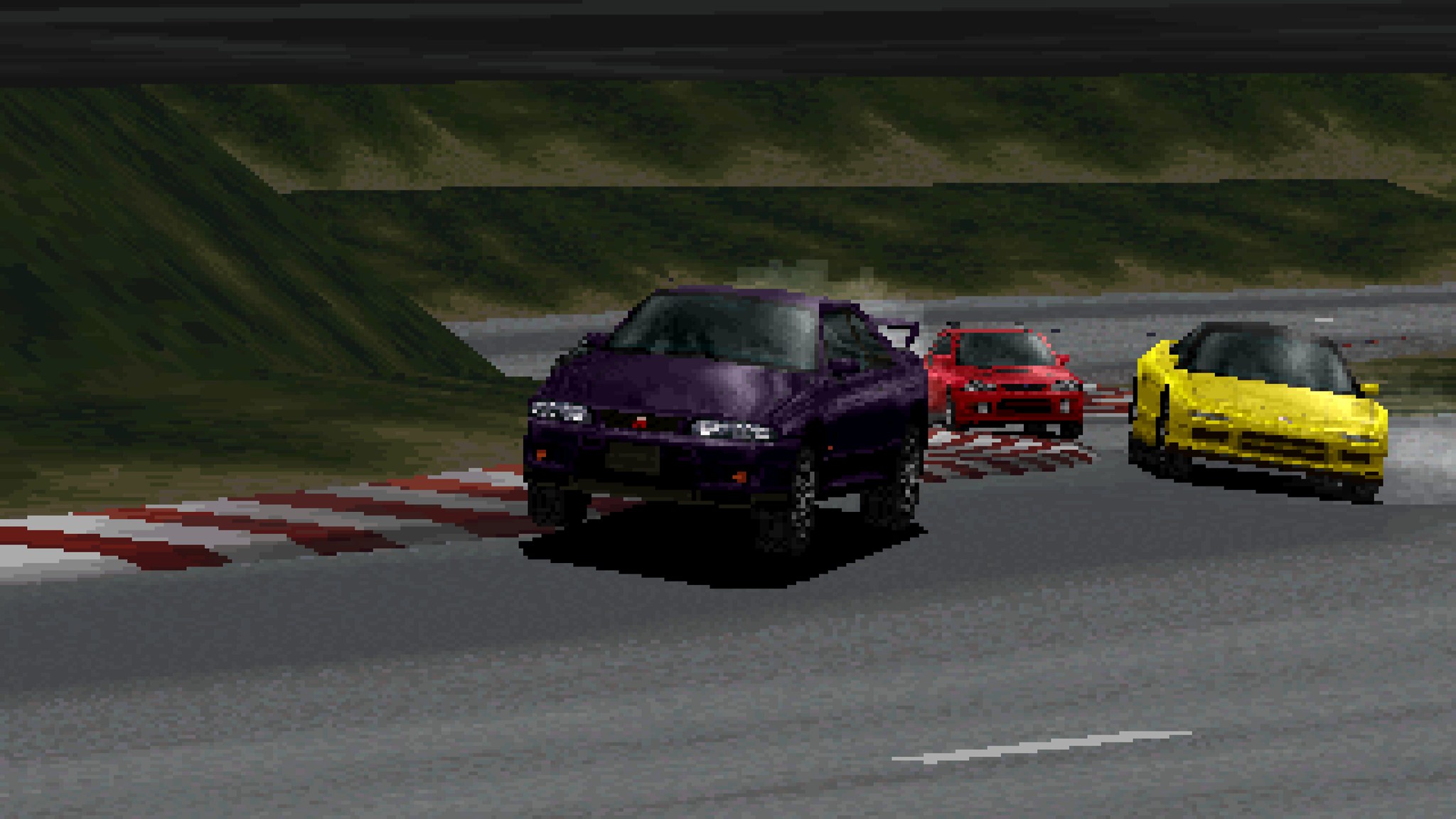
Or what about the suspension droop as you catch air? Another thing that Gran Turismo brought us was these incredible replays. They looked amazing as stills in magazines, and were a revelation in motion. Not only did the cars move realistically, but they were shown off in such a cool way.
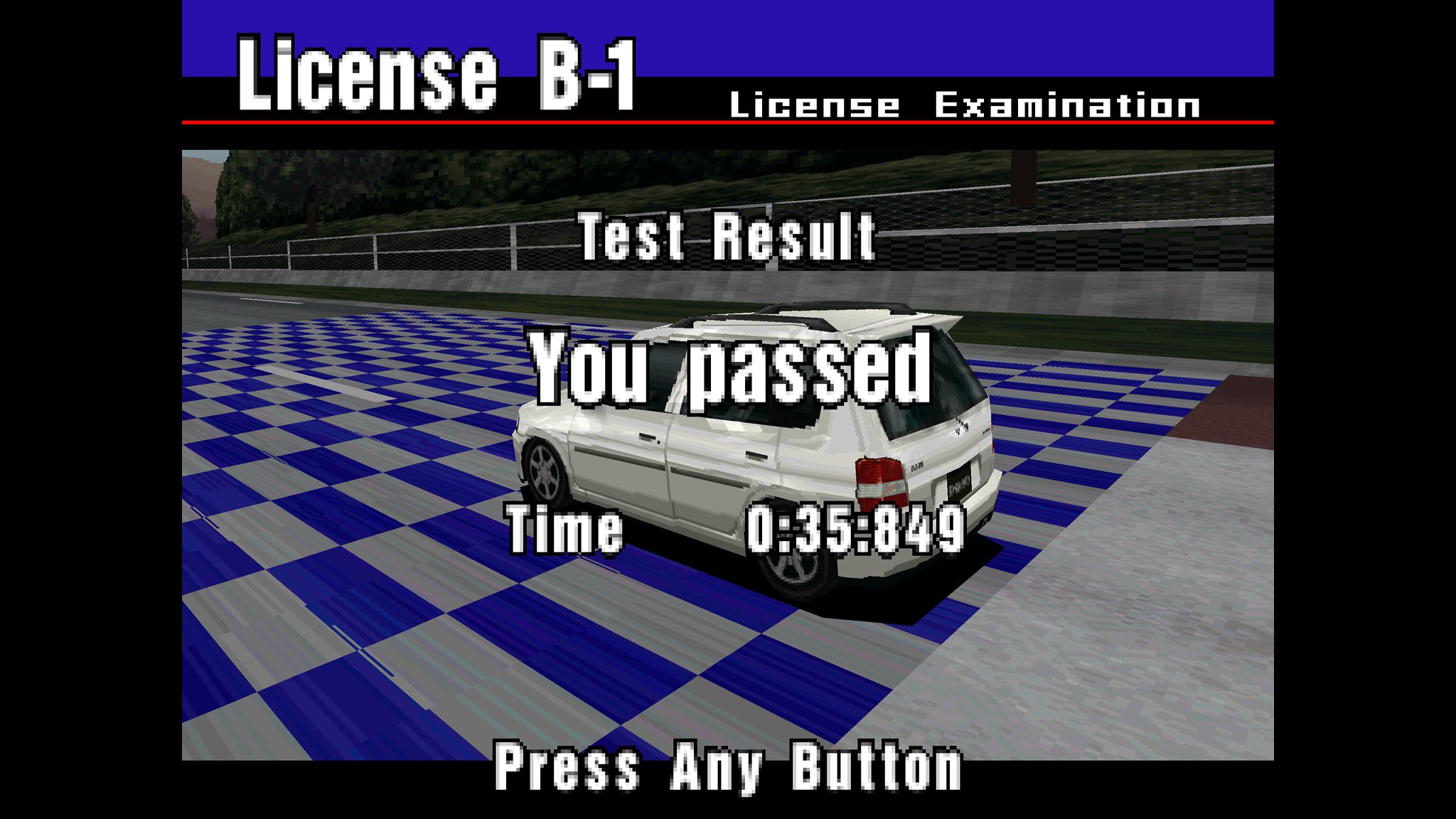
Anyway, back to the license tests. Another thing Gran Turismo gave us was the most intuitive controls and physics to date. Even today, racing games struggle to make their gameplay feel intuitive; in the 90’s, every racing game in existence had some sort of learning curve where you had to feel out what the game wants from you. This was still a factor in Gran Turismo, but to far less of a degree than anything that had come before it. The first license test, shown above, is simple: from a standing start, you need to accelerate in a straight line and brake inside a box 1000 meters away. So intuitive are the physics and controls that on my very first attempt ever, I stopped in the box and passed the test. From a modern perspective this might seem easy. Anyone who has made a racing game will tell you it isn’t. Back in the 90’s this was practically wizardry.
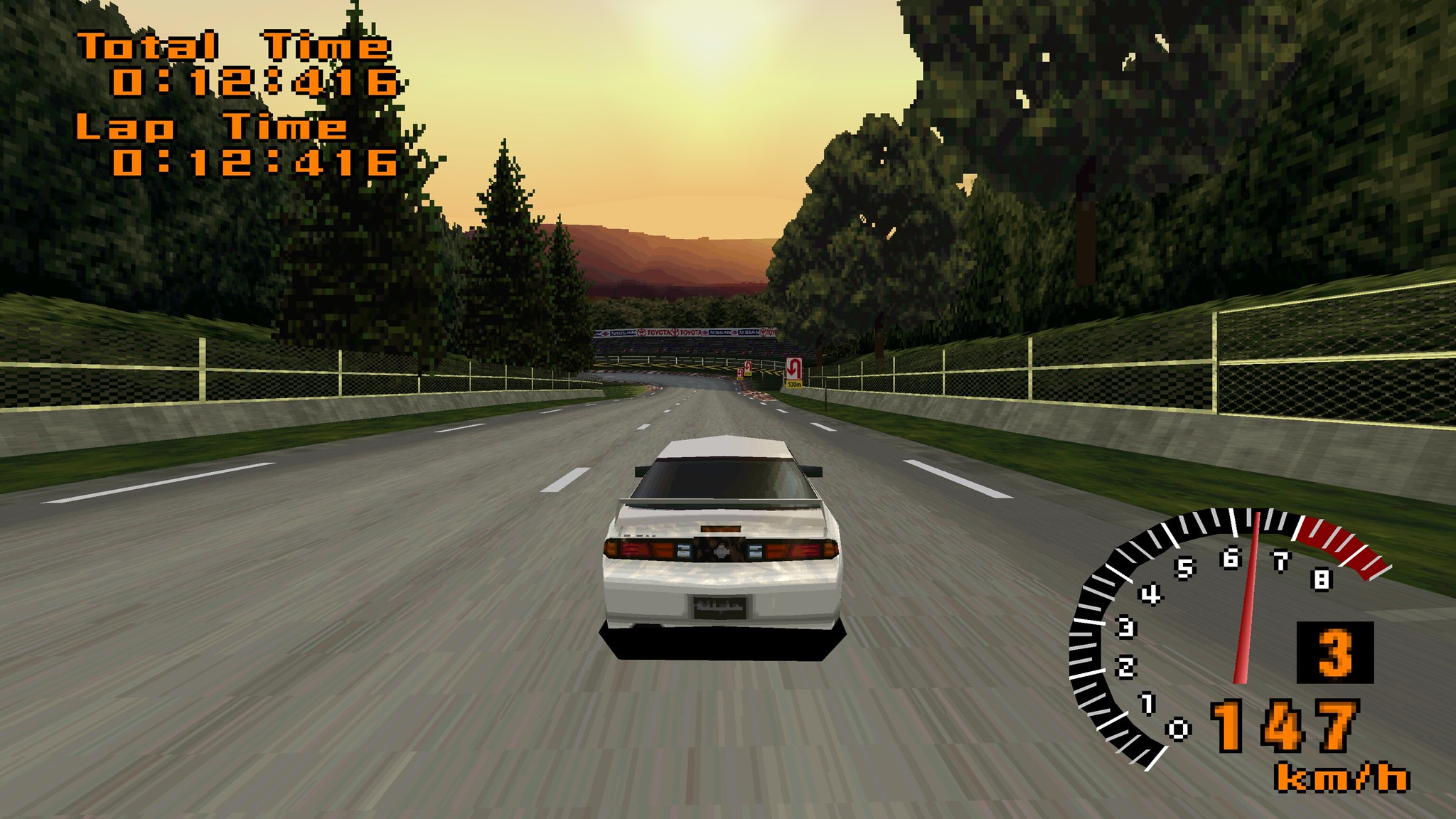
The graphics were mind-blowing back then, and modern emulator enhancements take it even further. Of course the big ones that I always use are there: turning up the internal rendering resolution to make 3D elements sharp, using PGXP to straighten vertices, and widescreen rendering to correctly fill the 16:9 screen. In addition, there is a cheat in Duckstation to enable tire smoke, the rear view mirror, and most importantly, 60 fps mode. To accommodate that, I set the emulated CPU to 250%.
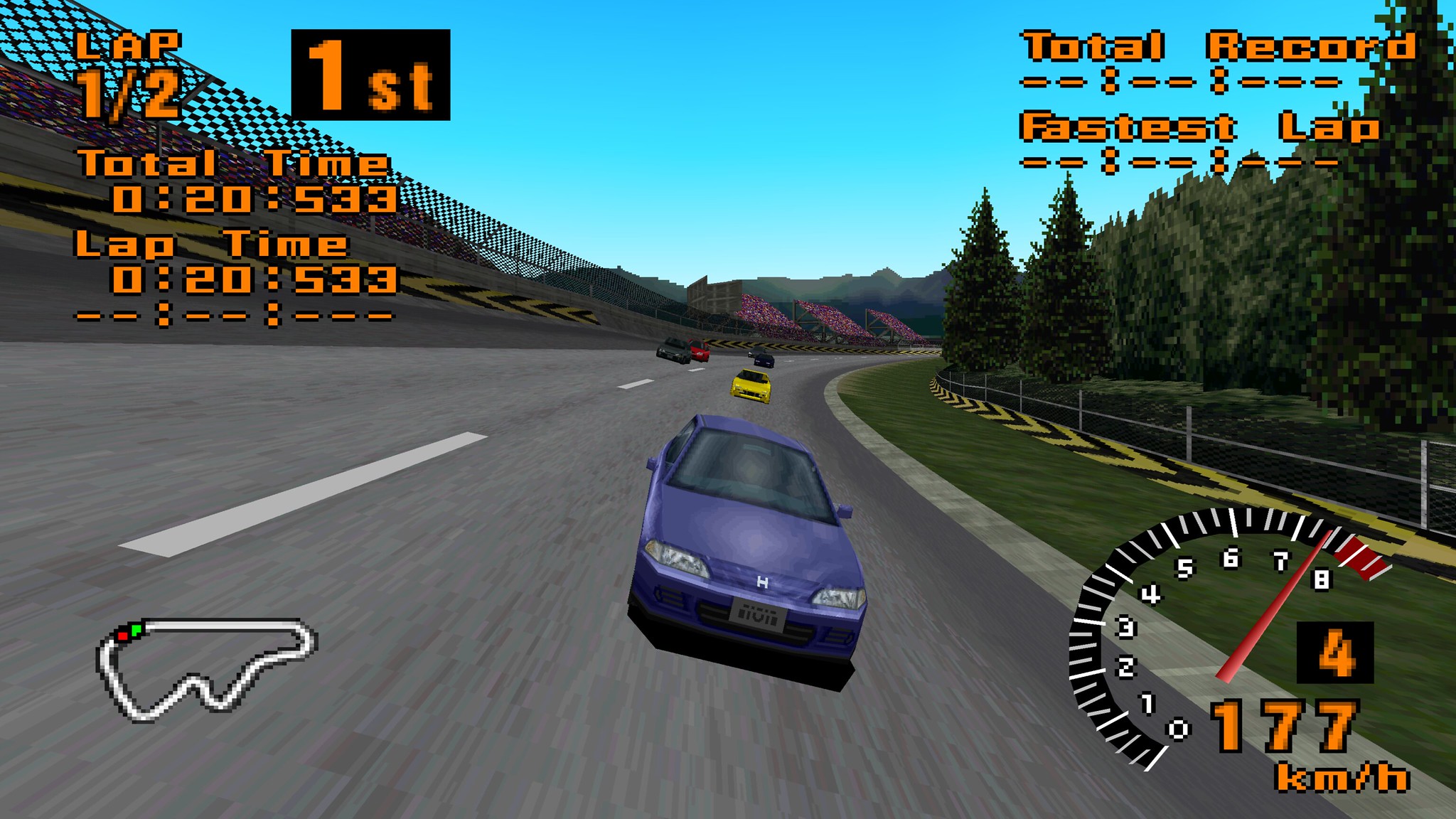
The result is a game that looks and plays surprisingly modern. “Retro” graphics are coming back in style (for example, the gorgeous Old School Rally), and emulation-enhanced Gran Turismo can still hang with any of them as far as graphics and framerate.

And the controls? Oh, those glorious controls. So many modern games (like Old School Rally) still can’t figure out natural feeling controls. Now imagine a world where no one had ever made a racing game with natural controls on a joypad–that’s the age where Gran Turismo debuted.
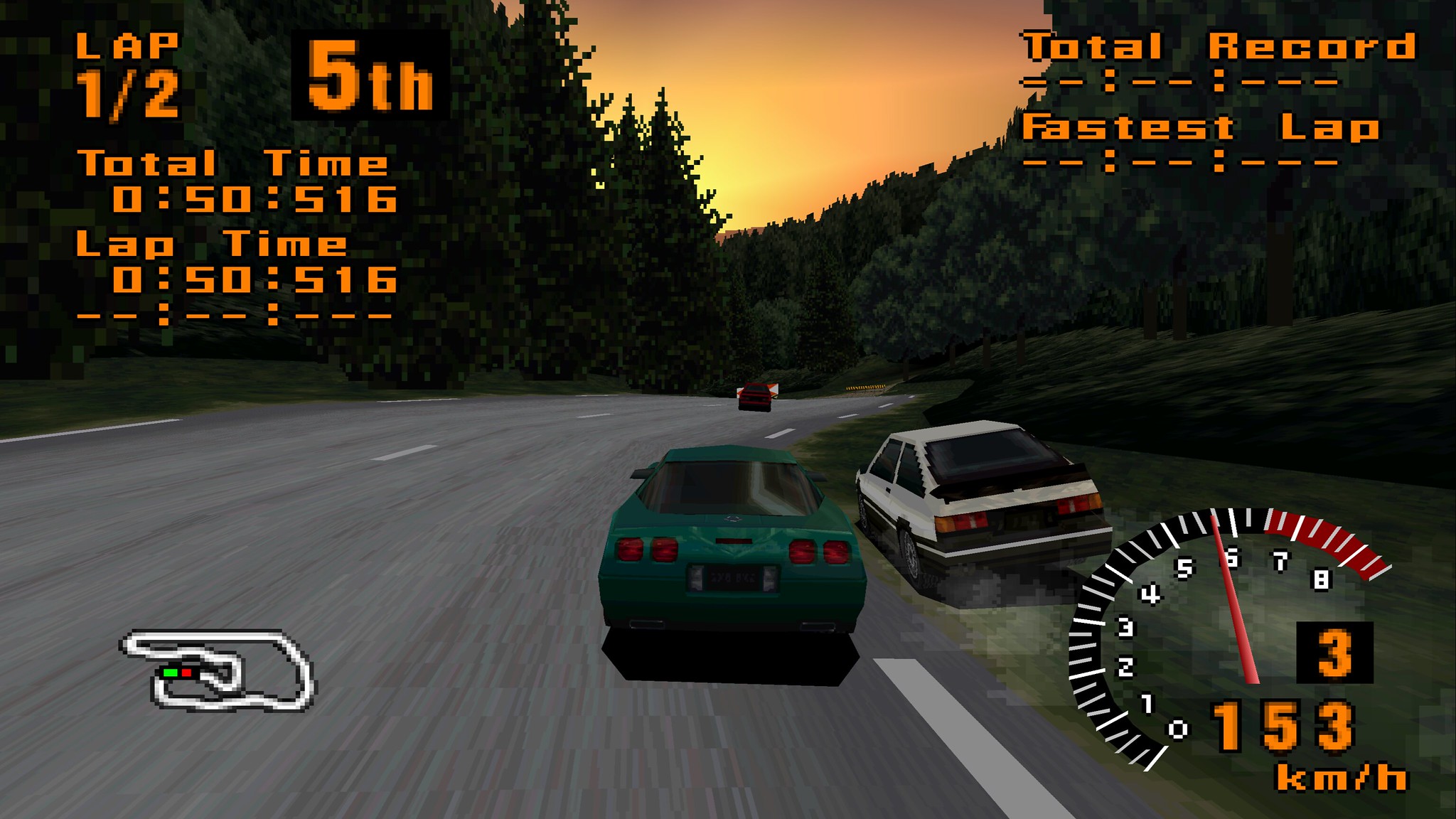
Physics-wise, this game is based on understeer. Things change a bit when you start getting into the racing suspension and slicks, but generally speaking, you are always trying to manage understeer. You do this with a bit of weight transfer, but lap times are mostly about your entry speed to a corner, and throttle timing on the way out.
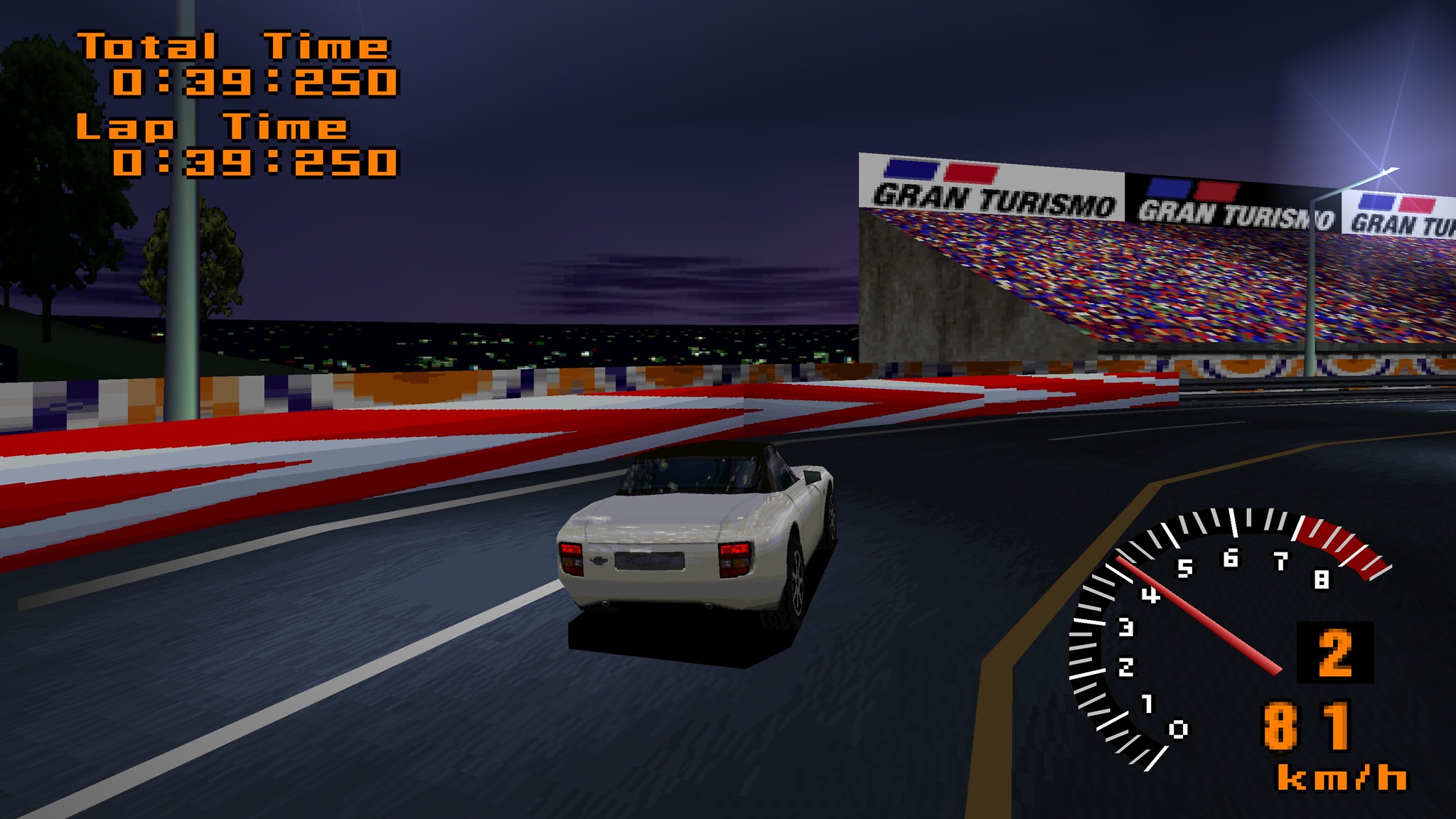
The more complicated parts of vehicle dynamics are a bit glossed over, but that’s okay because the foundation is solid, and realistic. Enter a corner too fast? Understeer. Throttle too early? As you can see in the above image: understeer.
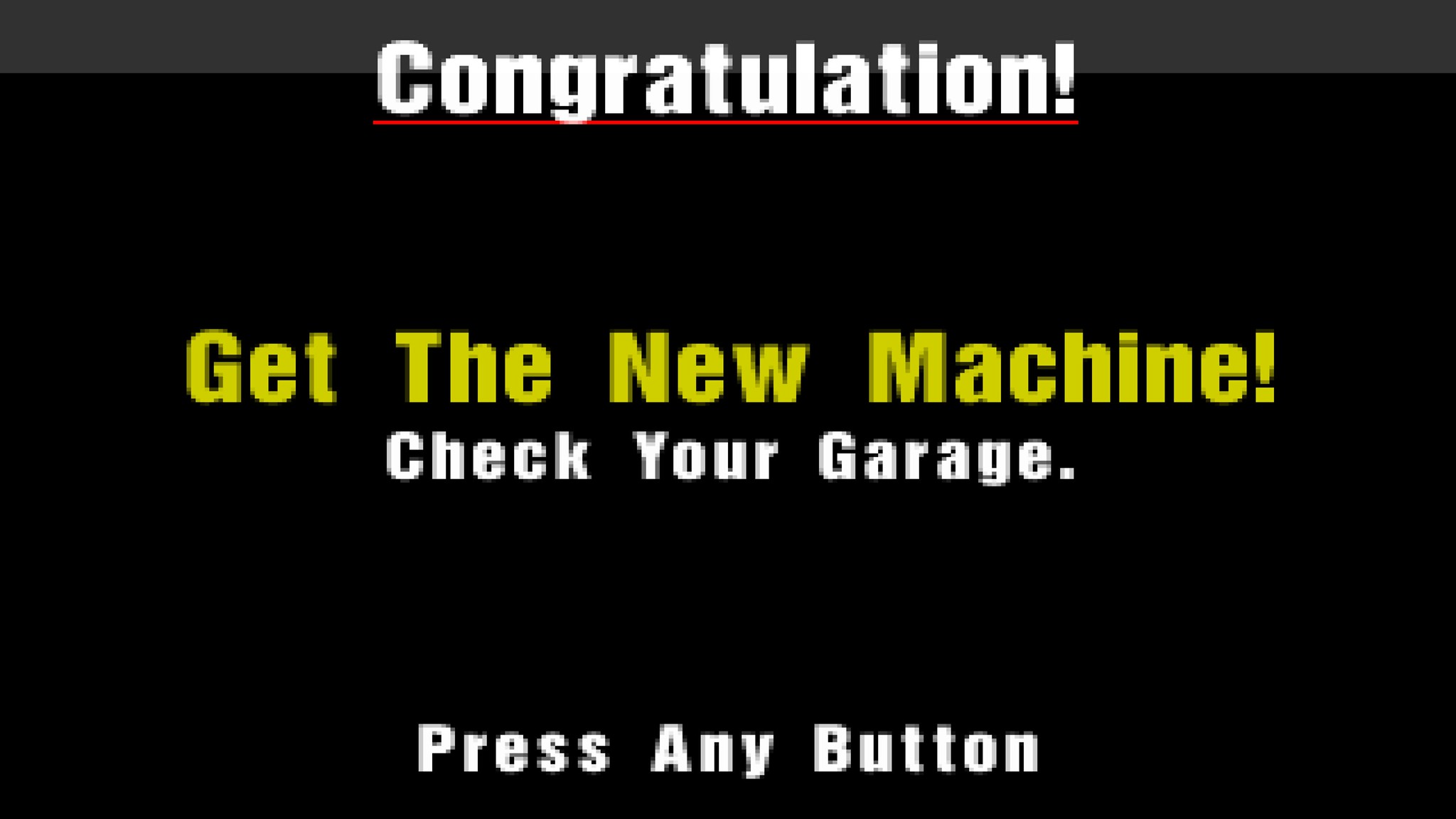
There is quite a bit of Engrish in this game, which was cleaned up for the releases in the rest of the world, in addition to the seizure-inducing flickering of the text.
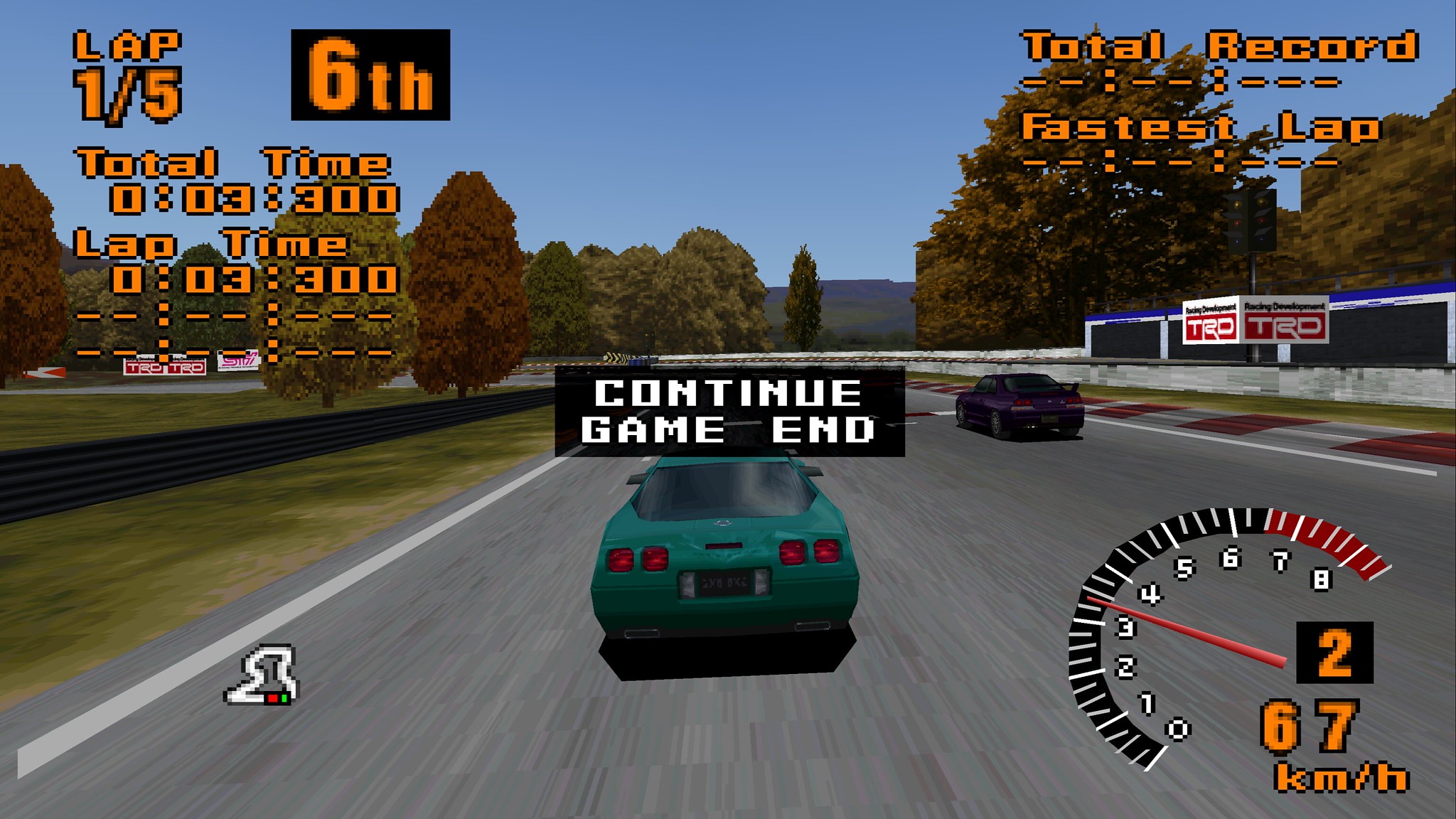
As I mentioned in my Initial D article, retries in racing games used to be quite rare, which is ironic considering how difficult they could be. Another benefit of emulation: avoid all that nonsense with the magic of save states! If you need to start over, just load a state. Heck, use that rewind function if you want.

In order to promote close racing, there is a prominent “rubber band” effect, where your opponents speed up when behind and slow down when ahead. Luckily the collision is quite forgiving in this game; some might say a little too forgiving. While other games penalize you heavily for collisions, Gran Turismo seems to encourage a spot of clever wall riding or fender banging.
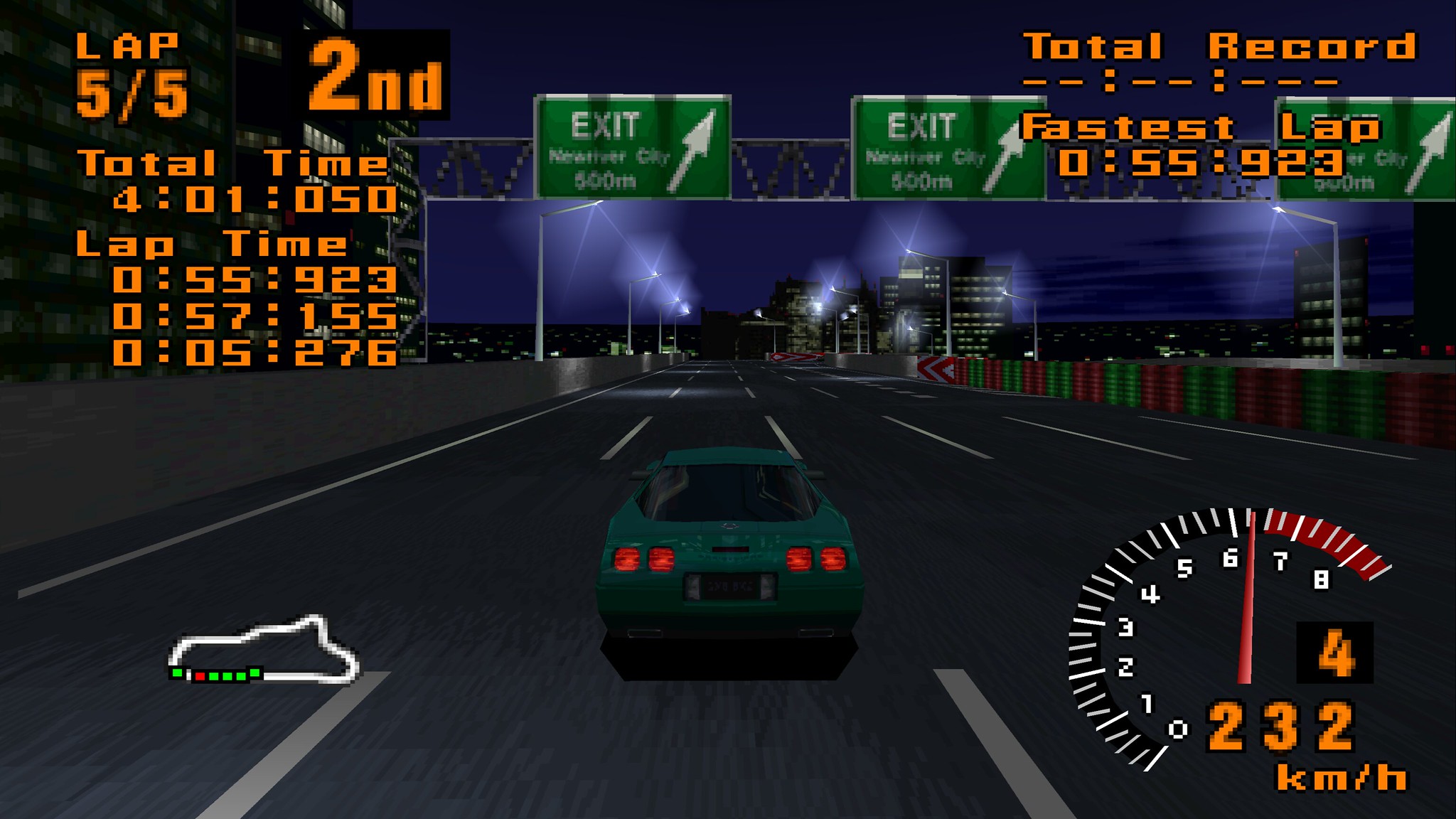
This game feels like it was put together with love. The brand new, unique tracks in this game really stand out. There are 10 tracks in 5 locations, plus a test track. Special Stage Routes 5 and 11 always amazed me, especially when I found out they were based on real roads.
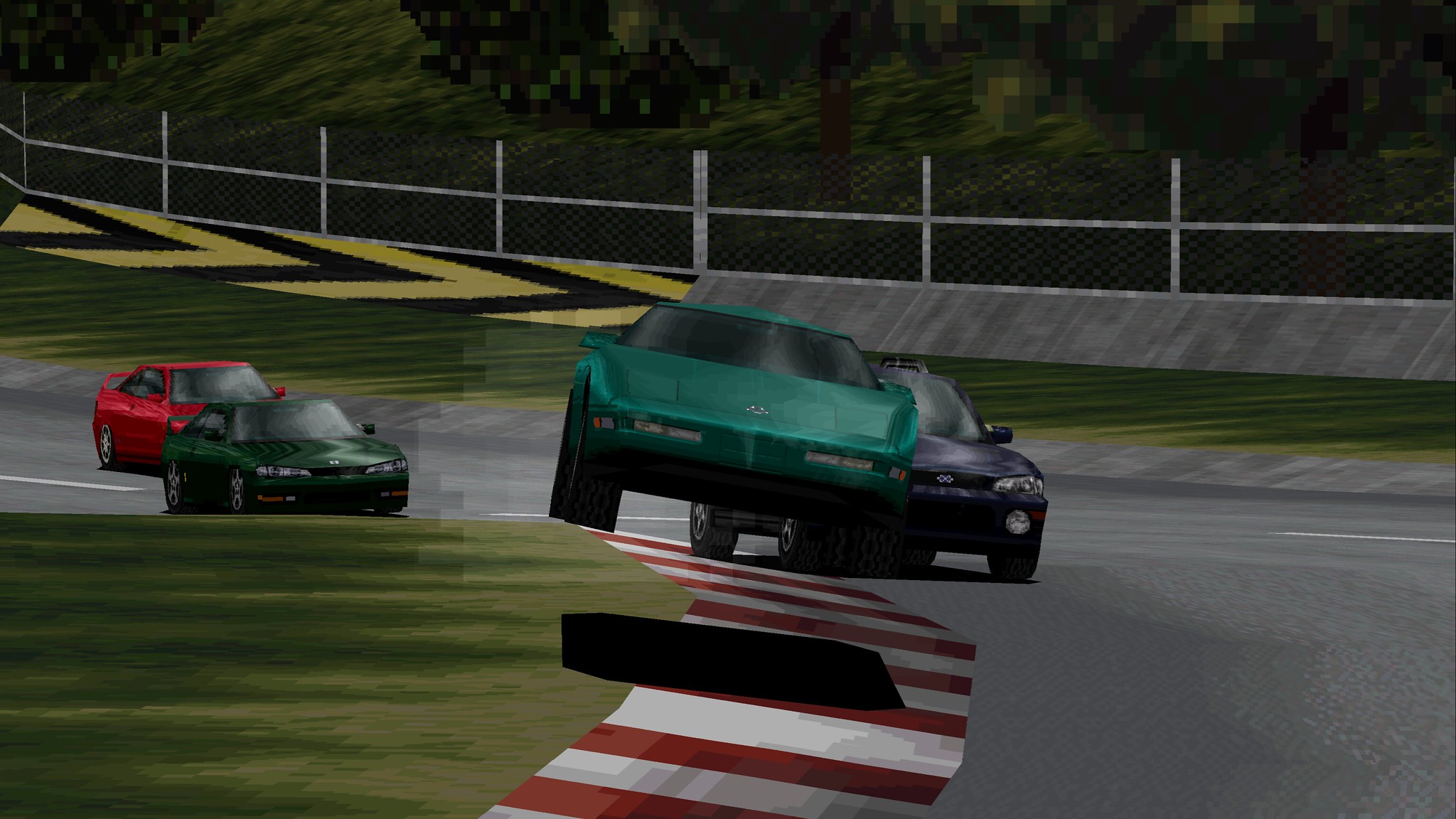
My favorite track is Trial Mountain. It has a fantastic collection of curves and a real flow; as soon as you finish a lap you just want to do one more. The esses at the beginning of the track are epic, and the big curbs are ramps that really launch the faster cars.
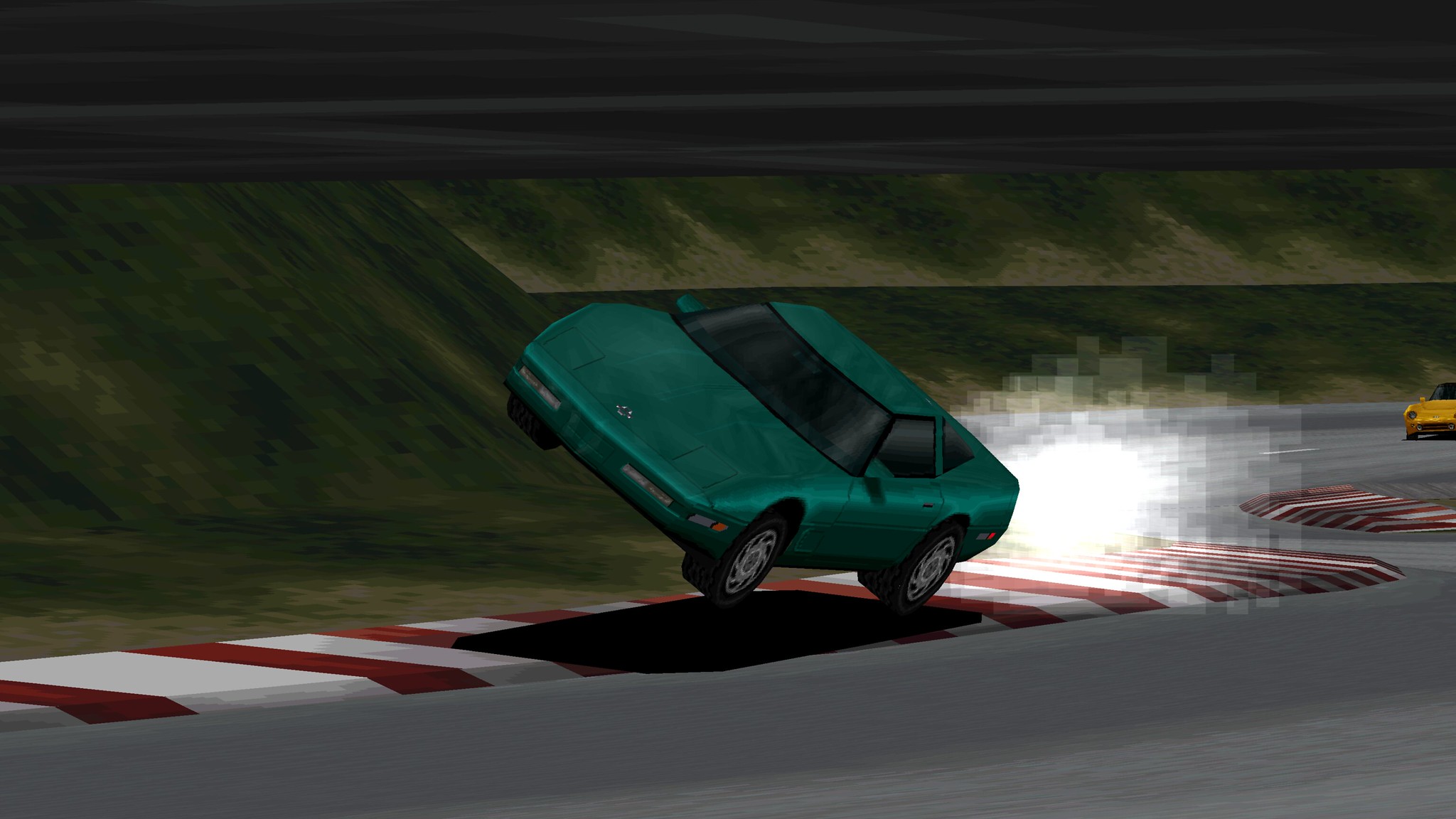
And surely anyone who has played this game will remember the chicane at the end of the lap. You can’t roll a car in Gran Turismo, so you can take the gnarliest angles here.
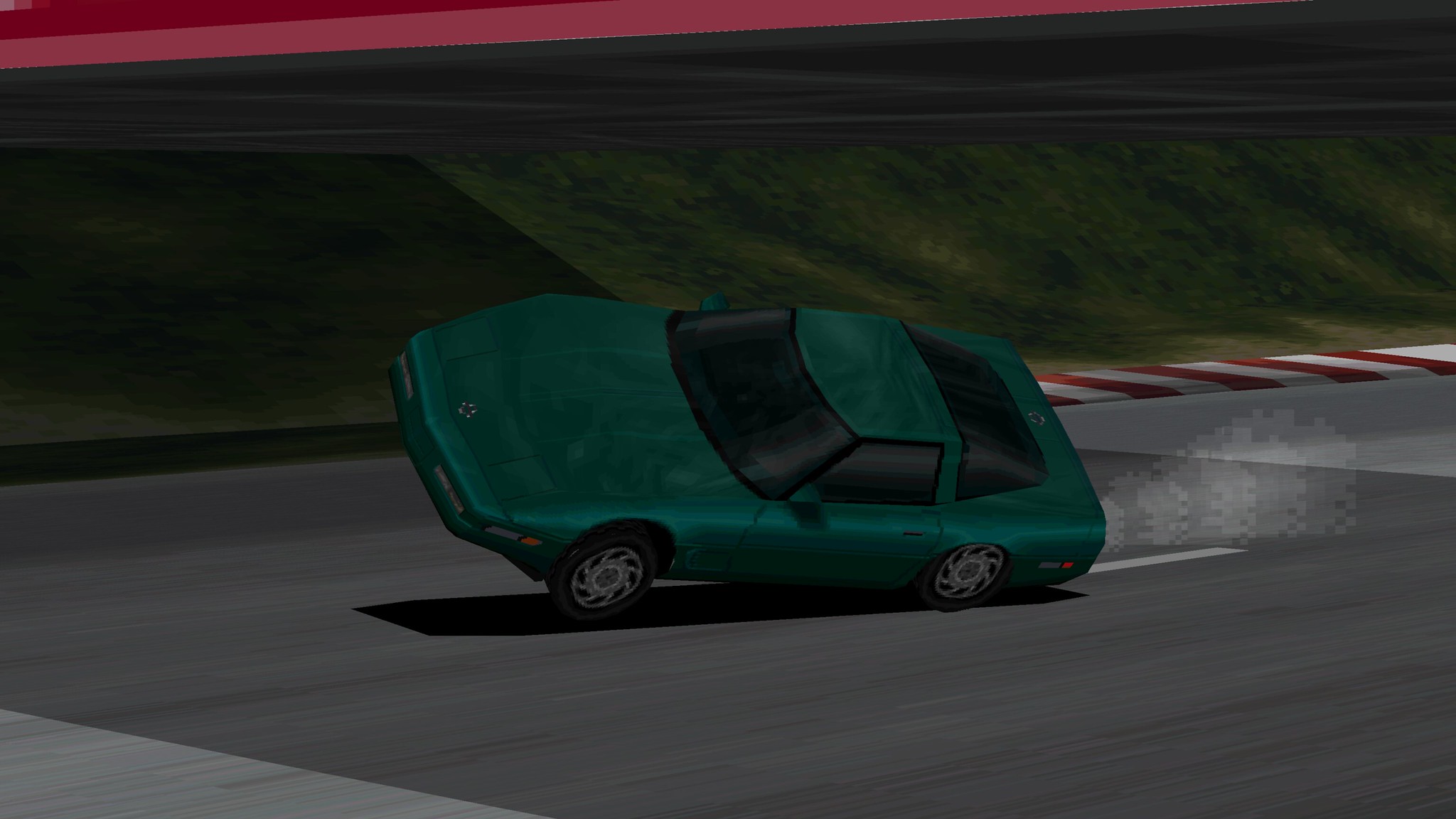
There’s no damage model either, so feel free to land like this!

The C4 Corvette is really fun to drive in this game, and has a great “Racing Modification”. Despite the C5 Corvette releasing in 1997 for the 1997 model year, it didn’t feature in this late-1997 game, nor Gran Turismo 2 which was released in December 1999.
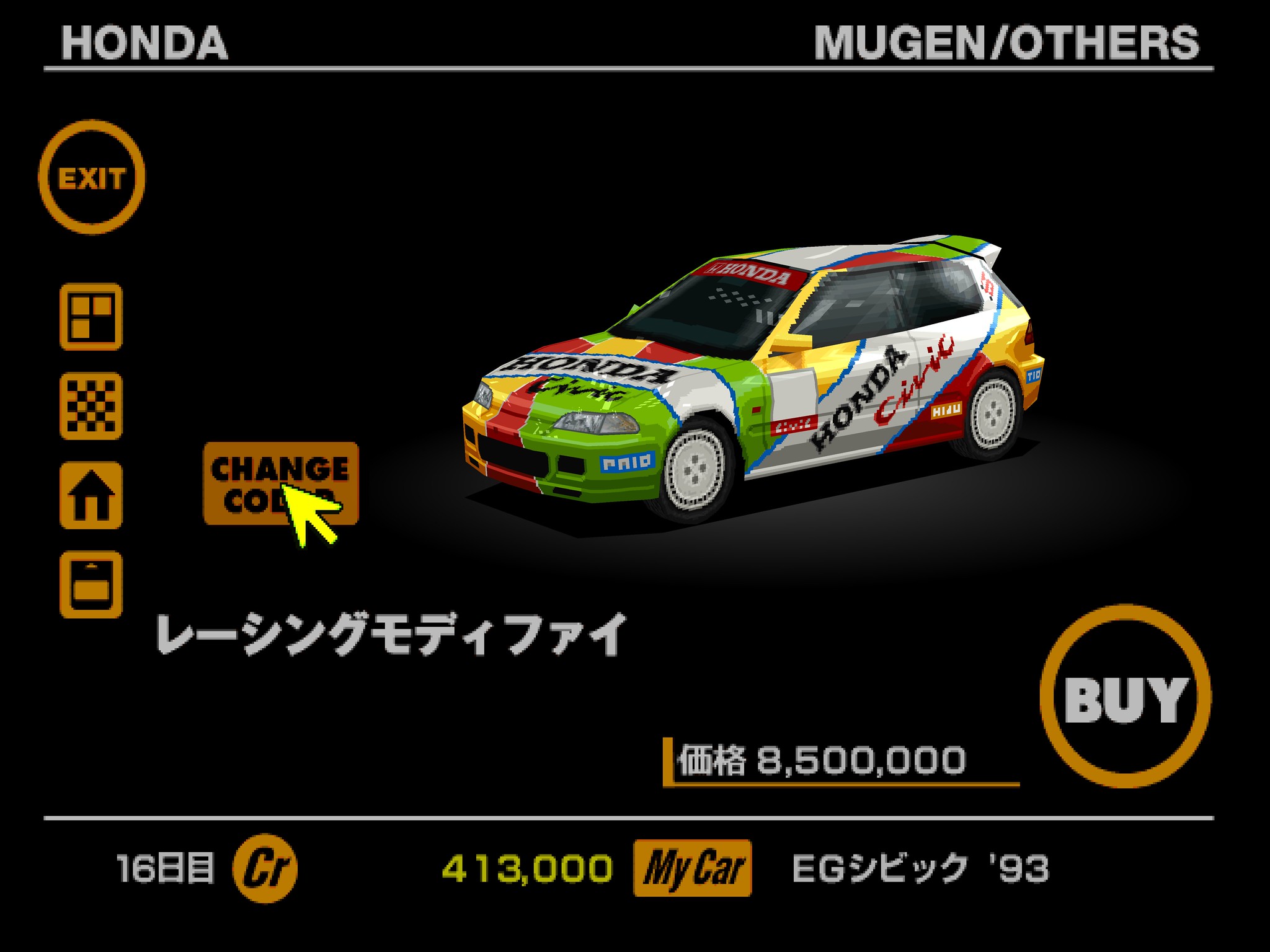
This Honda Civic is super rad. We take accuracy for granted in the era of laser scanning, but for the time the quality of these models was unheard of.
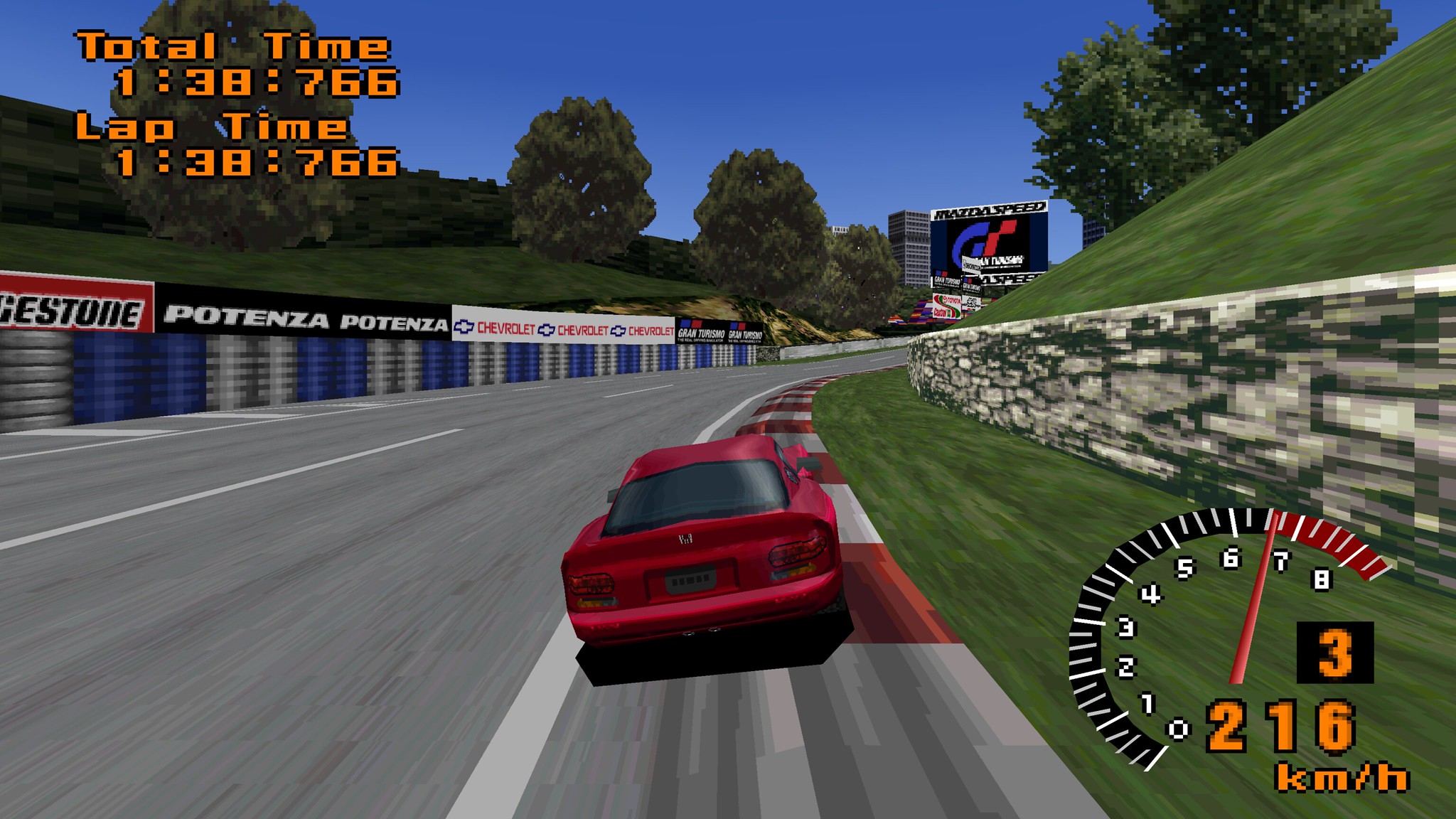
Grand Valley Speedway is another excellent track. Like the others, it’s fast and flowing. This is the complete opposite of the tracks in the previous game I wrote about, FoxKids.com Micro Maniacs Racing, which has incredibly tricky obstacle courses for its so-called race tracks.
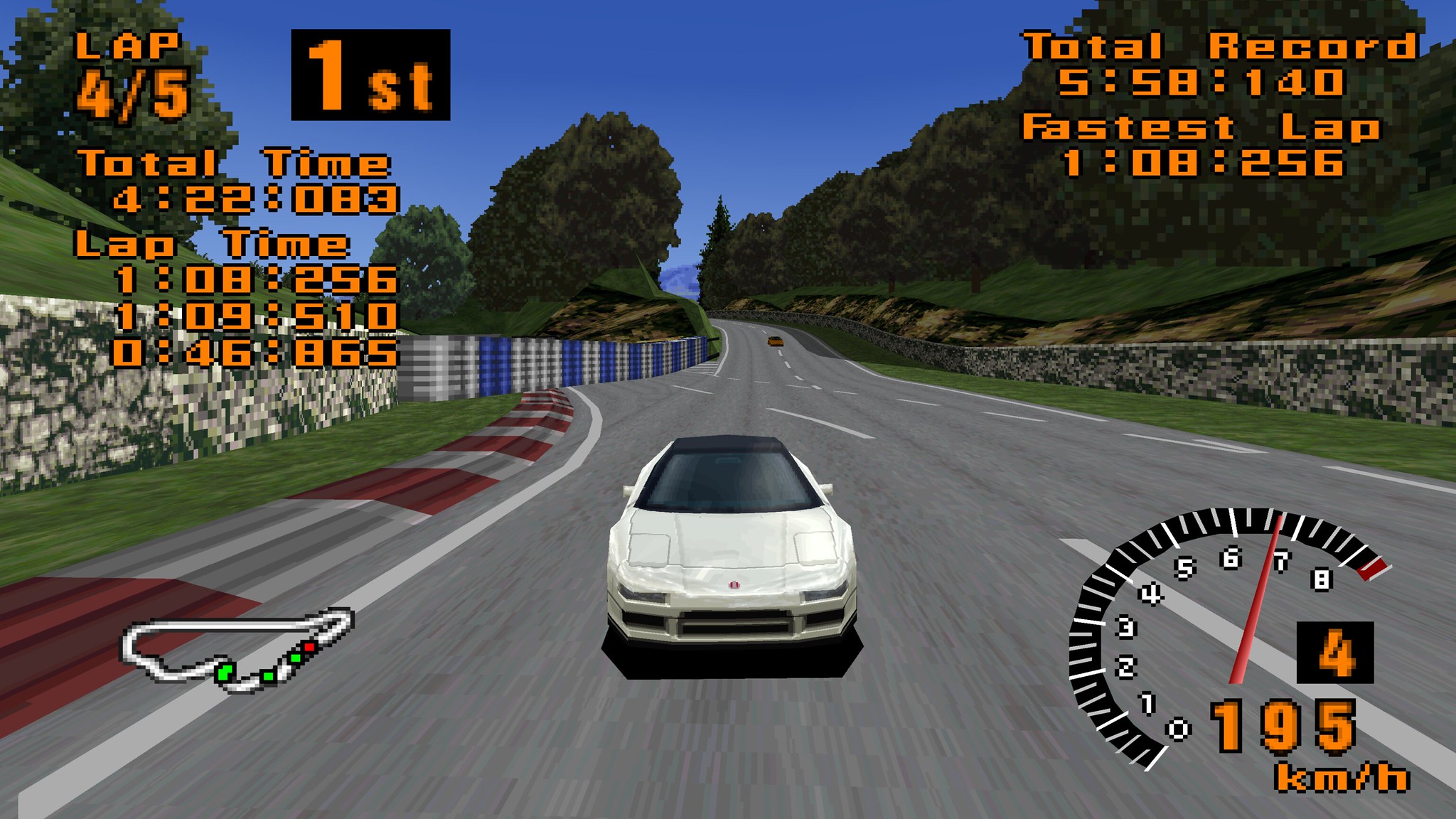
The NSX is really fun to drive in this game. Actually, that’s the trick of Gran Turismo; everything is fun. There’s a great selection of real cars to drive on the fantastic imaginary tracks, and they feel great to drive.
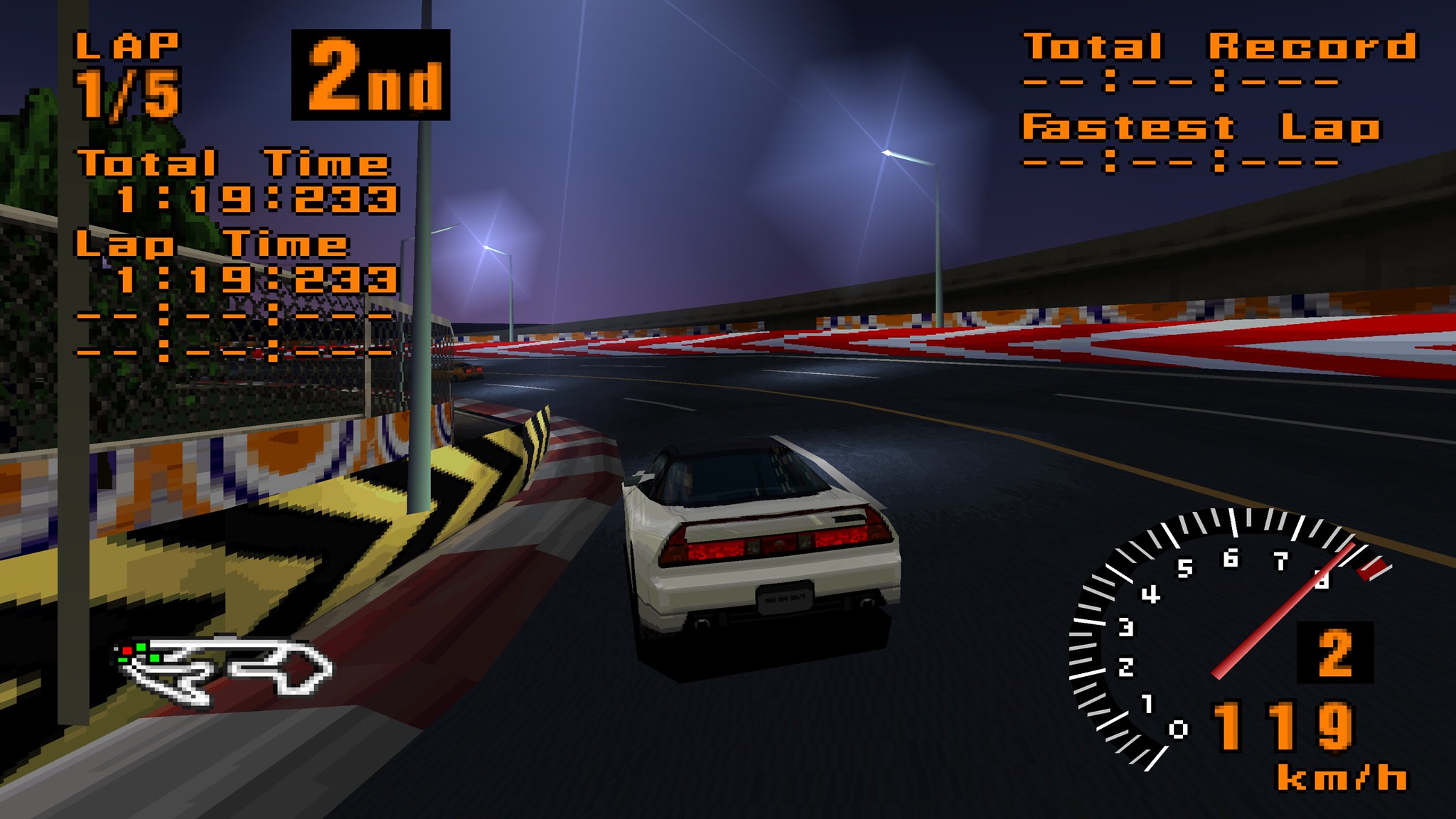
That natural driving feel keeps coming up. It’s so fun to throw your car into the apex and bounce off the curbs. You’re rewarded by remembering the same concepts that help you go fast in a real car, and every car feels slightly different.
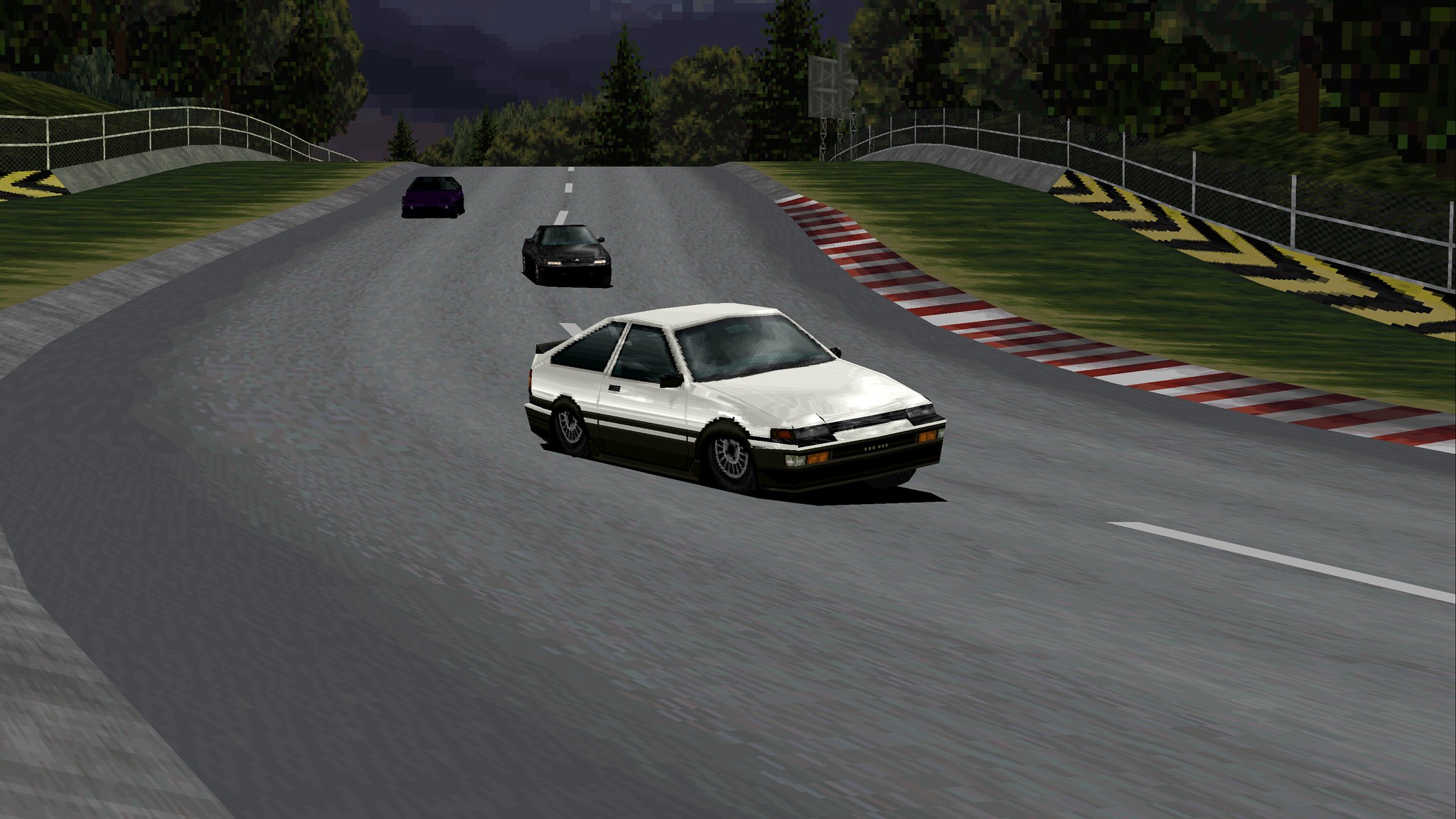
The cars move around a lot in Gran Turismo, to a sometimes hilarious degree. This is something that Kazunori Yamauchi had been working on since his first video game, Motor Toon Grand Prix. Released in 1994 in Japan as one of the first PS1 games, it was a racing simulator–a Gran Turismo prototype of sorts–masquerading as a kart racing game. In 1996 its significantly improved sequel was released, and that came to Europe and the USA too. I will definitely be writing about those games as they are both very interesting.
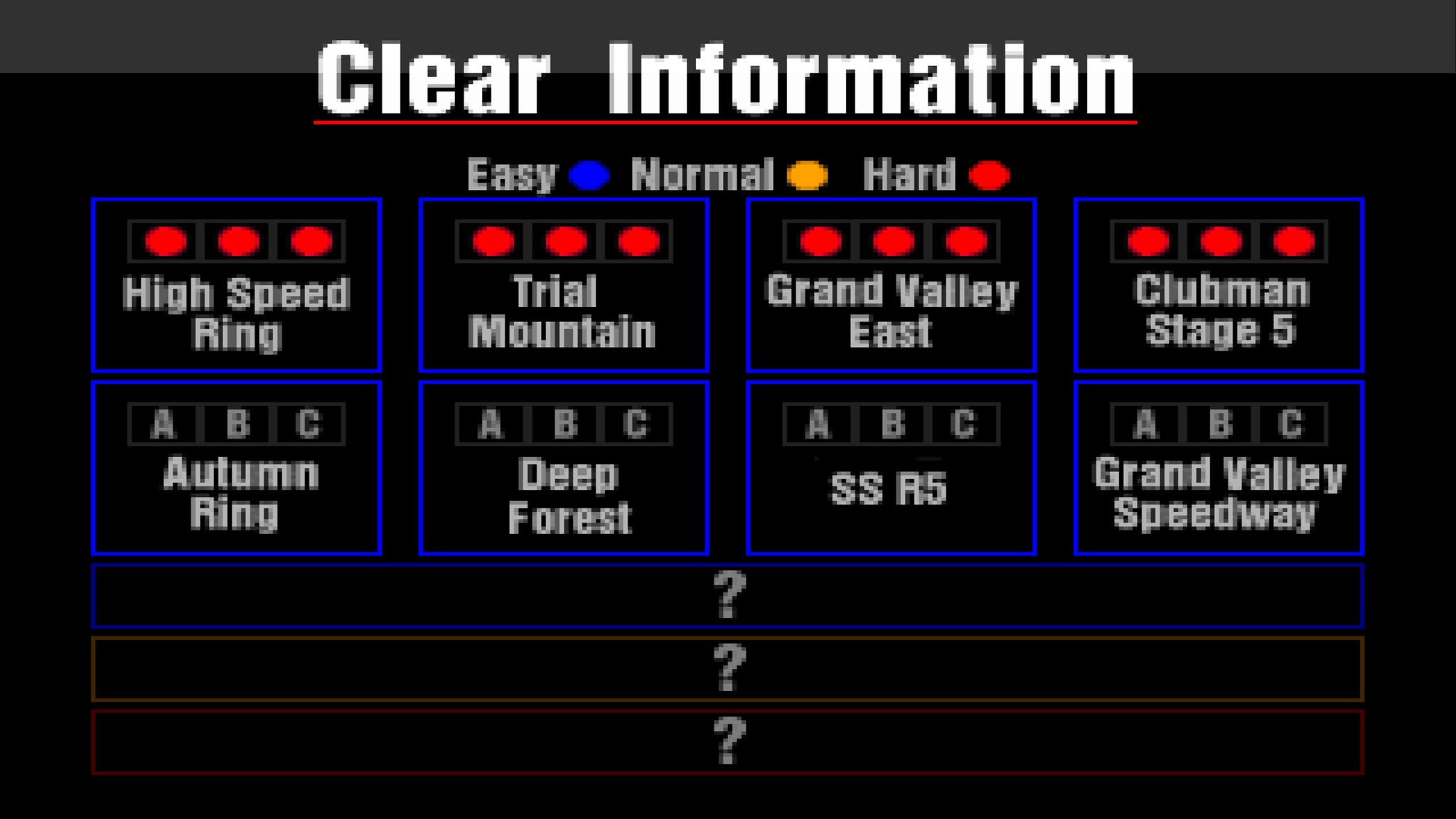
Over in the Arcade mode, it’s great to just jump in and play. There’s actually some progression in here too; you only have the first four tracks to start with, and winning on each track with the three classes of cars will unlock the track below it.

This “forces” you to play every class of car, so you can experiment with the wide variety of cars in this game. At a time when no PS1 version of the three Need for Speed games released to date had more than nine cars, Gran Turismo had a whopping 148 different cars (172 if you count trim variations that don’t affect specs).
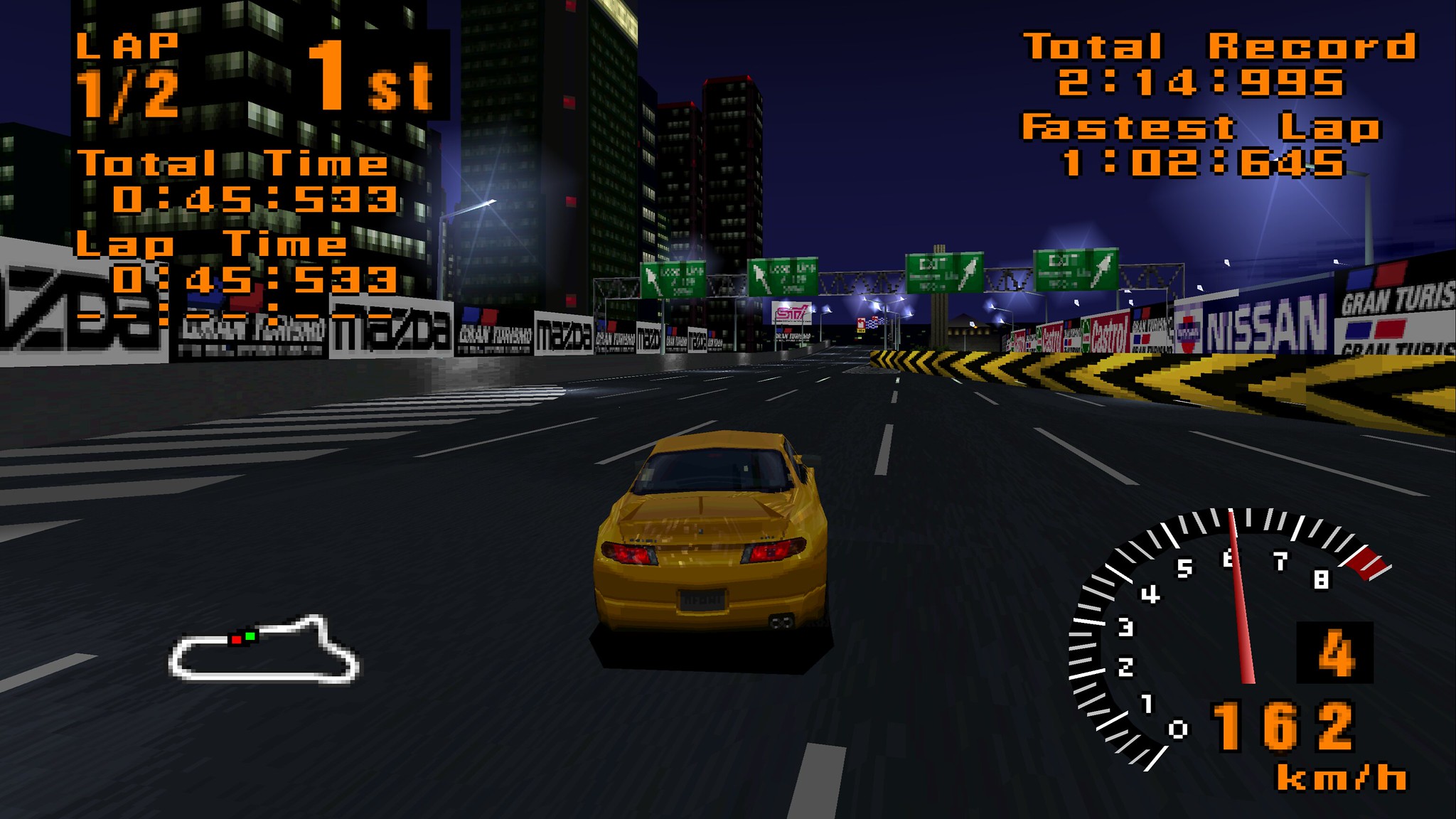
That brings us to yet another significant thing that Gran Turismo did: it brought JDM, or Japanese Domestic Market, cars to a Western audience. What the heck is a Mitsubishi FTO? Even today, I’ve still never seen one in person. Why do I know about them? Gran Turismo. Even much more mainstream cars like the Skyline GT-R were introduced to Americans like myself through this game.
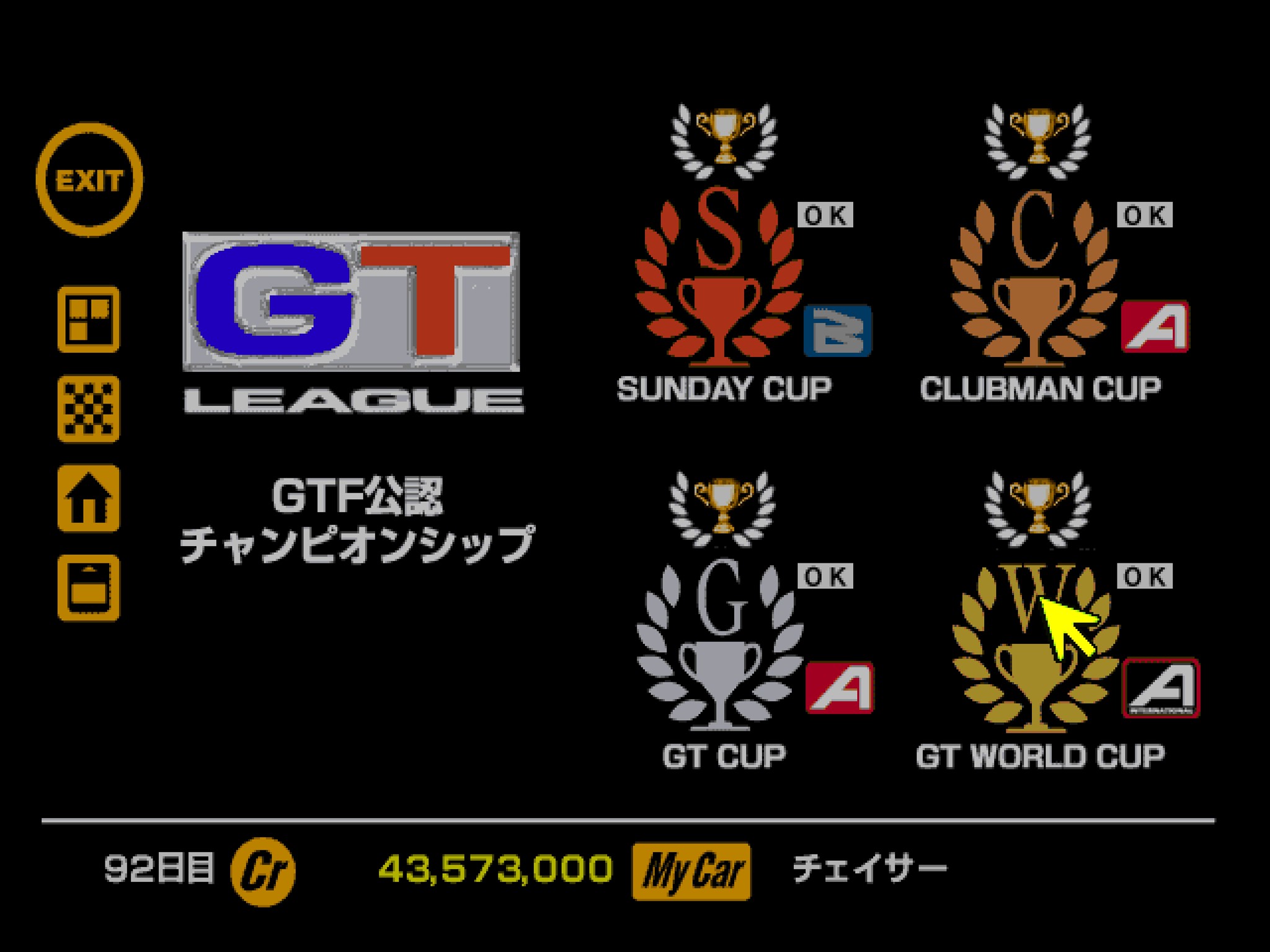
The main goal of “Gran Turismo” mode is to beat the four cups of the GT League. Each of these is kind of a checkpoint along the way; as you finish the Special Events you win cars and earn money for mods.
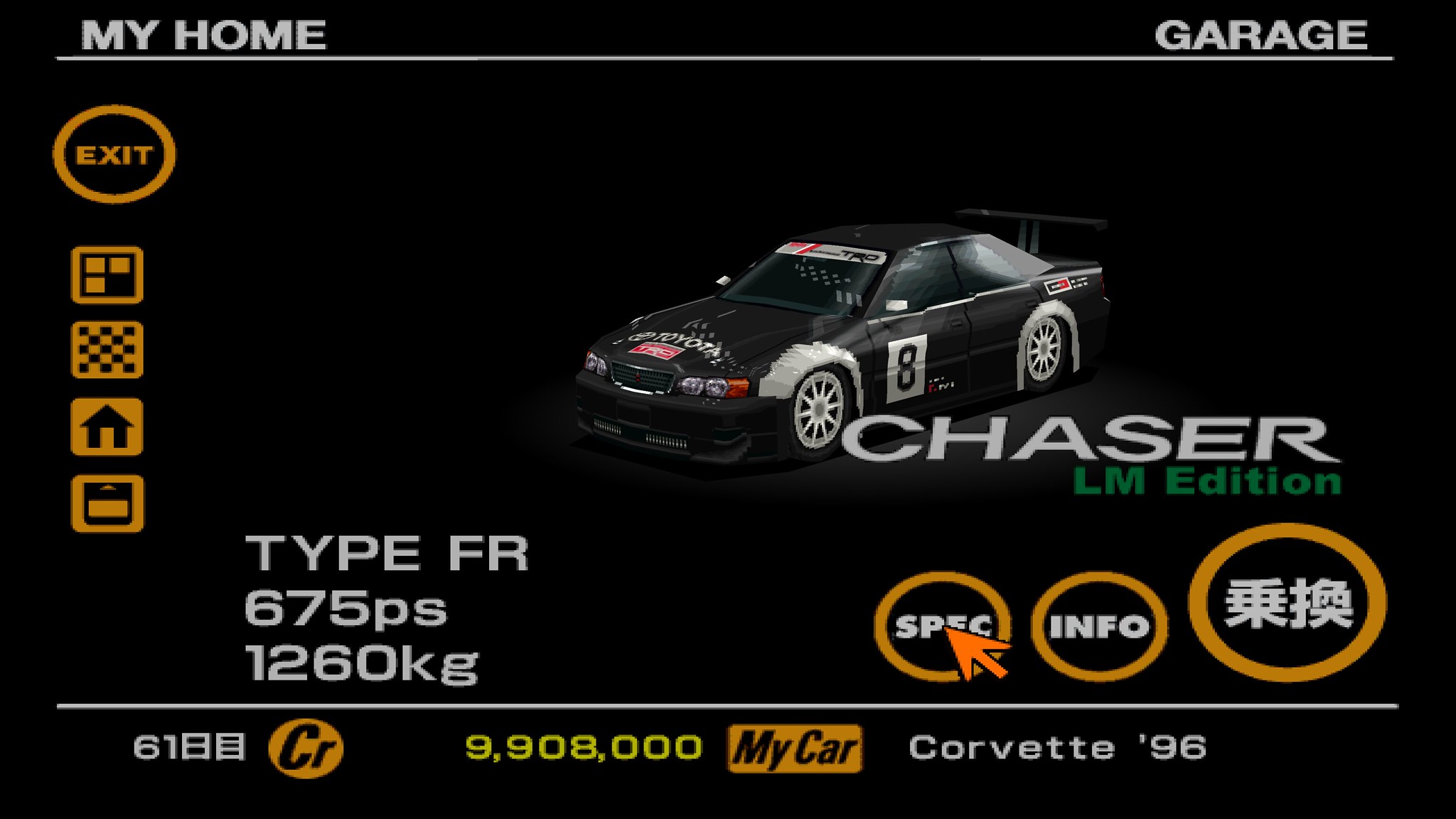
The reward for winning the GT Cup was what I used to beat GT World Cup: this epic Toyota Chaser LM Edition. I’m not sure what’s going on with the fender flares, but I love the rest of it. Gran Turismo has a few of these “LM Editions” which are their imaginary racing versions of regular cars.
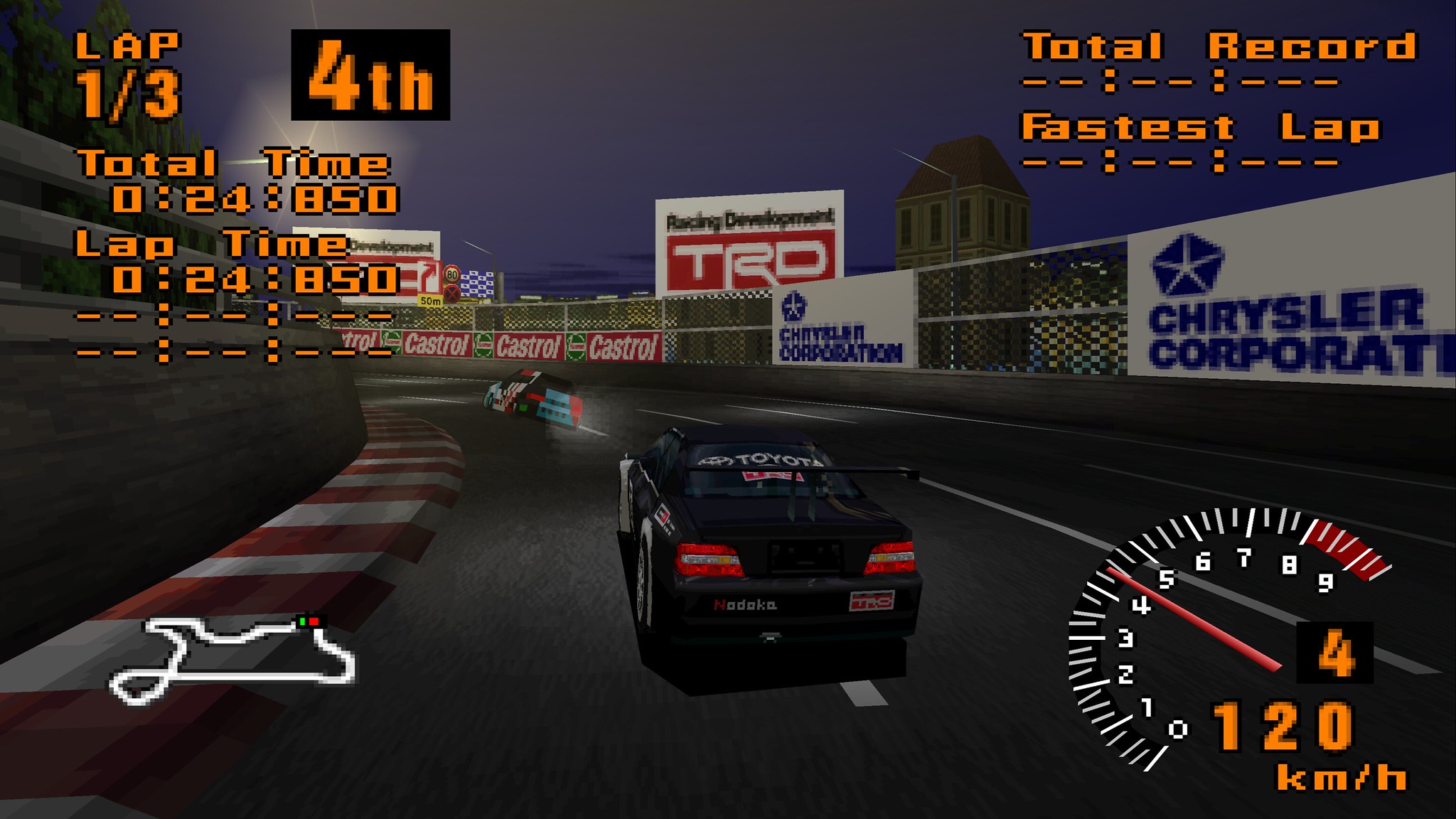
I think this game was mostly built off street cars with street tires; things start to get a little funky with racing suspensions and slicks. It’s hard to see with the LOD, but the racing Civic in front of me was leaning over at a 45 degree angle while going through turns!
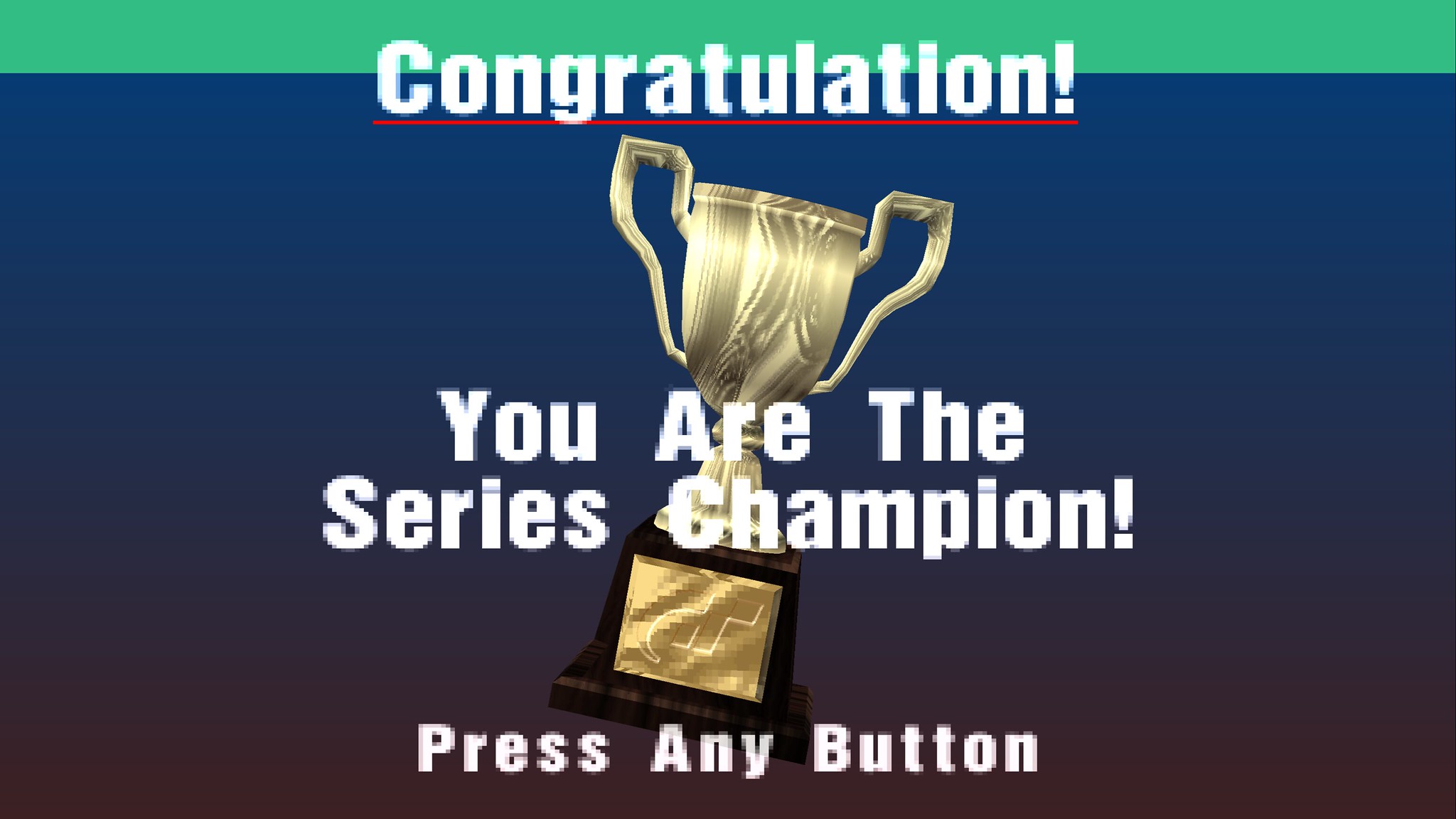
Only one dang congratulation, after all that??
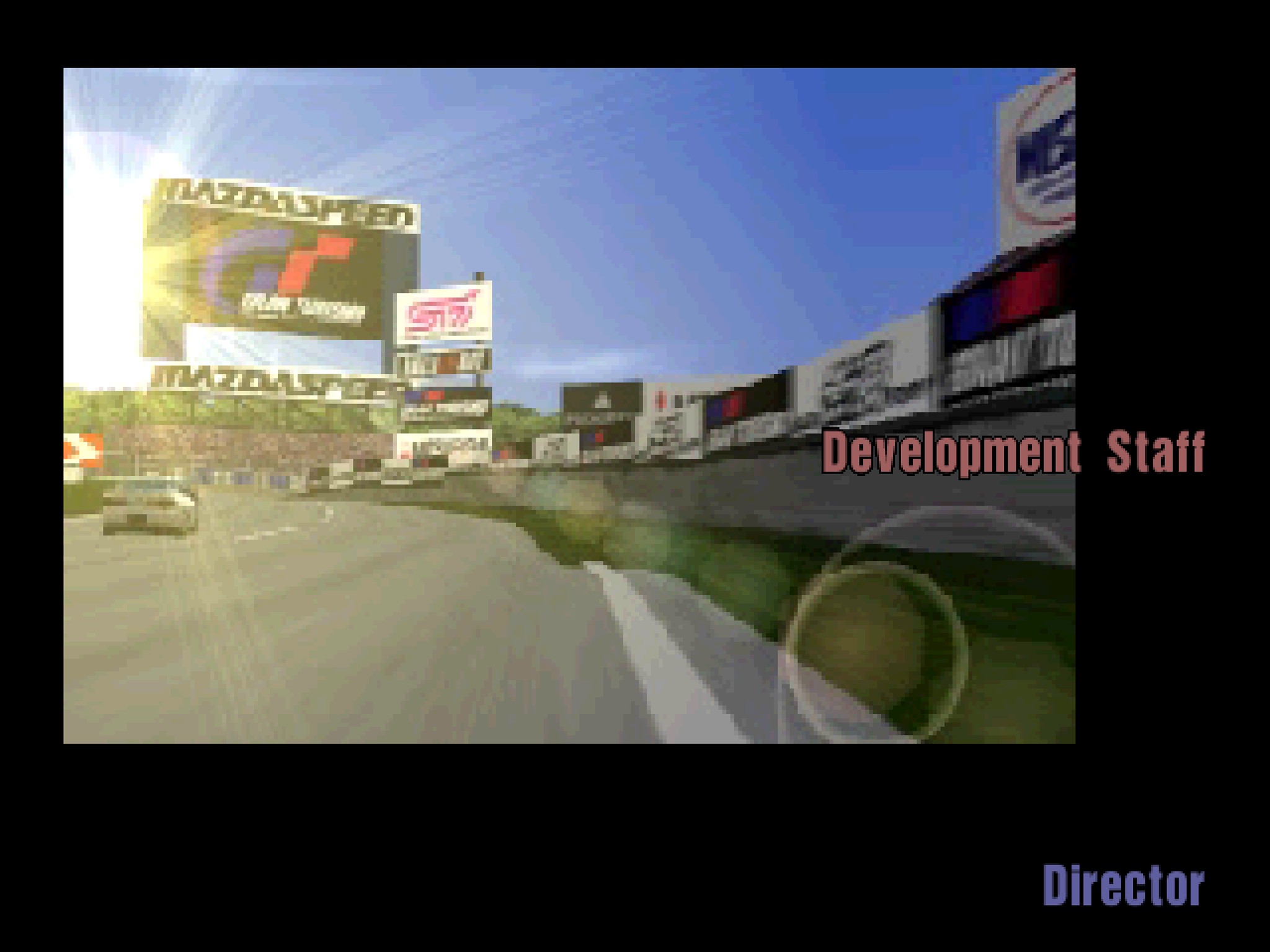

When you beat all the tracks in Arcade mode, or finish GT World Cup in Gran Turismo mode, you get the ending cinema–which is different in the Japanese version.

After that, you unlock GT HiFi, an interesting mode where you can play the Tokyo tracks at a smooth 60 frames per second. Unfortunately, the trade-off is there are no opponents and the trackside furniture is greatly reduced. On a real console this is a nice treat after playing the game at 30 fps for many hours; however on an emulator it’s more of a dead-end side street because we’ve been playing at 60 fps with full detail the entire time so far.
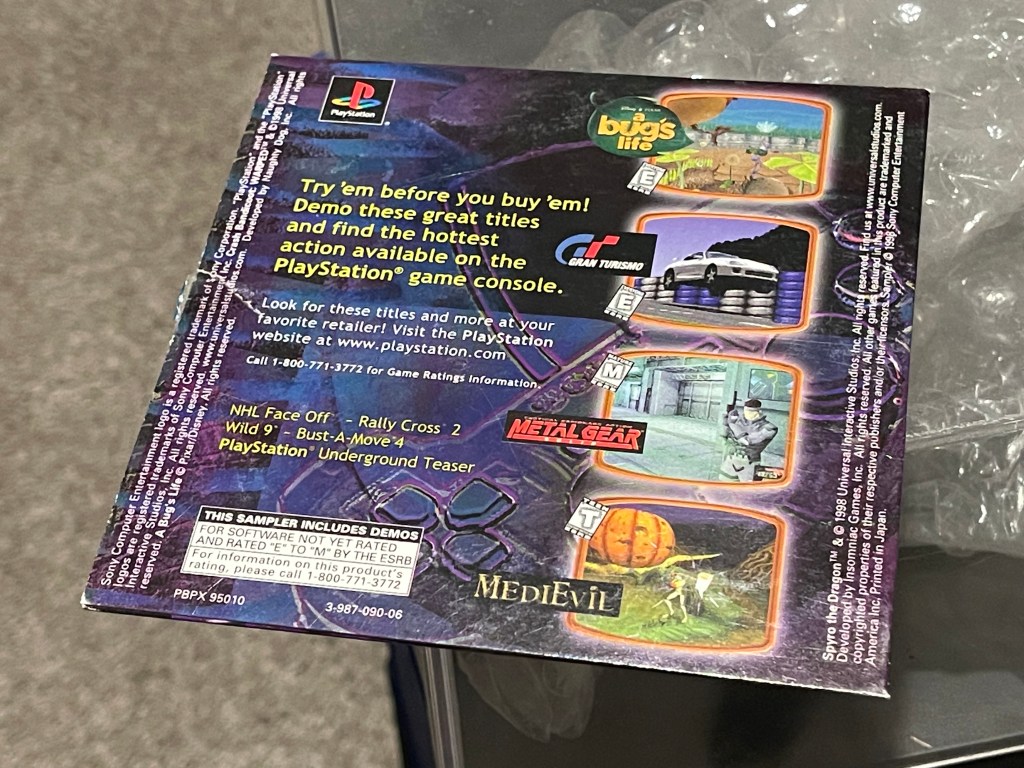
I never actually played this full game back in the day; all I had was this exact demo disc. In 1997 I had a Nintendo 64; I didn’t get a Playstation until 1999, and I just played this demo until Gran Turismo 2 came out. I finally bought the US version of Gran Turismo in 2021, and the Japanese version just recently in order to play it to write this article. It was really cool to finally dig my teeth into this game that I had known about forever but never really played with intent.
Gran Turismo raised the bar for racing games in every aspect, from the graphics and gameplay, to the quality and quantity of cars and tracks. We’re now living in the AGT era: every racing game has to be compared in some way to this classic from 1997.


 Star Road
Pingback: Every PS1 Game – Gran Turismo 2 | Star Road