
Every PS1 Game – Bio Hazard aka Resident Evil
Released in March 1996 in Japan as Bio Hazard (two words), North America got Resident Evil (renamed due to the existence of a now-forgotten game already titled Biohazard) only two weeks later.
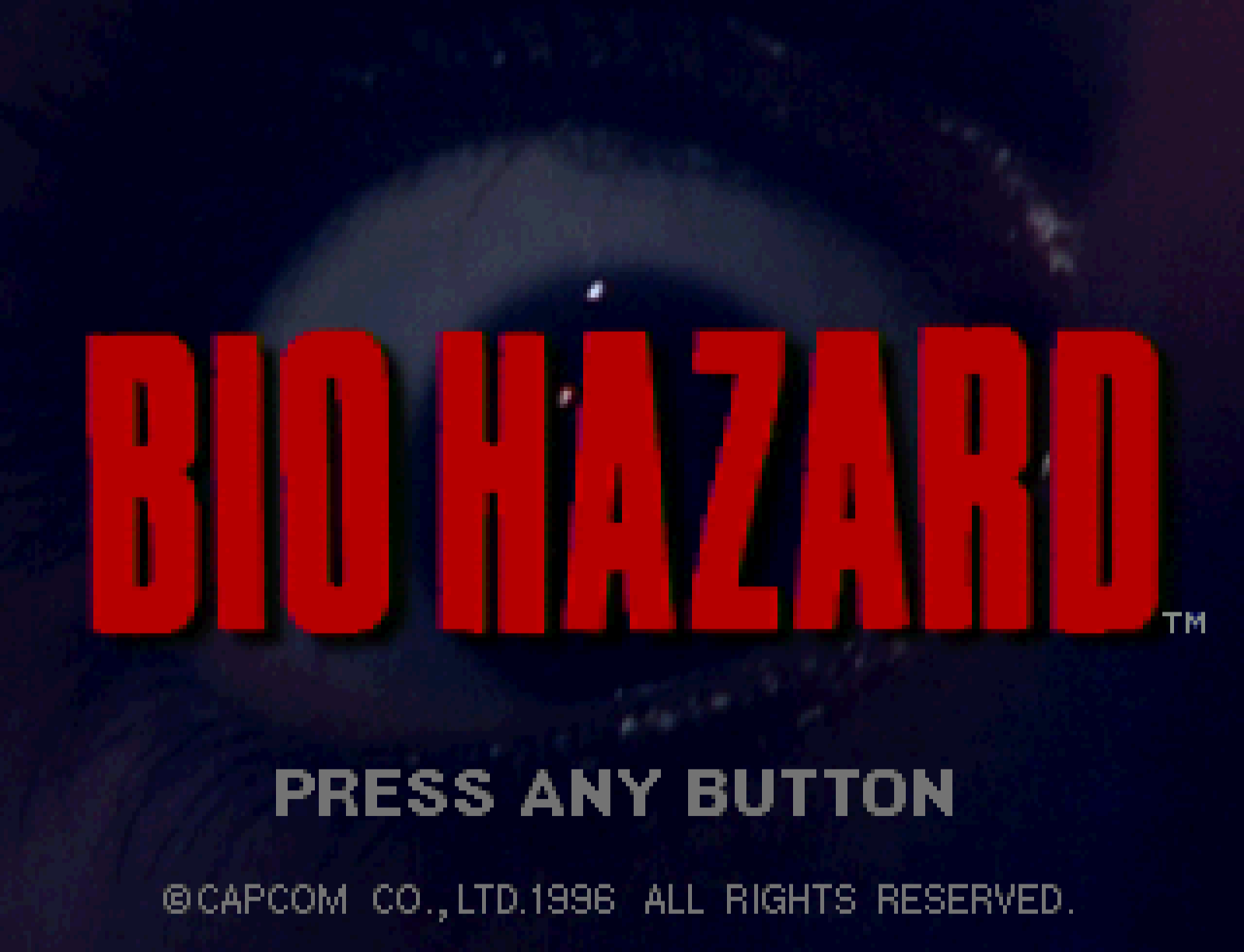
And yes, it is “Bio Hazard”; there is a space between the two words on the title screen as well as the packaging for the game, which was changed to the more common “Biohazard” for the sequel.

In the USA, we received a comical amount of Resident Evil releases: it was first released in a plastic-ridged longbox, then got a jewel case release. Then, there was a “Director’s Cut”, first in a double disc case that came with a demo for Resident Evil 2, and then in a single disc case with only the game. After that, it was added to the Greatest Hits line as one of the few GH games that had a completely different version. Known as the “Director’s Cut Dual Shock” version, it added compatibility with the Dual Shock controller’s analog and vibration functions, but the biggest change is that it replaced the excellent original soundtrack with a new symphonic soundtrack that ranges from “meh” to “truly awful”.
The FMV’s were censored too. The original releases all featured the intro movie in black and white, but the US version also cuts out a clip of a severed hand and of Chris smoking a cigarette. Only the French and German Director’s Cut releases contained the uncut intro movie in color. There are quite a few differences between all the different regions and versions, and given that the game has two playable characters that each have four endings, this is a game that really lends itself to multiple playthroughs to see everything.
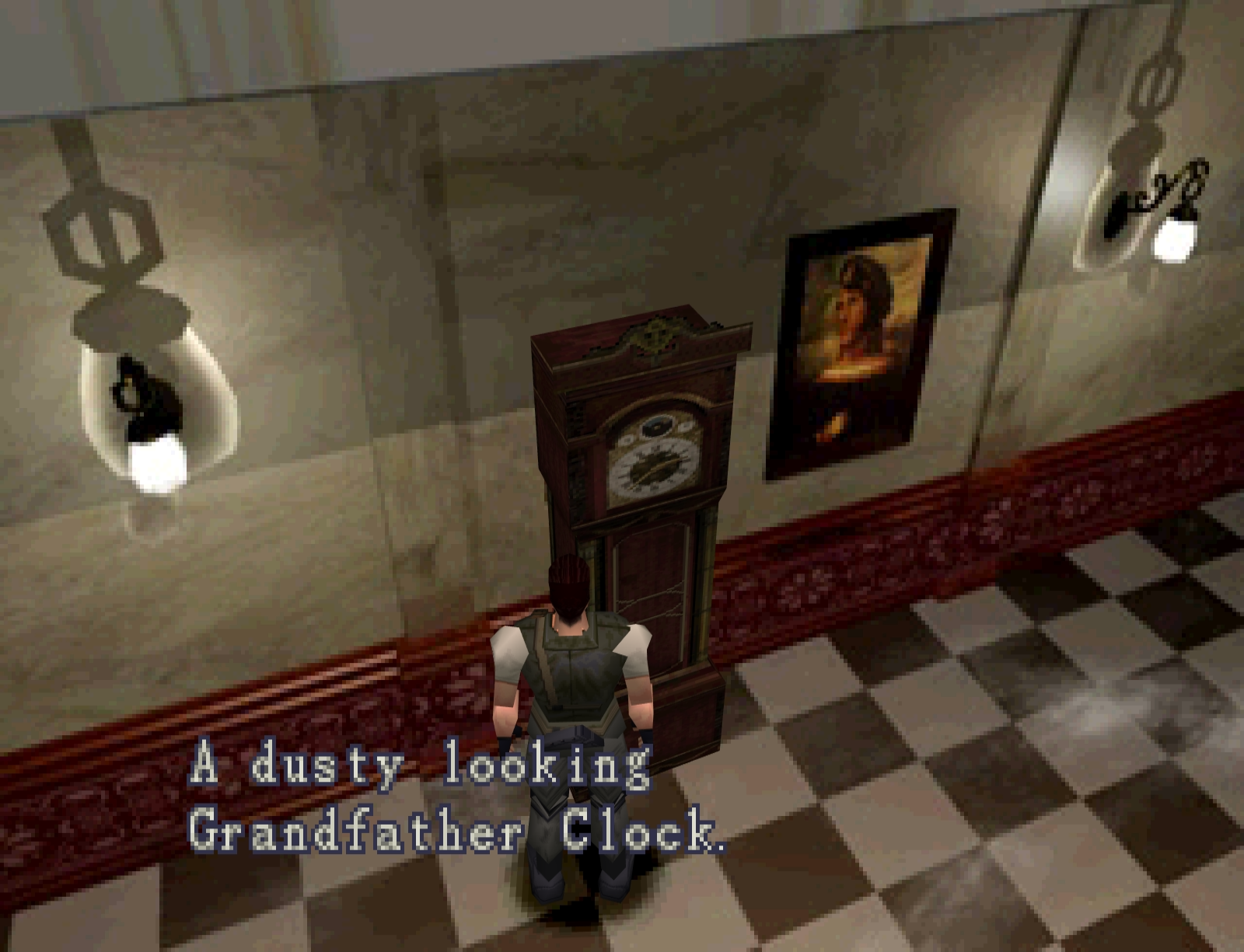
So far I’ve played the original Resident Evil with a mod that reinstates the auto-aim (present in Bio Hazard, as well as the Director’s Cut versions) and adds a quick turn function similar to Dino Crisis. I played a mod called “True Director’s Cut” which mainly restores the uncut and in-color FMV’s, but also adds a couple other cut tidbits and optionally, restores the original soundtrack to the Dual Shock edition. Then I played the actual Director’s Cut Dual Shock just to experience the soundtrack for myself. Finally, I played the original Japanese release of Bio Hazard.
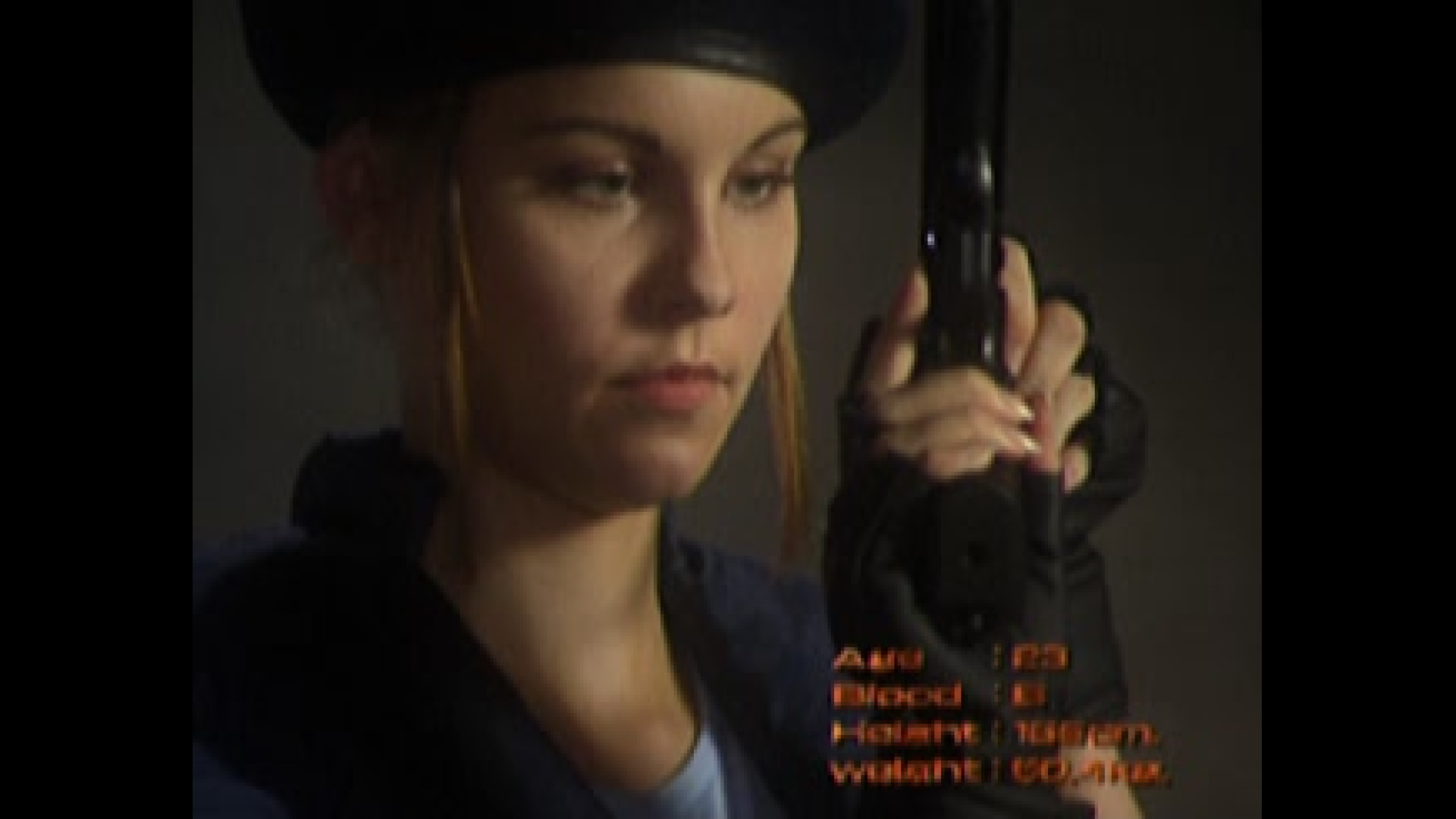
Since I played the game so many times, of course I messed with the emulator’s graphical settings. As I’ve posted before, unfortunately Duckstation doesn’t crop screenshots unless they are set to “Internal Resolution”. This is fine if you play at a higher internal resolution, but at 1x (original) you end up with tiny screenshots. If you use Box Downsampling (my favorite way to play games like this, with pre-rendered backgrounds and 3D characters), you only get the down-sampled resolution (I like 2x, so the screenshots are 640×480). And FMV’s–which are generally 320×240–always screenshot at their native resolution with the Internal Resolution screenshot setting. For this post, I’m going to show screenshots sequentially as far as gameplay progression, so there will be a variety of aspect ratios and image sizes as I switch between game versions and graphics settings. If you see pillarboxing in this post, I used Screen Resolution; if they are cropped, that’s Internal Resolution.
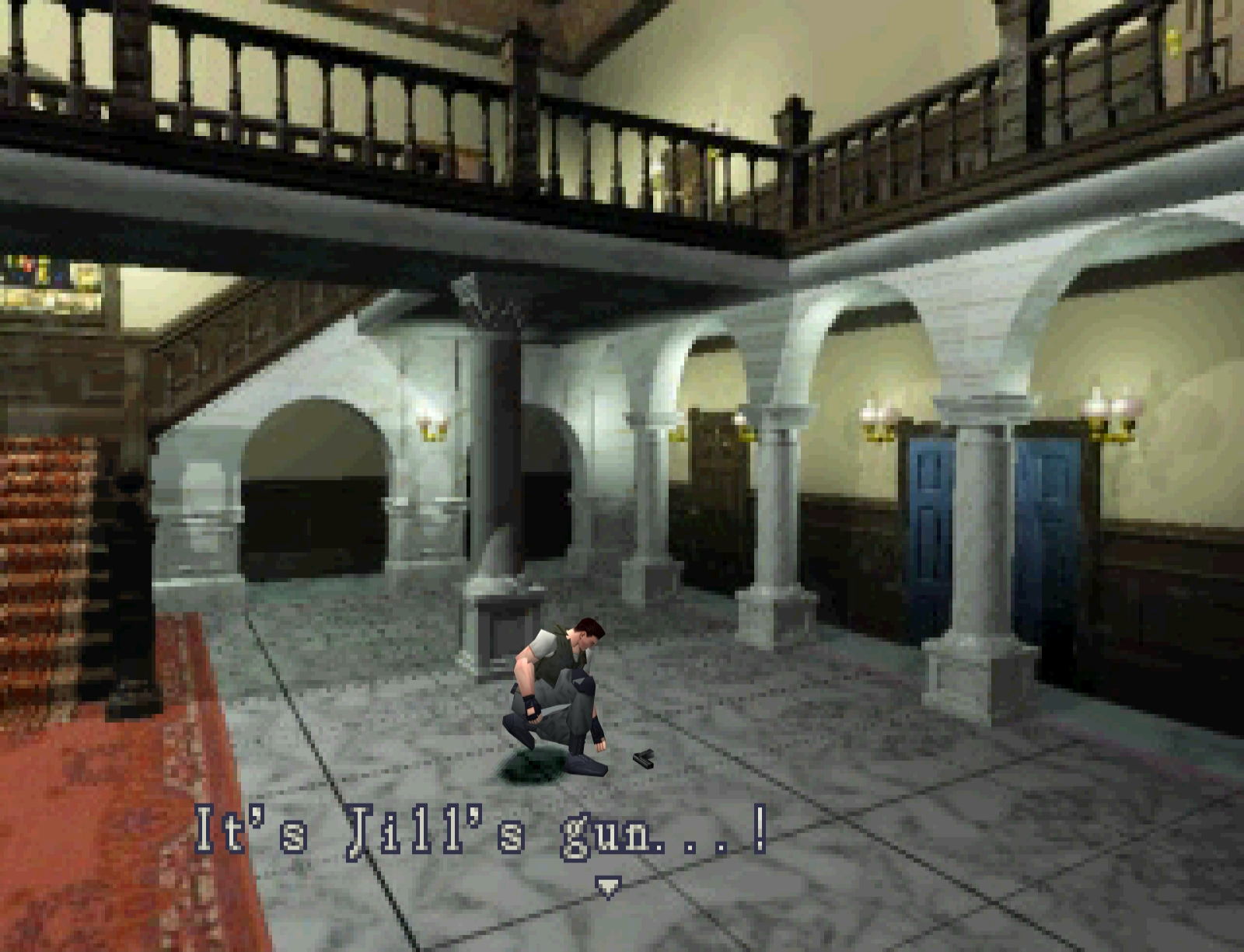
Syphon Filter had fairly poor voice acting, but it has nothing on Resident Evil. The entire game was recorded and filmed in Japan, and it doesn’t appear that the script was written by a native English speaker.
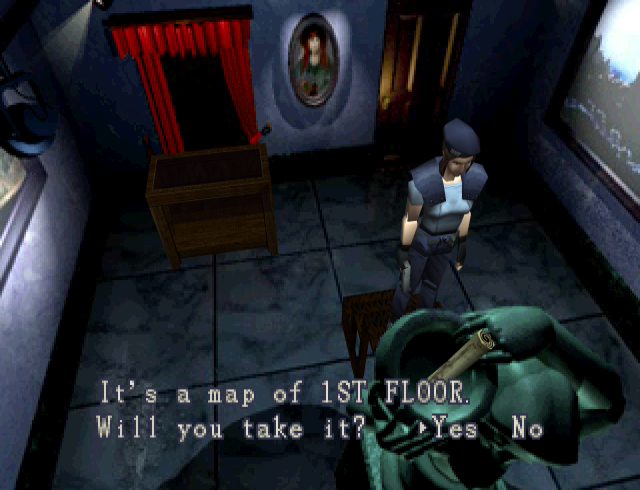
The English translation of written text is also a bit rough. It’s not that they really got anything wrong (as far as I can tell); it’s just a literal translation that isn’t very natural.
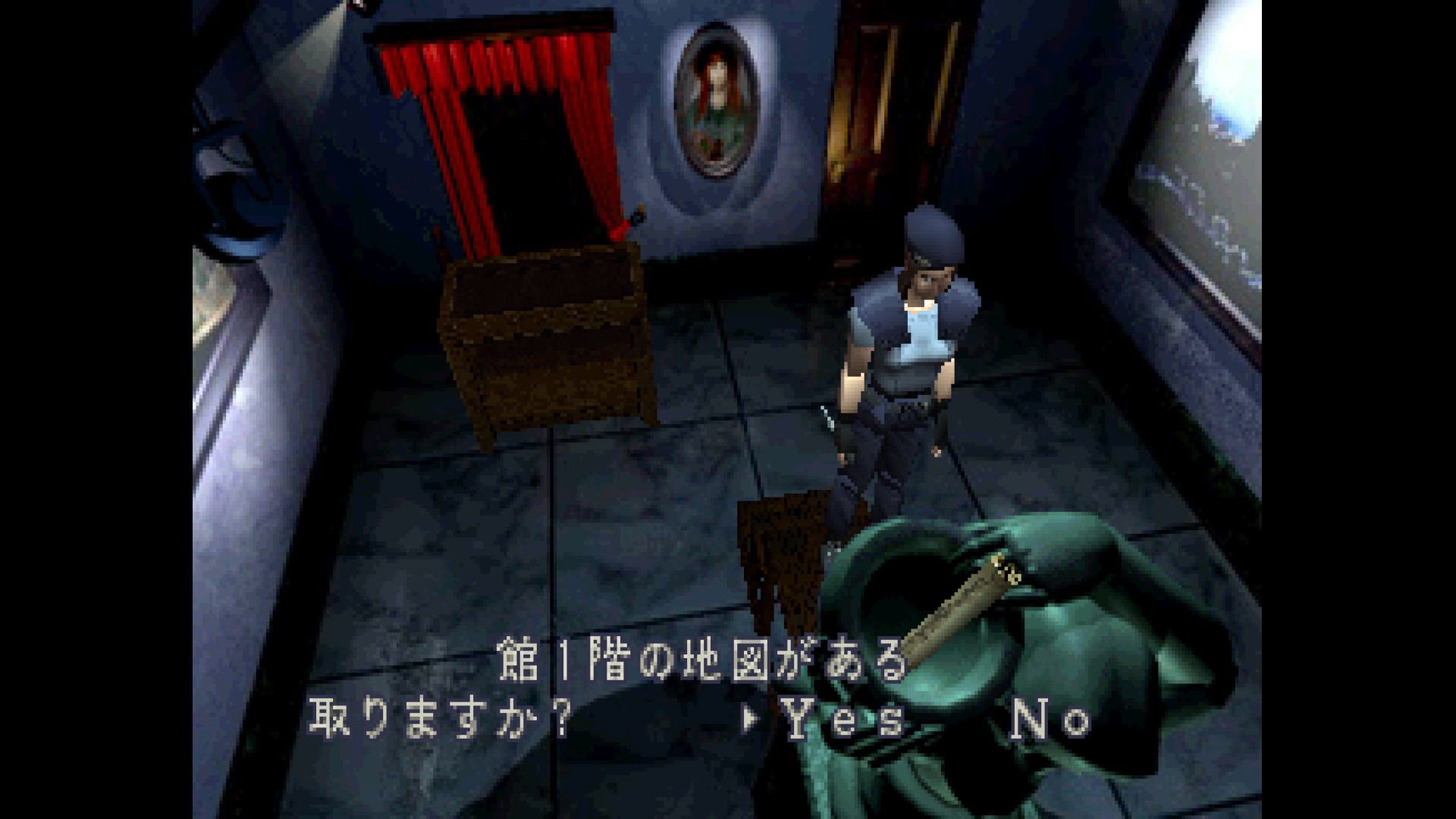
So among all the gameplay differences between versions and regions, I was also keeping an eye out for the translation. Bio Hazard ended up being my favorite version; while the American versions feel like a poorly-written game with bad actors, with the Japanese subtitles it feels like a Japanese B-movie.

If you’ve read even one article on this site, you can probably tell that I enjoy comparisons. However, as usual, this isn’t going to be a deep dive into the differences between versions or emulator settings; I just want to express the feeling of the game with moments that I felt were noteworthy.
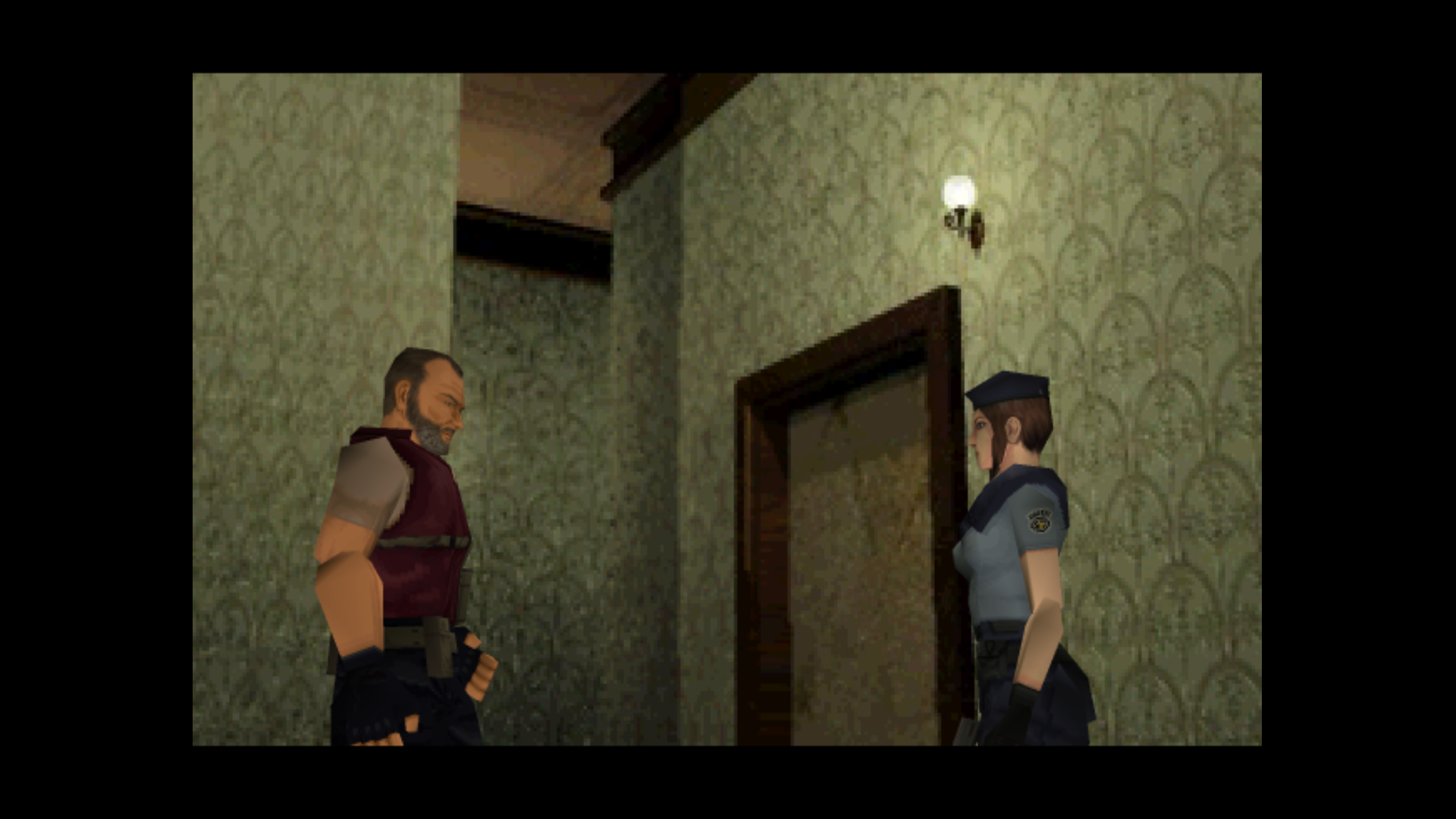
It’s the infamous “Jill sandwich” scene! I wish this game had subtitles on the spoken dialog to preserve those moments forever.
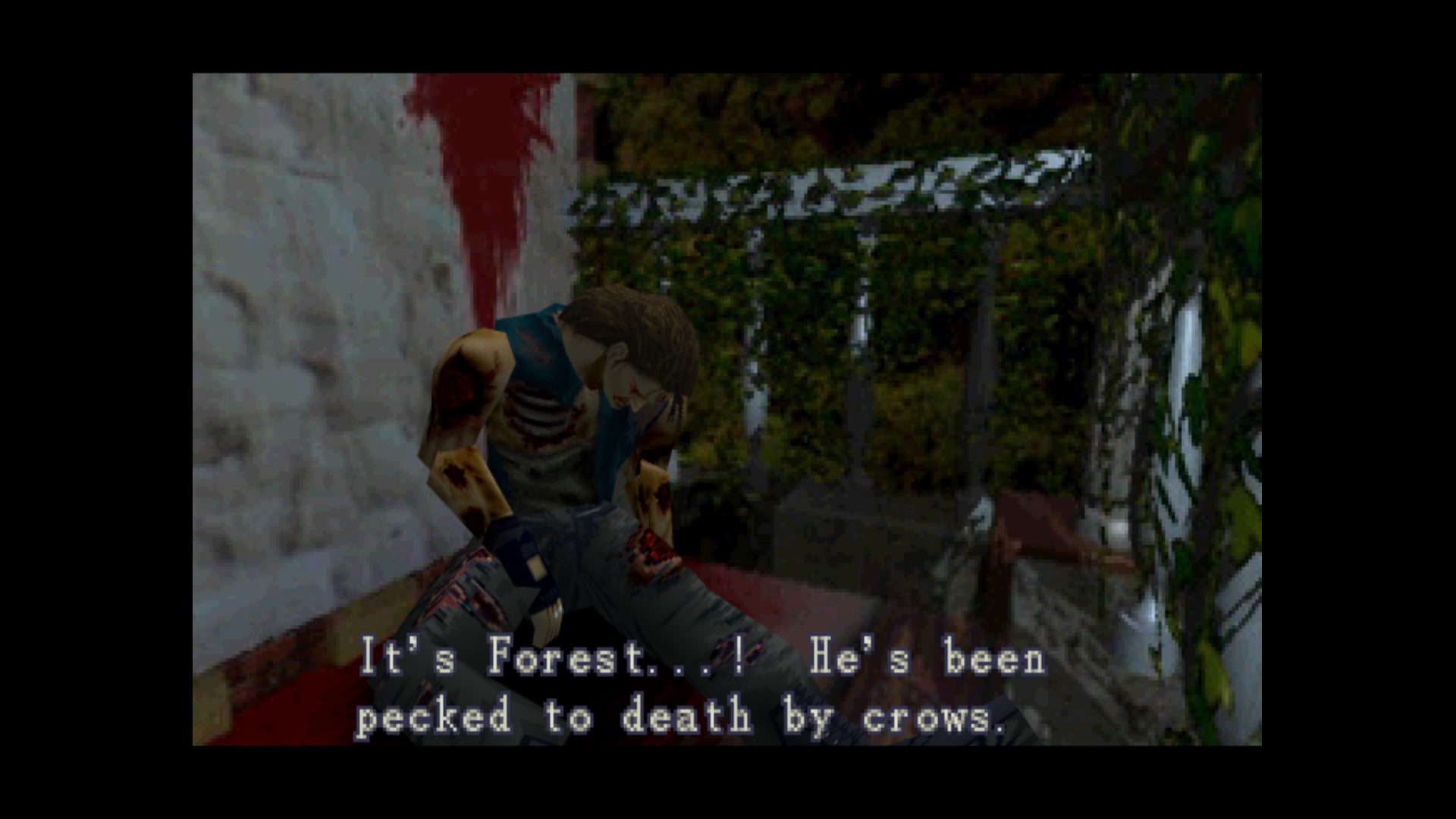
Upon release this game was considered very realistic, and the violence and gore were essentially unheard of. As video games started getting more violent and realistic through the 90’s, there were many calls to restrict or ban them due to supposedly causing societal issues. Whatever happened to that? It’s hard to tell if video games fucked our society into its current situation or if we’d be in the same place if violent video games never existed.
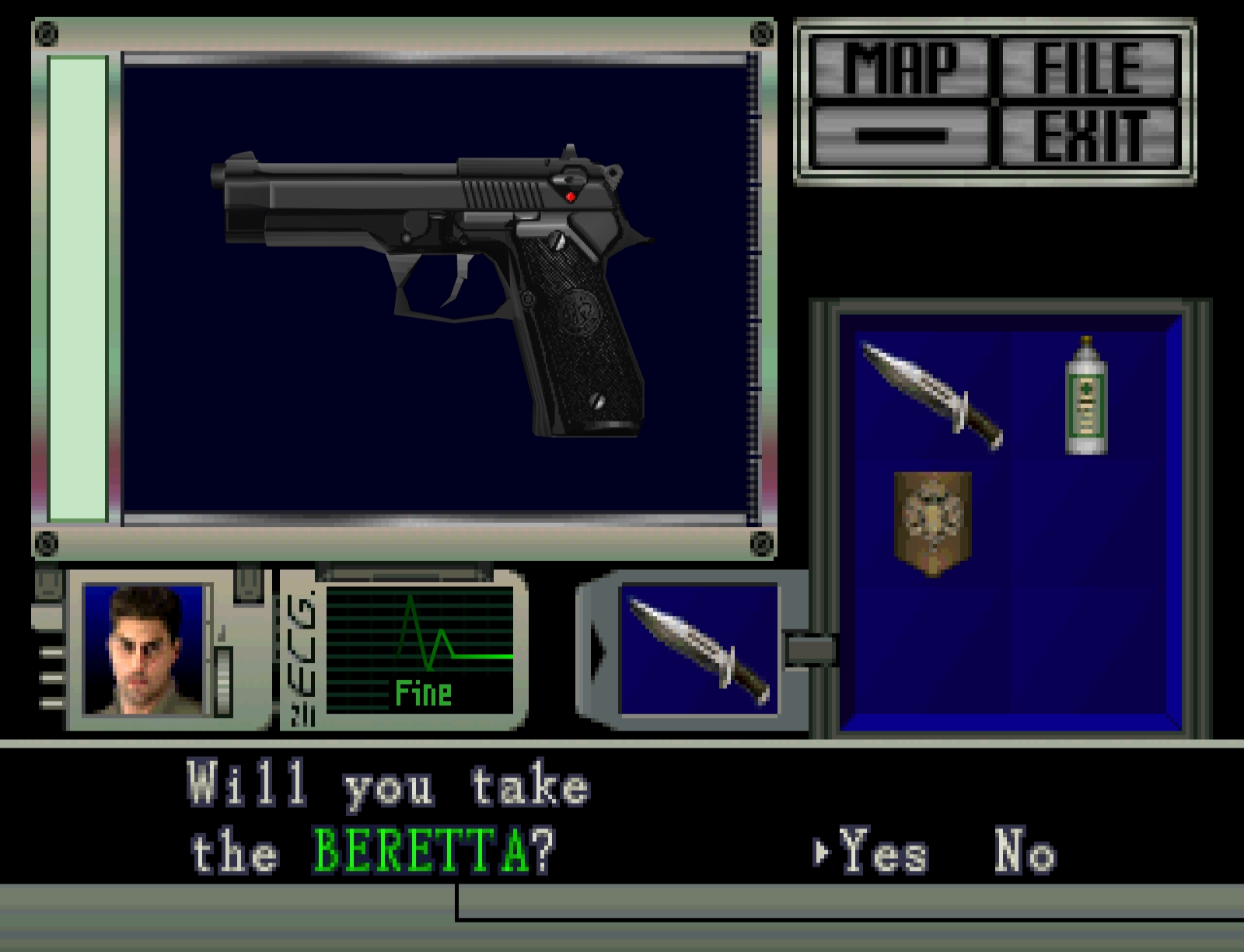
One of the things that this game does better than its sequel is the inventory screen. While RE2 switched the item close-ups to simple sprites, RE1 uses fully 3D rendered models with high-quality textures that look especially good with the internal resolution cranked up. Check out the cool baked-in lighting effects.
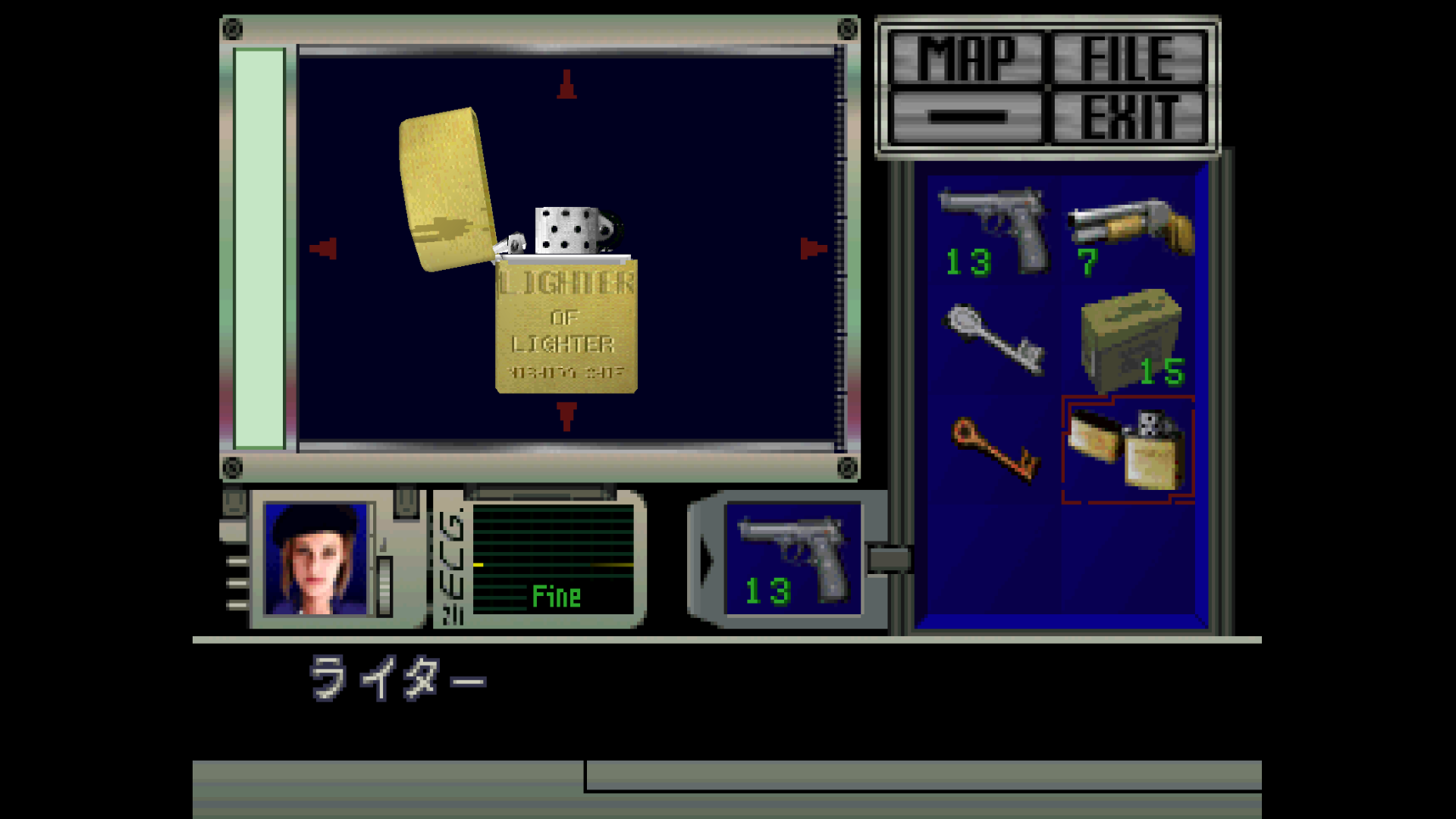
The increased internal resolution lets you see some things the developers probably expected we would never see. I love how the lighter has LIGHTER OF LIGHTER written on it.

Between the two playable characters, the overall game is essentially the same, but there are lots of small differences. In Jill’s story, she just sits down and plays Moonlight Sonata; in Chris’ story he has to recruit Rebecca to play it.
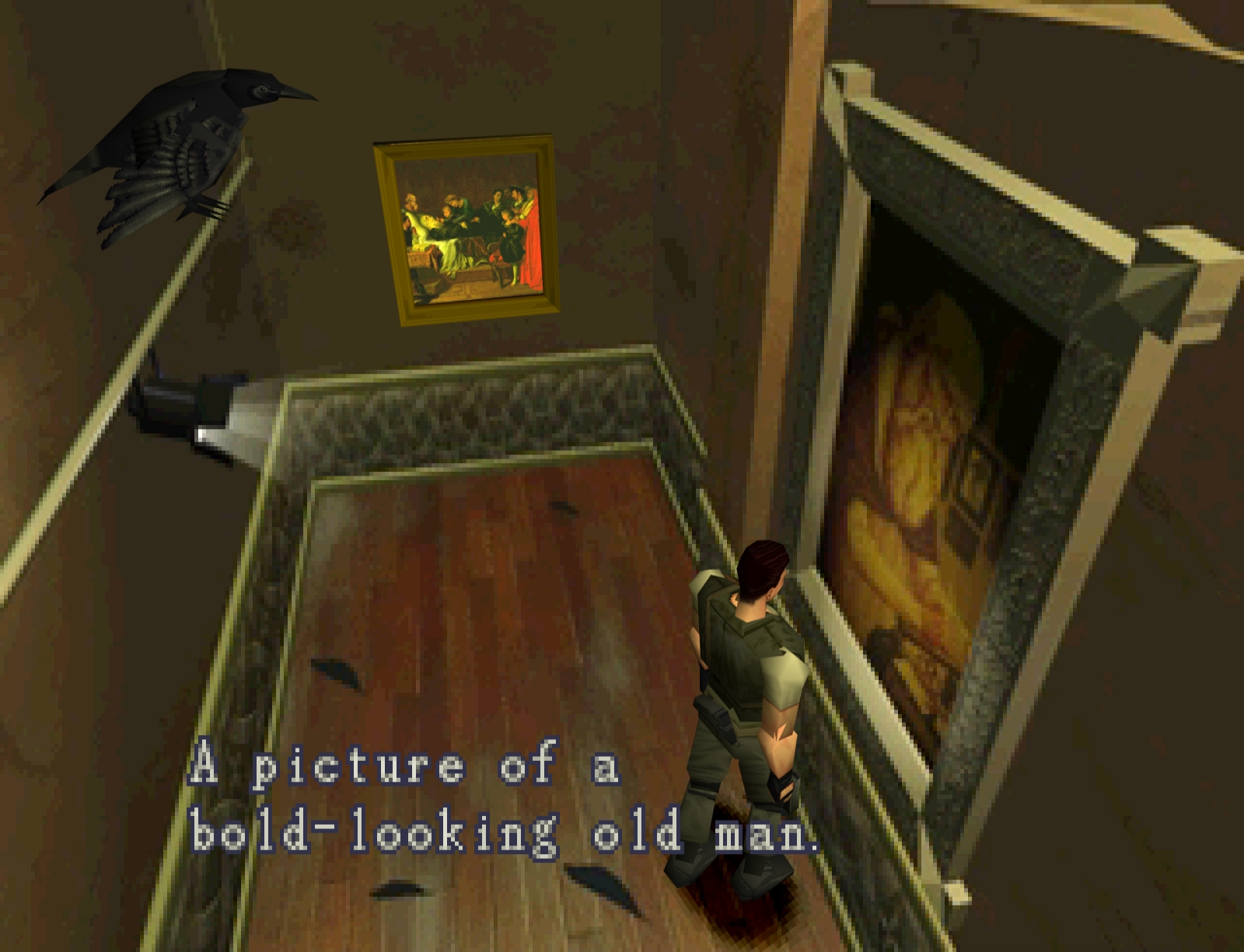
In contrast to Silent Hill which has incredibly obtuse puzzles, I enjoy the Resident Evil puzzles for their relatively simple and straightforward nature. You find this hall of portraits, and you have to press the switch below them in the correct order to unlock the one at the end.
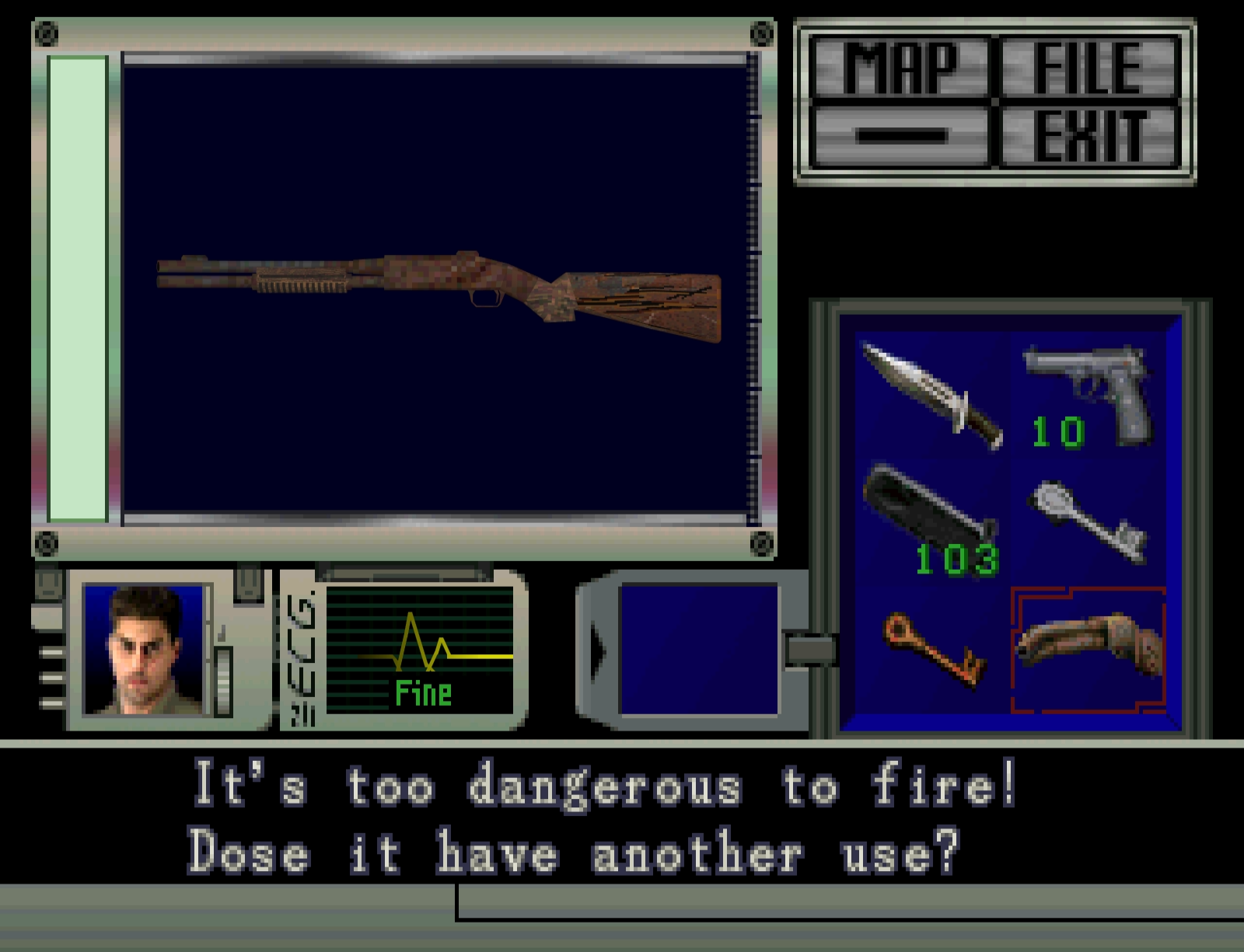
There aren’t many typos in this game; this one probably stands out the most. This is from the Director’s Cut Dual Shock version, so I’m a little surprised they never caught and fixed this after so many game revisions.

The low resolution is a little crunchy these days, but I think the overall art style of this game has held up very well. It’s true that the pre-rendered backgrounds are incredibly dated, but I think they give such an interesting style that’s evocative of this very specific time in gaming.
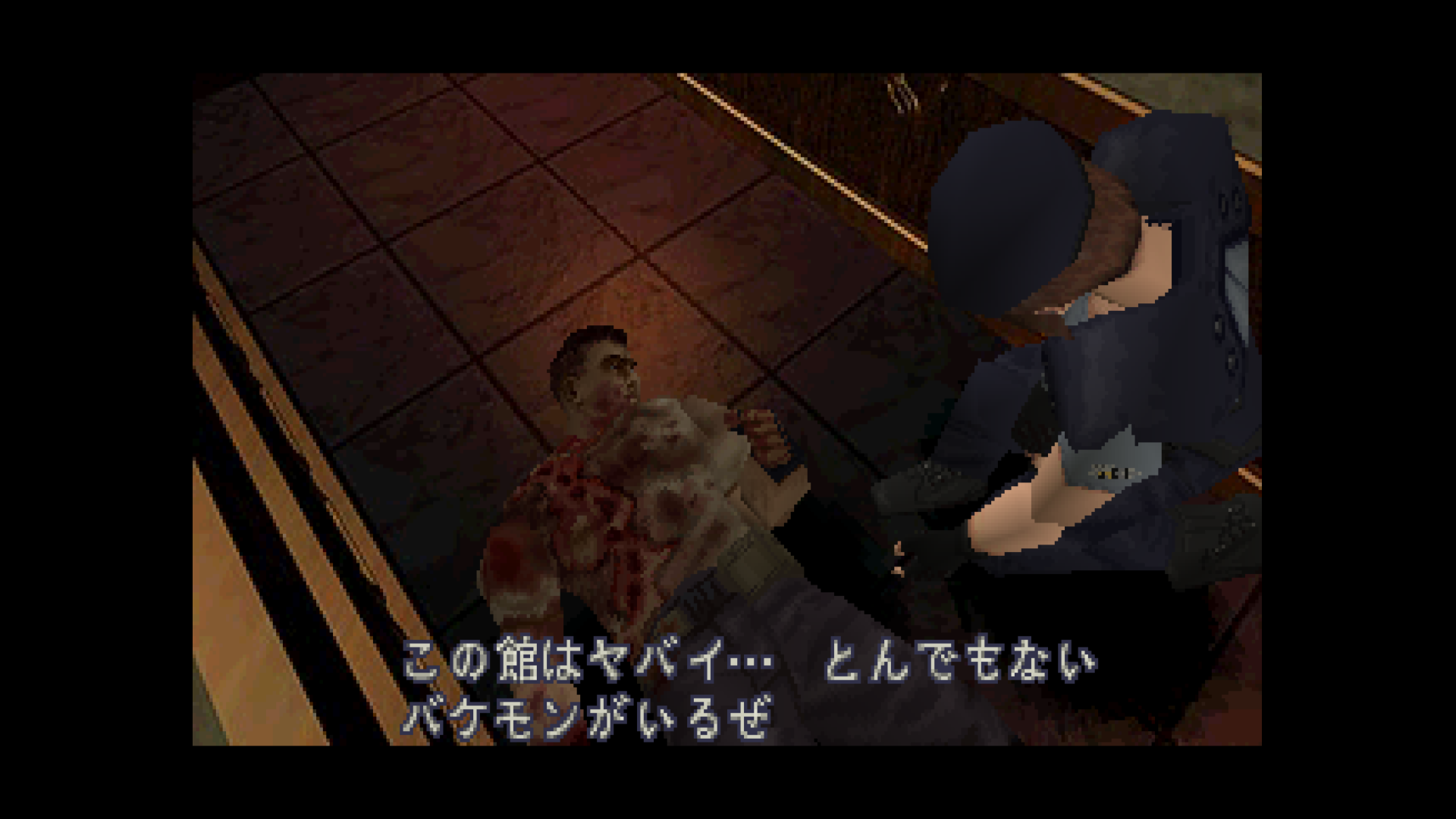
Another element making this game feel like a Japanese B-movie is the way the story sequences are presented; in contrast to RPG’s of the time that rarely or never moved the camera around Resident Evil gets up close with very cinematic angles. That’s also why Final Fantasy VII stunned on release in 1997; I remember being blown away just seeing the environments in magazine previews for that game.

The last days of an old technology are better than the first days of a new technology. 3D camera angles were in their infancy in 1996; that year’s Super Mario 64 blew minds for having a 3D camera that was actually pretty damn good when everyone else could barely figure out how to make it work in the first place. The Resident Evil series used fixed camera angles better than any 3D camera devised up to that point, and I think it still stands up today.
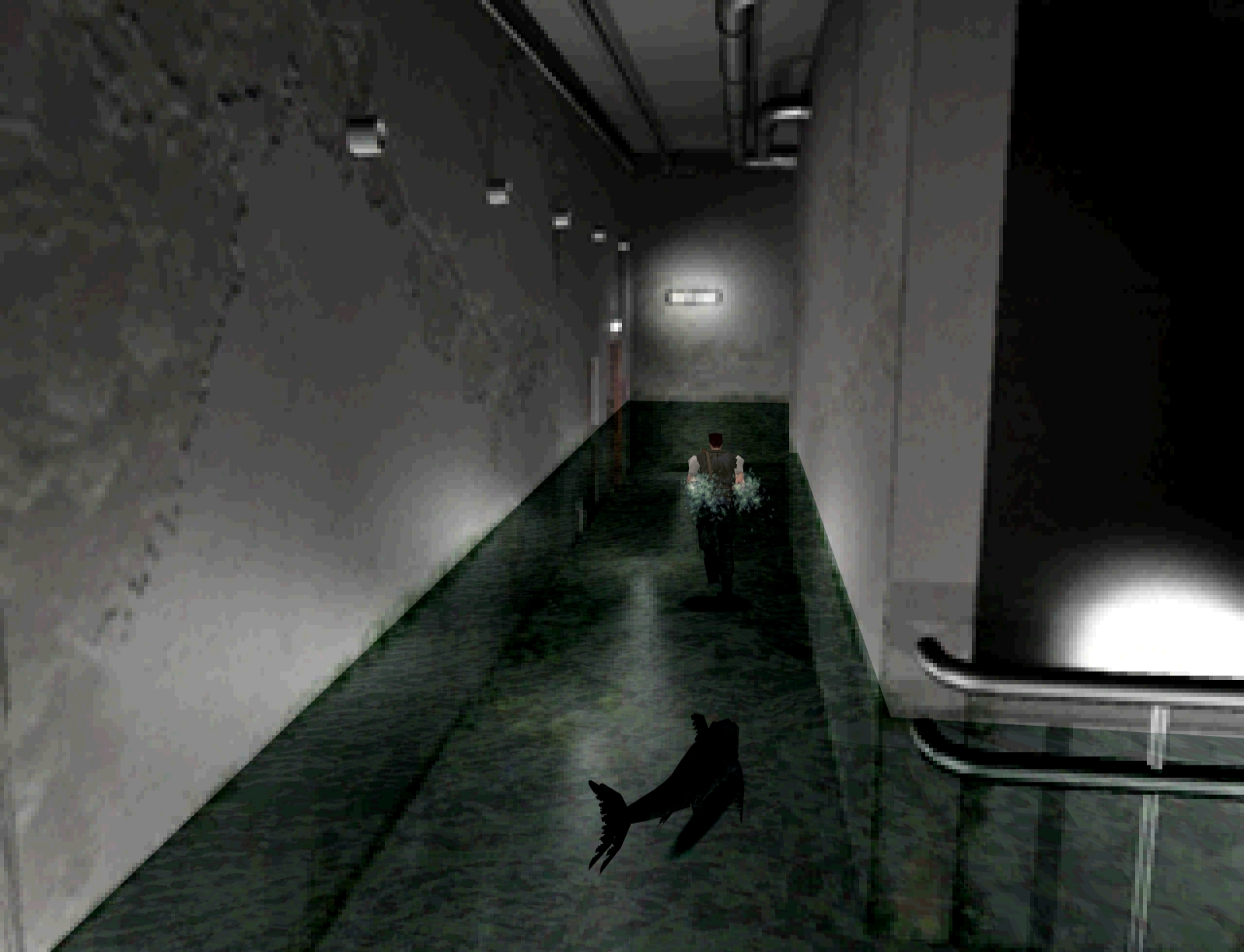
Yet another cheesy B-movie element. Really, there are sharks swimming in a shallow pool in a flooded hallway? Where do they keep them when they are actually using the basement? The vast majority of sharks live in salt water, although there is one species of freshwater shark in North America (the bull shark). Who feeds and takes care of these things?

And then, once you drain the water, those poor saps just flop around for the rest of the game. As I’m sure you are aware, sharks are fish, which means they breathe water through gills. Take a fish out of water and it can’t breathe, so it has only minutes until it dies. Maybe the developers thought it was scarier if they just flapped around forever? Or maybe the sharks are infected with the T-Virus and can’t die?!?
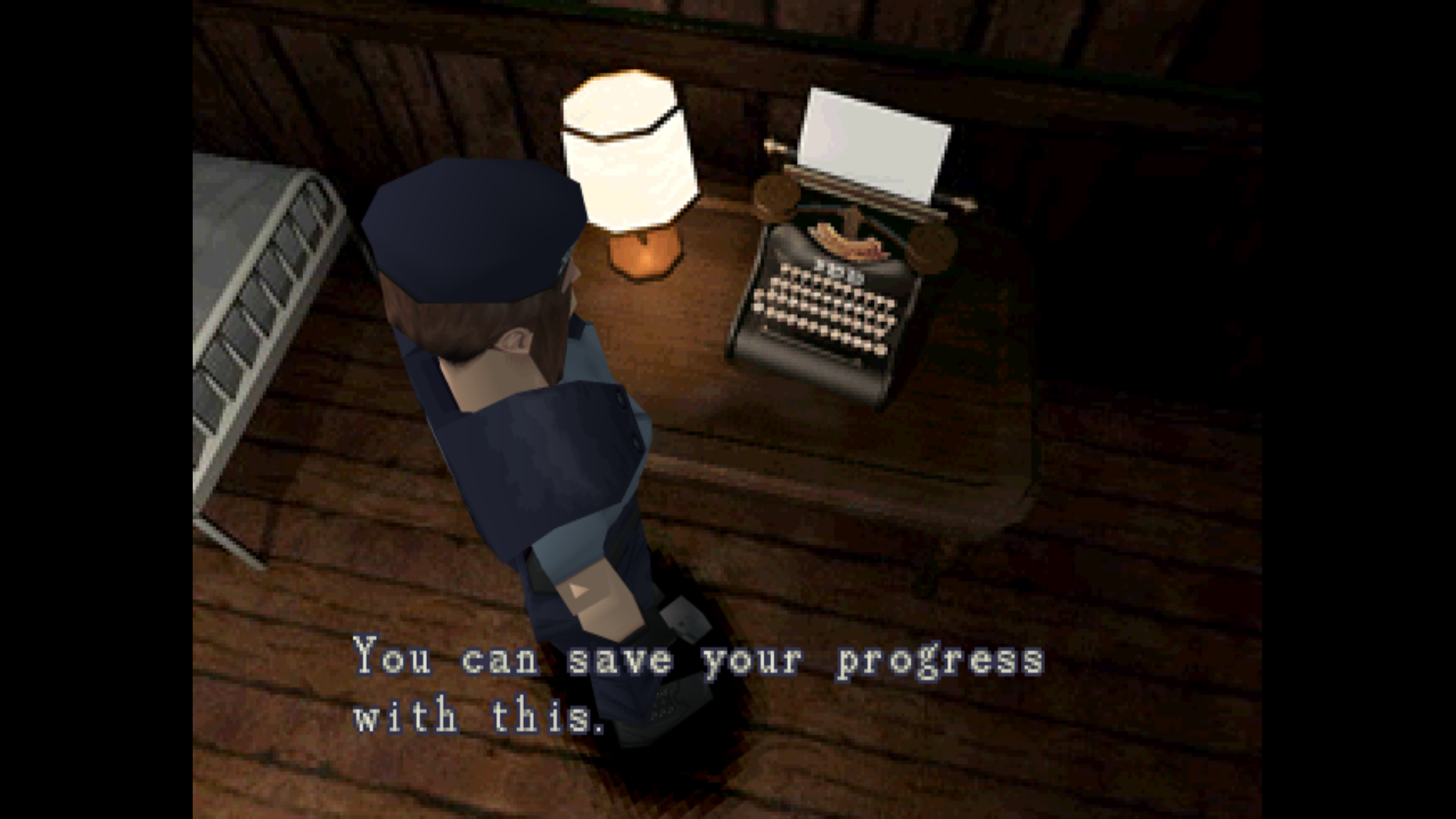
Deep in the game, no matter how many times you save, it still reminds you that you can save with a typewriter.
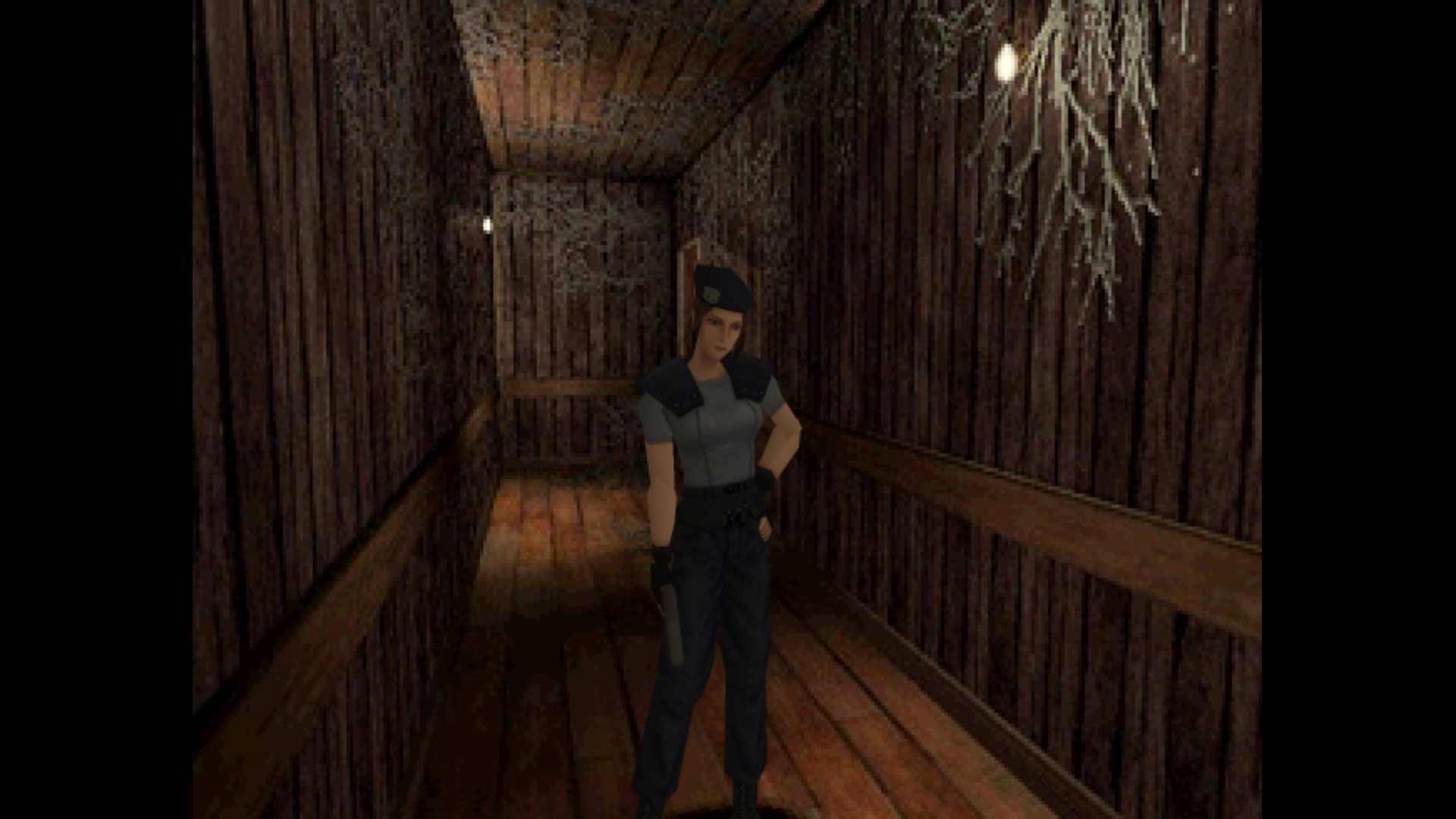
The idle animations are great; each character has their own thinking pose. Little details like this show how much love and care went into the creation of this game. I was recently watching the special features on the Resident Evil Blu-ray set, and was pleasantly surprised that both Milla Jovovich (“Alice”) and Sienna Guillory (“Jill Valentine”) commented about how they loved how Jill poses and walks in the game.

Man, on one of my plays I completely forgot to get the red gem and thus the Colt Python, and almost ran out of ammo at the end of the game. And that was even with using a Gameshark code to enable item box everywhere, which makes the game so much more enjoyable.
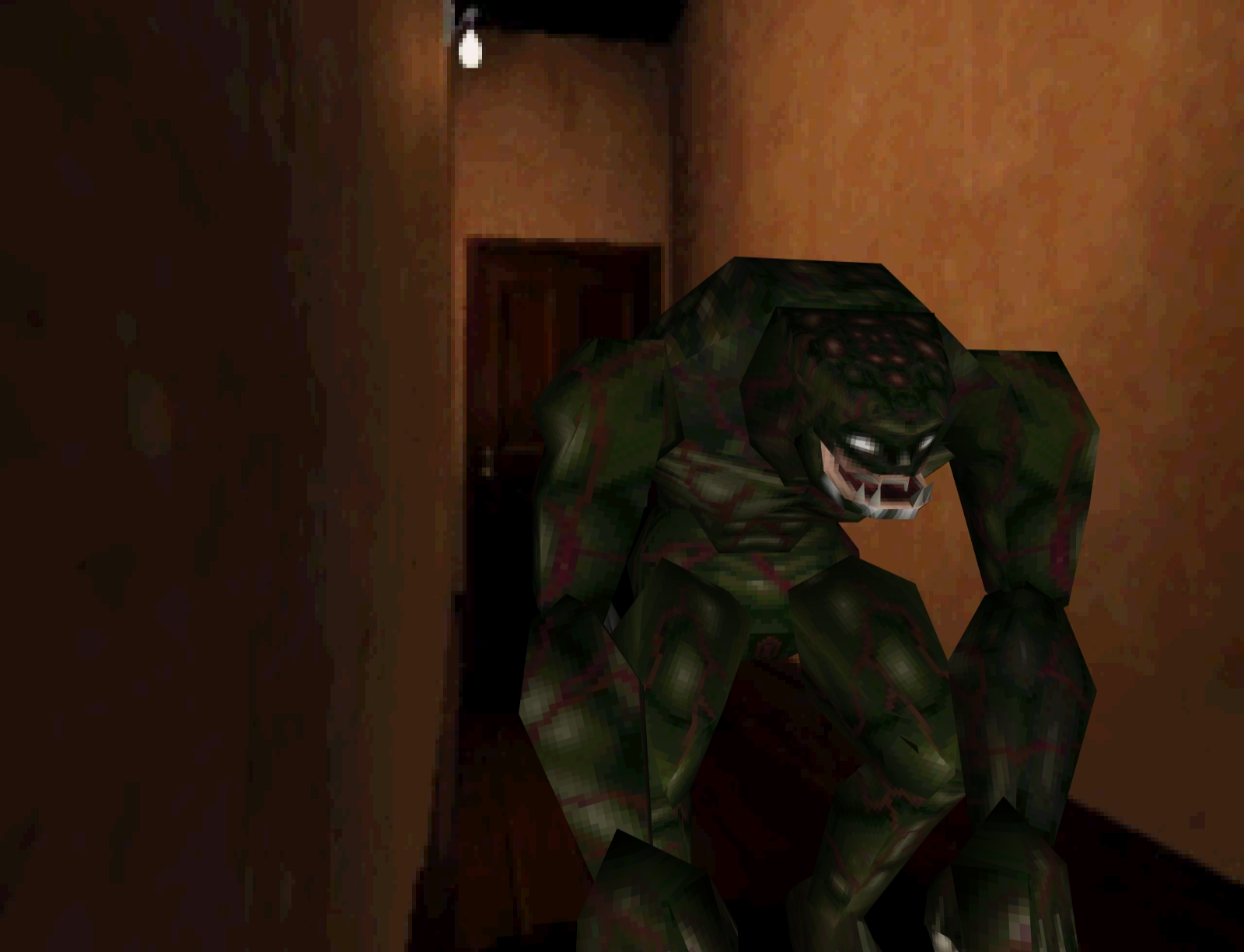
I know they are supposed to be scary, but the Hunter is so cute that it’s almost funny. It was great when I opened this door and it was just chilling there, not even noticing me.
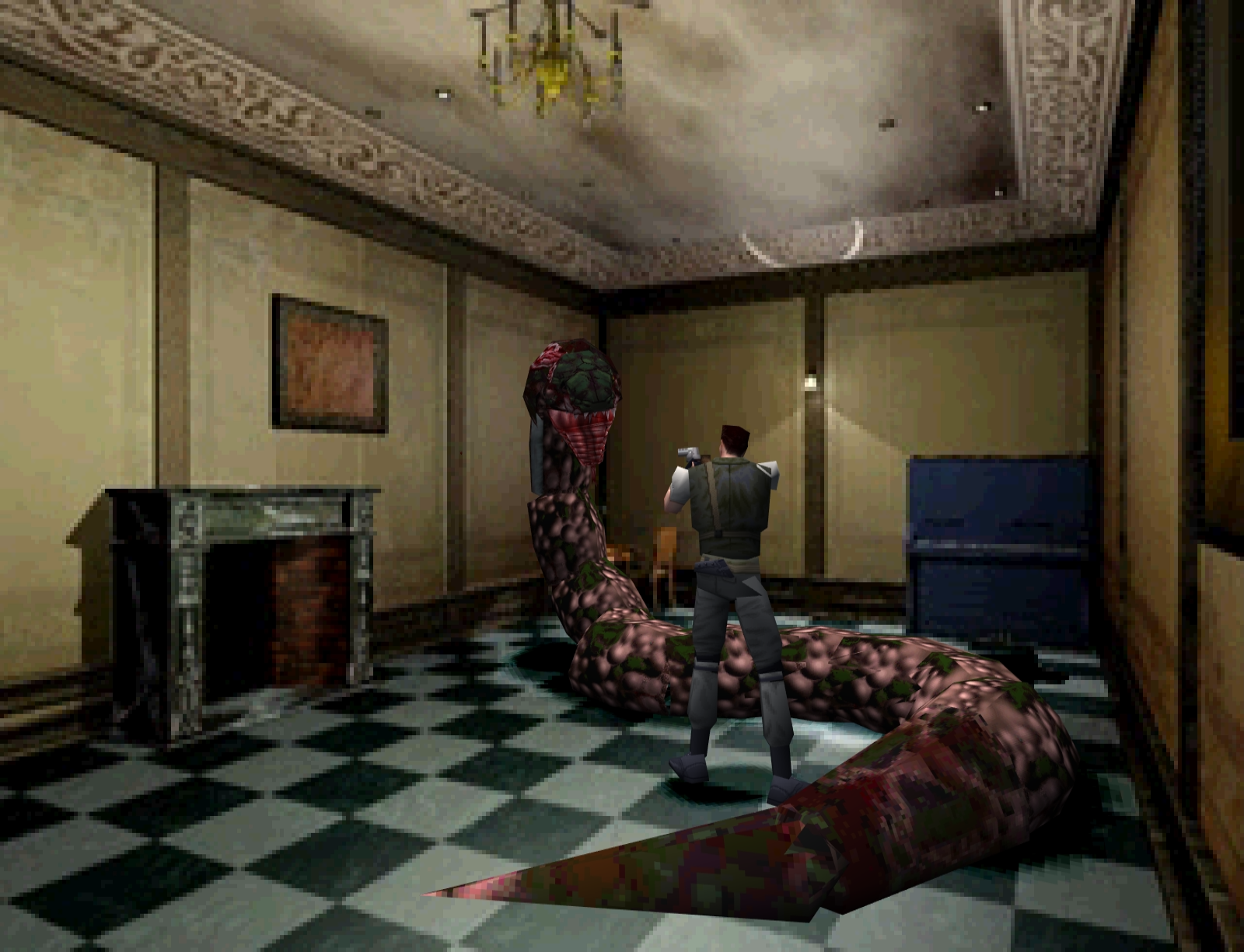
The boss fights are pretty fun–as long as you have auto-aim turned on. Without quick turn or auto aim, the slow movement (especially as Jill) makes boss fights very frustrating, as the enemy can easily attack you while you are slowly turning around. I usually try to run away, hit R1 to quickly turn around, then unload before the boss gets too close.

Remember, if you want the best ending, do as Barry says: wait for him to drop you the rope!

There are lots of mirrors in this game, and they actually give you a proper “reflection” of your character, which is rare in video games. If you pay attention to mirrors in games, you’ll find that due to their computational complexity, they are rarely reflective at all. Also, here’s another example of a translation that’s not necessarily wrong or even bad, it just…could be better.

This scene should be familiar to anyone who has played the game. I have loaded so many save states at the beginning of this hallway trying to make it through here unscathed.
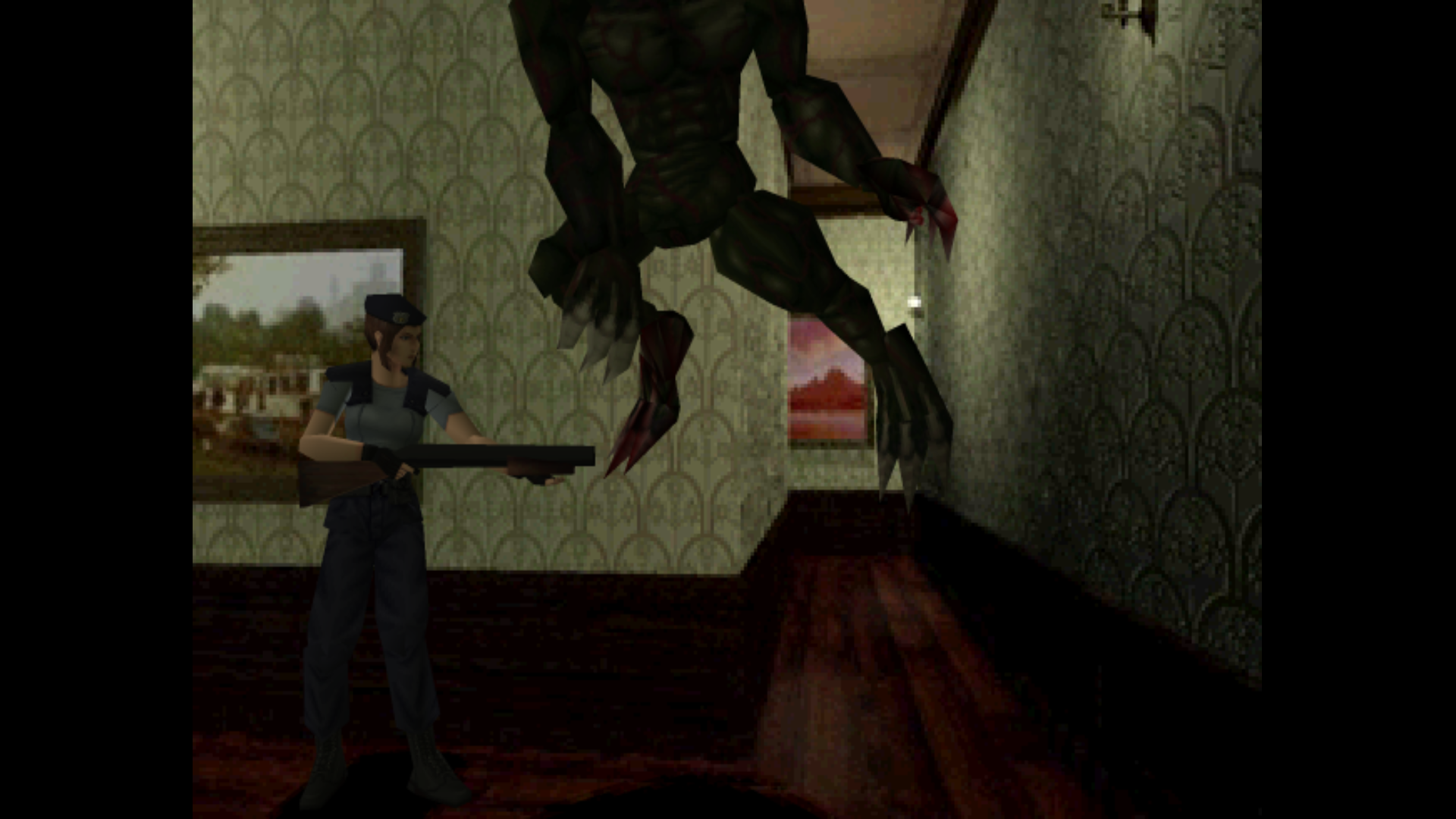
It’s a narrow area and the camera switch point is right in the area you’re fighting, plus this Hunter loves to jump. Argh!!
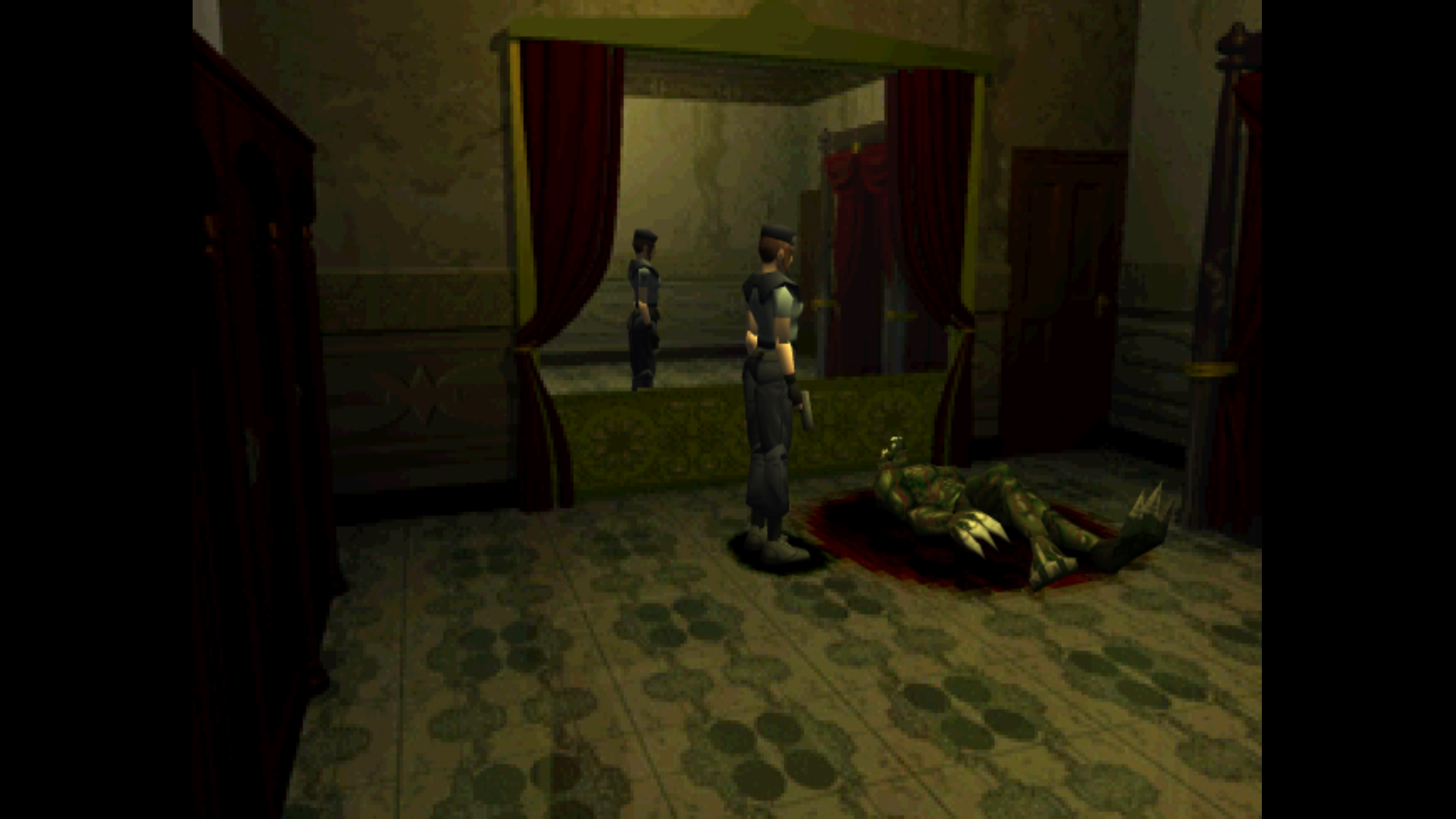
Another interesting mirror. This big one has a cool effect of letting you see the other side of the room simultaneously with the fixed camera angle.
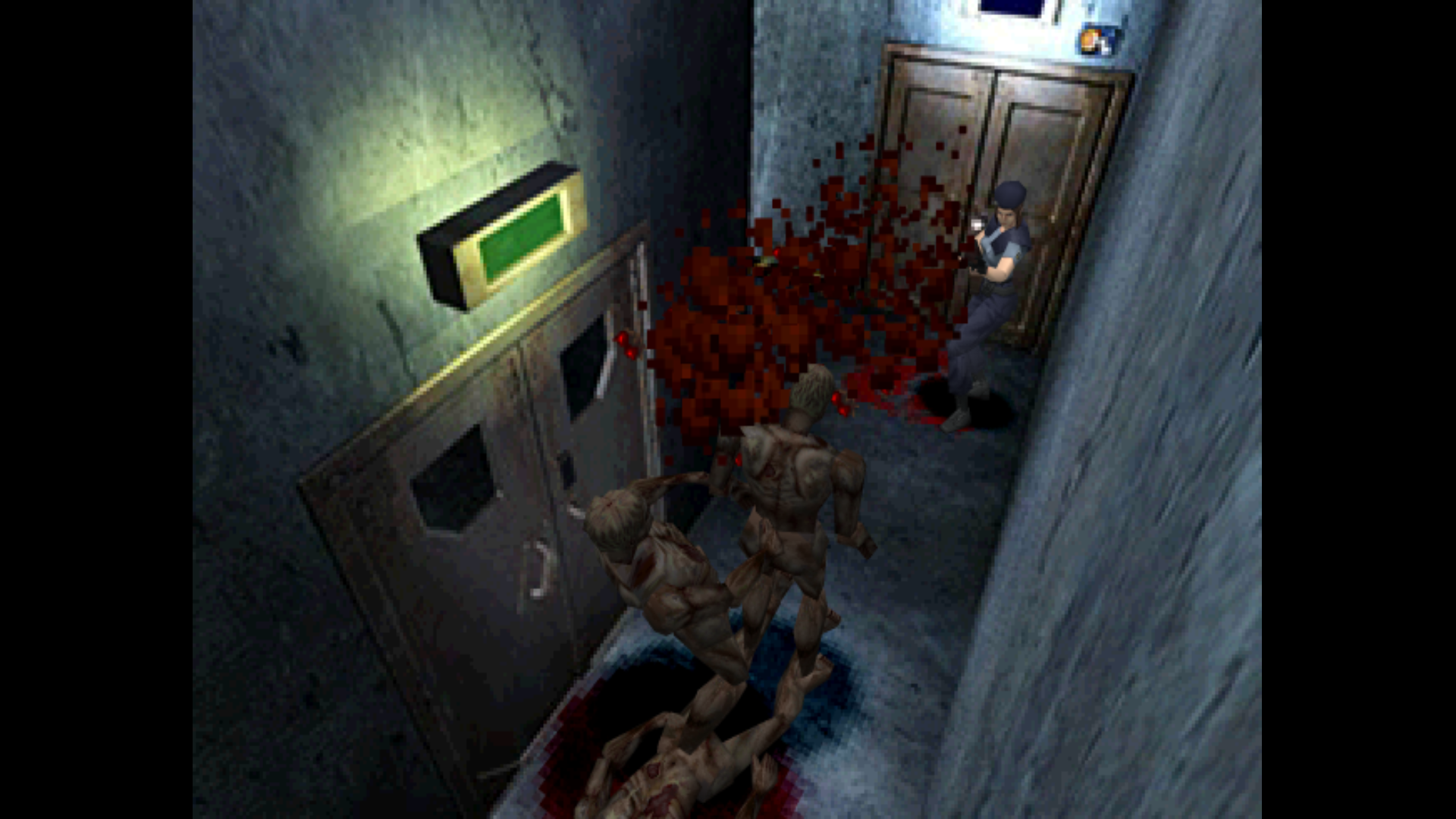
Gotta love the pixelated gore flying everywhere.
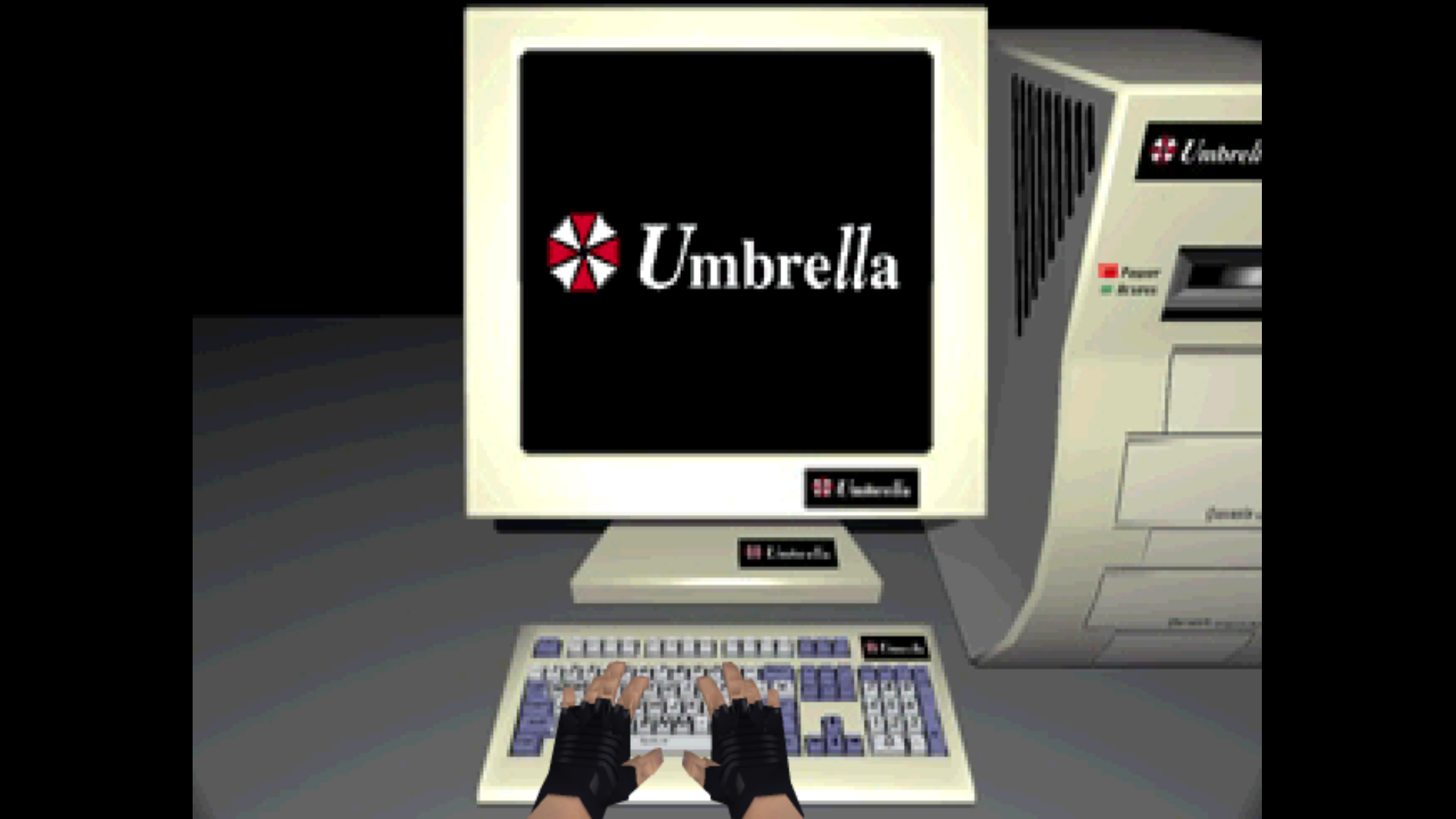
Umbrella logos everywhere…they won’t let you forget they own you.
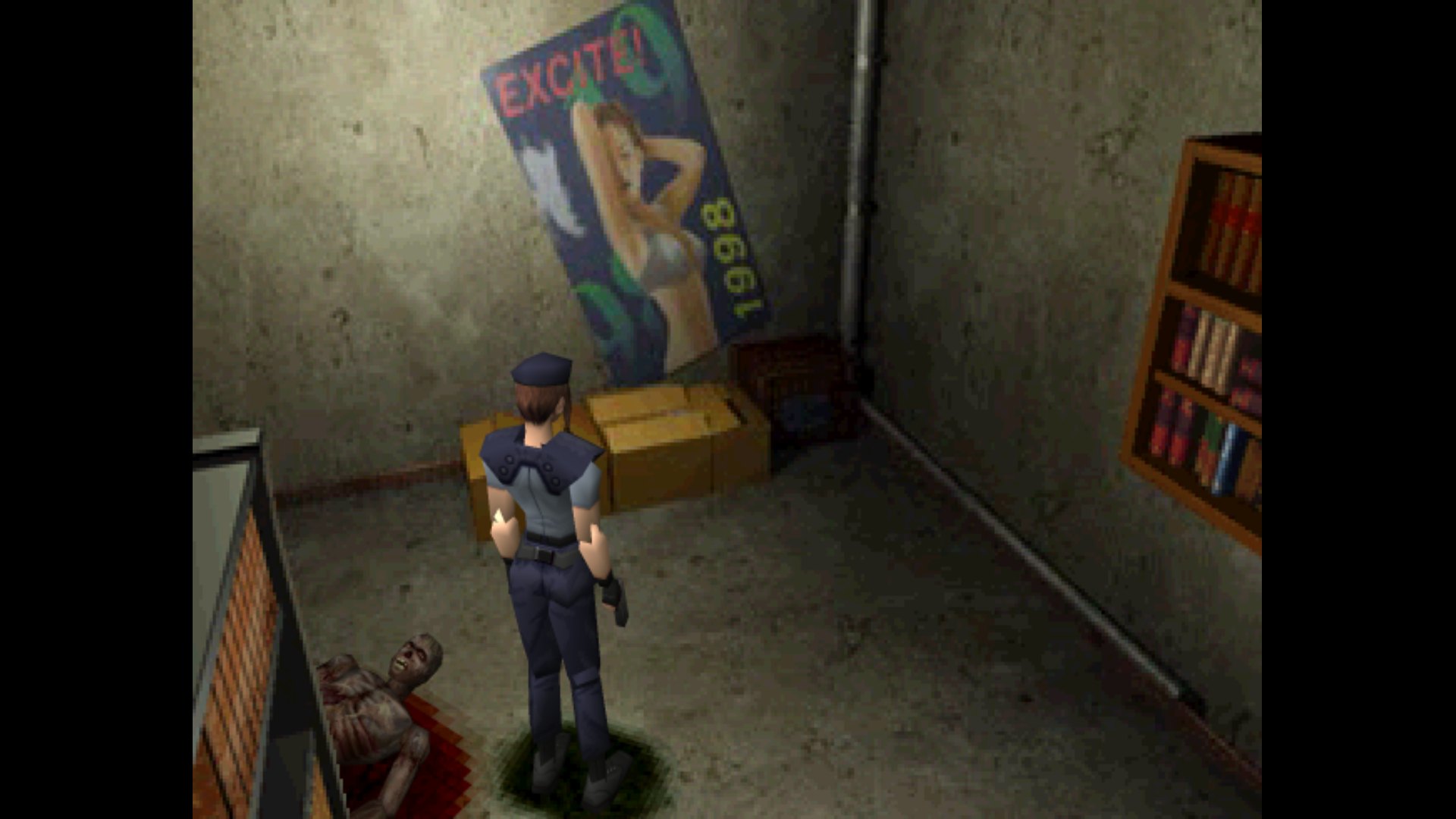
The dream of every 90’s teenager: the bikini model poster on the wall. EXCITE! 1998–whatever that means, I love it.
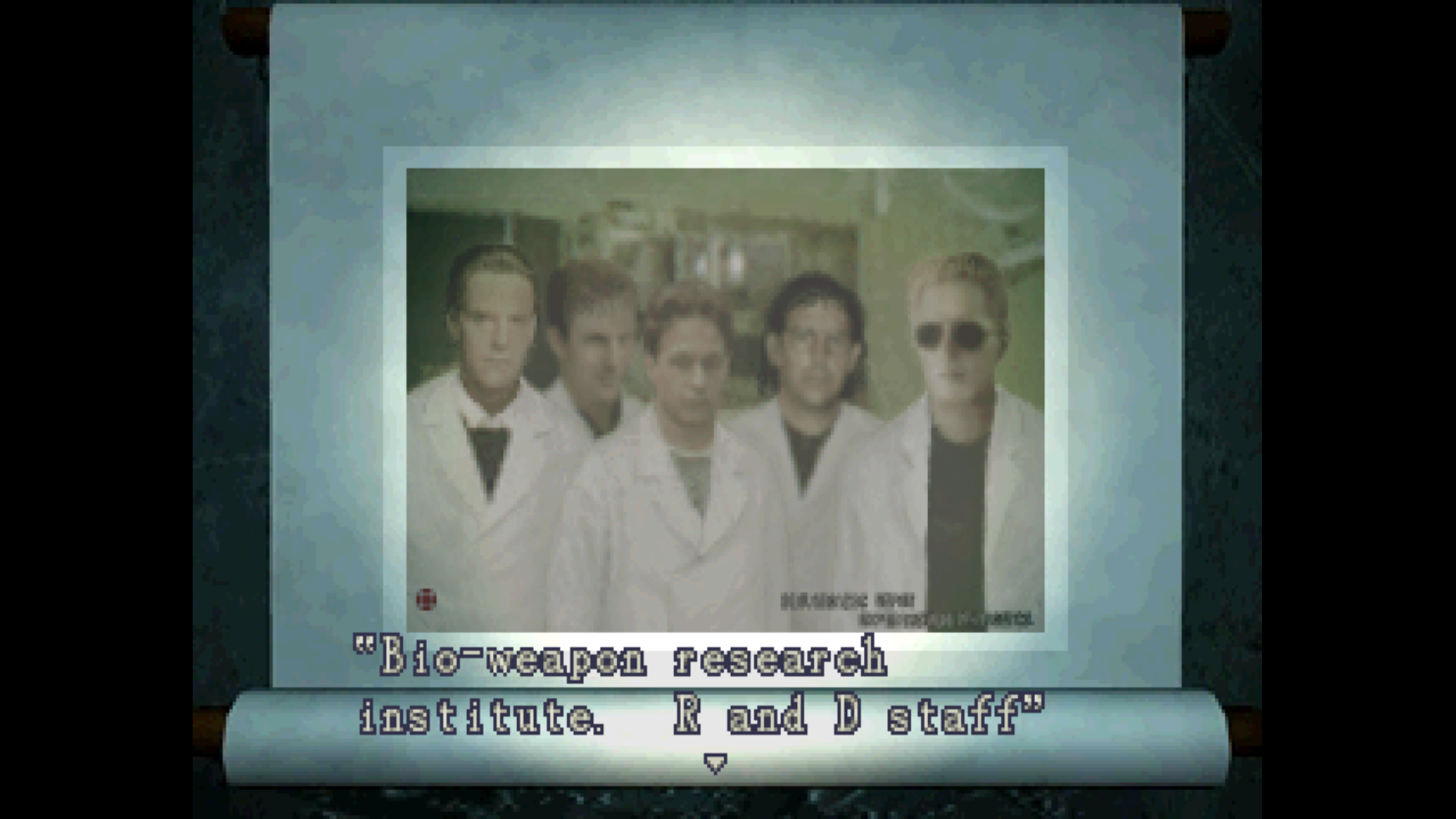
This one just blows my mind. In this lushly illustrated game, with plenty of well-crafted level designs, textures, and artwork throughout, they present this photo. Was it supposed to look like a badly composited photo?
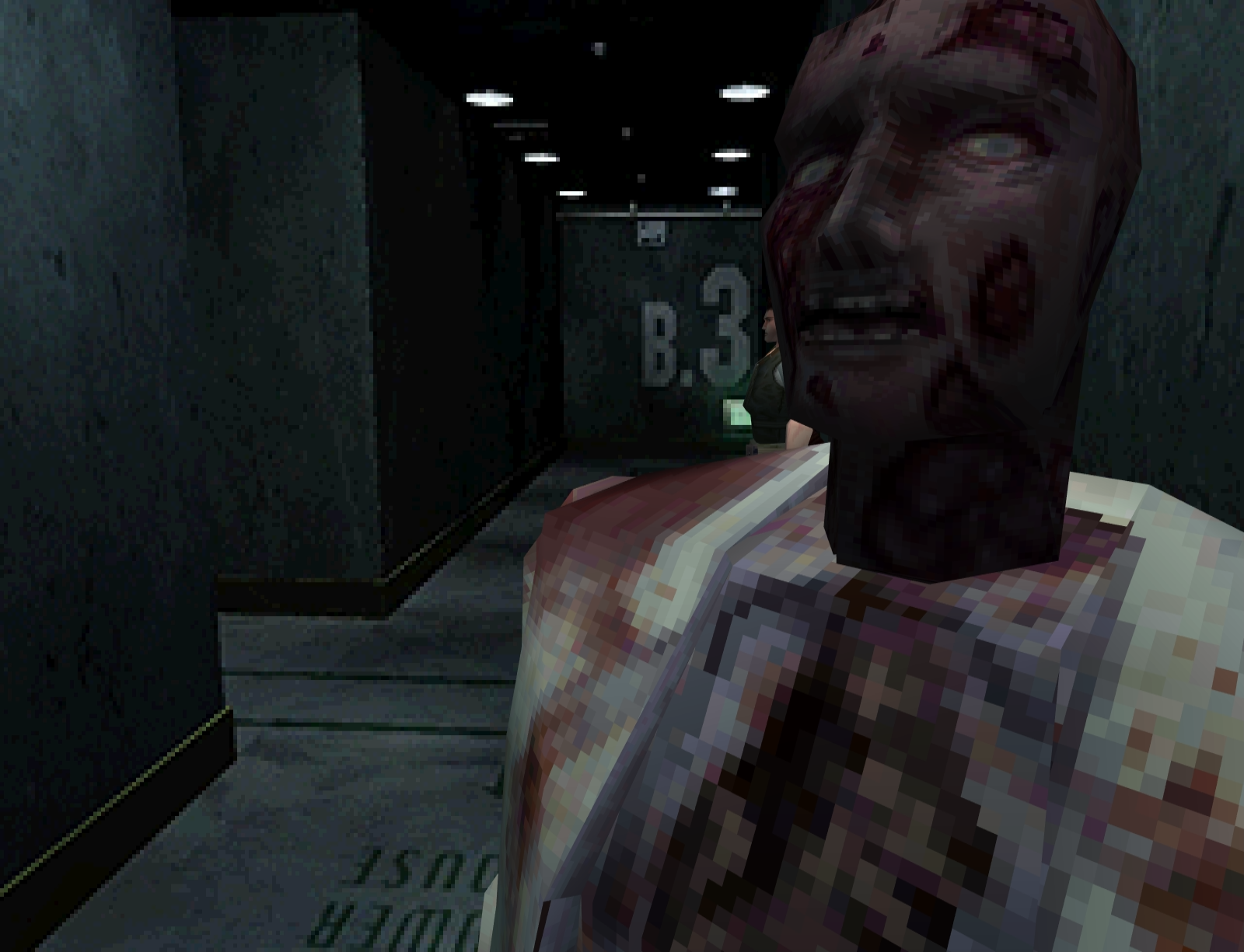
Sometimes the fixed angles can be unexpectedly comical, like when a slow-moving zombie blocks your fixed camera so you can’t see anything. I know they tried as hard as they could to make it terrifying, but that face just looks silly.
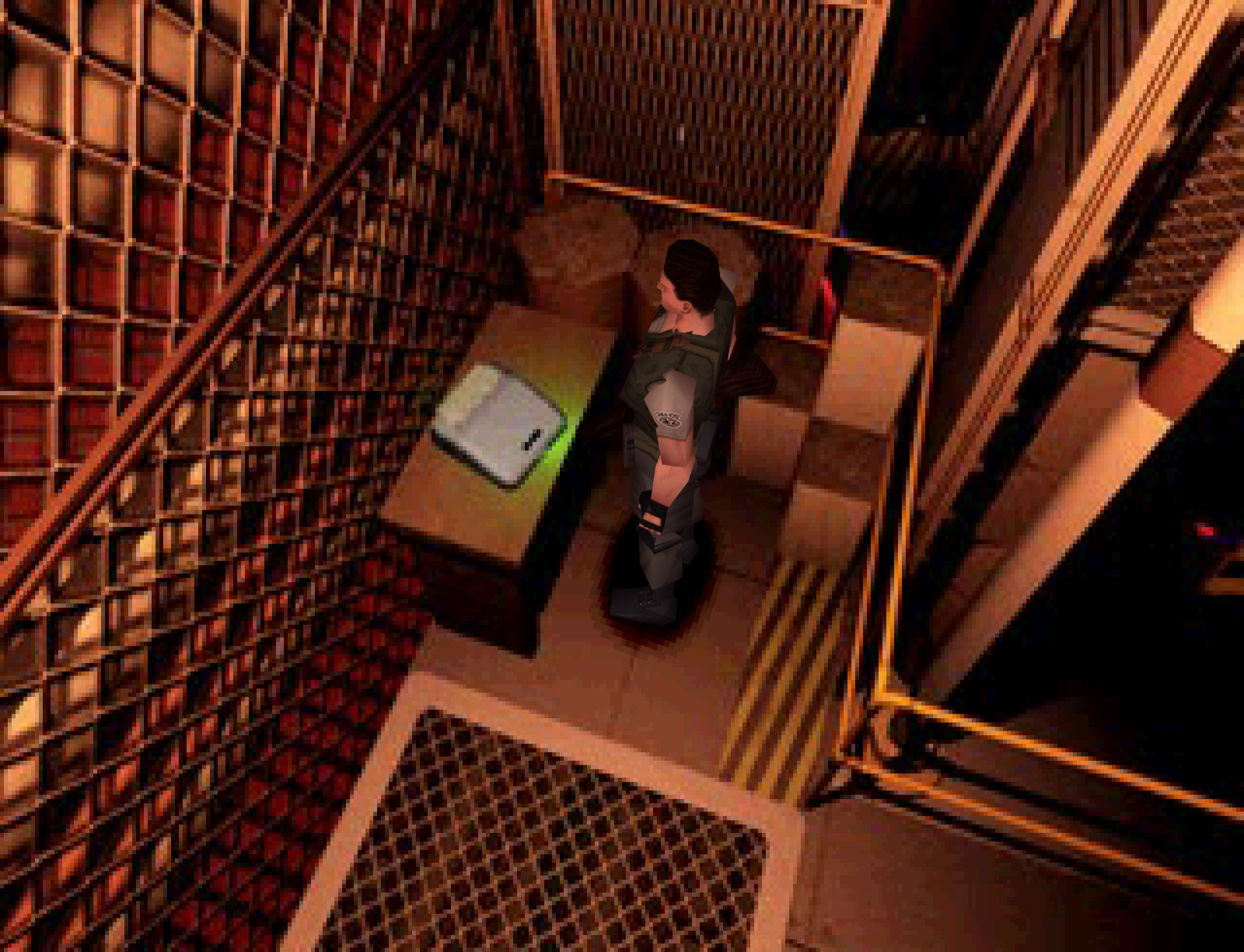
The other part of the good ending: make sure to find and use all three MO disks to save your jailed teammate. This is another time the “use item box anywhere” cheat is great, especially with Chris’ smaller inventory.
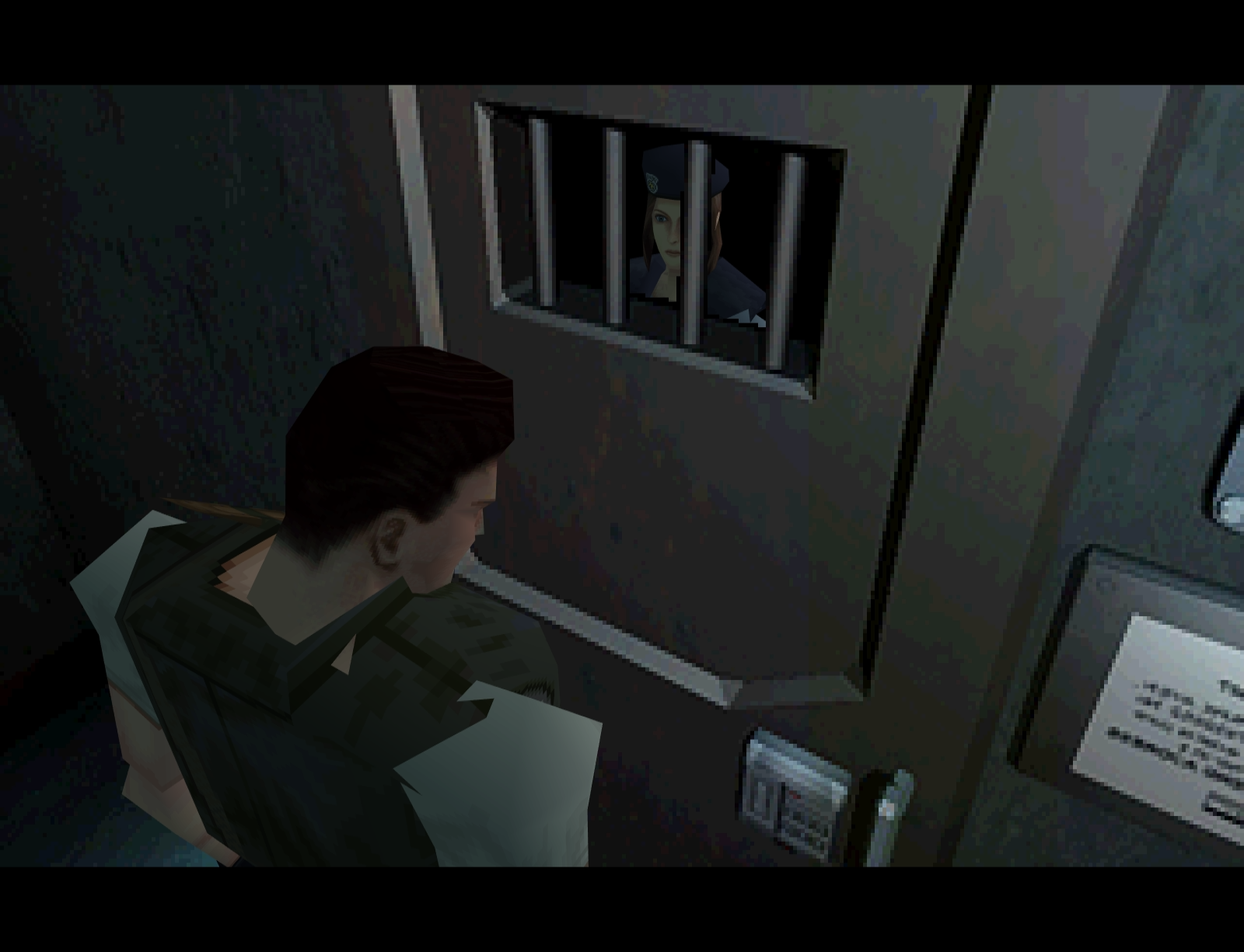
If you read a walk-through, they’ll tell you to go straight to the elevator and fight the Tyrant before you go free your coworker from the jail. However, if you do that, you miss this little scene.
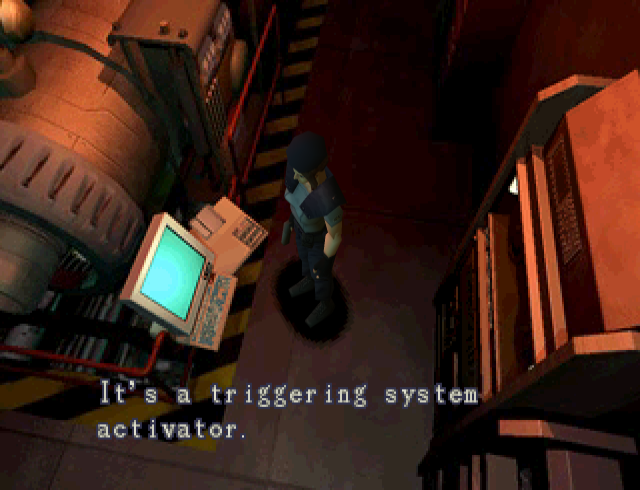
What?
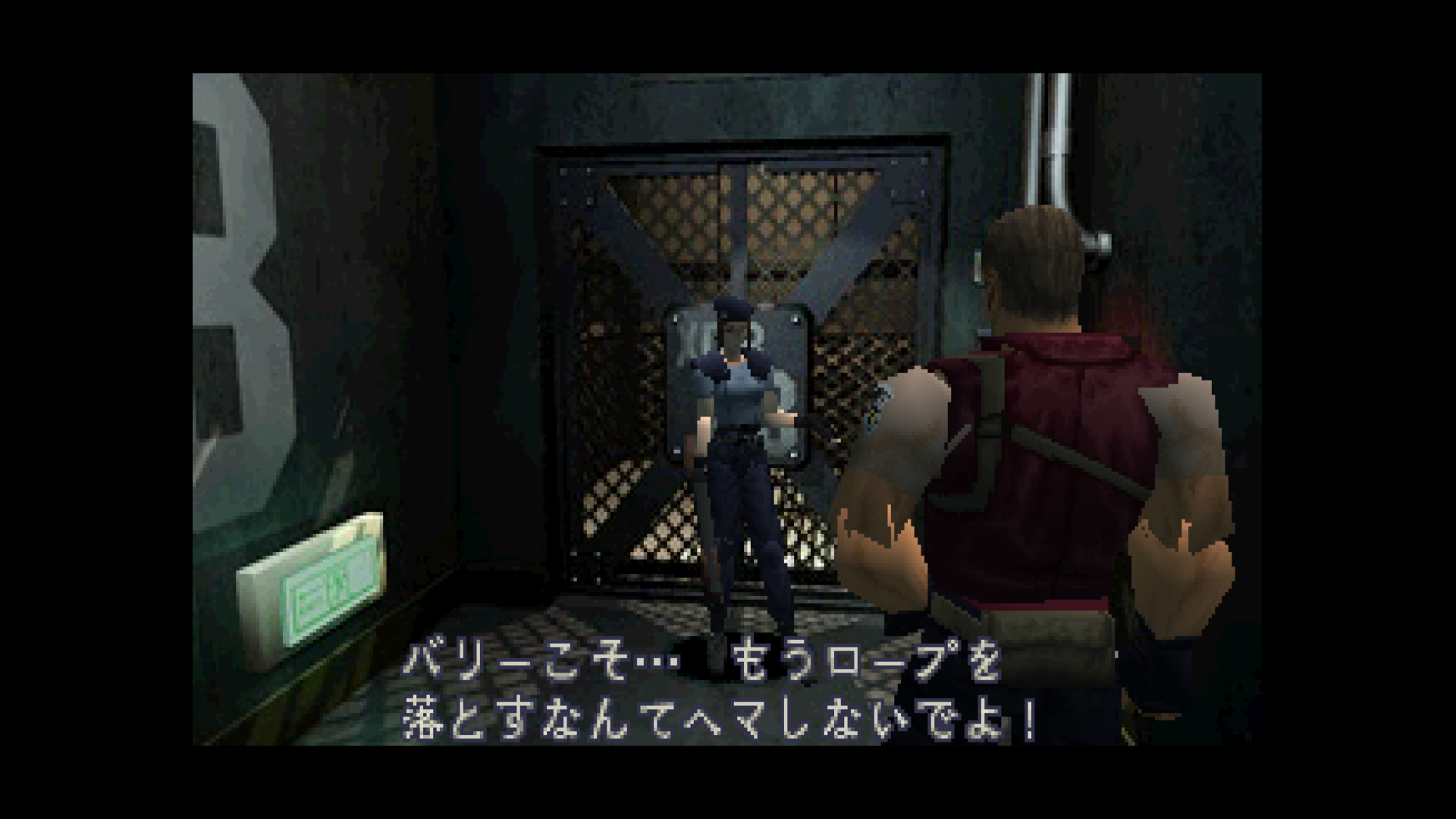
If you didn’t wait for the rope, Jill apologizes. And then for some reason, that means Barry will die now. Oops!
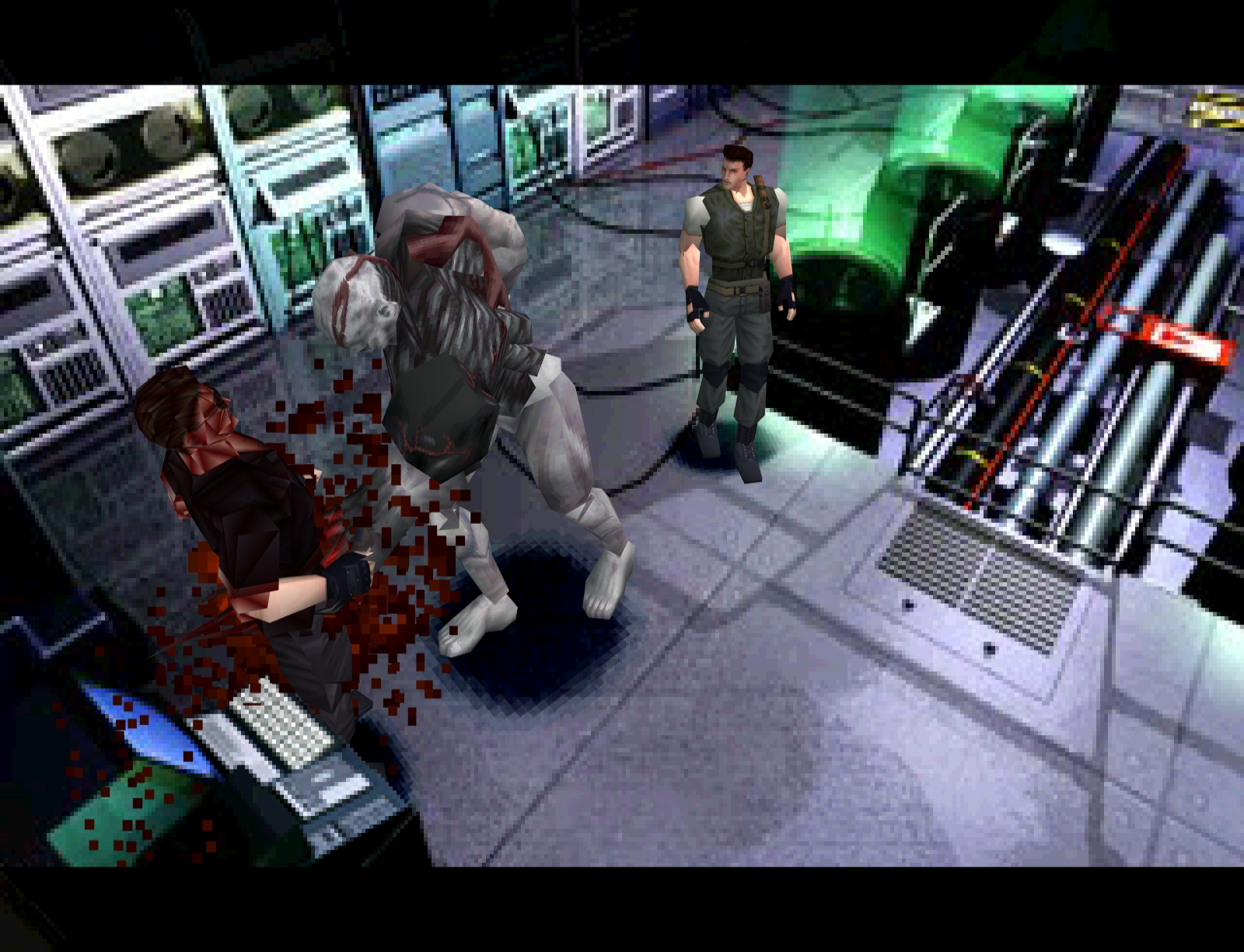
Now we’re really getting into spoiler territory, but hey this game is 30 years old. Wesker tries to show you the Tyrant, who turns on him instead.
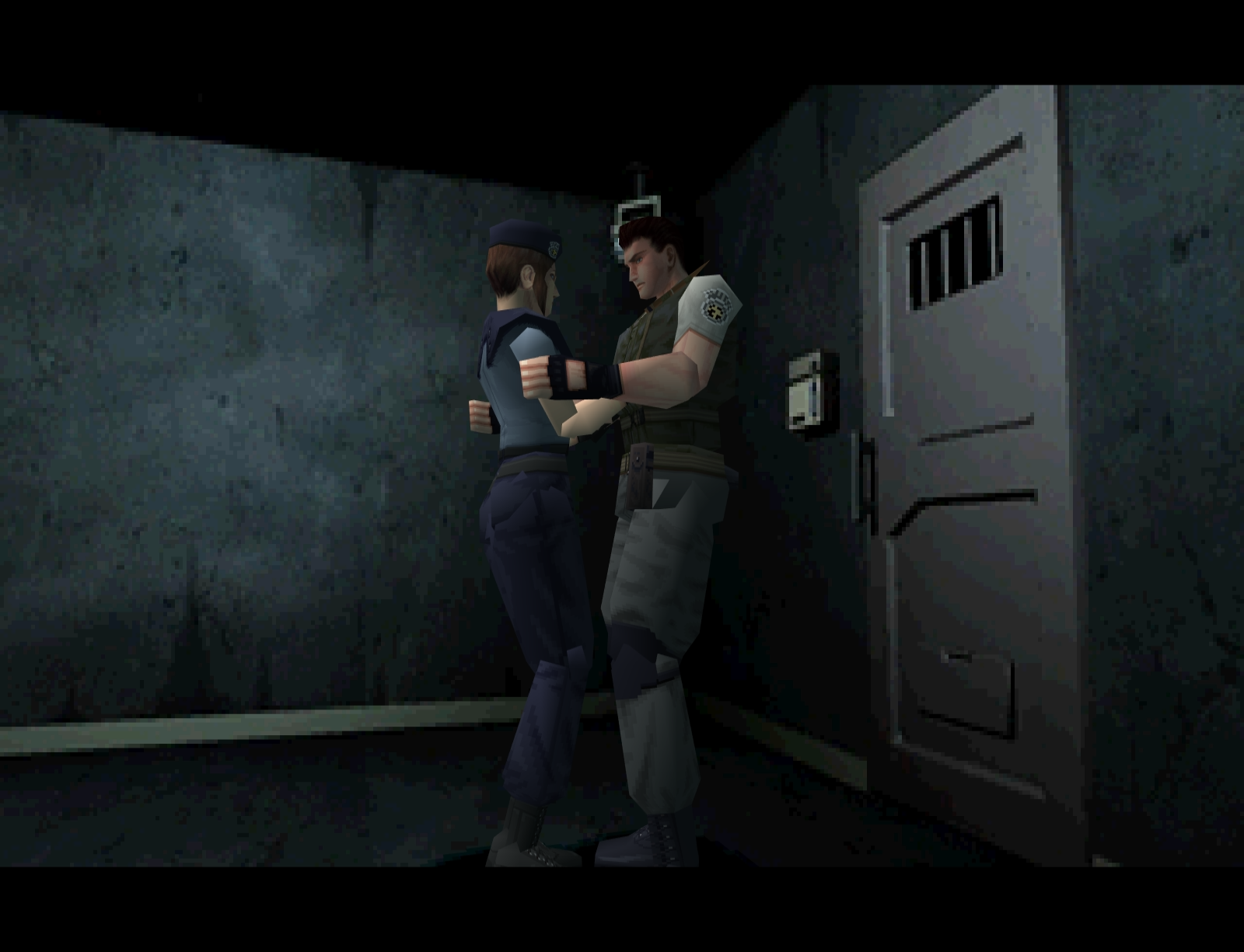
If you got all the MO disks, you can go back at this point and unlock the jail door.
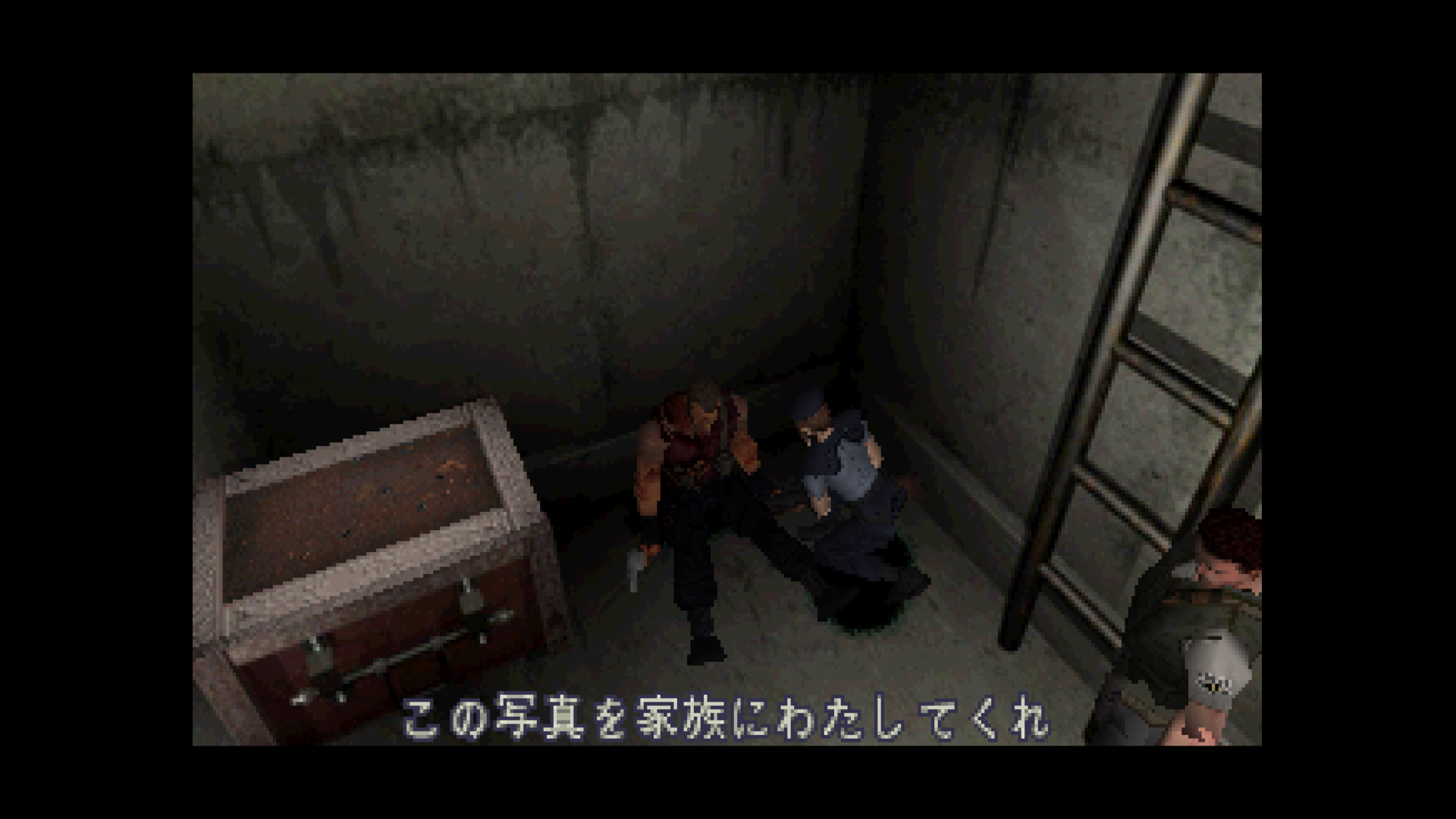
As part of the bad ending, Barry asks you to give a photograph and letter to his family before dying right in front of you.

Then, you head up to the roof. “Ladies first!” is exactly what Chris says in the Japanese version too.
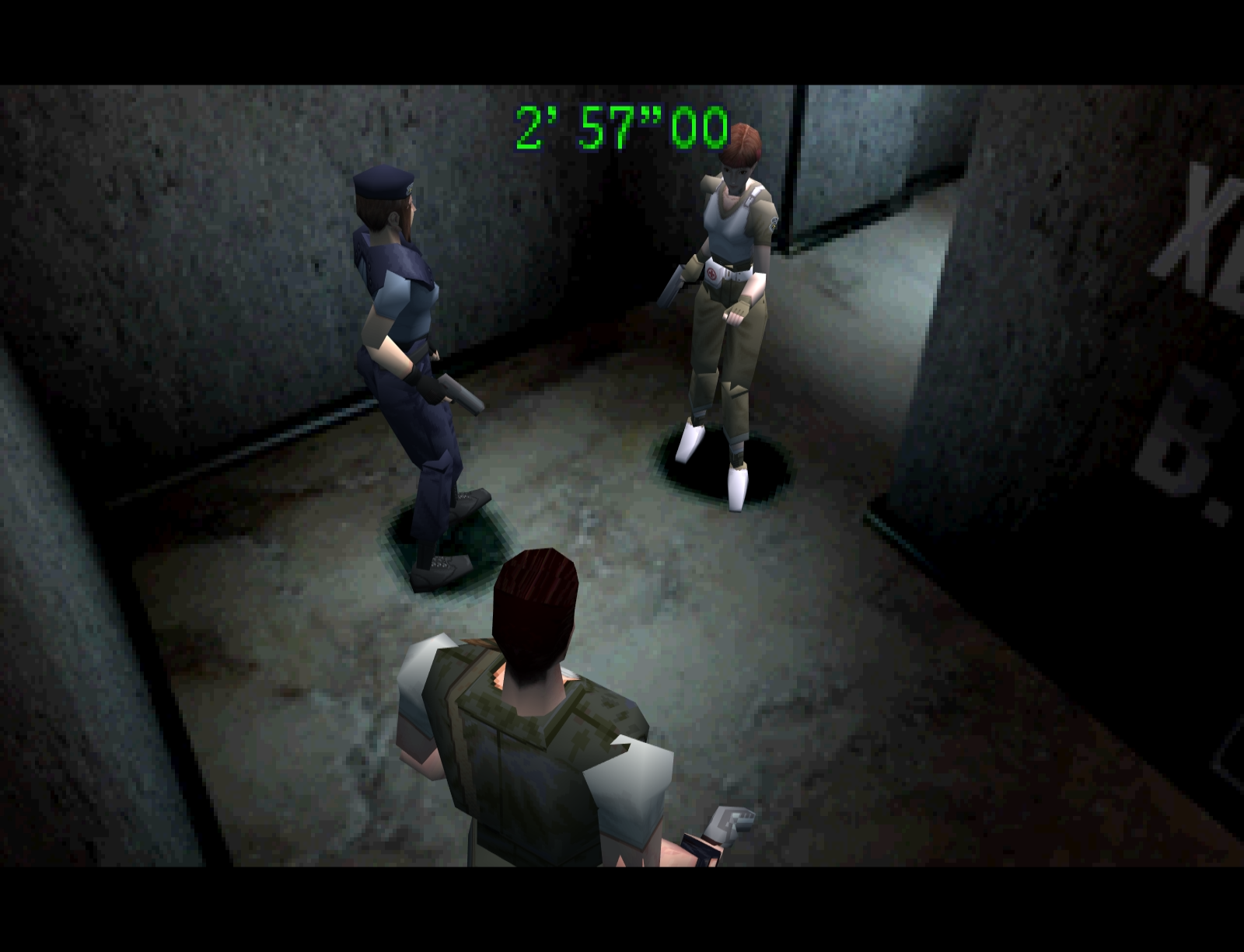
In the best ending, you’ll also have the other main character with you. Alternatively, you can also escape with one (just Chris/Jill or Barry/Rebecca), or neither: those are the eight ending variations.
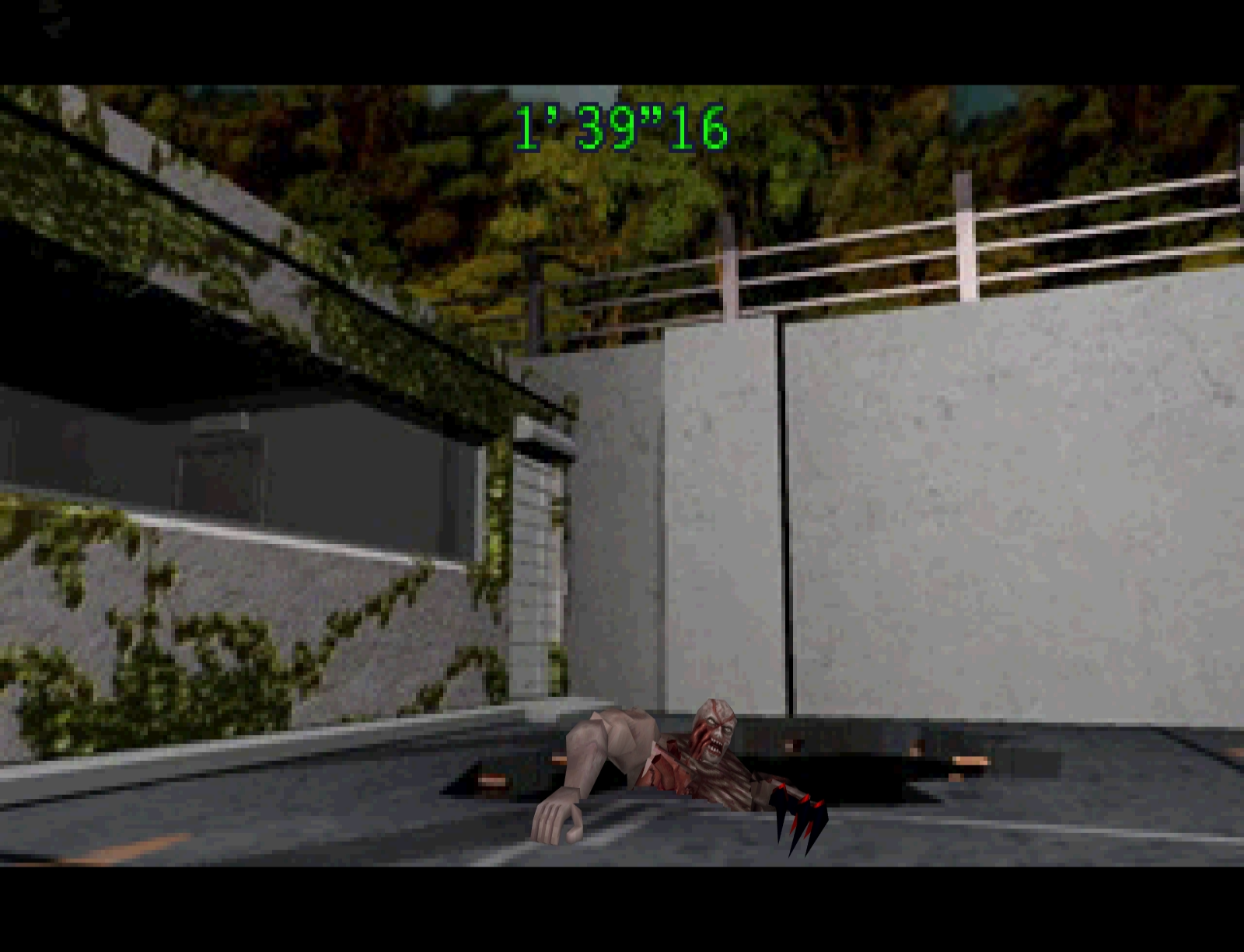
On the good endings, you get to the roof and fire a flare for the helicopter–but the Tyrant appears again!

After you do a certain amount of damage, you get a rocket launcher dropped from the helicopter for the cinematic finish. When you fire the rocket, it goes into a great multi-angle replay where it replays the rocket hitting the Tyrant multiple times.

And then he explodes spectacularly!
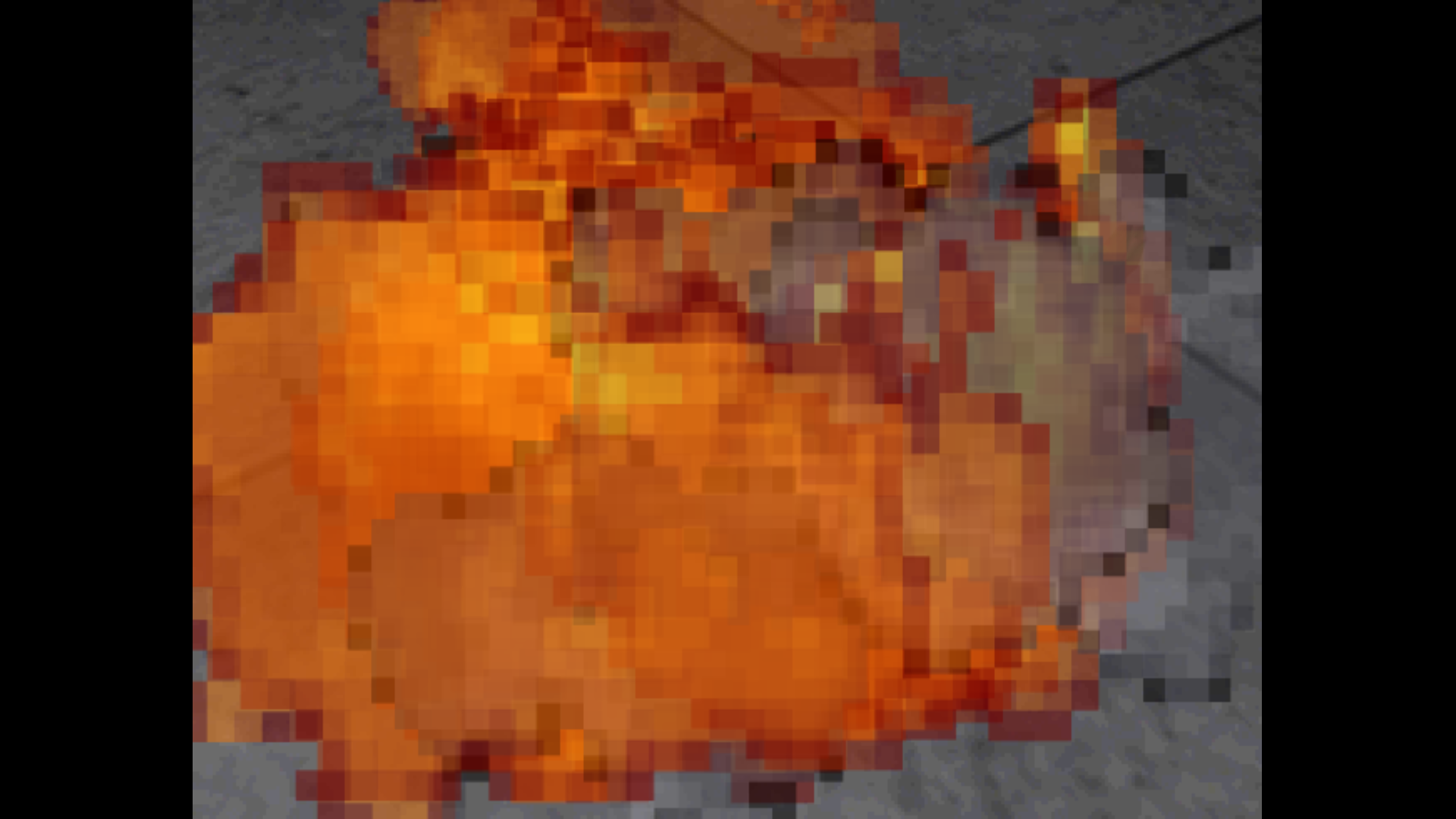
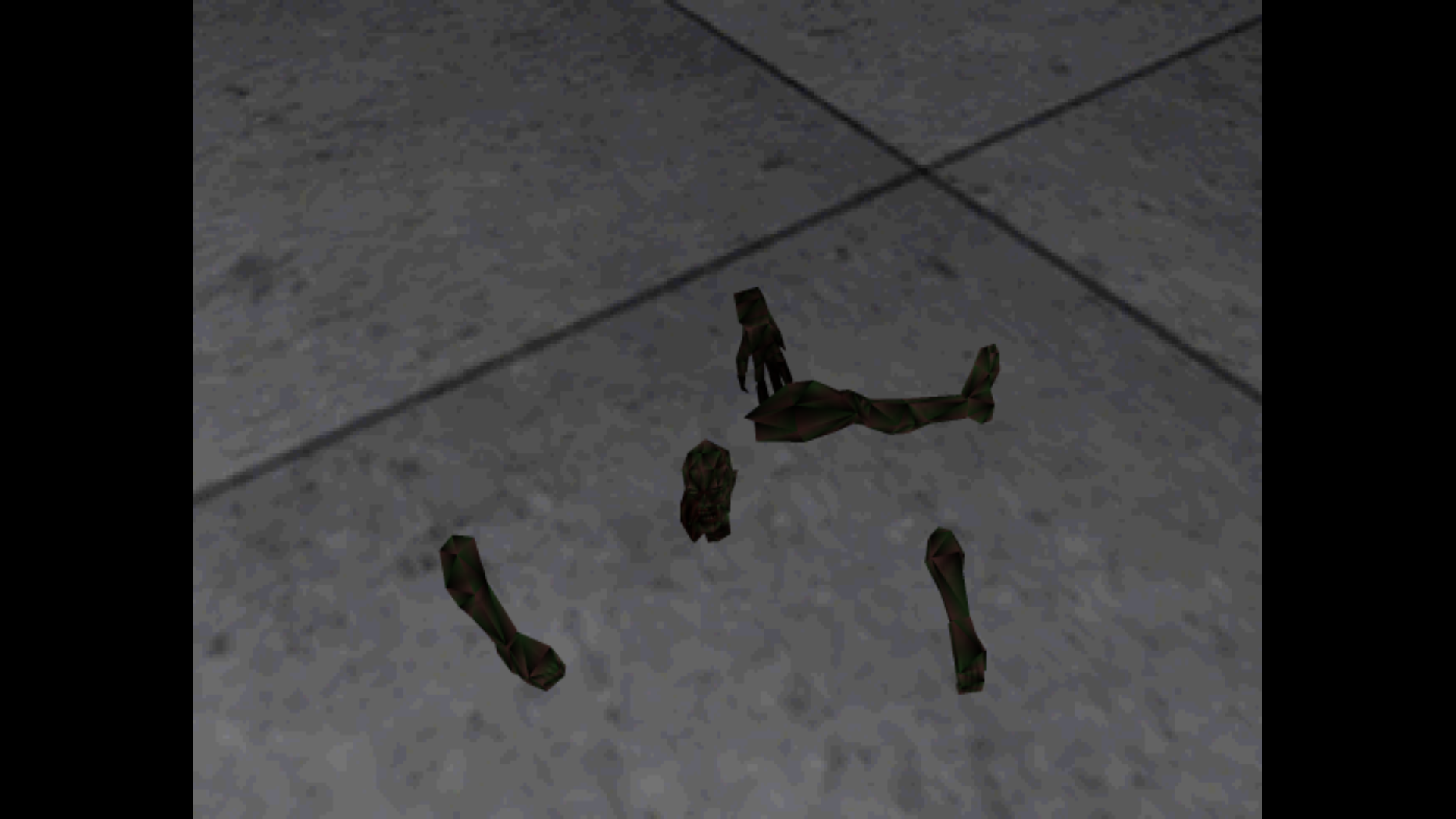
When the explosion fades, there are just a pile of limbs on the ground.
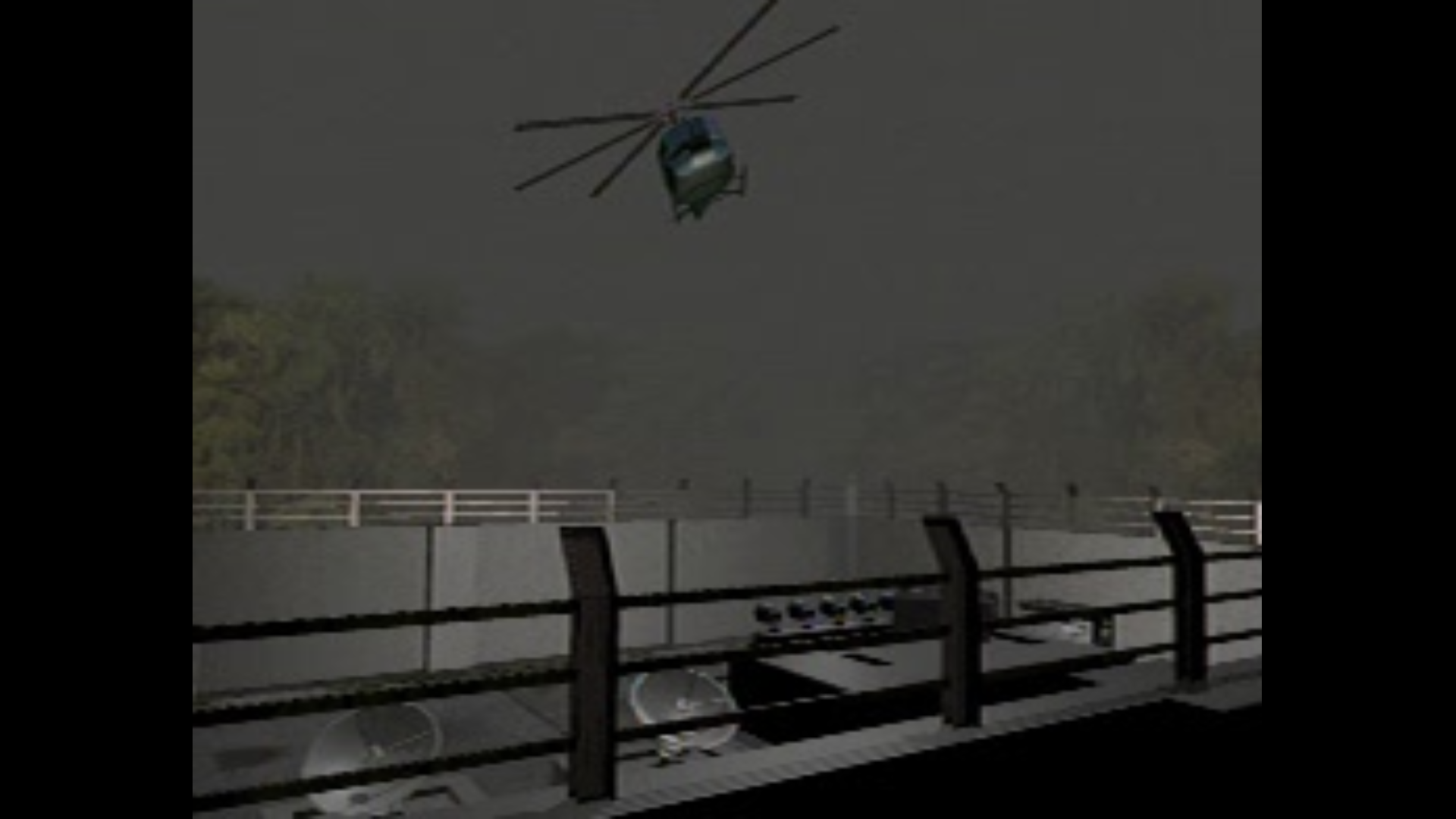
With the Tyrant gone, your helicopter scoops you up to take you to safety.
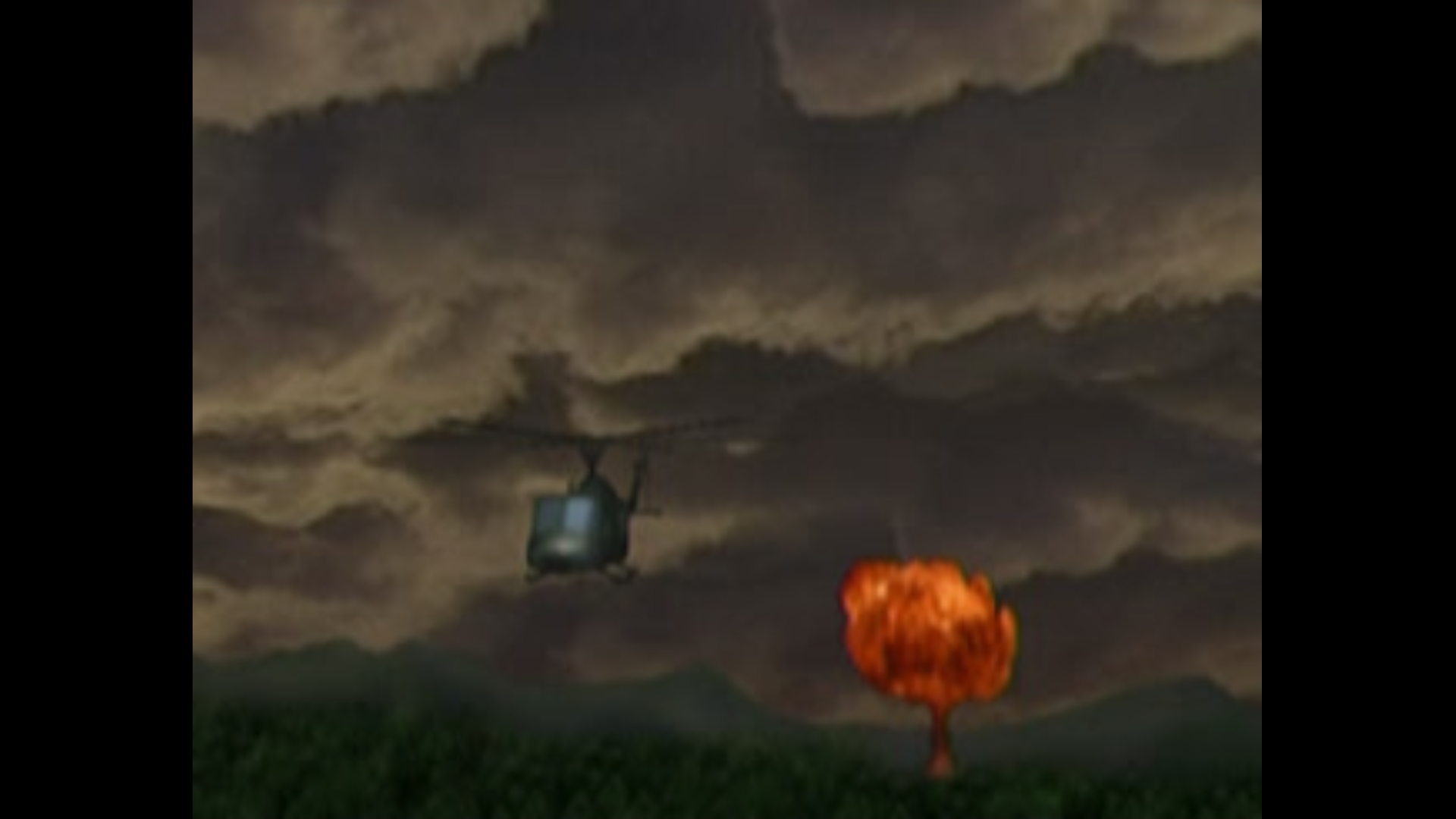
Ah, one of my favorite tropes: the ol’ “flying/driving/running away from an explosion” move.
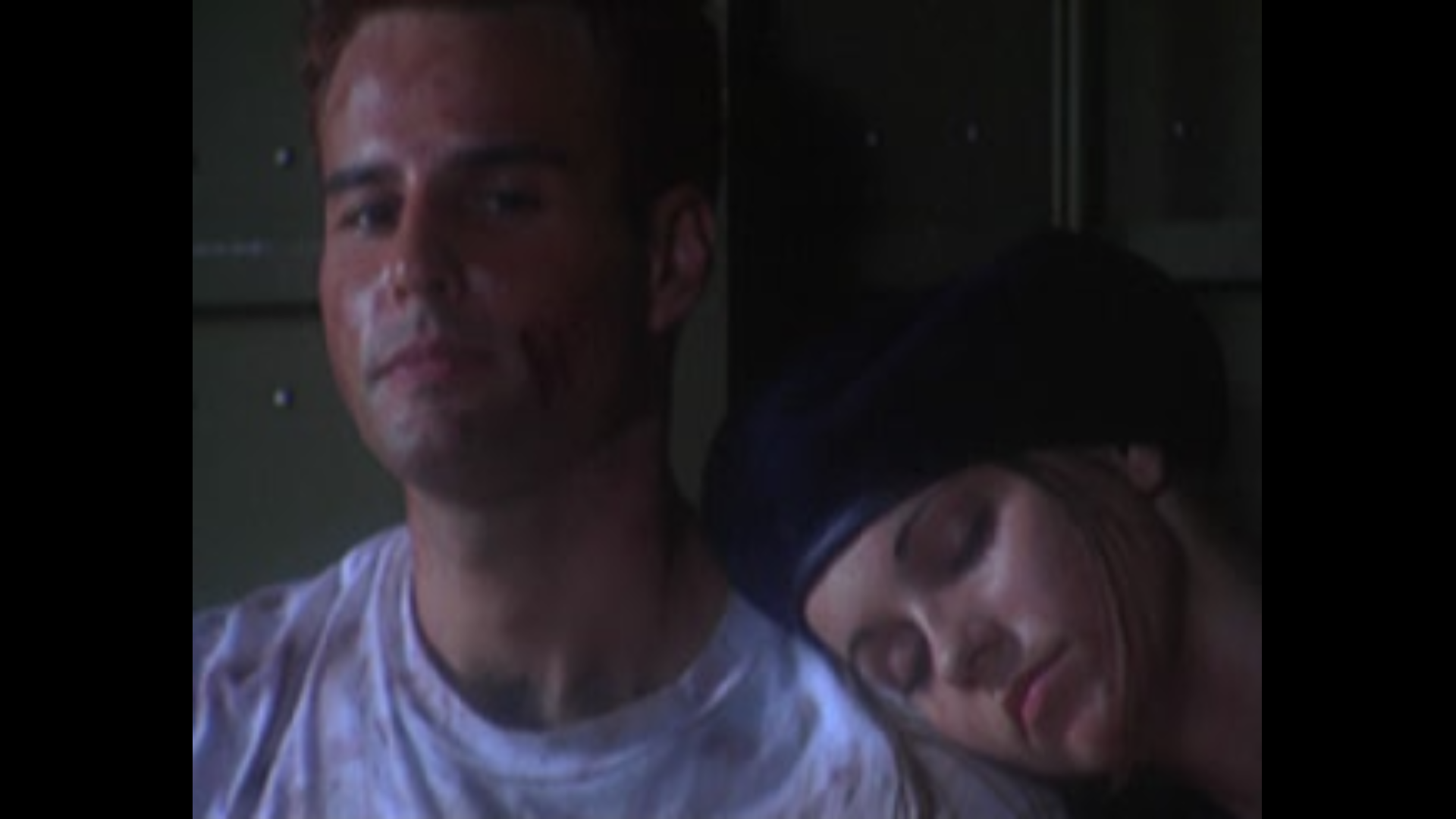
In the good ending, Jill falls asleep on Chris and he looks over at either Barry and Rebecca, smiling at their success.
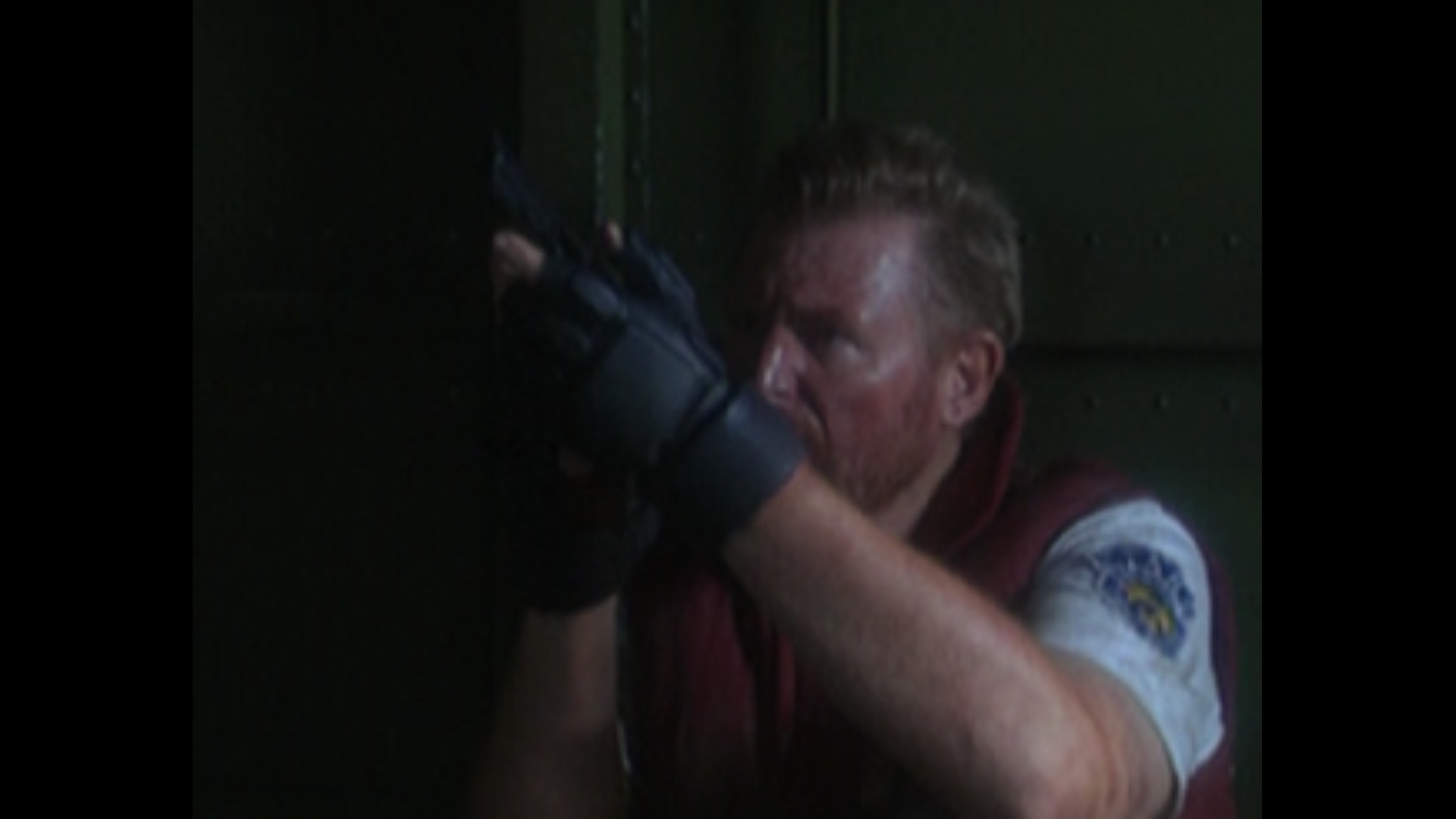
Of course on the Jill route you ride with Barry…

…and on the Chris route you have Rebecca.
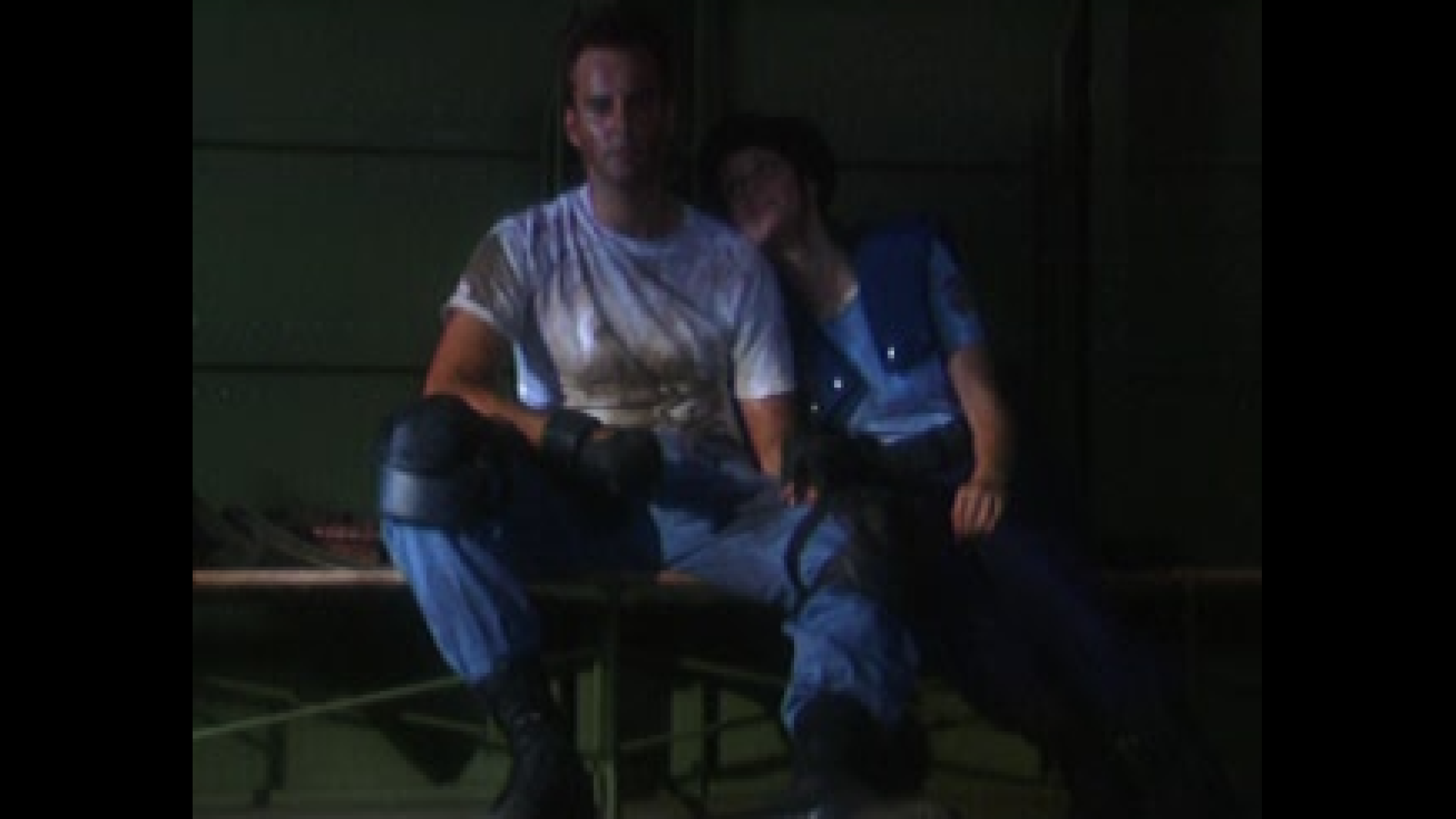
In this Jill run, I didn’t save Barry, which means that I didn’t even have to fight the last boss! You just get to the roof, fire the flare, hop in the helicopter, and that’s the end. However, they’re all alone in there; you get a shorter, more somber scene. I still need to replay the game at least two more times so I can see the other bad endings.

The credits roll, and you only get to see the first names of the main actors, who have remained in obscurity since then. Tracking down those actors has been an obsession for RE fans, and they’ve succeeded in bringing everyone out of the woodwork, except “Inezh”. She’s been found on social media, but all her accounts are private and according to the little information I could find, she gave up on acting and now lives a regular, anonymous family life. I wonder if she has any idea of the impact she’s had on the history of video games.
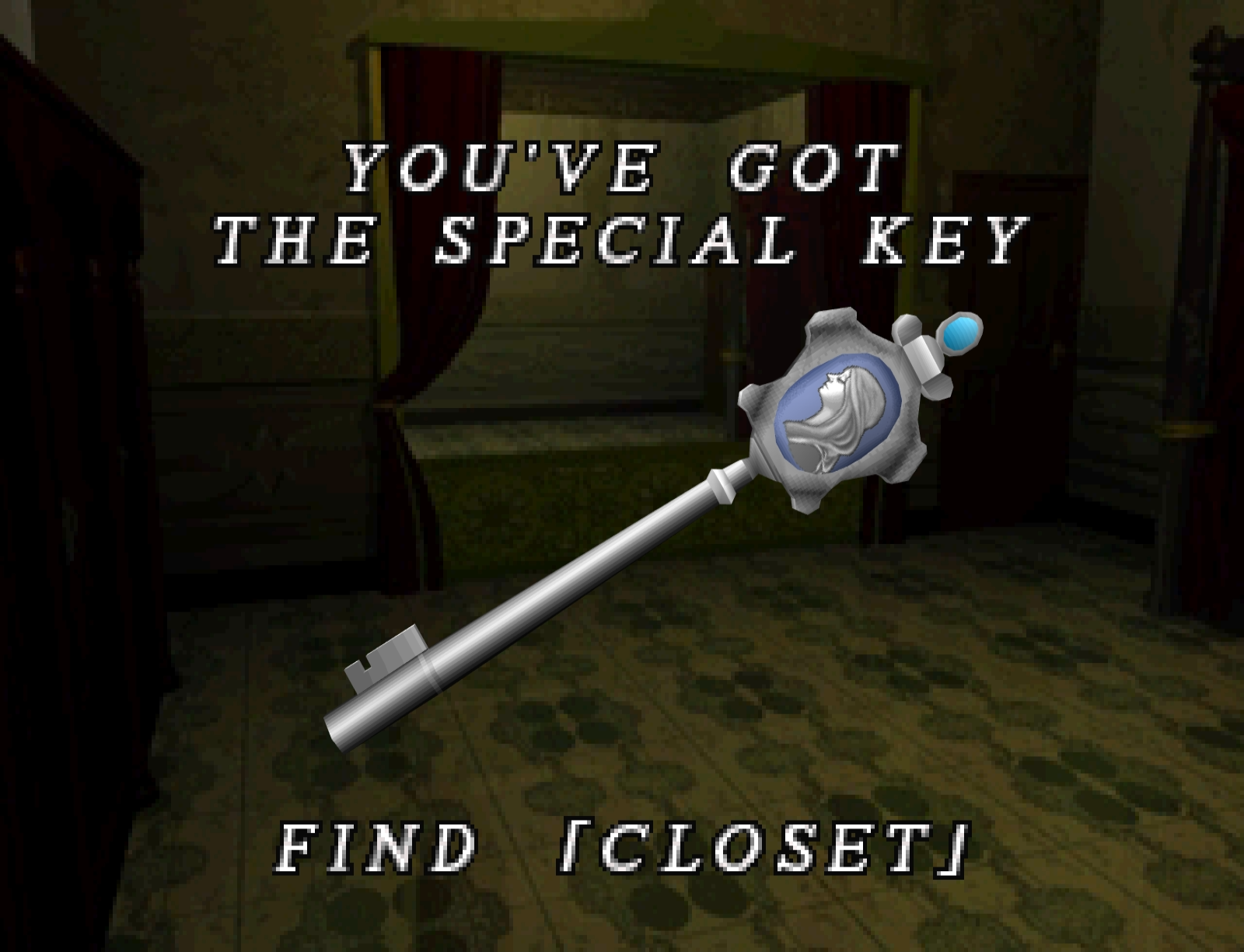
When you finish, you get the Closet Key, which gives you two extra costumes for each main character. I’ve never actually used it though, since I did each of my plays as a New Game on a different version.
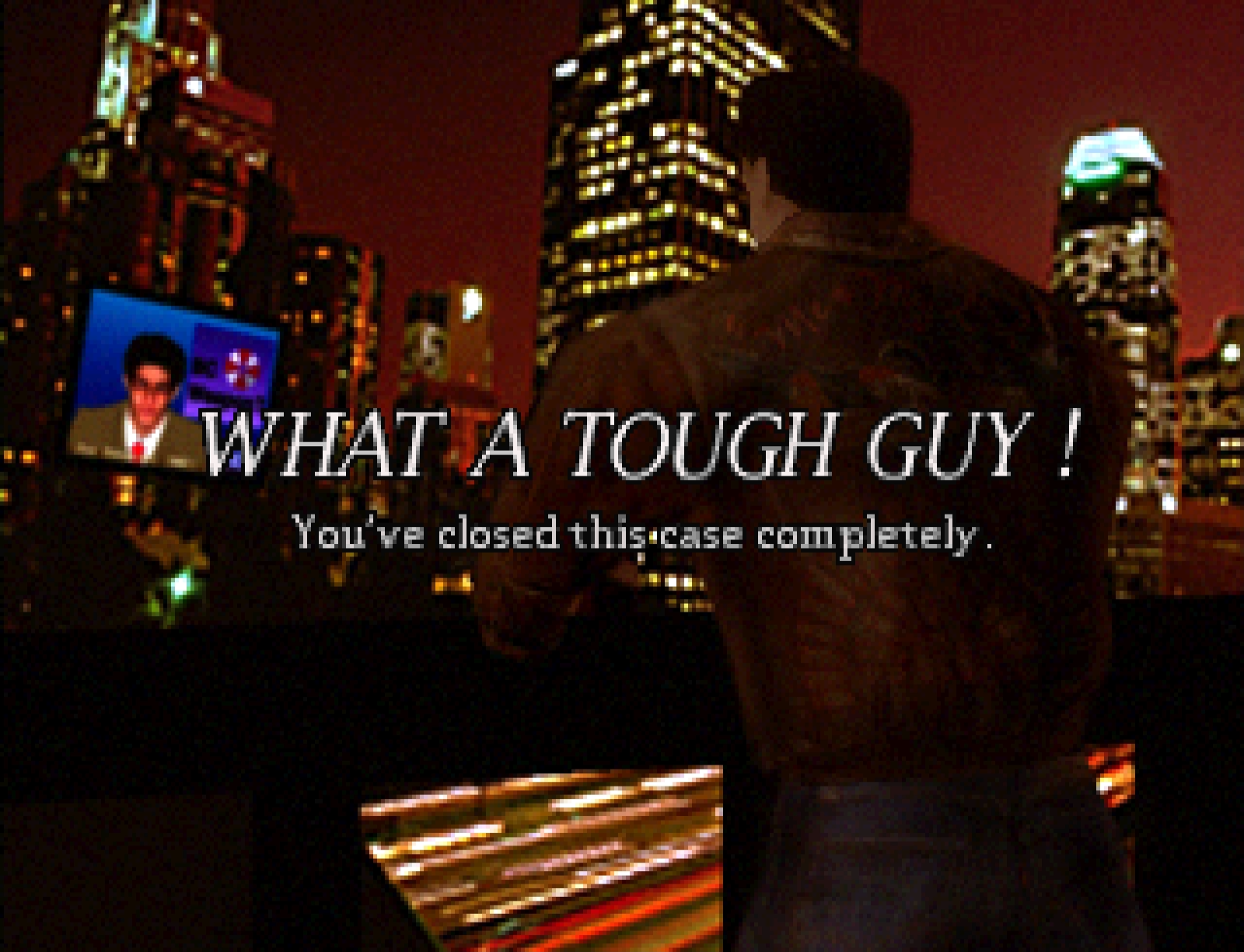
I’m not sure if this is exclusive to the Director’s Cut, but when you beat the game as Chris you get this extra message. Is that Chris watching a TV on an overpass? I think it’s trying to convey that he’s back in the city and everything is fine again; maybe there’s a bit of foreshadowing with the Umbrella logo on TV.
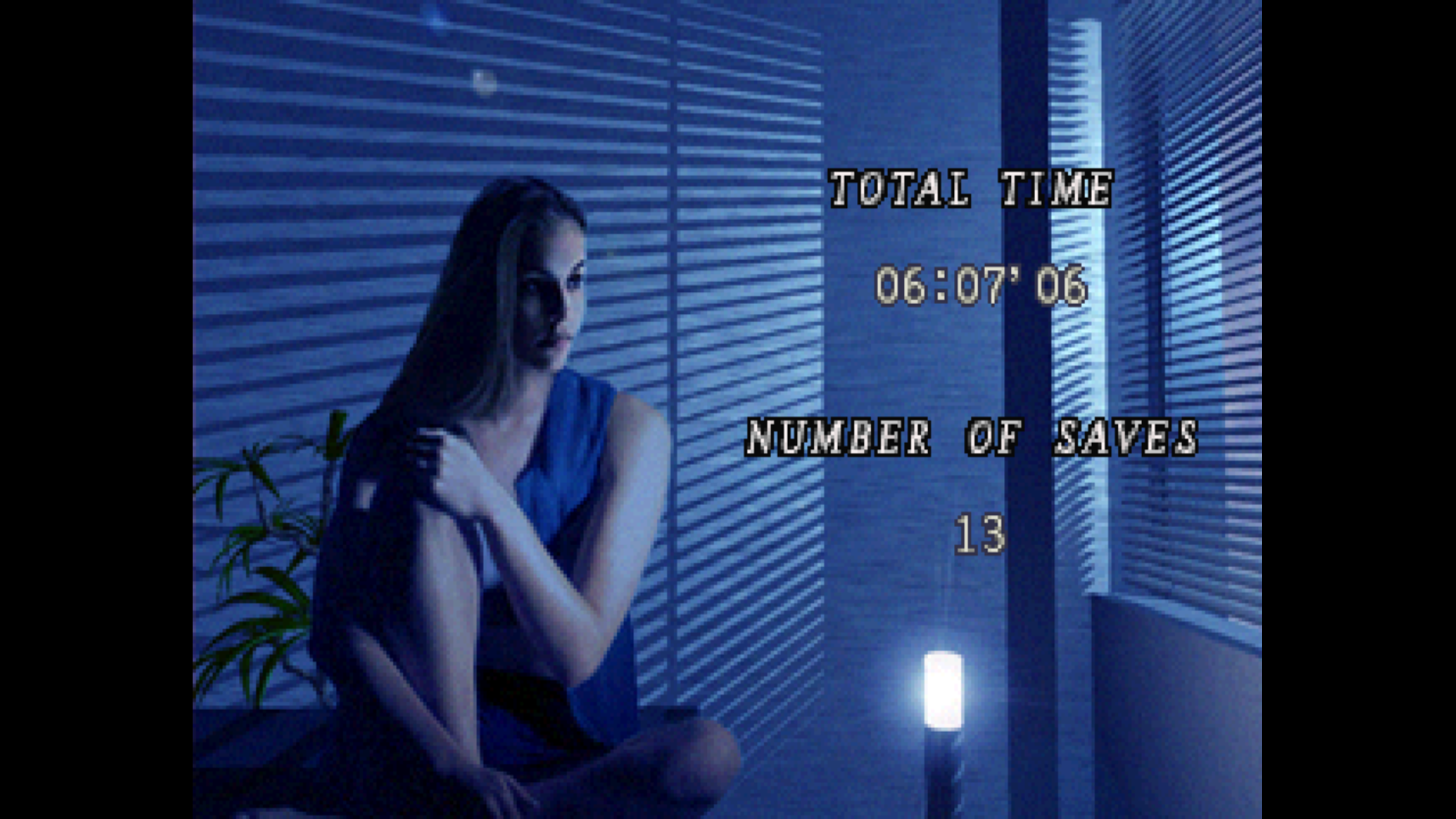
But what the hell is the Jill ending screen supposed to show? It looks like she’s hiding indoors. Kind of a weird way to wrap it up.
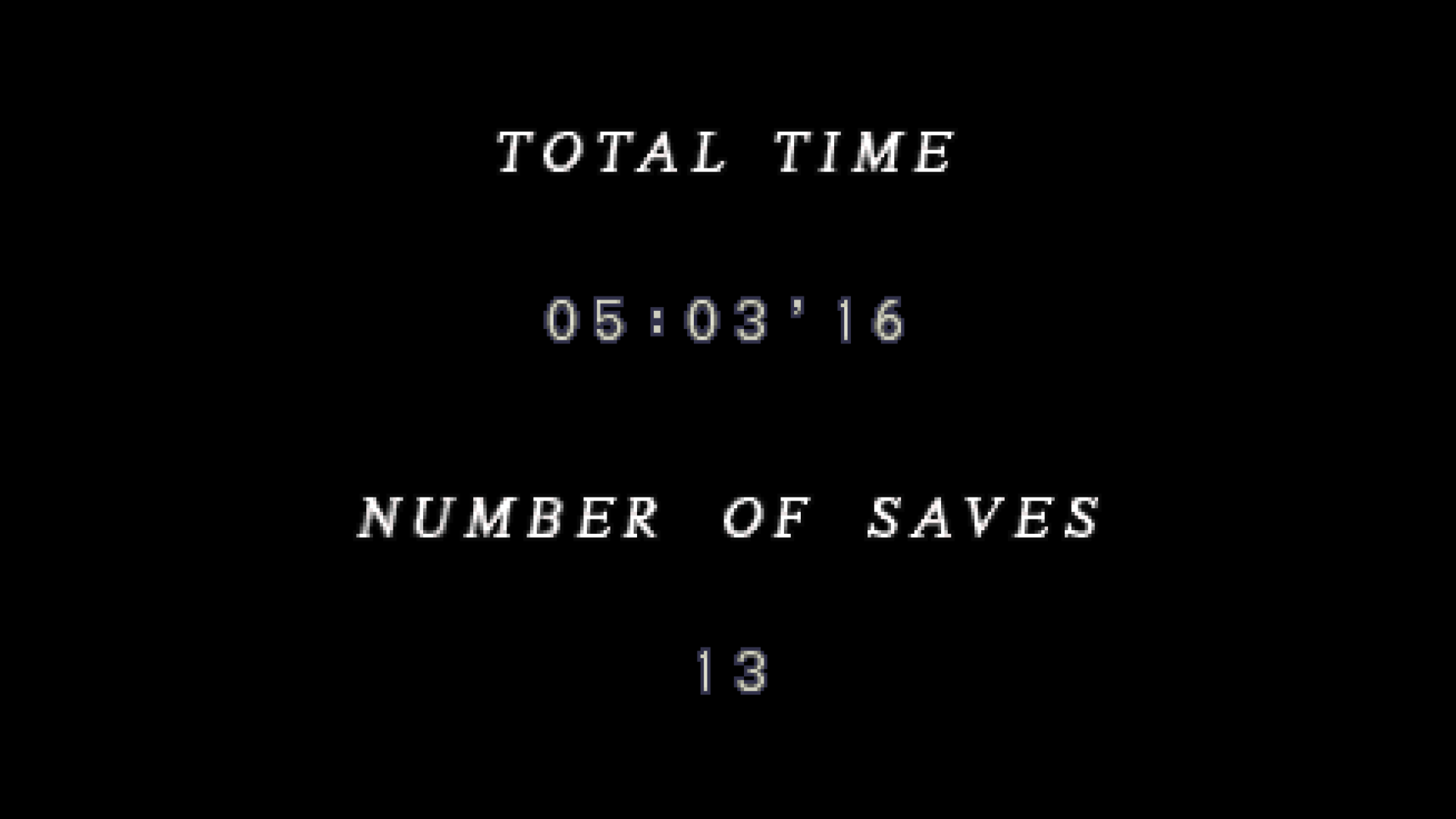
But I guess that’s better than Bio Hazard, which gives you…absolutely nothing. Just a black screen. And yes, I know that 5-6 hours is slow for this game. I still haven’t figured out an optimized route, plus I enjoy exploring. It actually would have taken me much longer without the “item box anywhere” cheat, as there is so much back-tracking.
That back-tracking is probably my biggest complaint about the game. You have so few item slots that you necessarily can’t pick up and keep every item you find; and there are item boxes, but they are few and far between, so you end up doing a lot of back-tracking unless you can plan really well. Item management is one of the main tenets of Resident Evil (and it was in Alone in the Dark too, the very first fixed-camera survival horror game), but I still don’t enjoy it. Thankfully, a simple Gameshark code takes care of that, allowing access to the item box from anywhere.
A recurring theme I’ve been noticing as I work on this site is that there are so many games I love now that I was never able to get into before; Resident Evil is a great example. I tried it a dozen or more times over the years and never got far. Even as recently as a few months ago, I picked it up and couldn’t wrap my head around it, even after having just beaten Dino Crisis, so I went straight into RE2 and RE3 which made sense right away. Beating those two games deepened my resolve, so I attacked Resident Evil, and I’m really glad I did: the more I played it, the more I liked it.
Now I can firmly say that this is a bona fide classic; not just one of my favorite video games, but also one of the best games ever created. The controls and style of the game are antiquated, but in such a way that they act as a time capsule from the 1990’s. Maybe even a year or two ago, I would have claimed that you could never release a game like this now, so a time capsule is all it could ever be–not a bad thing for me, since I love experiencing 90’s gaming. But with recent releases like Crow Country showing there is some demand for the PS1 style, maybe that’s not the case: with the linear-but-explorational gameplay, interesting puzzles, and more-relevant-than-ever plot (one word: virus), perhaps a game just like this could still be released and played today.


 Star Road