
SpeedSF @ Laguna Seca – 2024/11/30
On the Saturday after Thanksgiving this year, I jumped out of bed at the crack of dawn and headed down to the legendary venue known as Laguna Seca.
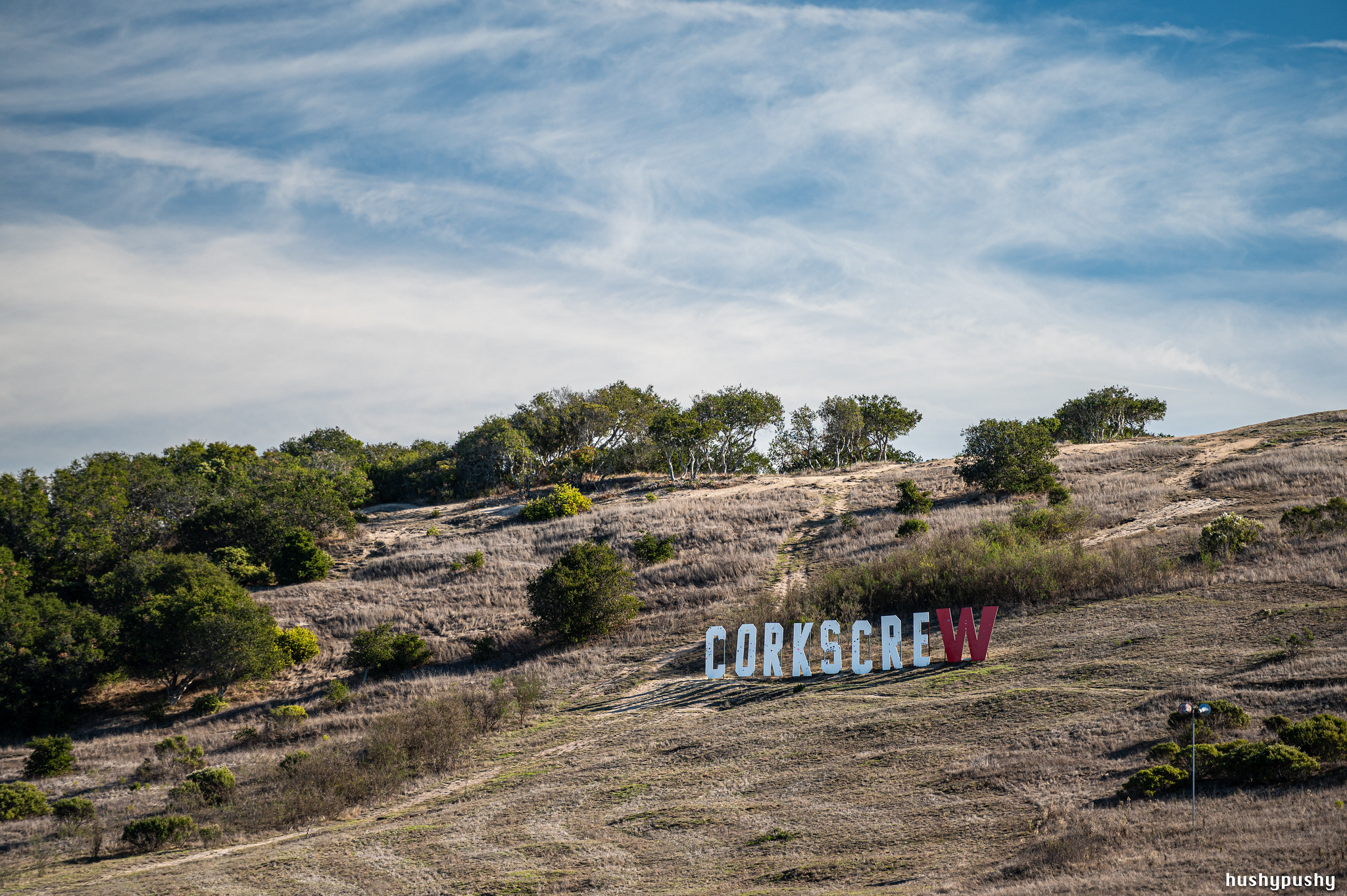
Nestled in the foothills near Monterey, California, just a few miles from the Pacific Ocean, this track enjoys perfect weather on almost every day of the year. Even though it was the end of November, as soon as I stepped out of my car in the paddock at 9:30 AM my sweatshirt immediately came off as I bathed in the glorious warm sun and gentle cool breeze of this mid-60’s day.
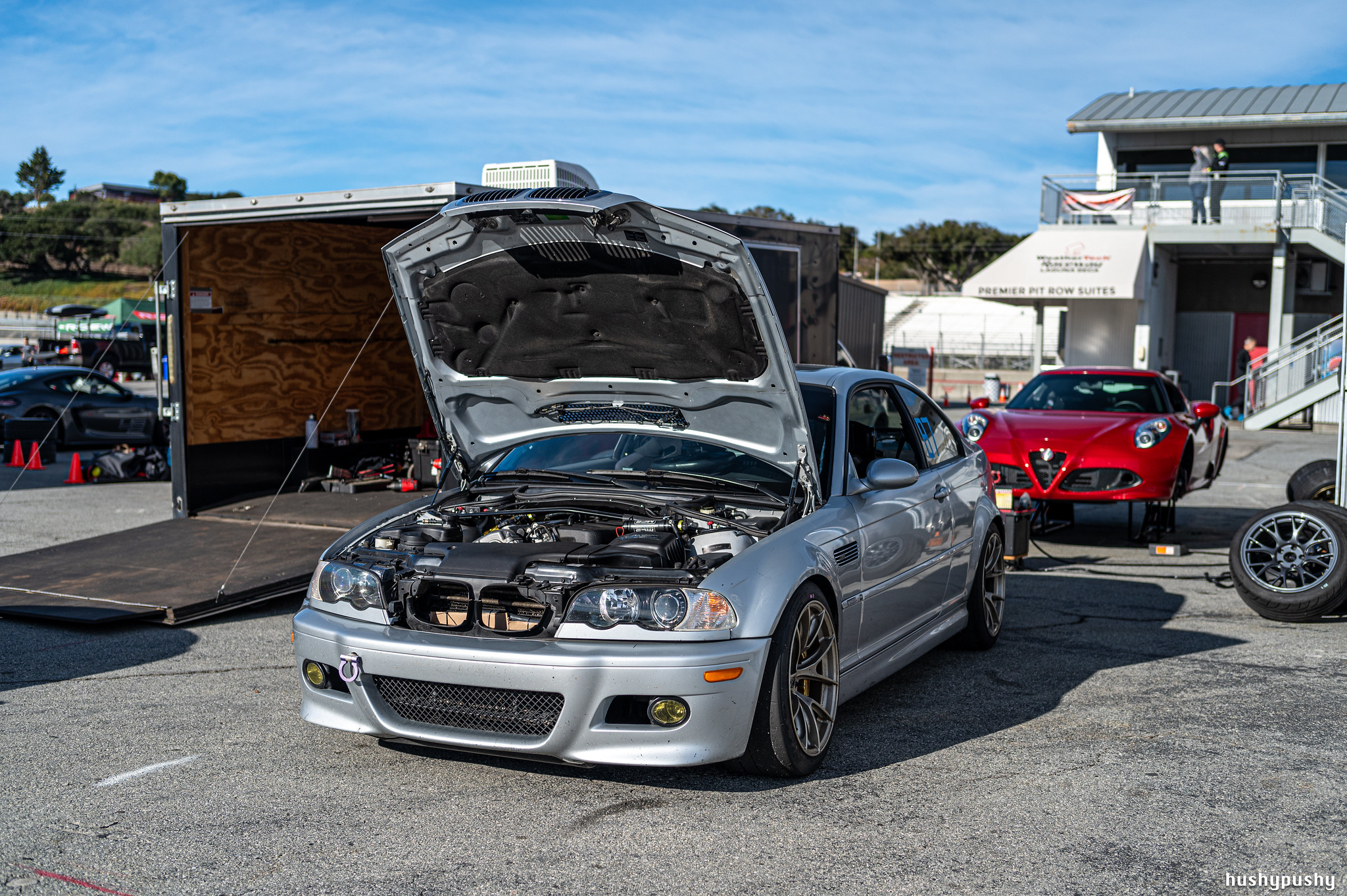
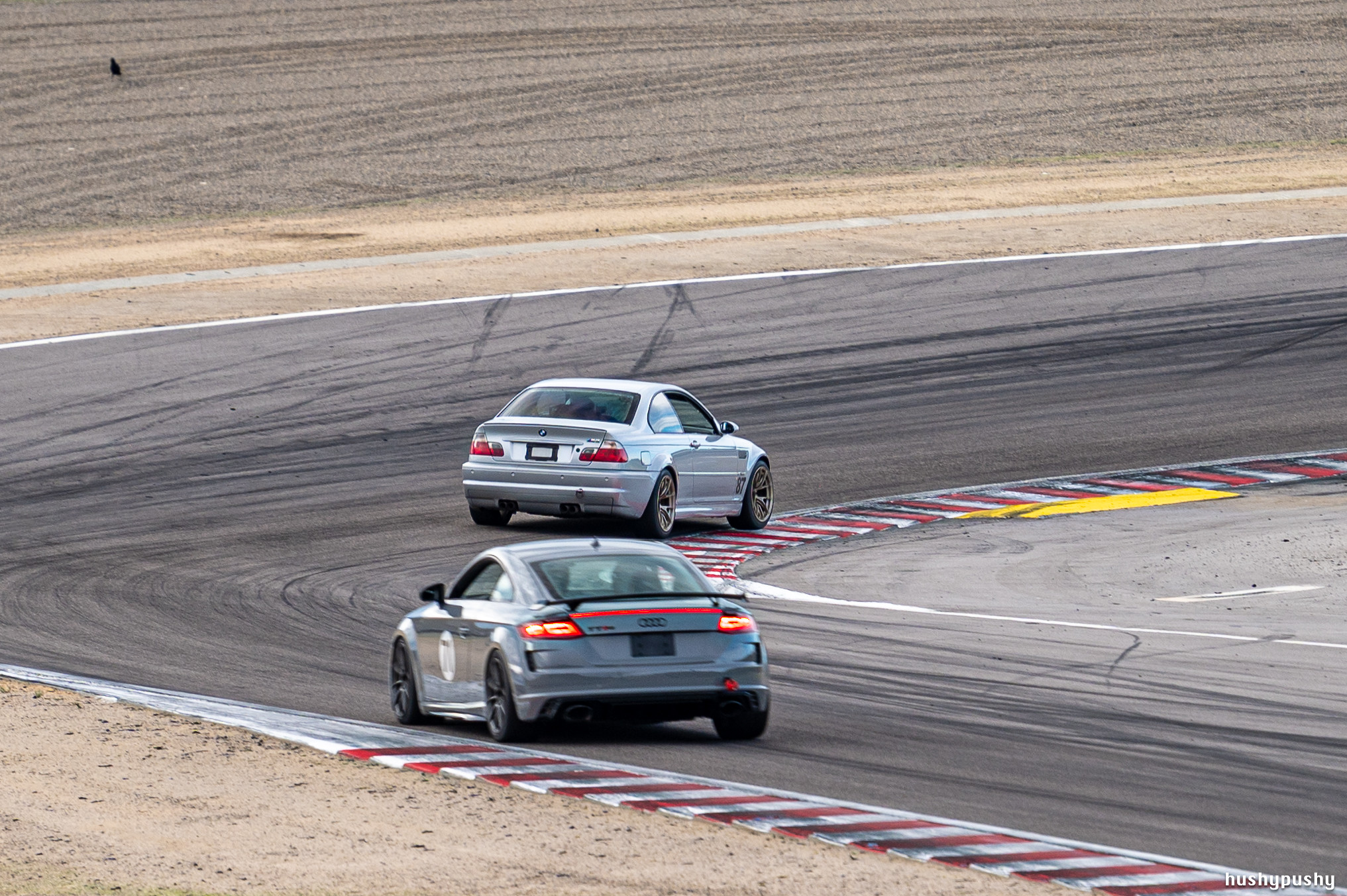
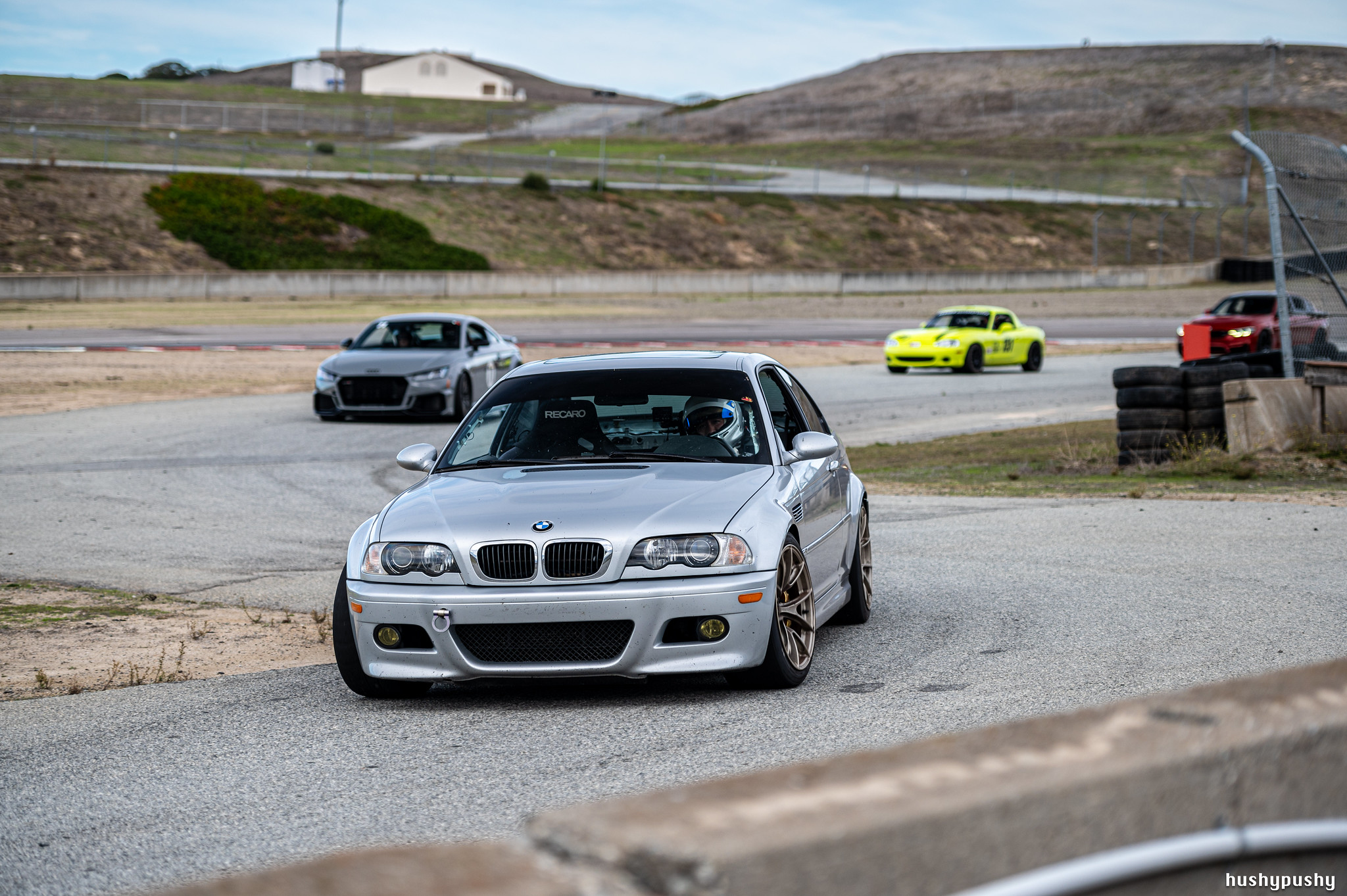
I mainly came to hang out with my buddy Chris and finally get to see him tracking his new car, this Titan Silver BMW E46 M3. He’s done a few upgrades since I last posted about it and is well on his way to dialing in the car as he gets used to how it drives.
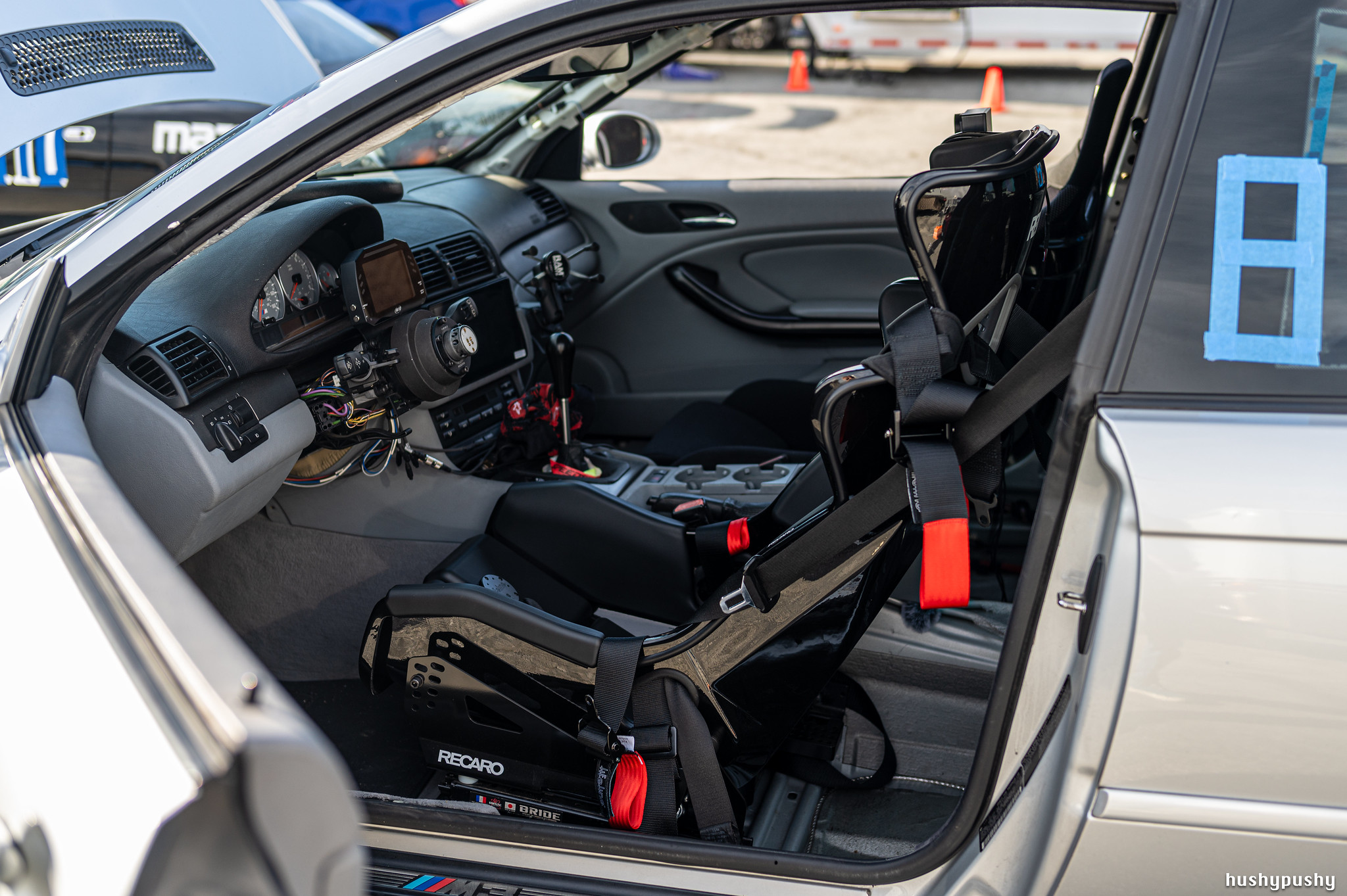
He moved over his new Recaro…
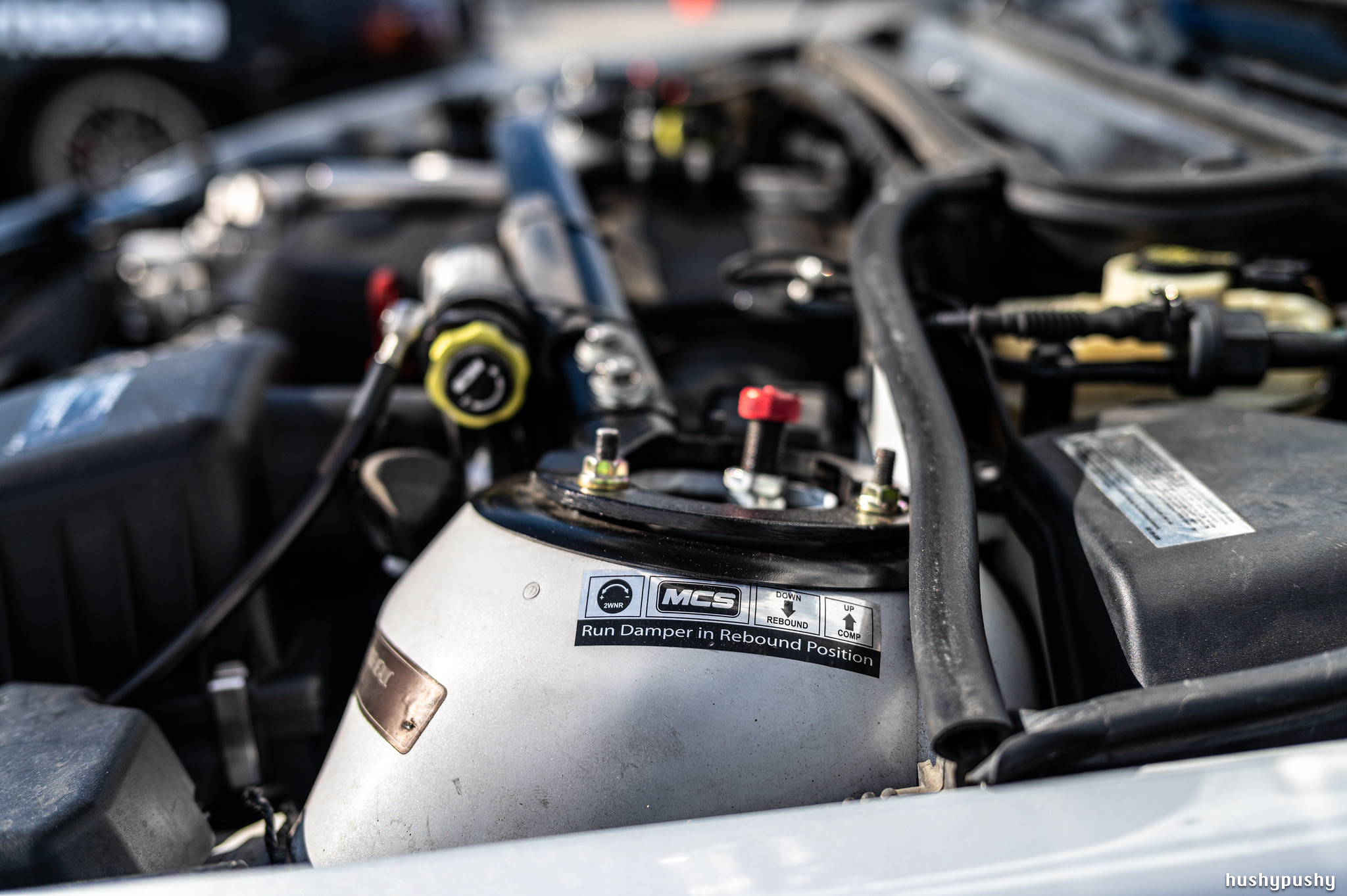
…and installed MCS coilovers with remote reservoirs, among other tweaks.
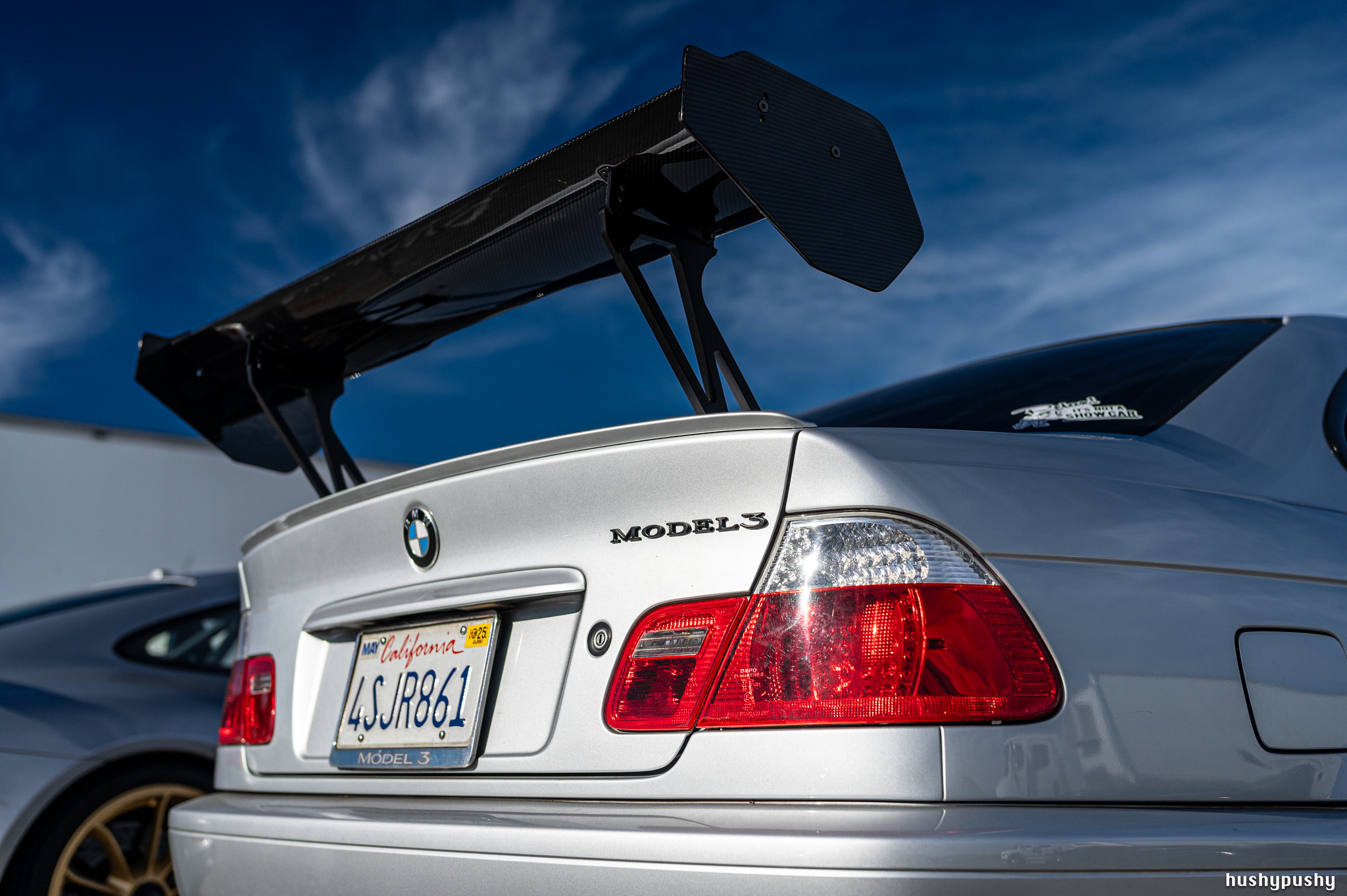
There were a ton of E46 M3’s at this track day, and Titan Silver was the most popular color. One thing to note about Chris’ car is that he competes in a specific class that doesn’t allow aerodynamic extras, so if you see wings, splitters, or other air-bending addenda? Not his silver M3.
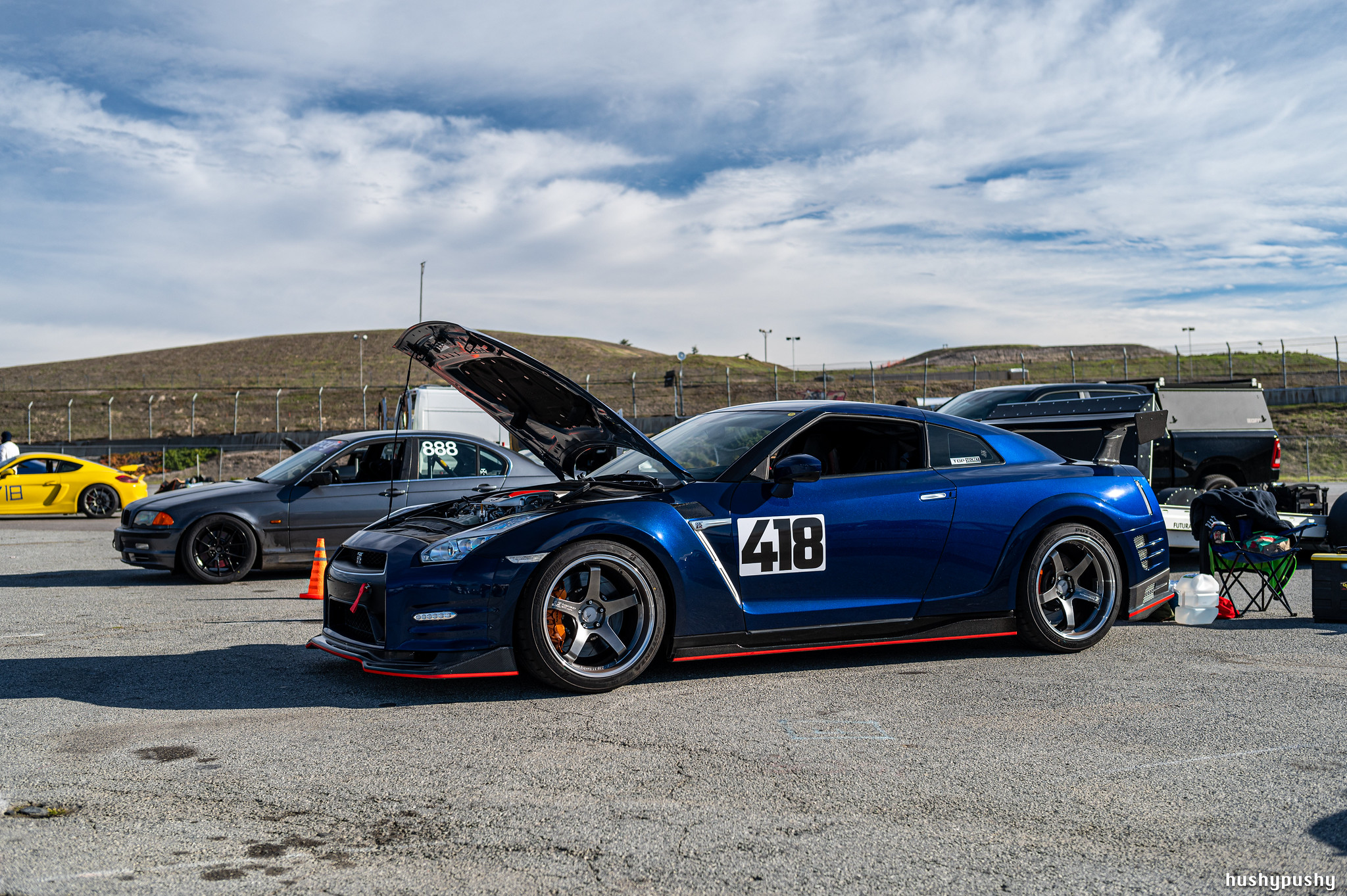
“You always see the coolest cars at the track” is one of my most well-worn cliches. R35 GT-R’s are interesting in general, and it’s cool to see people modify them. But seeing it out at the track? The pinnacle of cool.
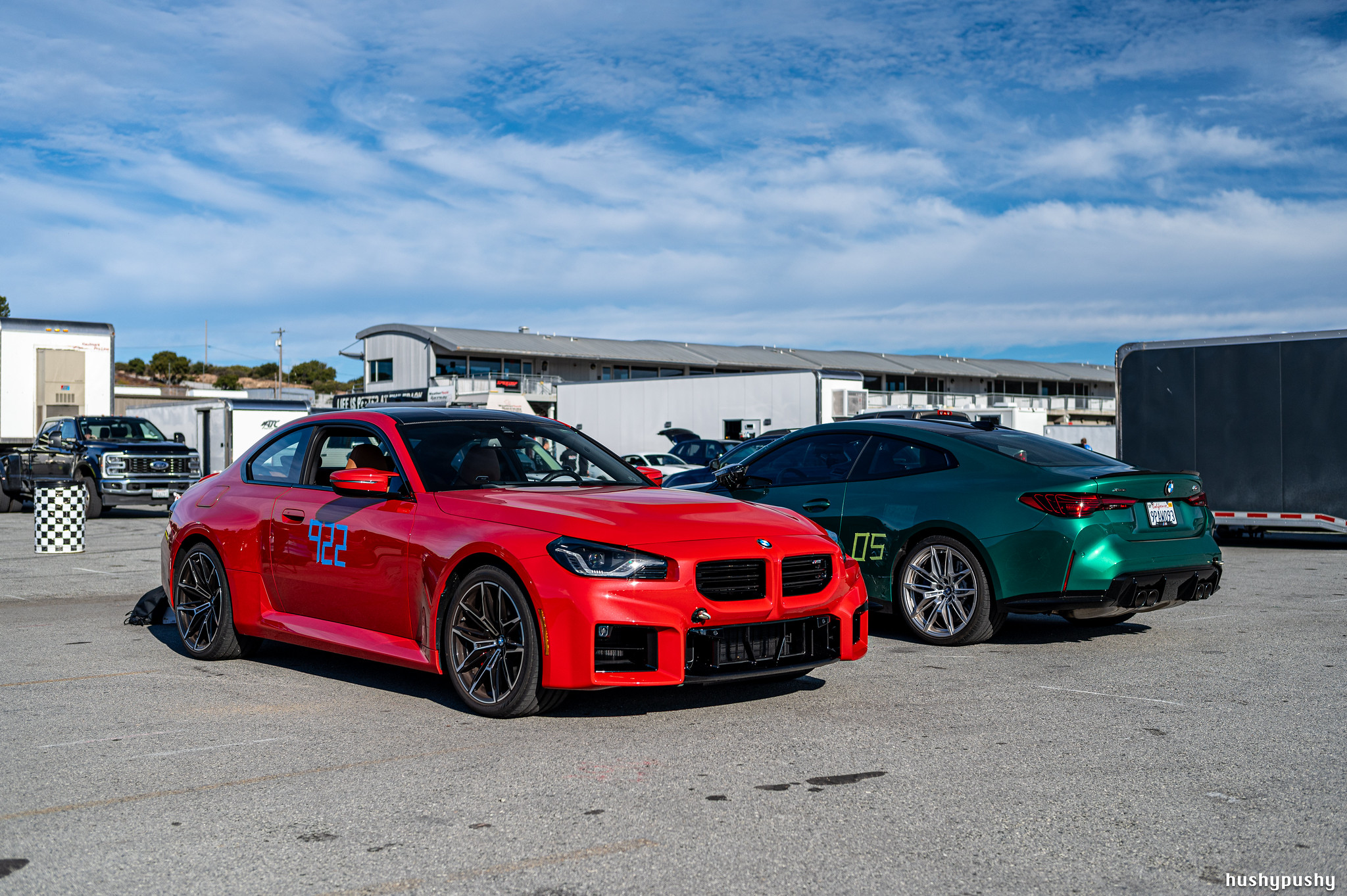
Even uncool cars become cool at the track. On top of growing bigger, heavier, and more numb through the years, the new BMW’s are hideously ugly to boot. And yet, glistening in the paddock of a race track wearing numbers made of tape, all of my negative thoughts melt away and I just see two cars in great colors, ready to be enjoyed by their owners.
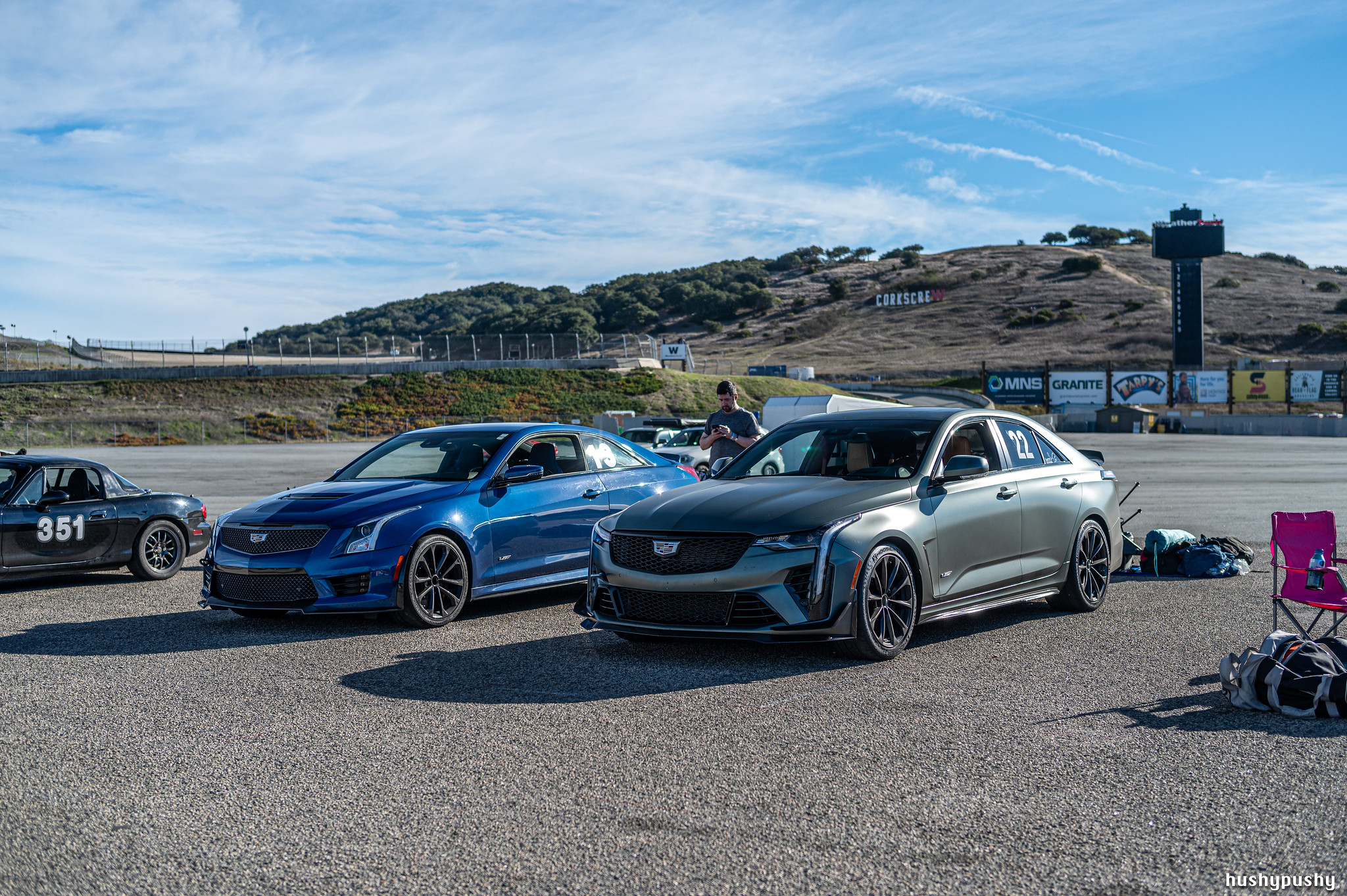
Regarding these new and expensive sporty luxury cars, I often hear that “no one” will ever track them. Why do they even bother to make BMW M or Cadillac V cars track-capable if they “never” see a track? Well, in general that’s a fair observation, since the vast majority of all drivers never visit a track anyway, regardless of what car they own. But the point of making these cars track-capable from the factory is that some owners will track them, and that is a very important aspect not only for the owners who do track their cars, but also the owners who don’t: they all enjoy the reassurance that their cars could do the deed, if called upon.
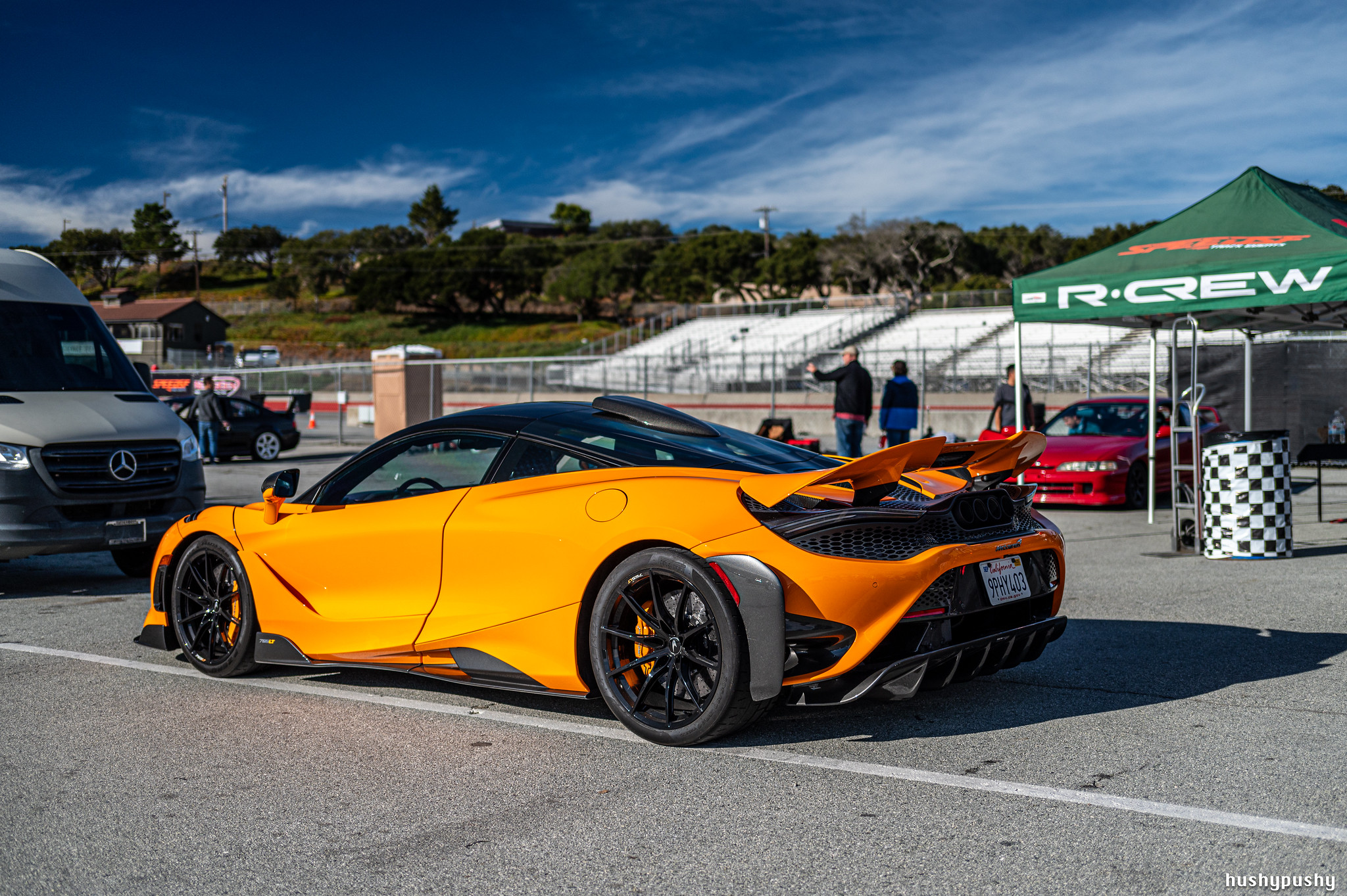
Nobody ever tracks their supercar, and they’re all registered in Montana right? Well, this 765LT owner not only paid California sales tax, they’re also out there enjoying the car on a closed course in the California sun.
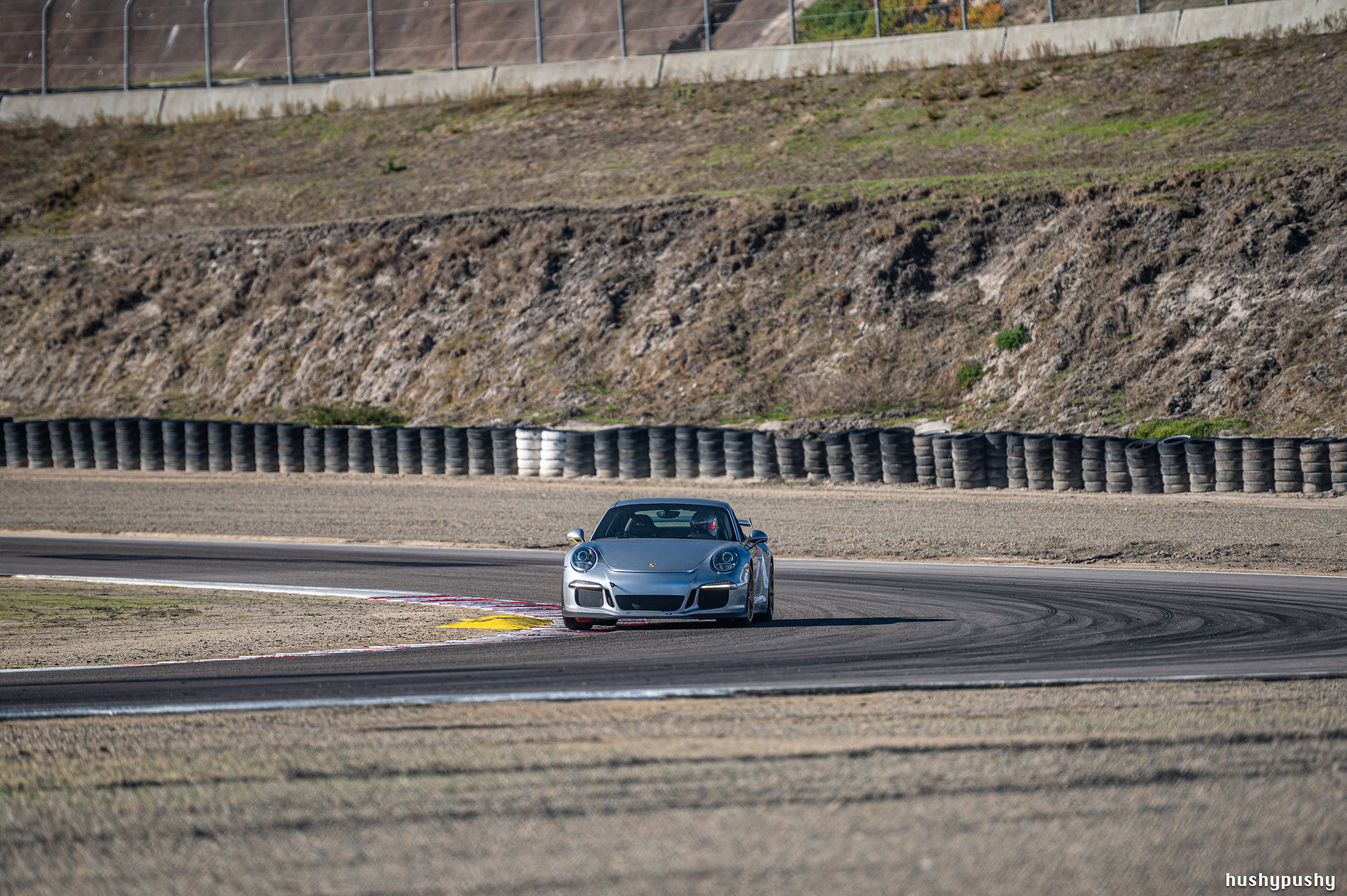
Common wisdom says stay away from 991.1 GT3’s: not only were all of their engines recalled for a finger follower issue, for which they received a 10 year/120,000 mile engine warranty, they’re all mated to automatic gearboxes. But actually, the new engines appear to be stout and the PDK is what you want on a track anyway.
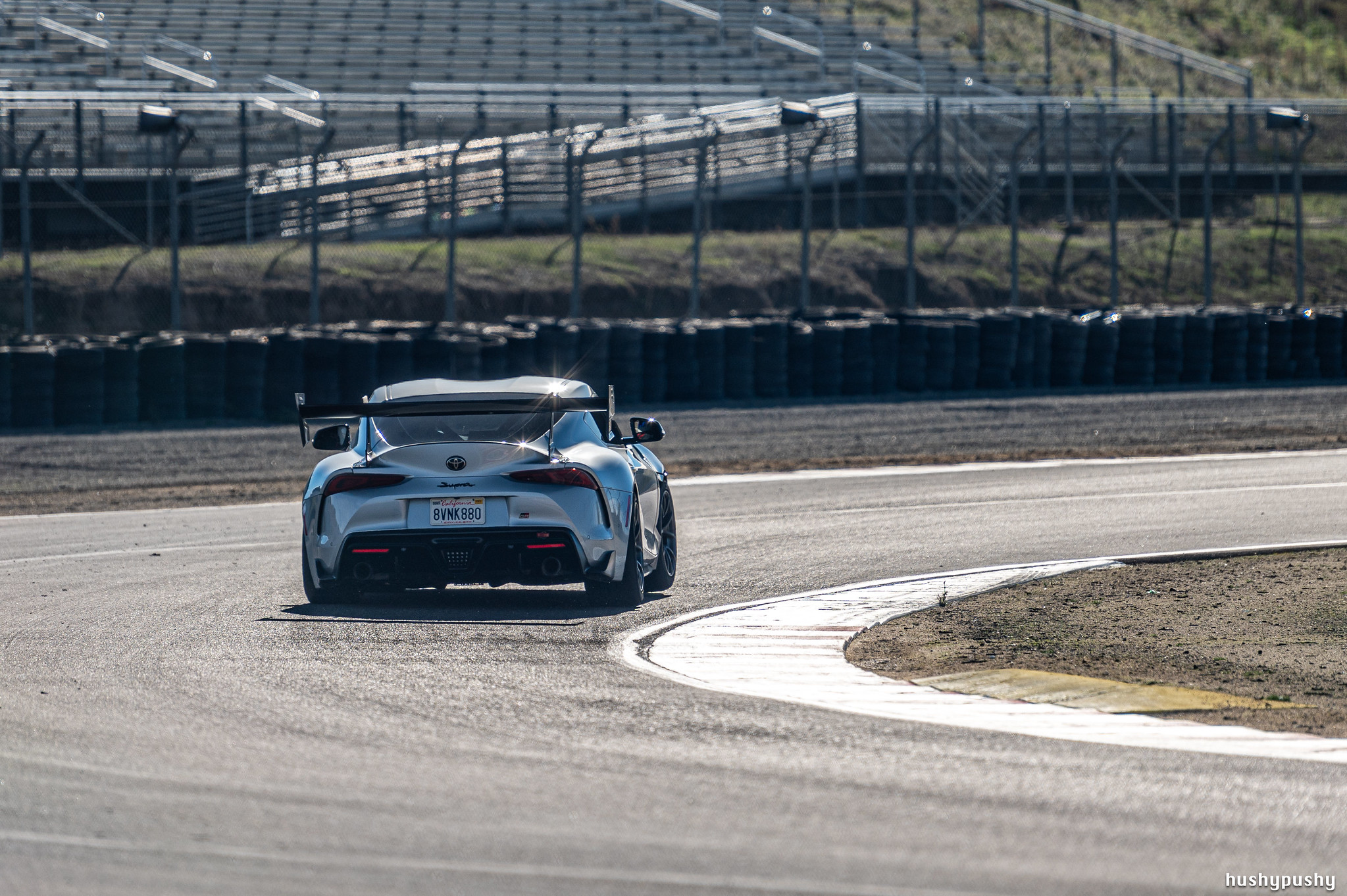
There are a few spots at Turn 3 and 4 where you can shoot through the spectator fence into the photographer’s hole in the catch fencing of the track. In the morning this is a pretty rough place to shoot as you can see from the angle of the sun, but it’s a handy place to start because these are the closest turns to the paddock. Also note another unloved performance car that’s been modded and wrung out, the new Supra.
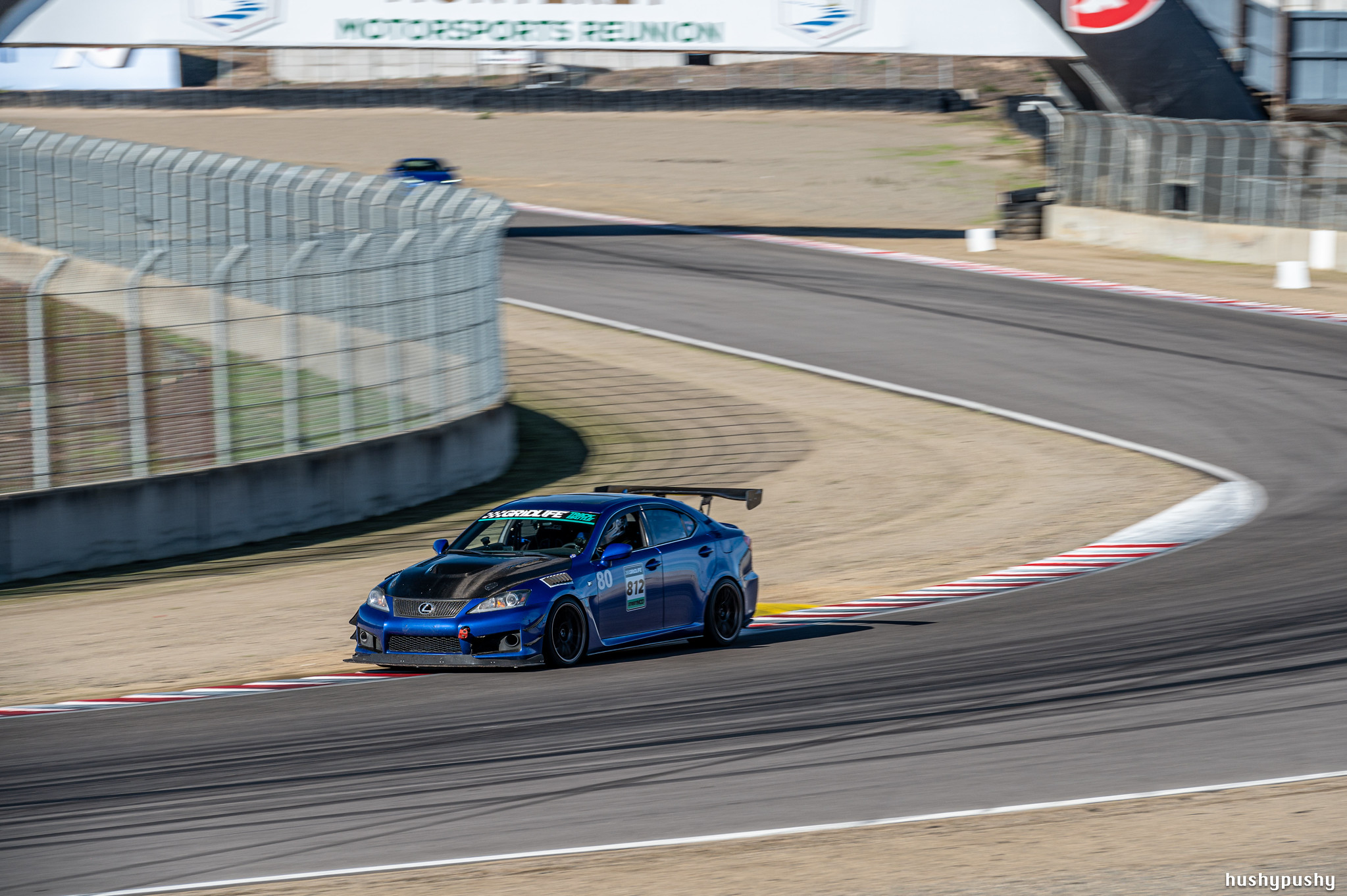
As I made my way east and south around Turn 4 and up into the grandstands, the light came to me. Like most people, when I first started shooting events I bemoaned the harsh light of midday, which plagues most events that inevitably take place in the middle of the day. However, with time, I’ve realized that harsh light is simply another challenge, to be tackled in composition or post-processing–and frequently both. On another note, when was the last time you saw an ISF on the track or canyons? There’s a theme developing here: half the cars at a track day are the 20+ year old BMW’s and Miatas that you expect to see, but the other half are all the cars that people think never go to the track.
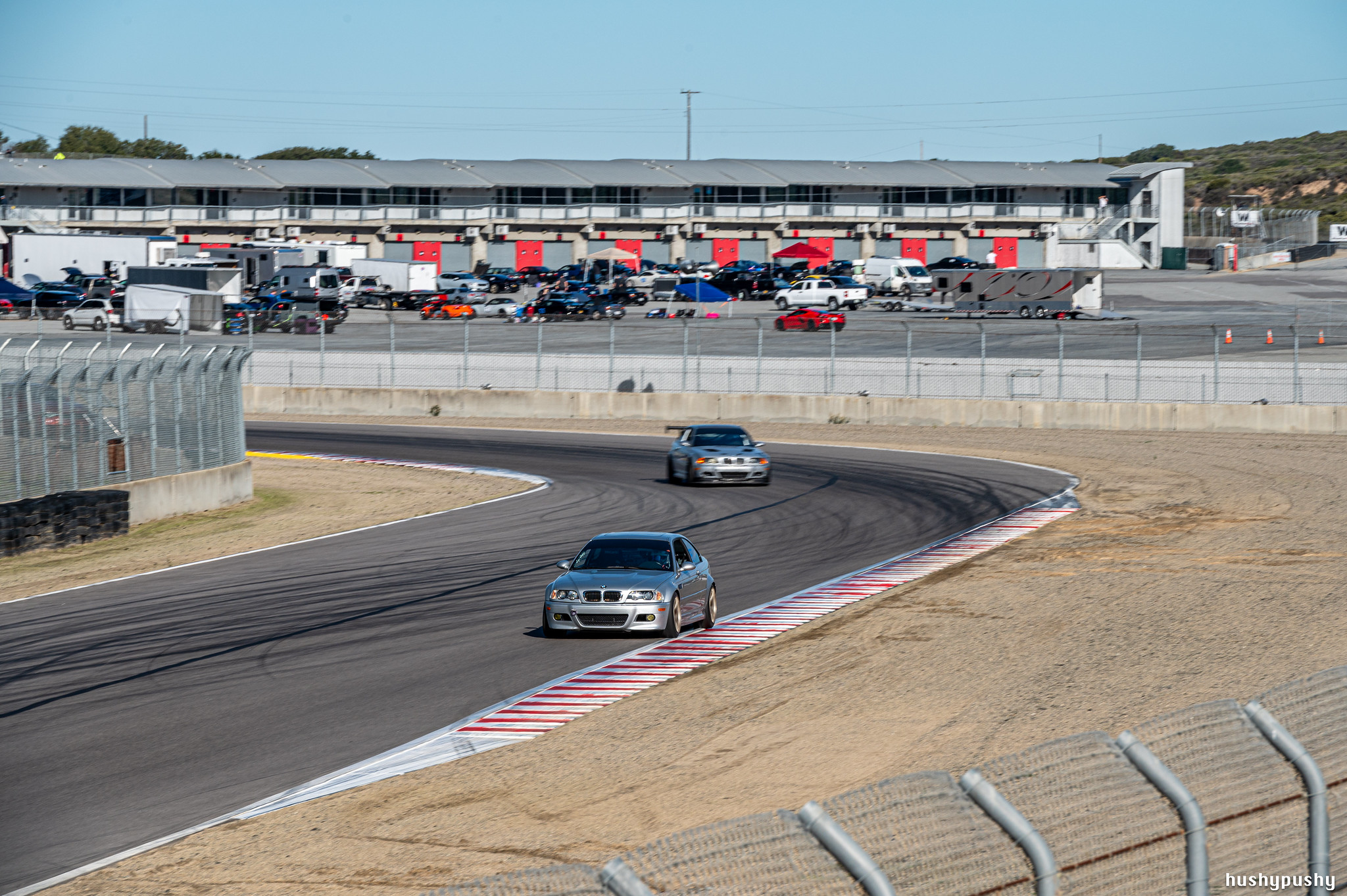
Unfortunately, I made a grave error before this track day: I forgot my monopod at home!! It’s not impossible to shoot without it, but for me it’s much harder to pan while holding the heavy lens so I wasn’t able to shoot as low of a shutter speed as I normally do. And since holding that weighty gear without the monopod induces a little more camera shake, I wasn’t able to crop as tightly as I usually do because the ultimate sharpness wasn’t there. However, I knew this going in, so I just compensated: most of the photos here are a wider frame than I usually shoot at the track, and I stuck to higher shutter speeds as well, rarely dipping below 1/160th of a second.
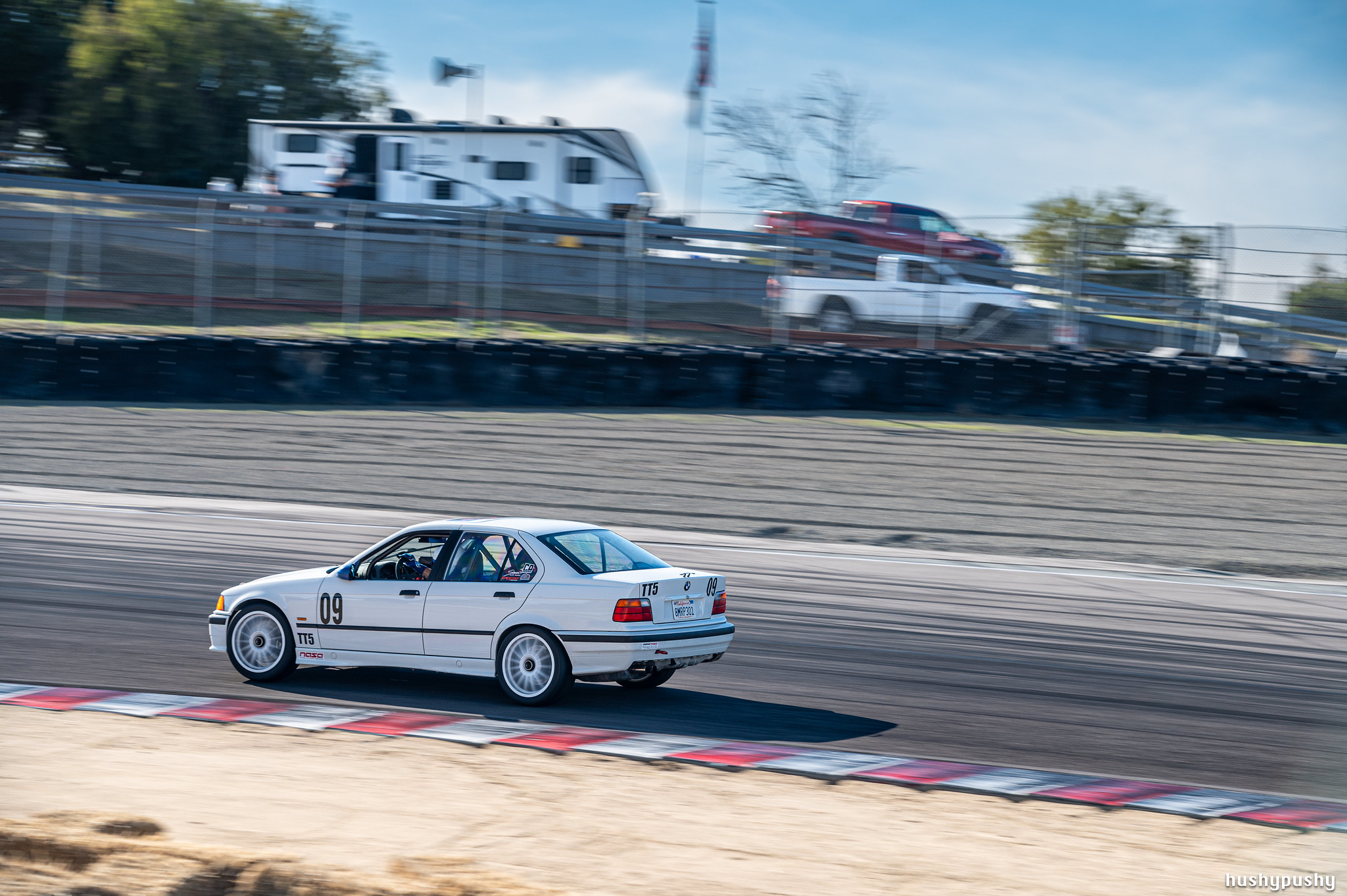
Why a shutter speed of 1/160? Over the years that’s just become my default speed for motorsports; it’s just slow enough to get a bit of motion blur in the wheels, but fast enough where it’s relatively easy to get a clear shot. When I have my monopod, I usually start with 1/160 and gradually move the shutter slower to get a more interesting pan, or faster if I want to make the image sharper.
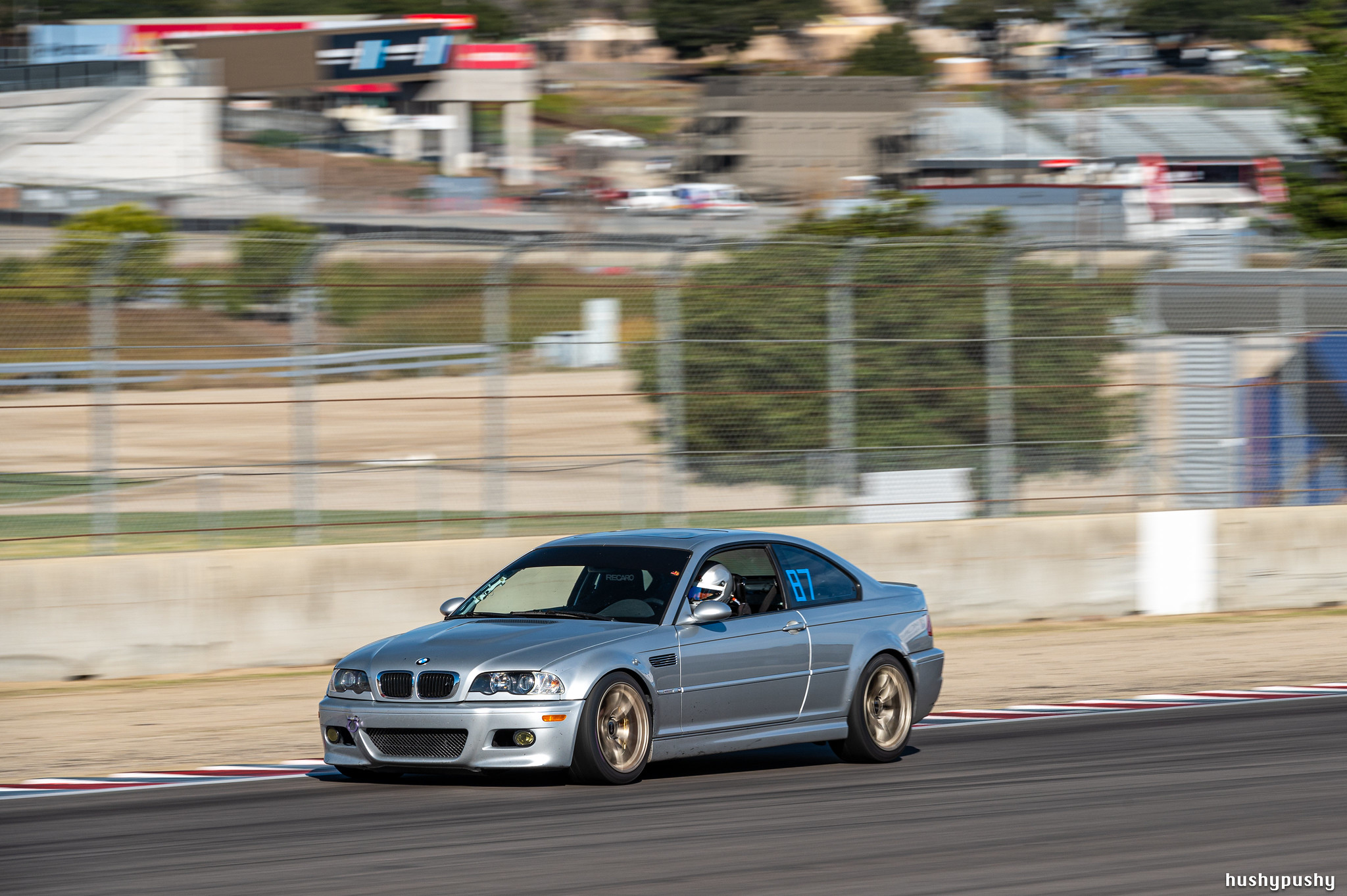
To me, shooting at the track is all about dynamic vehicle movement. The simplest action shot is just a car driving a constant speed in a straight line, but that’s the same as shooting a parked car. I’ve always loved shooting this entry into Turn 5 because you see the cars leaning on their front axle as they brake hard.

I hope this guy’s tires lasted all day. He was not driving casually, and there was smoke pouring off the front tire as it ground into the fender all the way through Turn 4 (and probably every other turn too!).
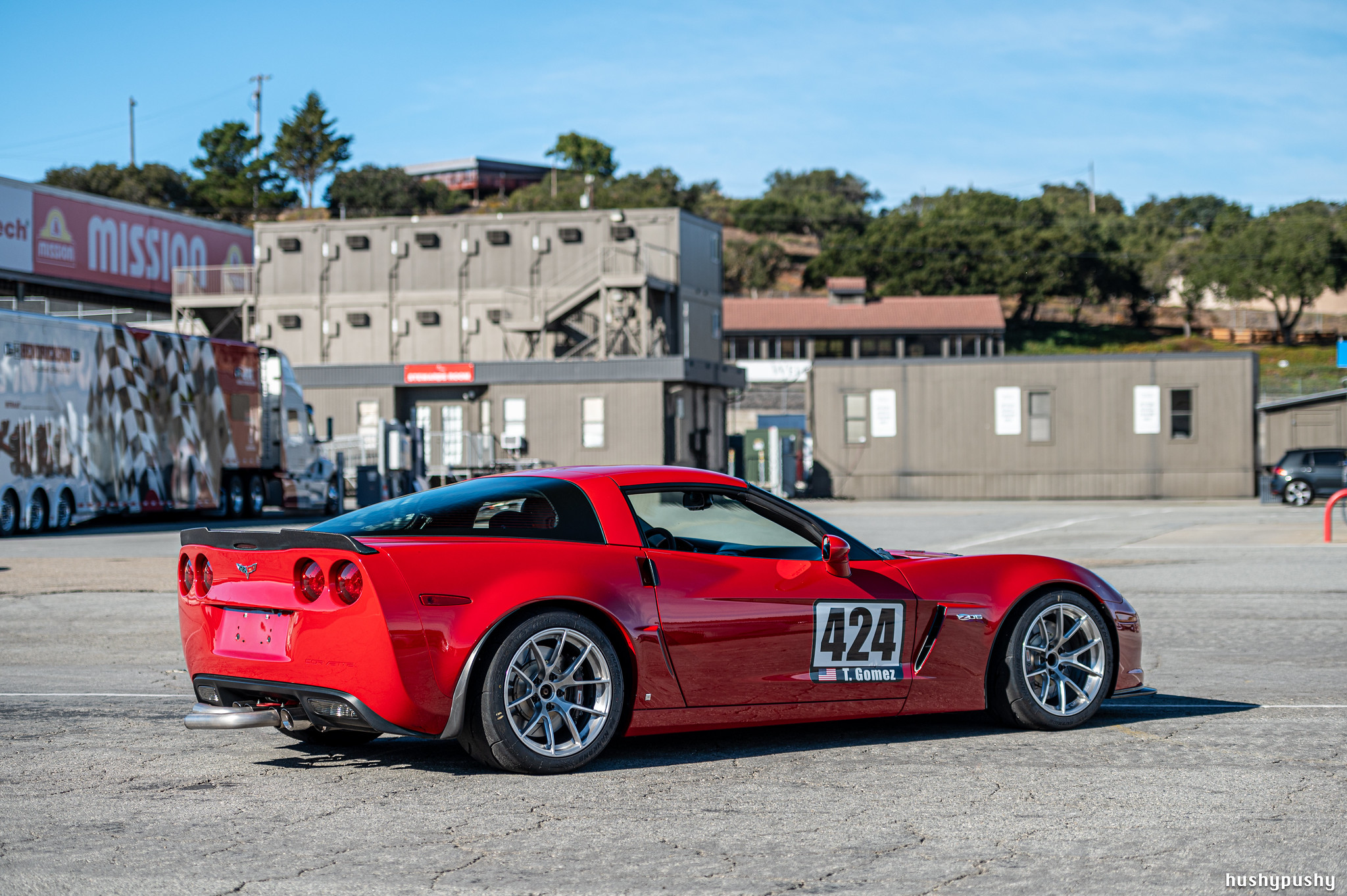
Shown here is a unique local specialty, the “Laguna Pipe”. For those unaware, the sound restrictions at Laguna Seca are incredibly strict. In fact, on most days, you are legally allowed to have a louder exhaust as you drive on Highway 68 next to the track than you are while driving on the race track itself. To monitor this rule, they set up a sound booth on the outside of the track on the exit of Turn Five. No matter; people with loud cars just run turn-down pipes pointed the opposite direction.
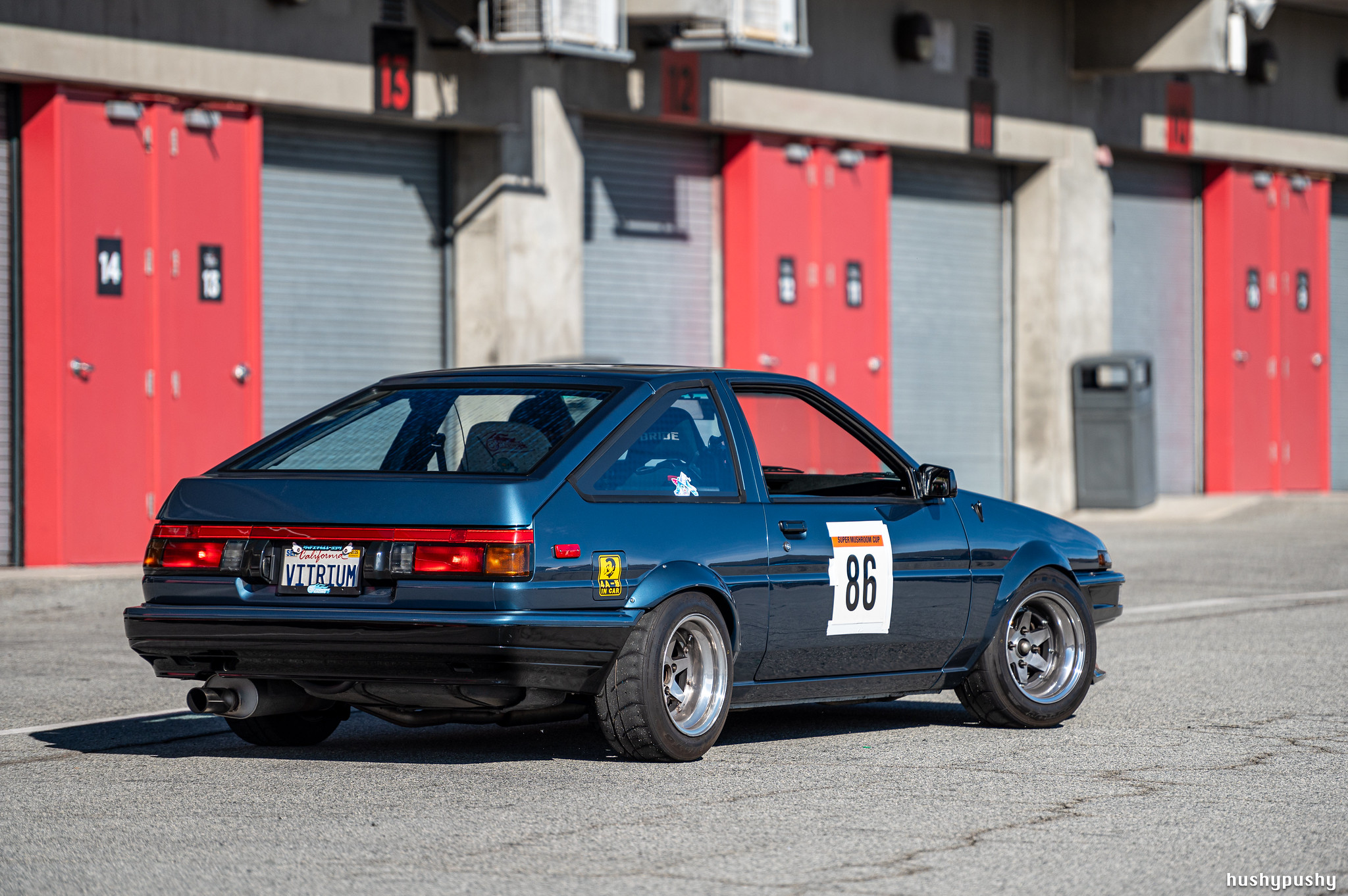
There’s another specific niche of car that I was stoked to see: the “classic that’s too valuable to track.” Nowadays, even beat up AE86’s are worth a ton of money, so while they used to be an incredibly popular drift and track car, most of them seem to have disappeared into garages and collections.
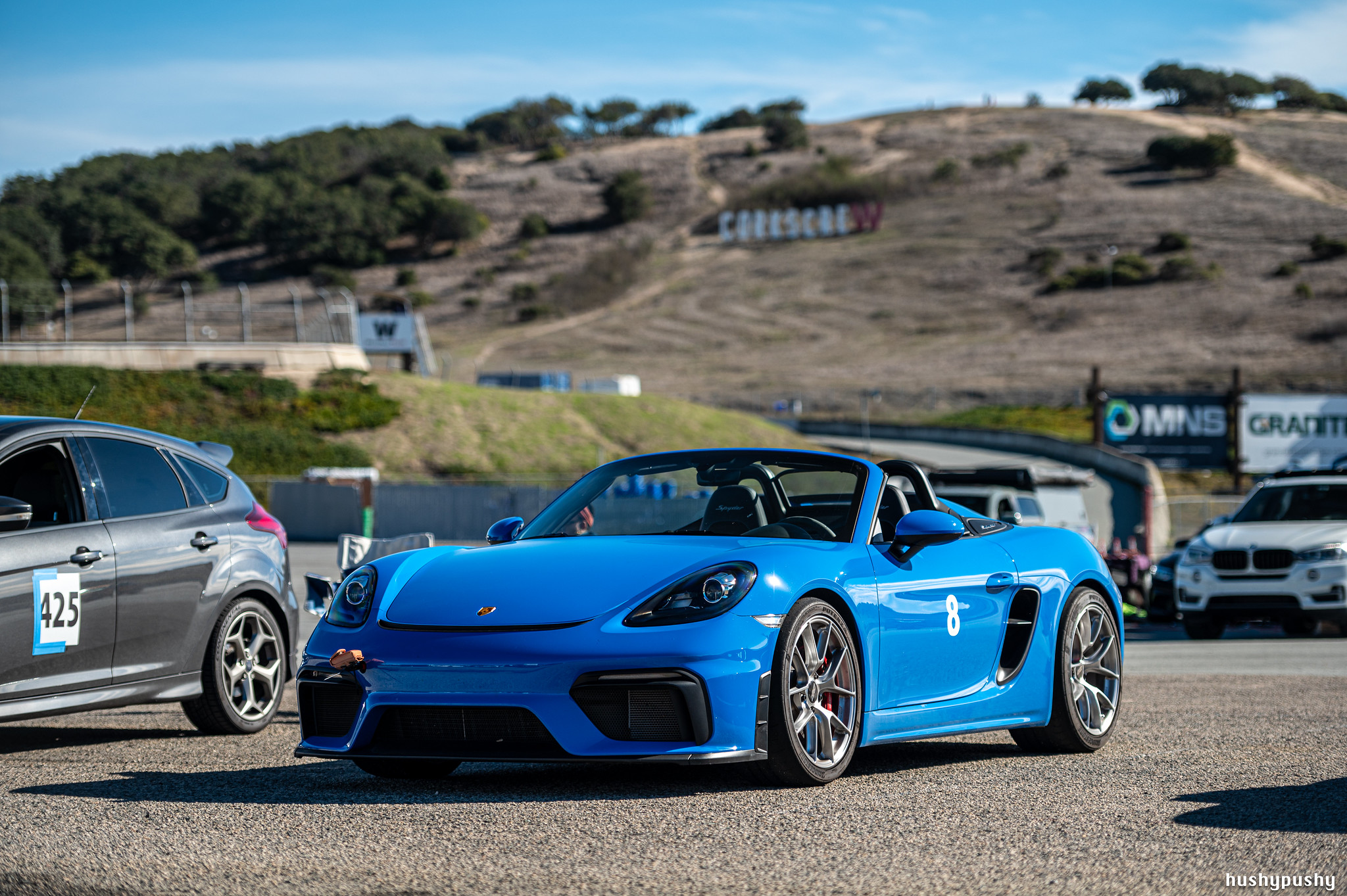
These modern GT Porsches are beginning to suffer the same fate. During the 991 era, the demand for Porsches from Andreas Preuninger’s “GT Line” skyrocketed, while production increased moderately. Naturally, due to the simple laws of supply and demand, their values have just kept snowballing. Private owners started selling their used cars for more and more, and dealerships followed suit by marking up new cars higher and higher. Porsche wanted a piece of this pie, so they started increasing MSRP’s to match. As a result, these cars that were ostensibly designed for sporty driving see far more weekends hidden in a garage than tearing up tracks or back roads.
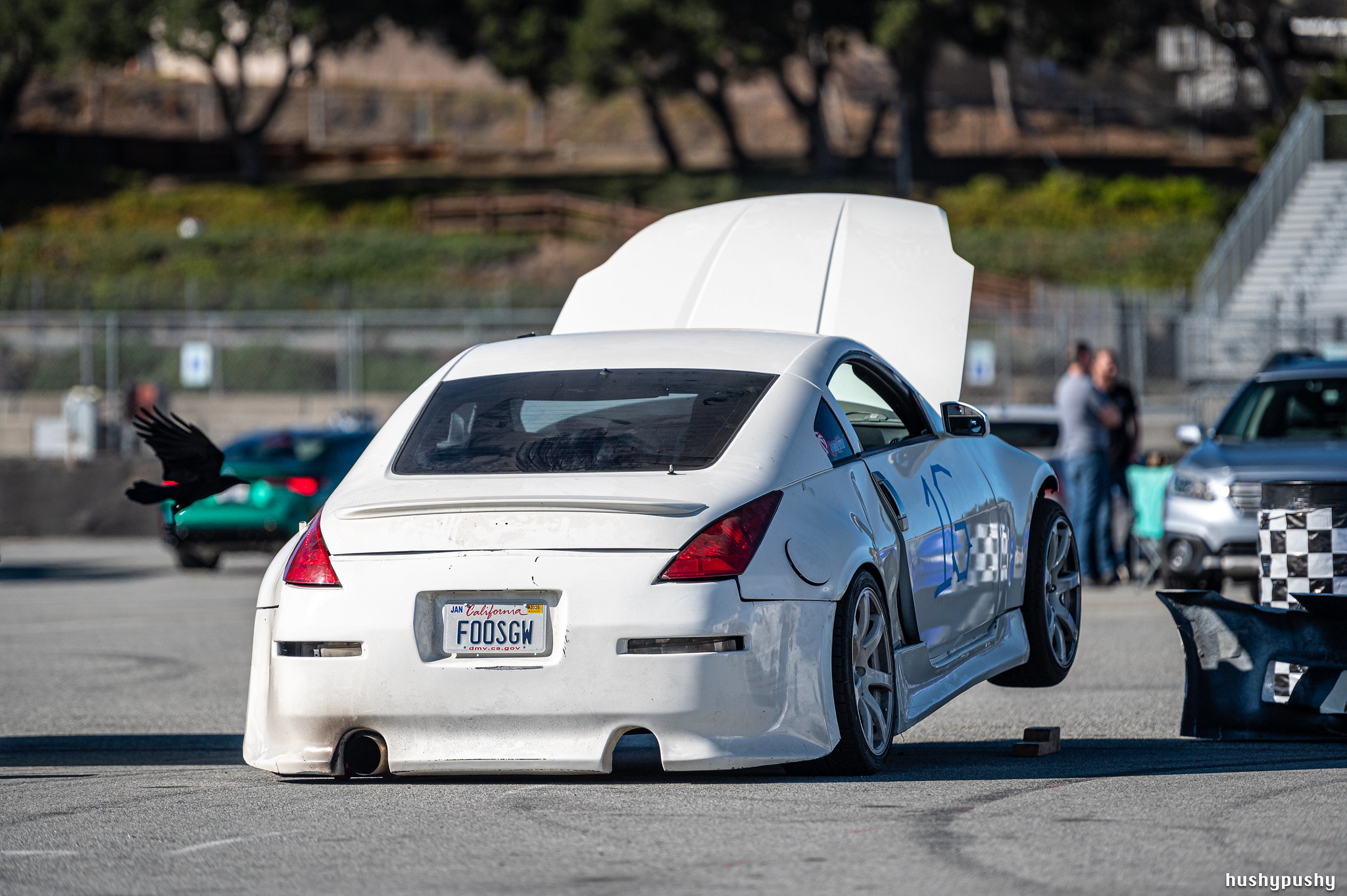
This plate has to be a reference to Foos Gone Wild, right? Also, what kind of bird is that? I didn’t notice while shooting, but while editing this photo I noticed that a bird took off right before I pushed the shutter, and created a perfect silhouette.
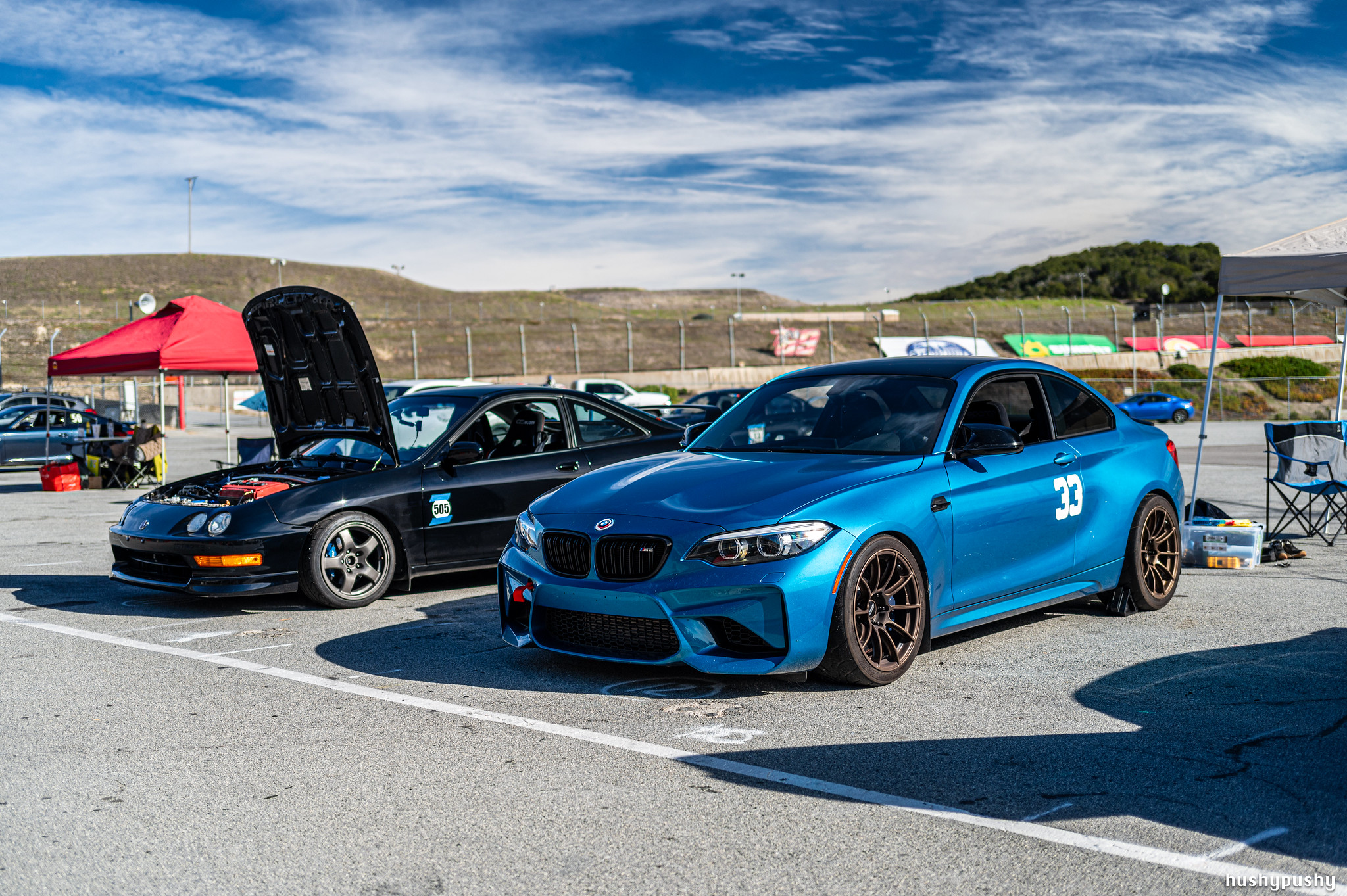
When the M2 first came out, I remember quite the furor about that “M” front bumper. These days it looks fairly tame and simple, compared to…
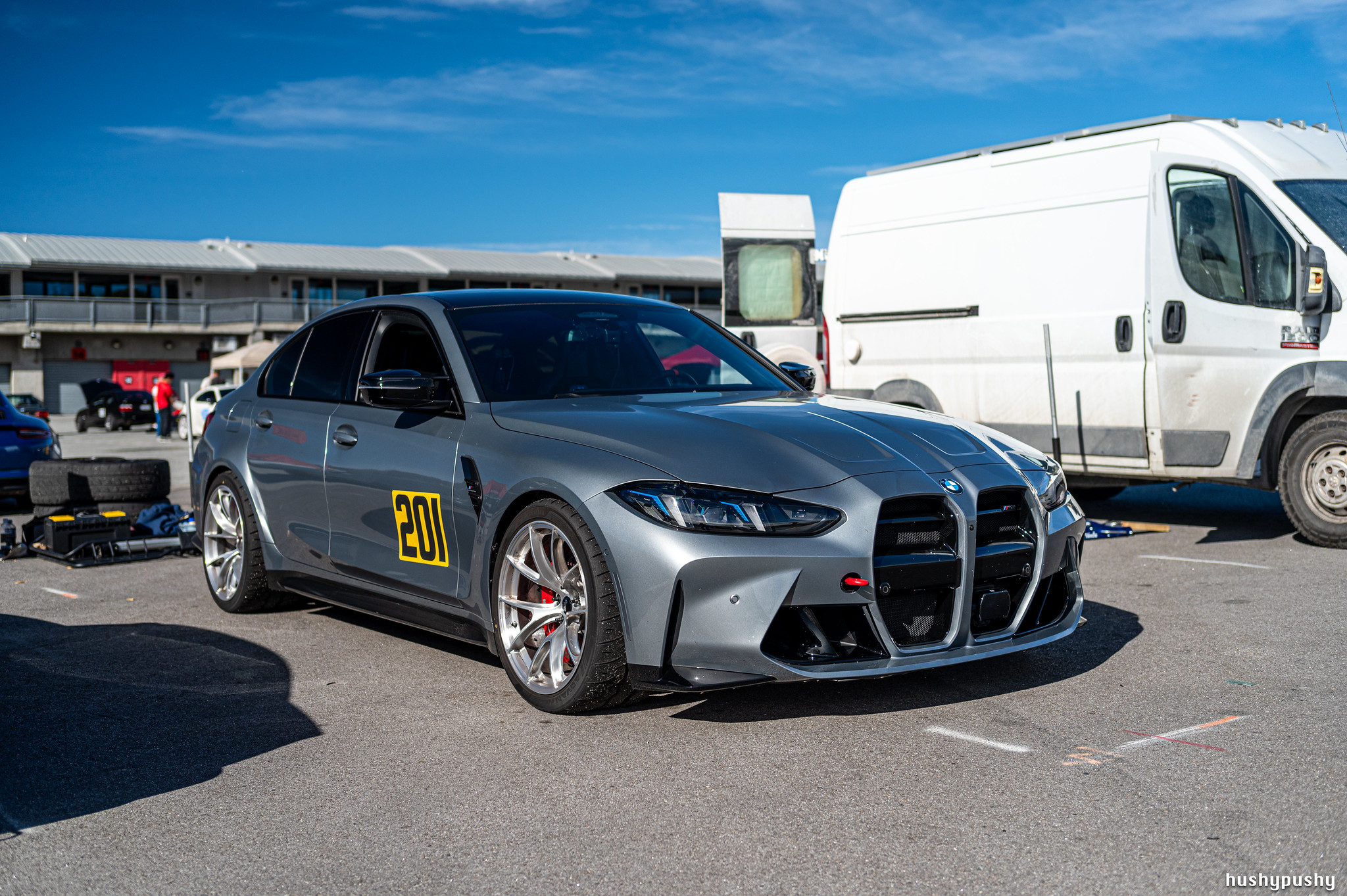
Gah! Do you think we’ll ever get used to that huge drooping snout with gaping nostrils and angular sagging chubby cheeks? I’ve never liked that filet that kicks up in the rear door, nor the oddly-placed sharp shoulder line that makes the front end look like it’s from a different car. And (thankfully not shown here) the lower rear bumper that protrudes like a smoothed out version of the “pooping out another car” rear of the i3 and i8. And since the F80 M3 I’ve hated the rear door and fender flare interaction; it always makes your car look like it has mismatched panels. But, again: sitting here in the paddock, wearing forged Apex VS-5RS on Yokohama AD09 and a magnetic racing number slapped on the door? Cool as hell.
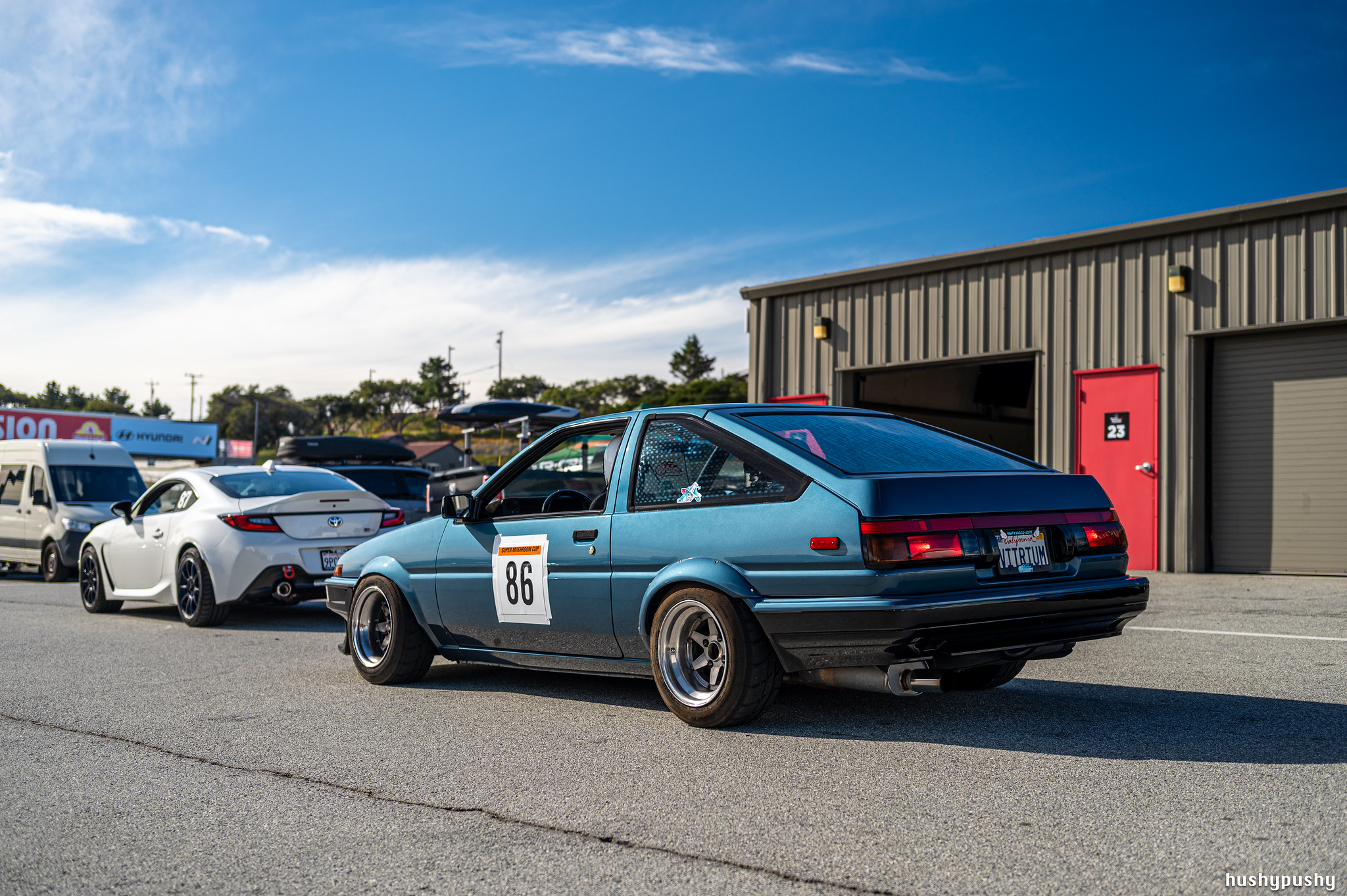
Speaking of ugly cars, it’s always sad how much the front and rear of the AE86 differed in the US-spec version with the big bumpers compared to the JDM version that this one was converted to.
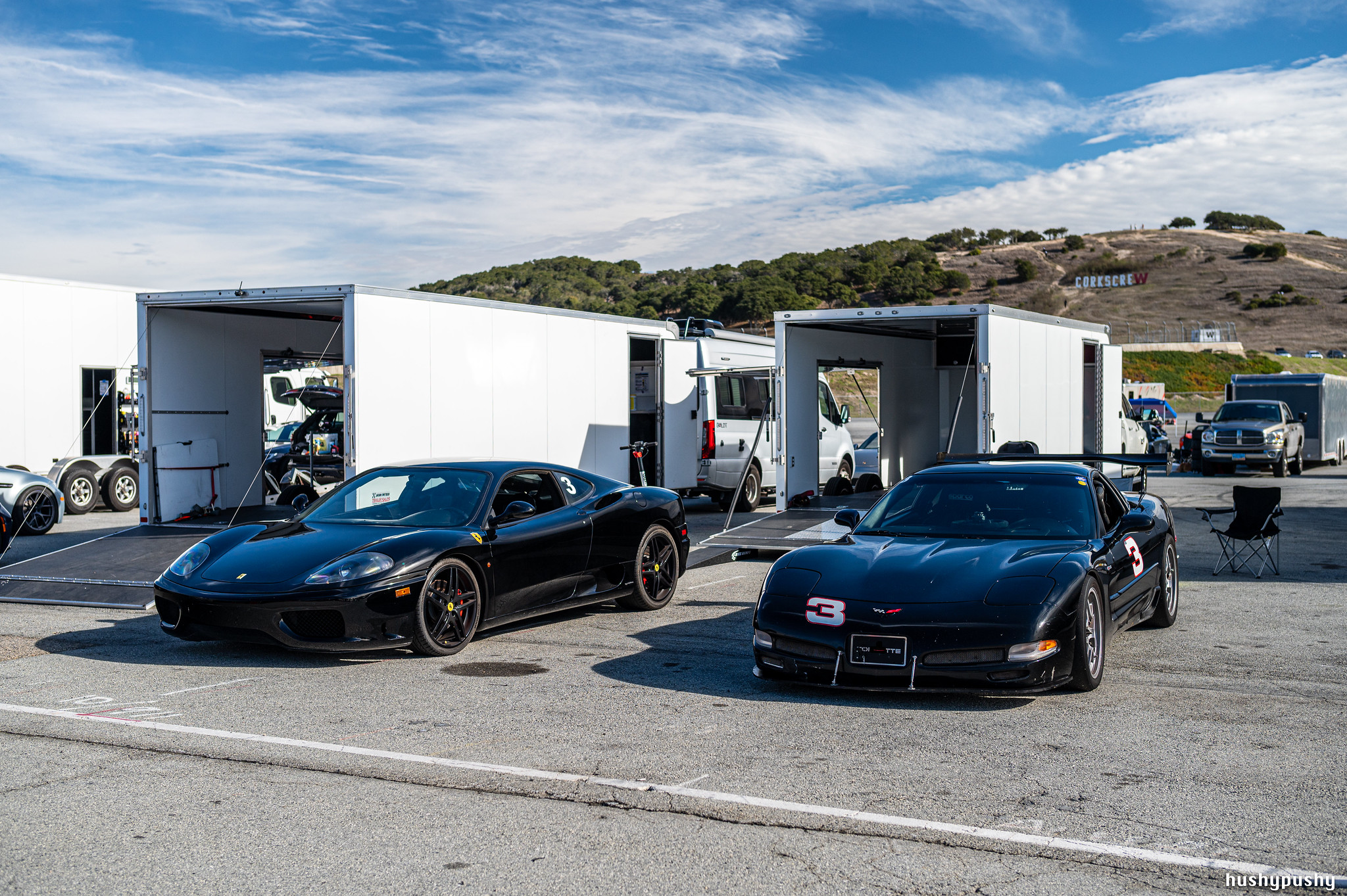
Two early 90’s heroes. They weren’t in the same run group, but it would have been cool to see them both out there battling.

Continuing the black on black pairing theme, these are two of the four DC2 Integra Type R’s at this particular track day. It’s great to see there are still some cars doing what they were designed to do while others languish in collections, now that classic Honda values are on the rise.
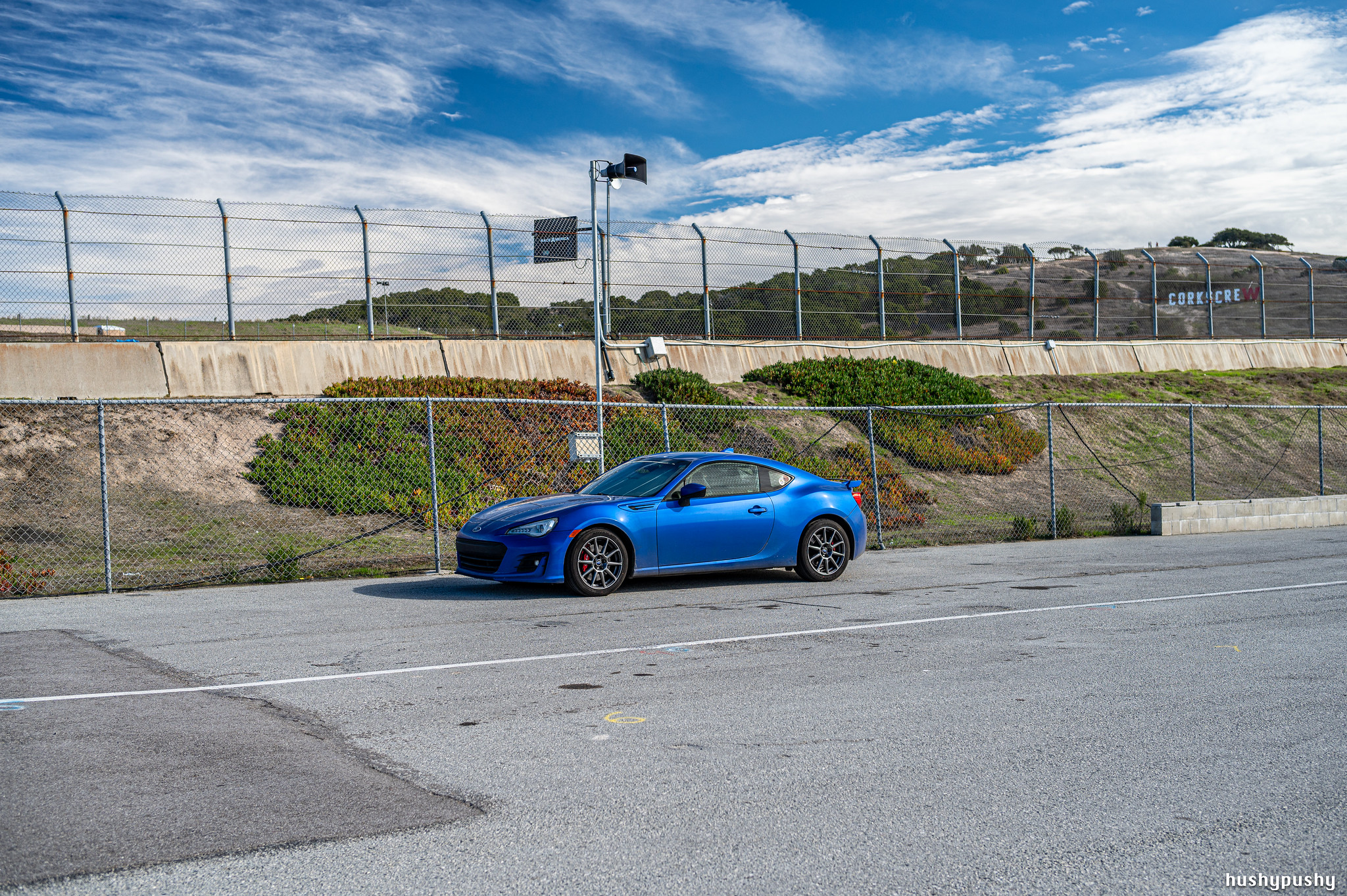
Yup, still got the ol’ BRZ. Just turned over 70,000 miles recently and it’s been great. Best car I’ve ever owned. I love this thing.
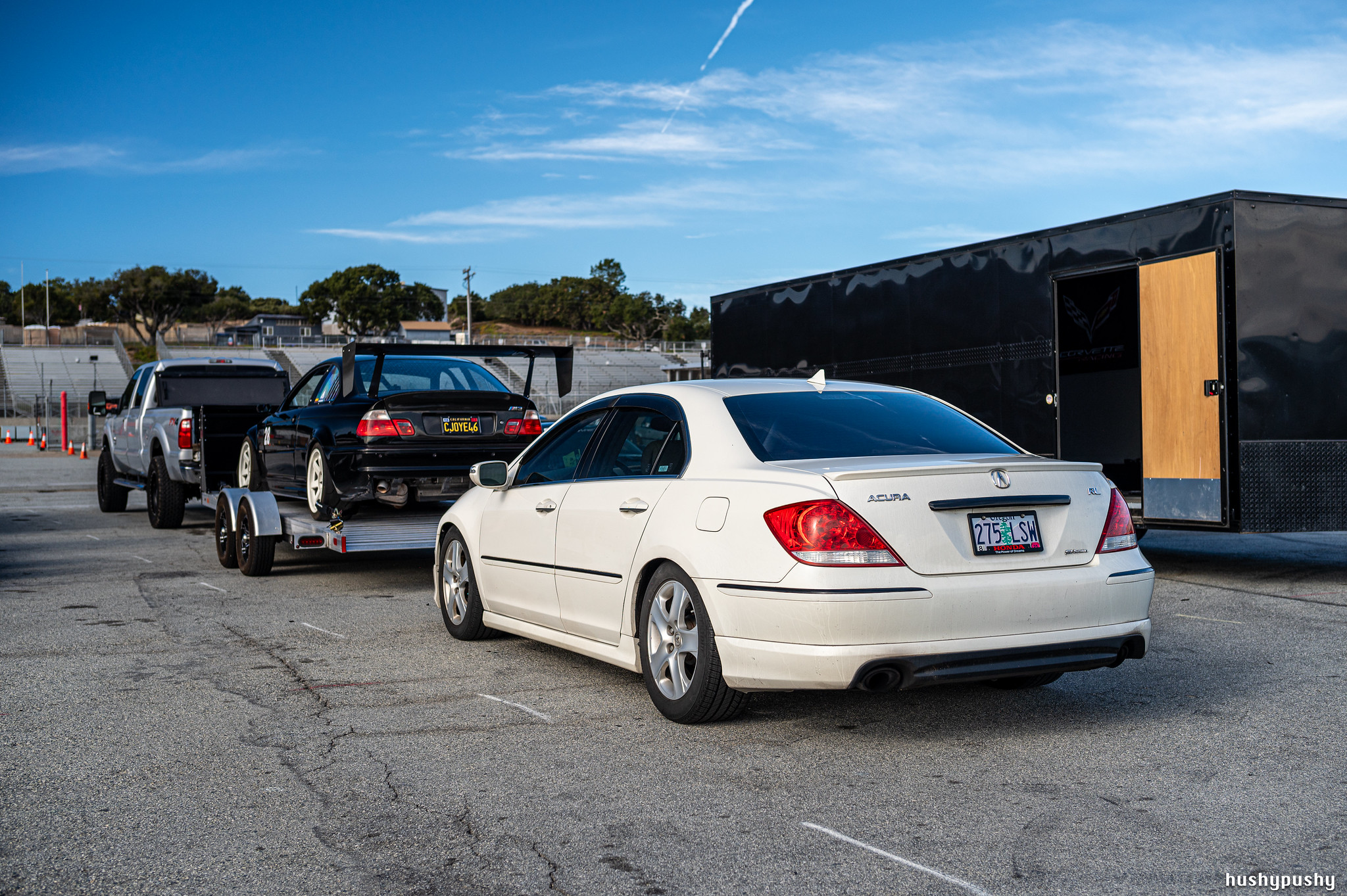
“Do you like American, German, or Japanese cars?” Yes!
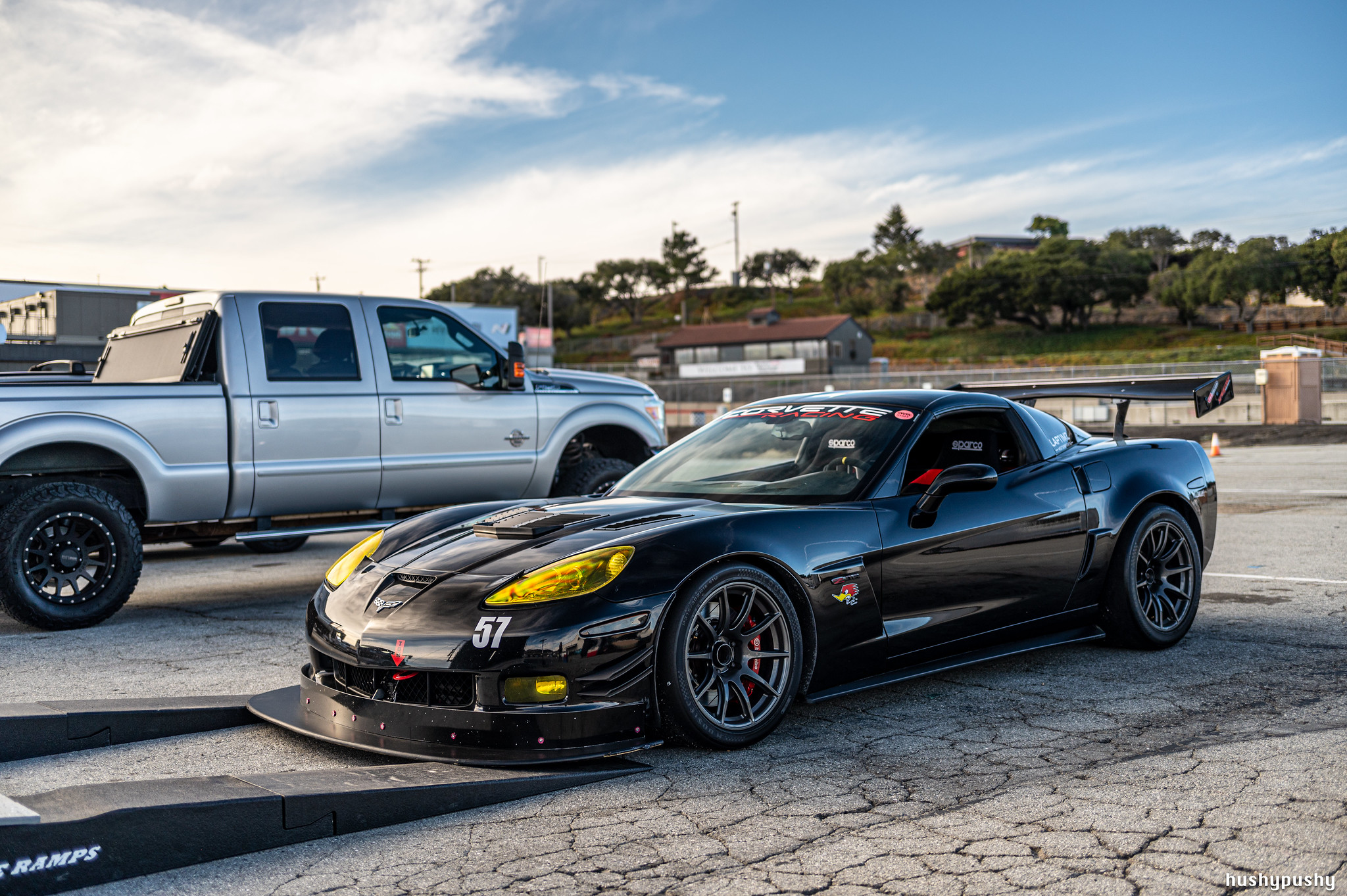
Huge Hoosiers and aggressive aero: this C6 Z06 must be a hoot at Laguna.
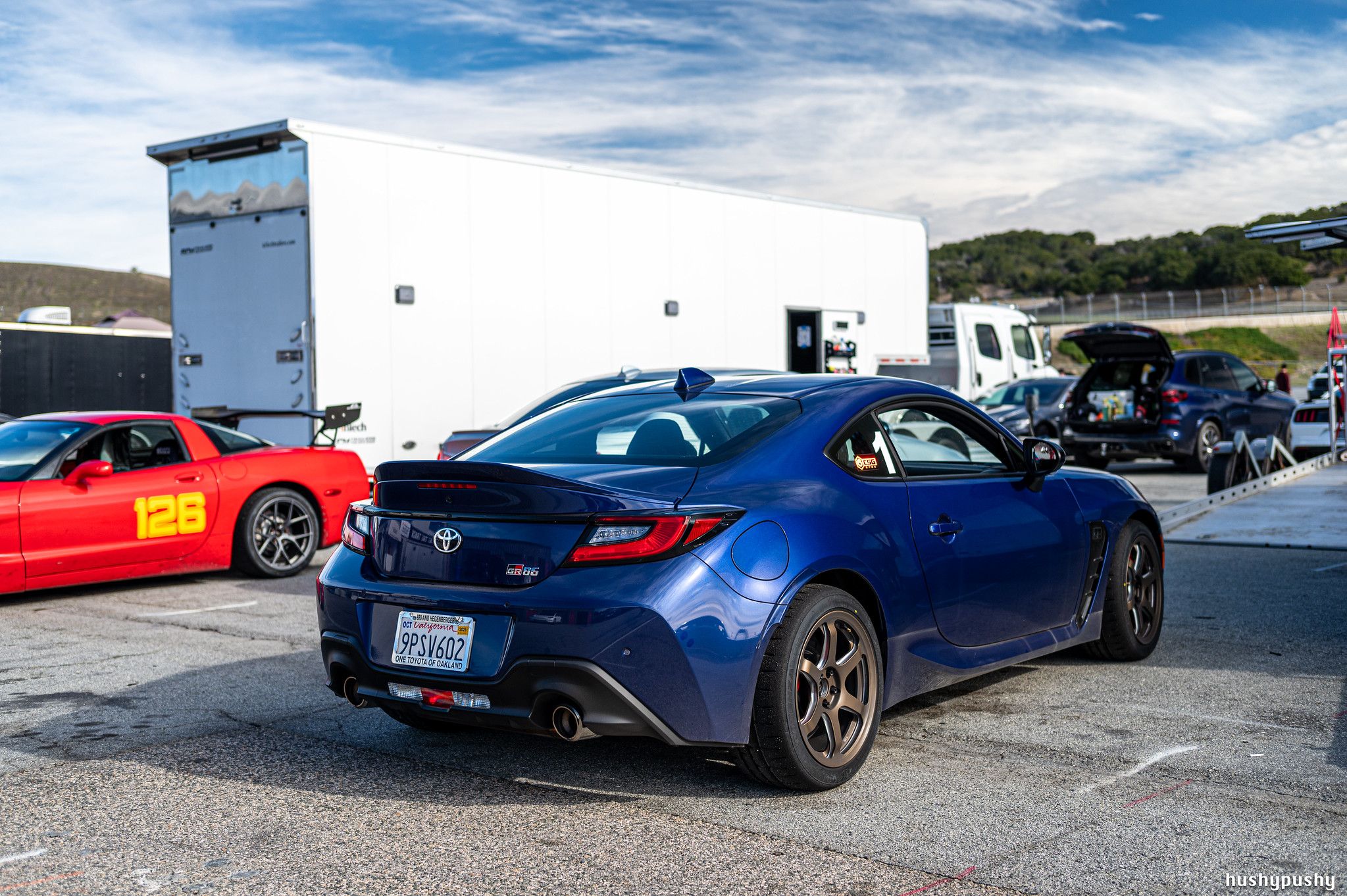
This is one of the rental cars. The GR86 is perfect for the job, being a little safer and more stable than a Miata, but still fun for all skill levels. I just hope the oiling issues don’t become a problem from a life on the track.
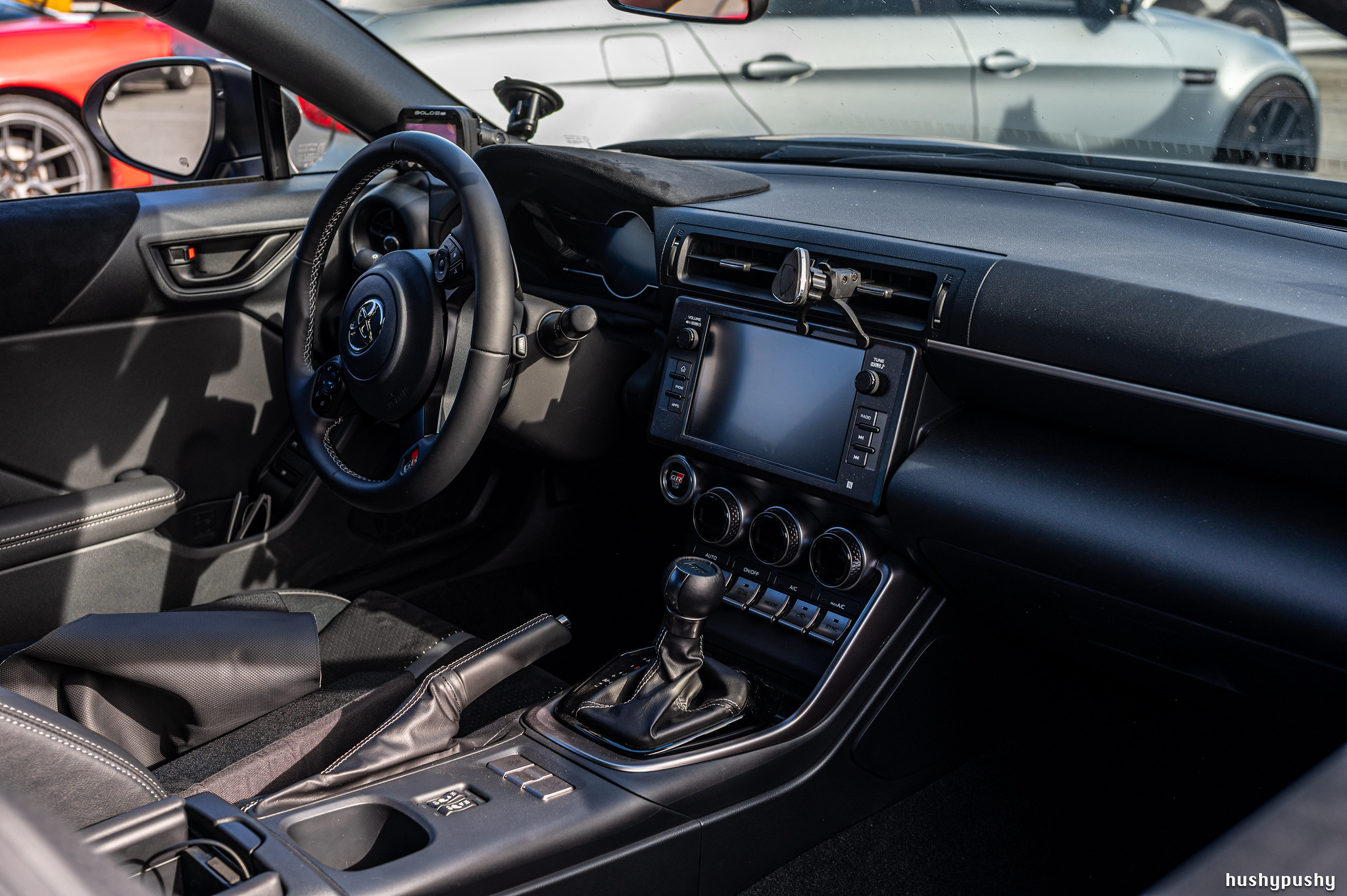
And it’s automatic! You can still shift it manually with paddles though, so you’re not solely beholden to the computer’s shift logic. I wonder if this car recognizes you’re driving hard and holds gears when you lift, downshifts when you brake, etc. I’ve driven an automatic FR-S and it will hold gears without automatically upshifting, so as long as the cooling holds up for 20 minute track sessions the only real downside would be the slight extra loss of power in the torque converter.

I went upstairs in the pit lane building and looked around. Towards Turn One, we can see the new bridge at the Start/Finish line which makes it much easier for golf cart shuttles to cross on busy race weekends. Beyond that, the old building on the outside of Turn One was demolished and replaced with a very drab looking box that probably has some very lovely facilities inside for media and VIP’s.
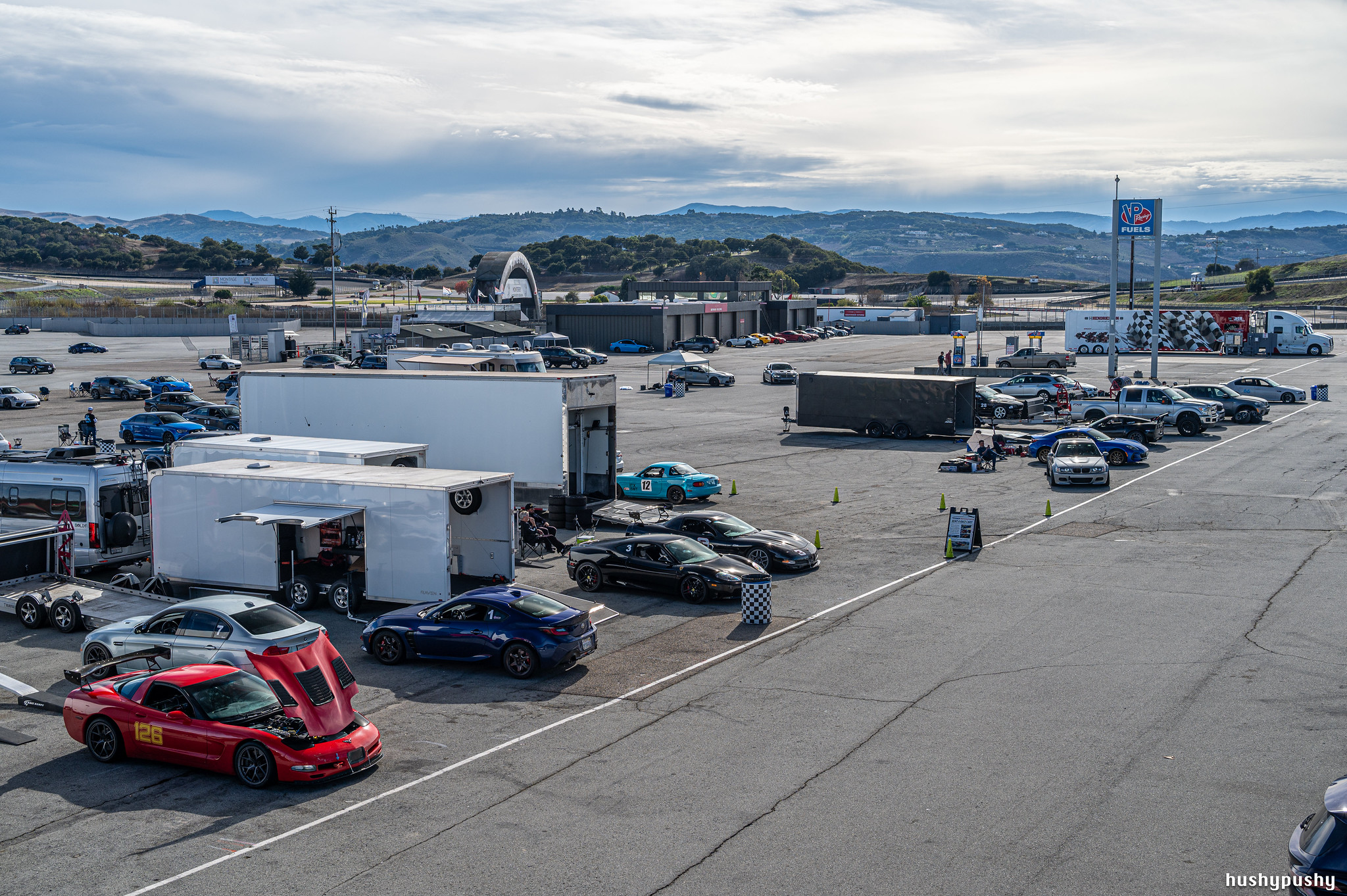
It was a perfectly clear, gorgeous day. Looking southwest, you can see the homes of people who moved in several decades after the track was founded in 1957 and then decided that the cars driving around were too loud.
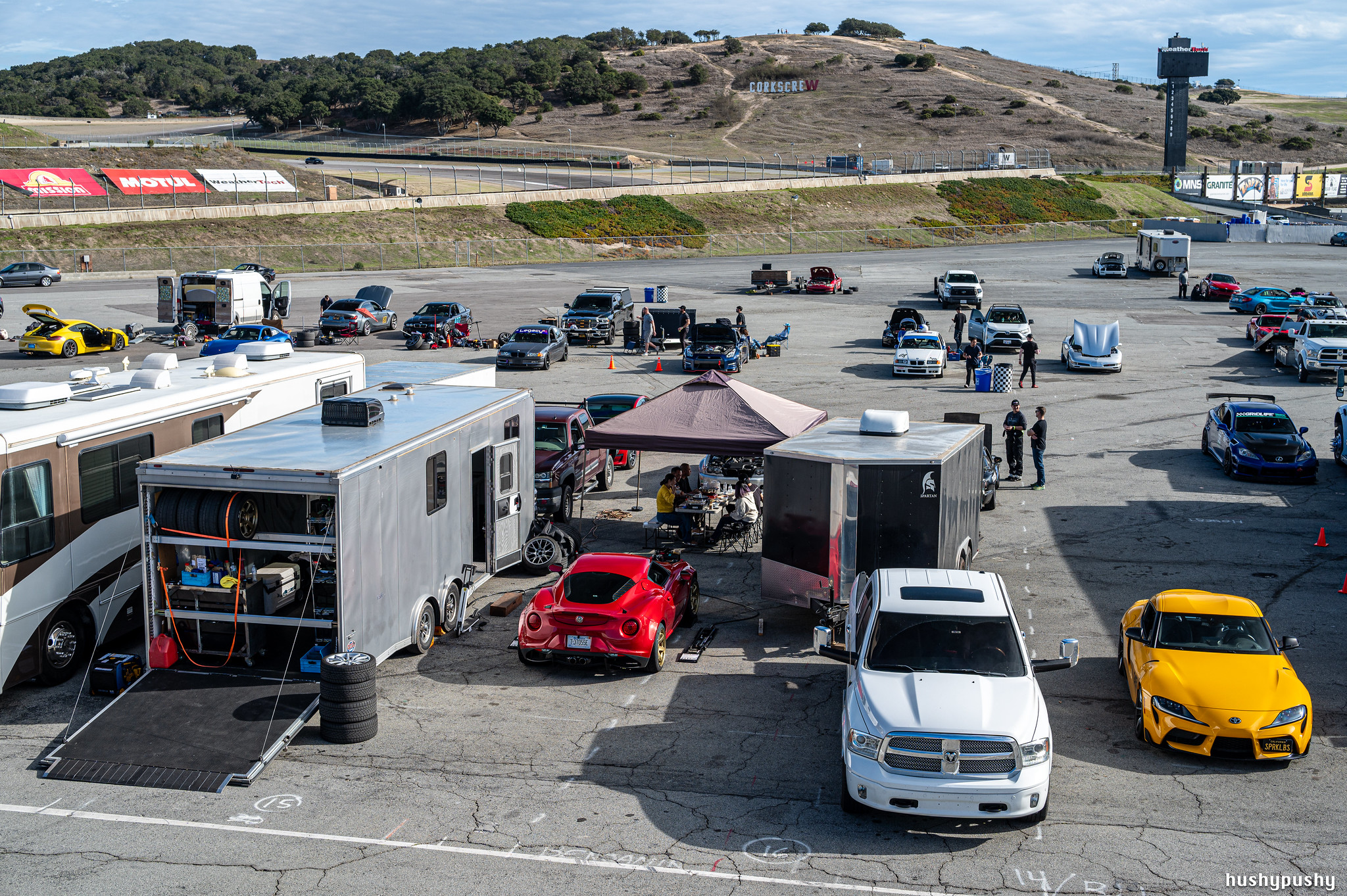
Ah yes, the glorious Corkscrew. From here it looks like a small hill, but it’s quite a hike when they’re up against it. Later in the day, I was near the scoring tower walking down when I crossed paths with a couple climbing up. “Do you want to take the short steep path, or the long easier path?” and she hmm’d and then said “okay, the steep one.” I almost interjected there because although there are multiple paths going up to the Corkscrew (you can see two of them in this image), if there is action on the track I recommend walking up the paved path on the left. Not only is it paved and shaded, but you also walk by Rainey Curve, which is an epic place to spectate. In fact, at this moment in the story, that’s where I was headed.
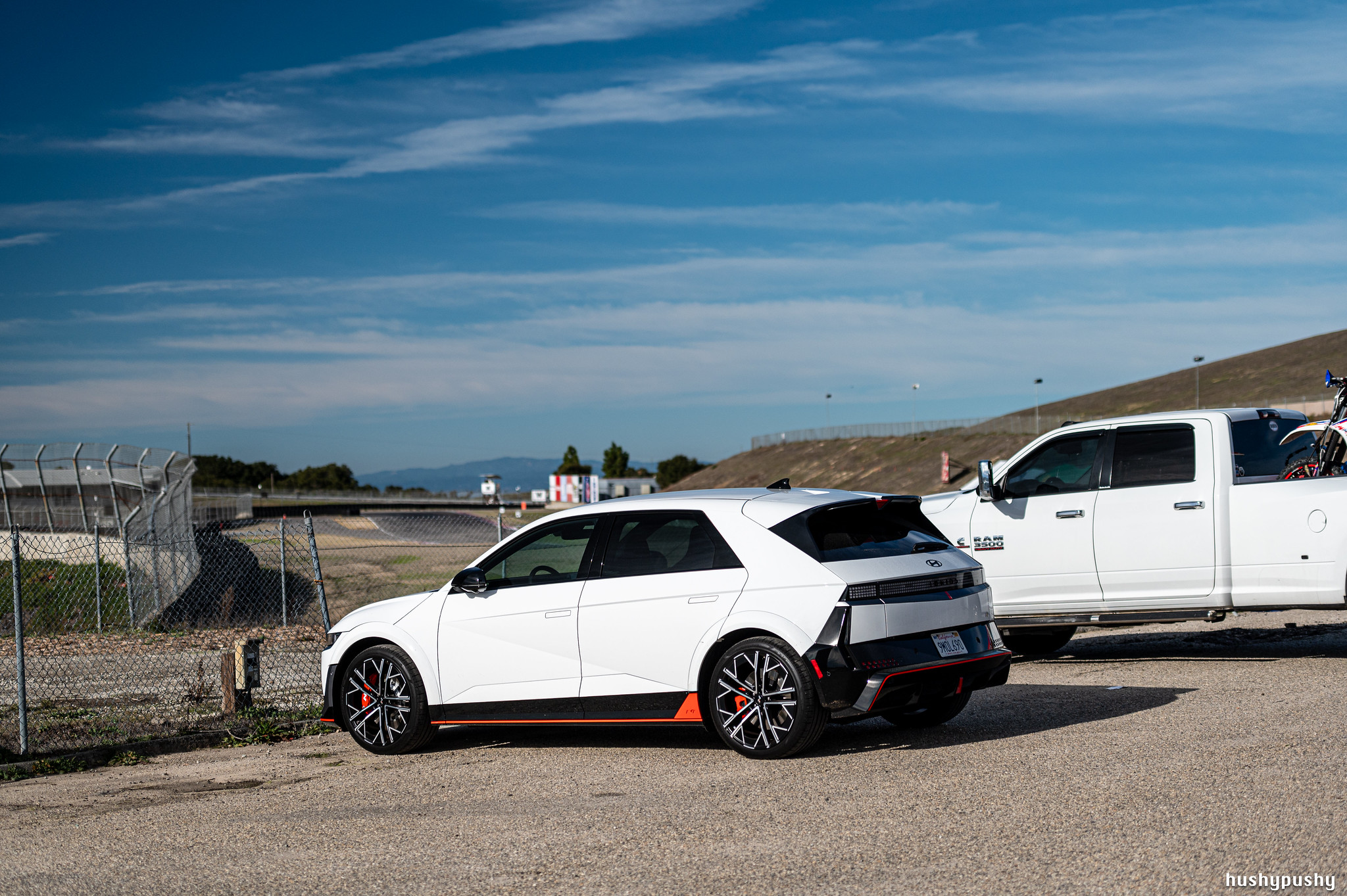
Really cool to see an Ioniq 5 N. We need more sporty EV’s, and not just fast accelerating heavy monsters that fall apart in corners.
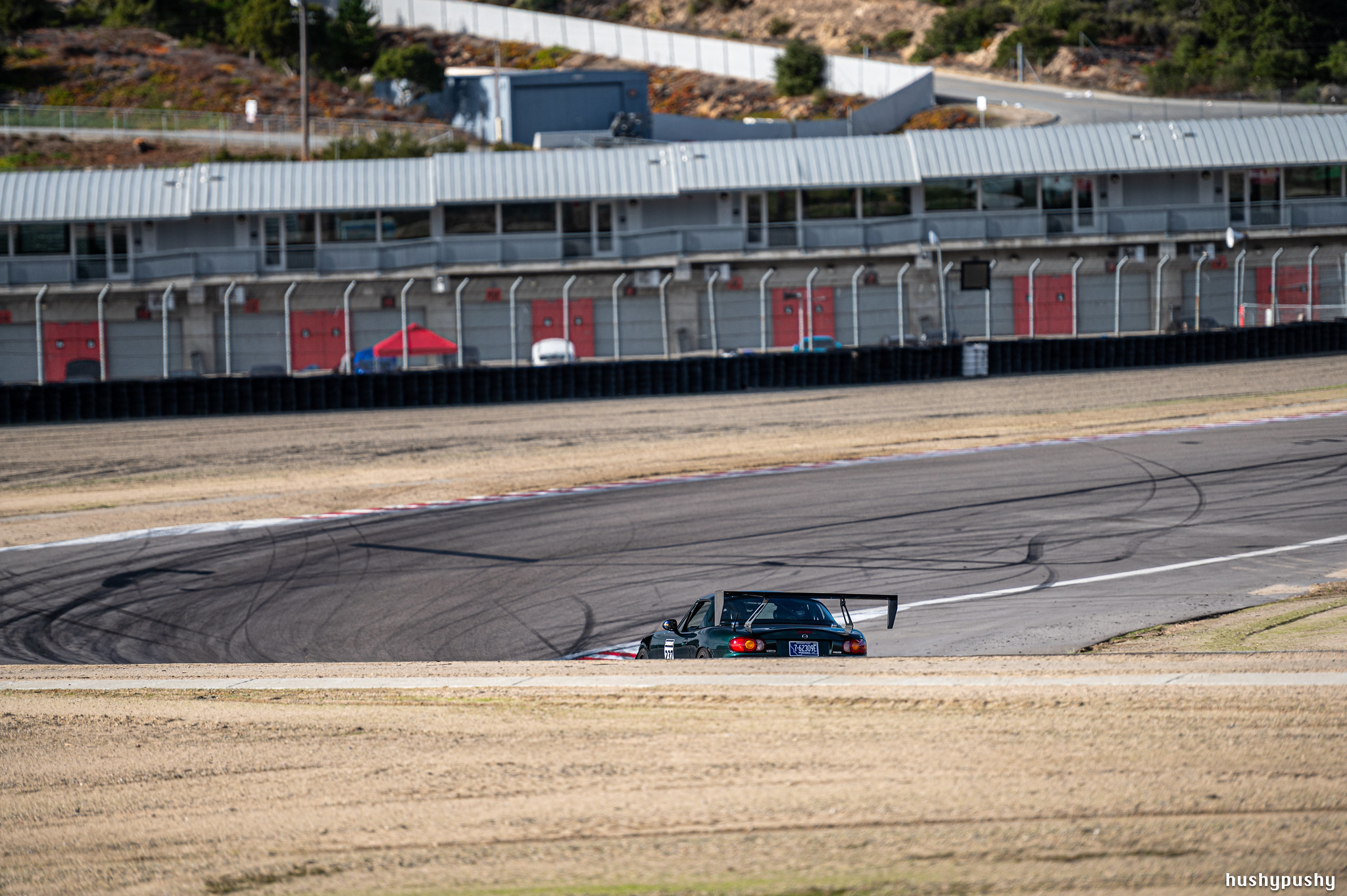
At this point you’re close to Turn 10. I love how the cars dip below the horizon here.
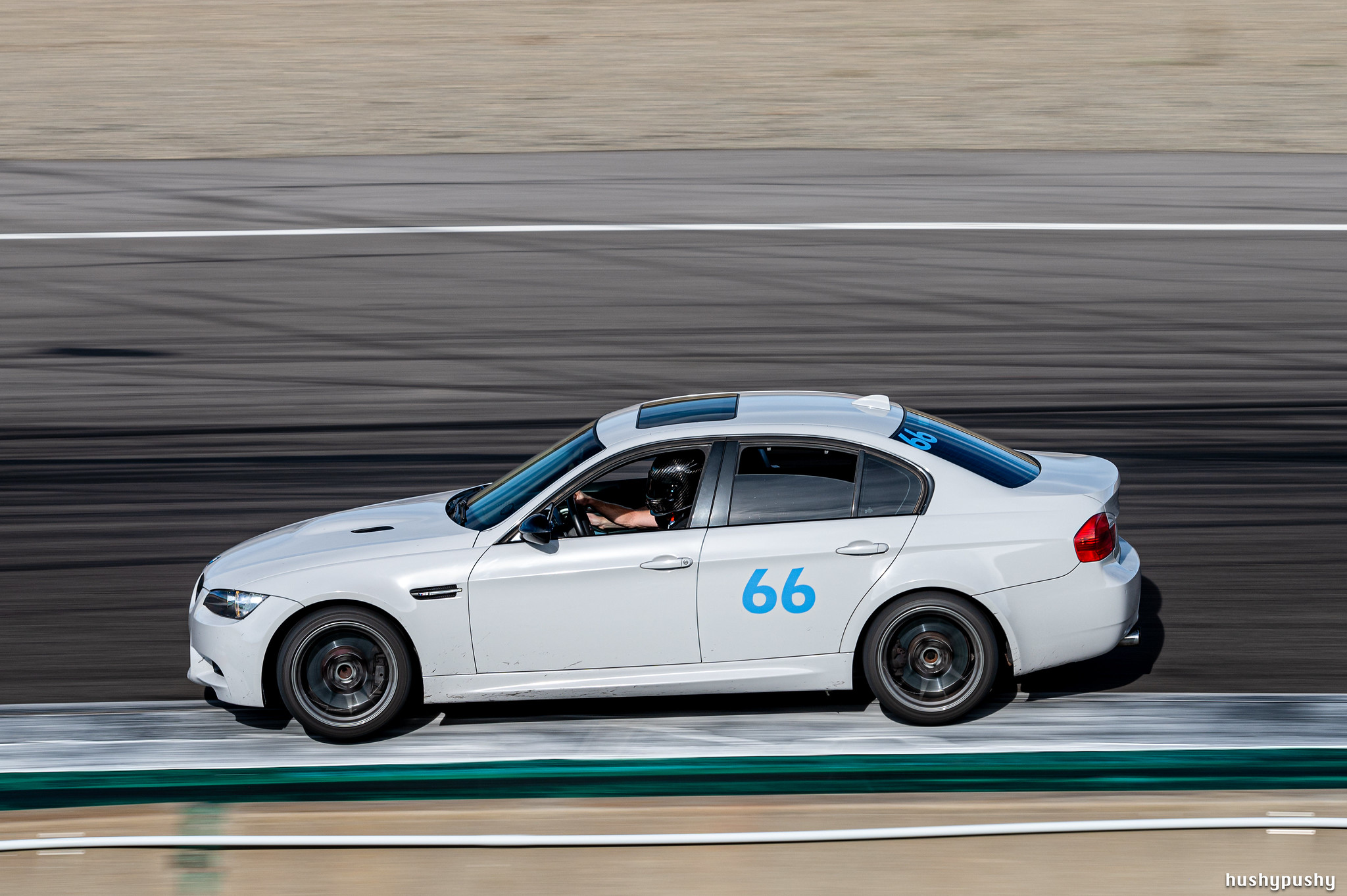
Now up at Rainey Curve, the long left sweeper after the Corkscrew, which is one of my favorite places to shoot. The lighting was really trippy right at this particular time; it looks like this E90 is fully up on two wheels.
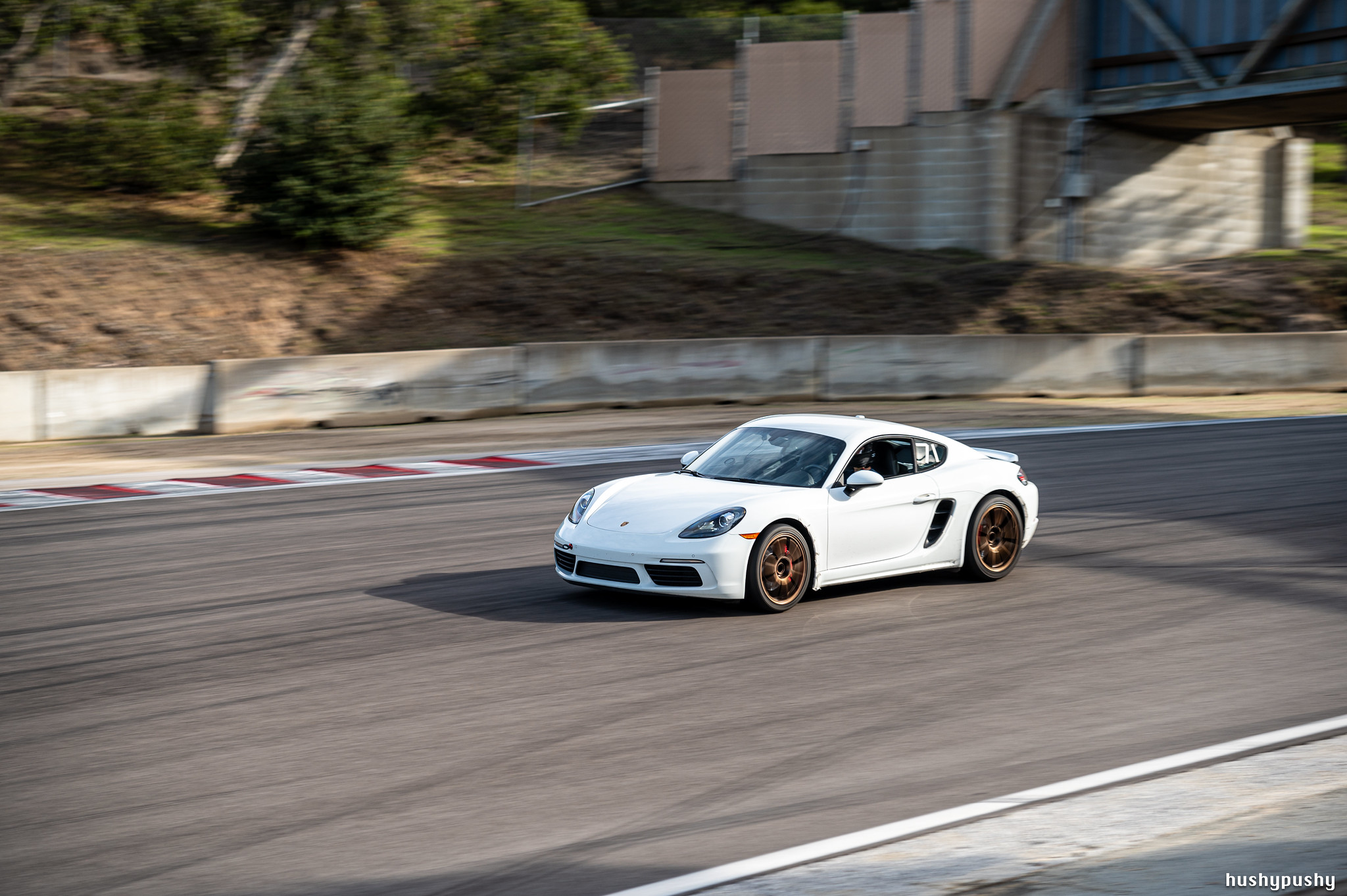
On the way into Rainey is a cool angle too; the track still looks a little old-school without any catch fencing right there.
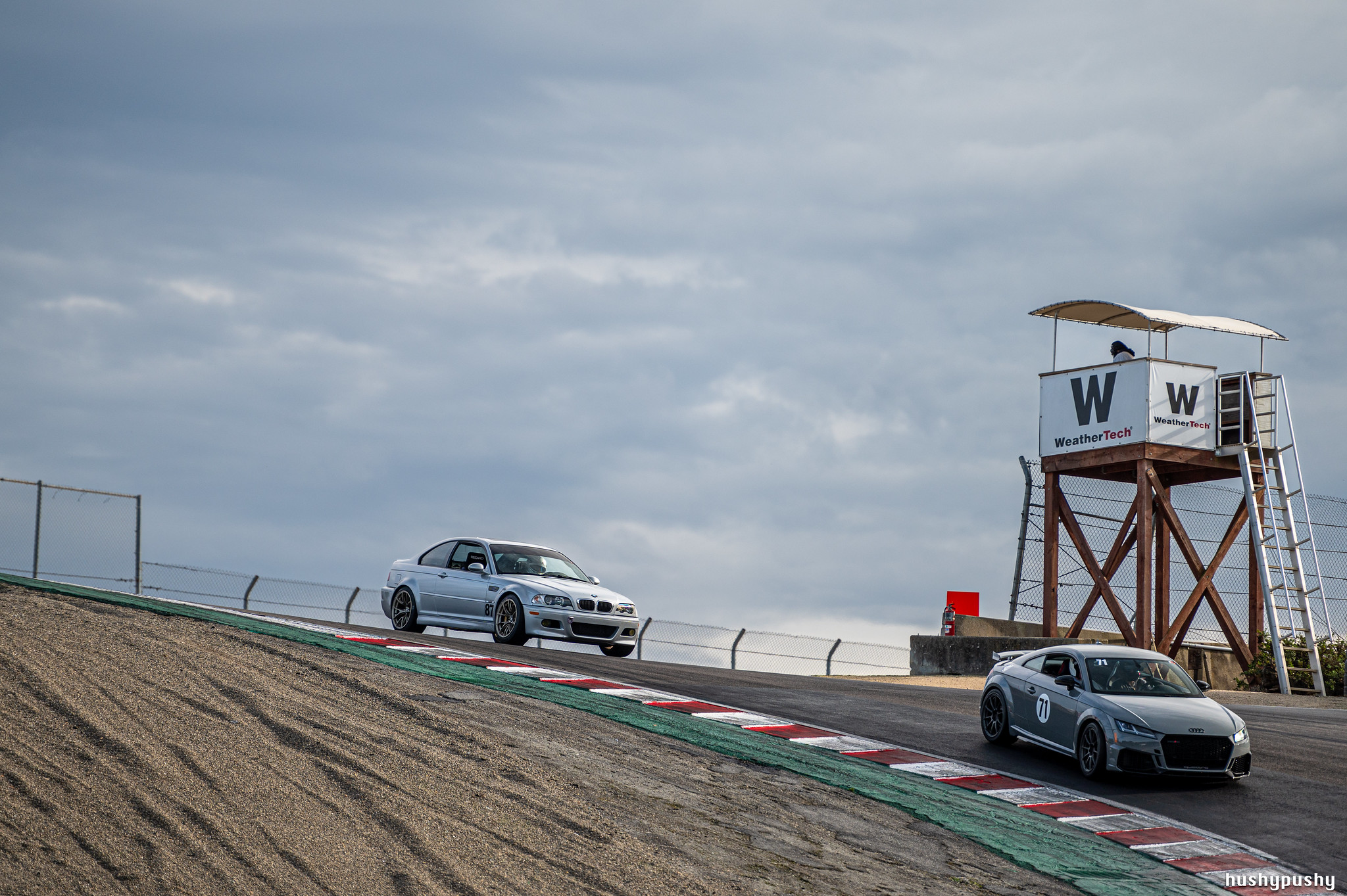
Now we’re here: we’re looking up at the great Corkscrew. Cars just pop up out of nowhere and seem to do a little jump before plunging down the hill.
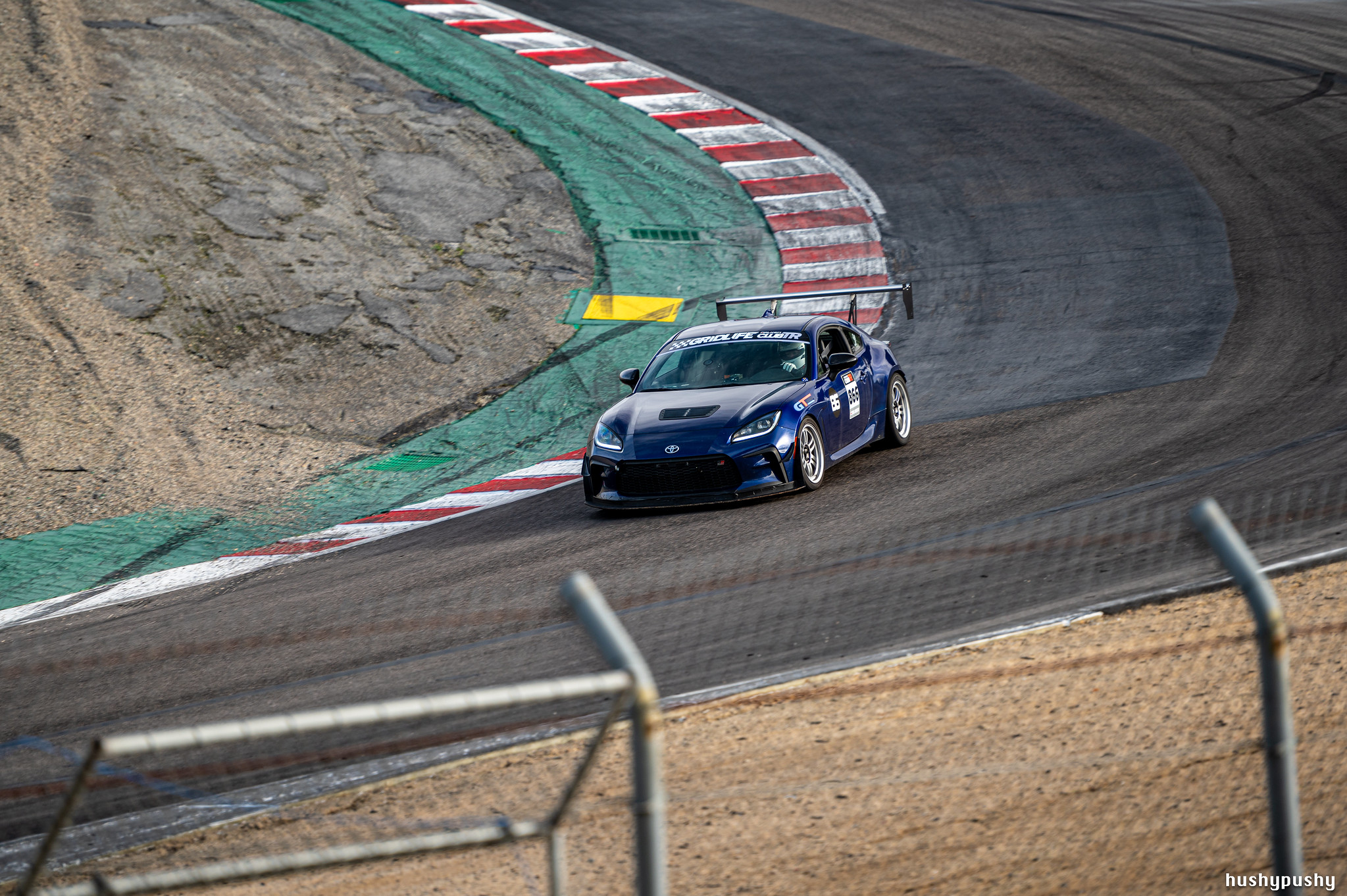
They added this catch fencing a few years ago, which is probably not a bad thing considering how fast IndyCars come through here. Still, it’s a huge bane to spectators, an ugly chain link fence obstructing the view of one of the most iconic corners in the world.
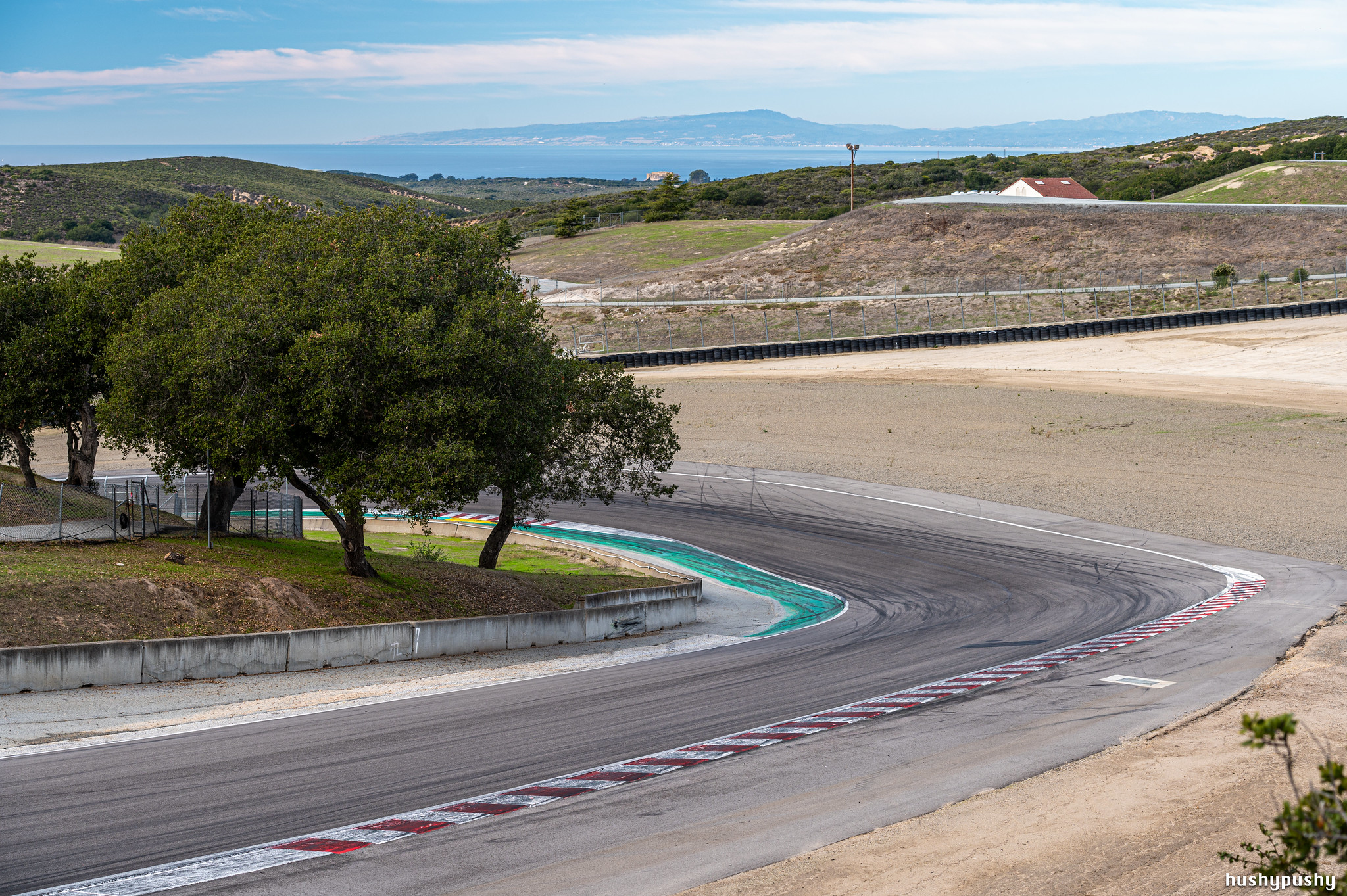
Here’s somewhere I rarely go: the other side of the Corkscrew. You can see the bridge I crossed behind the Cayman in the photo above. You can’t really see much or go anywhere from here, but what you can see is amazing. It was such a clear day that you could see directly into Santa Cruz, all the way across the Monterey Bay.
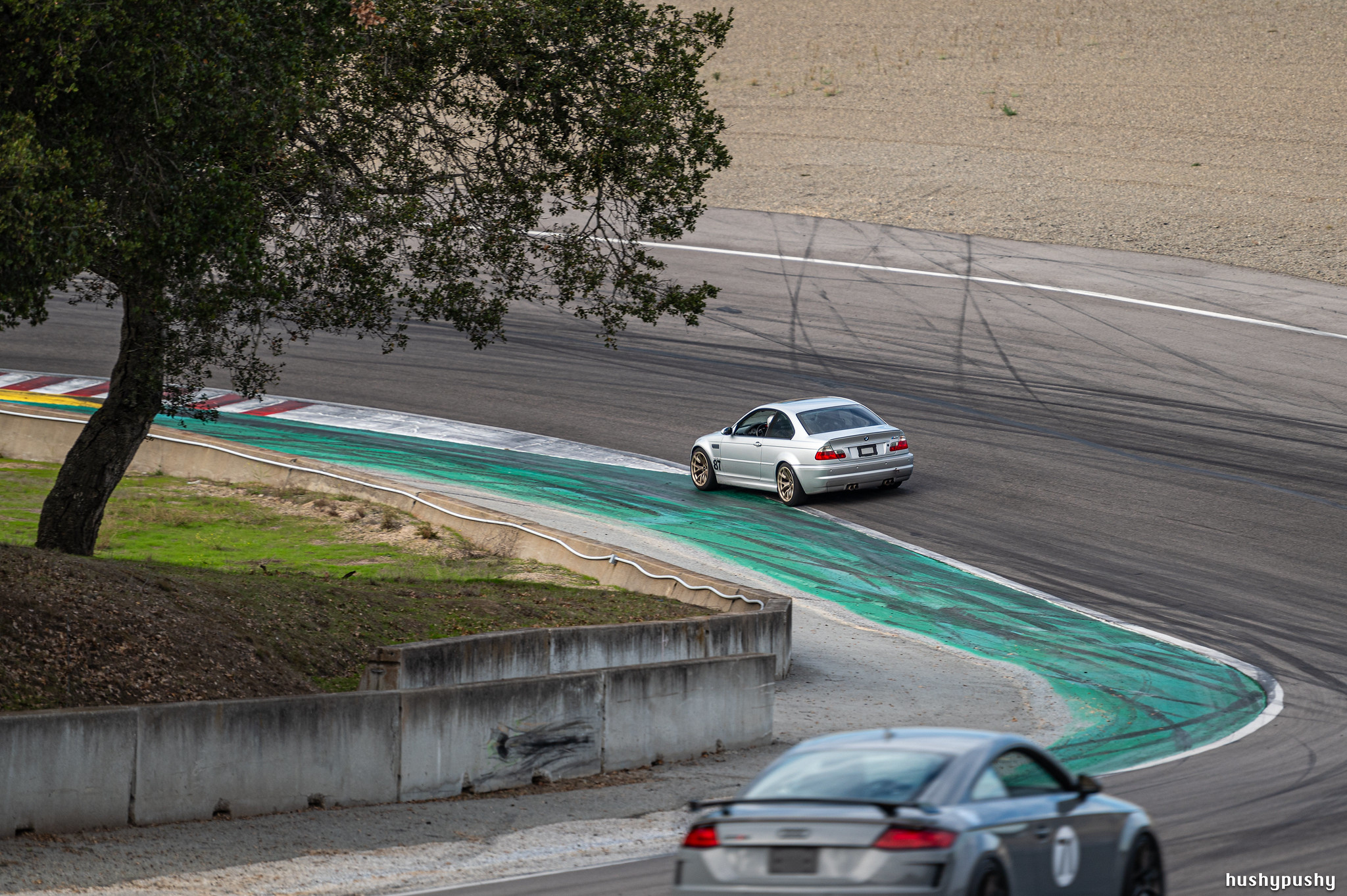
Every track photo in this post so far has been from my bag of tricks: as you visit a track, you discover the places that produce good photos (and the ones that don’t). I’ve been to Laguna Seca countless times, so I have quite a few spots ready to go. But this location here is a new one; I can’t recall getting this angle before. Ding! New spot discovered!
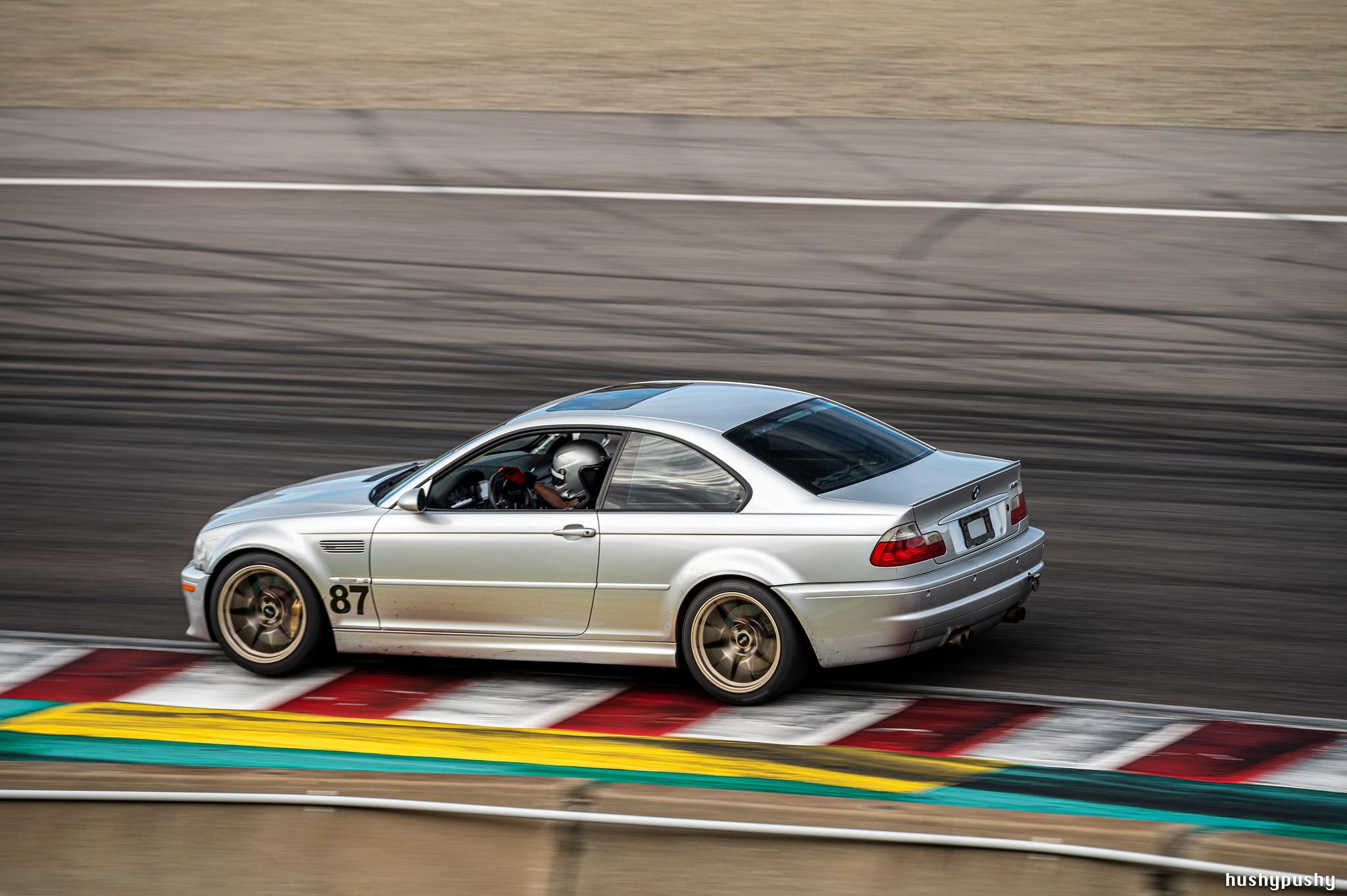
For this one I actually went slightly quicker on the shutter, to 1/200, because I really wanted to get this angle, and the faster car speed helps to add some blur. Note that in the previous shot, I turned the polarizer to block the side reflections of the car. In this shot, I have the polarizer turned the other way because I want the reflection of the red and yellow curbs in the side of the car.
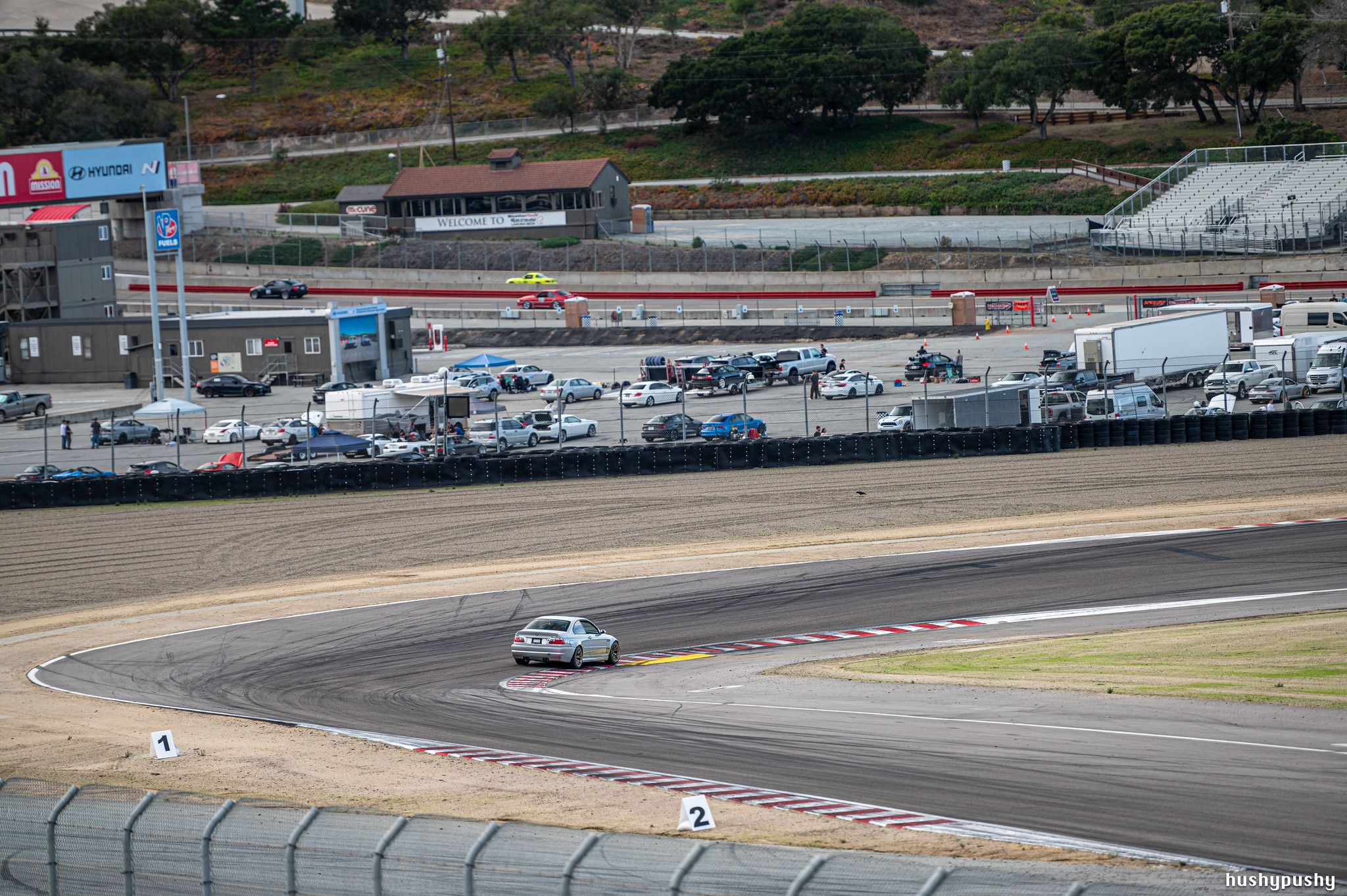
This is a section of track where I don’t really shoot anymore, due to another new section of catch fencing. Again, with the speed of the IndyCars it makes sense, but it’s still a bummer from the photographer’s perspective.
No, I didn’t suddenly get closer or slap on a longer lens: this is the magic of Digital Zoom. It’s the same focal length and framing as the previous shot, just cropped in Lightroom.
Closer to Turn Ten, they haven’t added catch fencing to the other wall, so I can still take this snap of the cars returning to the paddock at the end of the session.
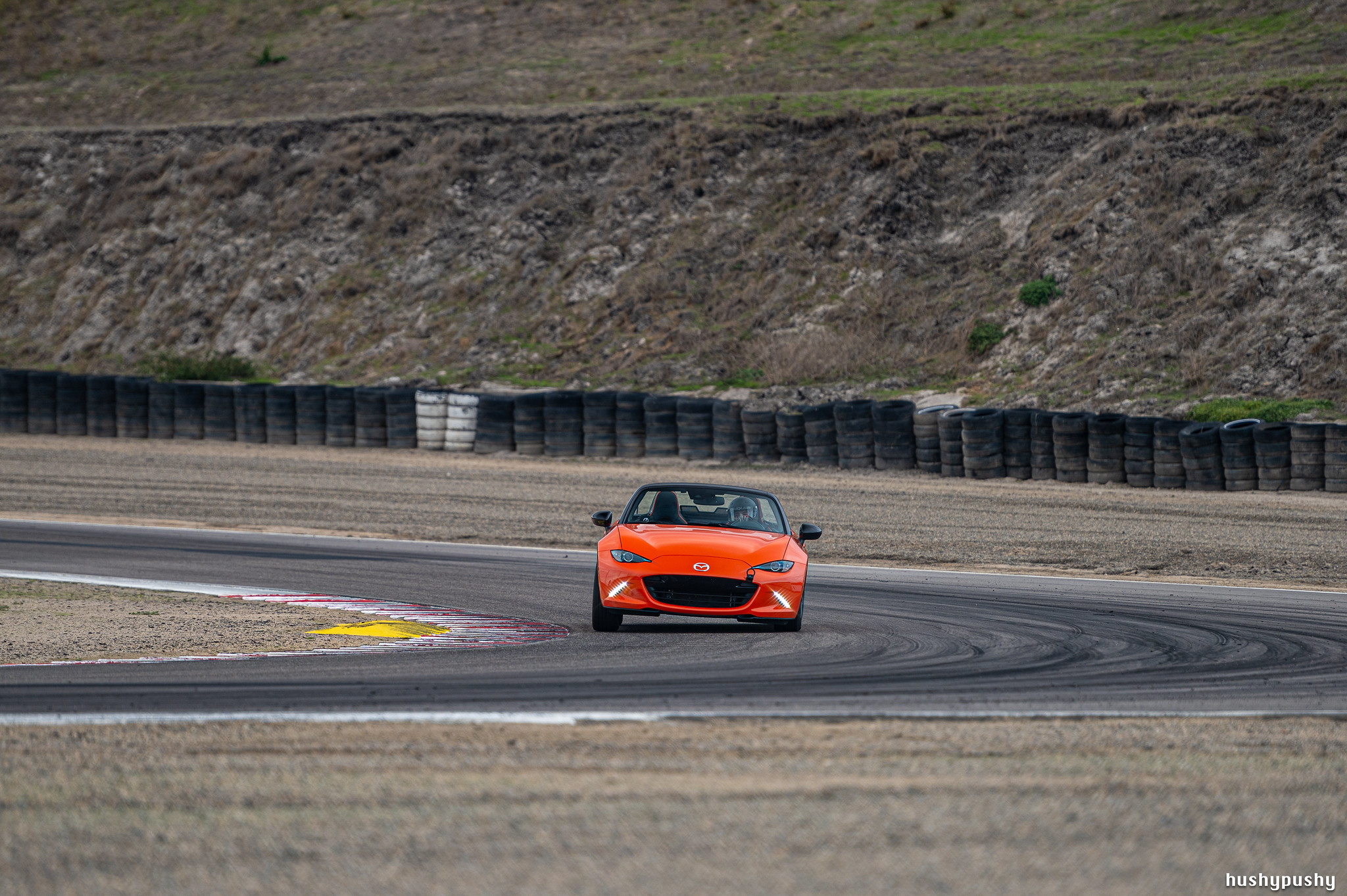
It’s always fun to watch Miatas move around, a rolling demonstration of the principle that compliance equals grip.
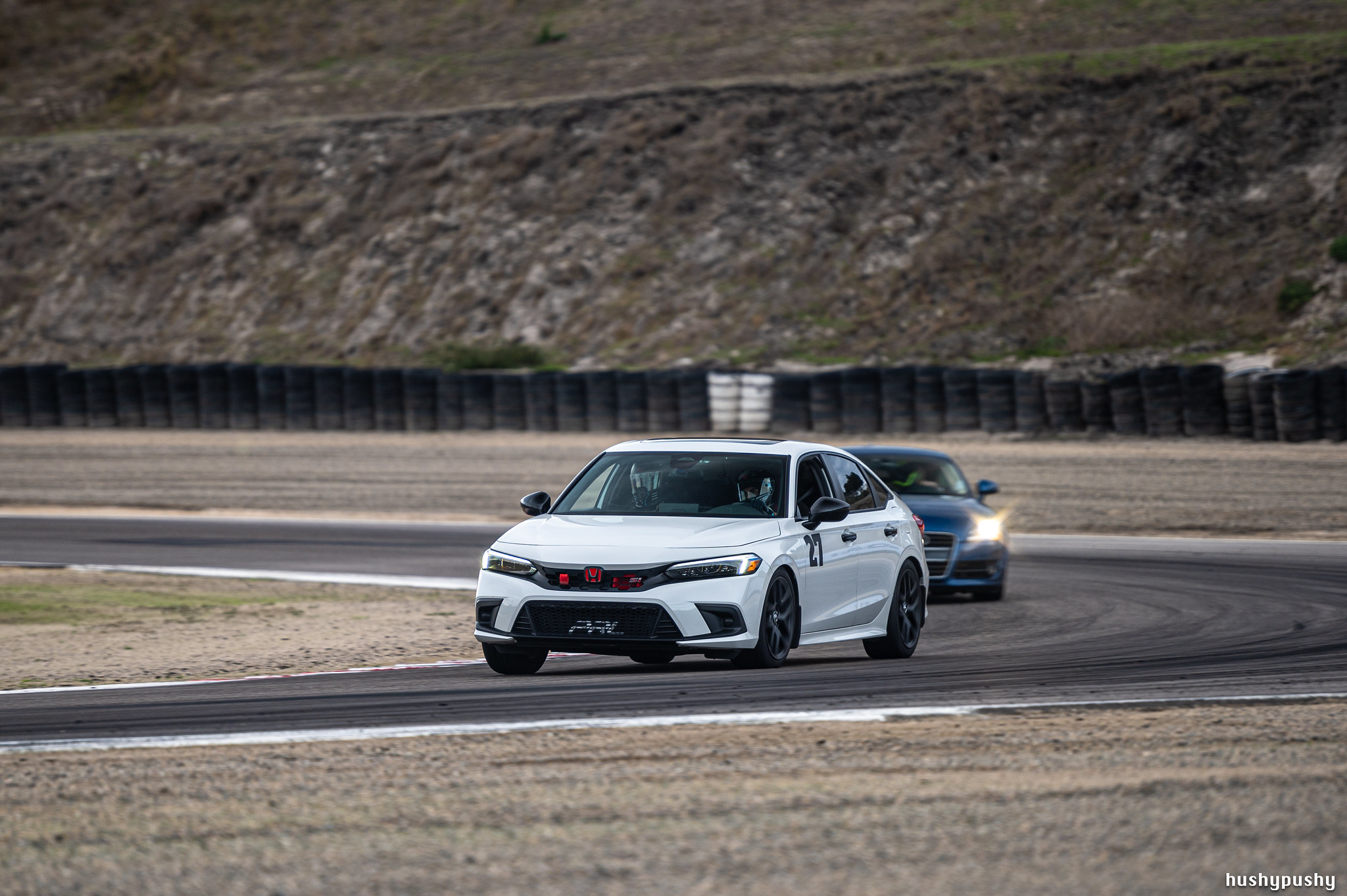
$29,950: that is the starting MSRP of both the 2025 Civic Si and the 2025 Toyota GR86. This is another example of a car where it’s important that the car can do a track day, even if most owners will never really do it.
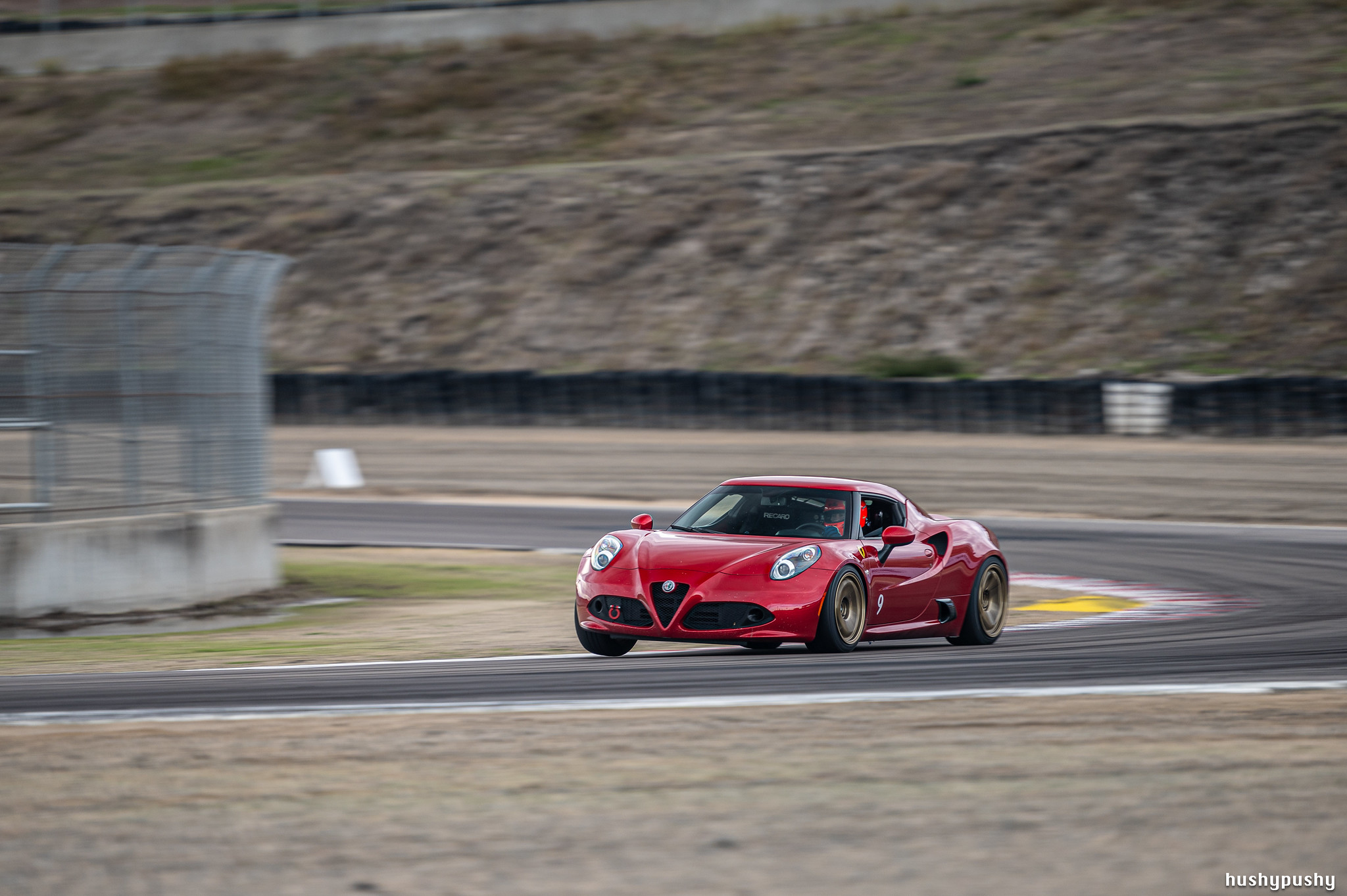
It was almost 3:30 at this point and the sunlight was fading as the clouds moved in, which was just perfect for this vantage point of Turn Three. I was wide open at f/2.8 and dared to shoot at the resulting low(er) shutter speed. This was 1/80 of a second, which I barely pulled off without the monopod, but it gave just enough motion blur and bokeh to make the shot.
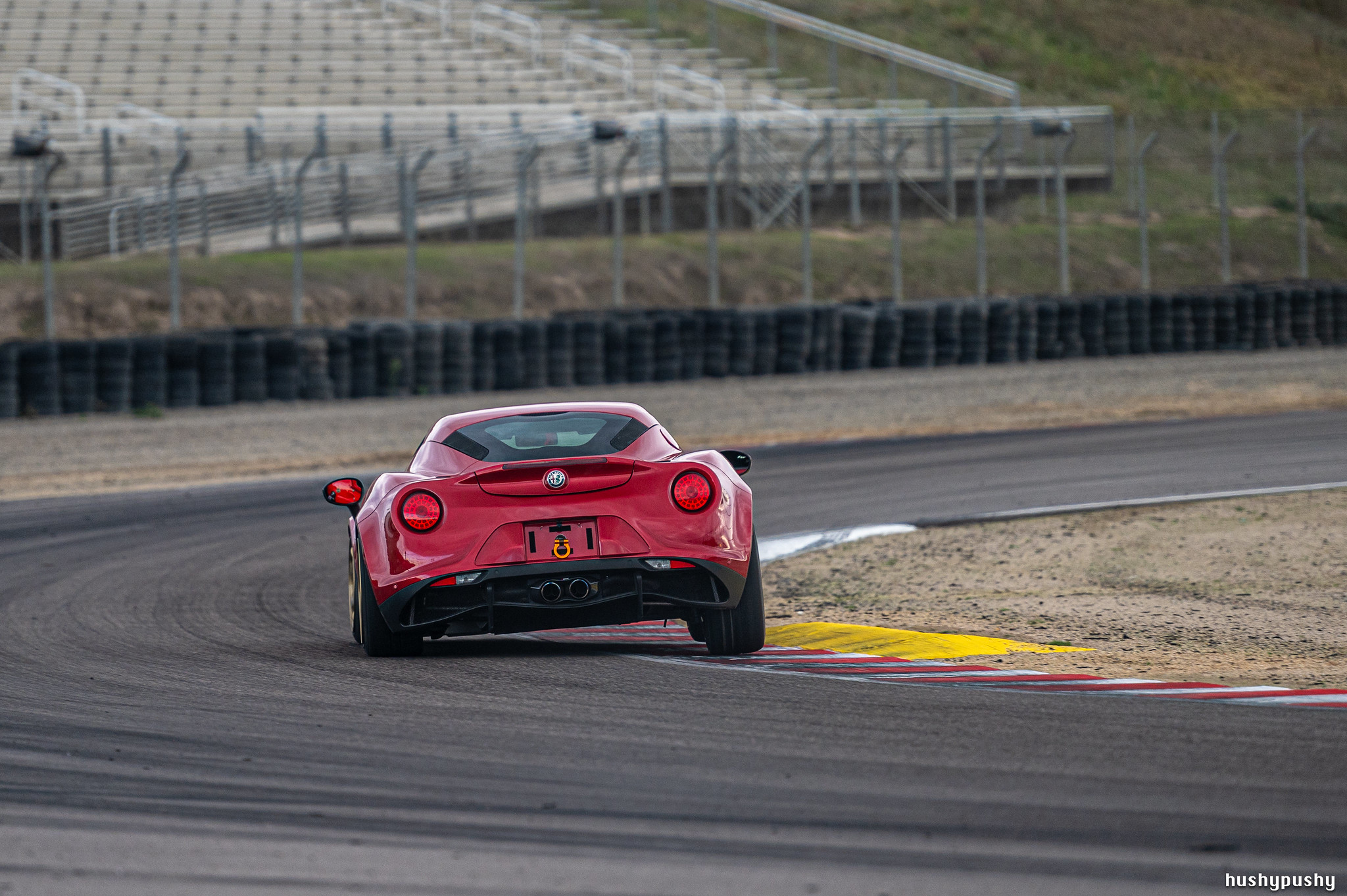
Andrie is an absolute riot to watch, because he goes right to the limit. He’s at the apex of Turn Four with the front inner wheel in the air, rear inner wheel barely on the ground, and a dab of countersteer just for good measure.
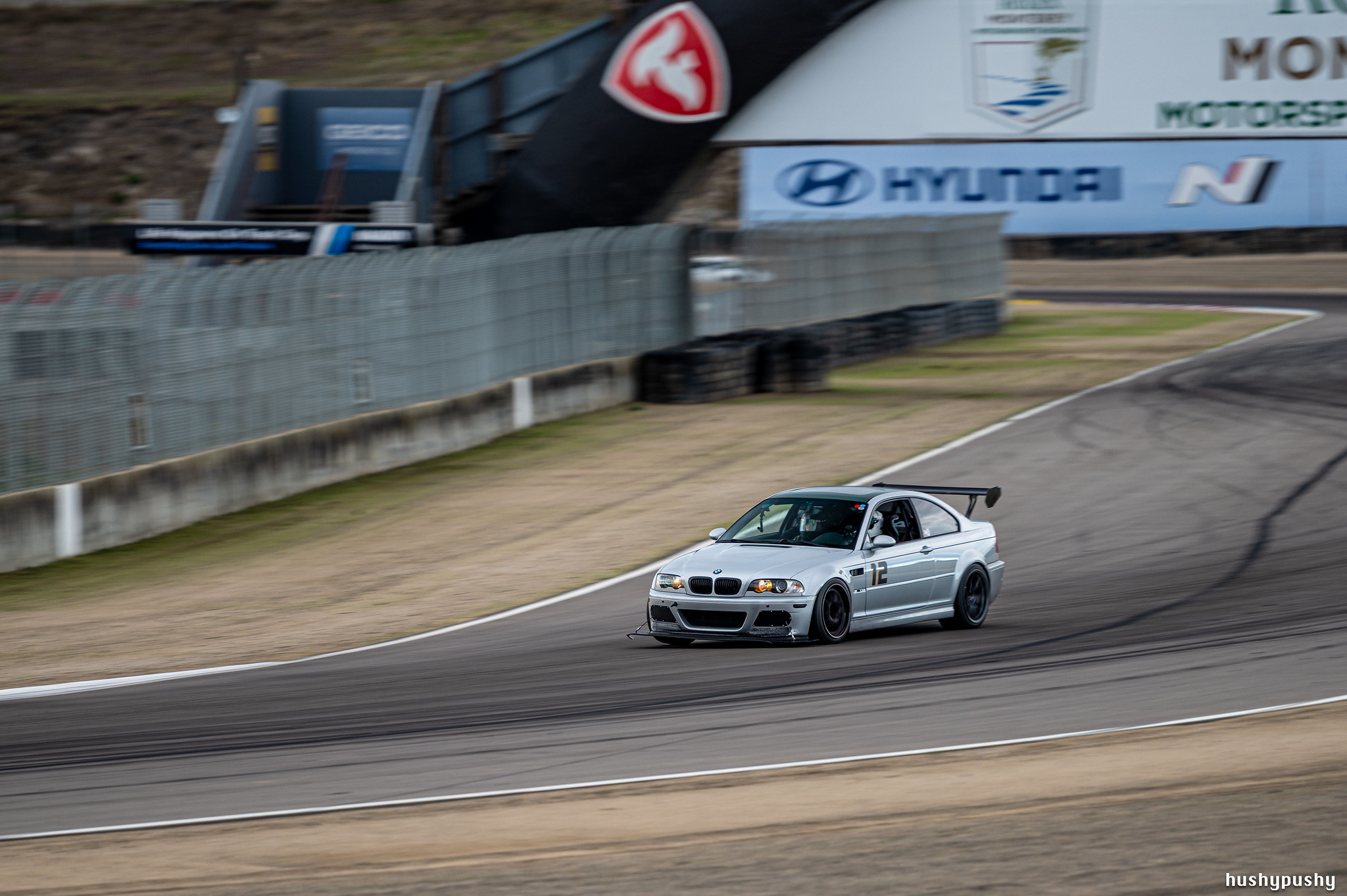
It’s always a nice effect as the sun goes down to get slow enough shutters for panning (1/125 in this case) while shooting wide open (f/2.8).
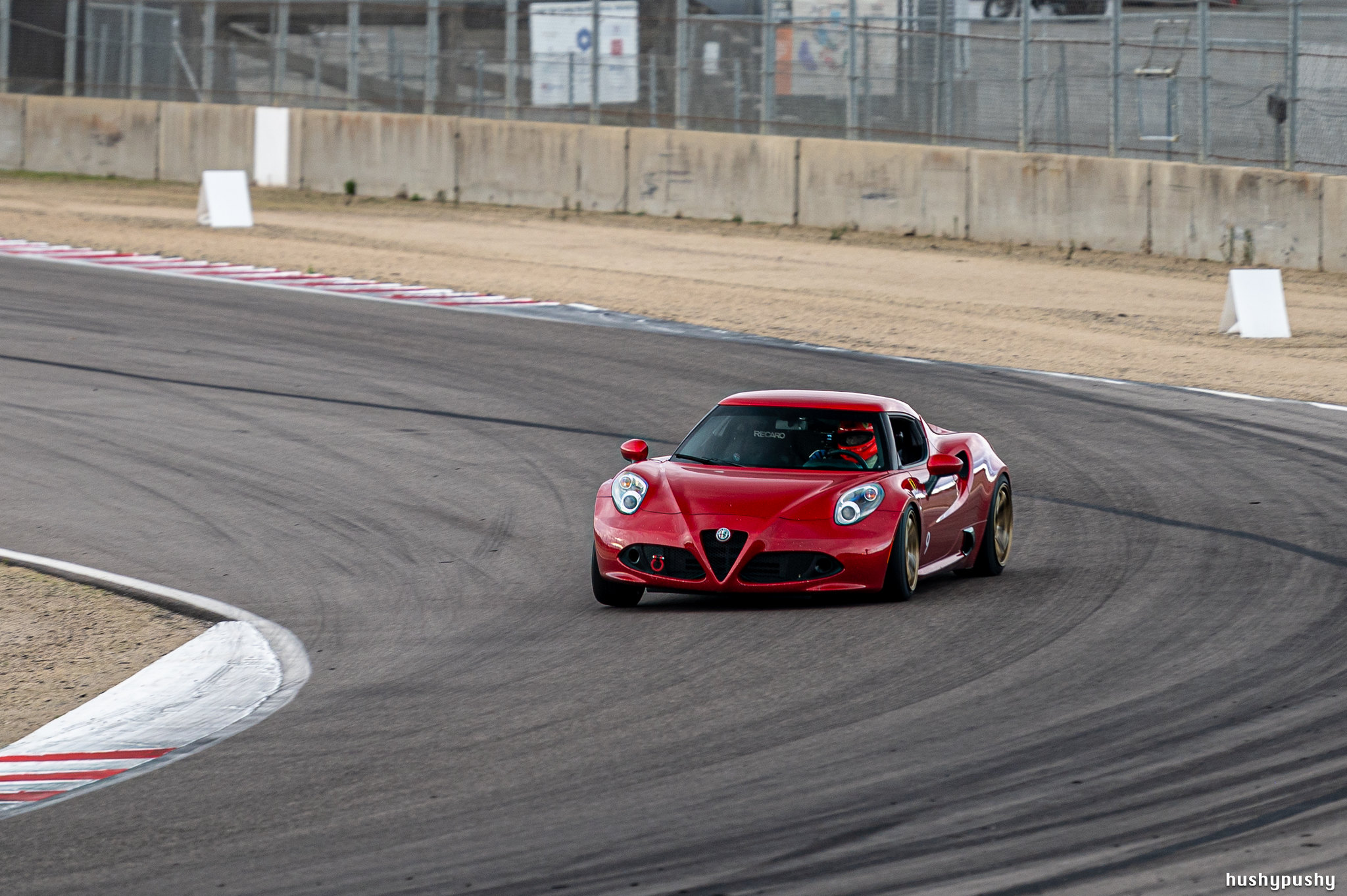
Everyone else is just tipping it in here, but he’s on his way to the apex with a quarter turn of opposite lock.
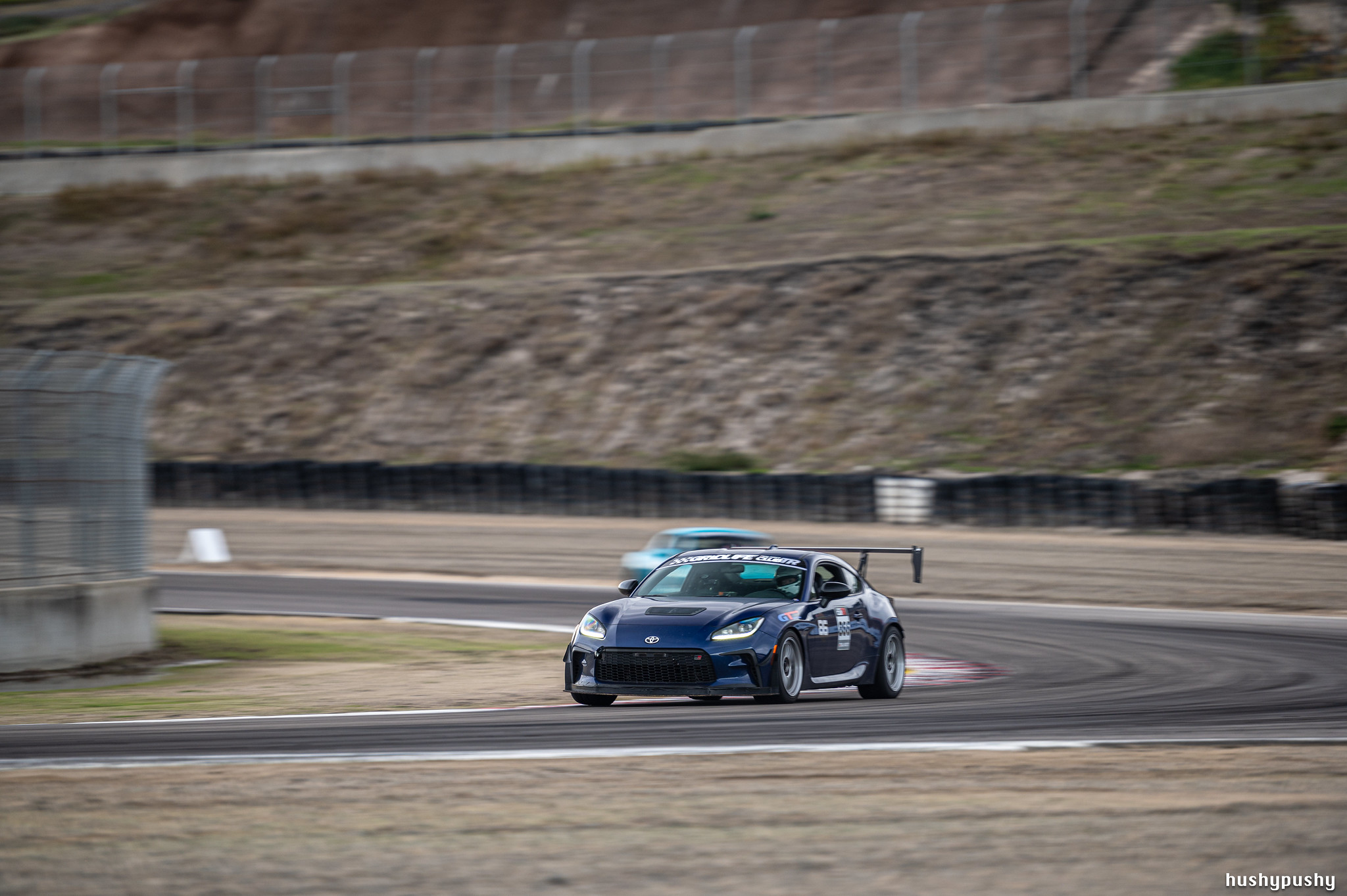
The GR86 looks great with a few race-spec additions. Somehow that gigantic wing just looks like it belongs.
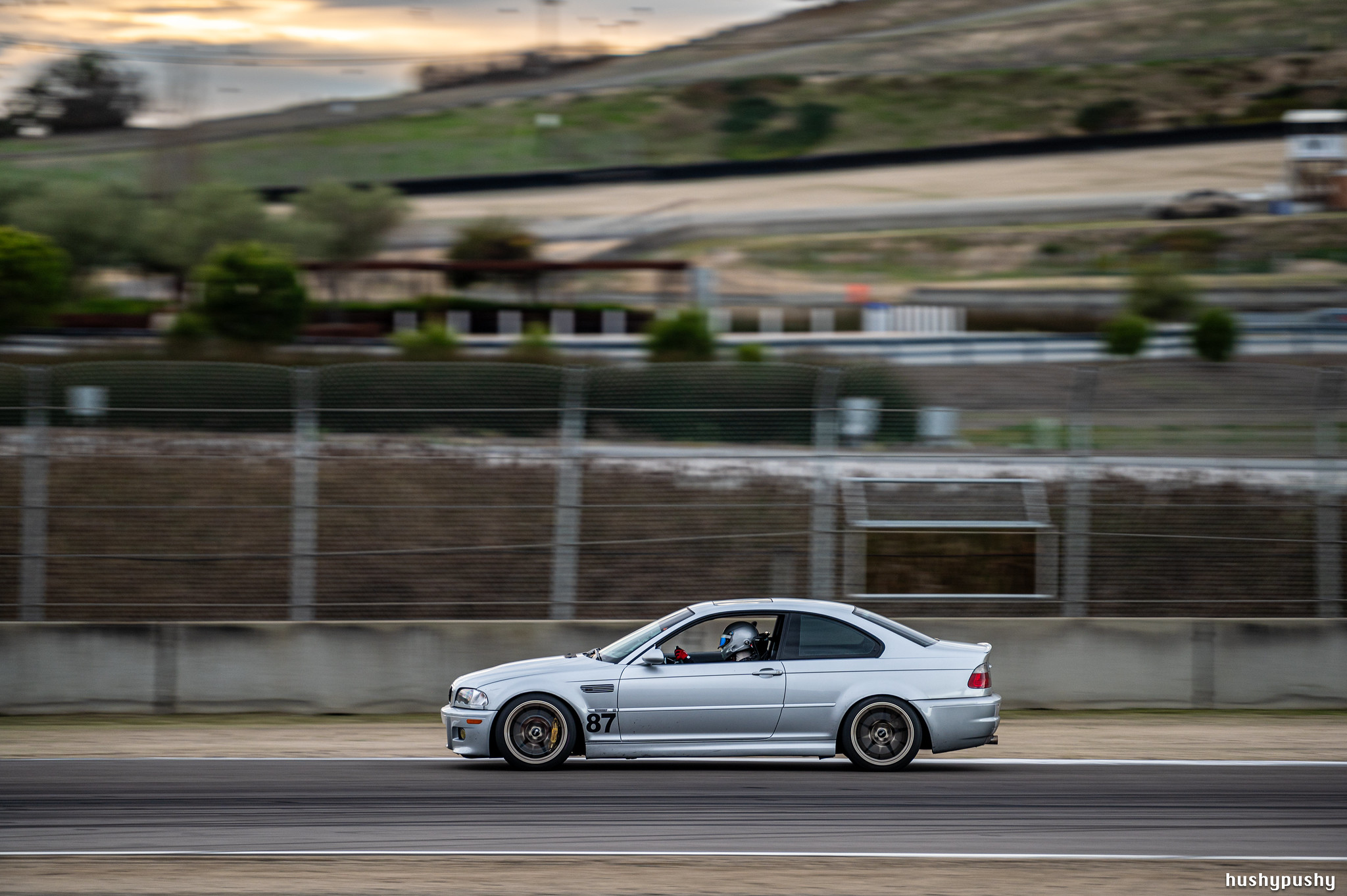
It’s pretty normal to get shots like this if you shoot from the media areas, but it always feels like these shots that are level with the track from public areas are hidden secrets.
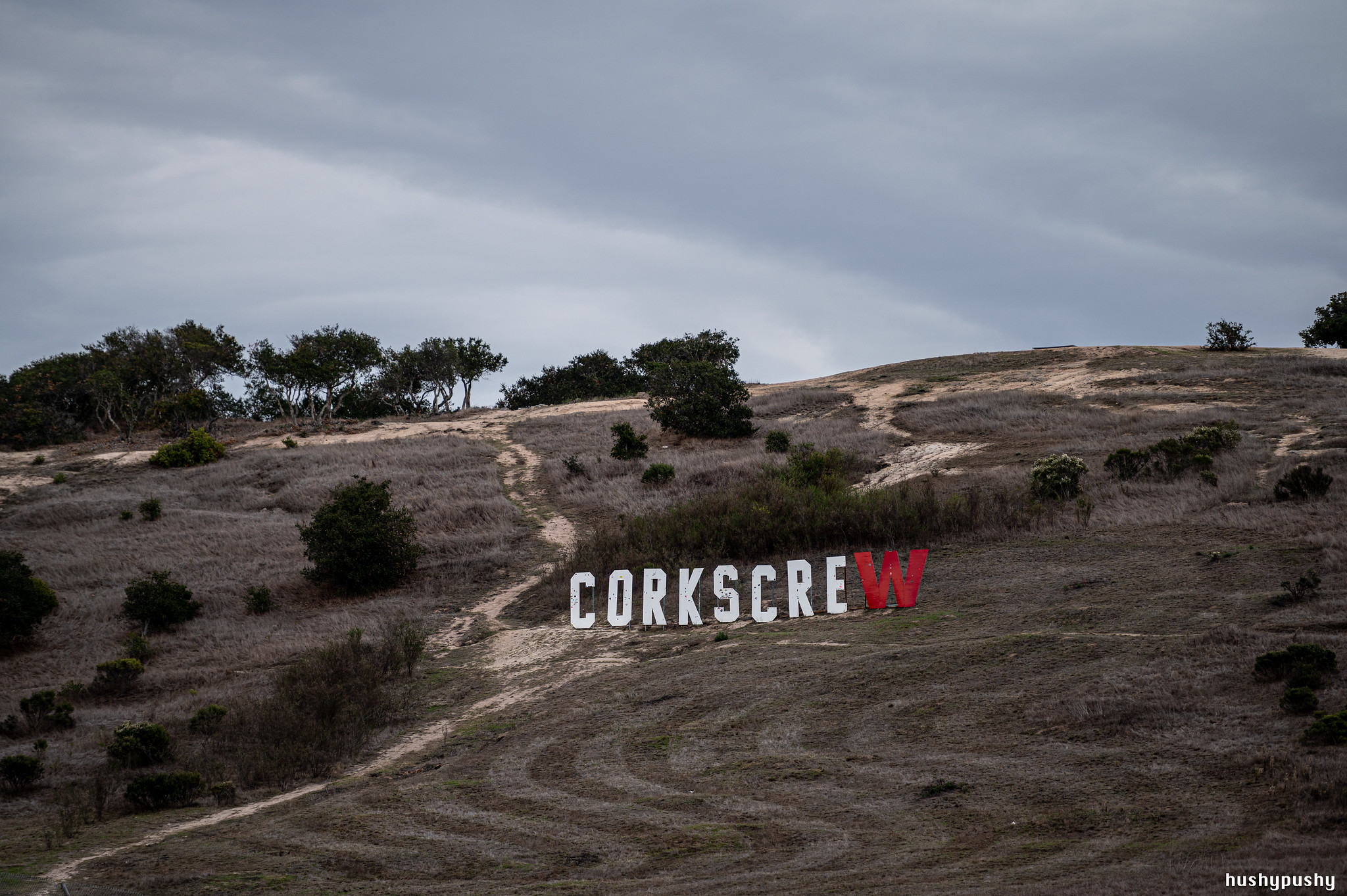
See you next time at the Corkscrew! Remember, don’t go the super steep sandy way unless you’re in a big hurry.


 Star Road