
Open Wheel Showdown 2024 at The Bullring
In the same way that engineers will succinctly refer to a tire locking up under braking as “under-rotation”, engineers will refer to an issue that stands in the way of accomplishing something as a “blocker”. Well, on this Friday at work I had a blocker–the engineering type–so I decided to wander over to the paddock next door to see what was going on.
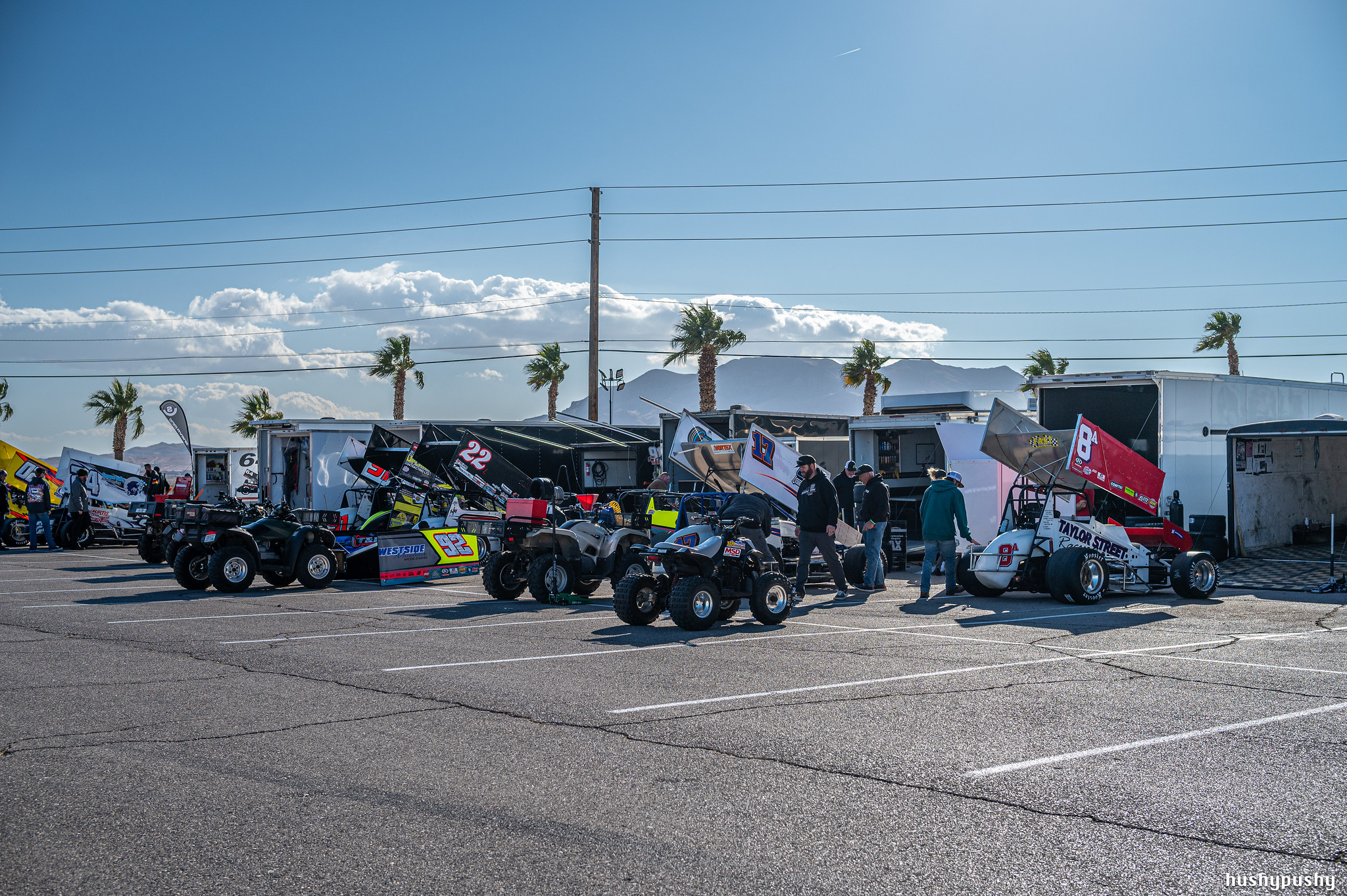
For reasons of which I am unclear, The Bullring at Las Vegas Motor Speedway is very rarely used. While there is constant action at the main speedway, the two road courses, the dirt oval, the dirt “cross” track, and other spaces around the speedway grounds, the 3/8th mile asphalt Bullring hardly sees any use.

Another unique thing about this weekend’s event, for myself anyway, was that racing would take place at night. In all the race series I’ve worked for and attended, the track sessions start in the morning and end in the early afternoon, so work at the track starts very early and cars are on track at 8 or 9 AM. Whereas in these photos, they had just started pulling out the cars right before I arrived on the scene shortly after 9 AM.
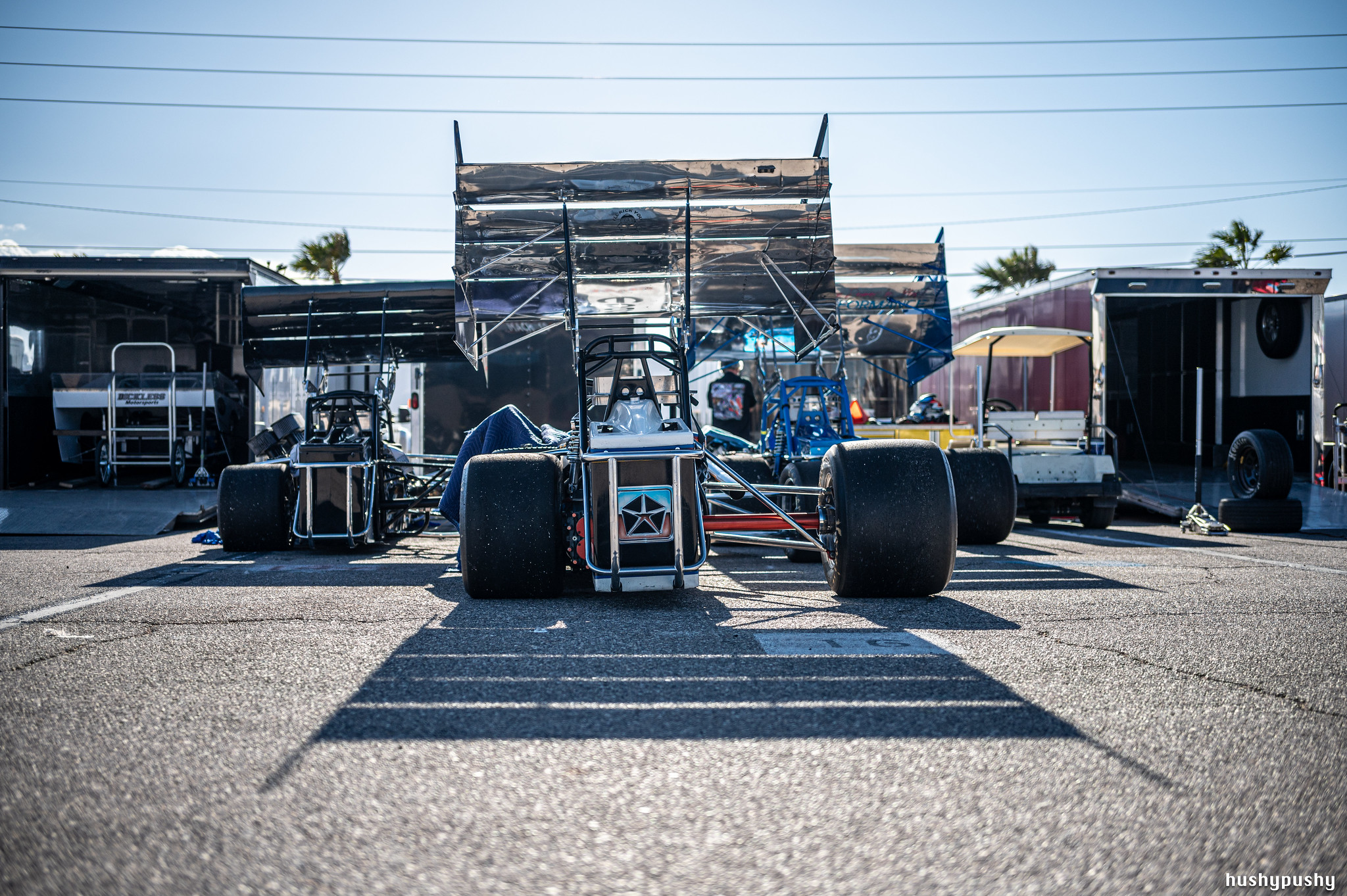
Since I mainly spectate at road courses, I am fascinated by the novelty of oval racing cars. Since they only turn left, the car setup is completely asymmetrical. Everything about these cars is focused on going left.
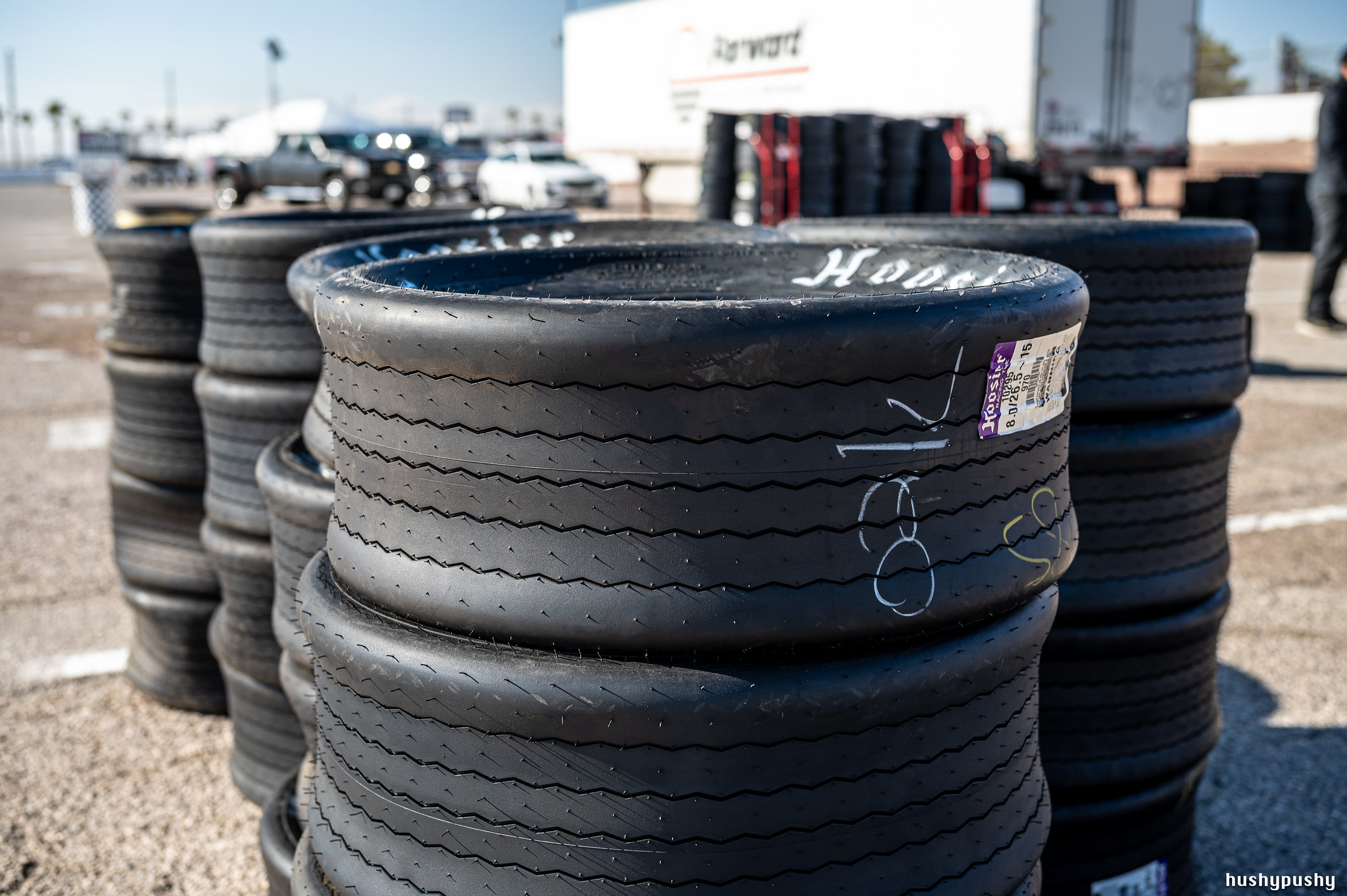
I love seeing fresh tires stacked up at the track. Not only do new tires have a cool look, I immediately think of how good it feels to drive on brand new tires.

ATV’s are really popular in this series; they’re used in the paddock mainly as push vehicles, but also as quick transportation.
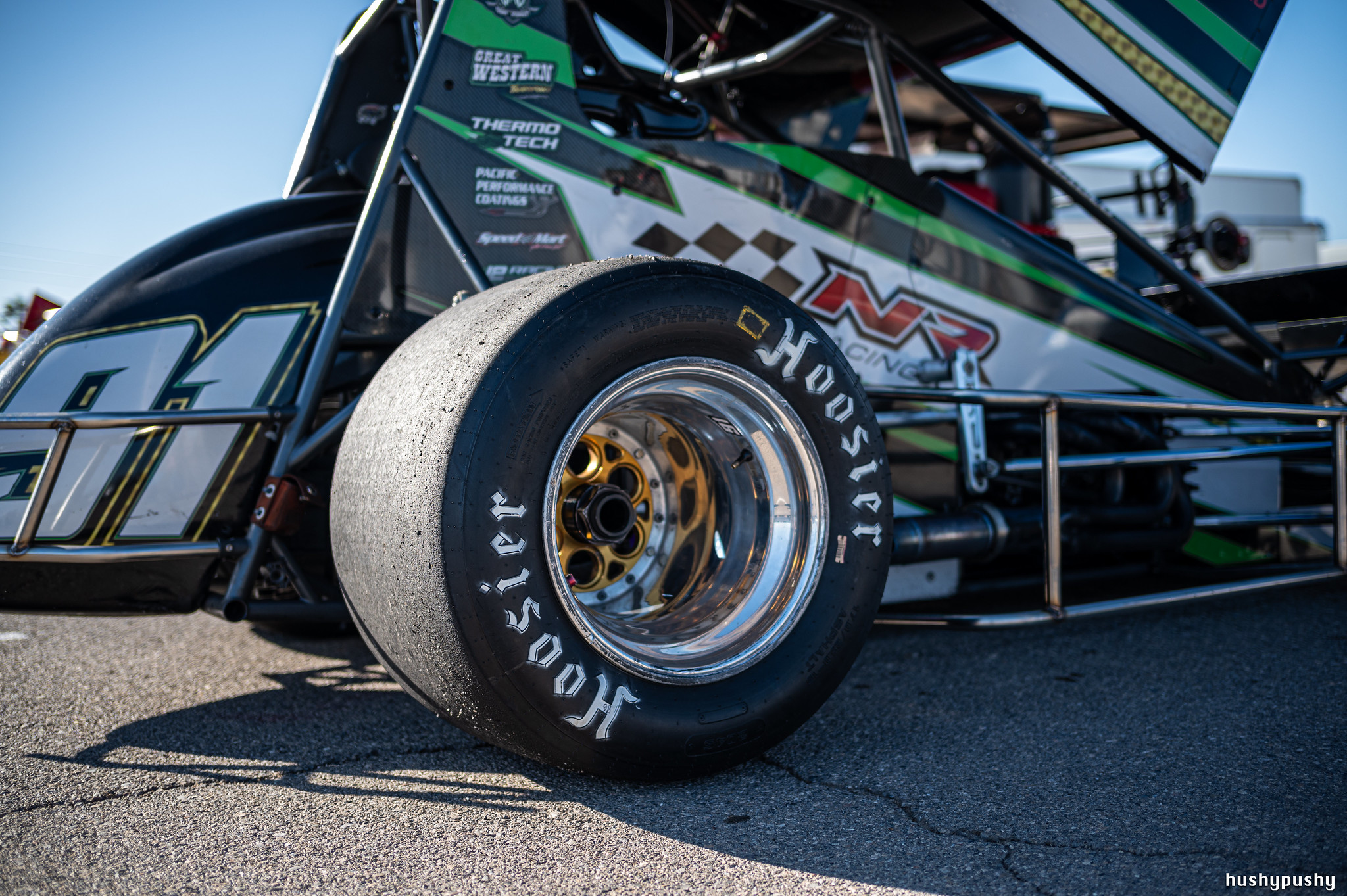
I love these old school super low offset, super deep dish wheels. These days track widths are wider and wheel offsets aren’t as crazy, so modern race cars just don’t have deep wheels anymore.
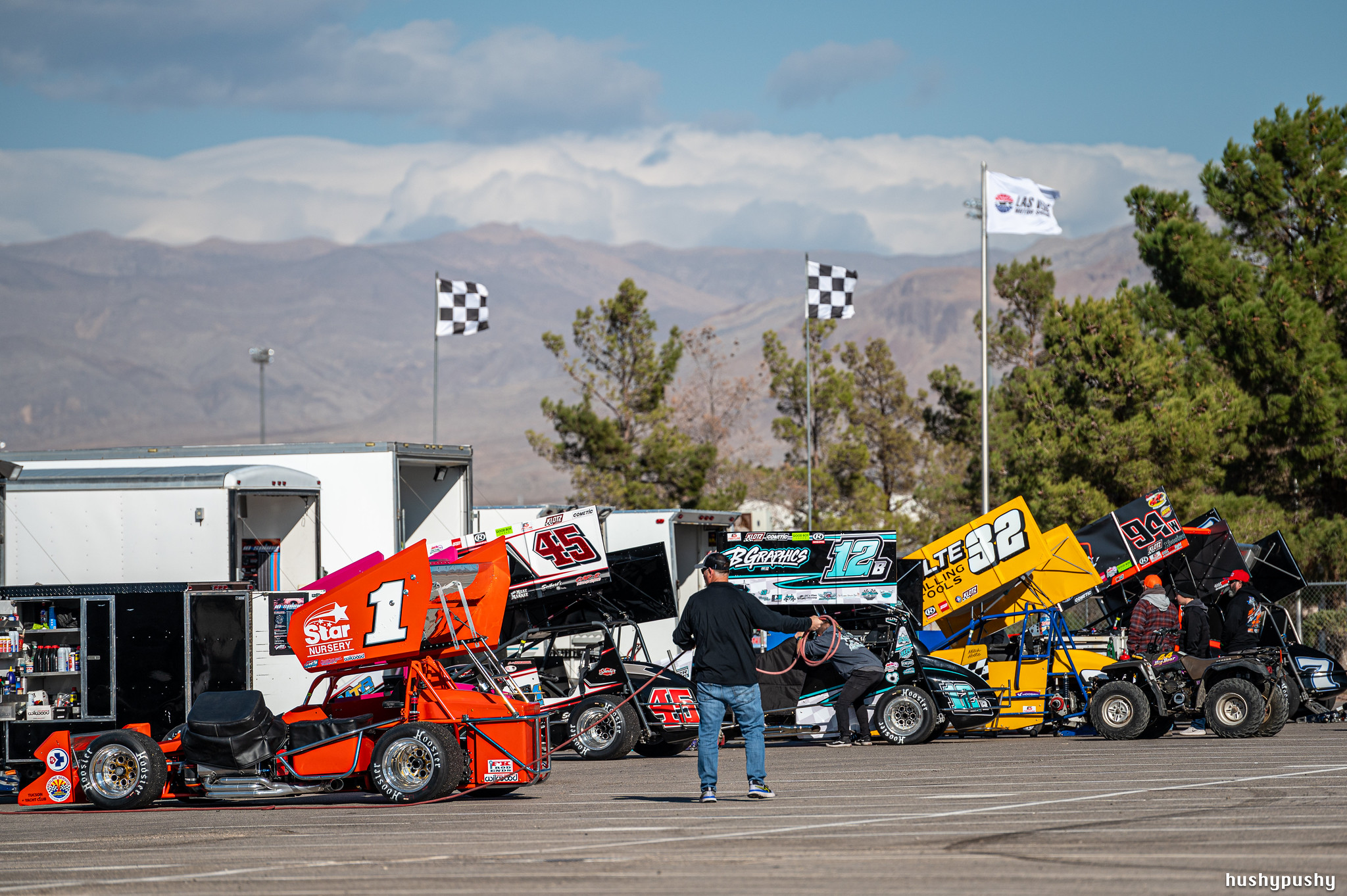
Surprisingly–to me, anyway–Las Vegas Motor Speedway is actually rather picturesque. It’s nestled in a valley between multiple mountain ranges, and the grounds themselves actually feature trees.
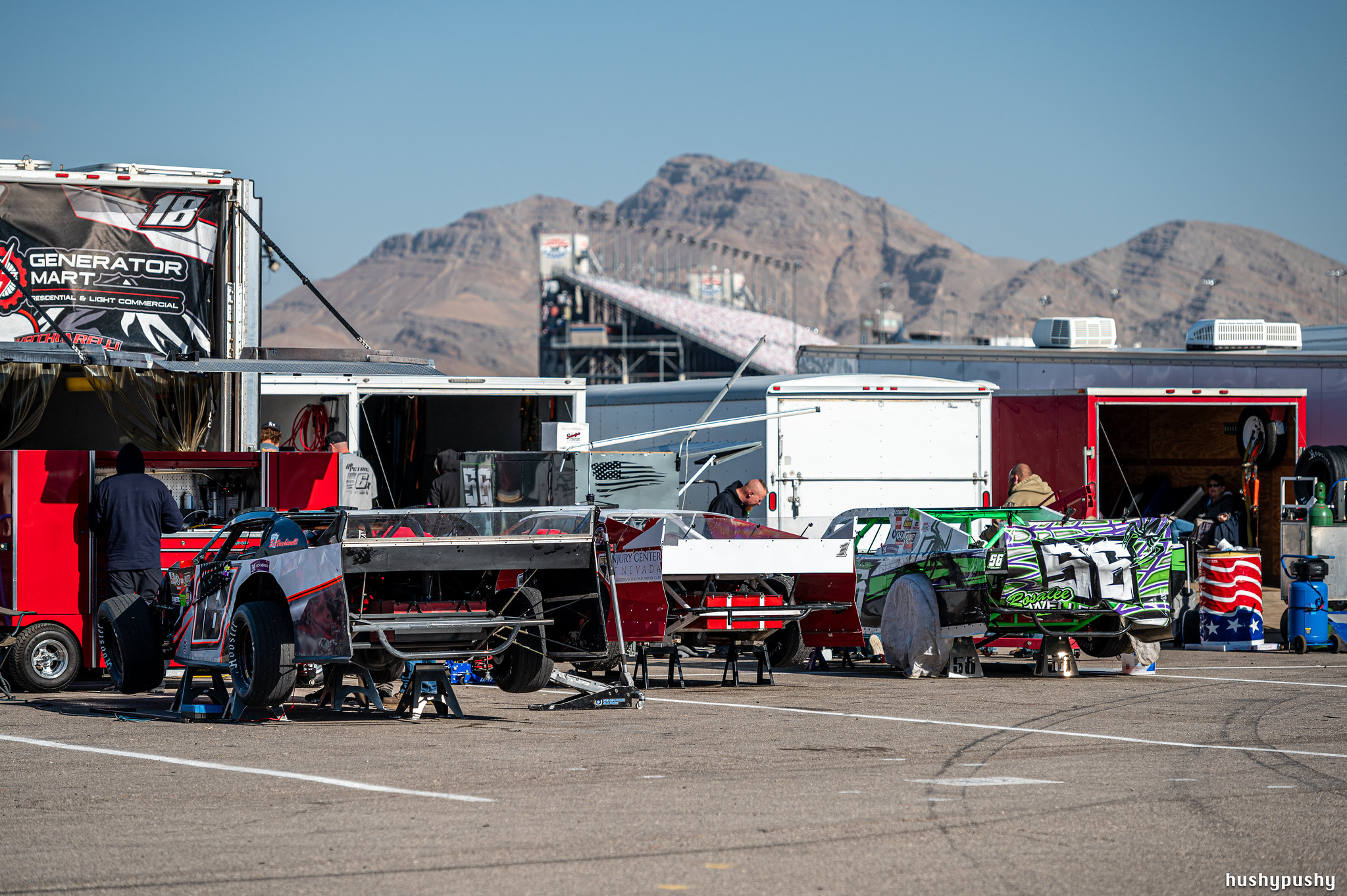
This event is called “Open Wheel Showdown“, but there are Modifieds out there, which seem to be closed fender cars.
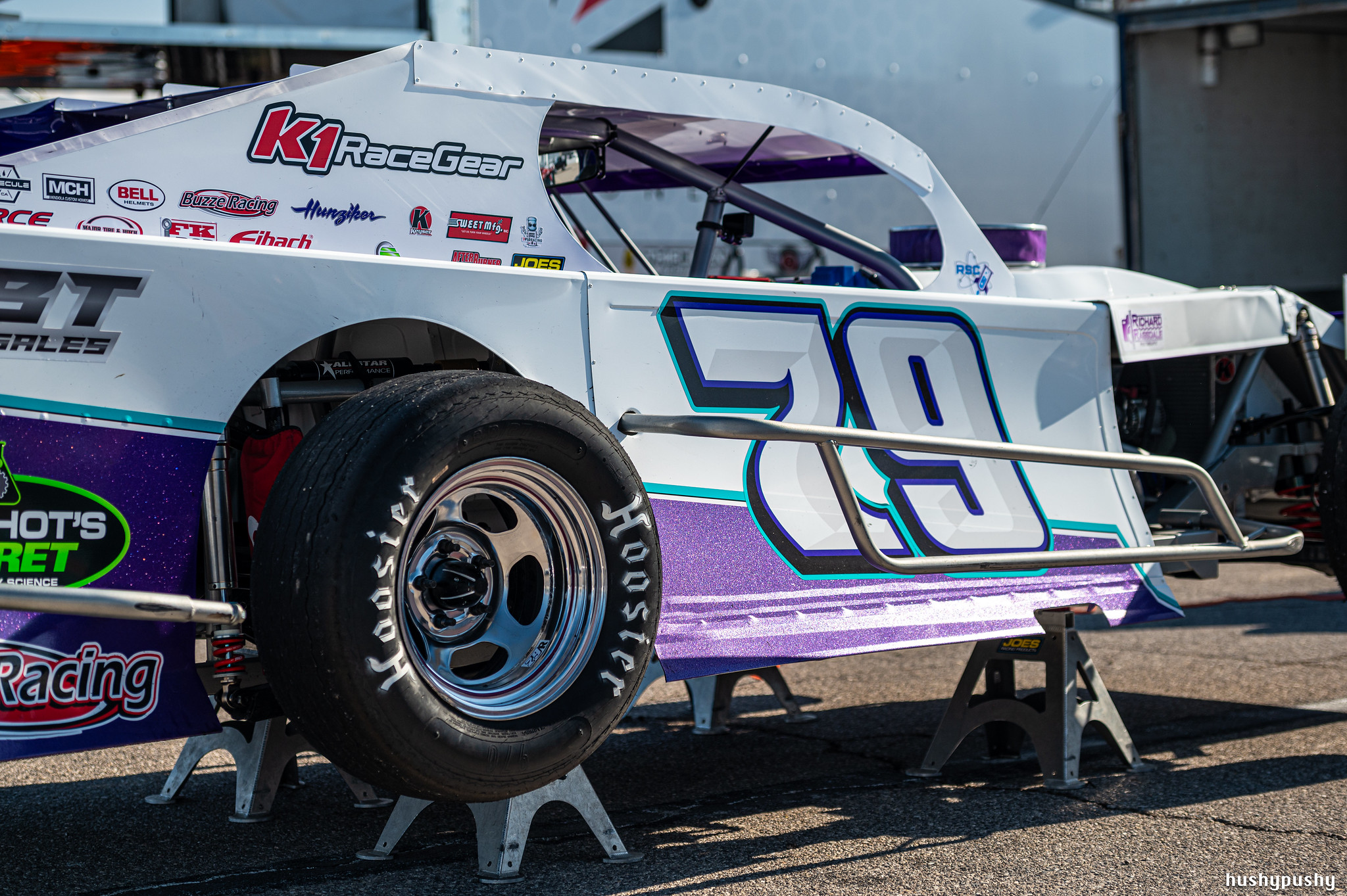
Or are they? Especially on the right side of the car, these cars have little to no bodywork covering the wheels, and the front fenders are nonexistent. So are these technically “open wheel” cars?
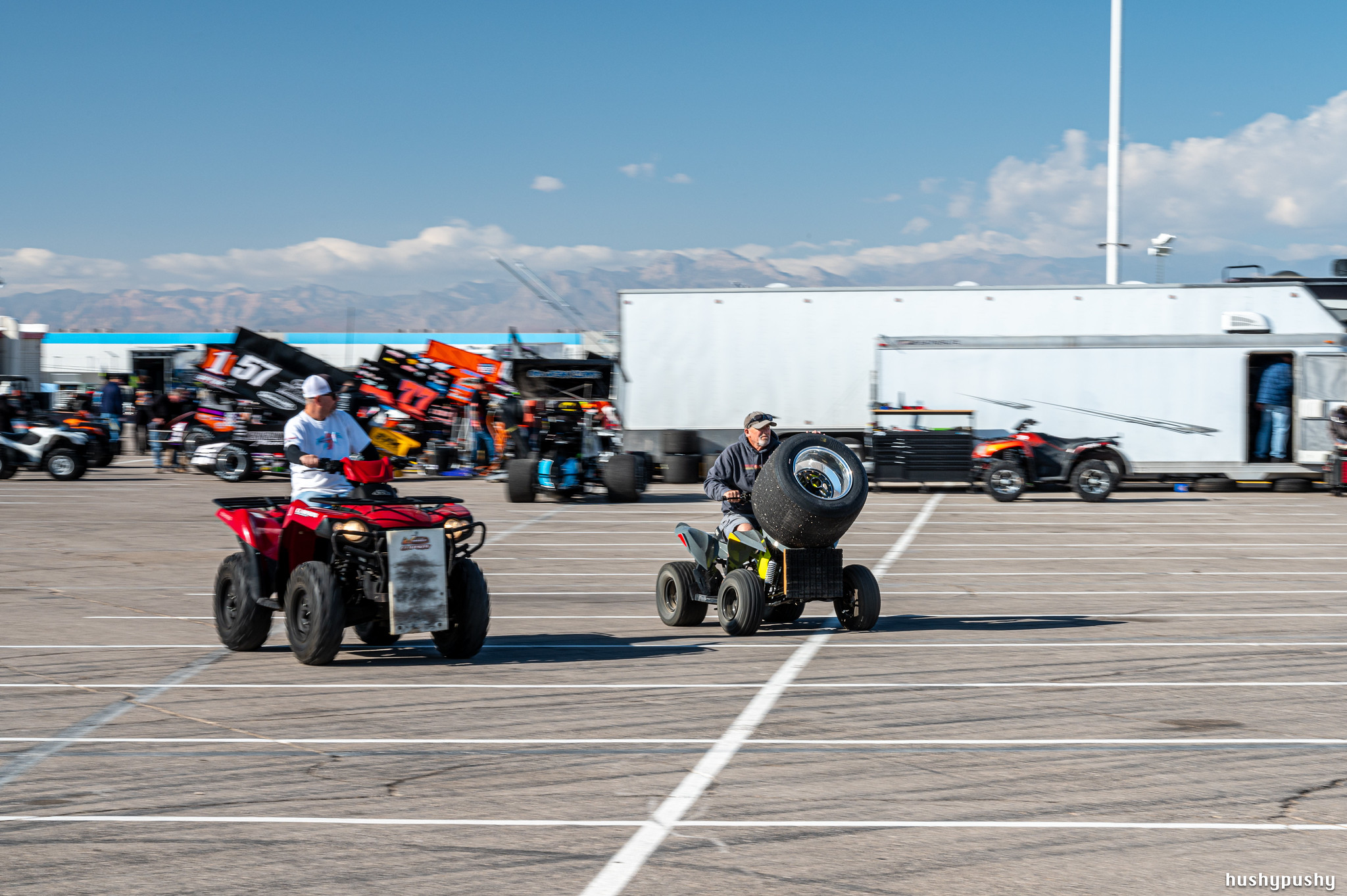
I’ve seen ATV’s with trailers, beds, and even mounts for wheels. But I love how this guy, with a smaller ATV, decided to just carry the wheel-and-tire on the front, held on with just his bare hand. Look at the front springs, almost fully compressed while carrying the weight.
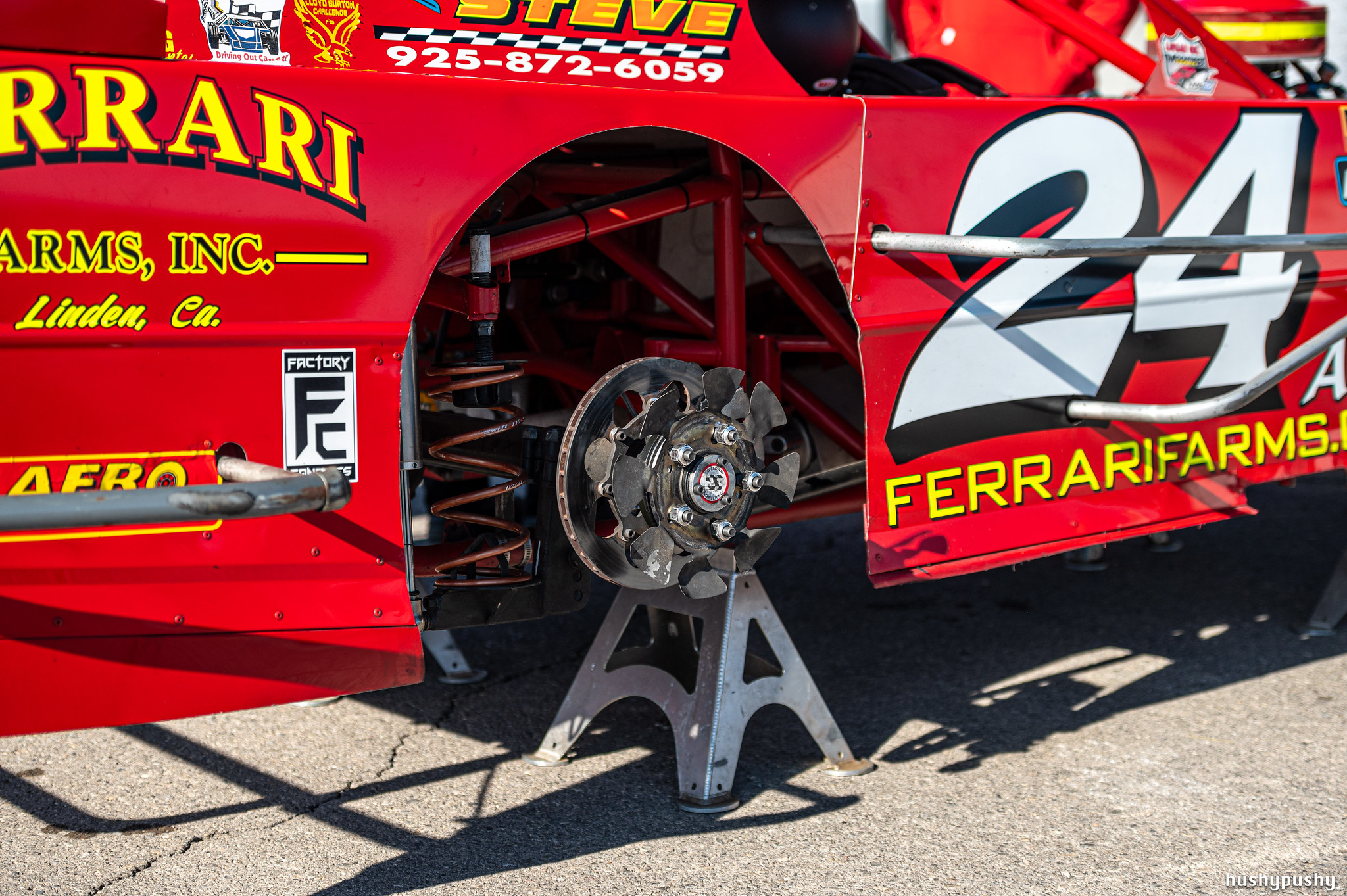
I was intrigued by this whole rear brake and hub setup. Everyone seemed pretty busy so I didn’t get a chance to inquire. I get the feeling those fins are something related to dirt racing, but maybe they are for cooling?
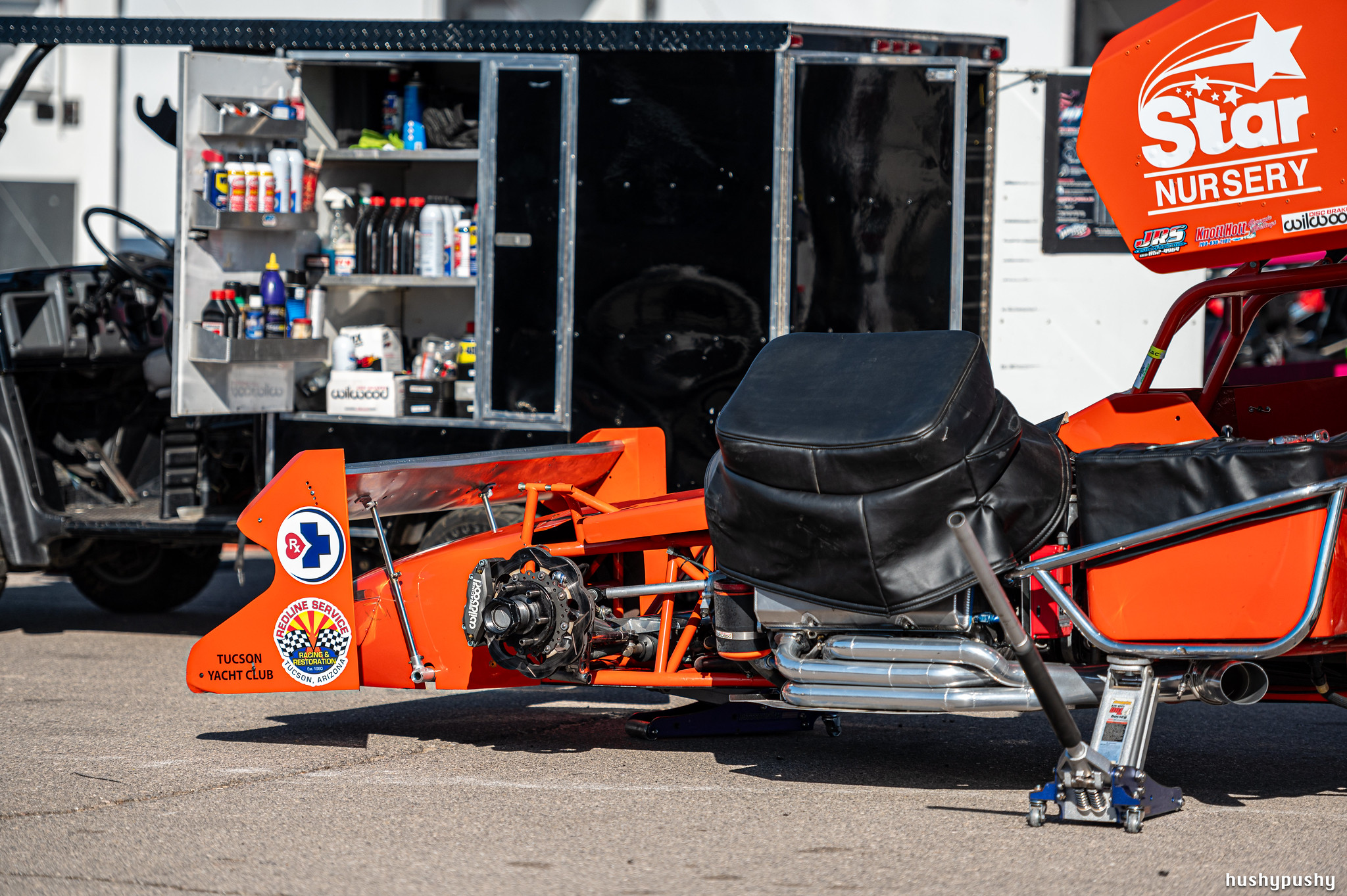
At the top level were some really serious cars. I’m sure something beefy is under that engine cover.
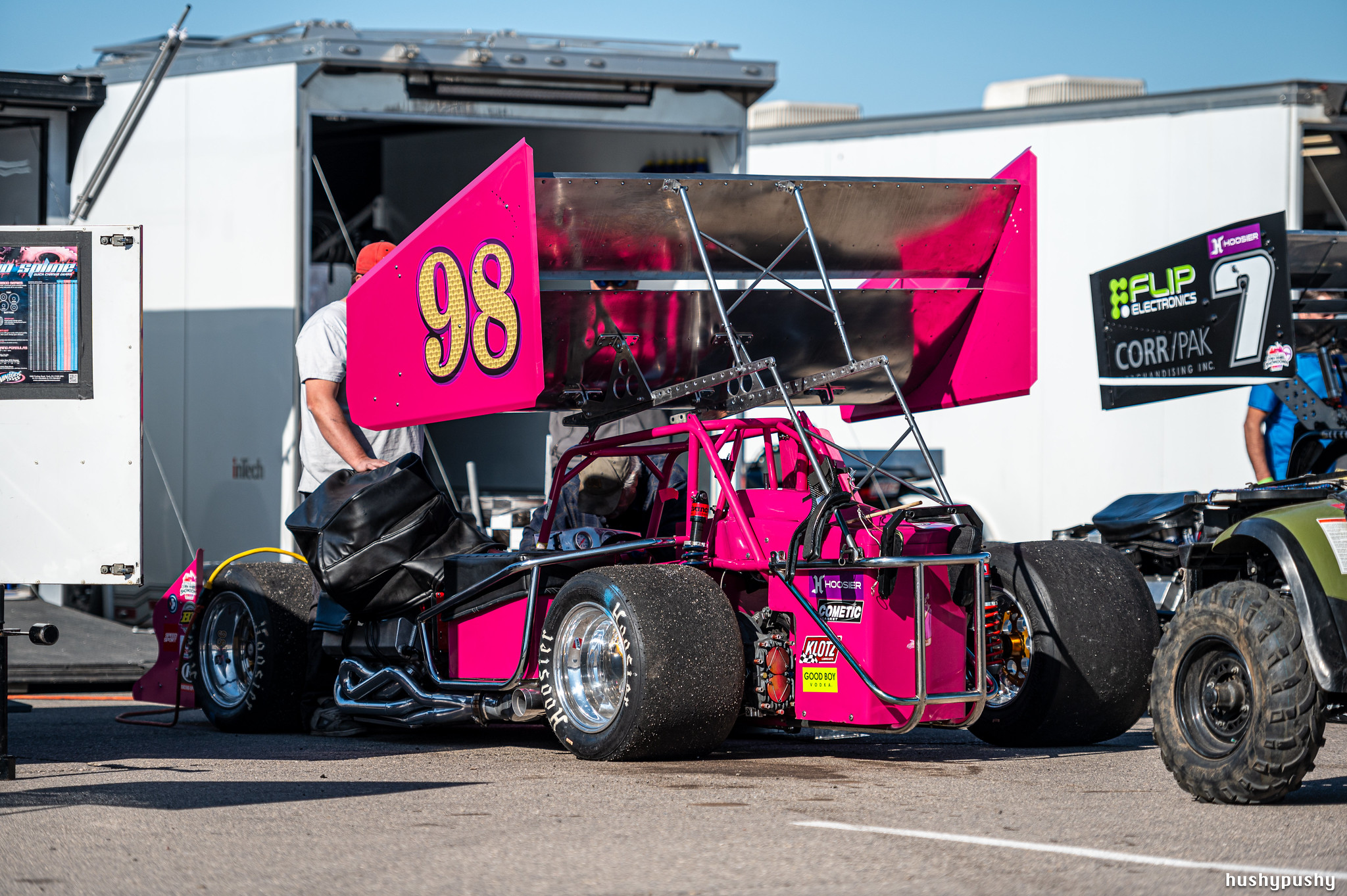
This one just looks beefy all over. Look at that huge wing! The gnarly header! And of course the staggered rear tires.

Suddenly I heard engines at one corner of the paddock. Walking over, I saw movement! Cars were lining up to go on track to practice!
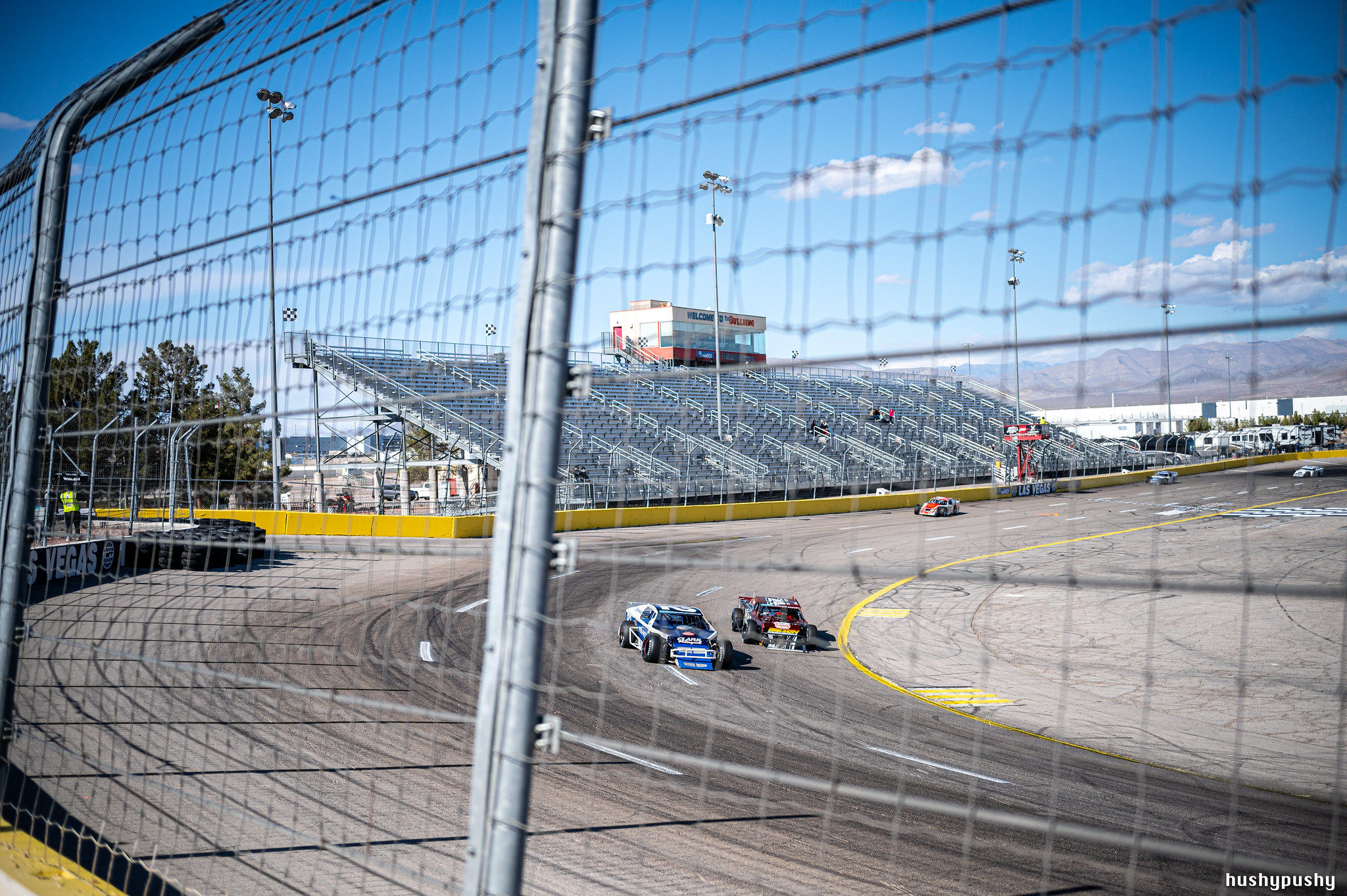
I only had my 40mm lens fitted but I walked over to survey the situation. There was a very short fence, about 6 feet of dirt, and then the actual catch fence for the track. You can get so close to the action here.
I pulled out my phone and just followed a couple cars that were driving close together. And then one of them spun! Totally a lucky capture. Sadly, this was the only video I took that day–I wish that I had recorded some videos of the sprint cars, which were able to carry incredible speed into and through the turns. They are a huge contrast to the mild-mannered (read: slow) pace of the Modifieds.
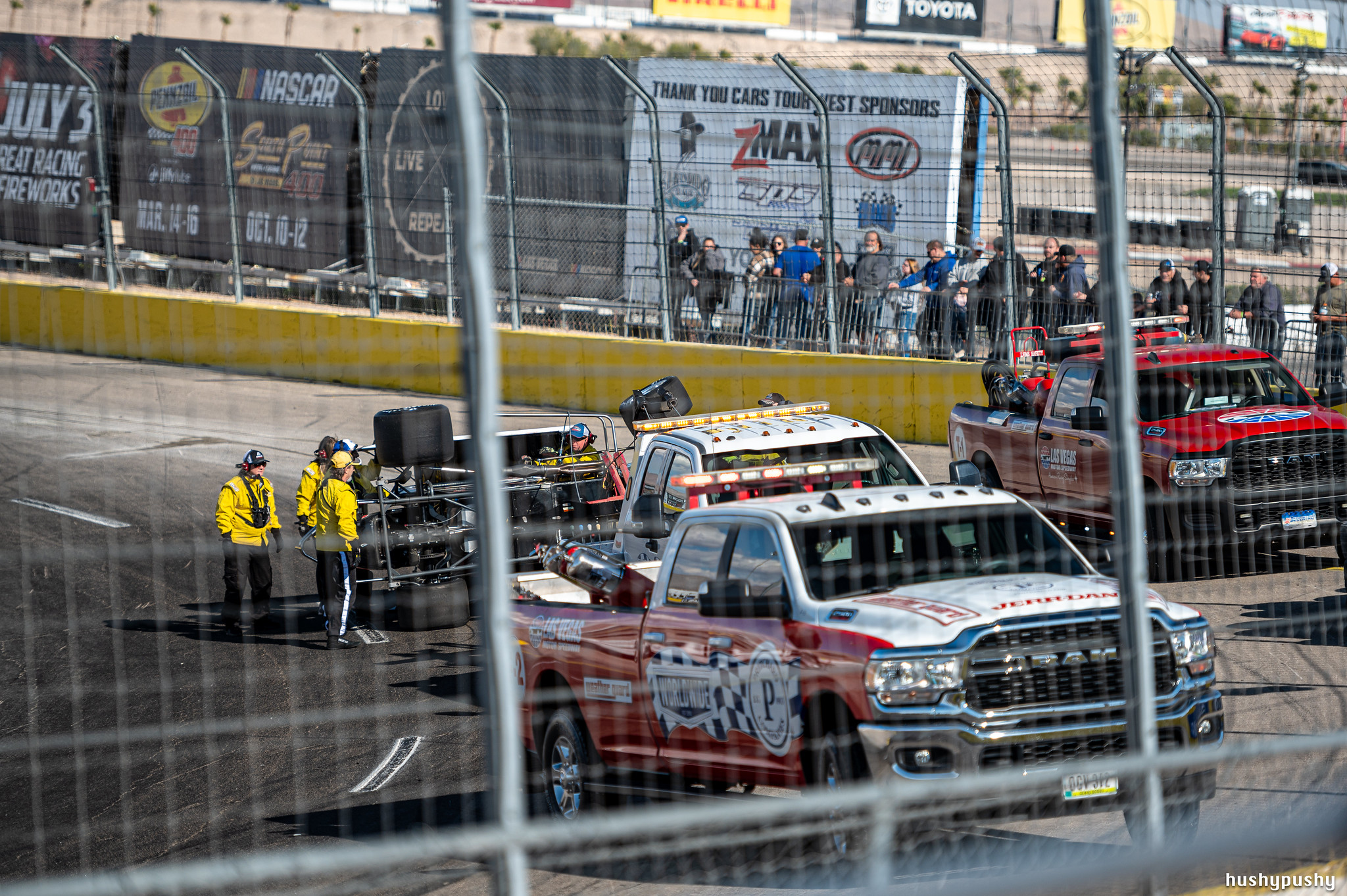
It was just after 11 AM, and I tend to eat my lunches early. The food trucks had opened at the track, so I walked back to the office, grabbed my 70-200mm lens, then picked up three birria tacos at a food truck and settled into the mini-grandstands at Turn 1/2. I wasn’t even through my first taco when we witnessed the slowest rollover ever. He came into Turn 2 a little loose, over-corrected it, and then somehow when the nose was pointing back up the track…it just flopped over into that position you see there. It wasn’t even a roll; more like a cow tipping.
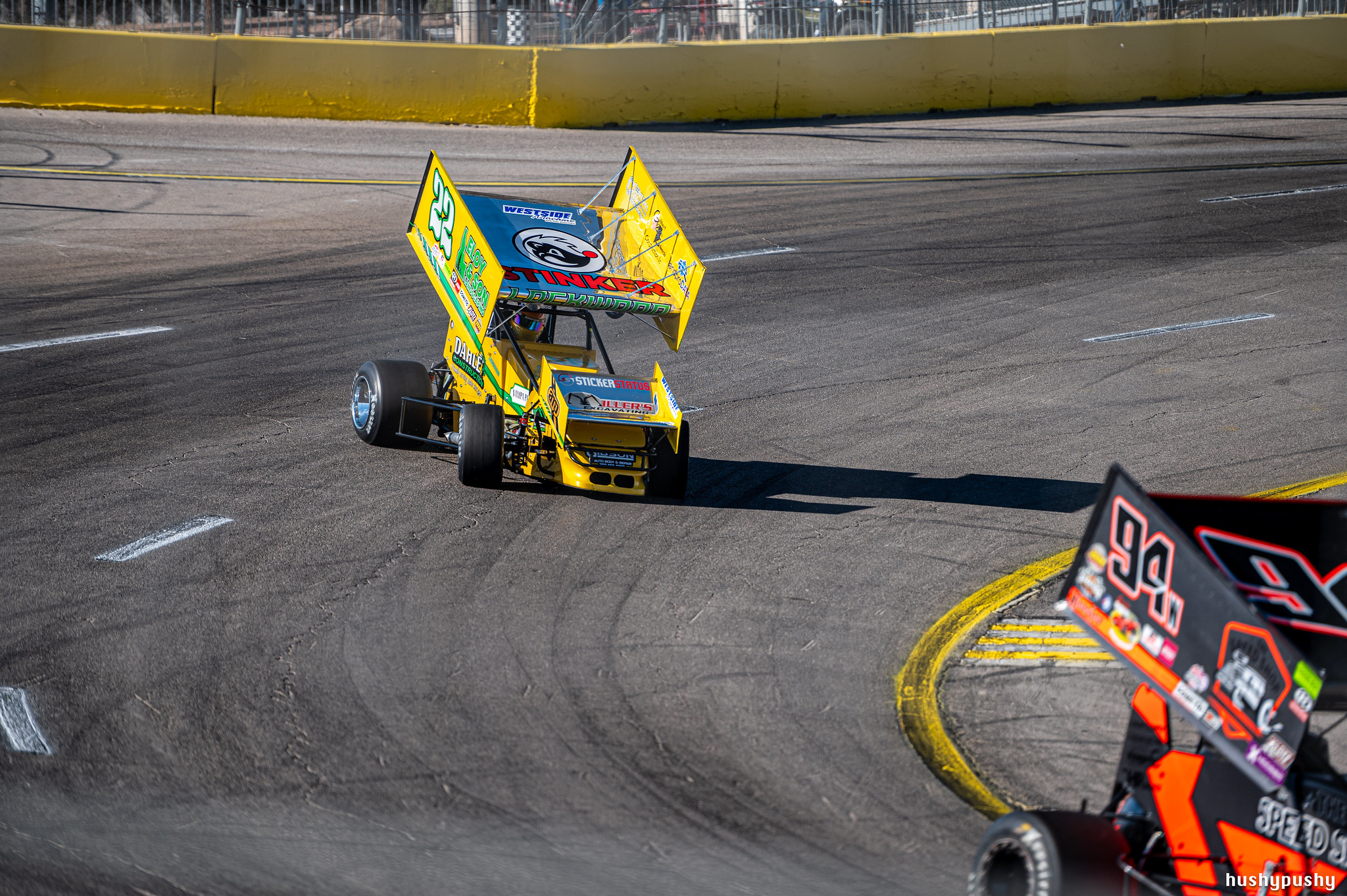
I really enjoy watching practice sessions; I watch all the practice sessions at each Formula One race, and I love shooting practice whenever I go to the track. It’s just interesting to see the drivers feel out the limit of grip. The driver of this 22 car was great to watch as he tried many different entry speeds and angles, all of them producing lurid oversteer which unfortunately then seemed to turn into mid-corner push. I’m sure they were doing adjustments in the paddock after this.
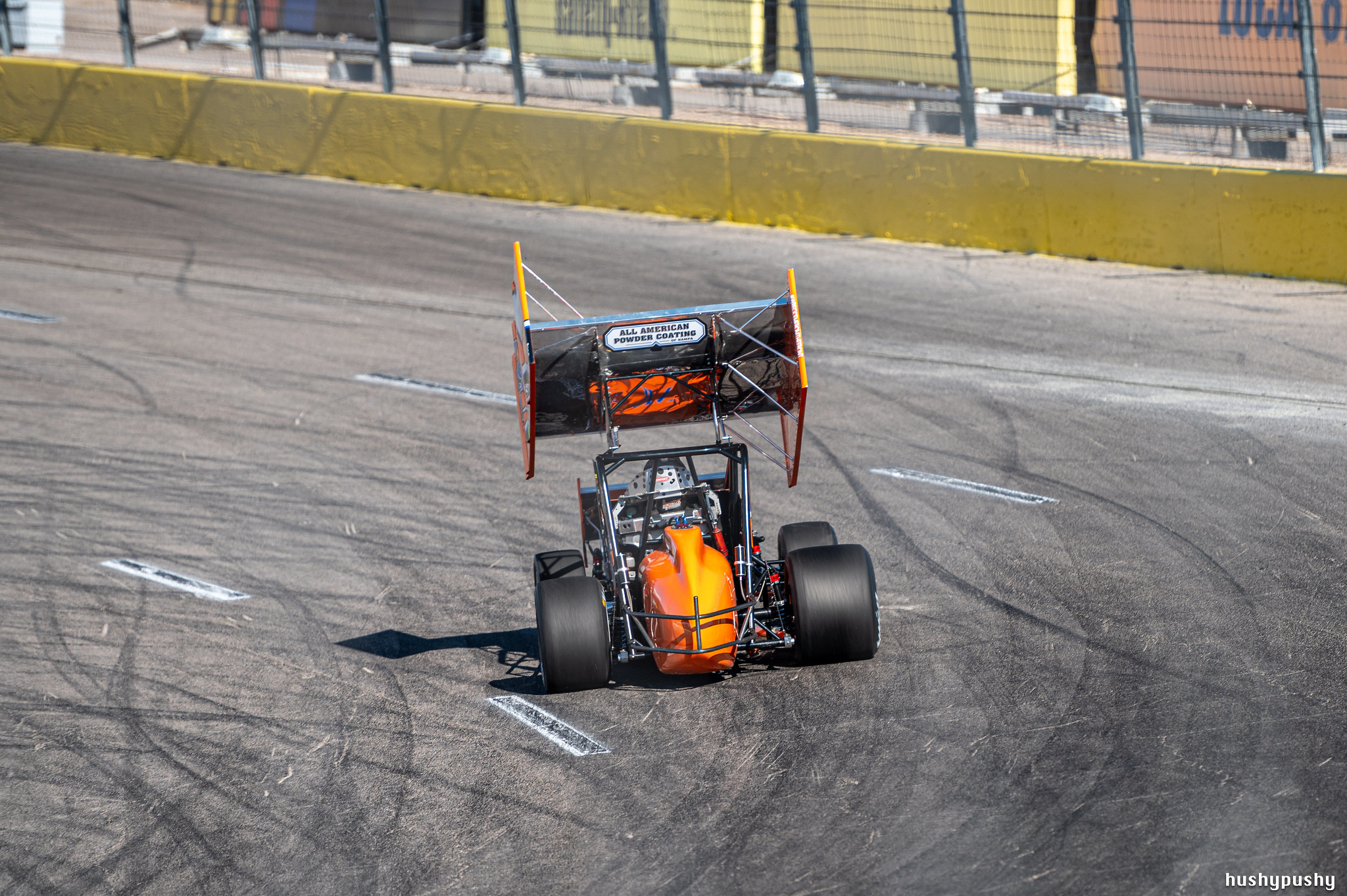
I just love the rear view of these staggered cars.
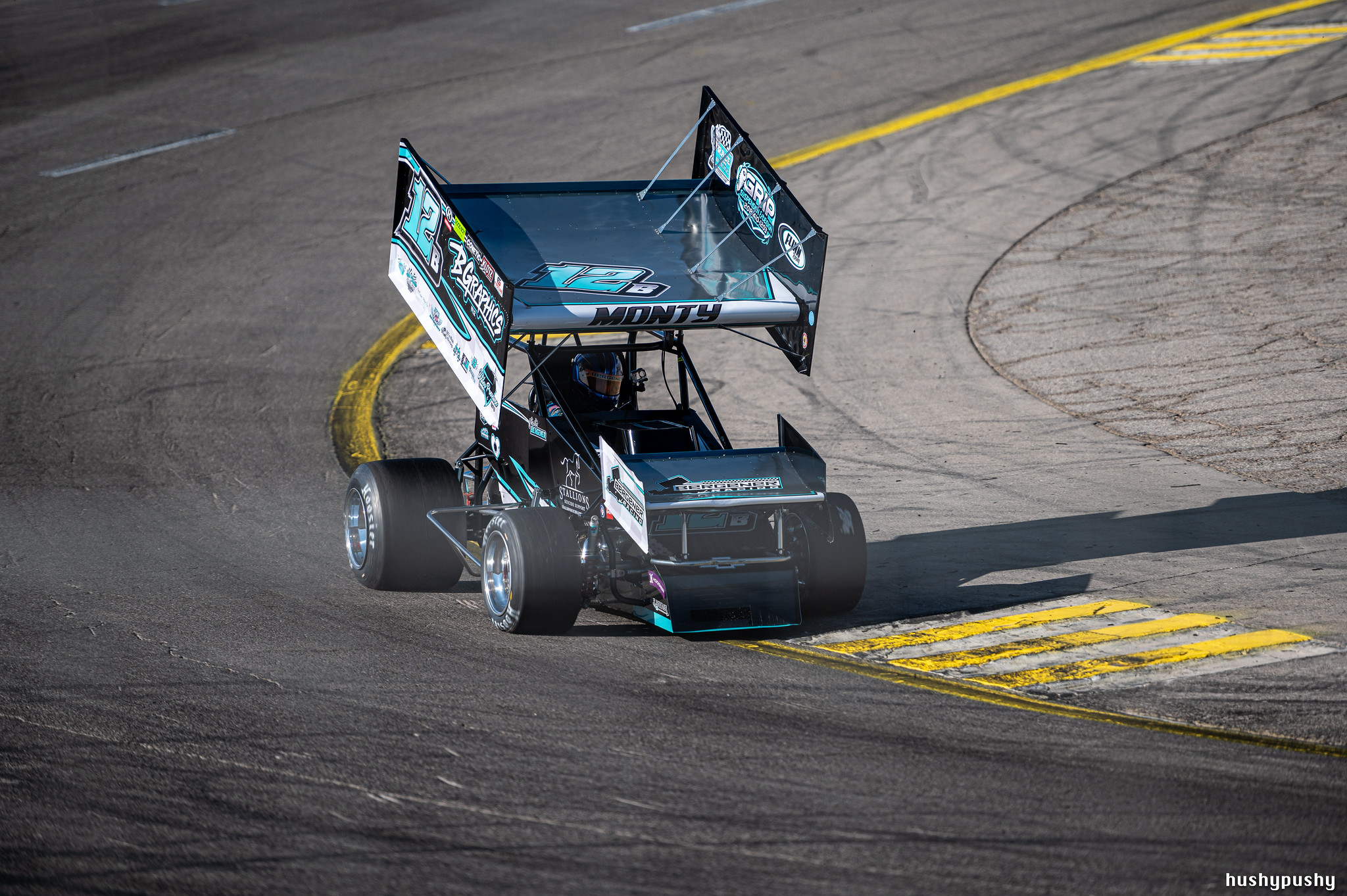
This line was a bit too tight…
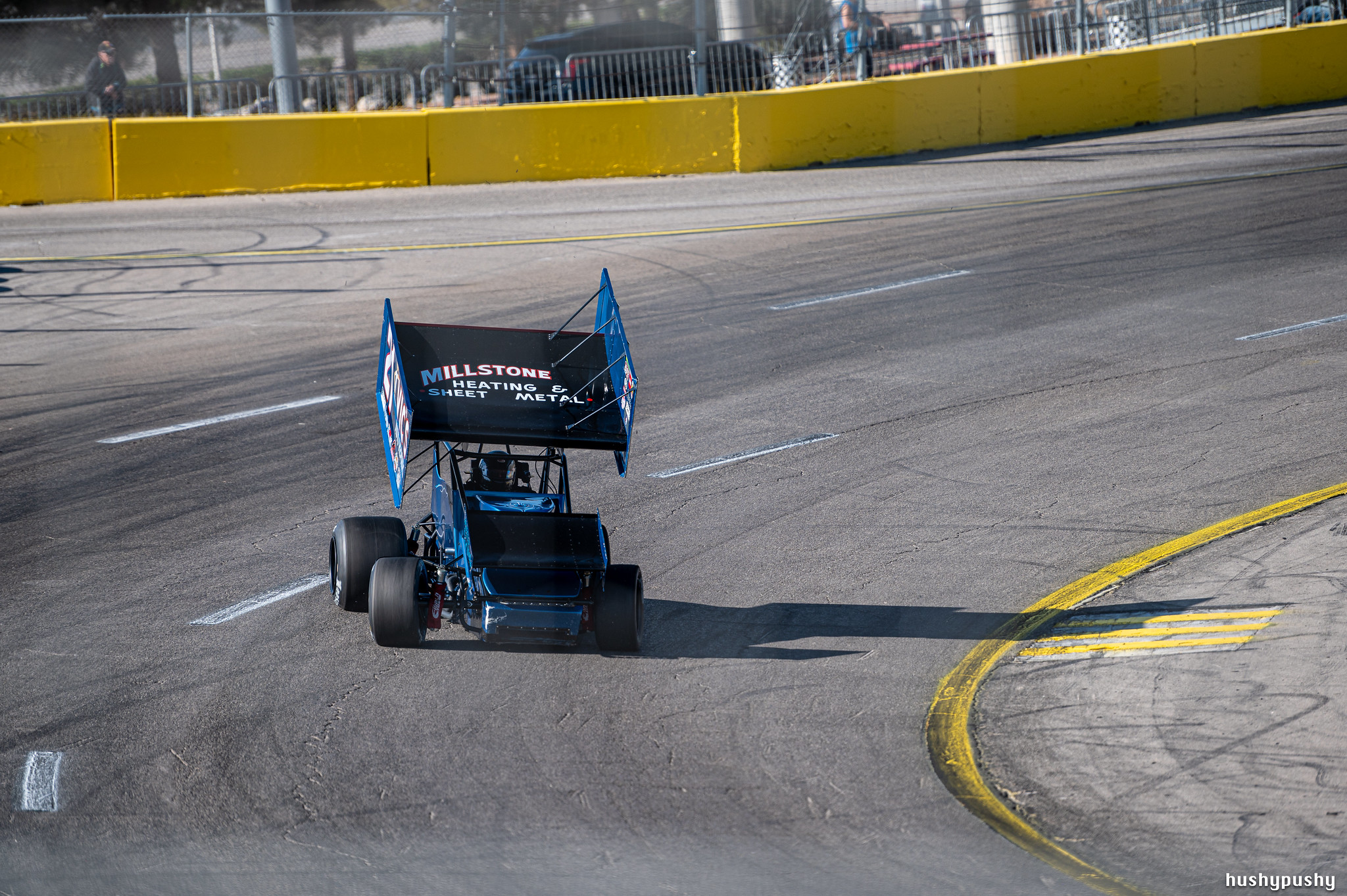
While this one was a bit too high and loose. He caught the slide and ended up way up at the top of the track going slowly. But hey, it’s practice: you gotta try stuff.
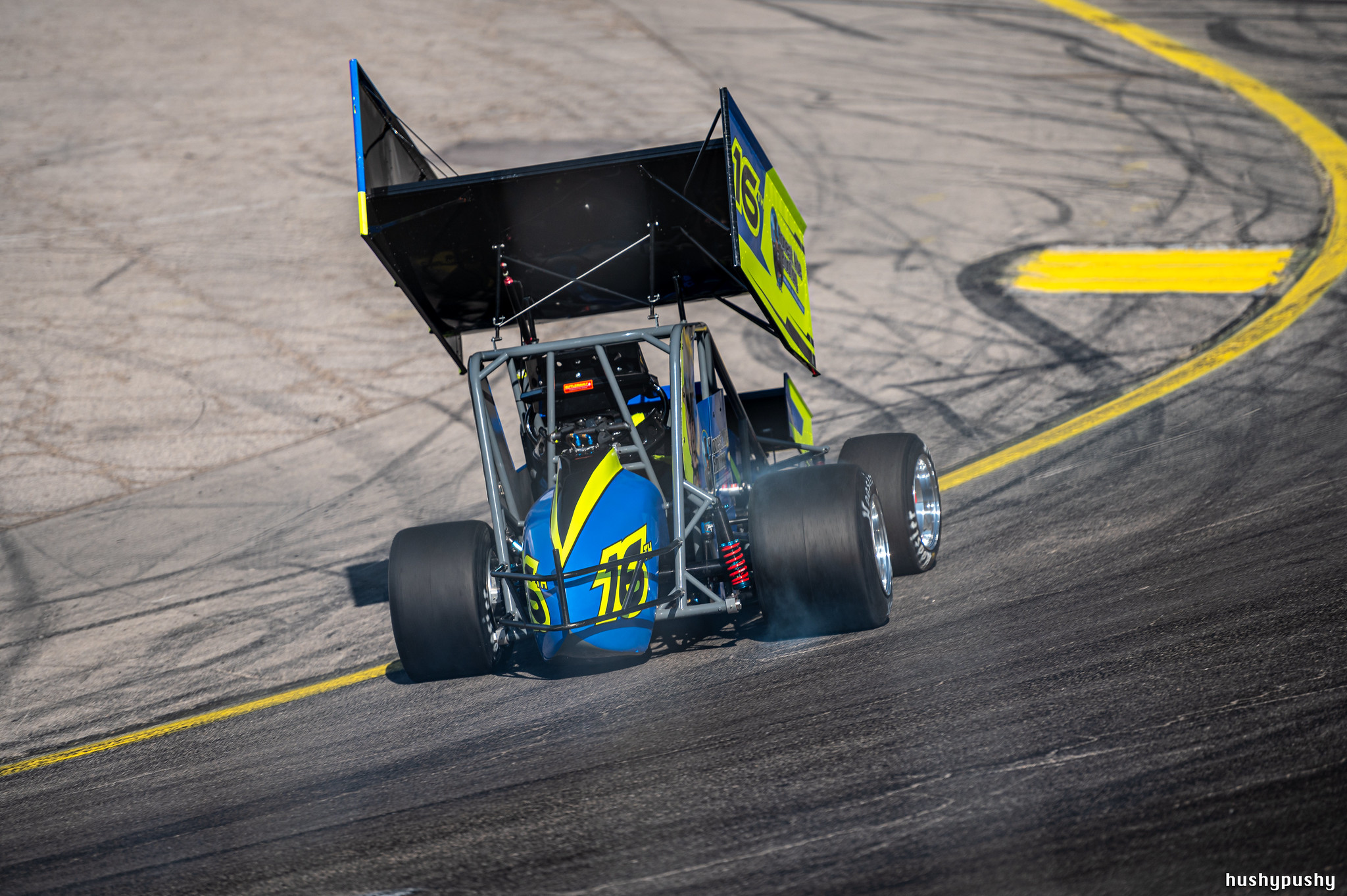
I’m pretty sure that smoking tire oversteer is not the fastest way around a paved oval, but it’s definitely the most exciting way. What is it about a car with excessive yaw angle, over-speeding rear wheels, and front wheels turned into the slide that is so evocative?
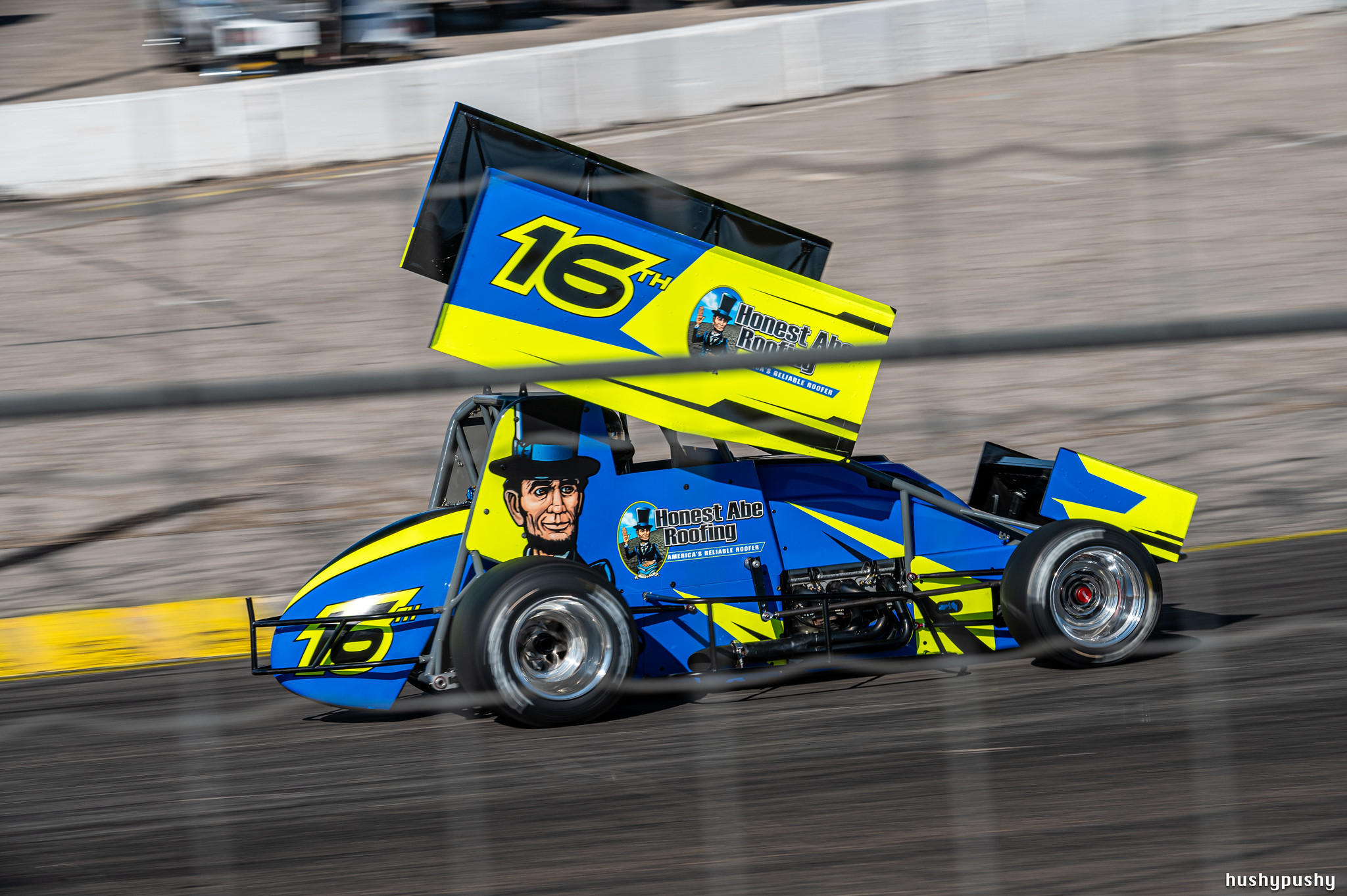
Most of the photos in this article were taken wide open: f/2.8, and whatever (very fast) shutter speed resulted. The previous oversteer photo, for example, was taken with a 1/1600 shutter speed. As I got comfortable, I tried a few slower shutter speeds. But you don’t have to go very slow to get motion blur because they cars have impressive cornering speed. The photo above was at 1/200, which is generally fairly fast, but even just the past the apex they are carrying enough speed to give motion blur at this fast shutter speed.
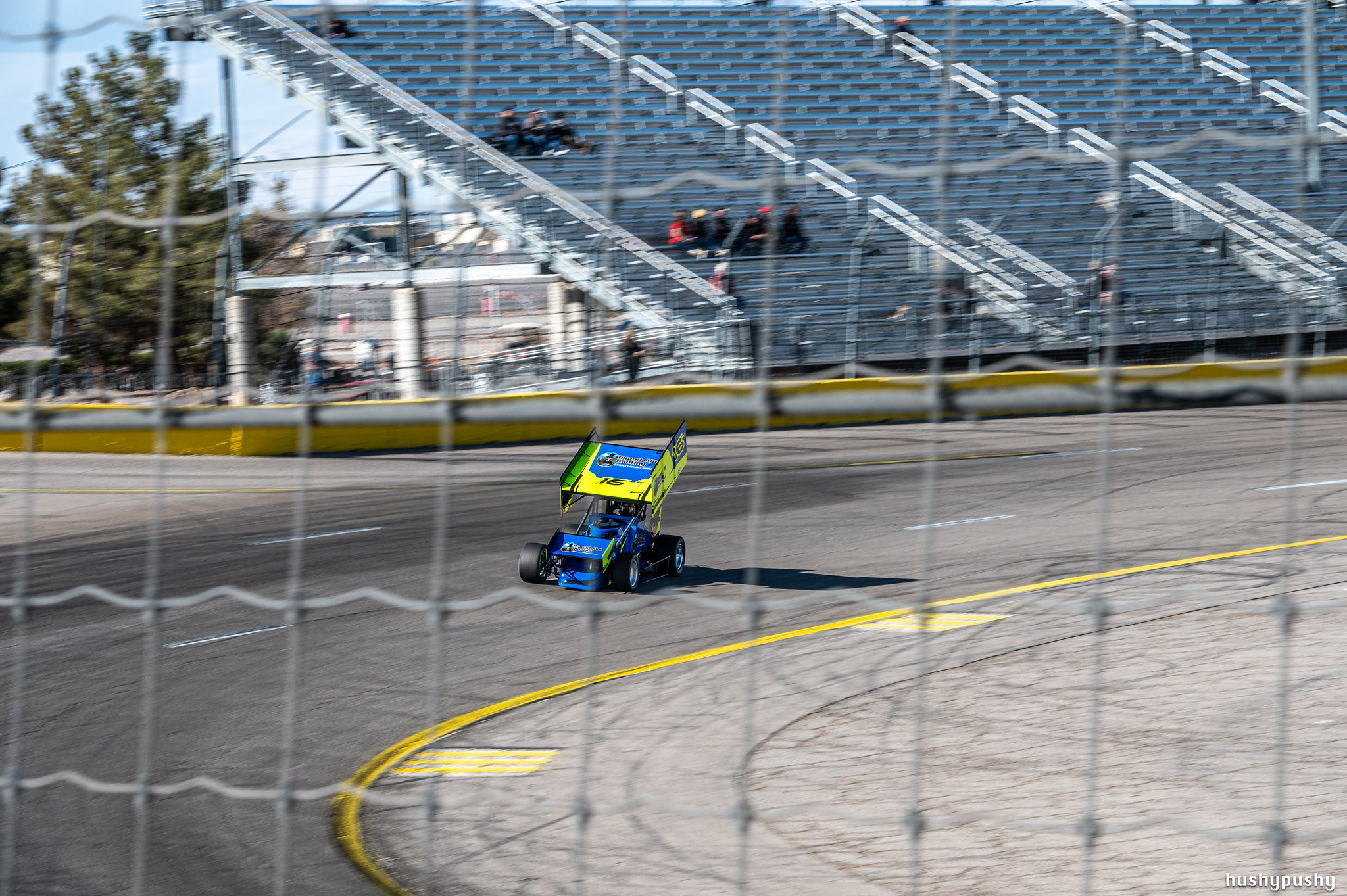
This was down at 1/80, but the problem at that point is you are stopping down (i.e. making the aperture smaller), which brings more of the image in focus, so you can see that big ugly fence in the way. Due to the magic of optics, when you shoot through a fence at a wide aperture it just disappears.
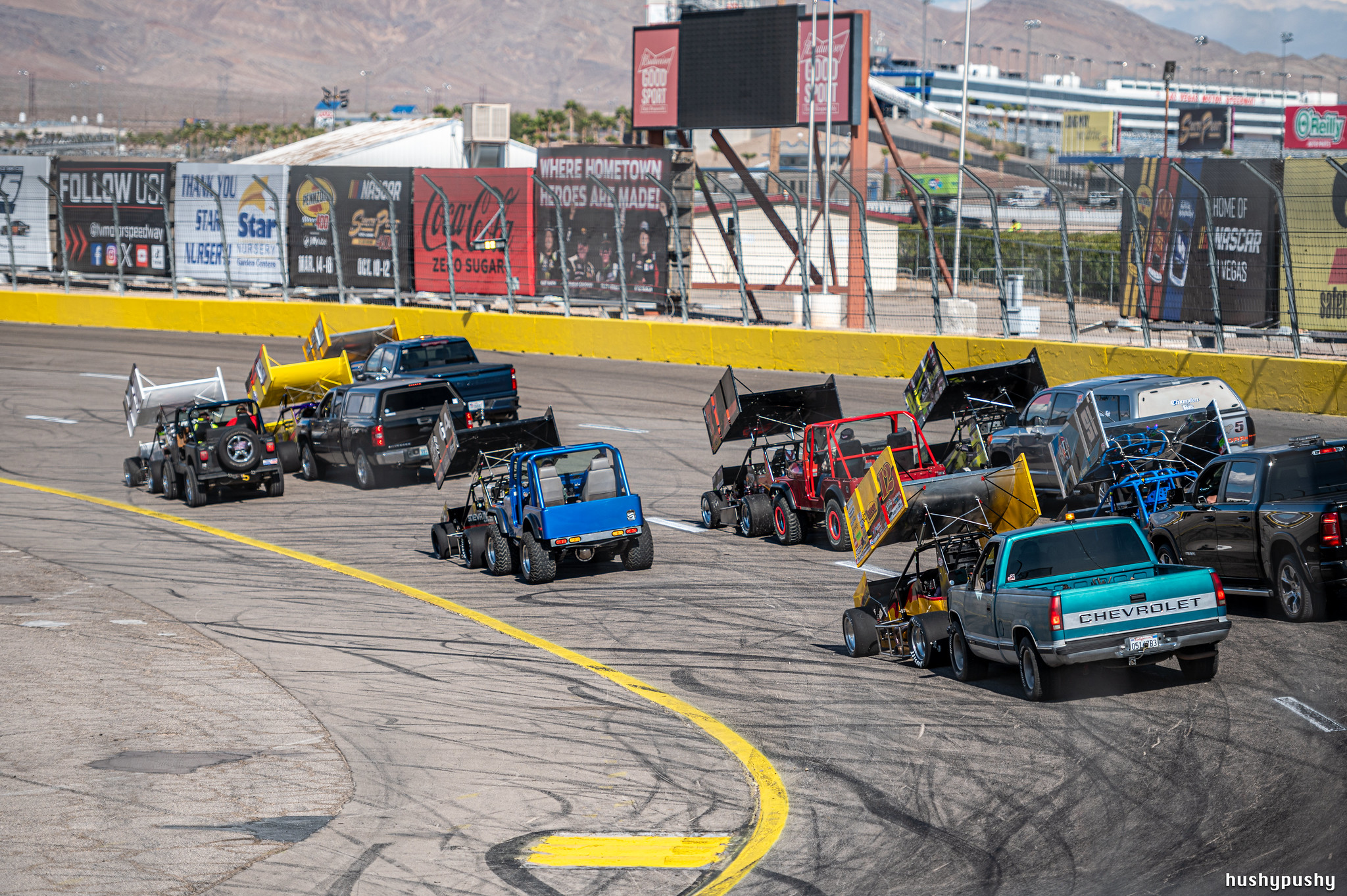
Sprint cars don’t have transmissions or even starters so they have to be push started. Many of the push trucks are just generic late model big-cab pickups, but there were also a great selection of vintage Jeeps. My eye was instantly drawn to the teal 4th gen Chevy. I’ve always had a soft spot for these trucks, especially the 1994 and earlier (pre-facelift) version. They were current generation truck in my childhood so there is definitely a nostalgic element, but I’ve always thought that was peak pickup design: so elegantly simple and functional. Trucks these days, especially full-size, are actually disgusting in their design language. People complain about the Cybertruck, but what about the absolutely hideous Sierra, Silverado, and Tundra? The Cybertruck looks like it was designed by a child, but the other trucks look like they were penned by HR Giger after drinking a pint of vodka.
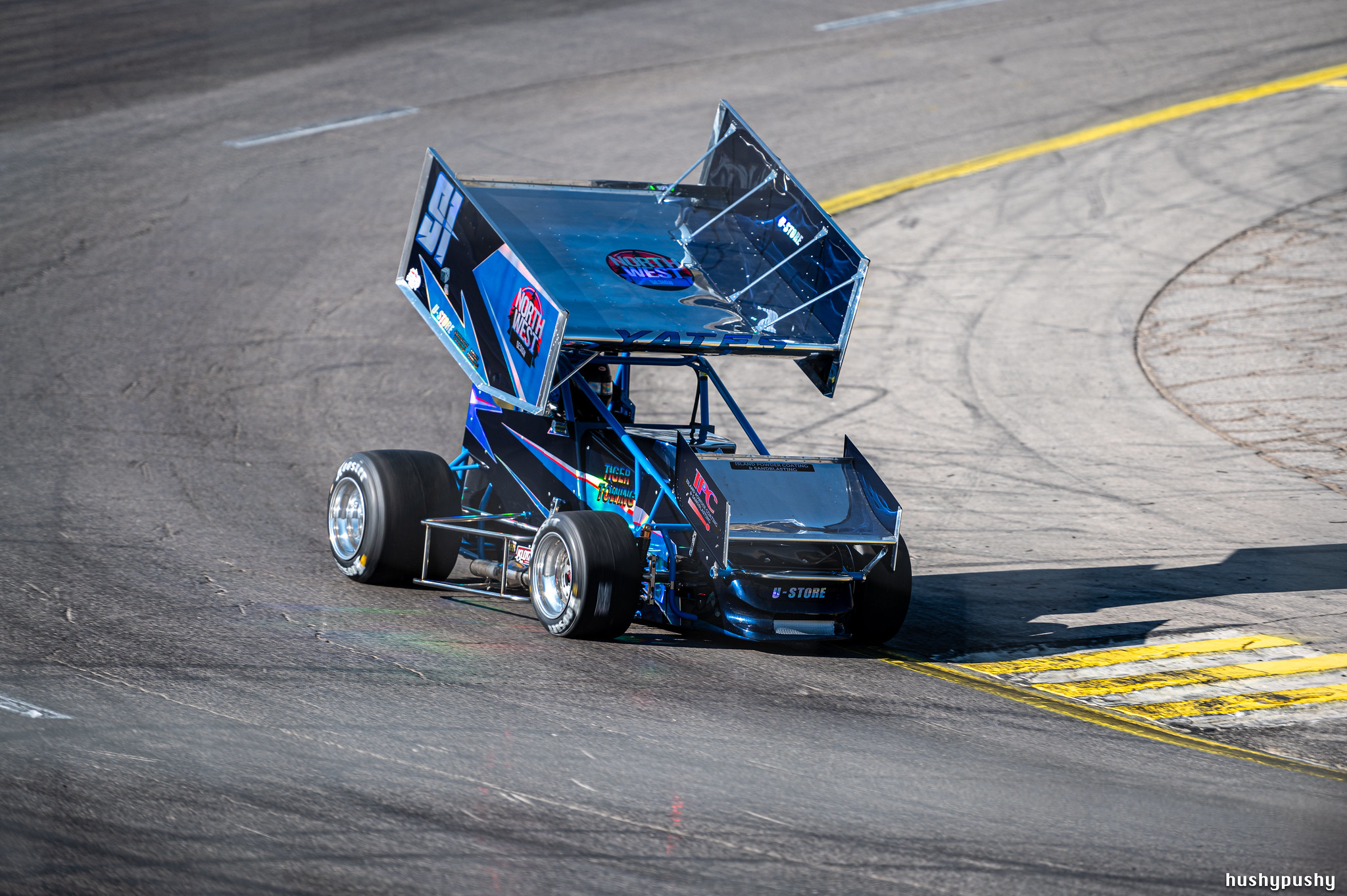
When there are tons of cars on track, you can’t shoot every single one that comes by, so how do you pick? The first exciting thing I look for is dynamic vehicle behavior, and the next important thing is simply having a good looking livery. Black liveries are hard to do, but this one has enough accent colors to look really interesting. And I love how the metallic texture reflects a rainbow onto the bash bars and the track.
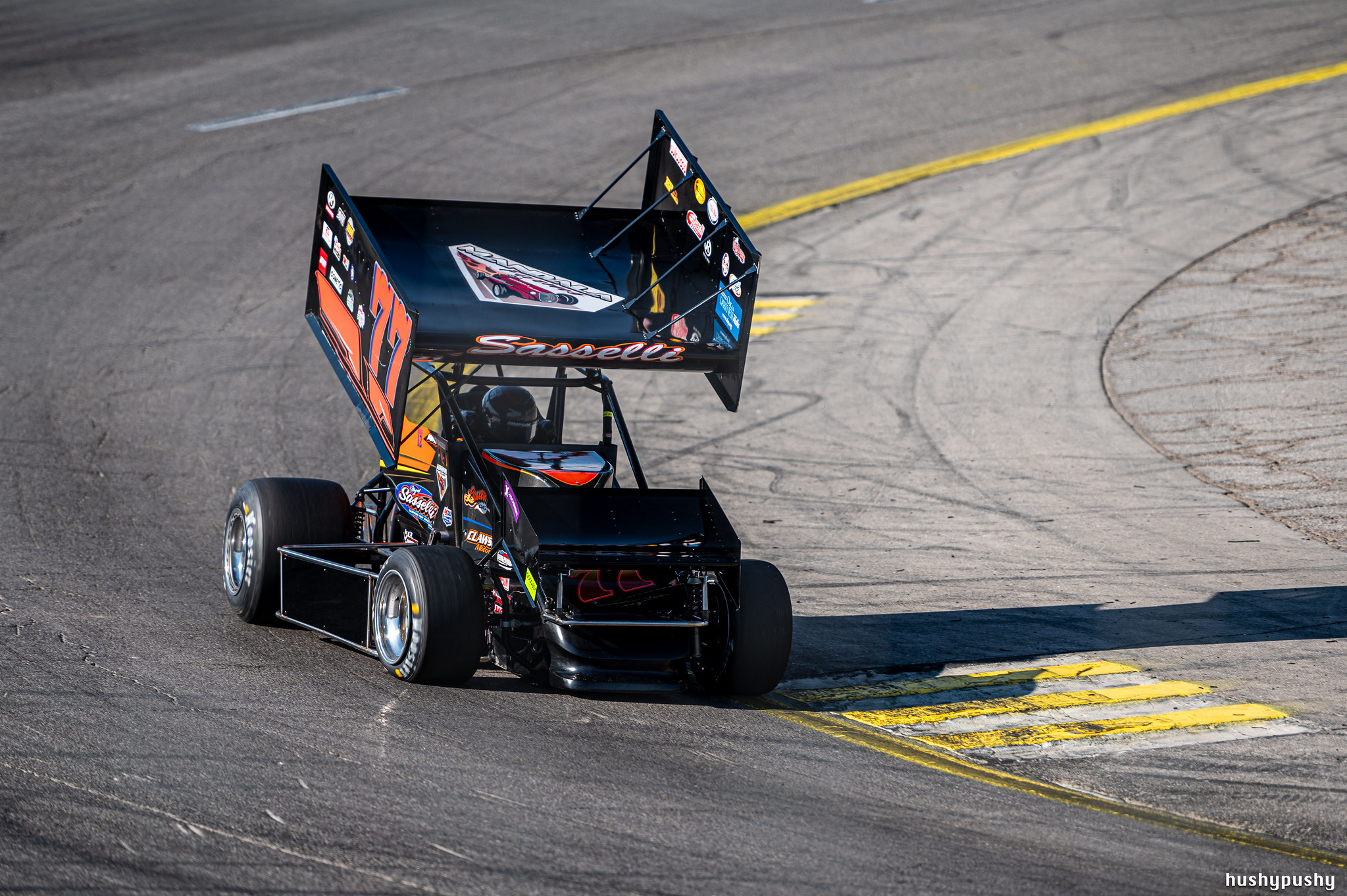
Here’s some understeer, or should I say “push” because this is an oval. Look at the sidewall peeling away from the wheel rim just on the bottom side!
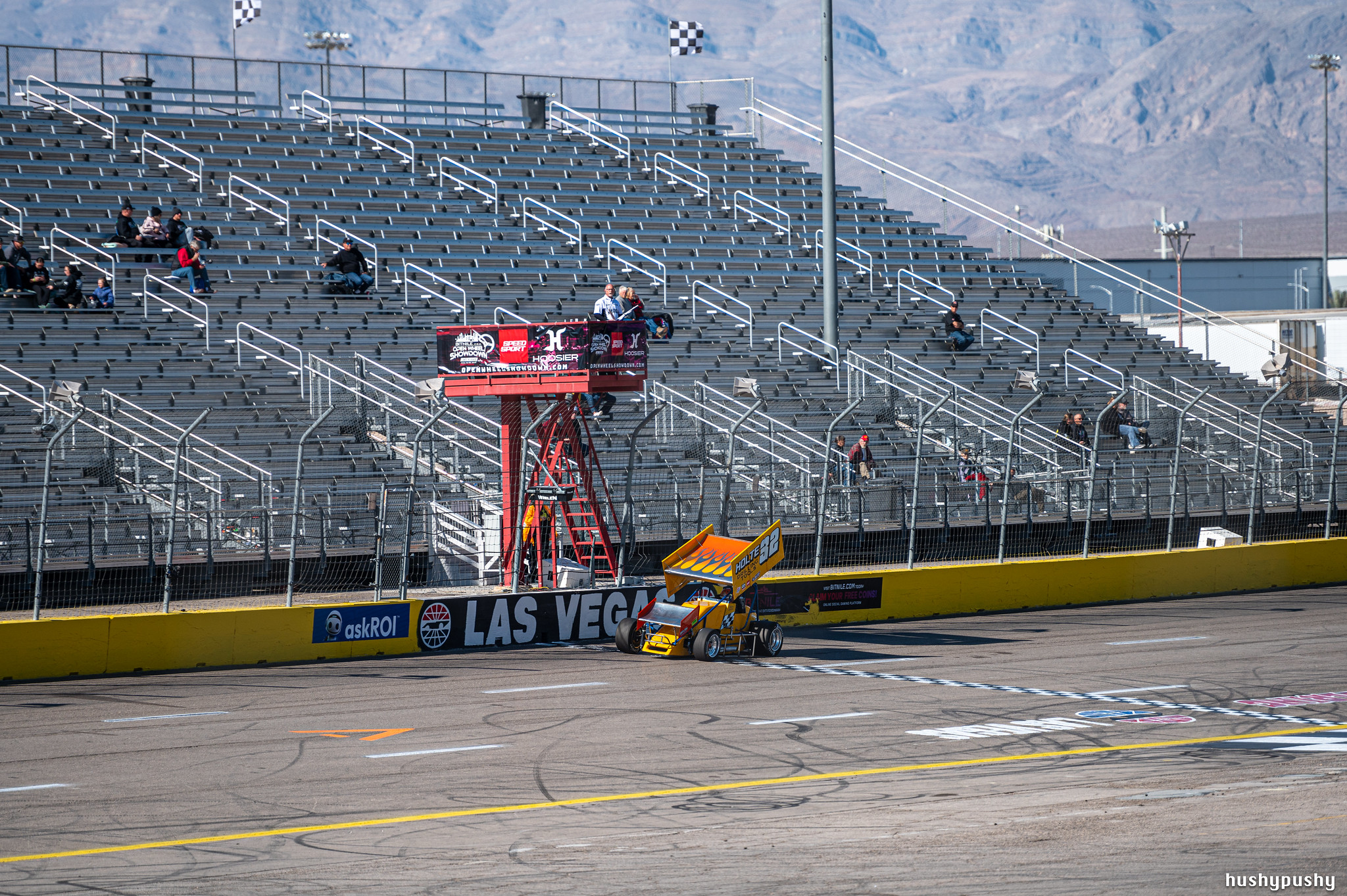
Paved oval racing is pretty ballsy. They carry a ton of speed into the turns, especially at the top levels, and these smaller tracks have almost zero safety features: while the bigger NASCAR tracks have the “SAFER” barrier which features multiple feet of deflection, if you crash at a small track like this you are bouncing off an immovable object.
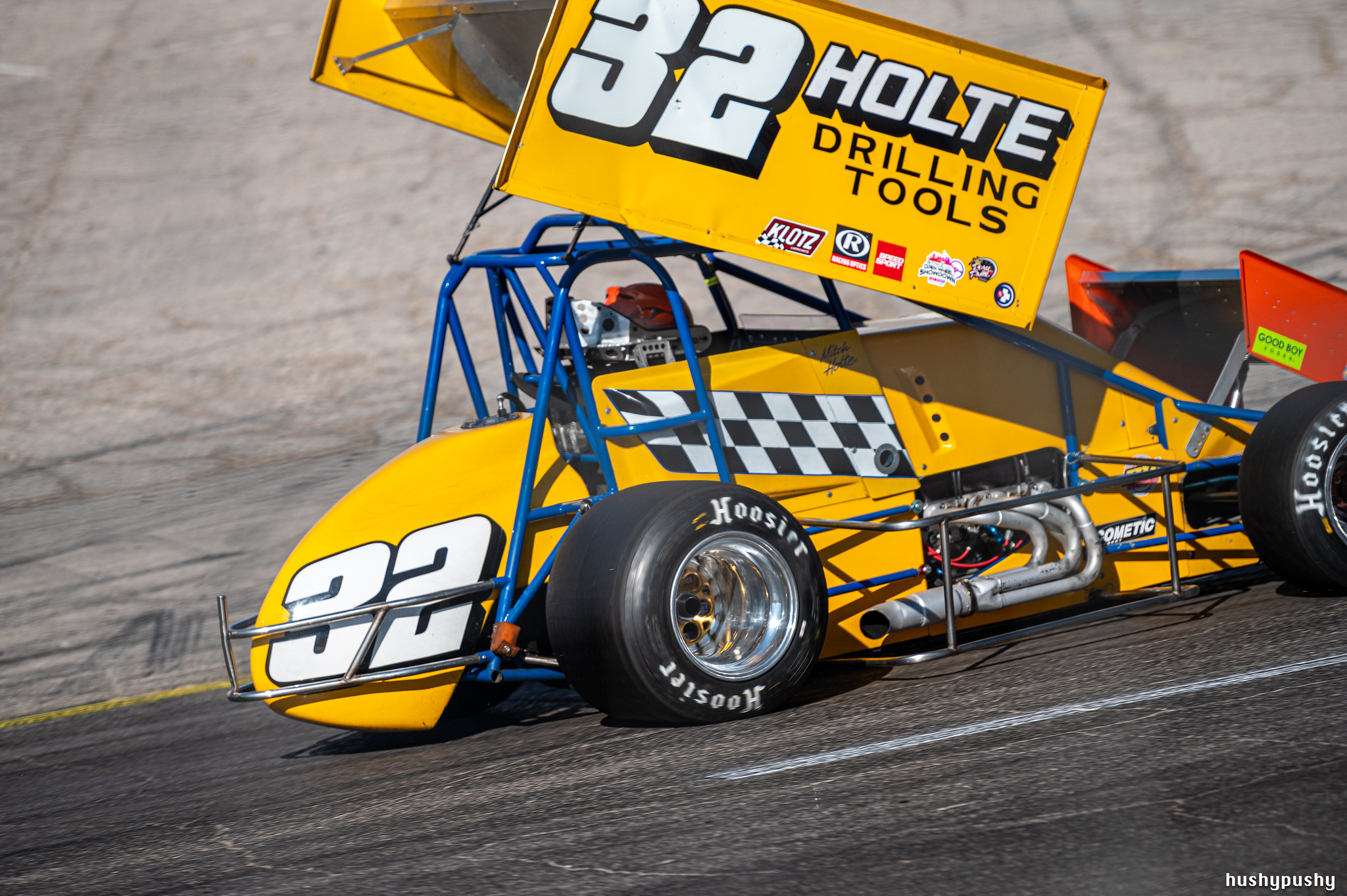
Slow shutter speeds weren’t really working for me and I had already taken quite a few similar photos, so I decided to try getting in as close as I could to the action. I love seeing the sidewall deflected under load; even though the car is essentially frozen in place by the 1/2500 shutter, you can still sense the energy.
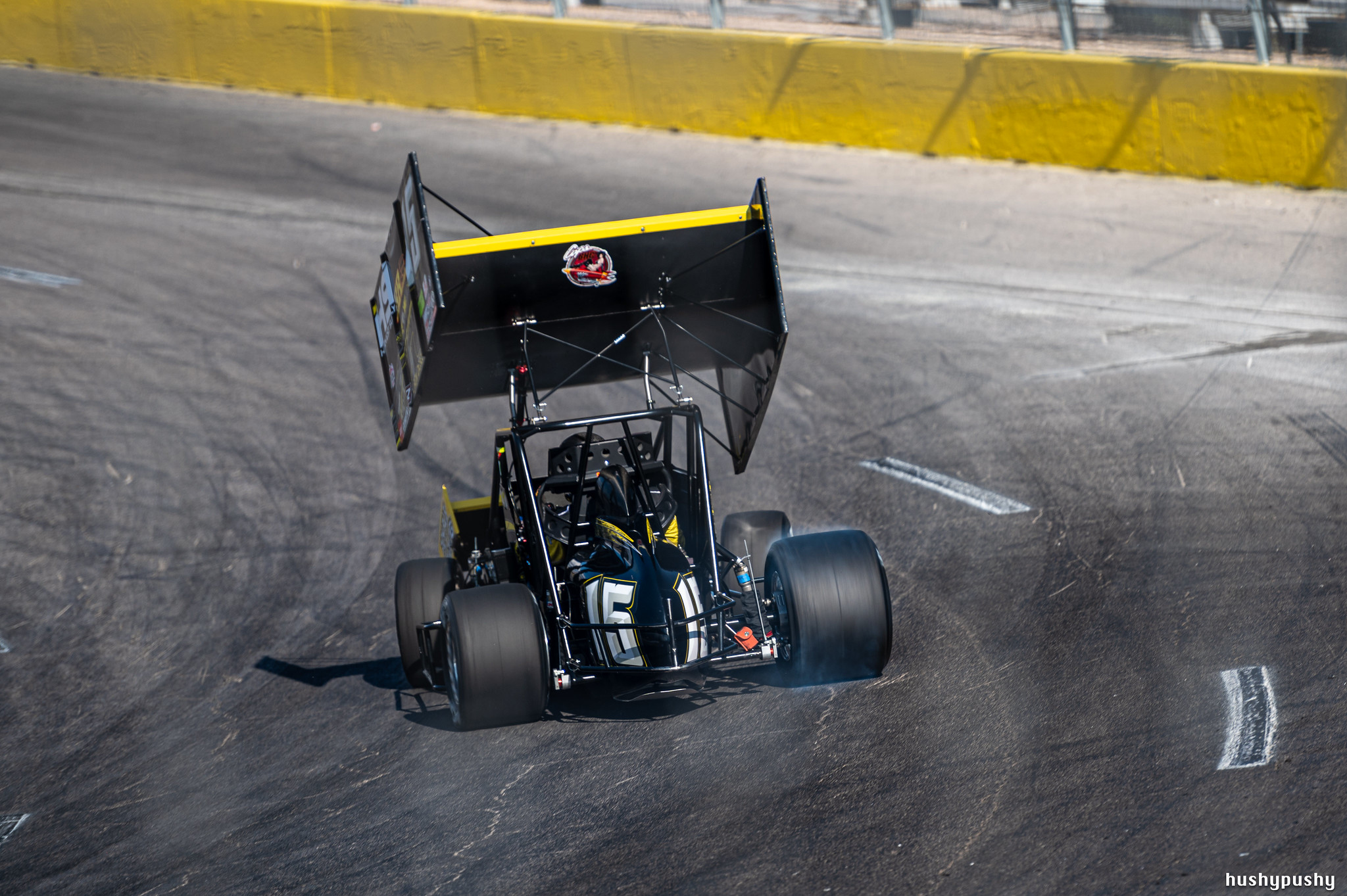
A fast shutter speed works well when the car is going directly at you, or directly away from you. Similar to the previous snap, the car is frozen, but the rear tires give energy to the photo.
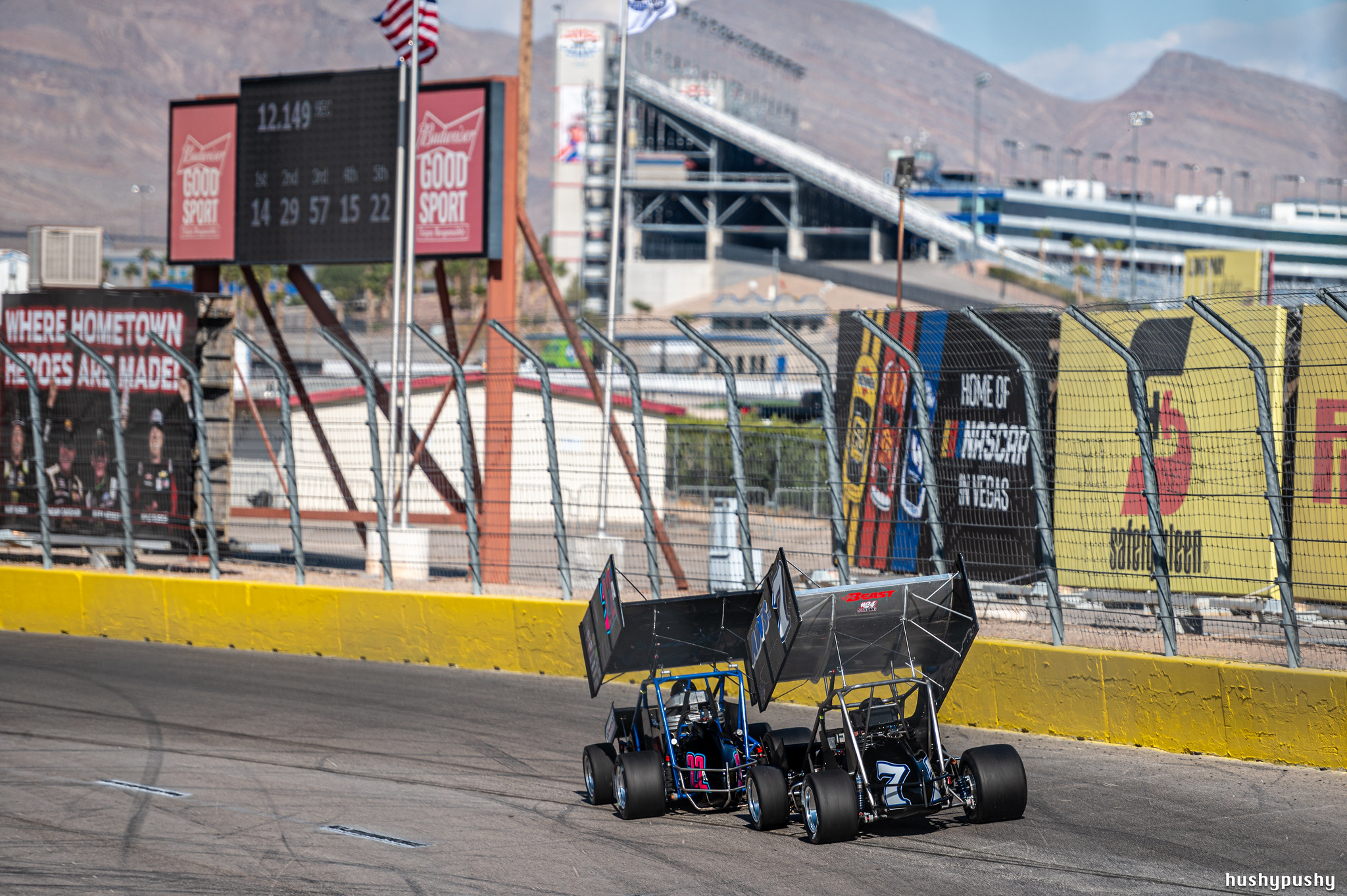
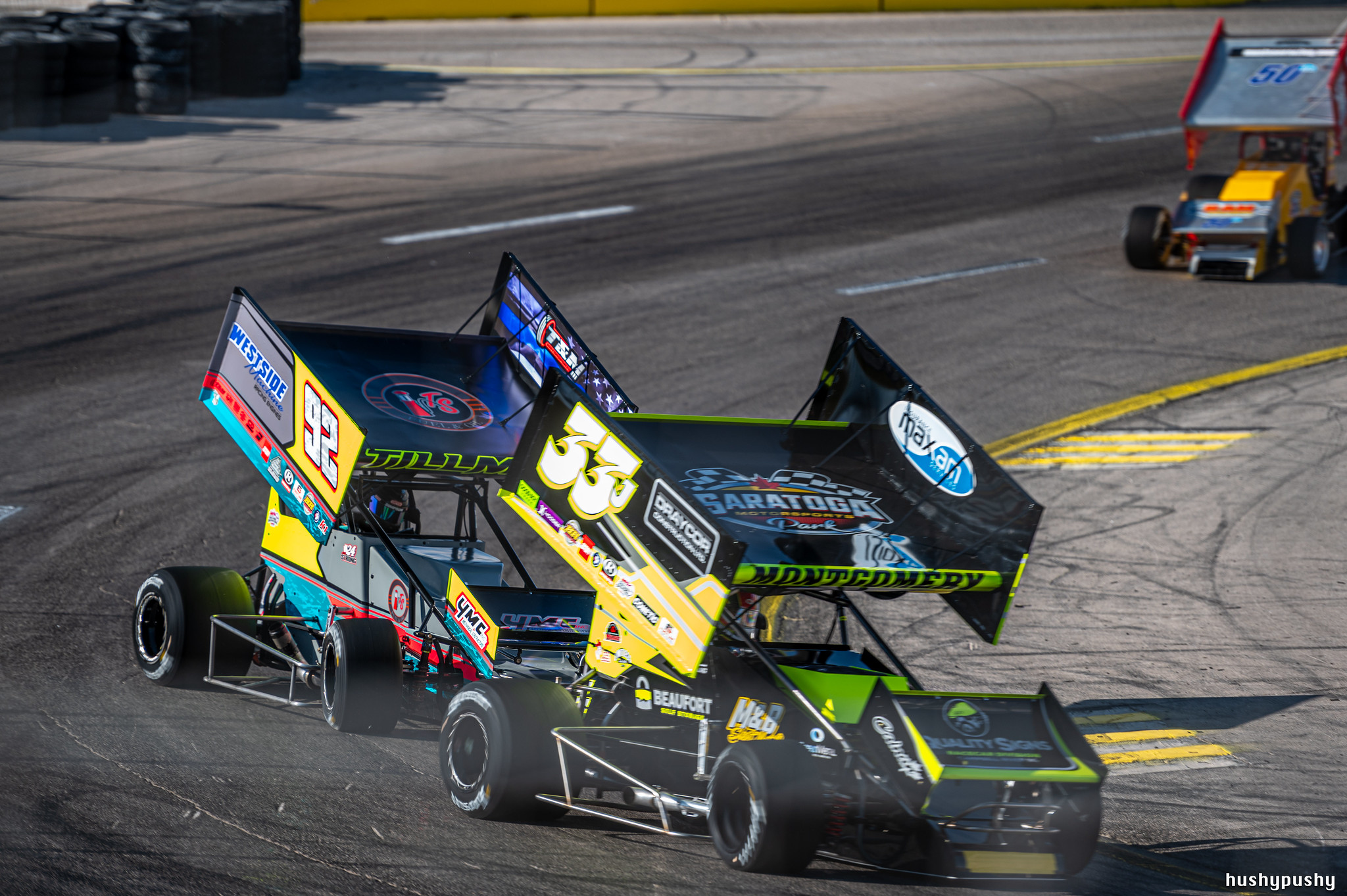
Probably the biggest downside of practice sessions is that they aren’t competitive; in a way they are kind of anti-competitive, because it’s counterproductive to battle in a real-life practice session (I mention real life because, in stark contrast, practice sessions in sim racing are great places to practice racecraft). That’s why it was very cool to see these cars going at it for a few laps.
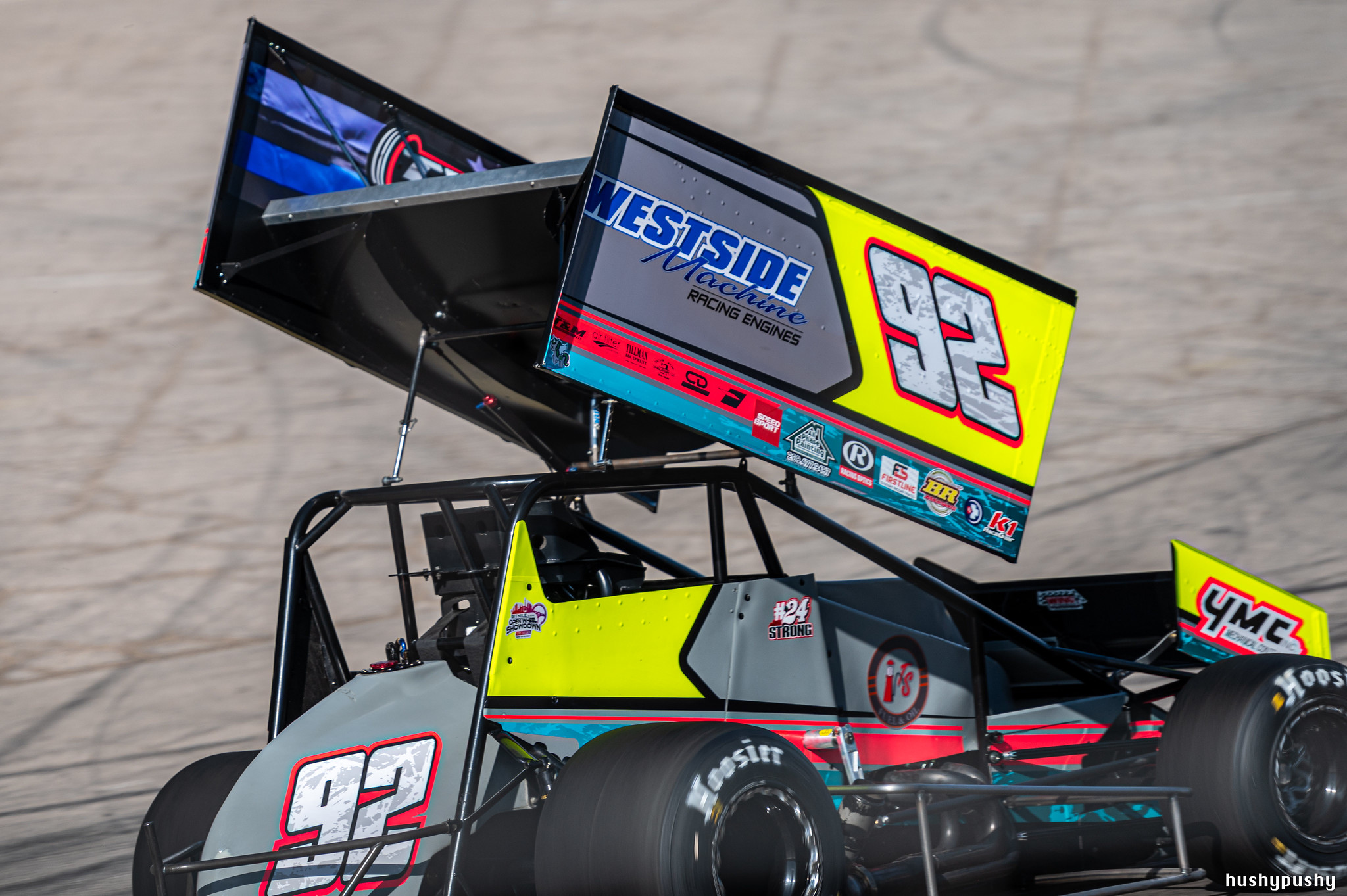
If you told me your race car livery was grey and black with teal and fluorescent red and yellow accents and a couple extra textures thrown in, I would probably cringe. And yet, this car looks great. Kudos to whoever designed this car’s livery. On a photo note, by this point I had switched to “Lo 1.0” sensitivity, which in theory is 1 EV below the camera’s base ISO of 100, resulting in ISO 50. On the surface this seems like a good idea, because you generally want to shoot at as low of an ISO value as possible; however, in practice it doesn’t really help. Essentially it’s over-exposing and then lowering the brightness, which lowers your dynamic range. However, it does offer one main benefit that I was taking advantage of here: the theoretically-lower sensitivity allows you to use a slightly slower shutter speed for the same aperture. So this photo ended up at a slightly-slower 1/1250 shutter, which gave just a bit of blur on the tires–a nice boost to the overall subjective image quality, in my opinion.
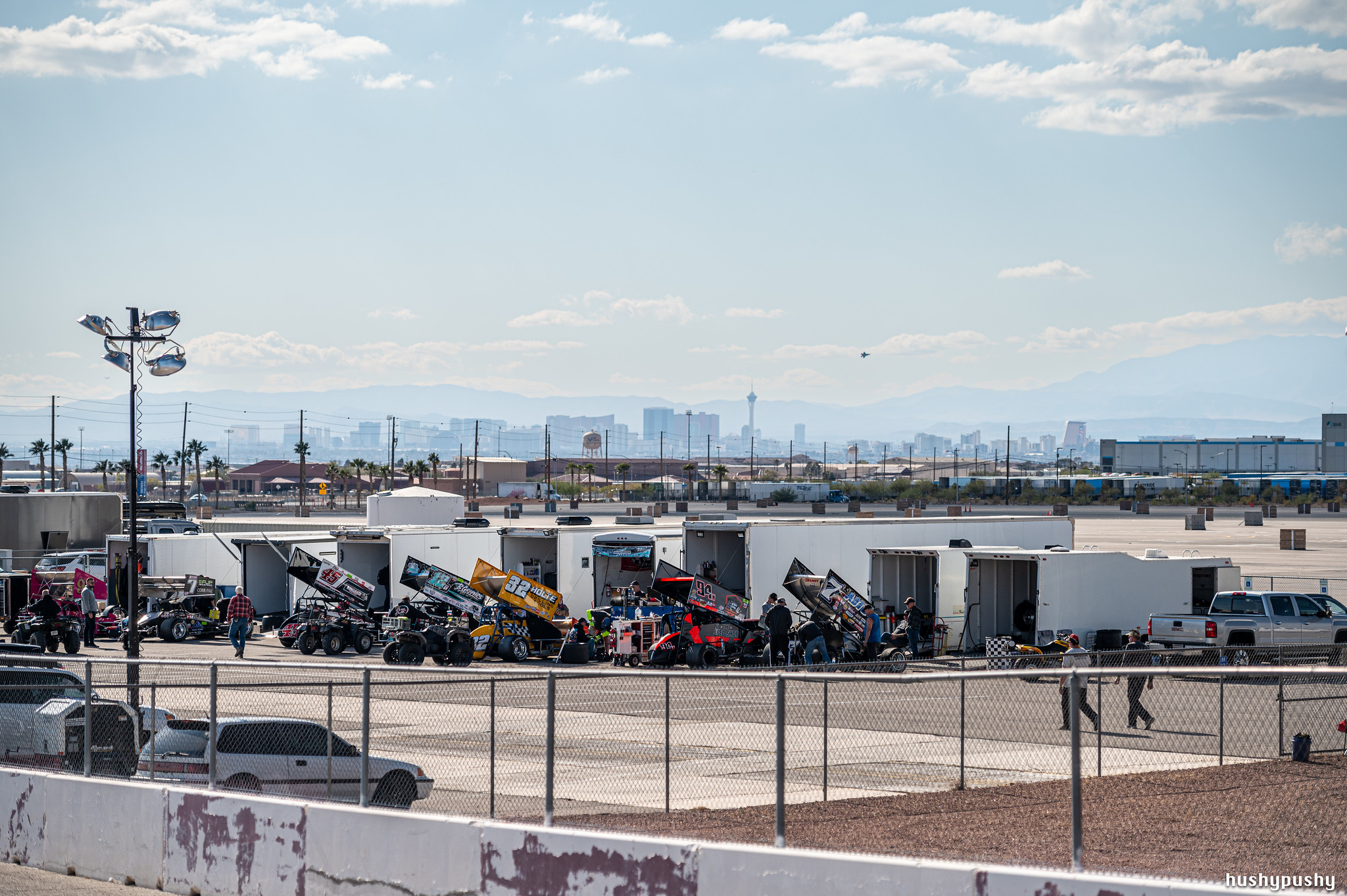
Looking towards the north or the east, you’re at the edge of town so all you see is mountains. Las Vegas is shaped like a bowl, so when you go around the edges and look south, you can see directly into downtown. Plus, since Nellis Air Force Base is next door, there are always military jets flying around too.
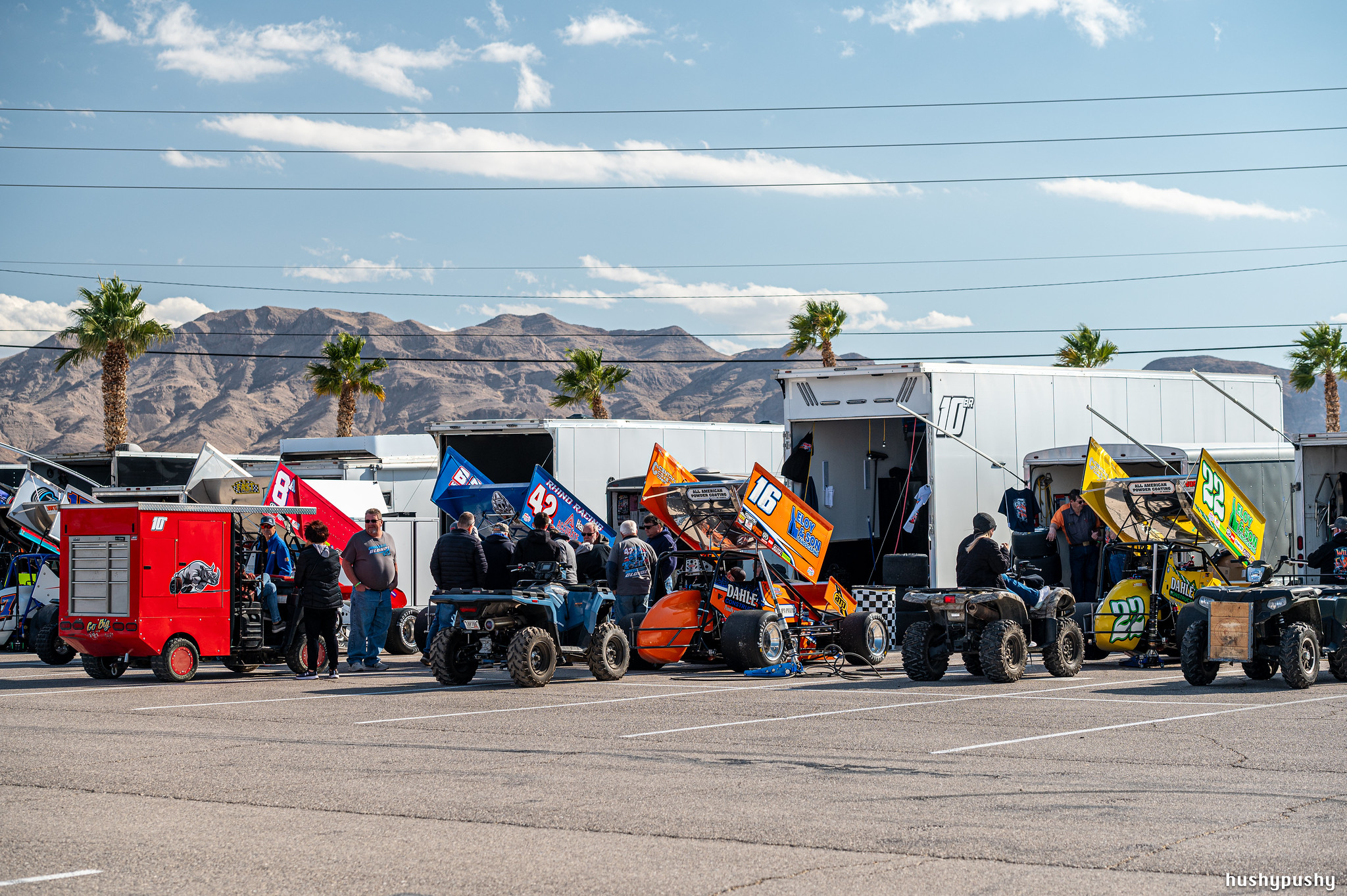
At this point the first round of practice sessions ended, and the small group of spectators (mostly made up of crew and family of racers) wandered back down into the paddock. Even though it was just past lunch time, there was still a long day ahead: there would be one more practice session, and then racing started at 4:30 PM and continued into the darkness under the lights. After these intense practice sessions I felt like I’d had my fill (and had dinner plans anyway), so I didn’t stick around. In retrospect I do slightly regret not coming back the next day to see the full-on races. That’s just something for next time then!


 Star Road