
Every PS1 Game…Starting with Revelations: Persona
I had an odd dream last night. Somehow I achieved surprise financial independence (Lottery? Inheritance? Dreams never explain these things) and decided I was going to quit my job so I could drive through every US state and write about Playstation games. There are like, thousands of games for the original Playstation, which was originally released in Japan in 1994 and still received new games well into 2004. If you wanted to do five games a week, it would still take over 10 years. I pictured myself on a never-ending 50 state road trip where scenic backroad jaunts were punctuated by bouts of emulation and writing, and it was all published on my site: EveryPS1game.com (which, as of this writing, is actually available).

Okay, stripping away the fantastical elements, there’s actually a good idea in there.
I’ve been playing video games for almost 35 years. From the 8 bit era until now, across every console plus PC and arcade, it’s the original Playstation in particular that stands out for me. When I play Playstation games nowadays, they give me a special feeling. I love the aesthetic of the era in general, as well as the aesthetic that came from the limited capabilities of the PS1 hardware.
Bleem and ePSXe, my first encounters with Playstation emulators, arrived while new PS1 games were still being released. They had rudimentary enhancement options, as did the PS2. Now we have Duckstation, an extremely high quality emulator with near perfect compatibility and tons of features. Besides the internal resolution bump (rendering at 640×480 instead of 320×240, for example) that has been around since Bleem, there are also things like PGXP (“Parallel/Precision Geometry Transform Pipeline”…I guess PPGTP doesn’t sound as cool), which fixes the warped textures and 3D geometry issues that the PS1 was infamous for; a “Widescreen Hack” that expands the playing field to 16×9; and Box Downsample, which upscales the internal resolution and then downscales the presentation, just to name a few.
Another continuous source of interest is what almost seems like an unlimited amount of things to discover in the Playstation world. My collection has grown past 300 games, and I’m still discovering titles I’ve never heard of. There were over 1,400 Playstation games released in the USA–well, if you count the 122 (!) Lightspan educational games. Which I am because even including those, it still doesn’t come close to the over 3,000 games released in Japan. There were 2,365 PS1 games that were released exclusively in Japan.
Unfortunately, I have not suddenly become wealthy enough to eschew my current lifestyle and embark on a bohemian journey of 90’s videogames and retro-journalism. But after moving to an area with stale car culture and a complete dearth of fun roads to drive, I find myself spending much more time with a game controller in my hand than a camera. I would love to share this passion for PS1 with others, and I already have this site. Why not attempt to play every PS1 game I own?
Well, I’ve already played every game I own, at least for a few minutes. But I want to give every game an honest try–if I can’t make it all the way to the ending, I want to play at least far enough to satisfy myself, whatever that might mean for a particular game. There are some games I’ve beaten recently and don’t intend to play again in the near future, but of course, I’ve archived my screenshots.
So let’s start with a game I played in 2023 that changed my gaming life: the first Persona game, known as 女神異聞録ペルソナ for the Japanese market, or Revelations: Persona in the USA.
The Persona series is a spinoff from the Shin Megami Tensei series, which translates as “True Goddess Reincarnation”. The Japanese title for this first Persona game, romanized as Megami Ibunroku Perusona, is just called “Persona” on the English side of the box art. It translates to something like “Goddess Curious Stories: Persona”. It doesn’t really have a clear translation, because “ibunroku” is not a word in the dictionary (this is very common in Japanese; for example, the original title of Demon Slayer is Kimetsu no Yaiba, with kimetsu being a made up combination of “demon” and “destroy”). “Roku” means “record” or “transcript”, but it’s also a character used in the Japanese word for the Book of Revelations, mokushiroku (黙示録). Is that why the American release has the “Revelations” title?
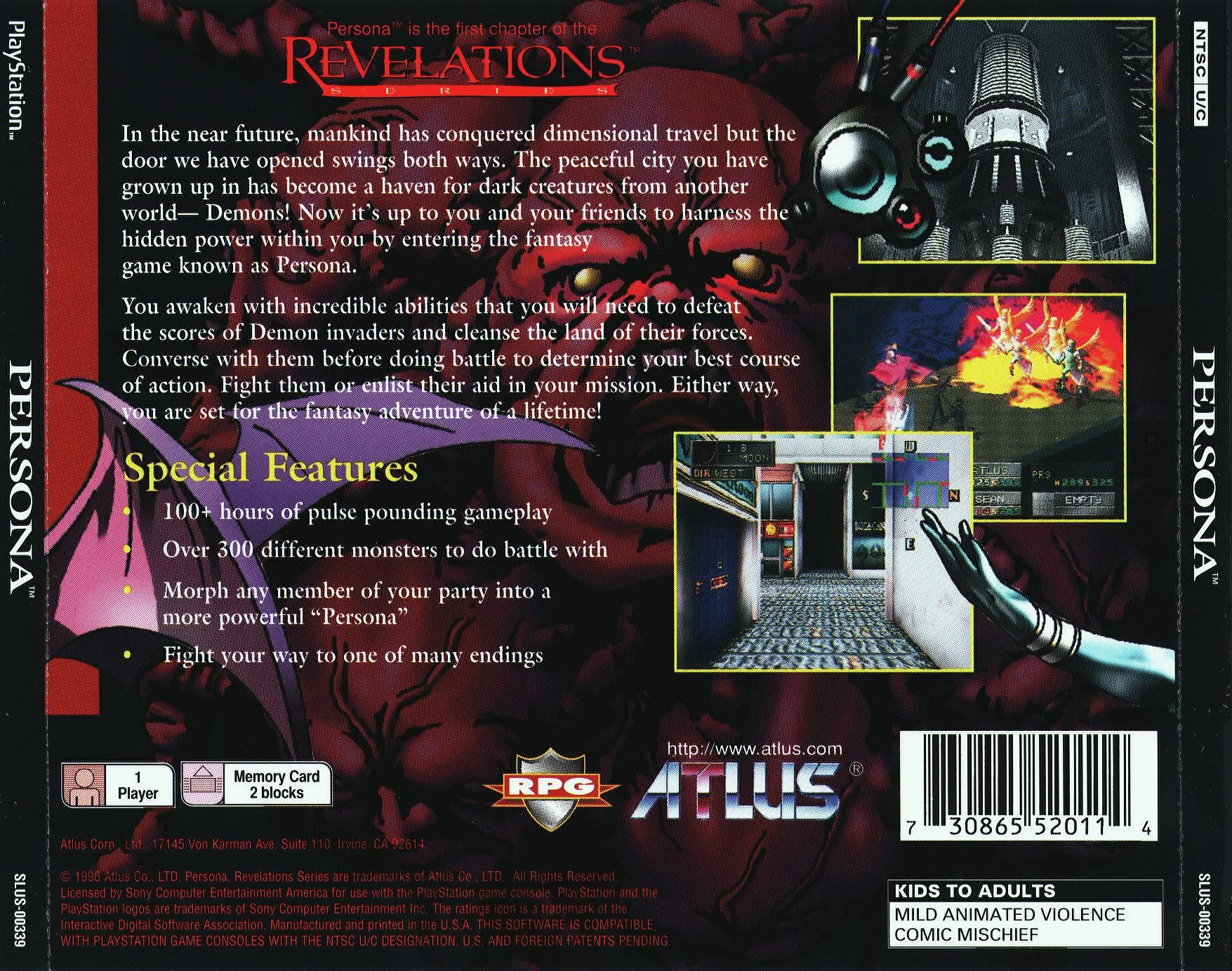
The back of the box states “Persona is the first chapter of the Revelations series”. It’s clear that Atlas quickly realized these naming conventions were silly, because they dropped both the Megami Ibunroku and Revelations titles for all Persona games after this.
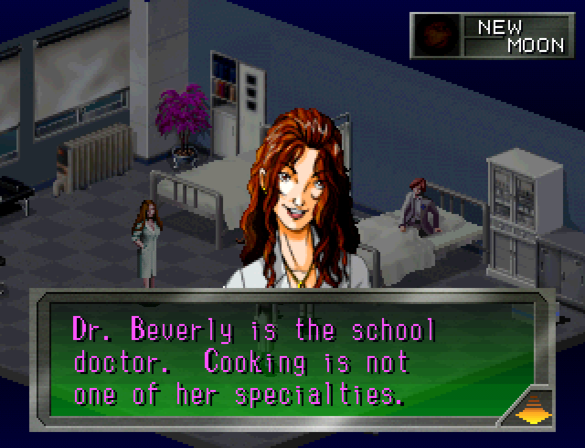
Something you immediately notice in Persona is the writing. The character descriptions and dialog are unique and strange, and that quirkiness drew me in. Also something you may have immediately noticed is that second screenshot in this article is twice the resolution of the first screenshot. I’m not stoked about the inconsistency of presentation, but of course I wasn’t thinking of writing this post when I played the game.
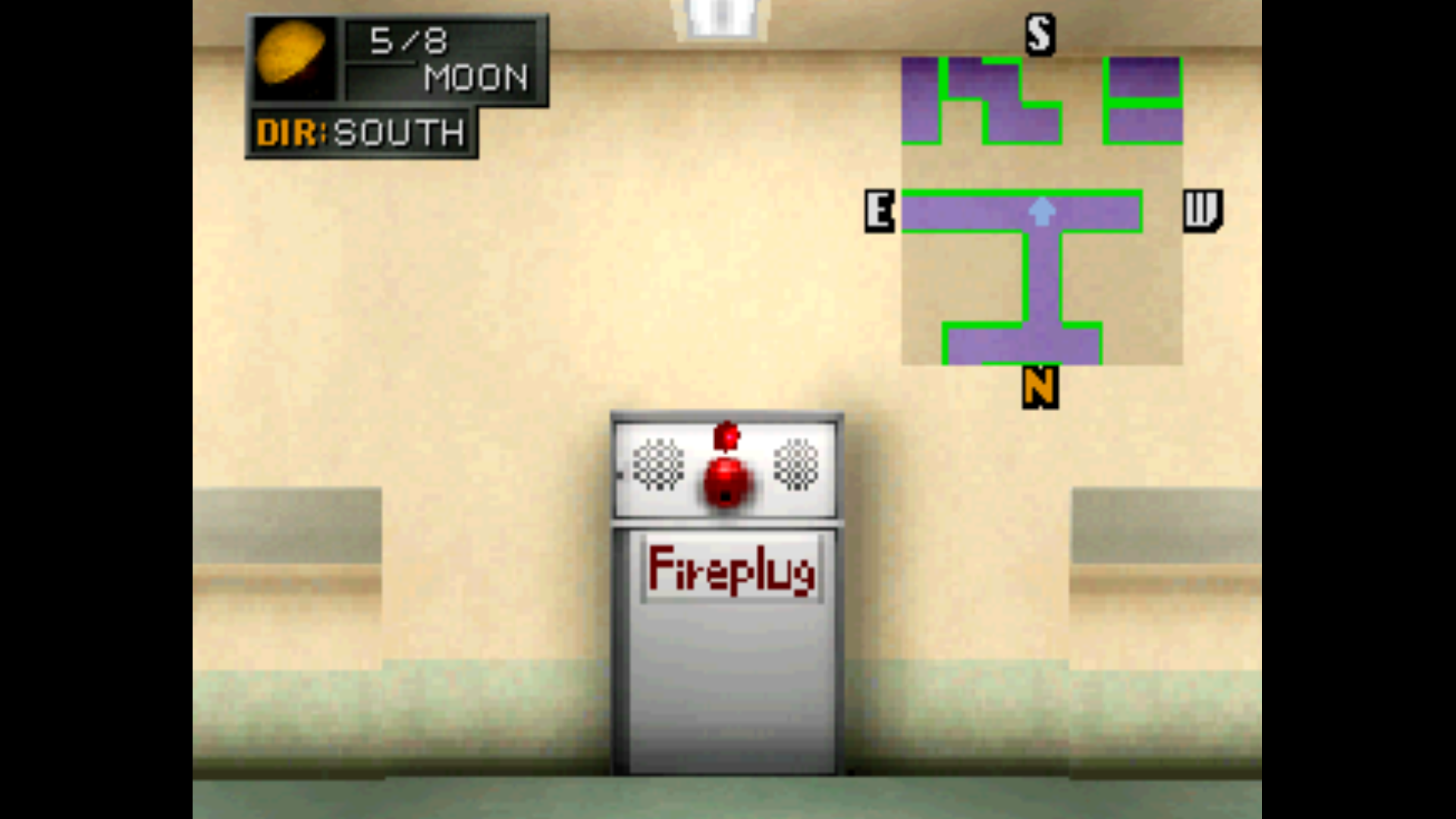
When I first start playing a game in Duckstation, I fiddle with different graphics modes until I find one that suits the style of game I’m playing. And my one gripe about Duckstation is that it doesn’t automatically crop screenshots: if you have it set to “Screen Resolution”, it will take a screenshot of the whole screen, pillarboxes and all. For future posts I will take this into consideration and act accordingly, but for the thousands of screenshots I already have, I will just write the posts and deal with the pillarboxing.
By the way, have you ever seen the term “fireplug”? Apparently this is a US word for “fire hydrant”, but I can’t recall a time where I’ve ever read or heard it.

Ah yes, the infamous scene where Ellen has to give a password. This was changed to but I don’t want brains for the PSP re-release. I still haven’t found out what the original line was in the Japanese version.

My goal with the Playstation posts is to give the reader a feel for the game, similar to what I do when shooting an event or someone’s car. I’m not trying to review the game, nor provide a “complete” overview or a guide in any way. Sometimes I want to show stuff like the above screenshot, which isn’t trying to say much; it’s just aesthetic.


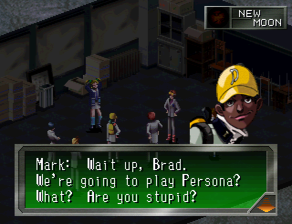
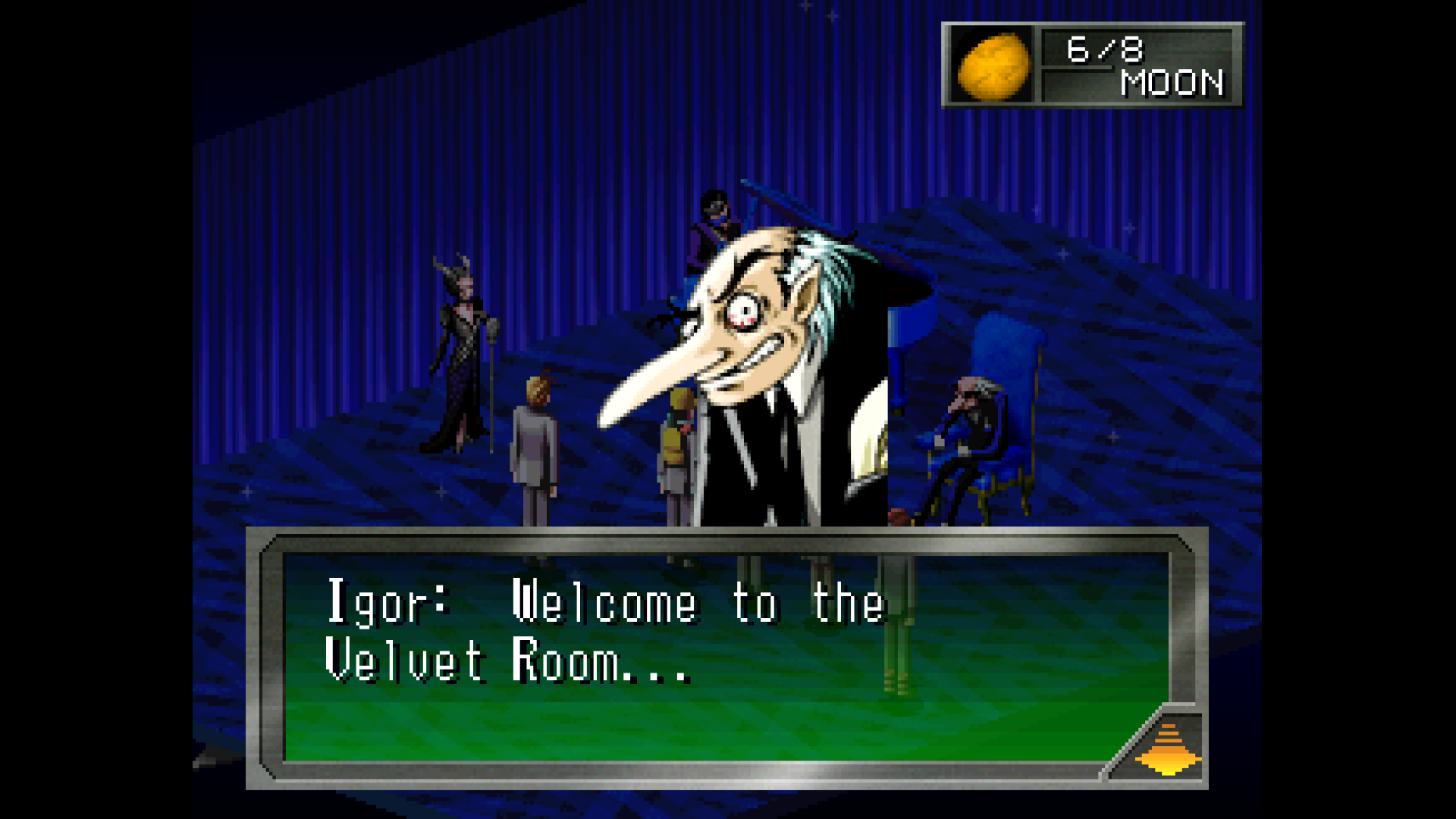
OMG they said the name of the game! Actually, it happens quite often in this game. As referenced in the first screenshot, the main characters play a game called “Persona” which is supposed to summon your, erm, Persona.
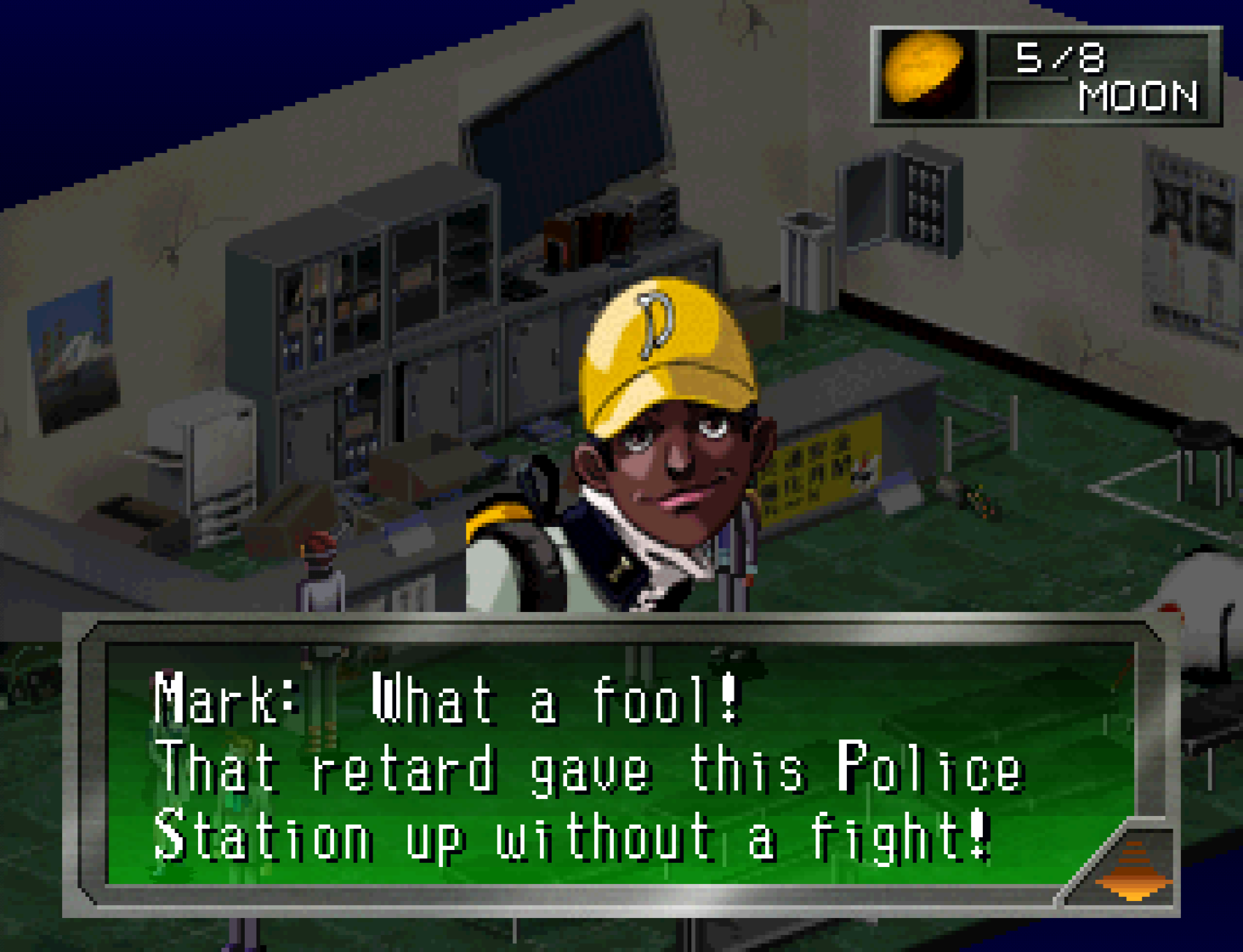
Ah, the 90’s. I wonder if one day, words like “fool” will be considered socially unacceptable as well.
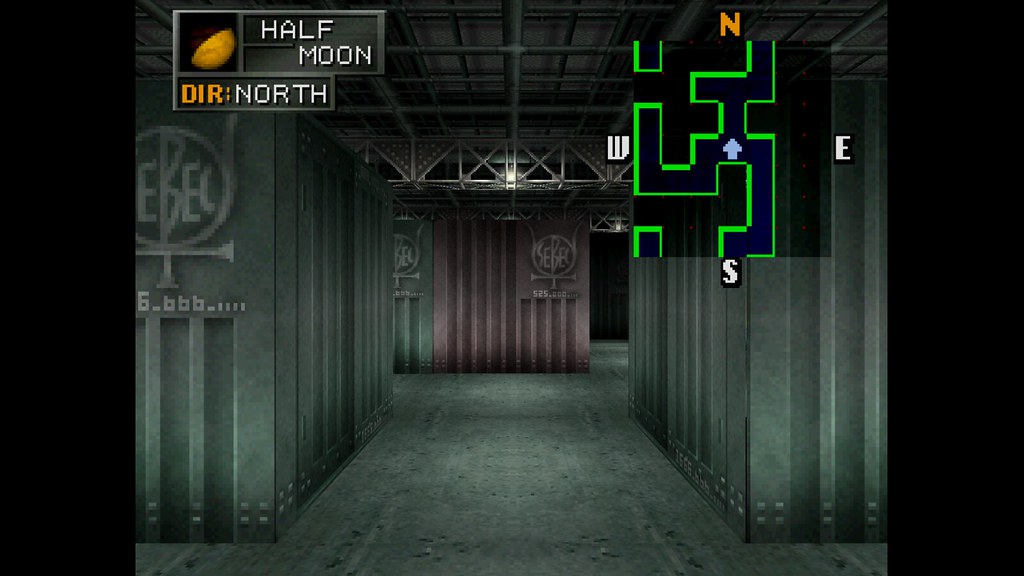
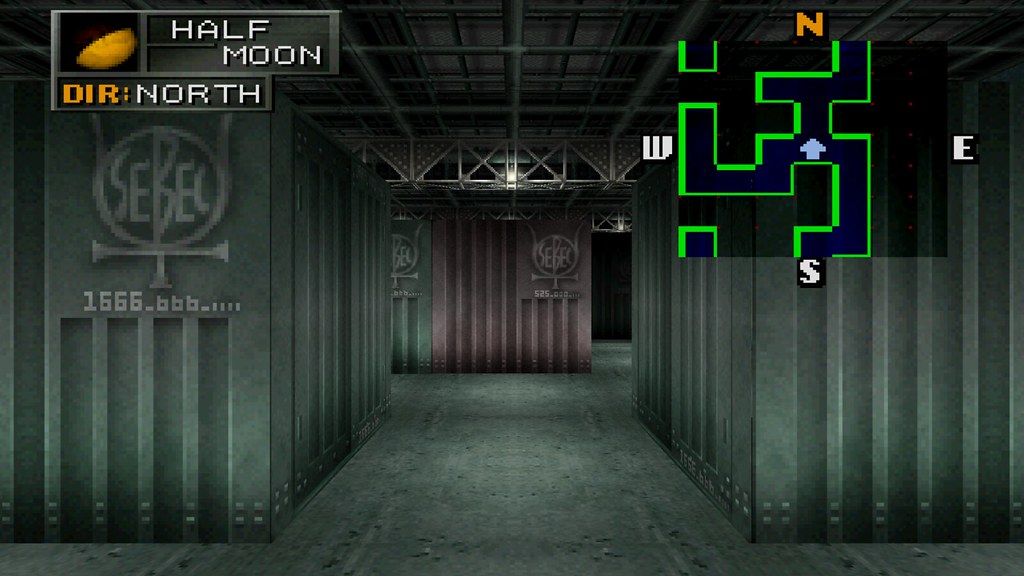
Duckstation has a “Widescreen Rendering” feature that works surprisingly well. It widens the playable area, so most 3D games just extend the playing field. Unfortunately, it can’t pick apart the 2D elements, so those just get stretched–with varying results. I never really settled with this game, flipping the widescreen hack on and off with a hotkey in the dungeons when I felt like it.
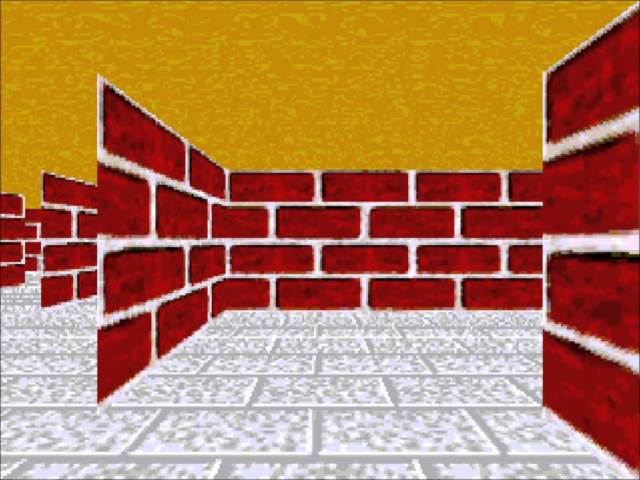
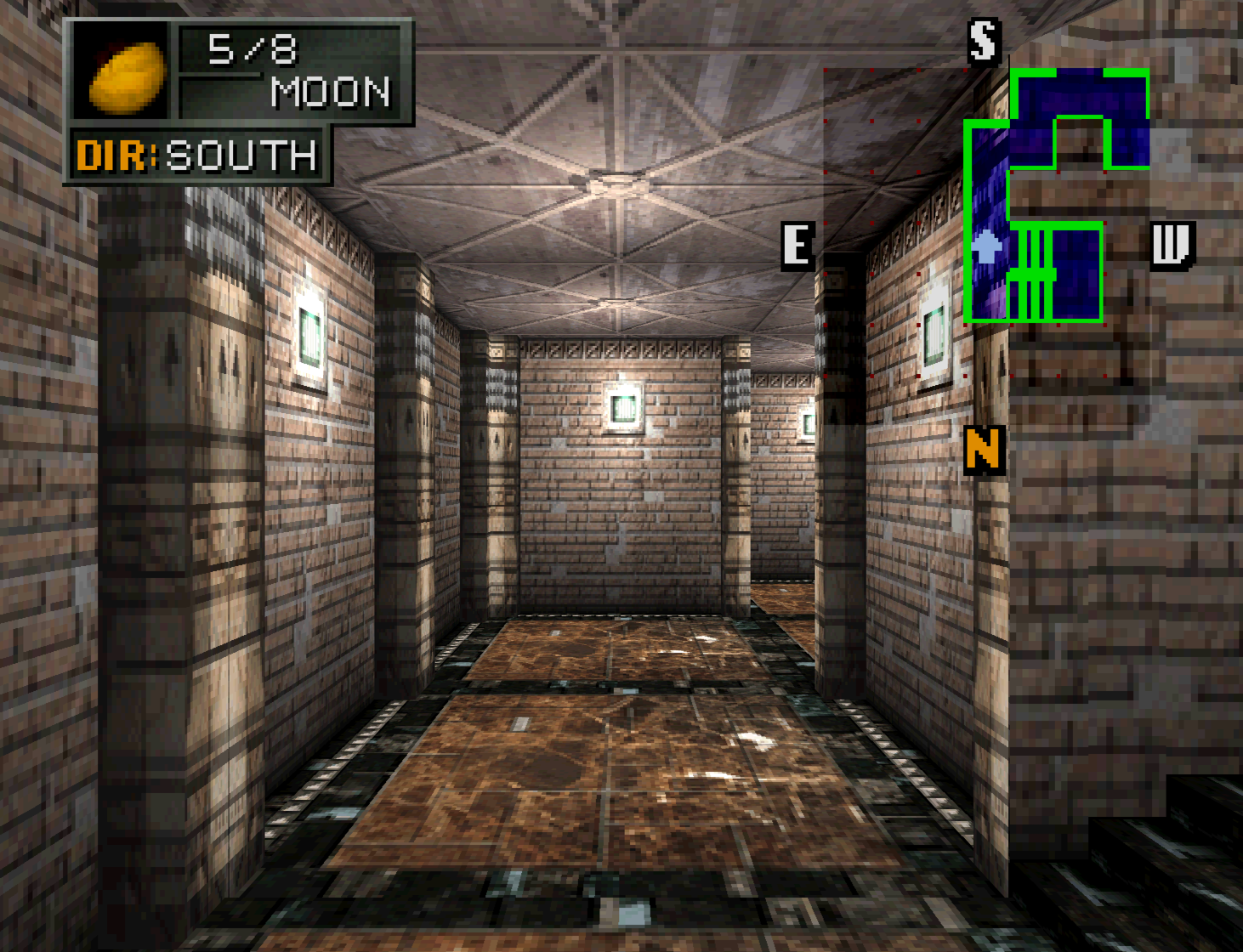
Do you remember the screensaver called “3D Maze”? It came with Windows 95 and was a simple screensaver consisting of first-person navigation through a brick-walled maze. Seeing this on idling desktop computers in fourth grade was mesmerizing to me.
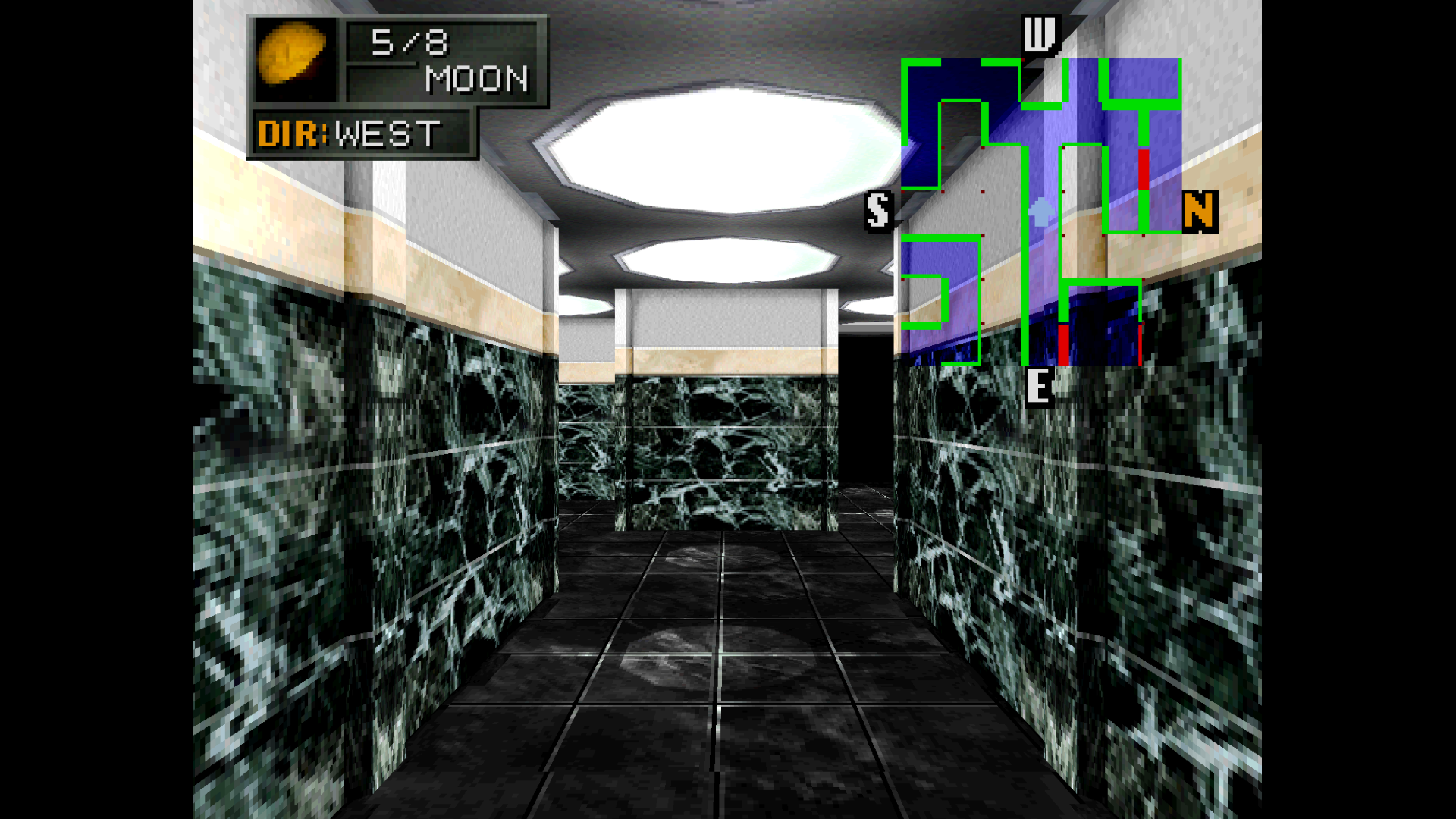
I think 3D Maze is one of the reasons why dungeon exploring in Persona was so interesting to me; it brought me right back to the 90’s. When looking for a 3D Maze screenshot right now, I was intrigued by a note I found that states the automated path in 3D Maze follows the “Hand On Wall Rule”, specifically the “right hand rule”, which states that in a non-looping maze, you can always find the exit by always making the same turn (i.e. “keeping your right hand on the wall”). I’m not particularly a maze enthusiast or anything, but when I played Persona I created my own rule that, coincidentally, is exactly the same: I call it the “left hand rule” and I only make left turns until I get stuck. Why left? I’ve always had a weird superstition that game developers want you to take the right fork. So I usually go left.
In 2023, I was itching for a great game to play. It had been so long since I really sunk my teeth into a super engaging videogame. In particular, I missed the feeling of a great RPG. So I looked around and noticed an extremely highly rated game called Persona 5. I wasn’t familiar with this series at all, but it was already up to a fifth installment, and my curiosity was piqued when I saw the review scores: quite a few 10/10, 9.5/10, 97%, 5/5 and similar; it universally received perfect or near-perfect scores. I decided I had to play it.
But of course, it was a sequel. Did I need to play the other Persona games to understand 5? Generally speaking, no. Each game has its own standalone plot, so you can play them in any order. But there are some recurring characters and themes, so I decided I should play Persona 4 first. It’s also very highly rated, so I didn’t feel like I was taking a chance. But if I was going to play 4, I should probably play 3 before that, since they were originally on the same engine and are relatively similar. I always find it easier to progress forward in a series’ timeline as opposed to the reverse.
And if I was going to play 3 on PS2, maybe I should look back to the games released on my beloved PS1? There were two Persona 2 games, but only the second one (Eternal Punishment) came to the USA on PS1. It didn’t sell very well, so the fact that game was always rare and expensive was the only thing I knew about the Persona series for years. Part one of Persona 2, known as Innocent Sin, had received a highly rated fan translation, and so I figured I had to play that before Eternal Punishment, since their storylines are directly related.
At that point, if I was going all the way back to Playstation, wouldn’t it be doing the series a disservice if I skipped the first game entirely? So I decided to begin at the logical starting point, the very beginning of the series. Originally I was just going to try the game; I didn’t expect to like it much. I just expected to play for a few minutes, get bored or frustrated, and then move on. An hour after selecting “New Game” I was still playing, and that was what kicked it all off.
Did I need to start at the beginning? In my opinion, yes. There are very few things that appear in every Persona game, but Igor and the Velvet Room are two of the most notable constants. That also meant that if I was going to play Persona 5, I would have to get through Persona 1, 2:IS, 2:EP, 3, and 4 first.
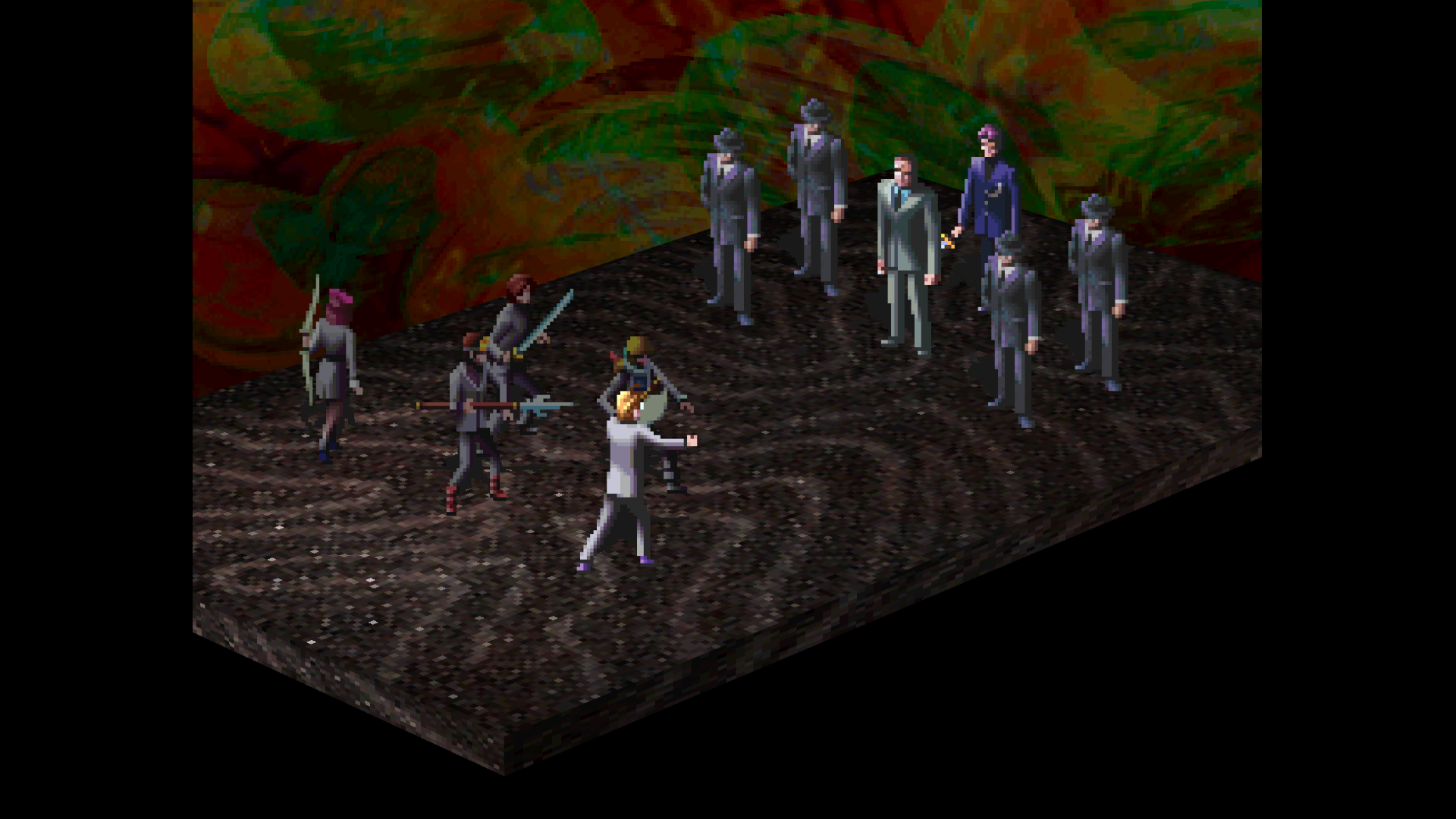
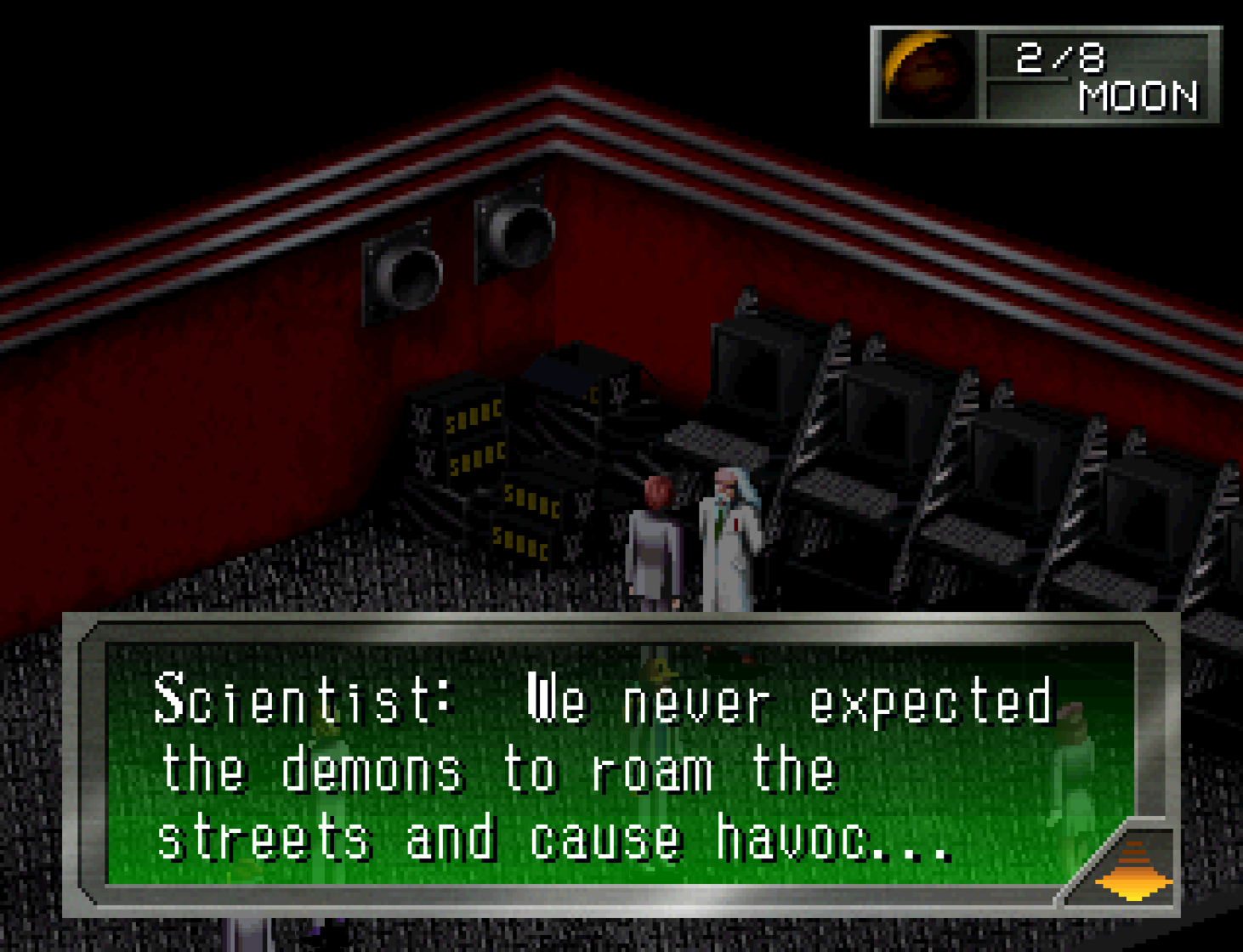
Of course no one ever predicts everything going horribly wrong. Oops…
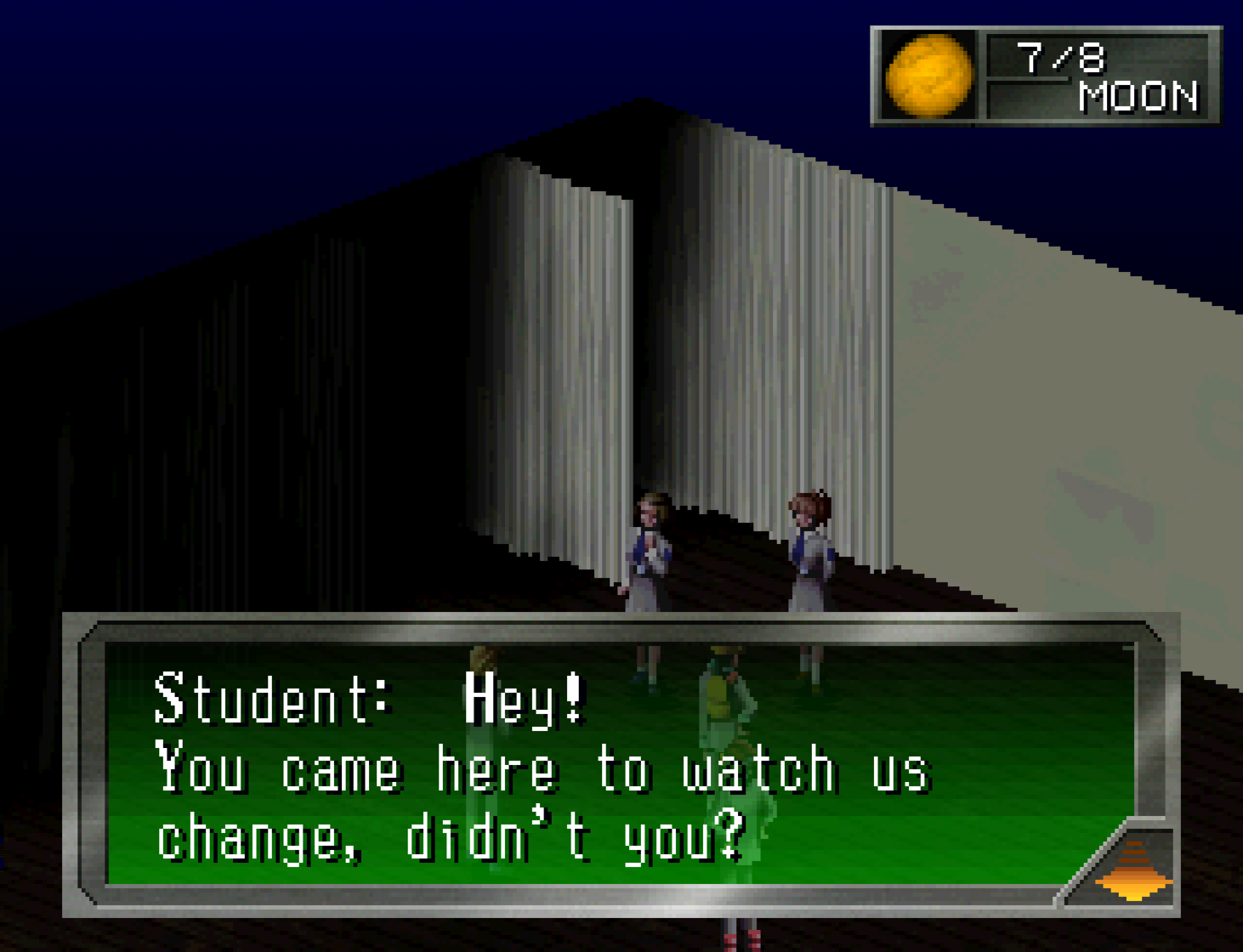
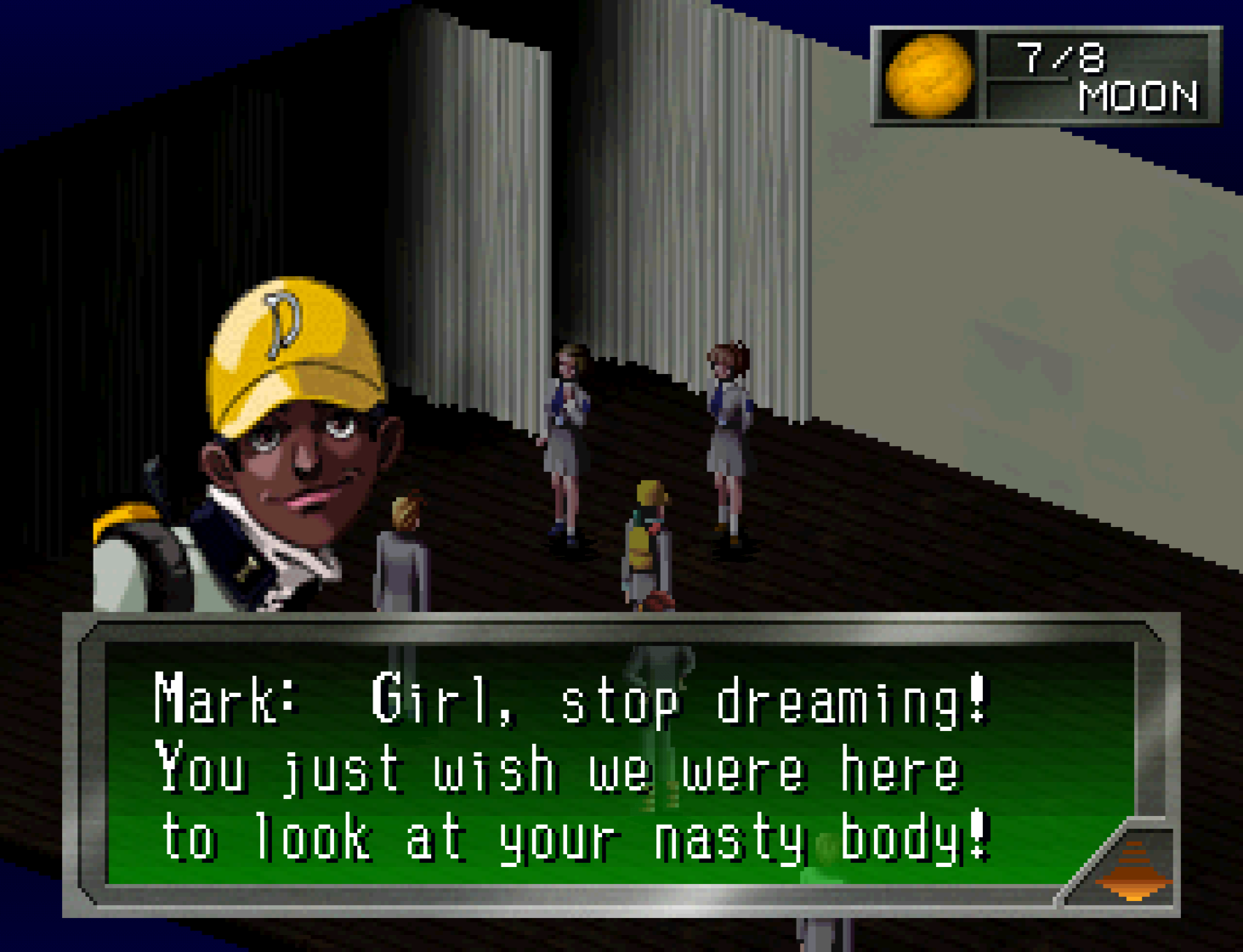
So much of the dialog is ridiculous. But it somehow manages to ride that very fine line and totally pulls it off.
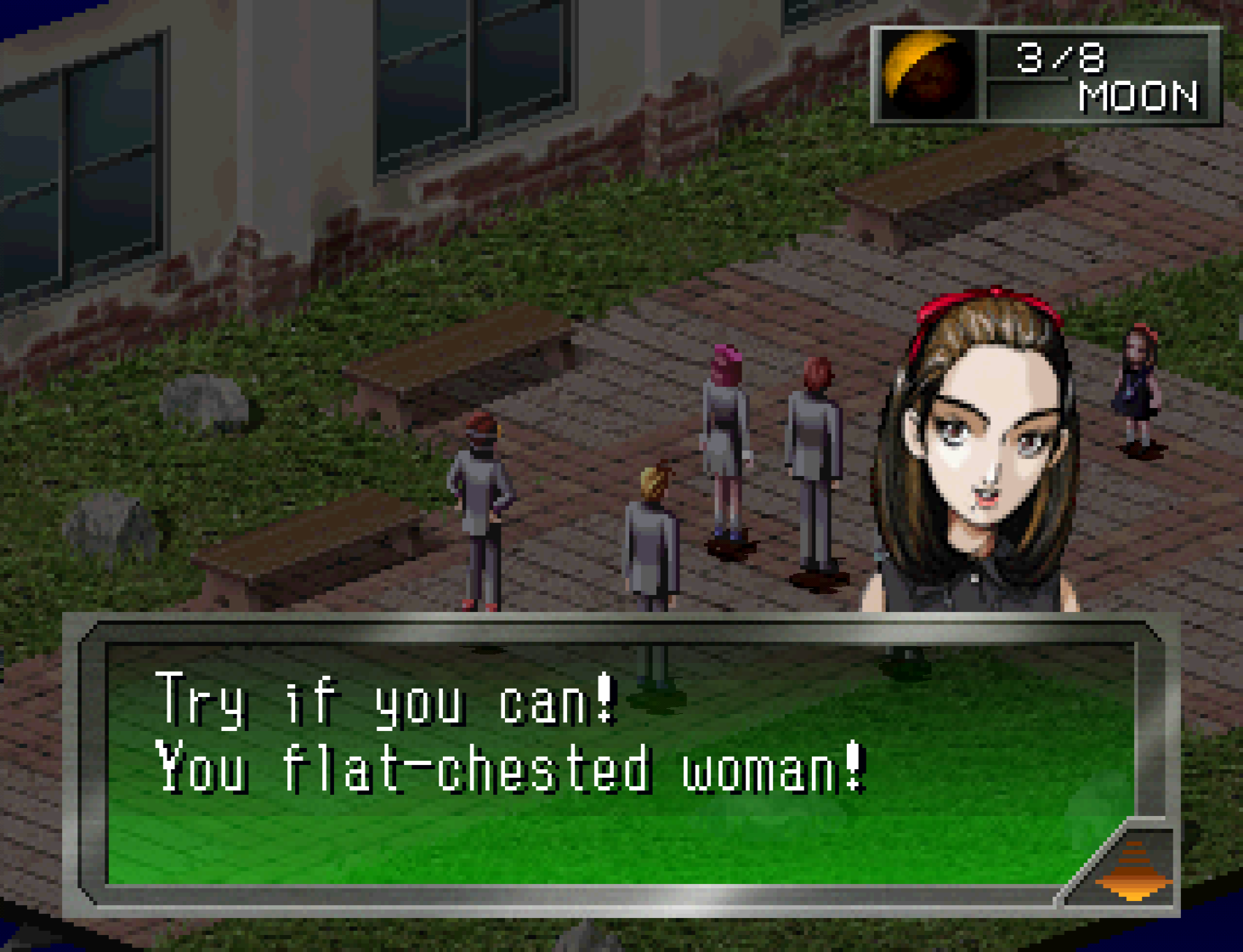
Unfortunately, as much as the funky translation potentially helps enhance the quirkiness, sometimes it also dulls the presentation. My guess is the character in this scene is using the pejorative slang term “pettanko” which is a term literally translated as “flat-chested girl” but it definitely loses its teeth in English when you say it like that. I’ve also seen it translated as “flatty” which doesn’t have much impact either. Insults are one of the most challenging things to translate from Japanese to English.
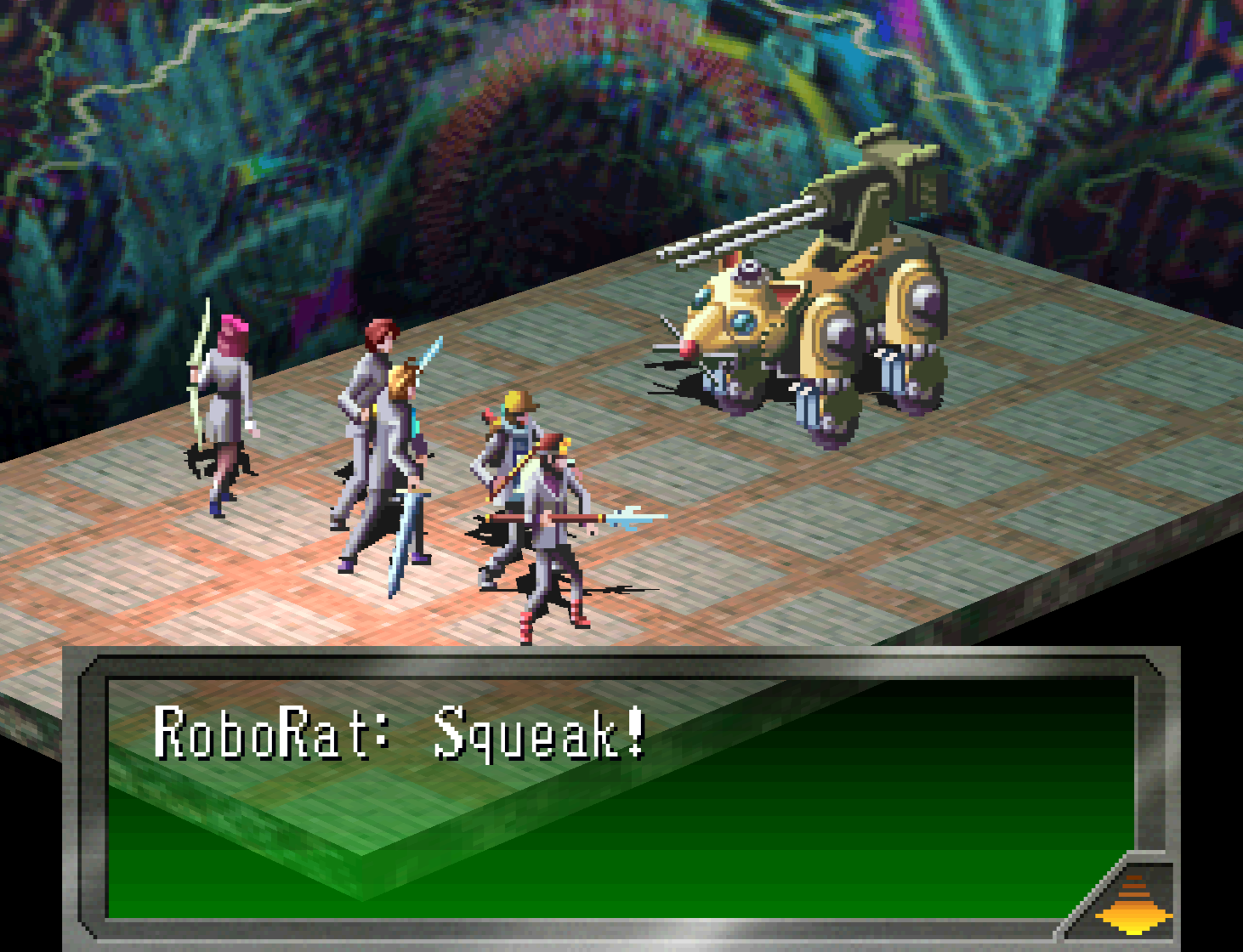
This is one of my favorite boss fights and battle level designs. Squeak!
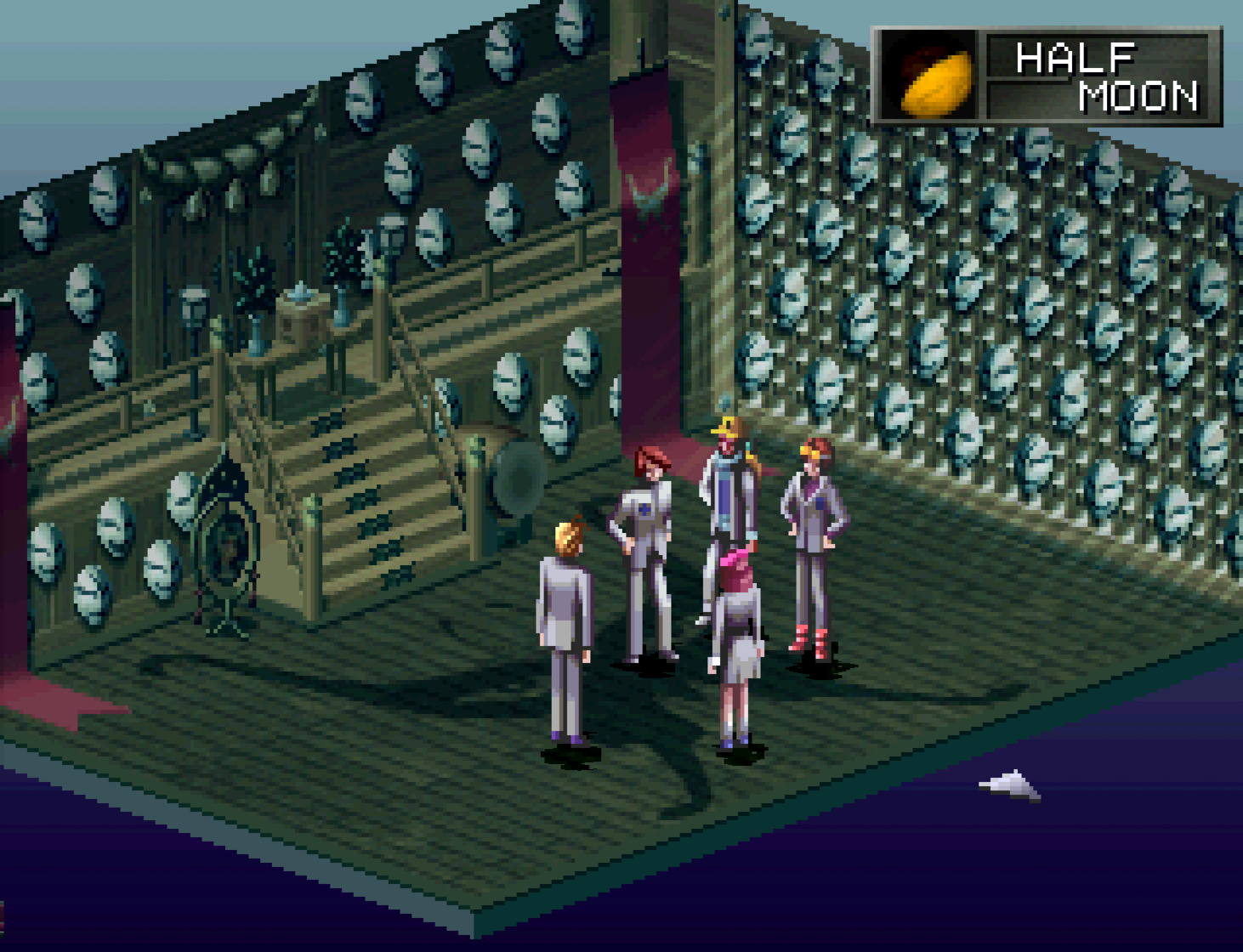
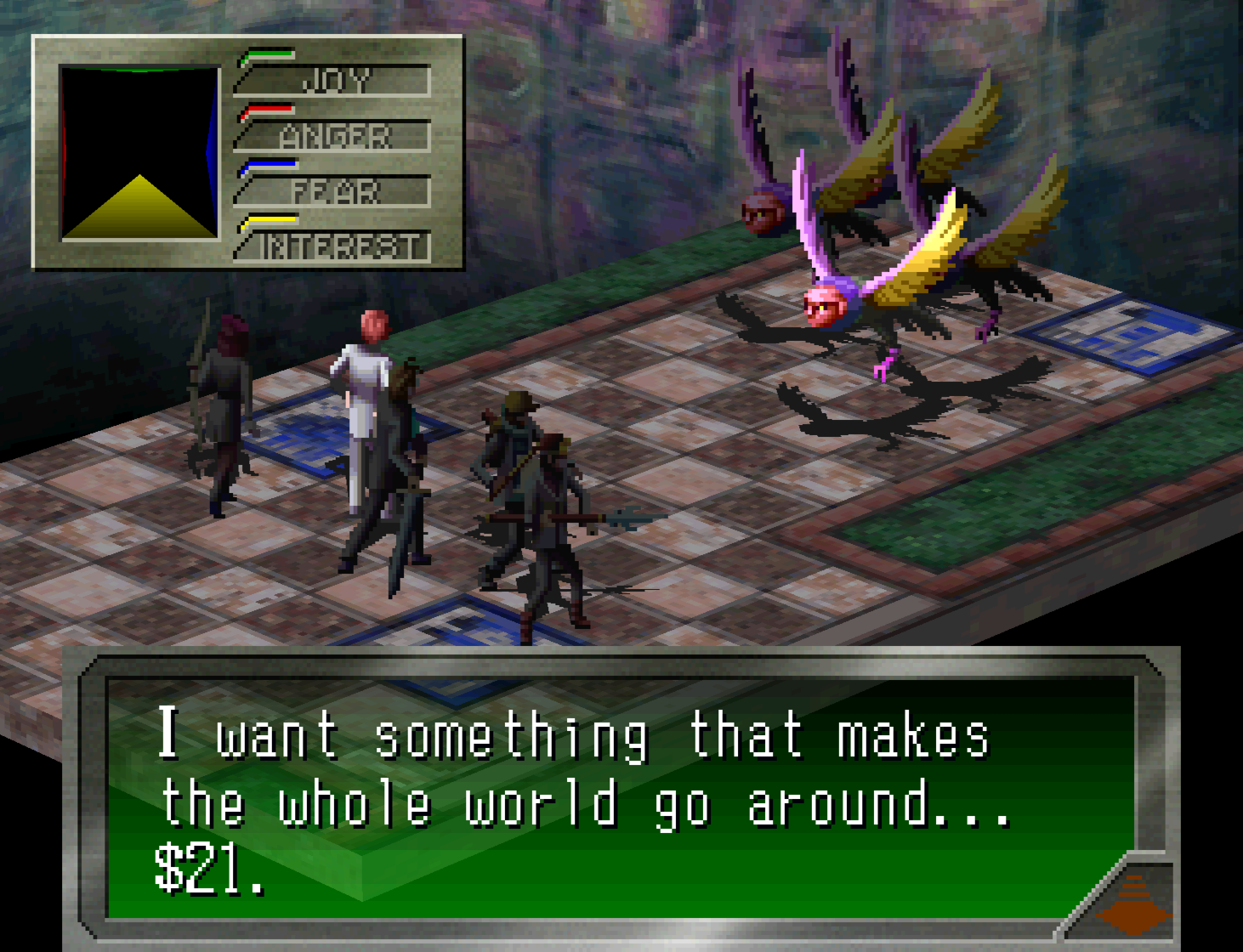
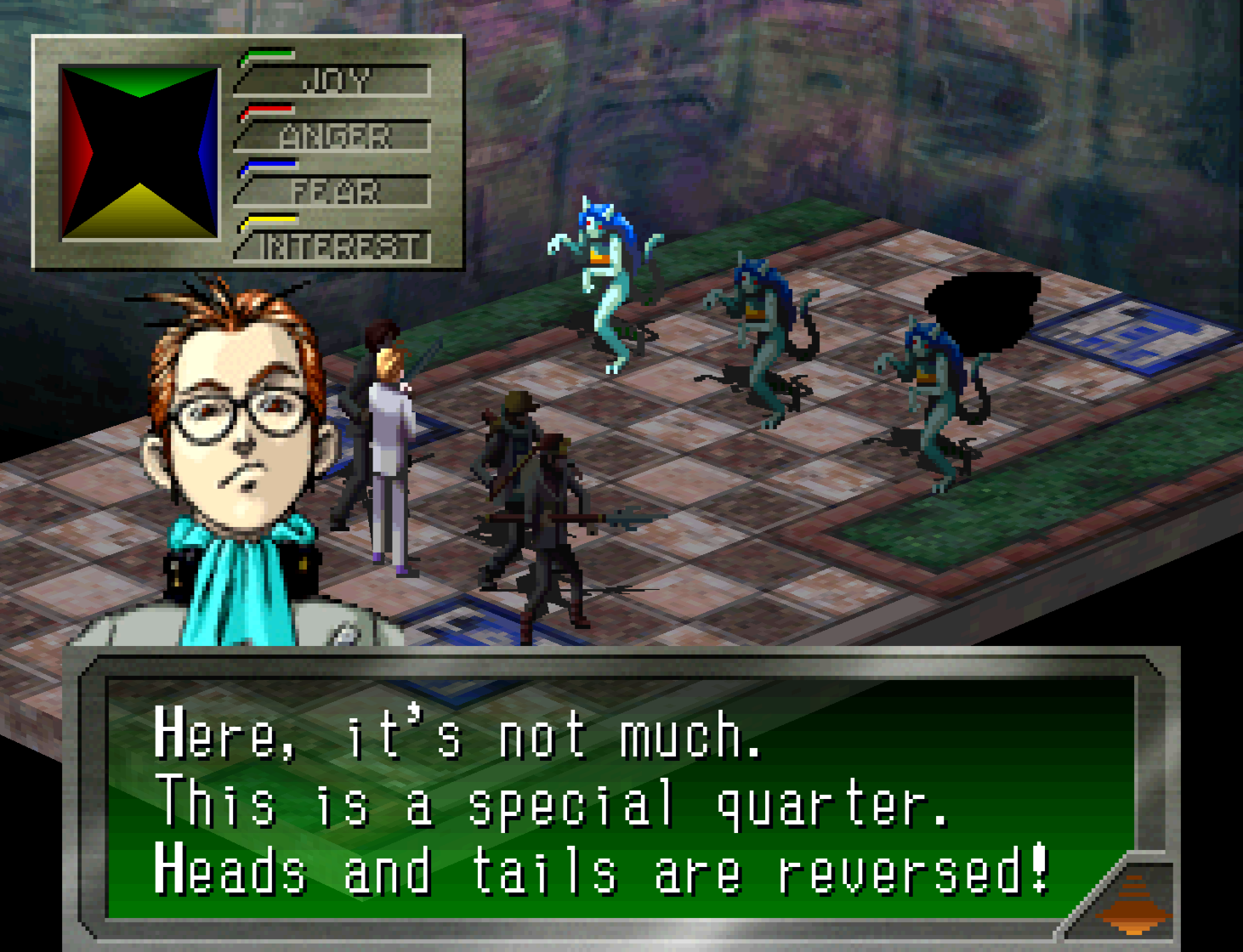
The battle dialog shines too. There are countless things to discuss with the demons, and this conversation function was one of the original reasons they said this game couldn’t be localized. I’m glad they kept it because this is one of the best features of the game. You don’t necessarily need to kill a demon to defeat it; you can negotiate with it and get it to give you an item or money, or even join your party. This feature disappeared for Persona 2 and was brought back for Persona 5–yet another reason to start at the beginning of the series.
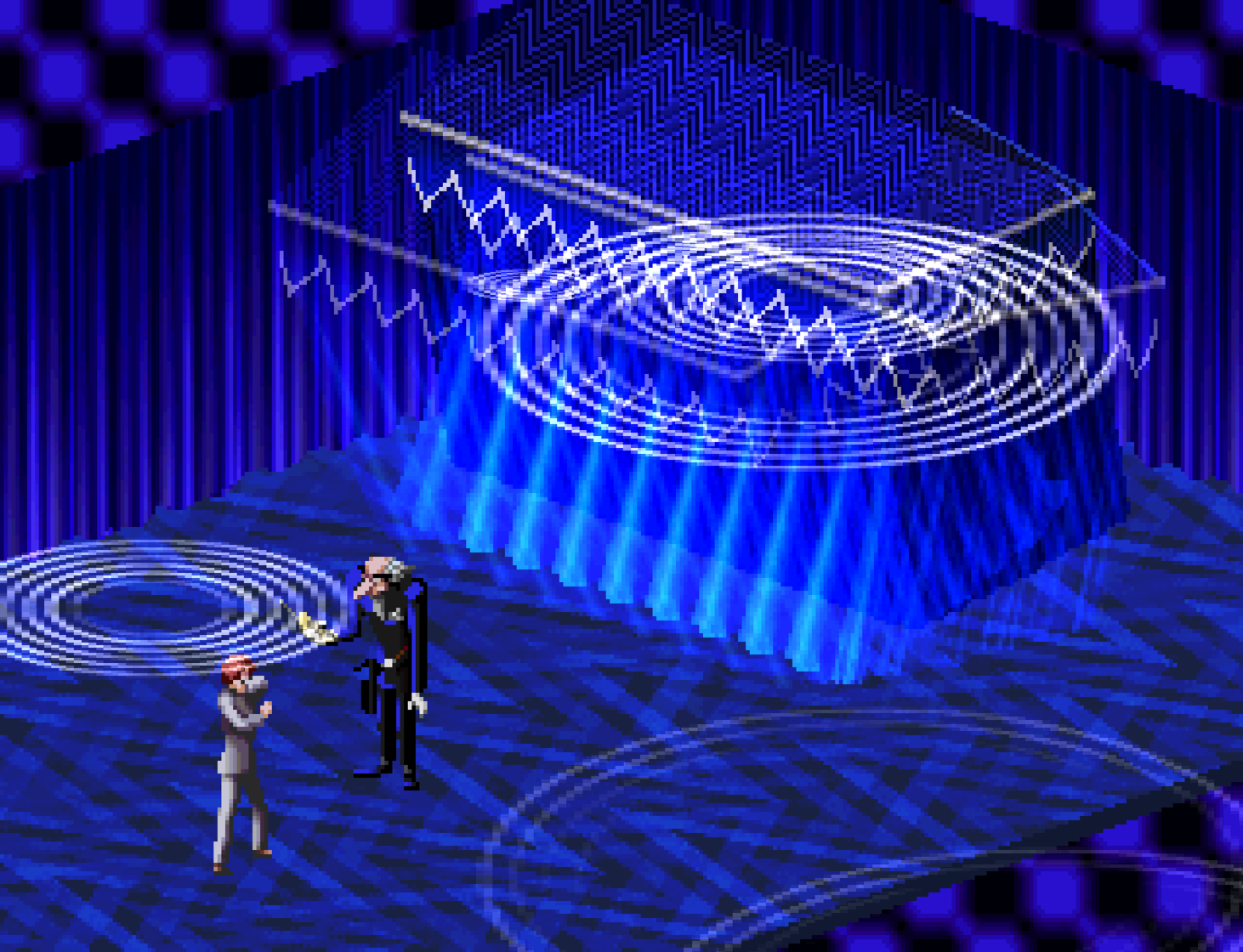
This game also introduces Persona fusion, which is an important mechanic for every game in the series.
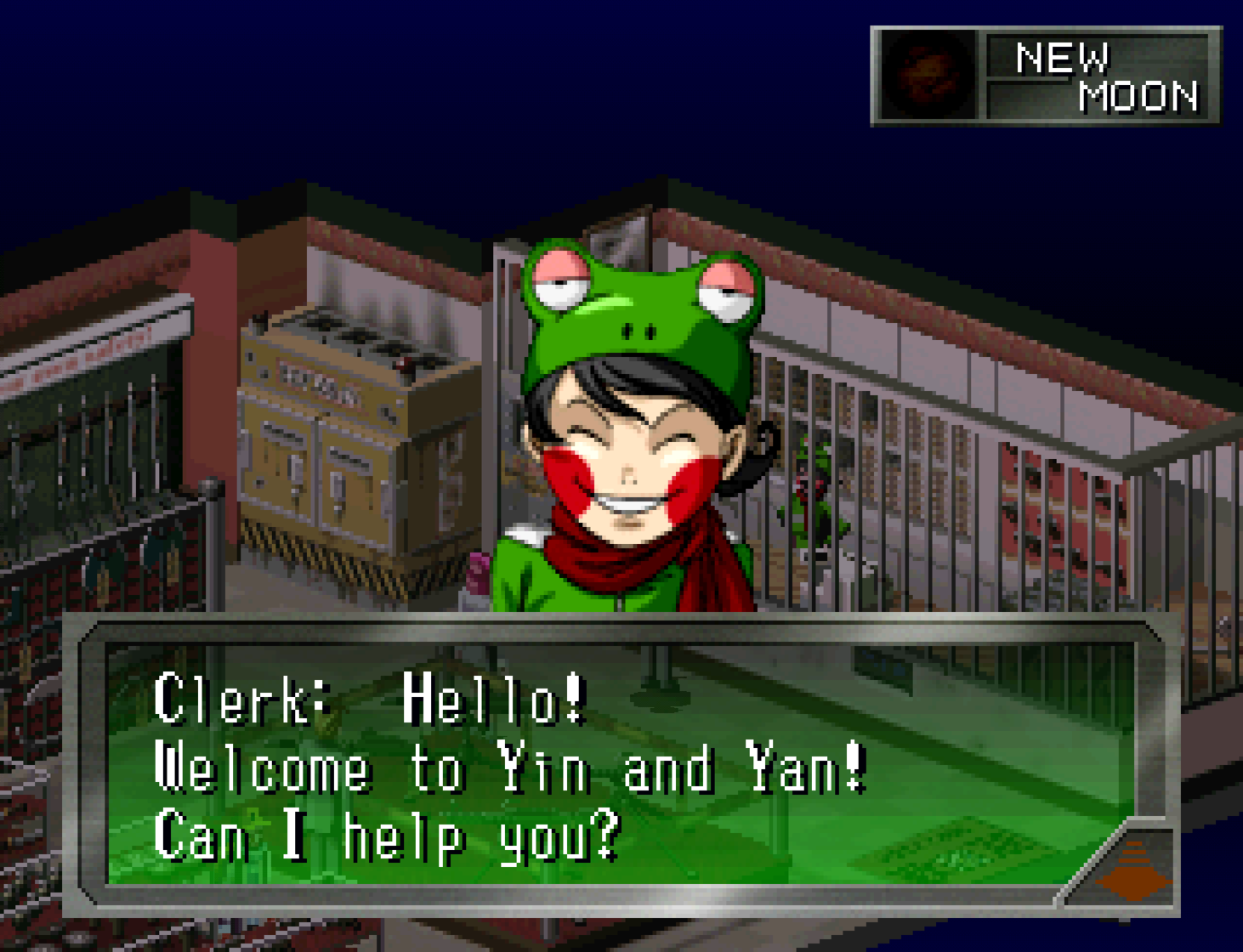
I love the style of the characters in this game. Even the NPC’s are interesting.
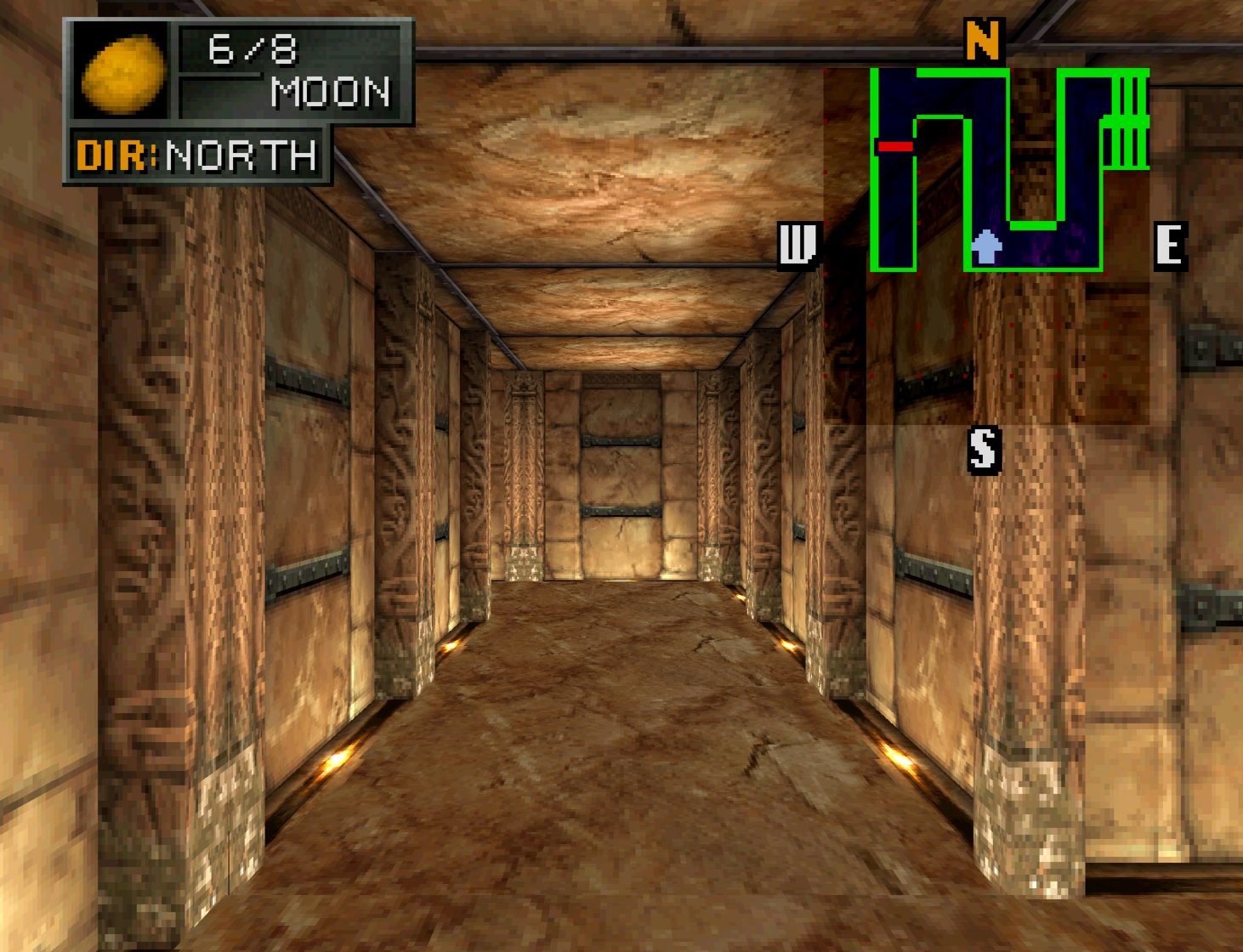
Some of the game can look pretty rough, but with the internal resolution cranked up, the textures in the dungeon sections really shine. The main issue is the repetition. Like how that looks? Good, because every single part of the entire dungeon looks exactly like that.
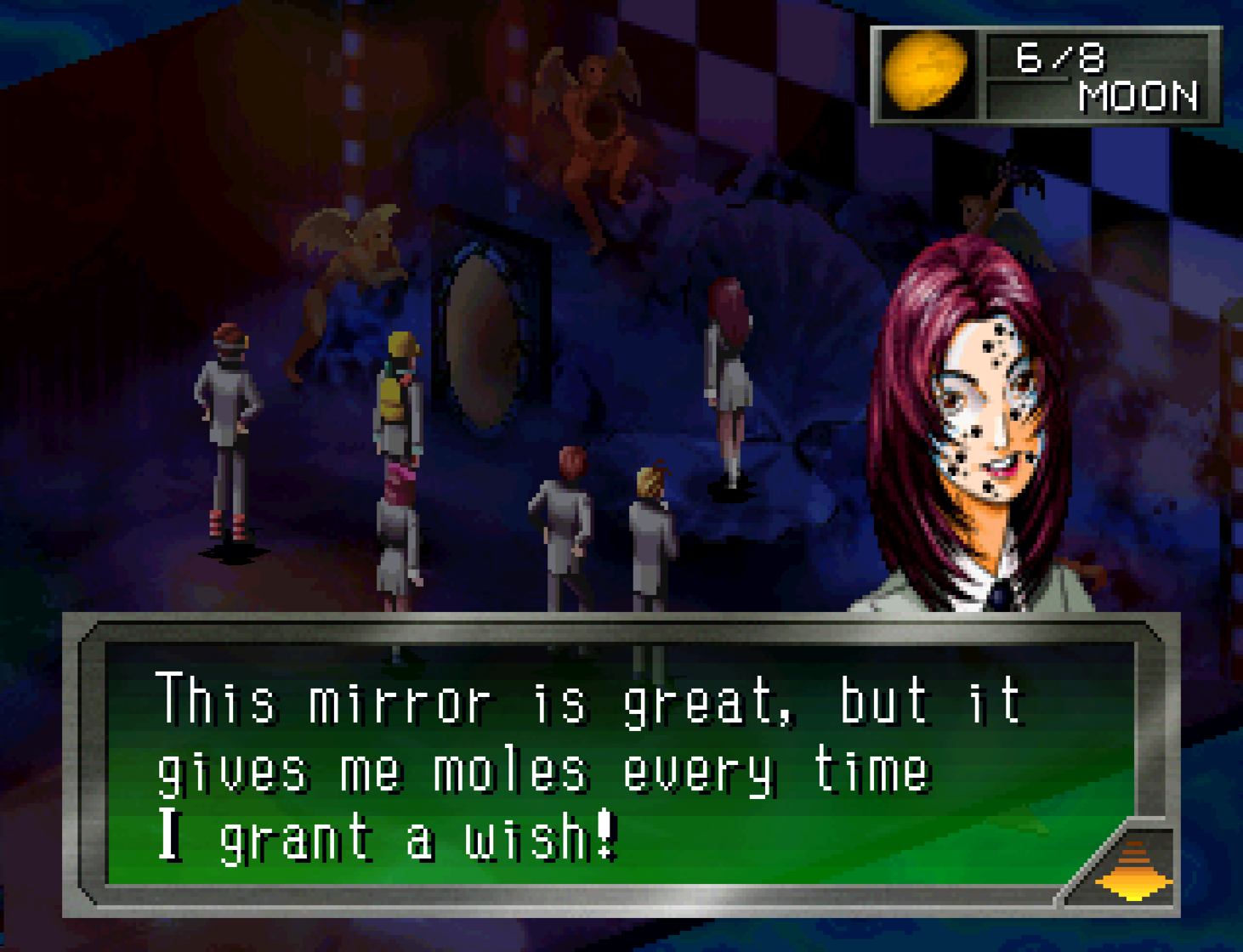
This is one of the trippier parts of the game, where Chisato uses a cursed mirror that grants wishes.
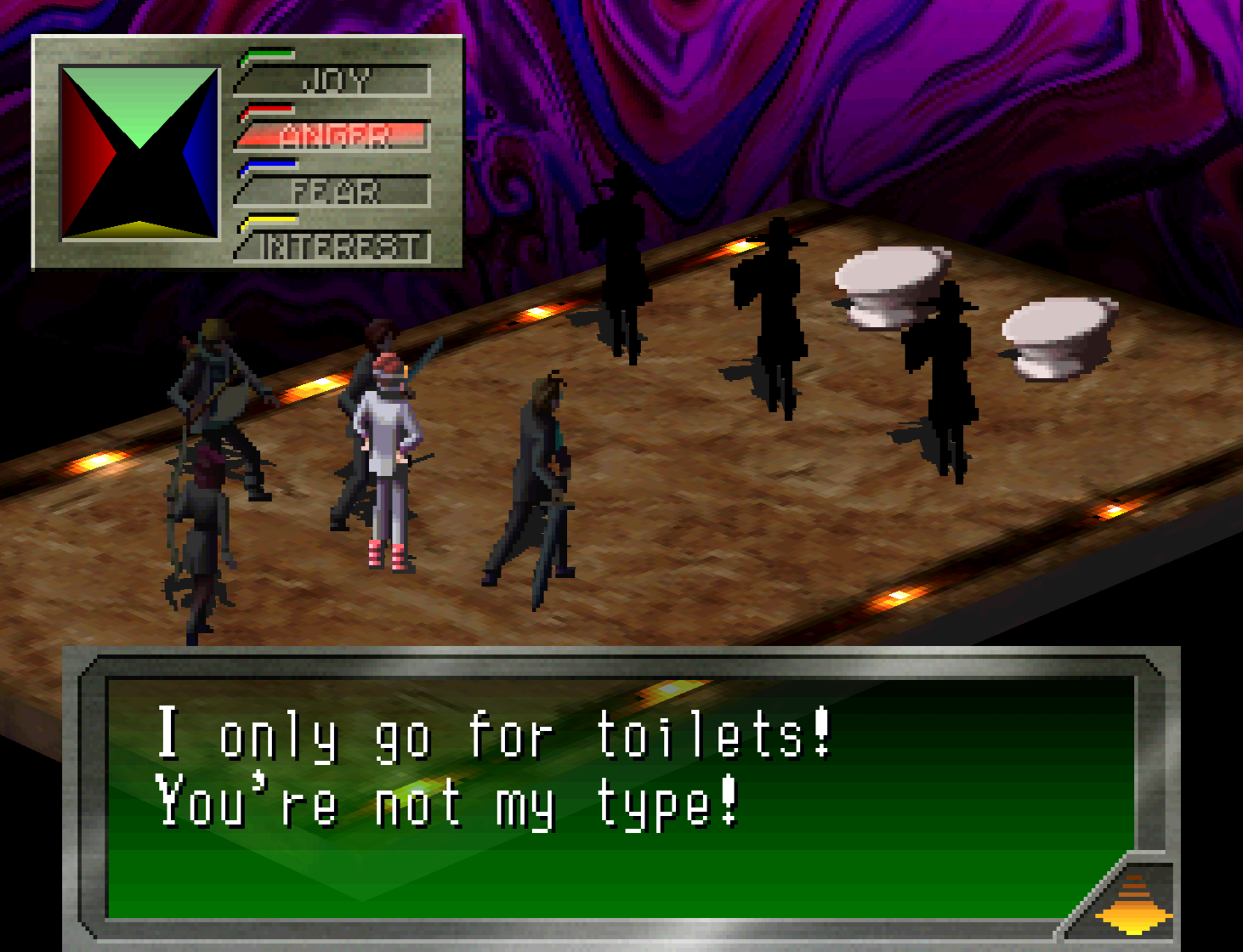
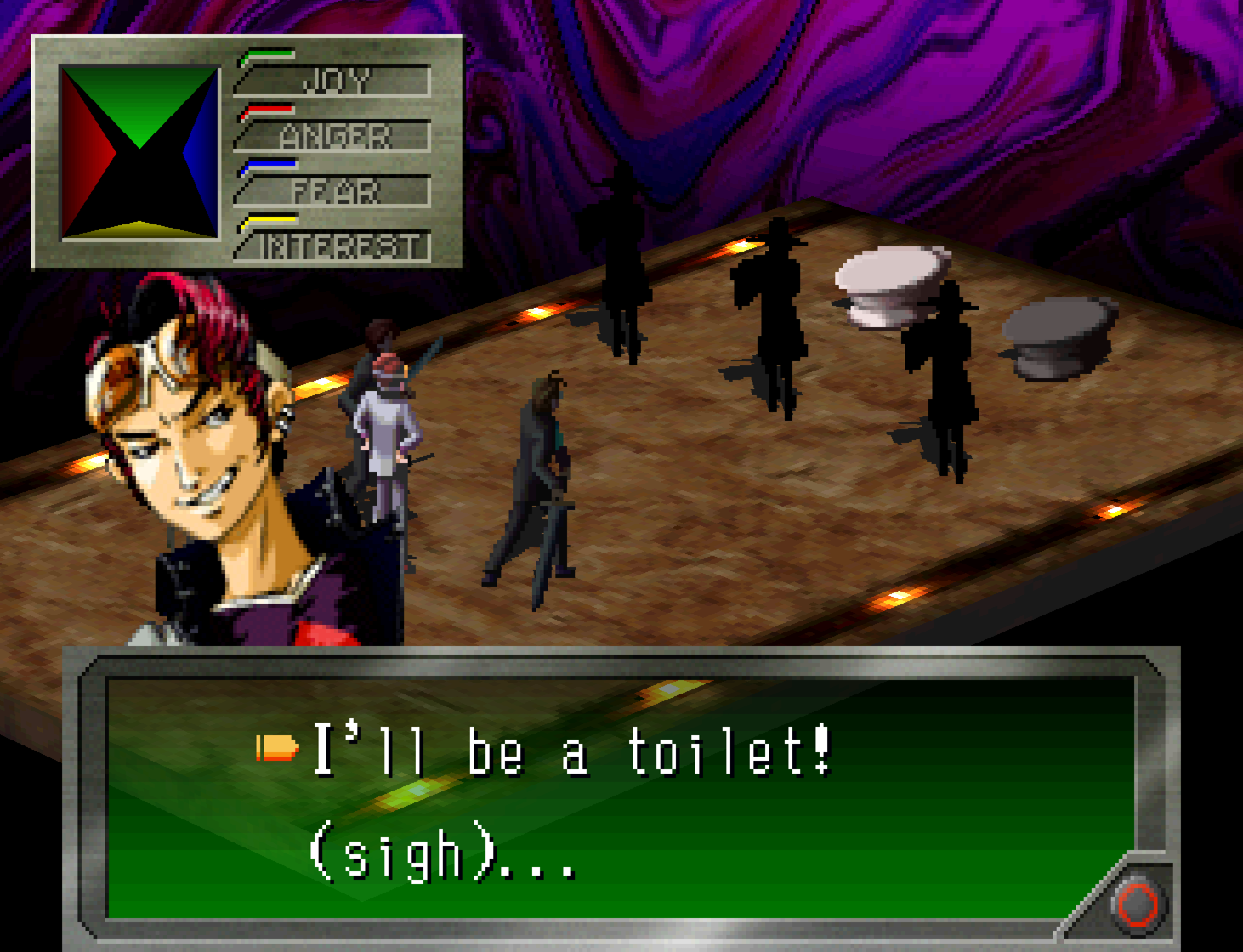
This is why you play through the battles in Persona.
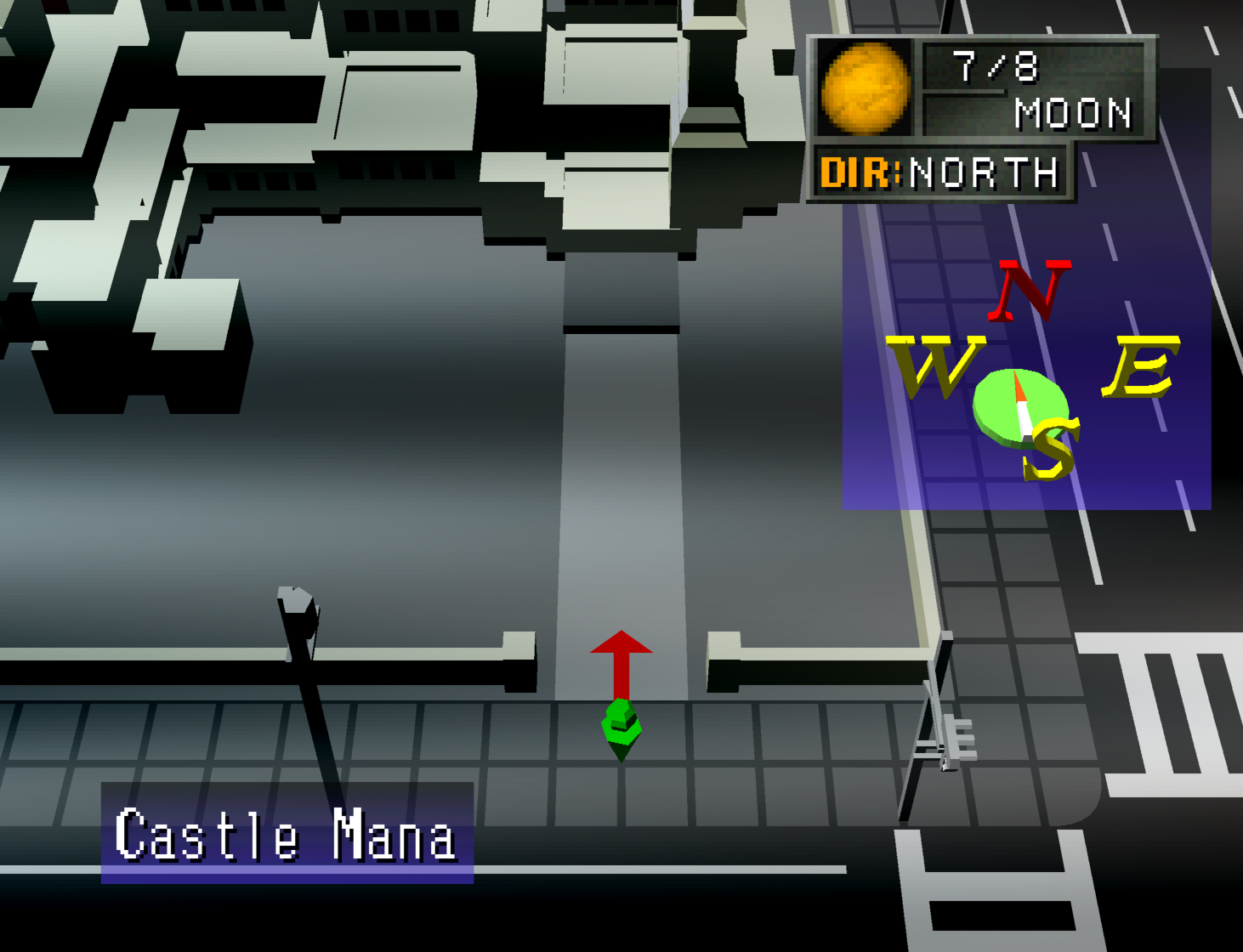
There is also an “overworld” map of the town, which employs Gouraud shading instead of textures. Out of the four main areas of the game (dungeon, overworld, indoors, menus), the overworld has aged the worst.
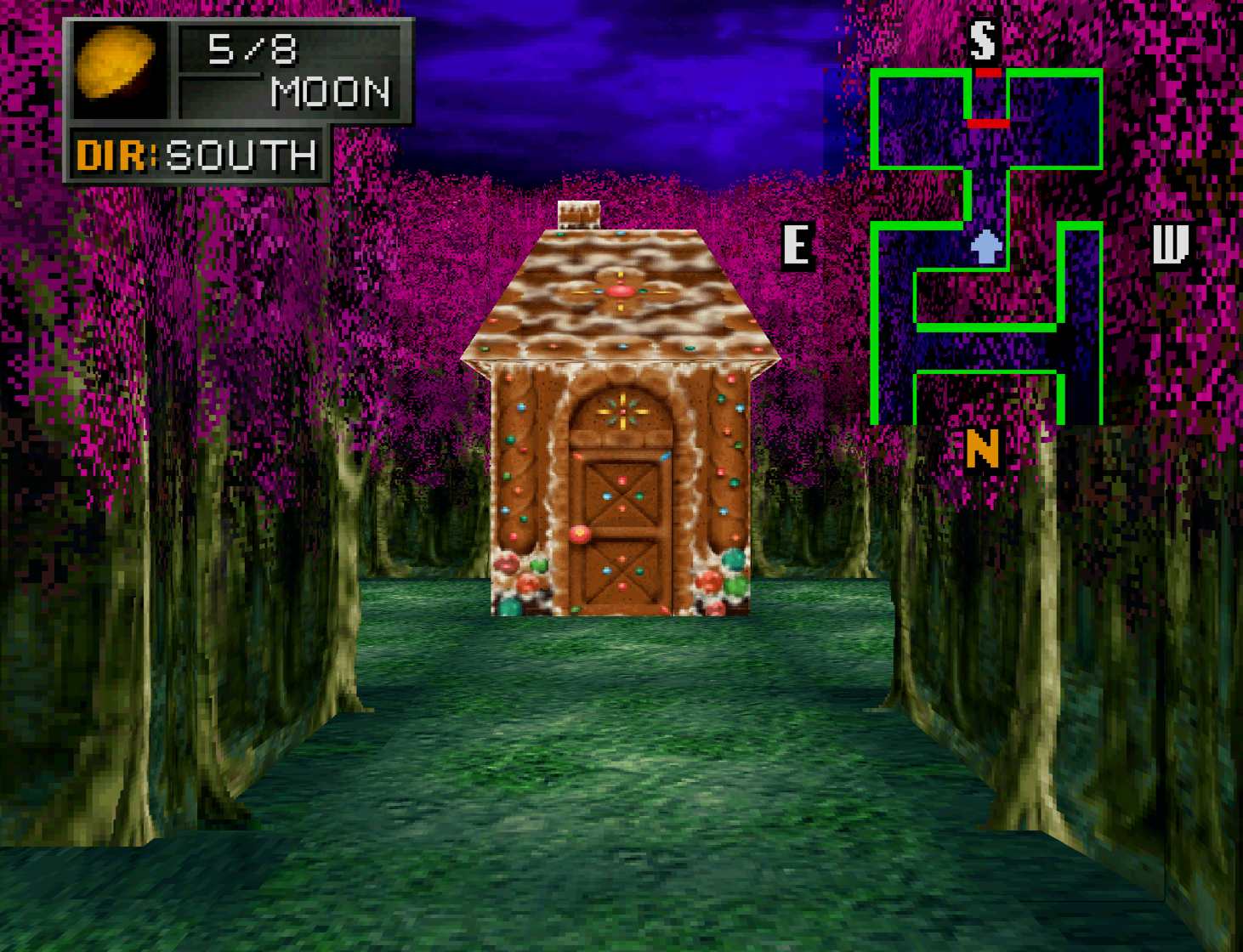
Man, I still remember the sense of relief from finally getting through to the end of this tough dungeon.
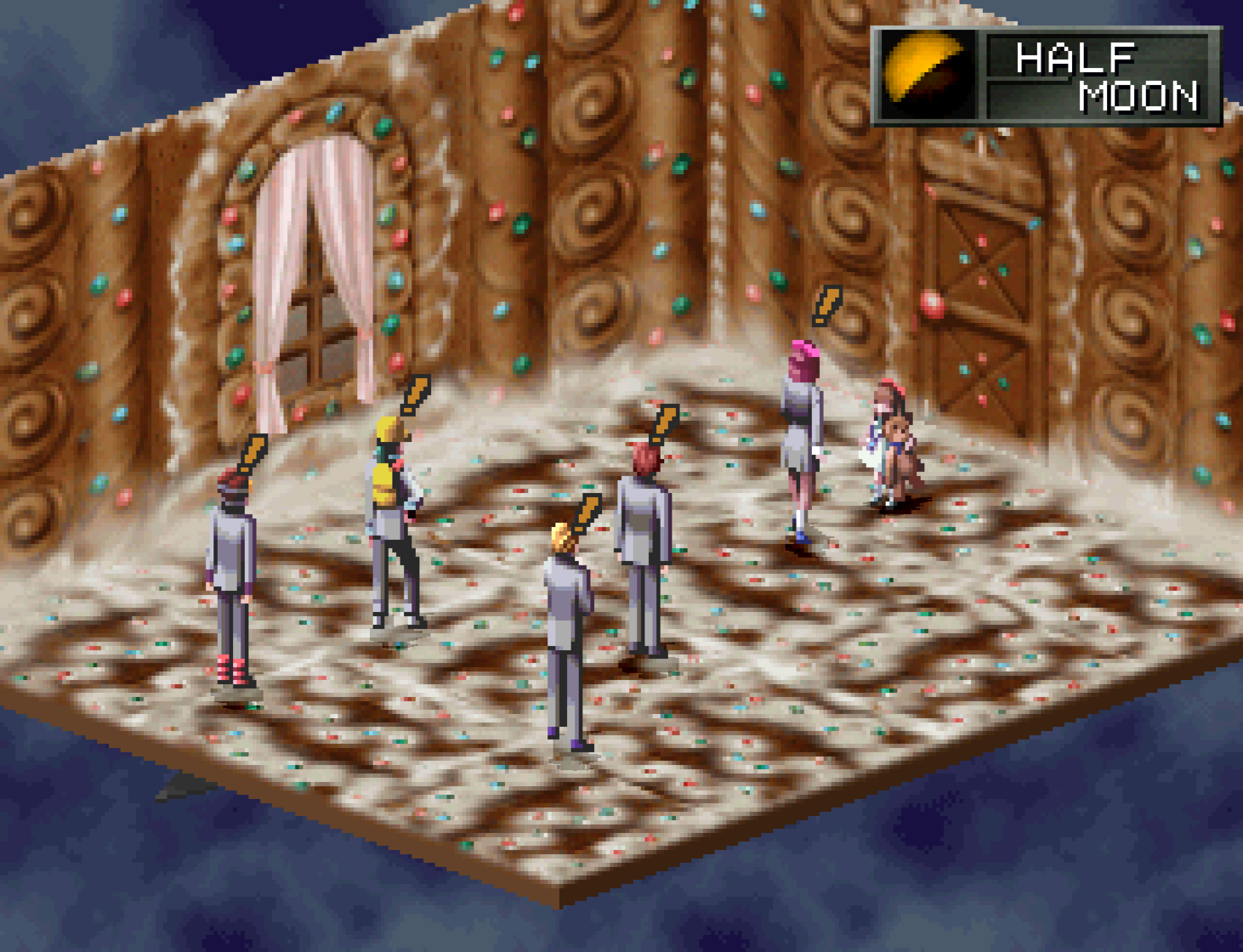
I love the old school “jewel box” style presentation of interior spaces.
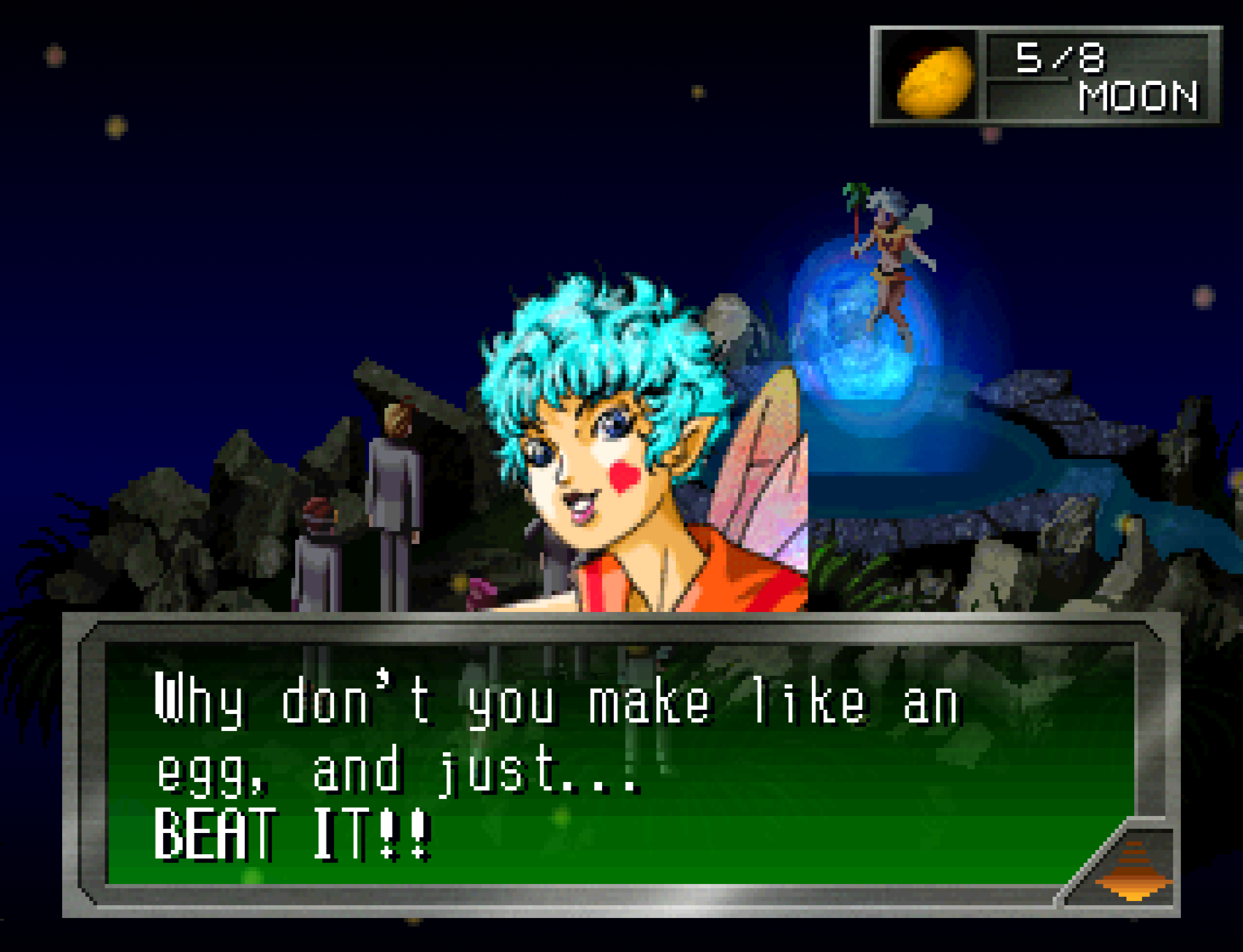
You may have noticed that the size and resolution of images have stabilized by this point. I was using “Internal Resolution” as the screenshot setting, which thankfully does crop the image.
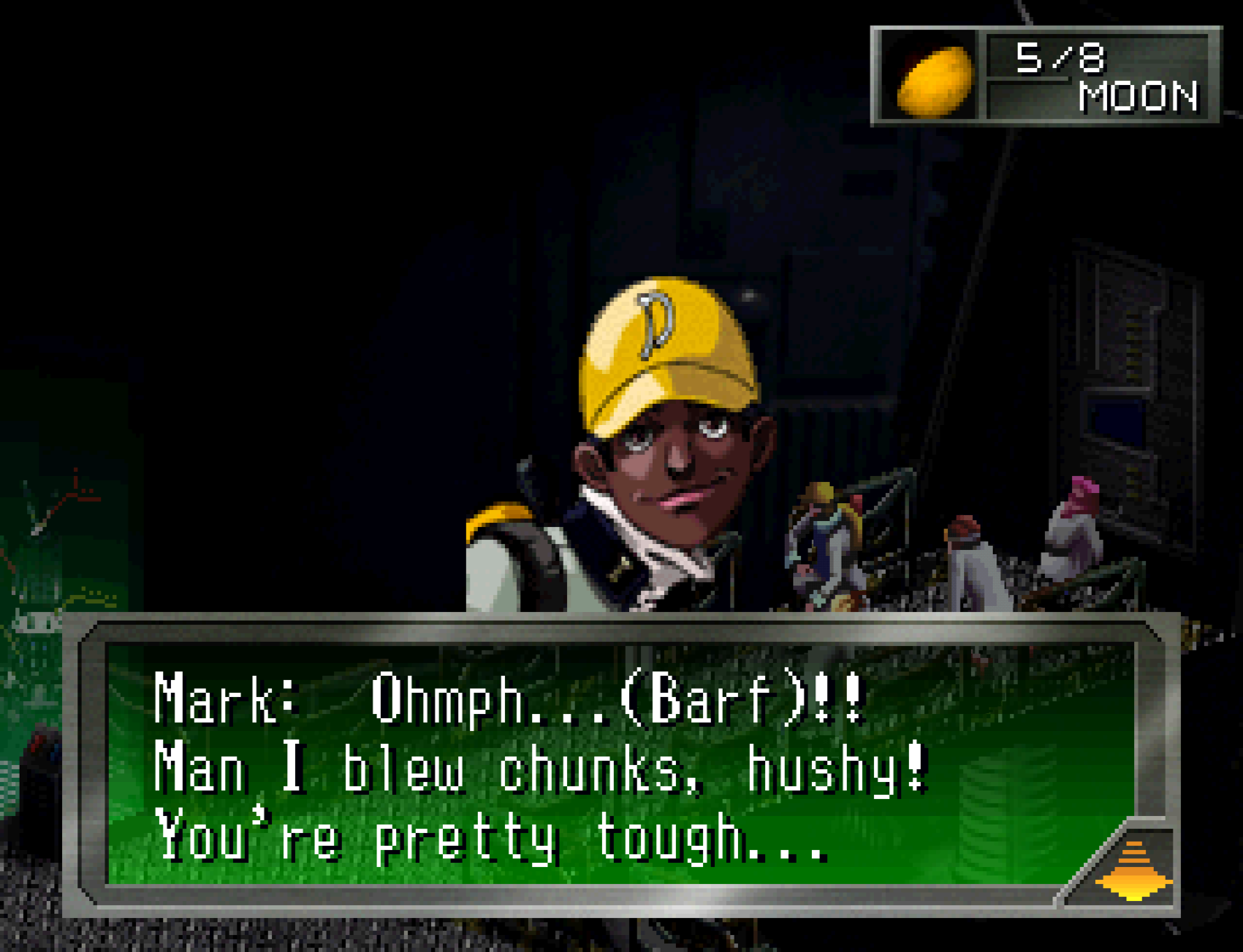
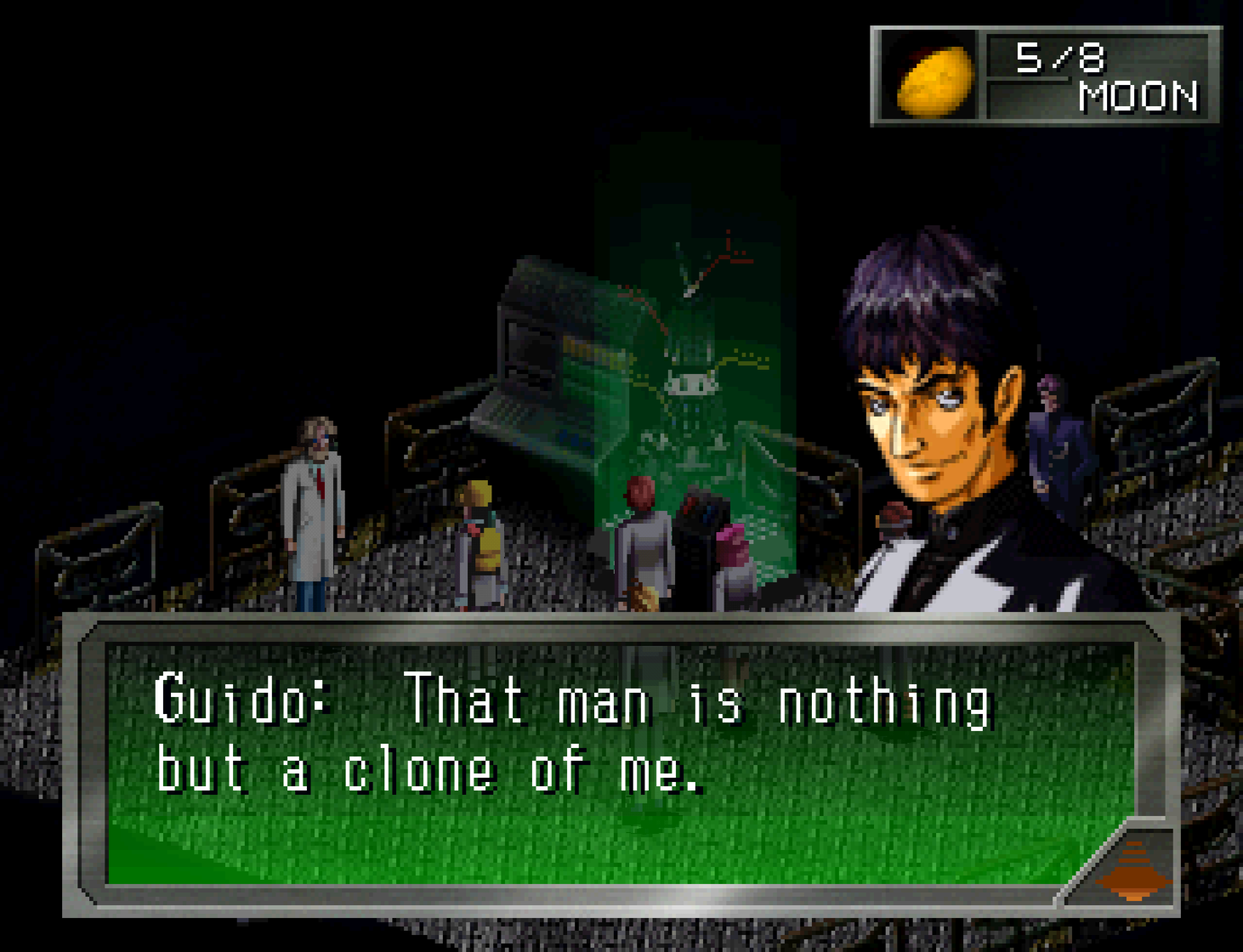
In Japanese, this character is called “Takahisa Kandori”, but he was renamed “Guido Sardenia” for the American release. The text translation is a bit funky, but this game is renowned for its bizarre “localization” of the characters in particular. Why was a Japanese man turned into an Italian and given a first name that is literally a derogatory slang term for working-class Italian-Americans?
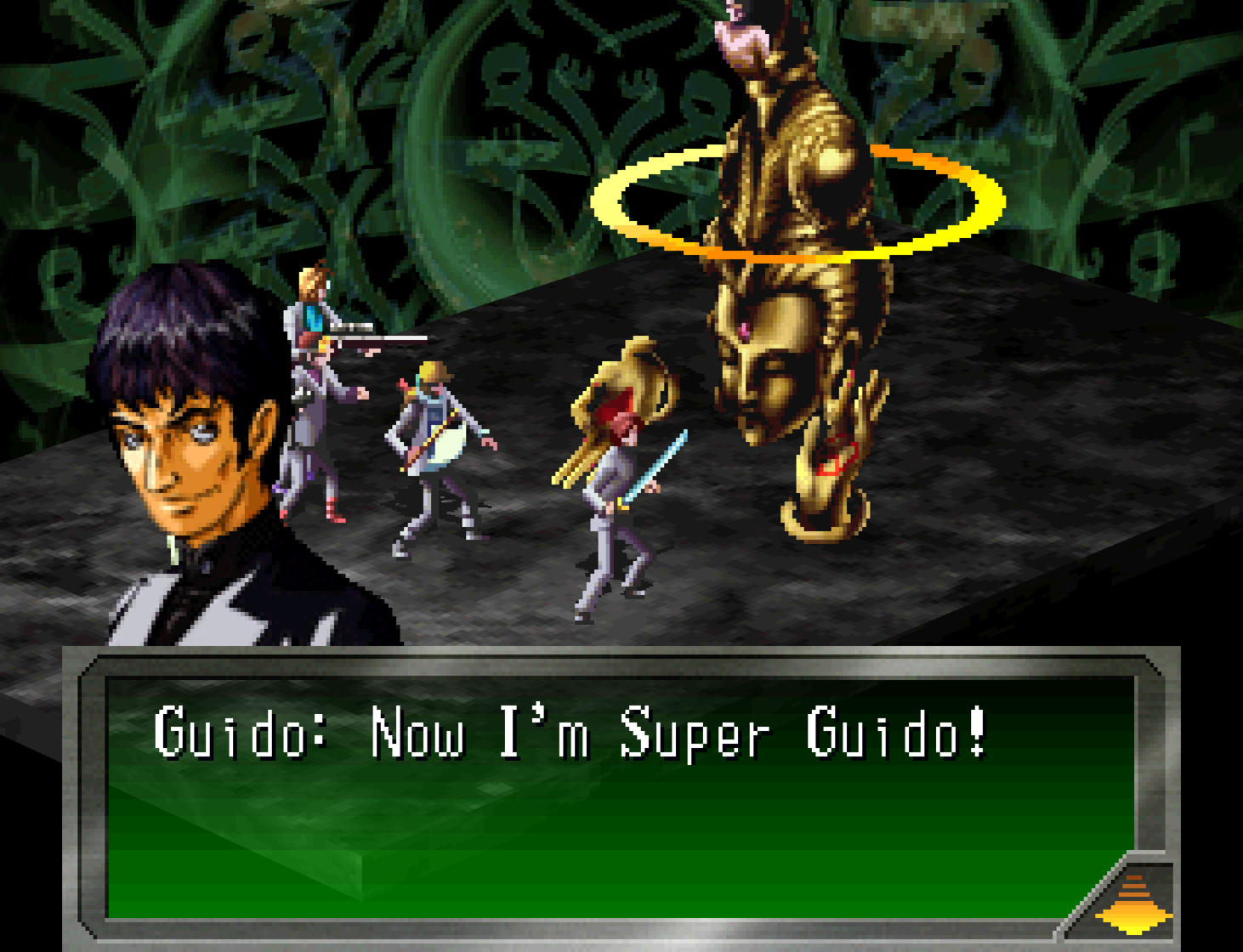
Ah, too bad they didn’t give him another stereotypical Italian name, like Mario.
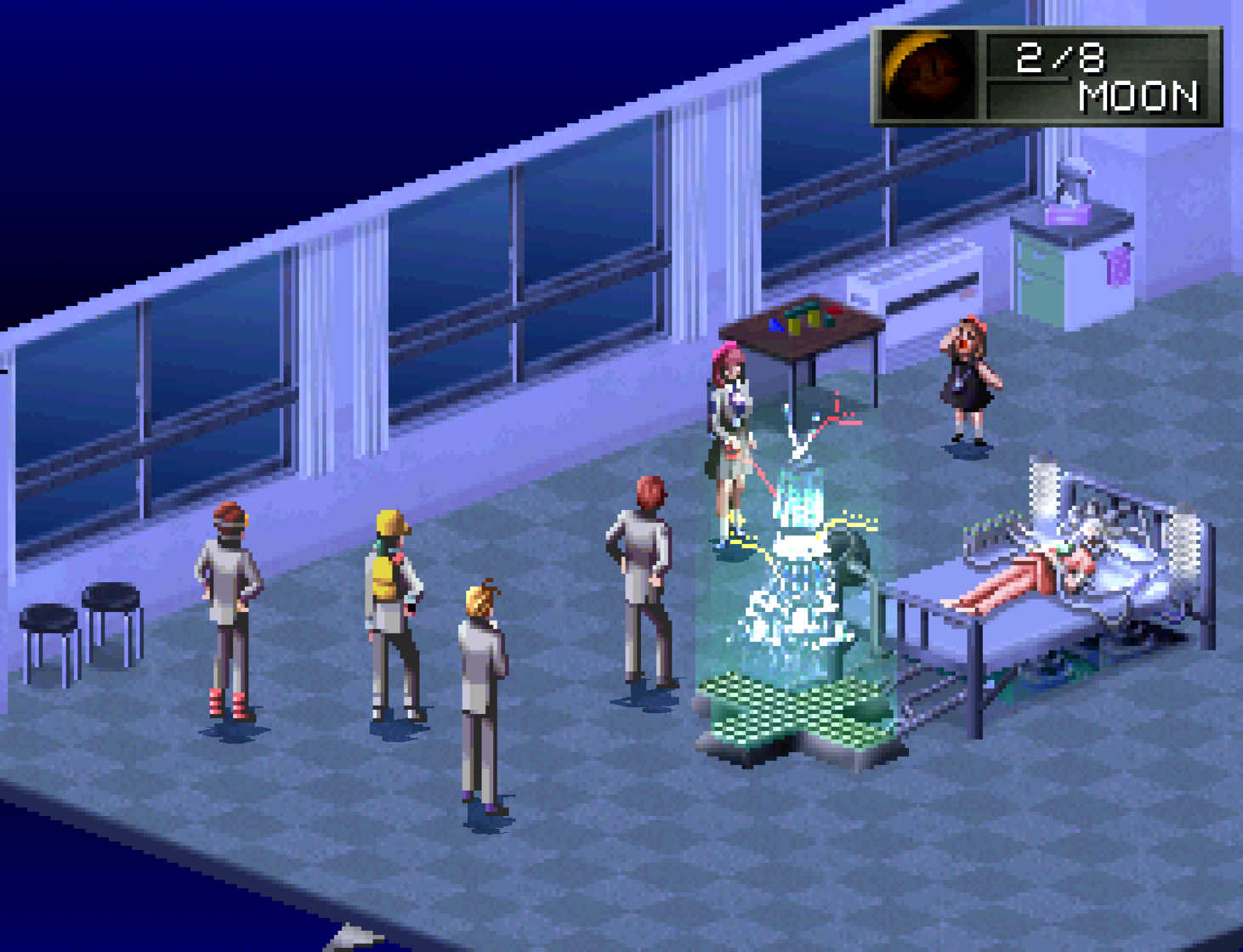
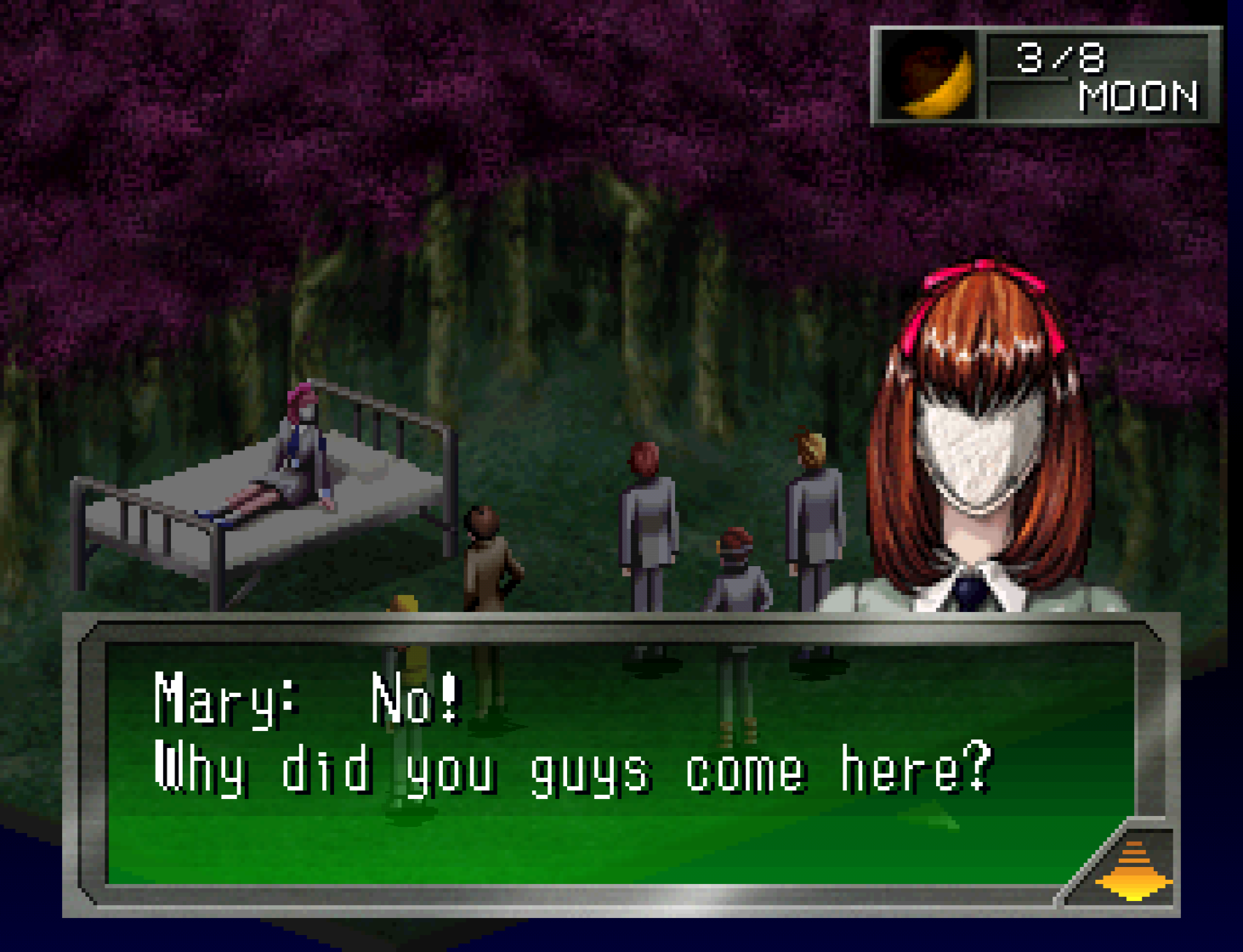
This game is pretty trippy in general, but it really starts to ramp up as you get close to the end.
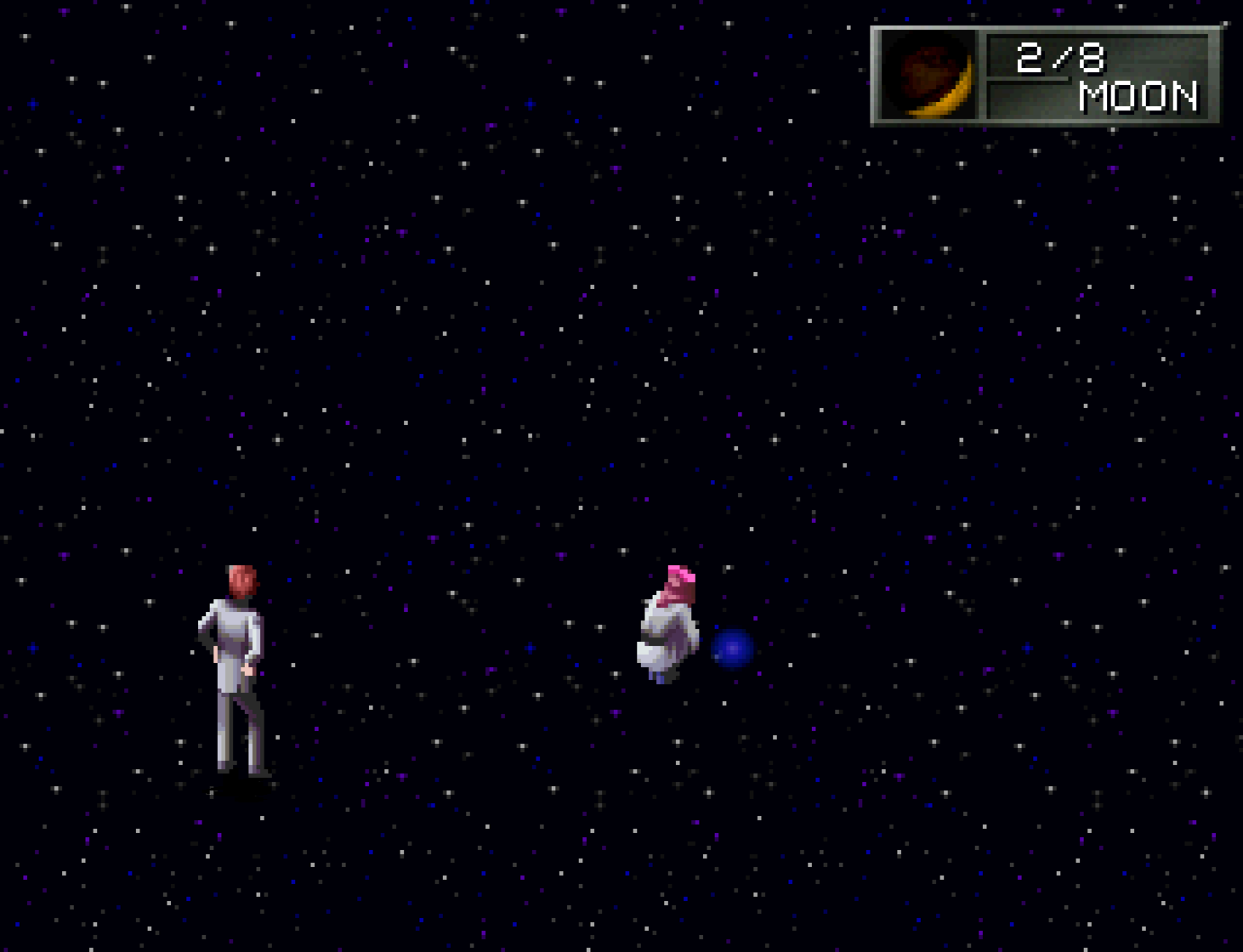
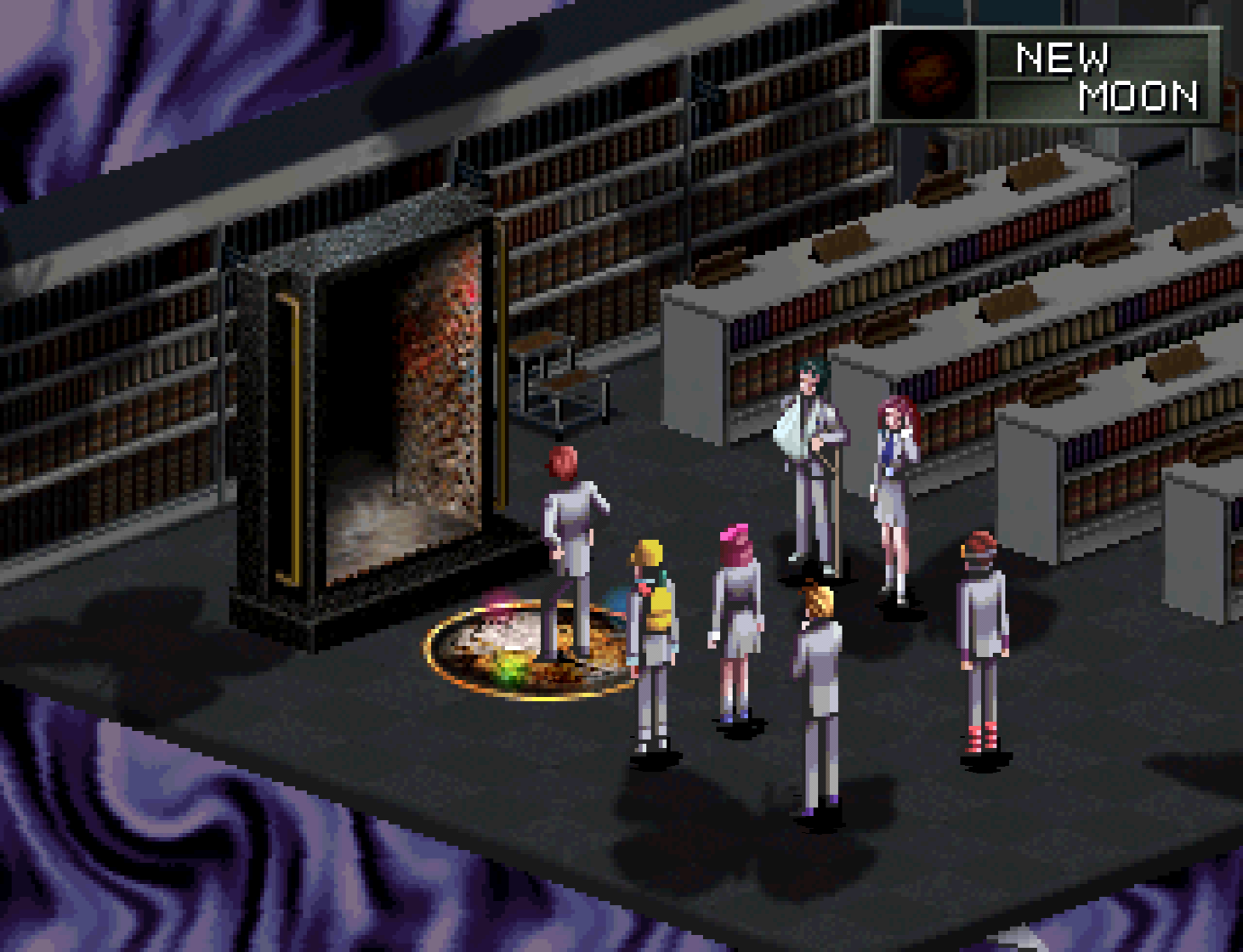
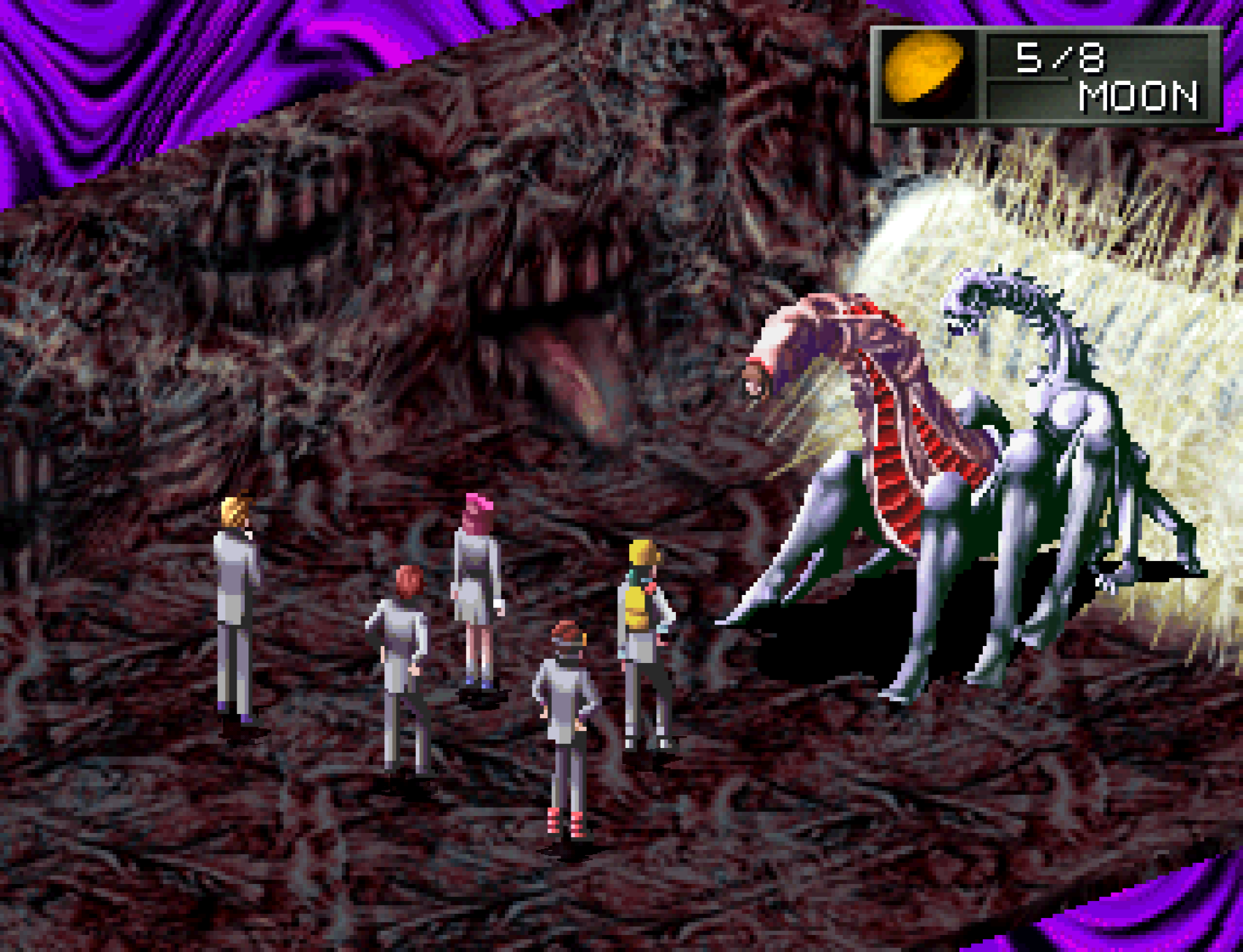
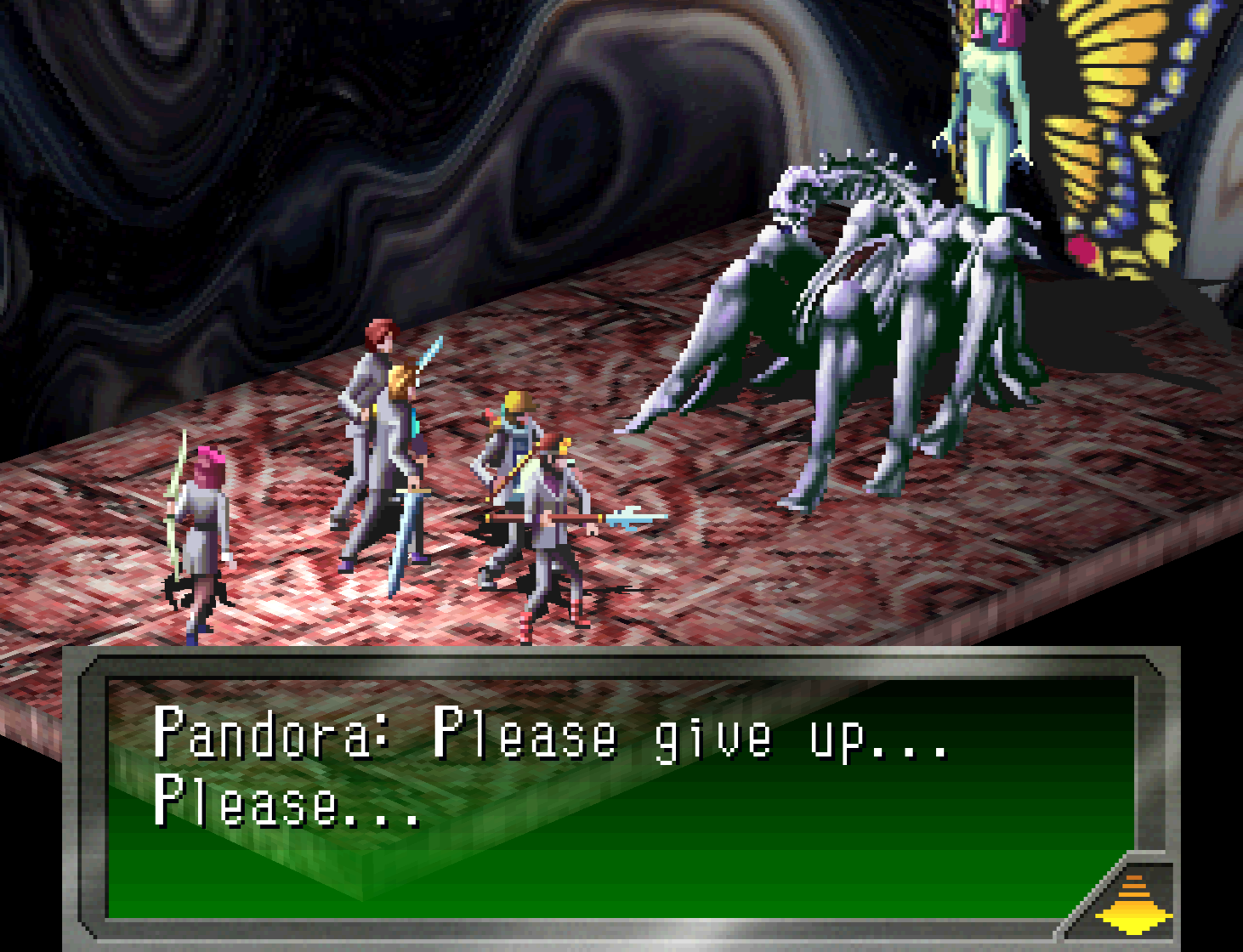
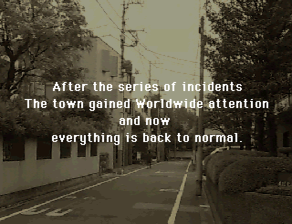
And after that epic boss fight, where I apparently set the resolution back to 1x…you’re done. Everything is back to normal.
After a bizarre adventure, it ends. The length of some of the dungeons, especially toward the end, really starts to try your patience. This game definitely has one foot firmly in the old school world where play times were padded out with mazes and random encounters, but it also has a modern gameplay feel where events and plot points are coherently linked. If you enter any random area, your team appears there with you, and you can talk to them to get hints on where you are in the game and where you should go next–pretty impressive stuff for the mid 90’s. Hell, a lot of modern RPG’s can’t figure out a hint system that’s this organic.
Before I started this Persona adventure, several people online urged me to play the PSP versions of Persona 1 and 2. Being a Playstation fan I didn’t really entertain the idea at the time, so I didn’t bother to compare. But I recently tried Persona on PSP and…nope. It includes the Snow Queen alternate story, has a better overworld map (more like P2 style) and the characters are reverted to their original Japanese versions, but the new soundtrack just doesn’t fit the game, despite being great on its own, and the graphic style is less appealing to me. I can see why people prefer the PSP version. but the original PS1 version is the one for me.
After finishing this game I knew I was locked in to the Persona series: I immediately moved on to Persona 2: Innocent Sin with the fan translation patch by Gemini. But which game should I post about next?


 Star Road
Pingback: Every PS1 Game – Mission: Impossible | Star Road
Pingback: Every PS1 Game – ペルソナ2 罪 (Persona 2: Innocent Sin) | Star Road